Disappointment over Labor’s broken promise on uranium mining in Western Australia
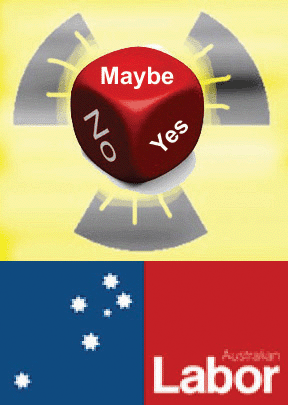 The West Australia Nuclear Free Alliance, an Indigenous alliance opposed to uranium mining, have expressed their deep disappointment by the announcement from Labor that will allow four uranium mines to proceed, that have been contested by Traditional Owners
Janice Scott, Spinifex Pilgi Woman “The Labor Government, we thought they would stand up for us be strong, and all that we’re fighting for – be different from the other Government. They told us lies. We believed that Labor they would help us to stop uranium mining, they got our trust and that’s why we voted for them.”
Mr Glen Cooke Ngaanyatjarra elder “we will be stepping up the fight talking to our countrymen. This impacts our lands and stories all over not just the mine sites. Tribal people are saying we don’t want uranium. Enough is enough. We will take this further, this country is beautiful and we have to look after it for our children and grandchildren and all future generations.”
“What is so disappointing is that the Labor Government did not sit down and talk with us about this decision which affects our country. Today’s decision Labor has not made one friend but has lost them many.” Concluded Mr Cooke.
Drop in peak energy demand, as Western Australia goes for rooftop PV solar
 Boom in rooftop PV shifting peaks, and taking market operator by surprise, http://reneweconomy.com.au/boom-in-rooftop-pv-shifting-peaks-and-taking-market-operator-by-surprise-46984/ [good graphs] By Giles Parkinson on 16 June 2017 The growth of rooftop solar PV in Western Australia has taken the market operator by surprise, but has resulted in a dramatic reduction in both the scale and the timing of peak demand in the state.
According to the latest statement of energy market opportunities for WA, the Australian Energy Market 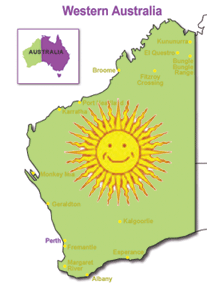 Operator says that rooftop solar PV – now on one in four homes and businesses in the state – reduced peak demand by 265MW, or 7.2 per cent in the last summer.
It says the uptake of rooftop solar in WA, which has been double expectations over the last two years – driven by falling costs of rooftop solar PV and the rise in grid prices – is “accelerating a paradigm shift” for the energy industry.
The biggest impact is on peak demand. The biggest peak in the state occurred on March 1, reaching 3,670MW in the 1700-1730 trading interval – the lowest since 2009.
“The rapid adoption of rooftop solar is not only slowing annual operational consumption growth but also eroding the mid-day grid demand and shifting peak demand to later in the day,” said AEMO’s Executive General Manager – Western Australia, Cameron Parrotte.
“With the strong growth in rooftop solar installations anticipated, AEMO expects demand in the middle of the day to shrink further, resulting in a rapid increase in demand in the lead up to the evening peak once the sun sets.” Continue reading
Pipeline of solar farms across Australia to begin from Western Australia
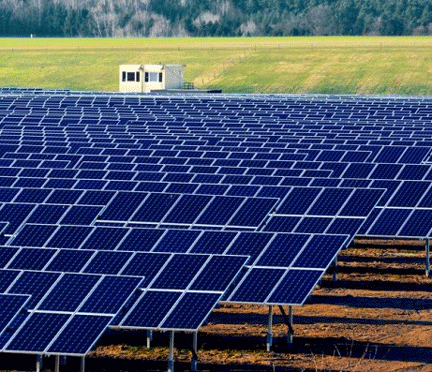 WA, UK team announce $200m big solar pipeline for Australia, REneweconomy, By Sophie Vorrath on 13 June 2017 Western Australian large-scale solar start-up Stellata Energy has joined forces with UK based renewables investment specialist, Ingenious, to build what they say is a $200 million pipeline of solar farms across Australia, starting with a flagship 120MW ground-mounted project in their home state.
The companies said in a join announcement on Tuesday that they were seeking approval to build a 120MW ground-mounted solar plant in the regional town of Merredin, roughly half way between Perth and Kalgoorlie.
The partnership signals the arrival of yet another European investor into the Australian market, in the rush to meet the remainder of the 2020 renewable energy target as technology costs continue to fall.
Stellata, which has been around for roughly one year, says it is well placed to deliver large-scale solar in Western Australia, with an executive team with extensive previous experience developing more than 600MW of ground-mounted and rooftop solar across Europe.
Ingenious, meanwhile, has raised and deployed more than £9 billion, including £500 million in renewables projects across the UK and Ireland, the companies said……http://reneweconomy.com.au/wa-uk-team-announce-200m-big-solar-pipeline-for-australia-58923/
In sunny Broome, residents are fed up with restrictions on accessing solar power
Broome residents tire of cap on solar power installations http://www.abc.net.au/news/2017-06-03/broome-residents-tire-of-waiting-for-solar/8584060
Key points
- Horizon Power only allows 10 per cent of the town’s power to come from solar due to issues with grid fluctuations
- This leaves some residents unable to install a solar system that connects to the grid
- Horizon is trialling battery storage technology in other WA towns and hopes to expand this to Broome
State-owned energy utility Horizon Power allows just 10 per cent of the town’s power to be generated from solar to protect the grid from fluctuations during periods of high and low light.
Small business owner Cameron White has been trying to switch to solar for two years in a bid to reduce his power bill but said he has been blocked at every turn.
“We’re in the sunniest place in Australia, probably, but we can’t use it,” he said.
Mr White said the high cost of electricity in regional areas, combined with the inability to access solar was putting added financial stress on homes and businesses already suffering in a post-mining boom era.
“Businesses in town are struggling at the moment, including myself, and you know these power bills [are] enough to tip people over the edge,” he said.
Horizon Power acknowledges the problem and is currently trialling battery-supported solar systems in the WA towns of Carnarvon and Onslow which can store the power to deal with the fluctuations in supply.
Spokesman Frank Tudor said Horizon ultimately wanted regional towns to generate half their energy from the sun. “Broome will be part of the trials that we are looking at across all of our different systems, if that proves worthwhile then we will gradually roll it out,” he said.
But Mr White said he was not going to wait any longer, opting instead to disconnect from the grid and rely solely on the sun. “I’m going it alone, I’m determined to do it myself,” he said.
Western Australia’s large-scale Greenough River solar farm to quadruple in size
Australia’s first large-scale solar farm to quadruple in size http://reneweconomy.com.au/australias-first-large-scale-solar-farm-to-quadruple-in-size-20618 By Giles Parkinson on 19 May 2017
The plans by co-owners Synergy, the government-owned generator and retailer, and US energy giant General Electric, were unveiled in a submission to WA’s Economic Regulation Authority, and reveal that two new 15MW arrays will be built either side of the existing facility, around 50km south-east of Geraldton.
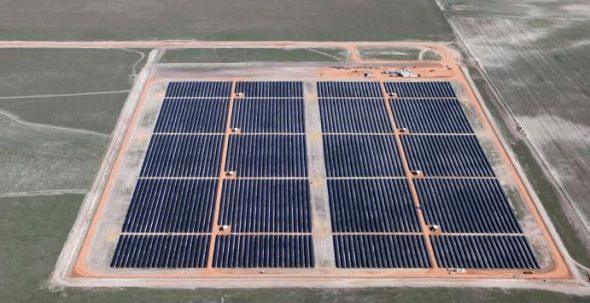
The new arrays, will use First Solar modules, as did the first, but unlike the first installation these will deploy single axis tracking technology to improve the yield. More than 90 per cent of solar farms in Australia are now using tracking technology. SMA is providing the inverters.
Synergy and GE say that the solar farm will seek a power purchase agreement, but presumably that will come from Synergy itself, as it is it the biggest utility in the state and has yet to meet all its renewable energy target commitments.
Greenough River was built in 2012 and remains the only solar farm connected to the main grid in Western Australia, although several other projects have begun, or are about to begin, construction. These include the 30MW Byford solar farm south-east of Perth and a 10MWW solar farm planned near Northam by Carnegie Clean Energy.
Across Australia, however, the large-scale solar boom is accelerating. Eight grid-connected large-scale solar farms have now been completed and another 30 are under construction, or have reached financial closure and are about to begin.
The joint owners of Greenough River says the solar plant, located on a wheat farm, “has been extremely warmly welcomed by what is a very small remote community. No public complaints or opposition have been received.”
Western Australia: renewable energy going ahead in leaps and bounds
Solar power has become so popular in some parts of Western Australia that there are more households equipped with panels than without.
The national leader is Baldivis, south of Perth, where two-thirds of households feature rooftop solar. Other strong WA performers include Byford (56%) and Rockingham (53%).
There is now six gigawatts of solar power installed across the country. The Australian Photovoltaic Institute chair, Renate Egan, said an additional 1GW was added over the past year by household-scale solar in tandem with commercial and large-scale solar farms.
 Once considered an eco-warrior’s pipe dream, renewable energy is rapidly gaining ground in the traditional mining state of Western Australia, Guardian, Max Opray, 15 May 17, Along the remote southern coastline of Western Australia, the locals have cottoned on to a new, surefire way to keep their beer cold. Continue reading
Australian renewable energy news
Origin stuns industry with record low price for 530MW wind farm
Origin to buy output from 530MW Stockyard Hill wind farm at less than $60/MWh in price that will stun Australian industry. Following numerous solar deals, it expects renewables to account for more than 25% of its supply by 2020.
http://reneweconomy.com.au/origin-stuns-industry-with-record-low-price-for-530mw-wind-farm-70946/
Contract signed for new two-turbine wind farm in Victoria
Giles Parkinson Construction on the two-turbine Maroona wind farm to begin soon after contract signed and financing in place.
http://reneweconomy.com.au/contract-signed-new-two-turbine-wind-farm-victoria-62657/
Origin stuns industry with record low price for 530MW wind farm
Origin to buy output from 530MW Stockyard Hill wind farm at less than $60/MWh in price that will stun Australian industry. Following numerous solar deals, it expects renewables to account for more than 25% of its supply by 2020.
http://reneweconomy.com.au/origin-stuns-industry-with-record-low-price-for-530mw-wind-farm-70946/
Wesfarmers’ energy retailing unit signs up for W.A.’s biggest solar farm
Wesfarmers unit signs 10 year deal for 30MW solar farm, which will be the largest in WA and first in Australia to be built in
http://reneweconomy.com.au/wesfarmers-energy-retailing-unit-signs-w-s-biggest-solar-farm-45040/
News on fracking in Australia
Renowned scientist Tim Flannery warns NT against investing in gas
The former chief commissioner of Australia’s Climate Council says the NT should take heed of the risks posed by hydraulic fracturing when considering gas projects such as the proposed Jemena pipeline.
http://www.abc.net.au/news/2017-05-06/tim-flannery-warns-against-nt-pipeline/8502186
Western Australia
Tribunal rules against Indigenous anti-fracking protestor in WA
An Aboriginal man who has spent more than two years protesting mining companies from a makeshift camp in northern WA declares victory, despite a tribunal ruling likely to end his campaign.
http://www.abc.net.au/news/2017-05-05/tribunal-rules-against-anti-fracking-protester/8501544
Warning that North Korea could ship a nuclear device to Western Australia
 North Korea can ship nuclear device to WA https://thewest.com.au/news/wa/north-korea-can-ship-nuke-to-wa-ng-b88463758z, Gary Adshead, 4 May 2017 A Perth-based former Australian Federal Police officer has issued a chilling warning about a potential threat posed by North Korea to Australia that does not involve launching missiles.
Chris Douglas, who specialised in terrorism financing and organised crime, believes the rogue country is more than capable of smuggling a nuclear device into an Australian port via shipping routes.
“A fanatical regime facing extinction wouldn’t think twice about sending a container bearing a nuclear device to the US or an allied country and detonating it,” he said in an article published by the Australian Strategic Policy Institute.
Mr Douglas told The West Australian those ports could included Fremantle and that concealing the device would be easy and it would be foolish to focus only on the possibility of North Korea launching a missile into Australia if current tensions escalated.
“It’s time to check our thinking about what North Korea’s counter-attack response might be,” Mr Douglas said. “Nuclear weapons could be smuggled out of North Korea … and then be placed into containers on a cargo ship for transport to a port anywhere in the world.”
Last month, the state-run Democratic People’s Republic of Korea news agency warned Australia could hit by missiles. “If Australia persists in following the US moves to isolate and stifle the DPRK and remains a shock brigade of the US master, this will be a suicidal act of coming within the range of the nuclear strike of the strategic force of the DPRK, ” it said.
Mr Douglas suggested another terrifying scenario would involve several nuclear devices in different sea containers. “With over 17 million shipping containers in circulation, weaponised containers would be hard to detect,” he said. “A failure in imagination in any assessment of North Korea’s options to respond to a US attack could have a devastating impact not only on the US, but the rest of the world, involving significant loss of life and global economic ruin.”
A United Nations report in 2010, highlighted the lengths North Korea has gone to while pursuing its nuclear ambitions. A weapons expert doesn’t believe North Korea has capability to reach Darwin with one of their missiles
Private jets were hired through offshore companies and shipping containers were falsely labelled. In a separate UN report this year, North Korea was accused of “flouting sanctions through trade in prohibited goods, with evasion techniques that are increasing in scale, scope and sophistication”. Mr Douglas said North Korean ships had been used previously to transport drugs near the Australian coast.
The Global Uranium Industry and Cameco’s Troubled History
 The Global Uranium Industry & Cameco’s Troubled History, May 2017, Jim Green − Friends of the Earth, Australia http://tinyurl.com/cameco-may-2017
Table of Contents
- INTRODUCTION
- THE GLOBAL URANIUM INDUSTRY
Australia’s Uranium Volume and Exports – 2006-2015
Australia’s top export revenue industries – Compared to uranium
“It has never been a worse time for uranium miners”
If there is a recovery, it will be a long time coming
Explaining the uranium market’s malaise
- CAMECO BATTLING URANIUM DOWNTURN, TAX OFFICE, TEPCO
- CAMECO’S URANIUM DEPOSITS IN WESTERN AUSTRALIA ‒ A BRIEF SUMMARY
- CAMECO’S INCIDENTS AND ACCIDENTS: 1981‒2016
 Firstly: the miserable state of the global uranium industry. For several years, the uranium prices (the spot price and long-term contract price) has been well below the level that would incentivise new mines. There is no end in sight to the industry’s current malaise ‒ as acknowledged by numerous industry insiders and market analysts.
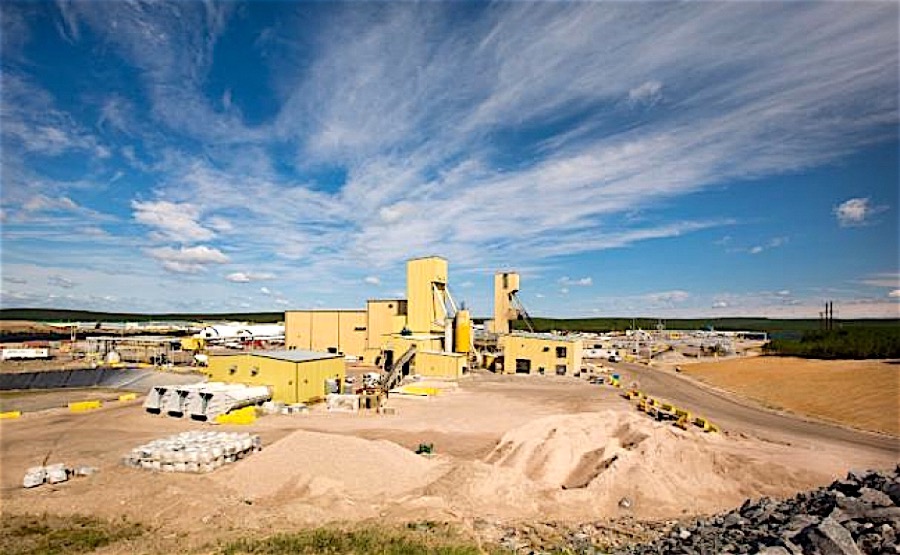 has two uranium projects in Western Australia ‒ Kintyre (70% Cameco / 30% Mitsubishi) and Yeelirrie (100% Cameco).
CAMECO’S URANIUM DEPOSITS IN WESTERN AUSTRALIA ‒ A BRIEF SUMMARY
The Global Uranium Industry & Cameco’s Troubled History May 2017 Jim Green − Friends of the Earth, Australia http://tinyurl.com/cameco-may-2017
 “…….. Kintyre (70% Cameco / 30% Mitsubishi) The Martu Aboriginal people have fought against this proposed uranium mine since the 1980s. The deposit sits between two branches of a creek called Yantikutji which is connected to a complex network of surface and groundwater systems. It is also in an area that was cut out of the Karlamilyi National Park, WA’s biggest National Park. Kintyre is home to 28 rare, endangered and threatened species. The project would include an open pit 1.5 km long, 1.5 km wide, it would use 3.5 million litres of water a day and leave behind 7.2 million tonnes of radioactive mine waste over the life of the project.
In June 2016, Martu Traditional Owners led a 140 km, week-long walk to protest against Cameco’s proposed uranium mine at Kintyre. Aboriginal Traditional Owners are concerned the project will affect their water supplies as well as 28 threatened species in the Karlamilyi National Park.
Joining the protest walk was Anohni, the Academy Award-nominated musician from Antony and the Johnsons. She said: “It’s a huge landscape – it’s a really majestic place. It’s really hard to put a finger on it but there’s a sense of presence and integrity and patience, dignity and perseverance and intense intuitive wisdom that this particular community of people have. There is almost an unbroken connection to the land – they haven’t been radically disrupted. They are very impressive people – it’s humbling to be around these women. In many regards, I think the guys who run Cameco are desolate souls, desolate souls with no home, with no connection to land, with no connection to country.” www.ccwa.org.au/kintyre
Yeelirrie (100% Cameco) Yeelirrie in the local Wongutha Aboriginal language means ‘place of death’. The local community has fought against mining at Yeelirrie for over 40 years. There was a trial mine in the 1970s which was poorly managed: the site was abandoned, unfenced and unsigned with a shallow open pit and tailings left behind. The project would include a 9 km long, 1 km wide open pit, it would use 8.7 million litres of water a day and leave behind 36 million tonnes of radioactive mine waste over the life of the mine. There are many cultural heritage sites under threat from this proposal. The project was rejected by the Western Australian Environmental Protection Agency in 2016 because of the threat that 11 species of underground microfauna would become extinct. The WA Environment Minister ignored the EPA advice and approved the project anyway. www.ccwa.org.au/yeelirrie
Western Australian suburb Baldivis tops nation for solar rooftops
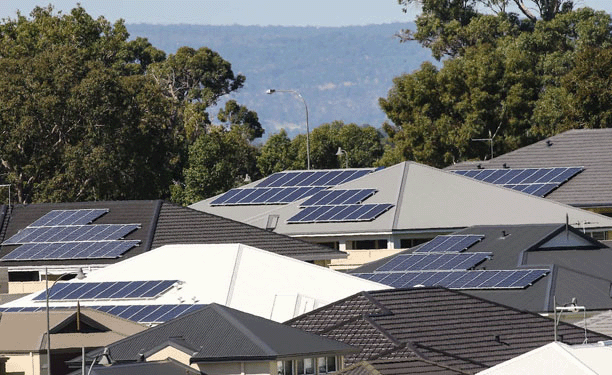
Baldivis tops nation for power from sun https://thewest.com.au/news/wa/baldivis-tops-nation-for-power-from-sun-ng-b88456809zMonday, 1 May 2017 The southern Perth postcode of Baldivis is Australia’s solar capital, with more than two-thirds of houses in the suburb generating their own power from the sun.
With electricity prices spiralling and a rush towards green energy, fresh figures show the rate of solar panel installations across Australia led by WA is gathering pace.
There are almost 230,000 households and small businesses with solar panels across WA after a massive 71 per cent increase in installations in past 10 months alone.
More than a quarter of WA homes have solar panels. But the figures show the rate of solar uptake in some suburbs is sky-high, with a staggering 69 per cent of households in Baldivis having a system.
According to the figures, from the Australia Photovoltaic Institute, there are 5765 “dwellings” in Baldivis and 3951 of them have solar panels — the highest rate of penetration in Australia.
It was a similar story in Byford, where 56 per cent of 3326 households had rooftop PV, as well as Rockingham, where uptake was 53 per cent.
The figures also show Mandurah, while having a lower penetration rate, had the second highest number of solar panel installations of any suburb in the country.
Of the 28,428 households in the southern centre, almost 10,000 had photovoltaic cells, behind only Bundaberg in Queensland, which had 10,529 systems. Australian Photovoltaic Institute chairman Renate Egan said it was remarkable that solar was so popular that in some suburbs the households without solar panels were outnumbered by those which did have them.
Warwick Johnston, an analyst with consultancy SunWiz, said WA trailed Queensland and NSW on installations.
“The biggest change has been WA leapfrogging Victoria into third place when it comes to the number of new solar installations,” Mr Johnston said.
The latest figures came as Energy Networks Australia — which represents grid operators such as Western Power — released a report showing the amount of solar power in WA was set to triple in the next 13 years.
It said using battery storage systems, electric cars and “smart homes” would also rise.
ENA boss John Bradley said more than 40 per cent of WA’s electricity was predicted to come from renewable sources by 2030 amid moves to de-carbonise the economy.
Carnegie raises $18m for Northam solar farm and micro-grids
By Giles Parkinson on 20 April 2017 Carnegie Clean Energy plans to accelerate its project pipeline of large scale solar farms and renewable-based micro-grids after securing $18 million in a new capital raising – three times more than its original target.
The listed Perth-based company says the money will be used to fund its equity share of the soon-to-be-built 10MW solar farm in Northam, in West Australia, as well as accelerating its other solar projects and renewable-focused micro-grids.
The company, which has recently transformed from a single-focused wave energy developer to encompass solar, storage and micro-grid technologies, had planned a $6 million capital raising, but expanded the process in response to “overwhelming” demand from shareholders……http://reneweconomy.com.au/carnegie-raises-18m-for-northam-solar-farm-and-micro-grids-19682/
Racial abuse at BHP mining site in Western Australia? Aboriginal woman takes legal action
 Aboriginal woman launches legal action over alleged racial abuse at WA mining site, http://www.sbs.com.au/news/article/2017/04/17/aboriginal-woman-launches-legal-action-over-alleged-racial-abuse-wa-mining-site BHP Billiton is facing legal action over alleged racial abuse at one of its mine sites in Western Australia. By Ryan Emery 18 APR 2017 An Aboriginal woman has launched legal action against BHP Billiton after months of alleged racial abuse on a Western Australian mining site.
Western Australia’s State-owned regional power provider Horizon encourages off-peak electricity use
 Peak power users to pay more, The West.com.au ,
Households that guzzle power during periods of peak demand would be charged more for the right to be connected to the grid under a mobile phone-style payment trial aimed at slashing costs for consumers.
In a move that could pave the way for electricity pricing reform across WA, State-owned regional power provider Horizon has tested charging customers according to how much pressure they put on the grid during peak demand times.
During the four months to March 31, more than 400 residential and small business customers were put on to payments plans and given a monthly “allowance” of energy they could use between 1pm and 8pm.
Those homes that used the most power during the peak were charged a higher monthly fixed sum than customers that drew relatively little from the grid…….
Horizon Power managing director Frank Tudor said the trial was aimed at cutting pressure on the grid during peak times — and thereby avoiding the need for costly upgrades to its capacity — by giving customers more choice and control over their bills.
Mr Tudor noted that under the trial households that were able to shift their use to off-peak periods could become eligible for a cheaper fixed plan, while they would avoid “bill shocks” from one month to the next.
He said the pilot also highlighted the benefits of advanced meters, which showed how much each customer typically uses during the peak and enabled Horizon to target individual allowances.
“A mobile phone style of electricity plan would give customers more choice and control over their electricity bills,” he said.
“This pricing structure is also sophisticated enough to adapt to new technologies like solar PV and battery storage solutions and to apportion charges to customers fairly but, at the same time, is simple enough to be easily understood by users.”
According to Mr Tudor, 97 per cent of customers were willing to change their behaviour to take advantage of the incentives.
He also said mobile phone-style payment plans would help rather than hinder the uptake of technologies such as solar panels and batteries. https://thewest.com.au/news/wa/peak-power-users-to-pay-more-ng-b88448262z
1 This month

of the week – Australians for War Powers Reform (AWPR)
To see nuclear-related stories in greater depth and intensity
 Antinuclear