Dr Abhishek Agarwal
Senior Lecturer, Energy Strategy
Aberdeen Business School

Canada to build advanced medical isotope centre, WNN 02 November 2018 Canada is to invest  more than CAD50 million (USD38 million) on a new centre for advanced medical isotope research and development. The centre will be on the campus of Triumf, the national laboratory for particle physics, at the University of British Columbia.
Canadian Prime Minister Justin Trudeau yesterday announced federal funding for the Institute for Advanced Medical Isotopes (IAMI) during a visit to Triumf.
The 2500-square-metre state-of-the-art facility will house a new TR-24 medical cyclotron, a cyclotron control room and six laboratories. It will also have technical rooms, quality control laboratories, office space, and electrical control rooms.
The construction of the facility is valued at CAD31.8 million, Triumf said. “With additional equipment and philanthropic funding, the total value of the IAMI project will be more than CAD50 million,” it added.
The government of Canada will contribute CAD10,232,310 to the project through the Investing in Canada infrastructure plan. The Province of British Columbia has contributed CAD12,250,000, Triumf is contributing CAD5,352,638 and, through fundraising initiatives, BC Cancer and the University of British Columbia are each contributing CAD2 million.
“IAMI promises to secure a local supply of several important medical isotopes, including critical imaging isotope technetium-99m (Tc-99m), and to enable Canadian access to the global Tc-99m market,” Triumf said. Canada is already a leader in the global medical isotope market – worth some USD3 billion – and contributes more than 50% of the world’s raw material for medical isotope supply.
Announcing the federal funding, Trudeau said: “The Institute for Advanced Medical Isotopes will be a state-of-the-art facility where industry leaders and academics can work together to push the boundaries of research and discover new ways to protect and improve our health. We will continue to invest in cutting-edge research and facilities – like the Institute for Advanced Medical Isotopes – to ensure Canada remains a world leader in medical research and innovation.”………http://www.world-nuclear-news.org/Articles/Canada-to-build-advanced-medical-isotope-centre

DOE proposes reclassifying high-level nuclear waste, could send more to WIPP A proposal to re-characterize high-level nuclear waste could bring more waste to the Waste Isolation Pilot Plant.
The U.S. Department of Energy posted a notice in the federal register in October, requesting public comment on the potential change.
If approved, the DOE would change how it labels high level waste (HLW), allowing some of the waste resulting from processing nuclear fuel to be characterized as either low-level or transuranic (TRU) waste.
If the waste is deemed low-level, it can be disposed of at the generator site, or in a surface-level facility………
When the HLW is held at the site, the federal government pays for the facility’s utilities, costing tax payers billions of dollars a year, Heaton said.
Some of that money could be saved, he said, if the waste was moved.
“A lot of would pass the waste acceptance criteria at WIPP,” Heaton said. “It would extend the life of WIPP for sure. ………
Don Hancock, director of the Nuclear Waste Program at the Southwest Research and Information Center said the proposal is not only illegal, but hypocritical.
He said HLW is defined numerous times in laws passed by the U.S. Congress, and the DOE’s proposal would circumvent congressional powers.
“What it seems like they’re proposing is illegal,” he said. “They say they get to rewrite the law, not Congress. They’re a lot of opposition to this nationally.”
Hancock also said that if waste is truly less dangerous than previously thought, it could be safely kept where it is.
If it’s more dangerous to keep the waste at the generator sites, Hancock said the DOE should petition for more repositories.
All HLW must be sent to a geologic repository, per federal law, excluding WIPP which is licensed for TRU waste.
Aside from re-characterizing HLW as TRU waste, Hancock said the proposal was also intended to get around the law requiring HLW to go underground, by re-characterizing it as low-level waste.
“There was a consensus that there should be multiple geologic repositories,” Hancock said. “There should be multiple places in the U.S. where you can have safe repositories. That didn’t happen.”
Adrian Hedden can be reached at 575-628-5516, achedden@currentargus.com or @AdrianHedden on Twitter. https://www.currentargus.com/story/news/local/2018/11/02/doe-reclassifying-nuclear-waste/1831914002
 ‘Clear evidence’ of mobile phone radiation link to cancers in rats, US health agency concludes
Uncertainty remains about risk to humans who experience much lower radio wave doses, Independent, Alex Matthews-King, Health Correspondent 2 Nov 18, A long-running US study on the effects of radio wave radiation, the sort emitted by mobile phones, has found “clear evidence” of high levels of exposure and heart cancers in male rats. Some evidence of links to brain and adrenal gland tumours was also found in male rats, but in female rodents and male mice signs of cancer weren’t clear, the National Toxicology Programme (NTP) concluded in its final report on Thursday. The programme is run by the US Department of Health and Human Services and was tasked with reviewing the toxicity of mobile phone radiation in response to the devices’ near ubiquity in modern life. Radiation exposure in the trial was well above the levels most humans would experience, but researchers said the findings show the link between radio frequencies and tumours – at least for rats – “is real”. “In our studies, rats and mice received radio frequency radiation across their whole bodies. By contrast, people are mostly exposed in specific local tissues close to where they hold the phone. “In addition, the exposure levels and durations in our studies were greater than what people experience.”……….. |
|
|
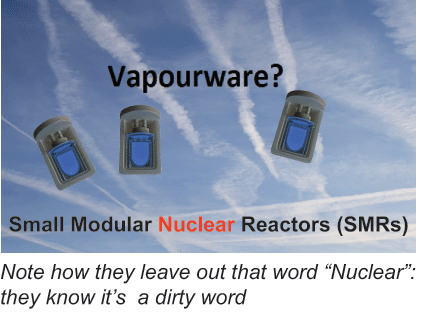 New Renew Extra 1st Nov 2018 Dave Elliott: Small Modular Reactors are being promoted as the next big things in energy- being allegedly cheaper than conventional large plants since they can be mass-produced.
None yet exist, apart from the small units used for nuclear submarines, but the proponents envisage all manner of new variants emerging in the years ahead, with some prototypes already being planned in the US, and Canada, and China also pushing ahead in this area.
Some are conventional Pressurised Water Reactors simply scaled down, others, less developed so far, are planning to test out other routes, including molten salt flouride reactors using thorium, possibly operating in fast breeder mode. In theory some could also be run in Combined Heat and Power mode, with the heat delivered to nearby urban areas- if anyone will allow SMRs to be built near or in cities. That would improve their economics.
SMR enthusiasts have be trying to promote their new as yet untested technologies, but not that many seem to want to pay for them. Some look to the military link to rescue SMRs- they have the same technical and expertise base as is used for the nuclear propulsion units of the UK’s nuclear submarines. But so far that doesn’t seem to paid off.
Certainly there have been complaints from SMR enthusiasts about the low level of government support in the UK: Meanwhile, in the USA, one key project has gone bust, having apparently overreached itself:
failing-to-deliver-reactor-that-ran-on-spent-fuel. It doesn’t sound like a booming area of development.
 The White House wants to leave the INF Treaty. New START could be next. The death of these agreements would fuel a new arms race. Foreign policy, BY JON WOLFSTHAL OCTOBER 31, 2018, resident Donald Trump’s tough talk about withdrawing the United States from the Intermediate-Range Nuclear Forces (INF) Treaty has generated plenty of controversy, but not much clarity about what happens next. What’s certain is that the end of the treaty would make the United States and its allies (for whom Trump apparently cares little) less safe and would undermine the global basis for nuclear restraint and nonproliferation.
And it may get worse. America’s potential withdrawal from the INF Treaty—which bans the United States and Russia from having nuclear or conventional ground-based missiles with ranges between 500 and 5,500 km (300 to 3,400 miles)—suggests that the 2010 New START arms reduction treaty with Russia might be next.
The untimely death of these two agreements would add fuel to a new arms race and further undermine stability and predictability between Washington and Moscow.
The last time the United States aand Russia had to navigate a world without bilateral nuclear constraints was before 1972; it was a world we were lucky to survive and one to which no sane person should want to return.
Nuclear weapons and deterrence advocates like to claim that the invention of nuclear weapons is what has kept the peace among major powers since the end of World War II. However, it was the development of predictable, binding, legal agreements and enforced global norms of behavior across security, trade, and global issues—not nuclear arms—that helped the United States to become the most prosperous and secure country in history. The rules not only made the United States safer and richer but also helped usher in an unprecedented era of global prosperity. The preservation of that order is a vital national interest and is under attack by the Trump administration.
That Trump would seek to undermine the rules that have benefited U.S. prosperity and influence is bad enough. That he would try to disrupt the system that prevents nuclear anarchy is inexcusable…………..
After assuming office, Trump largely ignored the issue of the INF Treaty and nuclear stability, even passing on an early offer from Russian President Vladimir Putin to extend the New START agreement, which caps both Russia and the United States at 1,550 strategic offensively deployed nuclear weapons and will expire on Feb. 5, 2021, unless extended by a term of up to five years. Since then, there has been no evidence that Trump or any senior member of his administration has engaged with Russia in any serious way to bring it back into compliance with the INF Treaty. While the Defense Department’s 2018 Nuclear Posture Review does briefly mention the agreement, it includes no strategy to restore Russian compliance and instead uses Russia’s violations to justify considering a new generation of sea-launched, nuclear-tipped cruise missiles. https://foreignpolicy.com/2018/10/31/trump-is-pushing-the-united-states-toward-nuclear-anarchy/

New UN Report Warns of Impending Catastrophe as World Warms, Glaciers Melt, DAHR JAMAIL, TRUTHOUT PART OF THE TRUTHOUT SERIES CLIMATE DISRUPTION DISPATCHES NOVEMBER 2, 2018 “………….Denial and Reality
In a recent interview, Donald Trump, who had called human-caused climate change “a Chinese hoax,” said it is real, “but I don’t know that it’s manmade.” He also said the climate will “change back again” — whatever that means.Meanwhile, the ongoing denialism continues unabated in his administration. Climate change information was removed from an important planning document for a national park in New England, with the rationale that it was deemed a “sensitive” topic.
The North Carolina government did not like the science about sea level rise, so literally passed a law banning policies based on such forecasts. The state, of course, is still recovering from flooding from Hurricane Florence.
Meanwhile, Trump’s EPA has abandoned restrictions against hydrofluorocarbons, a chemical that has been linked to climate change. OPEC announced it is predicting a massive increase in oil production over the next five years — enough so that it will offset CO2 reductions from electric cars. On that note, it was recently exposed that the state of Texas, already the leading emitter of greenhouse gasses in the US, has approved 43 petrochemical projects along the Gulf Coast since 2012 — projects that add millions of tons more of greenhouse gas pollution.
Stunningly, despite the terrifying weather events and dire predictions of what’s to come, it has come to light that the Trump administration is aware of and accepts a projected 7-degree rise in global temperatures by just 2100. This came out in a draft statement issued by the National Highway Traffic Safety Administration, which was written to justify Trump’s decision to freeze federal fuel-efficiency standards for cars and trucks built after 2020. “The amazing thing they’re saying is human activities are going to lead to this rise of carbon dioxide that is disastrous for the environment and society,” Michael MacCracken, who served as a senior scientist at the US Global Change Research Program from 1993 to 2002 told The Washington Post. “And then they’re saying they’re not going to do anything about it.”
The Trump administration’s stance on climate change is essentially that we’re doomed, so what’s the point in cutting greenhouse gas emissions?
With regard to the alarming UN climate report, the White House basically shrugged it off, claiming that emissions in the US have dropped since 2005. This is a true statement, but does not explain the reason for that, which is a historic shift away from coal-fired electricity and toward renewables and natural gas.
Fortunately, reality is striking back.
A group of 17 bipartisan state governors representing states that comprise half of the total US GDP has vowed to both fight climate change and fight Donald Trump on the issue. They recently pledged $1.4 billion to support electric cars and institute new policies geared toward reducing greenhouse gas emissions.
Stunningly, even Bloomberg, a business news outlet, is running stories with titles like “New Climate Debate: How to Adapt to the End of the World.”
And of course, the language coming out of the UN is a sign that the international community is beginning to understand the full weight of climate change’s implication.
Alas, this realization has not yet been met with the policy response it deserves. The author of a key UN report on the dangers of breaching the 1.5°C global warming limit recently said that the world is “nowhere near on track” to keep warming below even that already arbitrary level.https://truthout.org/articles/new-un-report-warns-of-impending-catastrophe-as-world-warms-glaciers-melt/
 Nuclear Consulting Group https://www.nuclearconsult.com/about/– 1Nov 18, Nuclear Consulting Group (ncg) comprises leading academics and experts in the fields of environmental risk, radiation waste, energy policy, environmental sustainability, renewable energy technology, energy economics, political science, nuclear weapons proliferation, science and technology studies, environmental justice, environmental philosophy, particle physics, energy efficiency, environmental planning, and participatory involvement. The group members are listed below.
Senior Lecturer, Energy Strategy
Aberdeen Business School
Nuclear Issues Consultant
Oxford Research Group
Emeritus Professor of Physics
Imperial College London
Co-Founder and CTO QuantaSol Ltd
Senior Lecturer in Geography
University of the West of England
Secretary, Medical Association for the Prevention of War
Member, ICAN
Independent Nuclear Consultant
Germany
Research Institute for Geography and the Lived Environment
School of Geosciences
University of Edinburgh
Chief Executive Officer
Friends of the Earth (FoE)
England, Wales and Northern Ireland
Emeritus Professor
The Open University
School of Environment and Development
University of Manchester
Adjunct Professor, Vermont Law School
Member of the China Sustainable Energy Policy Council
Vice Chair of the Board of the Union of Concerned Scientists
Former Member of the U.S. Nuclear Regulatory Commission
Co-Editor, Climate News Network
Author, ‘Global Warning: The Last Chance for Change’
Founding Director of E3G
Chairman of the Editorial Board of ENDS
Visiting Professor at Imperial and University Colleges
Independent Nuclear Consultant
Professor (Emeritus) Civil Engineering
University of Southampton
Lecturer, School of Environmental Sciences
University of East Anglia
Board Member, Public Health Wales
Department of Town and Regional Planning
University of Sheffield
Sustainability Research Institute
School of Earth and Environment
University of Leeds
Senior Lecturer in Environmental Policy and Planning
Cardiff School of City and Regional Planning
University of Cardiff
Research Associate, Sussex Energy Group
Science Policy Research Unit (SPRU)
Senior Researcher
Lower Carbon Futures
Environmental Change Institute
Oxford University
Professor of Critical Policy Studies
Faculty of Business and Law
De Montfort University
Marine Environment and Pollution Consultant
Associate Professor and Deputy Director
Institute of Environmental Studies
UNSW Australia
Professor of Politics
University of Keele
Director, Centre for Climate Finance and Investment
Principal Teaching Fellow, Department of Management
Imperial College Business School
Founder, Nuclear Consulting Group
The Energy Institute, University College London
JRCT Nuclear Policy Research Fellow
Lecturer in Risk and Resilience
Global Insecurities Centre
University of Bristol
HE German Technical Translations
Founder member of Pro Wind Alliance
Senior Research Fellow
Programme Leader, Lower Carbon Futures
Environmental Change Institute
University of Oxford
Senior Research Fellow
Centre for Computing and Social Responsibility
De Montfort University
Editor, Journal of Information, Communication & Ethics in Society
Professor of Political Science
Rutgers University
Editor, Nuclear Monitor (World Information Service on Energy and Nuclear Information & Resource Service)
National Nuclear Campaigner, Friends of the Earth, Australia
PhD Student
St Andrews University
Civil Nuclear Monitor, Poland
Frank Stanton Foundation Professor of Nuclear Security
Center for International Security and Cooperation (CISAC)
Stanford University
Professor of International Development
University of Bristol
Associate Professor, Griffith School of Environment
Griffith University
Editor, Nuclear Disaster at Fukushima Daiichi: Social, Political and Environmental Issues
Université de la Méditerranée, Bioinformatique et Génomique
Centre national de la recherche scientifique (CNRS)
School of Geography, Earth and Environmental Sciences
University of Birmingham
Chair, Campaign for Nuclear Disarmament (CND)
World Information Service on Energy (WISE)
Sweden
Executive Director
Institute of Sustainable Energy Policies (ISEP)
Research Fellow
Science Policy Research Unit (SPRU)
University of Sussex
Director
Global Sustainability Institute
Anglia Ruskin University
Lecturer in International Political Economy
Department of Politics and International Studies
University of Warwick
PhD Candidate
Centre for Science, Technology and Medicine in History
King’s College London
Vice President CND
Research Fellow
School of Geography and the Environment
University of Oxford
Executive Director
UK Organic Research Centre
School of Geography, Earth and Environmental Sciences
University of Birmingham
Senior Policy Analyst, Promoting Health and Sustainable Energy
Chair, Council on Intelligent Energy & Conservation Policy
Independent Consultant, Energy Systems
Founder and Chairman of Solarcentury and SolarAid
Author of The Carbon War and Half Gone
Research Fellow, Sussex Energy Group
Science and Technology Policy Research (SPRU)
University of Sussex
Principal Lecturer
Institute of Energy and Sustainable Development
De Montfort University
Independent research consultant
Specialist in UK and EU nuclear & environment policy
Australian Greens Senator for Western Australia
Spokesperson for Nuclear Issues, Infrastructure and Sustainable Cities
Spokesperson Assisting on Defence, Resources and Energy
Director, WISE, Paris
Department of Geography and Sustainable Development
School of Geography & Geosciences
University of St. Andrews
Former Head, Nuclear & Energy Campaign Asia, Greenpeace International
Author, Living in the Shadow, the Story of the People of Sellafield
Professor of Technological Innovation and Social Change
Manchester Institute of Innovation Research
Manchester Business School, University of Manchester
Coauthor Energy Democracy, the first history of Germany’s Energiewende
Professor of the Sociology of Science, Technology & Medicine
Dept of Sociology
Lancaster University, UK
Department of Medical Physics and Applied Radiation Sciences
McMaster University, USA
Professor of Environmental Accounting
Nihon University, Tokyo
Arizona State University
Author, Fukushima and the Privatization of Risk
Independent Nuclear Consultant
Helsinki, Finland
Professor of Physics, Imperial College London
Fellow of the Royal Society, Faraday Medal and Prize
School of Environmental Sciences
Department of Geography
University of Liverpool
Adj A/Prof University of South Australia
Fellow Charles Darwin University
Former President, International Solar Energy Society
Independent Nuclear Consultant
Bellona Russia
Independent Nuclear Consultant
India
PhD student at School of Law
Member of Center for Energy & Environmental Law and Policy
Seoul National University, South Korea
Executive Director
Scientists for Global Responsibility (SGR)
Reader in Geography
Department of Geography
King’s College London
Founder, Director and Trustee, Forum for the Future
Co-Director of the Prince of Wales’s Business & Sustainability Programme
Institute for Science, Innovation and Society
Oxford University
Emeritus Professor, Architectural Engineering, Heriot-Watt University
Author, Adapting Buildings and Cities for Climate Change
Energy Consultant
Editor of No2NuclearPower
Policy Adviser to the Nuclear Free Local Authorities
Pediatrician
Vice-President of International Physicians for the Prevention of Nuclear War (IPPNW) Germany
Scientific Council of the German Nuclear Waste Report
Environmental Health Committee of the German Medical Association
Institute of Innovation Research
Manchester Business School
University of Manchester
Senior Lecturer
School of Media
University of Wolverhampton
Author, Risk and Benefit Perceptions in the Discourse on Nuclear Energy
Professor in Environmental Economics
IPAG Business School, Paris
Chief Adviser, Renewable Energy and Climate Change
National Farmers’ Union (NFU)
Professor of Energy Policy, University of Sussex
Professor of Business and Social Sciences, Aarhus University
Director of Science for SPRU
Co-director Centre on Social, Technological and Environmental Pathways to Sustainability
University of Sussex
Group Lead, Strategy and Policy Unit
The Robert Gordon University
Aberdeen Business School
Director, MKG
Swedish NGO Office for Nuclear Waste Review
Visiting Professor, Kingston University
Director & Secretary to the Board of the World Renewable Energy Network
Professor of Geography
School of Environment and Development
Manchester University
Author on energy and climate policy in France and EU
Lecturer, Australian Indigenous Studies, The University of Melbourne
Honorary Associate, Environmental Humanities Collaboratory, Linköping University
Senior Lecturer in Geography
Geography and Environmental Management
Geography Research Unit, UWE
Professor of Energy Policy
Public Services International Research Unit (PSIRU)
University of Greenwich
Patron, One Planet Life
Sustainability Consultant and Author
Editor, The Ecologist
Director of Research
Institut de Microbiologie de la Méditerranée
French National Centre for Scientific Research (CNRS)
Reader in Energy Politics
Department of Politics and International Relations
University of Aberdeen
Graduate School of Environmental Life Science
Okayama University
Associate Professor
Lee Kuan Yew School of Public Policy
National University of Singapore
Co-author, The National Politics of Nuclear Power
Chair of Environment, Risk and Social Justice
Department of Geography
Lancaster University
School of Geography, Earth & Environmental Sciences
University of Birmingham
Chairman, British Energy Efficiency Federation
Honorary President, Association for the Conservation of Energy (ACE)
Lecturer in Social and Cultural Geography
Department of Geography
University of Sheffield
Chair of CND
Emeritus Professor of Peace and Conflict Studies
Leeds Metropolitan University
Chair of Scientists for Global responsibility (SGR)
Non-Executive Director, YES Energy Solutions
Research Fellow, Leeds University
Visiting Professor, Government Department
University of Essex
Emeritus Reader in Sociology
University of Cardiff
Author, Mobilising Modernity: The Nuclear Moment
Associate Director of CESAGen
Professor of Science Studies and Research Director of the Centre for the Study of Environmental Change (CSEC)
Associate Professor SIU, USA

The Climate Implications of the Migrant Caravan, EcoWatch, Olivia Rosane, Oct. 29, 2018 The U.S. military will send as many as 5,000 troops to the country’s Southern border to meet thousands of refugees and migrants who are traveling north through Mexico from Central America, The Independent reported Monday.

Image processed by CodeCarvings Piczard ### FREE Community Edition ### on 2017-10-20 17:00:50Z | http://piczard.com | http://codecarvings.com
 How long can Australians put up with these climate criminals ? Scott Morrison, Josh Frydenberg, Angus Taylor, Melissa Price , and dont let us forget that complete ignoramus Barnaby Joyce- happily leading Australia further into climate disaster, with their pretense that the current drought has nothing to do with climate change – that it’s only temporary – the good times will come back. We can prop up unsustainable farmers, using the money intended for disability support.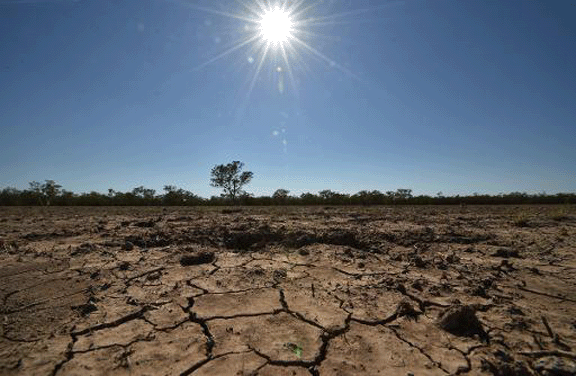
“In some places, there will be more frequent droughts, and other places can expect more frequent rainfall,” said Martin, professor in the School of Meteorology, OU College of Atmospheric and Geographic Sciences. “The Caribbean and Central America will have more extreme droughts and the north and northeast of North America can expect more extreme heavy rain events. Around the world, some places will see droughts and heavy rain events become more intense, longer lasting and more frequent. For the agriculture and related industries, this is particularly important.”
Globally, there are areas that will overall become wetter and areas that will become drier. When it gets warmer, the water builds up and it rains for long periods, but there will be longer periods between rain events and in places, it will become drier. Even regions that are projected to become drier overall, like the Southwest and South Central United States, are expected to see more severe, longer and frequent periods of heavy rain. Martin refers to the May 2015 rain event in Oklahoma and Texas as one example of what could be expected in the future.
“When it gets warmer, water vapor can build up in the atmosphere, so when it does rain it rains a lot and for long periods, but there will be longer periods between rain events so droughts will become worse.” said Martin. She points to a changing climate as the reason these events will worsen, and defines droughts and rain events by using a standardized rainfall index to compare events between regions and seasons. For this study, Martin used the same climate models as the Intergovernmental Panel on Climate Change.
Story Source:
Materials provided by University of Oklahoma. Original written by Jana Smith
Study of radiation-free treatment could have ‘huge impact’ on women with HER2-positive breast cancer https://www.healio.com/hematology-oncology/breast-cancer/news/online/%7B5586ac00-729c-4fb8-b322-6b5048b07f1a%7D/study-of-radiation-free-treatment-could-have-huge-impact-on-women-with-her2-positive-breast-cancer
October 25, 2018 A trial is underway at The University of Kansas Cancer Center to assess whether radiation could be eliminated from the treatment protocol for certain women with HER2-positive breast cancer.
 BHP approaches sliding doors moment at Olympic Dam
Peter Ker
How did this very complex, unreliable and expensive mine survive the chop that claimed so many other BHP assets in recent years? … (subscribers only)
 U.N. rights expert urges Japan to halt women and child evacuee returns to radioactive parts of Fukushima https://www.japantimes.co.jp/news/2018/10/26/national/science-health/u-n-rights-expert-urges-japan-halt-women-child-evacuee-returns-radioactive-parts-fukushima/#.W9PVHmgzbIU
KYODO GENEVA – The Japanese government must halt the return of women and children displaced by the March 2011 nuclear disaster back to areas of Fukushima where radiation levels remain high, a U.N. human rights expert said Thursday.
The special rapporteur on hazardous substances, Baskut Tuncak, also criticized in his statement the government’s gradual removal of evacuation orders for most of the radioactive areas as well as its plan to lift all orders within the next five years, even for the most contaminated areas.
“The gradual lifting of evacuation orders has created enormous strains on people whose lives have already been affected by the worst nuclear disaster of this century. Many feel they are being forced to return to areas that are unsafe,” he said.
An official of Japan’s permanent mission to the international organizations in Geneva rebuffed the statement, saying it is based on extremely one-sided information and could fan unnecessary fears about Fukushima.
Tuncak expressed concerns about people returning to areas with radiation above 1 millisievert per year, a level previously observed by Japan as an annual limit so as to prevent risks to the health of vulnerable people, especially children and women of reproductive age.
“It is disappointing to see Japan appear to all but ignore the 2017 recommendation of the U.N. human rights monitoring mechanism to return back to what it considered an acceptable dose of radiation before the nuclear disaster,” he said.
In the wake of the Fukushima reactor meltdowns, the Japanese government heightened the annually acceptable level of radiation to 20 millisieverts, raising concerns for the health of residents.
In August, Tuncak and two other U.N. human rights experts jointly criticized the Japanese government for allegedly exploiting and putting at risk the lives of “tens of thousands” of people engaged in cleanup operations at and around the crippled Fukushima No. 1 nuclear plant, a claim Tokyo dismissed.
 Strategies needed to address radiation exposure risks during venous procedures, Venous News, Strategies needed to address radiation exposure risks during venous procedures, Venous News,
Black indicated that there has been an increase in treatment options for deep vein thrombosis (DVT) in particular and for chronic venous patients over the last few years. While the advances are exciting, it is easy to forget that they come with potentially harmful side effects. Black compared modern venous procedures with endovascular aneurysm repair (EVAR), drawing particular attention to the young age at which venous patients typically require treatment, corresponding with a much longer lifetime of follow-up and potential reintervention procedures. “It is important to highlight the potential for harm in this patient group who are an average age of 30–40 years, as opposed to the older patients who typically undergo EVAR, for example. The EVAR 1 trial reported an increased incidence of malignancy in patients treated endovascularly after 15 years follow-up. Patients who need thrombolysis or inferior vena cava (IVC) reconstruction are often younger than those with arterial problems and may also require long-term surveillance and secondary interventions, exposing them to further radiation,” Black pointed out. To investigate the radiation exposure associated with venous procedures, Black and colleagues conducted a retrospective cohort study of patients with symptomatic ilio-femoral deep vein thrombosis and chronic IVC reconstruction, followed for a minimum of one year in order to capture reintervention data. Estimated radiation exposure from the related preoperative, index and postoperative interventions were measured in dose-area product and fluoroscopy time. ……… He concluded, adding that more needs to be done to raise awareness about the importance of reducing radiation dose wherever possible, and maintained that more strategies, such as the use of IVUS, need to be identified and put into practice. https://venousnews.com/radiation-exposure-risks-during-venous-procedures/ |
|
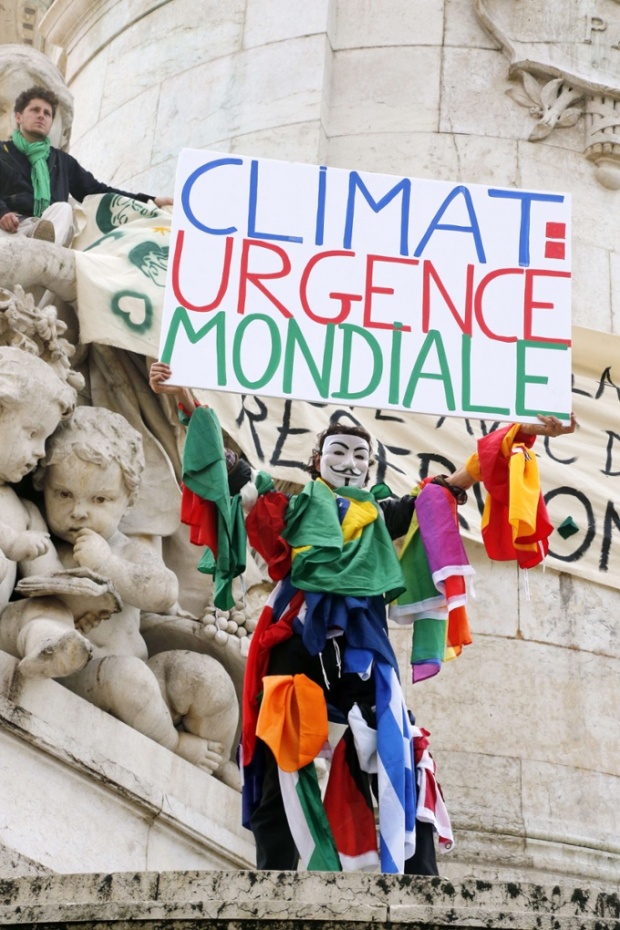 The reality is we just don’t care enough about climate change, WA Today, By Harold Mitchell, 24 October 2018 “………The recent report by the International Panel on Climate Change is endorsed by Sachs and he says: “Time is short. We love our lives and all we and our forebears have accomplished, yet there is a tremendous fragility that we don’t always see. We can’t take this great life for granted.”
The key point is that we have little more than 12 years to stop increasing the amount of carbon dioxide in the atmosphere. It’s now 26 years since the first Rio earth summit when the world agreed to avoid dangerous climate change. Sachs argues we are not doing enough.
But why aren’t we? Well, it’s all about our politicians being re-elected. Even though many of them believe that action is required, many feel they will not lose their seats if they support inaction…. Power prices today are more important to them than a liveable world for the children of tomorrow.
Polling organisations such as the Lowy Institute, The Australia Institute, CSIRO, and our own Foreseechange consistently show that most people in Australia believe the climate is changing and that we should act now, even if it is costly to do so.
But polling also shows that climate change is not regarded as important an issue for the future as others. Issues of highest future concern are cost of living, security of personal information, housing affordability, and congestion on the roads. Climate change is perceived to be the ninth most important concern about the future, out of 12 issues measured.
Plainly real leadership is required and Sach’s favourite president was JFK, because of his resistance to “dumbing down” important issues for a few votes. Sachs quotes the great president’s inauguration speech: “For man holds in his hands the power to abolish all forms of human poverty and all forms of human life”. He was speaking of nuclear war but could have added our ability to destroy millions of species including ourselves.
I’m also an admirer of JFK and I agree with him when he said: “The ignorance of one voter in democracy impairs the security of all.”

of the week – Australians for War Powers Reform (AWPR)
To see nuclear-related stories in greater depth and intensity
 Antinuclear