Online event. US launch of the WORLD NUCLEAR WASTE REPORT
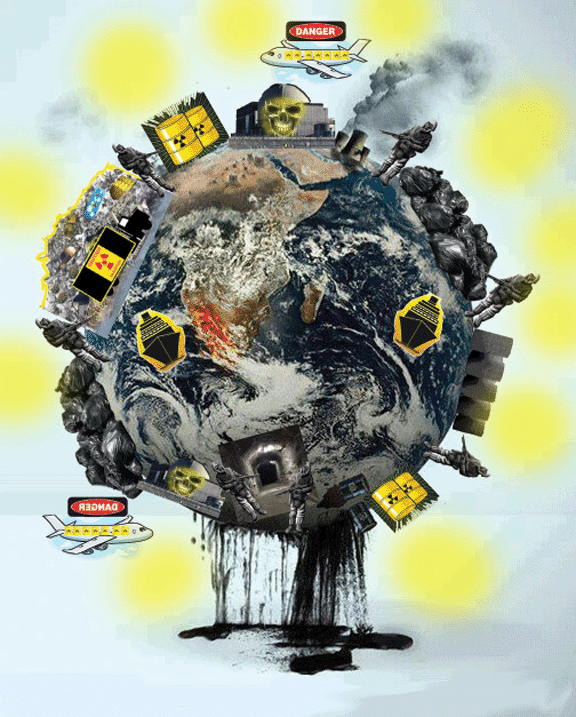 US launch of the WORLD NUCLEAR WASTE REPORT by the
  Heinrich Böll Stiftung https://www.facebook.com/events/329554248492108/
Online EventDec 4 at 5 AM UTC+11 – Dec 4 at 6:30 AM UTC+11 (Sydney is 16 hours ahead of New York City)
Why we shouldn’t be talking about nuclear waste “disposal”

All casked up with nowhere to go https://beyondnuclearinternational.org/2020/11/29/all-casked-up-with-nowhere-to-go/ November 29, 2020 by beyondnuclearinternational
Why we shouldn’t be talking about nuclear waste “disposal” By Linda Pentz Gunter, 29 Nov 20
Let’s get one thing clear right off the bat. You don’t “dispose” of nuclear waste.
The ill-suited, now canceled, but never quite dead radioactive waste repository at Yucca Mountain was not a “disposal” site.
The radioactive mud being dredged from the sea bed at the Hinkley C nuclear site in the UK, is not going to get “disposed of” in Cardiff Grounds (a mile off the Welsh coast).
When Germany dumped radioactive waste in drums into the salt mines of Asse, it wasn’t “disposed” of.
Taking nuclear waste to Texas and New Mexico border towns and parking it there indefinitely is not “disposal”.
To talk about radioactive waste “disposal” is simply dishonest. It’s disingenuous at best and deliberately misleading at worst.
In Cardiff Bay, that radioactive waste will get “dispersed.” At Asse, the waste leaked out of the barrels and “dispersed” into water that has flooded the site.
At Yucca Mountain, were it to get a renewed green light, water will eventually carry off those radioactive particles, sending them into groundwater and drinking water downstream of the dump.
“Once you have made radioactive waste, then you are looking at long-term isolation, not disposal,” says Paul Gunter of Beyond Nuclear. “And its cost. And if you are looking to manage the liability of cost, then don’t make it.”
That’s the easiest kind of radioactive waste to “dispose” of. The kind you haven’t made. Because, as Gunter says, “there is no alchemy for radioactive detritus.” Once we’ve made it, it’s with us pretty much forever.
Federal agencies and nuclear corporations continue to wrestle over what to do with the already tens of thousands of tons of high-level radioactive waste (at least 90,000 at last count) generated by America’s commercial nuclear power plants — all casked up with nowhere to go (and a lot of it still in the fuel pools). Because, absent alchemy, that waste is always going to be somewhere, even if we can’t see it.
Once upon a time, the general public understood this. In 1986, when the US Department of Energy was looking for a geological burial site for commercial nuclear waste, it began giving serious consideration to the “granite state” of New Hampshire.
New Hampshire towns — some of which would have been seized and razed by eminent domain to make way for the repository — rose up in opposition. A stunning 100 of them signed a resolution that not only opposed the burial, storage, and transportation of high-level nuclear waste in New Hampshire, but also its production.
A law was eventually passed in New Hampshire that forbade siting a nuclear waste repository in the state, but not banning its generation. The construction of the Seabrook nuclear power plant on the New Hampshire coast progressed, and today the single unit of the two originally planned is duly generating radioactive waste for the state of New Hampshire, with still no place to go.
In fact, the law banning a repository in New Hampshire was quietly, almost covertly, overturned in the New Hampshire state legislature in 2011, a fact uncovered by State Rep. Renny Cushing while writing legislation in 2016. (Cushing is a founder of this country’s first anti-nuclear power group, the Clamshell Alliance, which vigorously opposed the construction of Seabrook.)
https://www.youtube.com/watch?v=BLeYKkA2V7EA German four-part animation piece, humorously demonstrated the impossibility of disposing of radioactive waste. This is the second segment.
In a characteristically stealthy way, the Nuclear Regulatory Commission has ensured there will be no repeat of that New Hampshire defiance. Today, under what was once called the Nuclear Waste Confidence Decision, but is now termed the “Continued Storage of High-Level Waste”, (presumably because no one dare claim any “confidence” about finding a waste solution), an intervention against a reactor license renewal can be disallowed if it is based on contentions challenging the absence of a long-term radioactive waste solution.
This means that our aging fleet of nuclear reactors are free to generate yet more radioactive waste, some of them for another 20 or even 40 years, even though there is still no sign of land when it comes to finding a safe, long-term management plan for what to do with it.
That’s remarkable hubris this far into the nuclear game. Even if one could (very reluctantly) forgive the initial optimistic procrastination — when Fermi achieved the first chain reaction in 1942, but everyone decided the waste problem would be solved later — there is no forgiving it now, 78 years on. That’s more than ample time to have realized that continuing to make more of a lethal substance that you can never dispose of is scientifically and morally reprehensible.
We cannot dispose of radioactive waste. But we can dispose of nuclear power. We should hesitate no longer and do just that.
Linda Pentz Gunter is the international specialist at Beyond Nuclear and writes for and edits Beyond Nuclear International.
Astronomic costs to taxpayers of Britain’s nuclear sites
 UK’s nuclear sites costing taxpayers ‘astronomical sums’, say MPs
Public accounts committee says ignorance, incompetence and weak oversight to blame, Guardian, Damian Carrington Environment editor, @dpcarrington, Fri 27 Nov 2020 The Nuclear Decommissioning Authority (NDA) has a perpetual lack of knowledge about the state and location of waste on the 17 sites it is responsible for making safe, a powerful committee of MPs has found.
This results from decades of poor record keeping and weak government oversight, the MPs said. Combined with a “sorry saga” of incompetence and failure, this has left taxpayers footing the bill for “astronomical sums”, they said.
The NDA acknowledges that it still does not have full understanding of the condition of its sites, including 10 closed Magnox stations from Dungeness in Kent to Hunterston in Ayrshire, the MPs report said.
The NDA’s most recent estimate is that it will cost current and future generations of UK taxpayers £132bn to decommission the civil nuclear sites, with the work not being completed for another 120 years.
Since 2017, the NDA’s upper estimate of the cost of the 12-15-year programme just to get the sites to the ”‘care and maintenance” stage of the decommissioning process has increased by £3.1bn to £8.7bn. “Our past experience suggests these costs may increase further,” said the MPs’ report.
The lack of knowledge of the sites was a significant factor in the failure of a 2014 contract the NDA signed with a private sector company to decommission the Magnox sites. The government was forced to take back the contract in 2018 and the botched tender has now cost taxpayers £140m, the MPs found.
Sir Geoffrey Clifton-Brown, deputy chair of the public accounts committee (PAC), said: “Although progress has been made since our [2018] report, incredibly, the NDA still doesn’t know even where we’re currently at, in terms of the state and safety of the UK’s disused nuclear sites. Without that, and after the Magnox contracting disaster, it is hard to have confidence in future plans or estimates.” ……….
The UK has eight operating nuclear power plants, with all but one due to retire in the next decade. Only one new plant is being built, at Hinkley Point in Somerset, and it is years behind schedule and billions over budget.
Despite recent speculation over another new plant being given the go-ahead at Sizewell in Suffolk, Boris Johnson failed to announce this in his green industrial revolution plan last week. The government’s new national infrastructure strategy, published on Wednesday, said: “The government is pursuing large-scale nuclear projects, subject to clear value for money for both consumers and taxpayers.”
In 2015, the government stripped another private consortium of a £9bn contract to clean up the nuclear waste site at Sellafield. The company had been heavily criticised for its executives’ expense claims which included a £714 bill for a “cat in a taxi”. https://www.theguardian.com/environment/2020/nov/27/uks-nuclear-sites-costing-taxpayers-astronomical-sums-say-mps#_=_
Safety dangers of small modular nuclear reactors (SMRs)
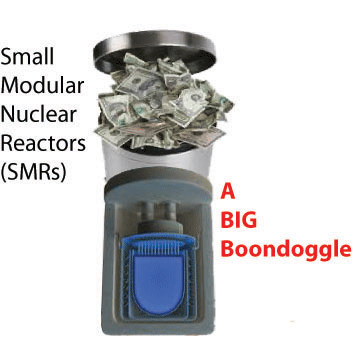
 Nuclear power isn’t the answer to Nunavut’s energy problems, expert says. Nicole Bogart CTVNews.ca Writer, @nlynnbogart, November 27, 2020 TORONTO — Despite growing interest from the federal government and nuclear proponents, the Canadian Environmental Law Association warns that the safety implications of small modular reactors (SMRs) may outweigh the environmental pay off.
Theresa McClenaghan, executive director of the Canadian Environmental Law Association, says despite proponents’ claims that Canada’s North is a promising market for the small, transportable reactors, the technology isn’t suited for remote locations.
“They’re very inappropriate for remote locations. They’re very inappropriate for anywhere,” McClenaghan told CTV’s Your Morning Friday.
“You’d be talking about creating new kinds of waste that we don’t already have in Canada… [and] having to worry about very long distance transportation.” ……
The federal government has invested in research into the technology and is set to release an SMR action plan with a focus on Canada’s North by the end of this year.
Alberta, New Brunswick, Saskatchewan and Ontario have all signed a memorandum of understanding regarding development of small modular reactors…….
McClenaghan says the government is missing key concerns, including the security of the reactors.
“A very serious concern that no one is talking about is non-proliferation risks – and the risk of a diversion of the materials to weapons,” she said.
“That’s a serious risk for any nuclear technology. But especially when you start to distribute the materials like this and have less control, [and] the industry is hoping they can just leave the units without operators.”
McClenaghan adds that despite the industry’s claims that nuclear power doesn’t produce greenhouse gases, the production of SMRs would.
“Nuclear does produce greenhouse gases because you have to mine, transport, and refine. In fact, the full life cycle is two times as much as solar and six times as much as onshore wind,” she explained.
There are also growing concerns about the implications for Indigenous communities in Canada.
The Northwest Territories Energy Strategy is calling for communities to decide. There’s a whole history of decisions being made and imposed in communities. That’s how a lot of the diesel ended up there in the first place,” McClenaghan said, noting that affordable energy remains the biggest rallying cry for these communities.
“I have seen quite a bit of interest in hybrid systems where they can start to reduce the reliance on diesel, but take advantage for the times of year when solar isn’t available.” https://www.ctvnews.ca/climate-and-environment/nuclear-power-isn-t-the-answer-to-nunavut-s-energy-problems-expert-says-1.5207328
The global energy revolution
RethinkX 25th Nov 2020, We  are on the cusp of the fastest, deepest, most profound disruption of the energy sector in over a century. Like most disruptions, this one is being driven by the convergence of several key technologies whose costs and capabilities have been improving on consistent and predictable trajectories – namely, solar photovoltaic power, wind power, and lithium-ion battery energy storage.
Our analysis shows that 100% clean electricity from the combination of solar, wind, and batteries (SWB) is both physically possible and economically affordable across the entire continental United States as well as the overwhelming majority of other populated regions of the world by 2030.
Adoption of SWB is growing exponentially worldwide and disruption is now inevitable because by 2030 they will offer the cheapest electricity option for most regions. Coal, gas, and nuclear power assets will become stranded during the 2020s, and no new investment in these technologies is rational from this point forward.
Canada’s environmental groups join to oppose Small Nuclear Reactors (SMRs)
Canadian environmental groups oppose experimental small modular nuclear reactors, https://blackburnnews.com/midwestern-ontario/midwestern-ontario-news/2020/11/24/canadian-environmental-groups-oppose-experimental-small-modular-nuclear-reactors/ By Janice MacKay November 24, 2020 A number of groups have joined together to ask the federal government to halt its plans to fund experimental new small modular nuclear reactors (SMRs).
The Federal Government is preparing to launch the federal government’s SMR ” Action Plan” within weeks.
The SMR Action Plan is expected to include a strategy to fund and support the development of experimental nuclear reactors by private sector companies, the majority based in the US and UK.
In a media release, dozens of organizations from coast to coast have called the proposed new nuclear reactors a dirty, dangerous distraction from tackling climate change. They include Greenpeace Canada, Friends of the Earth Canada, Ralliement contre la pollution radioactive, Équiterre, the Coalition for Responsible Energy Development in New Brunswick, the Canadian Coalition for Nuclear Responsibility and Northwatch..
The Bloc Québécois, the NDP and the Green Party all oppose the government’s “small” modular nuclear reactor plan.
On November 13, Monique Pauze from the Bloc Québécois stated: “The Bloc Québécois denounces the intention of Ottawa to invest in nuclear energy to the benefit, once again, of the Ontario industrial sector, instead of financing the transition towards clean electricity. The Bloc calls for the abandonment of the anticipated deployment of small modular nuclear reactors. The Federal government is leading Canada towards a wall by betting on nuclear energy that is absolutely not clean.”
NDP natural resources critic Richard Cannings said in a statement: “Many Canadians have concerns about impacts of nuclear energy. When it comes to energy generation there are better ways forward. We have options that are cheaper and safer and will be available quicker. I think we should be supporting the development of energy storage solutions to help roll out renewables like solar and wind on a larger scale instead.”
On November 10, all three Green Party of Canada caucus members issued a statement and signed a letter to Minister O’Regan and Minister Navdeep Bains saying that: “Small nuclear reactors (SMRs) have no place in any plan to mitigate climate change when cleaner and cheaper alternatives already exist. The federal government must stop funding the nuclear industry and instead redirect investments towards smarter solutions. Nuclear fails on many grounds, including on the economics.”
Prof. Susan O’Donnell from the Coalition for Responsible Energy Development in New Brunswick said: “Building new nuclear reactors does not belong in a climate action plan. Leading researchers have shown that investing in renewable energy is the best path to net zero and that adding nuclear energy to the mix actually hinders rather than helps.”
Shawn-Patrick Stensil, Director of Programs at Greenpeace Canada, said: “The Liberal government is throwing good money after bad. Hypothetical new nuclear power technologies have been promising to be the next big thing for the last forty years, but in spite of massive public subsidies, that prospect has never panned out.”
The release pointed out the proposed reactors are still on the drawing board and will take a decade or more to develop. If built, their power will cost ten times more than wind or solar energy. The most advanced SMR project to date in the US has already doubled its estimated cost – from $3B to over $6B.
The federal government announced its first SMR grant of $20 million to Terrestrial Energy on October 15.
The environmental groups said they are shocked that the government is funding new nuclear energy development with no parliamentary review, while trying to avoid public scrutiny and debate. They called the consultation process leading to date on the SMR Action Plan a sham. Individuals and groups could only comment on the plan if they first signed on to a statement of principles supporting SMR technologies. They say nuclear power and uranium mining will always be dirty and dangerous. Radioactive waste will have to be kept out of the environment for tens of thousands of years, and there is no known means of achieving that.
The effect on Europe of the UN Treaty on the Prohibition of Nuclear Weapons
 Nuclear prohibition: Changing Europe’s calculations https://www.
 europeanleadershipnetwork.org/commentary/nuclear-prohibition-changing-europes-calculations/ Beatrice Fihn |Executive Director of the International Campaign to Abolish Nuclear Weapons (ICAN),Daniel Högsta |Campaign Coordinator of the International Campaign to Abolish Nuclear Weapons (ICAN), 25 Nov 20,
On 22 January 2021, nuclear weapons will be placed in the same category as chemical and biological weapons – the other weapons of mass destruction – illegal under international law. On that date, the Treaty on the Prohibition of Nuclear Weapons (TPNW) will enter into force and will change the legal and normative landscape around nuclear weapons. This has significant implications for any European governments complicit in the practice of deployment and potential use of nuclear weapons of mass destruction.
A historic milestone for nuclear disarmament Continue reading
Destructive potential of over a million tons of radioactive water into the Pacific
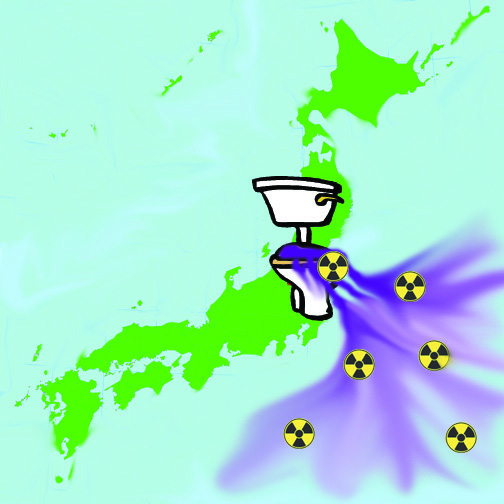 Almost Unnoticed Nuclear Pandemic Is Spreading in Japan, https://indepthnews.net/index.php/the-world/asia-pacific/3967-almost-unnoticed-nuclear-pandemic-is-spreading-in-japanBy Manlio Dinucci, MONTREAL (IDN) 4 Nov 20, – It was not Covid-19, therefore the news went almost unnoticed: Japan will release over a million tons of radioactive water from the Fukushima nuclear power plant into the sea. The catastrophic incident in Fukushima was triggered by the Tsunami that struck the north-eastern coast of Japan on March 11, 2011, submerging the power plant and causing the core of three nuclear reactors to melt.
The power plant was built on the coast just 4 meters above sea level with five-meter-high breakwater dams, in a tsunami-prone area with waves 10-15 meters high. Furthermore, there had been serious failures by the private company TEPCO (the Tokyo Electric Power Company) managing the plant, in the control of the nuclear plant: the safety devices did not come into operation at the time of the Tsunami.
Water has been pumped through the reactors for years to cool the molten fuel. The water became radioactive and was stored inside the plant in over a thousand large tanks, accumulating 1.23 million tons of radioactive water. TEPCO is building other tanks, but they will also be full by mid-2022.
TEPCO must continue pumping water into the melted reactors and has decided to discharge, in agreement with the government, the water accumulated so far into the sea after filtering it to make it less radioactive (however, to what extent it is not known) with a process which will last 30 years. There is also radioactive sludge accumulated in the decontamination filters of the plant, stored in thousands of containers, and huge quantities of soil and other radioactive materials.
As TEPCO admitted, the melting in reactor 3 is particularly serious because the reactor was loaded with Mox, a much more unstable and radioactive mix of uranium oxides and plutonium.
The Mox for this reactor and other Japanese ones was produced in France, using nuclear waste sent from Japan. Greenpeace has denounced the danger deriving from the transport of this plutonium fuel for ten thousand kilometres.
Greenpeace also denounced that Mox favours the proliferation of nuclear weapons, since plutonium can be extracted more easily and, in the cycle of uranium exploitation, there is no clear dividing line between civilian and military use of fissile material.
Up to now, around 240 tons of plutonium for direct military use and 2,400 tons for civil use (nuclear weapons can however be produced with them), were accumulated in the world (according to 2015 estimates), plus about 1,400 tons of highly enriched uranium for military use. A few hundred kilograms of plutonium would be enough to cause lung cancer to 7.7 billion inhabitants of the planet, and plutonium remains lethal for a period corresponding to almost ten-thousand human generations.
A destructive potential has thus accumulated, for the first time in history, capable of making the human species disappear from the face of Earth. The nuclear bombings of Hiroshima and Nagasaki; the more than 2,000 experimental nuclear explosions in the atmosphere, at sea and underground; the manufacture of nuclear warheads with a power equivalent to over one million Hiroshima bombs; the numerous accidents involving nuclear weapons and those involving civilian and military nuclear plants, all this has caused radioactive contamination that has affected hundreds of millions of people.
A portion of approximately 10 million annual cancer deaths worldwide – documented by WHO – is attributable to the long-term effects of radiation. In ten months, again according to the World Health Organization data, Covid-19 caused about 1.2 million deaths worldwide.
This danger should not be underestimated, but it does not justify the fact that mass media, especially television, did not inform that over one million tons of radioactive water will be discharged into the sea from the Fukushima nuclear power plant, with the result that it will further increase cancer deaths upon entering in the food chain.
Clear connection between (uneconomic) Small Nuclear Reactors and military use
 Western Europe cools on plans for nuclear power , Climate News Network, November 25th, 2020, by Paul Brown
“…………The UK’s decision to back the British company Rolls-Royce to develop SMRs means it is unlikely the government has the money or the political inclination to back the French as well.
Rolls-Royce has been badly hit by the Covid-19 pandemic because a large part of its business relies on the struggling aviation business, while it needs support because it makes mini-reactors to power British nuclear submarines. The proposed SMR research programme will allow nuclear-trained personnel to switch between military and civilian programmes.
Long out of office
The Rolls-Royce SMRs are a long shot from the commercial point of view, since they are unproven and likely to be wildly expensive compared with renewable energy. However, they have the political advantage of being British, and their development lies so far into the future that the current government will be out of office before anyone knows whether they actually work or are economic.
As far as the current crop of reactors is concerned, it is clear that at least those with graphite cores are nearing the end of their lives. Nuclear power has some way to go before it can expect a renaissance in the UK…….. https://climatenewsnetwork.net/western-europe-cools-on-plans-for-nuclear-power/
Joe Biden’s ” transition team” contains men with strong links to the weapons industry
A Washington Echo Chamber for a New Cold War, Reader Supported News, By Cassandra Stimpson and Holly Zhang, TomDispatch, 20 November 20 Yes, tensions are still rising between the world’s greatest emitter of greenhouse gases, historically speaking, and the country emitting the most at this very moment — not that the emerging cold war between the United States and China is often thought of in that context. Still, in the Trump era, now ending so ingloriously, the U.S. moved ever closer to just such a new cold war, as the president got ever angrier at China and the “plague” it had “unleashed on to the world,” his secretary of state denounced its policies, and U.S. aircraft carriers began repeatedly making their way into the disputed South China Sea.
As trade wars loomed and The Donald boomed, the Pentagon also began issuing documents deemphasizing the “forever wars” it had been involved in for nearly two decades and emphasizing instead the dangers of China (and Russia). Now, this country is preparing, however chaotically, to enter the Biden years, even if that other old man is still bitterly camped out in the White House. President Trump, who was perfectly ready to set the planet on fire (more or less literally), is nearly gone and you might think that the globe’s two largest carbon emitters would be ready to consider some kind of accommodation or even coordination to stop this world from going down in intensifying storms, rising sea levels, raging wild fires, and… well, you know the story.
Unfortunately, that would be logic, not interests — and the interests couldn’t be more real or, as Cassandra Stimpson and Holly Zhang of the Foreign Influence Transparency Initiative (FITI) at the Center for International Policy suggest today, more grimly lined up to promote that very cold war.
Only recently, for instance, we’ve had a look at Joe Biden’s 23-person “transition team” for the Pentagon, most of whom come from the hawkish think tanks that are so much a part of official Washington and eight of whom, as In These Times has reported, “list their ‘most recent employment’ as organizations, think tanks, or companies that either directly receive money from the weapons industry, or are part of this industry,” including the Center for Strategic and International Studies, discussed in today’s TomDispatch post. And so it goes, sadly enough, in Washington whoever the president may be.
-Tom Engelhardt, TomDispatch https://readersupportednews.org/opinion2/277-75/66316-a-washington-echo-chamber-for-a-new-cold-war
Influence of weapons makers on U.S. policy, whether a Democrat or Republican administration
A Washington Echo Chamber for a New Cold War, Reader Supported News, By Cassandra Stimpson and Holly Zhang, TomDispatch, 20 November 20
 ar: what is it good for? Apparently, in Washington’s world of think tanks, the answer is: the bottom line.
In fact, as the Biden presidency approaches, an era of great-power competition between the United States and China is already taken for granted inside the Washington Beltway. Much less well known are the financial incentives that lurk behind so many of the voices clamoring for an ever-more-militarized response to China in the Pacific. We’re talking about groups that carefully avoid the problems such an approach will provoke when it comes to the real security of the United States or the planet. A new cold war is likely to be dangerous and costly in an America gripped by a pandemic, its infrastructure weakened, and so many of its citizens in dire economic straits. Still, for foreign lobbyists, Pentagon contractors, and Washington’s many influential think tanks, a “rising China” means only one thing: rising profits.
Defense contractors and foreign governments are spending millions of dollars annually funding establishment think tanks (sometimes in secret) in ways that will help set the foreign-policy agenda in the Biden years. In doing so, they gain a distinctly unfair advantage when it comes to influencing that policy, especially which future tools of war this country should invest in and how it should use them.
Not surprisingly, many of the top think-tank recipients of foreign funding are also top recipients of funding from this country’s major weapons makers. The result: an ecosystem in which those giant outfits and some of the countries that will use their weaponry now play major roles in bankrolling the creation of the very rationales for those future sales. It’s a remarkably closed system that works like a dream if you happen to be a giant weapons firm or a major think tank. Right now, that system is helping accelerate the further militarization of the whole Indo-Pacific region.
In the Pacific, Japan finds itself facing an increasingly tough set of choices when it comes to its most significant military alliance (with the United States) and its most important economic partnership (with China). A growing U.S. presence in the region aimed at counterbalancing China will allow Japan to remain officially neutral, even as it reaps the benefits of both partnerships.
To walk that tightrope (along with the defense contractors that will benefit financially from the further militarization of the region), Japan spends heavily to influence thinking in Washington. Recent reports from the Center for International Policy’s Foreign Influence Initiative (FITI), where the authors of this piece work, reveal just how countries like Japan and giant arms firms like Lockheed Martin and Boeing functionally purchase an inside track on a think-tank market that’s hard at work creating future foreign-policy options for this country’s elite.
How to Make a Think Tank Think
Take the prominent think tank the Center for Strategic and International Studies (CSIS), which houses programs focused on the “China threat” and East Asian “security.” Its Asia Maritime Transparency Initiative, which gets funding from the governments of Japan and the Philippines, welcomes contributions “from all governments in Asia, as well as corporate and foundation support.”
Unsurprisingly, the program also paints a picture of Japan as central “to preserving the liberal international order” in the face of the dangers of an “increasingly assertive China.” It also highlights that country’s role as Washington’s maritime security partner in the region. There’s no question that Japan is indeed an important ally of Washington. Still, positioning its government as a lynchpin in the international peace (or war) process seems a dubious proposition at best.
CSIS is anything but alone when it comes to the moneyed interests pushing Washington to invest ever more in what now passes for “security” in the Pacific region. A FITI report on Japanese operations in the U.S., for instance, reveals at least 3,209 lobbying activities in 2019 alone, as various lobbyists hired by that country and registered under the Foreign Agents Registration Act targeted both Congress and think tanks like CSIS on behalf of the Japanese government. Such firms, in fact, raked in more than $30 million from that government last year alone. From 2014 to 2019, Japan was also the largest East Asian donor to the top 50 most influential U.S. think tanks. The results of such investments have been obvious when it comes to both the products of those think tanks and congressional policies.
Think-tank recipients of Japanese funding are numerous and, because that country is such a staunch ally of Washington, its government can be more open about its activities than is typical. Projects like the Carnegie Endowment for International Peace’s “China Risk and China Opportunity for the U.S.-Japan Alliance,” funded by the Japanese Ministry of Foreign Affairs, are now the norm inside the Beltway. You won’t be surprised to learn that the think-tank scholars working on such projects almost inevitably end up highlighting Japan’s integral role in countering “the China threat” in the influential studies they produce. That threat itself, of course, is rarely questioned. Instead, its dangers and the need to confront them are invariably reinforced.
Another Carnegie Endowment study, “Bolstering the Alliance Amid China’s Military Resurgence,” is typical in that regard. It’s filled with warnings about China’s growing military power — never mind that, in 2019, the United States spent nearly triple what China did on its military, according to the Stockholm International Peace Research Institute. Like so many similarly funded projects inside the Beltway, this one recommended further growth in military cooperation between the U.S. and Japan. Important as well, it claimed, was developing “the capability to wage combined multidomain joint operations” which “would require accelerating operational response times to enhance firepower.”
The Carnegie project lists its funding and, as it turns out, that foundation has taken in at least $825,000 from Japan and approximately the same amount from defense contractors and U.S. government sources over the past six years. And Carnegie’s recommendations recently came to fruition when the Trump administration announced the second-largest sale of U.S. weaponry to Japan, worth more than $23 billion worth.
If the Japanese government has a stake in funding such think tanks to get what it wants, so does the defense industry. The top 50 think tanks have received more than $1 billion from the U.S. government and defense contractors over those same six years. Such contractors alone lobby Congress to the tune of more than $20 million each election cycle. Combine such sums with Japanese funding (not to speak of the money spent by other governments that desire policy influence in Washington) and you have a confluence of interests that propels U.S. military expenditures and the sale of weapons globally on a mind-boggling scale.
A Defense Build-Up Is the Order of the Day
An April 2020 report on the “Future of US-Japan Defense Collaboration” by the Atlantic Council’s Scowcroft Center for Strategy and Security offers a typical example of how such pro-militarization interests are promoted. That report, produced in partnership with the Japanese embassy, begins with the premise that “the United States and Japan must accelerate and intensify their long-standing military and defense-focused coordination and collaboration.”
Specifically, it urges the United States to “take measures to incentivize Japan to work with Lockheed Martin on the F-2 replacement program,” known as the F-3. (The F-2 Support Fighter is the jet Lockheed developed and produced in partnership with Mitsubishi Heavy Industries for the Japanese Defense Forces.) While the report does acknowledge its partnership with the embassy of Japan, it fails to acknowledge that Lockheed donated three quarters of a million dollars to the influential Atlantic Council between 2014 and 2019 and that Japan generally prefers to produce its own military equipment domestically.
The Atlantic Council report continues to recommend the F-3 as the proper replacement for the F-2, “despite political challenges, technology-transfer concerns,” and “frustration from all parties” involved. This recommendation comes at a time when Japan has increasingly sought to develop its own defense industry. Generally speaking, no matter the Japanese embassy’s support for the Atlantic Council, that country’s military is eager to develop a new stealth fighter of its own without the help of either Lockheed Martin or Boeing. While both companies wish to stay involved in the behemoth project, the Atlantic Council specifically advocates only for Lockheed, which just happens to have contributed more than three times what Boeing did to that think tank’s coffers.
A 2019 report by the Hudson Institute on the Japan-U.S. alliance echoed similar sentiments, outlining a security context in which Japan and the United States should focus continually on deterring “aggression by China.” To do so, the report suggested, American-made ground-launched missiles (GCLMs) were one of several potential weapons Japan would need in order to prepare a robust “defense” strategy against China. Notably, the first American GCLM test since the United States withdrew from the Cold War era Intermediate-Range Nuclear Forces Treaty in 2019 used a Lockheed Martin Mark 41 Launch System and Raytheon’s Tomahawk Land Attack Cruise Missile. The Hudson Institute had not only received at least $270,000 from Japan between 2014 and 2018, but also a minimum of $100,000 from Lockheed Martin.
In 2020, CSIS organized an unofficial working group for industry professionals and government officials that it called the CSIS Alliance Interoperability Series to discuss the development of the future F-3 fighter jet. While Japanese and American defense contractors fight for the revenue that will come from its production, the think tank claims that American, Japanese, and Australian industry representatives and officials will “consider the political-military and technical issues that the F-3 debate raises.” Such working groups are far from rare and offer think tanks incredible access to key decision-makers who often happen to be their benefactors as well.
All told, between 2014 and 2019, CSIS received at least $5 million from the U.S. government and Pentagon contractors, including at least $400,000 from Lockheed Martin and more than $200,000 from Boeing. In this fashion, a privileged think-tank elite has cajoled its way into the inner circles of policy formation (and it matters little whether we’re talking about the Trump administration or the future Biden one). Think about it for a moment: possibly the most crucial relationship on the planet between what looks like a rising and a falling great power (in a world that desperately needs their cooperation) is being significantly influenced by experts and officials invested in the industry guaranteed to militarize that very relationship and create a twenty-first-century version of the Cold War.
Any administration, in other words, lives in something like an echo chamber that continually affirms the need for a yet greater defense build-up led by those who would gain most from it.
Profiting from Great Power Competition……. https://readersupportednews.org/opinion2/277-75/66316-a-washington-echo-chamber-for-a-new-cold-war
European security officials fear that Trump may trigger a war against Iran
Security officials worry Israel and Saudi Arabia may see the end of Trump as their last chance to go to war with Iran, MSN insider@insider.com (Mitch Prothero) 18 Nov 20,
-
- European security officials are worried that outgoing president Donald Trump will trigger a military conflict with Iran in order to tie President-Elect Joe Biden’s hands, sources tell Insider.
- They also fear that Israel and Saudi Arabia may see the departure of Trump as a ticking clock they need to beat.
-
- “Both countries are run by immature leaders who have been screaming about the need for war with Iran for so long it’s possible they really believe that a Biden administration will be followed by an Iranian nuclear attack,” one source told Insider.
- Trump has elevated hardliners on Iran inside the Pentagon.
-
-
- European intelligence officials are alarmed about the possibility of military action towards Iran in the waning days of the Trump administration.
Concern that Trump — who has pushed for
-
- — or a combination of Israel or Saudi Arabia creating a military confrontation in the waning days of the administration has been a concern for over a week, according to three European intelligence officials who spoke with Insider.
One fear is of unilateral action by the US to force a military clash that might make it impossible for the incoming Biden
Israel conducted a series of attacks in Iran over the summer, in the knowledge that Trump was sympathetic to a
The fears were underlined last week, in the wake of Trump’s election defeat, when the president replaced much of
Biden — who enters office on Jan 21, 2021 — has not expressed any solid policy positions on Iran except to
Security officials say the US will be a ‘crippled world power’ until Biden takes over and fear Trump will declassify intelligence that will help Putin
Israel keeps blowing up military targets in Iran, hoping to force a confrontation before Trump can be voted out in November.
In the face of public opposition, Ottawa delays small nuclear reactor plan
 Ottawa delays small nuclear reactor plan as critics decry push for new reactors, Yahoo Finance Colin Perkel, The Canadian Press, Thu., November 19, 2020, “……… Industry critics were quick to pounce on the government’s expected SMR announcement. They called on Ottawa to halt its plans to fund the experimental technology. Ottawa delays small nuclear reactor plan as critics decry push for new reactors, Yahoo Finance Colin Perkel, The Canadian Press, Thu., November 19, 2020, “……… Industry critics were quick to pounce on the government’s expected SMR announcement. They called on Ottawa to halt its plans to fund the experimental technology.
.. a major problem facing the industry is its growing mound of radioactive waste. This week, the government embarked on a round of consultations about what do with the dangerous material. Dozens of groups, including the NDP, Bloc Quebecois, Green Party and some Indigenous organizations, oppose the plan for developing small modular reactors. They want the government to fight climate change by investing more in renewable energy and energy efficiency. “We have options that are cheaper and safer and will be available quicker,” Richard Cannings, the NDP natural resources critic, said in a statement. … Joe McBrearty, head of Canadian Nuclear Laboratories, told the conference the company had signed a host agreement this week with Ottawa-based Global First Power for a demonstration SMR at its Chalk River campus in eastern Ontario. A demonstration reactor will allow for the assessment of the technology’s overall viability, he said |
|
Small Modular Nuclear Reactors, the nuclear industry’s latest pipe dream.
|
Not only is this form of power expensive compared to the alternatives, we still haven’t resolved issues around radioactive contamination and hazardous waste streams. M.V. Ramana, Eva Schacherl, Nov 16, 2020 On Nov. 18, Minister of Natural Resources Seamus O’Regan will announce the federal government’s action plan for small modular nuclear reactors, the nuclear industry’s latest pipe dream.
At least a dozen corporations around the world are hoping for taxpayer funding to further develop their SMR designs, all of which are still on the drawing board. Last month, the federal government handed out $20 million to Terrestrial Energy. Other expectant entities include SNC-Lavalin, which bought Atomic Energy of Canada Ltd.’s CANDU division and is developing a CANDU SMR; United Kingdom-based Moltex Energy; and Seattle-based Ultra Safe Nuclear Corporation. The Liberal government says it supports small modular reactors to help Canada mitigate climate change. The government is simply barking up the wrong tree, for several reasons: cost, cost and cost, as well as renewables, safety and radioactive waste. Nuclear power is very expensive compared to other low-carbon options, and the difference keeps growing because the cost of renewables and energy storage is going down rapidly. Peter Bradford, a former U.S. Nuclear Regulatory Commission official, likened the use of nuclear power to mitigate climate change to fighting world hunger “with caviar.” The high price tag for nuclear power plants has led to a near freeze on new ones around the world. Canada’s last nuclear plant came online in 1994, and Ontarians will remember when plans for two reactors at Darlington were shelved in 2009 after a $26-billion bid – three times the expected budget. Nuclear projects also have a long history of cost and time overruns. The cost estimate of NuScale, the most advanced SMR project in the U.S., has gone up from $4.2 billion to $6.1 billion. That works out to almost 10 times the cost per kilowatt of building wind power in Alberta. There is no way SMRs can be cost-competitive with wind or solar energy. O’Regan has said he doesn’t know any way to get to net zero-carbon emissions by 2050 without nuclear power, but this is refuted by many studies. Ontario can meet its electricity demand using only renewables and hydro power backed up by storage technologies. A recent study using data from 123 countries shows that renewable energy outperforms nuclear power in reducing emissions. It concludes that nuclear investments just get in the way of building up renewable energy. Advocates claim that we need nuclear energy to back up solar and wind power when the sun doesn’t shine and the wind doesn’t blow. However, nuclear reactors cannot be powered up and down rapidly and safely. If they are, their cost of generating electricity increases further. Nor do nuclear plants run reliably all the time. In France, which generates 70 per cent of its electricity from nuclear power, each reactor was shut down for an average of 96.2 days in 2019. The federal government sees small reactors playing a role in remote off-grid communities and mines that now rely on diesel. But together they require less than 0.5 per cent of Canada‘s electricity generation capacity. Power from SMRs could be 10 times more expensive for those communities than adding wind and solar energy. There is also strong opposition to SMRs from First Nations communities, who say these represent an unacceptable risk. The risk from nuclear power comes in multiple forms. There is the potential for accidents leading to widespread radioactive contamination. Because reactors involve parts that interact rapidly in complex ways, no nuclear reactor is immune to accidents. And they all produce radioactive nuclear waste streams that remain hazardous for up to one million years. Dealing with these is a major challenge, and there is no demonstrated solution to date. Canada has a big challenge ahead: to decarbonize by 2050. Let’s get on with it, in the quickest and most cost-effective way: by improving the efficiency of our energy use, and building out solar, wind and storage technologies. The federal Green Party is correct in stating that nuclear reactors “have no place in any plan to mitigate climate change when cleaner and cheaper alternatives exist.” Let’s forget the dirty, dangerous distraction of small nuclear reactors. M.V. Ramana is the Simons Chair in Disarmament, Global and Human Security and Director of the Liu Institute for Global Issues at the School of Public Policy and Global Affairs, University of British Columbia. Eva Schacherl is an advocate for protecting the Ottawa River and for environmental and social justice. |
|

Correcting 5 wrong opinions about the Treaty on the Prohibition of Nuclear Weapons
FIVE COMMON MISTAKES ON THE TREATY ON THE PROHIBITION OF NUCLEARWEAPONS https://warontherocks.com/2020/11/five-common-mistakes-on-the-treaty-on-the-prohibition-of-nuclear-weapons/
The Treaty on the Prohibition of Nuclear Weapons, the first international ban on nuclear weapons, will take full legal effect on Jan. 22, 2021. It joins the Chemical Weapons Convention and the Biological Weapons Convention as a treaty prohibiting weapons of mass destruction and follows the roadmap of the Mine Ban Treaty (known as the Ottawa Treaty) and Cluster Munitions Convention to bring together a coalition of civil society and diplomats to prohibit and eliminate weapons based on their humanitarian harm. The treaty has widespread support in the international community — 122 countries voted for its adoption in 2017, and these countries have continued to express their support for the treaty in subsequent statements to the U.N. General Assembly, in spite of resistance from nuclear-armed states and some of their allies, who have not joined the treaty.
This treaty is a big deal. And yet, political scientists and nuclear policy experts, largely from nuclear-armed states, repeatedly make mistakes in their analysis and interpretation of this treaty and international law. At a gathering of roughly 800 nuclear policy experts in Washington, D.C. in 2019, experts overwhelmingly and incorrectly predicted the treaty would not enter into force by March 2021. A French academic even misread the actual treaty text — a clear error that was not flagged by any of the article’s expert reviewers, and was only corrected after publication.
I work at the International Campaign to Abolish Nuclear Weapons, which won the 2017 Nobel Peace Prize for its efforts to negotiate the ban treaty. Its work is informed by international lawyers, academics, technical experts, diplomats, survivors of nuclear weapon use and testing, and advocates with regional expertise. This diverse and rich foundation of knowledge and experience informs our work to this day. But some academics and nuclear policy experts that haven’t worked as closely on the treaty often make five key mistakes when analyzing this treaty and international law: that the treaty may be just symbolic, that NATO countries cannot join, that the treaty doesn’t address compliance, that it won’t have any impact on nuclear-armed and NATO states, and that the treaty will only affect democracies.
Mistake One: The Treaty Is Purely Symbolic
The legal impact of the Treaty on the Prohibition of Nuclear Weapons is clear: Once it enters into force, all states parties will need to comply with the treaty’s prohibitions and implement its obligations. While some treaty articles reinforce existing obligations under other treaties, states parties do actually take on new legal obligations, contrary to what some have claimed. Even without any other states joining the treaty, from a strictly legal perspective, the treaty is not merely “symbolic.”
The treaty prohibits states parties from developing, testing, producing, manufacturing, transferring, possessing, stockpiling, using (or threatening to use) nuclear weapons, or allowing nuclear weapons to be stationed on their territory. It also prohibits states parties from assisting, encouraging, or inducing states to engage in any of these prohibited activities. Some of these prohibitions are already enshrined in nuclear weapon-free zone treaties, but not all prohibition treaty states parties are members of these treaties. Given that the Comprehensive Nuclear-Test-Ban Treaty unfortunately has yet to enter into force, the Treaty on the Prohibition of Nuclear Weapons will be the only agreement in force banning nuclear testing internationally.
In addition to adhering to prohibitions, states parties must implement positive obligations, some of which echo previous agreements, but many of which are new to this treaty.
There are some technical requirements. For example, states parties must submit a declaration with the U.N. secretary-general on their nuclear weapon status. They must also bring into force a comprehensive safeguards agreement with the International Atomic Energy Agency on inspecting their peaceful nuclear program, or maintain a more intrusive inspections regime (an “additional protocol”) if they have one in force already.
But the Treaty on the Prohibition of Nuclear Weapons also includes ground-breaking provisions on providing assistance to victims of nuclear weapons use and testing and remediating contaminated environments. This is the first time that international law has mandated that countries address the humanitarian devastation caused by decades of nuclear weapons testing and the U.S. bombing of Hiroshima and Nagasaki 75 years ago. It is a critical step forward to address the racist, colonialist, and unjust legacy left by these uniquely horrible weapons of mass destruction. Analysis of this treaty would do well not to ignore these historic articles.
Specifically, Article 6 of the treaty requires states to “provide age- and gender-sensitive assistance, without discrimination, including medical care, rehabilitation and psychological support,” for victims of nuclear weapons use and testing “as well as provide for their social and economic inclusion.” States must also “take necessary and appropriate measures” towards the remediation of contaminated environments. States with affected communities and contaminated environments under their jurisdiction are primarily responsible to structure and implement these obligations in order to respect these states’ sovereignty and follow the legal precedent for victim assistance in other treaties. However, Article 7, which requires that all countries cooperate to implement the treaty’s provisions, specifically calls on all states “in a position to do so” to provide assistance to other states as they carry out these initiatives. Such assistance can take many forms, including technical, financial, and material, so every state should be in a position to contribute.
These provisions will be at the center of the first meeting of states parties to the treaty, to take place within one year of the treaty’s entry into force. Austria has already offered to host this meeting in Vienna. At this meeting, states will discuss routine logistics of international treaty meetings, such as costs and establishing the rules of procedure. Observer states, including signatory states, and some non-signatory states, including at least Sweden and Switzerland, will also attend and share the cost of the meeting. The extent of their participation will be determined by the rules of procedure. Civil society will also likely play an active role.
Mistake Two: NATO Countries Cannot Join the Treaty
One academic recently argued that membership in NATO and the Treaty on the Prohibition of Nuclear Weapons would be “mutually exclusive.” While fully compliant membership in both treaties would require a few policy adjustments, it is certainly possible. There is no prohibition in the treaty for a member to be involved in military alliances or exercises with nuclear-armed states, as long as there is not a significant nuclear dimension to those alliances. NATO itself states, “NATO is committed to arms control, disarmament and non-proliferation, but as long as nuclear weapons exist, it will remain a nuclear alliance.” However, legal experts explain that if a NATO state would like to join the treaty, they may certainly do so and remain in the alliance as long as that state renounces participation in the nuclear dimension of the alliance and indicates that it does not support activities prohibited by the treaty. There is a precedent of NATO members “footnoting” alliance documents to signal disagreement with certain policies. A NATO state could thus announce its change in policy and adjust its behavior accordingly to be in compliance with the treaty’s provisions. Exactly how the NATO state would need to adjust its behavior to be in compliance with the treaty varies by country and could be determined in consultation with states parties.
Historically, different members of NATO can take different positions on controversial weapons without obliterating the alliance. Indeed, there are already divergent policies within NATO on the extent of participation in the nuclear aspect of the alliance: Some NATO countries go so far as to host U.S. nuclear weapons on their soil while others do not allow deployment on their territory under any circumstances. Opposition within NATO to banning landmines and cluster munitions did not stop those prohibitions from moving forward, even as the United States pressured countries to not even participate in the process to negotiate a treaty banning cluster munitions, and certainly did not destroy the alliance. Dozens of former leaders from NATO states, including two former NATO secretaries-general, recently called on their countries to join the Treaty on the Prohibition of Nuclear Weapons and certainly did not suggest that such a move would involve leaving NATO or that it would fracture the alliance. NATO’s status as a nuclear alliance has evolved over time, and it could continue to adapt to shifting international norms.
Mistake Three: There Is No Mechanism to Address Compliance Concerns in the Treaty
If there are any concerns about compliance with the terms of the treaty, the treaty explains clearly what states should do in Article 11. When a state party has a concern about another state party’s implementation of the accord, the two states may resolve the dispute amongst themselves or bring the matter to a meeting of states parties to discuss.
Concerns about compliance with an international treaty would certainly not be unique to this treaty and do not indicate that it is any less legitimate or valuable than other treaties with compliance disputes. States parties to the Nuclear Non-Proliferation Treaty regularly raise concerns about nuclear weapon-state compliance with their obligation to pursue nuclear disarmament under Article VI during meetings of states parties of that treaty. Likewise, states parties to the Chemical Weapons Convention condemn Syrian and Russian violations. These examples demonstrate the value of international treaties to reinforce norms and provide a forum to discuss and condemn violations of international standards for peace and security. Of course, given that the treaty has not yet entered into force, no state can currently be judged to be in non-compliance with the accord.
Mistake Four: The Treaty Will Only Impact Countries That Have Joined It
States parties’ implementation of their obligation to assist victims of nuclear weapons use and testing will also have lasting impact beyond those countries themselves. There is currently no international standard for adequate victim assistance for those who have been impacted by nuclear weapons use and testing and no standard for how to judge that a nuclear-contaminated site has been adequately remediated. States parties’ work on these provisions in the treaty will help to provide research and experience in these fields that can be applicable and useful even beyond countries that have joined the treaty.
Countries that are not part of the treaty can still contribute to these important measures. The United States, for example, is one of the largest donors to Mine Action, which facilitates mine clearance, despite not joining the Mine Ban Treaty. Mounir Satouri, a French member of the European Parliament, has expressed interest in encouraging European Union countries, including NATO members, to contribute to victim assistance and environmental remediation measures under the treaty, even if they have not yet joined as states parties.
The treaty will continue to grow and integrate into the international system well beyond its entry into force in January and first meeting of states parties. The norm established by previous weapons prohibitions impacted banks, companies, and government policies in countries that had not joined the treaty, and the same can be expected for the nuclear prohibition norm. The treaty’s adoption has already caused a major Dutch pension fund to divest from companies involved in nuclear weapons, and more divestment can be anticipated once the treaty takes full legal effect.
Mistake Five: The Treaty Only Impacts Democracies
Countries that have not yet expressed support for the treaty are also expected to join in time. In many countries that do not officially support the treaty, polls show that domestic opinion is behind the ban and capitals in nuclear-armed and NATO states have adopted resolutions calling on their governments to join. Critics claim that domestic support may push Western democracies – in particular France, the United Kingdom, the United States, and NATO allies — to join the treaty, while more autocratic states — without a strong civil society to demand they adhere — remain unfazed by the new international law and norm.
That’s not how international law works. International law applies to all countries, regardless of their governance structure, and all countries are influenced by the new norms advanced by international treaties. Pressure to join the treaty does not just come from an active civil society, but from other states, international organizations, and the changing norm established by the treaty itself. Article 12 of the treaty legally requires that all states parties urge other countries to join. This can be done in the form of public statements in international fora, like the United Nations, or privately in bilateral meetings. Pressure to adhere can even come from international figures like the U.N. secretary-general, the Dalai Lama, and the Pope who have all welcomed the Treaty on the Prohibition of Nuclear Weapons.
So far, the record shows that Western democracies are not necessarily more susceptible to pressure to support the treaty or to join it. While the United States and some NATO allies held a press conference outside the negotiations of the treaty in protest, China merely abstained on the resolution to start negotiations. When the treaty reached 50 states parties, a U.S. official Twitter account called the treaty “counterproductive,” while the Chinese UN Mission on Twitter claimed its objectives were “in line with purposes of the TPNW.” Of the states that have already joined the treaty, many have done so not because of civil society pressure, but due to their desire to adhere to international laws and norms against nuclear weapons.
Conclusion
In January, the treaty will take its rightful place among the other international treaties regulating nuclear weapons and other weapons of mass destruction, as an implementing instrument of the Nuclear Non-Proliferation Treaty’s Article VI and complement to the Comprehensive Nuclear-Test-Ban Treaty. Most countries support the Treaty on the Prohibition of Nuclear Weapons as an important achievement for peace and security and towards a world free of nuclear weapons. As the risk of nuclear weapons use increases alarmingly, nuclear disarmament measures like this treaty are urgently needed.
The Treaty on the Prohibition of Nuclear Weapons will impact the norm against nuclear weapons and in the meantime will provide concrete assistance for victims of nuclear weapons use and testing and contribute to remediating radiologically contaminated areas. It is a powerful tool: important enough for leaders to ratify even in the midst of a global pandemic and influential enough that the United States actually called on countries to withdraw their instrument of ratification or accession. Analytical attempts to belittle or undermine the significance of this treaty may appease the minority of countries that cling to these weapons of mass destruction for now, but make no mistake — the Treaty on the Prohibition of Nuclear Weapons is a game-changer. And it is not going anywhere.
1 This month

of the week – Australians for War Powers Reform (AWPR)
To see nuclear-related stories in greater depth and intensity
 Antinuclear