How a Nuclear Attack on North Korea Would Spark a Global Cancer Epidemic , The National Interest, Andrew Marks, 14 Mar 18
With tensions high between the United States and North Korea, there is the possibility that the U.S. would launch a “tactical” nuclear strike in the Korean peninsula. There would be consequences far beyond damage to military sites proposed in such an attack.
There is, of course, the danger that North Korea would retaliate and that tensions would escalate. That’s serious political fallout. As a physician scientist who has has worked with radiation for more than 30 years, I am also concerned about a cancer epidemic that would result from such an attack’s nuclear fallout.
How nuclear fallout causes cancer
Nuclear fallout occurs when the debris from a nuclear bomb explosion rises up in the familiar mushroom cloud into the atmosphere and is then dispersed by winds over a large area. Much of what we know scientifically about nuclear fallout comes from testing nuclear bombs in remote areas, such as the Marshall Islands in the Pacific in the 1950s, where high exposures resulted in increased in colon and stomach cancers. We have also learned about the effects of nuclear fallout from cancers that occurred years after the U.S. bombings of Hiroshima and Nagasaki and from cancers diagnosed after nuclear plant meltdowns at Chernobyl and Fukushima.
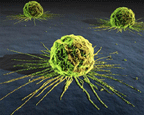
High doses of radiation can cause cancer by damaging DNA, the carrier of the genetic code. The damage to DNA caused by radiation is magnified in childrenbecause they are growing, and thus their DNA is dividing faster.
It takes years for most types of radiation-induced cancer to develop, and we might not know the full toll for decades. One long-term study found that about 5 percent of solid cancer cases were attributable to radiation. And for those people who were exposed to high doses of radiation (>1 gray, or about 1,000 chest x-rays), as much as 48 percent of solid tumors in survivors of Hiroshima and Nagasaki were attributable to radiation exposure.
Because radioactive iodine released during nuclear power plant accidents is taken up by the thyroid gland, increased incidences of thyroid cancer have been observed, for example, after the Chernobyl meltdown. Indeed, the Chernobyl meltdown in 1986 has caused an approximately 30 percent increase in thyroid cancer. And, Fukushima prefecture residents are already exhibiting increased rates of thyroid cancer seven years after the radiation exposure there.
Epidemiological data collected following the nuclear bombings of Hiroshima and Nagasaki have documented that over the past 70 years the incidence of both solid tumors and leukemias have been increased by about 10 percent among survivors.
One of the fallacies of tactical nuclear bombs is that they will be delivered such that they explode deep underground, limiting the nuclear fallout and its effects on humans. However, the best evidence suggests that the ability of these bombs to penetrate deeply below the surface is limited, and significant fallout will occur.
Scary prospects
The radiation exposure from a nuclear attack on North Korea is difficult to predict, but based on what is known from atmospheric nuclear testing from 1945 to 1980, there would be significant radioactive contamination due to dispersal of radioactive debris high into the atmosphere. This would ensure that a nuclear bomb explosion would result in worldwide radioactive contamination.
In Korea and surrounding areas subjected to the most intense nuclear fallout, the radiation dose to humans may well be higher than that experienced by the 200,000 or so Japanese living near the Fukushima nuclear plant which suffered an earthquake- and tsunami-induced meltdown in 2011.
US troops and citizens in South Korea vulnerable
Any nuclear strike will result in local contamination. However, it will be impossible to completely clean up the radiation from the soil and water in the region, as has been proven in Fukushima where radioactive soil is now contained in thousands of large plastic bagspiled high throughout the region. Our troops and more than 230,000 U.S. civilians who live in South Korea would be at risk.
Despite this attempt at decontamination by scraping the surface layer of contaminated soil and putting it into plastic bags, the ambient radiation exposure in the Fukushima region remains elevated above limits considered safe for laboratory workers here in the U.S.
Moreover, streams and rivers, and animals, including birds and insects, would ensure that the contaminating radiation is spread throughout the Korean peninsula and that food crops will be contaminated. All of this has happened in Fukushima, where the attempted decontamination continues to be a huge and enormously costly problem for the Japanese government.
Since it is most probable that we are not sure where the targets for a tactical nuclear attack are in North Korea, there is also the possibility that nuclear contamination will affect the oceans surrounding the peninsula. Following the Fukushima disaster, radiation contamination in the Pacific Ocean reached the shores of California. In the waters near Fukushima, significant radiation contamination is feared to be spreading to fish and other sea animals. One studyfound that the contamination risk to seafood is low, but no one knows what the long-term consequences of this radioactive contamination will be.
I believe that these long-term health legacies must be considered along with overwhelming ethical concerns as part of the “downside” of a nuclear attack anywhere on the planet.
There are disputes about whether thousands or millions would die during a nuclear attack. What is indisputable is that any of the magnitudes of nuclear bomb explosions being considered will have long lasting effects on the health of the people living in North and South Korea and likely China and Japan as well.
Seven years after the Fukushima, Japan nuclear disaster began, forcing evacuations of at least 160,000 people, research has uncovered significant health impacts affecting monkeys living in the area and exposed to the radiological contamination of their habitat.
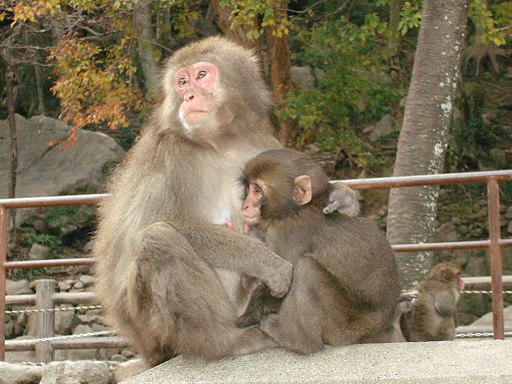
Shin-ichi Hayama, a wild animal veterinarian, has been studying the Japanese macaque (Macaca fuscata), or snow monkey, since before the Fukushima nuclear disaster. Now, his research has shown that monkeys in Fukushima have significantly low white and red blood cell counts as well as a reduced growth rate for body weight and smaller head sizes.
Hayama, who began his macaque research in 2008, had access to monkeys culled by Fukushima City as a crop protection measure. He continued his work after the Fukushima nuclear explosions. As a result, he is uniquely positioned to discover how low, chronic radiation exposure can affect generations of monkeys.
The macaque is an old world monkey native to Japan, living in the coldest climates of all of the non-human primates. Like humans, macaques enjoy a good soak in the mountain hot springs in the region. It is even said that they have developed a “hot tub culture” and enjoy time at the pools to get warm during winter.
However, snow monkeys and humans share more than a love of hot springs. Human DNA differs from rhesus monkeys, a relative of the snow monkey, by just 7%. While that 7% can mean the difference between building vast cities to living unsheltered and outdoors, for basic processes like reproduction, these differences begin to fade. Consequently, what is happening to the macaques in Fukushima should send a warning about the implications for human health as well, and especially for evacuees now returning to a region that has been far from “cleaned up” to any satisfactory level.
Hayama’s research group has published two studies, each comparing data before and after the nuclear catastrophe began, and also between exposed and unexposed monkey populations. In a 2014 study, researchers compared monkeys from two regions of Japan, one group of monkeys from the Shimokita region, 400 Km north of Fukushima, and a second group of monkeys from contaminated land in Fukushima.
The monkeys in Fukushima had significantly low white and red blood cell counts. Other blood components were also reduced. The more a radioactive isotope called cesium was present in their muscles, the lower the white blood cell count, suggesting that the exposure to radioactive material contributed to the damaging blood changes. These blood levels have not recovered, even through 2017, meaning that this has become a chronic health issue.
Changes in blood are also found in people inhabiting contaminated areas around Chernobyl. Having a diminished number of white blood cells, which fight disease, can lead to a compromised immune system in monkeys as well as people, making both species unable to fight off all manner of disease.
Hayama followed up his 2014 study with another in 2017 examining the differences in monkey fetus growth before and after the disaster. The researchers measured fetuses collected between 2008 and 2016 from Fukushima City, approximately 70 km from the ruined reactors. Comparing the relative growth of 31 fetuses conceived prior to the disaster and 31 fetuses conceived after the disaster revealed that body weight growth rate and head size were significantly lower in fetuses conceived after the disaster. Yet, there was no significant difference in maternal nutrition, meaning that radiation could be responsible.
Smaller head size indicates that the fetal brain was developmentally retarded although researchers could not identify which part was affected. The mothers’ muscles still contained radioactive cesium as in the 2014 study, although the levels had decreased. These mothers had conceived after the initial disaster began, meaning that their fetuses’ health reflects a continuing exposure from environmental contamination. This study mirrors human studies around Chernobyl that show similar impacts as well as research from atomic bomb survivors. Studies of birds in Chernobyl contaminated areas show that they have smaller brains.
Although Hayama has approached radiation experts to aid with his research, he claims they have rejected it, saying they don’t have resources or time, preferring to focus on humans. But humans can remove themselves from contaminated areas, and many have chosen to stay away despite government policies encouraging return. Tragically, monkeys don’t know to leave, and relocating them is not under discussion, making study of radiation’s impact on their health vital to inform radiation research on humans, the environment, and any resettlement plans the government of Japan may have.
Hayama presented his work most recently as part of the University of Chicago’scommemoration of the 75th Anniversary of the first man-made controlled nuclear chain reaction. His work follows a long, important, and growing line of research demonstrating that radiation can not only damage in the obvious ways we have been told, but in subtle, yet destructive ways that were unexpected before. The implications for humans, other animals, and the environment, are stark. Cindy Folkers is the radiation and health specialist at Beyond Nuclear.
Radiation Free Lakeland 11th March 2018 The government has yet another consultation out on new build – on where to site new nuclear reactors.This entirely vicious consultation to enable new nuclear build has been difficult to reply to as there should be no new reactors anywhere.
Today is Mothers’ Day and this is for all those whose children are no longer here to wish them a happy Mothers’ Day. It is for all those in Fukushima who are suffering 7 years after the tsunami caused a
terrible and ongoing nuclear disaster.
The court said no to the application because it considered that there were problems with the copper canister that had to be resolved now and not later.
the UK’s National Nuclear Laboratory (NNL) is to carry out an expert peer review of a Canadian research programme on microbiologically influenced corrosion of canisters that will be used to dispose of used nuclear fuel.
The Swedish Environmental Court has rejected the Nuclear Waste Company SKB’s license application for a final repository for spent nuclear fuel in Forsmark, Sweden. This is a huge triumph for safety and environment – and for the Swedish NGO Office for Nuclear Waste Review (MKG), the Swedish Society for Nature Conservation (SSNC), and critical scientists. Now it is up to the Swedish government to make a final decision.
The Environmental Court took into consideration viewpoints from all parties in the case, including scientists who have raised concerns about disposing spent nuclear fuel in copper canisters. Continue reading →
The most important immediate step required is to stop producing any more waste as soon as possible.
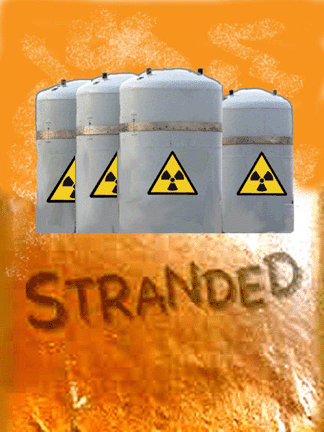
Indefinite storage would represent a burden for future generations. There would be a significant cost associated with the safe and secure storage of higher activity radioactive waste. In addition, for the long time periods for which waste is radioactive, there would be wider ongoing risks and responsibilities associated with surface storage (e.g. from terrorism or the impacts of climate change).
the proposals appear to weaken the power of county councils making it harder for them to prevent a community from agreeing to host the GDF.
What about the hundreds of miles of ‘affected communities along road and rail routes from radioactive waste stores, to any centralised repository? Are these communities going to be ignored?
Right of Withdrawal Cumbria Trust says it has serious concerns about the right of withdrawal in the new consultation. It appears that areas which volunteer are potentially trapped within the process for up to 20 years.
(1) The first consultation seeks views on how communities should be engaged in a siting process for a Geological Disposal Facility for higher activity radioactive waste.
(2) (A category of waste which includes: high-level vitrified waste, intermediate level waste, and spent nuclear fuel). The proposals build on commitments set out in the 2014 White Paper ‘Implementing Geological Disposal’, in which the UK Government and Northern Ireland Executive jointly set out an approach based on working with communities in England and Northern Ireland that are willing to participate in the siting process for a geological disposal facility. Continue reading →
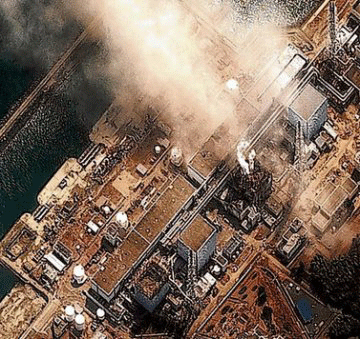
Today marks seven years since the Fukushima nuclear disaster. Fukushima caused mass evacuations, hundreds of billions of dollars in economic loss and radioactive contamination of land, air and oceans.
Fukushima remains a profound environmental, economic and human disaster that negatively impacts lives in Japan and far beyond.
And it all started in the back of a big yellow truck in Australia.
A load of true blue yellowcake was fuelling the Fukushima complex at the time of the disaster.
Our uranium trade is dirty, dangerous and irresponsible and there can be no nuclear ‘business as usual’ in the shadow of Fukushima.
With Australian radioactive rocks now Fukushima’s fallout it is time to keep the poison in the ground.
Our shared energy future is renewable, not radioactive.
On the seventh anniversary of the 2011 earthquake, tsunami and Fukushima nuclear accident, our thoughts and deepest sympathies continue to be with the people of Japan.
Every one of the tens of thousands evacuees from the 2011 Fukushima Daiichi triple reactor meltdown has a story to tell.
In our latest radiation survey we had the privilege to hear the experience of Mrs Mizue Kanno. As we entered the exclusion zone of Namie, Ms Kanno told us of the events seven years ago that were to change her life, her family and those of thousands of others.
Mrs Kanno was a social worker in Futaba less than 10 km from the nuclear plant. Eventually she made her way home after the devastating earthquake, and over the next few days thousands of people were evacuated to her home district of Tsushima. Families moved into her home. But soon they were warned by men in gas masks and protective clothing to get out immediately. The radioactive fallout from the nuclear plant, about 32 km away, had deposited high levels of contamination in this mountainous area of Namie.
Mrs Kanno now lives in western Japan, many hundreds of kilometres from her home in Fukushima. While she is a victim of nuclear power, she isn’t passive observer – instead she’s a female activist determined to tell her story. She campaigns across the Kansai region against nuclear power and for renewable energy.
Like thousands of other evacuees, she has joined lawsuits filed against the Tokyo Electric Power Company (TEPCO), and the Japanese government. Already found guiltyin multiple court proceedings of being criminally negligent in failing to take measures to prevent the meltdown, TEPCO and the government can expect many more rulings against them.
Because of the support of Mrs Kanno and her friends and neighbours, Greenpeace has been able to conduct a wide ranging survey inside the exclusion zone of Namie, published in our report, Reflecting in Fukushima.
While our survey report is filled with microsieverts and millisieverts, it’s far more about the lives and the land of Mrs Kanno her family, friends and neighbours.
Measuring thousands of points around homes, forests and farmland, it’s clear that this is an area that should not be opened to the public for many decades. Yet the government opened a main artery, route 114, while we were working in Namie.
One consequence is that people are stopping off and visiting areas high in radiation. At one house, radiation hot spots were over 11 microsieverts per hour (μSv/h) at one meter, and 137μSv/hat 10 centimetres. These levels are thousands of times the background level before the nuclear accident, and mean you’d reach your recommended maximum annual exposure in six days.
Yet, two people were working 10 meters away from the hot spot with no dosimeters or protective clothing. Mrs Kanno and our radiation specialists explained the levels of contamination and why it was necessary to take precautions.
In one zone in Obori, we measured radiation that would expose a decontamination worker to the 1 mSv/y limit in just 10 working days. The whole area is contaminated to varying high levels that will remain a threat into next century. How could the government be thinking of opening this area as early as 2023? More importantly, why?
It’s actually simple and wholly cynical. The Japanese government is desperate to restart nuclear reactors. Today only three are operating. Having areas of Japan closed to human habitation because of radioactive contamination is a very major obstacle to the government’s ambitions to operate 30-35 nuclear reactors. It’s a constant reminder to the people of Japan of the risks and consequences of nuclear power.
Yet, there are signs of positive change. Last month a panel of experts established by the Foreign Minister called for a mass scaling up of renewables, and warned of the risks from depending on coal plants and nuclear power. The voices of Mrs Kanno, the other thousands of Fukushima evacuees and the majority of people in Japan, and their demand for a different energy future, will be heard.
Throughout our time in Namie, as we visited the highly contaminated area of Obori and Tsushima – quiet, remote areas of natural beauty – Mrs Kanno told us about the life and traditions of families who for generations had supported themselves by farming. Now all of them are displaced and scattered across Japan. Yet the government is failing to even acknowledge their rights under domestic and international human rights law.
This week, we will be traveling to Geneva with mothers who are evacuees from Fukushima to the United Nations Human Rights Council session on Japan. The Japanese government has been under pressure to stop its violations of the human rights of Fukushima evacuees. Last week it accepted all recommendations at the UN to respect the human rights of Fukushima citizens. This included the German government recommendation to restore to a maximum annual public exposure of 1 mSv. This global safety standard has been abandoned by the Abe government.
The government’s decision is important, but now they need to be implemented if they are genuine in their commitments to the United Nations. On the 16 March this year, Mrs Kanno and other evacuees and their lawyers will attend the Tokyo high court for a ruling on Fukushima against TEPCO and the Government. One of the evacuee mothers, Akiko Morimatsu, together with Greenpeace, on the same day will speak at the United Nations to challenge the Japanese government to now fully apply the UN recommendations.
While we will be thousands of kilometers apart, we will be with Mrs Kanno on her day in court in Tokyo and she will be with us in Geneva. The Fukushima nuclear disaster has shattered lives but it has also brought us together determined to prevent such a terrible event from ever happening again and to transition Japan to a secure and safe energy future based on renewables.
Kazue Suzuki is an Energy Campaigner at Greenpeace Japan and Shaun Burnie is a Senior Nuclear Specialist at Greenpeace Germany
Trump under pressure over chaotic approach to North Korea nuclear talks, Guardian Jon Swaine 12 Mar 18
Republicans: denuclearisation must be prerequisite for meeting
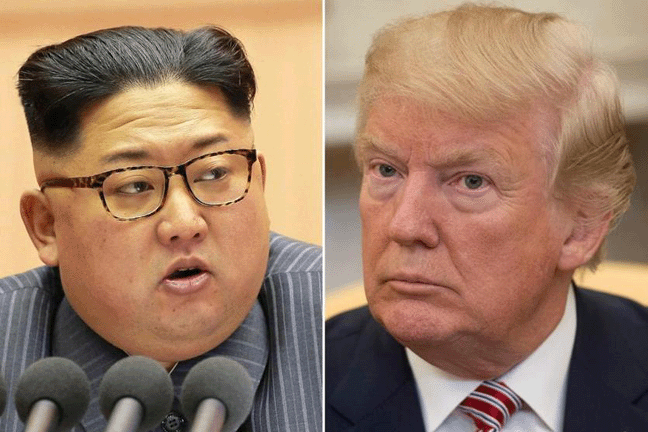
CIA director and White House spokesman contradict each otherDonald Trump faced criticism from Republican allies on Sunday after apparentlyagreeing to meet Kim Jong-unwithout demanding that North Korea start scrapping its nuclear program.North Korea talks: Trump praises own role but Washington frets over details.
Senators from Trump’s own party expressed scepticism and urged him to set tougher preconditions, amid growing concerns over the administration’s chaotic approach to nuclear diplomacy.
Senator Cory Gardner of Colorado said Trump should not meet Kim until North Korea produces proof it has begun reversing its years-long pursuit of a nuclear weapon.
“What we have to hear more of is how we are going to get to those concrete, verifiable steps towards denuclearisation before this meeting occurs,” Gardner told Face the Nation on CBS.
Trump’s team has given a series of muddled statements on that precondition. No mention of it was made during an abrupt announcement on Thursday that Trump was willing to hold a summit with Kim by May, in what would be the first ever meeting of the two countries’ leaders…….
The president has offered little clarity. After tweeting about conversations with world leaders on the issue he returned to it in a rambling speech to supporters in Pennsylvania on Saturday evening, saying of North Korean denuclearisation: “They are thinking about that – who knows what’s going to happen?”The uneven public statements followed an eccentric unveiling of Trump’s historic acceptance of Kim’s invitation. The decision was announced to journalists on the White House driveway by a South Korean official, shortly after Trump’s secretary of state, Rex Tillerson, had said direct negotiations were a distant prospect.
Having lambasted Barack Obama for what they deemed an overly conciliatory approach to Iran during nuclear talks, Republicanswere left struggling to defend Trump’s position.
……. Democrats, too, expressed concerns. “I am very worried that he’s going to go into these negotiations and be taken advantage of,” Senator Elizabeth Warren of Massachusetts said on CNN.Warren said Trump should urgently address a lack of senior diplomats who would probably be needed for successful negotiations. The US has no permanent ambassador to South Korea or assistant secretary of state for the region.
That view was echoed by Ben Rhodes, a former senior aide to Obama, who was involved in the Iran deal and said the Trump administration appeared unprepared for discussions of similar gravity.
North Korea’s Nuclear Ambitions And Abilities, NPR’s Renee Montagne talks with Siegfried Hecker, a former director of the Los Alamos National Laboratory, about North Korea’s nuclear program. National Public Radio. 11 Mar 18
………. HECKER: Well, first of all, I think it’s not very likely to happen, [the meeting between Trump and Kim] . What’s significant in the current situation is they’ve actually said that they would be willing to give up nuclear weapons, you know, if their security is assured, and they’re not threatened. However, to think that’s going to happen in the short term is just not realistic because to build a nuclear weapons program, it’s an enormous number of facilities. It’s a large number of people. It took, well, more or less 50 years but particularly the last 25 years to get to where they are today. They’re not going to turn that over overnight.
…….. MONTAGNE: Well, short of full denuclearization, what other steps could North Korea take to prove, you know, its sincerity in this?
HECKER: So there are very important steps. And one can lay those out. In other words, I look at the things that are highest risk. And those are the things you want them to stop first. So two that were highest on my list – they have, for the time being, said they would do a moratorium. And that’s no more missile tests and no more nuclear tests – because to increase the sophistication of your bombs, you have to do more nuclear tests. The next one would be not to make any more bomb-grade material, which means stop the operation of the reactors. All three of those are verifiable. The problem is on the bomb-grade material, you can also go the uranium route. Those are the centrifuge halls. We know where one of them is. We don’t know where the other one or two are. And that will be extremely difficult to verify. And that’s going to take a long time and a real detailed process with them to get there.
MONTAGNE: From what you know of North Korea from your time on the ground, are they motivated to use these weapons? Is this something to really be afraid of?
HECKER: What I worry about when it comes to the weapons is – one is capability. Second is motivation. And capability – for many years, I was able to say, look. You know, they have the bomb, but they don’t have much. They don’t have a nuclear arsenal. Then comes the motivation part. And would they be motivated to go ahead and attack the United States, Japan or South Korea basically out of the blue? I say absolutely not. They want those weapons to make sure to protect them. Perhaps they want the weapons so that they actually have sort of sufficient maneuvering room, you know, on the Korean Peninsula. What I’ve worried about is not so much that they’re motivated to attack us but rather that we’re going to stumble into a nuclear war.
“The nuclear disaster was not a natural disaster, it was a very man-made disaster,” Watanabe says. “So we felt that there was now a need for clean energy and greater energy independence.”
“It was at that symposium that I started to really think about the need for an energy shift away from nuclear power and about how rich the prefecture of Fukushima is in renewable resources,” Sato says.
“Nuclear power companies are not prepared for the cost of decommissioning and could in some cases go bankrupt. Banks and pension funds have lent them a lot of money because they have been regarded as stable, so bankruptcies could become a national financial problem. This would be difficult for the government to handle and might directly hurt pensioners,” he says. “But now the government is just hiding the problem and postponing managing it.”
Fukushima looks to renewable energy sources in the aftermath of nuclear disaster, Japan Times, BYKAJSA SKARSGÅRD Yauemon Sato | CHRISTINA SJOGREN 11 Mar 18,
Steam rises from outdoor pools overlooking a waterfall at a 90-year-old hotel in Fukushima Prefecture’s Tsuchiyu Onsen.
“What has saved us since the disaster are the loyal regular guests and the new visitors who have come to study our town’s renewable energy plant. Without them, I’m sure we would have had to close,” says Izumi Watanabe, who has been director of Sansuiso Tsuchiyu Spa for 37 years.
“People come from other onsen areas all over Japan to learn how they can become energy independent and how the binary plant we have doesn’t affect our hot springs,” she says, challenging the preconception that onsen communities, fearing a negative impact on their tourism business, typically hold back the development of geothermal energy in Japan. Continue reading →
Porquoi Docteur 11th March 2018, [Machine Translation] In this population, an abnormal number of children and adolescents develop in fact thyroid cancer, according to a study revealed in August 2015 conducted among 300,000 young Japanese in the prefecture of Fukushima.
Published in the journal Epidemiology, it indicates that 103 cases of thyroid cancer have been reported in children and adolescents under 18 who resided in Fukushima prefecture between 2011 and 2014. This is 25 more than ‘last year. “It’s hard to establish a cause and effect relationship, but you have to continue the exams because the proportion of tumor discoveries increases with age,” said Dr. Shunichi
Suzuki when he presented the results. https://www.pourquoidocteur.fr/Articles/Question-d-actu/14602-Fukushima-les-cancers-de-la-thyroide-en-augmentation-chez-les-jeunes
Taiwanese protesters rally for ‘nuclear-free’ island, Agence France Presse 11 Mar 18
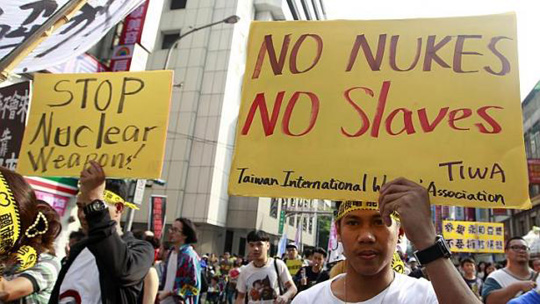
Government has promised to phase out nuclear energy by 2025. Hundreds of anti-nuclear protesters staged a rally in Taiwan on Sunday to demand the island’s government honour its pledge to abolish the use of atomic energy by 2025
Waving placards reading “nuclear go zero”, and “abolish nuclear, save Taiwan”, they gathered outside the presidential office in Taipei on the same day Japan marked the seventh anniversary of the Fukushima disaster.
Taiwan’s cabinet-level Atomic Energy Council recently decided to allow state-owned energy company Taipower to restart a reactor at a facility near Taipei, pending parliament’s final approval.
The reactor has been offline since May 2016 after a glitch was found in its electrical system, which the company said had since been resolved.
Anti-nuclear groups are now questioning whether Taiwanese President Tsai Ing-wen’s Democratic Progressive Party (DPP) will keep its promise to phase out nuclear energy.
“It would be violating the spirit of creating a nuclear-free homeland by 2025 pledged by the DPP,” said Tsui Shu-hsin of the prospect of restarting the reactor. Tsui is the spokeswoman for the Nuclear Go Zero Action Platform, which organised the rally.
Lawmaker Huang Kuo-chang, head of the opposition New Power Party, echoed the sentiment.
“The government should move forward, not backwards and restarting the reactor would be a regression,” he told reporters at the rally.
…….Taiwan started annual anti-nuclear rallies to commemorate Japan’s nuclear disaster on March 11, 2011, when the Fukushima energy plant was hit by a tsunami following an earthquake, knocking out power to its cooling systems and sending reactors into meltdown.
Taiwan, like Japan, is prone to frequent quakes as the island lies on a number of fault lines.
Guardian, Max Opray, 8 Mar 18 Renewable energy groups are targeting Adelaide’s festival season ahead of the South Australian election with scorecards rating the major parties’ environmental policies, with the Greens and Labor leading the way.
A scorecard distributed by the Australian Conservation Foundation gives its only five-star rating for renewables to the Greens. Labor gets a glowing four-and-a-half star rating for its heavy investment in renewable energy; Nick Xenophon’s SA Best receives a lukewarm two stars, while the Liberals are panned with a scathing half-star rating.
Gavan McFadzean, the ACF manager of climate change and clean energy, told Guardian Australia the organisation was promoting the rating along with a more general environmental scorecard.
On the overall scorecard Labor comes back to the field as they weren’t able to commit to half of the ledger; they might be an international leader on clean energy, but they weren’t able to make a strong commitment to rule out fracking in the south east, [or] drilling for fossil fuels in the Simpson Desert and Great Australian Bight,” McFadzean said.
The Greens managed five stars in the overall scorecard too, which McFadzean said might not be surprising but shouldn’t be taken for granted.
He added SA Best moved up to three stars overall due to a solid performance on its fossil fuel extraction policy, natural protection and expenditure in the state budget for environmental issues. “Unlike other major parties who tended to tank in a couple of areas, SA Best were not outstanding but solid across the board,” McFadzean said.
The Liberals rose to one-and-a-half stars partly due to support for a 10-year fracking moratorium in the state’s south-east.
Another contributor to the analysis, the solar energy advocacy organisation Solar Citizens, is shifting its volunteer door-knocking team to this weekend’s Womadelaide festival to distribute its own version of the scorecard based on the renewable energy target. Solar Citizens highlighted the Greens leading the way with a 100% target for 2025, Labor in second place with a 75% target, SA Best third with a commitment to maintaining the current 50% target, and the Liberals last with their pledge to scrap the state-based goal in favour of federal action.
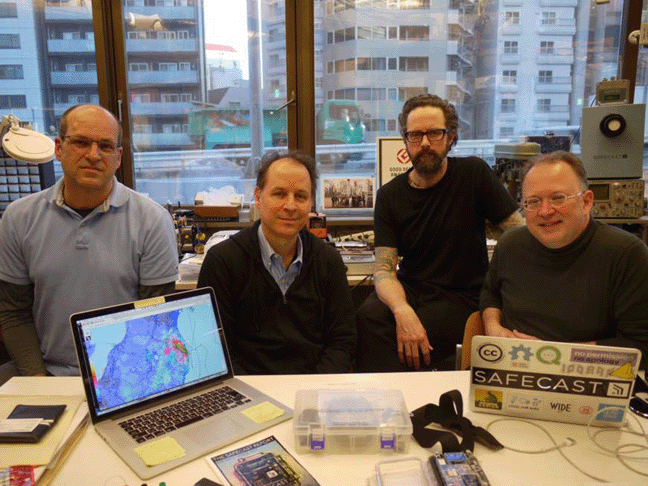
Safecast operates using measurements captured by volunteers. Data is verified and validated when two randomly selected people take the same measurement of the same place. Safecast’s reliable system means local people could count on its data and stay informed. Around 3,000 Safecast devices are deployed worldwide, and 100 to 150 volunteers regularly contribute their time and effort to the project.
As Safecast’s power and influence in society — both inside and outside of Japan — expanded, so did its technologies.
“We are a pro-data group, we are not an activist group,”
Back in 2011, soon after the 3/11 disaster, Safecast was born. Today, the global volunteer-centered citizen science organization is home to the world’s largest open data set of radiation measurements.
Safecast was a response to the lack of publicly available, accurate and trustworthy radiation information. The group initially set out to collect radiation measurements from many sources and put them on a single website. What the volunteers quickly realized was that there was simply not enough official data available.
Soon after the disaster, members attached a homemade Geiger counter to the side of their car and drove around Fukushima taking measurements. They quickly noticed that radiation levels were radically different even between streets, and that the government-issued city averages were far from sufficient as data that could be used by citizens to determine the safety of their areas.
Within weeks the group’s members decided to build their own Geiger counters and collect the data themselves. They picked the name Safecast the following month.
For months after the nuclear disaster began, the government released only very limited information about the spread of radiation. Continue reading →
Apr 15, 2026 01:00 AM in Canberra, Melbourne, Sydney
Join the International Physicians for the Prevention of Nuclear War (IPPNW) on Tuesday, April 14th for a timely webinar exploring the risks associated with nuclear power and challenging the myth that it offers a simple, safe, carbon-free solution to the climate crisis
21 April Webinar: No Nuclear Weapons in Australia
Start: 2026-04-21 18:00:00 UTC Canberra, Melbourne, Sydney (GMT+10:00)
End: 2026-04-21 19:30:00 UTC Canberra, Melbourne, Sydney (GMT+10:00)
Event Type: Virtual A virtual link will be communicated before the event.










 Antinuclear