Climate change – huge responsibility for banks and insurance firms in property sales
Banks and insurers have huge responsibility when people are buying property in a time of climate change, Online Opinion
| By Kate Mackenzie -, 6 June 2016 “……..In Australia, banks require you to have home insurance before approving a mortgage. Yet they do not check, in subsequent years, whether you are still insured.Our research identified only one example of the banking sector formally addressing their role in relation to housing at risk of extreme weather. In response to a government issues paper following the 2011 floods, banks denied they were at risk themselves, or should play a part in reducing risk through means such as annually checking insurance coverage of mortgagors. Yet, in climate-related disclosure statements, most big banks acknowledge risk from increasing natural disasters due to climate change affecting their mortgage books. In recent years, some have had to provision for bad debts related to big floods. So far these have been small amounts, but as natural disasters become more problematic, will that always be the case? The last thing anyone wants is a sudden plunge in house prices in a particular region. Yet it seems inevitable that some housing in vulnerable areas will be repriced. There is anecdotal evidence of this happening already in North Queensland. To avoid hardship and loss to individuals, we need a concerted effort from all levels of government and all private sector stakeholders, to address the problem. This is where banks come in. They are an unrivalled player in our economy – constituting the biggest sector of the share market. The big four banks hold about 80 per cent of all mortgages – and their relationships tend to last many years, allowing plenty of opportunity to inform their customers There is also a social responsibility dimension to the banks’ roles. Contrary to what you might think, not all these exposed home-owners are the wealthy owners of sea-fronted mansions. A big bank might be able to write off a $70 million loss here or there when a flood or other hazard strikes. Individual Australians aren’t so lucky if their single biggest asset takes a hit. It’s time banks began integrating climate-related risk into their assessment processes – to make good, responsible decisions when granting mortgages and especially financing property developments. As lenders for property purchases, they have the potential to press for good public policy in this regard — and to work towards a good outcome together with stakeholders from civil society and from other parts of the private sector. Buying and owning a home in a world of climate change heightens the responsibilities of all related players – banks, insurers and governments – at all levels. All play a crucial role. All need to lift their game. http://www.onlineopinion.com.au/view.asp?article=18278 |
End of road for Adani’s $16-bn coal mine as Australian PM too says ‘no’ to funding
‘With no one to fund the project that has been opposed by environmental groups all along,
Adani’s struggling $16-billion Carmichael coal mine project may never come up.
The mega-mine in Queensland’s Galilee Basin, which has failed to attract private lenders,
has now been denied public funding as well.’
domain-b.com
http://www.domain-b.com/companies/companies_a/Adani_group/20160603_coal_mine.html
Vanessa Guthrie new Chair of Minerals Council of Australia
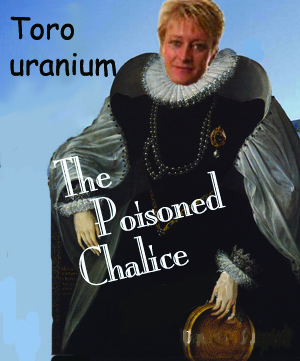 NEW CHAIR OF MINERALS COUNCIL OF AUSTRALIA (FED)
The Board of Directors of the Minerals Council of Australia today elected Dr Vanessa Guthrie to chair the organisation for the next two years. Dr Guthrie is Chief Executive of Toro Energy which is developing uranium operations in Western Australia. Dr Guthrie is the first woman to chair the mining industry representative body in its 40 year history.
How batteries solve the problem of clean electricity
Securing renewables: how batteries solve the problem of clean electricity Dan Cass31 May 2016 Source: The Australia Institute
Summary
Critics put forward two key arguments against widespread adoption of renewable energy: price and intermittency. Solar and wind costs have fallen so rapidly over the past decade that they are now competitive with fossil fuels, so the price argument is losing traction.
Battery and other forms of storage technology are rapidly overcoming the variability argument. As batteries become more widespread, this will answer the final objection to vigorously developing our clean energy resources. Format:
Australia now a plutocracy – don’t let fossil fuel lobby run this election!
 To win on the climate we have to take our democracy back from the corporates who have bought it. That means making the urgency of the climate emergency, the need to keep coal, gas and oil in the ground, political donations reform, fossil fuel subsidies and a national Icac, red hot issues in this election.
Our democracy has been bought. To win on climate, we have to take it back, Guardian, 26 May 16 Christine Milne A majority of voters are in support of more government action on climate change – and yet somehow it’s not an election issue. Let’s make it one The current dissonance between election campaign rhetoric and the facts of climate change is unfathomable, that is, until you dig a little deeper.
This month, the world passed a disastrous tipping point from which there will be no return: the Cape Grim Air Quality Monitoring Station registered a count of 400 parts per million CO2 in the atmosphere. Climate scientists have acknowledged that there is basically no going back from this point. We are in a climate emergency.
At the same time, 93% of the Great Barrier Reef is experiencing devastating bleaching; the biggest ever anti-coal protest at Newcastle – the world’s largest coal port – stopped exports for a day, and yet at the federal election leaders’ debate not one question was asked on what the parties would do about global warming or fossil fuel subsidies, coal or coal seam gas.
What is going on? A lack of interest or a debate with parameters and audience selection overseen by Rupert Murdoch’s Sky News and Daily Telegraph? It is not credible that a representative selection of voters would not have raised global warming or asylum seekers as issues at all. Especially when a poll released this week showed that an overwhelming majority of voters are in favour of more government action on climate change.
But then we no longer live in a democracy. We have morphed into a plutocracy: government by the wealthy for the wealthy greased by political donations. You don’t need to be in parliament to secure your interests, you only need to buy or exert enough influence through cash or concentrated media ownership to make sure things don’t change regardless of whether the LNP or Labor is in government.
Big corporations call these donations “diversifying their investment”, and when you look at the donation records of fossil fuel companies, they donate to both major parties, capturing them both within their destructive and pervasive web of influence.
To make sense of this election and to understand why certain issues are buried and others promoted as open to debate, it is necessary to follow the money, and the electoral objectives of those who have it.
Australia is a disproportionately resource-based economy dependent on subsidised digging up and shipping away. The vested interests who have made their fortunes out of coal, oil and gas will fight to keep it that way. This is despite crystal clear evidence that the demand for our coal, oil and gas on the global stage is declining.
Rather than work to transition our economy to a more diverse and clean one, they will instead fight to keep every grant, subsidy, tax break and overseas tax haven they currently enjoy. They will tear down every job, research project or grants scheme that supports a renewable energy future, such as they have done by gutting of the CSIRO, the renewable energy target and the Australian Renewable Energy Agency (Arena)……..
To win on the climate we have to take our democracy back from the corporates who have bought it. That means making the urgency of the climate emergency, the need to keep coal, gas and oil in the ground, political donations reform, fossil fuel subsidies and a national Icac, red hot issues in this election. http://www.theguardian.com/commentisfree/2016/may/26/our-democracy-has-been-bought-to-win-on-climate-we-have-to-take-it-back
Australia should join growing global push for treaty banning nuclear weapons
 ICAN 24 May 2016 This Friday, 27 May, US President Barack Obama will make an historic visit to Hiroshima, which was devastated by a US nuclear bomb in the final days of World War II. It will be the first time a sitting US president has visited the city.
The White House has made clear that he will not apologise for the attacks, but his visit will nevertheless be an important acknowledgement of the horror caused by nuclear weapons. Hiroshima survivor Junko Morimoto, who now lives in Sydney, said: “It is great that President Obama will visit Hiroshima to pay his respects to the victims of the atomic bombings of Hiroshima and Nagasaki. All we ask for is an ongoing commitment to global nuclear disarmament.”
In recent years, the Australian Government has vocally opposed efforts by two-thirds of the world’s nations to negotiate a treaty banning nuclear weapons, claiming instead to rely on security provided by “extended nuclear deterrence”. In contrast, the Australian Labor Party last year declared support for a ban treaty in its revised national policy platform.
At a recent UN meeting in Geneva, 127 nations proposed the start of negotiations on a ban treaty. These nations believe that nuclear weapons are illegitimate and immoral given their devastating humanitarian impacts. Several nations have specifically proposed that negotiations on a ban treaty begin in 2017 and be concluded by 2018. This proposal will be voted on in the UN General Assembly in October this year.
“The Australian Government should take the opportunity of President Obama’s historic visit to move away from its cold-war era policies that undermine nuclear disarmament. It is more than seven decades since nuclear catastrophe was unleashed on Hiroshima. It is well beyond time to outlaw these ultimate weapons of mass destruction,” said Tim Wright, Asia Pacific Director of the International Campaign to Abolish Nuclear Weapons (ICAN).
“Australia has become increasingly isolated in our region as the only member of the South Pacific nuclear-free zone to insist that these horrendous weapons are necessary for its security. The government should look at what nuclear weapons do to people and the environment, and join the majority of nations in working to ban them.”
Sydney experiencing heat 5 degrees above average for May
 NSW on track for record-breaking autumn weather as smoke blankets Sydney, ABC News 22 May 16 Warmer-than-average temperatures are expected to continue for at least another month or two in New South Wales, as the dry autumn saw smoke from hazard reduction burns blanket Sydney.
With global temperature records continuing to tumble, the Sydney basin is also experiencing temperatures up to five degrees higher than average for this time of year.
The unusually dry autumn is also presenting conditions more favourable to hazard reduction back-burning around the city.
Across the state, 70 controlled burns are taking place this weekend.
In a statement, the NSW Rural Fire Service said the burns would continue while the dry conditions permitted it.
The RFS said smoke would clear on Sunday as the air temperature and wind speeds increased, but motorists were urged to exercise caution as smoke limited visibility on the Pacific Highway in the city’s north……
June and July are also on track to be record breakers…..http://www.abc.net.au/news/2016-05-22/warm-weather-set-to-continue-as-smoke-from-burns-lingers-sydney/7435428
Aboriginal groups demand better consultation on nuclear waste dump plan
Alliance to campaign for more consultation sessions Nuclear dump protesters warn of ‘cultural genocide’ in South Australia, ABC , 17 May 16 By Claire Campbell “……Yankunytjatjara Native Title chairperson Karina Lester said the alliance would campaign for more community consultation sessions, particularly in regional areas.
“We do want to see work being done in the interpreting and translating area as well because this is very technical … in particular those who still speak their first language,” she said.
“I think we need to continue to make noise that we are not feeling supported in this, in this decision making process and that we need to be involved.
“The South Australian Government need to really be listening to what Aboriginal people but also the wider group are saying about this very important issue.”
The Government is preparing a response to the commission’s final report which is expected to be presented to SA Parliament by the end of the year.
It plans to randomly select 400 people to sit on citizens’ juries to consider the state’s approach to its nuclear future.http://www.abc.net.au/news/2016-05-16/nuclear-dump-protesters-warn-of-cultural-genocide-in-sa/7419406
NewDemocracy Foundation (NDF) will need to be seen to be impartial, on Nuclear Citizens’ Juries
 Philip White, 16 May 16 Much of the debate about whether or not South Australia should host an international nuclear waste dump seems to take for granted that accepting the world’s high-level nuclear waste would be a financial bonanza for us all. But judging from critical analysis by the Australia Institute, as well as from the sorry history of back-end nuclear fuel cycle projects elsewhere, this is far from certain.
The government says it will give randomly selected citizens an opportunity to deliberate about the pros and cons of the nuclear waste proposal using a method known as “Citizens Juries”. Let’s hope that any such Citizens Jury seeks out the best critical advice available, because if it does not, there is a grave danger that it will be dazzled by promises of a nuclear El Dorado and blinded to the huge risks involved.
One minimum criterion for such a Citizens Jury is that it be organised by a completely independent body whose commitment is to due process. The organising body must have no attachment whatsoever to a particular outcome and the government must keep right out of the process.
The NewDemocracy Foundation (NDF) has played a leading role in many previous Citizens Juries, including some held recently by the SA Government. There is a danger that as time goes by the relationship between NDF and the governments it works with could become too cosy. On an issue as controversial and entailing such huge risks as this, an independent expert monitoring panel should be established, including well-respected experts in the deliberative democracy field.
Of course the recommendations of Citizens Juries are not binding. They should be seen as one input into the wider democratic process. But amidst the intense lobbying currently being applied in favour of a nuclear waste dump, any recommendations for caution by a Citizens Jury should be taken very seriously.

Will the government actually pay attention to findings of Citizens’ Juries?
Letting the people decide … but will government listen? The Mandarin, by David Donaldson 18.02.2016 If we now have the technology to allow citizens to vote directly on all issues, what job remains for public servants?
While new technology may provide new options to contribute, the really important thing is governmental willingness to actually listen, says Maria Katsonis, the Victorian Department of Premier and Cabinet’s director of equality.
 The balance between citizen consultation and public service expertise in decision-making remains a hot debate, with South Australian Premier Jay Weatherill warning last year that while expertise in policy is important, overzealous bureaucrats and politicians can disenfranchise citizens.
The internet is assisting government to attain opinions from people more easily than ever before. SA, for example, has embraced the use of citizen juries in policy formation through its youSAy portal — though as yet on only some issues. Finland has experimented with digitally crowdsourcing input into the policymaking process……http://www.themandarin.com.au/60608-crowdsourcing-technology-useless-government-wont-listen/
South Australian Labor could leave a terrible mess with this push for nuclear waste importing
 from R Do we seriously believe that a nuclear dump will bring in the billions of dollars promised and be as safe as they pretend?
Do we really believe that countries will pay up front years before getting rid of the waste by shipping it to us?
Do we really believe that the state government won’t mismanage any money so when the time comes to build the expensive hole in the desert, that we will have run out of the money and will either need to go into debt to build the hole or keep the high level waste stored above ground for thousands of years?
This whole thing smacks of a desperate last minute straw clutching exercise by Jay Weatherill and now he has commenced his brainwashing oops consultation campaign to convince us that he has finally come up with a good idea. Voters are not convinced Jay.
The risks are too big that the money won’t flow and we’ll be stuck with another Labor mess , this time a dangerous high level nuclear one that will last thousands of years.
Sydney Peace Prize to go to Naomi Klein
Naomi Klein to be awarded 2016 Sydney Peace Prize, SMH, Josephine Tovey May 14, 2016

Naomi Klein is not someone you might think of foremost as a peacenik, per se.
The iconoclastic author, perhaps the most prominent leftist thinker of her generation, has been a dogged proponent of other political crusades during her career – from the anti-globalisation movement virtually defined by her 2000 manifesto No Logo, to Occupy Wall Street, and later and most prominently, the climate-change activism of her 2014 tome This Changes Everything, which made a forceful case for not only why climate change was an urgent crisis, but why systemic change to global capitalism is the only solution.
But six months from now, Klein will travel to Australia to be named the recipient of the 2016 Sydney Peace Prize.
The Sydney Peace Foundation, which is located within the University of Sydney and receives support from the City of Sydney, chose Klein, the jury said, for “exposing the structural causes and responsibility for the climate crisis, for inspiring us to stand up locally, nationally and internationally to demand a new agenda for sharing the planet that respects human rights and equality”………
Naomi Klein will deliver the 2016 City of Sydney Peace Prize lecture at Sydney Town Hall on November 11. sydneypeacefoundation.org.au http://www.smh.com.au/environment/climate-change/naomi-klein-to-be-awarded-2016-sydney-peace-prize-20160512-gotj37.html
Global transition: energy internet, the ‘smart’ grid, solar energy and battery storage are converging
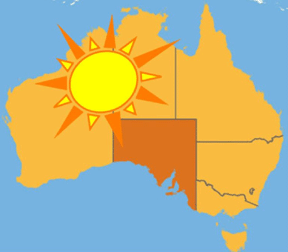 The clean energy economy is coming – and there’s a lot to lose for those who can’t keep up
The energy internet, the ‘smart’ grid, solar energy and battery storage are converging and the economic benefits are clear, Guardian, Paul Ebert , 9 May 16 Change is coming to the energy landscape. A transition to a new energy economy is happening. In a country like Australia – awash with energy both under and above the ground – this transition could be rapid and profound. There is a lot to lose for those who can’t keep pace.
Last month the government committed $1bn to the Clean Energy Innovation Fund. The fund will have “the primary purpose of earning income or a profitable return” on debt and equity extended to renewable energy, energy efficiency and low-emissions technologies. While many will argue the right way for that money to be used, investment like this is well timed.
There are a number of converging technologies driving the transition. Their interaction will affect how we travel, how we live, the way our cities and houses are designed, our fuel supply and attitude to energy efficiency, and even how we interact.
One of the maturing technologies is solar.
Over the past five years, solar has become a big part of our energy world. The Australian energy market operator estimated last year that by 2023/24 the state of South Australia may, at times, have its entire electricity needs met by solar systems on mostly urban rooftops, without the aid of coal, gas or oil. Continue reading
David Penberthy on Citizens’ Juries
David Penberthy: State Government fails test of reining in cost of living The Advertiser May 12, 2016 David PenberthyThe Advertiser THERE has been a degree of cynicism over Jay Weatherill’s announcement that not one but two citizens’ juries will deliberate on the wisdom on the proposed construction of a high-level nuclear waste facility in South Australia. While there is always a chance that the jury might advocate a dump designed with bicycle lanes and a small bar to accommodate outback hipsters, I’d be prepared to set my cynicism aside on this occasion.
The philosophy behind citizens’ juries is to provide greater public input into the decision-making process. Embracing a nuclear future is a big decision for the entire state, bringing with it safety and environmental concerns. Anything that gives the public a greater say in satisfying those concerns is a good thing……..http://www.adelaidenow.com.au/news/opinion/david-penberthy-state-government-fails-test-of-reining-in-cost-of-living/news-story/5638575bc31a4ce936aff214b1e55365
Clean energy leadership from Australian Capital Territory
 While the Canberra-based wing of the fossil fuel industry – their lobbyists and political supporters – try to scare us into thinking the transition to 100 per cent renewables will be a disaster, the ACT government is just getting on with it, and the benefits of doing so, directly and through the impact of its leadership on others, will flow for decades to come.
Canberra leads the country on clean energy http://www.theage.com.au/comment/canberra-leads-the-country-on-clean-energy-20160510-goqll9.html Based on recent history, it’s anyone’s guess who the Australian prime minister will be in four years. But in 2020, whoever is in The Lodge and Parliament House, those buildings will be powered 100 per cent by renewable energy, based on new ACT government policy.
The ACT is well known as a leader on a range of social issues and more recently on climate change. It already has set ambitious climate targets, early support for battery storage and plans for fossil fuel divestment. This week the ACT government announced it will move even faster, replacing coal with clean energy in just four years.
As the national climate debate heads back into yet another scare-campaign death spiral, the ACT government and others are showing that ambition is not just necessary but feasible, economically and politically.
Although national policy uncertainty and reluctant energy companies have led to large-scale renewables investment plummeting in recent years, the ACT is driving wind and large solar through its innovative reverse auction process. In fact, the ACT is behind nearly all of what is being built. The low prices attracted and the strong local support for renewables are impelling the government to go further. Continue reading
1 This month


Help Aunty Sue Protect Her Land and Sacred Sites From Destructive Rocket Testing.
.

Australians deserve the truth
about
AUKUS – https://aukuspublicinquiry.com/

PETITION – To: Prime Minister Anthony Albanese and the Australian Labor Government

of the week – Australians for War Powers Reform (AWPR)
To see nuclear-related stories in greater depth and intensity

