Nuclear power – a big financial risk, must get tax-payer subsidy
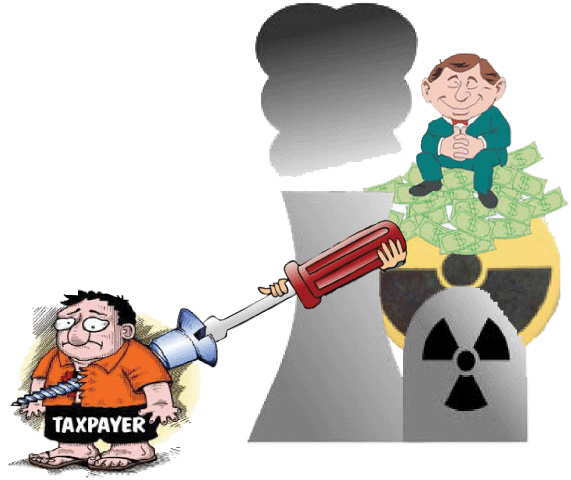 Nuclear plants need government subsidy—expert https://manilastandard.net/business/power-technology/332276/nuclear-plants-need-government-subsidy-expert.html Nuclear plants need government subsidy—expert https://manilastandard.net/business/power-technology/332276/nuclear-plants-need-government-subsidy-expert.html
posted August 24, 2020 at 07:05 pm by Alena Mae S. Flores, An energy analyst said the country’s planned nuclear power development carries a lot of risk and will need government subsidy to make it feasible.“Nuclear, obviously has tail risks and as an analyst, I will look at it from a financial perspective…Nuclear in my view is totally uneconomic without government subsidy,” Sara Jane Ahmed, an energy finance analyst at the Institute for Energy Economics and Financial Analysis, said during a forum by the Institute for Climate and Sustainable Cities.
Ahmed said that of the top 10 major nuclear developments in the world, most of them were 10 to 15 years behind schedule, “and they are double or triple the original investment and the cost to consumers are prohibitively expensive without a lock-in subsidy.” |
|
Ice melting at a surprisingly fast rate underneath Shirase Glacier Tongue in East Antarctica

- East Antarctic melting hotspot identified
- https://www.sciencedaily.com/releases/2020/08/200824092000.htm
- August 24, 2020
- Source:
- Hokkaido University
- Summary:
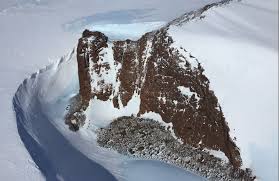
- Ice is melting at a surprisingly fast rate underneath Shirase Glacier Tongue in East Antarctica due to the continuing influx of warm seawater into the Lützow-Holm Bay.
-
Hokkaido University scientists have identified an atypical hotspot of sub-glacier melting in East Antarctica. Their findings, published in the journal Nature Communications, could further understandings and predictions of sea level rise caused by mass loss of ice sheets from the southernmost continent.
The 58th Japanese Antarctic Research Expedition had a very rare opportunity to conduct ship-based observations near the tip of East Antarctic Shirase Glacier when large areas of heavy sea ice broke up, giving them access to the frozen Lützow-Holm Bay into which the glacier protrudes.
“Our data suggests that the ice directly beneath the Shirase Glacier Tongue is melting at a rate of 7-16 meters per year,” says Assistant Professor Daisuke Hirano of Hokkaido University’s Institute of Low Temperature Science. “This is equal to or perhaps even surpasses the melting rate underneath the Totten Ice Shelf, which was thought to be experiencing the highest melting rate in East Antarctica, at a rate of 10-11 meters per year.”
- The Antarctic ice sheet, most of which is in East Antarctica, is Earth’s largest freshwater reservoir. If it all melts, it could lead to a 60-meter rise in global sea levels. Current predictions estimate global sea levels will rise one meter by 2100 and more than 15 meters by 2500. Thus, it is very important for scientists to have a clear understanding of how Antarctic continental ice is melting, and to more accurately predict sea level fluctuations.
Most studies of ocean-ice interaction have been conducted on the ice shelves in West Antarctica. Ice shelves in East Antarctica have received much less attention, because it has been thought that the water cavities underneath most of them are cold, protecting them from melting.
- During the research expedition, Daisuke Hirano and collaborators collected data on water temperature, salinity and oxygen levels from 31 points in the area between January and February 2017. They combined this information with data on the area’s currents and wind, ice radar measurements, and computer modelling to understand ocean circulation underneath the Shirase Glacier Tongue at the glacier’s inland base.
The scientists’ data suggests the melting is occurring as a result of deep, warm water flowing inwards towards the base of the Shirase Glacier Tongue. The warm water moves along a deep underwater ocean trough and then flows upwards along the tongue’s base, warming and melting the ice. The warm waters carrying the melted ice then flow outwards, mixing with the glacial meltwater.
The team found this melting occurs year-round, but is affected by easterly, alongshore winds that vary seasonally. When the winds diminish in the summer, the influx of the deep warm water increases, speeding up the melting rate.
“We plan to incorporate this and future data into our computer models, which will help us develop more accurate predictions of sea level fluctuations and climate change,” says Daisuke Hirano.
Frank Barnaby, nuclear weapons scientist and global hero
he gave evidence in Japan against the used of mixed uranium and plutonium oxide fuel, known as MOX, in a reactor at Fukushima. “Frank’s testimony was so impressive and read by the governor of the region that it stopped the loading of MOX fuel for more than 10 years,” said Shaun Burnie of Greenpeace International. In 2011, the reactor was overwhelmed by a devastating tsunami, but because of this intervention Japan was spared the release of many hundreds of tons of fission products – “in other words the evacuation of 50 million plus and the end of central Japan as a functioning society.
|
Frank Barnaby obituary Radiation physicist at Aldermaston who went on to warn of the dangers posed by the civil and military uses of nuclear energy, Guardian, Tim Radford, 25 Aug 20,
The nuclear weapons scientist Frank Barnaby, who has died aged 92, became one of the most effective critics of the international arms race. As the cold war superpowers competed with ever more advanced weaponry to wage a war that could never be won, Barnaby helped amass an arsenal of reliable information and informed argument to keep an anxious public aware of the deadly devices being developed supposedly to keep the world safe. By the close of the cold war and the beginning of the collapse of the Soviet Union in 1989 he and others had assembled an informal international bureaucracy of peace and provided the intellectual ammunition to persuade politicians, military and public to accept a dramatic reduction in the nuclear weaponry. He contributed dozens of articles to New Scientist and the Guardian, all of them highlighting the rapid advance in technologies of mass destruction and the mechanisms that could spark global thermonuclear war. His persuasive arguments used only the information to hand, and calm reasoning. In the early years of Margaret Thatcher’s government in Britain, and Ronald Reagan’s in the US, global investment in the military was huge. Even before a sharp rise in US spending in 1980, military activities worldwide consumed $1m every minute. US forces already used 10% of all the aluminium, copper, lead, zinc, nickel, molybdenum, tin, chromium, iron and manganese in the US each year. The military consumption of oil alone, Barnaby argued, was about two-thirds that of the whole of Africa at the time. The defence industry had become the world’s second biggest business – after oil – and 40% of the world’s research scientists were funded out of military budgets; while military and defence establishments employed at least 27 million civilians. Soviet and US governments put a military satellite into orbit ever four days on average for two decades………. in 1946 was conscripted into the RAF, leaving after two years to begin a science degree and then a doctorate in nuclear physics through the University of London, before joining the Atomic Weapons Research Establishment at Aldermaston, Berkshire – the laboratory that was to become the focus of marches and demonstrations by the Campaign for Nuclear Disarmament. As a radiation physicist, he twice monitored nuclear weapons tests at a site in Maralinga, South Australia, in 1956 and 1957. ….. He quit Aldermaston in 1957 to become a lecturer at University College London, and joined the Pugwash Conference on Science and World Affairs, a Nobel peace prizewinning group founded by the mathematician philosopher Bertrand Russell. This organisation of distinguished scientists from both sides of the iron curtain served, at the height of the cold war, as almost the only informal contact between two mutually hostile power blocs. In 1967 he became its executive secretary. Then from 1971 to 1981 he was director of the influential Stockholm International Peace Research Institute, known as Sipri, and began writing books and articles on the accelerating advance of nuclear weaponry, its proliferation, and its possible uses. And in those years, and from his later platform as a professor of peace studies at the Free University of Amsterdam (1981-85), he warned of the developments that made the world an increasingly dangerous place. Cruise missiles and other technologies effectively ended the deterrent strategy of Mutually Assured Destruction because they offered the possibility of a nuclear contest that could be “winnable”, but only with a pre-emptive all out first strike. He predicted the coming of the automated battlefield, and of the potential for plutonium as a terror weapon: with a planetary stockpile in 1989 of 2,000 metric tons, who would miss a few kilograms? ……… Working with Greenpeace International in 2001, he gave evidence in Japan against the used of mixed uranium and plutonium oxide fuel, known as MOX, in a reactor at Fukushima. “Frank’s testimony was so impressive and read by the governor of the region that it stopped the loading of MOX fuel for more than 10 years,” said Shaun Burnie of Greenpeace International. In 2011, the reactor was overwhelmed by a devastating tsunami, but because of this intervention Japan was spared the release of many hundreds of tons of fission products – “in other words the evacuation of 50 million plus and the end of central Japan as a functioning society. That was Frank.” While in Stockholm, he met Wendy Field, a young diplomat from Adelaide working in the Australian Embassy. They married in 1972. He is survived by Wendy, their two children, Sophie and Benjamin, and five grandchildren. • Charles Frank Barnaby, physicist and nuclear disarmament expert, born 27 September 1927; died 1 August 2020 https://www.theguardian.com/world/2020/aug/24/frank-barnaby-obituary |
|
World battles new cases, but coronavirus could be over, in two years

World Health Organisation hopes coronavirus crisis can be over in two years, https://www.sbs.com.au/news/world-health-organisation-hopes-coronavirus-crisis-can-be-over-in-two-years [Good graphs] 22 Aug 20 The head of the World Health Organisation hopes the coronavirus pandemic will be shorter than the 1918 Spanish flu and last less than two years.
The world should be able to rein in the coronavirus pandemic in less than two years, the World Health Organisation (WHO) said, as European nations battled rising numbers of new cases.
Western Europe has been enduring the kind of infection levels not seen in many months, particularly in Germany, France, Spain and Italy – sparking fears of a full-fledged second wave.
In the Spanish capital Madrid, officials recommended people in the most affected areas stay at home to help curb the spread as the country registered more than 8,000 new cases in 24 hours.
France also reported a second consecutive day of more than 4,000 new cases – numbers not seen since May – with metropolitan areas accounting for most of those infections.
But WHO chief Tedros Adhanom Ghebreyesus sought to draw favourable comparisons with the notorious flu pandemic of 1918.
“We have a disadvantage of globalisation, closeness, connectedness, but an advantage of better technology, so we hope to finish this pandemic before less than two years,” he told reporters.
By “utilising the available tools to the maximum and hoping that we can have additional tools like vaccines, I think we can finish it in a shorter time than the 1918 flu”, he said.
The WHO also recommended children over 12 years old now use masks in the same situations as adults as the use of face coverings increases to stop the virus spread.
With no usable vaccine yet available, the most prominent tool governments have at their disposal is to confine their populations or enforce social distancing.
Lebanon is the latest country to reintroduce severe restrictions, beginning two weeks of measures on Friday including night time curfews to tamp down a rise in infections, which comes as the country is still dealing with the shock from a huge explosion in the capital Beirut that killed dozens earlier this month.
“What now? On top of this disaster, a coronavirus catastrophe?” said 55-year-old Roxane Moukarzel in Beirut.
Officials fear Lebanon’s fragile health system would struggle to cope with a further spike in COVID-19 cases, especially after some hospitals near the port were damaged in the explosion.
‘We lead the world in deaths’
The Americas have borne the brunt of the virus in health terms, accounting for more than half of the world’s fatalities.
“We lead the world in deaths,” said Joe Biden while accepting the Democratic nomination for the US presidential election late on Thursday.
He said he would implement a national plan to fight the pandemic on his first day in office if elected in November.
“We’ll take the muzzle off our experts so the public gets the information they need and deserve – honest, unvarnished truth,” he said.
Still, new daily cases of the coronavirus have been dropping sharply in the United States for weeks – but experts are unsure if Americans will have the discipline to bring the epidemic under control.
After exceeding 70,000 confirmed infections per day in July, the country recorded 43,000 cases on Thursday.
Further south, Latin American countries were counting the wider costs of the pandemic — the region not only suffering the most deaths, but also an expansion of criminal activity and rising poverty.
Without an effective political reaction, “at a regional level we can talk about a regression of up to 10 years in the levels of multidimensional poverty”, Luis Felipe Lopez-Calva of the UN Development Programme told AFP.
But the WHO said the coronavirus pandemic appeared to be stabilising in Brazil – one of the world’s worst hit countries – and any reversal of its rampant spread in the vast country would be “a success for the world”.
Economic fallout
Economies around the globe have been ravaged by the pandemic, which has infected more than 22 million and killed nearly 800,000 since it emerged in China late last year.
New financial figures laid bear the huge cost of the pandemic in Britain, where government debt soared past AUD $3.7 million for the first time in the UK after a massive programme of state borrowing for furlough schemes and other measures designed to prop up the economy.
“Without that support things would have been far worse,” Finance Minister Rishi Sunak said.
Even Germany, famed for its financial prudence, was waking up to a new reality with Finance Minister Olaf Scholz conceding his country would need to continue borrowing at a high level next year to deal with the virus fallout.
Western European politicians are also beginning to ramp up restrictions to tackle infections that are rising to levels not seen for months.
While Spain has responded with confinement measures and Germany with updated travel guidelines, putting Brussels on its list of risk zones, the UK is now watching clusters in northern England and suggesting some towns could soon face lockdown.
“To prevent a second peak and keep Covid-19 under control, we need robust, targeted intervention where we see a spike in cases,” health secretary Matt Hancock said.
2020 Is Proving Another Disastrous Year For Our Earth’s Climate
 2020 Is Proving Another Disastrous Year For Our Earth’s Climate
The year already has been marked by rising global temperatures, Arctic ice melts and intensifying wildfires and storms. Huff Post, 22 Aug 20
By Nina Golgowski Record-breaking heat, melting ice caps, raging wildfires and a particularly grim hurricane forecast may have taken a backseat in news cycles dominated by politics and a health pandemic, but that doesn’t mean these climate phenomena have gone away.
Here’s a look at just some of the anomalies we’ve faced so far in 2020.
Record-Breaking Heat
The year is expected to rank among the five warmest on record for the planet, according to a July report by a National Oceanic Atmospheric Administration office, which said a 75% chance exists it ends up being the hottest or second hottest.
During the first seven months of the year, the Earth’s global land and ocean surface temperature set its second-highest heat record. The temperature of 58.79 degrees Fahrenheit (14.88 Celsius) was only .007 of a degree less than the record set in 2016.
July also saw the global temperature rise 1.66 degrees Fahrenheit (0.92 of a degree Celcius) above the 20th-century average, tying it with 2016 as the second-hottest July on record. It was just .02-degree short of 2019′s record rise in July of 1.71-degree Fahrenheit (0.95 of a degree Celcius).
The Northern Hemisphere, meanwhile, saw the highest ever recorded combined land and ocean surface average temperature in July, with the mercury rising 2.12 degrees Fahrenheit (1.18 degree Celcius) above average. This combined temperature surpassed July 2019 by 0.14 of a degree Fahrenheit (0.08 of a degree Celcius)……… https://www.huffingtonpost.com.au/entry/2020-another-disastrous-year-for-our-earth_n_5f3d8b59c5b66346157fd6e2?ri18n=true
Visions for peace — Beyond Nuclear International

Joanna Macy says “Choose life. It’s that simple!”
Visions for peace — Beyond Nuclear International
Labor Left weighs up plan for ‘drastic’ climate policy
Labor Left weighs up plan for ‘drastic’ climate policy The Australian, 21 Aug 20
Opposition energy spokesman Mark Butler has signalled he will not back down to Joel Fitzgibbon’s plea for Labor to adopt a more moderate climate change agenda, with the Left faction heavyweight urging environmental activists to push the party to be “more ambitious and more courageous” on the issue. … (Subscribers only)
The end of the environment – Bob Brown
The end of the environment Saturday Paper, Bob Brown 21 Aug 20
The prime minister’s post-Covid-19 plan is to roar ahead with a slate of mega-projects that would be delayed by any proper consideration of their environmental and Indigenous heritage impacts. While the EPBC Act rarely leads to any project being given the thumbs down, it does require environmental impacts to be assessed, and this takes time. The government’s solution? Get rid of the federal assessment. …. (subscribers only)
How the climate crisis is already harming America – photo essay
How the climate crisis is already harming America – photo essay
 The damage rising temperatures bring is been seen around the country, with experts fearing worse is to come, Guardian , by Oliver Milman in New York, with photographs compiled by Gina Lachman 21 Aug 20
Climate change is not an abstract future threat to the United States, but a real danger that is already harming Americans’ lives, with “substantial damages” to follow if rising temperatures are not controlled.
This was the verdict of a major US government report two years ago. The Trump administration’s attitude to climate change was perhaps illustrated in the timing of the report’s release, which was in the news dead zone a day after Thanksgiving.
The report was the fourth National Climate Assessment (NCA), and is seen as the most authoritative official US snapshot of the impacts of climate change being seen already, and the estimate of those in the future.
It is the combined work of 13 federal agencies, and it warns how climate-related threats to Americans’ physical, social and economic wellbeing are rising, and will continue to grow without additional action.
Here we look at the regions of the US where it describes various impacts, with photography from these areas showing people and places in the US where climate change is very real.
If there was a ground zero for the climate crisis in the US, it would probably be located in Alaska. The state, according to the national climate assessment, is “ on the front lines of climate change and is among the fastest warming regions on Earth”.Sign up to the Green Light email to get the planet’s most important stories
Since the early 1980s, Alaska’s sea ice extent in September, when it hits its annual minimum, has decreased by as much as 15% per decade, with sea ice-free summers likely this century. This has upended fishing routines for remote communities that rely upon caught fish for their food.
The thinning ice has seen people and vehicles collapse into the frigid water below, hampering transport routes.Roads and buildings have buckled as the frozen soils underneath melt. Wildfires are also an increasing menace in Alaska, with three out of the top four fire years in terms of acres burned occurring since 2000. The state’s residents are grappling with a rapidly changing environment that is harming their health, their supply of food and livelihoods.
Last year was the hottest year on record in Alaska, 6.2F warmer than the long-term average.
North-east – snowstorms, drought, heatwaves and flooding…………
Northern Great Plains – flash droughts and extreme heat………
Midwest – heavy rains and soil erosion……
South-east – flooding in Louisiana………
Southern Great Plains – Hurricane Harvey……
South-west – drought in the Colorado river basin reduced Lake Mead by more than half since 2000…….
North-west – wildfire increases and associated smoke…..
Hawaii and Pacific islands – coral bleaching….….
Caribbean – hurricanes…. https://www.theguardian.com/us-news/2020/aug/20/climate-crisis-environment-america
USA: National opposition to transport and siting of “Interim”nuclear wastes
 , https://www.currentargus.com/story/news/local/2020/08/21/nuclear-waste-site-near-carlsbad-continues-opposed-covid-19/5605918002/Adrian Hedden
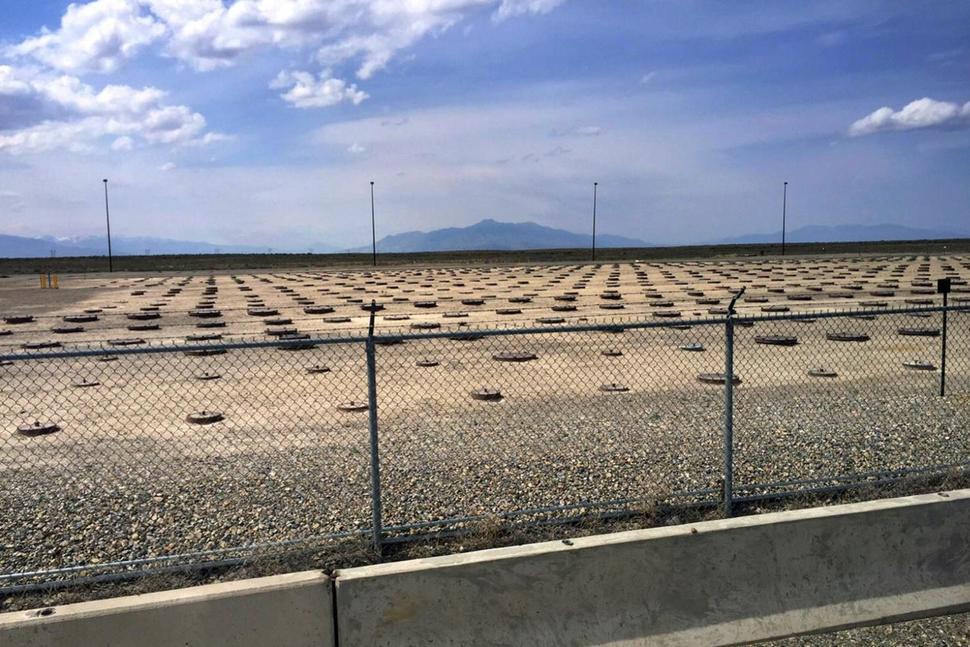
Nationwide opposition of a nuclear waste storage facility proposed to be built near Carlsbad and Hobbs continued its call for the licensing process for the project to be suspended during the COVID-19 pandemic and that the federal Nuclear Regulatory Commission deny the application altogether.
Holtec International proposed to build the site to store high-level spent nuclear fuel rods transported to southeast New Mexico from generator sites across the county.
Many of the rods are already stored in cooling pools near the generator sites, which supporters of the project said were unsafe as many are located near large bodies of water or densely populated areas.
The concept of Holtec’s consolidated interim storage facility (CISF) was to temporarily store the spent fuel in a remote location while a permanent repository was developed.
Such a facility to permanently store the waste does not exist in the U.S.
The idea faced opposition from New Mexico Gov. Michelle Lujan Grisham and State Land Commissioner Stephanie Garcia Richard along with other state lawmakers.
And during a Thursday public hearing held by the NRC, numerous nuclear watchdog groups from around the country voiced their opposition.
The NRC announced last week it would hold four such online hearings including Thursday’s with others scheduled for Aug. 25, 26 and Sept. 2 to solicit public comments on the Commission’s recently released environmental impact statement (EIS).
The EIS released earlier this year found the project would have minimal environmental impacts during the construction, operation and decommissioning of the facility.
The EIS was required for the first phase of Holtec’s plan for 500 cannisters to be stored, but the NRC also considered the company’s expressed intention to apply for future permits for 19 additional phases for a total of 10,000 cannisters of nuclear waste.
Leona Morgan of the Nuclear Issues Study Group based in Albuquerque said the online hearing process was unjust as many New Mexicans live without adequate internet or phone service to participate in electronic hearings.
While she called for the NRC to reject Holtec’s application, citing safety and environmental risks to the region of the facility and communities along the transportation routes, Morgan also questioned the hearing process itself as it continued during the global pandemic.
Leona Morgan of the Nuclear Issues Study Group based in Albuquerque said the online hearing process was unjust as many New Mexicans live without adequate internet or phone service to participate in electronic hearings.
While she called for the NRC to reject Holtec’s application, citing safety and environmental risks to the region of the facility and communities along the transportation routes, Morgan also questioned the hearing process itself as it continued during the global pandemic.
The Nuclear Issues Study Group, which held a continued presence during the past three public hearings held this year, and NRC’s scoping meetings held in 2018, would boycott the rest of the proceedings, Morgan said.
“There are a large portion of our state that lives without phone or internet service. Our organization is boycotting the rest of these proceedings. It is a sham. There is no reason to rush this process except to line the pockets of shareholders,” she said.
“We see this as a violation of our rights to submit our public comments under the National Environmental Policy Act. And it violates environmental justice. We can’t even verify that the NRC is sitting before us.”
More:Nuclear waste site near Carlsbad opposed by indigenous groups during public hearing
John LaForge, of nuclear watchdog group Nukewatch of Wisconsin also voiced his opposition to the project and ongoing proceedings, pointing to widespread opposition in New Mexico and among Tribal nations.
He demanded public hearings be held in up to 40 states other than New Mexico that could be impacted by the transportation of waste.
“There is no compelling reason at this time for these meetings to be rushed. I opposed this plan due to the governors of New Mexico and of 20 tribal nations,” LaForge said. “With these online meetings, it is apparent to me that the NRC has no interest in the public’s concerns. The people of New Mexico have said no.”
He also criticized the EIS as the NRC noted in the report it would expect no radiation release should there be an accident at the facility.
“In its review, the NRC said it assume in an accident there would be no release of radiation,” LaForge said. “That is alarming and preposterous.”
Petuuche Gilbert of the Acoma Coalition for a Safe Environment based in the Acoma Pueblo near Albuquerque also questioned the EIS as it only considered the environmental impacts of the project for 40 years and only within a 50 mile radius.
“We believe the analysis needs to go beyond the 40 year possibility of storing the waste. We all know the nuclear waste and radioactivity extends beyond that limited timeframe. It really needs to go on for hundreds or thousands of years,” Gilbert said.
“You have the possibility of accidents that could occur along the transportation corridors. The cumulative analysis is limited only to a 50 mile radius. It really needs to be more.”
Adrian Hedden can be reached at 575-628-5516, achedden@currentargus.com or @AdrianHedden on Twitter.
Global heating keeps hitting France’s nuclear industry
EDF’s use of water is regulated by law to protect plant and animal life. It is obliged to reduce output during hot weather when water temperatures rise, or when river levels and the flow rate are low.
Last month was the driest July in at least 60 years and the first half of August was the second hottest on record, making it the fifteenth consecutive month with higher than average temperatures, Meteo France data showed.
RTE published a similar warning for the Chooz reactors in northern France on Tuesday, as low water levels on the Meuse river risk extending current maintenance periods.
French nuclear availability is currently at 63.6% of total capacity, with 22.7 GW offline. (Reporting by Forrest Crellin; Editing by Jan Harvey)
Anthropogenic CO2 increase is unprecedented,
- Date:
- August 20, 2020
- Source:
- University of Bern
- Summary:
- Even in earlier warm periods there were pulse-like releases of CO2 to the atmosphere. Today’s anthropogenic CO2 rise, however, is more than six times larger and almost ten times faster than previous jumps in the CO2 concentration.
-
A new measurement technology developed at the University of Bern provides unique insights into the climate of the past. Previous CO2 concentrations in the atmosphere could be reconstructed more accurately than ever before, thanks to high-resolution measurements made on an Antarctic ice core. The study, which analyzed the Earth’s atmospheric composition between 330,000 and 450,000 years ago, was made possible by the commitment of experts, and their decades of experience, at the University of Bern. The results of the study have been published in Science.
Melting ice masses disturbed the ocean circulation…………
- CO2 increase was ten times slower than today ……..
-
The largest jump in the past corresponds to the current CO2 emissions over only six years
The researchers compared the CO2 jumps of the past with the ongoing human-driven rise of CO2 concentration in the atmosphere. According to Stocker, the largest centennial CO2 jump in the past was around 15 ppm (parts per million is the unit for atmospheric CO2 concentration), which is approximately equivalent to the increase caused by humankind over the last of six years. “This may not seem significant at first glance,” says Stocker, “but in light of the quantities of CO2 that we are still allowed to emit in order to achieve the 1.5°C climate target agreed in Paris, such increases are definitely relevant.” The findings of this study put us under even greater pressure to protect the climate.
Story Source:
Materials provided by University of Bern. https://www.sciencedaily.com/releases/2020/08/200820151335.htm
Climate change a danger to nuclear plants, and costly to prevent weather-caused disasters

37 GW of nuclear capacity at risk from flooding
48 GW at risk from heat, water stress
Merchant plants have fewer options to recover mitigation costs
Washington — Dozens of US nuclear power plants, comprising nearly half the country’s operational nuclear generating capacity, “will face growing credit risks” in the next 10 to 20 years due to flooding, hurricanes, heat stress and other predicted impacts of climate change, Moody’s Investors Service said in a report Aug. 18.
“The consequences of climate change can affect every aspect of nuclear plant operations – from fuel handling and power and steam generation to maintenance, safety systems and waste processing,” the report said, noting that “the severity of these risks will vary by region, with the ultimate credit impact depending on the ability of plant operators to invest in mitigating measures to manage these risks.”
Moody’s did not specify mitigation measures that are being, or should be, taken.
Water cooling needs expose plants to the risk of flooding, sea-level rise and hurricanes, and “about 37 gigawatts (GW) of US nuclear capacity [have] elevated exposure to flood risk,” Moody’s said.
Also, the report noted, “rising heat and water stress can have an adverse impact on plant operations,” with “about 48 GW of nuclear capacity [having] elevated exposure to combined rising heat and water stress.”
“Regulated or cost-based nuclear plants,” comprising about 55 GW of capacity in the US, “face elevated heat and water stress across most locations, with moderate to high risk of floods, hurricanes, and sea level rise for certain coastal plants,” Moody’s said. However, it added: “The credit impact of these climate risks is likely to be more modest for operators of these nuclear plants, relative to market-based plants, because they have the ability to recoup costs through rate recovery mechanisms.”
By contrast, “market-based plants,” with a total of about 44 GW of capacity, “face elevated heat stress and more water stress than regulated/cost-based plants, with fewer plants at risk of floods and hurricanes,” it said.
The highest risk, or “red flag,” category includes plants that are “highly exposed to historical and/or projected risks, indicating high potential for negative impacts,” Moody’s said.
According to the report, five plants with a combined capacity of about 9.1 GW are in the red flag category for floods. Some 13 plants with a combined capacity of about 23.8 GW were found to be at red-flag risk for heat stress. The categories of hurricanes, sea level rise and water stress each had one plant expected to be at red-flag risk.
Because some US nuclear units “are seeking to extend their operations by 20, or even 40 years,” Moody’s said, “operators will have to consider these risks when implementing resilience measures.”………. https://www.spglobal.com/platts/en/market-insights/latest-news/electric-power/081820-dozens-of-us-nuclear-power-plants-at-risk-due-to-climate-change-moodys
Climate change a problem for nuclear waste dumps
Climate change included in nuclear waste study, Dryden now, August 2020 by Mike Aiken Experts with the Nuclear Waste Management Organization are adjusting their forecasts for the Ignace area, so they include the possibility of more rainfall. The adjustment will allow for climate change, including the possibility of extreme weather and increased flooding.
“This is the first time this modelling work has been done for a potential repository location and any assessment of sites for the safe storage of used nuclear fuels must take into account the potential future impact of climate change on its infrastructure,” said Kelly Liberda, who is a senior engineer with Golder Associates, who are working on the site selection process.
“While it’s difficult to project the extent to which precipitation could fluctuate in specific geographic areas, the NMWO is taking steps to anticipate the most likely scenarios,” Liberda added.
Based on a multi-model assessment of publicly available data, the Golder Associates study found that both one-day probable maximum precipitation and one-day rainfall events in the Ignace study area are projected to increase in the 2050s and 2080s. …….
NuScam’s not so small nuclear reactors need $1.4 billion subsidy, and might not be so safe
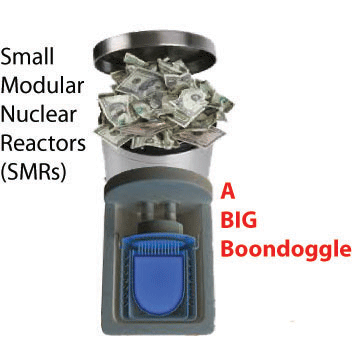 Smaller, cheaper [?] reactor aims to revive nuclear industry, but design problems raise safety concerns, Science, By Adrian Cho, Aug. 18, 2020 Engineers at NuScale Power believe they can revive the moribund U.S. nuclear industry by thinking small. Spun out of Oregon State University in 2007, the company is striving to win approval from the U.S. Nuclear Regulatory Commission (NRC) for the design of a new factory-built, modular fission reactor meant to be smaller, safer, and cheaper than the gigawatt behemoths operating today. But even as that 4-year process culminates, reviewers have unearthed design problems, including one that critics say undermines NuScale’s claim that in an emergency, its small modular reactor (SMR) would shut itself down without operator intervention.The issues are typical of the snags new reactor designs run into on the road to approval, says Michael Corradini, a nuclear engineer at the University of Wisconsin, Madison. “I don’t think these things are show-stoppers.” However, M. V. Ramana, a physicist who studies public policy at the University of British Columbia, Vancouver, and has been critical of NuScale, says the problems show the company has oversold the claim that its SMRs are “walk-away safe.” “They have given you the standard by which to evaluate them and they’re failing,” Ramana says.
Passive safety?
Normally, convection circulates water—laced with boron to tune the nuclear reaction—through the core of NuScale’s reactor (left). If the reactor overheats, it shuts down and valves release steam into the containment vessel, where it conducts heat to a surrounding pool and condenses (center). The water flows back into the core, keeping it safely submerged (right). But the condensed water can be low in boron, and reviewers worried it could cause the reactor to spring back to life………..
NuScale’s likely first customer, Utah Associated Municipal Power Systems (UAMPS), has delayed plans to build a NuScale plant, which would include a dozen of the reactors, at the Department of Energy’s (DOE’s) Idaho National Laboratory. The $6.1 billion plant would now be completed by 2030, 3 years later than previously planned, says UAMPS spokesperson LaVarr Webb. ……… The delay will give UAMPS more time to develop its application for an NRC license to build and operate the plant, Webb says. The deal depends on DOE contributing $1.4 billion to the cost of the plant, he adds.
……… A NuScale reactor—which would be less than 25 meters high, hold about one-eighth as much fuel as a large power reactor, and generate less than one-tenth as much electric power—would rely on natural convection to circulate the water
……….. In March, however, a panel of independent experts found a potential flaw in that scheme. To help control the chain reaction, the reactor’s cooling water contains boron, which, unlike water, absorbs neutrons. But the steam leaves the boron behind, so the element will be missing from the water condensing in the reactor and containment vessel, the NRC’s Advisory Committee on Reactor Safeguards (ACRS) noted. When the boron-poor water re-enters the core, it could conceivably revive the chain reaction and possibly melt the core, ACRS concluded in a report on its 5–6 March meeting.https://www.sciencemag.org/news/2020/08/smaller-cheaper-reactor-aims-revive-nuclear-industry-design-problems-raise-safety
1 This month
7 April – WEBINAR – Australia and the Doomsday Clock – Preventing nuclear war through NoFirstUse and other policies
Online | Tuesday April 7, 4:00-5:30pm, Australian Eastern Time / 8:00-9:30am Central Europe Time
– Access the registration link
15 April – Zoom –Nuclear Power is Not the Solution
Apr 15, 2026 01:00 AM in Canberra, Melbourne, Sydney

Join the International Physicians for the Prevention of Nuclear War (IPPNW) on Tuesday, April 14th for a timely webinar exploring the risks associated with nuclear power and challenging the myth that it offers a simple, safe, carbon-free solution to the climate crisis

of the week – Australians for War Powers Reform (AWPR)
To see nuclear-related stories in greater depth and intensity
 Antinuclear