Hiroshima survivor explains why 75 years of radiation research is so important
Watch: Hiroshima survivor explains why 75 years of radiation research is so important https://www.youtube.com/watch?v=sUz6mAkaMLs https://www.sciencemag.org/news/2020/08/watch-hiroshima-survivor-explains-why-75-years-radiation-research-so-important, By Joel GoldbergAug. 3, 2020 ,
Seventy-five years ago on 6 August, the United States dropped a nuclear bomb on Hiroshima, Japan. Up to 120,000 people died in the bombing and its aftermath. Some of the survivors, known as hibakusha, would eventually enroll in the Radiation Effects Research Foundation’s Life Span Study, which continues to examine the effects of atomic radiation on the human body. The study’s findings have been the basis for radiation safety standards around the world, ranging from power plants to hospitals. Decades of archival footage and images, survivor drawings, and the testimony of research participant Kunihiko Iida convey the kind of misery that results from an atomic bombing—as well as the message of peace and humanity that can result from scientific research.
No. The U.S. did not need to drop a second nuclear bomb on Japan
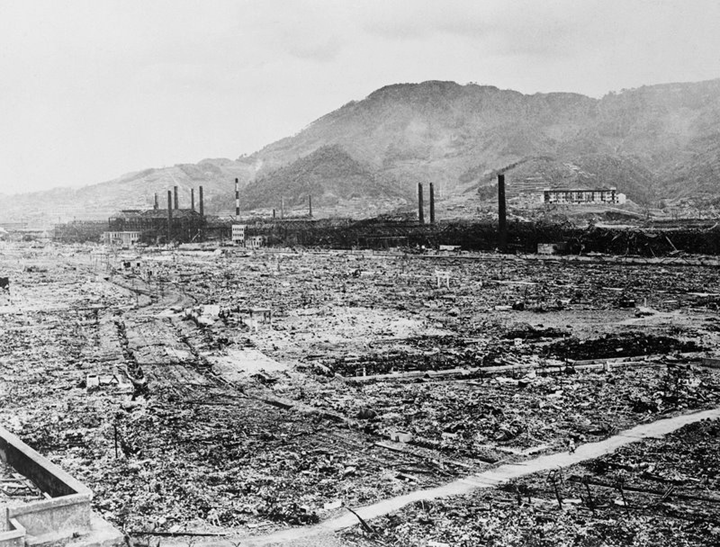 Did the U.S. Need to Drop a Second Atomic Bomb on Japan? NEWSWEEK, BY DAVID BRENNAN ON 8/9/20 “……… The atomic bombings of Hiroshima and Nagasaki together killed somewhere between 129,000 and 226,000 people, the vast majority of them civilians. Then, it was argued that the bombs were the only way to defeat the forces of Imperial Japan, which were fighting tooth and nail for every inch of Japanese territory against the Allies……… Did the U.S. Need to Drop a Second Atomic Bomb on Japan? NEWSWEEK, BY DAVID BRENNAN ON 8/9/20 “……… The atomic bombings of Hiroshima and Nagasaki together killed somewhere between 129,000 and 226,000 people, the vast majority of them civilians. Then, it was argued that the bombs were the only way to defeat the forces of Imperial Japan, which were fighting tooth and nail for every inch of Japanese territory against the Allies………This has remained the dominant view through most of the post-war era, even with the shifting debate on whether the bombings constituted war crimes. …….
But not everyone agrees that the bombs were necessary. Miyako Taguchi is the daughter of two atomic bomb survivors—known as hibakusha—who lived in Nagasaki at the end of the war. Now living in New York, she told Newsweek that she grew up some 30 minutes walk from ground zero.
Even as a child she felt nervous about the incident and recalled how big a role it played in Nagasaki’s culture and story. Taguchi even remembers how the city’s hot, humid summer days would make her think of the unimaginable heat of an atomic blast and how it must have felt for those caught in it. As she got older, Taguchi said she better understood what happened to her family’s home town and the horrors that befell them—horrors that her family members were reluctant to recall. As the anniversary approaches each year, she said these feelings resurface. Taguchi told Newsweek that the bombing was “inhuman,” regardless of arguments about the lives that the attacks hypothetically saved elsewhere. When hearing people advocate for the bombs, Taguchi said she struggles to control her temper. ……. by explaining her family’s experience Taguchi said she hopes she can make some people reconsider their assumption that the attack was necessary. “It’s very difficult to change other people’s minds,” she said, especially when they know little about what really happened on that fateful day….. the Soviet Union declared war on Japan at midnight on August 8, 1945—hours before Nagasaki was destroyed. More than the atomic bombs, the Soviet entry into the war against Japan was the final nail in Tokyo’s coffin, according to Tsuyoshi Hasegawa—a Japanese-American historian who is an expert in Soviet Russian and Japanese history. Hasegawa noted that Japanese leaders were seeking Soviet mediation for talks with the U.S. during the closing stages of the war, even after the first atomic bomb killed tens of thousands of people in Hiroshima. “The Hiroshima bomb did not change Japanese policy to seek mediation,” Hasegawa told Newsweek. “So in that sense that was not the decisive factor… I would say that the Soviets entering the war was a more decisive factor.” “The Soviet Union was the last hope for the Japanese government to terminate the war,” he added. “That hope was totally dashed.” Had the Soviets not entered the war, “I think the Japanese government would have continued to seek mediation from Moscow.” Emperor Hirohito took the “sacred decision” to surrender early in the morning of August 10, military and political leaders having met throughout August 9 following the Soviet entry into the war. The emperor informed citizens of the surrender on August 15. Hasegawa said that the Nagasaki bomb did not dominate the emperor’s decision, as the full extent of the damage and casualties were not known until August 10. The Nagasaki explosion was contained in the Urakami Valley, protecting the parts of the city spread across the nearby hills including the city’s civil defence headquarters which sent out the first reports of the explosion. “The extent of the damage of Nagasaki was not properly reported to Tokyo throughout August 9,” Hasegawa said. Another theory for both atomic bombs is that while they were not necessarily needed to defeat Japan, U.S. leaders wanted to show the Soviet Union what their weapons of mass destruction could do……… Hasegawa said the accepted history of the atomic bombs in the U.S.—and much of the Western world—argues that both bombs were necessary to bring Japan to its knees. It gained popularity and acceptance, he believes, for psychological reasons. “The use of atomic bombs really, really bothered the conscience of Americans—it’s a psychological factor,” he said. “They really wanted to believe that what we did, the terrible thing that we did was necessary.” Hasegawa also said that the prevailing history of the war has been too U.S.-centric, allowing American explanations to take root with little challenge. Many American scholars treat the Soviet Union factor as a sort of “side show,” he said, and write the history of the atomic bombs with little attention given to the Japanese decision making process. https://www.newsweek.com/second-atomic-bomb-hiroshima-1523608 |
|
|
A doctor and hibakusha speaks out for the Treaty on Prohibition of Nuclear Weapons
Dr. Masao Tomonaga Surviving the nuclear bomb at Nagasaki 75 years ago showed me nuclear weapons shouldn’t exist https://www.nbcnews.com/think/opinion/surviving-nuclear-bomb-nagasaki-75-years-ago-showed-me-nuclear-ncna1236148
People like me learned firsthand the results of using nuclear weapons. A full-scale nuclear war would destroy both the world and humanity as we know it. Aug. 9, 2020, By Dr. Masao Tomonaga, vice president, International Physicians for the Prevention of Nuclear War
It has been 75 years since August 9, 1945, when the atomic bombing of Nagasaki opened the nuclear weapon age. I was 2 years old, and only 1 1/2 miles from ground zero of the nuclear explosion in there; I was, fortunately, unhurt by the blast itself. I was rescued by my mother from a half-destroyed wooden house just before it burned down.
I am one of a dwindling number of hibakusha — atomic bomb survivors; we are now, on average, 83 years old. Many of us still die of radiation-induced cancers and leukemia from the bombs dropped on our cities in 1945 because that exposure to radiation — when most of us were just 10 years old or younger — led to gene abnormalities in many organs that are still causing malignant diseases today.
That means, legally and morally, the human toll of the bombings is still unfolding and the total number of casualties cannot yet be calculated.
Only two atomic bombs of what we would, today, consider a rather small size were used by the United States in Japan: They were 20 kilotons (Nagasaki) and 15 kilotons (Hiroshima), whereas the common size today is a few hundred kilotons. Still, one 15- and one 20-kiloton bomb were enough to devastate two medium-sized Japanese cities and kill 200,000 or more people, either instantaneously or within five months due to acute radiation injuries and skin burns.
Almost the same numbers of hibakusha survived the immediate aftermath, only to go on living with the fear of both contracting radiation-related disorders and passing malignant genetic diseases onto their children.
We hibakusha learned firsthand the horrible human consequences of using nuclear weapons and thus have long feared that a full-scale nuclear war would destroy both the world and humanity as we know it. This made us determined to fight for nuclear abolition — for the sake of the rest of humanity.
Many hibakusha came together years ago, drawing emotional energy from one another, to begin a campaign against nuclear weapons and move humanity forward by spreading our testimonies worldwide and warning of the global danger of human extinction.
In our first success, we hibakusha witnessed the passage of the Nuclear Non-Proliferation Treaty in 1970 by the United Nations, which gave us hope for a nuclear weapon-free world.
Sadly, as we approached the 50th anniversary of the passage of the NPT, the push for nuclear disarmament had almost stopped, and it seemed like the race for nuclear weapons might begin anew. The U.S., for instance, in August 2019 abandoned the Intermediate-Range Nuclear Forces Treaty (signed by U.S. President Ronald Reagan in 1987), the New Strategic Arms Reduction Treaty (signed by U.S. President Barack Obama and Russian President Dmitry Medvedev in 2010) is set to expire next year, and other countries are building new, smaller nuclear weapons.
To push back against this new nuclear arms race, we hibakusha collaborated with the non-nuclear weapon states and many nongovernmental organizations such as ICAN, the International Campaign to Abolish Nuclear Weapons, to establish a Treaty on the Prohibition of Nuclear Weapons. We finally succeeded in July 2017, and since then, the TPNW has been signed and ratified by 43 countries — close to the 50 needed for it to become official under international law.
However, we are facing a serious opposition to the TPNW by the nuclear states, all of whom refuse to sign and ratify the treaty. There is a continuing belief in the nuclear weapon states and the allied countries under their “nuclear umbrella” — including many NATO states, Japan, Australia and Canada — that nuclear weapons are still necessary to keep peace.
Here in Japan, we hibakusha shed tears when our government declared at the United Nations Assembly in 2017 that it would not sign or ratify the TPNW, despite Japan being the only nation to experience nuclear attacks and know in the greatest detail the human consequences and social destruction of the weapons. The nuclear umbrella offered under the U.S.-Japan Security Treaty for the past 60 years has bound Japan tightly to U.S. political and military leaders, who oppose the treaty.
Nuclear Lobby getting into U.S. government via a new Nuclear Front Group – “The Good Energy Collective”

US / New Policy Group Calls For Nuclear-Specific Staff In White House https://www.nucnet.org/news/new-policy-group-calls-for-nuclear-specific-staff-in-white-house-8-4-2020, By David Dalton, 6 August 2020
The nuclear industry should create new business and finance models for new nuclear technologies and ensure a “robust commercialisation pathway” to bring advanced reactor designs to market.
“Nuclear energy will be needed to reach ambitious climate goals, but we must first reconstruct the technology for a new era complete with modern, socially-grounded approaches,” the Good Energy Collective said.
“Smart policies and better nuclear governance can help quickly shift the sector to a new, more sustainable pathway. Better governance will require a step-change by the administration, congress, and the nuclear industry.”
Paying respect to the hibakusha, to Australian Aboriginals, and all people harmed by the nuclear industry

Book review: Michael Shellenberger’s reheated critique of climate ‘alarmism’

Michael Shellenberger has been downplaying climate risks since 2010 if not earlier – his luke-warmism is reheated. The post Book review: Michael Shellenberger’s reheated critique of climate ‘alarmism’ appeared first on RenewEconomy.
Book review: Michael Shellenberger’s reheated critique of climate ‘alarmism’ — RenewEconomy
California-based Michael Shellenberger first courted controversy in 2004 with his ‘death of environmentalism’ critique of the environment movement and has continued to attract controversy by promoting nuclear power, demonising renewable energy (“renewables are worse for the environment than fossil fuels”) and demonising the environment movement that he claims to be part of.
Shellenberger’s is now into ‘luke-warmism’ — downplaying the risks associated with climate change and attacking environmentalists for climate and environmental ‘alarmism’.
That’s the focus of his new book, Apocalypse Never: Why Environmental Alarmism Hurts Us All. In fact, Shellenberger has been downplaying climate risks since 2010 if not earlier — his luke-warmism is reheated.
A number of factual rebuttals of Shellenberger’s claims about environmental alarmism have been written, and more will follow (1,2,3,4,5). Climate Feedback asked six scientists to review Shellenberger’s lengthy opinion piece which promotes his book.
They found its overall scientific credibility to be ‘low’ and most found it indulged in cherry-picking and misleading statements.
Shellenberger’s claim that “climate change is not making natural disasters worse” is inaccurate and contradicts numerous scientific studies linking climate change to temperature extremes, drought, precipitation patterns, and wildfires. Continue reading
NuScam small(ish) nuclear reactors rejected by Utah Taxpayers Association
|
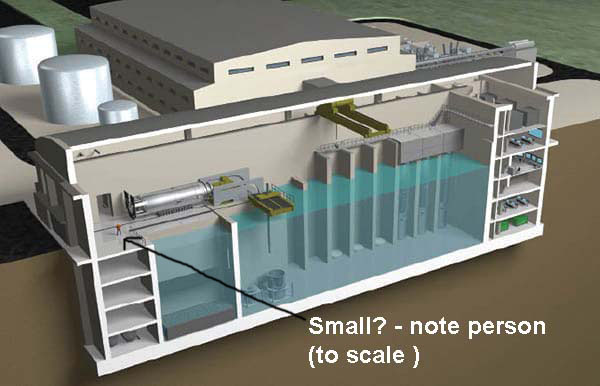
Critics of planned nuclear power project urge Utah cities to pull out before it’s too late, Utah Taxpayers Association warns it believes proposal is too costly, not transparent DeseretNews, By Amy Joi O’Donoghue@Amyjoi16 Aug 4, 2020 SALT LAKE CITY — The Utah Taxpayers Association and a former member of the U.S. Nuclear Regulatory Commission are urging cities that have signed on to a planned nuclear power plant in Idaho to get out while they can before costs become too great. NuScale’s Small Modular Reactor is planned for construction at the Idaho National Laboratory near Idaho Falls and would provide 720 megawatts of power, or enough energy for 720,000 homes. The Carbon Free Power Project is promoted as the next generation design for nuclear power, featuring 12 distinct modules, with the first scheduled to come online in 2029 with the 11 others following the next year. The project is a collaborative effort involving the U.S. Department of Energy, NuScale and the Utah Associated Municipal Power Systems, a political subdivision of the state of Utah. …… there are several off-ramps in those phases for cities to exit, one of which is coming up Sept. 14. That deadline prompted the taxpayers association to urge cities to get out now before they get trapped into paying millions for a technology it says is unproven. “Small modular reactor power is just not cost competitive,” said Rusty Cannon, vice president of the taxpayer group, adding participating cities and districts should hold a public vote to withdraw from the project…….. Peter Bradford, a former member of the U.S. Nuclear Regulatory Commission, said enthusiasm over new developments in nuclear technology that turned out to be flawed have cost ratepayers and taxpayers in multiple states billions of dollars. He said that of 31 projects pending before the commission in 2009, only two remain — with the rest canceled or indefinitely postponed. “The stranded costs of nuclear plants paid off by customers in the 1990s exceeded $50 billion nationwide,” he said. “Each period of abject failure is followed by an array of new proposals.”……. The project is backed heavily by the U.S. Department of Energy, which gave NuScale a competitive award of $226 million in 2013 to develop the technology. Two years later, the federal agency gave NuScale $16.7 million for licensing preparation…….. Cannon and Bradford also criticized the municipal power association for not being transparent enough because its briefing meetings are exempt from the Utah open meetings law and are closed……… https://www.deseret.com/utah/2020/8/4/21354171/critics-nuclear-power-project-urge-utah-cities-pull-out-nuscale-small-modular-reactor-idaho |
|
Hiroshima’s atomic bomb changed Koko Kondo’s life, but so did meeting the man who dropped it,
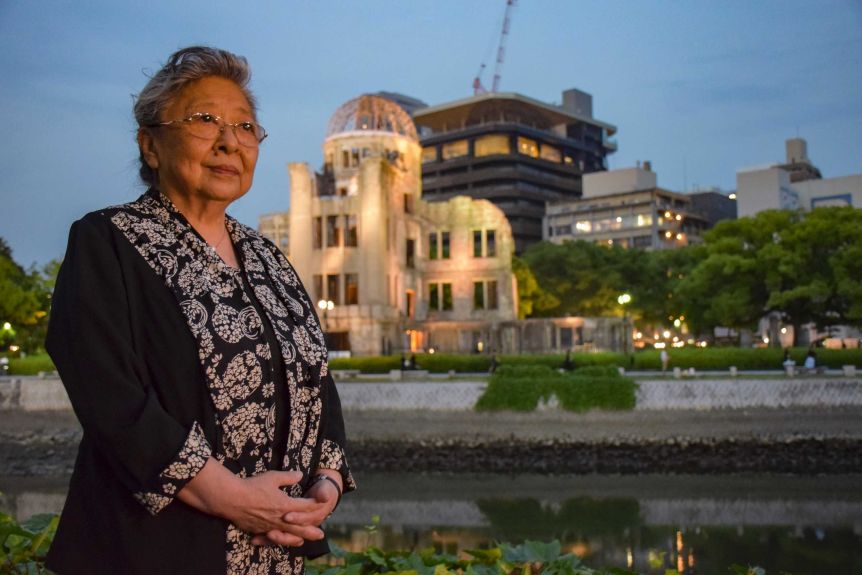
Hiroshima’s atomic bomb changed Koko Kondo’s life, but so did meeting the man who dropped it, ABC News,By Tracey Shelton, 6 August, 20, Eight-month-old Koko was in her mother’s arms the day the world’s first nuclear weapon was dropped on Hiroshima, bringing their family home crashing down on them on this day 75 years ago.
Key points:
Between 90,000 and 166,000 victims died within months of the Hiroshima bombing
Koko Kondo met pilot Robert Lewis on the set of This is Your Life
More than 150 denshosha volunteers are carrying on the memories of survivors
She was almost 40 years old before her mother finally sat her down and told her the full story of how she had inched through the rubble in darkness, with little Koko wrapped in her arms, towards a small pocket of dusty sunlight.
“She first pushed me out [through the opening], then next, she was able to get out … but the fire was all over the place according to my mother,” said Koko Kondo, who is now 75.
Ms Kondo’s father — Methodist minister Kiyoshi Tanimoto, who was visiting a parishioner across town — said in a US television interview “the whole city was on fire” as he ran through the streets to find his family.
He described people running in silence with skin hanging from their bodies “like a procession of ghosts”
In the sky above, pilot Robert Lewis was part of the United States Air Force crew who dropped the atomic bomb known as Little Boy that day, unleashing around 13 kilotons of force on the city below, where Ms Kondo’s family and about 290,000 other civilians lived, according to the Atomic Heritage Foundation.
Estimates on how many people died from the bomb either instantly or in the following months range between 90,000 and 166,000, but the Little Boy would go on to claim the lives of thousands more as the effects of radiation took their toll.
After looking back to see the once-flourishing city “disappear”, Captain Lewis wrote in his log book “My God, what have we done?”…….
While Ms Kondo said most people avoided speaking of the bombing in the decades that followed, her father made it his mission to help the injured, rebuild the city and ensure the world never forgot.
Her family had suffered from radiation sickness and Ms Kondo was subjected to years of tests and examinations to study the effects of radiation exposure.
One of Ms Kondo’s earliest memories — at around two or three years old — was of a group of teenage girls attending a sermon at her father’s church.
“Some girls could not close their eyes. Some girls — their lips were all melted with their chins so they could not close [their mouths],” she told the ABC.
While her manners did not permit her to ask questions, she would listen to her parents’ conversations and learned that the destruction and pain that surrounded her was caused by a single US B-29 bomber.
Ms Kondo said her childhood became consumed by hatred and thoughts of revenge.
“Someday when I grow up, I am definitely going to find the people who were on that B-29 bomber to do the revenge,” she said.
“That was my plan, that was my thinking. But life is interesting.”
When Koko was 10, her mother and siblings received a phone call from the then popular US television program This is Your Life.
They were immediately flown to the United States for an episode featuring the work of her father, who had taken a group of young survivors to the US for plastic surgery……
As Hiroshima mission pilot Robert Lewis was introduced, Koko glared at him with all the hatred a 10-year-old could muster.
“I was so shocked!” she recalled.
“What could I do? I wanted to run to the middle of the stage and give him a punch, a bite or a kick.”
But as he recalled his memories of that day, she saw tears begin to well in his eyes.
“I thought he was a monster, but monsters don’t have tears.”
Ms Kondo said she realised she had lived her short life full of hate for a man she knew nothing about……..
the life of this man was not easy, she said, and he “suffered greatly” not only with the weight of his involvement in the bombing, but he was also “harassed” for speaking about it publicly.at 75, she is among the youngest of a dwindling number of survivors who can tell the world first hand of the horrors these weapons unleashed……….
“My concern is today nuclear weapons are much, much stronger. We have to abolish them now,” urged Ms Kondo. ….
If these stories were lost, “probably our planet would be gone”, she said.
Doctoral candidate Tomoko Kubota is one of more than 150 denshosha — a designated keeper of the memories of a Hiroshima or Nagasaki survivor.
As a denshosha volunteer, she spent three years training and learning from survivor Sadae Kasaoka, so in the future she can “give testimony” on her behalf by sharing her “experiences, the reality of the atomic bombing, and desires for peace”.
That story includes how, at 12 years of age, Ms Kasaoka lost her mother and watched her father die — within days of the blast — in agony from horrific burns and wounds that became infested with maggots.
For other survivors, the memories were too painful to talk about, Ms Kasaoka said, while discrimination against those who did speak out had silenced many over the years…………. https://www.abc.net.au/news/2020-08-06/atomic-bomb-survivors-75-years-after-hiroshima-nuclear-attack/12501636
Vatican signs up to the U.N. Nuclear Weapons Ban Treaty, provides moral guidance
 75 years after Hiroshima and Nagasaki, the Vatican is providing moral guidance on nuclear weapons The Conversation, Drew Christiansen,Distinguished Professor of Ethics and Human Development, Georgetown University, Carole Sargent
August, 4, 2020
At a solemn event at the Hiroshima Peace Park in November 2019, Francis declared the use of atomic energy for war to be “a crime not only against the dignity of human beings but against any possible future for our common home.” “How,” he asked, “can we speak of peace even as we build terrifying new weapons of war?”
His comments came nearly 40 years after John Paul II became the first pope to visit the site of the atomic bomb attacks, which pulverized the two cities on Aug. 6 and 9, 1945 and killed in excess of 200,000 in the process.
Deterrence to abolition
During his visit, Francis reiterated what he previously told assembled Nobel Peace Prize laureates, diplomats and civil society representatives at a Vatican symposium in 2017, that nuclear weapons, along with chemical weapons and landmines, were impermissible. “The threat of their use, as well as their very possession, is to be firmly condemned,” he said…………
In 2017, the Holy See became one of the first signers of the U.N. Treaty on the Prohibition of Nuclear Weapons. Article 1 prohibits signers to “develop, test, produce, manufacture, otherwise acquire, possess or stockpile nuclear weapons…” This was the backdrop for Pope Francis’ historic condemnation of deterrence and call for disarmament later that fall.
One hundred and twenty-two nations voted for the Treaty on the Prohibition of Nuclear Weapons. For its labors on behalf of the treaty, ICAN, the International Campaign Against Nuclear Weapons, an umbrella group of civil society opponents of nuclear weapons, won the 2017 Nobel Peace Prize.
Beyond the hierarchy
But the guidance provided by the Catholic Church is not simply through official statements and positions from the top.
Across the church, various groups have long campaigned for abolition of nuclear weapons. Catholic nuns have often been at the forefront of this work. In Japan, several activist hibakusha – survivors of Hiroshima and Nagasaki – are sisters of Notre Dame de Namur and the Society of the Helper of Holy Souls, among other congregations.
In the U.S., Sister Jennifer Kane was a nuclear engineer before realizing, in the words of her congregation in 2019, “that God was calling her to a more spiritual combat” as an antinuclear activist.
And Dominicans, Religious of the Sacred Heart, and Society of the Holy Child Jesus have participated in the grassroots anti-nuclear direct-action movement Plowshares, at times resulting in prison time for activist nuns……….
Courage of conscience
Church teaching demands that conscientious officials and nuclear workers resist orders they deem to be immoral.
The Second Vatican Council of the early 1960s taught that obeying orders is no excuse for participating in atrocities, and urged anyone, whether top military leader or rank-and-file citizen, to display “the courage of those who openly and fearlessly resist.”
Indeed, in 2018 two chiefs of the U.S. Strategic Air Command testified in a Senate hearing that they would not comply with illegal orders to deploy nuclear weapons, and that they would offer civilian authorities alternative courses of action to pursue. …….https://theconversation.com/75-years-after-hiroshima-and-nagasaki-the-vatican-is-providing-moral-guidance-on-nuclear-weapons-140615
Racism in nuclear bomb testing, bombing of Japanese people, and nuclear waste dumping
 Langston Hughes voiced the opinion that until racial injustice on home ground in the United States ceases, “it is going to be very hard for some Americans not to think the easiest way to settle the problems of Asia is simply dropping an atom bomb on colored heads there.”[25] While his statement was made in 1953, near the eighth anniversary of the Hiroshima and Nagasaki bombings, it remains equally relevant today, as we approach the 75th anniversary
Memorial Days: the racial underpinnings of the Hiroshima and Nagasaki bombings , Bulletin of the Atomic Scientists, Elaine Scarry, Elaine Scarry is the author of Thermonuclear Monarchy: Choosing between Democracy and Doom and The Body in Pain: the Making and Unmaking of the World. She is Cabot Profess… By Elaine Scarry, August 3, 2020
This past Memorial Day, a Minneapolis police officer knelt on the throat of an African-American, George Floyd, for 8 minutes and 46 seconds. Seventy-five years ago, an American pilot dropped an atomic bomb on the civilian population of Hiroshima. Worlds apart in time, space, and scale, the two events share three key features. Each was an act of state violence. Each was an act carried out against a defenseless opponent. Each was an act of naked racism. ……….
Self-defense was not an option for any one of the 300,000 civilian inhabitants of the city of Hiroshima, nor for any one of the 250,000 civilians in Nagasaki three days later. We know from John Hersey’s classic Hiroshima that as day dawned on that August morning, the city was full of courageous undertakings meant to increase the town’s collective capacity for self-defense against conventional warfare, such as the clearing of fire lanes by hundreds of young school girls, many of whom would instantly vanish in the 6,000° C temperature of the initial flash, and others of whom, more distant from the center, would retain their lives but lose their faces.[2] The bombing of Hiroshima and Nagasaki initiated an era in which—for the first time on Earth and now continuing for seven and a half decades—humankind collectively and summarily lost the right self-defense. No one on Earth—or almost no one on Earth[3]—has the means to outlive a blast that is four times the heat of the sun or withstand the hurricane winds and raging fires that follow………
Centuries of political philosophers have asked, “What kind of political arrangements will create a noble and generous people?” Surely such arrangements cannot be ones where a handful of men control the means for destroying at will everyone on Earth from whom the means of self-defense have been eliminated……..
When Americans first learned that the people of Hiroshima and Nagasaki had been collectively vaporized in less time than it takes for the heart to beat, many cheered. But not all. Black poet Langston Hughes at once recognized the moral depravity of executing 100,000 people and discerned racism as the phenomenon that had licensed the depravity: “How come we did not try them [atomic bombs] on Germany… . They just did not want to use them on white folks.”[4] Although the building of the weapon was completed only after Germany surrendered on May 7, 1945, Japan had been designated the target on September 18, 1944, and training for the mission had already been initiated in that same month.[5] Black journalist George Schuyler wrote: “The atom bomb puts the Anglo-Saxons definitely on top where they will remain for decades”; the country, in its “racial arrogance,” has “achieved the supreme triumph of being able to slaughter whole cities at a time.”[6]
Still within the first year (and still before John Hersey had begun to awaken Americans to the horrible aversiveness of the injuries), novelist and anthropologist Zora Neale Hurston denounced the US president as a “butcher” and scorned the public’s silent compliance, asking, “Is it that we are so devoted to a ‘good Massa’ that we feel we ought not to even protest such crimes?”[7] Silence—whether practiced by whites or people of color—was, she saw, a cowardly act of moral enslavement to a white supremacist. Continue reading
ROADS, RATES, RUBBISH AND … NUCLEAR DISARMAMENT?
The Advertiser, 3 Aug 20, An Adelaide Hills councillor is laser-focused on the threat posed by nuclear weapons. He wants his council to take immediate steps so it’s ready to provide local leadership in the event of a nuclear holocaust……. (subscribers only)
The nuclear bombing of Hiroshima and Nagasaki did NOT save lives and shorten World War 2
What Europeans believe about Hiroshima and Nagasaki—and why it matters , Bulletin of the Atomic Scientists Benoît Pelopidas Benoît Pelopidas is the founder of the Nuclear Knowledges program at the Center for International Studies at Sciences Po in Paris (formerly chair of excellence in security studies). Kjølv Egeland, Kjølv Egeland is Marie Skłodowska-Curie Postdoctoral Fellow in Security Studies at Sciences Po, focusing on strategic narratives and global nuclear order.
By Benoît Pelopidas, Kjølv Egeland, August 3, 2020 Did the atomic bombings of Hiroshima and Nagasaki shorten the war, and were they necessary to force the Japanese surrender? Many people believe the answer to both questions is yes: In dropping the Bomb, America chose the lesser of two evils.
Although historians have long challenged this narrative as wrong or misleading, a significant number of Europeans still believe it. That is the primary result of a recent survey of European views on nuclear affairs generally and the atomic bombings of Japan specifically. The survey, carried out in October 2019, involved approximately 7,000 respondents aged 18 and upward, carefully selected to ensure representative samples from Belgium, France, Germany, Italy, the Netherlands, Poland, Sweden, Turkey, and the United Kingdom.
The survey also shows that those who believe the bombings were necessary and effective at significantly shortening the war are more likely to harbor skepticism toward nuclear disarmament than those who do not. That being said, European publics remain on the whole staunch in their support for the elimination of nuclear weapons. Even in nuclear-armed France and the United Kingdom, large majorities reject the idea that nuclear weapons could ever be used morally. Although others across the world may hold similar views, to date there has been no broad survey posing these questions in the United States or elsewhere. Future surveys could investigate whether the same pattern exists beyond Europe…………
it does not appear that the US executive spent much time deliberating whether atomic weapons should be used or not. Discussions instead focused on how, when, and where they would be employed. ………….
According to declassified documents, the US military estimated in June 1945 that a full-scale invasion of the Japanese home islands, in the worst-case scenario, could be expected to incur up to 220,000 casualties—quite far from Stimson’s “over a million.” Moreover, of the 220,000 casualties, only 46,000 were projected as fatalities. The number of people killed in Hiroshima and Nagasaki, on the other hand, was probably at least twice as high as the “over a hundred thousand Japanese” reported by Stimson in 1947………
the idea that the US government was faced with only two options in August 1945—full invasion or atomic bombing of Japanese population centers—has little basis in reality. Alternative courses of action, not mutually exclusive, would have included negotiations, a demonstration of the atomic bomb in an uninhabited area, continued strategic bombing short of the use of atomic weapons, continued economic blockade, and waiting for the Soviets to declare war against the Japanese empire.
it is not clear that the atomic bombs were in fact responsible for the Japanese surrender. The Japanese war cabinet had over an extended period of time been divided between a “peace party,” which argued that Japan should seek an end to the war as quickly as possible, and a “war party,” which argued the war should be continued as Japan sought good offices from the Soviet Union to negotiate a peace deal with the United States and Britain. In the view of the acclaimed historian Tsuyoshi Hasegawa, who consulted primary sources in Japanese, it was the Soviet Union’s breach of the Soviet–Japanese Neutrality Pact and attack against Japan on August 9, 1945 that tipped the scale and forced the emperor’s decision to surrender the very next day (the final decision was formalized a few days later, following discussions within the Japanese executive). In the absence of the Soviet invasion, Hasegawa concludes, the two atomic bombs would “most likely not have prompted the Japanese to surrender, so long as they still had hope that Moscow would mediate.”
The historian John Dower concurs: The Soviet entry into war was more important than the atomic bombing in producing Japanese surrender. Once the Soviets intervened, the Japanese appear to have favored surrendering to Washington over allowing Moscow to conquer their country. At the same time, from the perspective of the Japanese government, the atomic bombings provided an opportunity to frame the Japanese military’s shattering defeat as a result not of its own incompetence, but as an outcome of the introduction of a new and revolutionary weapon by the enemy. In Dower’s words, the atomic bombings allowed the Japanese emperor to spin the capitulation as “nothing less than a magnanimous act that might save humanity itself from annihilation by an atrocious adversary.”
In fact, according to the US Air Force’s own review, finalized not long after the end of the war, Japan would likely have surrendered that same autumn even in the absence of atomic bombings or an invasion. Similarly, the Joint Chiefs of Staff expressed skepticism about the use of atomic bombs both before and after the fact.
In summary, many of the central claims on which the official story about Hiroshima and Nagasaki is founded—that the atomic bombings were necessary to end the war, that they ended a conflict that otherwise would have slogged on, and that they saved a large number of American soldiers’ lives—appear to rest on shaky ground. While certain aspects of the story stand up to scrutiny, others have been proven plain wrong, and others remain contested by scholarship. But have people caught up with the historiography?
European views on the atomic bombings of Japan. Asked to note their agreement or disagreement with the statement that “the atomic bombings of Japan in World War II shortened the war significantly,” 23 percent of respondents to the October 2019 survey “strongly” agreed, 29 percent “somewhat” agreed, 31 percent reported no opinion, 9 percent “somewhat” disagreed, and 8 percent “strongly” disagreed. In other words, while 52 percent of respondents expressed support for the idea that the war was significantly shortened by the atomic bombings, only 17 percent pushed back against that idea.
Regarding the question of whether “the atomic bombings of Japan in World War II were necessary to bring Japan to surrender,” the survey results were more balanced. 12 percent of respondents “strongly” agreed, 19 percent “somewhat” agreed, 33 percent reported no opinion, 15 percent “somewhat” disagreed, and 21 percent “strongly” disagreed.
On the statement, “The atomic bombings of Japan in World War II saved American soldiers’ lives,” 14 percent of respondents expressed that they “strongly” agreed, 25 percent that they “somewhat” agreed, 38 percent reported no opinion, 11 percent expressed that they “somewhat” disagreed, and 13 percent expressed that they “strongly” disagreed.
Finally, asked to note their agreement or disagreement with the statement that “the atomic bombings of Japan in World War II killed innocent civilians,” 71 percent of respondents to the 2019 survey “strongly” agreed, 14 percent “somewhat” agreed, 12 percent expressed no opinion, and less than 5 percent “strongly” or “somewhat” disagreed.
The results suggest that the Stimson narrative still holds sway among Europeans, but that support might be weakening over time. On each statement, older respondents were slightly more likely than younger respondents to express agreement with Stimson’s interpretation of the atomic bombings.
Finally, it bears mentioning that British respondents stand out among the nine European populations sampled as the greatest believers in the Stimson narrative. The results unfortunately do not give further insight into the causes of this tendency, but three mutually reinforcing hypotheses are plausible. First, the shared language of the United States and the United Kingdom allows narratives and talking points to travel relatively frictionless across borders. Second, the United Kingdom was directly involved in the building of the atomic bomb through the Manhattan Project and, by extension, partly responsible for the fates of the people of Hiroshima and Nagasaki……..
Attitudes toward nuclear disarmament. European publics have long offered strong support for arms control and the elimination of nuclear weapons. This pattern is further corroborated by the survey data, which show consistent support for nuclear disarmament. ……..
The support for disarmament is robust and consistent: 81 percent of respondents who strongly agreed with the goal of eliminating nuclear weapons within 25 years also offered strong support for an agreement to eliminate nuclear weapons. …….
However, there is clear relationship between degree of faith in the Stimson narrative and support for the abolition of nuclear weapons. Respondents who said the atomic bombings shortened the war significantly, were necessary to bring about the Japanese surrender, or saved American soldiers’ lives were significantly more likely to believe that the abolition of nuclear weapons would “make the world less safe” compared to those who did not express such views. ………..
However, there is clear relationship between degree of faith in the Stimson narrative and support for the abolition of nuclear weapons. Respondents who said the atomic bombings shortened the war significantly, were necessary to bring about the Japanese surrender, or saved American soldiers’ lives were significantly more likely to believe that the abolition of nuclear weapons would “make the world less safe” compared to those who did not express such views. ……….
It is the responsibility of scholars and educators to work against such epistemic vulnerability to expose citizens to the latest advances of knowledge so that they can independently form their political views. https://thebulletin.org/2020/08/what-europeans-believe-about-hiroshima-and-nagasaki-and-why-it-matters/?utm_source=Newsletter&utm_medium=Email&utm_campaign=MondayNewsletter08032020&utm_content=NuclearRisk_WhatEuropeansBelieve_08032020#
Global heating is causing ‘extreme’ melting in New Zealand glaciers

|
Human-induced climate change is causing ‘extreme’ melting in New Zealand glaciers, The study is only the second to draw a direct link between glacier melt and human-induced climate change. SBS NEWS 4 AUG 20 BY BIWA KWAN New analysis of data and photo records of melting glaciers in New Zealand has found human-induced climate change increased the likelihood of mass ice melt.
The new modelling techniques were applied to 10 glaciers in New Zealand to reveal a more detailed picture of what is driving the accelerating rates of ice melt in the region. Lead researcher Lauren Vargo said the analysis compared ice melt under pre-industrial greenhouse gas emissions and current-day emissions to uncover “a quite extreme result”. “Some of the glaciers were at least six times more likely to have experienced that high mass loss because of humans,” said Dr Vargo, who is based at the Victoria University of Wellington. “We’re really confident with that number because that is the low end. The high end is 350 times more likely. “But with the high ice mass loss event we saw [in 2018], it would not have happened at all without humans.” The first study to make a direct link between human-induced climate change and glacier melt focused on glaciers in the Northern Hemisphere where more robust data records exist. The study – published in the journal Science in 2014 – looked at records between 1851 and 2010 using a running mean over 20-year periods. Dr Vargo said the rate of ice melt has resulted in the loss of a quarter of New Zealand’s glaciers since the 1970s. Rapid melt events in 2011 and 2018 prompted the study. …… The study accounted for years like 2013 when some glaciers in New Zealand actually gained mass, but not at a rate to combat the overall decline. ……. HTTPS://WWW.SBS.COM.AU/NEWS/HUMAN-INDUCED-CLIMATE-CHANGE-IS-CAUSING-EXTREME-MELTING-IN-NEW-ZEALAND-GLACIERS |
|
How to build a nuclear warning for 10,000 years’ time,

How to build a nuclear warning for 10,000 years’ time, The nuclear waste buried far beneath the earth will be toxic for thousands of years. How do you build a warning now that can be understood in the far future?, BBC Future, 3 Aug 20
“This place is not a place of honor,” reads the text. “No highly esteemed dead is commemorated here… nothing valued is here. What is here was dangerous and repulsive to us. This message is a warning about danger.”
It sounds like the kind of curse that you half-expect to find at the entrance to an ancient burial mound. But this message is intended to help mark the site of the Waste Isolation Pilot Project (WIPP) that has been built over 2,000 feet (610m) down through stable rocks beneath the desert of New Mexico. The huge complex of tunnels and caverns is designed to contain the US military’s most dangerous nuclear waste.
This waste will remain lethal longer than the 300,000 years Homo sapiens has walked across the surface of the planet. WIPP is currently the only licensed deep geological disposal repository in operation in the world. A similar facility should also open in Finland in the mid-2020s.
When the facility is full sometime in the next 10 to 20 years, the caverns will be collapsed and sealed with concrete and soil. The sprawling complex of buildings that currently mark the site will be erased. In its place will be “our society’s largest conscious attempt to communicate across the abyss of deep time”.
vThe plan calls for huge 25ft (7.6m) tall granite columns marking the four-sq-mile (10 sq km) outer boundary of the entire site. Inside this perimeter, there is an earth berm 33ft (10m) tall and 100ft (30m) wide marking the repository’s actual footprint. Then inside the berm will be another square of granite columns.
At the centre of this monumental “Do Not Enter” sign will be a room containing information about the site. In case the information becomes unreadable, there will be another buried 20ft below, and another buried in the earth barrier itself. Detailed information about the WIPP will be stored in many archives around the world on special paper stamped with the instruction that it must be kept for 10,000 years, the rather arbitrary length of the site’s license.
The plan calls for huge 25ft (7.6m) tall granite columns marking the four-sq-mile (10 sq km) outer boundary of the entire site. Inside this perimeter, there is an earth berm 33ft (10m) tall and 100ft (30m) wide marking the repository’s actual footprint. Then inside the berm will be another square of granite columns.
Welcome to the world of nuclear semiotics. The vast landscape proposed for the WIPP is partly influenced by science fiction. Nuclear physicists, engineers, anthropologists, sci-fi writers, artists and others have come together in the very broad, esoteric field of research into the way that future humans – and anything that comes after us – might be warned of our deadly legacy
Sadly, the idea to cover the site with a forest of massive concrete thorns was not taken up, nor the idea to create a self-perpetuating atomic priesthood who would use legend and ritual to create a sense of fear around the site for generations. Linguist Thomas Sebok first used the phrase “nuclear priesthood” in 1981. ……. https://www.bbc.com/future/article/20200731-how-to-build-a-nuclear-warning-for-10000-years-time
Getting ready for war ijn space (Australia’s role as deputy sheriff, too?)
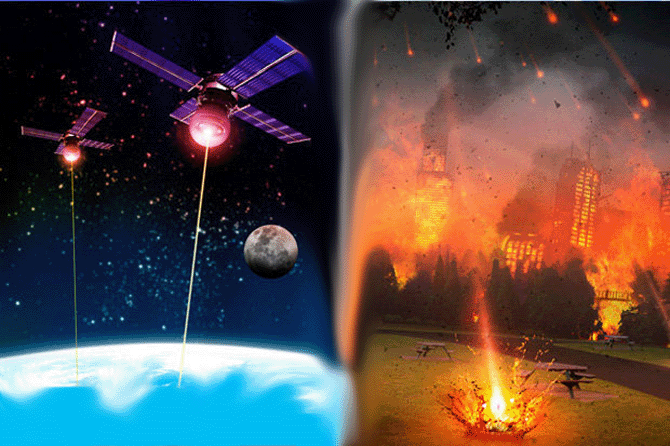
A nuclear arms race in space? It seems we’ve learned nothing from Hiroshima https://www.theguardian.com/commentisfree/2020/aug/02/a-nuclear-arms-race-in-space-it-seems-weve-learned-nothing-from-hiroshima Simon Tisdall As the world marks the 75th anniversary of the dropping of the atom bomb on Japan, it must wake up to the new rearmament.
Russia’s apparent test-firing of an anti-satellite weapon in outer space on 15 July, as alleged by the US and Britain, could be dismissed as another of Vladimir Putin’s annoying provocations. That would be a mistake. The alleged new space weapon should be seen in the broader context of a rapidly evolving, hi-tech, high-risk international arms race involving all the major nuclear powers that, largely undiscussed, is spinning out of control.
This week sees the 75th anniversary of the atomic bomb attacks on Hiroshima and Nagasaki that killed over 200,000 people, but the absence of public debate or a sense of alarm about the grim advent of sophisticated new nuclear, hypersonic, cyber and space weapons is striking. In the decades after Hiroshima, noisy anti-nuclear “ban the bomb” protests by CND and others spanned the globe. Today, by comparison, an eerie silence reigns.
The battle for outer space is only getting going – yet deserves immediate attention. Russia’s alleged development of anti-satellite weapons is almost certainly matched by the US and China, and undermines past undertakings about the peaceful use of space. Christopher Ford, US assistant secretary of state for international security and non-proliferation, warned last week that Russia and China had already turned space into a “war-fighting domain”.
“What [the Russians] are doing is signalling to the world that they’re able to destroy satellites in orbit with other satellites,” Ford said. “This is the sort of thing that could get out of hand and go very badly rather quickly.” The UK called the alleged test “a threat to space systems on which the world depends” – meaning use of such weapons could, in theory, produce an instant global security and communications blackout.
Yet in relaunching US space command last year, Donald Trump also pointed to space as the next great-power battlefield. Nato secretary-general Jens Stoltenberg says the alliance will not deploy weapons in space but is obliged to defend its interests, which include 2,000 orbiting satellites. For Nato, too, space is now an “operational domain”.
New and “improved” nuclear weapons are proliferating in parallel with the race for space. According to the Stockholm International Peace Research Institute (Sipri), nine states – the US, Russia, China, Israel, the UK, France, India, Pakistan and North Korea – together possess about 13,400 weapons. While the overall total is falling, “retired” warheads and bombs are being replaced by more powerful, versatile devices, such as smaller, “use-able” US battlefield nukes.
“All these states are either developing or deploying new weapon systems or have announced their intention to do so,” Sipri’s annual report said. The US and Russia each possessed about 1,550 deployed, long-range weapons, while China had about 300. Both the US and Russia were spending more and placing greater reliance on nuclear weapons in future military planning, it said, while China was rushing to catch up.
“China is in the middle of a significant modernisation of its nuclear arsenal. It is developing a so-called nuclear triad for the first time, made up of new land- and sea-based missiles and nuclear-capable aircraft. India and Pakistan are slowly increasing the size and diversity of their nuclear forces,” Sipri reported. Meanwhile, North Korea continued to prioritise its military nuclear programme, while conducting “multiple” ballistic missile tests.
“Instead of planning for nuclear disarmament, the nuclear-armed states appear to plan to retain large arsenals for the indefinite future, are adding new nuclear weapons, and are increasing the role such weapons play in their national strategies,” a Federation of American Scientists survey said. It estimated about 1,800 warheads were kept on high alert, ready for use at short notice.
Russia claims to lead the world in developing hi-tech weaponry. Speaking in July, Putin boasted that Russia’s navy was being equipped with nuclear-powered hypersonic cruise missiles, which supposedly have unlimited range, and submarine-launched underwater nuclear drones.
Despite celebrated speeches supporting a nuclear-free world, Barack Obama authorised a $1.2tn plan to upgrade America’s nuclear triad while pursuing strategic arms reductions via the 2010 New Start treaty with Russia. Trump has doubled down, at the same time abandoning arms control pacts. His 2018 nuclear posture review proposed an extra $500bn in spending, including $17bn for low-yield, battlefield weapons.
Trump looks set to scupper New Start, which expires in February, on the spurious ground that it does not reduce China’s much smaller arsenal (which it was never intended to do). He has previously reneged on the 2015 Iran nuclear treaty, the 1987 Intermediate-range Nuclear Forces treaty, and is said to favour resumed nuclear testing in Nevada in defiance of the 1996 Comprehensive Nuclear-Test-Ban treaty.
Like Britain and other signatories, the US continues to fail to fulfil its obligation under the 1970 Nuclear Non-Proliferation treaty “to pursue nuclear disarmament aimed at the ultimate elimination of nuclear arsenals”. Despite its acute financial situation, Britain remains committed to replacing its Trident missile system at an estimated cost of £205bn over 30 years.
While nuclear weapons have not been used since 1945, great-power military flashpoints are increasing the risk that they might be. These potential triggers include the South China Sea, Taiwan, the India-Pakistan and India-China borders, the US-Israel-Iran conflict, North Korea and Ukraine.
Heightened international tensions and collapsing arms-control regimes only partly explain the accelerating pace of nuclear rearmament. Resurgent nationalism, authoritarian rightwing populism, revived or new territorial rivalries (as in space), the bypassing of the UN and multilateral institutions, and a shifting economic and geopolitical power balance are all aggravating factors.
But so, too, is amnesia. Seventy-five years after Armageddon was visited upon the people of Japan, the world seems to have forgotten the truly existential horror of that moment. A history lesson, and a renewed debate, are urgently needed.
1 This month
7 April – WEBINAR – Australia and the Doomsday Clock – Preventing nuclear war through NoFirstUse and other policies
Online | Tuesday April 7, 4:00-5:30pm, Australian Eastern Time / 8:00-9:30am Central Europe Time
– Access the registration link
15 April – Zoom –Nuclear Power is Not the Solution
Apr 15, 2026 01:00 AM in Canberra, Melbourne, Sydney

Join the International Physicians for the Prevention of Nuclear War (IPPNW) on Tuesday, April 14th for a timely webinar exploring the risks associated with nuclear power and challenging the myth that it offers a simple, safe, carbon-free solution to the climate crisis

of the week – Australians for War Powers Reform (AWPR)
To see nuclear-related stories in greater depth and intensity
 Antinuclear