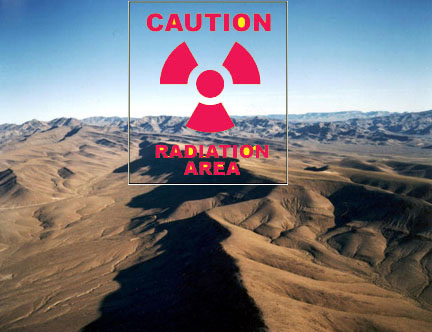
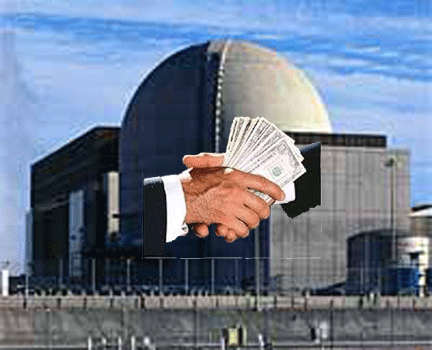
It’s been a bit of a Watergate week for nuclear power, with individuals in two states arrested for criminally defrauding the public to keep nuclear power alive. In Ohio, it was public officials, backed by nuclear company money, who illegally orchestrated a massive subsidy. In South Carolina, it was the arrest of an energy company official who has pled guilty to a $9 billion nuclear fraud. This week, we feature the Ohio story. Next week, it will be South Carolina’s turn.Continue reading →
That’s the bold claim from Jonathon Porritt, Co-Founder of Forum for the Future, who told Energy Live News that the UK ‘has been one of the most incompetent countries in developing nuclear infrastructure’, Jonny Bairstow, 4 July 20,
Nuclear energy and the industry surrounding it is a complete scam.
That’s the bold claim from Jonathon Porritt, Co-Founder of Forum for the Future, who told Energy Live News’ Editor Sumit Bose that both traditional nuclear infrastructure and emerging technologies such as small modular reactors (SMRs) were “unbelievably expensive” and said it was “preposterous” that the industry “still lays claim to such political attention”.
The renowned environmentalist said nuclear power plants can only be built with “massive” government subsidies at the cost of other energy sources which he suggested are much cheaper, safer and less environmentally damaging.
He stressed the only reason the nuclear civil industry still exists in the UK is to build the skills needed to maintain the nation’s military nuclear expertise and alleged that historically, the UK has been one of the most incompetent countries in developing nuclear energy.
He said: “I’m amazed that this industry still thinks it has a case to make, I mean it’s been talking about next-generation nuclear reactors for as long as I can remember, fusion power has always been precisely 40 years away, it was when I joined the green party in 1974 and you’ll be surprised to know Sumit, It’s now 30 years away – in 30 year’s time we’re not going to be worrying about these things at all.”
Mr. Porritt added that suggestions from opponents of renewable energy that clean technologies such as solar panels never achieve payback in terms of their climate impacts are “utter rubbish” and noted carbon payback is usually delivered around 18 months after a solar panel has been installed.
Humanitarian crisis warning as South Asia floods displace millions and kill 550, The Canary 23 Jul 20, More than 9.6 million people across South Asia have been affected by severe floods, with hundreds of thousands struggling to get food and medicine, officials and aid organisations said.About 550 people have died in India, Bangladesh and Nepal, while millions have been displaced from their homes since the flooding began last month, said the International Federation of Red Cross and Red Crescent Societies (IFRC).
The organisation warned of a humanitarian crisis, saying that close to one third of Bangladesh has already been flooded, with more flooding expected in the coming weeks. It said 2.8 million people have been affected, and that more than one million are isolated
In India, more than 6.8 million people have been affected by the flooding, mainly in the northern states of Assam, West Bengal, Bihar and Meghalaya bordering Bangladesh, the IFRC said, citing official figures.
In India’s north-eastern state of Assam alone, some 2.5 million people were affected and at least 113 have died, authorities said.
MS Manivannan, head of Assam’s Disaster Management Authority, said many rivers were still flowing above the danger level…….
Jagan Chapagain, secretary general of the IFRC, said South Asia could face a humanitarian crisis.
“People in Bangladesh, India and Nepal are sandwiched in a triple disaster of flooding, the coronavirus and an associated socioeconomic crisis of loss of livelihoods and jobs,” he said.
Virtual tours planned at atomic bomb museums, https://www3.nhk.or.jp/nhkworld/en/news/20200721_43/?fbclid=IwAR2KZ-D8gWm-K1Yl8WVBDpUyobELxvI6Hm-DiWxtZYPBmyS8mo9BOneLd2E Two Japanese museums dedicated to documenting the 1945 atomic bombings of Hiroshima and Nagasaki plan to offer virtual tours online in cooperation with an international NGO devoted to the elimination of nuclear weapons.They are planning the events as the number of international visitors to these museums has dropped sharply due to the coronavirus pandemic.
Kawasaki Akira, a member from the International Campaign to Abolish Nuclear Weapons, or ICAN, unveiled the plan online on Monday.
The exhibits at the Hiroshima Peace Memorial Museum and the Nagasaki Atomic Bomb Museum will be shown live on Instagram. Volunteers and researchers from universities will explain the displays in English.
The Hiroshima museum will hold the virtual tour on Wednesday for about 30 minutes after closing time, between 6:30 p.m. and 7p.m. Japan time.
The Nagasaki museum will hold it on Friday for about 30 minutes before opening time, between 8:00 a.m. and 8:30 a.m. Japan time.
Kawasaki said his group and the museums want to do everything possible online as various activities have been canceled due to the coronavirus pandemic.
He said he wants to offer young people abroad an opportunity to find out about the damage and aftereffects of the atomic bombings of the two cities.
The Fukushima Nuclear disaster occurred when a massive tsunami crashed over the plant’s walls, causing three operating nuclear reactors to overheat and melt down. Simultaneously, reactions within the plant generated hydrogen gas that exploded as soon as it escaped from containment. During the disaster, caesium — a volatile fission product created in nuclear fuel — combined with other reactor materials to create caesium-rich microparticles (CsMPs) that were ejected from the plant.
CsMPs are incredibly radioactive, and scientists study them in an attempt to both measure their environmental impact and to gain insight into the nature and extent of the Fukushima disaster. In one such research process, scientists discovered tiny uranium and plutonium fragments within these micro-particles. The range of plutonium particle spread was previously estimated at 50km, and this research changes that number to 230km. This discovery is vital as it provides a reason to extend testing for plutonium poisoning in human-inhabited regions further than before, and helps scientists understand how to decommission the nuclear reactors in the plant. Decommissioning nuclear plants is extremely important after they cease to function, in order to reduce residual radioactivity in the region to safe levels.
With respect to immediate implications for health, scientists note that radioactivity levels of the plutonium are similar to global counts from nuclear weapons tests. While this means that radioactivity levels may not pose an urgent, critical danger, scientists also note that plutonium poisoning in food items remains a threat. If plutonium were ingested — a possibility in this region — it could create isotopes that significantly increase radioactivity doses, and poison the body.
Due to high radioactivity levels, humans are still unable to enter the Fukushima plant nine years after the disaster. Yet, scientists continue to work towards safely decommissioning the reactors within the plant from the outskirts.
Ohio corruption case throws focus on US nuclear plant troublesFt.com, Gregory Meyer in New York, 23 July 20
Top lawmaker charged over payments relating to bailouts in case that points up economic woes,
Gregory Meyer in New York 3 HOURS AGO 5 Print this page The troubled economics of nuclear energy in the US have come into glaring focus after a top Ohio lawmaker was charged in connection with $60m in alleged payments to orchestrate a $1bn bailout of two struggling power plants on the Lake Erie shore.
Ohio last year became the fifth US state — following Connecticut, Illinois, New Jersey, and New York — to approve aid to nuclear power plants facing low-cost competition from natural gas, solar and wind energy. Its governor, Mike DeWine, signed a bill providing up to $150m a year, funded by a surcharge on electricity customers.
Intense lobbying preceded the bill’s passage. A campaign to overturn it through a referendum failed last autumn. Yet the machinations that led to the bailout ran far deeper than the public knew, federal prosecutors said on Tuesday.
According to the US justice department, for three years ending in March, $60m was poured into an advocacy organisation called Generation Now, controlled by the Republican state house speaker, Larry Householder. Prosecutors said the funds financed a “racketeering conspiracy” led by Mr Householder, who was charged along with his campaign strategist, three lobbyists and Generation Now.
The companies that supplied the money were not named in the indictment, but the details matched Ohio utility FirstEnergy and one of its subsidiaries. The alleged co-conspirators called the company “the bank”, given its seemingly unlimited war chest, according to an affidavit filed with the criminal complaint.
The alleged conspiracy used the money to help more than 20 state candidates who supported the bailout propping up the two power plants, including Mr Householder, in the 2018 election. More than $1m was spent on advertisements attacking opponents of the measure, according to the US attorney for the southern district of Ohio.
Some funds were used to improperly pay for Mr Householder’s campaign staff, while he used more than $400,000 on personal expenses — including a home in Florida — prosecutors alleged. Mr Householder could not be reached for comment.
After legislators passed the bailout last July, the funds were used to derail a public ballot initiative meant to repeal the law by bribing people who were collecting signatures endorsing the effort, the complaint said. Besides the nuclear subsidies, the law also eliminated energy efficiency requirements, pared back mandates for wind and solar power and authorised a fee on customers to support ailing coal-fired power plants.
“When the corruption is alleged to reach some of the highest levels of our state government, the citizens of Ohio should be shocked and appalled,” said Chris Hoffman, special agent in charge at the FBI’s Cincinnati office. ………….
the Electric Power Supply Association, which represents independent power producers, urged its repeal, calling it the outcome of a “corrupt legislative process”.
“Rather than let the market provide the best outcomes for energy customers — and against the warnings and complaints from almost all corners — money and political influence won the day,” said Todd Snitchler, EPSA chief executive and former chairman of the Ohio Public Utilities Commission.
With the referendum having failed, the Ohio law is likely to stand, according to ClearView Energy Partners, a research group: “Only the state legislature can terminate the programme at this point, and we do not think the arrests could be enough to galvanise lawmakers to reverse course . https://www.ft.com/content/451324c6-9f9d-48a1-b2d9-76d731e99db6
Western Shoshone land stolen for nuclear weapons tests and waste dump, By Ian Zabarte Shoshone land was illegally seized by the U.S government, breaking a historic treaty, first for the atomic test site in Nevada, and then for the planned — but still canceled — Yucca Mountain high-level radioactive waste dump. Throughout, the Shoshone people have paid a terrible price.
As a Shoshone, we always had horses. My grandfather always told me, “Stop kicking up dust.” Now I understand that it was because of the radioactive fallout.
To hide the impacts from nuclear weapons testing, Congress defined Shoshone Indian ponies as “wild horses.” There is no such thing as a wild horse. They are feral horses, but the Wild Horse and Burrow Acts of 1971 gave the Bureau of Land Management (BLM) the affirmative act to take Shoshone livestock while blaming the Shoshone ranchers for destruction of the range caused by nuclear weapons testing.
My livelihood was taken and the Shoshone economy destroyed by the BLM. On the land, radioactive fallout destroyed the delicate high desert flora and fauna, creating huge vulnerabilities where noxious and invasive plant species took hold.
Nuclear weapons testing at the Nevada National Security Site has left a dark legacy of radiation exposure to Americans downwind from the battlefield of the Cold War. Among the victims are the Shoshone people, who, by no fault of our own, were exposed to radiation in fallout from more than 924 nuclear tests.
The Shoshone people never consented to the nuclear weapons testing.
“Yucca Mountain is a serpent…and if you don’t do the things you’re supposed to do the snake will release its poison.” Ian ZabarteToday, the media does not report Native American past exposure to radioactive fallout from US/UK secret nuclear testing and disproportionate burden of risk.
The Shoshone people cannot endure any increased burden of risk from any source including resumption of WMD testing by US/UK, plutonium disposal from the Savannah River Site, depleted uranium disposal, proposed high-level nuclear waste disposal at Yucca Mountain, coal ash uranium or fracking released radiation.
Nuclear testing is a violation of the peace treaty with the Shoshone, the Treaty of Ruby Valley, and the U.S. Constitution, Article 6 Section 2, the treaty supremacy clause. Nothing in the treaty contemplated the secret massacre of Shoshone people with radioactive poison from nuclear weapons testing within our own homelands. My tribe and family are the victims.
The enduring purpose of nuclear technology is the creation of weapons of mass destruction. Their tests within the Shoshone homelands are deliberate acts that destroy the Shoshone people. No Shoshone, not one person, should be sacrificed for the benefit of some Americans and the profit of the military industrial complex.
What the Shoshone people experience is a deliberate intent by the US to systematically dismantle the living life-ways of the Shoshone people for the benefit of the US and the profit of the nuclear industry. This meets the minimum threshold of genocide under both the UN Convention and the US enactments of the crime of genocide.
Nuclear weapons development in Shoshone homelands violates humanitarian law, human rights law and environmental law and is racist. Racism is a crime. It is called genocide, “a crime against humanity.”
To prove intent to commit genocide, we have only to look at the culture of secrecy of the military occupation of Shoshone homelands during and since the Cold War at the test site. The acts committed in nuclear weapons development and testing against the Shoshone people benefit other Americans. The Shoshone people suffer without relief or acknowledgement of our silent sacrifice. Secrecy is not transparent. Secrecy is not democratic and is unconstitutional when the acts are conducted in and upon the Shoshone land and people.
Nothing in the Nuclear Waste Policy Act of 1982, as amended in 1987, considered the fact of Shoshone ownership of the proposed Yucca Mountain high-level nuclear waste repository. Almost $15 billion was spent to characterize the site, giving it the label as, “the most studied piece of real estate in the world.” The Nuclear Regulatory Commission admitted in the licensing proceedings that the Department of Energy has not proven ownership.
Nevada took hundreds of millions of dollars for characterization studies from the federal government in grants equal to taxes from Shoshone property and gave nothing to the Shoshone. A clear case of taxation without representation to defraud the Shoshone people of our property interests.
What is needed now are hearings on and support for the extension and funding of the Radiation Exposure Compensation Act of 2019. The Shoshone people need DNA testing and funding for tribal community health education on radiation basics and information on appropriate protective behavior to mitigate radiation exposure.
The Shoshone people are committed to the enforcement of law in the service of justice and human dignity. That is human growth and development, not nuclear weapons.
Ian Zabarte is Principal Man for the Western Bands of the Shoshone Nation of Indians.
Climate change is the greatest threat, The Canberra Times, 18 Jul 20While the world was preoccupied with an ever increasing number of coronavirus cases this week, a hugely significant scientific report was allowed to pass under-reported and unremarked.
This was the study of the 2020 Siberian heatwave by World Weather Attribution, a group of scientists who have been monitoring extreme weather events for years.
The heatwave had contributed to raising the world’s average temperature to the second highest on record for the period from January to May this year.
WWA said Siberia had experienced “unusually high temperatures”, including a record-breaking 38 degrees celsius in the town of Verkhoyansk on June 20, causing wide-scale impacts including “wildfires, loss of permafrost, and invasion of pests”.
The Russian government was forced to declare a state of emergency in response to these disasters. It is believed that at least 56 Megatons of carbon dioxide was released into the atmosphere in June alone. There has also been an explosion in the population of Siberian silk moths with massive swarms causing further damage to forests, making them even more prone to fire.
While all of this, and reports food supplies are being affected with fish swimming deeper in search of cooler water, is alarming, the real cause for concern is the finding the prolonged heatwave had been made “600 times more likely as a result of human-induced climate change”……….
while it is a given that the climate deniers will dismiss the report as “bunkum” and “fake news”, those who actually know what they are talking about have no such doubts.
Michael Wehner, a senior scientist at Lawrence Berkeley National Laboratory – who was not involved in the study – said the methodology was “state of the art” and that the findings were, if anything, “conservative”.
If, as many believe, temperatures in Arctic and Antarctic regions are “canaries in the coal mine”, this latest report is a warning that should not be ignored. Given it comes on top of linkages between Australia’s spring and summer bushfires and man-made global heating, it is yet another argument for this country to do much more to reduce to carbon dioxide emissions as a matter of urgency.
And let’s not forget, if 2019 was anything to go by, our next bushfire season is just around the corner.
July 15, 2020 When America detonated the world’s first atomic bomb at 0529 hours on July 16, 1945, it was an attack on American soil.
The blast melted the sand of southern New Mexico and infused it with the bomb’s plutonium core — 80 percent of which failed to fission — scattering radioactive material across the desert. The first atomic bomb was both a feat of engineering and, by today’s standards, a crude dirty bomb.
After riding the fireball over seven miles into the sky, as much as 230 tons of radioactive sand mixed with ash and caught the breeze of a cool summer morning. It floated 15 miles northwest to the Gallegos Ranch, where it fell and bleached the cattle. The dirty ash floated 20 miles northeast to the M.C. Ratliff Ranch, where that family would spend days cleaning it off their roof, off their crops and out of their water cistern. Thirty-five miles southeast at the Herreras’ home in Tularosa, the radioactive soot stained the white linens drying on the clotheslines.
The fallout from that detonation — code-named Trinity — floated over a thousand square miles and exposed thousands of families to radiation levels that “approached 10,000 times what is currently allowed,” according to the Centers for Disease Control and Prevention.
In the hours after the explosion, 185 Army personnel chased the fallout to monitor its extent. They chased it so far that their communications radios stopped working. Some who were stationed a few miles north of Trinity looked anxiously at their whirring Geiger counters and decided to bury their now-irradiated breakfast steaks.
Those soldiers had been given respirators, but at least one forgot his and was forced to take the officially sanctioned precaution of breathing through a slice of bread. Others were sent out with Filter Queens, a popular vacuum cleaner, in a futile attempt to suck up the fallout as though it was nothing more than household dust.
In short, the Army was woefully unprepared and even willfully negligent about the fallout of its first atomic bomb. It warned no residents. It ordered no evacuations. It maintained that the area around Trinity was absolutely safe, even when it knew it was not. So Americans went on living in the fallout, working in the fallout, eating from the dirty American soil.
Downwind of the blast, the local infant mortality rate, after declining in previous years, spiked. It increased by as much as 52 percent in 1945, with the highest increase occurring in August through October, the months immediately after Trinity. Recent research suggests that when America detonated the world’s first atomic bomb, its first victims were American babies.
Though there is no conclusive data about the rise in cancer rates after Trinity — largely because of a lack of government funding for such studies — stories collected by the Tularosa Basin Downwinders Consortium reveal generations ravaged by nearly every imaginable cancer.
An Army doctor later wrote about Trinity: “A few people were probably overexposed, but they couldn’t prove it and we couldn’t prove it. So we just assumed we got away with it.”
It has been 75 years and the American government still refuses to admit that the detonation of the “gadget,” as the Trinity bomb was called, was a nuclear disaster. Continue reading →
BY ALEXANDRA GENOVA, PHOTOGRAPHS BY PHIL HATCHER-MOORE OCTOBER 13, 2017
Decay and desolation scar the landscape of a remote corner of the Kazakh Steppe. Unnatural lakes formed by nuclear bomb explosions pockmark the once flat terrain, broken up only by empty shells of buildings. It appears uninhabitable. And yet, ghosts – living and dead – haunt the land, still burdened by the effects a nuclear testing program that stopped nearly 30 years ago.
The site, known as the Polygon, was home to nearly a quarter of the world’s nuclear tests during the Cold War. The zone was chosen for being unoccupied, but several small agricultural villages dot its perimeter. Though some residents were bussed out during the test period, most remained. The damage that continues today is visceral.
Photographer Phil Hatcher-Moore spent two months documenting the region, and was struck by the “wanton waste of man’s folly.”
His project ‘Nuclear Ghosts’ marries the wasted landscape and intimate portraits of villagers still suffering the consequences.
The figures are astonishing – some 100,000 people in the area are still affected by radiation, which can be transmitted down through five generations. But with his intimately harrowing pictures, Moore sought to make the abstract numbers tangible.
“Nuclear contamination is not something we can necessarily see,” he says. “And we can talk about the numbers, but I find it more interesting to focus on individuals who encapsulate the story.”
Moore interviewed all his subjects before picking up his camera and learned that secrecy and misinformation plagued much of their experience.
“[During the 50s] one guy was packed up with his tent and told to live out in the hills for five days with his flock. He was effectively used as a test subject to see what happened,” says Moore. “They were never told what was going on, certainly not the dangers that they may be in.”
Though human stories were central, Moore also documented the scientific test labs that are still uncovering the damage. The juxtaposition of these labs alongside portraits of people disfigured by radiation makes for uncomfortable viewing. But this proximity is deliberate.
“There was a history of humans being used as live subjects,” says Moore. “I wanted to marry these ideas together; the way people were used by researchers at the time and how that trickles down into every day life – what that looks like, what that means.”
While some of Moore’s subjects are severely deformed, many suffer from less visible health issues like cancer, blood diseases or PTSD. And the hidden, insidious nature of the thing is what is perhaps most troubling. “For a long time there hadn’t been much nuclear development but it is a very real issue right now,” says Moore. “But we don’t talk about what it takes to renew these weapons. These people are legacy and testament to what was done to meet those ends.”
See more of Phil Hatcher-Moore’s work on his website and follow him on Instagram.
Danielle Endres: Nuclear testing as a form of colonization, https://www.sltrib.com/opinion/commentary/2020/07/15/danielle-endres-nuclear/By Danielle Endres ·16 July 20
At 5:29 a.m. on July 16, 1945, scientists in the Manhattan Project detonated the world’s first nuclear weapon in the desert homelands of the Mescalero Apache, a place now known as Alamogordo, New Mexico. As the detonation cloud mushroomed into the sky, the Trinity test ushered in a new era, the atomic age.
Some researchers argue that the atomic age is the beginning of Anthropocene — the planetary era defined by the impact of humans on global ecological systems — because of the release of radiation into our ecosystem from nuclear weapons production and testing. Indeed, the Centers for Disease Control notes “All people who were born since 1951 have received some exposure to radiation from weapons testing-related fallout.”
With this opening of the nuclear Pandora’s box, nuclear weapons remain a ubiquitous though often unseen feature of geopolitics, modern warfare, culture and society. While there are many arguments to be made about the social and environmental legacies of nuclear weapons, I focus on how the nuclear weapons production process is linked with structures of racism and colonialism.
Trinity downwinders have tracked cancers, other illnesses and deaths linked to radiation exposure in communities near the Trinity site in their call for compensation trough RECA. The Mescalero Apache Reservation is a Trinity downwinder community. The impacts on Mescalero Apache nation from the Trinity test are just one example of a larger pattern in which Black, Indigenous, people of color and poor rural communities disproportionately experience adverse consequences from nuclear weapons production and testing.
After the Trinity test, and the bombings on Hiroshima and Nagasaki that it enabled, the world entered a nuclear era with a massive proliferation of nuclear weapons. There are many scholarly resources from which learn more about how the cradle to grave cycle of nuclear weapons production relates to racism and colonialism.
Historian Gabrielle Hecht’s “Being Nuclear” shows how uranium mining in African countries is linked with race and colonialism. In “The Nuclear Borderlands,” anthropologist Joseph Masco recounts the impacts of nuclear weapons production on Indigenous and Nuevomexicano communities in New Mexico. And Traci Voyles tells of devastating effects of uranium mining on the Navajo nation in “Wastelanding.”
My research focuses on nuclear colonization, a phenomenon in which the nuclear production process disproportionately damages Indigenous peoples’ land, health and sovereignty due to the disparate location of nuclear production and testing sites on or near Indigenous reservations and homelands.
Spiritual leader and anti-nuclear advocate Corbin Harney called the Western Shoshone Nation the most nuclear bombed nation in the world because of the more than 1,000 nuclear tests that happened on Western Shoshone treaty-protected homelands, a.k.a. Nevada Test Site. For more than 30 years, the federal government then seriously considered storing the nation’s high-level nuclear waste from nuclear power inside Yucca Mountain, a spiritual place in Western Shoshone homelands.
Nuclear colonialism is yet another example of environmental injustice. Marginalized people are disproportionately harmed in the production of nuclear technologies just as they are disproportionately damaged by climate change, air pollution, and toxicity.
We must fight to end our reliance on nuclear weapons, not just to protect future generations from accidental or intentional use, but also to work toward a more just and equitable world in which everyone can breathe clean air, have access to a clean water, live in a healthy environment, participate in decisions about their land and communities, and not be asked to sacrifice in the name of a “national interest” that rarely works in support of Black, Indigenous and people of color.
On this 75th anniversary of the Trinity test, let us commit to nuclear abolition from the standpoint of environmental justice and decolonization.
Danielle Endres, Salt Lake City, is a member of Utah Campaign to Abolish Nuclear Weapons and a professor of rhetoric and communication at the University of Utah whose research focuses on the sociopolitical implications of nuclear technologies. Views in this article are her own and do not represent the University of Utah.
Citizen group keeps up fight against nuclear waste dump, Wellington Advertiser, Patrick Raftis, July 15, 2020 TEESWATER –Organizers of a campaign to stop a high level radioactive waste Deep Geological Repository (DGR) in South Bruce say it has gained new momentum with a recent victory and hiring of a renowned environmental lawyer. However local environmental advocates caution the fight to keep radioactive material out of the South Bruce and the surrounding region is not over.
On June 22 Ontario Power Generation (OPG) announced it was formally ending plans for a low/intermediate level radioactive waste Deep Geological Repository (DGR) for the Bruce Power site near Kincardine. OPG has formally notified federal regulators it is ending plans for the low/intermediate waste DGR. The project was discontinued following a vote by Saugeen Ojibway Nation (SON) in January 2020, whereby the SON voted overwhelmingly not to support the project in their traditional territory.
The decision however, does not impact a separate proposal for a high-level radioactive waste nuclear dump in South Bruce.
On June 22 Ontario Power Generation (OPG) announced it was formally ending plans for a low/intermediate level radioactive waste Deep Geological Repository (DGR) for the Bruce Power site near Kincardine. OPG has formally notified federal regulators it is ending plans for the low/intermediate waste DGR. The project was discontinued following a vote by Saugeen Ojibway Nation (SON) in January 2020, whereby the SON voted overwhelmingly not to support the project in their traditional territory.
The decision however, does not impact a separate proposal for a high-level radioactive waste nuclear dump in South Bruce.
“Protect Our Waterways – No Nuclear Waste is grateful for the decision by SON community members to vote against the low/intermediate DGR and the formal cancellation of the project by OPG at the Bruce site,” said POWNNW vice-president Bill Noll. “The struggle however is not over as the Nuclear Waste Management Organization (NWMO) continues with plans to construct a high-level radioactive waste nuclear dump within the Municipality of South Bruce,” Noll added.
In a process that began nearly a decade ago, the Nuclear Waste Management Organization (NWMO) is looking for a site to store millions of bundles of used nuclear fuel. The organization has optioned approximately 1,300 acres of land north of Teeswater as a potential site to bury the waste. The decision on where to bury the high-level nuclear waste from reactors across Canada is down to the Municipality of South Bruce and Ignace, in Northern Ontario. On its website, the NWMO states it is aiming to identify a single, preferred site “in an area with informed and willing hosts” by 2023……..
According to a July 3 POWNNW press release the lands optioned by NWMO for the proposed dump site of highly radioactive waste are located approximately 30 kilometres from Lake Huron and would be built under and around the Teeswater River, a tributary of the Saugeen River, which flows to Lake Huron and the Great Lakes – a source of drinking water for 40 million people in both Canada and the USA. The proposed dump site would remove an estimated 1,500 acres of prime farmland from agricultural production and “replace it with an intensive mining project to effectively house this waste.”
The group is inviting all concerned stakeholders to join in the fight to prevent the project and “protect future generations.”
Seeking referendum
Protect Our Waterways – No Nuclear Waste is seeking a community referendum on the issue in South Bruce.
“The municipality and NWMO can no longer ignore this expression of opposition against this project from residents and regional stakeholders.”
The group notes that over 1,500 residents of South Bruce have signed the petition to date through both hard copy and online.
Siberia heatwave was ‘almost impossible’ without climate change, scientists say, SBS News 16 Jul 20, An extreme heatwave in the Arctic is a problem for the entire planet, say scientists, because the region regulates weather around the globe and contains much of the world’s carbon-rich permafrost.
A recent heatwave in Siberia that saw temperature records tumble as the region sweltered in 38-Celsius highs was “almost impossible” without the influence of man-made climate change, leading climate scientists say.
An international team of researchers found that the record-breaking warm period was more than 2 degrees hotter than it would have been if humans had not warmed the planet through decades of greenhouse gas emissions.
The five hottest years in history have occurred in the last five years and there’s a better-than-even chance that 2020 will be the hottest ever recorded.
Earth’s poles are warming faster than the rest of the planet, and temperatures in Siberia – home to much of the world’s carbon-rich permafrost – were more than 5 degrees hotter than average between January and June. ………
‘Important for everyone’
The team behind the calculations stressed that the Siberian heatwave was a problem for the entire globe. Some 1.15 million hectares of forest going up in flames released millions of tonnes of CO2 into the atmosphere.
At the same time, the wildfires and sustained heatwaves accelerated the region’s permafrost melt. This caused an oil tank built on frozen soil to collapse in May, leading to one of the region’s worst-ever oil spills…….
The 2015 Paris climate deal commits nations to capping temperature rises to “well-below” 2 degrees above pre-industrial levels and to strive for a 1.5 degrees limit if at all possible. With just 1 degree of warming so far, Earth is already buffeted by record-breaking droughts, wild fires and super storms made more potent by rising sea levels.
To keep in line with the 1.5-degree target, the United Nations says global emissions must fall by 7.6 per cent every year this decade.
Chernobyl fires: how neglected forests, poor coordination and old equipment could spark disaster, GDF Watch, Emil Filtenborg and Stefan Weichert 14/07/2020
When fires broke out inside the closed 30-kilometre zone around Chernobyl this spring sending huge amounts of smoke over Kyiv, many feared there would be issues with radiation.
The Ukrainian capital temporarily had the worst air quality in the world as hundreds of firefighters, supported by helicopters and planes, fought the devastating fire. It only went out after several weeks thanks to some help from heavy rainfall.
The fires destroyed multiple tourist sites and threatened nuclear waste storage facilities inside the Chernobyl Exclusion Zone – the site of the colossal 1986 nuclear accident.
“It was complicated for firefighters to get to certain places inside the zone because state agencies had not taken care of the woods properly,” asserts Yaroslav Yemelianenko, head of the travel company Chernobyl Tour.
“A lot of fallen trees made it possible for the fire to spread quickly in the thick and wild forests. We also saw that there was no planning. Every time someone had to be sent somewhere, the information had to go to the officers, who then would decide to send firefighters and equipment, but when they finally decided to do so, the fire would be five times bigger, and had spread to another place.”
Because of quarantine measures due to COVID-19, many journalists were not able to travel to the zone, but Yemelianenko got there and reported what he saw on Facebook. He says he saw evidence of “ill-equipped firefighters, lousy management, lack of coordination, and disinformation from the government.” He believes more must be done to secure the area, starting with a better fence and more patrolling.
He questions the security of the site, asserting that it is easy for anyone to sneak past the manned checkpoints around the perimeter.
He questions the security of the site, asserting that it is easy for anyone to sneak past the manned checkpoints around the perimeter………
He also alleges that the firefighters were giving only a little water and food while spending too much time exposed to radiation………..
strong winds and a dry winter and spring made it almost impossible to stop the fires, which started in the western part of the closed Chernobyl zone. It quickly spread, partly because of strong winds often outpacing firefighters, but also because of new fires starting in other parts of the area. Pavlova believes that unidentified people started some of the fires inside the zone, and she agrees that the area is vulnerable, and changes need to happen………
Chaos’
While Pavlova was trying to coordinate the efforts from a distance, firefighters fought for weeks against the fires that, according to Chernobyl Tour, destroyed 30 percent of all tourist attractions and large parts of the forests. Euronews spoke to one fireman who worked during this time. He spoke on condition of anonymity due to fears of losing his job.
He alleges that everything was “chaos” inside the zone when firefighters tried to control the fires, that firefighters’ lives were in danger, and that equipment measuring radioactivity was failing.
“There was no coordination between the different divisions,” he said. ”My team and I were fighting some fire when a fire truck came past yelling ‘guys, get out of here because there is fire coming this way.’ We were not given any instructions from our commander about this. The phones did not work there, the mobile phones did not work – the network was not good. The walkie-talkies were in the truck but they did not reach the headquarters. There was no information. There were no physical maps or GPS navigators. We were just blind.”
He says that in his opinion, firefighters were lucky that rain came and that he fears what would have happened if it hadn’t. He says that his team was fighting a fire at one point, when suddenly another fire broke out behind them. They found out later that another unit was told to fight the fire with fire while they were told to use water and were almost caught in the middle, but that “nobody told me anything.”
He says he was surprised when he heard authorities tell journalists that the fires were under control when they were still going strong. While authorities said that firefighters got plenty of water and food, his team of nine got six litres of water to share between them for three days, and they had to rely on other units and volunteers. He says that he only received food twice during what was around three days in the zone.
“Of course, the lack of coordination posed a risk to us. Even on Facebook, a video on the Boycott of Firefighters of Ukraine page shows how firefighters tried to escape through a burning forest in a fire truck. Of course, the temperature there is too high, and it is simply impossible to be there without protective suits and equipment. You could lose your vehicle and your life there,” he says. http://www.gdfwatch.org.uk/international-media-articles-and-news-stories/
Nor was the potential for cracked or corroded canisters to leak radiation studied
proposal only addresses a new destination for the high-level nuclear waste – not the removal and transport of the fuel storage canisters from nuclear power plants
Even transport casks with canisters that are not damaged will release radiation as they are transported from nuclear power plants to the storage facility, exposing populations along the transport routes in a majority of states and tribal communities in New Mexico to repeated doses of radiation.
If the Nuclear Regulatory Commission’s (NRC) conclusion that it’s safe to move spent nuclear fuel from nuclear power plants across the country to a proposed storage facility in Lea County sounds vanilla-coated, it’s because the draft environmental impact statement for a Consolidated Interim Storage Facility submitted by Holtec International did not address how the casks containing the spent fuel would be transported to New Mexico.
It’s likely the casks would be transported primarily by rail using aging infrastructure in need of constant repair. But our rail systems were not built to support the great weight of these transport casks containing thin-wall fuel storage canisters.
Nor was the potential for cracked or corroded canisters to leak radiation studied because an earlier NRC Generic EIS for the Continued Storage of Spent Nuclear Fuel assumed damaged fuel storage canisters would be detected during an intermediary dry transfer system or a pool.
But Holtec’s proposal only addresses a new destination for the high-level nuclear waste – not the removal and transport of the fuel storage canisters from nuclear power plants to New Mexico.
Even transport casks with canisters that are not damaged will release radiation as they are transported from nuclear power plants to the storage facility, exposing populations along the transport routes in a majority of states and tribal communities in New Mexico to repeated doses of radiation.
Other issues not considered in the draft EIS were the design life of the thin-wall canisters encasing the nuclear fuel rods and faulty installation at reactor sites like San Onofre, or the self-interest of the Eddy-Lea Energy Alliance in using the land it acquired for a consolidated interim storage site.
Thin-wall canisters cannot be inspected for cracks and the fuel rods inside are not retrievable for inspection or monitoring without destroying the canister. NRC does not require continuous monitoring of the storage canisters for pressure changes or radiation leaks. The fuel rods inside the canisters could go critical, or result in an uncontrolled nuclear chain reaction, if water enters the canisters through cracks, admits both Holtec and the NRC. None of us are safe if any canister goes critical.
Yet a site-specific storage application like Holtec’s should have addressed NRC license requirements for leak testing and monitoring, as well as the quantity and type of material that will be stored at the site, such as low burnup nuclear fuel and high burnup fuel.
Irradiated nuclear fuel is safer (but not safe) stored at the reactor site rather than transported thousands of miles to New Mexico. (Image: U.S. Nuclear Regulatory Commission)
With so many deficiencies in the draft EIS, a reasonable alternative is to leave this dangerous radioactive nuclear waste at the nuclear plants that produced it in dry cask storage rather than multiply the risk by transporting thousands of containers that could be damaged across many thousands of miles and decades to southeastern New Mexico, then again to a permanent repository.
Interim storage of spent nuclear fuel at existing nuclear plant sites is already happening – there are 65 sites with operating reactors in the United States and dry cask storage is licensed at 35 of these sites in 24 states. But since the thin-wall canisters storing the fuel rods are at risk for major radioactive releases, they should be replaced with thick-walled containers that can be monitored and maintained. The storage containers should be stored away from coastal waters and flood plains in hardened buildings.
Attempting to remove this stabilized nuclear waste from where it is securely stored across hundreds or thousands of miles through our homelands and backyards to a private storage facility also raises some thorny liability issues, since the United States will then be relieved of overseeing the spent nuclear fuel in perpetuity.
The states and nuclear plants that want to send us their long-lived radioactive waste will also be off the hook, leaving New Mexico holding a dangerously toxic bag without any resources to address the gradual deterioration of man-made materials or worse, a catastrophic event. It’s a win/win, however, for Holtec International and the Eddy-Lea Energy Alliance.
Ironically, just a few years ago, the US Environmental Protection Agency had expressed opposition to mass transportation of another kind of radioactive waste. In a classic example of environmental injustice, the EPA balked at removing uranium mine waste on the Navajo Nation, because, it said, “Off-site disposal, because of the amount of waste in and around these areas, means possibly multiple years of hundreds and hundreds and hundreds of trucks going in and out of the community and driving for miles”.
The agency told the affected communities, during discussion about digging up the uranium mine waste and transporting it to a licensed repository in different states outside the Navajo Nation, that this option, also the Nation’s preference, was the most expensive. But now New Mexico is the destination for precisely the reverse, with hundreds and thousands of transports from different states coming to deposit the country’s nuclear waste site radioactive debris on Native soil.
Laura Watchempino is with the Multicultural Alliance for a Safe Environment/Pueblo of Acoma. A version of this article first appeared in the Albuquerque Journal and is republished with kind permission of the author.
Apr 15, 2026 01:00 AM in Canberra, Melbourne, Sydney
Join the International Physicians for the Prevention of Nuclear War (IPPNW) on Tuesday, April 14th for a timely webinar exploring the risks associated with nuclear power and challenging the myth that it offers a simple, safe, carbon-free solution to the climate crisis
21 April Webinar: No Nuclear Weapons in Australia
Start: 2026-04-21 18:00:00 UTC Canberra, Melbourne, Sydney (GMT+10:00)
End: 2026-04-21 19:30:00 UTC Canberra, Melbourne, Sydney (GMT+10:00)
Event Type: Virtual A virtual link will be communicated before the event.






 “There was a history of humans being used as live subjects,” says Moore. “I wanted to marry these ideas together; the way people were used by researchers at the time and how that trickles down into every day life – what that looks like, what that means.”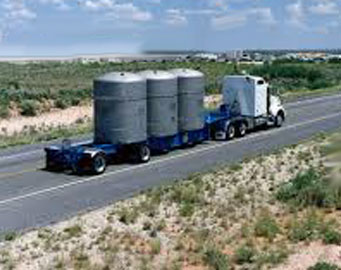





 Antinuclear