Challenge in USA to nuclear wastes going to another state for ?permanent “Interim storage”
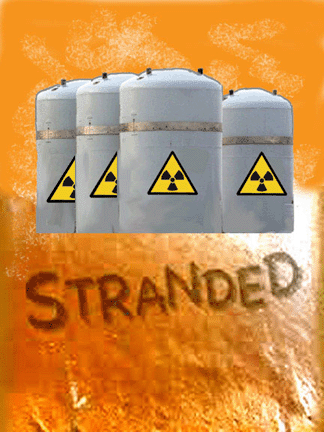 Beyond Nuclear Files Federal Lawsuit Challenging High-Level Radioactive Waste Dump Beyond Nuclear Files Federal Lawsuit Challenging High-Level Radioactive Waste Dump  for Entire Inventory of U.S. “Spent” Reactor Fuel, Common Dreams, 5 June 20, Petitioner charges the Nuclear Regulatory Commission knowingly violated U.S. Nuclear Waste Policy Act and up-ended settled law prohibiting transfer of ownership of spent fuel to the federal government until a permanent underground repository is ready to receive it. for Entire Inventory of U.S. “Spent” Reactor Fuel, Common Dreams, 5 June 20, Petitioner charges the Nuclear Regulatory Commission knowingly violated U.S. Nuclear Waste Policy Act and up-ended settled law prohibiting transfer of ownership of spent fuel to the federal government until a permanent underground repository is ready to receive it.
WASHINGTON – Today the non-profit organization Beyond Nuclear filed an appeal with the U.S. Court of Appeals for the District of Columbia Circuit requesting review of an April 23, 2020 order and an October 29, 2018 order by the U.S. Nuclear Regulatory Commission (NRC), rejecting challenges to Holtec International/Eddy-Lea Energy Alliance’s application to build a massive “consolidated interim storage facility” (CISF) for nuclear waste in southeastern New Mexico. Holtec proposes to store as much as 173,000 metric tons of highly radioactive irradiated or “spent” nuclear fuel – more than twice the amount of spent fuel currently stored at U.S. nuclear power reactors – in shallowly buried containers on the site. But according to Beyond Nuclear’s petition, the NRC’s orders “violated the Nuclear Waste Policy Act and the Administrative Procedure Act by refusing to dismiss an administrative proceeding that contemplated issuance of a license permitting federal ownership of used reactor fuel at a commercial fuel storage facility.” Since it contemplates that the federal government would become the owner of the spent fuel during transportation to and storage at its CISF, Holtec’s license application should have been dismissed at the outset, Beyond Nuclear’s appeal argues. Holtec has made no secret of the fact that it expects the federal government will take title to the waste, which would clear the way for it to be stored at its CISF, and this is indeed the point of building the facility. But that would directly violate the 1982 Nuclear Waste Policy Act (NWPA), which prohibits federal government ownership of spent fuel unless and until a permanent underground repository is up and running. No such repository has been licensed in the U.S. The U.S. Department of Energy’s (DOE) most recent estimate for the opening of a geologic repository is the year 2048 at the earliest. In its April 23 decision, in which the NRC rejected challenges to the license application, the four NRC Commissioners admitted that the NWPA would indeed be violated if title to spent fuel were transferred to the federal government so it could be stored at the Holtec facility. But they refused to remove the license provision in the application which contemplates federal ownership of the spent fuel. Instead, they ruled that approving Holtec’s application in itself would not involve NRC in a violation of federal law, and that therefore they could go forward with approving the application, despite its illegal provision. According to the NRC’s decision, “the license itself would not violate the NWPA by transferring the title to the fuel, nor would it authorize Holtec or [the U.S. Department of Energy] to enter into storage contracts.” (page 7). The NRC Commissioners also noted with approval that “Holtec hopes that Congress will amend the law in the future.” (page 7). “This NRC decision flagrantly violates the federal Administrative Procedure Act (APA), which prohibits an agency from acting contrary to the law as issued by Congress and signed by the President,” said Mindy Goldstein, an attorney for Beyond Nuclear. “The Commission lacks a legal or logical basis for its rationale that it may issue a license with an illegal provision, in the hopes that Holtec or the Department of Energy won’t complete the illegal activity it authorized. The buck must stop with the NRC.” “Our claim is simple,” said attorney Diane Curran, another member of Beyond Nuclear’s legal team. “The NRC is not above the law, nor does it stand apart from it.”……… “When Congress passed the Nuclear Waste Policy Act and refused to allow nuclear reactor licensees to transfer ownership of their irradiated reactor fuel to the DOE until a permanent repository was up and running, it acted wisely,” said Kevin Kamps, radioactive waste specialist for Beyond Nuclear. “It understood that spent fuel remains hazardous for millions of years, and that the only safe long-term strategy for safeguarding irradiated reactor fuel is to place it in a permanent repository for deep geologic isolation from the living environment. Today, the NWPA remains the public’s best protection against a so-called ‘interim’ storage facility becoming a de facto permanent, national, surface dump for radioactive waste. But if we ignore it or jettison the law, communities like southeastern New Mexico can be railroaded by the nuclear industry and its friends in government, and forced to accept mountains of forever deadly high-level radioactive waste other states are eager to offload.” In addition to impacting New Mexico, shipping the waste to the CISF site would also endanger 43 other states plus the District of Columbia, because it would entail hauling 10,000 high risk, high-level radioactive waste shipments on their roads, rails, and waterways, posing risks of radioactive release all along the way………. Besides threatening public health and safety, evading federal law to license CISF facilities would also impact the public financially. Transferring title and liability for spent fuel from the nuclear utilities that generated it to DOE would mean that federal taxpayers would have to pay for its so-called “interim” storage, to the tune of many billions of dollars. That’s on top of the many billions ratepayers and taxpayers have already paid to fund a permanent geologic repository that hasn’t yet materialized. … https://www.commondreams.org/newswire/2020/06/04/beyond-nuclear-files-federal-lawsuit-challenging-high-level-radioactive-waste?utm_campaign=shareaholic&utm_medium=referral&utm_source=twitter |
|
Russia’s anti nuclear movement – and government reprisals against it
 nd radioaсtive threats” Report “Anti–nuclear resistance in Russia: problems, protests, reprisals” Produced by RSEU’s program “Against nuclear and radioaсtive threats”
In the city of Krasnoyarsk, Rosatom plans to build a national repository for high–level radioactive waste. A site has been selected on the banks of Siberia’s largest river, the Yenisei, only 40 km from the city. Environmental activists consider this project, if implemented,to be a crime against future generations and violates numerous Russian laws. Activists are also concerned that waste from Ukraine,Hungary, Bulgaria (and in the future from Belarus, Turkey, Bangladesh, and other countries) could be transported there as well. (47)
Massive amounts of money flow from U.S. taxpayers into the nuclear industry
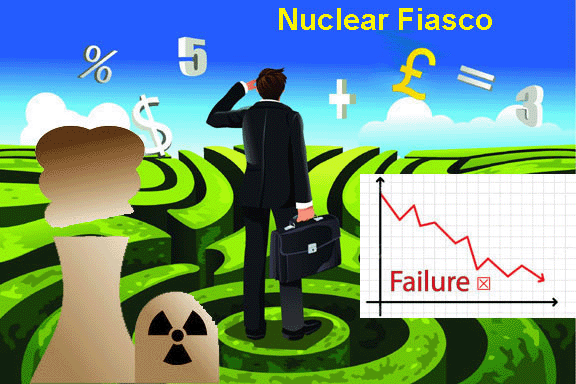 The Crushing Cost Of Nuclear Waste Is Weighing On Taxpayers, Oil Price
By Haley Zaremba – Jun 19, 2019 The Maine Yankee nuclear power plant hasn’t produced a single watt of energy in more than two decades, but it cost U.S. taxpayers about $35 million this year.” So begins a powerful report this week about the crushing cost of nuclear waste storage by the Los Angeles Times……..
In the United States, where the nuclear industry is ailing, this is particularly bad news. More plants are shutting down than are going online, and many of the nuclear plants that are continuing to function are able to do so in large part thanks to government subsidies at the state level, which is to say, even more taxpayer dollars.
The Trump administration, for its part, has made efforts to combat the rising prices of nuclear waste storage–albeit extremely controversial ones. Just this month, “in a move that will roll back safety standards that have been observed for decades” says not-for-profit news organization Truthout, “the Trump administration reportedly has plans to reclassify nuclear waste previously listed as “high-level” radioactive to a lower level, in the interest of saving money and time when disposing of the material.”
While this may be a quick fix for the massive amounts of money flowing out of taxpayer pockets and into the nuclear energy industry, it’s certainly not a sustainable solution for what could easily become a national health crisis if mismanaged. ……https://oilprice.com/Alternative-Energy/Nuclear-Power/The-Crushing-Cost-Of-Nuclear-Waste-Is-Weighing-On-Taxpayers.html
Concerns raised over pension investments in nuclear weapons

“Once this is ratified by 50 states and comes into effect as a new piece of international law, the implications will be significant for nuclear armed states and financial institutions alike.
“The biggest banking corporations have a global reach and cannot disregard international law.”
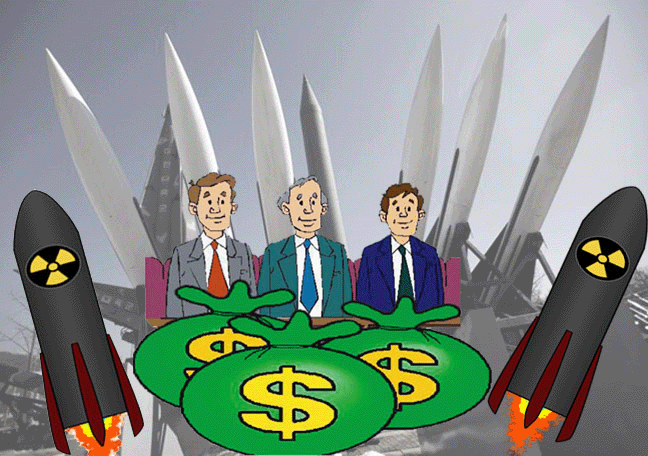
03/6/20 A report by the UK Nuclear Weapons Financing Research Group has raised concerns about the number of pension providers investing in companies that are producing nuclear weapons.
The report, Banks, Pensions and Nuclear Weapons: Investing in Change, found that among pension providers, policy on restricting investment in nuclear weapons is generally limited to ethical funds. Continue reading
Going back to “normal”? But “normal” IS the problem
|
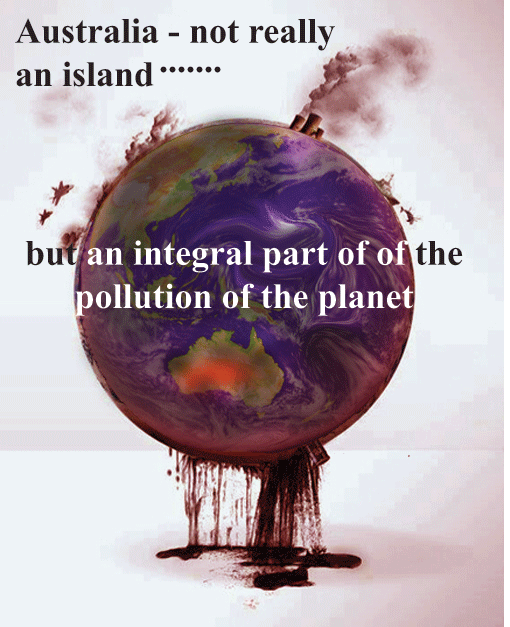
‘Normal Is the Problem’ So is normal’s idiot child, ‘the new normal.’ What we’ve made normal never was natural. Andrew Nikiforuk 30 May 2020 | TheTyee.ca Tyee contributing editor Andrew Nikiforuk’s 2006 book Pandemonium predicted the pandemic we are now …….. Normal has become a pathological state.
After the random normlessness of this pandemic, I don’t want to go back to normal either. Or its idiotic child, “the new normal.” Let’s face facts: our hi-tech, globalized-trade-anything-for-peanuts world run mostly by tyrants isn’t natural. Since 1970, an outpouring of normality has just about destroyed the Earth: It has created an abnormal economic machine, blind to energy spending, that doubled the global population and boosted per capita consumption by 45 per cent. At the same time the so-called value of global economic activity grew by 300 per cent. Meanwhile global trade has exploded like a coronavirus by 900 per cent. To support all this consumption and trade, the extraction of “living materials” from nature has jumped by 200 per cent. Now here’s just a partial list of the cost of all this exponential normality: Humans have appropriated or altered 70 per cent of the world’s lands with mines, roads, industrial farms, cities and airports. We have engineered more than 75 per cent of the world’s longest rivers. We have filled the ocean with plastics and slaughtered coral reefs. Anyone who calls that kind of behaviour normal is crackers. It’s ecological imperialism, and nothing more than a full-scale assault on the dignity of local life. The list goes on, and scientists now think it’s normal to publish papers on “the pervasive human decline of life.” Humans, for example, have destroyed 85 per cent of the wetlands. That’s like eating your kidneys for dinner, and I can’t think of anybody who would consider that normal except Hannibal Lecter. We have eliminated 40 per cent of the world’s original forests. We have extirpated (and there’s a word for these normal times) most of the world’s large mammals. An estimated one million species of animals and plants stand on the brink of extinction. Homo sapiens, another mammal, are on that list, and we pretend that’s normal. As these species disappear, our ever-expanding artificial intelligence probably won’t wave goodbye because replacing the natural with artificial is what normal is all about……. Normal really means big-box living and being a slave to machines. It means you’re so distracted by screens, speed and mobility, you can’t pay attention to what matters. Normal means you don’t have any respect for limits or sacred places. Normal means you think you can simply swap fossil fuels with so-called “clean energy” and protect the norm. But it mostly means you have surrendered your capacity to be human and to love this place. So I don’t want to go back to normal…… Normal really means big-box living and being a slave to machines. It means you’re so distracted by screens, speed and mobility, you can’t pay attention to what matters. Normal means you don’t have any respect for limits or sacred places. Normal means you think you can simply swap fossil fuels with so-called “clean energy” and protect the norm. But it mostly means you have surrendered your capacity to be human and to love this place. So I don’t want to go back to normal……. I don’t want to go back to a world where political parties cultivate men and women obsessed with power and deny the truth. That’s just evil. I don’t want to go back to world where people don’t know their neighbours, or the names of the birds in their trees. I don’t want to go back to a world where billionaires think so little of this Earth that their primary obsession is to escape to Mars. I don’t want to go back to a world where political leaders don’t have the courage to talk about cheap energy, reckless consumption, over-population and climate change in the same sentence. …. I don’t want to go back to an economy where corporations socialize all costs and privatize all gains. That’s robbery and theft. And it must end. I don’t want to go back to a world where governments subsidize bottom trawlers to scrape the floor of the ocean to support globalization… … Normal is the problem, and the normlessness of a pandemic has exposed the fat tail of normal as pathology. And I am not going back to it……..https://thetyee.ca/Culture/2020/05/30/New-Normal-Problem/ |
|
British taxpayers may be funding China’s military programme, via “joint nuclear technology research”

 Telegraph 1st June 2020, Experts fear British taxpayers could inadvertently be contributing to funding the Chinese defence programme, after millions of pounds of public funds were poured into technology research undertaken in collaboration with controversial Chinese universities known for their military links. The UK’s Engineering and Physical Sciences Research Council distributed more than £6.5 million to British universities including Manchester for
technology studies that were undertaken with these controversial Chinese institutions, according to disclosures on academic papers.
While the research programmes focused on technologies that could be used for civilian purposes, experts have warned that they also have the potential to be used for military applications, prompting fears that taxpayer-funded research by British universities could be exploited by Beijing.
No nuclear dump on agricultural land – Canada

Opposition gathering to nuclear fuel disposal vault in South Bruce, The Sun Times, 29 May 20
|
NWMO’s other preferred site is also in Ontario, in the Ignace area, northwest of Lake Superior, and feasibility studies are underway for both sites.It would take 10 years to undertake the environmental regulatory approval process. Plans call for construction to begin in 2033 and take about 10 years, with operation starting in 2043, according to the NWMO. South Bruce Mayor Bob Buckle said in January it seemed to him there was little opposition to the project, but that has changed. At an online South Bruce council meeting Tuesday, Teeswater-area beef and sheep farmer Michelle Stein spoke on behalf of a citizen’s group, Nuclear Tanks, No Thanks, which loosely formed in February. Her farm is next to one purchased by NWMO for the project northwest of Teeswater, part of the parcel of land where metal-encased spent fuel rods could be buried for thousands of years. She told council “there’s way too many risks involved with this project and they need to have a referendum to let the community decide. Like we have over 1,500 signatures that were collected before COVID,” before the virus stopped door-knocking, she said by phone Thursday. “Council just it seemed turned to ignore us and do their own thing.” She noted Buckle was elected with 1,380 votes. The group has an information website www.protectsouthbruce-nodgr.org, which includes an online petition with some 1,800 signatures, which prior to the pandemic was intended for people who aren’t local to sign……. Becky Smith, a NWMO spokeswoman said “We’re a farming community. I don’t understand why they’d want to turn us into a mining community, and then bury the world’s most radioactive waste underneath our water table,” A four-week comment period opened Wednesday and ends June 30 about whether a draft report accurately summarizes public concerns and wishes expressed during workshops held between December and February…….. n January, SON held a community vote which turned down a separate nuclear waste vault proposal, for lower- and mid-level nuclear waste, championed by Ontario Power Generation. It was to be built in Bruce County too, near the Bruce Power nuclear plant close to Kincardine. Saugeen First Nation Chief Lester Anoquot said Wednesday he has a letter from NWMO confirming the high-level nuclear waste vault requires First Nation consent. “We’re continuing dialogue. It’s kind of difficult right now, working remotely,” given the COVID-19 pandemic, he said. “It will probably go to a community vote again for acceptance or not. I think the process will mirror the one that was just conducted with the last DGR (deep geological repository) proposal.” The site falls within Saugeen Ojibway Nation’s traditional territory and its support is required for the project to proceed, Belfadhel has said.https://www.owensoundsuntimes.com/news/local-news/opposition-gathering-to-nuclear-fuel-disposal-vault-in-south-bruce |
|
Extreme heat, air pollution – climate dangers to health in South Asia

|
South Asia’s twin threat: extreme heat and foul air https://climatenewsnetwork.net/south-asias-twin-threat-extreme-heat-and-foul-air/
May 29th, 2020, by Tim Radford Climate change means many health risks. Any one of them raises the danger. What happens when extreme heat meets bad air?LONDON, 29 May, 2020 – Extreme heat can kill. Air pollution can seriously shorten human lives. By 2050, extreme summer heat will threaten about 2 billion people on and around the Indian sub-continent for around 78 days every year. And the chances of unbearable heat waves and choking atmospheric chemistry at the same time will rise by 175%. Climate scientists have been warning for decades that what were once rare events – for instance the 2003 heat wave that claimed tens of thousands of lives in Europe – will, as global average temperatures rise, become the new normal. And they have repeatedly warned that in step with extreme summer temperatures, extreme humidity is also likely to increase in some regions, and to levels that could prove potentially fatal for outdoor workers and people in crowded cities. The link between air pollution and ill health was established 60 or more years ago and has been confirmed again and again with mortality statistics. Risk to megacities Now a team from China and the US confirms once more in the journal AGU Advances, published by the American Geophysical Union, that the danger is real, and that they can tell where it is becoming immediate: in seven nations that stretch from Afghanistan to Myanmar, and from Nepal to the tip of southern India. Around 1.5bn people live there now, and they are already learning to live with around 45 days of extreme heat every year. By 2050, there will be 2bn people, most of them crammed into megacities in Afghanistan, Bangladesh, Bhutan, India, Myanmar, Nepal and Pakistan, and climate models confirm that the number of days of extreme heat could rise to 78 a year. The number of days on which cities – already blighted by air pollution – reach health-threatening levels of high particulate matter will also rise. When heat and choking air chemistry become too much, lives will be at risk. That extremes of summer heat are on the increase is now a given. That the intensity, duration and frequency of heat waves will go on rising has also been established. Extremes of heat are a threat to crops and a particular hazard in cities already much hotter than their surrounding landscapes. One research group has identified 27 ways in which high temperatures can kill. Others have repeatedly warned of the dangerous mix of high temperatures and high humidity (climate scientists call it the “wet bulb” temperature), and one team of scientists has already argued that such conditions have already arrived, albeit so far for short periods and in limited locations. The researchers chose the so-called wet-bulb temperature of 25°C as their threshold for an unhealthy extreme, and then worked out the number of days a year that such conditions happened in South Asia: between 1994 and 2006, these arrived at an average of between 40 and 50 days a year. They then looked at the likely rise with forecast increases in average planetary temperature, depending on how vigorously or feebly the world’s nations tried to switch from fossil fuels to renewable energy sources. The probability increased by 75%. They then chose widely-agreed dangerous thresholds for air pollution with soot, and sulphate aerosols, usually from fossil fuel combustion, to find that extremes of pollution would happen by 2050 on around 132 days a year. Tenfold risk increase Then they tried to estimate the probabilities that extreme pollution and extreme heat would coincide. They judged that the frequency of these more than usually hazardous days would rise by 175%, and they would last an estimated 79% longer. The area of land exposed to this double assault on human health would by then have increased tenfold. Scientific publications usually avoid emotional language, but the researchers call their own finding “alarming.” South Asia is a hotspot for future climate change impacts,” said Yangyang Xu, of Texas A&M University, the first author. “I think this study raises a lot of important concerns, and much research is needed over other parts of the world on these compounded extremes, the risks they pose, and their potential human health effects.” – Climate News Network |
|
|
USA conducted radiation experiments on its citizens

Nuclear Guinea Pigs: Radiation Experiments Performed on US Citizens During the Cold War, the US conducted experiments with radioactive substances on its citizens. https://interestingengineering.com/nuclear-guinea-pigs-radiation-experiments-performed-on-us-citizens By Marcia Wendorf, May 29, 2020
Between April 1945 and July 1947, in experiments performed at hospitals in Rochester, New York, Oak Ridge, Tennessee, Chicago, Illinois, and San Francisco, California, subjects were injected with various types of radioactive substances. Eighteen subjects were injected with plutonium, six with uranium, five with polonium, and at least one with americium.
Then, in November 1993, journalist Eileen Welsome began a three-part story in the Albuquerque Tribune newspaper that described government experiments that were conducted on Americans during the Cold War. For her effort, Welsome received a Pulitzer Prize in 1994.
Welsome’s reporting led to the creation of the Advisory Committee on Human Radiation Experiments by President Bill Clinton. The committee published its results in 1995. The report described the following instances where Americans were dosed with radioactive substances without their express knowledge or full consent:
- 57 normal adults were fed spheres containing radioactive uranium and manganese at the Los Alamos Scientific Laboratory in the 1960s
- 20 elderly adults were fed radium or thorium at the Massachusetts Institute of Technology during the early 1960s
18 terminally ill patients were injected with plutonium in hospitals in Oak Ridge, Tennessee, Rochester, N.Y., Chicago and San Francisco- 6 emotionally disturbed or homeless patients with normal kidney function were injected with uranium salts at the University of Rochester from 1946 to 1947
- 131 inmates at Oregon and Washington state prisons had their testicles irradiated between 1963 and 1971
- 14 people in Richland, Washington were exposed to tritium during 1951 and 1952, either by breathing, eating, or bathing in it
- 102 people were fed particles containing strontium, barium, or cesium between 1961 and 1963, at the University of Chicago and the Argonne National Laboratory
- 54 patients in a hospital near the Oak Ridge Institute for Nuclear Studies, and who had normal intestinal tracts, were fed lanthanum-140 during the early 1960s
- 12 terminally ill cancer patients at Columbia University and Montefiore Hospital in the late 1950s were injected with radioactive calcium and strontium
- 14 people in 1967 were either injected with or drank radioactive promethium at the Hanford Environmental Health Foundation and Battelle Memorial Institute in Richland, Washington
10 people were either injected with radioactive phosphorus or else fed Columbia River fish which were contaminated with radioactive phosphorus in 1963
-
Experiments on infants and pregnant women
In 1945, researchers at Vanderbilt University gave 829 pregnant women what were described as “vitamin drinks”, but which actually contained radioactive iron. The experiment was to see how fast the radioisotope passed into the women’s placentas.
While the mothers experienced rashes, bruises, anemia, hair and tooth loss, and cancer, at least four of the children who were subsequently born to these women died from cancers, including leukemia.
In 1953, at the University of Iowa, the Atomic Energy Commission began testing the effect of radioactive iodine on newborns and pregnant women. Researchers gave between 100 and 200 microcuries (3.7 to 7.4 MBq) of iodine-131 to pregnant women, to determine whether radioactive iodine crossed the placental barrier.
Another study gave 25 babies who were less than 36-hours-old and who weighed between 5.5 and 8.5 pounds (2.5 to 3.9 kg) iodine-131, either by mouth or injection, then measured the amount of iodine in their thyroid glands.
An AEC study at the University of Nebraska College of Medicine fed iodine-131 to 28 healthy infants through a gastric tube in order to gauge the amount of iodine in the infants’ thyroid glands.
During 1946 and 1947, researchers at the University of Rochester injected uranium-234 and uranium-235 into six people to see how much uranium their kidneys could tolerate before becoming damaged.
In 1949, near the Hanford site in south-central Washington state, the Atomic Energy Commission released iodine-131 and xenon-133 into the atmosphere. It contaminated a 500,000-acre (2,000 sq km) area, which included three small towns.
In 1945, Albert Stevens received the diagnosis of stomach cancer at the U.C. San Francisco Medical Center. Without informing Stevens, a former Manhattan Project doctor, Joseph Gilbert, had Stevens injected with two isotopes of plutonium: Pu-238 and Pu-239.
Prior to experimentation, scientists had assumed that 90% of injected plutonium would be excreted from the body, however, what they found was that 90% of the plutonium remained in patients’ bones for decades.
Stevens, in fact, did not have cancer; however, his accumulated dose of Pu-238 was higher than anyone had received in history, at 64 Sv (6400 rem), despite the fact that he did not develop radiation sickness.
Neither Stevens nor his relatives were told about the plutonium he had received, however, in 1975, when Stevens had died, his cremated remains were surreptitiously acquired by the Argonne National Laboratory Center for Human Radiobiology and the National Human Radiobiology Tissue Repository at Washington State University.
A warm bowl of radiation
In December 1995, a lawsuit was filed against the odd combination of the Quaker Oats company and renowned university, the Massachusetts Institute of Technology (MIT).
In an almost unthinkable experiment, conducted during the 1940s and 1950s, MIT provided radioactive isotopes, which were added to the calcium and iron additives contained in Quaker Oats’ oatmeal cereal.
The oatmeal was then served to 74 children who lived at the Fernald School, a state home for the mentally retarded located in Waltham, Massachusetts.
The radioactive “tracers” allowed researchers to track the absorption of the calcium and iron into the children’s bodies.
The entire purpose of the experiment was to give Quaker Oats a leg up in its rivalry with Cream of Wheat cereal. A lawyer representing the children, Michael Mattchen, was quoted in a 1995 Associated Press article as saying, “There was an utter failure to treat these kids with any human decency.”
In October 1995, then-president Bill Clinton apologized to the Fernald School, and the president of MIT also apologized on behalf of the school.
Transporting dead old nuclear reactors [like Lucas Heights’ HIFAR one] put a heavy strain on roads

 If the Australian govt’s nuclear waste dump plan for Napandee, there’s be over 1700 km of transport – of the old dead Hifar nuclear reactor, over roads of varying quality, in the extreme heat?
Decommissioned nuclear reactor will be heavy load for Nevada roads, By Marvin Clemons Las Vegas Review-Journal May 26, 2020 The nuclear reactor vessel from Southern California’s decommissioned San Onofre Nuclear Generating Station has started to make its way toward Las Vegas by rail. At more than 1.5 million pounds, it will be the largest and heaviest object ever moved on a Nevada road.The vessel is bound for a burial ground in Utah but may sit in California for an undetermined period while experts at the Nevada Department of Transportation work to ensure that it won’t damage the state’s roads as it passes through.
When it does arrive, the 770-ton nuclear reactor vessel will be unloaded from the world’s largest rail car at Apex Industrial Park to be trucked north on eastern Nevada roads before eventually being buried at Clive, Utah, about 75 miles west of Salt Lake City.
But before that leg of the journey, Nevada needs to shore up some drainage structures along the undisclosed route to Wendover, Utah.
“We anticipate that the vessel will get shipped to Apex sometime in early June,” Department of Transportation spokesman Tony Illia said in an email Tuesday. “However, the drainage structures along the transport route through Southern Nevada need reinforcing in order to handle the load. The structures would get crushed like a soda can because the load is so heavy.”
The company hired to deliver the reactor to Utah is Emmert International, which is among the world’s biggest movers of heavy equipment. Workers plan to use heavy-duty hydraulic jacks to support the culverts when the vehicle hauling the reactor passes over, Illia said.
“It would be, by far, the biggest object ever moved on a road in the state,” he said. “Our people have been scratching their heads for months to figure out a route that could work.”………
Security will be making the trip as well.
Any asphalt or road surface could buckle under the 1.5 million-plus pounds of the reactor, plus a shipping skid that adds 7 tons to the total. Making such a shipment during warmer months is a bigger issue than it would be in colder weather…….. https://www.reviewjournal.com/local/decommissioned-nuclear-reactor-will-be-heavy-load-for-nevada-roads-2036202/
Prospective Northern Goldfields uranium miner fails to submit environmental and mine closure plans on time
Canadian farming community not happy about taking on nuclear wastes
Teeswater area debating taking on ‘forever’ nuclear waste project, Scott Miller CTV News London 25 May 20, WINGHAM, ONT. — Anja van der Vlies is worried about the future of her 1200 dairy goat operation, if Canada’s most radioactive nuclear waste is buried a couple side roads away from her family’s farm.
“It’s fairly close to where we farm. If I just look at the radius of 10 kilometres from the proposed site, so much food is being prepared here. What’s going to happen to that?”she says.
Right next door, dairy farmer Ron Groen has posted signs around his property sharing his concerns about the proposed project, just north of Teeswater.
“The waste is going to be radioactive for a million years, so basically the waste will be eternally radioactive and our kids, grandkids, 33,000 generations after us living in and around town will have to worry about this problem,” he says.
About 1200 acres of farmland north of Teeswater has been optioned by the Nuclear Waste Management Organization to potentially build Canada’s first permanent nuclear waste facility.
Over five million used nuclear fuel bundles, would be buried 500 metres under these Bruce County farms, if the community agrees to it.
Darren Ireland is one the landowners, whose agreed to option his land for the project.
“For me, it’s about five generations. This area has struggled for years to keep things going. I look at this as something, that we could be looking at for five generations, that’s huge,” he says.
The mayor of the municipality of South Bruce, Robert Buckle, also sees upside to the project…….
Signs opposing the project starting going up around the area around March. A local group has formed to keep nuclear waste out of South Bruce’s soil.
“The sooner we can stop this, the better for our community,” says van der Vlies…….
Two communities remain in the running to house Canada’s most radioactive waste. Ignace, in Northern Ontario, and the Municipality of South Bruce, north of Teeswater. One site will selected, no later, than 2023. https://london.ctvnews.ca/teeswater-area-debating-taking-on-forever-nuclear-waste-project-1.4953737
New study – health effects of low level nuclear radiation on children has been underestimated
 How dangerous is low-level radiation to children? https://climatenewsnetwork.net/how-dangerous-is-low-level-radiation-to-children/#.Xsn914VYtCg.twitter May 22nd, 2020, by Paul Brown How dangerous is low-level radiation to children? https://climatenewsnetwork.net/how-dangerous-is-low-level-radiation-to-children/#.Xsn914VYtCg.twitter May 22nd, 2020, by Paul Brown A rethink on the risks of low-level radiation would imperil the nuclear industry’s future − perhaps why there’s never been one.
The threat that low-level radiation poses to human life, particularly to unborn children, and its link with childhood leukaemia, demands an urgent scientific reassessment. This is the conclusion of a carefully-detailed report produced for the charity Children With Cancer UK by the Low-Level Radiation Campaign. It is compiled from evidence contained in dozens of scientific reports from numerous countries over many decades, which show that tiny doses of radiation, some of it inhaled, can have devastating effects on the human body, particularly by causing cancer and birth defects. The original reports were completed for a range of academic institutions, governments and medical organisations, and their results were compared by the newest report’s authors, Richard Bramhall and Pete Wilkinson. They believe they have provided overwhelming evidence for a basic rethink on so-called “safe” radiation doses. They write: “The fundamental conclusion of this report is that when the evidence is rationally assessed it appears that the health impacts, especially in the more radio-sensitive young, have been consistently and routinely underestimated.” Ceaseless controversy The pair concede this is not the first time such a call has been made, but it has never been acted upon. Now they say it must be. What constitutes safety for nuclear workers and for civilians living near nuclear power stations, or affected by fall-out from accidents like the ones at Sellafield in Cumbria in north-west England in 1957, Chernobyl in 1986 and Fukushima in 2011, has always been highly controversial. Bramhall and Wilkinson detail how the debate began in earnest in the 1980s, when a cluster of childhood leukaemia cases, ten times higher than would be expected, was identified around Sellafield. Government inquiries followed but reached no settled conclusion, and low-level radiation safety has been a scientific battleground ever since. The official agencies appointed by governments are still using dose estimates based on calculations made in 1943, when Western governments were trying to develop an atomic bomb.
The new report highlights that this was when very little was known about how tiny doses of ingested radiation could affect the body − and when DNA was yet to be discovered. Despite the fact that international standards are based on these scientifically ancient, out-of-date assumptions, they have not been revised. If they were, the results could be catastrophic for the nuclear industry and for the manufacturers of nuclear weapons. The report makes clear that if the worst estimates of the damage that low-level radiation causes to children proved anywhere close to correct, then no-one would want to live anywhere near a nuclear power station. Most would be appalled if they knew even small numbers of children living within 50 kilometres of a station would contract leukaemia from being so close. It acknowledges that the stakes are high. If the authors’ findings are accepted, then it will be the end of public tolerance of nuclear power. Revolution needed Despite this long-lived institutional pushback from governments and the industry, the report says what is needed is a scientific revolution in the way that low-level radiation is considered. It compares the situation with the treatment of asbestos. It was in the 1890s that the first evidence of disease related to asbestos exposure was laid before the UK Parliament. But it was not until 1972, when the causal link between the always fatal lung cancer, mesothelioma, and human fatality rates was established beyond reasonable doubt, that the use of asbestos was banned. This delay is why on average 2,700 people still die annually in the UK: they were at some point exposed to and inhalers of asbestos. Another example, which the report does not quote but is perhaps as relevant today, is air pollution. It has taken decades for the scientific community to realise that in many cities it is the tiniest particles of air pollution, invisible to the naked eye, that are taken deepest into the lungs and that cause the most damage, killing thousands of people a year. So far governments across the world have not yet outlawed the vehicles and industrial processes that are wiping out their own citizens in vast numbers. Anxiety not irrational The report cites many studies, with perhaps the most telling those that compare the actual numbers of cancers and malformations in babies which occurred in the aftermath of the Chernobyl accident with the numbers to have been expected if the currently accepted and out-of-date risk calculations had been used. Despite the difficulties of getting information from reluctant governments close to Chernobyl, the report says: “The discrepancy between the number of congenital malformations in babies expected after Chernobyl and the number actually observed was between 15,000 and 50,000.” The authors say their object “is to dispel the repeated assertion that public anxiety about the health impact of radioactivity in the environment is irrational.” Both Wilkinson and Bramhall have considerable experience of dealing with governments, both inside official bodies as members, and as external lobbyists. They detail how they believe the concerns of both ordinary people and scientists have been swept aside in order to preserve the status quo. Clearly, in sponsoring the report, Children with Cancer UK agrees. − Climate News Network |
|
U.S. Unprepared for Nuclear Accident During Pandemic
U.S. Unprepared for Nuclear Accident During Pandemic Common Dreams, 22 May 20
Michigan floods expose impossible challenges of mass evacuation during Covid-19
Emergency preparedness must include direct delivery of potassium iodide to all residents around nuclear plants
TAKOMA PARK, MD – Two dam failures and catastrophic flooding in central Michigan, which also prompted a low-level emergency notification (NRC event #54719) at a nearby nuclear research reactor in Midland, have exposed the almost impossible challenge of evacuating people to safety during simultaneous catastrophic events.
The sudden need to evacuate large numbers of people from severe flooding — also threatening to compromise a Dow chemical facility that uses a research reactor — during a time of national lockdown due to the Covid-19 pandemic, raises “serious questions and concerns about the emergency response readiness and the viability of evacuation that might simultaneously include a radiological accident,” said Paul Gunter, director of the Reactor Oversight Project at Beyond Nuclear, a national anti-nuclear advocacy organization.
Michigan authorities were forced to face a “no-win compromise” between protecting the public from exposure to Covid-19 while at the same time moving people out of harm’s way, after heavy rains caused failures at the Edenville and Sanford dams, leading to devastating floods. The Dow plant insists there have been no chemical or radiological releases, but the situation will be evaluated once floodwaters recede. Fortunately, no full-scale commercial nuclear power plant was in the path of the Michigan floods.
Operating nuclear power stations are required by federal and state laws to maintain radiological emergency preparedness to protect populations within a ten-mile radius from the release of radioactivity following a serious nuclear accident. These measures include mass evacuations.
However, many communities around the nation’s 95 commercial reactors are presently sheltering-in-place at home as a protective action during the Covid-19 pandemic.
“The Michigan flooding has forced the relocation of thousands of citizens from their stay-at-home shelters into the social distancing challenges of mass shelters,” Gunter said. “Evacuating tens of thousands from a radioactive cloud to mass shelters, as is presently planned during a nuclear emergency, raises difficult if not impossible choices under pandemic conditions.”
In fact, a Memorandum of Understanding (MOU), Sect.03.02, p.2, between the U.S. Nuclear Regulatory Commission (NRC) and the Federal Emergency Management Agency (FEMA) already obligates the federal government to re-exam radiological emergency plans around nuclear facilities specifically in response to a pandemic, and to identify any shortcomings, deficiencies and enhancements that might be needed under such conditions.
But to date, neither agency has publicly taken the initiative to do so. In fact, the NRC actions are focused on relaxing safety measures required by operating licenses, resulting in extended work hours for reactor operators and security guards, and deferred safety inspections and repairs for as much as another 18 months. This makes an accident more likely.
“Given what we see in Michigan, the NRC and FEMA should lose no time in reviewing the viability of their radiological emergency plans, and publicly take action to make any necessary enhancements or shut these nuclear facilities down,” Gunter said.
Beyond Nuclear has identified two such actions under the MOU as vital to public health:
- NRC and FEMA must conduct a “Disaster Initiated Report”, as mandated by the MOU, on the adequacy of offsite radiological emergency response plans during the pandemic, and;
- Federal and state response plans need to be bolstered by the immediate pre-distribution of potassium iodide (KI) tablets by direct delivery to every resident within the ten-mile radius of U.S. nuclear power stations, now, before any accident occurs. This is in accordance with disaster medicine expert recommendations including from the American Thyroid Association (ATA)……..“The prospect of a nuclear disaster prompting a mass evacuation during a viral pandemic reinforces the need for an energy policy focused on safe, clean and affordable renewable energy,” said Gunter. “It’s time to remove the added and unnecessary danger presented by the 95 nuclear reactors still operating in the US today, and transition to a rapid phaseout before a nuclear emergency during a pandemic becomes a nightmarish reality.” https://www.commondreams.org/newswire/2020/05/22/us-unprepared-nuclear-accident-during-pandemic
Coronavirus is a ‘sliding doors’ moment. What we do now could change Earth’s trajectory

“………. Mandatory social distancing under COVID-19 is disrupting the way we live and work, creating new lifestyle patterns. But once the crisis is over, will – and should – the picture return to normal?
That’s one of many key questions emerging as the precise effect of the pandemic on carbon emissions becomes clear.
Our research published today in Nature Climate Change shows how COVID-19 has affected global emissions in six economic sectors. We discovered a significant decline in daily global emissions – most markedly, on April 7.
The analysis is useful as we consider the deep structural change needed to shift the global economy to zero emissions.
Crunching the numbers
At the end of each year we publish the Global Carbon Budget – a report card on global and regional carbon trends. But the unusual circumstances this year prompted us to run a preliminary analysis.
We calculated how the pandemic influenced daily carbon dioxide emissions in 69 countries covering 97% of global emissions and six economic sectors.
It required collecting new, highly detailed data in different ways, and from diverse sources…….
The pandemic’s peak
In early April, the reduction in global activity peaked. On April 7, global emissions were 17% lower than an equivalent day in 2019……..
In Australia, our widespread, high-level confinement triggered an estimated fall in peak daily emissions of 28% – two-thirds larger than the global estimate of 17%…..
The 2020 outlook
We assessed how the pandemic will affect carbon dioxide emissions over the rest of 2020. Obviously, this will depend on how strong the restrictions are in coming months, and how long they last.
If widespread global confinement ends in mid June, we estimate overall carbon emissions in 2020 will fall about 4% compared to 2019. If less severe restrictions remain in place for the rest of the year, the reduction would be about 7%.
If we consider the various pandemic scenarios and uncertainties in the data, the full range of emissions decline is 2% to 13%.
Now for the important context. Under the Paris climate agreement and according to the United Nations Gap report, global emissions must fall by between 3% and 7% each year between now and 2030 to limit climate change well below 2℃ and 1.5℃, respectively.
Under our projected emissions drop, the world could meet this target in 2020 – albeit for the wrong reasons.
Stabilising the global climate system will require extraordinary changes to our energy and economic systems, comparable to the disruption brought by COVID-19.
A fork in the road
So how could we make this byproduct of the crisis – the emissions decline in 2020 – a turning point?
A slow economic recovery might lower emissions for a few years. But if previous global economic crises are any indication, emissions will bounce back from previous lows.
But it need not be this way. The recent forced disruption offers an opportunity to change the structures underpinning our energy and economic systems. This could set us on the path to decarbonising the global economy………
We can rapidly return to the old “normal”, and the emissions pathway will follow suit. But if we choose otherwise, 2020 could be the unsolicited jolt that turns the global emissions trend around. https://theconversation.com/coronavirus-is-a-sliding-doors-moment-what-we-do-now-could-change-earths-trajectory-137838
1 This month

of the week – Australians for War Powers Reform (AWPR)
To see nuclear-related stories in greater depth and intensity
 Antinuclear