Over 100 public interest organisations call on Canadian govt to halt decision on nuclear waste disposal
 Groups ask Ottawa to press ‘pause’ on nuclear waste
  disposal https://www.tbnewswatch.com/local-news/groups-ask-ottawa-to-press-pause-on-nuclear-waste-disposal-2361184 ‘There’s no rules’ for evaluating an underground storage site, spokesperson says. By: Gary Rinne OTTAWA — More than 100 public interest organizations, environmental groups and others are calling on the federal government to suspend all decision-making regarding radioactive nuclear waste disposal.
In a letter to Natural Resources Minister Seamus O’Regan, they describe Canada’s current nuclear waste policy as “deficient,” saying it must be improved in consultation with the public and Indigenous peoples.
Among the signatories are numerous groups in northern Ontario, including Thunder Bay-based Environment North and Keep Nuclear Waste Out of Northwestern Ontario.
The letter follows a February report from the International Atomic Energy Agency which recommended that the government “enhance” its existing radioactive waste management policy.
The IAEA said the policy framework “does not encompass all the needed policy elements nor a detailed strategy” required for long-term nuclear waste management.
The signatories say their request is urgent because the regulator, the Canadian Nuclear Safety Commission, is pressing ahead with licensing decisions on a number of radioactive waste projects.
“Fearing Canada’s deficient radioactive waste framework will imprint itself on decisions affecting the health and safety of future generations and the environment, signees urged Canada to provide leadership, and establish sufficient guidance and federal policy,” they said in a statement Tuesday.
The groups also want Ottawa to establish objectives and principles to underly a nuclear waste policy, and that the government identify “the problems and issues exposed by existing and accumulating radioactive waste.”
The Nuclear Waste Management Organization is currently studying potential future underground nuclear waste storage sites in the Ignace area and South Bruce in southern Ontario.
Brennan Lloyd of North Bay-based Northwatch said NWMO’s search for a future repository is “part and parcel” of concerns about Canada’s overall approach to managing radioactive waste issues.
Nuclear waste disposal isn’t the only pressing matter, Lloyd said, but “we have lots of concerns about the Nuclear Waste Management Organization, their operation…going back to 2002 when the Nuclear Waste Fuels Act allowed the industry to create the NWMO.”
She added that “the lack of a solid set of rules around radioactive waste, we believe, does affect how the NWMO has conducted itself, but even more importantly it may affect the review process if the NWMO ever actually arrives at a site that they can in some way present as having the support of a host community.”
According to Lloyd, there are no rules as to how such a proposal would be evaluated.
She said that in 1996, the federal government presented a Radioactive Waste Policy Framework that’s less than a page long, and it’s problematic that “almost 25 years later, that’s still all we have in the way of real policy, strategy, rules around radioactive waste at the national level.”
Canadian Nuclear Safety Commission staff have recently proposed regulatory documents, Lloyd said, “which are really very general descriptions of how they might go about issuing a licence for various activities. And they really lack rigour.”
She said two of the five regulatory documents the CNSC plans to bring forward next month deal directly with nuclear waste burial.
“One is around how you would assess the long-term performance of a deep geological repository, and one is about how you would characterize a site that was being considered. And both of them are just incredibly weak documents,” Lloyd maintained.
“The dividing line is between ‘shall’ and ‘should.’ The CNSC documents are all ‘should’ or ‘may.’ Which means there’s no rules.”
Lloyd and the other signatories to the letter ask Minister O’Regan to instruct the CNSC to stop developing radioactive waste management and nuclear decommissioning documents until new, overarching policies and strategies are in place.
The marine food web threatened, as climate change damages Antarctic krill
Climate change threatens Antarctic krill and the sea life that depends on it The Conversation, Devi Veytia, PhD student , University of Tasmania, Stuart Corney, Senior lecturer, University of Tasmania, 19 May 20,
The Southern Ocean circling Antarctica is one of Earth’s richest marine ecosystems. Its food webs support an abundance of life, from tiny micro-organisms to seals, penguins and several species of whales. But climate change is set to disrupt this delicate balance.
What we found
Antarctic krill are one of the most abundant animal species in the world. About 500 million tonnes of Antarctic krill are estimated to exist in the Southern Ocean.
Antarctic krill play a critical role in the ocean’s food webs. But their survival depends on a delicate balance of food and temperature. Scientists are concerned at how climate change may affect their population and the broader marine ecosystem.
Krill growth depends largely on ocean temperature and the abundance of its main food source, phytoplankton (microscopic single-celled plants)………
Krill growth habitat shifted south as suitable ocean temperatures contracted towards the poles. Combined with changes in phytoplankton distribution, growth habitat improved in spring but deteriorated in summer and autumn.
This early end to the growth season could have profound consequences for krill populations. The krill life cycle is synchronised with the Southern Ocean’s dramatic seasonal cycles. Typically this allows krill to both maximise growth and reproduction and store reserves to survive the winter.
A shift in habitat timing could create a mismatch between these two cycles.
For example, female krill need access to plentiful food during the summer in order to spawn. Since larger females produce exponentially more eggs, a decline in summer growth habitat could result in smaller females and far less spawning success.
Why this matters
Krill’s significant role in the food chain means the impacts of these changes may play out through the entire ecosystem.
If krill shift south to follow their retreating habitat, less food would be available for predators on sub-Antarctic islands such as Antarctic fur seals, penguins and albatrosses for whom krill forms a significant portion of the diet.
In the past, years of low krill densities has coincided with declines in reproductive success for these species…….. https://theconversation.com/climate-change-threatens-antarctic-krill-and-the-sea-life-that-depends-on-it-138436
Japan needs to abandon its troubled nuclear fuel cycle
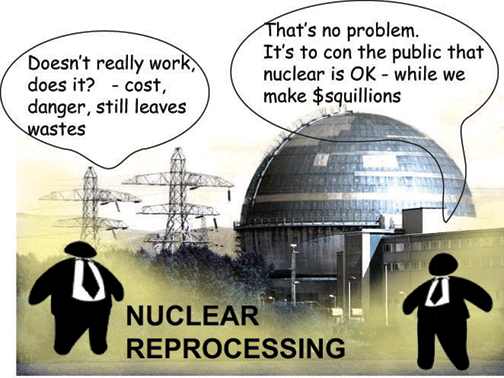
As the situation stands, plutonium will start to pile up with no prospects of it being consumed. Reducing the amount produced is also an issue that needs to be addressed.
The United States and Britain have already pulled out of a nuclear fuel cycle.
|
Editorial: Time to set a course away from Japan’s troubled nuclear fuel cycle https://mainichi.jp/english/articles/20200518/p2a/00m/0na/029000c, May 18, 2020 (Mainichi Japan) The Rokkasho Nuclear Fuel Reprocessing Facility being constructed in the northern Japan prefecture of Aomori has cleared a safety inspection by the Nuclear Regulation Authority (NRA).
Spent fuel from Japan’s nuclear power plants will be reprocessed at this facility, which will play a key role in Japan’s “nuclear fuel cycle” policy. Under the policy, uranium and plutonium extracted from such fuel is to be processed for further use. Japan Nuclear Fuel Ltd., the operator of the reprocessing facility, aims to complete construction by autumn next year, but there are no immediate prospects of the facility going into operation. On top of this, due to changes in the circumstances surrounding nuclear power, the meaning of the facility’s existence is no longer clear. The first issue to consider is declining demand for the use of fuel to be reprocessed at the facility. Such fuel was originally destined to go mainly to the Monju fast-breeder reactor in the western Japan prefecture of Fukui, but a spate of problems with the sodium-cooled reactor led to a decision in 2016 to decommission it. There are no plans to construct a replacement facility. There were also plans to use reprocessed fuel at nuclear power stations to generate electricity, but there are only four reactors that can handle it, far fewer than the 16 to 18 originally planned. As the situation stands, plutonium will start to pile up with no prospects of it being consumed. Reducing the amount produced is also an issue that needs to be addressed. Japan already possesses more than 45 metric tons of surplus plutonium, and there are fears in international society that it could be converted for use in nuclear weapons. In 2018, the government pledged to reduce the amount. A realistic approach is not to reprocess the fuel in the first place. Forming the backdrop to Japan’s persistence with fuel reprocessing is the problem of how to handle the large amount of spent nuclear fuel being stored on the grounds of the reprocessing facility. If Japan gives up on its nuclear fuel cycle policy, then the spent fuel will be sent back to nuclear power plants across the country. But those facilities are already pressed for storage space, making it difficult for them to accept the spent fuel. The total cost of the reprocessing facility, including construction and maintenance costs, stands at 14 trillion yen. Some of the cost will be tacked onto electricity bills. There is a need to rethink the question of whether the public is receiving benefits commensurate with the huge investment into the facility. NRA Chairman Toyoshi Fuketa said he would check with the minister of economy, trade and industry whether operation of the reprocessing plant was in line with the nation’s energy policy. In the wake of the 2011 Great East Japan Earthquake and tsunami and the ensuing nuclear disaster, many countries across the world turned in the direction of abandoning nuclear power. There are sufficient uranium resources in the world, and the justification for reprocessing as “effective utilization of limited resources” has faded. The United States and Britain have already pulled out of a nuclear fuel cycle. Japan must avoid a situation in which it wastes time by sticking to a national policy and becomes laden with risks. The country should squarely face up to the fact that it is in a no-win situation, and search for an alternative to the nuclear fuel cycle policy. |
|
Comparing USA and Russia’s massive nuclear weapons spending with the rest of the world

https://www.rferl.org/a/russia-pakistan-among-biggest-spenders-on-nuclear-weapons/30618712.html
Trump Says U.S. Nuclear Arsenal Must Be ‘Greatly’ Expanded
 Trump Says U.S. Nuclear Arsenal Must Be ‘Greatly’ Expanded, Bloomberg, By Alex Wayne, December 23, 2016
- Russian president said his arsenal also should be strengthened
- Obama has sought to both modernize and reduce U.S. weapons
President-elect Donald Trump said Thursday the U.S. should increase its nuclear arsenal, an apparent reversal of a decades-long reduction of the nation’s atomic weaponry that came hours after Russian President Vladimir Putin reiterated calls for his country’s arsenal to be reinforced.
“The United States must greatly strengthen and expand its nuclear capability until such time as the world comes to its senses regarding nukes,” Trump said in a Twitter post…….(subscribers only)
New hold-up to NuScam’s “small nuclear reactors” (yes, they’re the ones touted for Australia)
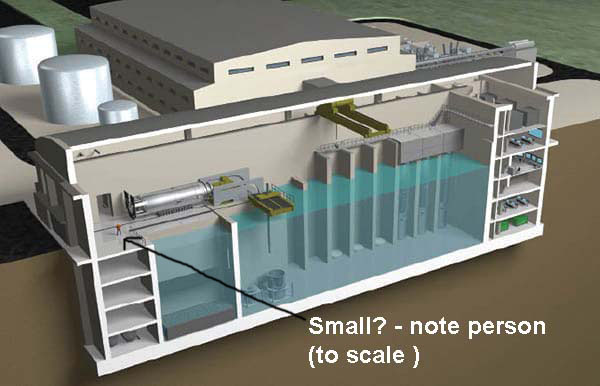 Nuclear Intelligence Weekly 15th May 2020, The US Nuclear Regulatory Commission (NRC) said that NuScale has not “sufficiently validated” the design and performance of the steam generator in its 50 megawatt small modular reactor (SMR) currently under design certification review. The NRC is nevertheless still expected to certify the SMR design but without granting “finality” to the steam generator, toutedmby the Fluor subsidiary as one of the key innovations to its smaller”cost-competitive” design.
core cooling system that NuScale plans to submit to the NRC on May 20. Instead of resolving the steam generator design issue ahead of design certification, the NRC is deferring to the plant operator Energy Northwest
to resolve the issue during the licensing process, after construction. http://www.energyintel.com/pages/eig_article.aspx?DocId=1072564
Radiation leak at nuclear research reactor
Germany: Radiation leak detected at research reactor, DW, 17 May 20,
A research reactor near Munich has emitted excess C-14 radiation, says the Bavarian city’s technical university. The “slight” leak late March had shown up Thursday when monthly readings were collated.
Munich’s technical university (TUM) said Saturday a neutron reactor located at Garchingjust north of the metropole was found to have leaked nuclides into the atmosphere “slightly” above the level permitted annually in its license.
Neither human beings nor the surrounding environment had been endangered, said the TUM and Bavaria’s environmental ministry — responsible for oversight.
Monthly figures collated on Thursday had shown an excess in C-14 particles 15% above the permitted yearly level, with the potential to cause “theoretically” a load for the public of 3 Mikrosieverts at the maximum…….
The facility was put on hold on March 17 because of the current pandemic, leaving many scientists unable to glean results for industry and medicine, said Görg.
The FRMII reactor, inaugurated in 2005, remains controversial among organizations like Germany’s branch of Friends of the Earth (BUND) and opposition Greens in Bavaria’s state assembly……. https://www.dw.com/en/germany-radiation-leak-detected-at-research-reactor/a-53467330
Farmers in Canadian County oppose the stigma of nuclear waste dump plan, very like the dump threat to Eyre Peninsula
residents still have concerns about a high-level nuclear waste DGR in their community.
“The folks in South Bruce, who I would consider the key and primary stakeholders in all of this, are concerned about … health and safety, and the stigma that will be attached to” nuclear waste, Grant explawelined. These stakeholders are also worried about “the value of land and businesses in the immediate vicinity as l as along the transportations route from where the high-level nuclear waste is currently stored into the community.”
The siting process has disrupted families’ property values and farm planning and decision making.
We’ve invested 25 years into this property,” Stein said. And “people aren’t interested in moving into an area that might have all of Canada’s high-level nuclear waste.”
A Change.org petition against the DGR has accumulated over 1,300 signatures as of early May, and community members have formed a group called Nuclear Tanks No Thanks to counter the NWMO’s plans
South Bruce divided over nuclear waste, Farms.com Community members clash over the site selection for a high-level nuclear waste deep geologic repository By Jackie Clark, Staff Writer Farms.com Bryon Mckee |May 12 2020
South Bruce is an Ontario municipality that boasts “rolling hills, scenic highways and warm-hearted people,” on its website. However, over the last several months, a debate over a plan to build an underground nuclear waste facility has divided the community.
Proposals in Bruce County…….
……….The DGR would require about 250 acres or the surface facilities and 1,500 acres for the underground repository. ……..some residents have not found the community engagement to be satisfactory. Continue reading
Rainfall patterns many thousands of miles away were altered by nuclear bomb tests.
 I have read that Ernest Titterton, the English physicist, who master-minded nuclear activities in Australia, made sure to stop the radiation testing of rain along Australia’s East Coast, during the period of France’s nuclear testing in the Pacific. I have not been able to verify this, but I believe that it’s true – given what we know of this man’s loyalty to thnuclear industry, and disdain for the health and lives of nuclear victims.
|
Cold War Nuclear Weapons Tests Changed Rainfall Thousands of Miles From Detonation Sites
Sci Tech Daily, By UNIVERSITY OF READING MAY 13, 2020 RADIOACTIVE PERIOD FOLLOWING NUCLEAR BOMB TESTS CHANGED RAINFALL PATTERNS THOUSANDS OF MILES FROM THE DETONATION SITES.
Nuclear bomb tests during the Cold War may have changed rainfall patterns thousands of miles from the detonation sites, new research has revealed. Scientists at the University of Reading have researched how the electric charge released by radiation from the test detonations, carried out predominantly by the US and Soviet Union in the 1950s and 1960s, affected rainclouds at the time. The study, published in Physical Review Letters, used historic records between 1962-64 from a research station in Scotland. Scientists compared days with high and low radioactively-generated charge, finding that clouds were visibly thicker, and there was 24% more rain on average on the days with more radioactivity…… It has long been thought that electric charge modifies how water droplets in clouds collide and combine, potentially affecting the size of droplets and influencing rainfall, but this is difficult to observe in the atmosphere. By combining the bomb test data with weather records, the scientists were able to retrospectively investigate this. ……. Although detonations were carried out in remote parts of the world, such as the Nevada Desert in the US, and on Pacific and Arctic islands, radioactive pollution spread widely throughout the atmosphere. Radioactivity ionises the air, releasing electric charge……. Reference: “Precipitation modification by ionisation” by Harrison, G., Nicoll, K., Ambaum, M., Marlton, G., Aplin, K., Lockwood, M., 13 May 2020, Physical Review Letters. |
|
Water loss in northern peatlands threatens to intensify fires, global warming

 https://www.eurekalert.org/pub_releases/2020-05/mu-wli050820.php Boreal climate change study features 59 authors, MCMASTER UNIVERSITY HAMILTON, ON, MAY 11, 2020 – A group of 59 international scientists, led by researchers at Canada’s McMaster University, has uncovered new information about the distinct effects of climate change on boreal forests and peatlands, which threaten to worsen wildfires and accelerate global warming.
Manuel Helbig and Mike Waddington from McMaster’s School of Geography and Earth Sciences gathered observational data from collaborators in countries across the boreal biome. Their study of how ecosystems lose water to the atmosphere appears today in the journal Nature Climate Change.
The unprecedented detail of their work has highlighted dramatic differences in the ways forests and peatlands regulate water loss to the atmosphere in a warming climate, and how those differences could in turn accelerate the pace of warming.
Most current global climate models assume the biome is all forest, an omission that could seriously compromise their projections, Helbig says.
“We need to account for the specific behavior of peatlands if we want to understand the boreal climate, precipitation, water availability and the whole carbon cycle,” he says.
“Peatlands are so important for storing carbon, and they are so vulnerable.”
Until now, Helbig says, it had not been possible to capture such a comprehensive view of these water-cycle dynamics, but with the support of the Global Water Futures Initiative and participation from so many research partners in Canada, Russia, the US, Germany and Scandinavia, new understanding is emerging.
As the climate warms, air gets drier and can take up more water. In response to the drying of the air, forest ecosystems – which make up most of the world’s natural boreal regions – retain more water. Their trees, shrubs and grasses are vascular plants that typically take up carbon dioxide and release water and oxygen through microscopic pores in their leaves. In warmer, dryer weather, though, those pores close, slowing the exchange to conserve water.
Together with lakes, the spongy bogs and fens called peatlands make up the remainder of the boreal landscape. Peatlands store vast amounts of water and carbon in layers of living and dead moss. They serve as natural firebreaks between sections of forest, as long as they remain wet.
Peatland mosses are not vascular plants, so as warming continues, they are more prone to drying out. Unlike forests, they have no active mechanism to protect themselves from losing water to the atmosphere. Dehydration exposes their dense carbon stores to accelerated decomposition, and turns them from firebreaks into fire propagators, as shown in previous research from Waddington’s ecohydrology lab.
Drier peatlands mean bigger, more intense fires that can release vast amounts of carbon into the atmosphere, accelerating global warming, Helbig says.
“It’s crucial to consider the accelerated water loss of peatlands in a warming climate as we project what will happen to the boreal landscape in the next 100 to 200 years,” he says.
Can Covid-19 response be a model for climate action?

Some governments are already flagging the need to alter environmental standards to boost economic activity. But business groups are suggesting that the rebuilding of virus-rattled economies can be done hand-in-hand with the transition to net-zero emissions. Perhaps climate policy – historically relegated to the “too-hard” basket – stands a chance in the new world.
|
Can Covid-19 response be a NOAH YIM NATASHA KASSAM Mass behaviour change, policies guided by science, acting In 2020, the world will see the largest annual drop in carbon dioxide emissions in history. The havoc wreaked by the coronavirus and its accompanying lockdowns has seen fleets of planes grounded and factories shudder to a halt. Levels of mobility in the world’s largest cities have fallen below 10% of usual traffic. The International Energy Agency predicts that Covid-19 could wipe out international demand for coal, oil, and gas, with only renewable energy showing resilience. The preliminary data from some of the world’s biggest economies shows that global emissions are in for a sharp, if temporary, decline. Early numbers from Europe suggest that the continent could see a 24% drop in EU Emissions Trading Scheme (ETS) emissions for the whole year. Global emissions will likely only fall by 5% – a reminder that most of the world’s emissions do not come from transportation. But economies around the world are lifting their lockdowns. China, the world’s largest carbon emitter, saw a 25% decrease in emissions over its four-week lockdown. Factories in China are back online, and as in previous economic disruptions, stimulus packages and increased targets could outweigh the short-term impacts on energy and emissions. Publics recognise the challenge ahead. In China, 87% say that climate change is as serious a crisis as Covid-19 in the long term. While the number in Australia is much lower, the majority – 59% – agree. Given the significant personal and economic sacrifices many publics have made to combat Covid-19, will these concerns finally translate into real progress in addressing climate change, once the current crisis has subsided? The prospects look good. Covid-19 has put science front and centre. Continue reading |
Wet bulb (TW) temperature – a measure of heat+humidity – means that some parts of the world already too hot for humans
Climate change has already made parts of the world too hot for humans, New Scientist 8 May 2020, By Adam Vaughan Global warming has already made parts of the world hotter than the human body can withstand, decades earlier than climate models expected this to happen.
Jacobabad in Pakistan and Ras al Khaimah in the United Arab Emirates have both repeatedly crossed a deadly threshold for one or two hours at a time, an analysis of weather station data found.
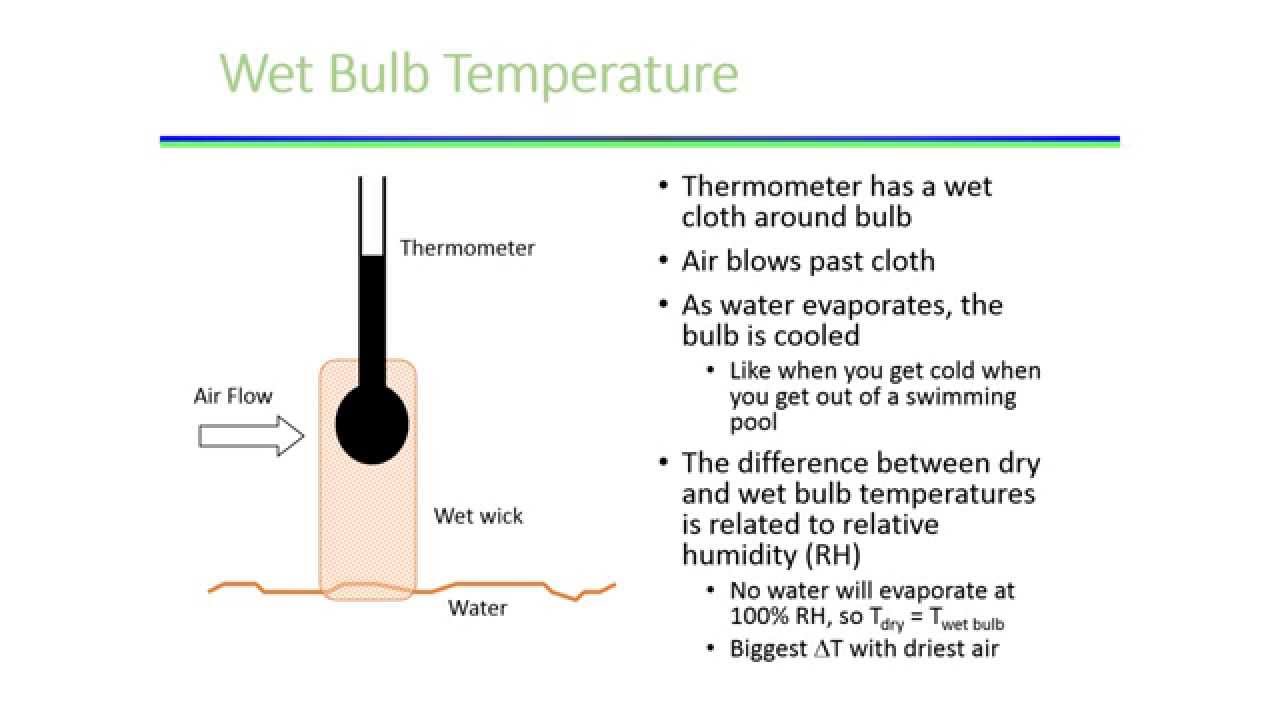
Wet bulb temperature (TW) is a measure of heat and humidity, taken from a thermometer covered in a water-soaked cloth. Beyond a threshold of 35°C TW the body is unable to cool itself by sweating, but lower levels can still be deadly, as was seen in the 2003 European heatwave that killed thousands without passing 28°C TW.
A US-UK team analysed weather station data across the world, and found that the frequency of wet bulb temperatures exceeding temperatures between 27°C TW and 35°C TW had all doubled since 1979. Though 35°C TW is thought of as a key threshold, harm and even death is possible at lower temperatures, so the team included these in their analysis.
Most of the frequency increases were in the Persian gulf, India, Pakistan and south-west North America. But at Jacobabad and Ras al Khaimah, 35°C TW appears to have been passed, the first time the breach has been reported in scientific literature.
“The crossings of all of these thresholds imply greater risk to human health – we can say we are universally creeping close to this magic threshold of 35°C. The tantalising conclusion is it looks like, in some cases for a brief period of the day, we have exceeded this value,” says Tom Matthews at Loughborough University in the UK……….: https://www.newscientist.com/article/2242855-climate-change-has-already-made-parts-of-the-world-too-hot-for-humans/#ixzz6M5ow6Dlr
Small agricultural communities target in USA, and now in Australia, for toxic radioactive nuclear wastes
Paul Waldon Fight To Stop A Nuclear Waste Dump In South Australia, 7 May 20
Here in South Australia we have the small agriculture community of Kimba destined to run the same parallels, fueled by the same environmentally blind visions of a few community and socially impudent locals.
So with the WHO’s loss of economic gratuity, no permission to report, a nuclear coterie that is not forthcoming when there are accidents, a media that is nobbled by government interests and the U.S.NRC events notification reporting no less than 1,100 accidents per year, how can anyone lay claim this is a safe industry? https://www.facebook.com/groups/941313402573199/
Global heating: intolerable bouts of extreme humidity and heat already coming to pass across the world
 Potentially fatal bouts of heat and humidity on the rise, study finds Potentially fatal bouts of heat and humidity on the rise, study finds
Scientists identify thousands of extreme events, suggesting stark warnings about global heating are already coming to pass, Guardian, Nina Lakhani 9 May 2020 Intolerable bouts of extreme humidity and heat which could threaten human survival are on the rise across the world, suggesting that worst-case scenario warnings about the consequences of global heating are already occurring, a new study has revealed.Scientists have identified thousands of previously undetected outbreaks of the deadly weather combination in parts of Asia, Africa, Australia, South America and North America, including several hotspots along the US Gulf coast. Humidity is more dangerous than dry heat alone because it impairs sweating – the body’s life-saving natural cooling system. The number of potentially fatal humidity and heat events doubled between 1979 and 2017, and are increasing in both frequency and intensity, according to the study published in Science Advances.…… The ominous findings come as something of a surprise to scientists, as previous studies had projected such extreme weather events would occur later in the century, mostly in parts of the tropics and subtropics where humidity is already a problem. ….. https://www.theguardian.com/environment/2020/may/08/climate-change-global-heating-extreme-heat-humidity |
|
Time for an independent Inquiry into the true effects of a nuclear waste facility on an agricultural community
 Susan Craig shared a link. Fight To Stop A Nuclear Waste Dump In South Australia A representative from the Kimba and Hawker districts SHOULD APPLY FOR A GRANT TO FUND an independent inquiry into the true adverse effects of a nuclear waste facility facing the health of the community, denigration of reputation for the agricultural industry, detrimental effects of real estate in the region and the immediate and long term safety for the people of Eyre Peninsula and South Australia No Radioactive Waste Facility for Kimba District Food South Australia Flinders Local Action Group Flinders Food Co.https://www.stockjournal.com.au/story/6745828/funding-available-to-nuclear-affected-communities/?src=rss&utm_email=14353853cb
1 This month

of the week – Australians for War Powers Reform (AWPR)
To see nuclear-related stories in greater depth and intensity
 Antinuclear