Coronavirus: Thousands of sailors to leave nuclear-powered aircraft carrier, heading for isolation

|
US Sailors Pour Off Aircraft Carrier and Into Coronavirus Isolation on Guam, Defense One , BY BRADLEY PENISTON, DEPUTY EDITOR, 2 Apr. 20 NAVY LEADERS PRAISE SHIP’S CAPTAIN FOR URGENT EVACUATION REQUEST; 3,700 WILL LEAVE THE SHIP WITHIN DAYS.
About one-fifth of the USS Theodore Roosevelt’s 4,865 sailors are off the COVID-stricken aircraft carrier and into isolation on Guam, with about 2,700 more expected to evacuate in the next few days, Acting Navy Secretary Thomas Modly said Wednesday. Modly’s update comes two days after the ship’s captain sent a stark letter up the chain of command — made public on Tuesday by the San Francisco Chronicle — warning that fully 90 percent of the crew needed to evacuate and isolate for two weeks for their own safety. The secretary’s comments clarify that the Navy was indeed evacuating most sailors from the ship, after Defense Secretary Mark Esper said in a CBS News interview aired late Tuesday that said an evacuation was not yet necessary. Modly praised the captain for the prodding, and said that evacuation efforts already were in the works but not with the right urgency. ….. https://www.defenseone.com/threats/2020/04/us-sailors-pour-aircraft-carrier-and-isolation-guam/164287/?oref=d-topstory |
|
U.S. Navy’s change of heart: sailors will evacuate from coronavirus-afflicted nucvlear powered aircraft carrier
|
“We are not at war,” Caprain Brett Crozier wrote in a four-page letter to bosses detailing how the ship did not have enough quarantine facilities. “Sailors do not need to die. If we do not act now, we are failing to properly take care of our most trusted asset – our sailors.” Now, his demand to get crew ashore appears to have been met with Acting Navy Secretary Thomas Modly confirming sailors were being taken off board in stages, with 1,000 people already evacuated and placed in isolation on land. It is thought around 100 people on the nuclear-powered vessel have tested positive for Covid-19, although this remains unconfirmed by the navy itself. Modly said the force had been working for several days to get the majority of crew off the ship but that, because Guam was dealing with its own outbreak of Covid-19, there were not currently enough isolated beds. He said he was in talks with officials there to use hotels and set up tents. “It’s not the same as a cruise ship, it has armaments on it, it has aircraft on it, we have to be able to fight fires if there is a fire on there,” he said……..
|
Nuclear-powered aircraft carrier Roosevelt – Captain pleas for evacuation of sailors, amid coronavirus infection
|
April 1, 2020, ‘We are not at war. Sailors do not need to die’: Captain
|
|
Impact of coronavirus on the nuclear industry’s operations, and the industry’s response
|
Nuclear industry’s response to Covid-19 outbreak, Power Technology, 1 Apr,20 “……..Impact of coronavirus on the nuclear industry’s operations The nuclear industry is assessing measures to safeguard their workforce and implementing business continuity plans to ensure continuous functioning of key aspects of their businesses. The nuclear industry already has a robust safety culture in place worldwide. Based on the guidance and directives put into practice across various countries and regions, actions have been taken. Since the time that coronavirus was first detected in China’s Wuhan region, before becoming a global pandemic, companies worldwide had time to execute business continuity plans and take the necessary steps for the dealing with the impact of the virus. Measures have been taken to screen workers and isolate those who show virus symptoms through temperature checks to detect fever, which is among the common Covid-19 symptom. Few countries have advised their staff to work remotely and not on-site, hence aiding with social distancing measures. For example, in the US, officials have recommended they may isolate or quarantine crucial nuclear power plant (NPP) technicians and allow them to live onsite to decrease their proximity with others in case this is needed. Many operators are getting hold of supplies of food, beds along with other essentials items required to support their staff for this purpose. Key NPP staff could be required to stay in assigned accommodation and commute to and from the nuclear facility in separate transportation. To safeguard the health of workers in regions where the occurrence of coronavirus may rise considerably, actions such as changing shift patterns are being assessed. Companies are also limiting or dropping their non-essential business travel plans and making use of conference video and audio calls for carrying out business meetings. France’s regulator, Nuclear Safety Authority (ASN), is avoiding direct physical contact to stop the spread of the coronavirus and is prioritizing control of operating facilities. A number of inspectors from the UK’s regulator, Office for Nuclear Regulation (ONR), will go ahead with travel plans to sites where needed but will restrict most of its business operations via phone, email and Skype. Currently, NPP operations are continuing in many countries. The US Nuclear Regulatory Commission (US NRC) has stated that it may close down any of the country’s 60 NPP if they cannot be aptly staffed. Few nuclear facilities have temporarily shut down their operations to avoid the spread of the coronavirus and secure their workforce. In the UK, authorities have idled a nuclear fuel reprocessing site located at Sellafield after 8% of its 11,500 workforce were asked to self-isolate or quarantine to avoid the spread of the coronavirus infection. This step came after a staff member was tested Covid-19 positive a few weeks earlier, and will eventually lead to a controlled shutdown of the site’s Magnox facility, expected to close down permanently this year. The EDF-owned Hinkley Point C (HPC) NPP in the UK, has also reduced its workforce by more than half and will further decrease its staff members as work in progress is finished. Rosatom’s overseas NPP construction projects have also progressed under the recommendations and guidelines of the disease control services as well as governments of the corresponding countries where construction work is going on. Work was suspended on few nuclear reactors which are under construction in China following the coronavirus outbreak. Now as work is slowly restarting in the country, countermeasures have been taken for all staff members returning to nuclear site. France, the most nuclear dependent country in the world, announced scaling down of staff at its Flameville NPP, operated by EDF, the country’s major nuclear operator. EDF stated that it is decreasing staff at the NPP from 800 to 100, because of the high regional Covid-19 infection rates. Three workers at the EDF’s Fessenheim NPP, Belleville NPP, and Cattenom NPP have already been tested positive for the coronavirus. French grid operator Réseau de Transport d’Électricité (RTE) presumes that nuclear availability will stay 3.6 Gigawatt (GW) below 2015 to 2019 average, in addition to a national fall in nuclear power demand. EDF has withdrawn its 2020 nuclear power generation target amidst an expected drop in its output this year due to the coronavirus outbreak. Orano, an integrated nuclear energy company, has also withdrawn its financial year (FY) outlook for 2020. When it comes to nuclear reactor operations, the Ascó I NPP in Tarragona and Almaraz I NPP in Cáceres, Spain, have notified about rescheduling or delaying of their outages for nuclear fuel loading. In Germany, NPP operators are stepping up precautionary measures to stop the spread of coronavirus. For instance, RWE, is involved in disinfecting radiation meters which are normally used by staffs quite often. The company has also shut down visitor centres and called off its scheduled group visits to decrease the risk of Covid-19 infections. The Finnish state-owned energy company Fortum Oyj’s Loviisa NPP is also undertaking precautionary measures to help stop the spread of the coronavirus. The company is adhering to the Covid-19 recommendations and guidelines put forward by the World Health Organization (WHO) and national authorities. External visitors are also prohibited at the NPP until further notice. MiningKazatomprom, Kazakhstan’s state-owned uranium production company, with a total uranium production volume (100% basis) of 22,808t of elemental uranium (tU) in 2019 has made announcement of drawing on its current uranium inventory if its mining activities are affected. The company’s uranium mining sites are located in remote areas of the country and so far the coronavirus outbreak has not yet affected its operations. However, considering the remoteness of these mining sites, the company needs to take precautionary measures if in case any outbreak occurs. The Canadian uranium company, Cameco, has also temporarily idled production of its Cigar Lake uranium mine located in northern Saskatchewan, Canada, as a response to the Covid-19 pandemic. This will reduce the staff members working on-site from around 300 to 35, hence leading to physical distancing and heightened safety precautionary measures. In addition, Cameco’s joint venture (JV) partner, Orano Canada, has also shut down operations at its McClean Lake uranium mill, which processes ore from the Cigar lake mine…… https://www.power-technology.com/comment/nuclear-industry-covid-19/ |
|
|
The Climate Crisis Will Be Just as Shockingly Abrupt as the Coronavirus Pandemic
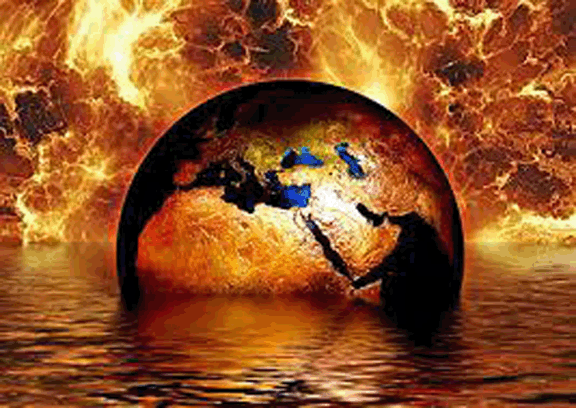 The Climate Crisis Will Be Just as Shockingly Abrupt https://newrepublic.com/article/157078/climate-crisis-will-just-shockingly-abrupt The coronavirus isn’t a reason to put climate policy on hold. It’s a warning of the calamities ahead., By MELODY SCHREIBER, March 27, 2020
The coronavirus pandemic has reshaped the way we live, work, and interact in a matter of weeks. It has also shown that governments are able—and in many cases are expected—to take swift, significant action on crises. “Under these extraordinary circumstances, there can be quite decisive action from governance and policy that changes the way we’re all living day to day,” Lenton said. “It is possible to change large-scale patterns of human behavior, pretty quickly.”
The question is whether governments, and voters, can appreciate the true urgency of the task. In reality, the climate crisis cannot be solved incrementally, Lenton said, because it’s taken too long to spur action: Many warming-related changes are already underway. Global greenhouse gas emissions must be dramatically reduced and eventually eliminated. “If we’re going to avoid the worst of bad climate tipping points, then we’re going to need to find some positive tipping points in society and ourselves to transform the way we live—in a generation—to a more sustainable but also perhaps a more flourishing kind of future,” Lenton said.
Pandemics like this are expected to rise as the climate changes. The SARS-CoV-2 virus causing the disease known as Covid-19, scientists suspect, may have originated in a wild animal, like a bat, and transferred through an intermediate animal to people. Zoonotic spillovers like these, as well as illnesses carried by mosquitoes, ticks, and other animals, will likely increase on a hotter planet. It’s not just because more people are pressing into areas where wildlife lives; as their habitats change in new climate conditions, more animals are adapting to new environments and seeking relief in places where people live, thus increasing the chance of contact between people and animals.
“We are really messing up with the natural world, and with the climate system, and things like this can be expected to happen more often,” Otto said. “It’s one reason to think that climate change is actually a permanent threat and we have to think of fixing the whole system, not only the economy.”
The coronavirus is a real and urgent threat. But there’s also a pressing danger in failing to address climate change in policies and funding, both now and in the future. What’s happening to the planet, experts agree, isn’t going to stop just because we’re dealing with another crisis, and this is no time to ease up on the climate fight. In fact, because of the ways climate change contributes to poor health, it makes action even more urgent.
Melody Schreiber is a freelance journalist based in Washington, D.C. @m_scribe
Our war against the environment is leading to pandemics
Coronavirus is a wake-up call: our war with the environment is leading to pandemics, The Conversation, Fiona Armstrong Executive Director, Climate and Health Alliance, Occasional Lecturer, School of Public Health and Human Biosciences, La Trobe University, Anthony Capon, Director, Monash Sustainable Development Institute, Monash University, Ro McFarlane, Assistant Professor in Ecological Public Health, University of Canberra, March 31, 202 The COVID-19 pandemic sweeping across the world is a crisis of our own making.
That’s the message from infectious disease and environmental health experts, and from those in planetary health – an emerging field connecting human health, civilisation and the natural systems on which they depend.
They might sound unrelated, but the COVID-19 crisis and the climate and biodiversity crises are deeply connected.
Each arises from our seeming unwillingness to respect the interdependence between ourselves, other animal species and the natural world more generally.
To put this into perspective, the vast majority (three out of every four) of new infectious diseases in people come from animals – from wildlife and from the livestock we keep in ever-larger numbers.
To understand and effectively respond to COVID-19, and other novel infectious diseases we’ll likely encounter in the future, policymakers need to acknowledge and respond with “planetary consciousness”. This means taking a holistic view of public health that includes the health of the natural environment.
Risking animal-borne diseases
Biodiversity (all biological diversity from genes, to species, to ecosystems) is declining faster than at any time in human history.
We clear forests and remove habitat, bringing wild animals closer to human settlements. And we hunt and sell wildlife, often endangered, increasing the risk of disease transmission from animals to humans.
The list of diseases that have jumped from animals to humans (“zoonotic diseases”) includes HIV, Ebola, Zika, Hendra, SARS, MERS and bird flu.
Like its precursor SARS, COVID-19 is thought to have originated in bats and subsequently transmitted to humans via another animal host, possibly at a wet market trading live animals.
Ebola virus emerged in central Africa when land use changes and altered climatic conditions forced bats and chimpanzees together around concentrated areas of food resources. And Hendra virus is associated with urbanisation of fruit bats following habitat loss. Such changes are occurring worldwide.
What’s more, human-caused climate change is making this worse. Along with habitat loss, shifting climate zones are causing wildlife to migrate to new places, where they interact with other species they haven’t previously encountered. This increases the risk of new diseases emerging.
COVID-19 is just the latest new infectious disease arising from our collision with nature……. https://theconversation.com/coronavirus-is-a-wake-up-call-our-war-with-the-environment-is-leading-to-pandemics-135023
As nuclear waste piles up, scientists try to beat the problems of corrosion in waste containers
 As nuclear waste piles up, scientists seek the best long-term storage solutions. Researchers study and model corrosion in the materials proposed for locking away the hazardous waste C and EN, by Mitch Jacoby, MARCH 30, 2020 | APPEARED IN VOLUME 98, ISSUE 12
Regardless of whether you are for or against nuclear power, and no matter what you think of nuclear weapons, the radioactive waste is already here, and we have to deal with it.”
IN BRIEF
More than a quarter million metric tons of highly radioactive waste sits in storage near nuclear power plants and weapons production facilities worldwide, with over 90,000 metric tons in the US alone. Emitting radiation that can pose serious risks to human health and the environment, the waste, much of it decades old, awaits permanent disposal in geological repositories, but none are operational. With nowhere to go for now, the hazardous materials and their containers continue to age. That unsustainable situation is driving corrosion experts to better understand how steel, glass, and other materials proposed for long-term nuclear waste storage containers might degrade. Read on to learn how these researchers’ findings might help protect people and the environment from waste leakages.
That’s Gerald S. Frankel’s matter-of-fact take on the thousands of metric tons of used solid fuel from nuclear power plants worldwide and the millions of liters of radioactive liquid waste from weapons production that sit in temporary storage containers in the US. While these waste materials, which can be harmful to human health and the environment, wait for a more permanent home, their containers age. In some cases, the aging containers have already begun leaking their toxic contents.
“It’s a societal problem that has been handed down to us from our parents’ generation,” says Frankel, who is a materials scientist at the Ohio State University. “And we are—more or less—handing it to our children.”……..
Vitrification of nuclear waste seems to be well established by now, but actually it still faces complex problems,” says Ashutosh Goel, a materials scientist at Rutgers University. The plan at Hanford, for example, calls for entombing nuclear waste in borosilicate glass and encasing the glass in stainless-steel canisters. Yet the exact formulation of the glass, or glasses, is still under investigation.
USA nuclear industry uses coronavirus to gouge $billions of tax-payer money
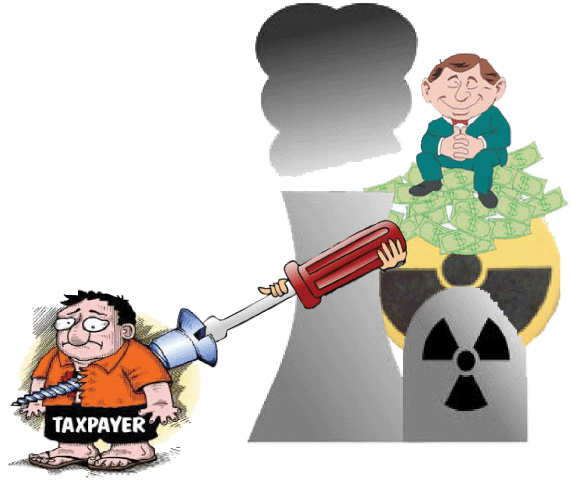 Out of control?, While industry looks for handouts, NRC gives nod to reduced safety oversight, https://wordpress.com/read/feeds/72759838/posts/2643325963By Linda Pentz Gunter 29 Mar 20, It was no surprise really, when the first to line up with outstretched palms as Congress debated and formulated its now passed $2 trillion coronavirus-prompted emergency relief bill, were nuclear corporations.The sinking nuclear power industry spotted an economic lifeline and couldn’t wait to make a grab for it. The Nuclear Energy Institute, the lobbying arm of the nuclear power industry, rushed off a letter to congressional leaders asking for a 30% tax credit and waivers for existing regulatory fees. Out of control?, While industry looks for handouts, NRC gives nod to reduced safety oversight, https://wordpress.com/read/feeds/72759838/posts/2643325963By Linda Pentz Gunter 29 Mar 20, It was no surprise really, when the first to line up with outstretched palms as Congress debated and formulated its now passed $2 trillion coronavirus-prompted emergency relief bill, were nuclear corporations.The sinking nuclear power industry spotted an economic lifeline and couldn’t wait to make a grab for it. The Nuclear Energy Institute, the lobbying arm of the nuclear power industry, rushed off a letter to congressional leaders asking for a 30% tax credit and waivers for existing regulatory fees.
One of NEI’s apparently needy recipients is the financial fiasco known as Vogtle 3 and 4, the new nuclear power plant construction project in Georgia, which is already more than five years behind schedule and is projected to cost $28 billion, double the original predicted price. The two new Georgia reactors aren’t needed, and their continued slow progress is by no means a matter of national security right now — or at all. But the NEI would like to see a nice fat grant go to Georgia Power to continue construction there, even though the company has already received two federal loan guarantees totaling $12 billion. In addition, the company is also gouging ratepayers in advance to cover the costs for the two reactors through the state’s Construction Work in Progress law, with no guarantee that they will ever reach completion. Before long, the nuclear weapons manufacturers got in on the act as well. Wrote the group, Code Pink: “Boeing has the audacity to demand a $60 billion taxpayer bailout for their shareholders and CEO.” Boeing is responsible for the Minuteman Intercontinental Ballistic Missiles, to be replaced this year with the misleadingly named Ground Based Strategic Deterrent. Boeing has also already received a $26.7 million contract from the U.S. Navy for Trident II D5 ballistic missile maintenance, rebuilding and technical services. Astonishingly, it was ultra conservative senator, Ted Cruz, who was one of those who pushed back against the corporate bailouts for the likes of Boeing and GE, manufacturer of the ill-fated Fukushima nuclear power plants and similar boiling water reactors in the US that are meltdowns waiting to happen. Cruz tweeted that “some are pushing for a special carve-out just for Boeing & GE. That would be WRONG. Millions are losing jobs; we don’t need bailouts or corporate welfare — those companies should participate in the same liquidity programs as everyone else.” But Boeing apparently got its wish. A $17 billion federal loan package contained in the stimulus bill passed by both the House and Senate and signed by President Trump on March 27, “was crafted largely for the company’s benefit,” according to reporting in the Washington Post. Boeing may also be able to dip its fingers into the “$58 billion the Senate package is providing in loans for cargo and passenger airlines, as well as the $425 billion in loans it is allocating to help firms, states and cities hurt by the current downturn,” wrote the Washington Post, even though, as Code Pink pointed out, alluding to the two 737 MAX disasters, Boeing is responsible for “defective civilian planes that plummet from the sky in mid-flight.” Boeing shares soared more than 24% on the day the Senate bill passed. The US is already spending $35.1 billion a year on its nuclear weapons arsenal. As the timely graph below [on original] from ICAN points out, this money could be redirected to a wealth of essential needs that would help quell the novel coronavirus in the US. … It’s not yet clear what portion of the stimulus money might go to the nuclear power industry, but the renewable energy sector took a hit. According to the San Diego Union Tribune, “the renewable energy industry had asked for — but did not get — extensions of deadlines related to construction or completion of solar and wind projects, without which they could lose access to time-sensitive tax credits. Industry associations were hopeful they’d be included in any later relief package.” There is also a $400 billion slush fund in the present legislation which can be used for loans and loan guarantees for large companies. Watch for the nuclear power industry to line up for a share of that in addition to its earlier pitch for a $23 billion bailout, which Lukas Ross, senior policy analyst with Friends of the Earth, called “a new low bar,,” and an attempt to use the coronavirus crisis “to try and brazenly grab more cash.” Meanwhile, the US Nuclear Regulatory Commission (NRC), in its usual fashion, has used the opportunity presented by the corona crisis to relax its already somnific safety oversight even more, and will allow nuclear power plant operators to defer safety maintenance, inspections and fitness for duty requirements during the outbreak. “Regulations to ensure safety should be strengthened at a time like this — not weakened,” Kevin Kamps, radioactive waste specialist at Beyond Nuclear, told Power Magazine. “It means operating nuclear plants without basic safety inspections.” One measure would be to allow workers to put in longer shifts than safety regulations allow, a measure that would place unnecessary additional “stress and strain on workers that need to be fully attentive and alert in sensitive jobs,” Kamps told the Carolina Public Press. He recommended powering down reactors instead, particularly given the current reduction in demand. But if the coronavirus pandemic causes higher than usual absenteeism among vital nuclear plant personnel, the NRC has a plan for that. Under normal circumstances, operating with too few control room staff is a safety violation. But under the coronavirus conditions, this would be exempted, or forgiven by the NRC, creating an added safety risk. During a recent NRC and industry telephone meeting on the topic, Beyond Nuclear’s director of reactor oversight, Paul Gunter, asked whether the NRC had supplied its reactor site personnel with sufficient protective equipment, masks, and respirators, as per the Centers for Disease Control guidelines. “They blew it off, Gunter said. “They claimed it was a matter for OSHA.” Industry representatives on the call remained silent on the matter. Gunter added that Kamps’s suggestion to power down reactors in regions where the demand was reduced and excess generating capacity was already high, could allow for resting the remaining workforce and keeping them healthy and ready to replace workers at still operating plants where personnel have been hit hardest by reactor operator shortages and extended security shifts. “We should be planning on how to keep stable and safety-compliant electricity going,” Gunter said. “One way would be to create a protected pool of sequestered nuclear utility workers. But that is not happening. The industry is dictating to the regulator what the agenda will be.” So, business as usual. |
|
Coronavirus Shows Us What Our Future Could Look Like During Climate Crisis

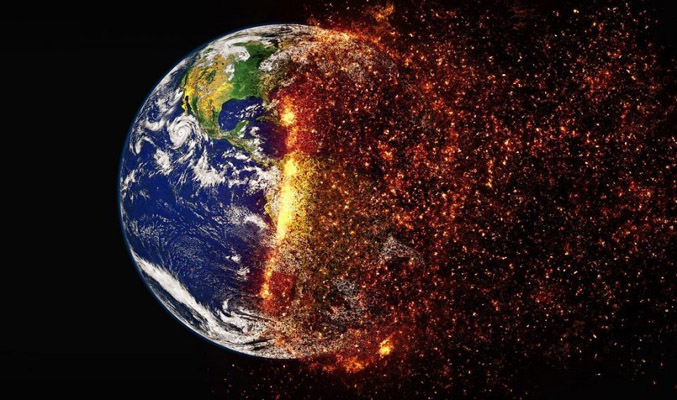
Coronavirus Shows Us What Our Future Could Look Like During Climate Crisis, BY Sharon Zhang, Truthout, March 29, 2020 The COVID-19 pandemic has rapidly been absorbed into our collective consciousness, remaking the fabric of our lives. Suddenly, millions are sheltering in place, strangers have started wishing each other well when exiting grocery stores, people have stopped touching their faces and shelves that are normally stocked with bleach and hand sanitizer are barren.
For many, the looming sense of dread is a new sensation….
But for those of us who have lived in acute awareness of the reality of the climate crisis, the current state of pandemic dread feels awfully familiar — just a more imminent version of the dread about the climate that we have been feeling for years.
It’s a psychological phenomenon known informally in the climate community as climate anxiety, climate grief or eco-anxiety…….
Though the pandemic-panic that Mull and others have written on has been ongoing for the past few weeks, climate writers started opening up about their climate grief years ago. …….
But it’s not just psychological trauma that these two crises share — if you take the time to look, the similarities run wide and deep. These are twin worldwide crises that require global cooperation to defeat; they will ravage the way of life as we know it; they will affect, in one way or another, nearly every single person on Earth.
The economy as we know it — rather, as we knew it three months ago — will be a thing of the past if we let the climate crisis continue unmitigated…….
Economists are currently struggling to model all of the short-term effects of the pandemic, so many of those remain unknown. Climate researchers, however, have had much more time to model the future economic impacts of the climate crisis. By 2090, in the U.S. alone and under the same high emissions scenario, NCA researchers predict that costs from mortality due to extreme temperatures will total $141 billion a year, losses of coastal property will total $118 billion a year, and labor losses will cost $155 billion a year. That’s equivalent to a Hurricane Katrina every single year, just from lost labor.
The health care system, too, will be overwhelmed by the climate crisis, just as hospital beds are rapidly being filled by COVID-19 patients. In some places, the climate crisis has already given a preview of this: In 2018, record heat waves caused U.K. hospitals to utilize emergency procedures, when people were being sent to the hospital in such an overwhelming volume that ambulances had to line up outside.
Though COVID-19 is causing hospitals to fill up simultaneously nationwide, “climate-related events will be more limited in their spatial scale, but will be increasingly frequent over time,” says Kristina Dahl, a senior climate scientist at the Union of Concerned Scientists. A heat wave in San Francisco won’t set the whole country ablaze, but it could overwhelm the local health care system.
The key difference between illness caused by a pandemic and the climate crisis, Dahl points out, is that it’s much easier to trace the illness caused by the former. “Things like hurricanes and heat waves and wildfires have always occurred,” she says, but, “to some extent, we know that we are amping them up by adding greenhouse gases to the atmosphere.”
This is likely, in part, why the federal government has quickly pivoted to action on COVID-19, while greenhouse gases have remained largely untouched by Congress for decades. While right-wing media and politicians denied the consequences of inaction on the virus just weeks ago, they have quickly had to change their tune as the spread of the virus has become undeniable. Whereas with long-term, gradual change, it’s easy for deniers to blame such things as the severity of the bushfires in Australia on anything but increasingly hot and arid conditions caused by climate change.
The ruling class has also had less motivation to address the climate crisis because the people suffering the most are, disproportionately, already marginalized. Poor, Black and health-compromised people are and will be the hardest hit by both crises — and some are already being affected by both at once. Air pollution is continually one of the most pronounced issues of environmental justice, and physicians have said those with continual exposure to air pollution are likely to be more vulnerable to the effects of coronavirus……..
“Coronavirus has made so clear that global issues can’t be easily categorized as just a health issue or just an environmental issue,” says says Kristina Dahl, a senior climate scientist at the Union of Concerned Scientists. “They really encompass our broader economy and encompass or entire social systems and ways of life.” ….. https://truthout.org/articles/coronavirus-shows-us-what-our-future-could-look-like-during-climate-crisis/?eType=EmailBlastContent&eId=5e383daa-77a3-48e3-a6f5-f82b689f50fc
Prime Minister Shinzo Abe and the “nuclear village” hoped the Olympics would normalize Japan’s radiological aftermath
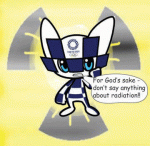 Abe’s decision to host the Olympics in the first place, and to plan to start the torch relay in Fukushima, as mere pretense that all is well in the prefecture, despite widespread contamination that continues since 2011.
The claim about the necessity of nuclear power makes little sense. Since 2011, the country has been generating only a fraction of the nuclear electricity it used to generate, and yet the lights have not gone off in Japan.
the Abe government seems to be involved in lowering incentives for the development of solar energy, and instead promoting nuclear power.
Efforts by Prime Minister Abe to support the failing and flailing nuclear sector in Japan are indicative of the significant political power wielded by the “nuclear village,” the network of power companies, regulators, bureaucrats and researchers that control nuclear and energy policy. The actions of the nuclear village is one of the factors responsible for the Fukushima accident.
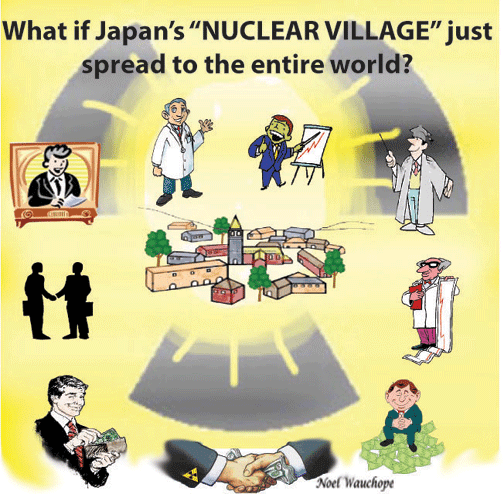
Nuclear flame fizzles in Japan, But leaders still cling to failing nuclear power
Prime Minister Shinzo Abe and the “nuclear village” hoped the Olympics would normalize Japan’s radiological aftermath. But the Fukushima effect has meant zero nuclear exports, leading the government to shore up the nuclear industry at home at the expense of renewables. Beyond Nuclear, By Cassandra Jeffery and M.V. Ramana 29 Mar 20, Last week, International Olympic Committee President Thomas Bach and Japanese Prime Minister Shinzo Abe agreed to delay the 2020 Summer Olympic Games because of the COVID-19 pandemic. However, they will keep the Olympic flame burning in Fukushima Prefecture. The torch relay route was to have begun there, a poor decision, given the meltdown of multiple reactors in Fukushima nine years ago in March 2011. While radiation levels may have declined since 2011, there are still hotspots in the prefecture, including at the sports complex where the torch relay would have begun and along the relay route.
The persistence of this contamination, and the economic fallout of the reactor accidents, should remind us of the hazardous nature of nuclear power. Simultaneously, changes in the economics of alternative sources of energy in the last decade invite us to reconsider how countries, including Japan, should generate electricity in the future….
opposition is evident in Japan too, where opinion polls show overwhelming lack of support for the government’s plans to restart nuclear plants that have been shut down after the Fukushima accidents. Continue reading
Small Modular Reactors (SMRs), the great white hope of OLO’s nuclear enthusiasts, fail public liability and cost of security criteria.
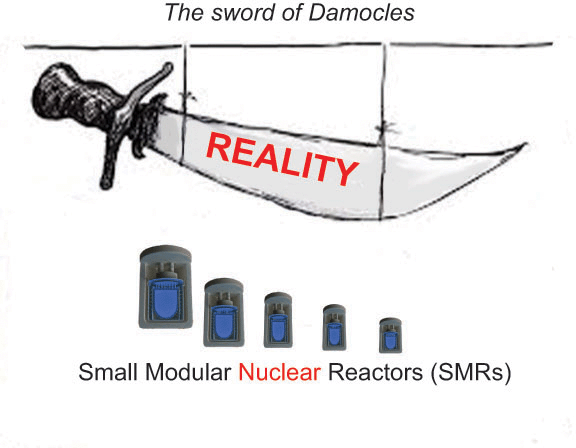 Small Modular Reactors (SMRs), the great white hope of OLO’s nuclear enthusiasts, fail public liability and cost of security criteria.
See http://www.aph.gov.au/DocumentStore.ashx?id=7a9318c0-aad6-405e-832f-66212a87d158&subId=669038
“Transport issues arising from the modular construction model are too often glossed over. Dr David Lowry notes that the UK’s so-called Expert Finance Working Group on Small Nuclear Reactors (EFWG)36
“makes no attempt to provide an analysis of how to provide market based insurance for SMRs, against accidents and terrorist attack on modules in transit to site and in situ; nor how to privately fund SMR radioactive waste management: yet these are real risks for nuclear power, SMRs included.
For example, the EFWG (p.11) talks of “road transportable modules which are easily installed on site” but makes no calculation of the exposure to disruption or indeed destruction of such an SMR module being transported on public roads from fabrication facility to operating site, possible hundreds of miles distant.”
Furthermore internal estimates indicate the size of the security protection unit (around 60 men and 10 attack dogs) for an SMR would be as expensive as that required for a large reactor.
Also the razor wire protected exclusion zones for SMRs would need to be as large as those for large reactors. Note population and siting concerns http://www.sciencedirect.com/science/article/pii/S1687850713000071
COVID-19 impacts nuclear industry worldwide

 COVID-19 impacts nuclear industry worldwide, Nuclear Engineering International, 26 March 2020
United States
In the USA, Maria Korsnick, president of the Nuclear Energy Institute told the New York Times that some operating reactors are “considering measures to isolate a core group to run the plant, stockpiling ready-to-eat meals and disposable tableware, laundry supplies and personal care items.”……
DHS Cybersecurity & Infrastructure Security Agency (CISA), has identified 14 employment categories as Essential Critical Infrastructure Workers, which include energy sector employees.
According to US media, electric power utilities are planning to set up housekeeping for cadres of healthy workers at the plants to keep them operating.
The Nuclear Regulatory Commission (NRC) said on 23 March that it expected to issue guidelines for operators to request permission for employees to work longer than allowed under current regulations…….
The NRC had hosted a phone meeting with the nuclear industry on 20 March to discuss regulatory impacts due to COVID-19.
During the call, Ho Nieh, director of the NRC’s Office of Nuclear Reactor Regulation said possible measures being discussed included steps to isolate key personnel to deal with major absenteeism in critical areas that may require increasing work limits.
He also said if a facility was unable to meet a regulatory requirement, the NRC had “a variety of mechanisms to consider,” including plant closures. “We are in an unprecedented situation,” he said……..
EDF told Reuters that its nuclear plants could operate for three months with a 25% reduction in staffing levels, and for two to three weeks with 40% fewer staff. There are currently 40 reactors in operation in France.
EDF has also scrapped its nuclear generation target for 2020 on an anticipated fall in output this year because of the coronavirus crisis. It said that its maintenance schedule for reactors had been “interrupted” by the order from authorities for workers to remain at home. As a result, EDF said its the projection of 375-390TWh of nuclear production in France in 2020 is being reviewed and will be adjusted downwards…….
Elsewhere in France, Orano has suspended operation of its La Hague reprocessing plant, saying it is taking measures to protect its employees and secure its industrial facilities while maintaining critical activities. Presenting its 2019 results, Orano suspended its outlook for 2020 “given the immediate and future impact on our markets and operations of this looming global health crisis.” …
France’s Nuclear Safety Authority (ASN) has also temporarily suspended most of its inspections in medical facilities carrying out nuclear activities to enable health professionals to focus on the response to the pandemic. …..
UK sees reduction in construction work at Hinkely Point C
In the UK, EDF Energy is reducing the workforce at its Hinkley Point C nuclear power plant by more than half. The number of workers at the site would be reduced to about 2000 from 4500, the company said, noting that the remaining skilled workers will focus on critical areas and work in shifts with extra transport and staggered breaks to minimise contact.
EDF Energy said it had taken steps such as home working for those who can, temperature checks for people at the site, extra cleaning and changes to movement patterns…….
Sellafield Ltd has implemented a controlled shutdown of its facilities, including the Magnox Reprocessing Plant, after 8% of its 11,500-strong staff were forced to self-isolate to avoid infection. Ithas told most of its workers to stay away from its main site and satellite offices and to work from home. ……
More broadly, NIA said the UK Office of Nuclear Regulation, has confirmed that all UK nuclear sites have minimum staffing levels, and contingency plans should they fall below these levels, to enable them to remain in control of activities that could impact on nuclear safety under all foreseeable circumstances……
Canada. Cameco said it is temporarily suspending uranium production at its Cigar Lake uranium mine in northern Saskatchewan and placing the facility in safe care and maintenance mode during the COVID-19 pandemic. In consultation with Cameco, Orano Canada is suspending production at its McClean Lake uranium mill, where ore from Cigar Lake is processed.
Russian nuclear industry reaction to COVID-19
Russian state nuclear corporation Rosatom said on 23 March that it had set up a special headquarters for the fight against COVID-19 in the Russian nuclear industry.
“We have introduced additional measures at all of Russia’s nuclear power plants, including regular health check-ups of our personnel,” said Rosatom CEO Alexei Likhachev.
“We have arranged for as many employees as possible to work remotely and purchased personal protective equipment and hygiene-related products in bulk; we are constantly disinfecting our production facilities and vehicles and have essentially cancelled all business trips,” he added.
Rosatom reported the first case of COVID-19 disease on 19 March after an employee of subsidiary company, Turbine Technologies AAEM tested positive for coronavirus after visiting a foreign country on vacation. All employees who had contact with her were quarantined……
Rosatom has also taken similar measures at its nuclear power construction sites, and is continuing with its export new build projects, despite the challenges related to the spread of the coronavirus in a number of countries.
Bulgaria sees delays to Belene tender
The nuclear industry’s hopes for a glorious 2020 Olympic torch relay- dashed
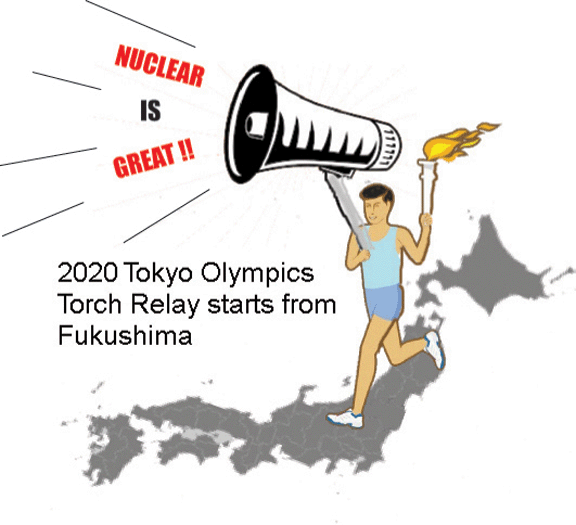
Now Postponed, The Olympic Torch Relay Was To Bring Hope To Ravaged Fukushima, March 26, 2020, Heard on All Things Considered“………….This region was devastated nine years ago when the largest earthquake in Japan’s recorded history triggered a massive tsunami. The giant wave washed away nearly 20,000 people, including thousands in Fukushima. It also hit the Fukushima Daiichi Nuclear Power Station right down the coast, causing a partial meltdown that sent plumes of radioactive particles for miles. The area has been trying to rebuild ever since.
Ueno, a 46-year-old wheat farmer, was supposed to run the torch on Thursday through his hometown of Minamisoma. His current home, down the street from the empty field he’s standing in, is one of the only buildings around. His old houseused to be here too…..
This part of Fukushima, in the area around the Daiichi power plant, is still suffering from high levels of radiation. Only a tiny fraction of the population has returned, most over the age of 60, and many streets still sit empty and deserted, left exactly as they were nine years ago tumbled by the earthquake and rotting. It’s not the same Fukushima that it was before the disaster. … https://www.npr.org/2020/03/26/821402324/now-postponed-the-olympic-torch-relay-was-to-bring-hope-to-ravaged-fukushima
The special danger that the pandemic brings to the nuclear industry
Coronovirus pandemic could cripple the nuclear industry, Online Opinion, By Noel Wauchope Thursday, 26 March 2020 Nuclear power facilities have this one problem that is unique to the nuclear industry, and that is, the need for exceptional security. No other industry has these risks of radioactive accident and special vulnerability to terrorism. The IAEA defines nuclear security as:
The prevention and detection of and response to, theft, sabotage, unauthorized access, illegal transfer or other malicious acts involving nuclear material, other radioactive substances or their associated facilities.Nuclear power facilities have this one problem that is unique to the nuclear industry, and that is, the need for exceptional security. No other industry has these risks of radioactive accident and special vulnerability to terrorism. The IAEA defines nuclear security as:
According to Mycle Schneider, in the World Nuclear Status Report , reactor safety depends above all on a:
…’culture of security’, including the quality of maintenance and training, the competence of the operator and the workforce, and the rigour of regulatory oversight. So a better-designed, newer reactor is not always a safer one.
Experts say that the
…largest single internal factor determining the safety of a nuclear plant is the culture of security among regulators, operators and the workforce – and creating such a culture is not easy.
This security risk brings with it, the need for a very high level of secrecy……….
There was already a shortage of skilled nuclear workers, even before COVID19 hit the world. The most recent Global Energy Talent Index (GETI) reports “an acute need for talent” in the nuclear sector. Nuclear professionals are an aging group, with a “vast wave of imminent retirements.” The onslaught of the pandemic could mean some shortages of well-informed, capable professionals working at nuclear reactors, and at other nuclear facilities, such as waste management and transport. And there’s that even more secretive area, nuclear weapons production and management.
Of course, there’s that whole other workforce – the nuclear security officers, whose job is just as critical as that of the physicists and engineers. There’s quite a history of anti- nuclear activists breaking into nuclear facilities in order to demonstrate their vulnerability to terrorist attacks.
The nuclear lobby is of course, fighting to win hearts and minds, with some persuasive propaganda. Their theme is the value of nuclear research reactors in industry and health, and especially in the detection of viruses. And they do have a point. Still radionuclides are being produced by non-nuclear means. The role of small nuclear research reactors is increasingly looking like the fig leaf on an unsustainable and super-expensive nuclear power industry.
In the meantime, as trade and industry slow down, with the global march of this pandemic, the nuclear industry is already suffering a set-back. The loss of well-informed staff, whether in the professional area, or at lower levels in the workforce hierarchy, poses a special problem for this industry, with its secretive culture. Nuclear power has a unique safety requirement, meaning that its reactors may need to be shut down, or at least, have their operations cut back. https://www.onlineopinion.com.au/view.asp?article=20808
Rightwing governments have denied the coronavirus problem. and the climate problem, and been slow to act
Delay is deadly: what Covid-19 tells us about tackling the climate crisis https://www.theguardian.com/commentisfree/2020/mar/24/covid-19-climate-crisis-governments-coronavirus, Jonathan  Watts WattsRightwing governments have denied the problem and been slow to act. With coronavirus and the climate, this costs lives. The coronavirus pandemic has brought urgency to the defining political question of our age: how to distribute risk. As with the climate crisis, neoliberal capitalism is proving particularly ill-suited to this. Like global warming, but in close-up and fast-forward, the Covid-19 outbreak shows how lives are lost or saved depending on a government’s propensity to acknowledge risk, act rapidly to contain it, and share the consequences. On these matters, competence and ideology overlap. Governments willing to intervene have been more effective at stemming the virus than laissez-faire capitalists. The further right the government, the more inclined it is to delay action and offload blame elsewhere. International comparisons suggest this could be making infection and death rates steeper. Take the US, where Donald Trump is only now acknowledging the seriousness of the pandemic after weeks of claiming fears were exaggerated. Until recently, his government put more money into shielding the oil industry than providing adequate testing kits. He reportedly ordered officials to downplay early warnings because he did not want bad news in an election year. The US now has one of the fastest rising numbers of new cases in the world. Continue reading |
1 This month

of the week – Australians for War Powers Reform (AWPR)
To see nuclear-related stories in greater depth and intensity
 Antinuclear