Paul R. Ehrlich: A pandemic, planetary reckoning, and a path forward

The COVID-19 pandemic is bringing environmental destruction and the deterioration of social and cultural systems into sharp focus. But we can learn from this.
In addition to great concern over the COVID-19 pandemic, I’m also disappointed.
For more than half a century, scientists have been expressing concern over the deterioration of what I like to call the “epidemiological environment.” That environment consists of the constellation of circumstances that influence patterns of disease and factors related to health.
It includes such things as population sizes and densities, diets, speed and type of transportation systems, toxics, climate disruption, frequency of human-animal contacts, availability of medical isolation facilities, stockpiles of medicines, vaccines, and medical equipment.
The epidemiological environment also includes cultural norms: levels of education, equity in societies, competence of leadership. Few aspects of the human predicament do not impinge on our epidemiological environment…….
Climate disruption is the best recognized of contemporary health threats, but the decay of biodiversity, and “updating” the American nuclear triad as part of the Russian-United States’ “mutually assured imbecility” are among the most critical.
Those, at least, are not obvious to the average citizen or decision-maker, but what about others such as increased flows of plastics and toxics (especially synthetic hormone mimicking compounds) into the global environment?
Everyone knows about volumes of plastics in waste streams and oceans and has personal experience with the thermal paper receipts coated with bisphenol-A (BPA), yet little to no remedies have been undertaken.
Indeed, why are there so few effective responses to the epidemics and the maladies of industrial civilization?…….
Educational systems have given up any pretense of supplying leadership to society or informing people about what is coming down the track. Faculty members discuss “sustainability” in major universities that will not even divest from fossil fuel stocks.
Can the absence of a draft alone explain the difference between the ferment in universities during the Vietnam War and the quiet today with the situation a million times worse?
Once again, population size and growth are major factors in this human dilemma – maybe Homo sapiens shouldn’t have tried to organize itself into groups exceeding the Dunbar number, which anthropologist Robin Dunbar showed was about 150 people, the size of hunter-gatherer groups. He also showed that’s roughly the size of groups in which human beings are comfortable today.
Rethinking resources
Where could all the money come from to make the changes to preserve civilization? That’s one of the challenges for the economists who today are operating in a perpetual-growth fairyland.
Much depends on the course of events and whether the debt pyramid collapses. One obvious step, however, is repurposing the military. When Anne and I were working with them on nuclear winter issues, we were greatly impressed by the intelligence and ethics of some of the field-grade officers with whom we were involved.
The military is already way ahead of the present civilian government in addressing existential threats like climate disruption. Various military units have already been deployed to deal with emergencies ranging from pandemics to hurricanes, and there is no reason why they cannot be used to help in tasks ranging from building medical isolation facilities to small-scale affordable housing for the homeless.
Allocation of resources is part of the epidemiological environment. The gigantic amounts of money wasted on such nearly useless toys as nuclear weapons, aircraft carriers, main battle tanks, and air superiority jet fighters could be redirected toward rebuilding infrastructure such as sewage systems, modernized electric grids and water-handling networks, and on and on.
The same can be said for the other funds and activities used for decades to support (often clandestinely) U.S. state terrorism that has cumulatively killed millions since the second World War.
Is all this impractical, pie-in-the-sky, never-happen stuff? Sure.
But nothing is more impractical than civilization trying to continue business as usual as it circles the drain.
The current pandemic disaster may end up damping down consumerism and improving the environment – there are reports of the lethal smog usually blanketing some Chinese cities clearing during pandemic lockdowns.
Maybe there’s some chance that people are learning lessons.
We can always hope.
Paul Ehrlich is the Bing Professor of Population Studies, Emeritus and President of the Center for Conservation Biology at Stanford. https://www.ehn.org/pandemic-population-covid-19-2645518249.html
Coronavirus Stimulus Plans Are An Opportunity for Bold Climate Action
 Coronavirus Stimulus Plans Are An Opportunity for Bold Climate Action, Expert Says, 19 Mar 20 https://e360.yale.edu/digest/coronavirus-stimulus-plans-are-an-opportunity-for-bold-climate-action-expert-says Governments and financial institutions should incorporate climate change action into their COVID-19 economic recovery plans, the head of the International Energy Agency (IEA), Fatih Birol, told Climate Home News. Stimulus packages, he argues, should focus on large-scale investments in things like clean energy, battery storage, and carbon capture-and-storage technologies.
“I am talking with several governments and international financial institution leaders because they are all busy designing stimulus programs for the economy,” Birol said in an interview. “We can use the current situation to step up our ambition to tackle climate change… This is a huge opportunity we cannot miss. Here the issue is not only the level of [stimulus] money, but the direction of the money.
Birol’s argument comes amid news that the coronavirus has forced the cancellation or postponement of several major climate, scientific, and environmental meetings. Policy experts warn that many countries, particularly developing nations, may not have enough time to produce tougher climate targets ahead of international climate talks in Glasgow in November. In addition, the Trump administration is considering bailout packages for the fossil fuel and aviation industries, which have been hit hard by the pandemic.
“This is a historic opportunity for the world to, on one hand, create packages to recover the economy, but on the other hand, to reduce dirty investments and accelerate the energy transition,” Birol said
Pandemics may come, with loss of biodiversity, loss of wild habitat

|
DESTRUCTION OF HABITAT AND LOSS OF BIODIVERSITY ARE CREATING THE PERFECT CONDITIONS FOR DISEASES LIKE COVID-19 TO EMERGE
As habitat and biodiversity loss increase globally, the novel coronavirus outbreak may be just the beginning of mass pandemics ENSIA, John Vidal 18 Mar 20, “……… Only a decade or two ago it was widely thought that tropical forests and intact natural environments teeming with exotic wildlife threatened humans by harboring the viruses and pathogens that lead to new diseases in humans like Ebola, HIV and dengue. But a number of researchers today think that it is actually humanity’s destruction of biodiversity that creates the conditions for new viruses and diseases like COVID-19, the viral disease that emerged in China in December 2019, to arise — with profound health and economic impacts in rich and poor countries alike. In fact, a new discipline, planetary health, is emerging that focuses on the increasingly visible connections among the well-being of humans, other living things and entire ecosystems. Continue reading
|
“Peaceful” and military nuclear reactors always inextricably linked
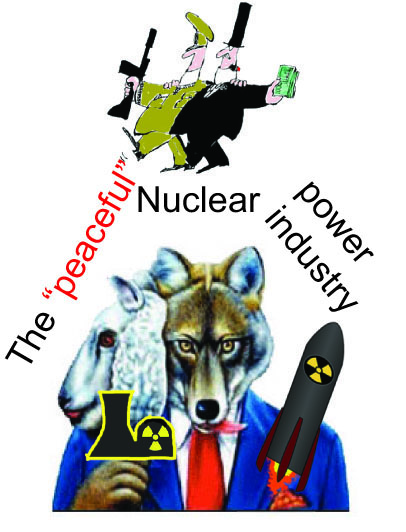 Anne McMenamin Nuclear Fuel Cycle Watch Australia, 19 Mar 20, . I’m referring to the structural links between the commercial and military uses of nuclear reactors, and, to some extent, the way THEY see it – which doesn’t always line up with the technical realities. History shows that the 2 industries have been inextricably linked from the beginning.
“Great efforts have been and still are made to disguise the close connection between nuclear energy for war and for power stations. Two reasons are suggested for this: political convenience in avoiding additional informed protests against nuclear weapon production and industrial convenience in carrying on without public protest what has become a very profitable industry.”
Sir Kelvin Spencer CBE FCGI LLD (HON)
First issue of Medicine and War, in 1985
Similarly, a document from the Los Alamos National Laboratory in August, 1981, states:
“There is no technical demarcation between the military and civilian reactor and there never was one. What has persisted over the decades is just the misconception that such a linkage does not exist.”
“Some Political Issues Related to Future Special Nuclear Fuels Production,”
LA- 8969-MS, UC-16
In 2013, historian Dr David Palmer said,
“The issue is processing uranium for nuclear power that then can be used for defence. You have to understand this in terms of Adelaide; it’s a military, industrial and intelligence complex.”
Palmer was commenting on the notable push for nuclear energy and nuclear submarines coming from numerous academics and business people in Adelaide. He considered the real motive behind the nuclear push is security in energy supply for the military, and hence the need to solve the problem of waste disposal, which is currently discouraging investment in nuclear power. Major military/weapons corporations such as Raytheon, Halliburton subsidiary Kellogg, Brown and Root, Lockheed Martin, Babcock and General Atomics are now a noticeable presence in the SA economy.
Links can be clearly seen, e.g. Heathgate, which owns the Beverley mine, is a wholly owned subsidiary of General Atomics, one of the world’s largest weapons manufacturer/servicer. https://www.facebook.com/groups/1021186047913052/
The Hazards of Tritium
tests for statistical significance have been misused in epidemiological studies on cancers near nuclear facilities. These in the past have often concluded that such effects do not occur or they downplayed any effects which did occur. In fact, copious evidence exists throughout the world – over 60 studies – of raised cancer levels near NPPs.
Most (>75%) of these studies found cancer increases but because they were small, their findings were often dismissed as not statistically significant. In other words, they were chucked in the bin marked “not significant” without further consideration.
 The Hazards of Tritium, Dr Ian Fairlie, March 13, 2020
Summary
Nuclear facilities emit very large amounts of tritium, 3H, the radioactive isotope of hydrogen. Much evidence from cell/animal studies and radiation biology theory indicates that tritium is more hazardous than gamma rays and most X-rays. However the International Commission on Radiological Protection (ICRP) continues to underestimate tritium’s hazard by recommending a radiation weighting factor (wR) of unity for tritium’s beta particle emissions. Tritium’s exceptionally high molecular exchange rate with hydrogen atoms on adjacent molecules makes it extremely mobile in the environment. This plus the fact that the most common form of tritium is water, ie radioactive water, means that, when tritium is emitted from nuclear facilities, it rapidly contaminates all biota in adjacent areas. Tritium binds with organic matter to form organically bound tritium (OBT) with long residence times in tissues and organs making it more radiotoxic than tritiated water (HTO). Epidemiology studies indicate increases in cancers and congenital malformations near nuclear facilities. It is recommended that nuclear operators and scientists should be properly informed about tritium’s hazards; that tritium’s safety factors should be strengthened; and that a hazard scheme for common radionuclides be established. Continue reading
USA Small Nuclear Reactors clearly meant for military use, and Australia is involved
 If the testing goes well, a commercially developed, Nuclear Regulatory Commission licensed reactor will be demonstrated on a “permanent domestic military installation.
The department awarded contracts to BWX Technologies, Inc. of Virginia, for $13.5 million; Westinghouse Government Services of Washington, D.C. for $11.9 million; and X-energy, LLC of Maryland, for $14.3 million, to begin a two-year engineering design competition for a small nuclear microreactor designed to potentially be forward deployed with forces outside the continental United States. Continue reading
Dr Ian Fairlea on Epidemiological Evidence of Cancer Risks
The Hazards of Tritium,https://www.ianfairlie.org/news/the-hazards-of-tritium/ , Dr Ian Fairlie, March 13, 2020 “……….Epidemiological Evidence of Risks Because of methodological  limitations, epidemiology studies are a blunt tool for discovering whether adverse effects result from radiation exposures. These limitations include:
- under-ascertainment, …
- strict data requirements….
- confounding factors: the true causes of morbidity or mortality can be uncertain due to confounding factors such as socio-economic status and competing causes of death.
- bias: ……
- poor signal to noise…..
- uncertain doses:……
- wide confidence intervals……
The Abuse of Statistical Significance Tests
How a small nuclear war would transform the entire planet
 How a small nuclear war would transform the entire planet
Nuclear-powered submarines – fraught with legal and political problems

The article below is not about Australia, but it is about small nuclear reactors. Everybody knows, (just quietly) that Australia won’t be getting small nuclear reactors for providing electricity. The real aim is for nuclear-powered submarines. So this article, about the legal and political problems of nuclear reactors for Defence is applicable to Australia, too
|
The Complex Policy Questions Raised by Nuclear Energy’s Role in the Future of Warfare, Just Security by Alex Gilbert, Morgan Bazilian and Julia Nesheiwat, March 16, 2020 The United States military, as well as other militaries around the world, are racing to develop high-energy weapons—lasers, high-powered microwaves, and electromagnetic rail guns—in order to compete with near-peer competitors on the next generation of military technologies. But the electricity to power these systems will need to derive from somewhere, and so military planners are eyeing a new generation of energy-dense nuclear reactors, despite potential policy and legal challenges to doing so…….. The Army is considering mobile nuclear power plants, in part to drive high-energy weapons, an idea one retired three-star hailed as a potential logistics revolution. And should the U.S. build space-based lasers for missile defense, nuclear energy may be the only way to provide the needed megawatts. All this raises key policy concerns in relation to international law, rules of engagement, and the laws of warfare. Basing, or even deploying, nuclear reactors in the territorial waters or land of an overseas ally requires the permission of the host government, which may be averse to expanding nuclear power as in the case of major bases like Yokosuka, Japan. Diego Garcia, an island in the Indian Ocean, provides another challenging case as the ongoing territorial dispute between the United Kingdom and Mauritius threatens the U.S. base there, and a nuclear plant would only complicate the existing dispute. The U.S. Navy already faces constraints on where their nuclear-powered ships can visit. Floating nuclear power plants, like those developed by Russia and China, face similar concerns if they transit foreign waters or, in the case of the South China Sea, are stationed in disputed territories. Similarly, mobile reactors, like those considered by the U.S. Army, would likely be transported by air, requiring permission of all overflight countries. Beyond basing, a critical question is whether the U.S. military would own and operate these new reactors, as the Navy currently does, or whether they would pursue commercial alternatives, as the Army is considering. The U.S. Army report on mobile reactors noted that, with either government or commercial ownership, there are concerns about international rules and licensing that present potential barriers to deployment. In some cases, potential host countries do not even have nuclear regulatory agencies. Further, commercial ownership raises liability concerns, both in the case of a military incident or an accident. International nuclear liability treaties are not well harmonized between the U.S. and most of its allies, especially when it comes to the unique concerns of transportable reactors. Using nuclear power for high-energy weapons also creates targeting dilemmas for the U.S. and foreign militaries. High-energy weapons and their support infrastructure, including reactors, may be initial targets in a conflict. The social, environmental, and reputational impacts of damaging a nuclear reactor, particularly on a country’s home territory, or with effects on a third country, could lead to conflict escalation and international condemnation……. Nuclear-powered laser satellites could aggravate concerns about nuclear arms controls as such systems could be used for anti-ballistic missile or anti-satellite applications. While the Outer Space Treaty prohibits weapons of mass destruction in orbit, it does not prohibit other types of weaponry. During the Cold War, Soviet military space reactors raised calls for bans on space nuclear power, particularly after one accidentally crashed in Canada. Recent calls for space arms control have been unsuccessful. As with terrestrial nuclear-powered lasers, the unique role of laser satellites would make them early targets in any major power conflict, leading to risks of collateral damage from radioactive and dangerous space debris, as occurred after the accidental 2009 collision involving a decommissioned Soviet nuclear satellite.. The article below is not about Australia, but it is about small nuclear reactors. Everybody knows, (just quietly) that Australia won’t be getting small nuclear reactors for providing electricity. The real aim is for nuclear-powered submarines. So this article, about the legal and political problems of nuclear reactors for Defence is applicable to Australia, too
The Complex Policy Questions Raised by Nuclear Energy’s Role in the Future of Warfare, Just Security by Alex Gilbert, Morgan Bazilian and Julia Nesheiwat, March 16, 2020 The United States military, as well as other militaries around the world, are racing to develop high-energy weapons—lasers, high-powered microwaves, and electromagnetic rail guns—in order to compete with near-peer competitors on the next generation of military technologies. But the electricity to power these systems will need to derive from somewhere, and so military planners are eyeing a new generation of energy-dense nuclear reactors, despite potential policy and legal challenges to doing so…….. The Army is considering mobile nuclear power plants, in part to drive high-energy weapons, an idea one retired three-star hailed as a potential logistics revolution. And should the U.S. build space-based lasers for missile defense, nuclear energy may be the only way to provide the needed megawatts.
All this raises key policy concerns in relation to international law, rules of engagement, and the laws of warfare.
Basing, or even deploying, nuclear reactors in the territorial waters or land of an overseas ally requires the permission of the host government, which may be averse to expanding nuclear power as in the case of major bases like Yokosuka, Japan. Diego Garcia, an island in the Indian Ocean, provides another challenging case as the ongoing territorial dispute between the United Kingdom and Mauritius threatens the U.S. base there, and a nuclear plant would only complicate the existing dispute.
The U.S. Navy already faces constraints on where their nuclear-powered ships can visit. Floating nuclear power plants, like those developed by Russia and China, face similar concerns if they transit foreign waters or, in the case of the South China Sea, are stationed in disputed territories. Similarly, mobile reactors, like those considered by the U.S. Army, would likely be transported by air, requiring permission of all overflight countries.
Beyond basing, a critical question is whether the U.S. military would own and operate these new reactors, as the Navy currently does, or whether they would pursue commercial alternatives, as the Army is considering. The U.S. Army report on mobile reactors noted that, with either government or commercial ownership, there are concerns about international rules and licensing that present potential barriers to deployment. In some cases, potential host countries do not even have nuclear regulatory agencies. Further, commercial ownership raises liability concerns, both in the case of a military incident or an accident. International nuclear liability treaties are not well harmonized between the U.S. and most of its allies, especially when it comes to the unique concerns of transportable reactors.
Using nuclear power for high-energy weapons also creates targeting dilemmas for the U.S. and foreign militaries. High-energy weapons and their support infrastructure, including reactors, may be initial targets in a conflict. The social, environmental, and reputational impacts of damaging a nuclear reactor, particularly on a country’s home territory, or with effects on a third country, could lead to conflict escalation and international condemnation…….
Nuclear-powered laser satellites could aggravate concerns about nuclear arms controls as such systems could be used for anti-ballistic missile or anti-satellite applications. While the Outer Space Treaty prohibits weapons of mass destruction in orbit, it does not prohibit other types of weaponry. During the Cold War, Soviet military space reactors raised calls for bans on space nuclear power, particularly after one accidentally crashed in Canada. Recent calls for space arms control have been unsuccessful. As with terrestrial nuclear-powered lasers, the unique role of laser satellites would make them early targets in any major power conflict, leading to risks of collateral damage from radioactive and dangerous space debris, as occurred after the accidental 2009 collision involving a decommissioned Soviet nuclear satellite……….. https://www.justsecurity.org/69056/the-complex-policy-questions-raised-by-nuclear-energys-role-in-the-future-of-warfare/
|
|
The “reconstruction Olympics” will not hide the radioactive and social mess that is Fukushima
Forgetting Fukushima, Jim Green, Online Opinion, 17 March 2020, https://onlineopinion.com.au/view.asp?article=20794&page=0
Last Wednesday marked the ninth anniversary of the meltdowns, fires and explosions that destroyed the Fukushima nuclear plant in March 2011.
Two years after the disaster, Japanese Prime Minister Shinzo Abe assured the International Olympic Committee that “the situation is under control” in and around the stricken plant. Now, with the 2020 Summer Olympics approaching, and some events scheduled to be held in Fukushima prefecture, all sorts of irresponsible and cruel tactics are being used to bury a myriad of social and environmental problems associated with the nuclear disaster.
Most evacuation orders have been lifted around the Fukushima plant, but 337-371 sq kms remain classified as restricted entry zones or ‘difficult to return’ zones. There are hopes that all remaining evacuation orders could be lifted within a few years.
Lifting an evacuation order is one thing, returning the area to something resembling normality is quite another. Only 23% of those living in nine areas that were declared off-limits after the Fukushima disaster had returned as of March 2019, according to government figures. Most people aged under 50 who used to live in the towns of Futaba, Namie and Tomioka have no plans to return, an official survey found in early 2019.
The partial lifting of evacuation orders in the town of Okuma in April 2019 illustrates how the rhetoric of progress masks inconvenient truths. Even after the lifting of the order, about 60% of the town’s land area – covering 96.5% of the pre-Fukushima population – remains off-limits. A 2018 survey found that only 10% of respondents expressed a desire to return to Okuma, while 60% had no plans to return. Few people have returned since the evacuation order was lifted.
About 17 million cubic metres of contaminated waste material has accumulated during decontamination work according to the Japanese Ministry of the Environment. A new occupant in Okuma is a ‘temporary storage facility‘ for some of the contaminated waste.
Contamination Continue reading
30,000 U.S. soldiers to Corona-infested Europe for “war games”
|
U.S. Army invades virus plagued Europe, http://space4peace.blogspot.com/2020/03/us-army-invades-virus-plagued-europe.html BRUCE K. GAGNON BRUNSWICK, MAINE, UNITED STATES
In the midst of a staggering virus epidemic that has shut much of Europe down, the insane and arrogant United States is presently sending 30,000 Army troops throughout Europe for war games. As the soldiers emerged from their transport planes they shook the hands of US and European military officials welcoming them to the hot bed of corona-virus.
|
|
COVID-19 cluster in the area – construction stalled at France’s Flamanville nuclear reactor

France’s EDF to reduce Flamanville nuclear plant staffing over virus, PARIS, March 16 (Reuters) – EDF will reduce staff to around 100 from 800 at its Flamanville nuclear power plant in northern France due to coronavirus infections in the Cotentin region, a spokesman for the French utility said on Monday.
Only people in charge of safety and security will remain on-site.
The decision was made because of a cluster of COVID-19 infections in region, the spokesman said adding that some staff displayed signs of the virus.
“But today, it is no longer possible to carry out tests. There are too many cases,” he said. “As a preventive measure and because it is no longer possible to carry out tests to confirm cases, we have decided to only keep those in charge of safety and security,” the spokesman said.
While the two reactors have been offline for maintenance since January and September, respectively, major maintenance work was under way.
EDF also said construction work on a long-delayed third reactor on the site would be reduced.
The French government is preparing an order that would put its inhabitants under partial lockdown to combat the coronavirus epidemic, sources aware of the planning said on Sunday, a move that would tighten further restrictions on public life. (Reporting by Bate Felix; writing by Geert De Clercq; editing by Jason Neely and Louise Heavens) AT TOP https://uk.reuters.com/article/health-coronavirus-france-nuclear/update-1-frances-edf-to-reduce-flamanville-nuclear-plant-staffing-over-virus-idUKL8N2B962I
Small nuclear reactors to save the nuclear industry? But they’re targets for terrorism

|
Pentagon invented the internet: This time portable Micro Nuclear reactors, https://www.globalvillagespace.com/pentagon-invented-the-internet-this-time-portable-micro-nuclear-reactors/ 12 Mar 20, There’s no shortage of hefty defense deals awarded by the US Department of Defense, but the $40 million contract for micro-reactors definitely stands out, as it hides safety risks and raises doubts over its economic efficiency.The nuclear device that the DoD strategists want must have the capability to be safely and rapidly transported by road, rail, sea or air (sic!) as well as swiftly set up and shut down. The project split between three companies — BWX Technologies, Westinghouse Government Services and X-energy — calls for a “safe, mobile and advanced nuclear micro-reactor.”
The safety part sounds particularly soothing, but how would it look on the ground? What if those miniature reactors, when moved by land, become targets of high-profile terrorist attacks? And will it prove to be a real alternative (which means cheaper price, of course) to conventional energy sources? The more reactors — the greater the danger“Any nuclear reactor attracts terrorists,” Andrey Ozharovsky, nuclear scientist, program expert at the Russian Social Ecological Union, told RT. “It doesn’t matter if it’s located at a nuclear power plant [or inside a portable device]… if you remember, the terrorists planned directing one of the planes at a nuclear plant during 9/11.” The logic here is simple, he pointed out: “the more reactors are out there — the greater the danger.” If the US builds hundreds, or even dozens of such devices, it’ll be really hard for them to properly defend them all. Another vital safety issue is the reliability of the nuclear micro-reactors. Interestingly enough, the US military had already experimented with them back in the 1950s and 1960s — and it ended in a tragedy. Several portable reactors were built and setup in Greenland and Panama, but one of them blew up in 1961, killing three operators. The Army Nuclear Power Program was shut down shortly after that. “There were eight US micro-reactors and one of them exploded. That’s how safe they are,” Ozharovsky said, adding that the Pentagon’s idea of bringing them back will “likely create more risks instead of solving any problems.” Micro-reactors yet to prove their economic efficiencyBut even if the portable reactors will be shielded from the perils of the battlefield and operate without failure, what’s the Pentagon’s rationale behind bringing the radioactive fuel to their military bases? For decades, the army had been successfully running on gasoline, diesel and fuel oil; when going off-grid, it would switch to generators and high-power accumulators. “The main problem has nothing related to safety,” Anton Khlopkov, director of Energy and Security Center and member of Russian Security Council’s Scientific Council argued. Micro-reactors must prove their viability from the economic point of view since such plants always have alternatives It is yet to be proven that micro-reactors won’t be “many times more” expensive than other conventional sources of energy. Electricity produced by such devices should be at least comparable in cost to the one produced by diesel generators, he said. Some kind of a soap bubbleIf micro-reactors are such a questionable solution, why is the Pentagon pushing for their development? The answer isn’t lying on the surface, but it isn’t buried too deep. “They work against the trends,” Ozharovsky suggested. And those trends are that the world is giving up on the use of civilian nuclear energy due to being too expensive. Washington may be trying to “support the US the nuclear industry that’s dying out with the use of the military budget; sponsor their research and development — which is an expensive thing.” RT with additional input by GVS News Desk At last – someone recognises the bleeding obvious – thank you! To keep the nuclear industry alive there MUST be new nuclear reactors built. With no willing private investment available, then it must be the tax-payer who coughs up. Especially in USA, it seems that the only respectable use of tax-payer money is in that most sacred of cows – defence. |
|
Tritium – more hazardous than gamma rays and most X-rays.
Ian Fairlie 13th March 2020, The Nuclear facilities emit very large amounts of tritium, 3H, the radioactive isotope of hydrogen. Much evidence from cell/animal studies and radiation biology theory indicates that tritium is more hazardous than gamma rays and most X-rays.
However the International Commission on Radiological Protection (ICRP) continues to underestimate tritium’s hazard by recommending a radiation weighting factor (wR) of unity for
tritium’s beta particle emissions. Tritium’s exceptionally high molecular exchange rate with hydrogen atoms on adjacent molecules makes it extremely mobile in the environment.
This plus the fact that the most common form of tritium is water, i.e. radioactive water, means that, when tritium is emitted from nuclear facilities, it rapidly contaminates all biota in adjacent areas. Tritium binds with organic matter to form organically bound tritium (OBT) with long residence times in tissues and organs making it more radiotoxic than tritiated water (HTO).
Epidemiology studies indicate increases in cancers and congenital malformations near
nuclear facilities. It is recommended that nuclear operators and scientists should be properly informed about tritium’s hazards; that tritium’s safety factors should be strengthened; and that a hazard scheme for common radionuclides be established.
Danger of corrosion in nuclear waste storage canisters
 Corrosion poses risk in nuclear waste storage https://frontline.thehindu.com/science-and-
 technology/article30913130.ece March 13, 2020 The materials the United States and other countries plan to use to store high-level nuclear waste are likely to degrade faster than previously thought because of the way those materials interact, new research from Ohio State University shows.
The findings, published in a recent issue of “Nature Materials”, show that corrosion of nuclear waste storage materials accelerates because of changes in the chemistry of the nuclear waste solution and the way the materials interact with one another. “This indicates that the current models may not be sufficient to keep this waste safely stored,” Xiaolei Guo, lead author of the study was quoted in the news release issued by the university.
The team’s research focussed on storage materials for high-level nuclear waste that is highly radioactive. While some types of the waste have half-lives of about 30 years, others like plutonium have a half-life that can be tens of thousands of years.
With no long-term viable nuclear waste disposal mechanism yet in operation, in most sites nuclear waste is stored near the plants where it is produced. While countries around the world have debated the best way to deal with nuclear waste, only Finland has started construction of a long-term repository for high-level nuclear waste.
In general, proposals involve mixing nuclear waste with other materials to form glass or ceramics and then encasing those pieces of glass or ceramics, now radioactive, inside metallic canisters. The canisters are buried deep underground in a repository to isolate it.
Researchers found that when exposed to an aqueous environment, glass and ceramics interact with stainless steel to accelerate corrosion, especially of the glass and ceramic materials holding nuclear waste. The study measured the difference between accelerated corrosion and natural corrosion of the storage materials. “In the real-life scenario, the glass or ceramic waste forms would be in close contact with stainless steel canisters. Under specific conditions, the corrosion of stainless steel will go crazy,” he said. “It creates a super-aggressive environment that can corrode surrounding materials.”
To analyse corrosion, the research team pressed glass or ceramic “waste forms” (the shapes into which nuclear waste is encapsulated) against stainless steel and immersed them in solutions for up to 30 days, under conditions that simulate those under Yucca Mountain, the proposed nuclear waste repository in the U.S.
Those experiments showed that when glass and stainless steel were pressed against one another, stainless steel corrosion was “severe” and “localised”. The researchers also noted cracks and enhanced corrosion on the parts of the glass that had been in contact with stainless steel.
Part of the problem lies in the Periodic Table. Stainless steel is made primarily of iron mixed with other elements, including nickel and chromium. Iron has a chemical affinity for silicon, which is a key element of glass.
The experiments also showed that when ceramics, another potential holder for nuclear waste, were pressed against stainless steel under conditions that mimicked those beneath Yucca Mountain, the ceramics and stainless steel corroded in a “severe localised” way.
1 This month

of the week – Australians for War Powers Reform (AWPR)
To see nuclear-related stories in greater depth and intensity
 Antinuclear