Questions we should therefore all be asking of government, the Department of Energy, the nuclear regulator, Nersa, Nuclear Waste Disposal Institute, Necsa, Eskom and the South African nuclear sector are:
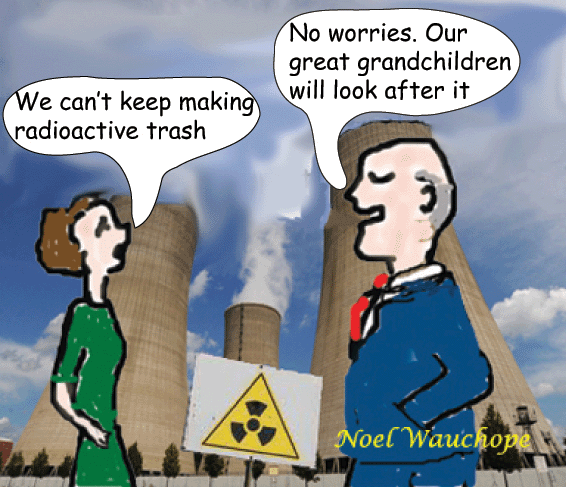
Who should bear the cost of nuclear plant decommissioning and long-term storage and disposal of high-level nuclear waste – the polluter, the customer or the taxpayer?
Where are the real asset-based funds set aside within Eskom and Necsa for future decommissioning and long-term storage and disposal of high-level nuclear waste?
Does the “polluter pays” principle apply in practice, or will the customer and taxpayer end up paying twice through government bailouts?
One can only guess who may end up bearing the real decommissioning, high-level waste storage, disposal and final repository costs in due course – perhaps not the polluter at all, but our children’s children as taxpayers in the next generation.
South African taxpayers exposed to high-level nuclear waste disposal and decommissioning liabilities, Daily Maverick, By Chris Yelland• 21 February 2021
Citizens and taxpayers in South Africa continue to labour under the misguided belief that Eskom and the Nuclear Energy Corporation of South Africa (Necsa) make real funding provisions monthly, over the operating life of their nuclear reactors, to cover the costs of decommissioning and disposal of high-level nuclear waste from their nuclear plants, in terms of the ‘polluter pays’ principle.
Page 69 of the 8th National Report prepared by the Department of Energy and the SA National Nuclear Regulator, and presented to the International Atomic Energy Agency (IAEA) in August 2019 in terms of South Africa’s obligations to the Convention on Nuclear Safety, states in respect of Eskom’s Koeberg nuclear power station:
“Financial provision for decommissioning (as well as spent fuel management) continues to be accumulated on a monthly basis since commercial operation of the installation began in 1984. The financial provision is reflected in the annual financial statements of Eskom. These financial statements are audited in accordance with South African national legislation.
“In terms of decommissioning financial plans, the amount of decommissioning and spent fuel provision made each month is determined by the present value of future estimated cash flows. These financial plans are reviewed regularly and adjusted annually, and informed by the South African inflation rate.”
However, the problem with these fine words to the IAEA is that they are misleading, perhaps deliberately so, and that the so-called provision is actually something of a “Potemkin village” to placate and impress the IAEA and the public that all is well and under control.
In fact, no real money, securities or investments of any kind have actually been set aside monthly, annually or at stage and in any fund during operation of South Africa’s nuclear facilities as provision for decommissioning, long-term storage and final disposal of high-level nuclear waste, and/or the construction and operation of a high-level nuclear waste repository. Continue reading →
Meet the Young Generation Network and its group of nuclear schills who will lead the attempted nuclear takeover of the 26th UN Climate Change Conference of the Parties (COP26) in Glasgow on 1 – 12 November 2021.
The team is mainly targeting the UN-controlled ‘blue zone’ at the conference, which is where the many international policymakers, government officials and legislators will be concentrated.
Just by chance? They all happen to be ambitious young people who hope to have a big career in the nuclear industry. Well, you can’t blame them for that. But let’s be wary of their advice on nuclear power as the solution for global heating.
Arun Khuttan. End States Engineer at Magnox Ltd.UKAlice Cunha da Silva. Latin America Nuclear Leader | Westinghouse Electric Company
Hannah Paterson, Technology Manager at Sellafield Ltd UK
Matthew Mairinger Technical Engineer with Ontario Power Generation, Canada
Miguel Trenkel-Lopez Assistant Engineer at Magnox Ltd,Bristol, UK
Saralyn Thomas Formerly at AREVAnuclear company, now at Abbott Risk Consulting (ARC) Risk Management consultancy services to the Nuclear Industry
Vicki Dingwall of EDF nuclear company
As a mother myself, I am appalled that such a group as ”Mothers For Nuclear” even exists. Dont they know about the effects of ionising radiation on women, especially pregnant women? Don’t they know about the breast cancers, the birth deformities in irradiated areas such as Pacific atomic bomb sites, and Belarus-Ukraine, near the Chernobyl site. No, they don’t seem to. (Perhaps that ‘s the beauty of a narrowly S.T.E.M. education?)
Both Heather Hoff and Kristin Zaitz work at the Diablo Nuclear Power Plant. Hoff worked as a plant operator, and now as a procedure writer. Zaitz works as a civil engineer.
Hoff was inspired by none other than that top nuclear schill Michael Shellenberger, and by the glossy nuclear advertising film ”Pandora’s Promise”.
They sound very sincere, but also very ignorant of the negative issues around the nuclear industry.
Why am I not surprised? The nuclear industry is busting its guts trying to get women onside. Their favourite thing is getting (preferably young and attractive) women into engineering, and at the top of nuclear companies. (This is good in two ways – good to promote the industry’s ‘gender equality’ image, and good if they muck up, as Leslie Dewan did, in her bogus claims for Transatomic’s molten salt reactor – let a woman take the flak!)
The thing is – lots of women have expertise in biology, genetics – and an understanding of the effects of ionising radiation. But the nuclear industry has got us all conned that these are ”soft”sciences. So – if you’ve got ”hard” scienvce knowledge – like engineering, then you can be an authority on nuclear issues.
These two women sound very sincere – alarmingly so.
The Activists Who Embrace Nuclear Power, New Yorker, By Rebecca Tuhus-Dubrow, February 19, 2021
“……… But Hoff and Zaitz work at a nuclear plant and have been flown to give talks at industry-sponsored events; Mothers for Nuclear has received small donations from others who work in the industry. There is no denying the conflict of interest posed by their employment; even within the pro-nuclear community, their industry ties provoke uneasiness. Nordhaus, the executive director of the Breakthrough Institute, wrote in an e-mail that, although he thinks Hoff and Zaitz are “well-intentioned,” nuclear advocacy should be independent of what he called “the legacy industry.” ……..
On the air, Hoff explained who they were. “Mothers for Nuclear offers a different voice,” she said. “Nuclear power plants are run by lots of men, and women have been more scared of nuclear energy. We’re here to offer the motherly side of nuclear—nuclear for the future, for our children, for the planet.”…….
To be fervently pro-nuclear, in the manner of Hoff and Zaitz, is to see in the peaceful splitting of the atom something almost miraculous. It is to see an energy source that has been steadily providing low-carbon electricity for decades—doing vastly more good than harm, saving vastly more lives than it has taken—but which has received little credit and instead been maligned. It is to believe that the most significant problem with nuclear power, by far, is public perception. ………..—the pro-nuclear world view can edge toward dogmatism. Hoff and Zaitz certainly seem readier to tout studies that confirm their views, and reluctant to acknowledge any flaws that nuclear energy may have. ……https://www.newyorker.com/tech/annals-of-technology/the-activists-who-embrace-nuclear-power
Why is Texas suffering power blackouts during the winter freeze?
The oil- and gas-rich state is experiencing what officials call a ‘total failure’ of its electricity infrastructure Guardian, Lauren Aratani, Thu 18 Feb 2021 “…...Did renewable energy play a role in the grid’s malfunction?
While Republicans have been blaming frozen wind turbines for the state’s blackouts, officials and experts say that malfunctions in natural gas operations played the largest role in the power crisis.
Ercot said all of its sources of power, including those from renewable sources, were affected by the freezing temperatures. The state largely relies on natural gas for its power supply, though some comes from wind turbines and less from coal and nuclear sources.
Natural gas can handle the state’s high temperatures in the summer, but extreme cold weather makes it difficult for the gas to flow to power plants and heat homes. Michael Webber, an energy resources professor at the University of Texas Austin, told the Texas Tribune that “gas is failing in the most spectacular fashion right now”.
With the climate crisis likely to trigger more freak weather events like the one Texas is suffering it is noteworthy that there are places that experience frigidly cold weather that rely heavily on wind turbines and manage to have electricity in the winter. In Iowa, a state which sees freezing temperatures more often than Texas, nearly 40% of electricity is generated by wind turbines……. https://www.theguardian.com/us-news/2021/feb/18/why-is-texas-suffering-power-blackouts-during-the-winter-freeze
A bad barrel, not just a few bad apples. Additionally, Lava Jato revealed that the type of corruption that took place was not just a matter of a few rotten apples, but rather of systemic factors.
Corruption in the nuclear industry is a known international phenomenon. The recent scandal in Ohio illustrates how the push for subsidies to nuclear plants is not the result of a real commitment to citizens’ energy needs or climate concerns, but a way for energy corporations to maintain overpayments and assure political gains to certain parties. Brazil offers a different model, one that has used new nuclear facilities to generate kickbacks to powerful political and business interests.
By Carolina Basso | February 16, 2021 In 2019 the Brazilian government decided to resume work at Angra 3, a nuclear reactor where construction has been essentially dormant for more than three decades. The work was supposed to restart last year, with the reactor entering commercial service by late 2026, but COVID-19 and the quest for private partners to invest in the project have pushed back the schedule.
Brazil currently has two operating nuclear power plants, Angra 1 and 2, that have generated less than three percent of the country’s electricity since their commercial launch. So why does Brazil want to resume construction of a third nuclear reactor?
Angra 3 is questionable in economic and energy-related terms. Studies have shown that the country can generate electricity much more cheaply by integrating wind power with Brazil’s considerable hydropower resources. Analysts suggest that this combined system could supply all the electricity the population demands, making any expansion of the nuclear industry sector unnecessary and costly.
The decision to resume construction of the third Brazilian reactor was made by President Jair Bolsonaro, who is committed to expanding the nuclear industry. Bolsonaro’s commitment results in part from his close ties to Brazil’s Navy, which has historically shaped the nuclear sector and currently dominates the country’s uranium enrichment and fuel cycle technology. But this factor alone cannot explain the decision.
It is imperative to examine who will benefit from the project, particularly through the kinds of corruption that are endemic in Brazil. Seen in that light, the political push for building Angra 3 would seem to have more to do with money and politics than with providing a public good.
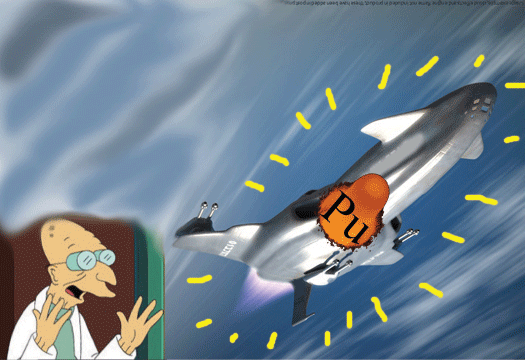
“The nuclear industry views space as a new—and wide-open—market for their toxic product that has run its dirty course on Mother Earth.”
“Now it appears that the nuclear industry has also infiltrated the National Academies of Sciences, Engineering, and Medicine that has been studying missions to Mars. ”
It’s going to take enormous grassroots action—and efforts by those in public office who understand the error of the space direction being taken—to stop it.
A report advocating rocket propulsion by nuclear power for U.S. missions to Mars, written by a committee packed with individuals deeply involved in nuclear power, was issued last week by the National Academies of Sciences, Engineering and Medicine.
The 104-page report also lays out “synergies” in space nuclear activities between the National Aeronautics and Space Administration and the U.S. military, something not advanced explicitly since the founding of NASA as a civilian agency supposedly in 1958.
The report states: “Space nuclear propulsion and power systems have the potential to provide the United States with military advantages…NASA could benefit programmatically by working with a DoD [Department of Defense] program having national security objectives.”’
The report was produced “by contract” with NASA, it states.
The National Academy of Sciences, Engineering and Medicine (NAS) describes itself as having been “created to advise the nation” with “independent, objective advice to inform policy.”
The 11 members of the committee that put together the report for the National Academy includes: Jonathan W. Cirtain, president of Advanced Technologies, “a subsidiary of BWX Technologies which is the sole manufacturer of nuclear reactors for the U.S. Navy,” the report states; Roger M. Myers, owner of R. Myers Consulting and who previously at Aerojet Rocketdyne “oversaw programs and strategic planning for next-generation in-space missions [that] included nuclear thermal propulsion and nuclear electric power systems; Shannon M. Bragg-Sitton, the “lead for integrated energy systems in the Nuclear Science and Technology Directorate at the Idaho National Laboratory:” Tabitha Dodson, who at the U.S. government’s Defense Advanced Research Project Agency is chief engineer of a program “that is developing a nuclear thermal propulsion system;” Joseph A. Sholtis, Jr., “owner and principal of Sholtis Engineering & Safety Consulting, providing expert nuclear, aerospace, and systems engineering services to government, national laboratories, industry, and academia since 1993.” And so on.
The NAS report is titled: “Space Nuclear Propulsion for Human Mars Exploration.” It is not classified and is available here. Continue reading →
Construction of a new hybrid power station at Kakadu National Park’s largest town will begin within weeks, the Chief Minister will reveal on Monday….. [subscribers only]
The blueprint to breathe new life in to the Territory’s international jewel, Kakadu National Park, has been signed off on and released starting a new chapter for the tourist attraction…….. [subscribers only]
Strong Earthquake in Japan 10 years after the devastating tsunami in 2011
7.3 strong, the earthquake reports little damage
A leak in a nuclear plant and widespread power outage are initial concerns
The 7.3 magnitude quake which hit near Fukushima on Saturday night 11.04 pm local time hit off of Fukushima just weeks before the 10th anniversary of a quake on March 11, 2011 that devastated northeast Japan…………
, most concerning are reports of a leak at Fukushima Daini Nuclear Power plant, according to public broadcaster NHK – though this has been denied by the facility owners.
Pool water used for storing spent nuclear fuel may have leaked and contaminated the surrounding area, the outlet said.
Military officials were unaware of potential danger to Pence’s ‘nuclear football’ during Capitol riot, By Barbara Starr and Caroline Kelly, CNN, February 12, 2021 Military officials overseeing the authorization process to launch nuclear weapons were unaware on January 6 that then-Vice President Mike Pence’s military aide carrying the “nuclear football” was potentially in danger as rioters got close during the violent Capitol insurrection, according to a defense official.
US Strategic Command became aware of the gravity of the incident after seeing a video played at the Senate impeachment trial Wednesday showing Pence, his Secret Service agents and a military officer carrying the briefcase with classified nuclear launch information running down a flight of stairs inside the Capitol to get to safety, the official said.
“As the rioters reached the top of the stairs, they were within 100 feet of where the vice president was sheltering with his family, and they were just feet away from one of the doors to this chamber,” Del. Stacey Plaskett, one of the impeachment managers, explained in the senate trial on Wednesday. In one video, the crowd can be heard chanting “Hang Mike Pence” as they stand in an open doorway of the Capitol.
It is not clear if other national security elements of the government such as the National Security Council or top officials at the Pentagon were aware of the gravity of Pence’s position and those of his team.
On January 6 the military officer was able to maintain control of the backup “football” at all times and the President was inside the White House, the official said. Even if the rioters had gotten hold of it, they could not have used any of the information because of the security controls on the system, the official said.
Since they never lost control of the “football” and then-President Donald Trump was safe, they didn’t have to deactivate Pence’s system. But the incident raises the question of whether the “football’s” status was sufficiently accounted for at all times.
“The risk associated with the insurrectionists getting their hands on Pence’s football wasn’t that they could have initiated an unauthorized launch. But had they stolen the football and acquired its contents, which include pre-planned nuclear strike options, they could have shared the contents with the world,” Kingston Reif, an expert on nuclear weapons policy at the nonpartisan Arms Control Association, told CNN.
“Such an outcome would have been a security breach of almost incomprehensible proportions,” Reif added. “And it ought to raise further questions about the rationale for the anachronism that is the football.”
Algerian Foreign Minister said nuclear tests were three to four times the size of US bombing of Hiroshima in Japan, Abdul Razzaq Bin Abdullah |13.02.2021 ALGIERS
France’s nuclear experiments in the Algerian desert in the 1960s were three to four times equal to the Hiroshima bombing in Japan, Algerian Foreign Minister Sabri Boukadoum said on Saturday.
In a Twitter post on the occasion of the 61st anniversary of the first French nuclear explosion in the Algerian desert, on Feb. 13, 1960, Boukadoum described the impacts of the tests as “catastrophic”.
“On this day in 1960, imperialist France carried out the first nuclear explosion in the Reggane region in the Algerian desert, in a process code-named ‘Gerboise Bleue’ (Blue Desert Rat),” Boukadoum said.
He added that the French nuclear explosion yielded a force of 70 kilotons (kt) and its catastrophic radiological repercussions still persist.
The first atomic bomb dropped 75 years ago by the United States leveled Hiroshima on Aug. 6, 1945, and killed an estimated 140,000 people with many more dying in the following years from the effects of radiation. Three days later, Washington dropped another atomic bomb on Nagasaki, killing around 70,000 people and forced Japan to surrender six days later.
According to French officials, the colonial authorities carried out 17 nuclear experiments in the Algerian desert in the period between 1960 and 1966. Algerian historians, however, put the number at 57.
On Feb. 13 1960, France conducted its first nuclear test, code-named “Gerboise Bleue” (Blue Desert Rat) in the Sahara Desert, southwest of Algeria.
The French nuclear experiments have caused the death of around 42,000 Algerians and injured thousands due to nuclear radioactivity, in addition to the extensive damage to the environment.
France has rejected Algerian demands to reveal the location of the nuclear waste as well as compensating the victims and those suffering from permanent disabilities due to the harmful effects of nuclear radioactivity.
During the course of the struggle for independence, nearly five million Algerians were killed, while hundreds of thousands more injured. *Ibrahim Mukhtar in Ankara contributed to this report
An earthquake of 7.1 degrees on the Ritcher scale shook eastern Japan that Saturday (02/13/2021) and was strongly felt in Tokyo, without the Japanese authorities activating the tsunami warning for the moment.
Highest seismic activity before an earthquake occurs, are zero. The radioactivity contained in the pools of water that accumulate is a minor problem within this frame. We also remember that Japan’s nuclear program is a consequence of the unconditional surrender imposed by the U.S. after the Second War, to have control in the fissile material zone and lay its largest base on the island of Okinawa.
It was not an accident.
It’s not an earthquake fault.
It was the deliberate action of a conquest strategy, which made Japan a time bomb for all humanity.
By Anthony Funnell for Future Tense– 13 Feb 21, A group of leading international law experts has defined a new super-crime.They’re calling it “ecocide”.
They plan to submit a draft of their new law to the governing body of the International Criminal Court, in the hope that the ICC will adopt it for future prosecutions.
If successful, ecocide will become the court’s fifth jurisdictional responsibility, alongside genocide, crimes against humanity, war crimes and crimes of aggression.
The group behind the proposal, Stop Ecocide, argues that climate change knows no borders and the destruction of local ecosystems can have huge global consequences.
“In this day and age, it’s no longer possible to say that one is destroying large swathes of nature without realising what one is doing,” Stop Ecocide’s Jojo Mehta says.
She, and the expert panel she’s assembled, want governments, companies and individuals to be brought to account for the environmental destruction they knowingly allow.
And that sense of knowing is important, she says, because most destruction occurs not by accident, but in support of commercial gains.
A growing momentum
Prominent environmental activist Greta Thunberg is onboard, as is the French President, Emmanuel Macron, who’s raised the possibility of incorporating the concept of ecocide into domestic French law.
Though not an official member of the Stop Ecocide movement, he’s also leant his weight to the idea of charging the ICC with oversight of international prosecutions.
President Macron’s involvement began in 2019, when large swathes of the Amazon caught fire under suspicious circumstances. Macron personally accused the Brazilian government of not doing enough to protect the forests from destruction.
Brazil’s populist leader, Jair Bolsonaro — a self-proclaimed climate change denier — initially ridiculed the idea of an ecological emergency and refused to accept international assistance.
“This is an issue that concerns the entire world,” President Macron responded.
“We have a real ecocide that is developing everywhere in the Amazon, not only in Brazil.”
Pope Francis has also spoken of what he calls the “sins of ecology”, explicitly describing his understanding of ecocide as:
“The massive contamination of air, land and water resources, the large-scale destruction of flora and fauna, and any action capable of producing an ecological disaster or destroying an ecosystem.”
The pros and cons
Queens University Law lecturer, Rachel Killean, says the concept of ecocide dates back to the Vietnam War and debates over the American military’s use of the Agent Orange defoliant.
It also briefly gained attention during early discussions on the role and function of the International Criminal Court.
So, Dr Killean says, it makes historical sense to adapt the ICC’s brief, rather than establish a new environmental court.
She says International Law experts such as University College London’s Philippe Sands, former ICC judges and climate change experts are talking about it as “something that is possible and tangible.”
Ms Mehta says the ICC is the only global mechanism that directly accesses the criminal justice systems in all of its member states.
“So, effectively if you make something a crime there, any member state that ratifies that crime must then include it in their own domestic legislation within a year.”
This means it’s likely the most efficient way to make a rule that stays similar across international borders.
“That’s very important with ecosystem destruction because the biggest perpetrators are big transnational companies which operate in many jurisdictions,” Ms Mehta says.
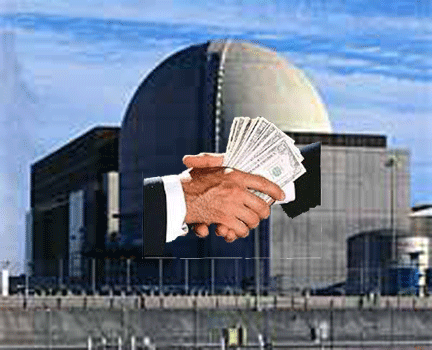
Big money, nuclear subsidies, and systemic corruption, Bulletin of the Atomic Scientists, By Cassandra Jeffery, M. V. Ramana | February 12, 2021
The “largest bribery, money-laundering scheme ever perpetrated against the people and the state of Ohio” came to light during an unexpected press conference in July 2020 in Columbus. Speaking haltingly and carefully, US Attorney for the Southern District of Ohio David DeVillers announced “the arrest of Larry Householder, Speaker of the House of the state of Ohio and four other defendants for racketeering. The conspiracy was to pass and maintain a $1.5 billion bailout in return for $61 million in dark money.”
Unravelling an intricate web of alleged illegal activities used to launder money, DeVillers broke down the complicated modus operandi of “Company A.” With a gentle smile on his face, he said, “everyone in this room knows who Company A is, but I will not be mentioning the name of Company A because of our regulations and rules. They have not, and no one from that company has as of yet, been charged”.
Company A is FirstEnergy Solutions, a fact most Ohians had been aware of long before the July 2020 press conference. FirstEnergy, now called Energy Harbour, is one of Ohio’s largest utility corporations. For years, the firm lobbied to get a subsidy to continue operating its unprofitable nuclear plants and maintain its revenue flow. When lobbying efforts failed to produce subsidies, it resorted to bribery to gain legislative support for House Bill 6, 2019 legislation that forces state consumers to pay into something called “the Ohio Clean Air Fund.” The green language is a smoke screen for the real purpose: to siphon nearly $150 million annually to FirstEnergy to keep its Perry and Davis-Besse nuclear power plants and two coal-fired power plants operating, while simultaneously gutting Ohio’s renewable energy standards. Also gone were the state’s energy efficiency programs, which had saved consumers and corporations millions of dollars. When citizens tried to organize a referendum to repeal the bill, FirstEnergy indulged in various dirty tactics to thwart this democratic opposition.
Ohio is not alone in its nuclear energy corruption. Also in July 2020, Commonwealth Edison (ComEd), a subsidiary of Exelon, was charged with bribery to “Public Official A” in Illinois. Though not named, the filing makes it clear that “Public Official A” is Illinois House Speaker Michael Madigan, who has denied wrongdoing. ComEd has agreed to pay a $200 million fine to resolve this case. Exelon also finds itself at the centre of another ongoing investigation by the United States Securities and Exchange Commission. The focus of the investigation is reportedly Anne Pramaggiore, a former Exelon CEO who stepped down from the company and from his post chair of the Federal Reserve Bank of Chicago. As in Ohio, the corruption charges relate to lobbying for state subsidies and special treatment of nuclear power plants.
Three other states—New Jersey, Connecticut, and New York—have implemented similar subsidies (although, to date, no allegations of wrongdoing related to them have been made public). Changes in the economics of electricity markets are threatening the profitability of nuclear power plants, a shifting reality driving a demand for these financial bailouts. As the New Jersey-based energy company Public Service Enterprise Group (PSEG) explained in October 2020, across the nation “nuclear plants continue to struggle economically to survive. Since 2018, three nuclear plants have closed in the eastern US, all for economic reasons, and the impact has had a ripple effect.”
Changing economics of electricity generation. These “economic reasons” have to do with an ongoing massive transformation of the energy sector. Over the last decade, the cost of renewables like solar and wind have dropped substantially; these renewables can generate electricity at much lower costs than fossil fuels and, especially, nuclear power. In the United States, unsubsidized wind power costs fell by 71 percent between 2009 and 2020, whereas unsubsidized utility scale solar energy costs declined by 90 percent during the same period. Nuclear energy costs increased by 33 percent between 2009 and 2020. The International Energy Agency has dubbed solar energy “the new king of electricity” and foresees it dominating future deployment in the electricity sector for decades.
The major beneficiaries of the subsidies for nuclear plants are large corporations: PSEG in New Jersey and Dominion in Connecticut, besides Exelon and FirstEnergy. These, and other electrical utility companies in the United States, have historically invested primarily in nuclear reactors and fossil fuel plants. Thanks to the changing economics of electricity, these companies are finding it harder to maintain their profits while operating the older power plants that are now more expensive as sources of electricity.
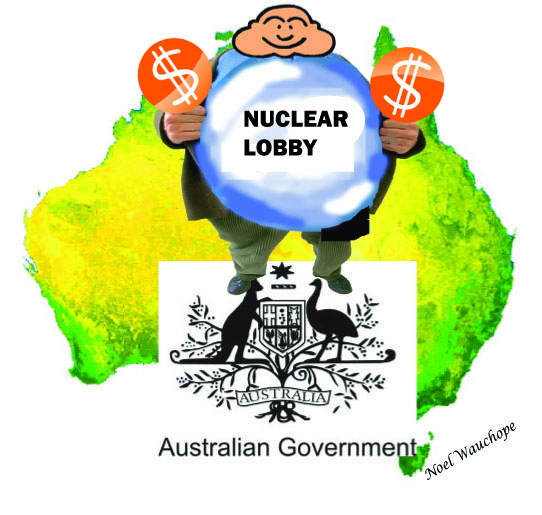
These companies and various associated organizations have engaged in extensive lobbying and large-scale propaganda campaigns to get governments pass legislation that makes consumers pay more for the electricity they use. In that sense, what has resulted would be better described as corporate welfare than as subsidies. The subsidies have improved these companies’ financial situation, which in turn contributes to their clout in state and national policy making and their ability to fund advocacy efforts—and even to pay politicians tidy sums of money. The larger significance of the political power these large utilities have amassed is their ability to block transition to a fully renewable and more environmentally sustainable energy system.
Financial subsidies. Subsidies take different forms in different states. In New York and Illinois, utility companies are required to purchase a specific amount of zero-emission credits from authorized nuclear generating stations, all of which are owned and operated by Exelon Corporation. Purchasing contracts in both states will be in effect for 10 to 12 years, and utility companies are mandated to tack on the cost to consumer bills. Over in New Jersey, “each electric public utility” is required to purchase “Nuclear Diversity Certificates” from nuclear power plants, with consumers paying for these programs through higher utility bills.
The deal that Dominion Energy struck in Connecticut was different, taking the form of a contract that requires the state’s two electric distribution utilities to purchase about 50 percent of the electricity output of Dominion’s Millstone nuclear generating plant for 10 years. Millstone houses two operational nuclear reactors. In all of these cases, the annual financial benefits to these large corporations run in to the hundreds of millions of dollars.
The modus operandi was developed by multiple stakeholders and publicly released in 2016 in the form of a toolkit by the American Nuclear Society (ANS). Produced by a special committee consisting of senior nuclear officials, the toolkit outlined “a variety of policy pathways to support the current nuclear fleet and prevent early retirement.” The states mentioned above have implemented polices that incorporate one or more of the strategies outlined in the ANS toolkit, including amalgamations of low-carbon portfolio standards and mandated purchase of nuclear energy. The toolkit even went so far as to suggest that state government entities could acquire nuclear power plants or suspend collecting taxes, but these suggestions have not been implemented so far.
Building political support. While the American Nuclear Society led the policy-development charge, the Nuclear Energy Institute (NEI)—the nuclear industry’s lobbying arm—reinforced the advocacy message on the ground. The NEI’s 2017 report outlined specific plans and efforts instituted around the same time as many of these nuclear bailouts were pushed through state legislatures. Substantial resources were funnelled toward lobbying efforts aimed at key political and public actors. NEI’s deliberate intention, as outlined in the 2017 report, was to build political support to “avoid placing additional financial burden on US nuclear plants.”
Large-scale media dissemination, educational campaigns, relationship-building with regulatory bodies, think tanks, and policy institutions, and direct political lobbying are some of the tactics outlined in the report. Not all of the tactics aimed at subsidies; some were aimed at lowering expenses for nuclear companies by finding ways to lessen their environmental obligations. For example, the NEI managed to terminate annual fees charged to nuclear generating plants for hazardous material cleanup, which made taxpayers liable for these costs. The NEI took full credit for this shift: “After targeting the House and Senate Appropriations Committees, NEI successfully prevented reimplementation of a $200 million annual fee placed on the industry.”
The NEI also tried to influence the appointment of officials to oversight bodies, including the Nuclear Regulatory Commission (NRC), declaring that it “shared names of potential candidates with the Trump administration and worked with member companies to urge Congress to communicate with the White House the need to nominate and confirm commissioners.” The NRC is the agency tasked with overseeing safety, and in 2017, the NEI proudly announced that it had “worked with the House Appropriations Committee to again reduce the NRC’s budget.”
The power game. Many energy companies are actively involved in local or state-level lobbying. In recent years, Illinois has been a site of intense lobbying by Exelon and its subsidiary, Commonwealth Edison (ComEd), primarily to get more and more subsidies from the state. “At least two dozen former Illinois state lawmakers have lobbied on behalf of ComEd or Exelon since 2000,” according to Illinois Policy, an independent public policy organization. Exelon’s hold on Illinois decision-making has been characterized by David Kraft of the Nuclear Energy Information Service as “nuclear blackmail,” a result of politics that “forced environmentalists wanting to see new legislation pass that would expand renewables, into a reluctant and grudging alliance with Exelon, but on Exelon’s terms.”
The process works as follows. Every so often, Exelon or ComEd would declare that one or more of their nuclear plants are no longer profitable and threaten to shut the plants down within a year. The threats have tended to be successful; lobbyists can argue, with some truth on their side, that a shutdown will lead to job losses and a cut in tax revenue, also leaving Illinois with an energy shortage that may increase reliance on carbon-based sources.
Money begets money. The effects of enacting laws that favor nuclear energy firms are clear from the financial status of these corporations. Exelon share prices increased from $34.63 on April 1, 2017 to a high of $50.95 exactly two years later, while Dominion’s stock price grew from $64.19 on May 1, 2018 to $83.70, as of November 6, 2020. Similar increases have been recorded by FirstEnergy and PSEG.
Apart from stock owners, the other major beneficiaries from the utility business are, of course, executives in these companies. CEOs like Dominion’s Thomas Farrell and Exelon’s Christopher Crane are among the highest paid executives in the electrical generation and utility industry………..
Dealing with corruption, legal and illegal. The crimes that people like Larry Householder and Michael Madigan are accused of committing are shameful; they are, however, just examples of the apparent systemic corruption that seems to permeate the nuclear industry.
While the actions taken against these individuals have captured headlines, the picture painted in the media still misses the mark on less egregious, everyday forms of political action. Lobbying by deep-pocketed industries and other efforts to capture regulators are pernicious but often go unremarked, in part because under the rules that govern politics in the United States, such actions are often legal. Addressing these problems with the urgency they require will necessarily involve confronting the economic and political system that privileges profits and capital over people and the environment.https://thebulletin.org/2021/02/big-money-nuclear-subsidies-and-systemic-corruption/
How Close Did the Capitol Rioters Get to the Nuclear “Football”?
The video of Mike Pence shown during the impeachment revealed something startling about the nuclear chain of command. Slate, BY FRED KAPLAN, FEB 11, 2021 Among the many startling videos shown at Wednesday’s impeachment trial documenting the Jan. 6 insurrection at the Capitol, there was one clip that was so brief, subtle, and beside the immediate point that the House managers didn’t highlight it—but it was nevertheless hugely enlightening.
It revealed that, like the president, the vice president is routinely escorted by a military aide who carries a satchel containing the codes that allow him to launch a nuclear attack.The pertinent clip shows Vice President Mike Pence and his family being rushed out of the Capitol to escape the rioters, who, it turns out, were determined to kill him for certifying the Electoral College votes and thus betraying Donald Trump. Following Pence was an Air Force officer carrying two bags, one of which looked a lot like the nuclear satchel, also known as the Football or the Black Bag…………..
During some administrations, a military aide with a Football accompanied the vice president only on out-of-town trips. But a former White House official told me that a military aide with a satchel was always close to Joe Biden when he was Barack Obama’s vice president. Presumably (though nobody has told me this), a military aide carries a satchel close to Kamala Harris too……………
As for the prospect of a rogue veep, there’s probably nothing to worry about. It’s worth noting what’s in the satchel. Contrary to popular culture, there is no “button” to push, nor is there an indented surface that matches the president’s (or vice president’s) palm. What’s actually in the satchel—which is said to weigh 45 pounds—is a card (sometimes called the “biscuit”) citing phone numbers to call and a passcode that authenticates the identity of the caller, some encrypted communication gear to make the call, and a book describing all of the preapproved nuclear attack options and how the president would go about ordering each one. This book used to be a rather heavy tome called the SIOP Execution Handbook (the SIOP, standing for Single Integrated Operational Plan, is the nuclear war plan) or, at various times, the Gold Book or the Black Book. When Carter first leafed through the book, he told the officers who supplied it, “I’m pretty smart, and I don’t understand any of this.” So the operations division of the Pentagon’s Joint Staff condensed the complicated book into a stack of laminated cards (“like a menu at Wendy’s,” as one officer described them) inscribed in very clear language.
To launch a nuclear attack, the president (or the vice president) would transmit the coded message to a one-star general and his staff in the National Military Command Center, located on the Pentagon’s ground floor, who would in turn pass the order on to the missile and bomber crews, who would launch the attack. That’s it. There is no red button, but there are also no other officials involved in the chain of command. (Other officials are supposed to consult and confer, but they don’t have the ultimate say.)
If the vice president ordered an attack (something that the officer carrying the Football would have to allow), the officers in the Pentagon would know whether the authentication code belonged to the president or the vice president. They would also know whether the president was still alive and in command. If he was, they would know that the vice president’s order was not legitimate.
What about the mob? What could they do, had they grabbed the Football? First, it’s very unlikely that they could have grabbed it. The Secret Service agents around Pence would almost certainly meet any such attempt with deadly force. There would have been a dozen or more dead rioters scattered on the bloodied floor near the staircase where Pence, his family, and his entourage had gathered. If the mob’s survivors kept mauling and overpowering Pence and the others, they might not have thought to grab the Football, which is locked in a metal case tucked inside an ordinary-looking satchel. Even if they had grabbed the satchel, bashed the lock, and opened the case, they wouldn’t have known what to do with the stuff inside. Had they figured it out, the officers in the Pentagon would have known the signals were coming from an unauthorized source.
Could the mob have taken the Football and sold it to the Russians or some other adversary? It would be worth millions of dollars. Despite the militias’ self-image as “patriots,” it’s not out of would be worth millions of dollars. Despite the militias’ self-image as “patriots,” it’s not out of the question. According to a U.S. District Court affidavit, Riley June Williams, the Pennsylvania woman accused of breaching the Capitol and stealing Pelosi’s laptop on Jan. 6, intended to give the computer “to a friend in Russia, who then planned to sell the device to SVR, Russia’s foreign intelligence service.”……….










 Antinuclear