Disappointing outcome of lengthy U.N. climate talks, (and Australia’s disgraceful role)
 Disappointment as marathon climate talks end with slim deal. By FRANK JORDANS and ARITZ PARRA,MADRID (AP) 15 Dec 19, — Marathon U.N. climate talks ended Sunday with a slim compromise that sparked widespread disappointment, after major polluters resisted calls for ramping up efforts to keep global warming at bay and negotiators postponed debate about rules for international carbon markets for another year.
Organizers kept delegates from almost 200 nations in Madrid far beyond Friday’s scheduled close of the two-week talks. In the end, negotiators endorsed a general call for greater efforts to tackle climate change and several measures to help poor countries respond and adapt to its impacts.
U.N. Secretary-General António Guterres said he was “disappointed” by the meeting’s outcome.
“The international community lost an important opportunity to show increased ambition on mitigation, adaptation and finance to tackle the climate crisis,” he said. “We must not give up and I will not give up.”
The final declaration cited an “urgent need” to cut planet-heating greenhouse gases in line with the goals of the landmark 2015 Paris climate change accord. But it fell far short of explicitly demanding that countries submit bolder emissions proposals next year, which developing countries and environmentalists had demanded……
Thankfully, the weak rules on a market-based mechanism, promoted by Brazil and Australia, that would have undermined efforts to reduce emissions, have been shelved,” said Mohamed Adow, director of Nairobi-based campaign group Power Shift Africa.
Helen Mountford, from the environmental think-tank World Resources Institute, said that “given the high risks of loopholes discussed in Madrid, it was better to delay than accept rules that would have compromised the integrity of the Paris Agreement.”…….
Delegates made some progress on financial aid for poor countries affected by climate change, despite strong resistance from the United States to any clause holding big polluters liable for the damage caused by their emissions. Countries agreed four years ago to funnel $100 billion per year by 2020 to assist developing nations, but so far nowhere near that amount has been raised. …..
The United States will be excluded from much of those talks after President Donald Trump announced the country’s withdrawal from the Paris accord, a process than comes into force Nov. 4, 2020……. https://apnews.com/aca79ab4956f370b8892ba574fe56834
Misogyny in the nuclear weapons world inspired this female expert to take action
discussion of nuclear weapons is informed by and perpetuates toxic gender norms. In this world, strength, force, rationality, and destruction are masculine. Things like weapon design, targeting, and nuclear strategy fall into this category. Weakness, emotion, the very concept of peace, and the human costs of nuclear weapons are feminine.
|
The human cost of nuclear weapons is not only a “feminine” concern https://thebulletin.org/2019/11/the-human-cost-of-nuclear-weapons-is-not-only-a-feminine-concern/ By Lilly Adams, November 22, 2019 The nuclear weapons world is full of subtle and not-so-subtle misogyny, and I’ve had my share of experiences: Fighting my way onto an otherwise all-male panel, only to have my speaking time cut short. Meeting a male colleague at a conference for the first time, where he immediately told me that he liked the red dress I was wearing in my Facebook profile photo and that I should dress like that more. Having a male superior tell me he saw no problem with the all-male, all-white panel he was organizing and scoffing at the idea that we had a “gender problem.”
It would be easy to dwell in frustration on experiences like these, or similar ones I have seen my colleagues face. Instead, I’m inspired by the women who excel in this field despite these challenges. What’s more, I’m glad that these experiences led me to start poking holes in the received nuclear weapons wisdom and to seek new approaches. One such approach, which is often overlooked but increasingly gaining prominence, is to examine nuclear issues through a social justice lens. As with many social justice issues, women, indigenous communities, communities of color, and low-income and rural communities have often been those hit hardest by nuclear weapons production and testing. The scope of suffering among these frontline communities—those directly impacted by US nuclear weapons production and testing—is shocking. A recent study very roughly estimates that atmospheric nuclear testing led to 340,000 to 460,000 premature deaths between 1951 and 1973. The US government has estimated that roughly 200,000 armed service personnel were involved in nuclear weapons tests, though others put that number as high as 400,000. The 67 nuclear tests conducted in the Marshall Islands, in total, had the equivalent power of 1.6 Hiroshima bombs exploded every single day for 12 years. Through all of this, women have been and are still being harmed in unique ways. Women exposed to radioactive fallout have much higher risks of miscarriage, stillbirth, and birth defects in their children. In the most exposed areas of the Marshall Islands, it became common for women to give birth to “jellyfish babies”—babies born without bones and with transparent skin. Breast cancer rates in the Marshall Islands are also shockingly high, yet there is a severe lack of cancer care available to the Marshallese. In the United States, breast-feeding mothers exposed to atmospheric nuclear testing passed Iodine-131 to their children through their breast milk. A recent study from the University of New Mexico showed that in the Navajo Nation, 26 percent of women have “concentrations of uranium exceeding levels found in the highest 5 percent of the US population.” In Japan, women who survived the nuclear bombings in Hiroshima and Nagasaki, in addition to bearing the burden of physical health effects, were stigmatized and shunned, unable to marry because of the fear of radiation-caused illnesses and defects passing down to future generations. And overall, though the reasons are not fully understood, women at all ages are more vulnerable to ionizing radiation and seem more likely to get cancer from radiation exposure, and die, than men. Gender matters when it comes to the physical effects of nuclear weapons, but also the way we do and don’t talk about them. Continue reading |
Fighting climate change will be hard, (not fighting it will be worse
Guardian 15th Dec 2019, One of the toughest things for those of us who actually accept the science on climate change is to maintain optimism that anything will be done. After weeks like the one we’ve just had, I sometimes wonder how long it will be before our major political parties shift from talking about reducing emissions and instead arguing over how to best deal with the impact ofclimate change.
You know the sort of thing – “Should we means-test free
access to P2 masks?” or “Should there be a mutual obligation regime for
climate-change relief?” – and before you know it the Australian and the
other climate change-denying News Corp media outlets will be running
editorials about how “we need to get more people off climate change
welfare”. It is a shift we need to fight against – the war to prevent
disastrous climate change is not lost, but it will be if we allow political
parties to raise the white flag.
Kimba already has the nuclear stigma, as property prices fall
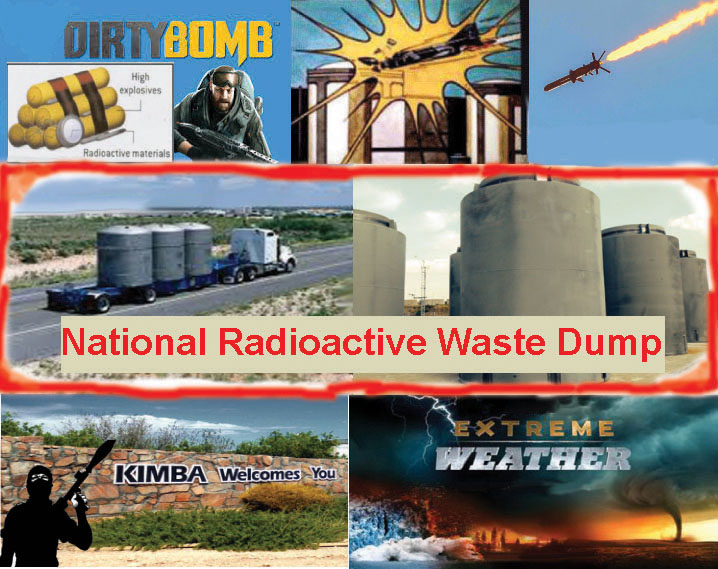
Paul Waldon no nuclear waste dump anywhere in south australia, 14 Dec 19,
Kimba, a bifurcated community where the nuclear embracing dichotomy have failed to respect their predecessors, the generations of parents that have invested time and money into their future. It’s a town of people that are leaving the district, a place where property values continue to fall and funding for the mental health concerns fueled by nuclear waste site selection is now a reality. Nuclear Stigma is a reality and it’s here.
This is not progress. https://www.facebook.com/groups/1314655315214929/
UN climate talks bogged down – no sign of real action
UN talks struggle to stave off climate chaos, https://www.sbs.com.au/news/un-talks-struggle-to-stave-off-climate-chaos 13 Dec 19, Observers and delegates at the UN’s COP25 climate summit said negotiators had largely failed to live up to the conference’s motto: Time for Action.
United Nations climate negotiations in Madrid were set to wrap up with even the best-case outcome likely to fall well short of what science says is needed to avert a future ravaged by global warming.
The COP25 summit comes on the heels of climate-related disasters across the planet, including unprecedented cyclones, deadly droughts and record-setting heatwaves.
As pressure inside and outside the talks mounts, old splits dividing rich polluters and developing nations – over who should slash greenhouse gas emissions by how much, and how to pay the trillions needed to live in a climate-addled world — have reemerged.
Newer fissures, meanwhile, between poor, climate vulnerable nations and emerging giants such as China and India – the world’s No.1 and No.4 emitters – may further stymie progress.
To not lose time, the 12-day meet was moved at the last minute from original host Chile due to social unrest.
Not even appearances from wunderkind campaigner Greta Thunberg – named Time Person of the Year Wednesday, much to the chagrin of Donald Trump — could spur countries to boost carbon-cutting pledges that are, taken together, woefully inadequate.
“We are appalled at the state of negotiations,” said Carlos Fuller, lead negotiator for the Association of Small Island States (AOSIS), many of whose members face an existential threat due to rising sea levels.
Shifting alliances
The narrow aim of the Madrid negotiations is to finalise the rulebook for the 2015 climate accord, which enjoins nations to limit global temperature rises to “well below” two degrees Celsius.
Earth has already warmed 1C, and is on track to heat up another two or three degrees by 2100.
But “raising ambition” on emissions remains the overarching goal in Madrid.
There are two very clear visions,” Spain’s minister for energy and climate change Teresa Ribera told reporters.
“There are those that want to move quicker and those that want to hide behind things which aren’t working, so as not to advance.”
The deadline under the Paris treaty for revisiting carbon cutting commitments – known as NDCs, or nationally determined contributions – is 2020, ahead of the next climate summit in Glasgow.
But Madrid was seen as a crucial launch pad where countries could show their good intentions. Nearly 80 countries have said they intend to do more, but they only represent 10 percent of global emissions.
Conspicuously absent are China, India and Brazil, all of whom have indicated they will not follow suit, insisting that first-world emitters step up.
Fantasy land’
But some countries historically aligned with the emerging giants over the course of the 25-year talks broke rank Thursday.
“The failure of major emitters — including Australia, the United States, Canada, Russia, India, China, Brazil – ‘to commit to submitting revised NDCs suitable for achieving a 1.5C world shows a lack of ambition that also undermines ours,” AOSIS said in a statement.
The talks received a meagre shot in the arm Friday after the EU pledged to make the bloc carbon-neutral by 2050.
The much-heralded decision was immediately undermined however by the refusal of Poland – a major emitter – to sign on.
The UN said this month that in order for the world to limit warming to 1.5C, emissions would need to drop over seven percent annually to 2030, requiring nothing less than a restructuring of the global economy.
In fact, they are currently rising year-on-year, and have grown four percent since the Paris deal was signed.
“It’s basically like what’s happening in the real world and in the streets, the protesters, doesn’t exist,” Alden Meyer from the Union of Concerned Scientists, told AFP.
“We are in a fantasy land here.”
Without strong commitments from big emitters to up their own contributions to the climate fight, Meyer said the talks would have failed to fulfil their purpose.
“Countries need to be on a track to be 1.5C compatible, that’s the bottom line.”
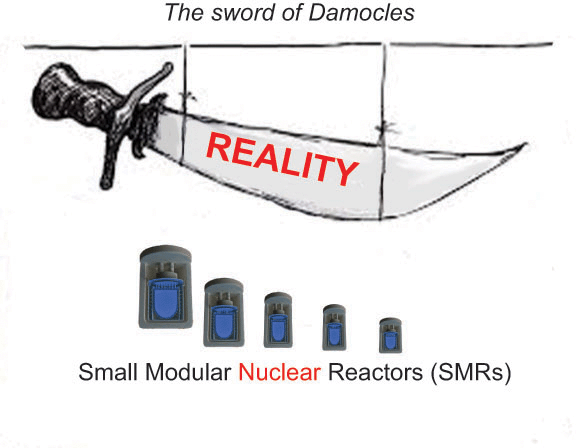
Small Modular Nuclear Reactors – too slow, too risky, too costly – not an answer to climate change
 Renewables – Not Small Modular Nuclear Reactors – Are the Solution to Climate Change, https://cela.ca/renewables-not-small-modular-nuclear-reactors-are-the-solution-to-climate-change/ December 4, 2019 By Theresa McClenaghan, Kerrie Blaise (CELA) and Guest Author Chris Rouse (New Clear Free Solutions) The idea of Small Modular Reactors (“SMRs”) was in the news this week with the federal government being urged to provide even more research money to develop this “new” nuclear power technology. The premise is that SMR’s are a needed, cost effective, safe and realistic solution to climate change. Renewables – Not Small Modular Nuclear Reactors – Are the Solution to Climate Change, https://cela.ca/renewables-not-small-modular-nuclear-reactors-are-the-solution-to-climate-change/ December 4, 2019 By Theresa McClenaghan, Kerrie Blaise (CELA) and Guest Author Chris Rouse (New Clear Free Solutions) The idea of Small Modular Reactors (“SMRs”) was in the news this week with the federal government being urged to provide even more research money to develop this “new” nuclear power technology. The premise is that SMR’s are a needed, cost effective, safe and realistic solution to climate change. However, SMRs are not the answer or even part of the answer to climate change given the problematic environmental, social and economic attributes of the proposed technology. Instead, in our view, investment is urgently needed in Canada’s vast and enviable renewable energy resources which are already scalable and provide safer, less costly, and more socially acceptable means of energy generation.
SMRs are not yet commercially available. Indeed, Canada’s SMR Roadmap, produced by the Canadian Nuclear Association, only sets out a path for having a commercial demonstration unit in the 2030s. To contend that SMR technology can aid in combatting climate change is potentially damaging to climate action, as it misses the 10-year window we have to reverse emissions and decarbonize. It also distracts from the urgent work needed to respond to the climate emergency. We already have many tools in our renewable energy toolbox. Canada’s electricity grid is 65% renewable, mainly from our vast hydro resources. These resources, used in combination with 30% to 35% wind and solar, makes a renewable grid achievable. Several jurisdictions have already achieved or surpassed this threshold, such as Prince Edward Island, where 43% of its power comes from wind alone. We also have access to other renewable energy resources such as biomass, geothermal, and tidal to assist in our transition to a low-carbon economy. Studies also continue to demonstrate viable pathways to a renewable grid, which are both technically and economically feasible. One report from Nova Scotia provides a pathway to reach a 90% renewable grid by 2030 and a study from New Brunswick plots a cost effective solution to achieve a 95% renewable grid. While work is needed to achieve the remaining 5% over time, the immediate need – and the focus of governmental efforts – should be on prioritizing the first 90% to 95% shift to renewables. Despite what appears as widespread interest in SMRs, very few countries have been willing to invest in their construction. Apart from technology’s risks, the problem is one of poor economics: nuclear energy is already known to be expensive and the cost-competitiveness of SMRs is contingent upon their mass fabrication. Hundreds if not thousands of SMRs would need to be deployed in order to be economically viable. Past experience also dictates this new reactor technology may never become commercially available. For instance, after two decades and hundreds of millions of taxpayer dollars, the two prototype MAPLE reactors were abandoned in 2008 because they could not be safely operated. The Gentilly 1 prototype reactor in Quebec which received similar investment, also failed and after 180 days of operation was mothballed. Despite public assurances of SMRs’ ‘passive’ and ‘inherent’ safety, SMR operators and suppliers would be protected from liability in the event of an accident under the current rules; the current nuclear liability rules are a concession by governments to the nuclear industry because of the inherent hazard that private nuclear investors do not want to underwrite. Furthermore, after 50 years of nuclear energy production, we still do not have an approved plan for Canada’s high, intermediate and low-level radioactive waste stockpiles. Because of the diverse range of fuels which can be used by SMRs, new radioactive waste streams will be created, thus increasing the complexity of the used nuclear fuel waste problem, with new types of nuclear waste hazards being introduced. The touted benefit of SMRs for use in remote and rural regions would also mean increased transport of radioactive substances on roads and railways across the country. This poses unique proliferation risks since the waste from enriched fuels can produce quantities of plutonium that could be attractive for diversion to malicious purposes. The greater the number of sites and communities with SMRs, the greater the proliferation risks because of challenges in monitoring, keeping track and measuring plutonium in spent fuel, which must be kept secure. Furthermore, Canada’s nuclear safety regulator advocated with the federal government to remove SMRs from public, more rigorous forms of decision-making under Canada’s new Impact Assessment Act (IAA). Despite requirements for wind and solar farms to undergo environmental assessments, either provincially or federally, SMRs would not trigger an environmental assessment under the current federal IAA Project List regulation. The coming into force of the Impact Assessment Act in June 2019 wholly exempts SMRs from environmental, or impact assessment review. Investment in nuclear power at the 11th hour is a distraction from real climate action when scalable, cost-effective renewable solutions could and need to be employed. Already climate-burdened future generations should not have new risks imposed on them, due to SMR’s radioactive waste and accompanying proliferation risk. We need to invest in known renewable energy solutions, and not the promise of a hypothetical and risky technology. |
|
Civil liberties in America strangled by the Patriot Act
While Congress subjects the nation to its impeachment-flavored brand of bread-and-circus politics, our civil liberties continue to die a slow, painful death by a thousand cuts.
Case in point: while Americans have been fixated on the carefully orchestrated impeachment drama that continues to monopolize headlines, Congress passed and President Trump signed into law legislation extending three key provisions of the USA Patriot Act, which had been set to expire on December 15, 2019.
As Congressman Thomas Massie (R-Ky.) predicted:
Today, while everyone is distracted by the impeachment drama, Congress will vote to extend warrantless data collection provisions of the #PatriotAct, by hiding this language on page 25 of the Continuing Resolution (CR) that temporarily funds the government. To sneak this through, Congress will first vote to suspend the rule which otherwise gives us (and the people) 72 hours to consider a bill. The scam here is that Democrats are alleging abuse of Presidential power, while simultaneously reauthorizing warrantless power to spy on citizens that no President should have… in a bill that continues to fund EVERYTHING the President does… and waiving their own rules to do it. I predict Democrats will vote on a party line to suspend the 72 hour rule. But after the rule is suspended, I suspect many Republicans will join most Democrats to pass the CR with the Patriot Act extension embedded in it.
Water supply problems to hit nearly 2 billion people as mountain glaciers melt
1.9 billion people at risk from mountain water shortages, study shows https://www.theguardian.com/environment/2019/dec/09/billion-people-risk-water-supply-rising-demand-global-heating-mountain-ecosystem
Rising demand and climate crisis threaten entire mountain ecosystem, say scientists, Jonathan Watts Global environment editor, @jonathanwatts, Tue 10 Dec 2019 A quarter of the world’s population are at risk of water supply problems as mountain glaciers, snow-packs and alpine lakes are run down by global heating and rising demand, according to an international study.
The first inventory of high-altitude sources finds the Indus is the most important and vulnerable “water tower” due to run-off from the Karakoram, Hindu Kush, Ladakh, and Himalayan mountain ranges, which flow downstream to a densely populated and intensively irrigated basin in Pakistan, India, China and Afghanistan.
The authors warn this vast water tower – a term they use to describe the role of water storage and supply that mountain ranges play to sustain environmental and human water demands downstream – is unlikely to sustain growing pressure by the middle of the century when temperatures are projected to rise by 1.9C (35.4F), rainfall to increase by less than 2%, but the population to grow by 50% and generate eight times more GDP.
Strains are apparent elsewhere in the water tower index, which quantifies the volume of water in 78 mountain ranges based on precipitation, snow cover, glacier ice storage, lakes and rivers. This was then compared with the drawdown by communities, industries and farms in the lower reaches of the main river basins.
The study by 32 scientists, which was published in the Nature journal on Monday, confirms Asian river basins face the greatest demands but shows pressures are also rising on other continents.
“It’s not just happening far away in the Himalayas but in Europe and the United States, places not usually thought to be reliant on mountains for people or the economy,” said one of the authors, Bethan Davies, of Royal Holloway University.
“We always knew the Indus was important, but it was surprising how the Rhône and Rhine have risen in importance, along with the Fraser and Columbia.”
The study says 1.9 billion people and half of the world’s biodiversity hotspots could be negatively affected by the decline of natural water towers, which store water in winter and release it slowly over the summer.
This buffering capacity is weakening as glaciers lose mass and snow-melt dynamics are disrupted by temperatures that are rising faster at high altitude than the global average.
“Climate change threatens the entire mountain ecosystem,” the report concludes. “Immediate action is required to safeguard the future of the world’s most important and vulnerable water towers.”
As well as local conservation efforts, the authors say international action to reduce carbon emissions is the best way to safeguard water towers.
Citing recent research by the UN Intergovernmental Panel on Climate Change, Davies said 75% of high-altitude snow and ice would be retained if global warming could be kept within 1.5C. However, 80% would be lost by 2100 if the world continued on a path of business as usual.
Dr Katharine Hayhoe on The Bible and Climate Change
Everything You Ever Wanted To Know About Climate Change But Were Afraid to Ask, Forbes, Devin Thorpe 9 Dec 19, Dr. Katharine Hayhoe is a climate scientist who leads the Climate Science Center at Texas Tech University and is the host and producer of the PBS series Global Weirding. I asked her everything you want to know about climate change but were afraid to ask…..
DT: What would you tell someone who wants to do their part to solve climate change?
The very grave dangers of small nuclear reactors in floating nuclear power
nuclear experts have highlighted crucial negatives that cast doubt on the floating nuclear utopia.Jan Haverkamp, Greenpeace Netherlands senior expert nuclear energy and energy policy, sees the three main disadvantages of Akademin Lomonosov to be the big human factors risk, its problematic construction, and the pollution of the Arctic region with nuclear waste.
this project is reintroducing a major pollution risk in an area which functions as a climate regulator for the globe – “the Arctic pristine area, which is a very important natural area for the entire balance on the planet,”
Is floating nuclear power a good idea? Power Technology By Yoana Cholteeva, 9 Dec 19, Floating nuclear power promises to provide a steady source of energy at hard-to-reach locations, but at the same time the dangers inherent in nuclear power make some question whether it’s safe enough for areas where help is hard to find. Is floating nuclear power really a good idea? Yoana Cholteeva investigates.
Russian nuclear company Rosatom announced the arrival of the world’s first floating nuclear power plant, Akademik Lomonosov, in September 2019 when the technology was transported to the port of its permanent location in Russia’s Far East. The 144m-long and 30m-wide vessel has now docked at the port in Pevek, off the coast of Chukotka, where it will stay before its commissioning next year.
Akademik Lomonosov will use small modular reactor technology and is equipped with two KLT-40C reactor systems with 35MW capacity each. It has been designed to access hard-to-reach areas where it can operate for three to five years without the need for refuelling. It also has an overall life cycle of 40 years, which may be extended to 50 years Continue reading
In reality, nuclear power is useless as a solution to global heating
The Tantalizing Nuclear Mirage, Many see nuclear power as a necessary part of any carbon-neutral mix. The reality isn’t so simple. The American Prospect, BY ALEXANDER SAMMON DECEMBER 5, 2019 “………..
If it’s going to take 10 to 15 years to see a plant through to completion, even with massive financial backing, that’s seemingly impossible to square with the 11 years to decarbonize. At the very least, we’d need hundreds, if not thousands of plants already under construction just to make a dent. Booker, Yang, and other advocates are betting that R&D might accelerate that process, but in a real sense it’s already too late.
So if new construction can’t be counted on, and the window for adding new nuclear to the fleet has already shut, what about the reactors we currently have? Has their environmental potential gotten short shrift?
 While nuclear fission emits far less carbon dioxide than energy production by oil and gas, the process of getting to that energy generation complicates nuclear’s claim to zero-carbon status. Uranium mining, processing, and transport are all carbon-intensive procedures done by diesel-powered heavy machinery. Instead of carbon, the plants themselves emit heat, often in great quantities, which can warm nearby air and water dramatically, killing fish and wildlife and afflicting neighboring habitats.
And while nuclear may maintain a cleaner sheet than fossil fuels when it comes to CO2, its record on H2O is less rosy. An American nuclear plant can require between 19 million and 1.4 billion gallons of water a day, just for purposes of cooling. Because of that implacable thirst, it’s imperative that nuclear plants are constructed near major water sources. Continue reading
Paducah, Kentucky – severe nuclear waste problem exacerbated by climate change
“I never said a bad thing about the plant the whole time  I was growing up,” Lamb said. “It made the economy good. But then we got sick.”
“People who were not highly educated could make really good money working in these industries
“Not only that but the government was saying, this is your patriotic duty. We need this. So everybody just went along because the compensation was pretty good.”
a GAO report released in November showed that 60 percent of U.S. Superfund sites are at risk from the impacts of climate change.
Instead of focusing on cleanup plans, some state lawmakers and federal agencies are loosening regulations on hazardous sites…… Last year, the DOE also moved to relax restrictions on the disposal and abandonment of radioactive waste
|
Nuclear waste in Paducah, Kentucky poses extra threat to region facing historic flooding, Scalawag, Austyn Gaffney, 4 Nov 19, “…….. the 750-acre Paducah Gaseous Diffusion Plant. Built in a horseshoe bend of the Ohio River, the plant was the last uranium enrichment facility for nuclear fuel and weaponry in the U.S. before it shuttered its 50-year operation in 2013. It turned a solid — uranium — into a gas called uranium hexafluoride, or UF-6, which was then shipped off to facilities like Oak Ridge in Tennessee (infamous for its role in the Manhattan Project). Due to the presence of hazardous and radioactive wastes contaminating soil, groundwater and surface water, the Environmental Protection Agency added the plant to its Superfund National Priorities List in 1994. …….. For over half a century, the plant was Paducah’s main employer, providing up to 7,000 jobs in a place where nearly a quarter of people now live in poverty. But poor working conditions and unregulated waste disposal also harmed Paducah residents. The legacy of these problems have cost the town and taxpayers. Despite multiple recommendations from a watchdog government agency, the Department of Energy is decades behind schedule on cleanup efforts.
Some experts say the federal government doesn’t know the full cost or scope of what cleaning them up will entail, and that becomes more complicated with more frequent extreme weather. It’s a problem Superfund sites — and especially nuclear waste sites — around the country face. Continue reading
|
Research finds that climate modals have accurately predicted global heating
 Climate models have accurately predicted global heating, study finds
Findings confirm reliability of projections of temperature changes over last 50 years, Guardian, Dana Nuccitelli, Thu 5 Dec 2019 Climate models have accurately predicted global heating for the past 50 years, a study has found.The findings confirm that since as early as 1970, climate scientists have had a solid fundamental understanding of the Earth’s climate system and the ability to project how it will respond to continued increases in the greenhouse effect. Since climate models have accurately anticipated global temperature changes so far, we can expect projections of future warming to be reliable as well.
The research examines the accuracy of 17 models published over the past five decades, beginning with a 1970 study and including 1981 and 1988 models led by James Hansen, the former Nasa climatologist who testified to the US Senate in 1988 about the impacts of anthropogenic global heating. The study also includes the first four reports by the UN’s intergovernmental panel on climate change (IPCC).
“We found that climate models – even those published back in the 1970s – did remarkably well, with 14 out of the 17 model projections indistinguishable from what actually occurred,” said Zeke Hausfather, of the University of California, Berkeley, and lead author of the paper.
Based on modern climate model projections, if countries follow through with current and pledged climate policies, the world is on track for about 3C of warming above pre-industrial temperatures by 2100 – a situation the IPCC and others predict would be catastrophic…….
Based on modern climate model projections, if countries follow through with current and pledged climate policies, the world is on track for about 3C of warming above pre-industrial temperatures by 2100 – a situation the IPCC and others predict would be catastrophic. https://www.theguardian.com/environment/2019/dec/04/climate-models-have-accurately-predicted-global-heating-study-finds
High levels of radiation detected near start of 2020 Olympic Torch Relay
 Nuclear Radiation Hot Spots Found At Starting Point Of Japan’s 2020 Olympic Torch Relay https://www.gizmodo.com.au/2019/12/nuclear-radiation-hot-spots-found-at-starting-point-of-japans-2020-olympic-torch-relay/, George Dvorsky, Dec 5, 2019, High levels of radiation have been detected near Japan’s J-Village, a sports facility and the starting point of the upcoming Olympic torch relay, according to Greenpeace. The discovery was made by surveyors with Greenpeace Japan, which warns that monitoring and decontamination efforts in Fukushima are inadequate.
Radiation levels as high as 71 microsieverts per hour were found on the surface near J-Village in northeastern Japan, according to a Greenpeace press release issued Wednesday. This level of radiation is hundreds of times greater than what’s stipulated in Japan’s decontamination guidelines, prompting Greenpeace Japan to demand that the Japanese government conduct regular radiation monitoring and decontamination of regions affected by the 2011 Fukushima nuclear disaster.
J-Village National Training Centre is in Fukushima prefecture, which is located 20 kilometres from the damaged nuclear power plant. This sports facility will be the starting point of the Tokyo 2020 Olympic Torch Relay, which is scheduled to begin on March 26, 2020. That J-Village was chosen as the starting point for the relay is by design, as the Japanese government is promoting the games as the “reconstruction Olympics.” The Olympics will begin on July 24, 2020 in Tokyo, some 239 kilometres from the damaged reactors.
|
J-Village recently underwent renovations, and the facility was used to host the Argentina team during the Rugby World Cup held just a few weeks ago, according to Reuters. And as the Guardian reports, the facility served as a “logistics hub” for crews working to manage and decommission the damaged reactors. The readings were made over a two-hour period on October 26 by Greenpeace’s Nuclear Monitoring & Radiation Protection Advisors. High levels of radiation were detected along the boundary of the parking lot and a forest next to J-Village, reports Sankei Shimbun. Readings at ground level were as high as 71 microsieverts, which is 308.7 times more than the nationally accepted 0.23 microsieverts per hour—the standard for decontamination—and 1,775 times the level prior to the Fukushima disaster, according to Greenpeace. Continue reading |
South Korea to ensure that its Olympic team gets radiation-free food
 South Korea team to bring radiation detectors to Tokyo Olympics over ‘contamination fears’, Independent 4 Dec 19,
Committee claim food may be compromised despite lifting of Fukushima-related restrictions, Ju-min Park,
Japan has posted data to show the country is safe from Fukushima radiation and many countries have lifted Fukushima-related food restrictions.
The Korea Sports & Olympic Committee (Ksoc) plans to ship red pepper paste, a key ingredient in Korean dishes, and other foods, and check for radiation in meat and vegetables that can only be sourced locally due to stringent quarantine rules, a Ksoc meals plan report shows.
Apparently, ingredients and food will be transported from South Korea as much as possible, possibly including canned food,” Shin Dong-keun, a ruling Democratic Party member of the parliamentary sports committee who was recently briefed by Ksoc, told Reuters in an interview.
“For this Olympic games, food is our team’s main focus so they can provide safe meals for the athletes to erase radiation worries, as opposed to in the past, food was meant to play the supplementary role of helping with their morale.”
Ksoc plans to arrange local Korean restaurants to prepare meals for baseball and softball players competing in Fukushima, as shipping boxed lunches from Tokyo is not feasible, it said in the “2020 Tokyo Summer Olympics Meals Support Centre Plan”.
“These Korean restaurants should only handle food confirmed as radiation free.”…….
Radiation Hot Spots
Greenpeace said on Wednesday that radiation hot spots have been found at the J-Village sports facility in Fukushima where the Tokyo 2020 Olympic torch relay will begin.
South Korea has stepped up demands for a Japanese response to concerns food produced in the Fukushima area and nearby sea could be contaminated by radiation from the Fukushima plant…….
The official said South Korea was preparing a separate meals plan due to concerns from the public and politicians over food safety, unlike the United States and Australia whose athletes will mainly eat food provided by the host country, Japan. ……
The South Korean Olympic committee plan to purchase radiation detecting equipment by February and station an inspector at its own cafeteria in Tokyo during the games to check contamination levels, according to the Ksoc report.
The budget for the Tokyo Olympics meals service is earmarked at 1.7 billion won (£1.2bn), which includes twice the amount of money for buying and shipping ingredients than previous games, according to the committee. https://www.independent.co.uk/news/world/asia/tokyo-2020-olympics-south-korea-radiation-fukushima-nuclear-disaster-a9232291.html
1 This month

of the week – Australians for War Powers Reform (AWPR)
To see nuclear-related stories in greater depth and intensity
 Antinuclear