Many pitfalls in adopting Small Modular Nuclear Reactors – not a viable solution to climate change
 ‘Many issues’ with modular nuclear reactors says environmental lawyer, https://www.cbc.ca/news/canada/new-brunswick/many-issues-modular-nuclear-1.5381804
Three premiers have agreed to work together to develop the technology, Jordan Gill · CBC News Dec 03, 2019 Modular nuclear reactors may not be a cure for the nation’s carbon woes, an environmental lawyer said in reaction to an idea floated by three premiers.
Theresa McClenaghan, executive director of the Canadian Environmental Law Association, said the technology surrounding small reactors has numerous pitfalls, especially when compared with other renewable energy technology.
This comes after New Brunswick Premier Blaine Higgs, Saskatchewan Premier Scott Moe and Ontario Premier Doug Ford agreed to work together to develop the technology.
The premiers say the smaller reactors would help Canada reach its carbon reduction targets but McClenaghan, legal counsel for the environmental group, disagrees.
“I don’t think it is the answer,” said McClenaghan. “I don’t think it’s a viable solution to climate change.”
McClenaghan said the technology behind modular reactors is still in the development stage and needs years of work before it can be used on a wide scale.
“There are many issues still with the technology,” said McClenaghan. “And for climate change, the risks are so pervasive and the time scale is so short that we need to deploy the solutions we already know about like renewables and conservation.”
Waste, security concerns: lawyer
While nuclear power is considered a low-carbon method of producing electricity, McClenaghan said the waste that it creates brings its own environmental concerns.
“You’re still creating radioactive waste,” said McClenaghan.
“We don’t even have a solution to nuclear fuel waste yet in Canada and the existing plans are not taking into account these possibilities.”
McClenanghan believes there are national security risks with the plan as well. She said having more reactors, especially if they’re in rural areas, means there’s a greater chance that waste or fuel from the reactors could be stolen for nefarious purposes.
“You’d be scattering radioactive materials, potentially attractive to diversion, much further across the country,” said the environmental lawyer.
Australia warned on climate refugees
Australia warned on climate refugees THE AUSTRALIAN
The former prime minister of Tuvalu, Enele Sopoaga, has warned Australia could be on the frontline of a new wave of “climate refugees” displaced by extreme weather events and rising sea levels, during the ABC’s Q&A program broadcast from Suva, Fiji. ….(subscribers only)
COP25: youth ‘leadership’ contrasts with government inaction, says UN chief
COP25: youth ‘leadership’ contrasts with government inaction, says UN chief, Ahead of Madrid climate change conference António Guterres says political will missing, Guardian, Fiona Harvey Environment correspondent, 2 Dec 19, António Guterres, the United Nations secretary general, contrasted the “leadership” and “mobilisation” shown by the world’s youth on the climate emergency with the lack of action by governments, which were failing to keep up with the urgency of the problem despite increasing signs that the climate was reaching breakdown.
Before the start of a critical conference on the climate crisis on Monday, he said the world had the technical and economic means to halt climate chaos, but what was missing was political will.
“The technologies that are necessary to make this possible are already available. Signals of hope are multiplying. Public opinion is waking up everywhere. Young people are showing remarkable leadership and mobilisation. [But we need] political will to put a price on carbon, political will to stop subsidies on fossil fuels [and start] taxing pollution instead of people.”
Guterres called for further investment from rich countries and support for poor nations to make the changes needed to reduce greenhouse gas emissions and cope with the impacts of global heating. Amid rising temperatures, wildfires, heatwaves, droughts and floods, the danger signals were clear and must be acted on without further delay, he said…..
The countries most at risk of deluge from climate chaos have issued an impassioned plea to the industrialised world ahead of crucial negotiations on the Paris agreement that start on Monday in Madrid.
“We see [these talks] as the last opportunity to take decisive action,” Janine Felson, deputy chair of the Alliance of Small Island States (AOSIS) told the Guardian.
“Anything short of vastly greater commitment to emission reduction, a new climate finance goal and tangible support for disaster risk reduction will signal a willingness to accept catastrophe.” https://www.theguardian.com/science/2019/dec/01/island-states-want-decisive-action-to-prevent-inundation
On climate policy – “To err on the side of danger is a stupid thing to do.”
One website tracking climate emergency declarations says 1,195 jurisdictions in 25 countries, representing 454 million people, have already voted on the [climate] emergency.
This week the European parliament joined them, as did Ballina shire council in northern New South Wales, the 76th local government authority in Australia to make the declaration.
In the Nature article, the scientists highlight nine “tipping points” that, if crossed, become almost impossible to stop. At least five are already “active”.
“To err on the side of danger is a stupid thing to do.”
Formula for climate emergency shows if ‘reaction time is longer than intervention time left’ then ‘we have lost control’ Graham Readfearn
If you’re the captain of the Titanic, approaching a giant iceberg with the potential to sink your ship becomes an emergency only when you realise you might not have enough time to steer a safe course.
And so it is, says Prof Hans Joachim Schellnhuber, when it comes to the climate emergency.
Rather than being something abstract and open to interpretation, Schellnhuber says the climate emergency is something with clear and calculable risks that you could put into a formula. And so he wrote one. Continue reading
More than 20 million people across the globe displaced by “climate-fuelled” disasters
 ‘Nobody is immune’: Climate-fuelled disasters ‘Nobody is immune’: Climate-fuelled disasters  forcing millions from their homes, As the 25th UN climate summit gets underway in Spain, a new report by Oxfam has found disasters fuelled by climate change are the top driver of human displacement. forcing millions from their homes, As the 25th UN climate summit gets underway in Spain, a new report by Oxfam has found disasters fuelled by climate change are the top driver of human displacement.
SBS NEWS BY CASSANDRA BAIN 2 DEC 19 More than 20 million people across the globe have been displaced by “climate-fuelled” disasters in the past decade, new research by Oxfam has revealed.The Oxfam report found people are three times more likely to be internally displaced by cyclones, floods and bushfires, than they are by conflict, and seven times more likely than earthquakes and volcanic eruptions.
It linked a number of recent catastrophic events to climate change, including Cyclone Winston which devastated Fiji in 2016, the prolonged drought in Guatemala, and recent bushfires across NSW and Victoria. “The current bushfires in Australia have shown that nobody is immune to the impacts of the climate crisis,” Oxfam Australia climate change advisor Simon Bradshaw told SBS News. “Our research reaffirms that communities in the Pacific face particularly severe impacts from global heating, including being forced from their homes by extreme weather disasters.” The report found small island nations, including Fiji and some of Australia’s other Pacific neighbours, make up seven of the 10 countries facing the highest risk of internal displacement from extreme weather events. On average, nearly five per cent of the populations of Tuvalu, Cuba and Dominica were displaced by extreme weather each year in the decade between 2008 and 2018. Emissions per capita from developing small island nations are about a third of those of high-income countries. We can see clearly that extreme weather disasters, many of which of course are being heavily exacerbated by the climate crisis, have been by far the biggest driver of displacement within countries over the last decade,” Mr Bradshaw said. Mr Bradshaw said the report shone a light on the unequal impacts of the climate crisis across the globe. It found people living in low-income countries such as India, Nigeria, and Bolivia are more than four times likely to be displaced by extreme weather disasters than people in richer countries, such as the United States or Australia……. Oxfam is now calling on world leaders at COP25 to reduce their country’s carbon emissions and provide more support to help low-income communities recover from climate disasters. During the summit, delegates from 125 countries will discuss climate-related challenges and progress towards the 2015 Paris Agreement, which aims to limit the global temperature increase to 1.5 degrees Celsius……. HTTPS://WWW.SBS.COM.AU/NEWS/NOBODY-IS-IMMUNE-CLIMATE-FUELLED-DISASTERS-FORCING-MILLIONS-FROM-THEIR-HOMES
|
Australian research indicates even greater risk of Antarctic ice melt
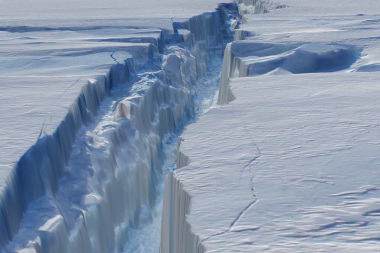 Antarctic ice sheets could be at greater risk of melting than previously thought, Science Daily, December 2, 2019, University of South Australia Antarctic ice sheets could be at greater risk of melting than previously thought, Science Daily, December 2, 2019, University of South Australia
|
|
Coal power becoming ‘uninsurable’ as firms refuse cover
 Coal power becoming ‘uninsurable’ as firms refuse cover, US insurers join retreat from European insurers meaning coal projects cannot be built or operated, Guardian, Julia Kollewe, Mon 2 Dec 2019 The number of insurers withdrawing cover for coal projects more than doubled this year and for the first time US companies have taken action, leaving Lloyd’s of London and Asian insurers as the “last resort” for fossil fuels, according to a new report.The report, which rates the world’s 35 biggest insurers on their actions on fossil fuels, declares that coal – the biggest single contributor to climate change – “is on the way to becoming uninsurable” as most coal projects cannot be financed, built or operated without insurance. Coal power becoming ‘uninsurable’ as firms refuse cover, US insurers join retreat from European insurers meaning coal projects cannot be built or operated, Guardian, Julia Kollewe, Mon 2 Dec 2019 The number of insurers withdrawing cover for coal projects more than doubled this year and for the first time US companies have taken action, leaving Lloyd’s of London and Asian insurers as the “last resort” for fossil fuels, according to a new report.The report, which rates the world’s 35 biggest insurers on their actions on fossil fuels, declares that coal – the biggest single contributor to climate change – “is on the way to becoming uninsurable” as most coal projects cannot be financed, built or operated without insurance.
Ten firms moved to restrict the insurance cover they offer to companies that build or operate coal power plants in 2019, taking the global total to 17, said the Unfriend Coal campaign, which includes 13 environmental groups such as Greenpeace, Client Earth and Urgewald, a German NGO. The report will be launched at an insurance and climate risk conference in London on Monday, as the UN climate summit gets underway in Madrid. The first insurers to exit coal policies were all European, but since March, two US insurers – Chubb and Axis Capital – and the Australian firms QBE and Suncorp have pledged to stop or restrict insurance for coal projects. At least 35 insurers with combined assets of $8.9tn, equivalent to 37% of the insurance industry’s global assets, have begun pulling out of coal investments. A year ago, 19 insurers holding more than $6tn in assets were divesting from fossil fuels…… https://www.theguardian.com/environment/2019/dec/02/coal-power-becoming-uninsurable-as-firms-refuse-cover |
|
World is close to a ‘global tipping point
 Climate crisis pushing Earth to a ‘global tipping point,’ researchers say Climate crisis pushing Earth to a ‘global tipping point,’ researchers say
By Helen Regan, CNN, November 28, 2019 , The Earth is heading toward a “global tipping point” if the climate crisis continues on its current path, scientists have warned, as they called for urgent action to avoid “an existential threat to civilization.”
The group of researchers, who published a commentary in the journal Nature, say there is growing evidence to suggest that irreversible changes to the Earth’s environmental systems are already taking place, and that we are now in a “state of planetary emergency.”
A global tipping point is a threshold when the planet’s systems go beyond the point of no return — such as the loss of the Amazon rainforest, accelerated melting of ice sheets, and thawing of permafrost — the authors of the commentary say.
Such a collapse could lead to “hothouse” conditions that would make some areas on Earth uninhabitable.
“We argue that the intervention time left to prevent tipping could already have shrunk towards zero, whereas the reaction time to achieve net zero emissions is 30 years at best,” the authors said.
Active problem areasLed by Timothy Lenton, professor of climate change and Earth system science at the University of Exeter, in southwest England, the team identified nine areas where they say tipping points are already underway.
Those include widespread destruction of the Amazon, reduction of Arctic sea ice, large-scale coral reef die-offs, melting of the Greenland and West Antarctic ice sheets, thawing of permafrost, destabilizing of boreal forests — which contain vast numbers of trees that grow in freezing northern climes — and a slowdown of ocean circulation.
The team claims that these events are interconnected and change in one will impact another, causing a worsening “cascade” of crises………
.
The UN Environment Program (UNEP) 2019 Emissions Gap report said at the current rate, temperatures are expected to rise 3.2 C by 2100.
Greenhouse gases reached a record high in 2018 with no sign of peaking, according to a recent World Meteorological Organization report. Carbon dioxide levels reached 407.8 parts per million, a unit used to measure the level of a contaminant in the air.
Hope is not lost, however. Researchers say that mitigating greenhouse gas emissions could still slow down the accumulation of these climate impacts.
What is needed, they say, is urgent international action to cut emissions, slow sea level rise, and to keep warming to 1.5 C.
“A saving grace is that the rate at which damage accumulates from tipping — and hence the risk posed — could still be under our control to some extent,” they said.
“The stability and resilience of our planet is in peril. International action — not just words — must reflect this.” https://edition.cnn.com/2019/11/28/health/climate-crisis-global-tipping-point-intl-hnk/index.html?utm_source=twCNN&utm_content=2019-11-30T05%3A01%3A06&utm_term=link&utm_medium=social
|
|
Prominent Americans to wage ‘World War Zero’ against climate change
 John Kerry Launches Star-Studded Climate Coalition, NYT, By Lisa Friedman, Nov. 30, 2019 WASHINGTON — John Kerry, the former senator and secretary of state, has formed a new bipartisan coalition of world leaders, military brass and Hollywood celebrities to push for public action to combat climate change.
The name, World War Zero, is supposed to evoke both the national security threat posed by the earth’s warming and the type of wartime mobilization that Mr. Kerry argued would be needed to stop the rise in carbon emissions before 2050.
The star-studded group is supposed to win over those skeptical of the policies that would be needed to accomplish that.
Former presidents Bill Clinton and Jimmy Carter are part of the effort. Moderate Republican lawmakers like Arnold Schwarzenegger, the former governor of California, and John Kasich, the former governor of Ohio, are on the list. Stars like Leonardo DiCaprio, Sting and Ashton Kutcher round out the roster of more than 60 founding members.
The star-studded group is supposed to win over those skeptical of the policies that would be needed to accomplish that.
Former presidents Bill Clinton and Jimmy Carter are part of the effort. Moderate Republican lawmakers like Arnold Schwarzenegger, the former governor of California, and John Kasich, the former governor of Ohio, are on the list. Stars like Leonardo DiCaprio, Sting and Ashton Kutcher round out the roster of more than 60 founding members.
“We’re going to try to reach millions of people, Americans and people in other parts of the world, in order to mobilize an army of people who are going to demand action now on climate change sufficient to meet the challenge,” Mr. Kerry said in an interview.
The launch of the new group on Sunday comes as diplomats gather in Madrid on Monday for global climate negotiations aimed at strengthening the 2015 Paris Agreement, from which President Trump has vowed to withdraw next year. Earlier this week the United Nations found that the world’s richest countries, responsible for emitting more than three-fourths of planet-warming pollution, are not doing enough to keep Earth’s temperature from rising to dangerously high levels. Net carbon emissions from the two largest polluters, the United States and China, are expanding……….. https://www.nytimes.com/2019/11/30/climate/john-kerry-climate-change.html?smid=tw-nytclimate&smtyp=cur
U.S. Government effectively boycotting COP25 climate conference
 US will ‘protect its interests’ at COP25 climate conference, No senior members of Donald Trump’s administration will attend COP25. https://www.sbs.com.au/news/us-will-protect-its-interests-at-cop25-climate-conference 2 Dec 19, The US will send a diplomatic team but no senior members of Donald Trump’s administration to a global climate change conference starting in Spain on Monday, according to a statement.However, in an effort to raise the US profile in Madrid, House speaker Nancy Pelosi will led a 15-member congressional delegation to “reaffirm the commitment of the American people to combating the climate crisis”.
The US, at Mr Trump’s direction, is withdrawing from the Paris climate accord, which set a goal of limiting global temperature rises to well within two degrees Celsius from pre-industrial levels.
Spain stepped in to host the COP25 meeting, which seeks to boost commitments to fight climate change, after Chile pulled out due to civil unrest.
“The United States will continue to participate in ongoing climate change negotiations and meetings – such as COP25 – to ensure a level playing field that protects US interests,” the US State Department said Saturday.
The US team will be headed by ambassador Marcia Bernicat, principal deputy assistant secretary of state for oceans and international environmental and scientific affairs.
Ms Pelosi, calling climate change “the existential threat of our time,” announced a delegation of Democrats drawn from both the House and the Senate, with no members of Mr Trump’s Republican party.
The president has cast the Paris climate accord as elitist and unfair to the US, saying when announcing his decision to withdraw that he was “elected to represent the citizens of Pittsburgh, not Paris”.
But scientists say the accord is vital to check the worst damage from global warming, such as increasing droughts, rising floods and intensifying storms.
The US is the world’s second biggest emitter of greenhouse gases after China, and is the only country to pull out of the Paris agreement.
The final US withdrawal from the landmark accord is scheduled for 4 November, 2020, a day after the next presidential election.
Several Democratic presidential aspirants have said that, if elected, they would immediately return to the agreement.
Short term fixes for staggeringly long lasting nuclear wastes
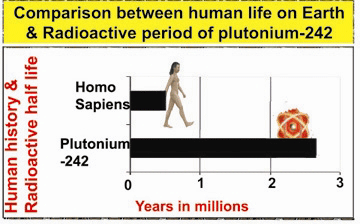
The Staggering Timescales Of Nuclear Waste Disposal, Christine Ro https://www.forbes.com/sites/christinero/2019/11/26/the-staggering-timescales-of-nuclear-waste-disposal/#621facec29cf
High-level nuclear waste consists largely of spent fuel from nuclear reactors. Though it makes up a small proportion of overall waste volumes, it accounts for the majority of radioactivity. This most potent form of nuclear waste, according to some, needs to be safely stored for up to a million years. Yes, 1 million years – in other words, a far longer stretch of time than the period since Neanderthals cropped up. This is an estimate of the length of time needed to ensure radioactive decay.
They’re also such mind-bogglingly long periods that in 1981, the US Department of Energy established the Human Interference Task Force to devise ways to warn future generations of the dangerous contents of nuclear repositories. This was a challenging task then, and nuclear semiotics remains the stuff of science fiction. Written language has only existed for about 5,500 years, so there’s no guarantee that Earth’s inhabitants, tens of thousands of years from now, would understand any of the writing systems currently in use. The meanings of visual signs also drift over time. The more whimsical “ray cat solution,” of genetically engineering cats to glow in the presence of radioactive material, is even less reliable.
Even stopping nuclear power operations is a necessarily drawn-out process. Decommissioning a single nuclear reactor typically takes about 20 years. Most countries grappling with nuclear waste are planning for at least 40 to 60 years just to implement their repository programs.
After brief flirtations with amusingly bad ideas including shooting nuclear waste into space, the consensus among nuclear scientists is that the best option for dealing with high-level nuclear waste is deep geological disposal. One of the International Atomic Energy Agency’s conditions for such a geological site is low groundwater content, which has been stable for at least tens of thousands of years, and geological stability, over millions of years. Thus, Japan, with its seismic instability, is unlikely to have any suitable candidates for deep geological disposal.
Like many countries, Japan is relying on interim storage of high-level waste while hoping that longer-term solutions will present themselves eventually. In fact, no country even has an operational deep geological repository for spent nuclear fuel. (The US has a deep disposal site in New Mexico for “transuranic” waste from nuclear weapons, which is long-lived and intermediate-level waste whose elements have higher numbers than uranium in the periodic table.)
It’s challenging to find a site that ticks all of the geological boxes (including relatively impermeable material with little risk of water infiltration), and that isn’t politically controversial. To take two notable examples, communities in Nevada, US and Bure, France have hotly opposed plans to establish repositories. Given the history of environmental justice globally, it’s likely that any future locations approved for nuclear waste dumps will be found in poor areas.
Only one country, Finland, is even building a permanent spent-fuel repository. Even in Finland, however, it’s estimated that a license won’t be issued until 2024. Similar licenses for other European countries scouting out possible locations likely wouldn’t be available until 2050 in Germany and 2065 in the Czech Republic. And these countries are outnumbered by those that don’t even have an estimated timeframe for licensing, as they’re so far back in the process of searching for a site.
Strategies remain worryingly short-term, on a nuclear timescale. Chernobyl’s destroyed reactor no. 4, for instance, was moved in July 2019 into a massive steel and concrete “sarcophagus” that will only last 100 years. Not only will containers like this one fall short of the timescales needed for sufficient storage, but no country has allotted enough funds to cover nuclear waste disposal. In France and the US, according to the recently published World Nuclear Waste Report, the funding allocation only covers a third of the estimated costs. And the cost estimates that do exist rarely extend beyond several decades.
Essentially, we’re hoping that things will work out once future generations develop better technologies and find more funds to manage nuclear waste. It’s one of the most striking examples of the dangers of short-term thinking.Check out my website.
WHAT TO EXPECT FROM THE UN’S COP 25 CLIMATE CHANGE CONFERENCE
WHAT TO EXPECT FROM THE UN’S COP 25 CLIMATE CHANGE CONFERENCE, https://ensia.com/notable/cop-25-un-climate-talks/ Andrew Urevig @aurevig November 26, 2019 — In 2015, 195 countries adopted an international treaty aiming to limit global warming to less than 2 °C (3.6 °F) above average preindustrial temperatures in order to avert the worst of Earth’s climate emergency.
How exactly will these countries implement that treaty, the Paris agreement? That’s a key question for the thousands of people set to attend the COP 25 negotiations, the 25th annual Conference of Parties to the United Nations Framework Convention on Climate Change. Despite a last-minute change of location from Chile to Spain, the talks are still slated for December 2–13.
Representatives of countries around the world are preparing to negotiate rules for international carbon markets, finalize details on climate finance and ready the world for the crucial next decade of action on the climate crisis. Chilean environmental minister Carolina Schmidt will preside over the negotiations.
Double Counting Strikes Back
According to Schmidt, “COP 25 will be the COP of implementation.” The main goal is to fill in the legal and technical details of the Paris agreement. That work began at COP 24, which was held last year in Poland.
Left unresolved last year were the rules for voluntary carbon emissions markets, which would let nations meet their pledged emissions cuts by trading reductions with other countries. In a June interview, Schmidt said that these rules, covered under Article 6 of the Paris treaty, would be a major focus of COP25.
Finishing the work of COP 24, this year’s negotiations should finalize the details of the Paris agreement. But consensus could be difficult to reach. During the last climate talks, according to Carbon Brief, draft rules for the carbon markets would have prohibited double counting of emissions, a scenario in which reductions would be counted by both the country that achieved them and the country purchasing those reductions as emissions offsets. But the delegation from Brazil rejected that prohibition, pushing the conversation off to this year.
Other Issues
Other issues will be on the table, too. Countries at COP 25 will discuss details for climate finance to support countries designated as developing as they adapt to climate change and mitigate their carbon emissions.
Outside the halls of power, COP 25 could see street demonstrations and other protests. Last year’s talks coincided with protests worldwide, including 3,000 who marched in Katowice, Poland, where the talks were held.
U.S. diplomats will be among the negotiators — but potentially for the last time. President Donald Trump notified the U.N. Framework Convention on Climate Change (UNFCCC) on Nov. 4, 2019, that the U.S. would withdraw from the Paris agreement. The U.S. is scheduled be officially out of the deal by Nov. 4, 2020, less than a week before COP 26 will begin in Glasgow, Scotland. A U.S. delegation will still be invited to attend the conference — but not to negotiate, in an official capacity, the future of the Paris accord.
Pope Francis, in Japan, Warns of ‘Selfish Decisions’ on Nuclear Energy
|
Pope Francis, in Japan, Warns of ‘Selfish Decisions’ on Nuclear Energy
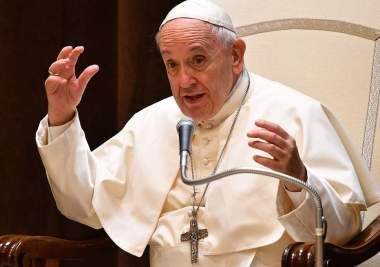
Making the first visit to the country by a pope in 38 years, Francis called for an end to the nuclear arms race in visits to Hiroshima and Nagasaki. NYT, By Motoko Rich, 25 Nov 19, TOKYO — In the first visit to Japan by a pontiff in 38 years, Pope Francis on Monday edged close to calling for the renunciation of all nuclear power in a country that experienced the worst nuclear disaster since Chernobyl but has yet to determine a viable alternative for its energy needs.A day after traveling to Nagasaki and Hiroshima, the only places where atomic bombs have ever been used in war, the pope met in Tokyo on Monday with victims of the 2011 earthquake, tsunami and nuclear meltdown that ravaged northeastern Japan. Francis noted that the Catholic bishops of Japan had called for the shutdown of all nuclear plants in Japan after the 2011 disaster, in which waves from the tsunami overpowered the Fukushima Daiichi nuclear power plant and set off catastrophic meltdowns in three reactors. “As we think about the future of our common home, we need to realize that we cannot make purely selfish decisions,” the pope said on Monday, “and that we have a great responsibility to future generations.” Although Japan has a tiny and shrinking Catholic population, the pope drew thousands of people to his appearances in Nagasaki and Hiroshima, where he called for an end to the nuclear arms race. In denouncing any use of atomic weapons as “a crime not only against the dignity of human beings but against any possible future for our common home,” he appeared to go further than his predecessors, who called for an end to stockpiling nuclear arms. “The arms race wastes precious resources that could be better used to benefit the integral development of peoples and to protect the natural environment,” the pope said in an address in Peace Park in Nagasaki, which commemorates the 74,000 people who died in the atomic bombing on Aug. 9, 1945, three days after the bombing of Hiroshima, which killed 140,000 people. “In a world where millions of children and families live in inhumane conditions, the money that is squandered and the fortunes made through the manufacture, upgrading, maintenance and sale of ever more destructive weapons are an affront crying out to heaven,” he added. …… On Monday, Francis also addressed the deterioration of international ties at a time when populist governments and leaders have taken to looking inward. “We are witnessing an erosion of multilateralism, which is all the more serious in light of the growth of new forms of military technology,” he said in Nagasaki. “Such an approach seems highly incongruous in today’s context of interconnectedness; it represents a situation that urgently calls for the attention and commitment of all leaders.”……. He described what he called the disconnectedness of a group of young people he had met at St. Mary’s Cathedral in Tokyo . “They remain on the margins, unable to grasp the meaning of life and their own existence,” he said. “Increasingly, the home, school and community, which are meant to be places where we support and help one another, are being eroded by excessive competition in the pursuit of profit and efficiency. Many people feel confused and anxious; they are overwhelmed by so many demands and worries that take away their peace and stability.” …….. Reporting was contributed by Makiko Inoue, Eimi Yamamitsu and Hisako Ueno. https://www.nytimes.com/2019/11/25/world/asia/pope-francis-japan-nuclear.html Motoko Rich is Tokyo bureau chief for The New York Times. She has covered a broad range of beats at the Times, including real estate (during a boom), the economy (during a bust), books and education. @motokorich |
|
Catholic doctrine; the use and even the possession of nuclear is immoral
Pope Francis: not using or possessing nuclear arms will be added to the Catechism, Catholic Outlook,27 November 2019 During the in-flight press conference aboard the plane bringing him back to Rome from Japan, Pope Francis answers journalists’ questions on a variety of issues: from the immoral use and possession of atomic weapons, to the financial investigation inside the Vatican.
“The use of nuclear weapons is immoral, which is why it must be added to the Catechism of the Catholic Church. Not only their use, but also possessing them: because an accident or the madness of some government leader, one person’s madness can destroy humanity.”
In addition to repeating this strong message pronounced at Hiroshima, Pope Francis responded to many questions posed to him by the journalists during the flight bringing them back to Rome from Japan.
Now follows an unofficial translation of the in-flight press conference……….
“Hiroshima was a real human catechesis on cruelty. I could not visit the Hiroshima museum because time did not permit, because it was a difficult day. But they say it’s terrible. There are letters from Heads of State, Generals explaining how a greater disaster could be produced. The experience was much more touching for me. And there I reiterated that the use of nuclear weapons is immoral, that is why it must be added to the Catechism of the Catholic Church. Not only their use, but also possessing them: because an accident or the madness of some government leader, one person’s madness can destroy humanity. The words of Einstein come to mind: ‘The Fourth World War will be fought with sticks and stones.’ ” …….
“The ugly hypocrisy of the ‘arms trade’. Christian countries, European countries that talk about peace and live off weapons. This is hypocrisy, a word from the Gospels: Jesus said it in Matthew, Chapter 23. We have to stop this hypocrisy. It takes courage to say: “I can’t talk about peace, because my economy earns so much through arms sales’”. These are all things we need to say, without insulting and vilifying any country, but speaking as brothers and sisters, for the sake of human fraternity: we must stop because this is a terrible thing. “………… https://catholicoutlook.org/pope-francis-not-using-or-possessing-nuclear-arms-will-be-added-to-the-catechism/
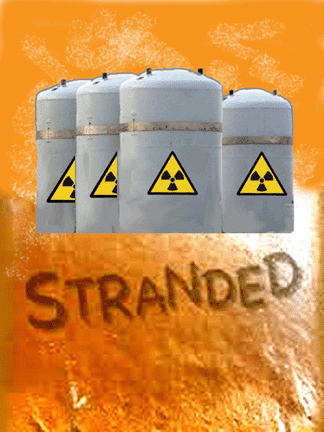
New Mexico worried about Stranded Nuclear Wastes: South Australia should be, too
|
high-leveHancock said he also opposed the project and the bill over the suggestion of transporting the waste hundreds or thousands of miles away from generator sites where it is currently stored. “This approach doesn’t make any sense,” he said. “Why not do it in places that already have storage sites? It’s going to sit there for years. Let’s make that less dangerous. It can be done without massive transportation around the country.”
The Nuclear Waste Policy Amendments Act was advanced by a unanimous voice vote to the House by the Energy and Commerce Committee on Nov. 20. The bill, if passed, would move forward with safety licensing for a permanent nuclear waste repository at Yucca Mountain, Nevada, while providing the U.S. Department of Energy the authority to proceed with a program for consolidated interim storage (CIS) while the Yucca Mountain project progresses. It also prioritized the transportation of spent nuclear fuel from generator sites in seismically active areas, and ensured the DOE has the funds to build and operate a repository U.S. Rep. Ben Ray Lujan (D-NM), the only representative from New Mexico who sits on the committee, introduced an amendment that was approved to create a grant program to study the impacts radiation exposure including family members and non-workers resulting from uranium mining. “Though we have a responsibility to address the waste issues that result from our country entering the atomic age, I am deeply concerned that this bill makes it more likely that a future interim storage site — potentially one in New Mexico — becomes a permanent home for nuclear waste,” he said. One such interim facility, proposed by Holtec to be built in a remote, desert area near the Eddy-Lea county line, drew concerns from New Mexico environmentalist groups as it could put local communities at risk as well. Don Hancock, nuclear waste program director at the Southwest Research and Information Center in Albuquerque cited a clause in the bill that required the governor of a state that would host a CIS facility to consent before moving forward. Continue reading |
1 This month

of the week – Australians for War Powers Reform (AWPR)
To see nuclear-related stories in greater depth and intensity
 Antinuclear