“the case made by the uranium bulls is in reality full of holes”
Numerous other uranium mines around the world are in care-and-maintenance (e.g. Beverley, Beverley North and Honeymoon in Australia; and Paladin’s Langer Heinrich and Kayelekera mines in Africa) while others are operating at reduced capacity. Paladin is in the process of selling its Kayelekera project in Malawi, for next-to-nothing.
 Uranium bulls ‘as rare as white unicorns’ Jim Green, Online Opinion, 26 November 2019, https://onlineopinion.com.au/view.asp?article=20623&page=0
Uranium bulls are “as rare as white unicorns” according to a commentary in FNArena in September 2019, and the market is “sick and dying” with uranium “quickly becoming a dinosaur of a commodity”.
Canadian company Cameco recently said it cannot see any case for construction of new uranium mines for some years to come. Chief financial officer Grant Isaac said that new mines will not win financial backing without a far stronger recovery in demand for uranium than is currently on the horizon.
“It’s pretty hard to say you’re going to take the risk on an asset … that isn’t licensed, isn’t permitted, probably doesn’t have a proven mining method, when you have idle tier one capacity that’s licensed, permitted, sitting there,” Isaac said.
Moreover, Cameco has no plans to restart mines put into care-and-maintenance in 2016 and 2017: McArthur River (and the Key Lake mill) and Rabbit Lake in Canada, and the Crow Butte and Smith Ranch-Highland in-situ leach mines in the US. Plans to expand Crow Butte were abandoned in March 2019.
Instead, Cameco will continue to meet its contracts by purchasing uranium on the spot market. Delivering the company’s third-quarter results (a small loss), chief executive Tim Gitzel said that only 9 million pounds of uranium oxide will be produced from its mines next year, with the remainder of its requirement of 30‒32 million pounds supplied from spot market purchases.
Cameco’s workforce in Canada has halved. Before the Fukushima disaster, the company employed more than 2,100 people in Saskatchewan. Since then, 810 mine and mill workers have been sacked, along with 219 head office employees in Saskatoon. Continue reading
Iraq: new finding of serious congenital deformities due to thorium and uranium from U.S. military use.
IRAQI CHILDREN BORN NEAR U.S. MILITARY BASE SHOW ELEVATED RATES OF “SERIOUS CONGENITAL DEFORMITIES,” STUDY FINDS https://theintercept.com/2019/11/25/iraq-children-birth-defects-military/ Murtaza Hussain, November 26 2019, MORE THAN A decade and a half after the 2003 U.S. invasion of Iraq, a new study found that babies are being born today with gruesome birth defects connected to the ongoing American military presence there. The report, issued by a team of independent medical researchers and published in the journal Environmental Pollution, examined congenital anomalies recorded in Iraqi babies born near Tallil Air Base, a base operated by the U.S.-led foreign military coalition. According to the study, babies showing severe birth defects — including neurological problems, congenital heart disease, and paralyzed or missing limbs — also had corresponding elevated levels of a radioactive compound known as thorium in their bodies.
The suffering of Iraqis has been particularly acute. The results of the new study added to a laundry list of negative impacts of the U.S.’s long war there to the long-term health of the country’s population. Previous studies, including some contributed by a team led by Savabieasfahani, have pointed to elevated rates of cancer, miscarriages, and radiological poisoning in places like Fallujah, where the U.S. military carried out major assaults during its occupation of the country.
SOME OF THESE negative health effects of the American war in Iraq can be put down to U.S. forces’ frequent use of munitions containing depleted uranium. Depleted uranium, a byproduct of the enriched uranium used to power nuclear reactors, makes bullets and shells more effective in destroying armored vehicles, owing to its extreme density. But it has been acknowledged to be hazardous to the environment and the long-term health of people living in places where the munitions are used.
“Uranium and thorium were the main focus of this study,” the authors note. “Epidemiological evidence is consistent with an increased risk of congenital anomalies in the offspring of persons exposed to uranium and its depleted forms.” In other words: The researchers found that the more you were around these American weapons, the more likely you were to bear children with deformities and other health problems.
In response to an outcry over its effects, the U.S. military pledged to not use depleted uranium rounds in its bombing campaigns against the Islamic State group in Iraq and Syria, but, despite this pledge, a 2017 investigation by the independent research group AirWars and Foreign Policy magazine found that the military had continued to regularly use rounds containing the toxic compound.
These depleted-uranium munitions are among the causes of hazards not only to the civilians in the foreign lands where the U.S. fights its wars, but also to American service members who took part in these conflicts. The chronic illnesses suffered by U.S. soldiers during the 1991 war in Iraq — often from exposure to uranium munitions and other toxic chemicals — have already been categorized as a condition known as “Gulf War syndrome.” The U.S. government has been less interested into the effects of the American military’s chemical footprint on Iraqis. The use of “burn pits” — toxic open-air fires used to dispose military waste — along with other contaminants has had a lasting impact on the health of current and future Iraqi generations.
Researchers conducting the latest study said that a broader study is needed to get definitive results about these health impacts. The images of babies born with defects at the hospital where the study was conducted, Bint Al-Huda Maternity Hospital, about 10 kilometers from Tallil Air Base, are gruesome and harrowing. Savabieasfahani, the lead researcher, said that without an effort by the U.S. military to clean up its radioactive footprint, babies will continue to be born with deformities that her study and others have documented.
“The radioactive footprint of the military could be cleaned up if we had officials who wanted to do so,” said Savabieasfahani. “Unfortunately, even research into the problem of Iraqi birth defects has to be done by independent toxicologists, because the U.S. military and other institutions are not even interested in this issue.”
Atmospheric concentration of greenhouse gases now at a record high
Head of World Meteorological Organization says ‘no sign of a slowdown, let alone a decline’ Damian Carrington Environment editor @dpcarrington, Mon 25 Nov 2019 The concentration of climate-heating greenhouse gases has hit a record high, according to a report from the UN’s World Meteorological Organization.The jumps in the key gases measured in 2018 were all above the average for the last decade, showing action on the climate emergency to date is having no effect in the atmosphere. The WMO said the gap between targets and reality were both “glaring and growing”.
The rise in concentration of greenhouses gases follows inevitably from the continued surge in global emissions, which was described as “brutal news” for 2018. The world’s scientists calculate that emissions must fall by half by 2030 to give a good chance of limiting global heating to 1.5C, beyond which hundreds of millions of people will suffer more heatwaves, droughts, floods and poverty.
But Petteri Taalas, the WMO secretary-general, said: “There is no sign of a slowdown, let alone a decline, despite all the commitments under the Paris agreement on climate change. We need to increase the level of ambition for the sake of the future welfare of mankind.
“It is worth recalling that the last time the Earth experienced a comparable concentration of carbon dioxide was 3-5m years ago. Back then, the temperature was 2-3C warmer and sea level was 10-20 metres higher than now.”
Three-quarters of the emissions cuts pledged by countries under the Paris agreement of 2015 are “totally inadequate”, according to a comprehensive expert analysis published earlier in November, putting the world on a path to climate disaster. Another report has found that nations are on track to produce more than double the fossil fuels in 2030 than could be burned while keeping heating under 1.5C.
“The [CO2 concentration] number is the closest thing to a real-world Doomsday Clock, and it’s pushing us ever closer to midnight,” said John Sauven, head of Greenpeace UK. “Our ability to preserve civilisation as we know it, avert the mass extinction of species, and leave a healthy planet to our children depend on us urgently stopping the clock.”
The WMO report, published on Monday, found the global average concentration of CO2 reached 407.8 parts per million in 2018, up from 405.5ppm in 2017. It is now 50% higher than in 1750, before the industrial revolution sparked the widespread burning of coal, oil and gas.
Since 1990, the increase in greenhouse gas levels has made the heating effect of the atmosphere 43% stronger. Most of that – four-fifths – is caused by CO2. But the concentrations of methane and nitrous oxide, the two other key greenhouse gases, also surged in 2018 by a higher amount than the annual average over the past decade.
Methane, which is produced by cattle, rice paddies and fossil fuel exploitation, is responsible for 17% of the heating effect. Its concentration is now more than double pre-industrial levels.
Nitrous oxide, which comes from heavy fertiliser use and forest burning, is now 23% higher than in 1750. The observations are made by the Global Atmosphere Watch network, which includes stations in the Arctic, high mountains and tropical islands.
“The record rise in greenhouse gas concentrations is a cruel reminder that for all the real progress in clean technology, we have yet to even stop global emissions increases,” said Nick Mabey, chief executive of think tank E3G. “The climate system cannot be negotiated with. Until we stop new investment in fossil fuels and massively scale up green power the risks from catastrophic climate change will continue to rise.”
When the world’s nations agreed the Paris deal in 2015, they pledged to ramp up their promised emissions cuts by the annual UN climate summit in 2020, which will be hosted by the UK in Glasgow. This year’s summit needs to do vital preparatory work and begins on 2 December in Madrid, Spain. Chile had been due to host but cancelled because of civil unrest.
Richard Black, director of the Energy and Climate Intelligence Unit in the UK, said: “This record level of greenhouse gases should act as a sobering reminder to governments that so far they are collectively reneging on the pledge they made at the Paris summit, of attempting to keep global warming to 1.5C. That window is closing, and Chile, Italy and the UK [must] use all the diplomatic tools they have to put emissions on a trajectory closer to what science recommends and the public want.”
Studies on nuclear radiation and health – and how the “official” authorities have tried to silence them
DOES CHERNOBYL STILL MATTER? Public Books, BY GABRIELLE HECHT , 25 Nov 19, “……. The question is not whether an accident of Chernobyl’s gravity can happen elsewhere, but how to prepare for the consequences when it does.
 That’s one of the questions Kate Brown considers in Manual for Survival. Offering a wealth of new information and analysis, Brown speeds past the reactor explosion. Instead, she focuses on dozens of previously untold stories about how people coped with their newly radioactive lives.
Brown’s protagonists include women who worked at a wool factory fed by contaminated sheep and butchers ordered to grade meat according to radioactivity. Ukraine, we learn, kept serving as the Soviet breadbasket, despite food radiation levels that exceeded norms. The concentrations of radionuclides were biomagnified by receptive organisms and ecologies, such as mushrooms, wild boar, and the Pripyat Marshes. Defying expectations, some foods, over time, have even become more contaminated.
Brown’s descriptions add historical flesh to arguments first developed by Olga Kuchinskaya, in her 2014 book on Belarus’s Chernobyl experience, The Politics of Invisibility: Public Knowledge about Radiation Health Effects after Chernobyl.
Since the first studies of bomb survivors in Hiroshima and Nagasaki, science on the biological effects of radiation exposure has been subject to controversy. Like all scientific work, these early survivor studies had limitations. Exposure estimates were unreliable.
The largest study began data collection five years after the Hiroshima and Nagasaki blasts, so it didn’t include people who died or moved between 1945 and 1950. Another problem lies in the applicability of these studies. Bomb exposures, such as those in Japan, mostly consist of high, external doses from one big blast. Yet postwar exposures have mainly consisted of low doses, delivered steadily over a long period. They often involve internal exposures—such as inhalation of radioactive particles or consumption of irradiated food—which can be deadlier.
Irrespective of their limitations, however, the findings of these survivor studies have served as the basis for establishing regulatory limits for all types of radiation exposures. Critics argue that extrapolating from the Japan data underestimates low-dose effects: If you’ve already decided that the only possible health effects are the ones you’ve already found, surely you’re missing something? Among other limitations, studies of external gamma radiation exposures cannot illuminate the long-term health effects of inhaling radioactive alpha particles.
Brown injects the work of Dr. Angelina Gus’kova into this story. Gus’kova started treating radiation-induced illnesses in the 1950s, while working at the top-secret Mayak plutonium plant (where the radioactive spills from a 1957 accident continue to contaminate people, land, and water). A neurologist, Gus’kova made observations that extended beyond the narrow cancer focus of most Western practitioners who studied the health effects of radiation exposure. Her patients displayed a wide range of symptoms, which Gus’kova and her colleagues dubbed “chronic radiation syndrome.” Not that they neglected cancer: a 40-year study of 1.5 million people who lived near Mayak found significantly higher cancer and death rates than those reported in Hiroshima and Nagasaki.
The Soviet rubric of “chronic radiation syndrome” did not exist in the West. Yet Gus’kova’s findings did align with those of dissident scientists in the US and the UK. Thomas Mancuso, for example, was pushed out of the US Atomic Energy Commission because he refused to give the Hanford plutonium plant a clean bill of health after finding that workers there sustained high rates of cardiovascular disease, immune system damage, and other illnesses.
Alice Stewart, meanwhile, was shunned by the British establishment after her 1956 research showed that x-raying pregnant women increased the risk of cancer and leukemia in their children by 50 percent. Over the years, these and other scientists whose data challenged the findings of American and European nuclear establishments found themselves sidelined and defunded.
In tandem with perestroika, Chernobyl opened communication between Soviet and Western nuclear experts, engendering what Brown calls an “unholy alliance.” In 1990, the International Atomic Energy Agency (IAEA) sent a mission to Belarus and Ukraine to assess radiation damage. Belarusian scientists reported rising rates of many diseases in contaminated areas. Nevertheless, the IAEA team rejected radiation as a possible cause. Such correlations didn’t appear in Western data.
Instead, the IAEA teams used dose estimates provided by distant Moscow colleagues and ignored local Belarusian and Ukrainian descriptions of people’s actual consumption habits, which included significant amounts of contaminated food and milk. The IAEA assessments neglected the internal exposures resulting from this consumption. Yet these assessments now serve as international reference points. “Underestimating Chernobyl damage,” Brown warns, “has left humans unprepared for the next disaster.” …….
Brown is on the right track. Many modes of scientific inquiry aren’t equipped to address our most urgent questions. Clear causal chains are a laboratory ideal. The real world brims with confounding variables. Some scientists studying Chernobyl’s “exclusion zone”—the region officially declared uninhabitable due to contamination—are trying new techniques to grapple with this reality. Tim Mousseau and Anders Møller, for example, collect data on the zone in its ecological entirety, rather than focusing on single organisms. Their findings belie romantic tales of wildlife resurgence (such as the one offered up by a 2011 PBS special on the radioactive wolves of Chernobyl). They too have met resistance. …..
we can refuse to see Chernobyl and its kin as discrete events of limited duration. Brown, for example, treats Chernobyl as an acceleration of planetary-scale contamination that began with the atomic arms race.
Let’s be clear: the contamination continues. After the triple meltdown at Fukushima, scientists found highly radioactive, cesium-rich microparticles in Tokyo, 150 miles south of the accident site. When inhaled, such particles remain in human lungs, where their decay continues to release radioactivity for decades. Contaminants from future accidents will, in turn, accrete on the radioactive residues of their predecessors. https://www.publicbooks.org/does-chernobyl-still-matter/
Nicola Sturgeon – why she would never press the nuclear button
 We don’t make the world safer by making it more dangerous first.
We [the UK] should lead the way by scrapping nuclear weapons and investing that money in our communities and our public services.
|
I’d never press the nuclear button – here’s why, https://www.snp.org/id-never-press-the-nuclear-button-heres-why/ Nicola Sturgeon, 25 Nov 19, “Would you ever be prepared to use a nuclear weapon?” This question is increasingly put to politicians as some kind of virility test. The subtext is that to be a credible political leader, you must be willing to use an indiscriminate weapon of mass destruction – killing millions, or even tens of millions, of innocent people.When the Liberal Democrat leader, Jo Swinson, was asked the question last week, she pondered it for a mere split second before calmly replying, “Yes.”
The consequences of this position should be made clear. The only time nuclear weapons have been used in war was the destruction of Hiroshima and Nagasaki by the US at the end of the second world war. The atomic bombs killed tens of thousands instantly. Radiation sickness killed many more. The first bomb destroyed five square miles of Hiroshima. No country has launched a nuclear attack since, but the world shortly afterwards entered a dangerous arms race. The nuclear weapons around today dwarf the bombs dropped in Japan. The death toll from a modern nuclear strike would not be counted in the tens of thousands, but in the millions. There is a theory – and it is one I fundamentally disagree with – that nuclear weapons make us safer, as no country would pick a fight with a nuclear power. But even those who buy into the idea of mutually assured destruction should balk at the casual way in which political discourse on this topic has developed. If a mainstream politician unblinkingly said that they would use chemical weapons against civilians there would be uproar. If a self-proclaimed candidate for prime minister boasted that they would commit war crimes, it would be a national scandal. Nuclear weapons should be seen no differently – but a dated cold war mentality is used to cloak these weapons of mass destruction in respectability. Their potential for death and destruction deserve better than trigger-happy bravado. It’s time that nuclear advocates spelt out the reality of what their position means. In 1961, despite public protests, the first US Polaris submarine sailed into Holy Loch in Argyll. By the end of that decade the UK had launched its own nuclear fleet, with four Polaris submarines based at Faslane. For 50 years nuclear submarines have been operational less than 30 miles from Glasgow, Scotland’s main population centre. Like many other Scots, I’ve always been appalled that Britain’s nuclear arsenal has been kept in my backyard. And I’ve always been astounded that UK government after UK government has paid the enormous cost of maintaining these dangerous weapons while children grow up in poverty in their shadow. I joined the Scottish Campaign for Nuclear Disarmament even before I joined the SNP. I don’t just want a Scotland free of nuclear weapons – I want a world free of nuclear weapons. But I have always felt that the only way to get nuclear weapons off the Clyde is for Scotland to become independent. This election campaign proves my point. Swinson is not alone in racing to embrace nuclear weapons to prove her leadership. Jeremy Corbyn, a long-time supporter of the CND, is now fully signed up to renewing Trident. While I have my differences with Corbyn, on this issue I believe that, in his heart of hearts, he still feels the same as I do. Yet, in attempting to become prime minister, the Labour leader feels the need to sell out his principled opposition to Trident and promise to keep it on the Clyde. The UK government has slashed conventional defence personnel and left Scotland without the defence capabilities that a maritime nation actually needs. We would be better protected, with more jobs, without Trident. Labour’s position is now that it supports a world free of nuclear weapons – but that the route there is to renew the missiles we already have. Like mutually assured destruction before it, this theory of multilateral disarmament relies on a massive leap of logic. We don’t make the world safer by making it more dangerous first. The cold war showed that developing nuclear weapons encourages an endless escalation, with status-obsessed powers demanding bigger and more destructive stockpiles. Even the progress made since the 1980s has proven to be built on unsteady ground. This year the US and Russia both withdrew from a key nuclear treaty, banning intermediate-range missiles. The last thing we need is a new arms race. The UK has an opportunity to show real, global leadership. It’s not enough to wait for other countries to see the error of their ways while spending tens of billions on new weapons for ourselves – with one estimate putting the lifetime cost of a new generation of Trident missiles at £200bn. We should lead the way by scrapping nuclear weapons and investing that money in our communities and our public services. The fact that the Westminster parties are united in their opposition to this approach will only confirm to many Scots that independence is the only way to scrap Trident once and for all. My message is simple – the overwhelming majority of countries the world over do not have nuclear weapons. We do not need nuclear weapons. And we should never, ever use nuclear weapons. |
|
Exposing nonsense about “a nuclear detonation in the South China Sea”
 A nuclear detonation in the South China Sea? No, more Twitter conspiracy nonsense, Bulletin of the Atomic Scientists, By Matt Field, November 25, 2019 The Twitter account @IndoPac_Info pushes out news at a relentless pace; it’s a seemingly good feed to follow for those interested in military issues in Asia. By Friday afternoon last week, the account had posted dozens of tweets over a 36-hour-or-so period linking to stories from outlets such as Reuters and Foreign Policy on topics ranging from US naval activity in contested waters to Pentagon drone policy. Oh yeah, and then there was the one about a nuclear detonation in the South China Sea.
The big news that China had perhaps exploded a tactical nuclear weapon in the ocean originated with a man labeled by the Southern Poverty Law Center as a former federal convict, white supremacist, and FBI informant named Hal Turner. Turner posted the story on his website and touted the supposed scoop further on his nighttime AM radio show, attributing the information to military sources. On Friday, a Pentagon spokesperson called Turner’s article “silly fiction.” And the man behind @IndoPac_Info himself—he describes himself as a Spanish man living in Vietnam—now seems to agree. “Without further evidence or independent corroboration of Hal Turner’s article, it may not be credible at this point,” he tweeted. “Apologies.”
A laudable course correction, no doubt, but it came after one of @IndoPac_Info’s tweets on the Turner story was retweeted almost 2,000 times. And in an age when online disinformation campaigns like the Russian government effort to sway the 2016 US presidential election are a major feature of public discourse, it’s an open question: Could an online conspiracy theory about nuclear weapons gain traction and have a real-world impact?
The @IndoPac_Info account helped give Turner traction, but as far as impact goes, the radio host’s nuclear story failed to launch, in part because it was so easily debunked.
The idea that a 10 to 20 kiloton explosion, possibly a nuclear one, could have occurred in the busy and contested South China Sea and not been widely observed was laughable to Bulletin of the Atomic Scientists’ Science and Security Board chair Bob Rosner. The physicist and former director of the Argonne National Laboratory told Gizmodo, “There is so much surveillance that it would be stunning if no one had noticed that.”……..
Despite Turner’s serious dearth of credibility, he was able to piggyback on @IndoPac_Info’s. That account, after all, is followed, by journalists, academics, and others from reputable organizations like Reuters and the University of Pennsylvania. Indeed, the @IndoPac_Info account user was concerned that he’d helped promote Turner’s wild story. “I was not aware of his record,” he said.
“A follower sent me his story and I went with it.” https://thebulletin.org/2019/11/a-nuclear-detonation-in-the-south-china-sea-no-more-twitter-conspiracy-nonsense/
UK government hides nuclear history files
 Nuclear X-files? Academics baffled as UK govt. pulls docs from national archives https://stockdailydish.com/nuclear-x-files-academics-baffled-as-uk-govt-pulls-docs-from-national-archives/ SDD Contributor on November 22, 2019 Nuclear X-files? Academics baffled as UK govt. pulls docs from national archives Thousands of national archive files on Britain’s atomic and nuclear weapons energy programs have been withdrawn from public view by order of the UK government without any explanation, alarming academics. Nuclear X-files? Academics baffled as UK govt. pulls docs from national archives https://stockdailydish.com/nuclear-x-files-academics-baffled-as-uk-govt-pulls-docs-from-national-archives/ SDD Contributor on November 22, 2019 Nuclear X-files? Academics baffled as UK govt. pulls docs from national archives Thousands of national archive files on Britain’s atomic and nuclear weapons energy programs have been withdrawn from public view by order of the UK government without any explanation, alarming academics.
Researchers reported that the documents, dating from 1939 to the 1980s, were unexpectedly withdrawn by the National Archives last week. The files relate to, among other subjects, the creation of Britain’s first nuclear bombs and the private papers of the Nobel Prize-winning physicist who split the atomic nucleus, Sir John Cockcroft. A spokesperson for the NDA stated that they are “absolutely committed to openness and transparency,” though no reason has been forthcoming, leading to speculation among academics that the files contained previously overlooked sensitive information, which should be withheld from public view. The papers in question are divided into two sections; records of the Atomic Weapons Establishment (AWE) and the records of the United Kingdom Atomic Energy Authority. The AWE documents concern the development of the UK atomic weapons. Bomb tests, feasibility reports and notes on the theoretical physics of nuclear weapons are all included. Jon Agar, a professor of history of science and technology at University College London, spoke of his ‘alarm’ at the situation to the Guardian. “We would like to know what is going on. We would be alarmed as historians that it has been taken out of public view. “These are important records for understanding the nuclear project in the UK. A couple of days ago a PhD student noticed that everything in the catalogue is coming up as temporarily retained. We are scratching our heads. It is all a bit mysterious.” |
|
Serious questions about the safety of Holtec’s canisters for nuclear wastes
 – Dr. Singh states: “…It is not practical to repair a canister if it were damaged… … if that canister were to develop a leak, let’s be realistic; you have to find it, that crack, where it might be, and then find the means to repair it. You will have, in the face of millions of curies of radioactivity coming out of canister; we think it’s not a path forward… …you can easily isolate that canister in a cask that keeps it cool and basically you have provided the next confinement boundary, you’re not relying on the canister. So that is the practical way to deal with it and that’s the way we advocate for our clients.* …A canister that develops a microscopic crack (all it takes is a microscopic crack to get the release), to precisely locate it… And then if you try to repair it (remotely by welding)…the problem with that is you create a rough surface which becomes a new creation site for corrosion down the road. ASME Sec 3. Class 1 has some very significant requirements for making repairs of Class 1 structures like the canisters, so I, as a pragmatic technical solution, I don’t advocate repairing the canister.” Additional remarks by Dr. Singh and others from that meeting: https://youtu.be/s5LAQgTcvAU
“A world without nuclear weapons” – call from Pope Francis at Nagasaki
Pope Francis calls for a ‘world without nuclear weapons’ during Nagasaki visit, https://www.theguardian.com/world/2019/nov/24/pope-francis-calls-for-a-world-without-nuclear-weapons-during-nagasaki-visit
Pontiff urges disarmament as he tours Japan’s atomic bomb sites and meets survivors of the 1945 attacks, Justin McCurry in Tokyo and agencies Mon 25 Nov 2019 Pope Francis has condemned the “unspeakable horror” of nuclear weapons during a visit to Nagasaki, one of two Japanese cities destroyed by American atomic bombs towards the end of the second world war.
Speaking on the second day of the first papal visit to Japan for 38 years, Francis urged world leaders to end the stockpiling of nuclear weapons, saying it offered their nations a false sense of security.
“This place makes us deeply aware of the pain and horror that we human  beings are capable of inflicting upon one another,” Francis said, standing next to a large photograph of a young boy carrying his dead baby brother on his back at a crematorium in the aftermath of the attack on Nagasaki.
“In a world where millions of children and families live in inhumane conditions, the money that is squandered and the fortunes made through the manufacture, upgrading, maintenance and sale of ever more destructive weapons, are an affront crying out to heaven,” Francis said.
A survivor of the Nagasaki bombing said he hoped the pope’s words would make nuclear powers think seriously about disarmament. Describing his experience 74 years ago as “a living hell,” Minoru Moriuchi, an 82-year-old Catholic, said: “My father’s sister ran away to our house with her two children and I never forgot the sight – their bodies were reddish-black and completely burnt.
“Four other relatives were brought in … but they didn’t look like humans,” he told Agence France-Presse.
The symbolism of his visit to Nagasaki extends beyond its tragic place in wartime history.
Francis was scheduled to pay tribute at a site in the city devoted to martyrs among Japan’s earliest Christians, whose religion was banned by the country’s shogun rulers in the early 1600s. Suspected believers were forced to renounce their faith or be tortured to death. Many continued to worship in secret, as “hidden Christians” until the ban was lifted in the late 1800s.
Francis is the first pope to visit Japan – where there are fewer than half a million Catholics – since 1981, when John Paul II traveled to Nagasaki and Hiroshima to call for the abolition of nuclear weapons amid cold war tensions between the US and the Soviet Union.
The inheritance from nuclear submarines : costly, dangerous wastes
If Australia is foolish enough to get nuclear submarines, Australia too will end up with this expensive and intractable problem – these submarines have a relatively short useful life – then become long-lasting radioactive corpses, with no burial place.
|
The Royal Navy Is Having Real Trouble Disposing Of Its Old Nuclear Submarines. It’s expensive. National Interest , by Michael Peck. 24 Nov 19,
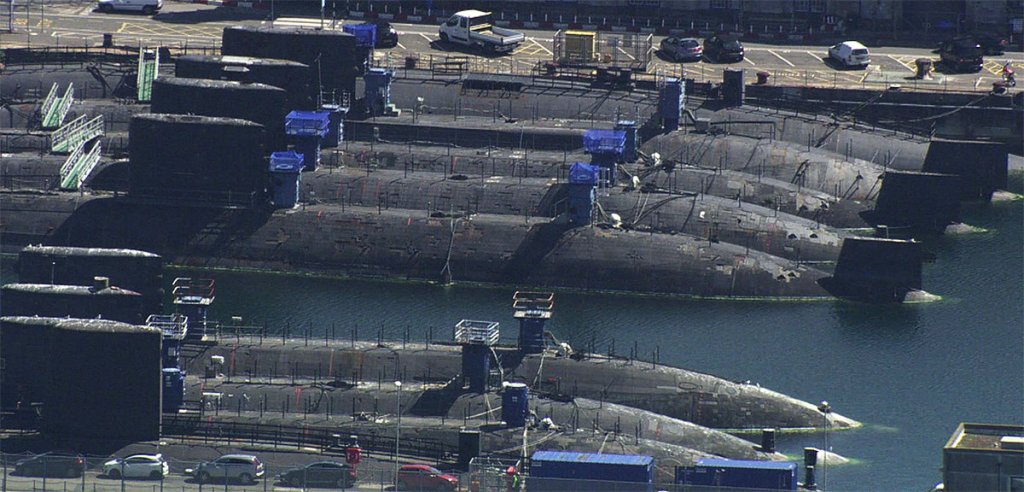
Key point: Britain isn’t the only nation that has problems disposing of nuclear warships. When you need to dispose of an old car, you can take it to a junkyard. But what do you do with a nuclear submarine whose reactor can make people glow in a most unpleasant way? Britain has retired twenty nuclear submarines since 1980. None have been disposed of, and nine still contain radioactive fuel in their reactors, according to an audit by Britain’s National Audit Office. These subs spent an average of twenty-six years on active service—and nineteen years out of service. “Because of this, the Department [Ministry of Defense] now stores twice as many submarines as it operates, with seven of them having been in storage for longer than they were in service,” the audit states. Even worse is the price tag. Britain has spent 500 million pounds ($646.4 million) maintaining those decommissioned subs between 1980 and 2017. Full disposal of a nuclear sub would cost 96 million pounds ($112.1 million). As a result, the total cost for disposing of the Royal Navy’s ten active subs and twenty retired vessels would be 7.5 billion pounds ($9.7 billion), NAO calculated……. The plan is to begin defueling subs, beginning with HMS Swiftsure, in 2023. But even then, the Ministry of Defense will have to deal with different subs that have different disposal requirements. “At present, the Department does not have a fully developed plan to dispose of Vanguard, Astute and Dreadnought-class submarines, which have different types of nuclear reactor,” NAO pointed out. “For the Vanguard and Astute-class it has identified suitable dock space which, if used, will need to be maintained.” Interestingly, the British military gets an exemption when it comes to nuclear waste. “Within the civil nuclear sector, organizations must consider nuclear waste disposal during the design stage of power stations and nuclear infrastructure. The Department does not have a similar obligation.” Britain isn’t the only nation that has problems disposing of nuclear warships. The Soviet Union sank nineteen nuclear vessels, and fourteen shipborne nuclear reactors, at sea, sparking fears of an environmental catastrophe. Even the U.S. Navy is struggling with how to dispose of nuclear subs and aircraft carriers, such as the decommissioned carrier USS Enterprise. https://nationalinterest.org/blog/buzz/royal-navy-having-real-trouble-disposing-its-old-nuclear-submarines-98017
|
|
UK election issues – climate crisis is the top concern

 Climate crisis topping UK election agenda is ‘unprecedented’ change
 Environmentalists say such political focus on green issues ‘unthinkable’ just five years ago, Guardian, Fiona Harvey Environment correspondent, Fri 22 Nov 2019 The climate emergency has risen to the top of the UK’s election agenda in a way that would have been “unthinkable” even five years ago, leading environmentalists have said, predicting that it augurs a permanent change in British politics.On Wednesday, Labour took the unprecedented move of putting green issues as the top section of its manifesto, the first time one of the UK’s two major parties has done so. Jeremy Corbyn led the appeal to voters with policies including an £11bn windfall tax on oil and gas companies, a million new jobs in a “green industrial revolution” and commitments on moving to a net-zero carbon economy.
“Such focus on climate and the environment would have been almost unthinkable five years ago,” said Shaun Spiers, executive director of the Green Alliance. “Tackling climate change runs through this manifesto in a way that is unprecedented from either of the main parties ahead of a UK general election.”
“It would not have been possible five years ago,” said Tom Burke, chairman of environmental thinktank E3G and former adviser to several governments, who said the move marked a permanent change in British politics, as younger voters in particular were “energised” over the environment. Public anxiety had been fuelled by people seeing extreme weather around the world, and the rise of climate activism in movements such as Extinction Rebellion and the school climate strikes reflected that. “The politicians are following the public on this, not the other way round.”
…….. The Liberal Democrats, while focusing on Brexit, have also made the climate emergency a key priority, promising to generate 80% of the UK’s electricity from renewable sources by 2030, to bring forward to 2045 the deadline for net-zero carbon, and to expand electric vehicles and ban fracking. The Green party wants to spend £100bn a year for the next decade on the climate crisis, replacing high-carbon infrastructure and creating jobs…. https://www.theguardian.com/environment/2019/nov/21/climate-crisis-topping-uk-election-agenda-is-unprecedented-change
Nuclear waste dump for South Australia a frightening prospect
Dump the dump “DUMP in decades” raises some frightening issues (The Advertiser, 19/11/19).
In my opinion, anyone who is greedy enough to vote for a nuclear dump for financial gain is a traitor to South Australia.
Let’s keep our state as nuclear free as we possibly can and fight against being Australia’s waste dump.
CHRISTINE PIERSON, Kensington Park
Bushfires flare and temperature records fall amid catastrophic conditions in South Australia
 Bushfires flare and temperature records fall amid catastrophic conditions in South Australia, https://www.abc.net.au/news/2019-11-20/south-australia-bushfires-catastrophic-conditions-live-updates/11706204 South Australia is experiencing catastrophic bushfire conditions, with emergency warnings issued as crews battle fires fanned by gale-force winds.
Look back at how events unfolded in our blog…..
Fukushima operator accused of cover-up over ‘contaminated’ water set to be poured into the Pacific
Fukushima operator accused of cover-up over ‘contaminated’ water set to be poured into the Pacific, Telegraph UK, Julian Ryall, Tokyo, 19 NOVEMBER 2019
|
The Japanese government has been accused of a cover-up after it refused to allow independent testing of water from the Fukushima power plant that is likely to be released into the Pacific Ocean. Officials at the industry ministry on Monday said the water stored at the crippled nuclear site was “safe” to release into the Pacific Ocean, despite concerns about radioactive material from environmental and citizens’ groups. Following a recent visit to the plant, the Tokyo Electric Power Co (Tepco) told The Telegraph that concerns over security prevented independent testing. “Other organisations are not permitted to carry out tests of the water”, Hideki Yagi, a spokesman for Tepco, told The Telegraph. “If we are going to allow external organisations to test the treated water then we would need to go through very strict procedures and due process because that water is contaminated. If it is taken outside this facility, then there need to be strict regulations”. Both Greenpeace and the Citizens’ Nuclear Information Centre (Cnic), an anti-nuclear lobbying group, suggested that Tepco may be trying to cover up the true scale of contamination of water stores at the site. Shaun Burnie, senior nuclear specialist for Greenpeace, says the refusal to permit third-party testing only serves to raise new concerns about plans to discharge the water into the ocean. “Moving nuclear material always carries risk, but for the purpose of independent analysis it would be justified”, he said. “Tepco has lost trust across society in Japan as well as in the international community, including in South Korea, and providing samples for analysis would be in their best interests – unless they are covering something up. “There are many questions about the effectiveness of Tepco’s … technology so providing samples that could verify their reports on content would go some way to demonstrating their commitment to transparency”, Mr Burnie added.
“It won’t remove doubts that they are covering up major issues at the site – but would be an improvement on the current situation”. Hideyuki Ban, co-director of Cnic, said: “There would need to be lots of checks because there is a lot of water, but right now it looks very much to the outside world that they are trying to cover something up – as they have a long history of doing – and it would be very much in their best interests to be transparent on this. “If they don’t, how will they ever get back any of the public trust that they have lost completely since the accident?” Mr Ban said. During a recent visit to the plant, Tepco officials told The Telegraph that a decision on how to dispose of the water must be made soon as tanks at the site are already near capacity and there is limited space to construct new storage facilities. The company estimates that capacity will be reached in the summer of 2022. ….. Tepco was forced to admit earlier this year that efforts to remove varying amounts of 62 radionuclides – including strontium, iodine, caesium and cobalt – from the water through the ALPS equipment had not been completely successful. Officials of the company have added that testing of the water is presently carried out by Tokyo Power Technology Ltd, which it claims has advanced analytical skills and “very high” reliability. Tokyo Power Technology is a subsidiary of Tepco that was set up two years after the Fukushima disaster. Monitoring is also conducted by the government-funded Japan Atomic Energy Agency and the Japan Chemical Analysis Centre. Azby Brown, lead researcher for Tokyo-based monitoring organisation Safecast Japan, a group that monitors radiation, said the lack of transparency means the risks to marine life of releasing the water are relatively unknown.
“We don’t have enough data to evaluate the impact that any release with those concentrations will have on marine life,” he said. “The expected doses that they are talking about are quite low and therefore the amount of radiation that is absorbed into marine life and then into humans when they eat fish would also be quite low. “But that has to be full of caveats because the way that information has been presented is confusing and not transparent so ordinary people do not understand and cannot make informed decisions.”https://www.telegraph.co.uk/news/2019/11/19/fukushima-accused-cover-up-contaminated-water-set-poured-pacific/ |
|
Holtec ‘s so-called “temporary” nuclear waste dump will be of little benefit to the state

“There is no guarantee that high-level nuclear waste can be safely transported to and through New Mexico.”
“There is no guarantee that this site will truly be ‘interim’ and won’t become the permanent dumping ground for our nation’s nuclear waste.”
“I’ve never understood what the rationale was for transporting this nuclear waste for these many miles all the way down to New Mexico. I don’t have an answer as to why it can’t be stored close to where it was created,”
“We really have to think about our land use, to think about being able to build other kinds of businesses that don’t end up spoiling the land and air,”
|
Not much benefit to the state’: Legislators scrutinize details of Holtec’s proposed nuclear storage facility, New Mexico Political Report, By Kendra Chamberlain 20 Nov 19, “……. The firm Holtec International, which specializes in spent nuclear fuel storage, has applied for a license from the federal Nuclear Regulatory Commission to construct and operate the facility in southeastern New Mexico. The proposal, which is still moving through the licensing application process established by the NRC for consolidated interim storage, would house up to 120,000 metric tons of high-level waste at capacity — more nuclear waste than currently exists in the country.
During his presentation to the committee, Mayer pitched the project as an economic boon to the state that would not affect oil and gas activity in the area and assured committee members the facility would not threaten water resources in the area. But legislators at the meeting weren’t completely sold on the project. “I’m reminded of how [much] of a long-term legacy this project is creating for fellow New Mexicans,” said state Sen. Jeff Steinborn, D-Las Cruces. “We’re dealing with something that our successors’ successors’ successors will be dealing with, with not much benefit to the state and a very significant upfront cost.” Continue reading |
1 This month

of the week – Australians for War Powers Reform (AWPR)
To see nuclear-related stories in greater depth and intensity
 Antinuclear