American media and politicians, including Biden, in the grip of the war profiteers
Who Are the Ultimate War Profiteers? A U.S. Air Force Veteran Removes the Veil, Covert Action Magazine By Christian Sorensen, February 10, 2021 “………….The most well-known industry pressure comes in the form of lobbying both political parties and funding their congressional campaigns (with extra focus on members of pertinent committees, such as Armed Services, Intelligence, Appropriations, and Foreign Relations)
This produces tangible results. As Steven Semler of the non-corporate Security Policy Reform Institute calculated, Democratic votes on the National Defense Authorization Act
correlate strongly with the campaign cash members accepted from the war industry. On average, House Democrats who voted for the NDAA accepted four times the amount of war industry cash as those who voted against it. In the Senate, Democrats who cast supporting votes took in six times as much industry cash.
Warmonger-In-Chief
 The Executive Branch is not exempt. Rapacious financiers—including hedge fund chiefs and venture capitalists—top the list of donors to the Biden Administration, though dark money groups prevent a full understanding of the overall campaign finance picture. Between July and September at least 67 billionaires and their spouses made contributions of more than $100,000 to committees supporting Joe Biden and the Democratic Party, according to records filed with the Federal Election Commission.
Biden’s campaign received over $9 million from Donald Sussman, CEO of Palmora Partners, a multi-billion dollar hedge fund, which has more than 260,000 shares in Raytheon, a preeminent weapons manufacturer and supplier of weapons to Saudi Arabia, which recently won a $100 million contract for Afghan Air Force training.
Another of Biden’s top donors, Jim Simons, who gave over $7 million, founded Renaissance Capital, which owns 1.2 million shares in Raytheon worth over $75 million, and 130,000 shares in Lockheed Martin worth $50 million.
Big Tech is positioned prominently among donors to the Biden inauguration celebration. Biden has been clear on the campaign trail that he does not intend to cut the military budget, even going so far as stating, “I’ve met with a number of my advisors and some have suggested in certain areas the budget is going to have to be increased.” Biden’s advisors are part and parcel of the military-industrial-congressional complex. Cozying up to wealthy donors, Biden infamously assured them that “nothing would fundamentally change” in a Biden presidency. https://covertactionmagazine.com/2021/02/10/who-are-the-ultimate-war-profiteers-a-u-s-air-force-veteran-removes-the-veil/
Corporate Media Kool-aid
Corporate media prevent the public from understanding the nature of the problem. A handful of business interests owns media outlets in the United States. Profit drives corporate media. U.S. corporate media (e.g. CNN, MSNBC, FoxNews) share the same business model: air what attracts the highest ratings in order to get more advertising revenue.
Corporate media air info-tainment, designed not to inform or foster critical thinking. Informing the public is not a priority. Maintaining the existing economic order is.
To the extent that corporate media air any information at all, the information reflects the opinions of the ruling class and the dogma of Corporate America.
Politically conditioning the U.S. public, corporate media never blame the military-industrial-congressional complex or capitalism for any of the problems in the world. Aiming for high ratings and lucrative advertising revenue, corporate media self-censor and taper the spectrum of acceptable foreign policy debate. War corporations purchase advertisements on corporate “news” shows to further confine the debate. Corporate pundits and newscasters do not speak out against advertisers.
Corporate media hire career militants (e.g. former CIA Director John Brennan, MSNBC; former CIA Deputy Director Mike Morrell, CBS News; retired General Jack Keane, FoxNews) who further confine the debate. Retired generals and admirals regularly contribute to all forms of corporate media, often without disclosing existing ties to war corporations or financial investments in war.
The Smith-Mundt Modernization Act of 2012 allowed government to increase its propaganda in corporate media. Drawing funding from the wealthy donor class and large corporate interests, National Public Radio is similarly confined. NPR’s new CEO as of September 2019 is John Lansing, who recently led U.S. propaganda at the U.S. Agency for Global Media.
Other industry pressure comes in the form of funding and running pressure groups [e.g. National Defense Industrial Association (NDIA), Aerospace Industries Association (AIA), Association of the United States Army (AUSA)] to dominate the Pentagon, administer arms fairs, and push favorable policies; funding think tanks to keep the narrative neoliberal and pro-war; recruiting retired generals and admirals (e.g. Dunford at Lockheed Martin, Mattis at General Dynamics, Winnefeld at Raytheon) to leverage their knowledge for financial gain; and flooding the Pentagon’s civilian offices with corporate executives (e.g., Esper and then Austin, Secretary of Defense; Lord, Undersecretary for Acquisition and Sustainment; McCarthy, Secretary of the Army). …………
Christian Sorensen is an Air Force veteran and author of the new book entitled Understanding the War Industry. See CAM’s review of the book: Wars R Us: A Review of Christian Sorensen’s New Book. https://covertactionmagazine.com/2021/02/10/who-are-the-ultimate-war-profiteers-a-u-s-air-force-veteran-removes-the-veil/
Catastrophic’ Nuclear Power Accidents ‘Highly Likely’ If US Reactors Are Extended For 100 Years.
Professor Karl Grossman is an award-wining investigative journalist. He authored Cover Up: What You Are Not Supposed to Know About Nuclear Power and Power Crazy and is the writer and presenter of television programmes on nuclear power. Grossman tells Sputnik that “nuclear power plants in the US were never seen as operating beyond 40 years” and that plans to extend their operating licences for more than twice that amount of time is incredibly dangerous. Every day a nuclear power plant operates the intense radiation embrittles (i.e. weakens) the metal in the reactor. “If the reactor is embrittled and cracks”, Grossman says, quoting a nuclear engineer-turned whistleblower, “it’s game over”.
Sputnik: You recently co-authored an article with journalist Harvey Wasserman calling on President Joe Biden to “inspect” the US’ “embrittled reactors”. Explain what exactly an embrittled reactor is.
Professor Karl Grossman: As Arnold “Arnie” Gundersen, a nuclear engineer with more than 44 years of experience in the nuclear industry, who became a whistleblower and is now chief engineer at Fairewinds Associates, described embrittlement in a nuclear power plant to my co-author of the article, Harvey Wasserman:
“When exposed to radiation, metal becomes embrittled and eventually can crack like glass. The longer the radiation exposure, the worse the embrittlement becomes. A nuclear reactor is just like a pressure cooker and is a pot designed to hold the radioactive contents of the atomic chain reaction in the nuclear core”, continued Gundersen, whose experience includes being a licensed Critical Facility Reactor Operator. “And metals in reactors are exposed to radiation every day a plant operates”……….
Sputnik: Why do you think that embrittled reactors are “at the top of the list of nuclear power concerns”?
Professor Karl Grossman: There are numerous major concerns regarding nuclear power plants.
But embrittlement is on the top of the list because nuclear power plants in the US were never seen as operating beyond 40 years—because of embrittlement.
That’s why the operating licenses originally issued by the US government for the plants were limited to 40 years. After 40 years, they were considered to be unsafe to run—because of embrittlement…….
virtually all operating atomic reactors are producing electricity at much higher base costs than solar and wind.
So the Nuclear Regulatory Commission is seeking to try to bail out the nuclear industry—to keep it going—by allowing nuclear power plants to operate for 100 years.
The US Nuclear Regulatory Commission has been staunchly pro-nuclear through the years, captured by the nuclear industry, indeed nicknamed the Nuclear Rubberstamp Commission for doing whatever the US nuclear industry wants it to do…….
, in extending the operating licenses for nuclear power plants for decades, the US Nuclear Regulatory Commission is also allowing them to be “uprated”—to run hotter and harder to generate more electricity and to further increase the likelihood of a nuclear power plant disaster.
The bottom line: a nuclear power plant catastrophe is being invited……..
Sputnik: What exactly is it that Joe Biden or his administration can do to address these issues?
Professor Karl Grossman: Biden must step in and order the inspection for embrittlement of US nuclear power plants. The old, decrepit nuclear power plant fleet in the US—with embrittled metal components—must be inspected. And with embrittlement and other likely age-induced problems, they must be shut down.
Biden must act to prevent what would constitute nuclear suicide in the United States.
Last month, Biden announced a climate change agenda transitioning the US towards renewable energy. But taking action against fossil fuel is not enough. Nuclear power plants are also engines of global warming. The claim of the nuclear industry that atomic energy is “carbon free” is a lie. The “nuclear fuel chain” which includes uranium mining, milling and fuel enrichment is carbon intensive, and nuclear power plants themselves emit Carbon-14, a radioactive form of carbon.
Sputnik: Can these embrittled reactors simply be replaced in order to safely extend the life of the power plant?
Professor Karl Grossman: It makes no sense to replace these deadly machines when here today [we have] safe, clean, green, renewable energy—led by solar and wind.
Nuclear power plants make no sense economically. Consider the only two nuclear power plants now under construction in the US, Vogtle 3 and 4 costing $30 billion for the two and the price still rising, and solar and wind being able to producing electricity at a lower cost—and be put into operation far more rapidly. And there are additional safe, green, cost-effective, clean, renewable energy sources—energy, most importantly, that we can live with.
Sputnik: Is there a realistic alternative to extending the lives of nuclear power plants?
Professor Karl Grossman: The realistic alternative is to shut down all 94 nuclear power plants now in the US and move ahead fully implementing the use of safe, green, cost-effective clean, renewable energy technologies. And this should be emulated in countries all over the world with nuclear power plants.
Three decades ago the Union of Concerned Scientists published a book titled Renewables Are Ready. Now renewables are more than ready to power the world. https://sputniknews.com/analysis/202102101082010676-catastrophic-nuclear-power-accidents-highly-likely-if-us-reactors-are-extended-for-100-years/
Who Are the Ultimate War Profiteers?

Wall Street: the Ultimate War Profiteers
Wall Street plays the foundational role in the war industry by outright owning war corporations……
Big Finance sits at the top of the war industry by purchasing most shares of war corporations and by owning war corporations. Insatiable demand for profit places immense structural pressure on the Pentagon and Capitol Hill for sky-high U.S. military and intelligence budgets, broad deployment of troops overseas, and the opening up of governmental jobs to corporations. …………
Wars must be created and expanded, and military bases, through which to route goods and services, must be established and entrenched to satisfy investors. Notwithstanding, ending the wars first requires addressing the embedded profit motive, otherwise it is business as usual.
Who Are the Ultimate War Profiteers? A U.S. Air Force Veteran Removes the Veil, Covert Action Magazine By Christian Sorensen February 10, 2021
While war corporations, or so-called “defense contractors,” make billions in profits, Wall Street is the ultimate beneficiary of today’s nonstop wars. The prosaic nature of war profiteering—far from the work of a shadowy cabal—is precisely why the collusion is so destructive and should be outlawed.
The U.S. ruling class deploys the military for three main reasons: (1) to forcibly open up countries to foreign investment, (2) to ensure the free flow of natural resources from the global south into the hands of multinational corporations, and (3) because war is profitable. The third of these reasons, the profitability of war, is often lacking detail in analyses of U.S. imperialism: The financial industry, including investment banks and private equity firms, is an insatiable force seeking profit via military activity.
The war industry is composed of corporations that sell goods and services to the U.S. government and allied capitalist regimes around the world. Investment banks and asset management firms hold most shares of every major public war corporation.
The best-known financial firms holding the stock of war corporations include: Vanguard Group, BlackRock, State Street, JPMorgan Chase, Wells Fargo, and Wellington Management Continue reading
No nukes in Asia…or anywhere — Beyond Nuclear International

The petition was initiated by24 countries (255 organizations) including
【Australia】Friends of the Earth Australia、Marrickville Peace Group、People for Nuclear Disarmament、Port Adelaide/Semaphore Amnesty International Australia Action Group、Remembering and Healing、Sydney Peace & Justice Coalition、Uranium Free NSW
Sign petition to demand all governments abandon nuclear power
No nukes in Asia…or anywhere — Beyond Nuclear International
Groups call for a nuclear power ban and no radioactive water dump at Fukushima
By No Nukes Asia Forum Japan • Citizens’Nuclear Information Center • Friends of the Earth Japan
On the 10th Anniversary of the Fukushima nuclear disaster, groups in Japan have initiated an international signature campaign against the discharge of contaminated water and calling for the discontinuation of nuclear power plants now! Please join this campaign by signing the petition.
The Japanese government is planning to release Fukushima’s radioactive contaminated water into the ocean. Japanese citizens, from Fukushima Prefecture and beyond, are strongly opposed to this plan.
The Fukushima Prefecture Fishermen’s Association, with the backing of the Fishermen’s Association from all over Japan, have submitted an opinion of opposition to the government. The Fukushima Prefecture Agricultural Cooperatives and Forestry Associations along with 43 local governments in Fukushima Prefecture also participated in this campaign, and 450,000 citizens from across Japan have signed a petition against the government plan.
The threat of the release of contaminated water has triggered much concern and opposition among citizenry overseas as well, including those from neighboring countries.Contaminated water from Japan’s Fukushima nuclear plant has already exceeded 1.24 million tons. We are deeply concerned about the adverse effects the water will have on the human body by way of consuming fish and shellfish, which are staples in the region’s diet.
We demand the Japanese government keep the contaminated water stored in the tanks until the water’s levels of radioactivity are significantly reduced. The government could also adopt mortar-induced radioactive waste solidification technology.
Meanwhile, in neighboring South Korea, the government has advocated for denuclearization with its energy plan on paper but has not ceased to build new nuclear power plants (NPPs). Serious safety breaches have been reported repeatedly, including (but not limited to) the recent tritium leak at Wolsong NPP in Gyeongju and the disclosure of an air gap in the containment building at Yeonggwang Hanbit NPP.
In Taiwan, the government is ostensibly advancing forward to become the first nuclear-free country in Asia under the slogan of “Zero nuclear power generation in 2025.” However, the Taiwanese government plans to hold a referendum on resuming the construction of the 4th NPP in August 2021.
The construction of NPPs continues in Turkey and India while other countries, including the Philippines, seek new opportunities to build NPPs.
Debates over safe storage and disposal of nuclear waste that will affect future generations for hundreds of thousands of years continue in Korea, Japan, Taiwan and Australia.
Ten years have passed since the Fukushima nuclear disaster yet attempts to maintain nuclear power linger on in Asia and other regions of the world. However, at a time the world is turning to renewable energy, we are becoming increasingly aware the time of nuclear power has expired.
We demand that:
·The Japanese government stop its plan to discharge Fukushima NPP’s contaminated water into the ocean;
·The Korean government disclose information on the actual state of radioactive leakage at Wolseong NPP;
·All governments abandon plans to build new NPPs and instead focus on expanding renewable energy;
·All governments discontinue the operation of hazardous NPPs and drop plans to extend their life spans; and
·Stop building nuclear waste facilities without explicit consent of residents.
The petition was initiated by24 countries (255 organizations)…………..https://beyondnuclearinternational.org/2021/02/08/no-nukes-in-asia/
America’s new $100Billion missiles are intended both for attack, and as a target.
Housed in permanent silos spread across America’s high plains, they are intended to draw fire to the region in the event of a nuclear war, forcing Russia to use up a lot of atomic ammunition on a sparsely populated area.
how little some nuclear weapons programs have to do with national defense.!
 Why is America getting a new $100 billion nuclear weapon?, https://thebulletin.org/2021/02/why-is-america-getting-a-new-100-billion-nuclear-weapon/?utm_source=Newsletter&utm_medium=Email&utm_campaign=MondayNewsletter022021&utm_content=NuclearRisk_NewWeapon_02082021 By Elisabeth Eaves, February 8, 2021 merica is building a new weapon of mass destruction, a nuclear missile the length of a bowling lane. It will be able to travel some 6,000 miles, carrying a warhead more than 20 times more powerful than the atomic bomb dropped on Hiroshima. It will be able to kill hundreds of thousands of people in a single shot.
The US Air Force plans to order more than 600 of them.
On September 8, the Air Force gave the defense company Northrop Grumman an initial contract of $13.3 billion to begin engineering and manufacturing the missile, but that will be just a fraction of the total bill. Based on a Pentagon report cited by the Arms Control Association Association and Bloomberg News, the government will spend roughly $100 billion to build the weapon, which will be ready to use around 2029.
To put that price tag in perspective, $100 billion could pay 1.24 million elementary school teacher salaries for a year, provide 2.84 million four-year university scholarships, or cover 3.3 million hospital stays for covid-19 patients. It’s enough to build a massive mechanical wall to protect New York City from sea level rise. It’s enough to get to Mars. Continue reading
The real value of the nuclear ban treaty
 The real value of the nuclear ban treaty https://thebulletin.org/2021/02/the-real-value-of-the-nuclear-ban-treaty/?utm_source=Newsletter&utm_medium=Email&utm_campaign=MondayNewsletter02082021&utm_content=NuclearRisk_ValueTPNW_02042021
By Carl Robichaud, Karim Kamel | February 4, 2021
Last month, 75 years after nuclear weapons were first used, a treaty came into force that bans them. The Treaty on the Prohibition of Nuclear Weapons (TPNW), also known as the ban treaty, is the culmination of a decade of work by civil society leaders and diplomats who, frustrated by stagnation in traditional venues, focused the lens of international humanitarian law on nuclear weapons. This approach, dismissed at first, resonated with many states that understood nuclear weapons to be inherently indiscriminatory and inhumane.
The new treaty outlaws the use or threat of use of nuclear weapons, prohibits their development and possession, bans their transfer or receipt, and prohibits stationing, deploying, or assisting with nuclear arms.
But does any of this matter? The treaty lacks verification and enforcement mechanisms. No state with nuclear weapons will join anytime soon. The nine nuclear-armed states and their allies boycotted the negotiations and pressured other states to abandon the treaty. Each has nuclear modernization programs that will stretch for decades.
Skeptics of the treaty claim it is worse than irrelevant; it will accentuate tensions, undermine collective action on urgent proliferation challenges, diminish alliance cohesion or strategic stability, and potentially establish an alternative to the Treaty on the Nonproliferation of Nuclear Weapons (NPT). We should not, they argue, take any steps that might undermine this bedrock agreement that for 50 years has helped limit the spread of nuclear arms.
These objections are overstated. Collective action against proliferation has been, and will remain, a challenge with or without the ban treaty. Moreover, the treaty was carefully drafted not to conflict with existing nonproliferation obligations, including the NPT.
These objections are overstated. Collective action against proliferation has been, and will remain, a challenge with or without the ban treaty. Moreover, the treaty was carefully drafted not to conflict with existing nonproliferation obligations, including the NPT.
But the broader point holds: The treaty does little to reduce short-term nuclear risks. That is not its point. What the treaty does is establish, in clear and certain terms, that nuclear weapons are unacceptable. Over 122 countries supported the adoption of the treaty, 51 states have ratified it, and these numbers will continue to grow. Even within states that oppose the treaty, many citizens agree with its premise. Various polls suggest more than half of Americans believe the United States should work to eliminate all nuclear weapons, and support for this view is even higher in Japan and among NATO countries. In the words of former US Defense Secretary William Perry, the ban treaty “rightly establishes abolition as the standard that all nations should be actively working to achieve, rather than an indeterminate future goal.”
The status quo, with its 16,000 nuclear weapons, is far from stable. Everyone alive today lives in the shadow of a potential nuclear war. Climate modeling suggests that even a limited nuclear war, such as one between India and Pakistan, could result in a billion deaths as the ash from burning cities “could blot out the sun, starving much of the human race.”
The treaty represents a refusal to live forever under this nuclear shadow. It reflects a belief that the status quo represents a grave inequity, in which nuclear costs are imposed upon all, while the benefits of nuclear arms accrue to the few states privileged to possess them. In a world of inequities, this is especially pernicious because it is hidden from view. In its preamble, the ban treaty calls out the disproportionate effects on marginalized communities, including indigenous peoples, societies harmed by testing, and women.
At least from a humanitarian point of view, the question has been settled: Nuclear weapons are unacceptable. That alone will not make them disappear. But, in the meantime, the ban treaty need not distract from bilateral arms-control and threat-reduction efforts. The recent agreement to extend New START should be commended, and we must establish new mechanisms to build confidence and reduce tensions. The existence of a treaty banning nuclear weapons does not contradict these efforts; on the contrary, it should help build support for more sensible nuclear postures and for prohibitions on nuclear explosive testing and the production of weapons-usable materials.
The nuclear age is in its eighth decade, a mere dot on the timeline of human history. In this brief span there have been dozens of known close calls and near misses. So long as these weapons exist, ready to use at a moment’s notice, we court disaster. The nuclear powers find themselves, as Khrushchev wrote to Kennedy during the Cuban missile crisis, in a tightening knot. Untying this knot will require a multi-generation project that brings together verification science with extraordinary foresight, diplomatic skill, and political leadership. But first it requires a change in our collective beliefs about nuclear weapons. This is the contribution of the ban treaty, and it should not be underestimated.
Canadian local community group opposes nuclear waste dump on farming land – like Kimba!

|
South Bruce nuclear dump opponents address Minto councilGroup: site near Teeswater would mean transporting waste through neighbouring communities , Wellington Advertiser, Patrick Raftis, February 4, 2021 MINTO – A group fighting a proposal to locate an underground dumpsite for radioactive nuclear waste in neighbouring South Bruce brought its concerns to council here on Feb. 2. “Over 50 years ago the nuclear industry told the government to let them start producing nuclear power and they would have a solution for the waste within five years,” said Michelle Stein of Protect Our Waterways – No Nuclear Waste (POWNNW), during a council video-conference meeting. “But they didn’t. Now they have a problem.” Stein explained POWNNW was formed last February after an announcement that 1,300 acres of prime farmland had been purchased and optioned by the Nuclear Waste Management Organization (NWMO). NWMO is proposing to locate a deep geologic repository (DGR) in South Bruce to contain high-level radioactive nuclear waste from all of Canada’s nuclear reactors. Stein said the radioactive waste from Canada’s reactors is “safe where it is right now. “But politically, it’s no longer acceptable and the government and the public are demanding a solution before they grant the nuclear industry permission to expand.” Stein continued, “There’s a lot of money on the line. So the industry has set up [NWMO], which is funded and directed by the nuclear industry and the best idea they’ve come up with is to take this highly radioactive nuclear waste that is dangerous for over 100,000 years and bury it under prime farmland in the municipality of South Bruce.” The proposed site near Teeswater was selected, said Stein, because “that’s where they found owners willing to sell them land” and “South Bruce was one of the municipalities who offered to learn more in exchange for money – lots of money. “A lot of the money is spent on promoting the project, but there’s also donations to local organizations and community projects,” she noted. Stein told council l the proposed site “has the Teeswater river running through it, wetlands at the edge of the Greenock Swamp, springtime floodplain and the town of Teeswater is close enough to see, with its elementary schools and the Teeswater Gay Lea plant.” Stein called the proposed South Bruce repository “an experiment,” noting there are currently no operating DGRs for high level nuclear waste on the planet. She noted an almost complete, but not yet licensed, DGR in Finland is presently the closest to coming on line. According to the Canadian Nuclear Safety Commission, said Stein, the Waste Isolation Plant Pilot (WIPP) in New Mexico is the only operational DGR in the world. It accepts only low/intermediate nuclear waste, not high level, and is located in a desert, 35 kilometres from the nearest town and surrounded by a controlled safety zone encompassing more than 10,000 acres. “The only thing we can really learn from this project is that accident happens and you can’t predict human error,” said Stein. She added that in 2014 the WIPP “became radio actively contaminated by explosion of an underground drum of nuclear waste due to human error.” Stein said the 2014 incident was “a mistake that took three years and $500 million to clean up.” She pointed out establishing a DGR in South Bruce would massively increase the amount of nuclear waste being transported through a wide region. “Currently they are around five loads of high level waste being moved per year, but an operating DGR would increase that to one or two shipments per day. These loads would be transported through surrounding communities,” she stated. “And what does this mean for agriculture? Will consumers want to purchase products produced next to a nuclear dump? Will people want to buy freezer beef or chicken raised on or beside a nuclear dump?” With the NWMO publicly stating it is looking for a “willing host,” Stein said POPNNW wants to see a clear benchmark that defines the term. The group is lobbying for a standard that would require a two-thirds vote in favour of the proposed DGR, using a community referendum with a clear yes or no question, supervised by an independent third party. Councillor Ron Elliott asked Stein what her group believes would be a better solution to burying the waste. “You’re recommending we can’t get rid of the nuclear waste underground. What do you recommend we do with it? Because it’s there, we’ve got nuclear waste to get rid of,” said Elliott. Stein replied, “At this time we’re recommending they go with rolling stewardship, which is keeping it above ground in a monitored state until they come up with a real solution.” “So wouldn’t that be more dangerous?” asked Elliott “Building a DGR doesn’t remove it from above ground. It still needs to be above ground (in containment pools) for 30 years before it can even be moved,” said Stein. “What is a safe recommendation?” Elliott persisted. “At the end of the day the nuclear industry has had over 50 years to come up with an idea and they haven’t,” Stein responded. “To be honest, most of us have only been thinking about it for a year. But to accept the wrong solution is in fact no solution at all.” Bill Noll, another member of the POPNNW delegation, said Ontario Power Generation has stated nuclear waste has been stored safely above ground for 60 years “and it can be stored longer.” Noll said the group would like to see Canada wait for the results from the planned Finnish DGR in 2024 before going ahead with one here. “Let them experiment for a couple of decades while we keep it above ground safely and then maybe we can consider whether or not the DGR is safe,” said Noll. Deputy mayor Dave Turton asked Stein if local officials in South Bruce responded to the group’s concerns. “Are they listening to you?” he asked. Noll replied, “We are up against the wall to some degree. Our council is very much interested to see some economic development in the area, and we certainly understand and appreciate that, and so they’re very much in tune with the agenda being put forward by the NWMO.” Mayor George Bridge thanked the group for sharing information with council. |
|
|
Big risks for South Africa in proposed nuclear power plan
|
South Africa’s new nuclear power plan is a high-regret option, https://www.dailymaverick.co.za/article/2021-02-05-south-africas-new-nuclear-power-plan-is-a-high-regret-option/ By Chris Yelland• 5 February 2021 The Integrated Resource Plan (IRP) 2019 indicates that a nuclear build programme ‘is a no-regret option in the long term’. I disagree and consider that a nuclear new-build programme is exactly the opposite – and very high-risk.
The National Energy Regulator of South Africa (Nersa), has issued a consultation paper and called for public input, comment and response to a determination by the Minister of Mineral Resources and Energy, in terms of Section 34(1) of the Electricity Regulation Act, 2006, to procure 2,500 MW of new nuclear power in South Africa. The ministerial determination was sent to Nersa for its consideration and concurrence, which is a necessary step before the Department of Mineral Resources and Energy (DMRE) can issue a request for proposals to nuclear vendors following an open, transparent and competitive procurement process. I am opposed to new nuclear power in South Africa, and this is definitely not because I am ideologically against nuclear energy or nuclear technology per se, but for sound, pragmatic reasons and the absence of a valid business case, including, amongst other factors:
This ministerial determination comes at a time when the world of energy and electricity is undergoing rapid change when the prices of renewable and flexible generation technologies are plummeting when new energy storage technologies are emerging, when the future of large-scale, centralised generation is changing and when the demand for electricity over long-distance transmission grids is decidedly uncertain and declining. Continue reading |
Deploying weapons in space crosses a threshold that cannot be walked back.

weaponizing space could become a classic case of trying to solve one problem while creating a much worse problem.
It’s time for arms control planning to address the issues raised by this drift toward militarization of space. Space is a place where billions of defense dollars can evaporate quickly and result in more threats about which to be concerned. China and Russia have been proposing mechanisms for space arms control at the United Nations for years; it’s time for the U.S. to cooperate in this effort.
Deploying weapons in space crosses a threshold that cannot be walked back.
The US should negotiate a ban on basing weapons in space, BY JOHN FAIRLAMB, — 02/04/21, https://thehill.com/opinion/national-security/536774-the-us-should-negotiate-a-ban-on-basing-weapons-in-space
The Biden administration is assembling a deep bench of personnel with experience negotiating arms control agreements and already has agreed with Russia to extend the New Start Treaty. It’s clear the administration intends to initiate another look at the 2018 Nuclear Posture Review and the massive buildup in nuclear weapons begun by the Trump administration. While it’s good that the Biden administration intends to resume negotiations to continue nuclear force reductions, the specter of placing weapons in space is another area that requires a serious arms control effort.
Now that separate space organizations have been established, major military commands are advocating to develop new capabilities. Pentagon buzzwords characterize space as a “contested domain” and some consider actual war-fighting in space to be inevitable. Some advocates argue that the U.S. should strive for technological superiority in space to ensure our dominance of that critical domain.
The history of technological advancement in weapons systems shows that any advantage gained usually lasts fewer than five years and guarantees a cycle of ever-increasing cost and new perceptions of threat. Already, there are weapons that can be targeted against space-based assets from non-space domains. Russia and China are believed to have deployed ground-based capabilities to attack satellites, and India joined this club last year by using a ground-based missile to bring down a satellite.
Although it isn’t clear how the Biden administration will shape space policy, during his confirmation hearing, Secretary of Defense Lloyd Austin seemed to signal a shift away from a more muscular approach and back to a focus on space resiliency and protecting U.S. space assets. As one analyst concluded, the language Austin used signals the Biden team wants to “start to lean away from … the pugilistic aspects of what’s been articulated [by the Trump administration].” Responding to a question about what his advice would be to the U.S. Space Command concerning military space operations, Austin stressed measures to protect U.S. assets that don’t include offensive options for taking the fight to adversaries. While not a fully articulated space policy, this is a welcome change of tone after the past few years of heavy breathing about waging war in space.
If the U.S. and other nations continue the current drift toward organizing and equipping to wage war in space, Russia, China and others will strive to improve capabilities to destroy U.S. space assets. Over time, this would greatly increase the threat to the full array of U.S. space-based capabilities. Intelligence, communications, surveillance, targeting and navigation assets already based in space, upon which the Department of Defense (DOD) depends for command and control of military operations, increasingly would be at significant risk. As a consequence, weaponizing space could become a classic case of trying to solve one problem while creating a much worse problem.
For example, buried in the DOD 2020 budget is $150 million for research into putting missile defense assets in space to attack enemy nuclear missiles in the boost phase. If the U.S. or another nation does deploy weapons in space, it would be the first country to do so and likely would be a disaster for strategic stability. To ensure the credibility of their nuclear deterrents, Russia, China and others could be expected to respond by deploying additional and new types of long-range ballistic missiles, as well as missiles employing non-ballistic trajectories that are harder to hit. Russia and China also would strive to improve their ability to destroy U.S. space-based interceptors, which would greatly increase the threat to the full array of U.S. space assets.
It’s time for arms control planning to address the issues raised by this drift toward militarization of space. Space is a place where billions of defense dollars can evaporate quickly and result in more threats about which to be concerned. China and Russia have been proposing mechanisms for space arms control at the United Nations for years; it’s time for the U.S. to cooperate in this effort.
In 2015, Frank Rose, assistant secretary for arms control, verification and compliance in the State Department, called for arms control in space at the Association of Southeast Asian Nations Regional Forum workshop on space security. But, he said the Obama administration opposed a 2008 Russian and Chinese proposal to ban all weapons in space because it was unverifiable, contained no prohibition on developing and stockpiling space arms, and did not address ground-based space weapons such as direct ascent anti-satellite missiles.
Instead of just criticizing others’ proposals, the U.S. should join in the effort and do the hard work of crafting a space arms control agreement that deals with the concerns we have and that can be verified. A legally binding international treaty banning the basing of weapons in space should be the objective.
Let’s be clear: Deploying weapons in space crosses a threshold that cannot be walked back. Given the implications for strategic stability, and the likelihood that such a decision by any nation would set off an expensive space arms race in which any advantage gained would likely be temporary, engaging now to prevent such a debacle seems warranted.
John Fairlamb, Ph.D., is a retired Army colonel with 45 years of government service, much of it in joint service positions formulating and implementing national security strategies and policies, including two four-year details in the Department of State and as the political-military affairs adviser for a major Army command. His doctorate is in comparative defense policy analysis.
At last, UK government will investigate birth defects amongst children of nuclear test veterans
Mirror 3rd Feb 2021, Thousands of sick children and adults have finally been offered government research into whether their DNA was damaged by Cold War nuclear bomb tests.
An estimated 155,000 descendants of National Servicemen who took part in atomic weapons tests in the 1950s now report 10 times the normal rate birth defects, and are five times more likely to die as infants. Now Veterans Minister Johnny Mercer has promised to consider thorough research into whether they suffer a genetic legacy from Britain’s radiation
experiments.
https://www.mirror.co.uk/news/uk-news/thousands-offered-research-dna-damage-23436272
With a nuclear waste dump, will the town of Kimba have to change its name?
Why Spain plans to ban uranium mining.
Shock waves: what will a Spanish ban mean for uranium mining in Europe?, Mining Technology, Yoana Cholteeva12 January 2021 ” ………. Reasons behind the proposed ban
The proposed ban has been welcomed by environmental groups and local organisations concerned about the potential damage to ecosystems in the country and overall safety, as argued by the Spanish organisation Stop Uranio (Stop Uranium). The group, which was established in 2013, has since then been trying to prevent the approval and construction of Berkley Energy’s uranium mining project in the Campo Charro area of Salamanca.
For the past seven years, Stop Uranium has organised a number of campaigns and protest rallies over the country, with activists from both Spain and Portugal raising concerns over Salamanca’s agriculture lands, pastures, rural tourism, and the population’s health being at stake.
Stop Uranium member and spokesperson Jose Manuel Barrueco has written in The Free – blog of the post capitalist transition, that “the majority of the inhabitants of the area oppose the planned mines due to the negative effects that this activity will entail for the region: explosions with release of radioactive dust into the atmosphere, the continuous transfer of trucks and heavy machinery, loss of forest, diversion of water courses, etc.”.
It terms of scientific evidence to support the some of the claims, according to a 2013 peer reviewed article, ‘Uranium mining and health’, published in the Canadian Family Physician journal, the chemical element has the potential to cause a spectrum of adverse health effects to people, ranging from renal failure and diminished bone growth to DNA damage.
The effects of low-level radioactivity include cancer, shortening of life, and subtle changes in fertility or viability of offspring, as determined from bothanimal studies and data on Hiroshima and Chernobyl survivors.
….. MP Juan Lopez de Uralde has in turn voiced his support of a holistic approach, telling the Spanish online newspaper Publico that banning uranium extraction is directly linked to the energy policies of both Spain and the EU. He continued that “since no uranium mine is active in the Old Continent”, “by committing to the closure of nuclear power stations we should complete the circle entirely by banning uranium mining”………. https://www.mining-technology.com/features/shock-waves-what-will-a-spanish-ban-mean-for-uranium-mining-in-europe/
Unsafe plan for abandoning nuclear reactors onsite, and developing Small Nuclear Reactors
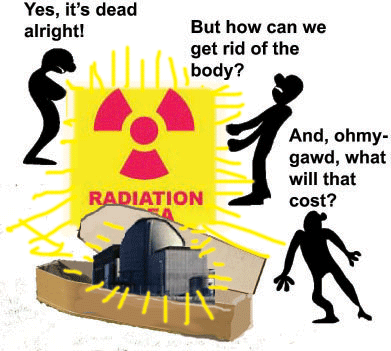 Groups oppose plans to abandon defunct nuclear reactors and radioactive waste, https://rabble.ca/columnists/2021/02/groups-oppose-plans-abandon-defunct-nuclear-reactors-and-radioactive-wasteThe Canadian Nuclear Safety Commission (CNSC) has just given a green light to the preferred industry solution for disposal of nuclear reactors — entomb and abandon them in place, also known as “in-situ decommissioning.” This paves the way for the introduction of a new generation of “small modular” nuclear reactors or SMRs.SMRs bring many challenges, including safety of untested designs, nuclear weapons proliferation risks, high costs, disposal of radioactive waste, and public acceptance. Groups concerned about nuclear safety are objecting to plans in the works to abandon these nuclear reactors and the radioactive waste they produce once they are shut down. Groups oppose plans to abandon defunct nuclear reactors and radioactive waste, https://rabble.ca/columnists/2021/02/groups-oppose-plans-abandon-defunct-nuclear-reactors-and-radioactive-wasteThe Canadian Nuclear Safety Commission (CNSC) has just given a green light to the preferred industry solution for disposal of nuclear reactors — entomb and abandon them in place, also known as “in-situ decommissioning.” This paves the way for the introduction of a new generation of “small modular” nuclear reactors or SMRs.SMRs bring many challenges, including safety of untested designs, nuclear weapons proliferation risks, high costs, disposal of radioactive waste, and public acceptance. Groups concerned about nuclear safety are objecting to plans in the works to abandon these nuclear reactors and the radioactive waste they produce once they are shut down.
Over 100 Indigenous and civil society groups have signed a public statement opposing SMR funding, noting that the federal government currently has no detailed policy or strategy for what to do with radioactive waste. Many of these groups are also participating in a federal radioactive waste policy review launched in November 2020. The Assembly of First Nations passed resolution 62/2018 demanding that the nuclear industry abandon plans for SMRs and that the federal government cease funding them. It calls for free, prior and informed consent “to ensure that no storage or disposal of hazardous materials shall take place in First Nations lands and territories.” SMR waste includes not only reactor fuel but also the reactors themselves. An SMR emits no radiation before start-up (other than from uranium fuel) and could easily be transported at that stage. But during reactor operation, metal and concrete components absorb neutrons from the splitting of uranium atoms — and in the process, transform into radioactive waste. Removing an SMR after shut-down would be difficult and costly, and comes with the need to shield workers and the public from its radioactivity. Abandoning nuclear reactors on site has been in the works for some time. CNSC helped draft a 2014 nuclear industry standard with in-situ decommissioning as an option and then included it in a July 2019 draft regulatory document. However, when the International Atomic Energy Agency (IAEA) released a peer-reviewed report on Canada’s nuclear safety framework last February, it said in-situ decommissioning is “not consistent” with IAEA safety standards. The IAEA suggested that CNSC “consider revising its current and planned requirements in the area of decommissioning to align with the IAEA guidance that entombment is not considered an acceptable strategy for planned decommissioning of existing [nuclear power plants] and future nuclear facilities.” It also noted that CNSC is reviewing license applications for in-situ decommissioning of shut-down federal reactors in Ontario and Manitoba, and encouraged Canada “to request an international peer review of the proposed strategy” for legacy reactors. But CNSC continued to pursue this strategy. Clever language in a June 2020 document appeared to rule out on-site reactor disposal, but left the door open where removal is not “practicable”:
At public meeting last June, CNSC Commissioner Sandor Demeter asked: “why are future facilities in this sentence when in fact we should be designing them so that in-situ decommissioning is not the option?” Former CNSC staff member Karine Glenn replied that “leaving some small parts of a structure behind…especially if you are in a very, very remote area, may be something that could be considered.” Glenn is now with the industry-run Nuclear Waste Management Organization, tasked with leading the development of a radioactive waste management strategy for Canada. Commissioners decided to approve the regulatory document, but with added text to clarify where in-situ decommissioning would be acceptable. They asked for additional text on “legacy sites” and “research reactors,” stating that “[t]he Commission need not see this added text if it aligns with the oral submissions staff made in the public meeting.” But no new clarifying text was added to the final version of the document published on January 29, 2021. It enables abandonment of SMRs — by retaining the reference to future nuclear facilities — and of “research and demonstration facilities, locations or sites dating back to the birth of nuclear technologies in Canada for which decommissioning was not planned as part of the design.” The CNSC seems willing to ignore international safety standards — and a decision of its own commission — to accommodate nuclear industry proponents of SMRs and allow radioactive waste to be abandoned in place. Meanwhile, the federal government has assigned the nuclear industry itself — via the Nuclear Waste Management Organization — the task of developing a radioactive waste strategy for Canada. Barring public outcry, that strategy will be abandonment. Ole Hendrickson is a retired forest ecologist and a founding member of the Ottawa River Institute, a non-profit charitable organization based in the Ottawa Valley. |
|
America’s ”fleet” of dangerously embrittled nuclear reactors
|
Embrittlement in Nuclear Power Plants, https://www.counterpunch.org/2021/02/01/embrittlement-in-nuclear-power-plants/ BY KARL GROSSMAN – HARVEY WASSERMAN
– 1 Feb 2021
Of all the daunting tasks Joe Biden faces, especially vital is the inspection of dangerously embrittled atomic reactors still operating in the United States.
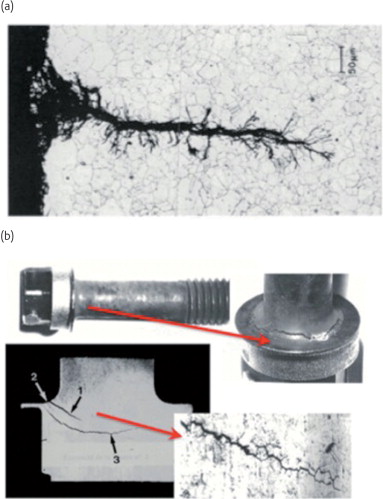
A meltdown at any one of them would threaten the health and safety of millions of people while causing major impact to an already struggling economy. The COVID-19 pandemic would complicate and add to the disaster. A nuclear power plant catastrophe would severely threaten accomplishments Biden is hoping to achieve in his presidency. The problem of embrittlement is on the top of the list of nuclear power concerns. The “average age”—length of operation—of nuclear power plants in the U.S., the federal government’s Energy information Agency, reported in 2019 was 38 years. That’s why the operating licenses originally issued for the plants were limited to 40 years. Here’s how Arnold “Arnie” Gundersen, a nuclear engineer with more than 44 years of experience in the nuclear industry, who became a whistleblower and is now chief engineer at Fairewinds Associates, explains embrittlement: “When exposed to radiation, metal becomes embrittled and eventually can crack like glass. The longer the radiation exposure, the worse the embrittlement becomes.” A nuclear reactor is just like a pressure cooker and is a pot designed to hold the radioactive contents of the atomic chain reaction in the nuclear core,” continues Gundersen, whose experience includes being a licensed Critical Facility Reactor Operator. “And metals in reactors are exposed to radiation every day a plant operates” “If the reactor is embrittled and cracks,” says Gundersen, “it’s ‘game over’ as all the radiation can spew out into the atmosphere. Continue reading |
Radiation illnesses and COVID-19 in the Navajo Nation
 Radiation illnesses and COVID-19 in the Navajo Nation, Bulletin of the Atomic Scientists, By Jayita Sarkar, Caitlin Meyer, February 3, 2021 The COVID-19 pandemic is wiping out Indigenous elders and with them the cultural identity of Indigenous communities in the United States. But on lands that sprawl across a vast area of the American West, the Navajo (or Diné) are dealing not just with the pandemic, but also with another, related public health crisis. The US Centers for Disease Control and Prevention says COVID-19 is killing Native Americans at nearly three times the rate of whites, and on the Navajo Nation itself, about 30,000 people have tested positive for the coronavirus and roughly 1,000 have died. But among the Diné, the coronavirus is also spreading through a population that decades of unsafe uranium mining and contaminated groundwater has left sick and vulnerable. Radiation illnesses and COVID-19 in the Navajo Nation, Bulletin of the Atomic Scientists, By Jayita Sarkar, Caitlin Meyer, February 3, 2021 The COVID-19 pandemic is wiping out Indigenous elders and with them the cultural identity of Indigenous communities in the United States. But on lands that sprawl across a vast area of the American West, the Navajo (or Diné) are dealing not just with the pandemic, but also with another, related public health crisis. The US Centers for Disease Control and Prevention says COVID-19 is killing Native Americans at nearly three times the rate of whites, and on the Navajo Nation itself, about 30,000 people have tested positive for the coronavirus and roughly 1,000 have died. But among the Diné, the coronavirus is also spreading through a population that decades of unsafe uranium mining and contaminated groundwater has left sick and vulnerable.
In Indigenous lands where nuclear weapons testing took place during the Cold War and the legacy of uranium mining persists, Indigenous people are suffering from a double whammy of long-term illnesses from radiation exposure and the COVID-19 pandemic. Yet, we have not witnessed in the mainstream media and policy outlets a frank discussion of how the two public health crises have created an intractable situation for Indigenous communities. The Diné are drinking poisoned water, putting them at risk for more severe coronavirus infections. From 1944 until 1986, 30 million tons of uranium ore was extracted on Navajo lands. At present, there are more than 520 abandoned uranium mines, which for the Diné represents both their nuclear past as well as their radioactive present in the form of elevated levels of radiation in nearby homes and water sources. Due to over four decades of uranium mining that supplied the US government and industry for nuclear weapons and energy, radiation illnesses characterize everyday Diné life. The water crisis Continue reading |
1 This month

of the week – Australians for War Powers Reform (AWPR)
To see nuclear-related stories in greater depth and intensity
 Antinuclear