Nuclear energy too slow, too expensive to save climate: report
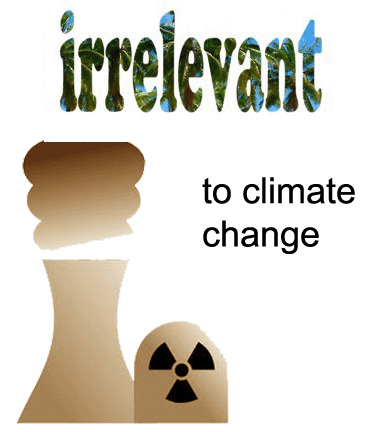 Nuclear energy too slow, too expensive to save climate: report https://uk.reuters.com/article/us-energy-nuclearpower-idUKKBN1W909J, Marton Dunai, Geert De Clercq, BUDAPEST/PARIS, 26 Sept 19 (Reuters) – Nuclear power is losing ground to renewables in terms of both cost and capacity as its reactors are increasingly seen as less economical and slower to reverse carbon emissions, an industry report said.
In mid-2019, new wind and solar generators competed efficiently against even existing nuclear power plants in cost terms, and grew generating capacity faster than any other power type, the annual World Nuclear Industry Status Report (WNISR) showed.
“Stabilizing the climate is urgent, nuclear power is slow,” said Mycle Schneider, lead author of the report. “It meets no technical or operational need that low-carbon competitors cannot meet better, cheaper and faster.”
The report estimates that since 2009 the average construction time for reactors worldwide was just under 10 years, well above the estimate given by industry body the World Nuclear Association (WNA) of between 5 and 8.5 years.
The extra time that nuclear plants take to build has major implications for climate goals, as existing fossil-fueled plants continue to emit CO2 while awaiting substitution.
“To protect the climate, we must abate the most carbon at the least cost and in the least time,” Schneider said.
The WNA said in an emailed statement that studies have shown that nuclear energy has a proven track record in providing new generation faster than other low-carbon options, and added that in many countries nuclear generation provides on average more low-carbon power per year than solar or wind.
It said that reactor construction times can be as short as four years when several reactors are built in sequence.
Nuclear is also much more expensive, the WNISR report said.
The cost of generating solar power ranges from $36 to $44 per megawatt hour (MWh), the WNISR said, while onshore wind power comes in at $29–$56 per MWh. Nuclear energy costs between $112 and $189.
Over the past decade, the WNISR estimates levelized costs – which compare the total lifetime cost of building and running a plant to lifetime output – for utility-scale solar have dropped by 88% and for wind by 69%.
For nuclear, they have increased by 23%, it said.
Capital flows reflect that trend. In 2018, China invested $91 billion in renewables but just $6.5 billion in nuclear.
In the United States, renewable capacity is expected to grow by 45 GW in the next three years, while nuclear and coal are set to retire a net 24 GW.
China, still the world’s most aggressive nuclear builder, has added nearly 40 reactors to its grid over the last decade, but its nuclear output was still a third lower than its wind generation.
Although several new nuclear plants are under construction, no new project has started in China since 2016.
Global nuclear operating capacity has increased 3.4% in the past year to 370 gigawatts, a new historic maximum, but with renewable capacity growing quickly, the share of nuclear in the world’s gross power generation has stayed at just over 10%.
In the decade to 2030, 188 new reactors would have to be connected to the grid to maintain the status quo, which is more than three times the rate achieved over the past decade, the WNISR estimates.
In May, the International Energy Agency warned reut.rs/2mqcG8j that a steep decline in nuclear capacity will threaten climate goals, as advanced economies could lose 25% of their nuclear capacity by 2025.
Reporting by Marton Dunai in Budapest and Geert De Clercq in Paris; Editing by Jan Harvey and Emelia Sithole-Matarise
Nuclear power in space: fears that it will set off nuclear weapons proliferation
|
Push for nuclear power in space sets off proliferation debate, Politico, By JACQUELINE FELDSCHER , 09/27/2019
NASA could place human missions to the moon or Mars in political jeopardy if it opts to use highly-enriched uranium as a power source in space, warns a leading specialist on nuclear proliferation.Astronauts living off of Earth for months at a time will need a reliable energy source for life support and to conduct experiments. But nuclear reactors using highly-enriched uranium, which is used in atomic bombs, will present a host of safety risks and diplomatic obstacles, says Alan Kuperman, the founding coordinator of the Nuclear Proliferation Prevention Project at the University of Texas at Austin. Kuperman is convening stakeholders on the issue next month, including Jeffrey Sheehy, the chief engineer in NASA’s Space Technology Mission Directorate, and Rep. Bill Foster (D-Ill.), who serves on the committee that oversees NASA. The House-passed fiscal 2020 appropriations bill for NASA includes an amendment from Foster that directs NASA to focus its research on low-enriched uranium reactors. “There’s a lot of opposition in Congress and in nonprofit groups to any further use of highly-enriched uranium,” Kuperman tells us. “So if NASA wants to use highly-enriched uranium for this space reactor, it might provoke opposition to space reactors in general. “NASA is introducing political risks to its plan by going this highly-enriched uranium route,” he adds. The Trump administration ordered NASA in August to craft guidelines for safely using nuclear reactors on Mars or the moon. NASA is also moving ahead with its nuclear power ambitions under it’s Kilopower project to build a highly-enriched uranium reactor that could deliver 10 kilowatts of electrical power continuously for at least 10 years. The space agency launched a study in fiscal 2019 with the Department of Energy to determine how both low and highly-enriched uranium could meet different needs. But the agency “has not made a final decision on highly-enriched uranium versus low-enriched uranium for surface power,” according to NASA spokeswoman Clare Skelly……… https://www.politico.com/story/2019/09/27/nuclear-power-nasa-mars-alan-kuperman-q-and-a-1510896 |
|
A warming world means an increased danger from nuclear wastes
 Can Nuclear Power’s Deadly Waste Be Contained in a Warming World? PART OF THE SERIES Covering Climate Now, Truthout. Karen Charman 23 Sept 19, ‘…………Nuclear Energy Is Not “Clean”
Ever since the nuclear industry became a global pariah following Three Mile Island and the much more severe accident at Chernobyl in 1986, it has been desperately trying to make a comeback.
In the late 1980s, then-chairman of the International Atomic Energy Agency Hans Blix began touting the idea that nuclear power should play a significant role in combating climate change because it does not release carbon while generating electricity, a position he continues to promote.
Several prominent advocates for addressing the climate crisis have taken up this call, some of the latest being Democratic presidential hopefuls Cory Booker and Andrew Yang.
……… Because of the huge volume of deadly poisons that the nuclear fission process creates, nuclear reactors need an uninterrupted electricity supply to run the cooling systems that keep the reactors from melting down, a requirement that may be increasingly difficult to guarantee in a world of climate-fueled megastorms and other disasters.
The ongoing accident at the Fukushima Daiichi plant in Japan following the 9.0 earthquake and tsunami in March 2011 demonstrates the vulnerability of nuclear power plants to such disasters.
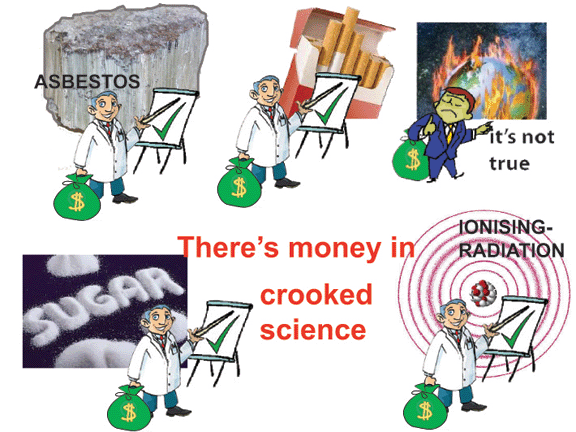 Nuclear boosters have been remarkably successful in ignoring and erasing the health effects of radiation exposure, enabling them to downplay the impacts of serious accidents. In truth, reactor meltdowns, depending on where they occur, can kill and injure enormous numbers of people and contaminate the air, water, land and food supply over thousands of miles with radiation. A 1982 study by the Sandia National Laboratory, one of the labs run by the U.S. Department of Energy, calculated deaths and injuries within a year of a core meltdown and subsequent cancer deaths at 76 different nuclear power plant sites, many of which were only proposed at that time. According to this study, the Salem nuclear plant outside Philadelphia could kill 100,000 people within a year, result in 40,000 subsequent cancer deaths and give another 70,000-75,000 people a range of radiation-related injuries. A 1997 report by Brookhaven National Laboratory on the potential consequences of a spent fuel accident also forecasted large numbers of fatalities.
Fission 101
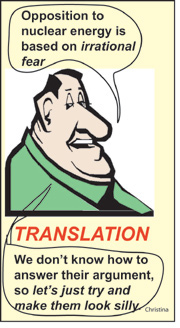 The risks of radiation exposure are downplayed and easily dismissed as “irrational fear” because the physics and chemistry of the fission process and the radioactive elements it produces are complex and not understood by the general public and also because, except in cases of acute radiation poisoning, radiation is invisible.
Radioactive fission products are “variant forms of the ordinary chemicals which are the building blocks of all material and living things,” explains Dr. Rosalie Bertell in her book, No Immediate Danger: Prognosis for a Radioactive Earth. The difference is that stable, non-radioactive atoms have an equal number of protons and electrons.
Nuclear fission creates an imbalance between protons and electrons, producing enormous quantities of hundreds of different radioactive elements — the high-level waste and activation products — all of which seek to return to a stable state. These unstable atoms become stable by knocking out the extra particles fission created, a process she says takes hundreds of thousands of years.
“Every such release of energy is an explosion on the microscopic level,” Bertell says. Radiation exposure is particularly damaging to the structure of cells, which is why it is necessary to keep these radioactive elements, known as radionuclides or radioisotopes, out of the bodies of humans, other living beings and the environment.
 As climate models have long predicted, our warming world is now experiencing much larger and stronger storms with significantly more rainfall in the Earth’s wetter areas and more sustained and severe drought and wildfires in the drier regions. In 2019, the hottest June on record triggered an unprecedented fire season in the Arctic, with over 100 intense fires. The summer of 2019 also saw 55 billion tons of water melt off Greenland’s ice sheet in just five days, a rate scientists hadn’t expected for 50 years.
A month before the massive ice loss in Greenland, scientists predicted sea levels could rise 6.5 feet by the end of the century, submerging nearly 700,000 square miles of land.
Most nuclear power plants are located beside rivers, lakes, dams or oceans because they need a continuous source of water to cool the reactors. In August 2018, Ensia reported that at least 100 nuclear power plants built a few meters above sea level in the U.S., Europe and Asia would likely experience flooding due to sea level rise and storm surges.
Though nuclear reactors vary in generating capacity, 1,000 megawatts is common. A reactor of that size contains 100 metric tons of enriched uranium fuel, roughly a third of which needs to be replaced with fresh fuel each year. According to radioactive waste expert Dr. Marvin Resnikoff, the spent fuel, also known as high-level waste, becomes 2.5 million times more radioactive after undergoing nuclear fission in the reactor core.
 In a May 2011 report, Institute for Policy Studies (IPS) senior scholar Robert Alvarez, a top official at the U.S. Department of Energy from 1993 to 1999, described the danger of high-level waste this way: “Spent fuel rods give off about 1 million rems (10,000 sieverts) of radiation per hour at a distance of one foot — enough radiation to kill people in a matter of seconds.”
The intense radioactivity the fission process creates is why reactor cores are surrounded by five-feet thick reinforced concrete containment structures and spent fuel must be shielded by at least 20 feet of water in pools for several years after it leaves the reactor.
As of September 2019, 444 nuclear reactors are operating in the world, with 54 under construction, 111 planned and 330 more proposed.https://truthout.org/articles/can-nuclear-powers-deadly-waste-be-contained-in-a-warming-world/?eType=EmailBlastContent&eId=a5fbaf3b-857d-46f7-9571-6774775ad709
Greta Thunberg socks it to world leaders at UN Climate Summit
Climate Action summit: Greta Thunberg rips into leaders over ‘mass extinction’ https://www.news.com.au/technology/environment/climate-change/climate-action-summit-greta-thunberg-rips-into-leaders-over-mass-extinction/news-story/2c8d4aac13cb60507a41b48c2ef3d8f2
A teen has ripped into world leaders at a UN summit and stared down US President Donald Trump as they crossed paths in a surprise encounter.
Megan Palin@megan_palinA schoolgirl has stared down Donald Trump during a chance encounter in New York before she went on to give the world’s most powerful leaders a sensational serve.
Climate activist Greta Thunberg, 16, crossed paths with the US President in the United Nations foyer on Monday. She was there to speak at the Climate Action Summit.
Mr Trump – who has denied climate change, called it a Chinese hoax and repealed US carbon-reduction policies – was not scheduled to attend but made the surprise visit before leaving to attend a religious freedoms meeting.
Video footage of the frosty exchange shows Mr Trump appearing to ignore Ms Thunberg as he walks straight past her with his entourage. She can be seen with her eyes fixed on him, holding her steely gaze as he moves through the corridor.
Later, Ms Thunberg made an emotional appeal at the summit in which she chided the leaders with the repeated phrase, “How dare you”.Heads of state from around the world, including French President Emmanuel Macron and German Chancellor Angela Merkel, have descended on the Big Apple this week to make new pledges to curb global-warming emissions.
Ms Thunberg accused them of ignoring 30 years of “crystal clear” science behind the climate crisis, saying: “We are in the beginning of a mass extinction and all you can talk about is money and fairy tales of eternal economic growth — how dare you.”
The Swedish schoolgirl, who travelled from Europe to New York for the summit on a zero-emissions sailboat, first came to worldwide attention when she started a lone protest outside her country’s parliament more than a year ago. It was that very decision which culminated in Friday’s global climate strikes.
“This is all wrong. I shouldn’t be up here,” she told the international heads of state.
“I should be back in school on the other side of the ocean.
“Yet you have come to us young people for hope. How dare you. You have stolen my dreams and my childhood with your empty words, and yet I’m one of the lucky ones. People are suffering. People are dying. Entire ecosystems are collapsing.
“You say you hear us, and that you understand the urgency…I do not want to believe that. “Because if you really understood the situation, and still kept on failing to act, then you would be evil. And that I refuse to believe.”
She told the UN that even the strictest emission cuts being talked about only gives the world a 50 per cent chance of limiting future warming to another 0.4C from now, which is a global goal. Those odds are not good enough, she said.
“We will not let you get away with this,” Ms Thunberg continued. “Right now is where we draw the line.”
Following Ms Thunberg’s speech, she and 15 other children filed a complaint with the UN alleging that five of the world’s major economies have violated their human rights by not taking adequate action to stop the unfolding climate crisis.
The 2019 Climate Action Summit kicked off at the UN on Monday, where world leaders gathered to discuss serious strategies to mitigate climate change. Representatives of participating nations were told by UN Secretary General Antonio Guterres to come up with “concrete, realistic plans” to further their commitments to reducing greenhouse gas emissions and get to net zero emissions by 2050.
Leader after leader told the UN that they will do more to prevent a warming world from reaching even more dangerous levels. But as they made their pledges, they conceded it was not enough.
Sixty-six countries have promised to have more ambitious climate goals and 30 swore to be carbon neutral by midcentury, said Chilean President Sebastian Pinera Echenique, who is hosting the next climate negotiations later this year. Heads of nations such as Finland and Germany promised to ban coal within a decade. Several also mentioned goals of climate neutrality — when a country is not adding more heat-trapping carbon to the air than is being removed by plants and perhaps technology — by 2050.
Mr Trump dropped by, listened to German Chancellor Angela Merkel make detailed pledges, including going coal-free, and left without saying anything.
The US did not ask to have someone speak at the summit, UN officials said. And the UN Secretary-General had told countries they couldn’t be on the agenda without making bold new proposals. Even though there was no speech by Mr Trump, he was repeatedly referenced.
In a none-too-subtle gibe at Mr Trump’s plans to withdraw the US from the 2015 Paris climate agreement, Chinese state councillor Wang Yi said countries “must honour our commitments and follow through on the Paris Agreement”.
“The withdrawal of certain parties will not shake the collective goal of the world community,” Mr Wang said to applause.
Former New York City Mayor Michael Bloomberg, the UN’s special climate envoy, thanked Mr Trump for stopping by, adding that it might prove useful “when you formulate climate policy”, drawing laughter and applause on the floor of the General Assembly.
Hilda Heine, president of the Marshall Islands, said she represented “the most climate vulnerable people on Earth”.
Her tiny country has increased its emission cut proposals in a way that would limit warming to that tight goal of 1.5C since pre-industrial times. “We are now calling on others to join us,” Ms Heine said.
UN Secretary-general Antonio Guterres opened the summit Monday by saying: “Earth is issuing a chilling cry: Stop.” “Time is running out,” Mr Guterres said. “But it is not too late. megan.palin@news.com.au | @Megan_Palin

Climate Strike – a beginning in the battle against the extermination of nature

|
This isn’t extinction, it’s extermination: the people killing nature know what they’re doing, The climate strike must be a beginning and not an end. Warming won’t be stopped by symbolism, Guardian, @Jeff_Sparrow, 21 Sep 2019 “………. an international rebellion led by the young against generations of betrayal. We know that, as far back as the late 50s, researchers for the oil industry understood the effects of carbon on the atmosphere but did nothing about it.
In 1988 George HW Bush promised on the campaign trail to fight climate change. “I am an environmentalist,” he declared. “Those who think we are powerless to do anything about the greenhouse effect are forgetting about the White House effect.” There was, of course, no White House effect. In 1997 the world’s leaders signed the Kyoto protocol, with Bill Clinton declaring “a commitment from our generation to act in the interests of future generations”. More emissions have been released since that agreement than in all of previous history. How petty, how small, how childish do those politicians with the temerity to attack Greta Thunberg look! She speaks for science, idealism and hope; they embody an ignorance or cynicism so deep as to constitute depravity. The ecological disaster that confronts us today extends way beyond climate. Some scientists speak of the “sixth extinction event” – but, as Justin McBrien argued, that phrase isn’t accurate. We might less euphemistically discuss a “first extermination event”. Nature is not dying so much as being killed, by people who know perfectly well what they’re doing. The need for protests could not be more urgent – and, at last, they’re happening. The global strike provides a perfect antidote to the despair so many of us have felt for so long. There’s a nightmarishness to the isolated experience of climate change: a sense of paralysis and horror at a world sleepwalking into disaster. By coming together on the streets, we shake that off, and we grasp something of our collective strength. In day-to-day life, there are few sections of society more powerless than schoolchildren. And yet, despite teachers and parents and politicians, they’ve spurred a movement that’s growing in almost every nation. If they can do that, what else could be possible? What might the rest of us do, if we all act together? Fairly obviously, the strike must be a beginning and not an end. This is not an issue where you can express your disapproval in a single rally and then go back to your daily life. Atmospheric physics doesn’t care if we’re tired of marching or we feel that “done our bit”. Warming won’t be stopped by symbolism or fervent hopes: we need, as, the Intergovernmental Panel on Climate Change argues, “rapid, far-reaching and unprecedented changes in all aspects of society”. That’s no small task, especially given the vested interests in the status quo. It would be foolish not to expect difficult times ahead……… https://www.theguardian.com/environment/commentisfree/2019/sep/20/this-isnt-extinction-its-extermination-the-people-killing-nature-know-what-theyre-doing?CMP=share_btn_tw |
|
Fukushima not guilty verdict , but radioactive legacy remains

 Fukushima trial ends in not guilty verdict, but nuclear disaster will haunt Japan for decades to come, By James Griffiths, CNN, September 19, 2019 The only criminal prosecution stemming from the 2011 Fukushima nuclear disaster has ended in not guilty verdicts, in a blow to families displaced by the meltdown, as the fallout promises to haunt northern Japan for decades to come.
CNN’s Yoko Wakatsuki contributed reporting from Tokyo. https://edition.cnn.com/2019/09/19/asia/japan-fukushima-trial-intl-hnk/index.html
Surface melting causes Antarctic glaciers to slip faster towards the ocean
Surface melting causes Antarctic glaciers to slip faster towards the ocean
Direct link between surface melting and short bursts of glacier acceleration in Antarctica
- Date:
- September 20, 2019
- Source:
- University of Sheffield
- Summary:
- Study shows for the first time a direct link between surface melting and short bursts of glacier acceleration in Antarctica. During these events, Antarctic Peninsula glaciers move up to 100% faster than average. Scientists call for these findings to be accounted for in sea level rise predictions…….
https://www.sciencedaily.com/releases/2019/09/190920111355.htm
Risk of going nuclear

The Age, Linda Brownstein, 21 Sept 19, Japan still struggles to deal with the release of radioactive water from the Fukushima nuclear power plant accident in 2011, and half of Saudi Arabia’s oil production has been damaged by attacks by drones.
Why would anyone in their right mind, such as the Australian Workers Union, promote nuclear power? It does not take much imagination to see that the ease with which nuclear power plants can be damaged will be an irresistible honeypot to all sorts of individuals and groups, and a continual source of potential devastation.
NO, Minerals Council, you have your facts wrong on nuclear costs
NOT CHEAPER The Advertiser, Robyn Wood, 19 Sept 19, REGARDING nuclear power: the Minerals Council is factually wrong when it says that nuclear power is cheaper than other energy sources.
All reputable studies show that nuclear is far more expensive than existing coal, new coal, oil and renewables with storage.
I had hoped that the Minerals Council reports would be factually-based. Time for it to do some more research.
Donald Trump talks gibberish about nuclear weapons then announces trip to Mars
Donald Trump talks gibberish about nuclear weapons then announces trip to Mars Jimmy McCloskey, Metro UK 20 Sep 2019 Donald Trump spouted a stream of gibberish about the US’s nuclear arsenal at a press conference Friday. The President of the United States told reporters at the White House: ‘Nobody can beat us militarily. No-one can even come close. ‘Our nuclear was getting very tired..Now we have it in, as we would say, tippy-top shape. ‘Tippy top. We have new and we have renovated and it’s incredible. We all should pray we never have to use it.’ Trump was speaking in response to questions about the US’s military capability amid increasing tensions between America and Iran…….
 to send US astronauts to Mars on Friday – and said they’d be stopping off on the moon en route. Speaking at the joint press conference with Australian Prime Minister Scott Morrison, Trump said: ‘We’re going to Mars.
UN secretary general warns ‘We’re losing the climate race’
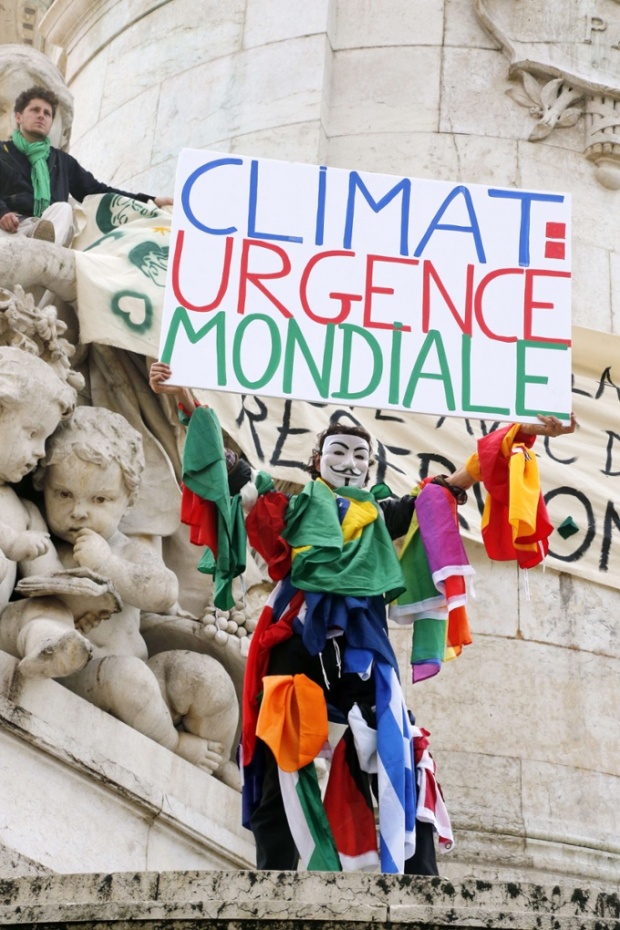 ‘We’re losing the race’: UN secretary general calls climate change an ’emergency’
António Guterres cites ‘fantastic leadership’ of young activists and is counting on public pressure to compel governments to honor the 2015 Paris Agreement Guardian Mark Hertsgaard, @markhertsgaard 18 Sep 2019 The UN secretary general says that he is counting on public pressure to compel governments to take much stronger action against what he calls the climate change “emergency”.
“Governments always follow public opinion, everywhere in the world, sooner or later,” António Guterres, said on Tuesday in an interview with Covering Climate Now, a global collaboration of more than 250 news outlets, led by Columbia Journalism Review and the Nation, in partnership with the Guardian. Guterres, a former prime minister of Portugal, added: “And so … we need to keep telling the truth to people and be confident that the political system, especially democratic political systems, will in the end deliver.”
Guterres refused to comment on Donald Trump and the Trump administration’s hostility to climate action, but a CBS News poll released on 15 September found that 69% of Americans want the next president to take action, while 53% say such action is needed “right now”. Guterres said that “it would be much better” if the US was “strongly committed to climate action”, just as it would be better if Asian countries [notably, China and Japan] stopped exporting coal plants. Until then, he said, “what I want is to have the whole society putting pressure on governments to understand they need to run faster. Because we are losing the race.”
With five days remaining before the UN climate action summit on 23 September, the secretary general cited the “fantastic leadership” of young activists as a leading example of how civil society can pressure governments to honor the 2015 Paris Agreement to limit temperature rise to “well below” 2C and preferably to 1.5C. Recent election results across Europe – where green parties gained significant public backing – also left Guterres optimistic that at next Monday’s summit the European Union will announce that it promises to be “carbon neutral” by 2050, as the Paris Agreement mandates……… https://www.theguardian.com/environment/2019/sep/18/un-secretary-general-climate-crisis-trump
Thanks to international co-operation, the ozone layer is headed to complete repair
 The ozone layer is on track to completely repair itself in our lifetime, https://www.sbs.com.au/news/the-ozone-layer-is-on-track-to-completely-repair-itself-in-our-lifetime The ozone layer is steadily repairing itself following a drastic global reduction in the use of ozone-depleting substances, the UN’s environmental agency has found. The ozone layer is on track to completely repair itself in our lifetime, https://www.sbs.com.au/news/the-ozone-layer-is-on-track-to-completely-repair-itself-in-our-lifetime The ozone layer is steadily repairing itself following a drastic global reduction in the use of ozone-depleting substances, the UN’s environmental agency has found.
BY MAANI TRUU, 17 Sept 19, The world’s ozone layer is on track to be completely healed by the 2060s, according to modelling by the UN’s environmental agency (UNEP).
In the past 19-years, parts of the ozone layer have recovered at a rate of one to three per cent every ten years, UNEP has found. If this continues, the Northern Hemisphere’s ozone layer is set to heal completely by the 2030s, the Southern Hemisphere by the 2050s, and the polar regions in the following decade. As we rightly focus our energies on tackling climate change, we must be careful not to neglect the ozone layer and stay alert to the threat posed by the illegal use of ozone-depleting gases,” UN Secretary-General António Guterres said in a statement on Monday. “The recent detection of emissions of one such gas, CFC-11, reminds us that we need continued monitoring and reporting systems, and improved regulations and enforcement.” The ozone layer, made up of three types of oxygen atoms, is located approximately 15 kilometres above the earth and helps to protect the planet from ultraviolet rays that cause skin cancer, crop damage, eye cataracts and other issues. But since the late 1970s, the ozone layer had been consistently thinning due to the overuse of chemicals called chlorofluorocarbons, reaching a crisis point in the 1990s when about 10 per cent of the layer had been eroded. n 1987, UN members signed a treaty – known as the Montreal Protocol – aimed at phasing out ozone-depleting substances and developed replacements. According to the UNEP, the Montreal Protocol has successfully led to the removal of 99 per cent of chlorofluorocarbons, which previously existed in refrigerators, air-conditioners and other consumer products. “The Montreal Protocol is both an inspirational example of how humanity is capable of cooperating to address a global challenge and a key instrument for tackling today’s climate crisis,” Mr Guterres said. “Under this international treaty, nations have worked for 32 years to slash the use of ozone-depleting chemicals, used largely by the cooling industry. As a result, the ozone layer that shields us from the sun’s harmful ultraviolet radiation is healing.” The ozone layer is also instrumental in curbing the effects of climate change, with the barrier stopping approximately 135 billion tonnes of carbon dioxide emissions from entering the atmosphere between 1990 to 2010, UNEP said. Earlier this year, China came under fire for allegedly releasing large quantities of banned chemical Chlorofluorocarbon-11 (CFC-11) into the atmosphere, in violation of the UN treaty. |
|
|
New York City allows students to skip school for climate protest
 More than one million New York students allowed to skip school for climate protest, Public school students in New York are allowed to skip class to join the youth climate strikes. More than one million New York students allowed to skip school for climate protest, Public school students in New York are allowed to skip class to join the youth climate strikes.
SBS NEWS, BY ANNE BARNARD 18 Sep 19 When New York City announced that public school students could skip classes without penalties to join the youth climate strikes planned around the world on Friday, you could almost hear a sigh of relief.Before the announcement, the protests, to be held three days ahead of the United Nations Climate Action Summit, had thrown a new complication into the usual back-to-school chaos: With the protests framed as a cry to protect their futures from climate disaster, should students heed the call?
Parents had wondered how to word emails to principals requesting excused absences. Teachers had been wondering how to react. Some students had been vowing to protest no matter what, but others had worried about possible repercussions. Most of all, the decision last week by the nation’s largest school district buoyed national protest organisers, who are hoping that the demonstrations will be the largest on climate in US history, with at least 800 planned across the 50 states. They expressed hope that other districts around the country would follow suit. “Holy smokes, this thing could get HUGE,” Jamie Henn, a founder of the climate action organisation 350.org, said on Twitter after the decision was announced by New York City’s Department of Education……… Demonstrators as young as nine had already turned up to greet the 16-year-old Swedish climate activist Greta Thunberg when she arrived last month by an emissions-free yacht in New York Harbour. Greta has inspired Friday student protests in at least 100 countries. Larger crowds, mostly of high school students, have demonstrated with her on two recent Fridays at the United Nations……… Some 600 medical professionals across the country have also signed a virtual “doctor’s note” encouraging teachers to excuse students on the grounds that climate change is dangerous to their and others’ health. HTTPS://WWW.SBS.COM.AU/NEWS/MORE-THAN-ONE-MILLION-NEW-YORK-STUDENTS-ALLOWED-TO-SKIP-SCHOOL-FOR-CLIMATE-PROTEST |
|
More faults found in France’s nuclear reactors
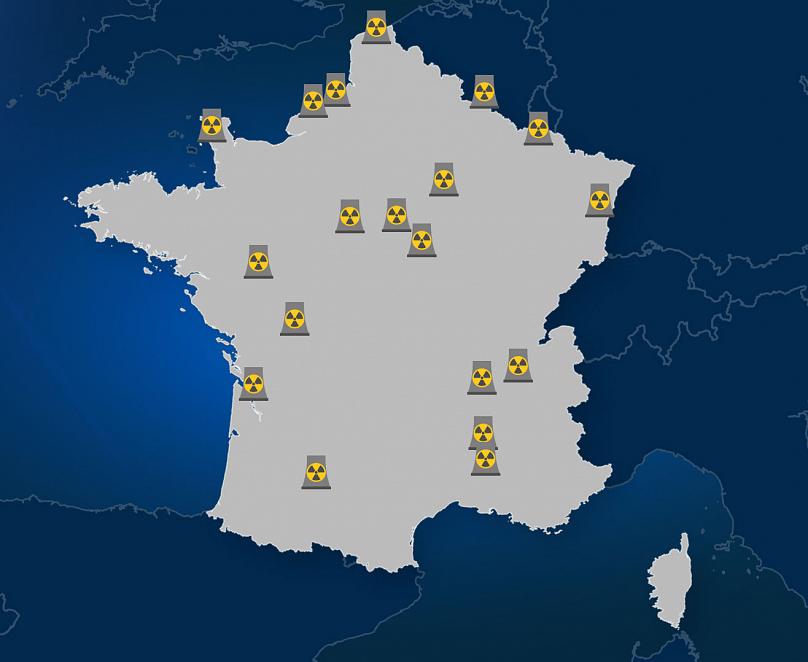
10% of French Nuclear Reactors Have Potentially Faulty Parts Installed as Fukushima Fears Persist https://sputniknews.com/europe/201909181076832892-10-of-french-nuclear-reactors-have-potentially-faulty-parts-installed-as-fukushima-fears-persist/
|
by Tim Korso Most European states have taken a course to reduce to zero the use of nuclear plants since the disaster at the Japanese plant Fukushima in 2011 that led to the contamination of nearby land and sea.
Six (around 10% of the total amount) of nuclear reactors in France are using parts that had “manufacturing deviations” Electricite de France (EDF) SA, the country’s biggest power supplier reported. The irregularities were found in 16 steam generators used on nuclear power plants in Blayais, Bugey, Fessenheim, Dampierre-en-Burly, and Paluel. At the same time, EDF stated that the issue is not a pressing one and doesn’t require immediate attention. The report comes in line with an ongoing programme of reactor checks in France following the discovery of carbon-content irregularities in the steel produced by Le Creusot Forge in 2016, which made the metal weaker than usual. The checks led to the temporary suspension of numerous reactors, and a spike in energy prices both in France and in nearby states due to the former’s need to import energy to cover the deficit. Some European states have even announced their intention of completely phasing out the use of nuclear energy, gradually shutting down existing nuclear plants and aborting the construction of newer ones following the 2011 disaster at the Japanese plant Fukushima, which left significant patches of land and sea contaminated. The incident happened after the plant was hit by a powerful tsunami that knocked out its power and left reactors without cooling systems. Three countries, namely Belgium, Switzerland and Germany, are planning to eventually switch to renewable energy sources, while using gas in the transitional period. France, however, despite initially considering such option decided to keep its nuclear industry. Still, Paris opted for a reduction of its portion in the country’s energy generation from over 70% down to 50% by 2035. |
|
Resources Minister Matthew Canavan blasts ‘hypocritical, self-indulgent activists’ holding back mining sector
Matthew Canavan blasts ‘hypocritical, self-indulgent activists’ holding back mining sector
THE AUSTRALIAN 18 Sept 19, Resources Minister Matthew Canavan has blasted the actions of “hypocritical, self-indulgent activists” holding back the mining sector as he opened Australia’s first coal mine in nearly five years…. (subscribers only)
1 This month

of the week – Australians for War Powers Reform (AWPR)
To see nuclear-related stories in greater depth and intensity
 Antinuclear