July on course to be hottest month ever, say climate scientists
If global trends continue for another fortnight, it will beat previous two-year-old record, Guardian, Jonathan Watts @jonathanwatts17 Jul 2019 Record temperatures across much of the world over the past two weeks could make July the hottest month ever measured on Earth, according to climate scientists.
July 18, 2019
Posted by Christina Macpherson |
General News |
Leave a comment
Space radiation hasn’t contributed to astronaut mortality — yet, study shows
 An analysis of all living and dead astronauts and cosmonauts shows that radiation hasn’t contributed meaningfully to their mortality rates. Astronomy, By Korey HaynesJuly 5, 2019 ………… they found no trend in the deaths suggesting any common cause, meaning radiation didn’t play a major role in the health outcomes of the astronauts and cosmonauts they studied.
Of course, this doesn’t mean humans are in the clear.
“We would expect that at some level of dose there should be adverse health effects,” Reynolds says. “We keep getting the answer ‘no.’ This doesn’t mean radiation isn’t harmful or greater doses wouldn’t be. But so far the doses have been low enough that we don’t see anything.”
That’s probably because the vast majority of space farers so far have spent most or all of their time in Earth orbit, where Earth’s magnetic fields still protect them from the majority of harmful space radiation. Only those 24 astronauts who ventured to the Moon went beyond Earth’s radiation protection, and they stayed for just a few days.
Reynolds says that it’s difficult to draw meaningful results from that tiny sub-sample of people.
By contrast, a Mars mission might last multiple years, and would take place almost entirely beyond Earth’s shielding.
Other researchers are looking at alternative ways of testing the dangers of radiation exposure. But it’s possible that the next round of human space explorers will be guinea pigs, much like the first generation, and only time will tell how radiation has affected them.http://www.astronomy.com/news/2019/07/space-radiation-hasnt-contributed-to-astronaut-mortality–yet-study-shows
July 18, 2019
Posted by Christina Macpherson |
General News |
Leave a comment
Is there a future for nuclear power in Japan?, Japan Times, BY
SUMIKO TAKEUCHI, JUL 16, 2019
the damage from nuclear accidents can be catastrophic, in addition to the challenges posed by nuclear waste disposal. The Fukushima disaster has led to strong opinions that Japan should denuclearize, and this is still the case.
…. ………The fact is that the economic benefits of nuclear power have been losing their shine. Because of the sharp hike in safety standards imposed by the Nuclear Regulation Authority after the Fukushima disaster, exorbitant safety upgrades nearly equal in cost to building a new reactor are being installed at each site. To get a return on investment, this intensive capital spending will require long-term operation and high utilization rates, but the need to get local consent to operate and to respond to dozens of lawsuits from anti-nuclear residents is making stable operations difficult. Reactor operations are also capped at 60 years. Nuclear power could potentially be a source of cheap electricity, depending on the utilization rate and other conditions, but there’s also a possibility it won’t. ……
The impact of the Fukushima disaster, however, was enough to completely overshadow the benefits. The majority of the public is still against nuclear power. In light of persistent public opinion, Japan’s nuclear power business has been surrounded by three big uncertainties.
The first is political uncertainty. The administration of Prime Minister Shinzo Abe, despite its long-term stability, has not provided enough support to the nuclear power business. In addition, the government has entrusted the utilities with the job of gaining local consent.
The safety agreements that stipulate the rules of the industry, such as disclosure of information to the host governments, are not legally binding. But running reactors would be next to impossible without local consent based on such agreements. Whenever there’s an election, the utilities are thrown into confusion, and if a new leader is elected, they will initiate communication from scratch.
The second is policy uncertainty. Japan has fully liberalized the retail power sector. In a liberalized market, reactors for which returns on investment have fully recovered could have high cost competitiveness, but there will likely be no companies that will take up the challenge of building new ones.
Since nuclear plants require huge capital, curbing fundraising costs to a low level would have a big impact on competitiveness, but cheap fundraising is something that cannot be expected in a liberalized market. …….
The third is regulatory uncertainty. It has become quite common for reactor safety reviews to take multiple years because of inadequate communication between utilities and regulators. The U.S. has a presidential executive order that stipulates regulation shall not be undertaken unless the potential benefits to society from regulation outweigh the potential costs of dealing with the regulation.
Though Japan has no such principles, appropriate oversight on regulatory activities is being called for to check whether the public is suffering from any disadvantages from unforeseeable regulatory activities. In the meantime, the finishing blow is the plethora of lawsuits that have been filed demanding the halt of nuclear power plants……..
When utilities are placed in such an uncertain environment, it is a foregone conclusion that the nuclear power business will become unsustainable and there will be no future for it in Japan…..https://www.japantimes.co.jp/news/2019/07/16/business/future-nuclear-power-japan/#.XS-PhOszbGg
July 18, 2019
Posted by Christina Macpherson |
General News |
Leave a comment
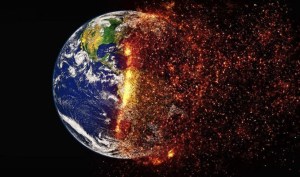 Feeling Anxious About Climate Change? Therapists Say You’re Not Alone
There’s no official clinical diagnosis, but the psychiatric and psychological communities have names for the phenomenon of worrying about the Earth’s fate: “climate distress,” “climate grief,” “climate anxiety” or “eco-anxiety”, People, By Victoria Knight , July 15, 2019
Therapist Andrew Bryant says the landmark
United Nations climate reportlast October brought a new mental health concern to his patients.
“I remember being in sessions with folks the next day. They had never mentioned climate change before, and they were like, ‘I keep hearing about this report,’” Bryant said. “Some of them expressed anxious feelings, and we kept talking about it over our next sessions.”
The study, conducted by the world’s leading climate scientists, said that if greenhouse gas emissions continue at the current rate, by 2040 the Earth will warm by 2.7 degrees Fahrenheit (1.5 degrees Celsius). Predictions say that increase in temperature will cause extreme weather events, rising sea levels, species extinction and reduced capacity to produce food.
Bryant works at North Seattle Therapy & Counseling in Washington state. Recently, he said, he has been seeing patients with anxiety or depression related to climate change and the Earth’s future.
Often these patients want to do something to reduce global warming but are overwhelmed and depressed by the scope of the problem and difficulty in finding solutions. And they’re anxious about how the Earth will change over the rest of their or their children’s lifetimes.
Although it is not an official clinical diagnosis, the psychiatric and psychological communities have names for the phenomenon: “climate distress,” “climate grief,” “climate anxiety” or “eco-anxiety.”
The concept also is gradually making its way into the public consciousness.
In a June 23 episode of the HBO series Big Little Lies, one of the main character’s young daughters has a panic attack after hearing about climate change in school. And other recently released TV shows and movies have addressed the idea.
An April survey by Yale and George Mason universities found that 62% of Americans were at least “somewhat worried” about climate change. Of those, 23% were “very worried.”
Both younger and older generations express worry, although younger Americans generally seem more concerned: A 2019 Gallup poll reported that 54% of those ages 18 to 34, 38% of those 35 to 54 and 44% of those 55 or older worry a “great deal” about global warming.
There is no epidemiological data yet to show how common distress or anxiety related to climate change is. But, people say these feelings are real and affect their life decisions.
Los Angeles residents Mary Dacuma, 33, and her husband decided not to have children because they worry about how difficult the world might be for the next generation. ……..https://people.com/health/climate-change-anxiety-affecting-americans-mental-health/
July 15, 2019
Posted by Christina Macpherson |
General News |
Leave a comment

Marchers in Tahiti ‘mourn’ French nuclear weapons test legacy https://asiapacificreport.nz/2019/07/05/marches-in-tahiti-mourn-french-nuclear-weapons-test-legacy/, By PMC Editor -July 5, 2019 , By RNZ Pacific
An estimated 2000 people have joined a march in French Polynesia this week to mark the 53rd anniversary of France’s first atomic weapons test in the Pacific.
The first test was on July 2, 1966, after nuclear testing was moved from Algeria to the Tuamotus.
Organisers of the Association 193 described it as a “sad date that plunged the Polynesia people into mourning forever”. The test on Moruroa atoll was the first of 193 which were carried out over three decades until 1996.
The march was to the Place Pouvanaa a Oopa honouring a Tahitian leader.
The march and rally were called by test veterans’ groups and the Maohi Protestant church to also highlight the test victims’ difficulties in getting compensation for ill health.
After changes to the French compensation law, the nuclear-free organisation Moruroa e Tatou wants it to be scrapped as it now compensates no-one. The Association 193 said it was withdrawing from the project of the French state and the French Polynesian government to build a memorial site in Papeete, saying it will only serve as propaganda.
Apart from reparations for the victims, the organisation wants studies to be carried out into the genetic impact of radiation exposure.
July 15, 2019
Posted by Christina Macpherson |
General News |
Leave a comment
The grounds remain coated with plutonium, cesium, strontium and americium — radionuclides (atoms that emit radiation) that could pose potentially serious health risks to those who touch or ingest them. Some areas are more radioactive, and therefore more dangerous, than others.
“Even though the accident occurred over 33 years ago it remains one of the most radiologically contaminated places on earth.”
Chernobyl tourists should avoid plant life, and especially the depths of the forests.
Those areas were not cleaned in the aftermath of the disaster and remain highly contaminated by radiation. Research has showed that the fungus, moss and mushrooms growing there are radioactive. Eating or drinking from the area is not safe.
Those who stay on the paved pathways, which officials cleaned, are much less likely to absorb harmful toxins.
Ukraine wants Chernobyl to be a tourist trap. But scientists warn: Don’t kick up dust. https://www.washingtonpost.com/travel/2019/07/12/ukraine-wants-chernobyl-be-tourist-trap-scientists-warn-dont-kick-up-dust/?utm_term=.5e82b547ceaf By Katie Mettler, July 12 2019
The tourists first started flocking to Chernobyl nearly 10 years ago, when fans of the video game S.T.A.L.K.E.R. wanted to see firsthand the nuclear wasteland they’d visited in virtual reality.
Next came those whose curiosity piqued when in 2016 the giant steel dome known as the New Safe Confinement was slid over the sarcophagus encasing nuclear reactor number four, which exploded in April 1986, spewed radiation across Europe and forced hundreds of thousands to flee from their homes.
Then in May, HBO’s “Chernobyl” miniseries aired, and tourism companies reported a 30 to 40 percent uptick in visitors to the Chernobyl Exclusion Zone, abandoned and eerily frozen in time.
Now the Ukrainian government — capitalizing on the macabre intrigue — has announced that Chernobyl will become an official tourist site, complete with routes, waterways, checkpoints and a “green corridor” that will place it on the map with other “dark tourism” destinations.
“We must give this territory of Ukraine a new life,” President Volodymyr Zelensky said during a visit to Chernobyl this week. “Until now, Chernobyl was a negative part of Ukraine’s brand. It’s time to change it.”
Zelensky, who was inaugurated in May, signed a decree July 10 to kickstart the Chernobyl Development Strategy, which the president hopes will bring order to the 19-mile Exclusion Zone that has become a hotbed for corruption, trespassing and theft. At the nuclear facility and in the nearby town of Pripyat, wildlife has returned and now roams freely. Flora and fauna grow up around decaying homes, playgrounds and an amusement park. Letters, dinner tables and baby dolls remain where their owners abandoned them 33 years ago.
Radioactive dust still coats it all. Continue reading →
July 15, 2019
Posted by Christina Macpherson |
General News |
Leave a comment
 DOE Was Shipping Potentially Dangerous Nuclear Waste To Nevada Site For Years
Energy officials told Gov. Steve Sisolak that the Nevada National Security Site received shipments from 2013 to 2018 that could contain “reactive” material. By Sanjana Karanth, 12 July 19
The U.S. Department of Energy shipped potentially dangerous nuclear material incorrectly labeled as low-level radioactive waste into Nevada for several years, the state’s governor announced.
A statement from Nevada Gov. Steve Sisolak (D) on Wednesday said the department sent a total of 32 shipments to the Nevada National Security Site between 2013 and 2018 that were supposed to be low-level radioactive waste from a facility in Tennessee. (The DOE told the Las Vegas Review-Journal later on Wednesday that there were actually nine shipments that had 32 containers.)
But DOE Deputy Secretary Daniel Brouillette told Sisolak on July 3 that some of those shipments may have included “reactive” material, which can release large amounts of thermodynamic energy.
Sisolak’s office said DOE officials have not confirmed that the shipments definitely contained reactive materials, which he said “would trigger additional safety concerns,” but the department did confirm Wednesday to the Review-Journal that the shipments were not in compliance with the security site’s waste acceptance criteria.
On July 5, Sisolak and Sens. Catherine Cortez Masto (D) and Jacky Rosen (D) sent a letter to Energy Secretary Rick Perry citing the risks posed to Nevada’s residents and environment and demanding that the DOE immediately correct the waste disposal mistake and create new procedures to ensure it doesn’t happen again.
“These egregious acts ― whether acts of negligence or indicative of something else ― are unconscionable and have potentially put the health and safety of Nevadans and our environment at unacceptable risk,” the letter stated.
The security site has been a place to permanently dispose of what the DOE categorizes as low-level radioactive waste, which can include materials like rags, construction debris and other equipment exposed to radioactive material. The site also takes in some forms of “mixed low-level waste,” which can contain some hazardous waste such as garbage and sludge. The governor’s office said mixed low-level waste is more strictly regulated and requires treatment prior to disposal and a more protective disposal method than low-level waste.
The shipments in question were not properly labeled to indicate which materials were low-level waste and which were more dangerous.
Federal officials, including from the National Nuclear Security Administration, gave an in-person briefing to Sisolak on Tuesday regarding the department’s findings and proposed response. During the briefing, the governor referred to an incident last year in which the DOE shipped half a metric ton of weapons-grade plutonium to the same security site and didn’t give notice until months later.
Yet again, the DOE has violated its mission, broken Nevadans’ trust and failed to follow its own compliance procedures,” Cortez Masto and Rosen said in a joint statement Wednesday. “We intend to immediately determine whether the mixed waste shipped to Nevada poses a hazard to the health and safety of Nevadans and will take every action necessary to hold the DOE accountable.”
DOE officials told the Review-Journal that they are launching an internal investigation to figure out how the shipments were miscategorized for six years, and will temporarily suspend all planned future shipments from the Tennessee facility.
July 13, 2019
Posted by Christina Macpherson |
General News |
Leave a comment
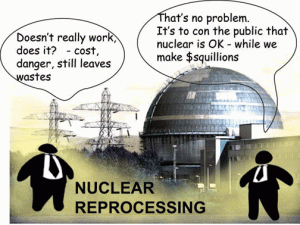 Recycle everything, America—except your nuclear
  waste https://thebulletin.org/2019/07/recycle-everything-america-except-your-nuclear-waste/ By Allison Macfarlane, Sharon Squassoni, July 8, 2019
 Americans have come late to the game on responsible consumerism, but they are making up for lost time with a passionate obsession about waste. It’s no coincidence that Fox News, CNN, YouTube and
USA Today have all reported that the deepest solo ocean dive found plastic waste seven miles below the surface, in the Mariana Trench.
Now that Americans are “woke” about waste in general, they may turn to the specific kind produced by the nuclear energy industry. Plans to revitalize US nuclear power, which is in dire economic straits, depend on the potential for new, “advanced” reactors to reduce and recycle the waste they produce. Unfortunately, as they “burn” some kinds of nuclear wastes, these plants will create other kinds that also require disposal. At the same time, these “advanced” reactors—many of which are actually reprises of past efforts—increase security and nuclear weapons proliferation risks and ultimately do nothing to break down the political and societal resistance to finding real solutions to nuclear waste disposal.
The current nuclear dream is really no different from previous ones of the last 70 years: the next generation of reactors, nuclear power advocates insist, will be safer, cheaper, more reliable, less prone to produce nuclear bomb-making material, and more versatile (producing electricity, heat, and perhaps hydrogen), without creating 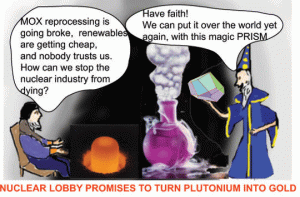 the wastes that have proved almost impossible to deal with in the United States. The Nuclear Energy Innovation and Modernization Act specifically describes the advanced reactors it seeks to support as having all those positive characteristics. This newest burst of enthusiasm for advanced reactors is, however, largely fueled by the idea that they will burn some of their long-lived radioisotopes, thereby becoming nuclear incinerators for some of their own waste.
Many of these “advanced” reactors are actually repackaged designs from 70 years ago. If the United States, France, the UK, Germany, Japan, Russia, and others could not make these reactors economically viable power producers in that time, despite spending more than $60 billion, what is different now? Moreover, all of the “advanced” designs under discussion now are simply “PowerPoint” reactors: They have not been built at scale, and, as a result, we don’t really know all the waste streams that they will produce.
It’s tempting to believe that having new nuclear power plants that serve, to some degree, as nuclear garbage disposals means there is no need for a nuclear garbage dump, but this isn’t really the case. Even in an optimistic assessment, these new plants will still produce significant amounts of high-level, long-lived waste. What’s more, new fuel forms used in some of these advanced reactors could pose waste disposal challenges not seen to date.
Some of these new reactors would use molten salt-based fuels that, when exposed to water, form highly corrosive hydrofluoric acid. Therefore, reprocessing (or some form of “conditioning”) the waste will likely be required for safety reasons before disposal. Sodium-cooled fast reactors—a “new” technology proposed to be used in some advanced reactors, including the Bill Gates-funded TerraPower reactors—face their own disposal challenges. These include dealing with the metallic uranium fuel which is pyrophoric (that is, prone to spontaneous combustion) and would need to be reprocessed into a safer form for disposal.
Unconventional reactors may reduce the level of some nuclear isotopes in the spent fuel they produce, but that won’t change what really drives requirements for our future nuclear waste repository: the heat production of spent fuel and amount of long-lived radionuclides in the waste. To put it another way, the new reactors will still need a waste repository, and it will likely need to be just as large as a repository for the waste produced by the current crop of conventional reactors.
Recycling and minimizing—even eliminating—the waste streams that many industries produce is responsible and prudent behavior. But in the context of nuclear energy, recycling is expensive, dirty, and ultimately dangerous. Reprocessing spent nuclear fuel—which some advanced reactor designs require for safety reasons—actually produces fissile material that could be used to power nuclear weapons. This is precisely why the United States has avoided the reprocessing of spent nuclear fuel for the last four decades, despite having the world’s largest number of commercial nuclear power plants.
Continuing research on how to deal with nuclear waste is a great idea. But building expensive prototypes of reactors whose fuel requires reprocessing, on the belief that such reactors will solve the nuclear waste problem in America, is misguided. At the same time, discounting the notion that a US move into reprocessing might spur other countries to develop this same technology—a technology they could secretly exploit to produce nuclear weapons—is shortsighted and damaging to US national and world security.
July 11, 2019
Posted by Christina Macpherson |
General News |
Leave a comment
|
 Weatherwatch: heatwaves test limits of nuclear power https://www.theguardian.com/environment/2019/jul/08/weatherwatch-heatwaves-nuclear-power Weatherwatch: heatwaves test limits of nuclear power https://www.theguardian.com/environment/2019/jul/08/weatherwatch-heatwaves-nuclear-power
Global heating is threatening supplies of water needed in large volumes to cool reactors Paul Brown, Tue 9 Jul 2019
Enthusiasts describe nuclear power as an essential tool to combat the climate emergency because, unlike renewables, it is a reliable source of base load power.
This is a spurious claim because power stations are uniquely vulnerable to global heating. They need large quantities of cooling water to function, however the increasing number of heatwaves are threatening this supply.
The French energy company EDF is curbing its output from four reactors in Bugey, on the Rhône River near the Swiss border, because the water is too warm and the flow is low.
Some reactors in the US are also frequently affected. This matters in both countries because the increasing use of air conditioning means electricity demand is high during summer heatwaves and intermittent nuclear power is not much help.
This does not affect nuclear power stations in the UK because they draw their water supplies from the sea, which stays relatively cool. However, it may affect plans to build small reactors on a lake in Trawsfynydd, Wales. And it may also reduce some of the UK’s power supplies during the summer.
As heatwaves intensify, the flow of electricity from French reactors through the growing number of cross-Channel interconnector cables cannot be relied on.
|
|
July 9, 2019
Posted by Christina Macpherson |
General News |
Leave a comment
 The rich and the dead: UN warns of ‘climate apartheid’ https://www.theceomagazine.com/lifestyle/health-wellbeing/united-nations-climate-change-apartheid/
The United Nations predicts that climate change will push 120 million people into poverty by 2030 – and only the rich will be left standing. A shocking new report by the United Nations has revealed that the world is facing a “climate apartheid” between the rich and poor.
While the rich can afford to relocate to more habitable areas, the report predicts that climate change will push more than 120 million people into poverty by 2030 – and many more will die.
“Even if current targets are met, tens of millions will be impoverished, leading to widespread displacement and hunger,” said Philip Alston, the UN Special Rapporteur on extreme poverty and human rights.
“Climate change threatens to undo the last 50 years of progress in development, global health, and poverty reduction.” Continue reading →
July 9, 2019
Posted by Christina Macpherson |
General News |
Leave a comment
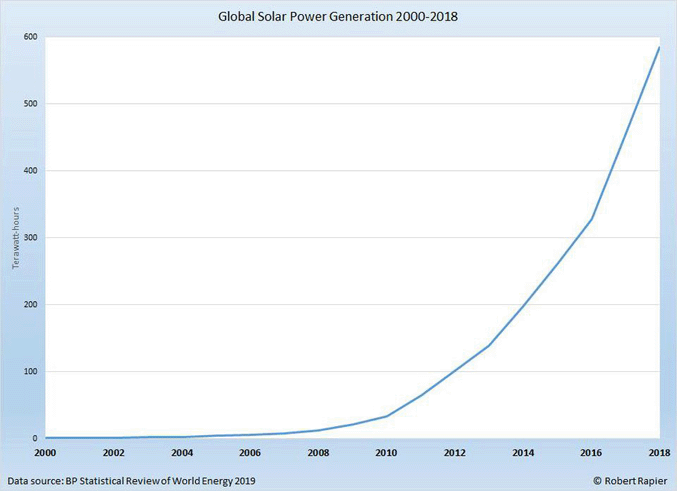
Nuclear power remains ahead of renewables, but just barely. Further, it is losing ground. In 2017, the world produced 22% more power from nuclear than it did from modern renewables. In 2018, the nuclear lead was less than 9%. Based on current trends, modern renewables will surpass nuclear power production either this year or next year.
Renewables Catching Nuclear Power In Global Energy Race Forbes, Robert Rapier 7 Jul 19, This article is the fifth in a series on BP’s recently-released Statistical Review of World Energy 2019. Previous articles in this series covered carbon dioxide emissions, petroleum supply and demand, the production and consumption of coal, and global natural gas trends:
Today, I want to cover global trends in renewable energy. Continue reading →
July 8, 2019
Posted by Christina Macpherson |
General News |
Leave a comment
 Nuclear Weapons Money 27th June 2019 Move the Nuclear Weapons Money welcomes the initiative of New York CityCouncil members Daniel Dromm, Helen Rosenthal and Ben Kallos to call on New
York City to divest from companies involved in the production of nuclear
weapons, and to reaffirm New York City as a Nuclear Weapons Free Zone.
On June 26, the city councillors introduced Resolution 976 calling on the City
Council to make such a policy decision, and Initiative 1621 under which the
City would establish an advisory committee to examine nuclear disarmament
and issues related to recognizing and reaffirming New York city as a
nuclear weapons-free zone.
The council declared New York to be a
Nuclear-Weapon-Free Zone in 1983 with the adoption of Resolution 364 which
prohibits the production, transport, placement or deployment of nuclear
weapons within the territorial limits of New York City, and the adoption of
Resolution 568 which declared that no ship be permitted to bring nuclear
missiles into the harbour of New York.
http://www.nuclearweaponsmoney.org/news/nycdivestment/
July 8, 2019
Posted by Christina Macpherson |
General News |
Leave a comment







 Antinuclear