Japan’s Olympic torch relay to start in Fukushima – even children are invited to carry it
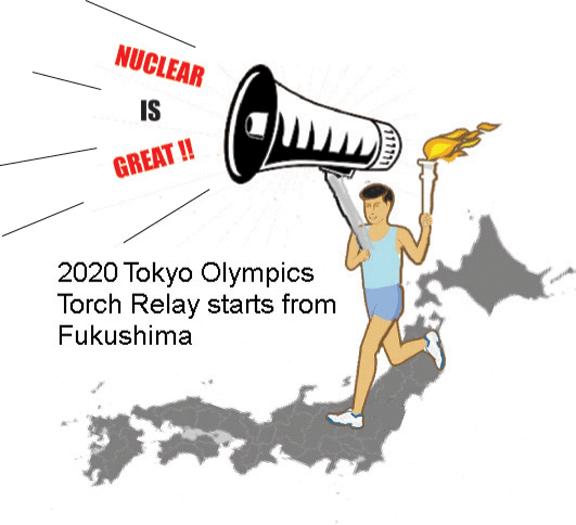
Tokyo 2020 reveals Olympic Torch route will begin in Fukushima, Inside the Games, By Matthew Smith, 1 June 2019
The Tokyo 2020 Organising Committee has revealed the Olympic Torch Relay route, which will take in many of Japan’s most historic and famous sites – and also areas touched by tragedy.
The Flame will be taken all over Japan inside 121 days, culminating in the Olympic Games next summer.
It will begin the final leg of its journey on March 26, 2020 from the J-Village National Training Centre in Fukushima, the training facility of the Japan football team.
The Flame will travel to all 47 prefectures of Japan, with the Organising Committee claiming around 98 per cent of Japan’s population live within one hour’s travel of the proposed route.
The route will take in World Heritage Sites such as Mount Fuji and Itsukushima Shrine, but will also visit areas affected by recent disasters.
Fukushima has been chosen as a start point after the Tohoku region was struck by an earthquake and tsunami in 2011, which also caused a nuclear incident at the Fukushima Daiichi Nuclear Power Plant.
As well as revealing the route, Tokyo 2020 also unveiled the Torchbearer uniforms and how members of the public could apply to take part in the Relay.
The uniform features the Relay emblem on the front and the Olympic symbol on the back.
The most notable design feature is a diagonal red stripe, echoing the sash used in place of batons in Ekiden, Japan’s historic long-distance relays…….
“In Japan, these Games are being referred to as ‘the Recovery Games’ and so the Olympic Flame will start its journey from an area affected by recent natural disasters……
Games organisers say the Olympic Torch Relay will feature around 10,000 Torchbearers including men, women and children of a wide range of nationalities and ages. People from all over the world are encouraged to apply and can do so here……..https://www.insidethegames.biz/articles/1079973/tokyo-2020-reveals-olympic-torch-route-will-begin-in-fukushima
USA youth climate activists set for nationwide rallies ahead of landmark case
 Youth climate activists set for nationwide rallies ahead of landmark case, Guardian, Lee van der Vooin Oregon, 2 June 19 Young people to hold day of action on Saturday highlighting lawsuit as youth-driven climate movement grows, Students in Austin, Texas, want you to veg out. Kids in Westport, Connecticut will screen a film. And in rural North Carolina, activists will draw on a toxic spill to commemorate the environmental justice movement.
All of these rallies will be part of an international campaign on Saturday to spotlight environmental issues. Their message: I Am Juliana.
The slogan refers to the landmark court case in Oregon in which 21 youths are suing the United States government over climate change.
Named for Kelsey Juliana, a 23-year-old activist and college student, the case was filed in 2015 and is headed back to court on Tuesday. The campaign to raise its profile – dubbed #IAmJuliana or #AllEyesOnJuliana – is the brainchild of Our Children’s Trust, the organization behind the lawsuit, and Future Coalition, the not-for-profit network forged to empower youth after the Parkland shooting.
What’s unique about the campaign is what it signals: the infrastructure behind the youth climate movement is growing, decentralizing, and gaining momentum, all while activists set sights on the 2020 election. ….. https://www.theguardian.com/environment/2019/may/31/i-am-juliana-climate-protests-youth-activism
120 big businesses in UK urge govt to adopt a net zero emissions goal for 2050.
|
Business Green 31st May 2019 John Lewis, Waitrose, Arup and Coca-Cola among firms urging the government to follow Committee on Climate Change advice. More than 120 of Britain’s major businesses have urged the UK government to boost its climate change targets with the adoption of a net zero emissions goal for 2050. In an open letter sent today to the Prime Minister, firms including BT, Aviva, Kingfisher, Iceland and Coca-Cola urge the Prime Minister to use her final days in office to approve the adoption of a net zero target.
|
|
Sea-level rise could be even worse than we’ve been led to expect
 Sea-level rise could be even worse than we’ve been led to expect, WP, By Editorial Board
ONE THING scientists are sure will happen as the world warms is that the seas will rise, putting millions of people at risk of land erosion, flooding and permanent displacement. But ask experts exactly how far oceans will advance, and their answer gets far more qualified. A studypublished May 20 in the Proceedings of the National Academy of Sciences found that previous estimates of how bad sea-level rise could get were too conservative — and that coastal communities must contemplate more severe, long-term impacts from humans’ addiction to fossil fuels.
Researchers asked leading experts on the Greenland and Antarctic ice sheets to provide their best updated estimates for the future of these frozen masses as temperatures spike. Aggregating these, the researchers concluded that the range of outcomes scientists now consider possible has shifted markedly toward more melting and, therefore, higher seas. ……
President Trump and those in his administration ignore scientists’ increasingly dire warnings to the peril of their children, grandchildren and the rest of humanity. https://www.washingtonpost.com/opinions/sea-level-rise-could-be-even-worse-than-weve-been-led-to-expect/2019/05/30/7eb5a7f8-7d9f-11e9-8ede-f4abf521ef17_story.html?noredirect=on&utm_term=.89ffbe
“Nuclear Pride”- yet another pro nuclear propaganda greenwash outfit
 The nuclear lobbyist Michael Shellenberger is being portrayed as ‘environmental activist’ by the public and media. But Michael Shellenberger is ‘a radioactive wolf in green clothing: Dissecting the latest pro-nuclear spin’ as Independentaustralia goes on to describe the impact of the nuclear travelling salesman. Furthermore Friends of the Earth Australia critically analyzes the well financed global lobbying activities.
On 21st October 2018 an article was published by the Süddeutsche Zeitung, reporting on a rather curious scene that took place in Munich. In a ‘Nuclear Pride’ event, organizations like ‘Ecologists for Nuclear’ and the ‘Humanist party’ alongside other participants tried to raise awareness for their goal: The return to nuclear energy, whilst simultaneously calling themselves climate protectors.
A few years after the devastating nuclear accidents of Fukushima and Tschernobyl, which both resulted in extremely high numbers of casualties, the international nuclear lobby decided to shun the limelight for a little while. But apparently it takes more than just two global disasters to bring them down for good. The global nuclear society, the old and powerful networks between enterprises, lobbyists and nuclear parties are still very much in tact. Even though renewable energies are on the rise in the western world, and many outdated nuclear power plants are going offline, dictatorships and economically weak countries continue to establish new nuclear power plants. That is one of the reasons why new NPP’s are promoted so massively in 2018. The nuclear power plant operators make a big effort to try and win over the wary public after Fukushima and Tschernobyl. Consequently cunning campaigns are run and used to cover up facts, to spread half-truths and to boast.
The Chernobyl TV series is not an exaggeration
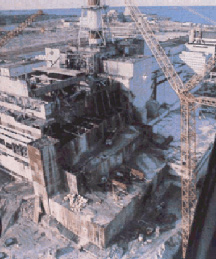 It’s one of the hottest TV shows in the world but what is the real story of Chernobyl and is it actually safe to visit the site now? https://www.news.com.au/entertainment/tv/the-real-story-of-the-chernobyl-nuclear-disaster/news-story/c3a2487f9392eb79717ae2f6b8c1a8cc
31 May 19, “…. The five-part Sky and HBO co-production, which is based on real-life events around the world’s worst nuclear disaster, has gripped the UK and is also now available in Australia via One Demand on Fox Showcase.
The horrifying events of April 26, 1986 when the Chernobyl nuclear power station went into meltdown have been brought to life in the new drama, and the show is now the highest rated program on IMDb.
Here’s a rundown of what we know about the real life events.
WHAT WAS THE CHERNOBYL NUCLEAR DISASTER?
An alarm bellowed out at the nuclear plant on April 26, 1986, as workers looked on in horror at the control panels signalling a major meltdown in the number four reactor.
The safety switches had been switched off in the early hours to test the turbine but the reactor overheated and generated a blast the equivalent of 500 nuclear bombs.
The reactor’s roof was blown off and a plume of radioactive material was blasted into the atmosphere.
As air was sucked into the shattered reactor, it ignited flammable carbon monoxide gas causing a fire which burned for nine days.
The catastrophe released at least 100 times more radiation than the atom bombs dropped on Nagasaki and Hiroshima.
Soviet authorities waited 24 hours before evacuating the nearby town of Pripyat — giving the 50,000 residents just three hours to leave their homes.
After the accident traces of radioactive deposits were found in Belarus where poisonous rain damaged plants and caused animal mutations.
But the devastating impact was also felt in Scandinavia, Switzerland, Greece, Italy, France and the UK.
An 18-mile radius known as the “Exclusion Zone” was set up around the reactor following the disaster.
HOW MANY PEOPLE DIED IN CHERNOBYL?
At least 31 people died in the accident — including two who were killed at the scene and more who passed away a few months later from Acute Radiation Syndrome.
The actual death toll is hard to predict as mortality rates have been hidden by propaganda and reports were lost when the Soviet Union broke up.
In 2005, the World Health Organisation revealed a total of 4000 people could eventually die of radiation exposure.
About 4000 cases of thyroid cancer have been seen since the disaster — mainly in people who were children or teenagers at the time.
DID THE CHERNOBYL RADIATION CAUSE ANIMAL MUTATIONS?
Farmers noticed an increase in genetic abnormalities in farm animals immediately after the disaster.
This spiked again in 1990 when around 400 deformed animals were born — possibly as a result of radiation released from the sarcophagus intended to isolate the nuclear core.
Some animals were born with extra limbs, abnormal colouring and a smaller size.
Animals that remained in the exclusion zone became radioactive — including as many as 400 wolves, which is the highest density wolf population on the entire planet.
The Eurasian lynx — once believed to have disappeared from Europe — thrived in Chernobyl as there were no humans to run them out.
Birds were also affected by radiation, with barn swallows having deformed beaks, albinism and even smaller brains.
The radioactive animals all live in the “Red Forest”, which got its name after the trees turned crimson in the fallout.
IS IT SAFE TO GO THERE NOW?
The site and Pripyat has been safe for tourists to visit since 2010.
There are around 160 villages in the Exclusion Zone but the basement of the hospital in Pripyat remains one of the more chilling stories.
The firemen were taken to the hospital for treatment and their clothes, which had been stripped off were discarded.
Later radiation readings at the site reached 7000 millisieverts — the risk of haemorrhage starts at 1000 while death begins at 4000.
The ghost town also includes a school that features in the video game Call of Duty, an abandoned Ferris wheel and homes frantically deserted when evacuation began.
Tourists have to be screened before they enter the Exclusion Zone and are told not to touch anything within the cordon.
Holiday companies offer packages that give an official tour of the Exclusion Zone.
Merkel urges world to do all ‘humanly possible’ on climate change
SBS, 1 June 19 In her commencement address delivered at Harvard University in the United States, German Chancellor Angela Merkel has urged the world to join together to combat climate change.
German Chancellor Angela Merkel on Thursday urged the world to do “everything humanly possible” to combat climate change and pledged to do her part.
“Climate change poses a threat to our planet’s natural resources,” Ms Merkel said in her commencement address delivered at Harvard University in the United States.
“It and the resulting crises are caused by humans.”,……. https://www.sbs.com.au/news/merkel-urges-world-to-do-all-humanly-possible-on-climate-change
The desperate nuclear lobby now tries to con us all, with a new book
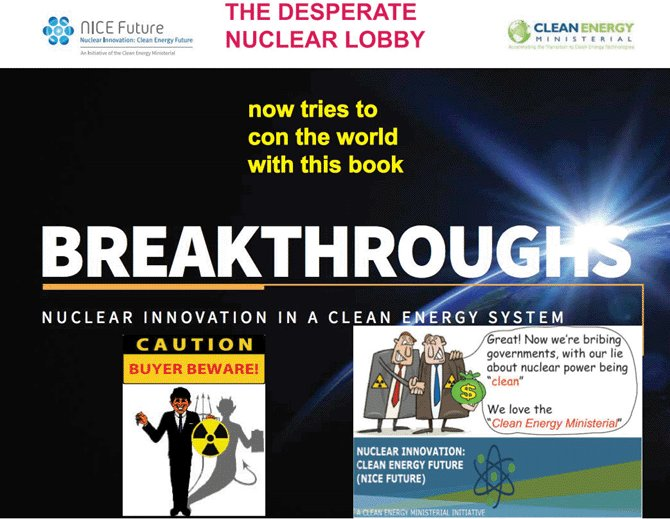
U.S., Canada Energy Leaders Announce New Book on Nuclear Innovation in Clean Energy USA Dept of Energy
MAY 28, 2019, VANCOUVER, CANADA – Today, leaders from the United States and Canada are unveiling a new book, Breakthroughs: Nuclear Innovation in A Clean Energy System, at the Tenth Clean Energy Ministerial (CEM10), a forum including ministers from 25 nations, occurring this year in Vancouver, Canada from May 27-29. MAY 28, 20
“The combination of vision and innovation is having a profound impact on our energy landscape, and nowhere is that more true than nuclear energy,” said U.S. Under Secretary of Energy Mark W. Menezes. “Nuclear energy is one of our most reliable and cleanest sources of energy, and we are determined to revive and revitalize the nuclear energy industry with advanced and smart designs. This book highlights some of the incredible transformative opportunities nuclear innovation can bring to society and the clean energy future of our planet.”
Canada’s Minister of Natural Resources Amarjeet Sohi said, “The Clean Energy Ministerial is part of building the world’s clean energy future. Canada is proud to host the 10th Clean Energy Ministerial in Vancouver at this historic moment in time. We are pleased to be working with the United States, Japan, and other countries under the nuclear innovation initiative. We also welcome the release of Breakthroughs – a collection a real stories about nuclear innovations and how they can contribute to our climate change goals.” ………
The Breakthroughs book is a product of the CEM Nuclear Innovation: Clean Energy Future (NICE Future) initiative that was launched at the May 2018 Ninth CEM in Copenhagen, Denmark. The NICE Future initiative envisions nuclear energy’s many uses in contributing to clean, reliable energy systems of the future. …….. https://www.energy.gov/articles/us-canada-energy-leaders-announce-new-book-nuclear-innovation-clean-energy
The extreme weather events of climate change rule out nuclear power as a solution
|
Nuclear power is not the answer in a time of climate change, https://aeon.co/ideas/nuclear-power-is-not-the-answer-in-a-time-of-climate-change Heidi Hutner, Erica Cirino-November 2018, In the Woolsey Fire scorched nearly 100,000 acres of Los Angeles and Ventura counties, destroying forests, fields and more than 1,500 structures, and forcing the evacuation of nearly 300,000 people over 14 days. It burned so viciously that it seared a scar into the land that’s visible from space. Investigators determined that the Woolsey Fire began at the Santa Susana Field Laboratory, a nuclear research property contaminated by a partial meltdown in 1959 of its failed Sodium Reactor Experiment, as well as rocket tests and regular releases of radiation.
The State of California’s Department of Toxic Substances Control (DTSC) reports that its air, ash and soil tests conducted on the property after the fire show no release of radiation beyond baseline for the contaminated site. But the DTSC report lacks sufficient information, according to the Bulletin of Atomic Scientists. It includes ‘few actual measurements’ of the smoke from the fire, and the data raises alarms. Research on Chernobyl in Ukraine following wildfires in 2015 shows clear release of radiation from the old nuclear power plant, calling into question the quality of DTSC’s tests. What’s more, scientists such as Nikolaos Evangeliou, who studies radiation releases from wildfires at the Norwegian Institute for Air Research, point out that the same hot, dry and windy conditions exacerbating the Woolsey Fire (all related to human-caused global warming) are a precursor to future climate-related radioactive releases.
With our climate-impacted world now highly prone to fires, extreme storms and sea-level rise, nuclear energy is touted as a possible replacement for the burning of fossil fuels for energy – the leading cause of climate change. Nuclear power can demonstrably reduce carbon dioxide emissions. Yet scientific evidence and recent catastrophes call into question whether nuclear power could function safely in our warming world. Wild weather, fires, rising sea levels, earthquakes and warming water temperatures all increase the risk of nuclear accidents, while the lack of safe, long-term storage for radioactive waste remains a persistent danger.
 |
Chernobyl: horrifying, masterly television that sears on to your brain (on Foxtel Showcase 12 June) ne 8.30
(Foxtel Showcase 12 June 8.30 pm and 10.30 pm)
This breathtaking series throws us right into the hellish chaos of the nuclear disaster – and its terrors are unflinching and unforgettable, Guardian, Rebecca Nicholson, 29 May 2019 After three of its five episodes aired, the miniseries Chernobyl found its way to the top of IMDB’s top 250 TV shows in history list. While the fan-voted chart might seem hyperbolic, given that the drama had only just crossed the halfway point, it is not undeserving of the honour. Chernobyl is masterful television, as stunning as it is gripping, and it is relentless in its awful tension, refusing to let go even for a second. That old ‘don’t spoil the ending’ joke about Titanic will inevitably be rebooted here, but it is confident enough to withstand any familiarity with the story.
The short term and then the long term health effects of Chernobyl nuclear disaster
it is estimated that 270,000 people in the Ukraine, Russia and Belarus who wouldn’t have otherwise developed cancers did develop these illnesses.
 How Did Radiation Affect the ‘Liquidators’ of the Chernobyl Nuclear Meltdown? https://www.livescience.com/65563-chernobyl-radiation-effects-body.html How Did Radiation Affect the ‘Liquidators’ of the Chernobyl Nuclear Meltdown? https://www.livescience.com/65563-chernobyl-radiation-effects-body.html
These liquidators, who worked between 1987 and 1990, were exposed to high levels of radiation, on average around 120 millisievert (mSv), according to the World Health Organization. That’s over a thousand times more powerful than a typical chest X-ray, which delivers 0.1 mSv of radiation. And some of the very first responders were exposed to levels astronomically higher than that. So, what happens to the human body when exposed to such high levels of radiation? [5 Weird Things You Didn’t Know About Chernobyl] It’s like walking into a giant, powerful X-ray machine shooting radiation everywhere, said Dr. Lewis Nelson, chairman of emergency medicine at Rutgers New Jersey Medical School. Except, in this case, most of the radiation consisted of an even more damaging type of radiation than X-rays, called gamma-rays. This radiation, as it passes through the body, is ionizing. This means that it removes electrons from atoms in the body’s molecules, breaking chemical bonds and damaging tissues. Very high levels of ionizing radiation cause “radiation sickness.” At Chernobyl, 134 liquidators quickly developed radiation sickness, and 28 of them died from it. These people were exposed to radiation levels as high as 8,000 to 16,000 mSv, or the equivalent of 80,000 to 160,000 chest X-rays, according to the World Health Organization. Radiation sickness mostly manifests in the gastrointestinal tract and the bone marrow, Nelson said. Those areas have rapidly dividing cells, which means that instead of being tightly coiled and a little more protected, the DNA is unraveled so that it can be copied. That makes it more susceptible to the radiation (this is also why radiation therapy works to target cancer cells, which also rapidly divide). Within a couple of hours of the exposure, people with radiation sickness develop symptoms such as diarrhea and vomiting, Nelson said. When cells cannot properly divide, the mucosa or tissue lining of the GI tract also break downs, releasing cells and the bacteria that live in the gut (including in the stool) into the bloodstream. This would make even a healthy person sick, Nelson said. But because the radiation is also stopping the bone marrow from producing infection-fighting white blood cells, the body can’t fight those infections. People who have radiation sickness therefore have a weakened immune systemand frequently die of blood poisoning, or sepsis, within a couple of days, he said. High levels of radiation can also cause burns and blisters on the skin, which show up minutes to a few hours after the exposure and look just like a sunburn, Nelson said. While the GI-tract symptoms and burns happen almost immediately to a couple of hours after exposure to the radiation, the bone marrow survives for a couple of days. This means there is a latency period, when the person might even seem to improve, before showing symptoms of sepsis. The people who survived radiation sickness from Chernobyl took years to recover, and many of them developed cataracts because the radiation damaged the eye lenses, according to the World Health Organization. Lower exposuresBut much of the health focus around Chernobyl survivors has focused on the long-term consequences of the radiation exposure in these areas. The main consequence, for them, is an elevated risk of cancer. “But remember, the cancer risk is something you see 10 years down the road, so you have to live for 10 more years in order to see [that],” Nelson said. So the cancer risk is generally more of a concern for those who survived Chernobyl but were exposed to lower levels of radiation. The data on this risk is murky, with very approximate numbers, but it is estimated that 270,000 people in the Ukraine, Russia and Belarus who wouldn’t have otherwise developed cancers did develop these illnesses. This mainly manifested as thyroid cancer, directly caused by radioactive particles of iodine-131 released by the explosion. The thyroid needs iodine in order to produce hormones that regulate our metabolism. But if it doesn’t have enough of the healthy, nonradioactive iodine found in many foods, it absorbs the radioactive iodine, and this can eventually lead to thyroid cancer. This is why in the HBO series “Chernobyl,” people take iodine pills; filling those stores of iodine in the thyroid prevents it from absorbing the radioactive iodine. These radioactive particles, which also include others such as cesium-137 enter the body through contact with the skin or through the mouth and nose. In Chernobyl, these particles were thrown into the air, carried by winds and later fell back down in surrounding areas, contaminated crops and water, and the people who ate them. |
|
Europe’s Greens – big winners in European elections, supported by young voters
 Guardian 28th May 2019 Europe’s Greens, big winners in Sunday’s European elections, will use
their newfound leverage in a fractured parliament to push an agenda of urgent climate action, social justice and civil liberties, the movement’s leaders say. “This was a great outcome for us – but we now also have a great responsibility, because voters have given us their trust,” Bas Eickhout, a Dutch MEP and the Greens’ co-lead candidate for commission president, told the Guardian.
concerned about the climate crisis, and they are pro-European – but they feel the EU is not delivering. They want us to change the course of Europe.”
Scotland the first country to set legally binding annual emission reduction targets
Scotsman 29th May 2019 , Scotland is leading way by being first country to set legally  binding annual emission reduction targets, writes Jamie Livingstone, head of Oxfam Scotland. Earlier this month, Environment Secretary Roseanna Cunningham reaffirmed in the Scottish Parliament the First Minister’s declaration that we are facing a “climate emergency”.
It’s a phrase that’s suddenly in vogue among political leaders from Edinburgh to Cardiff, London, Dublin and
beyond. It’s not hard to see why. Politicians are feeling the climate heat after schoolchildren went on strike and campaigners brought prominent locations, including in Edinburgh, to a standstill.
A recent poll by Stop Climate Chaos Scotland shows 70 per cent of people in Scotland support further action on climate change. It follows dire warnings by climate scientists that we have until 2030 to avert a climate catastrophe.
Political language is, it seems, catching up with reality. And not before time. When I hear the words “climate emergency”, I picture Jenipher, a young woman from the Mulanje district of southern Malawi. When I met her in 2016, Malawi was suffering from the worst drought the country had experienced in over 30 years, one made worse by climate change. Jenipher’s crops had withered; her family was starving; her life depended on the rain
coming next season.
High radiation levels found in giant clams near U.S. nuclear dump in Marshall Islands
Researchers have found high levels of radiation in giant clams near the Central Pacific site where the United States entombed waste from nuclear testing almost four decades ago, raising concerns the contamination is spreading from the dump site’s tainted groundwater into the ocean and the food chain.
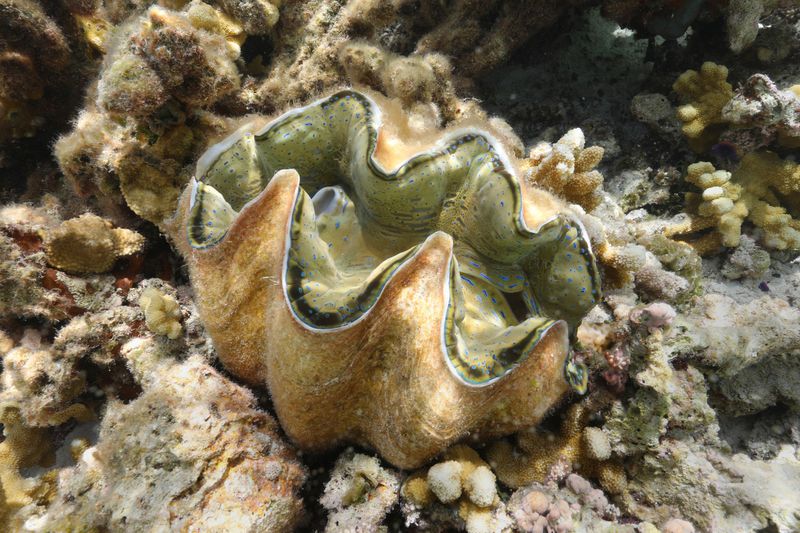
The findings from the Marshall Islands suggest that radiation is either leaking from the waste site — which U.S. officials reject — or that authorities did not adequately clean up radiation left behind from past weapons testing, as some in the Marshall Islands claim.
The radioactive shellfish were found near Runit Dome — a concrete-capped waste site known by locals as “The Tomb” — according to a presentation made by a U.S. Department of Energy scientist this month in Majuro, the island nation’s capital. The clams are a popular delicacy in the Marshall Islands and in other nations, including China, which has aggressively harvested them from vast swaths of the Pacific.
According to Terry Hamilton, a veteran nuclear physicist at the Energy Department’s Lawrence Livermore National Laboratory, Runit Dome is vulnerable to leakage by storm surge and sea level rise, and its groundwater, which is leaking into the lagoon and ocean, is severely contaminated. Continue reading
New interactive map shows France’s many nuclear waste locations
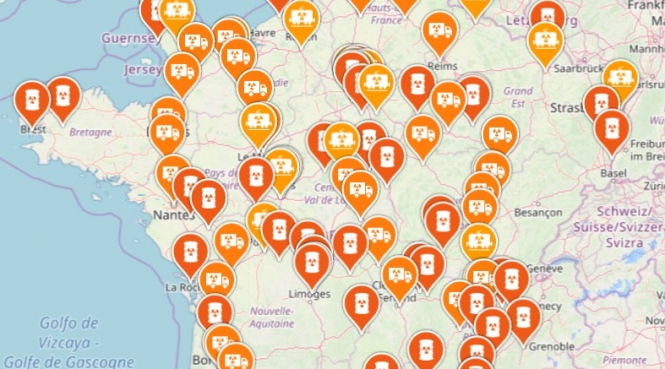 Nuclear waste map of France published by Greenpeace, https://www.connexionfrance.com/French-news/Nuclear-waste-map-of-France-published-by-environmental-activists-Greenpeace-on-issue 29 May, 19, Nuclear waste is becoming a hot topic of discussion, as Greenpeace publishes a map of waste across France
A new interactive map showing the locations of nuclear waste across France has been published by environmental group Greenpeace, as part of its forthcoming campaign on the issue.
The map was published online this week, with the NGO aiming to “compile in a single place” all of the information it has on the location of radioactive material, to let people know how close they may be living to the waste.
The map categories include storage centres (at which the waste will be stored for 300 years minimum); nuclear centres that generate all forms of nuclear waste; more than 200 old uranium mines, operational up to 2001; factories and other plants; and radioactive waste from more than 70 military sites.
The data was collected from records of radioactive waste agency l’Agence Nationale pour la Gestion des Déchets Radioactifs (Andra).
The map does not include waste from medical use or research.
The map allows you to search by post code (Greenpeace.fr / Screenshot)Greenpeace is hoping to raise awareness and prompt debate over the extent of nuclear waste, and ask questions on the potential impact it may have. This also includes the impact of transporting nuclear waste by road or rail.
The group is also seeking to gather signatures and support for its national campaign on the issue, which it will later address to French ecology minister François de Rugy.
The map features a button saying “Agir! (Act!)”, allowing members of the public to add their support.
A public debate is set to be held on September 25 on this exact question – the issue of nuclear waste in France. It will be held on a platform via which the public will be able to ask for further information and have their say.
Nuclear waste disposal is also expected to be on the agenda at the G20 summit being held in Japan next month.
1 This month

of the week – Australians for War Powers Reform (AWPR)
To see nuclear-related stories in greater depth and intensity
 Antinuclear