Another nail in the coffin of the ‘integral fast nuclear reactors’ championed by Ben Heard, Barry Brook et al.
Jim Green.Nuclear Fuel Cycle Watch South Australia https://www.facebook.com/groups/1021186047913052/– 9 May 19
 Another nail in the coffin of the ‘integral fast reactors’ championed by Ben Heard, Barry Brook et al.
U.S. nuclear power stations not ready for climate change
 Sohn: Climate clouds gather over U.S. nukes – Part 1, Times Free Press, May 5th, 2019
U.S. nuclear power plants weren’t built for climate change.
So says the headline in April 18 Bloomberg News special online expose. The lead example, of course, is Japan’s Fukushima-Daiichi reactor meltdowns after a 9.0 earthquake and consequent tsunami.
The earthquake itself, almost 81 miles offshore, did no damage. The two tsunami waves that followed were a different story. And no, earthquakes have nothing to do — that we know of — with climate change. Nor do tsunamis. But flooding certainly does, and that’s why Fukushima’s story illustrates this point.
When the quake hit the Fukushima plant — a near twin of TVA’s Brown’s Ferry plant in North Alabama, the reactors went into automatic shutdown mode, as all nuclear plants are designed to do. It’s a safety feature — like a fuse blowing when your circuits are overloaded. But not even shutdown could prevent catastrophe when less than an hour later two enormous ocean waves swamped the back-up diesel generators, the seawater pumps, the back-up electrical switchgear and a series of batteries in the plant’s basement. With no power, the pumped flow of cooling water to surround the hot radioactive cores ceased.
From there, the dominoes fell fast, and within three days, three of six reactor cores had melted. Explosions ripped away parts of the containment structures. Within hours, mandatory evacuations began in a radius at 1.2 miles and gradually expanded to 12.4 miles. A voluntary evacuation was requested in the 12.4-to-18.6-mile area, and 10 days later, the Japanese government set a 12.4-mile-radius “no-go” area. Some 160,000 people were evacuated from their homes. Years later, 81,000 evacuees remained displaced, as much of the nearby land is still uninhabitable. ……
the nuclear industry, on the whole, fought Jaczko’s recommendation of redesigning the plants. Nuclear people instead thought it would be enough to focus mainly on storing emergency generators, pumps, and other equipment in on-site concrete bunkers — a system they dubbed Flex, for Flexible Mitigation Capability. Flex was the process TVA adopted. Spokesman Jim Hopson says TVA was the first nuclear utility in the U.S. to implement and certify its FLEX facilities at Watts Bar, and among the first to certify its entire nuclear fleet.
In a sad way, we’re lucky that TVA took that early approach, because in January, NRC’s new majority — three commissioners appointed by President Trump — ruled that nuclear plants wouldn’t have to update equipment to deal with new, higher levels of expected flooding. The commission even eliminated a requirement that plants run Flex drills.
Jaczko and others told Bloomberg the NRC already hadn’t done enough to require owners of nuclear power plants to take preventative measures — and that the risks will only increase as climate change worsens.
Jaczko said the new ruling nullified the work done following Fukushima. “It’s like studying the safety of seat belts and then not making automakers put them in a car.”
Using data from the Union of Concerned Scientists, Bloomberg mapped the plants expected to flood an average of at least twice a month by 2060. Some 90% of the current 59 operating plants were shown as having a minimum of one to four flood risks for which the facilities were not designed. TVA’s Brown’s Ferry in North Alabama, Watts Bar in Spring City, Tennessee, and Sequoyah in Soddy-Daisy all made that risk list.
Should we worry? We’ll take a deeper look Monday.https://www.timesfreepress.com/news/opinion/times/story/2019/may/05/sohn-climate-clouds-nukes/493926/
Australia’s role in the extinction crisis
|
UN environment warning: 10 key points and what Australia must do From native species to Indigenous land management and water efficiency: Australia’s role in the extinction crisis, Guardian, Calla Wahlquist@callapilla 7 May 2019 |
|
|
Wangan and Jagalingou Country The Frontline In ‘Adani’s Federal Election’
The Karmoo Dreaming: a Celebration of the Water Protectors
“But the weekend in Clermont wasn’t about the show put on by Adani or their right-wing political mates. It was about the generous and sacred Karmoo Dreaming celebration of the water protectors.
This event was organised and hosted by the W&J Council to celebrate their culture and law, including honouring their vital role, over millennia, as custodians of their lands and water. W&J Council welcomed the Bob Brown Foundation convoy onto their country, and into the Karmoo (water) ceremony and celebration.
“The water is our life. It is our dreaming and our sovereignty. We cannot give that away…. Water is central to our laws, our religion and our identity. It is the Mundunjudra, the water spirit, the rainbow serpent.” .KristenLyons
Ireland urged to follow UK – the first national parliament to declare an “environmental and climate emergency”.
 Irish Times 6th May 2019 In the quagmire of Brexit there is little to commend the UK government’s approach. This is in stark contrast with its clarity and leadership on climate change. It is the first national parliament to declare an “environmental and climate emergency”.
It has not only committed to “net-zero” greenhouse gas emissions by 2050, the climate change committee in Westminster has set out how this can be achieved. Net zero means, in effect, eliminating its carbon footprint in a dramatically transformed economy built on sustainability with a near absence of fossil fuels.
Ireland has some way to go before it could commit to such a course, but a Government report due in the coming weeks must show a similar level of intent, and include a roadmap to reduce the shocking levels of Irish emissions. Declaring an emergency may seem like tokenism but it injects urgency into consideration of the best course to take. Wicklow County
Council was the first Irish local authority to declare a “biodiversity and climate change emergency”.
The Government should endorse a similar vote in our national parliament and introduce binding legislation on
revised targets.
Inspired by schoolchildrens’ action, an Irish Council, and UK parliaments declare “a biodiversity and climate-change emergency”
Irish Times 2nd May 2019 Wicklow County Council has become the first local authority in Ireland to declare “a biodiversity and climate-change emergency”, recognising the need to respond more urgently to the threat of climate breakdown and the global decline of species.Nuclear waste dump site becomes a national issue in USA (it should be national in Australia, too)
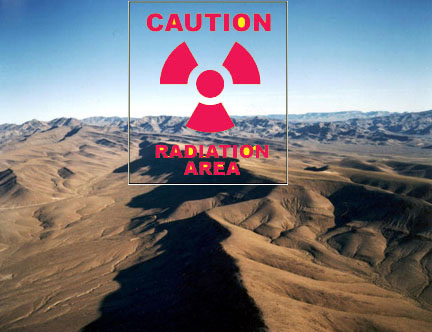 War over nuclear waste at Yucca Mountain spreads to nation’s capital, by John Treanor, May 6th 2019
https://news3lv.com/news/local/war-over-nuclear-waste-at-yucca-mountain-spreads-to-nations-capital LAS VEGAS (KSNV) — It’s becoming a familiar scene in Carson City.
“Many believe Yucca Mountain is settled science. That Yucca was selected, or that it’s ready to receive nuclear waste. Well, they are wrong,” said Senator Cortez Masto.
The war over Yucca Mountain continues, and the latest battleground was a committee meeting in Washington D.C. where senators debated the plan to open funding to study the site.
Right now, sites across the country have nuclear waste sitting in danger of contaminating waterways or nearby communities.
The federal government has long wanted to bury it deep in Yucca, but Nevada politicians are united against that plan.
Saying that storing it could be dangerous, transporting it here a matter of national security.
Senator Jacky Rosen said, “Severe risks in transportation threaten the health and costs billions in cleanup costs. I ask the members here today, is this a risk you’re willing to take?”
Nevada Senators Jacky Rosen and Catherine Cortez Masto want states to sign off on any nuclear plan before the waste is shipped to them, giving Nevada the opportunity to turn those shipments away. https://news3lv.com/news/local/war-over-nuclear-waste-at-yucca-mountain-spreads-to-nations-capital
Promising new nuclear waste disposal method would be PERMANENT and would not require long dangerous transport
 Could this be a solution for Lucas Heights nuclear waste? It would mean permanent, not just temporary, disposal , and it would mean dispoosal near Lucas Heights, NOT trekking the waste dangerously 1700 km to Kimba or Hawker.
We will provide an option for people not satisfied with existing options,” said Deep Isolation’s co-founder and CEO Elizabeth Muller. She pointed out the interim sites were not “deep geologic storage.”
They’re looking at being safe for decades,” Muller said. “They’re looking at temporary storage. We’re looking at disposal.”
David Lochbaum, former director of the Nuclear Safety Program for the Union of Concerned Scientists, has taken a seat on Deep Isolation’s advisory board.
“There are technical, legal and political challenges facing Deep Isolation, to be sure,” Lochbaum said via email. “I think their proposal could very well meet all these challenges.
“The spent fuel storage status quo is only worsening with time,” he said. “We need to find a solution before we run out of time to do so without harm.”
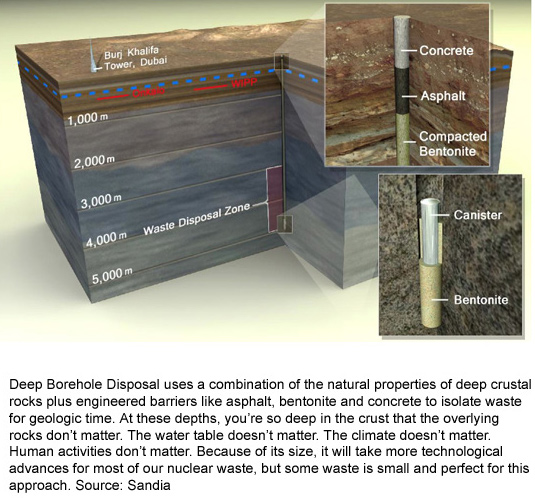
 Startup promotes permanent nuclear waste storage via miles-long drilling, South Coast Today, By Christine Legere / Cape Cod Times, 4 May 19, A small startup company in Berkeley, California, with connections to scientists, university professors, industry experts and Silicon Valley entrepreneurs is marketing a method to permanently store nuclear waste, tapping advanced drilling technology used for years by the gas and oil industries.
Storage of the highly radioactive waste would be permanent — unlike the options currently available around the world — and the method is being pitched as far less expensive than development of a deep geologic repository such as Yucca Mountain in Nevada. In New England, spent nuclear fuel is being stored on-site at the Maine Yankee, Seabrook, Vermont Yankee, Yankee Rowe, Pilgrim and Millstone nuclear plants. Continue reading
How Does the Olympics Clean Up? (Or, Is There an Olympics Without Cleaning Up?)
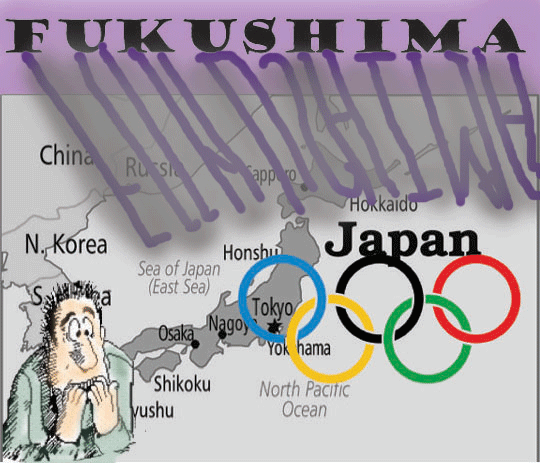
Under these circumstances, whether the unresolved issues of radiation, without appropriate treatment of nuclear power facilities, disaster victims lacking a place to reside, the forcible relocation of American army bases or the dispersal of the homeless, the Japanese media has relentlessly broadcast the Olympics.
“The Tokyo Olympics will take place in a state of nuclear emergency. Those countries and the people who participate will, on the one hand, themselves risk exposure, and, on the other, become accomplices to the crimes of this nation.”
THE OLYMPICS CLEAN-UP: FUKUSHIMA, OKINAWA, HOMELESSNESS 陳黃金菊05/05/2019 ENGLISH INTERNATIONAL MAY 2019 How Does the Olympics Clean Up? (Or, Is There an Olympics Without Cleaning Up?)
Uranium production is declining
 Quarterly uranium output decreases in Kazakhstan and USA, WNN, 03 May 2019 Kazatomprom’s uranium production for the first quarter of 2019 was 4% down from the same period in 2018 as the Kazakh company continues with its plan to reduce production. Meanwhile, US uranium production for the quarter was 74% down from 2018……
US production hits low
US uranium production in the first quarter of 2019, at 58,481 pounds U3O8, was down 83% from the fourth quarter of 2018 and down 74% from the first quarter of 2018, according to figures released on 1 May by the US Energy Information Administration (EIA)……. http://www.world-nuclear-news.org/Articles/Quarterly-uranium-output-decreases-in-Kazakhstan-a
UK MP deplores the danger of flying nuclear wastes from Scotland
 Press and Journal 4th May 2019 Highland Green MSP John Finnie has expressed concern after three quarters
of a ton of highly enriched uranium was transported from Dounreay in
Caithness to America. He said: “The appropriate place for dangerous
material is secure storage and supervision by highly trained staff where it
was created, not transportation.
“Whilst pleased that this risky has been completed without incident, that we know of. “But before the authorities
on both sides of the Atlantic pat themselves on the back, they need to
reflect on the dangers they put communities in. “As was evidenced when a
ship which was transporting nuclear material in the Moray Firth went on
fire. As with oil and gas reserves, the message regarding nuclear waste has
to be ‘keep it in the ground’.”
WA rules out Lynas rare earths waste imports
WA rules out Lynas waste imports THE AUSTRALIAN, 5 May 19
Mines Minister Bill Johnston has rejected a request by the Malaysian government…. (subscribers only)
Low level radiation increases high blood pressure risks – nuclear workers affected
 Prolonged job-related radiation exposure increases hypertension odds, Healio Cardiology Today , 3 May 19
HBO’s Chernobyl drama highlights the human cost of nuclear catastrophe
Chernobyl (2019) | What Is Chernobyl? | HBO
|
HBO’s Chernobyl drama highlights the human cost of nuclear catastrophe https://www.newscientist.com/article/2201699-hbos-chernobyl-drama-highlights-the-human-cost-of-nuclear-catastrophe/
An intense new HBO miniseries about the world’s worst nuclear accident turns the Chernobyl Soviet scientists into unlikely heroes in its portrayal of a world superpower approaching meltdown 3 May 2019 By Fifteen minutes into the second episode of HBO’s gripping saga of the 1986 Chernobyl nuclear disaster, we are treated to an idiot’s guide to how a nuclear power plant works. It is delivered by a top Soviet nuclear scientist, Valery Legasov, to a hapless, senior Soviet apparatchik as they fly to the unfolding disaster. As a plot device, it helps the viewer understand events as much as the politburo hack. But it also does something more interesting: it helps establish the nuclear scientist as the unlikely hero of the story. And give us some interesting insights into a pre-collapse Soviet Union.
In a disaster movie about a nuclear accident, told over five hour-long episodes, you might expect the scientists who designed the plant to be the bad guys. But, at least in the first two episodes available for preview, they come out smelling of roses. For the producers have bigger fish to fry – the entire edifice of communist rule in the Soviet Union, which was then only three years from toppling. It makes for a great story, but also has the ring of truth. The central human narrative is the tension between boffins and bureaucrats. Legasov, based at the Kurchatov Institute, Moscow, the Soviet Union’s main atomic research institute, is the man who first understood the scale of the disaster. He devised a way to douse the inferno by pouring thousands of tonnes of sand and boron into the stricken reactor from helicopters, and was also the first to insist on the evacuation of 50,000 local inhabitants who had been left to suffer the fallout by officials intent on covering up the entire disaster. In later episodes, however, we can expect to see him blamed by politicos, who disliked his appetite for speaking truth to the incompetents in power. So much so that he ends up hanging himself in the stairwell of his apartment on the second anniversary of the accident, shortly after telling his story to Pravda. This mini-series is brilliant and pointed storytelling, with gruesome early scenes of radiation sickness among the fire crews intercut with the local officials in their bunker, unwilling and unable to comprehend what was happening above them. Again, on the basis of the first two episodes, the story is told without taking too many liberties with the historical truth. Its main take is that the accident exposed as never before the callousness and dysfunction of the Soviet elite. And that by making this finally visible to Soviet citizens, it undermined the best of Communism, a sense of common purpose. It is a view shared by academics such as Kate Brown in her recent study of Chernobyl and its aftermath, Manual for Survival (Allen Lane, 2018). The dozens of plants workers, firefighters and helicopter pilots who died putting out the Chernobyl inferno, would never sacrifice themselves in that way again. The disaster replaced the common purpose with a sense of betrayal. It did not just symbolise the failings of communist rule, but precipitated its collapse. Early on, the series has Soviet leader Mikhail Gorbachev declaring angrily that the accident had to be kept secret because “our power comes from the perception of our power”. Chernobyl incinerated that perception, and their power was over. As he strung himself up, one imagines that Legasov already knew the truth. Chernobyl, starring Jared Harris, Stellan Skarsgård and Emily Watson, premieres 6 May on HBO. Fred Pearce is a New Scientist consultant and the author of Fallout: A journey through the nuclear age(Granta Books). |
|
Nuclear waste carefully kept off the political agenda in Australia, NUCLEAR WASTE A HOT POLITICAL TOPIC IN USA
 Presidential candidates join Nevada’s nuclear waste fight, SF Gate, Michelle L. Price, Associated Press May 3, 2019 LAS VEGAS (AP) — Nevada’s long crusade to block the creation of a national nuclear-waste dump at Yucca Mountain has pitted the state against a bipartisan group of lawmakers across the country, but a band of presidential hopefuls is joining the early voting state’s cause.
Nevada’s senior senator, Democrat Catherine Cortez Masto, has legislation that would bar the federal government from moving nuclear waste into a state without first receiving permission from the governor and local officials. Last year, Nevada’s two senators were the only sponsors of the measure.
This year, they’ve got company in Democratic Sens. Cory Booker of New Jersey, Kirsten Gillibrand of New York, Kamala Harris of California, Amy Klobuchar of Minnesota, Bernie Sanders of Vermont and Elizabeth Warren of Massachusetts.
The six senators’ move to establish opposition to the mothballed Yucca Mountain project is an appeal long-made by presidential candidates hoping to win favor in Nevada, which holds a pivotal role as a swing state and the third state to vote in the Democratic presidential contest.
1 This month

of the week – Australians for War Powers Reform (AWPR)
To see nuclear-related stories in greater depth and intensity
 Antinuclear