Rising temperatures threaten health of fetuses, researchers say
 March 6, 2019 By Ruth SoRelle, Texas Climate News Climate change evokes images of people swimming out of their flooded neighborhoods, cars bumper-to-bumper as drivers flee burning homes, merciless sun that dries up rivers and lakes. However, climate change is more than these very visible disasters. Of equal or greater danger is the silent, unseen damage that may occur in the gestating fetus – damage that can last a lifetime.
In USA, a political move that would prevent Federal govt from imposing a nuclear waste dump on any State
 Act would give states voice on nuclear waste dumps, Las Vegas Sun, March 5, 2019 The Nuclear Waste Informed Consent Act would require approval of the governor and impacted local governments and tribes before any money could be spent on a nuclear waste repository from the federal Nuclear Waste Fund. The act would be applicable to all states.
The act was introduced by most of the Nevada delegation, including U.S. Sens. Catherine Cortez Masto and Jacky Rosen and U.S. Reps. Dina Titus, Susie Lee and Steven Horsford, all Democrats.
Members of Nevada’s congressional delegation are attempting to ensure states have a voice in the construction of nuclear waste repositories.
Nevada is home to the dormant Yucca Mountain nuclear waste depository.
Titus, who has introduced a similar bill multiple times in the past, said the federal government should not force a waste site on any community.
“The Trump Administration’s attempt to treat our state as the dumping ground for the nation’s nuclear waste is based on dirty politics, not sound science. No state or community should have a nuclear waste dump forced upon them. I’m reintroducing this legislation as part of our strategy to put an end to the Yucca Mountain project once and for all,” she said in a statement…….
Lee, Horsford and Titus characterized Yucca Mountain as a push to turn Nevada into the nation’s dumping ground.
“I refuse to sit by and watch my community be used as a dumping ground for the nation’s nuclear waste,” Horsford said in a statement. “Yucca Mountain is an ongoing threat to the safety of Nevada families and to the Silver State’s $40 billion tourism industry.” https://lasvegassun.com/news/2019/mar/05/act-would-give-states-voice-on-nuclear-waste-dumps/
World increase in mosquito-borne diseases is predicted, due to global warming
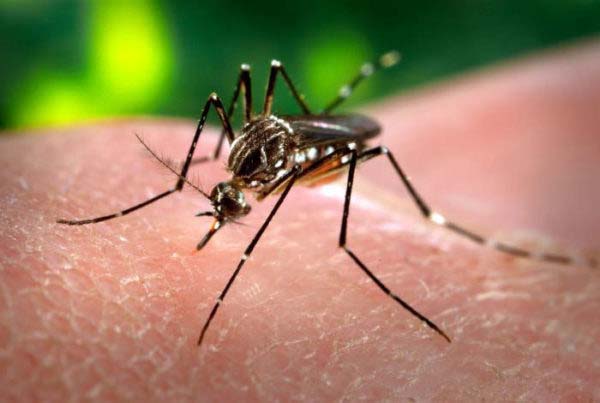
Climate Change Will Expose Half of World’s Population to Disease-Spreading Mosquitoes By 2050 https://e360.yale.edu/digest/climate-change-will-expose-half-of-worlds-population-to-disease-spreading-mosquitoes-by-2050 MARCH 5, 2019 Scientists and public health officials have documented an increasing number of outbreaks of mosquito-borne illnesses across the globe in recent years, including yellow fever, dengue, chikungunya, and Zika. Now, an international team of researchers has found that by 2050, two key disease-spreading mosquitoes — Aedes aegypti and Aedes albopictus — will significantly expand their range, posing a threat to 49 percent of the world’s population.
“If no action is taken to reduce the current rate at which the climate is warming, pockets of habitat will open up across many urban areas with vast amounts of individuals susceptible to infection,” said Moritz Kraemer, an infectious disease scientist at Boston Children’s Hospital and the University of Oxford and a co-author of the new research, published in the journal Nature Microbiology,.
The researchers analyzed historical distribution data from more than 3,000 locations in Europe and the United States, dating back to the 1970s. They then modelled future distribution using projections for climate change, urbanization, and human migration and travel. Kraemer and his colleagues found that in the last five years, Aedes aegypti has spread northward in the U.S. at about 150 miles per year. In Europe, Aedes albopictus has spread at a rate of 93 miles per year.
The scientists also found that within the next 5 to 15 years, human travel and migration will be the largest factors driving the spread of mosquitoes. After that, however, climate change and accelerating urbanization will create new mosquito habitats. Aedes aegypti could reach as far north as Chicago and Shanghai by 2050. However, the species will likely decline in parts of the southern U.S. and Eastern Europe, which are expected to become more arid as global temperatures rise. Aedes albopictus, on the other hand, is forecast to spread widely throughout Europe over the next 30 years, as well as establish small populations in parts of the northern U.S. and the highland regions of South America and East Africa.
Poltical unrest; Obama warns on the consequences of the climate crisis
Obama warns climate change will make global politics more toxic https://thehill.com/blogs/blog-briefing-room/news/432773-obama-warns-climate-change-will-make-global-politics-more-toxicFormer President Obama on Tuesday dismissed climate change skeptics and warned that the world’s inability to effectively tackle the issue will toxify global politics.
“It is indisputable that although we can’t ascribe any particular kind of weather event to rising temperatures, that at the current pace that we are on, the scale of tragedy that will consume humanity is something we have not seen in perhaps recorded history if we don’t do something about it,” Obama said during a trip to Canada, according to CTV News.
“Imagine when you have not a few hundred thousand migrants who are escaping poverty or violence or disease, but you now have millions. Imagine if you start seeing monsoon patterns in the Indian subcontinent changing so that half a billion people can’t grow food and are displaced,” he added. “Think about what that does to the politics of the world — not just the economics of it, not just the environment.”
Obama was an outspoken proponent of combating climate change while in the White House. Under his leadership, the U.S. was one of the signatories of the historic Paris climate accord, in which world powers agreed to take measurable steps to reduce their man-made footprint on the environment. President Trump announced in 2017 that the U.S. would withdraw from the agreement.
The former Democratic president on Tuesday told a packed crowd in Calgary, Alberta, home to many struggling oil and gas companies, that nobody can escape the impacts of climate change.
“All of us are going to have to recognize that there are trade-offs involved with how we live, how our economy is structured, and the world that we’re going to be passing on to our kids and grandkids. Nobody is exempt from that conversation,” Obama said.
He also noted that rising oceans risk coastal populations and environmental changes have boosted the frequency of insect-borne diseases.
“Moose right now [have] to deal with tick-borne diseases that they didn’t have to do 10, 15 years ago. I really like moose. I assume, Canadians, you do too,” Obama said. “These are just facts.”
South Australia Labor politicians to visit Port Augusta on 14 March

South Australia’s Labor politicians Peter Malinauskas, (Leader of the Opposition) and Justin Hanson are coming to Port  Augusta to (in their words) “listen and hear your thoughts on what is important to you and your community”. Only a half hour visit – but plenty of time to make our voices be heard!
Thursday 14th March 1pm – 1.30pm…..Gladstone Square
Russia officially halts Intermediate-Range Nuclear Forces Treaty (INF)
Russia officially suspends INF Treaty with US, https://www.aljazeera.com/news/2019/03/russia-officially-suspends-inf-treaty-190304143410145.html
Vladimir Putin signs decree suspending Russia’s obligations under key nuclear arms pact with US. Russia’s President Vladimir Putin has signed a decree suspending Moscow’s participation in a key Cold War-era nuclear arms control treaty, following a similar move by the United States.
In a statement on Monday, the Kremlin said the suspension would last until the US “ends its violations of the treaty or until it terminates”.
In February, Washington gave notice of its intention to withdraw from the landmark 1987 Intermediate-Range Nuclear Forces Treaty (INF), which was established as a major safeguard against nuclear war.
The move by US President Donald Trump set the stage for the bilateral pact’s termination in six months.
Washington accuses Moscow of developing and deploying a cruise missile that violates provisions of the treaty that ban the production, testing and deployment of land-based cruise and ballistic missiles that have a range between 500km and 5,500km.
US officials have also expressed concerns that China, which is not party to the pact, was gaining a significant military advantage in Asia by deploying large numbers of missiles with ranges beyond the treaty’s limit.
Russia has denied any breaches, instead, charging that it was the US that had flouted the pact by deploying missile defence facilities in Eastern Europe that could fire cruise missiles instead of interceptors.
Washington rejects the claim.
The collapse of the treaty has stoked fears of a replay of a Cold War-era European missile crisis during the 1980s, when the US and the Soviet Union both deployed intermediate-range missiles on the continent.
Putin has previously said Russia would seek to develop medium-range missiles, but would not deploy them in the European part of the country or elsewhere unless the US does so.
NATO has supported the US’s decision to withdraw from the pact, but many European leaders have voiced fears over the consequences of its demise.
China has also urged Russia and the US to preserve the treaty.
The unimaginable toxicity of Fukushima reactor’s molten nuclear debris – robots the only hope for cleanup
For Fukushima’s nuclear disaster, robots may be the only hopeThe 2011 meltdown in Japan is still too hot for humans to handle. Send in the machines. CNet BY ROGER CHENG, MARCH 4, 2019 ………. I’m inside the cavernous top of the Unit 3 reactor in the Fukushima Daiichi Nuclear Power Plant. Yes, that Fukushima Daiichi, site of the world’s worst nuclear disaster.
Unit 3 was one of three reactors crippled on March 11, 2011, after a 9.0 earthquake struck 80 miles off the coast of Japan. (Units 4, 5 and 6 at Daiichi weren’t operating at the time.) The temblor shook so violently it shifted the Earth’s axis by nearly 4 inches and moved the coast of Japan by 8 feet. Eleven reactors at four nuclear power plants throughout the region were operating at the time. All shut down automatically. All reported no significant damage.
An hour later, the tsunami reached shore.
Two 50-foot-high waves barreled straight at Fukushima Daiichi, washing over coastal seawalls and disabling the diesel generators powering the plant’s seawater cooling systems. Temperatures inside the reactors skyrocketed to as high as 5,000 degrees Fahrenheit.
Fuel rods became molten puddles of uranium that chewed through the floors below, leaving a radioactive cocktail of fuel rods, concrete, steel and melted debris. Molten fuel ultimately sank into the three reactors’ primary containment vessels, designed to catch and secure contaminated material.
Next Monday marks the eighth anniversary of the earthquake. Since then, Japanese energy giant Tokyo Electric Power Company, or Tepco, has cleared enough of the rubble on the top floor of the Unit 3 building to allow for my 10-minute visit.
I gaze up at the massive barrel vault ceiling, trying to get a handle on the sheer scale of everything. Radiation levels are too high for me to linger. My quickening pace and breath are betrayed by rapid flapping noises coming from the purple filters on both sides of my respirator mask.
At the far end of the room, there’s an enormous orange platform known as a fuel-handling machine. It has four giant metal legs that taper down, giving the structure a sort of animalistic look. Thin steel cables suspend a chrome robot in the center of the frame. The robot, largely obscured by a pink plastic wrapper, is equipped with so-called manipulators that can cut rubble and grab fuel rods. The robot will eventually pull radioactive wreckage out of a 39-foot-deep pool in the center of the room.
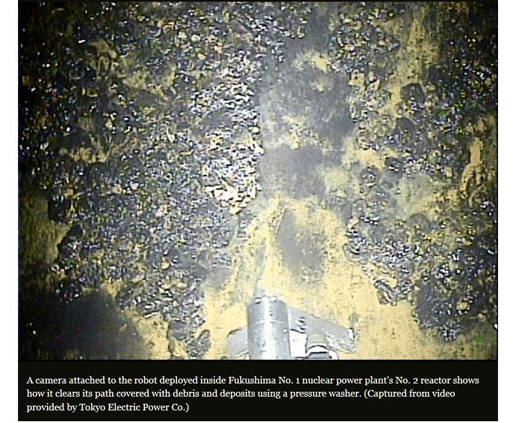
It’s just one of the many robots Tepco is using to clean up the power plant. It’s why I came to Japan this past November — to see how robots are working in one of the most extreme situations imaginable.
The Japanese government estimates it will cost $75.7 billion and take 40 years to fully decommission and tear down the facility. The Japan Atomic Energy Agency even built a research center nearby to mock up conditions inside the power plant, allowing experts from around the country to try out new robot designs for clearing away the wreckage.
The hope is that the research facility — along with a drone-testing field an hour away — can clean up Daiichi and revitalize Fukushima Prefecture, once known for everything from seafood to sake. The effort will take so long that Tepco and government organizations are grooming the next generation of robotics experts to finish the job. …….
Two years ago, Tepco erected a dome over the Unit 3 reactor and fuel pool so that engineers could bring in heavy equipment and now, us.
Roughly 60 feet below me, radiation is being emitted at 1 sievert per hour. A single dose at that level is enough to cause radiation sickness such as nausea, vomiting and hemorrhaging. One dose of 5 sieverts an hour would kill about half of those exposed to it within a month, while exposure to 10 sieverts in an hour would be fatal within weeks.
Unit 3 is the least contaminated of the three destroyed reactors.
 Radiation in Unit 1 has been measured at 4.1 to 9.7 sieverts per hour. And two years ago, a reading taken at the deepest level of Unit 2 was an “unimaginable” 530 sieverts, according to The Guardian. Readings elsewhere in Unit 2 are typically closer to 70 sieverts an hour, still making it the hottest of Daiichi’s hotspots.
The reactors’ hostile environments brought most of the early robots to their figurative knees: High gamma radiation levels scrambled the electrons within the semiconductors serving as the robots’ brains — ruling out machines that are too sophisticated. Autonomous robots would either shut down or get snared by misshapen obstacles in unexpected places.
The robots also had to be nimble enough to avoid disturbing the volatile melted fuel rods, essentially playing the world’s deadliest game of “Operation.” At least initially, they weren’t. “Fukushima was a humbling moment,” says Rian Whitton, an analyst at ABI Research. “It showed the limits of robot technologies.”………….. https://www.cnet.com/news/for-fukushimas-nuclear-disaster-robots-may-be-the-only-hope/
How to face what is happening – environmental collapse

Rethink Activism in the Face of Catastrophic Biological Collapse, Dahr Jamail and Barbara Cecil, Truthout,
PART OF THE TRUTHOUT SERIES How Then Shall We Live? 4 Mar 19,
It may be that when we no longer know what to do
we have come to our real work,
and that when we no longer know which way to go,
we have begun our real journey.
The mind that is not baffled is not employed.
The impeded stream is the one that sings.
― Wendell Berry
Anyone who thinks there is still time to wholly remedy the situation must answer the question: How do we remove all the heat that’s already been absorbed by the oceans? Invigorated activism, as heartening and important as it is, is not going to completely stem these tides.
Thus, the third level of activism, adaptation, comes into focus.
Trump administration still keenly pursuing sale of nuclear technology to Saudi Arabia
 Team Trump Keeps Pushing Deal to Send Nuclear Tech to Saudis
Congress raised ‘grave concerns’ about the Trump administration’s past attempts to send nuclear technology to the Saudis. But Team Trump isn’t done trying. The Daily Beast, Erin Banco, Betsy Woodruff 03.04.19 The Trump administration is still actively working to make a deal to send U.S. nuclear technology to Saudi Arabia, according to two U.S. officials and two professional staffers at federal agencies with direct knowledge of those conversations. American energy businesses are still hoping to cash in on Riyadh’s push for energy diversification,
USA has no idea what to do with spent nuclear fuel

U.S. still has no place for spent nuclear fuel, so Maine Yankee’s owner gets millions
The award will help pay for the roughly $10 million per year to maintain the repository at the closed nuclear plant in Wiscasset. PressHerald, BY TUX TURKEL STAFF WRITER 3 Mar 19, For the fourth time since 1998, a federal judge has awarded the owners of three closed nuclear power plants, including Maine Yankee, millions of dollars for the federal government’s failure to remove spent nuclear fuel.
According to Connecticut Yankee Atomic Power Co., Yankee Atomic Electric Co., and Maine Yankee Atomic Power Co., the owners won a partial summary judgment last week totaling $103.2 million. Maine Yankee’s share is $34.4 million.
The award will help offset the roughly $10 million per year cost of operating an interim spent fuel storage site on plant property in Wiscasset. It will indirectly benefit ratepayers, who otherwise foot the bill. The actual financial impact hasn’t been determined, but is expected to be minimal.
In 2016, for instance, Maine Yankee was awarded about $24.6 million. Roughly $3.6 million of the total award was returned to utilities, including Central Maine Power. The balance, $21 million, went to operate the spent fuel storage site…….
Wayne Norton, president of the three companies urged Congress to authorize funding for a pilot program to remove and consolidate spent nuclear fuel and high-level waste from closed reactor sites, and to complete a review for a permanent repository at Yucca Mountain in Nevada.
Maine Yankee operated from 1972 to 1996. Although activists fought for years to close the plant, it was the company’s board that ultimately voted to pull the plug rather than fix expensive, safety-related problems.
Yankee, in Rowe, Massachusetts, closed in 1992. Connecticut Yankee shut down in 1996.
By law, the federal government is charged with coming up with a long-term solution for disposing of radioactive waste from nuclear reactors. It was supposed to begin removing waste in 1998. Facing ongoing public and political opposition, that process hasn’t happened.
Plans to build a permanent waste repository in the Nevada desert were scrapped in 2009 by President Obama. The Trump administration has sent mixed signals about whether it supports reviving Yucca Mountain.
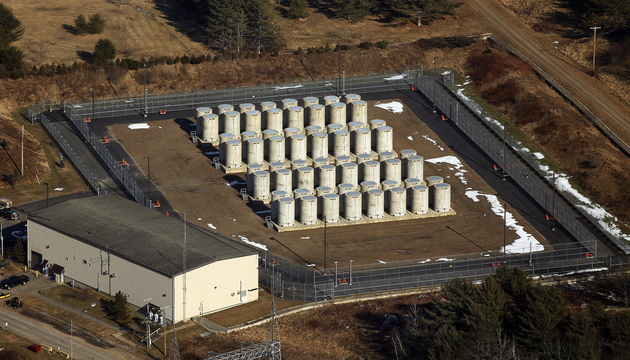 For the foreseeable future, highly radioactive fuel rods are being stored in 60 airtight steel canisters and housed in concrete casks in Wiscasset. Another four canisters hold radioactive steel from the decommissioning process. Maintaining them costs roughly $10 million a year, according to Maine Yankee.
The current award is for a period from 2013 to 2016, and the three companies are seeking an additional $1.2 million in costs. The federal government has 60 days to appeal the award.
Tux Turkel can be contacted at 791-6462 or at:
tturkel@pressherald.com https://www.pressherald.com/2019/02/25/judge-awards-34-million-to-offset-costs-of-storing-spent-fuel-rods-in-wiscasset/
Rolls Royce selling vast bulk of its civil nuclear business
 Times 3rd March 2019 Rolls-Royce is selling the vast bulk of its civil nuclear business, dealing a new blow to efforts to rebuild Britain’s atomic power industry. The FTSE 100 engineer has hired consultants from KPMG to find a buyer for the
nuclear division, which could fetch up to £200m.
The move marks the end of an era for the country’s premier engineering company, which has more than 50 years’ expertise in nuclear power but is being slimmed down by chief executive Warren East to focus on jet engines, power generators and defence. The nuclear business makes instruments and controls to monitor radiation and temperature and prevent reactors overheating. Its equipment is installed in more than 200 reactors around the world, and it has a big presence in France, where it works with the state-backed engineering firm Orano , [formerly Areva, which went bankrupt]
Rolls-Royce’s retreat from civil nuclear work reflects the industry’s broader problems. Plans for new power stations in Britain have been left in tatters after the Japanese industrial giants Toshiba and Hitachi withdrew, leaving just Hinkley Point in Somerset under way.
The Japanese exit has triggered an inquiry by the Commons business committee into future investment in energy infrastructure. The sale will not include Rolls-Royce’s work on Hinkley Point, which is ringfenced, the company’s
project to develop small reactors or its nuclear submarine reactor business.
Rolls-Royce has been in talks to install its equipment at a plant in Essex planned by China General Nuclear, to help assuage security concerns. This work is likely to be transferred to the new owner. Sources said the business, which has more than 1,000 staff, was likely to go to a trade buyer. A Chinese deal is unlikely.
https://www.thetimes.co.uk/edition/business/rolls-royce-to-offload-civil-nuclear-unit-zsq59zlmm
Fifth Graders Launch Their Own Kindness Club at School

Do you ever get tired of all the bad news? Here’s a good one.
Good News Network, By mgreenhoe -Mar 2, 2019 Kindness is seeping into the classrooms and  corridors of an elementary school in Minnesota thanks to a group of fifth-graders.
The kids at Parker Elementary School started a Kindness Club last year, and observers say it’s having a positive impact on classroom culture.
“There had been some issues in fifth grade of kids not being very kind to each other,” said Ashley Justen, a social worker at the school in Elk River. Teachers had talked to some of the students and told them things had to change because ‘that’s not how you treat people,’ Justen said.
Fifth-grade teacher Matt Greenhoe said he had been talking with his students one day about improving the situation when one of the kids, Ady Bolling suggested starting the Kindness Club.“I said, ‘That’s a great idea,’ and I just kind of let them go,” Greenhoe said.
Since then the Kindness Club has blossomed, sprinkling kindness throughout the school.
Ady said they started the club because they want kids at Parker to feel safe in school. They also want to stop bullying and improve self-esteem, she said…….. https://www.goodnewsnetwork.org/elk-river-kindness-club/
YouTube is, unfortunately, a leader in climate denial
|
Can YouTube Solve Its Serious Climate Science Denial Problem? DESMOG, By Graham Readfearn • Sunday, February 24, 2019 “What are we in for next?” asks the narrator on the YouTube video.“Will the temperature resume an upward trend? Will it remain flat for a lengthy period? Or will it begin to drop? No one knows, not even the biggest, fastest computers.”
The video — with the clickbait title “What They Haven’t Told You about Climate Change” — has been watched more than 2.5 million times on the Google-owned video platform. Produced by the conservative group PragerU, the video sees Canadian lobbyist and fossil fuels advocate Patrick Moore run through a long-debunked argument that because the world’s climate has changed before, there’s no problem with burning record amounts of fossil fuels. Moore claims, for example, there has been “no significant warming trend” in the 21st century — not mentioning that nine of the 10 warmest years on record have occurred since 2005, or that the world’s oceans have been heating rapidly. Despite the clear errors, the video has gathered more views than any other climate science denial clip on YouTube. All up, PragerU claims the video has been watched 4.4 million times across all platforms. A search on YouTube for the most viewed “climate change” videos has Moore’s effort ranked 13th — searching for “global warming” has it ranked 19th. But where the problems really start, are when YouTube’s “up next” algorithm takes a guess at what you might want to watch next after seeing Moore’s video. Recommending DenialWhen I viewed YouTube without signing in, almost all the videos suggested by the algorithm would sit firmly in the climate science denial folder. There’s so much of this material on YouTube that it’s not hard to find once the algorithm opens the door. There’s a Nobel Laureate who apparently “Smashes the Global Warming Hoax” — just don’t mention the 76 other laureatesasking for “rapid progress towards lowering current and future greenhouse gas emissions.” Then there are two other videos, both titled “The Truth About Global Warming,” and both delivering the opposite to what its title claims. Before you know it, you’re in a world of “climate cults,” “global warming hysteria,” and claims of failed predictions and Al Gore getting “slammed.” For an unsuspecting viewer, watching just one video can lead you quickly into an alternate universe where facts, physics, and real-world experiences are replaced by conspiracies, cherry-picking, and fossil fuel–backed propaganda. All of this exists after YouTube declared in January 2019 that it had been working on its recommendations algorithm and making “hundreds of changes to improve the quality of recommendations for users on YouTube.”……… https://www.desmogblog.com/2019/02/24/youtube-video-serious-climate-science-denial-problem?utm_source=dsb%20newsletter |
|
We cannot let nuclear waste come to the State of Utah
https://www.deseretnews.com/article/900058129/letter-we-cannot-let-nuclear-waste-come-to- utah.html, By Leslie and Gail Ellison, Deseret News March 1, 2019 HB220 recently passed by our Legislature opens the door to allow Class B and Class C nuclear wastes to be stored at the EnergySolutions Clive Skull Valley repository. These wastes increase in toxicity over time. No matter one’s political persuasion, Independent, Republican, Libertarian or Democrat, this bill must be halted in its tracks.
Much higher radioactivity levels along the 2020 Olympics torch route

Atomic Balm Part 1: Prime Minister Abe Uses The Tokyo Olympics As Snake Oil Cure For The Fukushima Daiichi Nuclear Meltdowns March 01, 2019, Fairewinds Energy Education, By Arnie Gundersen “……….To determine whether or not Olympic athletes might be affected by fallout emanating from the disaster site, Dr. Marco Kaltofen and I were sponsored by Fairewinds Energy Education to look at Olympic venues during the fall of 2017.We took simple dirt and dust samples along the Olympic torch route as well as inside Fukushima’s Olympic stadium and as far away as Tokyo. When the Olympic torch route and Olympic stadium samples were tested, we found samples of dirt in Fukushima’s Olympic Baseball Stadium that were highly radioactive, registering 6,000 Bq/kg of Cesium, which is 3,000 times more radioactive than dirt in the US. We also found that simple parking lot radiation levels were 50-times higher there than here in the US.
Thirty of the dirt and fine dust samples that I took on my last two trips to Japan in February and March 2016 and September 2017 were analyzed at WPI (Worchester Polytechnic Institute. The WPI laboratory analysis are detailed in the report entitled: Measuring Radioactivity in Soil and Dust Samples from Japan, T. Pham, S. Franca and S. Nguyen, Worchester Polytechnic Institute, which found that:
With the upcoming XXXII Olympiad in 2020 hosted by Japan, it is necessary to look into the radioactivity of Olympic venues as well as tourist attractions in the host cities… Since thousands of athletes and millions of visitors are travelling to Japan for the Olympics, there has been widespread concern from the international community about radiation exposure. Therefore, it is important to investigate the extent of radioactive fallout from the Fukushima Dai-ichi incident.
The measured results showed a much higher activity of Cesium-137 in the proposed torch route compared to other areas. Overall, the further away from the Fukushima Dai-ichi Nuclear Power Plant, the lower the radioactivity. The activity of Cesium-137 in Tokyo, the furthest site from the plant, was the lowest when compared to the other sites. Therefore, the activity of Cesium-137 in Tokyo sample was used as the baseline to qualitatively estimate the human exposure to radiation.
At the Azuma Sports Park, the soil and dust samples yielded a range of 78.1 Bq/kg to 6176.0 Bq/kg. This particular Olympic venue is around 90 km from the Nuclear Power Plant. The other sites that are closer to the Nuclear Power Plant like the tourist route, proposed torch route, and non-Olympic samples have higher amounts due to the close proximity to ground zero of the disaster.
… the proposed torch route samples had the highest mean radioactivity due to their close proximity to the plant. Based on the measurement, we estimated qualitatively that the radiation exposure of people living near the Azuma Sports Park area was 20.7 times higher than that of people living in Tokyo. The main tourist and proposed torch routes had radiation exposure of 24.6 and 60.6 times higher, respectively, than in Tokyo…. Olympic officials should consider using the results of this project to decide whether the radioactivity level at the proposed torch route and the Olympic venues are within acceptable level…… https://www.fairewinds.org/demystify/atomic-balm-part-1-prime-minister-abe-uses-the-tokyo-olympics-as-snake-oil-cure-for-the-fukushima-daiichi-nuclear-meltdowns
1 This month

of the week – Australians for War Powers Reform (AWPR)
To see nuclear-related stories in greater depth and intensity
 Antinuclear