Nuclear trash – a tale of two Sydney suburbs

Radioactive trash – a tale of two Sydney suburbs, https://johnmenadue.com/radioactive-trash-a-tale-of-two-sydney-suburbs/ By Noel Wauchope, May 26, 2021
Australia is relatively clear of nuclear reprocessing waste problems. But the Sydney suburbs of Hunters Hill and Barden Ridge have radioactive wastes from uranium processing which have been sitting there for decades. A bill is now before the Senate addressing the issue.
Australia does have radioactive waste problems in the lingering concerns over historic atomic bomb test sites in South Australia., and in both the functioning and the closed uranium mines. But there is only one uranium-processing facility producing radioactive wastes, the Opal nuclear research reactor at Lucas Heights in Sydney.
Now, Federal and State governments are making decisions on the disposal of these wastes. But there is still uncertainty and lack of public information on just how [or whether] these decisions will be carried out. For example, there’s no detail on transport routes, dates etc.
There are significant differences between the situations of the two suburbs. Perhaps the most significant one is that at Barden Ridge, the nearby Opal nuclear research reactor will be continuing to produce nuclear wastes for the foreseeable future, whereas the Hunters Hill wastes are set for final and permanent removal. Hunters Hill residents have been worried about this for over a century. For Barden Ridge, it has been been recognised as a problem for a much shorter time.
2021 looks like being a watershed year for both.
Hunters Hill.
n 1911, radium was a valuable commodity, and was processed was processed at Hunters Hill, Some 2,000 tonnes of uranium ore were transported from Radium Hill in South Australia, to extract the radium. Several tonnes of uranium oxide were left, and also thorium 230, which itself decays to form more radium and is therefore dangerous for thousands of years. The project closed in 1915. From then on, it was a saga of mistakes and failed attempts to clean up this remaining debris. There was a tin smelter there until 1964.
Then the Australian Atomic Energy Commission (AAEC, now ANSTO) decided it was safe for housing. In the following years, residents and others became concerned about the uranium tailings spread over 6 housing blocks, in Nelson’s Parade, with the risk to health. They were met with cover-ups and obfuscation from the government. Health tests were kept secret, radiation hotspots were found, and cancers and deaths were claimed to be linked to this, and legal cases ensued.
Government plans to solve the problem included dumping the wastes at sea. This was resisted by environmentalists. The next plan was to dump it in Western NSW. This was strongly opposed by Aborigines from the area’s Bakandii tribe. When several Nelson Parade residents fell ill in the 1970s, the NSW government purchased several houses and demolished them, but failed to remediate the site.
in 1981 The then NSW Premier, Mr Wran asked South Australia to take 5,000 tonnes of contaminated soil. A NSW Upper House Inquiry in 2008 led to the government attempting to plan for the clean-up of 2,000 tonnes of radioactive waste. The Australian Radiation Protection and Nuclear Safety Agency said radioactive waste from Hunters Hill wasn’t permitted to be stored at ANSTO’s Lucas Heights interim waste storage facility.
In 2012, most of the contaminated earth was reclassified as ”restricted solid waste”. Two Sydney suburbs were mooted as destinations for the wastes – Kemps Creek and Lidcombe. This was resisted by the local residents. Then in 2019, the New South Wales government proposed to store the contaminated soil on site in an ”encapsulated” form. This was vigorously rejected by the Hunters Hill residents.
Now, in 2021, beginning in July, New South Wales Property and Housing Minister Melinda Pavey announced that the radioactive material will beexcavated and and be shipped to Idaho ,USA. The contaminated soil is to be sealed in bags, loaded into shipping containers and taken to a secure facility in the Eastern Sydney suburb of Matraville before shipping them overseas in scheduled consignments. ANSTO would oversee the process with up to 1800 tonnes to be transported to Idaho in an18-month-long mission.
Barden Ridge.
The radioactive waste problem of formerly Lucas Heights has a more recent history, with the original HIFAR nuclear research reactor starting operations in 1958. Lucas Heights was then a remote bushland site well outside the suburban area of Sydney. Nuclear development was meshed in secrecy, and controlled by influential experts Philip Baxter, and Ernest Titterton., without much understanding by the parliament or the public. It was the time of British atomic weapons tests in Australia, and heightened fears about the cold war. Little attention was paid to the subject of radioactive wastes.
In later years, as Sydney grew, Lucas Heights did become more of a suburb. And the Three Mile Island 1979 and Chernobyl 1986 nuclear accidents aroused a general awareness of nuclear risks. Radioactive wastes from Fisherman’s Bend in Victoria was brought to Lucas Heights in 1990. By now, public concern was raised. When Lucas Heights agreed to take the waste from St Mary’s Defence Base NSW (1991) the Sutherland Shire Council won a court case against ANSTO to stop Lucas Heights taking waste from other entities.
In 1992, local residents voted to rename the suburb of Lucas Heights, and in 1996 it officially became Barden Ridge. It is widely accepted that this was done to increase the real estate value of the area, as it would no longer be instantly associated with the HIFAR nuclear reactor.
Barden Ridge has a conservative community, historically voting Liberal, that accepts the reality of ANSTO and the now Opal nuclear reactor, with the jobs that come with it. Still, the presence of nuclear wastes is an issue. The Sutherland Shire Council in 2013 said that they liked having the nuclear reactor, but not the radioactive wastes. Local people and Council were relieved to learn, in 1997, of the federal government’s plan to set up a waste facility in another State. Sutherland Shire Council rejoiced in 2014, when the federal government announced plans for a nuclear waste facility in the Northern Territory.
Which brings us to the Australian Government’s Bill about radioactive waste, now before the Australian Senate, the National Radioactive Waste Management Amendment (Site Specification, Community Fund and Other Measures) Bill 2020. This Bill specifies Napandee, a farm near Kimba, South Australia, as the nation’s nuclear waste dump. Resources Minister Keith Pitt has recently announced more grants to the local community .Yet there is significant local opposition to the plan, from Aborigines and farmers. If this Bill is passed, there can be no judicial review of the decision. So, Barden Ridge residents will get their solution. Or maybe not.
The Hunters Hill solution is an unusual one, and quite a precedent. There could still be some opposition to the planned process. The Barden Ridge one is also fraught with problems, as nuclear waste will continue to be produced by the nearby nuclear reactor. The Senate might not pass this Bill, leaving the Resources Minister with the option of declaring the Napandee site, which would then open the matter up for court action.
It’s again ‘wait and see’ time for two worried communities.
Plutonium ”hot particles” are not as stable as we assumed. Research on contaminated landscape around Maralinga in outback South Australia

We sliced open radioactive particles from soil in South Australia and found they may be leaking plutonium https://theconversation.com/we-sliced-open-radioactive-particles-from-soil-in-south-australia-and-found-they-may-be-leaking-plutonium-161277
Barbara Etschmann, Research officer, Monash University
Joel Brugger, Professor of Synchrotron Geosciences, Monash University
Vanessa Wong, Associate Professor, Monash University
May 21, 2021 Almost 60 years after British nuclear tests ended, radioactive particles containing plutonium and uranium still contaminate the landscape around Maralinga in outback South Australia.
These “hot particles” are not as stable as we once assumed. Our research shows they are likely releasing tiny chunks of plutonium and uranium which can be easily transported in dust and water, inhaled by humans and wildlife and taken up by plants.
A British nuclear playground
After the US atomic bombings of Hiroshima and Nagasaki in 1945, other nations raced to build their own nuclear weapons. Britain was looking for locations to conduct its tests. When it approached the Australian government in the early 1950s, Australia was only too eager to agree.
Between 1952 and 1963, Britain detonated 12 nuclear bombs in Australia. There were three in the Montebello Islands off Western Australia, but most were in outback South Australia: two at Emu Field and seven at Maralinga.
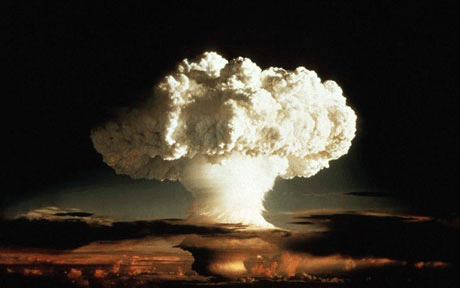
Besides the full-scale nuclear detonations, there were hundreds of “subcritical” trials designed to test the performance and safety of nuclear weapons and their components. These trials usually involved blowing up nuclear devices with conventional explosives, or setting them on fire.
The subcritical tests released radioactive materials. The Vixen B trials alone (at the Taranaki test site at Maralinga) spread 22.2 kilograms of plutonium and more than 40 kilograms of uranium across the arid landscape. For comparison, the nuclear bomb dropped on Nagasaki contained 6.4 kilograms of plutonium, while the one dropped on Hiroshima held 64 kilograms of uranium.
These tests resulted in long-lasting radioactive contamination of the environment. The full extent of the contamination was only realised in 1984, before the land was returned to its traditional owners, the Maralinga Tjarutja people.
Hot potatoes
Despite numerous cleanup efforts, residual plutonium and uranium remains at Maralinga. Most is present in the form of “hot particles”. These are tiny radioactive grains (much smaller than a millimetre) dispersed in the soil.
Plutonium is a radioactive element mostly made by humans, and the weapons-grade plutonium used in the British nuclear tests has a half life of 24,100 years. This means even 24,100 years after the Vixen B trials that ended in 1963, there will still be almost two Nagasaki bombs worth of plutonium spread around the Taranaki test site.
Plutonium emits alpha radiation that can damage DNA if it enters a body through eating, drinking or breathing.
In their original state, the plutonium and uranium particles are rather inactive. However, over time, when exposed to atmosphere, water, or microbes, they may weather and release plutonium and uranium in dust or rainstorms.
Until recently, we knew little about the internal makeup of these hot particles. This makes it very hard to accurately assess the environmental and health risks they pose.
Monash PhD student Megan Cook (the lead author on our new paper) took on this challenge. Her research aimed to identify how plutonium was deposited as it was carried by atmospheric currents following the nuclear tests (some of it travelled as far as Queensland!), the characteristics of the plutonium hot particles when they landed, and potential movement within the soil.
Nanotechnology to the rescue
Previous studies used the super intense X-rays generated by synchrotron light sources to map the distribution and oxidation state of plutonium inside the hot particles at the micrometre scale.
To get more detail, we used X-rays from the Diamond synchrotron near Oxford in the UK, a huge machine more than half a kilometre in circumference that produces light ten billion times brighter than the Sun in a particle accelerator.
Studying how the particles absorbed X-rays revealed they contained plutonium and uranium in several different states of oxidation – which affects how reactive and toxic they are. However, when we looked at the shadows the particles cast in X-ray light (or “X-ray diffraction”), we couldn’t interpret the results without knowing more about the different chemicals inside the particles.
To find out more, we used a machine at Monash University that can slice open tiny samples with a nanometre-wide beam of high-energy ions, then analyse the elements inside and make images of the interior. This is a bit like using a lightsaber to cut a rock, only at the tiniest of scales. This revealed in exquisite detail the complex array of materials and textures inside the particles.
Much of the plutonium and uranium is distributed in tiny particles sized between a few micrometres and a few nanometres, or dissolved in iron-aluminium alloys. We also discovered a plutonium-uranium-carbon compound that would be destroyed quickly in the presence of air, but which was held stable by the metallic alloy.
This complex physical and chemical structure of the particles suggests the particles formed by the cooling of droplets of molten metal from the explosion cloud.
In the end, it took a multidisciplinary team across three continents — including soil scientists, mineralogists, physicists, mineral engineers, synchrotron scientists, microscopists, and radiochemists — to reveal the nature of the Maralinga hot particles.
From fire to dust
Our results suggest natural chemical and physical processes in the outback environment may cause the slow release of plutonium from the hot particles over the long term. This release of plutonium is likely to be contributing to ongoing uptake of plutonium by wildlife at Maralinga.
Even under the semi-arid conditions of Maralinga, the hot particles slowly break down, liberating their deadly cargo. The lessons from the Maralinga particles are not limited to outback Australia. They are also useful in understanding particles generated from dirty bombs or released during subcritical nuclear incidents.
There have been a few documented instances of such incidents. These include the B-52 accidents that resulted in the conventional detonation of thermonuclear weapons near Palomares in Spain in 1966, and Thule in Greenland in 1968, and the explosion of an armed nuclear missile and subsequent fire at the McGuire Air Force Base in the USA in 1960.
Thousands of active nuclear weapons are still held by nations around the world today. The Maralinga legacy shows the world can ill afford incidents involving nuclear particles.
Australia has another go at cleaning up decades old pollution from old uranium mine Rum Jungle.

This is why Rum Jungle is so important: it was one of the very few mines once thought to have been rehabilitated successfully.
We got it wrong with Rum Jungle …….. Getting even a small part of modern mine rehabilitation wrong could, at worst, mean billions of tonnes of mine waste polluting for centuries.
Let’s hope we get it right this time.
The story of Rum Jungle: a Cold War-era uranium mine that’s spewed acid into the environment for decades https://theconversation.com/the-story-of-rum-jungle-a-cold-war-era-uranium-mine-thats-spewed-acid-into-the-environment-for-decades-160871, Gavin Mudd Associate Professor of Environmental Engineering, RMIT University, May 18, 2021
Buried in last week’s budget was money for rehabilitating the Rum Jungle uranium mine near Darwin. The exact sum was not disclosed.
Rum Jungle used to be a household name. It was Australia’s first large-scale uranium mine and supplied the US and British nuclear weapons programs during the Cold War.
Today, the mine is better known for extensively polluting the Finniss River after it closed in 1971. Despite a major rehabilitation project by the Commonwealth in the 1980s, the damage to the local environment is ongoing.

first visited Rum Jungle in 2004, and it was a colourful mess, to say the least. Over later years, I saw it worsen. Instead of a river bed, there were salt crusts containing heavy metals and radioactive material. Pools of water were rich reds and aqua greens — hallmarks of water pollution. Healthy aquatic species were nowhere to be found, like an ecological desert.
The government’s second rehabilitation attempt is significant, as it recognises mine rehabilitation isn’t always successful, even if it appears so at first.
Rum Jungle serves as a warning: rehabilitation shouldn’t be an afterthought, but carefully planned, invested in and monitored for many, many years. Otherwise, as we’ve seen, it’ll be left up to future taxpayers to fix.
The quick and dirty history
Rum Jungle produced uranium from 1954 to 1971, roughly one-third of which was exported for nuclear weapons. The rest was stockpiled, and then eventually sold in 1994 to the US.
The mine was owned by the federal government, but was operated under contract by a former subsidiary of Rio Tinto. Back then, there were no meaningful environmental regulations in place for mining, especially for a military project.
The waste rock and tailings (processed ore) at Rum Jungle contains significant amounts of iron sulfide, called “pyrite”. When mining exposes the pyrite to water and oxygen, a chemical reaction occurs generating so-called “acidic mine drainage”. This drainage is rich in acid, salts, heavy metals and radioactive material (radionuclides), such as copper, zinc and uranium.
Acid drainage seeping from waste rock, plus acidic liquid waste from the process plant, caused fish and macroinvertebrates (bugs, worms, crustaceans) to die out, and riverbank vegetation to decline. By the time the mine closed in 1971, the region was a well-known ecological wasteland.
Continue readingAustralia’s part in continuing nuclear havoc in Pacific islands – legacy of atomic bomb tests
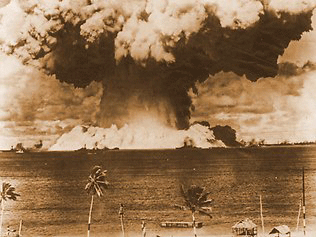
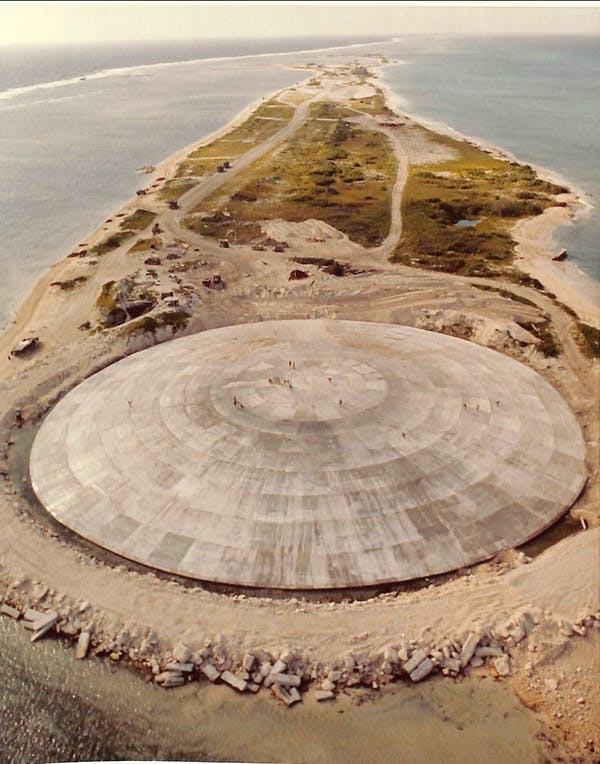
| 75 years after nuclear testing in the Pacific began, the fallout continues to wreak havoc https://theconversation.com/75-years-after-nuclear-testing-in-the-pacific-began-the-fallout-continues-to-wreak-havoc-158208?fbclid=IwAR3q9QJvy507ds2kD0ibOvkD6ZzxFqgGjfHsGrwqJUVMNpujOu8sAeLVPtY April 6, 2021 Patricia A. O’Brien Patricia A. O’Brien is a Friend of The Conversation.Historian, Visiting Fellow in the School of History, Australian National University and Adjunct Professor in the Asian Studies Program, Georgetown University, This year marks 75 years since the United States launched its immense atomic testing program in the Pacific. The historical fallout from tests carried out over 12 years in the Marshall Islands, then a UN Trust Territory governed by the US, have framed seven decades of US relations with the Pacific nation.Due to the dramatic effects of climate change, the legacies of this history are shaping the present in myriad ways. This history has Australian dimensions too, though decades of diplomatic distance between Australia and the Marshall Islands have hidden an entangled atomic past. In 1946, the Marshall Islands seemed very close for many Australians. They feared the imminent launch of the US’s atomic testing program on Bikini Atoll might split the earth in two, catastrophically change the earth’s climate, or produce earthquakes and deadly tidal waves. A map accompanying one report noted Sydney was only 3,100 miles from ground zero. Residents as far away as Perth were warned if their houses shook on July 1, “it may be the atom bomb test”. Australia was “included in the tests” as a site for recording blast effects and monitoring for atom bombs detonated anywhere in the world by hostile nations. This Australian site served to keep enemies in check and achieve one of the Pacific testing program’s objectives: to deter future war. The other justification was the advancement of science. The earth did not split in two after the initial test (unless you were Marshallese) so they continued; 66 others followed over the next 12 years. But the insidious and multiple harms to people and place, regularly covered up or denied publicly, became increasingly hard to hide. Radiation poisoning, birth defects, leukaemia, thyroid and other cancers became prevalent in exposed Marshallese, at least four islands were “partially or completely vapourised”, the exposed Marshallese “became subjects of a medical research program” and atomic refugees. (Bikinians were allowed to return to their atoll for a decade before the US government removed them again when it was realised a careless error falsely claimed radiation levels were safe in 1968.) In late 1947, the US moved its operations to Eniwetok Atoll, a decision, it was argued, to ensure additional safety. Eniwetok was more isolated and winds were less likely to carry radioactive particles to populated areas. Australian reports noted this site was only 3,200 miles from Sydney. Troubling reports of radioactive clouds as far away as the French Alps and the known shocking health effects appeared. Dissenting voices were initially muted due to the steep escalation of the Cold War and Soviet atomic weapon tests beginning in 1949. Opinion in Australia split along political lines. Conservative Cold War warriors, chief among them Robert Menzies who became prime minister again in 1949, kept Australia in lockstep with the US, and downplayed the ill-effects of testing. Left-wing elements in Australia continued to draw attention to the “horrors” it unleashed. The atomic question came home in 1952, when the first of 12 British atomic tests began on the Montebello Islands, off Western Australia. Australia’s involvement in atomic testing expanded again in 1954, when it began supplying South Australian-mined uranium to the US and UK’s joint defence purchasing authority, the Combined Development Agency. Australia’s economic stake in the atomic age from 1954 collided with the galvanisation of global public opinion against US testing in Eniwetok. The massive “Castle Bravo” hydrogen bomb test in March exposed Marshall Islanders and a Japanese fishing crew on The Lucky Dragon to catastrophic radiation levels “equal to that received by Japanese people less than two miles from ground zero” in the 1945 Hiroshima and Nagasaki atomic blasts. Graphic details of the fishermen’s suffering and deaths and a Marshallese petition to the United Nations followed. When a UN resolution to halt US testing was voted on in July, Australia voted for its continuation. But the tide of public opinion was turning against testing. The events of 1954 dispelled the notion atomic waste was safe and could be contained. The problem of radioactive fish travelling into Australian waters highlighted these new dangers, which spurred increasing world wide protests until the US finally ceased testing in the Marshalls in 1958. In the 1970s, US atomic waste was concentrated under the Runit Island dome, part of Enewetak Atoll (about 3,200 miles from Sydney). Recent alarming descriptions of how precarious and dangerous this structure is due to age, sea water inundation and storm damage exacerbated by climate change were contested in a 2020 Trump-era report. The Biden administration’s current renegotiation of the Compact of Free Association with the Republic of the Marshall Islands, and its prioritisation of action on climate change, will put Runit Island high on the agenda. There is an opportunity for historical redress for the US that is even more urgent given the upsurge in discrimination against US-based Pacific Islander communities devastated by the COVID-19 pandemic. Some are peoples displaced by the tests. Australia is also embarking on a new level of engagement with the Marshall Islands: it is due to open its first embassy in the capital Majuro in 2021.It should be remembered this bilateral relationship has an atomic history too. Australia supported the US testing program, assisted with data collection and voted in the UN for its continuation when Marshallese pleaded for it to be stopped. It is also likely Australian-sourced atomic waste lies within Runit Island, cementing Australia in this history. |
Australian uranium fuelled Fukushima
The Nuclear Accident Independent Investigation Commission ‒ established by the Japanese Parliament ‒ concluded in its 2012 report that the accident was “a profoundly man-made disaster that could and should have been foreseen and prevented” if not for “a multitude of errors and wilful negligence that left the Fukushima plant unprepared for the events of March 11”.
The accident was the result of “collusion between the government, the regulators and TEPCO”, the commission found.
Mining
But overseas suppliers who turned a blind eye to unacceptable nuclear risks in Japan have largely escaped scrutiny or blame. Australia’s uranium industry is a case in point.
Yuki Tanaka from the Hiroshima Peace Institute noted: “Japan is not the sole nation responsible for the current nuclear disaster. From the manufacture of the reactors by GE to provision of uranium by Canada, Australia and others, many nations are implicated.”
There is no dispute that Australian uranium was used in the Fukushima reactors. The mining companies won’t acknowledge that fact — instead they hide behind claims of “commercial confidentiality” and “security”.
But the Australian Safeguards and Non-Proliferation Office acknowledged in October 2011 that: “We can confirm that Australian obligated nuclear material was at the Fukushima Daiichi site and in each of the reactors — maybe five out of six, or it could have been all of them”.
BHP and Rio Tinto, two of the world’s largest mining companies, supplied Australian uranium to TEPCO and that uranium was used to fuel Fukushima.
Tsunamis
The mining companies have failed to take any responsibility for the catastrophic impacts on Japanese society that resulted from the use of their uranium in a poorly managed, poorly regulated industry.
Moreover, the mining companies can’t claim ignorance. The warning signs were clear. Australia’s uranium industry did nothing as TEPCO and other Japanese nuclear companies lurched from scandal to scandal and accident to accident.
The uranium industry did nothing in 2002 when it was revealed that TEPCO had systematically and routinely falsified safety data and breached safety regulations for 25 years or more.
The uranium industry did nothing in 2007 when over 300 incidents of ‘malpractice’ at Japan’s nuclear plants were revealed – 104 of them at nuclear power plants.
It did nothing even as the ability of Japan’s nuclear plants to withstand earthquakes and tsunamis came under growing criticism from industry insiders and independent experts.
Vicious cycle
And the uranium industry did nothing about the multiple conflicts of interest plaguing Japanese nuclear regulators.
Mirarr senior Traditional Owner Yvonne Margarula ‒ on whose land in the Northern Territory Rio Tinto’s Ranger mine operated ‒ said she was “deeply saddened” that uranium from Ranger was exported to Japanese nuclear companies including TEPCO.

No such humility from the uranium companies. They get tetchy at any suggestion of culpability, with the Australian Uranium Association describing it as “opportunism in the midst of human tragedy” and “utter nonsense”.
Yet, Australia could have played a role in breaking the vicious cycle of mismanagement in Japan’s nuclear industry by making uranium exports conditional on improved management of nuclear plants and tighter regulation.
Even a strong public statement of concern would have been heard by the Japanese utilities – unless it was understood to be rhetoric for public consumption – and it would have registered in the Japanese media.
Safety
But the uranium industry denied culpability and instead stuck its head in the sand. Since the industry is in denial about its role in fuelling the Fukushima disaster, there is no reason to believe that it will behave more responsibly in future.
Successive Australian governments did nothing about the unacceptable standards in Japan’s nuclear industry. Julia Gillard ‒ Australia’s Prime Minister at the time of the Fukushima disaster ‒ said the disaster “doesn’t have any impact on my thinking about uranium exports”.
Signification elements of Japan’s corrupt ‘nuclear village’ ‒ comprising industry, regulators, politicians and government agencies ‒ were back in control just a few years after the Fukushima disaster. Regulation remains problematic.
Add to that ageing reactors, and companies facing serious economic stress and intense competition, and there’s every reason for ongoing concern about nuclear safety in Japan.
Professor Yoshioka Hitoshi is a Kyushu University academic who served on the government’s 2011-12 Investigation Committee on the Accident at the Fukushima Nuclear Power Stations.
Regulation
They said in October 2015: “Unfortunately, the new regulatory regime is … inadequate to ensure the safety of Japan’s nuclear power facilities. The first problem is that the new safety standards on which the screening and inspection of facilities are to be based are simply too lax.
“While it is true that the new rules are based on international standards, the international standards themselves are predicated on the status quo.
“They have been set so as to be attainable by most of the reactors already in operation. In essence, the NRA made sure that all Japan’s existing reactors would be able to meet the new standards with the help of affordable piecemeal modifications ‒ back-fitting, in other words.”
In the aftermath of the Fukushima disaster, UN secretary general Ban Ki Moon called for an independent cost-benefit inquiry into uranium trade. The Australian government failed to act.
Inadequate regulation was a root cause of the Fukushima disaster yet Australia has uranium supply agreements with numerous countries with demonstrably inadequate nuclear regulation, including China, India, Russia, the United States, Japan, South Korea, and Ukraine.
Overthrow
Likewise, Australian uranium companies and the government turn a blind eye to nuclear corruption scandals in countries with uranium supply agreements: South Korea, India, Russia and Ukraine among others.
Indeed, Australia has signed up to expand its uranium trade to sell into insecure regions.
In 2011 ‒ the same year as the Fukushima disaster ‒ the Australian government agreed to allow uranium exports to India.
This despite inadequate nuclear regulation in India, and despite India’s ongoing expansion of its nuclear weaponry and delivery capabilities.
A uranium supply agreement with the United Arab Emirates was concluded in 2013 despite the obvious risks of selling uranium into a politically and militarily volatile region where nuclear facilities have repeatedly been targeted by adversaries intent on stopping covert nuclear weapons programs. Australia was planning uranium sales to the Shah of Iran months before his overthrow in 1979.
Forced labour
A uranium supply agreement with Ukraine was concluded in 2016 despite a host of safety and security concerns, and the inability of the International Atomic Energy Agency to carry out safeguards inspections in regions annexed by Russia.
In 2014, Australia banned uranium sales to Russia, with then prime minister Tony Abbott stating: “Australia has no intention of selling uranium to a country which is so obviously in breach of international law as Russia currently is.”
Australia’s uranium supply agreement with China, concluded in 2006, has not been reviewed despite abundant evidence of inadequate nuclear safety standards, inadequate regulation, lack of transparency, repression of whistleblowers, world’s worst insurance and liability arrangements, security risks, and widespread corruption.
Civil society and NGO’s are campaigning to wind back Australia’s atomic exposures in the uranium trade with emphasis on uranium sales to China.
China’s human rights abuses and a range of strategic insecurity issues warrant a cessation of uranium sales. China’s ongoing human rights abuses in Tibet and mass detention and forced labour against Uyghurs in Xinjiang are severe breaches of international humanitarian law and UN Treaties.
Weapons
China proliferated nuclear weapons know-how to Pakistan, targets Australia in cyber-attacks, and is causing regional insecurity on the India border, in Hong Kong and Taiwan, and in the Pacific.
BHP’s Olympic Dam is the only company still selling Australian uranium into China. There is a case for the ‘Big Australian’ to forego uranium sales overall and an onus to end sales to China.
A federal Parliamentary Inquiry in Australia is investigating forced labour in China and the options for Australia to respond. A case is before this inquiry to disqualify China from supply of Australian uranium sales – see submission 02 on human rights abuses and submission 02.1 on security risks.
Australia supplies uranium with scant regard for nuclear safety risks. Likewise, proliferation risks are given short shrift.
Australia has uranium export agreements with all of the ‘declared’ nuclear weapons states – the US, UK, China, France, Russia – although not one of them takes seriously its obligation under the Non-Proliferation Treaty to pursue disarmament in good faith.
Carte blanche
Australia claims to be working to discourage countries from producing fissile – explosive – material for nuclear bombs, but nonetheless exports uranium to countries blocking progress on the proposed Fissile Material Cut-Off Treaty.
And Australia gives Japan open-ended permission to separate and stockpile plutonium although that stockpiling fans regional proliferation risks and tensions in North-East Asia.
Despite liberal export policies, Australian uranium sales are in long-term decline and now represent only 8.9 percent of world uranium usage.
With the Ranger mine shut down and no longer processing ore for uranium exports, there are only two operating uranium mines in Australia: BHP’s Olympic Dam copper-uranium mine and the smaller General Atomics’ Beverley Four Mile operation ‒ both in South Australia.
Uranium accounts for less than 0.3 percent of Australia’s export revenue and less than 0.1 percent of all jobs in Australia.
One wonders why an industry that delivers so little is given carte blanche by the government to do as it pleases.
These Authors
Dr Jim Green is the national nuclear campaigner with Friends of the Earth Australia. David Noonan is an independent environment campaigner. For further information on BHP’s Olympic Dam mine click here.
Australia dodged a bullet in not getting nuclear power – Ian Lowe.
 An obvious conclusion flows from the Fox Report’s 1976 comment about a lack of objectivity. We are not objective observers of the world: we all see reality through the lenses of our values and our experience. We all have a tendency to see what we would like to see…….
The probability that any person will be favourably disposed to the idea of nuclear power can be predicted from their values and from their view of the sort of future they would like to see. Fellows of the Academy of Technology and Engineering tend to favour a high-tech future, while conservationists are much more likely to favour small-scale local supply systems.
This is a reminder that the future is not somewhere we are going, but something we are creating. From my perspective, nuclear power now looks like an intractable problem we were just lucky to avoid. Most developed nations have nuclear power stations with mountains of accumulated waste, for which there is no effective permanent solution. The urgent task of moving to clean energy supply, mostly from solar and wind, is made more difficult when resources have been sunk into the nuclear power industry. I believe we dodged a bullet.
Griffith Review,by Ian Lowe, March 21, ON MY DESK there sits a well-thumbed copy of the 1976 Fox Report, the first report of the Ranger Uranium Environmental Inquiry. I grew up in New South Wales, where most electricity came from coal-fired power stations, but miners were often killed or injured and the air pollution from burning coal was obvious. So as a young scientist I was attracted to the idea of replacing our dirty and dangerous coal-fired electricity with nuclear power.
Reality bats last-Small Nuclear Reactors just not economic for Australia (or anywhere else)

 Small modular reactor rhetoric hits a hurdle https://reneweconomy.com.au/small-modular-reactor-rhetoric-hits-a-hurdle-62196/ Jim Green, 23 June 2020, The promotion of ‘small modular reactors’ (SMRs) in Australia has been disrupted by the Commonwealth Scientific and Industrial Research Organisation (CSIRO) and the Australian Energy Market Operator (AEMO).
The latest GenCost report produced by the two agencies estimates a hopelessly uneconomic construction cost of A$16,304 per kilowatt (kW) for SMRs. Continue reading
South Australia targeted: easy to later bring international waste in to nuclear dump
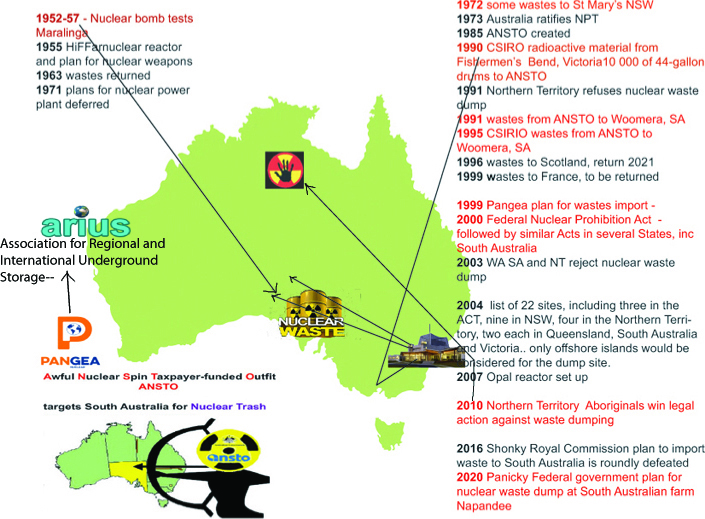
Name withheld. to Senate Committee on National Radioactive Waste Management Amendment (Site Specification, Community Fund and Other Measures) Bill 2020 [Provisions] Submission 39 Excerpt
The amendment to the Bill put forward by the now Minister of Resources Keith Bill should be rescinded and here are the reasons why.
First and foremost there was NO Broad Community Support achieved.
[The writer now gives an account of the requirement for community support for the nuclear waste facility: Support “would need to be in the vicinity of 65%, and that submissions and ‘neighbouring views’ would also be taken into consideration.” – and that this support was not achieved]
So why was Kimba announced as the dump site if this stipulation was not fulfilled? To understand it, first you must understand the history behind the dump proposal.
HISTORY
This whole dump proposal has been flawed from the very start. It is the exact same proposal put forward in Parliament in the 1980’s and hasn’t changed. The recurrent statement of “we only have a small amount of Intermediate Level Waste so that can “tag-a-long” or “co-locate” with the Low Level Waste” was used back then and continues to be used right now 40 years later!
If you consider that, back in the 1980’s the proposed dump concept was to be only operating for 50 years, as they also stated that by that time the Intermediate Level Waste would be dealt with before its closure. Think about it – that means the preparation should ALREADY be in place RIGHT NOW according to their statements – ready for 2030!
And yet NOTHING has been done in that regard!! We still have the Woomera Waste still sitting in Woomera, when it was stated by the Federal Government at that time (1994), that it would only be “temporary” for 2 – 3 years maximum! Moving on 25 years plus – and it still remains in Woomera. Past behaviour is a good predictor of future behaviour.
It should be noted that the waste in Woomera – the CSIRO waste from Melbourne Fishermans Bend and the St. Mary’s waste from St. Mary’s Defence Base NSW – were placed in Woomera AS A RESULT of a NSW Environmental Court Case brought onto ANSTO Lucas Heights by the Sutherland Shire Council.The CSIRO waste was from the cleanup of Fishermans Bend in Victoria – where in fact only 200 of these drums contained radioactive waste according to the then Transport code of a minimum exceeding 70,000 Becquerels per kilogram to be considered a radioactive substance! But due to the media coverage and the concern by the public, all 9726 x 205L of the drums were classified as radioactive and then taken by consignment to ANSTO Lucas Heights NSW for storage. They werenstored on site for 4 years at ANSTO Lucas Heights (1990 -1994).
It was only when Lucas Heights agreed to take the waste from St Mary’s Defence Base NSW (1991) that Sutherland Shire Council brought a court case up against ANSTO Lucas Heights from taking waste from other entities.The Case was won by Sutherland Council, and although ANSTO was swift to change the Federal Act thereafter so that such jurisdictional action would never happen again. The Federal Government sought a suitable Commonwealth site to place the Fishermans Bend and St Marys Bend waste at short notice – which was Woomera in SA. At the time, the Feds were in negotiation with Northern Territory with regards to a dump site in NT, which fell through. The waste remains separately stored in Woomera – although ANSTO was commissioned to condition the St Mary’s Defence waste before it was transported to Woomera.
https://www.aph.gov.au/About_Parliament/Parliamentary_Departments/Parliamentary_Library/Pu blications_Archive/online/RadioactiveWaste
Almost every state in Australia has been the target of this dump in the past. This is the second time SA has been targeted.And each and every time the establishment of the dump has failed.Why is this? Because it is a flawed proposal. Trotting out the exact same proposal since 1980’s shows that. The only change this time round is for nomination by land owners to nominate their land for the dump this time! 28 sites all around Australia were nominated in the nomination period 2nd March 2015 to 5th May 2015. It was the 13th November 2015 when the then resources minister Josh Frydenberg announce 6 sites around Australia which the Federal Government had deemed suitable.
https://www.aph.gov.au/DocumentStore.ashx?id=a80c7b35-3fdc-4502-8febd8381b03dae3& subId=565152 “Submission
“Submission to the Senate Inquiry into the Site Selection Process for a National Radioactive Waste Management Facility Radioactive Waste Management Taskforce April 2018” Annexure 6 – Chronology of site selection process.
Coincidentally, the South Australian Royal Commission into the Nuclear Fuel Cycle was established on 19th March 2015. The final report of this Royal Commission was presented to the SA premier Jay Weatherill on 9th May 2016. From October 2016 to November 2016, with final result obtained and given to the Premier of SA on 6th November 2016 a citizen’s jury decided a NO MEANS NO to SA becoming an International Dump site. https://www.abc.net.au/news/2016-11-06/sa-citizens-juryvote- against-storing-nuclear-waste/7999262 The then opposition leader Stephen Marshall reaffirmed this stance 5 days later 11th November 2016
https://www.abc.net.au/news/2016-11-11/opposition-says-it-will-vote-against-sa-nuclear-wastedump/ 8016818?fbclid=IwAR1CiCk6Y1je4l1ZUtpvlJqYT4rHeKcqreHAXtVJ1xZxpKNfHZ6xfToZxVA
Why is this important? Because of the timeline! There is NO WAY ON EARTH that South Australia was NOT BEING TARGETED!
And even today, there are South Australians who believe that the International AND National Nuclear Dump targeting in South Australia had been put to bed back in November 2016! That this was ONE FIGHT instead of TWO
However, it has to be noted, that when Mike Rann fought to stop the Federal Government putting a dump into South Australia in the early 2000’s, there was a push by an international group called PANGEA with a leaked media video, which is intent on establishing an International Nuclear Dump in Australia. The group is now called itself ARIUS, since 2012, and is alive and kicking as witnessed in the Royal Commission into the Nuclear Fuel Cycle 2016.
TECHNICAL SUITABILITY
So why is the Federal Government so hell bent on putting this nuclear waste onto South Australia? Surely World’s Best Practise would dictate that the best site would be closer to the main site of generation and not over 1700kms across the country and into another state! Less transport and less handling required meaning less human error and mistakes. Which is a perfect time to reiterate ARPANSA’s definition of nuclear waste – “Radioactive waste is material that has no foreseeable use and contains radioactive materials with activities or activity concentrations at levels high enough that regulatory oversight is needed to ensure safety.” https://www.arpansa.gov.au/understandingradiation/ radiation-sources/more-radiation-sources/radioactive-waste-safety/frequently-askedquestions
Why was Sallys Flat NSW which was ONE of the SIX sites deemed suitable by the Federal Government not hounded like the South Australian sites were? Sallys Flat is only 260 kms from Lucas Heights. Even Oman Ama QLD which is another of the SIX sites deemed suitable by the Federal Government is closer at 780kms! The site at Kimba is over 1700kms away!Over 90% of all Australia’s nuclear waste (non-mining) is generated on site at Lucas Heights NSW for the production of nuclear medical isotopes predominately. And these isotopes are predominately used for diagnostic imaging, and to a much, much smaller extent for treatment.
How much nuclear waste does South Australia actually have itself? Back in 2003 Mike Rann was reported as stating thatSouth Australia itself had only enough nuclear waste to fill one 44 gallon drum! And today it isn’t much more than that! https://www.abc.net.au/news/2003-06-03/rannrejects-waste-dump-threats/1864470“States and territories are responsible for managing a range of radioactive waste holdings, accounting for about one per cent of total radioactive waste holdings in Australia.”…according to the DIIS – “Australian Radioactive Waste Management Framework April 2018” page 7 https://www.industry.gov.au/sites/default/files/2019- 04/australian_radioactive_waste_management_framework.pdf……
Lucas Heights was built with ample space so that they could take care of all of the waste they generated on site. It was only with the build of the OPAL reactor which replaced the aging HIFAR reactor that it was thought that the waste could go elsewhere, to pacify the nearby population as a compromise of the build of the new reactor. But the premise still remains, and Lucas Heights has enough space to deal with their own was for up to 100 years.
Since Lucas Heights was built in 1958 there is still plenty of space and time for this research reactor to find a proper solution to this nuclear waste once and for all. Not to bury it somewhere out of sight and out of mind , so it is essentially abandoned. If push comes to shove with Government funding, do you think the proposed nuclear dump will be a priority? This dump simply gives Lucas Heights licence to continue and indeed even increase nuclear waste production.
And then consider the criteria for acceptance of nuclear waste at the proposed dump. These can easily be changed with a stroke of a pen. No liquid now, but that can be changed. No mining waste now, but that can be changed. No High Level Nuclear Waste now, but that can be changed. Just as the management and ownership of the dump can change, should the financing prove too much for the Federal Government. They have off loaded other Government owned entities before, no different with nuclear waste. And there in comes International Nuclear Waste through the backdoor.
The sorry Kimba nuclear waste saga- Michele Madigan spells it out (and it’s not over)
Canavan’s decision was a natural follow on from his December 13th announcement that with just 47 per cent of voters in favour, the Flinders Ranges site of Wallerberdina was no longer under consideration. As such, the Kimba decision was predictable. However it still came as a jolt to most of the farmers and others rightly fearful of the plan to host nuclear waste which even the government now admits will remain toxic for an unimaginable 10,000 years.
The early November Kimba vote of 61.17 per cent in favour on the proposed project followed the four year divisive government campaign. On December 5th, Kimba region farmer Terry Schmucker explained the vote’s long history: ‘We have already been through this once already where everyone was on equal terms. The minister at the time had already ruled there was not broad community support. However the landholder that nominated his land the first time then renominated a different part of his farm and his friends and family within the Kimba council moved for a vote of only the council area. The community funding has now been restricted to the Kimba council area only because of this — people are looking at the large inducement, not the radioactive waste issues.’ He concluded that ‘if the 50 km radius was applied at Kimba like it is at Hawker the vote would fail at these waste sites.’
After their 20 year struggle to successfully obtain their native title rights, which included the Kimba region, the Barngarla people were astonished at their own exclusion from the vote. As Jeanne Miller movingly explains in Kim Mavromatis’ four minute film, as Aboriginal people with no voting power they are put back 50 years, ‘again classed as flora and fauna.’ The Barngarla case against the Kimba Council will return to the Federal Court on February 21st. After the Kimba region announcement, most predictable was the delight of the man due to profit the most from the arrangement in monetary terms. Jeff Baldock of Napandee is to be paid four fold for the 160 hectares of his land that the federal government plans to acquire.
Not much doubt, however, that Baldock and his family over future generations may get much more in repercussions than bargained for. At our privileged gathering on 5th February in Adelaide’s CBD, every time a guest referred to ‘intermediate long lived nuclear waste’, Dr Helen Caldicott, an internationally known anti-nuclear campaigner, insistently corrected the term to ‘high level’ nuclear waste. Somewhat surprisingly, on February 6, ANSTO (Australian Nuclear Science and Technology Organisation) senior nuclear officer Hef Griffths voiced the same opinion. Speaking to the ABC’s Paul Culliver, Griffiths admitted France classifies waste from reprocessed spent nuclear fuel as high level nuclear waste — and when the waste gets shipped back to Australia it is reclassified as intermediate.
Unsurprisingly, there has been more media coverage of this issue in the Murdoch owned Adelaide Advertiser since Senator Canavan’s anouncement. One opinion piece to one (extreme) side, more facts than usual have been reported. Unswerving however has been the insistence by many correspondents of the repetition of the government mantra that the project is all about medical nuclear waste. The reality is that over 90 per cent of the waste, measured by radioactivity, is intermediate long-lived waste including the nuclear spent fuel rods and also the parts of the previous nuclear reactor. And no, X-rays and radiotherapy aren’t nuclear medicine.
After their 20 year struggle to successfully obtain their native title rights, which included the Kimba region, the Barngarla people were astonished at their own exclusion from the vote. As Jeanne Miller movingly explains in Kim Mavromatis’ four minute film, as Aboriginal people with no voting power they are put back 50 years, “again classed as flora and fauna”‘. To avoid any unnecessary repetition of details regarding the medical waste argument I suggest that any interested reader would do well to read the respondents’ questions and information to my last published article. In addition, there is always the valuable Friends of the Earth scientific information source.
The hosts of the Kimba Rally for Sunday February 2nd, expecting 100, were overwhelmed and delighted with the crowd, a physical count revealing five times that number. Mrs Waniwa Lester, widow of the late Yami Lester blinded by the 1953 British nuclear tests at Emu Junction, travelled the 467 kilometres from Adelaide with me to attend. Weeks in the planning, it turned out the rally took place two days after the Minister’s actual announcement of the nuclear site. MC Peter Woodfold, President of No Radioactive Waste on Agricultural Land in Kimba or SA, summarised the local divisive campaign in his speech, saying ‘if you want to know what intimidation is, you stand between people and money.’ Perhaps most moving of all the excellent speeches were those from other farmers, James Shepherdson and Tom Harris. As reported in the Stock Journal, Shepherdson said the community had not initially been told that the facility would be used to temporarily store intermediate-level radioactive waste, in addition to the storage and disposal of low-level waste. He said funding injections, such as a $20 million government community fund, did not outweigh potential problems with grain quality. ‘Farmers are under scrutiny and at the beck and call of buyers and brokers, and to risk what is an $80m income for this district every 12 months, for a one-off $20m payment, that’s absurd,’ he said. Kimba farming land is an important part of South Australia’s just 4.5 per cent agricultural cropping land. Tom Harris revealed with some distress the current doubt by insurance agents regarding his insurance viability because of its proximity of his farm to the nuclear storage site; this may jeopardise his sons’ succession. Reflecting the determination of local No campaigners, ACF ‘s Dave Sweeney warns that the fight is far from over. Various hurdles along the way in which opponents can be involved include the required Environmental Impact Statement and then the assessment the regulator ARPANSA (The Australian Radiation Protection and Nuclear Safety Agency) must make. The inclusion of other opponents is more likely when transport routes are finally revealed. Coming from a long established Eyre Peninsula family, P Boylan is clear: all of SA’s West Coast will be affected and must have a say. Peter Woolford goes further, in view of the extraordinary ramifications of this decision for the whole state, a referendum is needed. No, it’s not over yet. Nor will it be. On an issue that will have implications for every generation to come, just 452 local residents cannot be allowed to speak for 1.7 million South Australians. |
|
|
History of Australia’s govt move towards importing nuclear waste
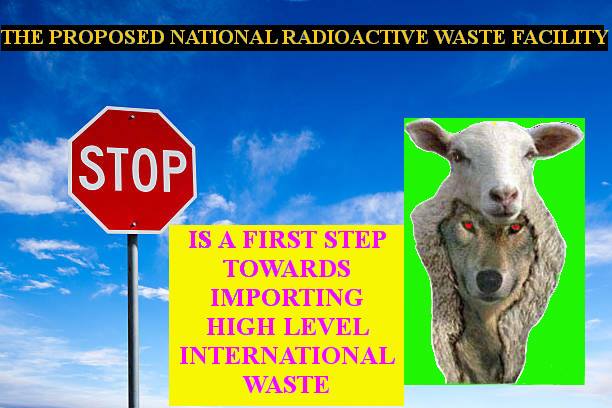 If the “low level” storage facility goes ahead in Kimba, it would only be a matter of time before it became a facility storing medium and high level waste creating untold risks for human life, Indigenous culture and heritage, flora and fauna, and agriculture. It must be stopped.
TERRA NUCLEAR https://www.cpa.org.au/guardian/2020/1902/05-nuclear.html?fbclid=IwAR0oOmAw7IIbs9dERT6aUM6gKTG4eIIco6iEycpzr58GHwyPomOVyGh2jak Anna Pha,16 Feb 2, Last week, the then Resources Minister Matt Canavan announced the site for an international nuclear waste dump on farmland in South Australia. The decision comes after two decades or more of wrangling over where to locate the facility.
The land is at Napandee in Kimba, on the Eyre Peninsula and is owned by a farmer who offered it to the government. He is set to receive compensation well above market value.
“The facility has broad community support in Kimba, but I acknowledge there remains opposition, particularly amongst the Barngarla People and their representative group,” Canavan said in a press release.
He omits to mention that the Barngarla People were excluded from a local vote on the question.
In addition, the opposition is not confined to the Barngarla People who fear the pollution of their land and waters, as well as the damage to their culture and sacred sites. Environmental and other groups as well as many individuals have not given up. They are determined to fight it to the end.
Denial of Danger
Just as the government refuses to acknowledge the dangers of inaction over climate change, Canavan plays down the deadly risks associated with radiation; “I am satisfied a facility at Napandee will safely and securely manage radioactive waste and that the local community has shown broad community support for the project and economic benefits it will bring.”
This is a hollow claim, which he cannot back with practice. How can anyone claim such a facility would be safely and securely managed for thousands or possibly hundreds of thousands of years that it would take for the radioactive material to breakdown?
The minister cannot make any guarantees. In particular, as the plan is to hand the facility over to the private sector to manage, the risks and cover-ups become far more likely and serious Continue reading
“Ecomodernists” – Ben Heard, Oscar Archer, Barry Brook, Geoff Russell, – Australia’s pro-nuclear fake environmentalists
|
Aboriginal First Nations and Australia’s ‘pro-nuclear environmentalists’ Jim Green – Nuclear Monitor | 10th July 2018 Australia’s Aboriginal people have long been mistreated by governments and industry in the pursuit of nuclear projects. The attitudes of ‘pro-nuclear environmentalists’ or ‘ecomodernists’ towards Aboriginal people is as disrespectful as those of governments and industry, argues JIM GREEN.The plan to turn South Australia (SA) into the world’s nuclear waste dump has lost momentum since 2016 though it continues to be promoted by some politicians, the Business SA lobby group, and an assortment of individuals and lobbyists including self-styled ‘pro-nuclear environmentalists’ or ‘ecomodernists‘. In its 2016 report, the SA Nuclear Fuel Cycle Royal Commission established by the state government promoted a plan to import 138,000 tonnes of high-level nuclear waste (about one-third of the world’s total) and 390,000 cubic metres of intermediate-level waste. The state Labor government then spent millions on a state-wide promotional campaign under the guide of consultation. …….. The Royal Commission Royal Commissioner Kevin Scarce ‒ a retired Navy officer ‒ didn’t appoint a single Aboriginal person to the staff of the Royal Commission or to his Expert Advisory Committee. Aboriginal people repeatedly expressed frustration with the Royal Commission process…… No analysis but favourable conclusions Despite its acknowledgement that it had not systematically analysed the matter, the Royal Commission nevertheless arrived at unequivocal, favourable conclusions, asserting that there “are frameworks for securing long-term agreements with rights holders in South Australia, including Aboriginal communities” and these “provide a sophisticated foundation for securing agreements with rights holders and host communities regarding the siting and establishment of facilities for the management of used fuel.” Such statements were conspicuously absent in submissions from Aboriginal people and organisations. There is in fact an abundance of evidence that land rights and heritage protection frameworks in SA are anything but “sophisticated.”……. Enter the ecomodernists
Ben Heard from the ‘Bright New World’ pro-nuclear lobby group said the Royal Commission’s findings were “robust”. Seriously? Failing to conduct an analysis and ignoring an abundance of contradictory evidence but nevertheless concluding that a “sophisticated foundation” exists for securing agreements with Aboriginal rights-holders … that’s “robust”?
In a November 2016 article about the nuclear waste import plan, Ben Heard and Oscar Archer wrote: “We also note and respect the clear message from nearly all traditional owner groups in South Australia that there is no consent to proceed on their lands. We have been active from the beginning to shine a light on pathways that make no such imposition on remote lands.” In Heard’s imagination, the imported spent nuclear fuel would not be dumped on the land of unwilling Aboriginal communities, it would be processed for use as fuel in non-existent Generation IV ‘integral fast reactors‘. Even the stridently pro-nuclear Royal Commission gave short shrift to Heard’s proposal, stating in its final report: “[A]dvanced fast reactors and other innovative reactor designs are unlikely to be feasible or viable in the foreseeable future. The development of such a first-of-a-kind project in South Australia would have high commercial and technical risk.” Heard claims his imaginary Generation IV reactor scenario “circumvents the substantial challenge of social consent for deep geological repositories, facilities that are likely to be best located, on a technical basis, on lands of importance to Aboriginal Australians”. But even in Heard’s scenario, only a tiny fraction of the imported spent fuel would be converted to fuel for imaginary Generation IV reactors (in one of his configurations, 60,000 tonnes would be imported but only 4,000 tonnes converted to fuel). Most of it would be stored indefinitely, or dumped on the land of unwilling Aboriginal communities. Honoured in the breach Heard says he “respects” the opposition of Traditional Owners to the waste import plan, but that respect appears to be honoured in the breach. Despite his acknowledgement that there was “no consent” to proceed from “nearly all traditional owner groups in South Australia”, Heard nevertheless wrote an ‘open letter‘ promoting the waste import plan which was endorsed by ‘prominent’ South Australians, i.e. rich, non-Aboriginal people. One of the reasons to pursue the waste import plan cited in Heard’s open letter is that it would provide an “opportunity to engage meaningfully and partner with Aboriginal communities in project planning and delivery”. There is no acknowledgement of the opposition of Aboriginal people to the waste import plan ‒ evidently Heard believes that their opposition should be ignored and overridden but Aboriginal people might be given a say in project planning and delivery. A second version of Heard’s open letter did not include the above wording but it cited the “successful community consultation program” with Aboriginal communities. However the report arising from the SA government’s community consultation program (successful or otherwise) stated: “There was a significant lack of support for the government to continue pursuing any form of nuclear storage and disposal facilities. Some Aboriginal people indicated that they are interested in learning more and continuing the conversation, but these were few in number.” Beyond offensive Geoff Russell, another self-styled pro-nuclear environmentalist, wrote in a November 2016 article in New Matilda: “Have Aboriginals given any reasons for opposing a waste repository that are other than religious? If so, then they belong with other objections. If not, then they deserve the same treatment as any other religious objections. Listen politely and move on. “Calling them spiritual rather than religious makes no difference. To give such objections standing in the debate over a repository is a fundamental violation of the separation of church and state, or as I prefer to put it, the separation of mumbo-jumbo and evidence based reasoning. “Aboriginals have native title over various parts of Australia and their right to determine what happens on that land is and should be quite different from rights with regard to other land. This isn’t about their rights on that land. “Suppose somebody wants to build a large intensive piggery. Should we consult Aboriginals in some other part of the country? Should those in the Kimberley perhaps be consulted? No. “They may object to it in the same way I would, but they have no special rights in the matter. They have no right to spiritual veto.” Where to begin? Russell’s description of Aboriginal spiritual beliefs as “mumbo-jumbo” is beyond offensive. His claim that Traditional Owners are speaking for other people’s country is a fabrication. Federal native title legislation provides limited rights and protections for some Traditional Owners ‒ and no rights and protections for many others (when the federal Coalition government was trying to impose a national nuclear waste dump on Aboriginal land in SA in 2003, it abolished all native title rights and interests over the site). National nuclear waste dump The attitudes of the ecomodernists also extend to the debate over the siting of a proposed national nuclear waste dump. Silence from the ecomodernists when the federal government was passing laws allowing the imposition of a national nuclear waste dump in the Northern Territory without consent from Traditional Owners. Echoing comments from the Liberal Party, Brook and Heard said the site in the Northern Territory was in the “middle of nowhere”. From their perspective, perhaps, but for Muckaty Traditional Owners the site is in the middle of their homelands. Heard claims that one of the current proposed dump sites, in SA’s Flinders Ranges, is “excellent” in many respects and it “was volunteered by the landowner”. In fact, it was volunteered by absentee landlord and former Liberal Party politician Grant Chapman, who didn’t bother to consult Adnyamathanha Traditional Owners living on the neighbouring Indigenous Protected Area. The site is opposed by most Adnyamathanha Traditional Owners and by their representative body, the Adnyamathanha Traditional Lands Association (ATLA). Indigenous Protected Area Heard claims there are “no known cultural heritage issues” affecting the Flinders Ranges site. Try telling that to the Adnyamathanha Traditional Owners who live on Yappala Station, in the Indigenous Protected Area adjacent to the proposed dump site. The area has many archaeological and culturally-significant sites that Traditional Owners have registered with the SA government over the past decade. So where did Heard get this idea that there are “no known cultural heritage issues on the site”? Not from visiting the site, or speaking to Traditional Owners. He’s just repeating the federal government’s propaganda. Silence from the ecomodernists about the National Radioactive Waste Management Act (NRWMA), which dispossesses and disempowers Traditional Owners in every way imaginable:
Uranium mining Silence from the ecomodernists about the Olympic Dam mine’s exemptions from provisions of the SA Aboriginal Heritage Act. Silence from the ecomodernists about sub-section 40(6) of the Commonwealth’s Aboriginal Land Rights Act, which exempts the Ranger uranium mine in the Northern Territory from the Act and thus removed the right of veto that Mirarr Traditional Owners would otherwise have enjoyed. Silence from the ecomodernists about the divide-and-rule tactics used by General Atomics’ subsidiary Heathgate Resources against Adnyamathanha Traditional Owners in relation to the Beverley and Four Mile uranium mines in SA. Adnyamathanha Traditional Owner Dr Jillian Marsh, who in 2010 completed a PhD thesis on the strongly contested approval of the Beverley mine, puts the nuclear debates in a broader context: “The First Nations people of Australia have been bullied and pushed around, forcibly removed from their families and their country, denied access and the right to care for their own land for over 200 years. Our health and wellbeing compares with third world countries, our people crowd the jails. “Nobody wants toxic waste in their back yard, this is true the world over. We stand in solidarity with people across this country and across the globe who want sustainable futures for communities, we will not be moved.” Now, Traditional Owners have to fight industry, government, and the ecomodernists as well. Silence from the ecomodernists about the divide-and-rule tactics used by General Atomics’ subsidiary Heathgate Resources against Adnyamathanha Traditional Owners in relation to the Beverley and Four Mile uranium mines in SA. Adnyamathanha Traditional Owner Dr Jillian Marsh, who in 2010 completed a PhD thesis on the strongly contested approval of the Beverley mine, puts the nuclear debates in a broader context: “The First Nations people of Australia have been bullied and pushed around, forcibly removed from their families and their country, denied access and the right to care for their own land for over 200 years. Our health and wellbeing compares with third world countries, our people crowd the jails. “Nobody wants toxic waste in their back yard, this is true the world over. We stand in solidarity with people across this country and across the globe who want sustainable futures for communities, we will not be moved.” Now, Traditional Owners have to fight industry, government, and the ecomodernists as well. |
|


315 nuclear bombs and ongoing suffering: the shameful history of nuclear testing in Australia and the Pacific
|
315 nuclear bombs and ongoing suffering: the shameful history of nuclear testing in Australia and the Pacific, https://theconversation.com/315-nuclear-bombs-and-ongoing-suffering-the-shameful-history-of-nuclear-testing-in-australia-and-the-pacific-148909, Tilman Ruff, Associate Professor, Education and Learning Unit, Nossal Institute for Global Health, School of Population and Global Health, University of Melbourne, Dimity Hawkins, PhD Candidate, Swinburne University of Technology
November 3, 2020 The Treaty on the Prohibition of Nuclear Weapons received its 50th ratification on October 24, and will therefore come into force in January 2021. A historic development, this new international law will ban the possession, development, testing, use and threat of use of nuclear weapons.Unfortunately the nuclear powers — the United Kingdom, France, the United States, Russia, China, Israel, India, Pakistan and North Korea — haven’t signed on to the treaty. As such, they are not immediately obliged to help victims and remediate contaminated environments, but others party to the treaty do have these obligations. The shifting norms around this will hopefully put ongoing pressure on nuclear testing countries to open records and to cooperate with accountability measures. For the people of the Pacific region, particularly those who bore the brunt of nuclear weapons testing during the 20th century, it will bring a new opportunity for their voices to be heard on the long-term costs of nuclear violence. The treaty is the first to enshrine enduring commitments to addressing their needs. From 1946, around 315 nuclear tests were carried out in the Pacific by the US, Britain and France. These nations’ largest ever nuclear tests took place on colonised lands and oceans, from Australia to the Marshall Islands, Kiribati to French Polynesia.
The impacts of these tests are still being felt today. All nuclear tests cause harm Studies of nuclear test workers and exposed nearby communities around the world consistently show adverse health effects, especially increased risks of cancer. The total number of global cancer deaths as a result of atmospheric nuclear test explosions has been estimated at between 2 million and 2.4 million, even though these studies used radiation risk estimates that are now dated and likely underestimated the risk. The number of additional non-fatal cancer cases caused by test explosions is similar. As confirmed in a large recent study of nuclear industry workers in France, the UK and US, the numbers of radiation-related deaths due to other diseases, such as heart attacks and strokes, is also likely to be similar. Britain conducted 12 nuclear test explosions in Australia between 1952 and 1957, and hundreds of minor trials of radioactive and toxic materials for bomb development up to 1963. These caused untold health problems for local Aboriginal people who were at the highest risk of radiation. Many of them were not properly evacuated, and some were not informed at all. We may never know the full impact of these explosions because in many cases, as the Royal Commission report on British Nuclear Tests in Australia found in 1985: “the resources allocated for Aboriginal welfare and safety were ludicrous, amounting to nothing more than a token gesture”. But we can listen to the survivors.
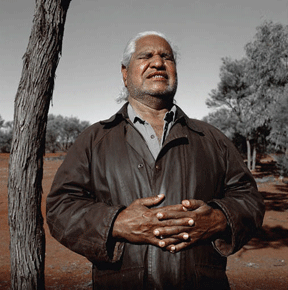
His daughter, Karina Lester, is an ambassador for the International Campaign to Abolish Nuclear Weapons in Australia, and continues to be driven by her family’s experience. She writes: For decades now my family have campaigned and spoken up against the harms of nuclear weapons because of their firsthand experience of the British nuclear tests […] Many Aboriginal people suffered from the British nuclear tests that took place in the 1950s and 1960s and many are still suffering from the impacts today. More than 16,000 Australian workers were also exposed. A key government-funded study belatedly followed these veterans over an 18-year period from 1982. Despite the difficulties of conducting a study decades later with incomplete data, it found they had 23% higher rates of cancer and 18% more deaths from cancers than the general population. An additional health impact in Pacific island countries is the toxic disease “ciguatera”, caused by certain microscopic plankton at the base of the marine food chain, which thrive on damaged coral. Their toxins concentrate up the food chain, especially in fish, and cause illness and occasional deaths in people who eat them. In the Marshall Islands, Kiritimati and French Polynesia, outbreaks of the disease among locals have been associated with coral damage caused by nuclear test explosions and the extensive military and shipping infrastructure supporting them. Pacific survivors of nuclear testing haven’t been focused solely on addressing their own considerable needs for justice and care; they’ve been powerful advocates that no one should suffer as they have ever again, and have worked tirelessly for the eradication of nuclear weapons. It’s no surprise independent Pacific island nations are strong supporters of the new treaty, accounting for ten of the first 50 ratifications. Negligence and little accountabilitySome nations that have undertaken nuclear tests have provided some care and compensation for their nuclear test workers; only the US has made some provisions for people exposed, though only for mainland US residents downwind of the Nevada Test Site. No testing nation has extended any such arrangement beyond its own shores to the colonised and minority peoples it put in harm’s way. Nor has any testing nation made fully publicly available its records of the history, conduct and effects of its nuclear tests on exposed populations and the environment. These nations have also been negligent by quickly abandoning former test sites. There has been inadequate clean-up and little or none of the long-term environmental monitoring needed to detect radioactive leakage from underground test sites into groundwater, soil and air. One example among many is the Runit concrete dome in the Marshall Islands, which holds nuclear waste from US testing in the 1940s and 50s. It’s increasingly inundated by rising sea levels, and is leaking radioactive material. The treaty provides a light in a dark time. It contains the only internationally agreed framework for all nations to verifiably eliminate nuclear weapons. It’s our fervent hope the treaty will mark the increasingly urgent beginning of the end of nuclear weapons. It is our determined expectation that our country will step up. Australia has not yet ratified the treaty, but the bitter legacy of nuclear testing across our country and region should spur us to join this new global effort. |
|
Legacy of Maralinga bomb tests -a reminder of need for safety in matters nuclear
 Sixty years on, the Maralinga bomb tests remind us not to put security over safety, The Conversation Liz Tynan, Senior Lecturer and Co-ordinator Research Student Academic Support, James Cook University September 26, 2016 It is September 27, 1956. At a dusty site called One Tree, in the northern reaches of the 3,200-square-kilometre Maralinga atomic weapons test range in outback South Australia, the winds have finally died down and the countdown begins……….
The count reaches its finale – three… two… one… FLASH! – and all present turn their backs. When given the order to turn back again, they see an awesome, rising fireball. Then Maralinga’s first mushroom cloud begins to bloom over the plain – by October the following year, there will have been six more.
RAF and RAAF aircraft prepare to fly through the billowing cloud to gather samples. The cloud rises much higher than predicted and, despite the delay, the winds are still unsuitable for atmospheric nuclear testing. The radioactive cloud heads due east, towards populated areas on Australia’s east coast.
Power struggle
While Australia was preparing to sign the Maralinga agreement, the supply minister, Howard Beale, wrote in a top-secret 1954 cabinet document:
The British carried out two clean-up operations – Operation Hercules in 1964 and Operation Brumby in 1967 – both of which made the contamination problems worse.
Legacy of damage
The damage done to Indigenous people in the vicinity of all three test sites is immeasurable and included displacement, injury and death. Service personnel from several countries, but particularly Britain and Australia, also suffered – not least because of their continuing fight for the slightest recognition of the dangers they faced. Many of the injuries and deaths allegedly caused by the British tests have not been formally linked to the operation, a source of ongoing distress for those involved.
Decades later, we still don’t know the full extent of the effects suffered by service personnel and local communities. Despite years of legal wrangling, those communities’ suffering has never been properly recognised or compensated.
Why did Australia allow it to happen? The answer is that Britain asserted its nuclear colonialism just as an anglophile prime minister took power in Australia, and after the United States made nuclear weapons research collaboration with other nations illegal, barring further joint weapons development with the UK. …..Six decades later, those atomic weapons tests still cast their shadow across Australia’s landscape. They stand as testament to the dangers of government decisions made without close scrutiny, and as a reminder – at a time when leaders are once again preoccupied with international security – not to let it happen again. https://theconversation.com/sixty-years-on-the-maralinga-bomb-tests-remind-us-not-to-put-security-over-safety-62441?fbclid=IwAR3-AXJA_-RZTlr1AW6qxgcFRPuOX5IIi163L75vLWXFyIOcZGKxbet5DDE
Australia was the guinea pig population for Britain’s nuclear weapons tests radiation fallout
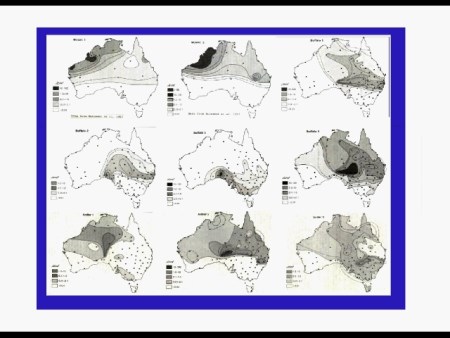
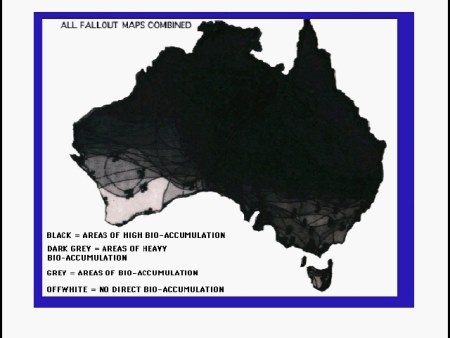
Why we must fight miners’ push to fast-track uranium mines
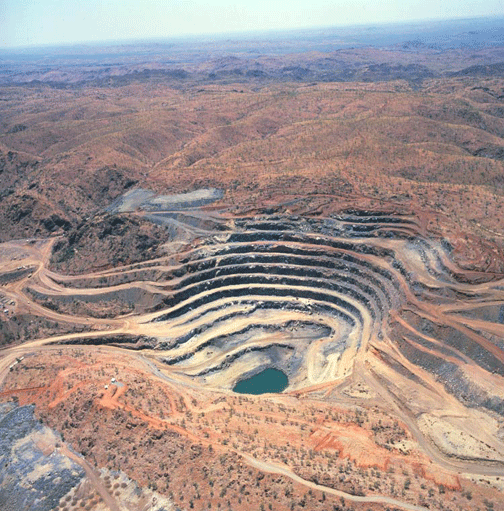 Expensive, dirty and dangerous: why we must fight miners’ push to fast-track uranium mines https://theconversation.com/expensive-dirty-and-dangerous-why-we-must-fight-miners-push-to-fast-track-uranium-mines-139966?fbclid=IwAR173tiUPtRX3YkqQh5VlmoWHWWCUHxSFtCFxFIxKtuvI3IaghgbGhAEBAM, Gavin Mudd, Associate Professor of Environmental Engineering, RMIT University, June 18, 2020 Of all the elements on Earth, none is more strictly controlled under law than uranium. A plethora of international agreements govern its sale and use in energy, research and nuclear weapons.
Australian environmental law considers nuclear actions, such as uranium mining, as a “matter of national environmental significance” under the Environment Protection and Biodiversity Conservation (EPBC) Act. This means uranium involves matters of national and international concern for which the Australian government is solely responsible.
The states, which own minerals, cannot exercise such oversight on uranium exports and use. So any new uranium mine needs both state and federal environmental approvals.
On Monday, Prime Minister Scott Morrison announced that BHP’s proposed expansion of the Olympic Dam copper-uranium-gold-silver mine in South Australia was one of 15 major projects set to be fast-tracked for environmental approval. This would include a single, joint state and federal assessment.
But responsibility and past performance make a compelling case to maintain our federal environmental laws more than ever. Here’s why uranium mining must remain a federal issue.
Our international obligations
Australia is a signatory to several international treaties, conventions and agreements concerning nuclear activities and uranium mining and export.
As of the end of 2018, the nuclear material safeguarded under international agreements derived from our uranium exports totalled 212,052 tonnes – including 201.6 tonnes of separated plutonium.
In response, a spokesperson for the Minerals Council of Australia said a national mechanism to manage safeguards already exists through the Australian Safeguards and Non-Proliferation Office, adding:
Uranium is further regulated through the Australian Radiation Protection and Nuclear Safety Agency (ARPANSA) […] under the provisions of the ARPANS Regulations 1999. The object of the ARPANS Act is “to protect the health and safety of people, and to protect the environment, from the harmful effects of radiation”.
Successful rehabilitation has yet to be seen
Uranium mines are difficult to rehabilitate at the end of their lives. In my 24 years of research, including visiting most sites, I’ve yet to see a successful case study of Australia’s 11 major uranium mines or numerous small sites.
For example, the Rum Jungle mine near Darwin, which operated from 1954 to 1971, left a toxic legacy of acidic and radioactive drainage and a biologically dead Finniss River.
The former Mary Kathleen mine, also part of Rio Tinto’s corporate history, operated from 1958-63 and 1976-82.
Rehabilitation works were completed by 1986 and won national engineering awards for excellence. But by the late 1990s, acid seepage problems emerged from the tailings dam (where mining by-products are stored) and overlying grasses were absorbing toxic heavy metals, creating a risk for grazing cattle.
Both Rum Jungle and Mary Kathleen were rehabilitated to the standards of their day, but they have not withstood the test of time.
Australia’s biggest uranium mine, Ranger, is fast approaching the end of its operating life.
Rio Tinto is also the majority owner of Ranger. Despite Ranger’s recent losses, Rio has retained control and given Ranger hundreds of millions of dollars towards ensuring site operations and rehabilitation.
Site rehabilitation is required to be complete by January 2026, with Rio Tinto and Ranger assuming 25 years of monitoring – although plans and funding for this are still being finalised.
Recently, it emerged that Ranger had not agreed to continue its share of funding the scientific research required for the rehabilitation – an issue still unresolved. So despite promises of world’s best ever rehabilitation, concerns remain.
The Conversation contacted Rio Tinto to respond, and it referred us to Energy Resources Australia (ERA), which operates Ranger. An ERA spokesperson stated:
ERA is required to cease processing in January 2021 in accordance with the expiration of its Authority to Operate under the Commonwealth Atomic Energy Act. Given the impending cessation in processing, ERA believes it is appropriate and reasonable to review the current research funding arrangements.
No other former uranium mine in Australia can claim long-term rehabilitation success. Nabarlek, Radium Hill-Port Pirie, South Alligator Valley and other small mines all have issues such as erosion, weeds, remaining infrastructure, radiation hot-spots and/or water contamination. They all require ongoing surveillance.
Uranium mining is set to be outcompeted
Even if Olympic Dam expands (and especially if it stops extracting uranium in favour of tellurium, cobalt and rare earths also present), this trend is expected to increase in the coming years as Ranger closes and the world transitions to renewable energy and electric vehicles to help address climate change.
In response, the Minerals Council of Australia stated that lithium’s contribution to large-scale electricity storage is just beginning, arguing:
1 This month

of the week – Australians for War Powers Reform (AWPR)
To see nuclear-related stories in greater depth and intensity
 Antinuclear