Barngarla traditional owners win national conservation award for successful radioactive waste campaign news on radioactive waste
16 NOVEMBER 2023, https://www.acf.org.au/barngarla-rawlinson-award-win—
The Barngarla Determination Aboriginal Corporation has been awarded the 2023 Peter Rawlinson Award for a successful seven-year campaign to protect their country in South Australia from the long-term threats posed by radioactive waste.
The award, which celebrates outstanding voluntary contributions to protect the environment, was announced at the Australian Conservation Foundation’s AGM in Melbourne tonight.
“In August 2023, a David and Goliath struggle came to an end when federal Resources Minister Madeleine King announced the federal government would not advance a plan inherited from the former Coalition government to locate a national radioactive waste facility near Kimba on SA’s Eyre Peninsula,” said ACF’s nuclear free campaigner Dave Sweeney.
“The federal waste plan was deeply flawed and inconsistent with international best practice.
“The Barngarla always opposed radioactive waste on their country and repeated calls for Morrison government ministers Matt Canavan and Keith Pitt to scrap the plan were ignored.
“For seven years, against sustained pressure and propaganda, they stood firm.
“In July 2023, the Federal Court found Minister Pitt’s decision to declare the Kimba site was not valid because it was biased, rather than based on an independent and thorough process.
“Federal Labor’s subsequent decision to accept the court’s judgment was a prudent and a proper call and offers an important chance to change the government’s approach to this complex issue.
ACF thanks the Barngarla and acknowledges the sustained and successful efforts of a proud community to honour their past and protect their future. All of us are richer as a result.”
Established in 1992, the Rawlinson Award is given annually in memory of ACF Councillor Peter Rawlinson – a zoologist, lecturer in biological science and environmental campaigner.
Nuclear waste dump plans scrapped for South Australia
By Andrew Brown August 10 2023 –
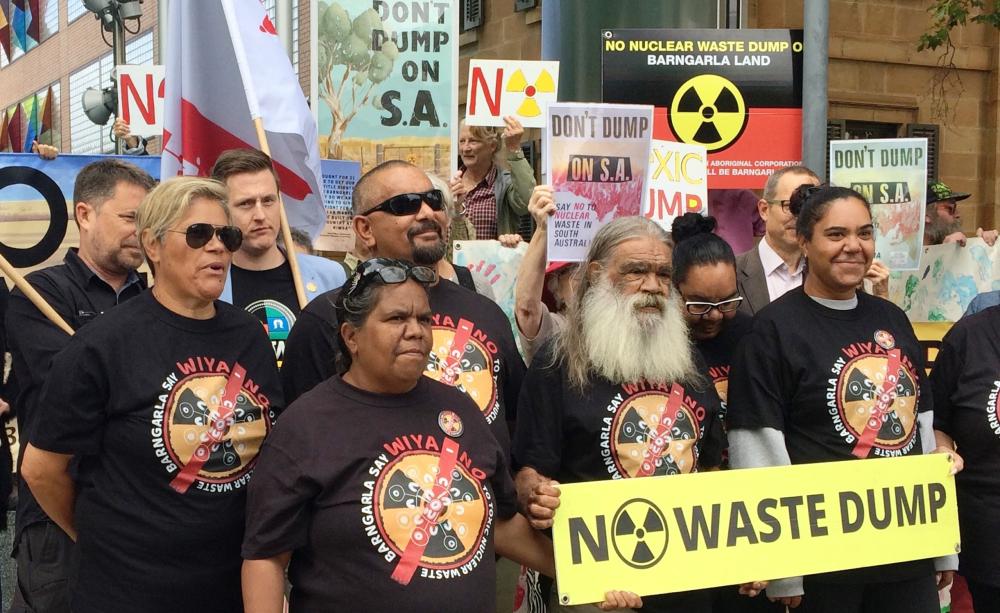
Plans for a nuclear waste dump in regional South Australia have been scrapped by the federal government following a court decision blocking its construction.
The waste facility was earmarked to be built on land at Napandee near the town of Kimba in the Eyre Peninsula by the previous coalition government in 2021.
The decision was challenged in the Federal Court by traditional owners, the Barngarla people, who said the decision was made without them being consulted.
The court ruled in July the facility could not be built.
Resources Minister Madeleine King told federal parliament the government would look for a new location for the nuclear waste storage.
“I’m deeply sorry for the uncertainty the process has created for the Kimba community, for my own department, for the Australian Radioactive Waste Agency workers and for the workers involved in the project,” she said.
“I also acknowledge the profound distress this process has caused the Barngarla people.”
Ms King said any work near Kimba had stopped after the court’s decision.
She said the government would not appeal against the court decision.
“We have to get this right. This is long lasting, multi-generational government policy for the disposal of waste that can take thousands of years to decay,” she said.
“We must consult widely and bring stakeholders including First Nations people along with us. We remain bipartisan in our approach.”…………………………………………………………….. https://www.canberratimes.com.au/story/8303272/nuclear-waste-dump-plans-scrapped-for-south-australia/
Aboriginal Australians defeat nuclear dump
Dr Jim Green 26th July 2023 https://theecologist.org/2023/jul/26/aboriginal-australians-defeat-nuclear-dump
Historic win as South Australian Aboriginal traditional owners defeat nuclear dump plan.
Bipartisan efforts by successive federal governments to impose a national nuclear waste dump on the land of Barngarla Aboriginal traditional owners in South Australia (SA) have been upended by a federal court decision in favour of the Barngarla people.
Australians will have their say in a referendum about whether to change their constitution to recognise the First Nations of Australia by establishing an Aboriginal and Torres Strait Islander Voice later this year.
READ: Radioactive waste and the nuclear war on Australia’s Aboriginal people
The Voice would be an independent and permanent advisory body giving advice to the Australian parliament and government on matters that affect the lives of first nations peoples.
Ignored
Sadly, the federal Labor government has at the same time continued with the plan of the previous regime to establish a national nuclear waste dump near Kimba in South Australia – despite the unanimous opposition of the Barngarla traditional owners.
This plan has now come a-cropper. The Barngarla traditional owners sought to revoke the nomination of the dump site and the federal court this month agreed, arguing that the nomination of the dump site was infected by “apprehended bias” and “pre-judgement”.
The government might yet appeal the decision. However it seems likely that the plan for a nuclear dump on Barngarla country will instead be abandoned.
Aunty Dawn Taylor, a Barngarla elder, said: “I am so happy for the women’s sites and dreaming on our country that are not in the firing line of a waste dump. I fought for all this time for my grandparents and for my future generations as well.”
Jason Bilney, chairperson of the Barngarla Determination Aboriginal Corporation, said: “The Barngarla fought for 21 years for Native Title rights over our lands, including Kimba, and we weren’t going to stop fighting for this. We have always opposed a nuclear waste dump on our country and today is a big win for our community and elders.”
The Kimba site has been targeted for a dump since 2015. In 2021, the conservative Coalition government formally nominated the Kimba dump site, and the Labor government has continued with the plan since winning the May 2022 election.
Violation
Barngarla traditional owners were excluded from a so-called ‘community ballot’ by the Coalition government. An independent and professional ballot of Barngarla traditional owners found absolutely no support for the proposed dump ‒ but it was ignored.
The federal parliament’s joint committee on human rights unanimously concluded in an April 2020 report that the government was violating the human rights of Barngarla people. Even the Coalition members of the committee endorsed the report.
But the Coalition government continued to ignore the human rights of the Barngarla people. The Coalition government also tried to pass legislation which would deny Barngarla traditional owners the right to challenge the nomination of the Kimba dump site in the courts. However the draft legislation was blocked by Labor, minor parties and independent senators.
It was expected ‒ or at least hoped ‒ that the incoming Labor government would abandon the controversial dump proposal after the May 2022 election. But Labor only went as far as pointing out that Barngarla traditional owners could challenge the dump plan in the courts.
The Barngarla Determination Aboriginal Corporation was forced to launch a legal challenge against the previous government’s nomination of the Kimba dump site – and the Labor government fought the case.
Battle
There are at least two problems with Labor’s position. Firstly, the government has vastly greater resources to contest a legal challenge. Indeed, the government has spent A$13 million (£6.8 million) fighting Barngarla traditional owners in the federal court.
Barngarla traditional owners have spent significantly less than A$500,000 – needless to say, they have many pressing demands on their limited resources. There is no other example in recent Australian history of this level of legal attack on an Aboriginal group.
Secondly, the relevant laws are stacked against the interests of traditional owners. In 2007, the conservative Coalition government passed legislation ‒ the Commonwealth Radioactive Waste Management Act ‒ allowing the imposition of a nuclear waste dump on Aboriginal land with no consultation, and no consent from traditional owners.
At the time, Labor parliamentarians described the legislation as “extreme”, “arrogant”, “draconian”, “sordid”, and “profoundly shameful”.
But when the Labor government returned to the legislation in 2012 ‒ and renamed it the National Radioactive Waste Management Act ‒ the amendments were superficial and still allowed for the imposition of a nuclear waste dump with no consultation or consent from Traditional Owners.
Immoral
Regardless of the federal court’s decision, the plan to impose a nuclear dump despite the unanimous opposition of Barngarla traditional owners is immoral. It contradicts the spirit of the Voice to Parliament currently being championed by the Labor government.
Jayne Stinson, chair of the South Australian parliament’s environment, resources and development committee, said: “In this day and age, when we’re talking about ‘voice, treaty and truth‘, we can’t just turn around and say, ‘Oh well, those are our values but in this particular instance, we’re going to ignore the voice of Aboriginal people’.
“I think that’s just preposterous and it’s inconsistent with what most South Australians would think.”
The plan to dump on Barngarla country makes a mockery of Labor’s professed support for the United Nations’ Declaration on the Rights of Indigenous Peoples, which states that “no storage or disposal of hazardous materials shall take place in the lands or territories of indigenous peoples without their free, prior and informed consent”.
There is no informed consent from Barngarla traditional owners: there is informed unanimous opposition.
‘Dreadful’
Dr Susan Close, now the Labor deputy premier of South Australia, has consistently opposed the dump. She said in 2019 that it was a “dreadful process from start to finish” that led to the nomination of the proposed Kimba dump site and that SA Labor is “utterly opposed” to the “appalling” process which led to Kimba being targeted.
Dr Close noted in a 2020 statement, titled ‘Kimba site selection process flawed, waste dump plans must be scrapped’, that SA Labor “has committed to traditional owners having a right of veto over any nuclear waste sites, yet the federal government has shown no respect to the local Aboriginal people.”
She has called for her federal Labor colleagues to abandon the Kimba dump proposal once and for all in the wake of the recent federal court decision.
In February 2008, Labor prime minister Kevin Rudd highlighted the life-story of Lorna Fejo ‒ a member of the stolen generation ‒ in the historic National Apology to Aboriginal People in Parliament House.
At the same time, the Rudd government was attempting to impose a nuclear waste dump on Fejo’s country in the Northern Territory. Lorna said: “I’m really sad. The thing is ‒ when are we going to have a fair go? Australia is supposed to be the land of the fair go. I’ve been stolen from my mother and now they’re stealing my land off me.”
Resistance
Federal Labor’s “nuclear racism” is disgraceful and it diminishes all Australians. And Labor’s nuclear racism is always supported by the conservative Coalition parties, who are still today arguing for a ‘no’ vote in the upcoming referendum on a Voice to Parliament.
But nuclear racism has always met with resistance. Remarkably, community campaigns led by Aboriginal people have stopped five nuclear dump proposals since the turn of the century.
Plans for a national nuclear waste dump in SA have been defeated in 2004, 2019 and 2023 (touch wood), a planned national nuclear dump in the Northern Territory was defeated in 2014, and a plan to turn SA into the world’s high-level nuclear waste dump was defeated in 2016.
Three of the five successful campaigns involved legal challenges that made it much more difficult for governments to override community resistance.
The federal Labor government should abandon the Kimba dump site and apologise for attempting to foist a dump on Barngarla country despite the unanimous opposition of traditional owners.
Veto
The federal Labor government should also adopt SA Labor’s policy that traditional owners should have a right of veto over any proposed nuclear dumps.
That would give traditional owners across the country some confidence that their voice will be heard as the government progresses plans to store and dispose of waste arising from nuclear-powered submarines in the coming decades.
Finally, Labor must commit to amend the shameful and racist National Radioactive Waste Management Act.
This Author
Dr Jim Green is the national nuclear campaigner with Friends of the Earth Australia.
More information:
Radioactive waste and the nuclear war on Australia’s Aboriginal people
Barngarla: Help us Have a Say on Kimba (facebook)
Friends of the Earth nuclear-free campaign
No Radioactive Waste Facility for Kimba District (facebook)
Black Mist Memories
Aboriginal and veteran delegates tell Australian parliament the horrors of nuclear testing
By Gem Romuld, International Campaign to Abolish Nuclear Weapons, Australia
In mid-June, four special people who know intimately the personal impacts of nuclear weapons testing, on physical health, mental health, and on the land, travelled to Parliament House in Canberra, Australia’s capital city.
The four were:
Karina Lester: Yankunytjatjara Anangu woman, senior Aboriginal language worker, ICAN Ambassador. Karina’s late father was blinded by the Totem 1 nuclear test at Emu Field.
June Lennon: Yankunytjatjara, Antikarinya and Pitjantjatjara woman who survived the Totem 1 nuclear test as a baby. Her mother, Lallie, and brother Bruce, were recipients of compensation due to their ill-health, caused by radioactive contamination.
Douglas Brooks: was stationed at Monte Bello Islands as a serving member of the Royal Australian Navy in 1956. He was aboard HMS Alert when a 98 kiloton nuclear bomb was detonated just ten miles away, exposing him and the rest of the crew to the full blast of the explosion.
Maxine Goodwin: is the daughter of an Australian nuclear veteran, who became ill as a result of his involvement in the first atomic test in Western Australia. He passed away at 49, leading Maxine to a lifelong search for the truth on how the tests have affected veterans and their families.
The delegates brought their expertise and personal testimonies to speak with parliamentarians about recognition, respect, and repair, and to urge Australia to sign and ratify the Treaty on the Prohibition of Nuclear Weapons……………………………………
They spoke about the shock of witnessing a nuclear test, the post-traumatic stress disorder that followed, the oily black mist that coated and poisoned the land, the wide range of mental and physical health impacts, the loss of loved ones far too early, the lack of recognition of suffering, the lack of accountability, the impact of government lies and obfuscation.
They argued that Australia must join the ban to prevent such humanitarian harm from happening again, and also to fulfill its obligations under Articles 6 & 7 to provide assistance to victims and remediate impacted environments. It’s about the past, the present and the future.
………………………………………………………………….. Josh Wilson MP and Senator Jordon Steele-John both delivered powerful speeches in Parliament, respectively available here and here.
………………………………………Further detail on the delegates’ meetings and media attention is in this blog post. https://beyondnuclearinternational.org/2023/07/23/black-mist-memories/
UK campaigners call on Australian PM to withdraw Kimba nuke dump threat.

UK campaign groups opposed to nuclear waste dumps were ‘delighted’ to hear that their counterparts in Australia, the Barngarla Determination Aboriginal Corporation, have just won their court case against the imposition of a similar dump on their Traditional Lands.
In a historic judgement given earlier this week (18 July), Her Honour Justice Charlesworth in the Federal Court of Australia handed down a decision to quash Federal Government plans to move nuclear waste from the reactor at Lucas Heights to an unwanted waste dump at Napandee near Kimba in South Australia. Justice Charlesworth charged government officials with ‘pre-judgement’ and ‘apprehended bias’.
In March, the UK/Ireland Nuclear Free Local Authorities joined Radiation Free Lakeland, Millom against the Nuclear Dump / South Copeland against GDF, and Guardians of the East Coast, which are local groups fighting plans to locate a so-called Geological Disposal Facility in either West Cumbria or East Lincolnshire, wrote a joint letter to the Australian Government to raise their international objections to the plan.
Our objections were that there was no need for such a dump as the facility at Lucas Heights has capacity to take the waste and that the rights to the land by the Traditional Owners were being wilfully and shamefully disregarded, contrary to international law, with the government giving no proper consideration to the position of the Barngarla.
The attempt to impose a nuclear waste dump is all par for the course in Australia with the ill-treatment of Indigenous Peoples by corporations, political elites and the military over nuclear matters having an established history, with First Nation territories ravaged by uranium mining or shattered by British atomic weapon testing.
Following the damning judgement, the four British organisations have today written to the Prime Minister of Australia Anthony Albanese asking him to ‘take the honourable and courageous course of action’, withdraw the plan and ‘leave the Barngarla in peace’.
A copy of the letter and a message of solidarity will be sent to the Barngarla Determination Aboriginal Corporation. more https://www.nuclearpolicy.info/news/uk-campaigners-call-on-australian-pm-to-withdraw-kimba-nuke-dump-threat/
Nuclear waste on Aboriginal land ?- and the Voice to Parliament?
The Australian government is in the process of holding a referendum that would give the indigenous people a Voice to Parliament. Imposing nuclear waste on Aboriginal land is not a good look, is it?
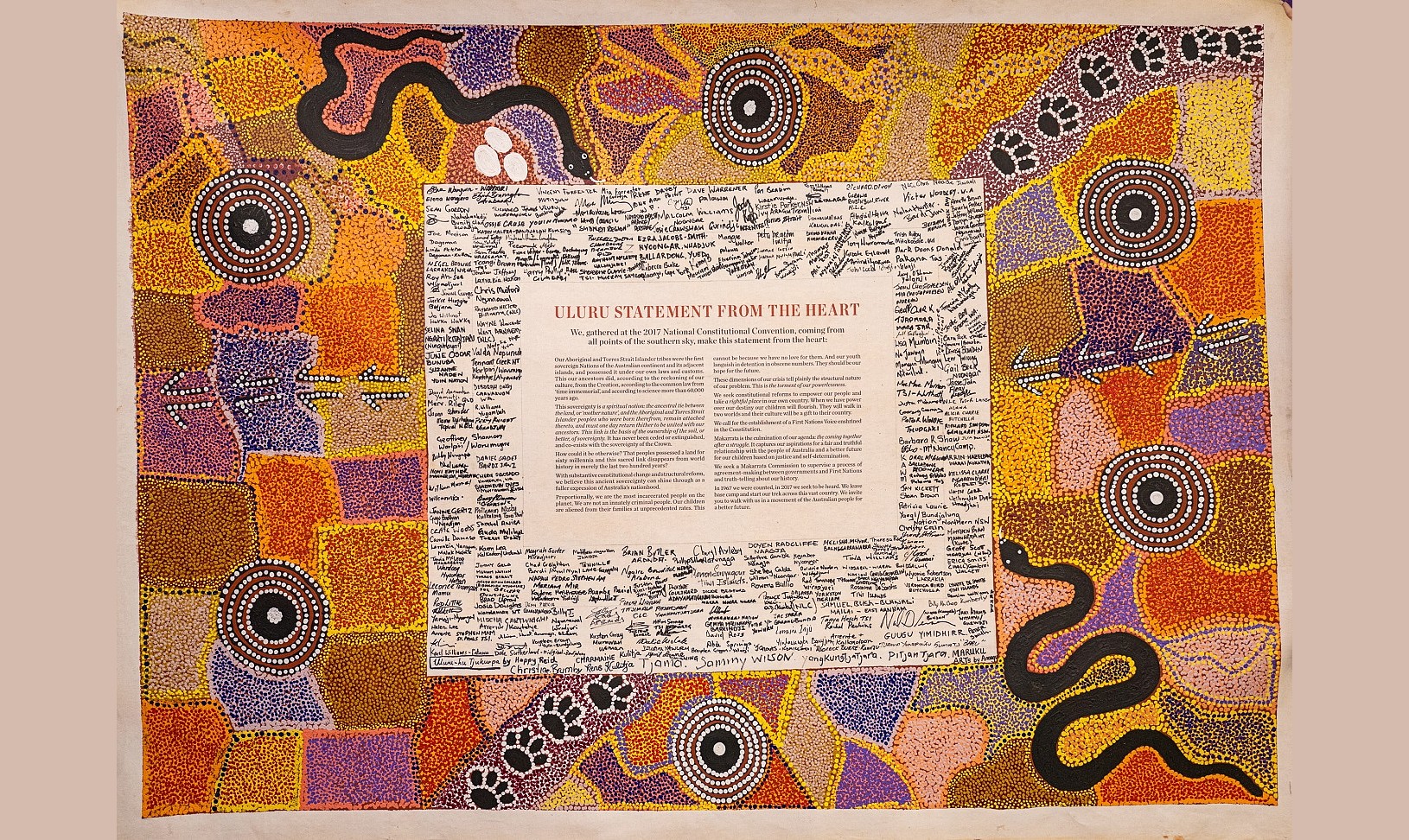
This morning, I heard Professor Ian Lowe, talking to a English journalist, about yesterday’s court decision, which supported the Barngarla people’s opposition to nuclear waste dumping on their land.
Prof Lowe eloquently summarised the importance of this legal decision:
-the Aboriginal people were not consulted when the Morrison Liberal Coalition decided to make a nuclear waste dump on their traditional land.
– this raises problems for the Australian government in selecting any land in this country for nuclear waste dumping
-this has international implications – about any country where the rulers want to impose a nuclear waste dump on indigenous land
-this has implications for the ill-advised (corrupt firm PWC was the advisor) AUKUS decision by the Albanese government to buy U.S nuclear submarines at $369billion. That decision included Australia taking responsibility for the high level radioactive trash from the nuclear submarines. Where to dump that trash?
Of course, the Australian government does have the power to impose the nuclear waste dump anyway, against indigenous wishes, even against South Australian State government wishes,
The Australian government is in the process of holding a referendum that would give the indigenous people a Voice to Parliament. Imposing nuclear waste on Aboriginal land is not a good look, is it?

Labor must hear Indigenous voice against Kimba nuclear site
Jim Green and Michele Madigan, https://indaily.com.au/opinion/2023/07/17/labor-must-hear-indigenous-voice-against-kimba-nuclear-site/—
Ahead of tomorrow’s expected federal court decision on a Barngarla Traditional Owners challenge to the planned Kimba nuclear waste site, Jim Green and Michele Madigan say federal Labor must be consistent on listening to Indigenous concerns.
If the Albanese Labor government wants to restore confidence in its plan for an Indigenous Voice to Parliament, it needs to walk the talk and respect Aboriginal voices.
Currently, the government is ignoring the Barngarla Traditional Owners who are unanimous in their opposition to the government’s plan for a national nuclear waste dump (or ‘facility’) near Kimba on South Australia’s Eyre Peninsula.
Labor inherited the Kimba dump plan from the Morrison Coalition government. Barngarla Traditional Owners were excluded from a so-called ‘community ballot’ by the Morrison government. The results of an independent, professional survey of Barngarla Traditional Owners ‒ which found absolutely no support for the proposed dump ‒ were also ignored.
Jason Bilney, Chair of the Barngarla Determination Aboriginal Corporation, said: “It is a simple truth that had we, as the First People for the area, been included in the Kimba community ballot rather than unfairly denied the right to vote, then the community ballot would never have returned a yes vote.”
Federal parliament’s Joint Committee on Human Rights Committee unanimously concluded in an April 2020 report that the Morrison government was violating the human rights of Barngarla people. Even the Coalition members of the committee endorsed the report.
But the Morrison government continued to ignore the human rights of the Barngarla people.
The Morrison government also tried ‒ but failed ‒ to pass legislation which would deny Barngarla Traditional Owners the right to a judicial review of the nomination of the Kimba dump site. The draft legislation was blocked by Labor, minor parties and independent Senators.
It took 21 years for the Barngarla people to secure Native Title of their country through a court determination. Six months later, the Morrison government nominated Barngarla country for the proposed nuclear waste dump.
It was expected ‒ or at least hoped ‒ that the incoming Albanese Labor government would dump the controversial dump proposal after the May 2022 election. But Labor has pressed ahead with the Kimba dump proposal, led by federal resources minister Madeleine King.
Labor isn’t responsible for the plan to dump nuclear waste on Kimba farming land. But that’s no excuse for continuing with a controversial and strongly-contested proposal.
Labor’s position is that Barngarla Traditional Owners can challenge the dump plan in the courts. And that is what is happening: the Barngarla Determination Aboriginal Corporation launched a legal challenge against the Morrison government’s declaration of the Kimba dump site. The matter is before the Federal Court and a decision is expected on July 18 (with the proviso that an appeal to the full bench of the Federal Court may follow).
There are at least two problems with Labor’s position. Firstly, the government has vastly greater resources to contest a legal challenge. Indeed the government has spent $13 million fighting the Barngarla Traditional Owners in the Federal Court. Barngarla Traditional Owners haven’t even spent half a million dollars; and needless to say they have many pressing demands on their limited resources.
There is no other example in recent Australian history of this level of legal attack on an Aboriginal group.
Secondly, the relevant laws are stacked against the interests of Traditional Owners. In 2007, the Howard Coalition government passed legislation ‒ the Commonwealth Radioactive Waste Management Act ‒ allowing the imposition of a nuclear waste dump on Aboriginal land with no consultation or consent from Traditional Owners.
At the time, Labor parliamentarians described the legislation as “extreme”, “arrogant”, “draconian”, “sorry”, “sordid”, and “profoundly shameful”. But when the Gillard Labor government amended the legislation in 2012 ‒ and renamed it the National Radioactive Waste Management Act ‒ the amendments were superficial and still allowed for the imposition of a nuclear waste dump with no consultation or consent from Traditional Owners.
Even if the Federal Court finds that the government has acted within the law, the plan to impose a nuclear dump despite the unanimous opposition of Barngarla Traditional Owners is immoral.
It contradicts the spirit of the Voice to Parliament currently being championed by the Albanese government. Jayne Stinson, Chair of the SA Parliament’s Environment, Resources and Development Committee, said: “In this day and age, when we’re talking about Voice, Treaty and Truth, we can’t just turn around and say, ‘Oh, well, those are our values but in this particular instance, we’re going to ignore the voice of Aboriginal people’. I think that’s just preposterous and it’s inconsistent with what most South Australians would think.”
The government has spent $13 million fighting the Barngarla Traditional Owners in the Federal Court
It contradicts Labor’s professed support for the United Nations Declaration on the Rights of Indigenous Peoples, which states that “no storage or disposal of hazardous materials shall take place in the lands or territories of indigenous peoples without their free, prior and informed consent”.
Susan Close, now Deputy Premier of South Australia, said in 2019 that it was a “dreadful process from start to finish” that led to the nomination of the proposed Kimba dump site and that SA Labor is “utterly opposed” to the “appalling” process which led to Kimba being targeted.
Close noted in 2020 statement, titled ‘Kimba site selection process flawed, waste dump plans must be scrapped’, that SA Labor “has committed to traditional owners having a right of veto over any nuclear waste sites, yet the federal government has shown no respect to the local Aboriginal people.”
Of course, Close was speaking about the Morrison government but SA Labor continues to call for the federal government to abandon the proposed dump and for Traditional Owners to have a right of veto.
Yet the federal Labor government stubbornly persists.
Sadly, federal Labor has form on these issues. In February 2008, Labor Prime Minister Kevin Rudd highlighted the life-story of Lorna Fejo ‒ a member of the stolen generation ‒ in the historic National Apology to Aboriginal People in Parliament House.
At the same time, the Rudd government was attempting to impose a nuclear waste dump on her country in the Northern Territory. Fejo said: “I’m very, very disappointed and downhearted about that [the National Radioactive Waste Management Act]. I’m really sad. The thing is ‒ when are we going to have a fair go? Australia is supposed to be the land of the fair go. When are we going to have fair go? I’ve been stolen from my mother and now they’re stealing my land off me.”
Labor’s nuclear racism is disgraceful and it diminishes all Australians.
Several steps should be taken to rectify the situation. To date, the issue has been managed by resources minister Madeleine King. There appears to have been little or no input from caucus, Cabinet or the Prime Minister’s Office. That needs to change.
Secondly, Labor will hold its national conference in Brisbane in mid-August. If it hasn’t already done so, Labor should take the opportunity presented by the conference to announce that it will no longer attempt to impose a dump against the opposition of Barngarla Traditional Owners.
So much the better if a national conference resolution adopts SA Labor’s policy that Traditional Owners should have a right of veto over any proposed nuclear dumps. That would give traditional owners across the country some confidence that their voice will be heard as the government progresses plans to store and dispose of waste arising from nuclear submarines in the coming decades.
Court rules in favour of Barngala people, preventing nuclear waste facility in Kimba

Joseph Guenzler – July 18, 2023 https://nit.com.au/18-07-2023/6853/court-rules-in-favour-of-barngala-people-preventing-nuclear-waste-facility-in-kimba
The Barngarla people of South Australia’s Eyre Peninsula are rejoicing as the Federal Court has overturned the decision to construct a nuclear waste facility on their land in Kimba.
The proposed facility was to store radioactive waste categorised as low and intermediate level.
The Barngarla traditional owners took the matter to the Federal Court, seeking a judicial review. They argued that the facility would disrupt a site of great significance and claimed that they were not adequately consulted before the plan received approval in 2021.
“It was important to stop this dump because the Seven Sisters Dreaming goes through there,” said Barngarla Elder Aunty Dawn Taylor, who was born at Kimba.
“Having a waste dump out there would have just destroyed everything.”
The Barngarla native title area covers more than 34,000 square kilometres on Eyre Peninsula, including the town of Kimba.
On Tuesday, the court ruled in favor of the native title group.
As a result, the future of the project is now uncertain as the court has invalidated the federal government’s previous declaration made in 2021, which designated the site for the nuclear waste facility.
Justice Natalie Charlesworth ruled in favor of the Barngarla people, citing a perceived bias in the decision-making process due to “pre-judgment.”
Justice Charlesworth also found there was an error of law, but said it did not have a “material effect” on the outcome of the declaration of the site.
A separate hearing will address the matter of legal costs, which are expected to be substantial.
The decision was met with enthusiasm by opponents of the nuclear facility, who gathered at the Federal Court building and expressed their joy upon hearing the verdict.
Speaking outside the building in Adelaide’s CBD, Barngarla Determination Aboriginal Corporation (BDAC) chairman Jason Bilney said it had been a “David and Goliath” battle that had left him “very emotional”.
“It’s been proud win for Barngarla, as well as other First Nations, to continue this fight and get this message out,” he said.
“The lesson is, it’s about truth telling… and it’s about listening to the First Nations people and who we are today and we’ve prevailed and we’ve won.”
“The money that the government’s spent to take us to court could be better spent for the rest of Australia, everyday Australians and the community, instead of taking First Nations people to court, it’s very disrespectful — we’ve been here over 60,000 years.”
Justice Charlesworth has decided to withhold any definitive orders regarding the judicial review until both parties have had a chance to review her judgment.
However, she has indicated that the most suitable course of action is to invalidate the entire declaration made by former resources minister Keith Pitt concerning the proposed facility.
Barngarla people continue their fight against the proposed Kimba nuclear waste dump
Jason Bilney, Chairperson, Barngarla Determination Aboriginal Corporation. 6 July 23
COURT
We have some news regarding the court; the judgement regarding the Kimba case will be delivered on July 18, 2023 at 10.30am at the Commonwealth Law Courts Building in Adelaide.
BARNGARLA ELDER AWARDED
This year’s NAIDOC Theme is a special one ‘For Our Elders’ Barngarla people have many elders who have led the way as leaders and teachers in our community. Enders who fought long and hard for our Native Title rights and also our ongoing battle with the Federal Government against a nuclear waste dump being built in Canberra. This week one of the BDAC Directors Harry Dare was awarded with the Port Augusta NAIDOC Male Elder of the Year, Uncle Harry was recognised for the role he has played in advocating for Barngarla rights, language and land –including his efforts to elevate the voice of Barngarla People over the nuclear waste dump at Kimba. Uncle Harry expressed his thanks to supporters.
PETITION
In other news, we have been blown away by the response to our online petition started by Mahalia Bilney in February. Today we have 13,349 signatures and we hope to see that grow.
The Petition calls on Minister King and Prime Minister Albanese to listen to the Barngarla people and scrap plans to advance the nuclear waste dump at Kimba.
We thank everyone for signing and sharing. Please continue to share the petition and encourage people to support us: https://chng.it/C2zzvDT56K.
Also we have heard that a group of local and EP residents has formed in Whyalla to actively oppose the Kimba plan and the transportation of nuclear waste through the Port of Whyalla.
Aunty Dawn Taylor attended the inaugural meeting to share Barngarla’s concerns.
This continues to be a David and Goliath battle and we will not give up the fight to protect our country.
Please take a minute to watch our message to Canberra here
AUKUS high-level nuclear waste dump must be subject to Indigenous veto
there is no question Defence would require the free, prior and informed consent of Indigenous people before a high-level nuclear waste facility could proceed on their land. …. in those circumstances the government must provide a veto right, because the project would eliminate future access to traditional Indigenous land.
If Plibersek knew about the radioactive waste facility and its intended siting in remote Australia at the time AUKUS was announced she has kept quiet about it.
A far more substantial inequality of power now exists between the Indigenous groups to be consulted about the site of the radioactive waste facility and the Defence Department. The facility has solid bipartisan support. In addition, it is essential to the AUKUS submarine deal, meaning Defence embodies the combined wishes of the Australian, British and United States governments.
Bipartisan secrecy and Defence’s poor record with Indigenous groups at Woomera are red flags for the consultation over AUKUS high-level nuclear waste facility.
Undue Influence MICHELLE FAHY, MAY 6, 2023
This is part one of a two-part series
The federal government had no public mandate for any of the AUKUS decisions: no mandate to enter the agreement, none to acquire eight nuclear-powered submarines for up to $368 billion, and none to establish a high-level radioactive waste facility. On this last, in fact, it had long term evidence to suggest Australians would likely oppose the proposition.
Perhaps this is why both major political parties concealed for 18 months, a period including the federal election, their shared knowledge that AUKUS requires a high-level radioactive waste facility to be built.
The AUKUS agreement was revealed on 15 September 2021. On 14 March 2023, deputy prime minister and defence minister, Richard Marles, announced the nuclear waste facility. Next day, opposition leader Peter Dutton said: ‘The Labor Party signed up to AUKUS knowing they would have to deal with the waste, and now that they’re in government they know that’s a part of the deal.’ The government has not denied Dutton’s claim.

Meanwhile, the Albanese government continues its work to establish an Indigenous Voice to Parliament. Just nine days after the prime minister was in San Diego announcing the AUKUS submarine deal and his deputy Marles came clean about the radioactive waste facility, Anthony Albanese released the proposed Voice wording. The prime minister noted in his speech the importance of consultation, ‘it’s common courtesy and decency to ask people before you take a decision that will have an impact on them’.
Governments have been trying for decades to put a radioactive waste dump in outback Australia. They have been rebuffed time and time again. Yet the Albanese government is trying once more.
Legal experts have pointed out the international legal requirement to obtain the free, prior and informed consent of Indigenous peoples before making significant decisions that affect them. This process includes giving Indigenous peoples full information about a development in advance and respecting their choice to give or withhold consent.
The UN Declaration on the Rights of Indigenous Peoples, which Australia has pledged to support ‘in both word and deed’, says: ‘[No] storage or disposal of hazardous materials shall take place in the lands or territories of indigenous peoples without their free, prior and informed consent.’
As to whether the government can claim ‘national security’ as a reason to avoid these obligations and dictate a radioactive waste site, international human rights law expert John Podgorelec says: ‘States may not derogate from their responsibilities on the basis of national security unless a “state of emergency” has been formally invoked.’
He adds, ‘A lesson to come out of the Iraq calamity is that manufactured or undisclosed national security intelligence cannot be used to subvert democracy.’
Unfortunately, the Defence Department’s fact sheet on nuclear stewardship and waste is light on detail. It does not mention free, prior and informed consent. Defence commits only to ‘consultation and engagement’ – a lesser standard – and adds that it will also consider ‘wider social license and economic implications’. Globally, the ‘economic implications’ of significant projects habitually undermine human rights, particularly those of Indigenous peoples.
Furthermore, Defence has a poor track record of engagement with Indigenous people in one of its key locations, South Australia’s Woomera Prohibited Area (explored further in part two).
Woomera is used by Australian and foreign military forces, in close partnership with multinational weapons corporations, for extensive weapons testing and military training activities.
‘When militaries around the world need a place to test their weapons and fly their new fighter jets, there’s nowhere better than the rugged expanses of South Australia,’ enthused US weapons giant Raytheon in 2016, talking up ‘a further expansion of US-Australian cooperation’.
The Woomera weapons testing range covers one-eighth of South Australia, occupying more than 122,000km2. Before Defence took over, less than a century ago, Indigenous people had inhabited the region for tens of thousands of years.
Despite the international outcry at the destruction of Juukan Gorge, the Defence Department has not changed its behaviour. For example, it continues to use a registered Indigenous heritage site in Woomera as a target zone for high explosive weapons tests. (I visited this and other sites inside Woomera last year at the invitation of Andrew and Bob Starkey, senior Kokatha lawmen and traditional owners.)
Defence is aware of the site’s significance, just as Rio Tinto was aware of the significance of Juukan Gorge. Defence’s heritage management plan, relevant sections of which I have seen, says the site has a ‘high level of Aboriginal heritage value’ and is a place of ‘sensitive cultural significance that can be easily impacted’. The public might wonder how Defence can know this yet still decide it’s acceptable to direct high explosive munitions onto the site.
‘The Commonwealth cannot give with one hand and take with the other,’ says Podgorelec, who acts for the Starkeys, on the tensions between federal commitments to Indigenous heritage protection and to AUKUS. He says there is no question Defence would require the free, prior and informed consent of Indigenous people before a high-level nuclear waste facility could proceed on their land. He also says in those circumstances the government must provide a veto right, because the project would eliminate future access to traditional Indigenous land.
Australia is not alone in being unable to find a radioactive waste solution. The UK has failed for decades to make meaningful progress on dismantling decommissioned nuclear submarines – it currently has 21 of them floating in dockyards awaiting disposal, mirroring its wider failure to resolve its nuclear waste problems. The US has also failed in this regard: spent fuel from its nuclear submarines remains in temporary storage. Griffith University’s Emeritus Professor Ian Lowe has written that the nuclear waste from US military and civilian reactors ‘is just piling up with no long-term solution in sight’.
Defence does not mention this pertinent information in its brief positive account of US and UK nuclear stewardship.
The federal government gave its response to the Juukan Gorge inquiry report in November 2022. Minister Tanya Plibersek, whose Environment portfolio encompasses Indigenous heritage protection, said:
[T]hese are thorough and considerate reports… the recommendations speak to the principles and priorities that will shape our [heritage protection] legislation. Free, prior, and informed consent.
If Plibersek knew about the radioactive waste facility and its intended siting in remote Australia at the time AUKUS was announced she has kept quiet about it.
Free, prior and informed consent requires that intimidation and coercion be avoided. Plibersek is well aware of the possibility of abuses of power in high stakes developments. In her speech, she noted partnership agreements were signed under ‘gross inequalities of power’ between the traditional owners of Juukan Gorge and Rio Tinto.
A far more substantial inequality of power now exists between the Indigenous groups to be consulted about the site of the radioactive waste facility and the Defence Department. The facility has solid bipartisan support. In addition, it is essential to the AUKUS submarine deal, meaning Defence embodies the combined wishes of the Australian, British and United States governments.
Podgorelec is adamant. ‘Australia cannot enact domestic laws that undermine its international legal obligations. If a project will take away Indigenous cultural connection to land forever – as a high-level nuclear waste facility will do – then the government is obliged to give a right of veto.’
Note: The legal basis for free, prior and informed consent was explained by John Podgorelec as lead author of Adelaide University’s submission to the 2015 SA Nuclear Fuel Cycle Royal Commission. Unfortunately, having been available until recently, the Royal Commission’s website is presently inaccessible. Email us if you would like a copy of the submission: undueinfluence@protonmail.com
Greens support Barngarla people’s opposition to Kimba radioactive waste dump set to open after 2030
ABC North and West SA / By Nicholas Ward https://www.abc.net.au/news/2023-04-21/greens-affirm-nuclear-dump-opposition-at-kimba-visit/102252440
Greens senators travelled to Kimba on South Australia’s Eyre Peninsula this week to hear from farmers and First Nations groups opposed to the national radioactive waste management facility proposed at Napandee.
Key points:
- Calls are growing for the federal government to drop court action against a First Nations group opposing a nuclear dump
- The local Native Title chair says the government is “not being truthful” about listening to Aboriginal voices
- Greens senators say intermediate-level waste must stay at Lucas Heights until a permanent storage solution is found
SA senator Barbara Pocock said the federal government’s process to determine the site for permanent low-level and temporary intermediate-level waste storage was flawed.
“It didn’t listen to First Nations people, it hasn’t listened to local farmers in the community, and it’s not an appropriate site for intermediate-level waste coming out of Lucas Heights [in Sydney],” Senator Pocock said.
“It results in the double-handling of highly toxic intermediate-level waste, which will be temporarily stored at Kimba, and future generations are going to have to find a long-term solution.
“Bearing in mind the history of nuclear testing in our state, it’s especially important that we … can find a safe long-term solution, not a temporary solution.”
Calls to listen to Aboriginal voices
Jason Bilney is chair of Barngarla Determination Aboriginal Corporation (BDAC), which is fighting the federal government in court to block the current proposal.
He said the government’s continued legal action showed a lack of commitment to listening to Aboriginal voices.
“They’re breaking First Nations hearts by continuing down this path of the Liberals and outspending us 4: 1 in court to put a nuclear waste dump on our country,” Mr Bilney said.
“What does that say about the Statement from the Heart, let alone constitutional recognition?
“It’s about truth-telling and yet they’re not being truthful about listening to our voice.”
Mr Bilney welcomed the senators’ visit to Kimba and said proponents of the waste dump needed to speak honestly about its impact on Barngarla culture.
“It’s always good to come out on country and actually see for themselves where the site is and meet us on country. It’s a very positive step,” he said.
‘Don’t need a court to tell us’
BDAC holds native title over large areas of the Upper Spencer Gulf and Eyre Peninsula, including around Kimba, but not at the specific location of the proposed radioactive storage site at Napandee.
The Greens’ spokesperson for First Nations, Science and Resources, Senator Dorinda Cox, said that did not delegitimise Aboriginal concerns about its placement.
“The Barngarla people have stories, know the songlines, know the importance of birthing places, know the importance of country and practice of their culture in a very strong and traditional way still,” Senator Cox said.
“I don’t think we need a court to tell us that, and unfortunately that is a process they are pushed into.
“There was no free, prior, informed consent.”
Waste at Kimba ‘not expected before 2030’
The Australian Radioactive Waste Agency (ARWA) is overseeing site preparation works at Napandee, while awaiting final approvals to begin construction of the waste facility.
“Construction of the facility can only commence after all necessary siting, construction, nuclear, and environmental regulatory approvals are received,” an ARWA spokesperson said.
“The facility is not expected to be operational before 2030.”
Friends of the Earth comments accuse the Australian Government Industry Department of blatant racism in its Kimba nuclear waste dump plan.
Comments on: Guidelines for the content of a Draft EIS National Radioactive Waste Management Facility, SA EPBC 2021/9128 April 2023
RIGHTS OF TRADITIONAL OWNERS
Recommendation #1: The Guidelines must require the proponent (the Australian Government Department of Industry, Science and Resources) to explain how the nuclear dump/store proposal complies with the United Nations Declaration on the Rights of Indigenous Peoples, in particular Article 29.2:
“States shall take effective measures to ensure that no storage or disposal of hazardous materials shall take place in the lands or territories of indigenous peoples without their free, prior and informed consent.”
Of course it is common knowledge that the proposal is a gross violation of Article 29.2 and that the nuclear dump/store is unanimously opposed by Barngarla Traditional Owners. Nevertheless, the proponent must be asked to explain its position and its crude racism.
Recommendation #2: The list of documents in section 3.5.1 of the Guidelines should also include the United Nations Declaration on the Rights of Indigenous Peoples.
Recommendation #3: The Guidelines mention a “process for ongoing consultation with FirstNations people”. The proponent should be required to declare whether or not it reservesthe right to ignore the rights, interests and recommendations of the Barngarla Traditional Owners in future just as it has ignored and overridden unanimous Barngarla opposition to the nuclear dump/store proposal.
Recommendation #4: The proponent should be required to discuss the adequacy of the
National Radioactive Waste Management Act (NRWMA) and in particular to provide
justifications for each of the following provisions of the Act:
- The nomination of a site for a radioactive waste facility is valid even if Aboriginal
Traditional Owners were not consulted and did not give consent. The NRWMA states that
consultation should be conducted with Traditional Owners and consent should be secured ‒
but that the nomination of a site for a radioactive waste facility is valid even in the absence
of consultation or consent. - The NRWMA has sections which nullify State or Territory laws that protect the
archaeological or heritage values of land or objects, including those which relate to
Indigenous traditions. - The Act curtails the application of Commonwealth laws including the Aboriginal and Torres
Strait Islander Heritage Protection Act 1984 and the Native Title Act 1993 in the important
site-selection stage. The Native Title Act 1993 is expressly overridden in relation to land
acquisition for a radioactive waste facility.
Recommendation #5. The proponent should be required to explain why it rejects the SA
Government’s policy that Traditional Owners should have a right of veto of nuclear waste
sites. SA Labor’s Deputy Leader (and now Deputy Premier) Susan Close noted in September
2020 that: “South Australian Labor is calling on the Federal Government to halt its plans to
dump nuclear waste at Kimba. … SA Labor has consistently expressed its concerns about the
site selection process and the lack of consultation with native title holders. … This was a
dreadful process from start to finish, resulting in fractures within the local community over
the dump. The SA ALP has committed to traditional owners having a right of veto over any
nuclear waste sites, yet the federal government has shown no respect to the local
Aboriginal people.”
FEASIBLE ALTERNATIVES
Recommendation #6. The Guidelines should require discussion on the ‘feasible alternative’
of targeting states/territories which do not have legislation prohibiting a nuclear
dump/store such as the one proposed. The current proposal requires the Commonwealth to
override the SA Nuclear Waste Storage (Prohibition) Act 2000.
Recommendation #7. The Guidelines state that the no-action alternative should be
discussed “if relevant”. The term “if relevant” should be removed and the proponent should
be required to discuss the no-action alternative since it is in fact a viable alternative.
Recommendation #8. The Guidelines should explicitly require the proponent to consider the
option of abandoning the plan to store intermediate-level waste (ILW) and Kimba since an
overwhelming majority of ILW is currently store at ANSTO’s Lucas Heights site with no
practical or legal obstacles to ongoing storage. The plan to move ILW to Kimba is absurd: it necessarily entails double-handling; and it entails moving waste from a site with strong
security and an abundance of nuclear experts to a site with weaker security and a dearth of
nuclear experts … for no reason whatsoever let alone a good, compelling reason.
It should be noted here that ARPANSA plans separate assessments of the proponent’s plans
for disposal of lower-level wastes and storage of ILW. Further, in its March 2022 Regulatory
Assessment Report approving ANSTO’s new ILW Storage Facility at Lucas Heights to 2037,
the ARPANSA CEO states that a “clear net benefit must be provided by the licence applicant
to support a licence application”. It is implausible that the proposal to move ILW from Lucas
Heights to Kimba would meet this net-benefit criterion. Thus DCCEEW must be alert to the
misinformation and obfuscation that the proponent may present to justify ILW storage at
Kimba instead of Lucas Heights, and DCCEEW must ensure a full evaluation of alternatives to
ILW storage at Kimba.
Recommendation #9. Further to the above recommendation, the proponent should be
required to consider the option of abandoning plans for ILW storage at ANSTO and instead
working on a consolidated plan for deep underground disposal (or deep borehole disposal)
of both ILW as well as high-level nuclear waste from nuclear submarines.
TRANSPORT OF SPENT FUEL REPROCESSING WASTES
Recommendation #10. The proponent should be required to thoroughly consider
transportation of waste products arising from reprocessing of spent research reactor fuel.
There is no logical reason or justification for this omission
AUKUS, NUCLEAR TECHNOLOGY AND AUSTRALIA’S FUTURE
ARENA ONLINE, JOHN HINKSON, 6 APR 2023 https://arena.org.au/aukus-nuclear-technology-and-australias-future/
The AUKUS agreement attempts developments that will shift Australia into a zone that will threaten the existence of Australia itself.
I am not merely thinking of the militarisation of Australia, although that is definitely one likely outcome. I also have in mind our way of life that, while still set in settler-colonial assumptions that give First Nations people no substantial value in Australian society, is relatively relaxed when compared with the way of life of people in the United States. Australia has not experienced the focus upon security that high-powered militarisation associated with nuclear weapons brings. This is the world our leaders are leading us towards.
I want to take up two lines of inquiry into Aukus in this brief article. Firstly AUKUS brings together three Anglo-settled countries – two examples of settler-colonial domination that date back two centuries and more. plus of course the original Anglo-source nation, the United Kingdom. This may seem like an insignificant reference to an aspect of European colonialism that has shaped the whole world for centuries. However, Anglo colonialism has a particular complexion. Here I am drawing in part on the book by James Belich, Replenishing the Earth, about the history of Anglo colonialism. It is well-known these days in anti-colonialism circles that the Anglo slavery pursued in the Caribbean by England was the worst form of slavery, with cruelty on a scale that makes slavery in the United States seem enlightened. Anglo colonialism is typified by relations of difference that deal with colonised peoples with a vengeance. It is noteworthy that Anglo-settled countries like Australia have not at all come to terms with the cultures that pre-existed them. All invading cultures find this difficult, but Anglo-based cultures, as Belich shows, are a special case. It is no coincidence that Adolf Hitler looked with admiration to the United States for its ‘handling’ of its First Nations ‘problem’—a form of extermination of the Native American population—in how to think about the treatment of Jews and Slavs in Europe. Anglo cultures’ commitment to freedom and democracy has a repellent underbelly of racism and cultural suppression, not to mention genocidal elimination.
Significant cultural reform is always difficult but clearly the Anglo-powers have made the decision, at a time when in many respects their backs are up against the wall, to stand and fight—not for their own territory, but against the emergence of China, which was itself on the humiliating receiving end of Anglo colonialism in the nineteenth century. AUKUS in a strong sense is a thumbing of the West’s nose at all the emerging powers in Asia—on racial grounds. They must toe the line.
This is surely a crisis for an Australia seeking in the first half of the twenty-first century to survive in our region. To survive here Australia has to change its spots profoundly. It needs a form of cultural regeneration, in significant combination with Australian First Peoples, to justify its presence outside of the strategies of colonial power. While cultural change is always slow and complex, it is Australia’s only hope of both flourishing and being accepted in this region. It is also crucial because our allies are, in any case falling apart.
While I think the Voice could be the first step towards a significant and substantial change, only a weak version of the Voice, suitable for photo opportunities and feel-good policy, will survive the reassertions of this new Anglo alliance. Australia combines an especially empty form of recognition of First Nations with the arrogance of a superior colonial presence, coloured only a little by multiculturalism, and all this in a region where it has no basic right to exist.
The AUKUS alliance represents an incapacity to flexibly adjust to an emerging situation in which a new world power has emerged, one that will not go away. It is deeply ironic that the United States has fostered this emergence by its global development strategies, just as it fostered its opponents in Afghanistan at an earlier time.
That China is a new superpower is a reality—not that being a superpower is good for China or for us. Like large bureaucracies, superpowers develop self-oriented agendas related to their size, and are not to be trusted. But linking up with the remnants of the old powers to resist emergence means that Australia has resorted to a last gasp Anglo-cultural alliance rather than enter a serious process of rethinking its social composition and its place in the world.
The second line of comment is about nuclear submarines, drawing on a piece that appears in Arena Quarterly, just publishe
I want to take up two lines of inquiry into Aukus in this brief article. Firstly AUKUS brings together three Anglo-settled countries – two examples of settler-colonial domination that date back two centuries and more. plus of course the original Anglo-source nation, the United Kingdom. This may seem like an insignificant reference to an aspect of European colonialism that has shaped the whole world for centuries. However, Anglo colonialism has a particular complexion. Here I am drawing in part on the book by James Belich, Replenishing the Earth, about the history of Anglo colonialism. It is well-known these days in anti-colonialism circles that the Anglo slavery pursued in the Caribbean by England was the worst form of slavery, with cruelty on a scale that makes slavery in the United States seem enlightened. Anglo colonialism is typified by relations of difference that deal with colonised peoples with a vengeance. It is noteworthy that Anglo-settled countries like Australia have not at all come to terms with the cultures that pre-existed them. All invading cultures find this difficult, but Anglo-based cultures, as Belich shows, are a special case. It is no coincidence that Adolf Hitler looked with admiration to the United States for its ‘handling’ of its First Nations ‘problem’—a form of extermination of the Native American population—in how to think about the treatment of Jews and Slavs in Europe. Anglo cultures’ commitment to freedom and democracy has a repellent underbelly of racism and cultural suppression, not to mention genocidal elimination.
Significant cultural reform is always difficult but clearly the Anglo-powers have made the decision, at a time when in many respects their backs are up against the wall, to stand and fight—not for their own territory, but against the emergence of China, which was itself on the humiliating receiving end of Anglo colonialism in the nineteenth century. AUKUS in a strong sense is a thumbing of the West’s nose at all the emerging powers in Asia—on racial grounds. They must toe the line.
This is surely a crisis for an Australia seeking in the first half of the twenty-first century to survive in our region. To survive here Australia has to change its spots profoundly. It needs a form of cultural regeneration, in significant combination with Australian First Peoples, to justify its presence outside of the strategies of colonial power. While cultural change is always slow and complex, it is Australia’s only hope of both flourishing and being accepted in this region. It is also crucial because our allies are, in any case falling apart.
While I think the Voice could be the first step towards a significant and substantial change, only a weak version of the Voice, suitable for photo opportunities and feel-good policy, will survive the reassertions of this new Anglo alliance. Australia combines an especially empty form of recognition of First Nations with the arrogance of a superior colonial presence, coloured only a little by multiculturalism, and all this in a region where it has no basic right to exist.
The AUKUS alliance represents an incapacity to flexibly adjust to an emerging situation in which a new world power has emerged, one that will not go away. It is deeply ironic that the United States has fostered this emergence by its global development strategies, just as it fostered its opponents in Afghanistan at an earlier time.
That China is a new superpower is a reality—not that being a superpower is good for China or for us. Like large bureaucracies, superpowers develop self-oriented agendas related to their size, and are not to be trusted. But linking up with the remnants of the old powers to resist emergence means that Australia has resorted to a last gasp Anglo-cultural alliance rather than enter a serious process of rethinking its social composition and its place in the world.
The second line of comment is about nuclear submarines, drawing on a piece that appears in Arena Quarterly, just published.
The AUKUS strategy seeks to assert massive power, especially surveillance in the Pacific, surrounding China. Nuclear submarines combined with surveillance are the main focus of this attempt to cripple what actually, as I see it, cannot be stopped, in a way similar to Paul Keating’s argument. AUKUS shifts the whole emphasis away from how we protect our independence to what is needed to contain China. For Australia this seems to mean we have to achieve interoperability with US weaponary and systems, with nuclear submarines a key aspect of this. It means Australia must take a first step into adopting nuclear technology, and its consequences. We should not be assured by those who claim that it will be the last step.
Much has been written about the dangers of nuclear power and weapons over the years, to the point where it seems many in the community are now blasé about it—unless radiation waste is to be placed next door to you. Part of what the nuclear industry and its supporters have done is to launch smaller scale tactical nuclear weapons and also small-scale nuclear power plants because both large-scale nuclear weapons and large-scale power plants have unmanageable consequences and poor public acceptance, either because of non-human-scale destruction or ridiculous costs, which only keep escalating.
No one, with the exception of some military strategists, favours nuclear war. The reasons are obvious. The level of destruction of atomic bombs steps beyond our capacity to comprehend: it steps into another realm, a post-human one. Even the seemingly more mundane questions associated with nuclear waste are on another scale because they cannot be effectively disposed. All around the world nuclear waste is piling up around nuclear power stations as well as ‘storage’ of used nuclear submarines components because the waste is not of this world. There is no solution to the waste question. Nuclear waste is killing us on an increasing scale, as exposed by Kate Brown in her book A Manual for Survival. Contrary to the findings of mainstream Western science, she argues that low-level radiation is a mass killer and a general source of ill health As one Russian scientist she quotes puts it: ‘Chronic radiation is a crime’, and chronic radiation is a process that Australia has just signed up for with its nuclear submarines, adding its contribution to the systemic decline of the Earth’s environment, at least one that is suitable for human habitation.
We need to give some focus to this because it is an embarrassment to the nuclear lobby, which they handle and largely get away with by resorting to silence. But nuclear waste is a contradiction that will not go away. All attempts at solutions have failed in every part of the world. This cannot be emphasised enough.
What sort of contradiction is this?
Like nuclear technology, nuclear waste is usually simply regarded as a special category of danger. But its special effects arise out of a social process that is usually ignored. And this is a disaster because that social process is transforming our world in unprecedented ways.
This new world first burst upon us in 1945, with the practical scientific triumph of the atomic bomb. It was not merely novel. It was a consequence of the practical/conceptual reconstructions in the early twentieth century we associate with Albert Einstein and his associates. It was not merely a new theory. It was a combination of abstract academic theory with practical technology in the real world that gave birth to technoscientific society and culture, most importantly through its systematic approach to the transformation of nature. As such, academic theory entered the world of production, as an alternative or supplement to the transformations performed by the working classes, in a way that has expanded exponentially ever since. For better or worse, our world has become increasingly composed socially of the intellectually-trained.
The novelty of nuclear technology is contained within this social approach. Scientific intellectuals now uncover deep levels of the natural world, levels never before encountered by human societies that turn out to be mysterious and unmanageable. Nuclear is not the only example but it is a key one that destroys whatever it touches.
This is the world we are now entering, and doing so with great enthusiasm. It is not only a question of nuclear war. It is just as much one of the levels of security needed when dealing with what we do not know how to control. Nuclear weapons have been ‘controlled’ by such monstrosities as the Cold War and MAD (Mutually Assured Destruction) strategies that give reason a bad name. And low-level radiation has been controlled by denial of any major effects, while the environment of Planet Earth deteriorates. As Brown remarks, ‘Western researchers are discovering, like Soviet scientists before them, that radioactive decay at low doses changes the way cells behave in subtle and life-changing ways’, laying the basis for ‘chronic radiation syndrome’.
AUKUS is a strategy that pursues these outcomes systematically, our leaders planning to leave submarine waste in the desert, once again to be dealt with by First Nations people, now to be permitted by the WA Labor government. Among other things, the crime of chronic radiation poisoning needs to be sheeted home to the powers that be, and in particular now, the Albanese government.
Why is the Labor government determined to silence the Barngarla people, at the same time as Labor promotes the indigenous Voice to Parliament ?
‘While appreciating the Labor government’s strong commitment to the Voice, the question remains as to why, at the same time, federal Labor are doing so much to continue the Coalition’s determination to silence the voice of the Barngarla.’
Nuclear waste controversy continues in Federal Court Michele Madigan, 16 March 2023, https://www.eurekastreet.com.au/nuclear-waste-controversy-continues-in-federal-court
On Monday 6 March, the Barngarla Determination Aboriginal Corporation (BDAC) began action in the Federal Court in Adelaide to overturn the federal Ministerial declaration to selecting Napandee near Kimba as the proposed site for a national nuclear waste facility.
The Barngarla people, the Traditional Owners of Kimba, have consistently opposed the controversial nuclear waste plan. The federal government has spent millions of dollars fighting the Barngarla in court, despite the continued efforts of the Barngarla people who do not want their sites and stories disturbed by a nuclear waste facility.
This fourth manifestation of federal governments of either persuasion to impose a national radioactive waste dump continues to be one of the best kept environment secrets in the country on all levels. There are still unanswered questions regarding the project itself, the actual necessity for it, and the risks involved.
Capitalising on the small amount of coverage South Australian affairs have in the media in general outside our own state, three out of the four chosen sites in this serial campaign since 1998 have been in South Australia. No coincidence either that the precedent seemed to be long set by SA being the main place of choice for the British nuclear explosions and the following so called ‘minor trials’ of the 1950s and 1960s.
It may be worth again touching on the risks involved. Recently, a WA mining company lost a tiny radioactive capsule on the long southward trek down to Perth. Eureka Street readers may have heard as the story became international news. The authorities were certainly anxious that it be found, warning in the meantime how dangerous it would be to touch.
It seemed amazing that such a tiny entity could later be found in such vast territory of 1400 kms. Finding it was surely a classic triumph of the needle in the haystack success story. However, though certainly difficult, it was not impossible because of the radioactive rays it was emitting. Those of us concerned about the previous federal government‘s campaign to regularly transport, not a tiny capsule with a half life of 30 years, but long lived Intermediate Level radioactive waste — toxic for 10,000 years — have been regularly and understandably puzzled by the almost absent media coverage about this far more dangerous waste in the proposed regular 1700 km monthly transports from ANSTO Lucas Heights.
Regarding the actual necessity for the dump, the Coalition government has repeated the mantra about the ‘100 hospitals and universities throughout the nation housing radioactive waste’ as a prime reason for needing the national facility. Even normally reputable news outlets like the Guardian have been known to fall back on these easily-accessible Resource Ministers’ media statements providing inaccurate information.
The reality is in huge contrast to these claims. In October of last year, SA environmental expert David Noonan discovered, through reading the Australian Radioactive Waste Agency’s own detailed information, compelling evidence that directly contradicted the claims of multiple government officials, department personnel, and ARWA staff.
Far from the claims that the proposed facility is ‘essential’ to prevent the nationwide ‘100 hospitals and universities’ being overwhelmed by the storage of nuclear medical waste products, Noonan’s research revealed the reality. Total Hospital existing and future LLW [low -level waste] is reported at only 3 m3 [three cubic metres]. Based on ARWA’s Report, all non-ANSTO sources produce on average only approx. 1.3 m3 per year of LLW over the next 100 years and produce approx. 1.34 m3 per year of Intermediate level waste ILW over the next 50 years.’ Not enough to necessitate the creation of a waste dump in Kimbra. In the words of environmentalists, ‘it’s ANSTO’s dump.’
Ignorance, (wilful or otherwise), by Parliamentarians about the matters of nuclear medicine is not confined to the Coalition. NSW Senator the Hon Tim Ayres was the presiding member for the absent Resources Minister, Madeleine King in the recent February Senate Estimates on these matters. Ayres’ comments to SA Senator Barbara Pocock said it all: ‘But South Australians use X-rays. They use nuclear medicine. They use it for cancer treatments. They use it for all sorts of medical purposes’. When later conveyed to her, this statement drew the incredulity of Dr Margaret Beavis, GP and Co-Chair of ICAN Australia, and Vice-President Medical Association for Prevention of War. As Dr Beavis explains: ‘Nuclear medicine is used for medical imaging and to treat some cancers. Nuclear medicine should not be confused with X-rays, CT scans, MRIs, radiotherapy or chemotherapy, which are much more commonly used.’
The previous November Senate Estimates seemed to give Shaun Jenkinson CEO of Australian Nuclear Scientific and Technology Organisation (ANSTO) an almost uncritical forum for propagating ANSTO’s claims of the Kimba dump being essential for the survival of Australia’s nuclear medicine, even when challenged by the new SA Senator, economist Professor Barbara Pocock. In February’s recent Senate Estimates, Senator Barbara Pocock asked what contingency plans were in place to produce and store nuclear medicine if the facility didn’t go ahead at Kimba. Jenkinson’s response was measured, admitting that there is room at ANSTO. ‘We continually look at the storage capacity on site, and we of course look at the projected time for the national radioactive waste management facility. We work closely with ARWA, and, if there was to be a delay in that, we would be seeking approval for additional onsite storage until such time as a national radioactive waste management facility was ready.’
Cost has been, and is, no obstacle to either federal government to ensure their project goes ahead. As the recent BDAC briefing paper reveals, ‘since 1 January 2017, the Commonwealth Government has spent close to $10 million on legal work for the nuclear waste dump and the AWRA (Australian Radioactive Waste Agency).’ In the last year alone, the Commonwealth Government spent around $2 million, or approximately $40,000 every week, on a team of 14 lawyers to fight the Barngarla in court. Norman Waterhouse, the legal firm representing the Barngarla people, and the legal team working with Norman Waterhouse have endured all of the Commonwealth’s litigation for fees of $500K in 2022. The Barngarla’s legal team has withstood tremendous pressure from the Commonwealth lawyers for a quarter of the cost to take the case.
While appreciating the Labor government’s strong commitment to the Voice, the question remains as to why, at the same time, federal Labor are doing so much to continue the Coalition’s determination to silence the voice of the Barngarla.
‘David and Goliath’: Kimba nuke waste fight heads to Federal Court
Stephanie Richards, 6 March 23, https://indaily.com.au/news/2023/03/06/david-and-goliath-kimba-nuke-waste-fight-heads-to-federal-court/?utm_medium=email&utm_campaign=InDaily%20Lunchtime%20%206%20March%202023&utm_content=InDaily%20Lunchtime%20%206%20March%202023+CID_654499187b614fa7e1f09bd8ceb7100e&utm_source=EDM&utm_term=READ%20MORE
Barngarla Traditional Owners’ fight to stop a nuclear waste facility being built near Kimba on South Australia’s Eyre Peninsula has reached the Federal Court, with the first substantive case hearing in Adelaide today.
They were supporting the Barngarla Determination Aboriginal Corporation, which has applied for judicial review in an attempt to thwart construction of the federal government’s planned radioactive waste storage facility at Napandee near Kimba.
“We’re fighting against injustices that have been happening to the Barngarla people regarding this waste dump in Kimba,” Barngarla Traditional Owner Harry Dare told InDaily outside court.
“We’re actually fighting for a seven sisters and women’s dreaming site and we’re fighting for a vote in our local governance.
“The Australian Government has given back our Native Title, but they haven’t given us a voice in those Native Title areas, so we’re fighting for equality and for all of Australia to be nuclear free.”
The Napandee site was selected by the former Morrison Government, with then Resources Minister Keith Pitt saying the government had secured “majority support” from the local community after more than “six years of consultation”.
But Barngarla Traditional Owners opposed the project and argued they were not included in the consultation.
During today’s hearing, the Federal Court was told of how the decision to locate the dump at Napandee, near Kimba, played out.
After beginning the process to select the site through its administrative powers, the then Coalition Government changed tack and decided to legislate, partly to avoid delays through legal challenges.
However, when the legislation failed in the Senate, the government restarted the administrative process.
Counsel for the Barngarla told Justice Natalie Charlesworth that raised questions over whether Pitt, who ultimately named the Napandee location and who strongly supported the legislative approach, could properly carry out his administrative role.
“That, of itself, would excite a reasonable apprehension that the minister might be unable or unwilling to approach the matter with an open mind,” he said.
“Because, effectively, the decision had already been made.”
The court was also told that the Barngarla disagreed with the former government’s view that the dump had wide community support in Kimba and would also argue the decision on the dump was unreasonable given the lack of proper consultation with the Indigenous owners.
Given Pitt’s correspondence with the Barngarla people and his other statements, the impression that might arise was that consultation would largely amount to “matters around the edges”.
“In terms of identifying culture and the like in the implementation of the site, which had already been selected and to which the minister was committed,” counsel said.
With the case listed for several days, the federal government is expected to argue that much of the material to be relied on by the applicants is subject to parliamentary privilege.
The Barngarla launched their action in 2021 after being denied the right to participate in a community ballot to gauge local support for the Napandee site because many did not live in the Kimba council area.
The community ballot returned about 61 per cent in favour of the dump.
But when the Barngala conducted their own ballot among their community members, 83 voted no and none voted yes.
They argue they were denied the right to participate in a community ballot to gauge local support for the site, because many did not live in the Kimber council area.
Traditional Owner Linda Dare told protestors ahead of this morning’s hearing that the proposed location for the nuclear waste facility was near an important women’s site for the Barngarla people.
“It just seems to be that every time the government wants to put something it’s always around a women’s site,” she said.
“We need to fight as women around Australia to protect our sites.
“We need to say ‘no’ because it’s going to affect the waterways, not just in South Australia but everywhere.”
InDaily reported in September that the federal government was spending three times more than Barngarla Traditional Owners fighting the project in the Federal Court.
Information released to SA Greens Senator Barbara Pocock showed that between December and July, the government had spent $343,457.44 on legal fees.
That compares to the approximate $124,000 spent by the Barngarla Determination Aboriginal Corporation over the same period.
The Native Title group estimates that the total cost incurred by the federal government would run into the millions.
Barngarla Determination Aboriginal Corporation chairperson Jason Bilney told InDaily the judicial review was a “David and Goliath battle”.
“But, we’re dedicated. It took us 21 years to win our Native Title, come out of Native Title six months later and we’re fighting a nuclear waste dump on our country,” he said.
“What does that tell you about truth telling, the Statement From The Heart or the Voice?
“Our Voice isn’t being heard, truth telling isn’t being told and they’re going to break the First Nations’ heart – Barngarla – and put it (the nuclear waste dump) on our country.”
Bilney said Traditional Owners expected the Federal Court would take months to reach a decision, with hearings scheduled each day this week.
“It could take a year, but we would like it to have it sooner than later,” he said.
It comes after the Barngarla Native Title group last month won a separate Supreme Court bid to overturn former Premier Steven Marshall’s decision to allow a mineral exploration company to drill at Lake Torrens in the state’s outback.
At the time, Bilney said the group was buoyed by the win as they continued their legal fight to stop the Napandee nuclear waste facility from going ahead.
South Australian Labor has long called for Barngarla people to have the right to veto the project, with Premier Peter Malinauskas previously saying that the state government had expressed its views to the federal government.
1 This month

of the week – Australians for War Powers Reform (AWPR)
To see nuclear-related stories in greater depth and intensity
 Antinuclear