Carbon Farming Initiative – a new enterprise for Aboriginal group
 Capturing carbon, unlocking wealth for Aborigines BY: MARK SCHLIEBS AND PATRICIA KARVELAS The Australian July 13, 2012 JOHN Kite is at the helm of a newly acquired, neglected cattle station in South Australia’s outback that could soon become one of the first indigenous-owned carbon farming projects in the country.
The 56-year-old from Watarru in the Anangu Pitjantjatjara Yankunytjatjara Lands in the state’s northwest has been put in charge of turning the 4900 square kilometres of scrub and rock into a money spinner for Aborigines under the Carbon Farming Initiative, which came into effect this month. Continue reading
Olympic Damn Uranium Mine: BHP’s disgraceful record, and contempt for Australian Aboriginal rights
BHP has shown similar contempt for taking responsibility for the impacts of its actions in Australia. The recently amended Indenture Act which will apply to the new mine continues to exempt BHP from the Aboriginal Heritage Act 1988, which applies elsewhere in the state.

It is clearly a conflict of interest to have a corporation with a commercial interest in a piece of land also making decisions as to whether this same piece of land has competing non-commercial values.
Uncle Kevin Buzzacott is an Arabunna elder. Arabunna land lies North of the mine site. The borefields which extract water for the mine from the Great Artesian Basin are located on Arabunna land. The recent recognition of the Arabunna peoples long standing Native Title claim does not give the Arabunna people any rights to contest the location of the borefields. The GAB feeds the mound springs scattered throughout the Lake Eyre region. The springs are integral to the desert ecosystem and sacred to the Arabunna people. They have already been impacted by the water usage of the current mine.
by Nectaria Calan, 9 July 12, The Lizards Revenge was first announced on the 10th October 2011, coinciding with the State and Federal approvals of the Olympic Dam expansion. Since then, Rio + 20 in June this year has highlighted the failure of the concept of sustainable development and the failure of individual governments and the international community to genuinely address the ongoing environmental destruction that has become a feature of our age. Continue reading
Aborigines boo Australia’s Aboriginal Affairs Minister Jenny Macklin
 Macklin booed at NAIDOC night 9 July 2012 Federal Aboriginal Affairs Minister Jenny Macklin has been booed at an official function in Hobart because of her support for the Northern Territory intervention…..
http://www.radioaustralia.net.au/international/2012-07-07/macklin-booed-at-naidoc-night/975600
Aboriginals and supporters march for human rights, land rights
 Indigenous march marks long quest for rights, ABC News, By Myles Morgan, July 06, 2012 Hundreds of Indigenous people and their supporters have marched through the streets of Darwin as part of NAIDOC week celebrations.
Waving Aboriginal flags and banners, they chanted and walked to the accompaniment of clapping sticks.
Many were asking for the same thing: “Rights, land rights, equality, the same rights that other Australians take for granted.”… NAIDOC week is also marking 40 years since the Aboriginal tent embassy was set up at Old Parliament House in Canberra. NAIDOC week is also marking 40 years since the Aboriginal tent embassy was set up at Old Parliament House in Canberra…. http://www.abc.net.au/news/2012-07-06/naidoc-week-march-darwin-city-streets/4114680?section=nt
Support grows for Aboriginal traditional owners’ legal battle to stop Muckaty nuclear waste dump
 Muckaty traditional owners fight Ferguson’s nuclear dump, July 3, 2012, Jim Green, Four Muckaty traditional owners — Penny Phillips, Jeannie Sambo, Kylie Sambo and Delvine Spiteri — visited Melbourne on June 25 to attend a federal court hearing concerning the nomination of Muckaty, 120 kilometres north of Tennant Creek in the Northern Territory, for a national nuclear waste dump.
Legal proceedings against the federal government and the Northern Land Council began in June 2010 and a trial is anticipated in the first half of 2013. A small group of traditional owners support the dump proposal, in return for a financial package. But most are opposed and are challenging the right of the government to establish the dump at Muckaty without their consent.
Legislation pushed through parliament by federal resources minister Martin Ferguson — the National Radioactive Waste Management Act — allows for the imposition of a dump without consultation with or consent from traditional owners. In a previous federal court hearing, lawyers for the Commonwealth argued that the Muckaty nomination was valid even if the wrong traditional owners were consulted.
The most pressing issue for the government is the return of spent nuclear fuel reprocessed waste from France and Scotland in coming years. The government is aware that its Muckaty plan is unravelling and has moved to firm up an alternative plan — interim storage of the reprocessing waste at the Lucas Heights nuclear research reactor site south of Sydney, from where the spent fuel originated. Plans are in train to increase storage capacity at Lucas Heights.
Trade unions & emergency services
Some of Australia’s most powerful unions have pledged support for the campaign. The Maritime Union of Australia’s Victorian Secretary, Kevin Bracken, attended a media event with traditional owners after the June 25 court hearing, and traditional owners briefed MUA members the following day.
In Darwin, the MUA is organising a protest at Stokes Hill Wharf on July 12, marking seven years since the NT was first targeted for a nuclear waste dump. The MUA is sending delegates from around the country to attend this event.
In May, the Australian Council of Trade Unions Congress passed a resolution expressing disappointment that the Muckaty site will continue to be pursued under the National Radioactive Waste Management Act. It affirmed that the ACTU “stands in solidarity with traditional owners and communities resisting federal government plans for a radioactive waste dump and commits to supporting trade unions refusing to cooperate with implementation of the policy.”
The ACTU Congress resolution further states that “the recent application by ANSTO for reprocessed spent fuel waste to return to the Lucas Heights facility in Sydney and acknowledges this as an opportunity to review radioactive waste management in Australia by conducting an independent and comprehensive public commission into all aspects radioactive waste transport, storage and management in Australia”…… www.greenleft.org.au/node/51545
Australia’s Aborigines still being deceived out of their land – but they are fighting back
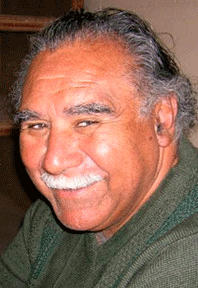 the main advocacy that we’re focusing on of course is still land rights. … Aboriginal people feel that they are still being deceived in terms of land.
Q&A: Aboriginal rights then and now SBS World News Q&A between Michael and SBS Online Producer Chiara Pazzano 28 JUN 2012, 40 years on, the last surviving founder of the Aboriginal Tent Embassy says Indigenous Australians are still being deceived over their land.
Michael Anderson is the leader of the Euahlayi people of northern New South Wales and the last surviving of the four founders of the Aboriginal Tent Embassy in Canberra.
Since that historic moment in 1972, he’s been a high-profile fighter for Aboriginal rights, but in a new interview with SBS for NAIDOC Week, he says while much has changed, Indigenous Australians are still
being deceived over their land……
Question: What are the main things that the Aboriginal Tent Embassy is advocating for now? Continue reading
“Stronger Futures” – discriminatory laws condemned by Aborigines and human rights groups
“We want an end to the intervention, we want to have control back over our lives, we want control back over our land and our communities.
Stronger Futures laws condemned after passing Senate ABC Radio Australia 29 June 2012 Indigenous and human rights groups have condemned the Senate’s rushed passing of new laws extending the intervention in remote Northern Territory areas.
It has been nearly five years since John Howard brought in the original policy.
Today’s passing of the Stronger Futures laws mean the current measures
will mostly continue for another 10 years. Continue reading
Australian govt really getting Aborigines off their homelands – it’s all about assimilation
Q&A: Aboriginal rights then and now SBS World News Q&A between Michael and SBS Online Producer Chiara Pazzano 28 JUN 2012“……..What’s happening now with the Northern Territory Homelands policy after the Federal Government injected money to keep these communities living on their lands?
Michael Anderson Well, it’s nice in words but in practice it’s not possible because the government is screaming about the fact that we can’t put the infrastructure into those places, into those isolated communities, which is a lot of bunkem.
You don’t have to put telegraph poles and electricity poles out to community, they can put up solar farms and
these solar farms will generate all the power they need for those communities. You know they can get out there and all they need is to connect water tanks to their homes, they can drill down to bores that are on a lot of those homelands and they will supply water. They can also set up horticultural programs in those communities where they can become self-sufficient.
This relocating is all about assimilation, nothing more…..
http://www.sbs.com.au/news/article/1663862/Q&A:-Aboriginal-rights-then-and-now
Australia’s Labor and Liberal parties unite to pass discriminatory law against Aborigines
Indigenous leader Dr Djiniyini Gondarra from East Arnhem Land and Rosalie Kunoth Monks from Central Australia have jointly declared a day of mourning for Aboriginal people following the passing of the laws.
 Former Family Court chief justice Alastair Nicholson said the government’s use of special measures could fail a High Court challenge. He said Ms Macklin’s response was ‘entirely predictable’ and maintained the consultation process had been a ‘travesty’.
Day of mourning for cont NT intervention Big Pond News, June 29, 2012 Aboriginal leaders will hold a day of mourning after federal parliament passed legislation to continue the Northern Territory intervention for another 10 years.
Labor and the opposition teamed up to pass the controversial laws in the Senate in the early hours of Friday morning after a marathon debate, which started early Thursday evening.
The laws were amended to reduce the review period from seven to three years. Attempts by the Greens to heavily amend the laws, including cutting the sunset clause from 10 to five years, were defeated.
The Greens accused the government of sneaking the laws through in the shadow of the media storm over asylum seekers on the final day before parliament’s winter break. Continue reading
Senate approves Aboriginal intervention by 10 years BY: PATRICIA KARVELAS The Australian June 29, 2012 The government’s radical 10-year extension of the Northern Territory intervention has passed the Senate after a long overnight debate….. Most measures in the Stronger Futures legislation will be in place for 10 years Continue reading
Aboriginal and solar firms join in outback solar projects
 Indigenous firm eyes solar power http://au.news.yahoo.com/thewest/business/a/-/wa/14049902/indigenous-firm-eyes-solar-power/ Peter Williams, The West Australian June 27, 2012, A new indigenous-controlled energy company has plans to build solar power systems in regional areas as big as any existing projects in Australia.
Carey Power, a joint venture between indigenous-owned mining services provider Carey Mining and Perth solar energy specialist Next Power, is targeting mine camps as well as remote communities and local governments.
Next Power chief executive and Carey Power executive director Kieron D’Arcy said Carey Power planned to install systems of up to 10 megawatts, equal to the size of the nation’s biggest solar plant being built in the Mid West. Continue reading
Aboriginal elder’s legal battle to stop giant uranium mine
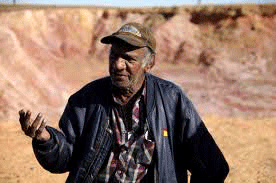 Elder continues fight against SA mine 9 News, 19 June 12, Aboriginal elder Kevin Buzzacott is pushing ahead with his bid to block the giant expansion of the Olympic Dam copper, uranium and gold mine in South Australia after an initial court decision went against him.
The Federal Court ruled in April that the commonwealth had properly taken into account the long-term impact of the mine, rejecting Mr Buzzacott’s argument that federal Environment Minister Tony Burke had not given enough consideration to the risks posed by storage of radioactive tailings at the site in SA’s north.
Mr Buzzacott has appealed against the court’s decision and a hearing has been scheduled for Thursday. Grounds for the appeal include an argument that Justice Anthony Besanko was mistaken in ruling that the minister did not need to consider existing conditions imposed by the state government on water extraction for the mine from the Great Artesian Basin.
The Arabunna elder also argues the approval was uncertain because so much of the project was left to be defined by studies and plans that were yet to be completed.
Mr Buzzacott said he was hoping for a “better result this time round”. “We hope that the three judges that will hear the appeal will seriously reconsider Justice Besanko’s interpretation of our argument,” he said in a statement……
New South Wales govt wants Aborigines to get into the uranium business
 Land council looks to far west uranium exploration, Margaret Paul,ABC News, June 15, 2012 The State Government is encouraging the Broken Hill Aboriginal Land Council to apply for uranium exploration licences.
Applications for exploration licences open yesterday, after the government lifted a decades-old ban on uranium exploration earlier this year.
The Energy Minister, Chris Hartcher, says it is very likely large deposits of uranium exist around Broken Hill…… He says he has met with the New South Wales Aboriginal Land Council, and encouraged them to formally apply for an exploration licence. Continue reading
Aboriginal opposition to “Stronger Futures” laws is growing
In recent weeks a group of traditional owners representing 8000 people in west, central and east Arnhem Land wrote to the prime minister and others calling for the scrapping of the Stronger Futures laws.
Northeast of Alice Springs, Alyawarr homeland communities – including Lake Nash, Utopia and Ampilatwatja, covering 3500 people – also pledged to fight the laws.
Indigenous groups angry at intervention 9 News Jun 5 2012, Xavier La Canna. Two more Aboriginal groups have joined calls for the federal government to abandon laws that would intensify intervention in indigenous communities.
On Tuesday the New South Wales Aboriginal Land Council (NSWALC) and the Tangentyere Council became the latest groups to speak out about the proposed Stronger Future laws, which are expected to pass the Senate this month…… Continue reading
Jeffrey Lee saved Koongarra land from uranium mining
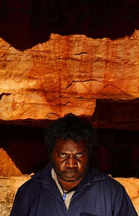 Kakadu victory as uranium mining battle ends http://au.finance.yahoo.com/news/kakadu-victory-uranium-mining-battle-051337975.html By Emma Masters | ABC 30 May 12, – Kakadu National Park in the Northern Territory is set to be expanded, with the inclusion of land previously earmarked for uranium mining. The Northern Land Council (NLC) has agreed for a 1,200 hectare parcel of land containing rich reserves of uranium to be incorporated in to the park.
It is considered the final step in a long battle that Aboriginal traditional owner Jeffrey Lee has waged to protect his land from mining.
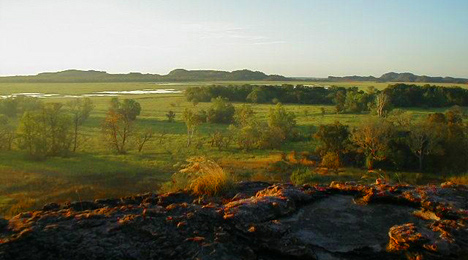
The uranium-rich mining lease Koongarra was excised from Kakadu when the conservation area was established in the late 1970s. The lease is held by French company Areva, which wanted to mine the area for uranium.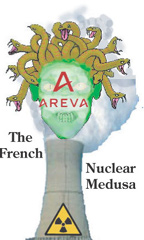
Two years ago, Mr Lee, the sole traditional owner of the land, called on the Federal Government to incorporate it in to Kakadu. The Government accepted the offer and referred the matter to the NLC. The NLC conducted consultations and its full council has agreed to endorse Mr Lee’s wishes.
The council and land trust will now move to enter an agreement with national parks to incorporate Koongarra into Kakadu. It is not known if Areva will attempt to take any action over the decisions. The existing Ranger uranium mine is located within the boundaries of Kakadu, about 180 kilometres south-east of Darwin.
1 This month

of the week – Australians for War Powers Reform (AWPR)
To see nuclear-related stories in greater depth and intensity
 Antinuclear