Dutton’s nuclear push will cost renewable jobs
by Charlie Joyce, https://australiainstitute.org.au/post/duttons-nuclear-push-will-cost-renewable-jobs/
As Australia’s federal election campaign has finally begun, opposition leader Peter Dutton’s proposal to spend hundreds of billions in public money to build seven nuclear power plants across the country has been carefully scrutinized.
The technological unfeasibility, staggering cost, and scant detail of the Coalition’s nuclear proposal have brought criticism from federal and state governments, the CSIRO, the Climate Council, the Electrical Trade Union (ETU), the Climate Change Authority, the Australia Institute, and independent energy experts.
The CSIRO, among others, has refuted the Coalition’s claim that nuclear will be cheaper than renewables; instead, they have shown the energy produced by Australian reactors would cost approximately eight times more than the same amount of energy produced by renewables. If this cost is passed on to consumers, the average household would pay $590 per year more on their power bill. Unsurprisingly, Australia Institute polling has found that fewer than one in twenty Australians (4%) are prepared to pay this nuclear premium.
The cost alone should be enough to bury this nuclear proposal. But it is also important to recognise how the Coalition’s plan will impact – and fail – workers.
False promises
The Coalition has proposed that large nuclear reactors would be built on the sites of five operational or recently decommissioned coal fired power stations: Liddell and Mount Piper in New South Wales, Tarong and Callide in Queensland, and Loy Yang in Victoria. In doing so, the Coalition has promised that nuclear energy would be a source of stable and plentiful work for the communities where coal-fired power plants are phasing down.
This is a false promise. Six coal fired power stations have already closed in the past decade, with 90% of Australia’s remaining coal-fired power stations set to close in the next decade. These communities are already undergoing structural adjustment, and they need new sources of employment now. But this is not what the Coalition’s plan delivers. The Coalition outlines that the first two nuclear reactors would not come online until the mid-2030s – more than a decade from now – while the remainder would be completed by 2050.
And energy and technology experts agree that even this timeline is impossible. On average, a nuclear reactor takes 9.4 years just to build in countries with established and capable nuclear industries. Former Australian Chief Scientist Alan Finkel has estimated that it would take until the mid-2040s at the earliest for Australia to build an operational nuclear reactor. Moreover, analysis from the Institute for Energy, Economic & Financial Analysis (IEEFA) has found that, in economies comparable to Australia’s, every single nuclear reactor project experienced multi-year delays and cost blowouts of up to three and a half times over budget. It is hard to see how Australia, which lacks the experienced workforce, training and research base, or regulatory framework, would buck this trend.
Lost jobs
While the Coalition’s nuclear plan would not bring jobs to the communities that need them, it might have the real effect of depressing investment in renewables.
Renewable energy already generates approximately 40% of Australia’s energy and is by far the cheapest form of electricity. Renewable energy industries already account for the employment of tens of thousands of workers, and Jobs and Skills Australia estimates that approximately 240,000 new workers will be required in industries associated with clean energy by 2030.
But this requires ongoing and expanding investment in renewables, which the Coalition’s nuclear policy is likely to derail. The Clean Energy Council has estimated that by capping renewable energy to 54% of total use (as the Coalition’s modelling has assumed), 29GW of renewable energy generation projects would not be built – squandering an expected 37,700 full-time-equivalent construction jobs and 5,000 ongoing jobs in operations and maintenance. By limiting renewables investment, prolonging fossil fuel usage, and diverting investment towards nuclear energy, the full employment opportunities of the renewable energy transition are lost.
Scarce and dangerous work
If the Coalition’s nuclear plan does come to fruition it will hardly create any ongoing jobs for the communities that have undergone structural readjustment. According to analysis from the Nuclear Energy Agency, while the peak period of construction of the average 1GW nuclear power plant can demand up to 3,500 workers, ongoing operations and maintenance will only require about 400 workers – with only a quarter of these being onsite blue-collar jobs that might provide work for the people who will have lost jobs with the closure of coal-fired power stations. Most jobs will be in administration, regulatory compliance, energy, marketing, sales, science and emergency personnel – and many of them are likely to be located away from the nuclear facility itself.
Disturbingly, any jobs on-site may put the health of workers at risk. Recent analysis of multiple studies of the health impacts of nuclear power plant employment across multiple countries found that workers have a significantly higher risk of mesothelioma and circulatory disease due to exposure to radiation. Nearby residents also exhibit a significantly higher risks of cancer, with children under the age of five at particular risk. And this does not even factor in the risk of sudden plant failure and reactor meltdown on workers and communities – a risk sharpened by the Coalition’s plan for these reactors to be built on geological fault lines with heightened earthquake risk.
Australian workers have much to gain from the renewable energy transition, including cheaper power, new clean technology industries, and hundreds of thousands of new jobs. The Coalition’s nuclear plan only brings false promises, lost jobs, and – if the plan comes to fruition – few jobs and potentially dangerous work.
Going nuclear will decimate jobs in regions first, stop billions in new investment.
Cancelling new transmission projects will decimate opportunities for electrical workers and apprentices in exactly the regional areas where opportunities are needed, says ETU national secretary Michael Wright
Rachel Williamson, Apr 10, 2025 https://reneweconomy.com.au/going-nuclear-will-decimate-jobs-in-regions-first-stop-billions-in-new-investment/
Regional areas will suffer the most from job and investment losses stemming from the Coalition’s energy promises, according to analyses from alarmed energy sector stakeholders.
The Coalition’s push for nuclear, a policy that was announced with much fanfare in December but has largely disappeared from the election hustings, will result in the loss of $58 billion in direct investment in renewable and storage, and cause the loss of 42,000 full time jobs, the Clean Energy Council says.
Opposition leader Peter Dutton’s Budget reply promised to abolish the $19 billion Rewiring the Nation fund will also cause the immediate loss of jobs, the Electrical Trades Union (ETU) says.
The ETU analysis suggests 2000 electrical worker jobs will disappear this year if work stops on major network projects, rising to 7000 job losses in 2029 when building work on new transmission is expected to peak.
The costs are the direct impact from the Coalition’s promise to build seven nuclear reactors across Australia.
In December, it outlined a vision of small modular reactors becoming operational by a hugely ambitious timeline 2035 – notwithstanding the fact that these do not exist as commercial technology yet – and predicted the first large reactor operational by 2037.
But that vision requires renewable generation taking up no more than54 per cent of the total energy supply in 2050 – compared to Labor’s target of 82 per cent by 2030 – and cutting funding for new transmission by 79 per cent to allow room both in the grid and budget, according to modelling by think tank Frontier Economics.
At what cost?
The overall cost of abruptly changing the country’s energy course will be high, according to numbers crunched in a Clean Energy Council analysis.
Their data shows the size of the loss in the years before 2030 alone, and the size and longevity of the damage to investment decision making.
“The energy sector doesn’t plan based on three-to-four-year election cycles. These are 30–40-year investment decisions and investors need to see continued confidence in the sector through stable, long-term policy settings to keep investing in Australia,” says CEC CEO Kane Thornton.
“We need the right policy settings in place and both government and industry working together to accelerate the delivery of cheap, reliable and modern clean energy that works for Australia.”
Renewable generation is set to reach 54 per cent of the National Energy Market (NEM) by 2028 from projects that are being built or have financial backing today.
Preventing renewable energy generation from growing past that level would mean cancelling almost 29 gigawatts (GW) of large scale solar and wind currently proposed or in planning and the $58 billion of capital investment they will need.
Some 37,7000 construction jobs per annum won’t happen, nor will 5000 jobs annually in operations and maintenance, just between 2026 and 2030.
Regional areas will miss out on $68 billion of economic activity and landholders will miss out on $2.7-3.4 billion in payments over a 25-year project life cycle.
Communities will lose a further $696 million in direct contributions from renewable energy projects.
And to top it off, household bills will be $449 higher, according to the Clean Energy Council NEM bill analysis in March of the impact of going nuclear.
Regions will hurt the most
While the nuclear proposal is seen by many analysts as a smokescreen for keeping decrepit coal plants running longer, the immediate ramifications will hit hardest and immediately in the regions.
Renewable energy projects are delivering jobs and financial investment in country areas long neglected by national and state budgets, says Renew Economy‘s David Leitch.
“This is the greatest economic opportunity the regions will ever face in Australia, at least in the last 100 years, and probably in the next 100 years,” he said during a Smart Energy Conference talk on Wednesday.
Cancelling new transmission projects will decimate opportunities for electrical workers and apprentices in exactly the regional areas where opportunities are needed, says ETU national secretary Michael Wright.
“Peter Dutton is planning a jobs bloodbath for the electrical industry,” he said in a statement.
“Cancelling new transmission construction] deprives nearly 12,000 electrical workers, their communities and their families of a living across the country.”
Its analysis suggests that staying the course under the Australian Energy Market Operator’s (AEMO) Step Change plan would lead to almost 43,000 new jobs by 2050. Dutton’s energy plan would lead to an aggregate of almost 25,000 job cuts.
Other jobs that will disappear include construction workers and truck drivers, due to halting new renewable projects in order to meet the 54 per cent cap, says Thornton.
Capping renewables at 54 per cent would not only see Australia miss out on billions of dollars of capital investment and economic growth, but thousands of jobs… and billions of dollars in community benefits would be left on the table,” he said in a statement.
“We need all sides of politics to embrace this private-sector investment into regional Australia and the thousands of well-paid jobs this industry generates every year.
“These are real dollars for farmers, real dollars for country towns and real blue-collar jobs that pay Australians’ bills.”
Australian navy advertises nuclear submarine job with $120,000 salary and ‘no experience’ needed
Defence outlines long-term strategy to staff US-built Virginia-class submarines expected in 2030s as part of Aukus deal.
Henry Belot, Guardian, 24 Dec 24
The Australian Navy is offering high school graduates “with no experience at all” up to $120,000 to become nuclear submarine officers who will eventually manage nuclear reactors and weapons systems.
The recruitment drive has been launched despite Defence not being expected to receive a Virginia-class submarine from the US as part of the Aukus deal until at least the early 2030s and amid warnings of cost blowouts and delays.
A navy job ad targets people who may have “recently finished school or are currently studying” with the promise of eventually “driving the vessel and charting its position”.
“Your training will first equip you with technical expertise in nuclear propulsion, the platform, and its equipment,” the ad said. “You will then move into your submarine qualification and oversee day-to-day operations, and you could one day lead the entire crew as commanding officer.”
A Defence spokesperson said the hiring drive was part of a long-term strategy to ensure it had enough specialist staff to deploy the submarine once acquired.
“This is to ensure we have the right mix of candidates and to ensure there is time to generate a sustainable career pathway,” the spokesperson said.
Once accepted, an officer would undergo 12 months of nuclear training in the US along with three months of basic submarine and warfare courses. The officers would then be posted to a seagoing submarine for further training.
Nuclear submarine technicians would receive 18 months of training in the US including six months of nuclear theory and 12 months of practical training on existing vessels. The technicians would also be posted to seagoing submarines…
The job ad also offers recruits “travel opportunities, job security, incremental salary increases as you progress through training and ranks, chef made meals at sea, social and fitness facilities, balance of shore and sea postings [and a] variety of allowances”…………
Defence has previously struggled to recruit enough personnel. In a briefing to Marles in 2022, obtained under freedom of information laws, Defence warned: “The last year has seen lower recruiting achievement and higher separation rates, which have resulted in the ADF and [Department of Defence] workforce size being below approved levels.”
The federal government also funded a new training centre at HMAS Stirling, a Royal Australian Navy base in Western Australia, to train a local workforce to deploy the Virginia-class submarines.
The US plans to sell Australia at least three and potentially five nuclear-powered Virginia-class submarines in the 2030s, before Australian-built submarines enter service in the 2040s.
In the lead-up of the acquisitions, from 2027 at the earliest, there are plans to establish a rotational presence of one Royal Navy Astute-class submarine and up to four US navy Virginia-class submarines at HMAS Stirling. https://www.theguardian.com/world/2024/dec/24/australia-navy-nuclear-submarine-job-salary
Union slams “false hope” in nuclear push, warns energy jobs at risk

Marion Rae, Oct 23, 2024, https://reneweconomy.com.au/union-slams-false-hope-in-nuclear-push-warns-energy-jobs-at-risk/
Queensland’s sparkies have been warned of the “huge risk” to thousands of jobs in renewable energy posed by nuclear plans.
The Electrical Trades Union told electricians and apprentices in a mass mailout on Wednesday that nuclear energy was a “radioactive pipe dream” that could not replace coal-fired power stations.
National policy director Katie Hepworth says the “false hope” offered by the LNP on the premise that coal-powered stations can keep running is “letting down coal communities”.
“The ETU members, our maintenance workers, who work in these power stations know that they’re being held together by all the will in the world, but they know they can’t hold on forever,” Dr Hepworth told AAP.
“There is a huge risk that if what they’re being given is a fantasy of a nuclear power station without an entire industrial plan and a renewable plan, that they’re just going to be thrown on the scrap heap again.”
Apprentices are among those voting for the first time on Saturday when Queensland goes to the polls.
Dr Hepworth said the ETU was trying to give them a vision of the economy they were stepping into as the next generation of workers.
She said there was “huge excitement” among apprentices in the type of work they would be able to do, such as working on EVs, installing appliances and building clean energy generation.
“By calling into question that renewable transition, we’re really putting all of that at risk,” Dr Hepworth said.
The union’s Nuclear Energy Report for 2024 found nuclear reactors would be more expensive, could not be built before coal exits the electricity grid, and were “simply unnecessary” given abundant renewable energy sources.
The report authored by Dr Hepworth found nuclear power would be the most expensive form of energy for Australia, at 1.5 to three times the cost per kilowatt hour of coal-fired electricity and four to eight times of solar.
Small modular reactors, still unproven on a commercial scale, would be even more costly, the CSIRO has estimated.
The Smart Energy Council has calculated the federal opposition’s proposed fleet of seven nuclear reactors at up to $600 billion, for a mere four per cent of energy supply in the grid.
Nor can nuclear power be considered a clean source of energy because radioactive waste management was “costly, complex, contested and unresolved” in Australia and globally, Dr Hepworth said.
Even countries with existing nuclear capability are choosing renewables over nuclear, including China, because of the speed of deployment, and because the cost curve is low and continues to fall.
The federal opposition’s nationwide nuclear plan, includes two Queensland sites for nuclear generation – the Callide and Tarong coal-fired power stations.
“The Queensland LNP is committed to affordable, reliable and sustainable power,” an LNP spokeswoman told AAP.
“Keeping the lights on at Callide with our Electricity Maintenance Guarantee will ensure power bills are affordable, reliable and sustainable until alternatives are ready to power Queensland,” she said.
Union boss Peter Ong said massive changes to the energy system were already affecting workers and the union had been working hard to move them into well-paid, secure jobs.
“Peter Dutton’s nuclear fantasy will throw ETU members’ jobs in the gutter,” he said.
Unanimous trade union opposition to Dutton’s nuclear plans
Jim Green, 1 July 24
Here’s a list of unions that endorsed a 2019 statement opposing nuclear power in Australia:
Australian Council of Trade Unions, Tasmanian Unions, Unions ACT, Unions WA, Unions SA, Unions NT, Victorian Trades Hall Council, Australian Education Union, Australian Manufacturing Workers Union, Australian Nursing and Midwifery Federation, Australian Services Union, Communication Workers Union, Electrical Trades Union, Independent Education Union (Vic – Tas), Maritime Union of Australia, National Union of Workers, United Voice, and the United Firefighters Union.
And the AWU and MEU are opposing Dutton’s nuclear plans (see below)… the only two unions previously supporting nuclear power.
Seems there is now 100% trade union opposition to nuclear power in Australia?
Undermining the frequent claim from Dutton and Ted O’Brien that ‘high energy IQ’ workers at coal plants will support nuclear power.
Two Labor-aligned unions accused of ‘backflipping’ on their ‘long held’ support for nuclear energy after Coalition policy announcement
Two Labor-aligned unions have been slammed for “backflipping” on their “long held” support for nuclear energy after they attacked the opposition’s nuclear policy despite recently calling on state and federal governments to back nuclear.
Two Labor-aligned unions accused of ‘backflipping’ on their ‘long held’ support for nuclear energy after Coalition policy announcement
Two Labor-aligned unions have been slammed for “backflipping” on their “long held” support for nuclear energy after they attacked the opposition’s nuclear policy despite recently calling on state and federal governments to back nuclear.
Sky News, 1 July 24, , 2024
Two Labor-aligned unions have been accused of “backflipping” on their “long-held” support for nuclear energy, after they attacked the Coalition’s proposal to build nuclear plants on the sites of aging coal plants.
Both the Australian Workers Union and the Mining and Energy Union (formerly the CFMEU’s mining and energy division) have long records of supporting nuclear energy, with the head of the AWU lobbying the government to lift the ban on nuclear as recently as December last year.
Despite this, both the AWU and MEU condemned the Coalition’s nuclear policy after the opposition revealed the seven sites where it is proposing to build nuclear reactors to replace aging coal-fired power plants……..
While neither the AWU or MEU reacted to the policy with images of toxic wastelands, both unions were quick to attack the policy.
The AWU hit out at the Coalition’s plans in a social media message posted just hours after the announcement, describing it as a “half-baked fantasy” that will “slam the brakes on our energy transition and put our industries in peril”.
“The Coalition must give up its nuclear dreaming and back the Future Gas Strategy,” AWU national secretary Paul Farrow was quoted as saying in the post.
In follow up posts the powerful union – which is aligned with Labor’s right faction – followed up with posts stating that this mean “investing now in firmed renewables backed up with gas.”
“It doesn’t mean sitting on our hands for decades to pay more for nuclear if and when it finally arrives,” the AWU post said.
“This proposal has no interest in solving real challenges faced by industry and workers today. Energy is not a political football: it’s our livelihoods. We deserve so much better.”………………………………….
The MEU also attacked the Coalition’s nuclear policy, despite years of advocating for nuclear as a solution to impending job losses from the closure of coal-fired power plants.
In a media release put out on June 19, the MEU described it as a “distraction” that would fail to provide jobs for workers in coal-fired plants before they shut down.
“Now is not the time for distractions. We need to be acting to deliver an orderly transition that focuses on jobs, economic activity in affected regions and positive social outcomes for affected workers while we still have the chance,” MEU General Secretary Grahame Kelly said.
Nuclear industry workers face significant, inevitable and unavoidable radiation health risks
By Tony Webb, 24 June 24, https://johnmenadue.com/nuclear-industry-workers-face-significant-inevitable-and-unavoidable-radiation-health-risks/
Nuclear industry workers face significant, inevitable and largely unavoidable radiation health risks which have so far not been addressed in the debate about Australia possibly buying into this industry.
In addition to the important arguments against the coalition policy that currently proposes building seven nuclear power plants to replace closing coal fired generators, notably that such:
will be likely cost about twice that of firmed renewable generation and take at least 15 years to build – and this in the context where most nuclear plant construction worldwide appears to routinely involve a doubling of both cost and time to build
– and so are dangerously irrelevant to meeting the existential challenge to reduce carbon and methane emissions that are driving climate change;
will require legislative changes at state and federal levels that are to say the least unlikely to be achieved;ignores the challenge of developing workforce skills to manage this technology;
ignores the as yet intractable if not insoluble problem of managing long lived nuclear wastes;
and poses significant risks to the public in the event of nuclear accidents as witnessed in the USA, Ukraine/former USSR, and Japan;
There is also an inevitable and unavoidable risk to workers in the industry and public ‘downwind’ from such reactors from routine exposure to ionising radiation.
This last has to date received little attention and whenever raised results in dismissive but misleading arguments from the nuclear industry advocates, notably that any such exposures to individuals are small and pose little, indeed ‘acceptable’ health risks compared to other risks faced in day to day living and working. Tackling this misinformation as part of the campaign has much to offer in convincing the nuclear target communities and the workers in these that might be seduced by prospects of employment in these facilities that the risks they face are far from insignificant – that, as a community they will face an increase in the incidence of fatal and ‘treatable / curable’ cancers, an increase in other, notably cardio vascular diseases and increased risk of genetic damage affecting children and future generations.
Allow me to introduce myself. I have been an active campaigner on the health effects of ionising radiation since the late 1970s. With two colleagues in 1978 I founded the UK based Radiation and Health Information Service that highlighted the evidence showing the risk estimates from radiation exposure, on which the national and international occupational and public exposure limits were based, grossly under-represented the actual risk.
This radiation-health argument was developed as part of a national campaign that resulted in a significant change of the, until then, pro-nuclear policies of UK unions with members in the industry and a review of Trade Union Congress policy in 1979. It was also an integral part of the union-led national Anti-Nuclear Campaign opposing the Thatcher government’s nuclear expansion – revealed in leaked cabinet minutes as part of the government strategy for undermining the power of the unions, particularly the National Union of Mineworkers (NUM), the Transport and General Workers Union, (T&GWU) and the General and Municipal, Boilermakers’ and Allied Trades union (GMBATU). In late 1980 I took this work on Occupational Radiation risks to the USA establishing the US Radiation and Health Labor Project, auspiced by the Foundation for National Progress / Mother Jones Magazine, that built union support across the country for AFL-CIO policy calling for a reduction in the occupational exposure limit.
Subsequently I worked as a consultant to the Canadian union (CPSU – local 2000) representing workers in the nuclear power industry and built a Canadian coalition of five Unions representing workers exposed to radiation on the job. Linking these North American union demands with those of UK and European unions (also similar concerns from unions in Australia following a 1988 organising tour) reinforced pressures from within the scientific community – notably the US Biological Effects of Ionising Radiation (BEIR) committee.
These sustained pressures led eventually to the International Commission on Radiological Protection (ICRP) reducing the recommended limits for permissible occupational (and public) exposures in 1991. Despite evidence that would have justified a ten-fold reduction (from the 50 mSv annual occupational limit to a limit of 5 mSv) the ICRP limit was only reduced by 40% (to 20 mSv a year but with individual exposures still permitted to 50 mSv in any year so long as the average over 5 years was no higher than 20 mSv).
Since then, a large-scale study of UK, EU, and US nuclear industry workers has shown radiation-induced cancer risks to be on average 2.6 times higher than the estimates used to set the ICRP limits. To put it in simple if statistical terms, the lifetime cancer risk for a worker exposed to the permissible annual dose of radiation over say a 25-year career would be of the order of 6.5% higher than normal. To this should be added the significant health effects of non-fatal cancers, an approximate doubling of the normal rate of cardio-vascular disease and a not insignificant increase in genetic damage to workers children and future generations. Nuclear industry workers face significant, inevitable and largely unavoidable radiation health risks which have so far not been addressed in the debate about Australia possibly buying into this industry.
What needs to be more clearly understood however is that the concern is not just in relation to risks faced by individuals exposed on the job, or from relatively small amounts of radiation released from routine operations of nuclear plants. What is of far greater public concern is the impact of the collective exposure. What is not fully appreciated is that there is simply no safe level of exposure – any dose however small may be the one that causes damage at cellular level in the human body that may show up years later as cancer, genetic damage or some other health effect. it is the total/collective dose that will determine the number of such health effects. Spreading the dose over a larger population will reduce the risk to any individual but not the total health effects. Indeed, it may increase it. An individual affected by cancer can only die once.
These arguments carry weight. They formed a significant part if the discussions within the 2016 South Australian government’s ‘Citizens Jury’ convened to consider proposals to import and store around a third of the world’s nuclear wastes. The concern about radiation and health received special note in the report of this jury to the SA Premier that a two-thirds majority said ‘no – under any circumstances’ to the radioactive waste proposal. The issues can also form the basis for increased collaboration between the trade union, environment, medical reform and public health movements as was the case in the mid 1990s when UK, Labour MP Frank Cook convened a Radiation Roundtable that brought together representatives of these constituencies.
So, within the current debate about a possible Australian Nuclear Power program – alongside the arguments already made about its excessive cost, extended construction time frame, ill-fit within an essential decentralised renewable energy program, risks of major accidents, and the intractable problems of multi-generation waste management, can we please add this concern over health effects that will inevitably result from occupational and public exposures to radiation. Can we particularly focus the attention of trade unions and their members in the seven former coal-fired generation-dependent communities on the effect of these exposures on health of workers who might seek to be employed in operating these facilities and on the health of their families, neighbours, and future generations.
A key demand from unions should be that the occupational limit for annual radiation exposures cbe reduced from the current ICRP level of 20 mSv to a maximum of 5 mSv a year with a lifetime limit of 50 mSV. This revision of standards would put real pressure on the nuclear industry – the current uranium mining and any future enrichment, fuel fabrication, nuclear generation, fuel reprocessing, and waste management – to keep such exposures as low as possible. In the unlikely event of any of the reactor proposals getting the go-ahead there should be baseline monitoring of the health of the community and any workers employed so that any detrimental increase in health effects can be detected early and possibly remediated in the future.
Nuclear will cost Queensland jobs

JOINT STATEMENT Premier The Honourable Steven Miles, Minister for Energy and Clean Economy Jobs, The Honourable Mick de Brenni, 13 May, 2024 https://statements.qld.gov.au/statements/100305
- The LNP backed “Nuclear for Climate Australia” has identified multiple sites in North Queensland for nuclear reactors.
- This would see nuclear reactors in Townsville, the Sunshine Coast, Rockhampton, Brisbane Valley, Toowoomba, the Darling Downs and more.
- LNP going nuclear risks Copperstring jobs, critical minerals boom for Townsville to Mount Isa
- Labor backs clean and renewable energy not nuclear.
- The Miles Government is already delivering jobs and clean energy through the Queensland Energy and Jobs Plan and development of the SuperGrid.
- Those jobs would be at risk with the LNP’s nuclear plans.
The Miles Government is focussing on clean energy jobs and has a working plan for a safe and responsible transition to renewable energy, that will protect existing jobs and create new ones.
Queenslanders from Townsville to Mt Isa are at the heart of Labor’s leading plan for a clean economy future.
Our plan to build CopperString will provide more than 800 jobs during construction and will unlock the $500 billion North West Minerals Province, by linking it with Hughenden and up to 6,000 MW of renewable energy.
This is the nation’s largest expansion to the power grid and it is paid for by progressive coal royalties.
By putting their fossil fuel friends before Queensland’s transition, the LNP is risking thousands of jobs and return to high unemployment.
The LNP’s nuclear option is an LNP recipe for a cost-of-living meltdown. Nuclear is the most expensive option. It is 5 times the price of renewables.
International examples show it will take around 19 years to build a nuclear power station.
This is decades too late for Townsville employers who need clean, affordable energy now to remain competitive.
Nuclear is neither clean nor renewable. And it’s illegal in both Queensland and Australia.
The LNP backed proposal targets nuclear power stations in Townsville, Gladstone, Sunshine Coast, Toowoomba, Brisbane Valley, Ipswich, Darling Downs, the Western Downs, Rockhampton, and Callide.
Quotes attributable to Premier Steven Miles:
“The LNP are proposing nuclear reactors right across this state. Up to three near Townsville, while they have earmarked locations on the Sunshine Coast, Toowoomba, Brisbane Valley and Ipswich.
“What we know about those nuclear reactors is that they will be much more expensive. As much as five times more expensive for your household power bills.
“We also know that as a result of those reactors, future generations of Queenslanders will have to manage nuclear waste forever.
“That’s the LNP’s plan. Higher prices and nuclear waste; putting our waterways, our environment and our beautiful state at risk.”
Quotes attributable to Energy Minister Mick de Brenni:
“Everyone from Townsville Enterprise to the Queensland Resources Council backs Labor’s plan on renewable energy, because Copperstring means jobs and long-term prosperity for the region.
“The only exception is the LNP, who voted in Parliament to oppose the Energy and Jobs Plan, because they are opposed to renewables and public ownership.
“It seems that everybody in Townsville wants local manufacturing and jobs here, except David Crisafulli, who will not stand up to Peter Dutton and Ted O’Brien and actually back Townsville jobs.
“We know how risky and expensive nuclear is and we know David Crisafulli deserted North Queensland for the glitter strip on the Gold Coast, and now he’s setting Townsville up for an unemployment and cost of living meltdown.
“North Queensland already has the world’s best plan to protect local jobs through the transition, so why would the LNP turn its back on the Queensland Energy and Jobs Plan and Copperstring, just so they can cosy up to their big donors?
“Labor is backing renewable energy because it protects jobs in North Queensland, from Townsville to Mt Isa and beyond, and Labor is not prepared to risk those jobs.”
Quotes attributable To Thuringowa MP Aaron Harper:
“I do not want to see a nuclear reactor in Townsville and anywhere near the banks of the much loved and well used Ross River.
“Nobody in Thuringowa and the Upper Ross will accept nuclear waste travelling down Riverway Drive.
“We know the LNP back nuclear energy and are against renewable energy.
“We know that David Crisafulli and the state LNP are too weak to stand up to Peter Dutton’s nuclear agenda.
“There are serious questions to answer from the LNP about their connections to Nuclear for Climate’s plan for nuclear power in Townsville.
“Peter Dutton and David Crisafulli’s nuclear agenda pose an unacceptable risk to Townsville.”
Background information:
- Nuclear for Climate Australia, which has the backing of the Coalition, has identified multiple sites in Queensland as ideal spots to host nuclear reactors.
- Nuclear power is currently illegal in Queensland.
- Miles Government is delivering cheaper, cleaner, reliable power to develop the North West Minerals Province.
- Nation’s largest expansion to the power grid – SuperGrid, not a MiniGrid.
- CopperString will connect nation’s largest renewable energy zone at Hughenden and power a critical minerals industry that will supply world’s transition
- CopperString will be 100% publicly owned
Fast Facts
- Nuclear power production is prohibited under two pieces of legislation:
- Australian Radiation Protection and Nuclear Safety Act 1998
- Environment Protection and Biodiversity Conservation Act 1999
- CSIRO estimate the capital cost of small modular reactors in 2030 to be $15,959/kW, compared to wind at $2105/kW and solar at $1134/kW.
Critical worker shortage menaces nuclear-powered submarine workforce

INDUSTRY, 29 APRIL 2024, By: Liam Garman
The document, sourced through a freedom of information request from former independent senator for South Australia Rex Patrick, examined the civilian nuclear workforce required to maintain a nuclear reactor plant.
According to the document, Australia will require over 75,000 additional electricians, construction managers, metal machinists and welders in its “feeder workforce”, a term for Australia’s pool of workers that are eligible to pursue a career in the submarine workforce.
In particular, by financial year 2030–2031, Australia will require:
- An additional 33,553 electricians;
- An additional 19,364 construction managers;
- An additional 11,753 metal machinists;
- An additional 12,280 welders.
The figures were assessed by calculating the difference between the projected demand and supply of skilled workers.
The document warns that the total shortfall will be even larger than the initial figures, confirming that the totals do not include additional demand produced by the nuclear-powered submarine industry.
The report raises an alarm for policymakers, noting that Australia has neither a skilled nuclear-powered workforce to leverage for the construction and maintenance of nuclear-powered submarines, nor does it have a big enough pool of eligible candidates.
“There is no current Australian talent pool with the required mix of qualifications, skills, experience, and behaviours to fulfil the civilian nuclear workforce roles,” the document read……………………………………………………………
Defence may also face additional constraints with the decision to build the SSN-AUKUS at Osborne in South Australia and maintain the capability in Henderson in Western Australia.
The research found the greatest feeder workforce is located in NSW, followed by Victoria and Queensland, while the state with the fewest skills is South Australia. https://www.defenceconnect.com.au/industry/13993-critical-worker-shortage-menaces-nuclear-powered-submarine-workforce
Unions question Labor over AUKUS nuclear submarines
Canberra Times, By Tess Ikonomou, March 28 2023
Australia’s union movement has criticised plans to acquire nuclear-powered submarines under the AUKUS partnership, declaring support for a “nuclear-free defence policy”.
Prime Minister Anthony Albanese earlier this month revealed the $368 billion pathway Australia will take to get the boats under a security pact with the US and UK.
ACTU president Michele O’Neil said unions were seeking more detail from the government so they could discuss what this meant for workers in worried communities.
“The ACTU has a long-standing policy of opposition to nuclear power, nuclear waste and proliferation,” she told the National Press Club in Canberra on Tuesday.
“We also have a long-standing policy position that supports a nuclear-free defence policy.”
Under the nuclear submarine program, US and UK boats will start rotating through Western Australia from as early as 2027.
Ms O’Neil said there had not been the chance to talk through the acquisition of nuclear-powered submarines due to a lack of information.
“There are safety issues for us,” she said…………………………….. https://www.canberratimes.com.au/story/8139050/unions-question-labor-over-aukus-nuclear-submarines/
‘We need a plan B’: Unions have ‘deep concerns’ about AUKUS pact.
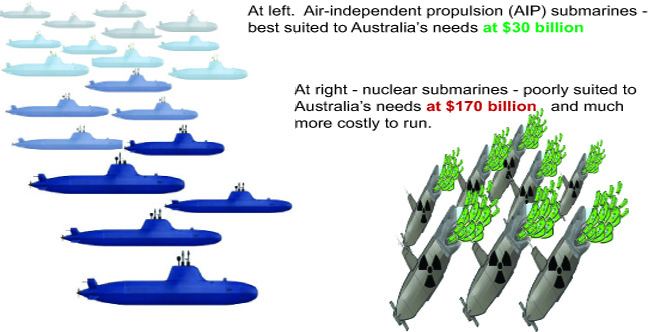
The shipbuilding federation – which represents unions including the AMWU, Electrical Trades Union and the Australian Workers Union – is urging the government to build an additional six conventionally powered submarines in Australia before the arrival of a fleet of nuclear-powered submarines.
The shipbuilding federation – which represents unions including the AMWU, Electrical Trades Union and the Australian Workers Union – is urging the government to build an additional six conventionally powered submarines in Australia before the arrival of a fleet of nuclear-powered submarines.
Matthew Knott, February 7, 2023 https://www.theage.com.au/politics/federal/we-need-a-plan-b-unions-have-deep-concerns-about-aukus-pact-20230206-p5ciaf.html
Labor’s traditional union allies say they harbour deep concerns about Australia’s plan to acquire a fleet of nuclear-powered submarines and fear the AUKUS pact will not deliver the promised bonanza of Australian manufacturing jobs.
The federal government is preparing to announce the details of its nuclear-powered submarine plan in March, with preparation under way for Prime Minister Anthony Albanese to travel to Washington for a possible joint press conference with US President Joe Biden and British Prime Minister Rishi Sunak
During a visit to Washington over the weekend, Defence Minister Richard Marles said AUKUS would create “thousands” of new local jobs and expressed confidence Australia would not be left with a capability gap between the retirement of the current Collins class fleet and the arrival of nuclear-powered vessels.
Despite Marles’ assurances, Australian Shipbuilding Federation of Unions national convener Glenn Thompson said he remained “apprehensive” about a possible capability gap and urged the government to develop a backup plan in case AUKUS falls over.
“It’s one thing to say that this is going to create thousands of jobs, but you actually have to be able to build something well in advance of whatever AUKUS comes up with,” said Thompson, an assistant national secretary of the Australian Manufacturing Workers Union (AMWU).
“It’s of great concern to us about where the workforce is coming from and how are we addressing the issue of Australia’s sovereignty.”
Thompson noted there had been no pledge from the government that AUKUS would create as many local jobs as the 5000 positions promised under the cancelled contract with French company Naval Group.
The shipbuilding federation – which represents unions including the AMWU, Electrical Trades Union and the Australian Workers Union – is urging the government to build an additional six conventionally powered submarines in Australia before the arrival of a fleet of nuclear-powered submarines.
Marles last week stated definitively that the government “has no plans for any conventionally powered interim submarine capability, as we move towards gaining the nuclear-powered submarine capability”. Senior defence figures, including in the Navy, have fiercely resisted the idea of an interim conventional submarine.
“There’s a whole lot of uncertainties,” Thompson said of the AUKUS pact. “I just think from a capability perspective the country needs to have a plan B.”
Thompson said he feared local construction of the nuclear-powered submarines would not begin until the late 2040s or early 2050s, a decade after the Collins-class vessels begin being decommissioned.
“It’s very rare that these defence projects deliver on time,” he said. “By the mid-2040s you could have two-thirds of the existing fleet retired, so there could be a substantial capability gap.”
Marles told The Sydney Morning Herald and The Age last month that AUKUS would be “a genuine three-country collaboration”, raising expectations Australia will acquire a joint next-generation submarine model combining American and British technology.

While not specifying what proportion of the submarines would be built in Australia, Marles said the Osborne Naval Shipyard in Adelaide would play a major role in the project.
“We must develop an industrial capability in Australia,” he said. “That’s the only way this can work, and that’s what will be expected of us by both the UK and the US.”
Marles told parliament on Monday the government was “on track” to make its AUKUS announcement in the very near future.
He said while there had been a “very real potential of a capability gap opening up with our submarines, I am confident that the pathway we announced will provide a solution to this”.
Unions NSW opposes nuclear powered submarines and the AUKUS treaty.
Paul Keating ,Branch Secretary, Maritime Union of Australia, Sydney Branch, 26 Apr 22,
Unions NSW declares its total opposition to the reckless announcement by Scott Morrison that Australia would be developing nuclear-powered submarines as part of a military alliance with the US and UK.
At a time when Morrison should have been pursuing vaccination supplies and providing maximum support to our health system and millions of people in lockdown, he has been pursuing secret military deals. The deal will continue to escalate unnecessary conflict with China. Workers have already been impacted with seafarers stranded on coal ships and some trades shut down.
Extraordinary sums of money have been wasted with the previous submarine contract scrapped only five years after it was signed. That contract was worth $90 billion – nuclear submarines will cost much more.
Only six countries in the world have nuclear submarines, and they all have nuclear power stations. Advocates for nuclear power and nuclear weapons have been emboldened. The submarines will use highly enriched uranium ideal for nuclear weapons.
The Australian government has repeatedly tried to set up nuclear waste dumps on First Nations land. This will intensify that pressure.
The billions wasted on submarines should be spent on:
Building an Australian strategic shipping fleet in Adelaide that could operate in cabotage and international trades;
· Building renewable energy and offshore wind turbines to ensure we prevent global heating from exceeding 1.5°C;
· Raising Jobseeker payments to well above poverty levels;
· Pay increases for health workers and investments in our health systems;
· Pay increases for teachers and investments in public schools to make them covid-safe;
· Investing in firefighting capacity and ensuring we are ready for the next bushfire season.
Workers have no interest in war with China or any other country. Every effort should be made to pursue peaceful relations.
Unions NSW stands in solidarity with workers in all countries in opposing war and wasteful environmentally harmful military spending.
We pledge our opposition to oppose the development of nuclear submarines in Australia, and the development of any other nuclear industry.
Will Australia’s nuclear submarines end up being built overseas?
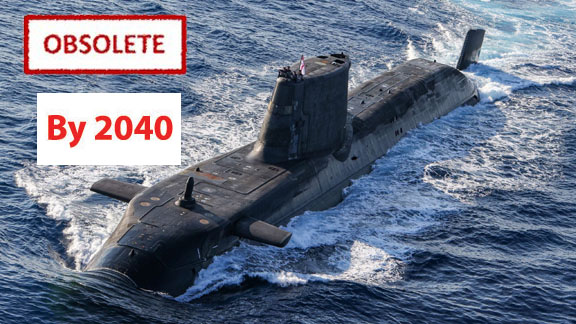
ABC, 7.30 / By Angelique Donnellan, 18 Apr 22, In 1938, wharfies at Port Kembla, south of Sydney refused to load smelted iron ore bound for military production in Japan for its war against China.
Key points:
Independent Senator Rex Patrick is concerned Australia’s nuclear submarines may end up being built overseas
Defence expert Clive Williams believes it would be cheaper to build the subs in the US or the UK
Port Kembla in NSW is being considered as a base for the nuclear submarines
Some locals, including Alexander Brown from Wollongong Against War and Nukes, says the peaceful legacy is reason for the town not to become a defence base for Australia’s new nuclear submarines.
“We’re a city of peace, and we’re a city of renewable and sustainable employment. We don’t want to turn into a defence industry town,” he told 7.30.
“If nuclear submarines are based here in Port Kembla, we’re looking at accident risks for us, for sea life, for the ecosystem that we all depend upon.”
Port Kembla is being considered as a potential $10 billion east coast nuclear submarine base location, along with Newcastle and Brisbane.
Debra Murphy from Illawarra Regional Development Australia said the town should embrace the opportunity.
Along with the base proposal, the historic AUKUS deal to deliver eight nuclear-powered submarines remains a work in progress during its initial 18-month consultation period…………
Defence Minister Peter Dutton wouldn’t be drawn on when the new nuclear submarines would be built and go into service, or the amount of construction work that would happen in Australia.
Under the previous French submarine deal, there was a public pledge to spend 60 per cent of the contract value in Australia………..
Concerns subs may be built overseas
South Australian Independent Senator and former submariner Rex Patrick said the language around a local build was too vague.
Every day, it looks more and more likely that this submarine will be built overseas,” Mr Patrick told 7.30.
“The government keeps squeezing on the schedule and that means that they have to reduce risk wherever they possibly can.
“The Australian Strategic Policy Institute has predicted that this project will cost about $170 billion. An overseas build is the exporting of $170 billion of taxpayers’ money and thousands of Australian jobs to foreign shipyards.”……………………..
Expert says subs should be built overseas
Defence researcher Clive Williams from Australian National University said considering the complexity of a nuclear submarine, taxpayers would get better value for money if the boats were constructed in the US or UK.
“I think building at Osborne in South Australia is fraught with danger and could well be another defence procurement disaster. I’m sure that it’ll wind up in cost overruns, changes to design, fiddling around with it, and so on,” he told 7.30.
“I think a much safer bet is to go with an overseas purchase.”………………………………
The government is pursuing the nuclear option after cancelling a contract last September with the French to build 12 diesel-electric submarines, a move that is likely to cost up to $5.5 billion in compensation to the companies involved, including Naval Group.
Mr Dutton said negotiations were ongoing and the settlement would be made public when finalised. https://www.abc.net.au/news/2022-04-19/australia-aukus-nuclear-submarines-building/100982778
No – it turns out that the nuclear submarines not likely to be built in Australia – Morrison

I am in awe. The man is a marketing genius. He managed to make sure that the submarine development plan for Adelaide was shut down – by promising an even better nuclear submarine development in Adelaide. Now that wondeful new job-making enterprise vanishes into the ether. But – no worries – he”ll be able to convince us that an attack on Australia by China is imminent, -so natioal security tops employment. So no doubt Australians will rejoice and re-elect the champion marketer.
PM won’t commit to build nuclear subs locally Joseph Brookes,, https://www.innovationaus.com/pm-wont-commit-to-build-nuclear-subs-locally/ 6 April 2022 Prime Minister Scott Morrison will not commit to building Australia’s nuclear powered submarines locally, saying any industry development considerations will be trumped by the need to acquire the capability as soon as possible.
The refusal, made Wednesday as the AUKUS arrangement was expanded to other technologies, follows Defence Minister Peter Dutton also flagging Australia would need to “get the balance right” between supporting local industry and securing capabilities in response to rising foreign threats.
The AUKUS arrangement was announced in September and the “intent” to build new nuclear powered submarines in Australia was a welcome direction for the local defence industry because the new plan also meant the previous submarine program was being scrapped.
A taskforce is continuing to assess options for acquiring the new submarines, including which vessel type and where they will be built.
In February, Defence Minister Peter Dutton had to address concerns about local industry missing out after a high-ranking Defence official told an industry conference the department is “maturing beyond ascribing a percentage” of local industry involvement and was unlikely to set a minimum like previous major ship builds.
A few weeks later the minister suggested a decision on submarine type would be revealed before the election after the taskforce made significant progress earlier this year.
But he was promptly contradicted by Prime Minister Scott Morrison who said a decision was not anticipated before the election because of the processes that would be required stretching into a caretaker period.
On Wednesday, during an announcement about the expansion of the AUKUS arrangement to hypersonic technologies and electronic warfare, the Prime Minister backed away from any commitment to local industry.
He was asked if he could guarantee if the new submarines, beyond the nuclear reactor, would be built in Australia.
“We’re working through all of those issues at present what, and that is certainly our intention to maximise all of that [local manufacturing]. Of course it is,” he told reporters.
“But it’s also the paramount goal is to ensure we get that capability as soon as we can, and it’s in the best form that it can be working with our partners.”
Nuclear submarine plan does not mean more jobs for Australians. In fact it’s already caused 1,100 job losses
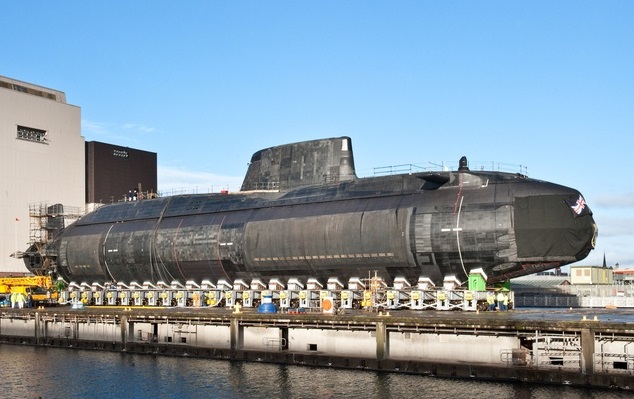
Now, we find out that the new $100 billion AUKUS subs deal is unlikely to have any local content mandate and may deliver absolutely nothing to the South Australian economy and workers.
more than 1,100 South Australian workers had lost their jobs because of the government’s decision to scrap the French agreement.
Doubts over local industry involvement in nuclear subs program, Joseph Brookes, Innovation Aus, Senior Reporter, 4 February 2022 Unions have called on the Prime Minister to commit to a minimum level of local industry involvement in the upcoming nuclear submarine program after a senior Defence official reportedly said there would be no mandated minimum level.
A high-ranking Defence official this week told an industry conference the department is “maturing beyond ascribing a percentage” of local industry involvement and was unlikely to set a minimum like previous major ship builds, according to The Australian.
In response to subsequent concerns from local industry, Defence minister Peter Dutton said Australia would “get the balance right” between supporting local industry and securing capabilities in response to rising foreign conflicts involving China………
The minister did not commit to a minimum level of local industry participation in submarine contracts.
In response to the earlier report that Defence’s Capability and Sustainment Group chief counsel Fran Rush had said the government was more focused more on securing capability than building local industry, unions called for Prime Minister Scott Morrison to fulfil a commitment to build at least eight nuclear powered submarines in Adelaide.
“Scott Morrison promised South Australia that it would receive billions in investment and thousands of jobs from the AUKUS submarine contract, making up for the significant losses caused by his tearing up of the French Naval Group contract, under which many South Australians were already employed,” SA Unions Secretary Dale Beasley said.
Now, we find out that the new $100 billion AUKUS subs deal is unlikely to have any local content mandate and may deliver absolutely nothing to the South Australian economy and workers.
“First Scott Morrison betrayed the French, now he’s betraying South Australians, by ripping away promised jobs and investment.”
The union said more than 1,100 South Australian workers had lost their jobs because of the government’s decision to scrap the French agreement.
Nearly 150 officials, including private contractors, are part of a government-led taskforce currently exploring options for acquiring submarines.
Do you know more? Contact James Riley via Email. https://www.innovationaus.com/doubts-over-local-industry-involvement-in-nuclear-subs-program/
No likelihood of Australian jobs in nuclear submarine construction, nor in big Pacific vessel
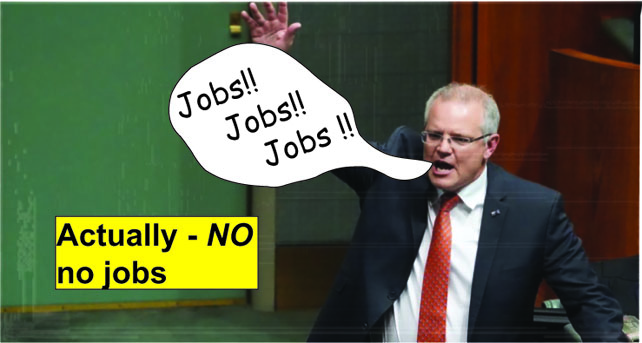
as the government comes under fire from Labor over hundreds of submarine construction jobs being at risk, Defence officials also revealed that a vessel intended to conduct disaster relief missions to the Pacific would now be built overseas instead of locally.
Hybrid nuclear submarine ‘unlikely’, navy chiefs say, AFR, Andrew Tillett
Political correspondentThe Royal Australian Navy has signalled it is unlikely to select a hybrid nuclear submarine design that combines British and American technology, in a significant concession to mitigate the risk of delays.
The head of the nuclear submarine taskforce, Vice-Admiral Jonathan Mead, told a Senate estimates hearing on Wednesday that Defence wanted to have at least one nuclear submarine before 2040 in a worst-case scenario and was looking to accelerate deliveries.
Officials also downplayed the possibility of leasing a submarine from the United States or the United Kingdom to avoid a capability gap with the ageing Collins class submarines, at a time China is rapidly shifting the balance in the Indo-Pacific with its military build-up.
But as the government comes under fire from Labor over hundreds of submarine construction jobs being at risk, Defence officials also revealed that a vessel intended to conduct disaster relief missions to the Pacific would now be built overseas instead of locally.
Among the mooted options are acquiring US-designed Virginia class submarines, the British Astute class, partnering with the UK on the design of its new attack submarines or a hybrid of the British and American boats.
| However, it is unclear what level of Australian content will be incorporated into the submarine despite the government’s intention to build them in Adelaide, nor whether it would be possible to use an American combat system in a UK-designed boat……….. As part of the Pacific Step-up announcement in 2018, the government said it would acquire a large-hulled support vessel for humanitarian missions in the south-west, but the committee heard the government had confirmed in recent months to buy the ship from overseas. “This is another Morrison government announcement not delivered,” Senator Wong said.Foreign Minister Marise Payne said a lack of capacity in Australian shipyards in Adelaide and Perth meant there was no room to build the new Pacific vessel…….“I don’t regard it as reneging on the commitment,” Senator Payne said. https://www.afr.com/politics/federal/hybrid-nuclear-submarine-unlikely-navy-chiefs-say-20211027-p593j3 |
1 This month

of the week – Australians for War Powers Reform (AWPR)
To see nuclear-related stories in greater depth and intensity
 Antinuclear