Debunking the false claims that nuclear power is affordable for Australia
Nuclear Power’s Economic Crisis, Jim Green, 9 Dec 21
A new report by Friends of the Earth Australia comprehensively debunks claims that nuclear power is cheap or affordable in the Australian context.
The 32-page report, ‘Nuclear Power’s Economic Crisis and its Implications for Australia’, details catastrophic cost overruns with nuclear power construction projects ‒ including ‘small modular reactors’ (SMR) ‒ over the past decade.
Dr. Jim Green, author of the report and national nuclear campaigner with Friends of the Earth Australia, said: “Nuclear lobbyists base their claims about ‘cheap’ nuclear power on implausible cost estimates for reactor types that have not even been built. Our report aims to ground the nuclear debate in detailed, factual information about reactor construction projects.
“Every reactor project in the U.S. and Western Europe over the past decade has been a disaster. Costs for every one of those projects has ballooned by more than $10 billion. They are all behind schedule, by as much as 13 years.
“SMR projects have also been disastrous: expensive and over-budget, slow and behind schedule. There are disturbing connections between SMRs and nuclear weapons proliferation, and between SMRs and fossil fuel mining. The only operating SMR anywhere in the world is used by Russia to power fossil fuel mining in the Arctic.
“The nuclear ‘renaissance’ of the 2000s has collapsed into corporate carnage including the bankruptcy of American nuclear giant Westinghouse and near-bankruptcy of its parent company Toshiba. In France, Areva was saved with an $8 billion bailout and the other major utility, EDF, is saddled with $66 billion in debts. Nuclear corruption and criminality are evident in many countries operating nuclear power plants.
“The persistence of nuclear support can be attributed to three factors: ignorance, commercial interests, and the ‘culture wars’.
Those are the likely explanations for the Minerals Council of Australia’s ongoing disinformation campaign regarding nuclear power. Member companies such as BHP and Rio Tinto should stop the MCA’s nuclear disinformation campaign or resign their membership from the MCA.”
“Research by CSIRO and the Australian Energy Market Operator conclusively demonstrates that nuclear power is far more expensive than renewables coupled with storage. It’s time for nuclear lobbyists to stop dissembling and to face the facts: Australia’s future is renewable, not radioactive.” Dr. Green said.
The report notes that in 2020, a record 256 gigawatts (GW) of renewable capacity were added to the world’s power grids compared to a net gain of 0.4 GW of nuclear capacity. This year will be another record-setting year for renewables with 290 GW installed so far, and nuclear power has flatlined yet again with the small number of reactor start-ups matched by permanent reactor closures.
The report, ‘Nuclear Power’s Economic Crisis and its Implications for Australia’, is online at https://nuclear.foe.org.au/economics/
Australian superannuation funds still have considerable investments in nuclear weapons companies: some are not disclosing this

John Buckley 9 Dec 21
- Most major super funds have some kind of exposore to nuclear weapons.
- Australian Super, the nation’s largest fund, was found to have $1.5 billion in nuclear weapons holdings.
- Some omit nuclear weapons from their “controversial” investment exclusions.
Most of Australia’s major super funds continue to hold investments in nuclear weapons companies, almost a year after the UN Treaty on nuclear weapon prohibition came into effect.
According to new analysis from the Australia Institute and nuclear weapons prevention non-profit, Quit Nukes, 17 of Australia’s major super funds currently have holdings in nuclear weapons companies.
The funds that do, the analysis found, make opaque attempts — if any at all — to disclose the investments to current and potential members, and in some cases go to great lengths to conceal them.
Australian Super, the nation’s largest super fund both by membership and funds under management, has close to $1.5 billion in nuclear weapons companies.
The fund’s investment policy says Australian Super does not exclude nuclear weapons (or other controversial weapons technology) from its investment pot.
For members with a higher conscience, Australian Super offers a “Socially Aware” membership, but even then, that only excludes landmines and cluster munitions.
Moving through the list, the case was the same in most other corners across the market. Aware Super, Australia’s second largest fund, says that it excludes controversial weapons, but that definition doesn’t cover nuclear weapons.
Aware invests in 12 nuclear weapons companies.
HESTA, meanwhile, only excludes investment in companies which earn more than 5% of their total revenue from nuclear weapons across the whole portfolio, but still has exposure to 14 nuclear weapons companies.
Over at Hostplus, nuclear weapons aren’t classified as controversial weapons either, and therefore aren’t excluded from the fund’s investment prospects.
But the fund says that it plans to recategorise nuclear weapons come January next year, at which point it’ll have to find a way to divest from eight nuclear weapons companies.
It is a popular strategy at most of the market’s major players, where controversial weapons are excluded from investment, but nuclear weapons aren’t considered controversial.
Among them are Rest Super, Telstra Super, and Mercer Super. At Cbus “controversial weapons” are explicitly excluded from fund investment opportunities, but there’s no mention of nuclear weapons. The fund has exposure to six nuclear weapons companies.
A survey undertaken by Quit Nukes found that just under 70% of Australians would expect nuclear weapons to be considered “controversial weapons”, while that same proportion of Australians, when asked, said they’d prefer their super not be invested in nuclear weapons.
Margaret Beavis, co-director at Quit Nukes, said Australia’s $3.4 trillion pension industry has phenomenal power, and their abstinence could go a long way in eliminating nuclear weapons, which are now illegal under international law.
“While there is big money invested in nuclear weapons companies, these investments are usually a tiny percentage of the whole funds under management,” Dr Beavis said.
“There is no evidence to suggest that divestment will negatively impact returns. Some funds are making change, including Hostplus, which recently decided to divest all nuclear weapons holdings by the end of January 2022,” she said.
Bill Browne, a senior researcher at The Australia Institute’s Democracy and Accountability Program, said it’s clear that Australians don’t want their money “invested in weapons of mass destruction”, and that super funds should heed the warning.
“Australians have the right to know exactly how their money is being invested, but most major super funds do not tell their members about their investments,” Browne said.
“Superannuation is one of the great Australian projects, guaranteeing retirement income for millions of workers. Most Australians would have no idea that their retirement money is being used to finance nuclear weapons,” he said.
“It is incumbent upon all funds to invest in the future of Australians — and that future does not include nuclear weapons.”
Some smaller, emerging funds have already pulled the rug on nuclear investments completely. The only six funds that that have either fully divested, or weren’t exposed to nuclear in weapons in the first place are: Active Super, Australian Ethical, Christian Super, Crescent Wealth, Future Super, and Verve Super.
Nuclear Power’s Economic Crisis and its Implications for Australia

Nuclear Power’s Economic Crisis and its Implications for Australia, Nuclear Free Campaign, Friends of the Earth Australia
December 2021 report by Friends of the Earth Australia, ‘Nuclear Power’s Economic Crisis and its Implications for Australia’.
The full report is available as a PDF.
The introduction (minus references and footnotes) is copied below.
INTRODUCTION & SUMMARY
Despite the abundance of evidence that nuclear power is economically uncompetitive compared to renewables, the nuclear industry and some of its supporters continue to claim otherwise. Such claims are typically based on implausible cost projections for non-existent reactor concepts. For example the Minerals Council of Australia conflates self-serving, implausible company estimates for small modular reactors (SMRs) with “robust estimates” based on “conservative assumptions”. And the Australian Nuclear Association bases its claim that nuclear power is Australia’s “least cost low carbon energy option” on the non-existent BWRX-300 SMR.
Claims about ‘cheap’ nuclear power certainly don’t consider real-world nuclear construction projects. Those following real-world developments have come to the opposite conclusion. Indeed supporters of nuclear power have issued any number of warnings in recent years about nuclear power’s “rapidly accelerating crisis” and a “crisis that threatens the death of nuclear energy in the West” while pondering what if anything might be salvaged from the “ashes of today’s dying industry”.
Consider the following statements, many of them from industry insiders:
- “I don’t think we’re building any more nuclear plants in the United States. I don’t think it’s ever going to happen. They are too expensive to construct.” ‒ William Von Hoene, Senior Vice-President of Exelon, 2018.
Nuclear power “just isn’t economic, and it’s not economic within a foreseeable time frame.” ‒ John Rowe, recently-retired CEO of Exelon, 2012.- “It’s just hard to justify nuclear, really hard.” ‒ Jeffrey Immelt, General Electric’s CEO, 2012.
- “We see renewables plus battery storage without incentives being cheaper than natural gas, and cheaper than existing coal and existing nuclear.”‒ Jim Robo, NextEra CEO, 2019.
- France’s nuclear industry is in its “worst situation ever”, a former EDF director said in November 2016 ‒ and the situation has worsened since then.
- Nuclear power is “ridiculously expensive” and “uncompetitive” with solar. ‒ Nobuo Tanaka, former executive director of the International Energy Agency, and former executive board member of the Japan Atomic Industrial Forum, 2018…………………
Several reasons can be posited for the crisis which led Bob Carr ‒ a former nuclear supporter, NSW Premier and Australian Foreign Minister ‒ to describe nuclear power as lumbering, cripplingly expensive and moribund:
- The Fukushima disaster in Japan in 2011.
- A suite of economic challenges: catastrophic cost overruns with reactor projects; nuclear power’s negative learning curve (it has become more expensive over time); and nuclear power’s inability to compete economically with renewables.
- Nuclear corruption scandals in many ‒ perhaps most ‒ of the countries operating nuclear power plants.
Other reasons could be added to that list, such as the failure to find solutions to manage long-lived nuclear waste, and the explosion in the world’s only deep underground nuclear waste repository in 2014.
This paper focuses on nuclear power’s economic problems ‒ catastrophic cost overruns with reactor projects, and nuclear power’s large and worsening economic disadvantage relative to renewables.
Summary
Every power reactor construction project in Western Europe and the US over the past decade has been a disaster:
- The only reactor construction project in France is 10 years behind schedule and the current cost estimate of A$30.6 billion is 5.8 times greater than the original estimate.
- The reactor under construction in Finland is 13 years behind schedule and the current cost estimate is 3.7 times greater than the original estimate.
- The Hinkley Point nuclear plant in the UK was meant to cost £2 billion per reactor and be complete by 2017; but construction hadn’t even begun in 2017 and costs have increased more than five-fold.
- The V.C. Summer project in South Carolina was abandoned after the expenditure of around US$9 billion.
- The Vogtle project in Georgia is six years behind schedule and costs have doubled.
Western Europe and the US provide the most striking examples of nuclear power’s crisis and the most striking examples of a more generalised problem: alone among energy sources, nuclear power has become more expensive over time, or in other words it has a negative learning curve.
Section 5 discusses nuclear power globally and in important countries other than those in Western Europe and North America. Suffice it to note here that nuclear power is struggling almost everywhere. China is said to be the industry’s shining light but nuclear growth is modest (an average of 2.1 reactor construction starts per year over the past decade) and paltry compared to renewables (2 gigawatts (GW) of nuclear power capacity added in 2020 compared to 135 GW of renewables).
Outside of China, the writing is on the wall: 48 power reactor start-ups and 98 permanent shut-downs from 2001‒2020 as well as a looming wave of shut-downs because of the ageing of the world’s reactor fleet and, in some countries, nuclear phase-out policies. Globally, renewable power capacity grew by a record 256 GW in 2020 (four times greater than Australia’s total capacity) compared to 0.4 GW for nuclear power.
Small reactors have a history of failure. Recent and current SMR construction projects are few and far between and exhibit familiar patterns of lengthy delays and large cost overruns:
The SMR under construction in Argentina is seven years behind schedule; the cost exceeds A$1 billion for a plant with the capacity of two large wind turbines; and the current cost estimate is 23 times higher than preliminary estimates.- Russia’s floating nuclear plant ‒ said to be the only operating SMR in the world ‒ was nine years behind schedule, more than six times over budget, and the electricity it produces is estimated to cost an exorbitant A$284 / megawatt-hour (MWh).
- The high-temperature gas-cooled SMR in China is eight years behind schedule, plans for additional reactors at the same site have been dropped, the cost is 2‒3 times higher than initial estimates, and hopes that the reactor could produce cheaper electricity than large nuclear reactors have been dashed.
- China recently began construction of an SMR based on conventional light-water reactor technology. According to China National Nuclear Corporation, construction costs per kilowatt (kW) will be twice the cost of large reactors, and the levelised cost of electricity will be 50% higher than large reactors.
- Russia recently began construction of an SMR based on fast reactor technology. Construction was expected to be complete in 2020, but didn’t even begin until 2021. The construction cost estimate has increased by a factor of 2.4.Sections of the nuclear industry ‒ and some outside the industry ‒ claim that SMRs have a bright future. Those claims have no factual or logical basis. Everything that is promising about SMRs belongs in the never-never; everything in the real-world is expensive and over-budget, slow and behind schedule. Moreover, there are disturbing, multifaceted connections between SMR projects and nuclear weapons proliferation, and between SMRs and fossil fuel mining.
- Nuclear power ‒ large or small ‒ has become far more expensive than renewables and the gap widens every year. Research by the CSIRO and the Australian Energy Market Operator demonstrates that nuclear power is far more expensive than renewables plus backup power in the Australian context. Research by the same organisations demonstrates that nuclear power is far more expensive than renewables plus integration costs (transmission, storage and synchronous condensers).
- Support for nuclear power in Australia has no logical or rational basis. The persistence of that support can be attributed to several factors:
- Ignorance.
- Commercial interests (direct nuclear interests as well as indirect interests ‒ Australian economist Prof. John Quiggin notes that “in practice, support for nuclear power in Australia is support for coal).
- Ideological ‘culture wars’. Former prime minister Malcolm Turnbull describes nuclear power as the “loopy current fad … which is the current weapon of mass distraction for the backbench.”
- The same reasons could explain support for nuclear power within the Morrison federal government. Nonetheless, the federal Department of Industry, Science, Energy and Resources expects 69% renewable supply to the National Electricity Market by 2030. There is zero or near-zero support for nuclear power among state and territory governments, including conservative governments ‒ they are focused on the renewables transition (albeit unevenly). Tasmania leads the pack thanks to its hydro resources. South Australia is another pace-setter: wind and solar supplied 62% of local power generation over the past 12 months, wholesale electricity prices were the lowest on the mainland at an average of A$48 / MWh, and grid emissions have fallen to a record low. South Australia is on track to comfortably meet its target of 100% net renewables by 2030. https://nuclear.foe.org.au/economics/?fbclid=IwAR3Q4ib7eX6r2KPY6kXNztlDKR4_SVzZPL4JeWGc50XLOnyCDeyhPWu0Imw
Union leaders demand super funds dump nuclear-linked companies

Six super funds have already divested from the 26 companies on the list, including Active Super, Australian Ethical, Christian Super, Crescent Wealth, Future Super and Verve Super.
CareSuper previously had holdings in Safran and Thales but has divested from these companies, according to the report.
Union leaders demand super funds dump nuclear-linked companies, https://www.afr.com/policy/tax-and-super/union-leaders-demand-super-funds-dump-nuclear-linked-companies-20211208-p59frc , Michael Read Reporter, Dec 8, 2021 Hostplus has agreed to divest from companies linked to the nuclear weapons industry after coming under pressure from progressive think-tank the Australia Institute and Quit Nukes.
Other industry funds are being lobbied to follow suit, including AustralianSuper, which has $1.5 billion invested in 18 companies that critics say are linked to the nuclear weapons industry.
A new report by the Australia Institute and Quit Nukes says 17 of Australia’s largest super funds, including Aware Super and BT Funds Management, are investing in companies linked to the nuclear weapons industry.
The report argues that funds can divest from these companies without negatively affecting financial returns.
The report says Hostplus has agreed to divest by the end of the year, but The Australian Financial Review was unable to reach the fund to confirm.
“Just prior to the launch of this report, Hostplus confirmed with Quit Nukes that it has decided to include nuclear weapons in their definition of controversial weapons,” the report says.
It quotes Hostplus as saying: “Our Responsible Investment Policy and our Controversial Weapons Divestment Policy have both been updated and approved by the Board. Hostplus expects to be fully divested of their holdings in nuclear weapons companies by the end of January 2022.”
Wide range of investments
The Australia Institute classifies 26 companies as involved in the nuclear weapons industry. The companies are involved directly in the development, testing, production or maintenance of nuclear weapon-related technology, parts products or services.
The list includes defence industry giants such as Lockheed Martin and Raytheon and missile system producers Bharat Dynamics and Aerojet Rocketdyne.
Some of the companies on the list are conglomerates such as Airbus and Boeing whose corporate activities extend well beyond their involvement in the defence industry.
The report finds that the nation’s largest super fund, AustralianSuper, has $1.5 billion invested across 18 companies linked to the nuclear weapons industry. The investments include a $1.6 million stake in BWX Technologies, which is involved in uranium processing and other site-specific services for the United States’ nuclear arsenal.
AustralianSuper did not respond to a request for comment.
Aware Super holds a stake in 12 companies on the list, including US firm Textron, which produces re-entry vehicles for intercontinental ballistic missiles, and Safran, which is involved in missile production for the French nuclear arsenal.
A spokesman for Aware Super committed to reviewing its investment framework and said nuclear weapons companies were already excluded from its socially responsible investment option.
AustralianSuper did not respond to a request for comment.
Aware Super holds a stake in 12 companies on the list, including US firm Textron, which produces re-entry vehicles for intercontinental ballistic missiles, and Safran, which is involved in missile production for the French nuclear arsenal.
A spokesman for Aware Super committed to reviewing its investment framework and said nuclear weapons companies were already excluded from its socially responsible investment option.
“BT excludes securities where industries or activities undertaken breach our ESG (environmental, social and governance) exclusions framework, this includes nuclear weapons activities in contravention of the UN Treaty on the Non-Proliferation of Nuclear Weapons,” a spokeswoman said.
We have investment options available that exclude all nuclear weapons and we regularly review and refine our investment approach across a broad range of ESG issues … We haven’t seen the full report, so can’t comment on its findings,” she said.
Unions call for divestment
Union leaders are demanding that super funds divest from companies that critics say are linked to nuclear weapons production.
Electrical Trades Union national assistant secretary Michael Wright said it was “tough to claim industry funds are an ethical choice if they continue to invest in nuclear weapons”.
“I know a lot of our members are with funds called out in this report as investing in nuclear weapons. If these funds don’t divest soon our members may well look to place their retirement savings with funds that are more ethical,” Mr Wright said.
For union- and employer-backed industry funds, the equal representation board model means directors are sourced equally from the two groups.
Six super funds have already divested from the 26 companies on the list, including Active Super, Australian Ethical, Christian Super, Crescent Wealth, Future Super and Verve Super.
CareSuper previously had holdings in Safran and Thales but has divested from these companies, according to the report.
Australian Nursing and Midwifery Federation federal secretary Annie Butler said there was “an urgent need for superannuation funds to ensure their investments are safe and ethically sound – and not in industries which can ultimately cause so much devastation and misery to our populations”.
Australian Services Union national secretary Robert Potter said investments in nuclear weapons undermined the work done by the union’s members.
“We welcome the nuclear weapon ban treaty and we’re committed to steering workers capital to align with the objectives of our ASU national policy,” Mr Potter said.
The Australia Institute’s senior researcher, Bill Browne, said he hoped the report would act as a “wake-up call to all superannuation funds still investing in nuclear weapons companies”.
“Superannuation is one of the great Australian projects, guaranteeing retirement income for millions of workers,” Mr Browne said. “Most Australians would have no idea that their retirement money is being used to finance nuclear weapons.
“It is incumbent upon all funds to invest in the future of Australians – and that future does not include nuclear weapons.”
UK and Australian consultancy firms get together in anticipation of nuclear submarine programme
In readiness for the commencement of Australia’s nuclear-powered submarine program, local consultancy Coras has formed a partnership with Britain’s Abbott Risk Consulting. Coras partners with Abbott to deepen nuclear submarine capability
28 November 2021 Consultancy.com.au, The partnership between the Australian defence-focused management consultancy and the UK-headquartered risk management specialist comes ahead of Australia’s transition to a nuclear-powered submarine capability as part of its recently-struck AUKUS pact with the UK and US.
The formal agreement is built on an existing close working relationship between the two consulting firms and aims to capitalise on the melding of local knowledge and international nuclear expertise…………….. https://www.consultancy.com.au/news/4433/coras-partners-with-abbott-to-deepen-nuclear-submarine-capability
Issue for The Australian Radiation Protection and Nuclear Safety Agency (ARPANSA): IS ANSTO’s NUCLEAR REACTOR VIABLE?
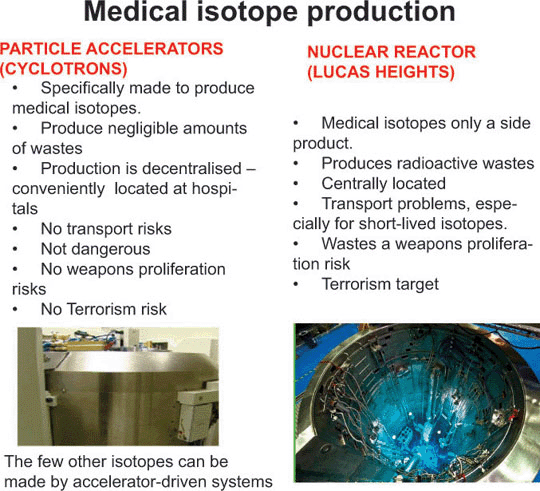
ISSUES FOR URGENT RESOLUTION BY ARPANSA
The Australian Radiation Protection and Nuclear Safety Agency (ARPANSA) is the national regulator of all federal government aspects of nuclear and radiation sources and activities with the prime objective of protecting and keeping safe the nation’s population and environment from the harmful effects of radiation and other nuclear pursuits.
In its regulatory role ARPANSA will shortly have to address issues linked to nuclear waste and collectively are probably the most important and significant situation that has had to be dealt with by ARPANSA since its foundation over twenty years ago
ANSTO VIABILITY
The first is the need for ARPANSA to obtain an independent andcomprehensive assessment and report on the proposed increased
production of nuclear medicine by reactor generation by the AustralianmNuclear Science and Technology Organisation (ANSTO) at its Lucas Heights precinct
The reason behind this is that ANSTO is relying on its production of nuclear medicine as the mainstay of its activities and intends to become a major international producer and exporter of reactor generated nuclear medicine.
However this appears to be a misconceived and purposeless intention since nuclear medicine generated by reactor isotopes is in significant decline throughout the world due to its dangerous inherent state in being used in medical diagnosis and treatment
There is a world wide turning away by the medical profession from using reactor generated nuclear medicine because of its sever danger to patients coupled with its extremely high production costs.
More alternatives to this form of nuclear medicine are already extensively used as they are far safer and pose little risk to patients and additionally are much cheaper to produce with the involvement of major international drug companies
ARPANSA should seek the independent and expert assessment and review of the proposal and intentions by ANSTO as part of the licensing process for the increased storage facility for nuclear waste at Lucas Heights recently proposed by ANSTO
The assessment and review must include a financial examination to determine commercial and economic viability of the activities and proposals by ANSTO as this is an essential ingredient of the qualifications for the licence for the increased storage capacity
Since the suitably qualified experts for the assessment are not in Australia (as in any case this could create a conflict situation) ARPANSA will need to rely on and engage the highly qualified experts in this field available
from overseas
From the general tenor and prescriptions of the Australian Radiation Protection and Nuclear Safety Act 1998 and applicable regulations – which are referred to as the enabling legislation – it seems quite certain that the commercial and financial aspects must be included by ARPANSAin considering an application for a licence
This should be even more imperative since the funds sought by ANSTO for the increased storage capability at Lucas Heights are being provided by the federal government which is in direct and colloquial terms taxpayers’ money and it is an obligation of the government to protect public revenue and expenditure
There has never been any publicly released information by ANSTO on the financial aspects of the production and sale of its nuclear medicine but as justification for the production ANSTO has relied on the emotivearguments that in their lifetime everyone has or will have a need for nuclear medicine.
ANSTO claims that it has given to the government a recently commissioned independent study into future nuclear medicine supply in Australia and this study should be given to ARPANSA with all supporting information for assistance for its assessment and review as part of the licensing process.
No likelihood of Australian jobs in nuclear submarine construction, nor in big Pacific vessel
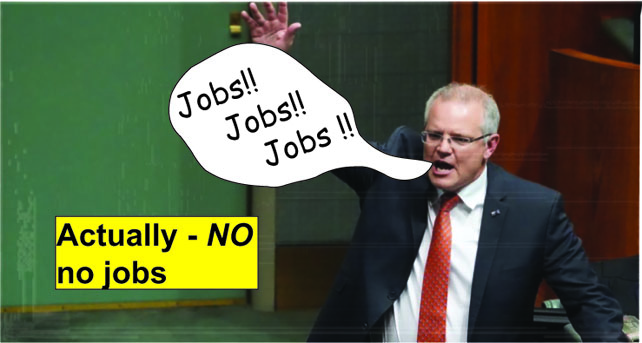
as the government comes under fire from Labor over hundreds of submarine construction jobs being at risk, Defence officials also revealed that a vessel intended to conduct disaster relief missions to the Pacific would now be built overseas instead of locally.
Hybrid nuclear submarine ‘unlikely’, navy chiefs say, AFR, Andrew Tillett
Political correspondentThe Royal Australian Navy has signalled it is unlikely to select a hybrid nuclear submarine design that combines British and American technology, in a significant concession to mitigate the risk of delays.
The head of the nuclear submarine taskforce, Vice-Admiral Jonathan Mead, told a Senate estimates hearing on Wednesday that Defence wanted to have at least one nuclear submarine before 2040 in a worst-case scenario and was looking to accelerate deliveries.
Officials also downplayed the possibility of leasing a submarine from the United States or the United Kingdom to avoid a capability gap with the ageing Collins class submarines, at a time China is rapidly shifting the balance in the Indo-Pacific with its military build-up.
But as the government comes under fire from Labor over hundreds of submarine construction jobs being at risk, Defence officials also revealed that a vessel intended to conduct disaster relief missions to the Pacific would now be built overseas instead of locally.
Among the mooted options are acquiring US-designed Virginia class submarines, the British Astute class, partnering with the UK on the design of its new attack submarines or a hybrid of the British and American boats.
| However, it is unclear what level of Australian content will be incorporated into the submarine despite the government’s intention to build them in Adelaide, nor whether it would be possible to use an American combat system in a UK-designed boat……….. As part of the Pacific Step-up announcement in 2018, the government said it would acquire a large-hulled support vessel for humanitarian missions in the south-west, but the committee heard the government had confirmed in recent months to buy the ship from overseas. “This is another Morrison government announcement not delivered,” Senator Wong said.Foreign Minister Marise Payne said a lack of capacity in Australian shipyards in Adelaide and Perth meant there was no room to build the new Pacific vessel…….“I don’t regard it as reneging on the commitment,” Senator Payne said. https://www.afr.com/politics/federal/hybrid-nuclear-submarine-unlikely-navy-chiefs-say-20211027-p593j3 |
$6000 a day to one US advisor to Australia on getting nuclear submarines. How much to the 3 new ones?

American-dominated panel advising government on submarines as Defence eyes US and UK choices for nuclear fleet, By defence correspondent Andrew Greene, ABC, 25Oct 21.
Three senior American shipbuilding executives are being paid to advise Australia on submarines, but the defence department and government are refusing to say what their work involves or how much they are costing.
Key points:
- Defence is refusing to discuss the role or salaries of the American officials on the Submarine Advisory Committee
- Senators are expected to examine the work of the submarine committee during Senate Estimates hearings this week
- Industry insiders believe the submarine committee needs a British official given the UK’s role in AUKUS
Senators are this week expected to grill officials over the role of the Submarine Advisory Committee, which was formed by the Turnbull government in 2017, a year after a French company was selected for the now dumped $90 billion Attack-class program.
……… Over the next year and a half, the defence department’s Nuclear-Powered Submarine Task Force will work with Australia’s British and American AUKUS partners to identify the best way to acquire a fleet to replace the scrapped French project……. Retired Admiral Donald Kirkland, Jim Hughes and Donald McCormack are all veterans of the US shipbuilding sector and their current three-year appointments to the committee are due to end in May 2024.
Admiral Kirkland is the chairman of American company Huntington Ingalls Industries (HII), which builds US Virginia-class submarines, Mr Hughes has also worked for HII, and Mr McCormack is an executive director at the US military’s Naval Sea Systems Command.
Questions sent by the ABC to the defence department last week concerning how much Submarine Advisory Committee members are paid, and what interactions they now have with the Nuclear-Powered task force, remain unanswered.
While Defence is yet to respond to questions about remuneration, an 18-month contract from 2018 uncovered by the ABC, shows Admiral Kirkland was paid $675,000 for his advisory services.
Earlier this month, Vice Admiral Jonathan Mead confirmed his secretive “Capability Enhancement Review” completed ahead of the Morrison government’s nuclear submarine announcement had not worked with the advisory committee.
Jostling between British and American companies for Australia’s future nuclear-powered fleet is well underway with early debate emerging over whether a US Virginia-class or UK Astute-class submarine is the best base model
Defence industry insiders are now privately questioning whether the government will appoint any British experts to the Submarine Advisory Panel given the United Kingdom’s membership of AUKUS and the country’s extensive experience with nuclear boats.
Last month, it was revealed former US Navy Secretary Donald Winter was being paid $US6,000 a day as an advisor to the federal government on shipbuilding matters.Defence industry insiders are now privately questioning whether the government will appoint any British experts to the Submarine Advisory Panel given the United Kingdom’s membership of AUKUS and the country’s extensive experience with nuclear boats.
Last month, it was revealed former US Navy Secretary Donald Winter was being paid $US6,000 a day as an advisor to the federal government on shipbuilding matters. https://www.abc.net.au/news/2021-10-26/american-dominated-panel-advising-nuclear-submarine-fleet/100567052
Greenland soon to reinstate its ban on uranium mining
Within weeks, Greenland’s parliament, the Inatsisartut, is expected to
pass a bill reinstating a ban on uranium mining that was lifted in 2013
following pressure from mining companies. “The Greenlandic minister with
responsibility for minerals has publicly stated that a ban on uranium
mining will put an end to all future uranium mining, full stop,” Mariane
Paviasen, a Greenland MP and leading activist in the anti-uranium mining
movement, Urani? Naamik (Uranium? No), told Green Left.
Green Left 20th Oct 2021
https://www.greenleft.org.au/content/greenland-set-restore-uranium-mining-ban
All nuclear reactors are very expensive, but small nuclear reactors are even more expensive
Australian Submarines May Go Nuclear But Our Power Stations Never Will, SOLARQUOTES, October 11, 2021 by Ronald Brakels
- ”…………………….Small Modular Reactors Are More Expensive An SMR is a Small Modular Reactor. There have been claims these will provide cheap energy in the future, but this seems unlikely given their designers have stated that…
- Before cost overruns are considered, SMRs will produce electricity at a higher cost than current nuclear reactor designs.Being more expensive than conventional nuclear power is a major obstacle for any plan to supply energy at a lower cost.
- The advantage of SMRs is they are supposed to be less likely to suffer from disastrous cost overruns. This means they are a more expensive version of a type of generation that is already too expensive for Australia before cost overruns. While any cost overruns that do occur may not be as bad as conventional nuclear, that’s not what I call a good deal.
There is nothing new about small nuclear reactors. India has over a dozen reactors of 220 megawatts or less in operation. But all Indian reactors now under construction are larger because they want to reduce costs. Technically their small reactors aren’t modular because major components weren’t constructed at one site and then moved to where they were used. This leads to another major problem with SMRs…- They don’t exist. Before Australia can deploy an SMR, a suitable prototype reactor will have to be successfully built and operated. Then a commercial version will need to be developed and multiple units constructed overseas without serious cost overruns and used long enough to show they can be operated safely and cheaply. Given nuclear’s prolonged development cycle, this could easily take over 20 years. The very best estimate for the cost of electricity from an SMR I have seen is around 6.2 cents per kilowatt-hour and it relies on everything going perfectly — a rare thing for nuclear power. It also leaves out several costs that have to be paid in the real world. :……….https://www.solarquotes.com.au/blog/submarines-nuclear-not-power-stations/
Nuclear power is too expensive for Australia.
Australian Submarines May Go Nuclear But Our Power Stations Never Will, SOLARQUOTES, October 11, 2021 by Ronald Brakels
Australia recently decided to buy nuclear-powered submarines as part of the AUKUS pact with the UK and United States.
Assuming it goes ahead, the first sub may be ready around 2040. But while our submarines may have nuclear reactors, our power stations never will.
There is a simple reason Australia will never have nuclear power despite deciding to get reactors that wander around under the ocean. The reason is…
- Nuclear power is too expensive for Australia.
- Every other concern — whether it’s safety, waste disposal, decommissioning, insurance, or location — is irrelevant because nuclear energy can’t clear the first and vital hurdle of making economic sense. Some suggest building nuclear power in addition to renewables because the threat from global roasting is so great we should fight emissions using every means at our disposal. But this would be counterproductive because:
- Nuclear power consumes resources that would result in greater emission cuts if used for solar and wind generation plus energy storage.
- In other words, $1 spent on solar power will cut greenhouse gas emissions far more than $1 spent on nuclear energy.Finally, some people say we need nuclear power to provide a steady source of low emission baseload generation, but this suggestion is completely nuts. Even if we built nuclear power stations, they would soon be driven out of the market in the same way coal power is because:
- Nuclear power has exactly the wrong characteristics to be useful in a grid with a high penetration of solar and wind.Australia currently doesn’t have a nuclear power industry, and building submarines with American made sealed reactors that are never refuelled will do next to nothing to make nuclear power more cost-effective. In this article, I’ll explain why nuclear power makes no economic sense in Australia, and at the end, I’ll also whinge a bit about nuclear submarines. ………..
- Nuclear Power Is Ridiculously Expensive The cost of energy from new nuclear isn’t just expensive; it’s ridiculously expensive. Here are examples of reactors under construction in developed countries, using Australian dollars at today’s exchange rate:
Finland’s Olkiluoto #3 reactor: So far, this 1.6 Gigawatt reactor has cost about $14 billion, which is around $8,750 per kilowatt of power output. Construction started in 2005 and was scheduled to be completed in 2009. Due to delays, it’s now scheduled to commence normal operation in February 2022 for a total construction time of 17 years.- France’s Flammanville #3 reactor: The cost of this 1.6 gigawatt reactor is approximately $31 billion. That’s $19,400 per kilowatt. Normal operation is scheduled for 2023 — 16 years after construction began.
- UK’s Hinkley Point C: These two reactors will provide 3.2 gigawatts of power and cost around $42 billion. That’s $13,100 per kilowatt. Construction began in 2018, and they’re currently scheduled to come online in 2026.
- US Vogtle 3 & 4: These two reactors in Georgia (the US state, not where Stalin was born) will total 3.2 gigawatts and, by the time they are complete, may cost over $38 billion. That’s around $12,000 per kilowatt. Construction started in 2013, and they’re expected to come online next year. These are the only commercial reactors being built in the United States.
- As you can see, new nuclear isn’t cheap. Note these aren’t the most expensive reactors under construction in Western Europe and North America, they’re the only ones under construction. If you think these reactors are expensive to build but provide cheap electricity, that’s not the case. The Hinkley Point C reactors under construction will receive a minimum of 21 cents per kilowatt-hour they supply for 35 years after they come online. If the wholesale electricity price goes above 21 cents, they’ll receive that instead. The 21 cents is indexed to inflation, so it will remain ridiculously expensive for the full 35 years. In the US, households in Georgia will have paid around $1,200 each towards the new Vogtle reactors by the time they come online. After that, their electricity bills will increase by around 10% to pay for the new nuclear electricity. For another nuclear power station to be constructed in the US would require a payment per kilowatt-hour similar to or higher than Hinkley Point C. ………………..
………….. Poor Choice For Emission Reductions. Some people ask…“Why not build both nuclear and renewable capacity to reduce CO2 emissions as rapidly as possible?”
The answer is…“Because every dollar invested in nuclear will cut emissions by much less than a dollar spent on renewables.”
If the goal is to cut emissions rapidly, it’s counterproductive to invest in nuclear. Australia doesn’t have existing nuclear capacity or a half-built reactor, so whether it makes sense to keep old reactors operating or complete construction doesn’t come into it.Nuclear capacity isn’t quick to build. Some notable examples:
Olkiluoto 3 — 17 years- Flammanville 3 — 16 years
- Watts Bar 2 — 43 years
- Because Australia has no nuclear power industry, it would take more than five years to build a nuclear power station even if we could start construction today1. But Australia can increase its solar energy generation almost immediately. Extra wind power will take months to arrange, as wind turbine purchases are more complex than just ordering extra solar panels and inverters. Firming the grid with energy storage is also fast. The world’s largest battery, the Hornsdale Power Reserve or “Tesla Big Battery”, was built in 100 days.Whether cost or time are considered, nuclear energy is a poor choice for reducing emissions.
- Nuclear Energy Not Needed For Baseload GenerationOne of the craziest reasons given for building nuclear power in Australia is we need low emission baseload generators. This idea is nuttier than a lumpy chocolate bar because:
- No baseload generators are required.
- Like coal, nuclear power has the wrong characteristics to support a grid with high solar and wind generation.It’s impossible to argue that we need baseload generators that run continuously (except for maintenance). This is because South Australia has none. The state doesn’t continuously import electricity either.
- Despite having no baseload generators, SA still manages to meet demand as well as other states. South Australia had coal baseload generators in the past, but as wind and solar power capacity expanded, there were increasing periods of low or zero wholesale electricity prices2 resulting from solar and wind having zero fuel costs. Because their fuel is free, they have little or no incentive not to provide electricity even if they receive next to nothing for it.
- Because coal power is expensive to start and stop and saves very little money by shutting down because its fuel cost is low — but not zero — it often had no choice other than to keep operating during periods when it was losing money on every kilowatt-hour generated. In 2016 South Australia shut down its last remaining coal power station because it was no longer profitable. This same process is happening throughout Australia as solar, wind, and energy storage capacity increases. In a (hopefully) short period of time, renewables will drive coal power out of the market.
- If it doesn’t make economic sense to keep existing coal power stations around to supply baseload power, it definitely makes no sense to replace them with more expensive nuclear reactors with the same problem – that shutting down saves little money because their fuel cost is low. Building a nuclear power station and then only using it half its potential capacity almost doubles the cost of energy it produces.
………………. Other Nuclear Energy IssuesThere are many issues associated with nuclear power that are often discussed but are irrelevant. I’ll quickly mention and dismiss half a dozen or so:……….https://www.solarquotes.com.au/blog/submarines-nuclear-not-power-stations/
US and UK begin jostling to supply Australia with nuclear submarine fleet
US and UK begin jostling to supply Australia with nuclear submarine fleet, ABC By defence correspondent Andrew Greene‘ 10 Oct 21, ‘……….In 2021, the Australian Defence Force is again considering what role the Royal Navy could play in developing its next submarines, or whether like many modern acquisitions, it will focus on interoperability with American technology.
Under the AUKUS partnership struck in September, the leaders of the United Kingdom and the United States have agreed to work with Australia on how to build a new class of nuclear-powered submarines.
Over the next 18 months, the Nuclear-Powered Submarine Task Force inside the Department of Defence will lead a study into the numerous regulatory issues involved in the ownership and operation of nuclear-powered boats.
While the design is not yet known, or what the criteria will be, for many commentators the existing British Astute-class is emerging as an early favourite for Australia to replace the Collins-class fleet
Others inside the defence industry believe any nuclear-powered Australian submarine will need to be an American boat, based on the Virginia-class so that it can be serviced at nearby US bases in Guam or Japan.
Both the British and US options have various advantages and disadvantages, which highlight the extraordinarily complex process the ADF faces to select a nuclear-powered submarine — which may never actually eventuate.
Already the regulatory challenges appear significant, as nothing is more complex and costly in the military world than nuclear-powered submarines, particularly for a country with no domestic nuclear industry.
In the United States, an eminent group of former officials and experts has written to President Joe Biden warning the AUKUS deal could threaten national security by encouraging hostile nations to obtain highly enriched uranium (HEU).
Australia insists it will uphold its commitments under the Nuclear Non-Proliferation Treaty, but the engineering sector warns it will be a steep learning curve for the Defence Department.
The now dumped Attack class submarine being designed by France’s Naval Group was based on the Barracuda class, which lost three years in development because of less complex regulatory issues associated with low enriched uranium (LEU).
“This is a very long-term effort that’ll be decades, I think, before a submarine goes in the water,” US Chief of Naval Operations Admiral Mike Gilday predicted last month………… https://www.abc.net.au/news/2021-10-10/us-and-uk-begin-jostling-for-nuclear-submarine-contract/100525756
Opal nuclear reactor at Lucas Heights is simply not economically viable
The BIG question is ECONOMIC VIABILITY given the continued uptake of cyclotrons worldwide. On this basis alone it will fail, but the Feds fervidly will try to continue to prop it up anyway – purely for political and NOT practical reasons!
In fact it is high time to move with the times! Canada has been through all of this already and decided to go with cyclotrons to produce their isotopes. They could no longer justify their taxpayers footing the bill for exporting isotopes and all of its inherent costs! And cyclotrons mean they can tailor make the isotopes they need rather than producing mass “available” isotopes which may or may not be used which is the model currently used for Australia!
Kazzi Jai shared a link. Fight to stop a nuclear waste dump in South Australia, 8 Oct 21,
So….what do you do when you are ACTING MINISTER FOR SCIENCE, INDUSTRY AND TECHNOLOGY? Seems the lucky ACTING MINISTER for that portfolio- Angus Taylor – knew EXACTLY what to do on 30th September 2021!
“ANSTO welcomes the joint announcement from The Acting Minister for Industry, Science and Technology, the Hon Angus Taylor MP, the Minister for Finance, Senator the Hon Simon Birmingham and the Minister for Health and Aged Care, the Hon Greg Hunt MP to safeguard the future of Australia’s nuclear medicine production. The government has announced it will safeguard Australia’s sovereign capability to produce vital nuclear medicines by launching a $30 million project to design a new world-leading manufacturing facility to be built at our Lucas Heights campus in Sydney. About 80 per cent of nuclear medicine isotopes used to fight diseases like cancer are produced at Lucas Heights and one of the key facilities that makes this possible is nearing the end of its operating life.” – ANSTO website “Safeguarding the future of Australia’s nuclear medicine”
When the likes of Angus Taylor uses the words “safeguard Australia’s sovereign capability”…you KNOW there’s something shonky going on! Too bad he isn’t worried about “Australia’s sovereign capability” with regards to iron, gas, water, ports, utilities, land acquisition etc etc….the list goes on!
Anyway, this “wish list” is separate to the brand new ANM facility (The Australian Nuclear Medicine Molydenum-99 Facility (ANM Mo99), which has now become known as ANSTO Nuclear Medicine Facility  ) which cost taxpayers $168 million and has had a number of teething problems since it was built in 2019 and only has become fully functional in March 2020.
Using the wording in the announcement, the “$30 million project to design a new world-leading manufacturing facility to be built”….means this is only a commitment by the Feds to give $30 million to DESIGN the facility which will replace “building 23” which is an “ageing nuclear medical facility” according to the now ex-CEO Adi Paterson back in 2018.Ideally, ANSTO would LOVE for the Feds to cough up $210 million to replace it – probably costing more than that now, since that was quoted 2018 figures not 2021 figures!!
The BIG question is ECONOMIC VIABILITY given the continued uptake of cyclotrons worldwide. On this basis alone it will fail, but the Feds fervidly will try to continue to prop it up anyway – purely for political and NOT practical reasons! In fact it is high time to move with the times! Canada has been through all of this already and decided to go with cyclotrons to produce their isotopes. They could no longer justify their taxpayers footing the bill for exporting isotopes and all of its inherent costs! And cyclotrons mean they can tailor make the isotopes they need rather than producing mass “available” isotopes which may or may not be used which is the model currently used for Australia!
With regard to treatment,which is only a tiny amount of what isotopes are used for – they are predominantly used for diagnostic imaging- the trend now is to do the least amount of damage to normal cells as is possible. Isotopes are rather a blunt instrument in that regards, and now techniques like immunotherapy and nanotechnology are the fields of advancement in that respect.There’s even advancements in radiotherapy which went to LINAC machines (linear accelerators) many decades ago…and now proton therapy units are finding their way into our major capital cities! Neither need nuclear reactors!https://www.minister.industry.gov.au/…/safeguarding… “MINISTER.INDUSTRY.GOV.AUSafeguarding the future of critical medicine supply | Ministers for the Department of Industry, Science, Energy and Resources https://www.facebook.com/groups/344452605899556
—
Trevor St Baker and the latest push for nuclear energy
Trevor St Baker and the latest push for nuclear energy, Independent Australia, By David Paull | 2 October 2021 Quickly following the Morrison Government’s new ill-defined arrangements to obtain nuclear technology from its UK and U.S. (AUKUS) alliance partners, we have seen a new push from nuclear advocates for a domestic nuclear power industry.
Senator Matt Canavan, the Australian Workers Union (AWU) and pieces appearing in the Murdoch media have been leading the charge. There was also a puzzling link made by Deputy PM Barnaby Joyce on ABC’s Insiders.”
It wasn’t too long ago when Energy Minister Angus Taylor’s inquiry into a new domestic nuclear energy sector was held. Submissions by the nuclear industry and their lobbyists were widely condemned as containing shiploads of misinformation regarding the cost of nuclear versus renewables and the greenwashing of the carbon footprint. The Committee, however, recommended a partial lifting of the standing nuclear energy ban for ‘new and emerging technologies’.
The leading “new and emerging technology” is a reference to small modular reactors (SMRs), designed specifically to provide baseload power to the grid via a network of nuclear generators. As it turns out, Taylor has been leaking information to a far-right media outlet on the need to develop this sector in Australia with the co-operation of expertise from the UK, even with the assistance of our nuclear agency ANSTO.And here emerges a key player in this debate in Australia — the managing director of the company set up to develop this industry, Trevor St Baker.
With respect to his acknowledged need to de-carbonise our economy, Mr St Baker is on the record for claiming that “to reduce CO2 we must go nuclear” and that a rush to renewables would be a disaster for the power network. He claims that “intermittent” renewables are only projected to supply little more “than 25% annually any time soon” and that “electricity supply grids need synchronous generation supply for at least 40% of electricity demand at any time”.
Inherent in this way of thinking is that a dispatchable renewable power system backed by batteries cannot meet a base-load (24 hour) demand, a common theme expressed by other nuclear and fossil fuel lobbyists but an argument nonetheless increasingly on shaky ground. Nonetheless, the nuclear lobbying effort is attempting for all its might to gain momentum.
St Baker, depending on how you look at it, is a very clever businessman, one of the richest in Australia or one who is extremely “well connected”. His position on energy seems to many to be incongruous, attacking banks for withdrawing support for new fossil fuel ventures on the one hand yet investing substantially in renewable projects such as EV recharging stations through his Energy Innovation Fund……….
The Australian Nuclear Association (ANA) is our leading nuclear lobby group whose views on the need for a domestic nuclear industry mirror those views articulated by St Baker, including the view that SMR reactors are more or less “ready to roll”. Their latest media maintains that a poll has been conducted showing that ‘Australians support for considering nuclear energy reaches 70%’. However, the polls mentioned were conducted by the Liberal Party-affiliated Menzies Research Centre, so it’s hardly an independent poll given the Government’s past position on the issue and given the Centre’s position that ‘nuclear is beautiful’.
Like the international fossil fuel lobbying network, there are national and international bodies operating in tandem in the nuclear sector. The ANA is an affiliate of the World Nuclear Association (WNA) who it seems is conducting a vamped-up PR campaign to open new markets for nuclear power. Central to this is an emphasis on small modular reactor technology, announcing the first such reactors in Russia in December 2019 and now is most concerned by issues with licensing and design of SMRs. Other themes include the suitability of such technology for rapid changes in energy systems in response to climate issues.
Of course, this is what St Baker is banking on, literally with his considerable investment in the SMR technology. It is clear that the ruling political party in Australia would dearly love to get behind the nuclear transition as quickly as possible. The only real stumbling block is Labor’s opposition to the concept, public opinion and our adherence to the Nuclear Non-Proliferation Treaty.https://independentaustralia.net/politics/politics-display/trevor-st-baker-and-the-latest-push-for-nuclear-energy,15578
AUKUS and the nuclear submarines will have economic effects on Australia, and big defence spending.

Neglected in the flush of enthusiasm that accompanied the AUKUS announcement is the likely cost of Australia’s new defence spending under a “China containment policy”.
New drives to counter China come with a major risk: throwing fuel on the Indo-Pacific arms race SMH, Tony Walker Tony Walker is a Friend of The Conversation.Vice-chancellor’s fellow, La Trobe UniversitySeptember 27, 2021 “……………….. Australian defence spending likely to rise
What is absolutely certain in all of this is that an Indo-Pacific security environment will now become more, not less, contentious.
SIPRI notes that in 2020, military spending in Asia totalled $US528 billion (A$725 billion), 62% of which was attributable to China and India.
IISS singled out Japan and Australia, in particular, as countries that were increasing defence spending to take account of China. Tokyo, for example, is budgeting for record spending of $US50 billion (A$68 billion) for 2022-23.
Australia’s defence spending stands a tick over 2% of GDP in 2021-22 at A$44.6 billion, with plans for further increases in the forward estimates.
However, those projections will now have to be re-worked given the commitments that have been made under AUKUS.
Neglected in the flush of enthusiasm that accompanied the AUKUS announcement is the likely cost of Australia’s new defence spending under a “China containment policy”. It is hard to see these commitments being realised without significant increases in defence allocations to 3-4% of GDP.
This comes at a time when budgets will already be stretched due to relief spending as a consequence of the pandemic.
In addition to existing weapons acquisitions, Canberra has indicated it will ramp up its purchases of longer-range weapons. This includes Tomahawk cruise missiles for its warships and anti-ship missiles for its fighter aircraft.
At the same time, it will work with the US under the AUKUS arrangement to develop hypersonic missiles that would test even the most sophisticated defence systems……………
The price tag for this in terms of equipment and likely continuing economic fallout for Australian exporters will not come cheap. ………….. https://theconversation.com/new-drives-to-counter-china-come-with-a-major-risk-throwing-fuel-on-the-indo-pacific-arms-race-168734
1 This month.

Help Aunty Sue Protect Her Land and Sacred Sites From Destructive Rocket Testing.
.

Australians deserve the truth
about
AUKUS – https://aukuspublicinquiry.com/

PETITION – To: Prime Minister Anthony Albanese and the Australian Labor Government

of the week – Australians for War Powers Reform (AWPR)
To see nuclear-related stories in greater depth and intensity
 Antinuclear