Australia’s New AUKUS Protest Police, and the Quiet Redefinition of Dissent
28 January 2026 AIMN Editorial, By Denis Hay
AUKUS protest police: FOI documents reveal the AFP’s Orcus Command and how protest is being treated as a national security issue in Australia.
Introduction
Public discussion of AUKUS has focused on submarine delivery dates, strategic alignment, and cost blowouts. Far less attention has been given to how the Australian government is preparing for domestic opposition to the agreement.
Freedom of Information documents obtained by transparency advocate Rex Patrick and reported by Michael West Media reveal that the Australian Federal Police has quietly established a new unit, Orcus Command, dedicated to protecting AUKUS-related defence facilities. The documents show this unit is also planning for public order management, including protest and political dissent connected to Australia’s growing role in US and UK military operations.
This matters because protest is a cornerstone of democratic accountability. When dissent is framed primarily as a security risk, the balance between public order and civil liberties shifts in ways that deserve close public scrutiny.
What has received far less attention is how the government is preparing to manage Australians who oppose it.
Internal link: “Australia’s AUKUS agreement”.
Editor’s note:
This analysis is based on Freedom of Information documents obtained by transparency advocate Rex Patrick and reporting by Michael West Media. All claims in this article are drawn from released documents, budget papers, and publicly available statements. Care has been taken to distinguish between documented facts, lawful policing powers, and broader democratic implications.
What Is Orcus Command
Orcus Command is a specialised AFP unit created to provide protective security for the AUKUS nuclear-powered submarine program, particularly at strategically significant defence bases such as HMAS Stirling in Western Australia.
FOI documents show that:
- The unit was created with minimal public disclosure.
- It has a mandate extending beyond physical asset protection.
- It is embedded within the Department of Defence, not a civilian oversight body.
- Its planning includes public order and protest activity.
This institutional placement is significant. By situating Orcus Command within Defence rather than a civilian agency, protest management around AUKUS is treated as a national security issue rather than a matter of routine democratic policing.
Internal link: “Defence influence in Australia”.
Protest and Dissent as a Security Issue
Internal AFP documents explicitly reference the monitoring and response to political opposition and protest activity linked to AUKUS and the expanding US military presence in Australia.
This reflects a broader shift in Australian governance. Over recent years, most states have introduced or strengthened laws restricting protest, increasing police powers, and imposing harsher penalties for disruption.
Rather than being framed as a democratic expression to be facilitated and protected, protest is increasingly framed as a risk to continuity and order.
The Orcus Command documents indicate:
- Planning for escalation scenarios
- Proactive monitoring of protest groups
- Coordination with state police
- Anticipation of increased protest intensity
Internal link: “right to protest in Australia”
Why is Protest Being Framed as a National Security Issue Under AUKUS?
The documents state that Orcus Command has Commonwealth responsibility for protecting the nuclear submarine program under existing legislative powers.
This places protest activity in the same conceptual space as counterterrorism and critical infrastructure protection. While such powers are lawful, their application to political dissent raises difficult questions.
When a protest is absorbed into a national security framework:
- Thresholds for intervention are lowered.
- Decision-making becomes less transparent.
- Oversight mechanisms are weakened.
- Civil liberties are more easily subordinated to strategic objectives.
This does not mean that protest is automatically criminalised. It does mean that the lens through which protest is viewed has changed.
Internal link: “national security frameworks”.
One of the most sensitive revelations in the AFP briefing material is the inclusion of lethal force within Orcus Command’s armed protection planning.
Lethal force authorisations are standard in many armed federal policing and counter-terrorism contexts. Their inclusion alone is not unlawful or unusual. However, the context matters.
These provisions appear within documents that also discuss protest and public order management. This signals that scenarios involving political dissent are being contemplated within a framework that allows for the highest level of force available to federal police.
This does not suggest protesters will routinely face lethal force. It does show that dissent around AUKUS is being planned for within a security paradigm where extreme outcomes are legally contemplated.
That distinction is important, but it should not be dismissed.
Reassuring Allies, Managing Citizens
FOI emails reveal that Australian authorities are keen to show to the United States and the United Kingdom that protest activity will not disrupt or delay AUKUS operations.
This highlights a core tension: Australian policing resources are being used not only to keep domestic order, but also to reassure foreign military partners.
The documents emphasise:
- Proactive responses to identified protest risks.
- The importance of continuity for allied operations
- Minimising disruption to US and UK interests
Internal link: “Foreign policy dependence“.
Budget Allocations Signal Long-Term Expansion
Funding figures reinforce the seriousness of the operation.
- $73.8 million allocated to Orcus Command in late 2025.
- Funding rising to $125.2 million in 2026.
This near doubling suggests the government expects expanded responsibilities and sustained operations, rather than a short-term security task.
Budgets reflect priorities. In this case, substantial public funds are being committed to a policing unit designed to manage both infrastructure security and anticipated dissent.
Internal link: “public money priorities”.
Secrecy, FOI, and Democratic Oversight
AUKUS is one of the most secretive projects in Australia’s modern history. While some confidentiality around defence capabilities is legitimate, secrecy has expanded far beyond technical details.
The government has:
- Refused a comprehensive public inquiry.
- Limited parliamentary scrutiny
- Relied heavily on national security exemptions
- Restricted public access to key information
Without FOI requests and investigative journalism, the existence and scope of Orcus Command would remain unknown.
The Broader Democratic Context
The creation of Orcus Command does not occur in isolation. It sits alongside:
- Tightened protest laws across states
- Expanded police powers.
- Increasing surveillance of activists
- Reduced tolerance for disruption
Taken together, these trends suggest a gradual rebalancing of the state’s relationship with citizens, particularly where dissent intersects with powerful economic or strategic interests.
Why This Matters for Democracy……………………………………………………………………………………. https://theaimn.net/australias-new-aukus-protest-police-and-the-quiet-redefinition-of-dissent/
Australia’s Lack Of Speech Protections Means We Should Be MORE Hostile To Speech Regulation
Caitlin Johnstone, Jan 25, 2026, https://www.caitlinjohnst.one/p/australias-lack-of-speech-protections?utm_source=post-email-title&publication_id=82124&post_id=185687870&utm_campaign=email-post-title&isFreemail=true&r=1ise1&triedRedirect=true&utm_medium=email
A normal, healthy person would look at Australia’s lack of free speech protections and say “Hmm, Australian leaders should be extremely resistant to new laws and policies which restrict speech then, because it would be very easy for those restrictions to become abusive.”
Australian leaders look at our lack of free speech protections and say “See? This means we get to take away your right to protest genocide!”
Nowhere is this more clearly exemplified than the repeated statements from New South Wales premier Chris Minns saying it’s fine to silence Australians because we don’t have free speech rights.
Over and over again Minns has defended his promotion of authoritarian speech crackdowns in his state by claiming it’s okay to stomp out dissident speech of Australians because Australians don’t have the same speech protections as Americans, saying “we don’t have the same free speech rules that they have in the United States and I make no apologies for that” and similar statements in recent weeks.
To be clear, Minns is being repulsively tyrannical when he says this, but factually speaking he isn’t wrong.
As Joe Lauria wrote for Consortium News following the passage of Australia’s frightening new “hate speech” bill:
“Unlike the United States, Australia has no Bill of Rights in its Constitution protecting freedom of speech, assembly and other rights. Much as Israel would want it, a law such as this adopted in Australia would still be difficult to pass in the U.S. on paper, despite the Israel Lobby’s hold over the U.S. Congress.”
If Australians had the same speech protections that they have in the United States, we could appeal tyrannical new laws on First Amendment grounds. Because we have no such protections, it is much harder to oppose authoritarian speech restrictions once they are in place.
As I often remind readers, Australia is the only so-called democracy in the world which has no national charter or bill of rights of any kind. A tremendous amount of faith has been placed in state and federal legislators to simply do the right thing, which has proved foolish and ineffective. Professor George Williams wrote for the Melbourne University Law Review in 2006:
“Australia is now the only democratic nation in the world without a national bill of rights. Some comprehensive form of legal protection for basic rights is otherwise seen as an essential check and balance in democratic governance around the world. Indeed, I can find no example of a democratic nation that has gained a new Constitution or legal system in recent decades that has not included some form of a bill of rights, nor am I aware of any such nation that has done away with a bill of rights once it has been put in place.”
It has been clearly and conclusively established that this system does not work. State and federal governments are working frenetically to shred the right of Australians to oppose the actions of the state of Israel, with their assault on our civil rights disguised as an effort to fight “antisemitism” in our country and help Jewish Australians feel more safe. The fact that this happens to advance the information interests of the western power alliance, we are told, is purely coincidental.
The evidence is in and the case is closed. The Australian system does not work. We need a national bill of rights, and we need free speech to be enshrined in our constitution.
In the meantime, we need to be aggressively opposed to laws and policies which assault our freedom of speech. We need to be more aggressive in our opposition than Americans would be, because we have fewer safeguards against tyrannical abuses.
It’s so disgusting how these freaks are telling us right to our faces “Yeah well you guys don’t have any rights, so I’m going to silence you and oppress you and I make no apologies about that.”
That kind of arrogant, abusive authoritarianism deserves nothing but ferocious defiance.
Parliament Passes New Hate Speech Laws, What It Really Means.

23 January 2026 AIMN Editorial, By Denis Hay https://theaimn.net/parliament-passes-new-hate-speech-laws-what-it-really-means/
Overview
The Australian Parliament has passed new hate speech laws aimed at strengthening protections against vilification and serious threats. While the legislation is narrowly framed, its real-world impact will depend less on parliamentary intent and more on how enforcement powers are used in practice.
A Narrow Law With Broad Implications
The government has emphasised that the laws target only serious conduct involving threats, intimidation, or incitement to violence. On the face of the legislation, everyday political expression, criticism of institutions, and robust debate remain protected.
However, legal history shows that the scope of enforcement often expands beyond initial assurances, particularly once broad discretionary powers exist.
Enforcement and Civil Liberties
The most significant risk lies in enforcement. Expanded police powers and clarified intent thresholds may make prosecutions easier, but they also increase the possibility of uneven or selective application. Civil liberties organisations have raised concerns that interpretation will rely heavily on subjective assessments of harm and intent.
Clear prosecutorial guidelines and judicial oversight will be essential safeguards.
The Role of Digital Platforms
New cooperation requirements for online platforms effectively shift part of enforcement to private corporations. This creates incentives for over-removal of content, as platforms seek to minimise legal risk. The result may be a chilling effect on lawful expression without transparent accountability.
Final Assessment
The legislation responds to a genuine rise in targeted abuse, particularly online. Whether it strengthens social cohesion or undermines civil liberties will depend on transparency, enforcement restraint, and the promised two-year review being conducted openly and independently.
Sources
Parliament of Australia: Criminal Law Amendments
Australian Law Reform Commission: Balancing Free Speech and Harm
Australian Human Rights Commission: Freedom of Expression and Human Rights
This analysis was originally published on Social Justice Australia
In Australia it is taboo to speak up for Palestinians, Australia being the only Western country that has no free speech, no Bill of Rights
Netanyahu Is Visiting Trump For The FIFTH Time This Year, And Other Notes, Caitlin Johnstone, Dec 28, 2025,
“………………………………………New South Wales Premier Chris Minns defended his authoritarian crackdown on pro-Palestine protesters following the Bondi shooting by arguing that Australia doesn’t have the same free speech protections as the US.
“I acknowledge that we don’t have the same free speech rules that they have in the United States and I make no apologies for that, we have got a responsibility to knit together our community,” Minns said.
And of course Minns isn’t wrong when he says Australians don’t have any real free speech rights (Australia is the only western democracy without any kind of national bill of rights), but it is a bit odd to be openly proclaiming that this is a good thing because it means you’re allowed to stomp out criticism of Israel. Kinda feels like that’s saying the quiet part out loud.
It’s been so surreal watching in real time as Australians get manipulated into accepting the Zionist narrative about the Bondi Beach attack. As of this writing we have not been presented with the tiniest shred of evidence that anti-genocide protests had anything whatsoever to do with the massacre, but the nation is proceeding as though this is an established fact. NSW is banning the phrase “globalise the intifada” and passing laws allowing for demonstrations to be made illegal for up to three months while PM Anthony Albanese rolls out more policies to align with “antisemitism envoy” Jillian Segal’s plan to crush free speech in Australia. After being smashed in the face with an extremely aggressive mass media propaganda campaign to marry the Bondi attack to anti-genocide demonstrations in the minds of the public, a recent poll by the Resolve Political Monitor found that 53 percent of Australians now support a ban on pro-Palestine marches.
Again, this is happening in light of literally zero evidence that pro-Palestine demonstrations were even slightly responsible for the Bondi attack. None. Nothing. They’re suggesting that there is an association between the two, and they are lying. They’re rolling out pre-existing agendas to crush free expression in opposition to an active genocide, and they are doing so based on lies.
And Australians are just going right along with it, like a bunch of human livestock. We’re a whole damn continent full of bipedal sheep. Absolutely fucking pathetic….., https://www.caitlinjohnst.one/p/netanyahu-is-visiting-trump-for-the?utm_source=post-email-title&publication_id=82124&post_id=182737899&utm_campaign=email-post-title&isFreemail=true&r=1ise1&triedRedirect=true&utm_medium=email
#9 TOP STORY OF 2025: Why six Australian Jews accused leading local Zionist of antisemitism
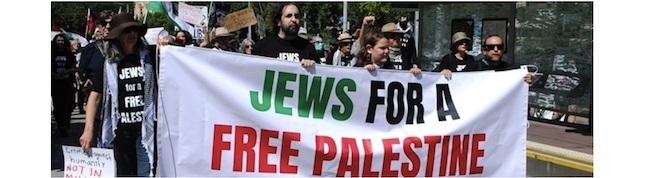
By David Glanz | 27 December 2025
When a leading Zionist calls six other Australian Jews “antisemitic” – and worse – over criticisms of Israel, the issues are deep. Hence this February piece, by those six, was so vital, well-received and much read.
Six Melbourne Jews, labelled “antisemites” by prominent lawyer Mark Leibler, have made a formal complaint against him to the Australian Human Rights Commission. Dr David Glanz details their position.
IMAGINE calling a group of Jews ‘repulsive and revolting human beings’.
At a time when Nazi thugs are openly organising on our streets and swastikas are being daubed on Jewish buildings, it’s surely the stuff of Far-Right memes. Inspiration for more foul graffiti.
But the author of the words was certainly no Nazi. The phrase was written by Mark Leibler AC, one of Melbourne’s leading lawyers, a member of the University of Melbourne Council, a former president of the Zionist Federation of Australia and the current chair of the Australia Israel & Jewish Affairs Council.
Mr Leibler wrote the words as part of a post on Twitter/X that he paid to promote, reaching some 400,000 people.
His target was anti-Zionist Jews in general and – given that we were organising an anti-Zionist rally the day after the post – surely the five of us, some of whom are migrants from Israel.
Mr Leibler didn’t pull his punches. He went on to say that our relatives killed in the Holocaust would be rolling in their graves.
And – this stings, given our track record of anti-racism – that we are ‘vicious antisemites’.
Now Mr Leibler is entitled to his support for Zionism. The idea that Jews would be best served by the establishment of a Jewish state in Palestine is, after all, a political position and one that has been contested within Jewish communities for some 140 years.
He is also entitled to defend the State of Israel and its actions in Gaza over the past 16 months.
We disagree with him on both counts. We organised our rally at Parliament House because we wanted to put on the public record that some Jews oppose the settler colonial conquest of Palestine and the consequences that have flowed from that, including apartheid laws within Israel and the West Bank and the ongoing genocide in Gaza.
We know that we are a minority within the Jewish community. We don’t claim to speak for all Melbourne Jews — quite the opposite. Our argument is that no one, including Mr Leibler, gets to speak for all Jews.
But we know that the number of Jews standing against the genocide and in solidarity with Palestine is growing, not just in Melbourne but around the world.
Over the past 16 months there have been impressive and lively rallies by dissenting Jews in the U.S., a Jewish bloc of up to 1,000 on Palestine rallies in London and, here in Melbourne, Jews taking part in each of the 71 weekly rallies for Palestine, with Jews often invited to speak from the platform.
We include in our ranks the descendants of Holocaust survivors and those who lost family in the Nazi death camps.
So the one thing we are certain Mr Leibler is not entitled to do is to dismiss us as beyond the pale. We have a right to speak, to be heard (and disagreed with) as Jews.
We have submitted a complaint about Mr Leibler’s post on X to the Australian Human Rights Commission.
As we are all Jews, and as Mr Leibler attacked us as such, we would argue that his post is not just offensive but antisemitic.
And given that our rally was to highlight the issue of discrimination against Palestinians and all victims of racism, we would argue that Mr Leibler’s post was an attempt to victimise us by exposing us to ridicule and contempt as Jews in the public arena.
It is also insulting. We include in our ranks the descendants of Holocaust survivors and those who lost family in the Nazi death camps.
We don’t want money or revenge. A public apology would suffice.
We have been denigrated and impugned. But the suffering of the Palestinians makes any slight we have experienced pale to nothing in comparison.
And that is the tragedy. While Mr Leibler uses his position of power to attack us as the “wrong sort of Jews”, some 2 million Palestinians in Gaza squat in the rubble of their homes, their hospitals and schools, their mosques and churches, and mourn their tens of thousands of dead.
Our rally called for an end to the suffering and discrimination. It was joined by many Jews and our non-Jewish supporters.
Mr Leibler’s post was a calculated and pre-emptive smear to undermine our rejection of all forms of racism, including antisemitism and Islamophobia.
He was obviously concerned about our impact. We must be doing something right.
Dr David Glanz, Nachshon Amir, Shahar Amir, Dr Keren Tova Rubinstein and Dr Guy Gillor are anti-Zionist Jews in Melbourne, who organised a rally against genocide and racism at the Victorian Parliament.
Gun vs Keffiyeh. One kills, the other gets you death threats.
by Member of Jews Against the Occupation | Dec 18, 2025 , https://michaelwest.com.au/gun-vs-keffiyeh-one-kills-the-other-gets-you-death-threats/
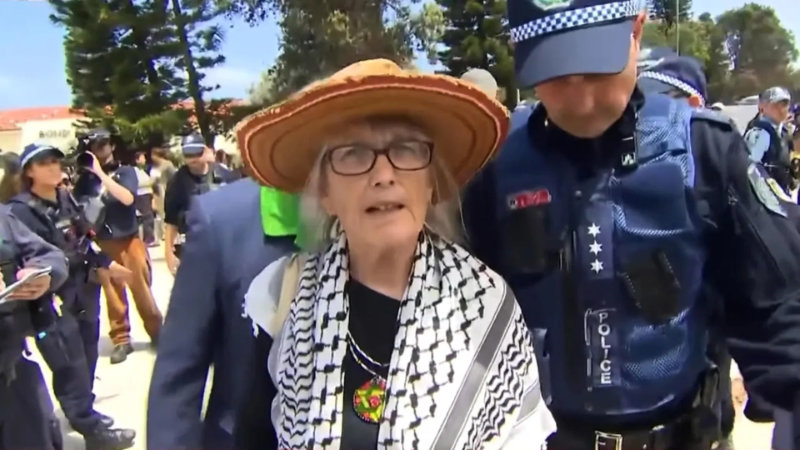
A Jewish woman wearing a Keffiyeh as well as the Star of David was escorted off Bondi Beach by police. The resulting social media storm led to death threats to her and to her friend.
I am writing this knowing it will likely result in more death threats.
That is not a metaphor. It is a statement of fact, based on what happened to my friend Michelle and me this week, and what happened next when we sought protection from the state.
On Monday, at the Bondi memorial for the victims of the mass killing the day before, Michelle – a Jewish local and member of Jews against the Occupation ‘48 – was surrounded by a hostile crowd shouting “get her off”. She was escorted off the beach to the sound of applause by approximately forty police officers, whilst trying to explain her position to the surrounding reporters, and taken to Bondi Police Station, where she was told she couldn’t go back to Bondi Beach for 6 hours.
Her “offence”? Wearing a Keffiyeh.
Whether one agrees with her politics or not is beside the point. The memorial was dominated by Israeli flags – the flag of a state currently accused of genocide and whose leaders are wanted for war crimes. Michelle wore the keffiyeh because she objected to a moment of mourning being politicised. But it is not a crime. Nor is it a provocation warranting mob intimidation.
What followed should concern anyone who believes the rule of law applies equally.
After video footage of Michelle circulated on X, under a post by journalist Hugh Riminton, the abuse escalated rapidly.
Facts ignored
What was not mentioned – despite Michelle wearing a visible Star of David and explicitly stating to the press that she is Jewish – was that she is a Jewish local who grew up in Bondi. That omission mattered.
I replied publicly on X to clarify that Michelle is Jewish, that she is my friend, and that she is part of JAO48. While those responses received hundreds of supportive comments, they also unleashed some of the most extreme antisemitic, misogynistic, ageist and Islamophobic abuse I have encountered in years of public advocacy.
I can deal with online abuse on social media. The block button is my friend.
Threats arrived in my email inbox – not via social media, but via my direct contact form and messaging linked to my business. One message stated that Michelle was “now wishing she had stayed home” and warned, “I would not want to be her”.
The individual who contacted me used the name “Brenton Tarrant”, the name of the Christchurch mass murderer, writing that I “deserve a bullet in the head”, and that Michelle would be “hunted down”, and that because her address was doxxed, it would make “putting a claw hammer in her skull even easier.”
This was enough intimidation for me to call 000 and for two members of the Chatswood station to attend my home. The expressions on their faces when they read the messages were of shock and disgust.
No police report
More concerning was that Michelle’s home address had been published online in response to Riminton’s post. On Monday night, she went to Maroubra Police Station to report she’d been doxxed.
And nothing happened. She wasn’t contacted the next day or given a case number. Nothing.
When we returned to Maroubra Police Station two days later to ask what action had been taken regarding the doxxing and threats, the attending constable.
‘could not even find a record of Michelle having gone there on Monday night.’
There was a record of the death threats I received from Chatswood Police Station, but that doesn’t help someone whose life is in danger in Maroubra.
A Jewish woman, escorted by dozens of police officers, detained at a police station under threat of violence, had no record in the system days later. Had something happened to her in the intervening period, there would have been no official trace of her presence or vulnerability.
This is not a paperwork error. This is a systemic failure.
Irony of doxxing laws
The irony is sharp enough to cut. NSW’s doxxing laws were introduced following sustained lobbying about online threats directed at Zionist Jews. Those laws were framed as urgent protections against harm.
Yet here we have a Jewish woman who is anti-Zionist, whose address was published, who received death threats, and whose case appears to have been ignored entirely.
Only after I explicitly raised the double standard to a young constable – only after pointing out how differently this would have been handled had Michelle been a Zionist Jew – was a report finally entered into the system. I also demanded that police investigate the instigator of the doxxing. Whether the individual can ultimately be identified is beside the point. The absence of effort is the issue.
This failure is made even more disturbing by the broader amplification of risk.
Identity matters
The omission of Michelle’s Jewish identity among all the abuse matters. Not because her Judaism should confer protection or legitimacy – it should not have to – but because it fuelled a narrative that made her a target. The implication was clear:
‘she was an outsider, an agitator, someone deserving of removal.‘
It should not matter who she is. It should not matter what she believes. Wearing a keffiyeh is no more illegal than waving the flag of a state accused of mass atrocities.
What should matter is this: no one attending a memorial should be threatened with death, have their home address exposed, or be left unprotected by the police.
If that standard only applies to some Jews, then it is not protection at all. It is political preference enforced by the state.
And if writing this results in more threats, then that fact alone tells you how broken our public discourse – and our institutions – have become.
Tragedy should have united the country
Fifteen people are dead. Around forty are injured. Families and communities are grieving. But within hours, the event was weaponised.
Israeli Prime Minister Benjamin Netanyahu blamed the Albanese government. Jillian Segal linked the massacre with the March for Humanity on the Harbour Bridge.
Josh Frydenberg re-emerged, positioning himself as a future Prime Minister on the back of mass death, although suggesting this is the case is “highly offensive” to him.
I guess to Josh, it’s irrelevant that the father in the father/son terrorist team arrived in ’98 when Howard was PM, he gained his gun license in 2015 when Abbott was PM, and the ASIO investigation into the son was dropped in 2019 when Morrison was PM.And now, as a result of this horrific terrorist attack on Sunday, the calls to ban pro-Palestine protests are louder than ever.
If anybody can possibly think that Palestinians, Muslims, indeed even humanitarians who object to genocide had anything to gain from a mass shooting, “they’ve got rocks in their head”, as we say in Australia. If anything, the events of this week
‘show precisely why dissent must be protected.‘
When anti-Zionist Jews can be threatened with death, doxxed, misrepresented as terrorists, and left without protection by the state, the danger is not protest – it is repression.
If writing this results in further threats, that fact alone will confirm the point.
It is not safety for all that is being prioritised in this country. It’s not even safety for all Jews that is being prioritised. What dark days we are living in.
Notes On Bondi Beach And Free Speech
Caitlin Johnstone, Dec 22, 2025, https://www.caitlinjohnst.one/p/notes-on-bondi-beach-and-free-speech?utm_source=post-email-title&publication_id=82124&post_id=182280999&utm_campaign=email-post-title&isFreemail=true&r=1ise1&triedRedirect=true&utm_medium=email
The dumbest thing we are being asked to believe today is that pro-Palestinian protests caused the Bondi shooting. It’s self-evidently moronic. No one sincerely believes it. They’re just pretending to believe it to get protests banned and criticism of Israel outlawed.
Nobody actually believes pro-Palestine protests caused the Bondi shooting. They’re just pretending to believe that to promote the interests of a genocidal apartheid state.
Nobody actually believes “globalize the intifada” means “kill all Jews”. They’re just pretending to believe that to promote the interests of a genocidal apartheid state.
Nobody actually believes pro-Palestine demonstrations are “hate marches” or that pro-Palestine speech is “hate speech”. They’re just pretending to believe that to promote the interests of a genocidal apartheid state.
Nobody actually believes there’s a soaring epidemic of antisemitism in our society that is caused by anti-genocide demonstrations. They’re just pretending to believe that to promote the interests of a genocidal apartheid state.
Nobody actually believes opposing the state of Israel is the same as hating Jews. They’re just pretending to believe that to promote the interests of a genocidal apartheid state.
Israel supporters are liars and manipulators. They support genocide and apartheid. Of course they will lie about what they believe, and pretend to think things that they don’t actually think. They’re defending a mass atrocity that can only be defended using lies. They’re bad people. Bad people do bad things
It’s crazy how the Bondi shooters got radicalized by the anti-genocide protests from 2023 to 2025 and then invented a time machine and went back to 2019 to join ISIS.
That’s the claim that’s being made when people say the mass shooting in Sydney was caused by pro-Palestine protests, you know. In 2019 Naveed Akram was on an Australian intelligence watch list because of his ties to an Islamic State terror cell, so the claim that the Gaza protests caused or incited the shooting necessarily requires an element of time travel. Call their story “The Terrorists and the Time Machine”.
We’re being asked to believe that ISIS were a bunch of cuddly wuddly snuggle bears until Australians started protesting an active genocide.
Continue readingIf You’re Not Free To Oppose A Genocide, Your Society Is Not Free
Caitlin Johnstone, Dec 21, 2025, https://www.caitlinjohnst.one/p/if-youre-not-free-to-oppose-a-genocide?utm_source=post-email-title&publication_id=82124&post_id=182228375&utm_campaign=email-post-title&isFreemail=true&r=1ise1&triedRedirect=true&utm_medium=email
If the right to free speech does not include the right to oppose an active genocide using strong and unmitigated language, then there is no freedom of speech.
This is exactly the sort of thing that freedom of speech is intended for: times when the government is doing something wrong which needs to be ferociously opposed. That’s the primary reason it’s an enshrined value in our society. Freedom of speech is for holding the powerful to account.
If you only have freedom of speech when you’re agreeing with your government and saying nothing which inconveniences the powerful, then Saudi Arabia has free speech. Every tyrannical regime that has ever existed has had freedom of speech by those standards. You don’t measure a society’s freedom by how much its citizenry are allowed to agree with their government, you measure it by how much they’re allowed to disagree.
And right now we are being told we’re not allowed to disagree. We’re being told the protests need to stop, the anti-genocide chants need to be criminalized, and everyone needs to shut up and obey — all justified by the completely baseless narrative that the words and actions of pro-Palestinian activists were somehow responsible a terrible massacre that was committed in Sydney last week.
And these policies just so happen to serve the interests of the very same western powers whose genocide-enabling actions were being forcefully opposed these last two years. Government officials constantly being protested and questioned about their facilitation of Israel’s genocidal atrocities. Politicians who are consistently confronted by anti-genocide demonstrators during their public appearances. Wealthy arms manufacturers whose profit margins are being harmed by direct action from activist groups. Plutocratic media institutions who are becoming more and more discredited in the public eye as the Gaza holocaust exposes them all. Billionaires whose empires are built upon the political status quo that gave rise to the genocide in question.
If the powerful are shutting down speech rights to advance their own interests in your society, then your society is not meaningfully different than the dictatorships the western world tries to contrast itself with. All our stories about living in a free society have been just that: stories. Fairy tales.
That’s what they’re telling us with this mad rush to stomp out freedom of speech this past week. They are telling us that we do not live in the kind of society we were taught about in school. They are telling us that the only reason we were allowed to speak as we pleased in the years leading up to the Gaza genocide is because we were a bunch of compliant sheep who were not meaningfully challenging the interests of the powerful, and now that we are meaningfully challenging them the facade of freedom and democracy is falling away.
As Frank Zappa once said, “The illusion of freedom will continue as long as it’s profitable to continue the illusion. At the point where the illusion becomes too expensive to maintain, they will just take down the scenery, they will pull back the curtains, they will move the tables and chairs out of the way and you will see the brick wall at the back of the theater.”
Australia Unveils Plan To Fight “Antisemitism” By Crushing Free Speech.
Caitlin Johnstone, Jul 11, 2025, https://www.caitlinjohnst.one/p/australia-unveils-plan-to-fight-antisemitism?utm_source=post-email-title&publication_id=82124&post_id=168051227&utm_campaign=email-post-title&isFreemail=true&r=ln98x&triedRedirect=true&utm_medium=email
As Australia’s dear friend Israel announces its plan to move Gaza’s entire population into concentration camps to prepare them for deportation and murder them if they refuse, the Australian government is laser-focused on tackling the problem of — you guessed it — antisemitism.
Prime Minister Anthony Albanese made a big spectacle of announcing a new strategy to combat Australia’s completely fictional epidemic of “antisemitism” on Thursday, waving around a 20-page plan which is being denounced nationwide as a Trumpian agenda to stomp out free speech in advancement of the interests of the state of Israel.
The author of the plan is Jillian Segal, a career Israel lobbyist born in apartheid South Africa who was named Australia’s first Special Envoy to Combat Antisemitism by the Albanese government last year. Segal has had an established record of defending and supporting Israel’s genocidal atrocities in Gaza. Her husband John Roth directs one of the major funders of Advance, a climate denying right wing lobbying group which helped kill Australia’s Indigenous Voice to Parliament in 2023.
Segal’s plan is being slammed as “Trumpian” by free speech advocates because it advocates implementing the US president’s policy of cutting off federal funding for universities and other public institutions deemed to be promoting the spread of antisemitism, which of course in effect means protesting against the actions of the Israeli government. Segal writes that she personally “will work with government to enable government funding to be withheld, where possible, from universities, programs or individuals within universities that facilitate, enable or fail to act against antisemitism.”
Segal calls for all public institutions to be forced into espousing the International Holocaust Remembrance Alliance’s (IHRA) working definition of antisemitism, which has been opposed around the world for its conflation of criticism of Israel with hateful actions toward Jews. Under the IHRA definition it is considered antisemitic to claim that Israel is a racist endeavor, or to compare Israel’s abuses to those of Nazi Germany — both of which are entirely legitimate criticisms which should be put forward far more often than they are.
Here is a summary of the full scope of Segal’s plan written up by the ABC’s Tom Crowley:
- Education — a greater role for the Envoy to resource and educate the community, schools, businesses and public institutions about antisemitism and to embed an understanding of antisemitism in law enforcement, government agencies and the school curriculum.
- Universities — call to withhold public funding to universities or those within them deemed to “facilitate, enable or fail to act” on antisemitism, and an inquiry into “clusters” of antisemitism if encampments continue into 2026.
- Media — a new role for the Envoy to encourage media organisations to “avoid accepting false or distorted narratives” and encourage public broadcasters to “accurately and positively” represent Jewish history and culture and make programs that support “social cohesion”.
- Arts — a recommendation that there be protocols for arts festivals and organisations to respond to antisemitic incidents, with public funding able to be withheld similar to universities.
- Policing — a permanent standing arrangement for law enforcement agencies to co-operate on investigating antisemitism, similar to the Avalite taskforce set up after the Adass synagogue attack.
- Online hate — stronger regulation of online hate speech and algorithms, and the ability to support “trusted voices” to refute antisemitism on social media, plus a review of hate speech laws.
- Migration — screen visa applicants for antisemitism and ensure the Migration Act effectively facilitates visa cancellations for antisemitism.
As you can see, Segal is demanding the authority to exert control over pretty much every major aspect of Australian society. She is claiming she wants to do this to combat antisemitism, but everyone knows she actually wants to do this to promote the interests of Israel, because that’s what these things always mean in practice.
Segal’s plan claims that “manipulated narratives in the legacy media” are driving antisemitism and accuses the Australian press of “misinformation”, asserting that “publicly funded media organisations should be required to uphold clear editorial standards that promote fair, responsible reporting to avoid perpetuating incorrect or distorted narratives or representations of Jews.”
Segal says that under her plan she will “monitor media organisations to encourage accurate, fair and responsible reporting and assist them to meet their editorial standards and commitment to impartiality and balance and to avoid accepting false or distorted narratives.”
Asked on the ABC on Thursday to list some of the changes that she would make to the reporting of public news broadcasters, Segal adamantly refused to give a single example, despite being repeatedly pressed to do so by the ABC’s Sarah Ferguson.
The following morning Segal was interviewed on the ABC’s Radio National Breakfast and pressed on the same issue, where she finally relented and gave one single example of absolutely breathtaking ridiculousness.
“Six months ago or so,” Segal said, “the ABC ran a story repeatedly about a hospital in Gaza that had been bombed. And there was incomplete information, as there is only perhaps information emanating from Hamas, but it was alleged to be, the ABC reported as fact, that it had been bombed by Israel. And then horrified people were upset and the Jewish community was looked at with disgust and worse. And then it turned out indeed that it was not bombed by Israel, that it had been from Gaza itself, and it had been a bomb that had fallen short.”
Segal appears to be referring to one of the early bombings of the al-Ahli Arab Baptist Hospital, which occurred not six months ago but in October of 2023. Israel and various western institutions claimed the hospital was accidentally bombed by Palestinian forces while analysts like Forensic Architecture say the attack came from Israeli forces, accusing Israel of peddling misinformation about the strike. Since that time Israel has deliberately demolished Gaza’s health infrastructure with hundreds of attacks on healthcare facilities, and the al-Ahli Hospital has been bombed no fewer than eight separate times.
Segal’s one and only example is a perfect illustration of the kind of extreme bias she wants to impose upon Australian consciousness, which obviously has no place in a free society.
The fraudulent antisemitism panic in Australia has been reinvigorated by two events last week that were seized upon with shrieking hysteria by the mainstream press, none of which showed any signs of an antisemitism crisis in our nation.
As Paul Gregoire explains for the Sydney Criminal Lawyers blog, Australia is being whipped up into a frenzy by the conflation of one incident in which a Sydney man set fire to the doors of a Melbourne synagogue with a different and completely legitimate act of anti-genocide activism.
The synagogue attacker is yet another story of a shady individual with no known record of antisemitic ideology or pro-Palestinian sentiment perpetrating an apparent antisemitic attack, following a long stretch of supposed antisemitic incidents which turned out to have been staged by organized crime operatives with no ideological motive.
This one dubious story of a man committing an actual crime against an actual Jewish place of worship has been obnoxiously mentioned in the same breath as another unconnected incident by the entire Australian political/media class all week. Protesters gathered at the Miznon restaurant in Melbourne to demonstrate against the establishment’s Israeli co-owner, who is also the spokesperson for the so-called Gaza Humanitarian Foundation where Israeli soldiers admit they’ve been massacring starving civilians seeking food. A fight broke out with a group from the restaurant across from Miznon who the protesters say instigated the attack and who are clearly seen assaulting the pro-Palestinian activists in the available video footage.
The entire so-called “antisemitism crisis” in Australia is like this. The overwhelming majority of it is just people criticizing Israel and trying to do what they can to stop the live-streamed genocide they’ve been watching on their screens every day for two years, which is then deliberately conflated with the actions of a few fringe actors with frequently suspicious motives.
“Antisemitism” means criticism of Israel. That’s just what it means now. It used to mean something else, but years of bad faith actors using that word in the most dishonest ways imaginable to defend the most horrific things you’ve ever seen has changed the definition. It is no longer possible to separate that word from this sustained campaign of mass deception.
It’s the genocide. People are mad at the genocide. They don’t hate Jews, they hate genocide. This was explained quite nicely the other day by Jack Mirkinson, who wrote the following about the controversy surrounding musical duo Bob Vylan’s chants of “Death to the IDF” at Glastonbury Festival last month:
“Left unmentioned in any of this freakout is the context in which it is taking place. Why was Bob Vylan talking about Palestine right now? Why was a giant crowd of people so receptive to these comments? Why has this become such a totemic issue?
“The answer will not shock you. It’s because Israel has been committing genocide in Gaza for nearly two years.
“That’s it! That’s why. People don’t like genocide, and when they see a country committing genocide, they stop liking that country so much. If the genocide ended, a lot of people would be less mad at Israel than they are right now.
This isn’t rocket science. But — and this is the crucial thing — because our world’s leading politicians and media outlets fundamentally don’t see opposition to the genocide as a legitimate viewpoint to hold, they can’t quite comprehend what is happening all around them.”
That’s it. It’s the genocide, stupid. That’s all this has ever been about. I wish I could force every pundit, politician and journalist in Australia to listen to these words.
Amazon Is Censoring My Most Recent Magazine Issue
Caitlin Johnstone Jan 14, 2025
Without explanation Amazon has blocked and unpublished my last issue of JOHNSTONE magazine which features my painting of Luigi Mangione on the cover. The link to order it is now dead. When I asked for an explanation or appeal they just sent a template response referring me back to their publishing rules.
So that’s annoying. The pay-what-you-want ebook of the issue is still available for anyone who wants it.
❖
In her bid to secure her confirmation as Trump’s next Director of National Intelligence, Tulsi Gabbard is now pledging to support Section 702 of the FISA Act. This notorious law allows for the warrantless surveillance of Americans, and in congress Gabbard had previously fought to repeal it.
This is how the national security state works. You don’t change the machine, the machine changes you. Anyone who starts off opposing the imperial status quo of authoritarianism, warmongering and corruption either finds themselves excluded from the halls of power or adapts new positions in favor of the status quo.
The Australian political-media class has been rending its garments over a ridiculously fake incident of antisemitic graffiti at a synagogue in Sydney, which features both swastikas and the words “Free Palestine” right next to each other.
It’s weird how few people I see calling this what it so obviously is. Apparently we’re all supposed to take very seriously the idea that either (A) Nazis are spray painting the words “Free Palestine” next to their swastikas, or (B) that supporters of Palestinian rights are spray painting Nazi symbols next to their pro-Palestinian slogans. Apparently we’re all truly expected to pretend we don’t know some Israel supporter did this themselves to provide political cover for the genocide in Gaza.
It is always okay to express skepticism about dubious incidents of “antisemitism” in today’s political environment. Israel’s supporters are shitty, evil people who support genocide, and faking antisemitic incidents is a standard hasbara tactic with a well-documented history…………………………………… https://www.caitlinjohnst.one/p/amazon-is-censoring-my-most-recent?utm_source=post-email-title&publication_id=82124&post_id=154758013&utm_campaign=email-post-title&isFreemail=true&r=1ise1&triedRedirect=true&utm_medium=email
❖
‘Pursuit of truth will live on’: Assange speaks to the world
Independent Australia, By Binoy Kampmark | 7 October 2024,
Having been freed from incarceration at Belmarsh Prison, Julian Assange delivered his first public speech at a recent parliamentary hearing, writes Dr Binoy Kampmark.
WIKILEAKS FOUNDER Julian Assange’s last public address was made in the Ecuadorian Embassy in London. There, he was a guest vulnerable to the capricious wishes of changing governments. At Belmarsh Prison in London, he was rendered silent, and his views were conveyed by visitors, legal emissaries and his family.
The hearing in Strasbourg on 1 October, organised by the Committee on Legal Affairs and Human Rights of the Parliamentary Assembly of the Council of Europe (P.A.C.E.), arose from concerns raised in a report by Iceland’s Thórhildur Sunna Ævarsdóttir, in which she expressed the view that Assange’s case was ‘a classic example of “shooting the messenger”’.
Ævarsdóttir said:
‘I find it appalling that Mr Assange’s prosecution was portrayed as if it was supposed to bring justice to some unnamed victims the existence of whom has never been proven, whereas perpetrators of torture or arbitrary detention enjoy absolute impunity.’
His prosecution, Ævarsdóttir went on to explain, had been designed to obscure and deflect the revelations found in WikiLeaks’ disclosures, among them abundant evidence of war crimes committed by U.S. and coalition forces in Iraq and Afghanistan, instances of torture and arbitrary detention in the infamous Guantánamo Bay camp facility, illegal rendition programs implicating member states of the Council of Europe and unlawful mass surveillance, among others.
A draft resolution was accordingly formulated, expressing, among other things, alarm at Assange’s treatment and disproportionate punishment ‘for engaging in activities that journalists perform on a daily basis’ which made him, effectively, a political prisoner; the importance of holding state security and intelligence services accountable; the need to ‘urgently reform the 1917 Espionage Act’ to include conditional maliciousness to cause harm to the security of the U.S. or aid a foreign power and exclude its application to publishers, journalists and whistleblowers.
Assange’s full testimony began with reflection and foreboding: the stripping away of his self in incarceration, the search, as yet, for words to convey that experience, and the fate of various prisoners who died through hanging, murder and medical neglect. It was good to hear that voice again. A voice of provoking interest that pitter patters, feline across a parquet, followed by the usual devastating conclusion.
While filled with gratitude for the efforts made by P.A.C.E. and the Legal Affairs and Human Rights Committee, not to mention innumerable parliamentarians, presidents, prime ministers and even the Pope, none of their interventions “should have been necessary”. But they proved invaluable, as “the legal protections that did exist, many existed only on paper or were not effective in any remotely reasonable time frame”.
The legal system facing Assange was described as encouraging an “unrealisable justice”. Choosing freedom instead of purgatorial process, he could not seek it, the plea deal with the U.S. Government effectively barring his filing of a case at the European Court of Human Rights or a freedom of information request. ……………………………………………………………………………………………………….
A spectator, reader or listener might leave such an address deflated. But it is fitting that a man subjected to the labyrinthine, life-draining nature of several legal systems should be the one to exhort to a commitment: that all do their part to keep the light bright, “that the pursuit of truth will live on, and the voices of the many are not silenced by the interests of the few”. https://independentaustralia.net/politics/politics-display/pursuit-of-truth-will-live-on-assange-speaks-to-the-world,19049
Finally Free, Assange Receives a Measure of Justice From the Council of Europe
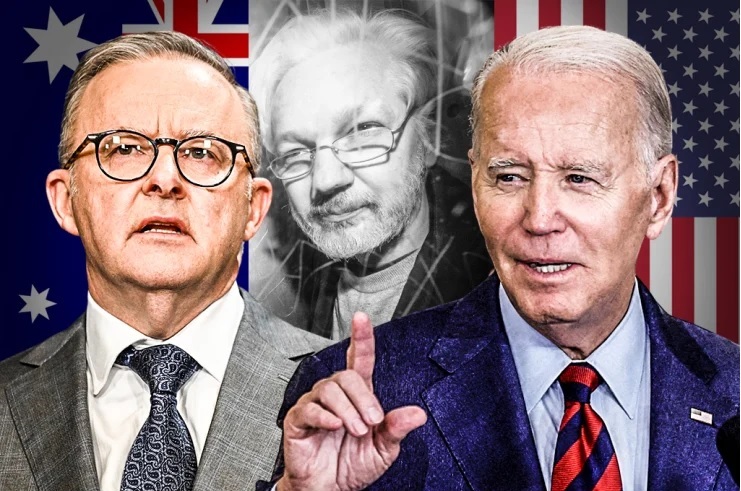
In the U.S., “the concept of state secrets is used to shield executive officials from criminal prosecution for crimes such as kidnapping and torture, or to prevent victims from claiming damages,” the resolution notes. But “the responsibility of State agents for war crimes or serious human rights violations, such as assassinations, enforced disappearances, torture or abductions, does not constitute a secret that must be protected.”
In his first public statement since his release, Assange said, “I’m free today … because I pled guilty to journalism.”
By Marjorie Cohn , Truthout, October 4, 2024
he Parliamentary Assembly of the Council of Europe (PACE), Europe’s foremost human rights body, overwhelmingly adopted a resolution on October 2 formally declaring WikiLeaks founder Julian Assange a political prisoner. The Council of Europe, which represents 64 nations, expressed deep concern at the harsh treatment suffered by Assange, which has had a “chilling effect” on journalists and whistleblowers around the world.
In the resolution, PACE notes that many of the leaked files WikiLeaks published “provide credible evidence of war crimes, human rights abuses, and government misconduct.” The revelations also “confirmed the existence of secret prisons, kidnappings and illegal transfers of prisoners by the United States on European soil.”
According to the terms of a plea deal with the U.S. Department of Justice, Assange pled guilty on June 25 to one count of conspiracy to obtain documents, writings and notes connected with the national defense under the U.S. Espionage Act. Without the deal, he was facing 175 years in prison for 18 charges in an indictment filed by the Trump administration and pursued by the Biden administration, stemming from WikiLeaks’ publication of evidence of war crimes committed by the U.S. in Iraq, Afghanistan and Guantánamo Bay. After his plea, Assange was released from custody with credit for the five years he had spent in London’s maximum-security Belmarsh Prison.
The day before PACE passed its resolution, Assange delivered a powerful testimony to the Council of Europe’s Committee on Legal Affairs and Human Rights. This was his first public statement since his release from custody four months ago, after 14 years in confinement – nine in the Ecuadorian Embassy in London and five in Belmarsh. “Freedom of expression and all that flows from it is at a dark crossroads,” Assange told the parliamentarians.
A “Chilling Effect and a Climate of Self-Censorship”
The resolution says that “the disproportionately harsh charges” the U.S. filed against Assange under the Espionage Act, “which expose him to a risk of de facto life imprisonment,” together with his conviction “for — what was essentially — the gathering and publication of information,” justify classifying him as a political prisoner, under the definition set forth in a PACE resolution from 2012 defining the term. Assange’s five-year incarceration in Belmarsh Prison was “disproportionate to the alleged offence.”
Noting that Assange is “the first publisher to be prosecuted under [the Espionage Act] for leaking classified information obtained from a whistleblower,” the resolution expresses concern about the “chilling effect and a climate of self-censorship for all journalists, editors and others who raise the alarm on issues that are essential to the functioning of democratic societies.” The resolution also notes that “information gathering is an essential preparatory step in journalism” which is protected by the right to freedom of expression guaranteed by the European Court of Human Rights.
The resolution cites the conclusion of Nils Melzer, UN Special Rapporteur on torture and other cruel, inhuman or degrading treatment or punishment, that Assange had been exposed to “increasingly severe forms of cruel, inhuman or degrading treatment or punishment, the cumulative effects of which can only be described as psychological torture.”
Condemning “transnational repression,” PACE was “alarmed by reports that the CIA was discreetly monitoring Mr. Assange in the Ecuadorian embassy in London and that it was allegedly planning to poison or even assassinate him on British soil.” The CIA has raised the “state secrets” privilege in a civil lawsuit filed by two attorneys and two journalists over that illegal surveillance.
In the U.S., “the concept of state secrets is used to shield executive officials from criminal prosecution for crimes such as kidnapping and torture, or to prevent victims from claiming damages,” the resolution notes. But “the responsibility of State agents for war crimes or serious human rights violations, such as assassinations, enforced disappearances, torture or abductions, does not constitute a secret that must be protected.”
Moreover, the resolution expresses deep concern that, according to publicly available evidence, no one has been held to account for the war crimes and human rights violations committed by U.S. state agents and decries the “culture of impunity.”
The resolution says there is no evidence anyone has been harmed by WikiLeaks’ publications and “regrets that despite Mr Assange’s disclosure of thousands of confirmed — previously unreported — deaths by U.S. and coalition forces in Iraq and Afghanistan, he has been the one accused of endangering lives.”
Assange’s Testimony
The testimony Assange provided to the committee was poignant. “I eventually chose freedom over realizable justice … Justice for me is now precluded,” Assange testified. “I am not free today because the system worked. I am free today after years of incarceration because I pled guilty to journalism.” He added, “I pled guilty to seeking information from a source. I pled guilty to obtaining information from a source. And I pled guilty to informing the public what that information was.” His source was whistleblower Chelsea Manning, who provided the documents and reports to WikiLeaks. “Journalism is not a crime,” Assange said. “It is a pillar of a free and informed society.”………………………………………………………………………………
PACE Urges US to Investigate War Crimes
The resolution calls on the U.S., the U.K., the member and observer States of the Council of Europe, and media outlets to take actions to address its concerns.
It calls on the U.S., an observer State, to reform the Espionage Act of 1917 to exclude from its operation journalists, editors and whistleblowers who disclose classified information with the aim of informing the public of serious crimes, such as torture or murder. In order to obtain a conviction for violation of the Act, the government should be required to prove a malicious intent to harm national security. It also calls on the U.S. to investigate the allegations of war crimes and other human rights violations exposed by Assange and Wikileaks.
PACE called on the U.K. to review its extradition laws to exclude extradition for political offenses, as well as conduct an independent review of the conditions of Assange’s treatment while at Belmarsh, to see if it constituted torture, or inhuman or degrading treatment.
In addition, the resolution urges the States of the Council of Europe to further improve their protections for whistleblowers, and to adopt strict guidelines to prevent governments from classifying documents as defense secrets when not warranted.
Finally, the resolution urges media outlets to establish rigorous protocols for handling and verifying classified information, to ensure responsible reporting and avoid any risk to national security and the safety of informants and sources.
Although PACE doesn’t have the authority to make laws, it can urge the States of the Council of Europe to take action. Since Assange never had the opportunity to litigate the denial of his right to freedom of expression, the resolution of the Council of Europe is particularly significant as he seeks a pardon from U.S. President Joe Biden. https://truthout.org/articles/finally-free-assange-receives-a-measure-of-justice-from-the-council-of-europe/
Australian film-maker refused entry into India

Pearls and Irritations, By Sam Varghese, Sep 21, 2024
Australian film-maker David Bradbury has been refused entry into India, after flying into Chennai from Bangkok on 10 September with his two children, aiming to take a holiday.
Bradbury, an Oscar-nominated film-maker who is an anti-nuclear campaigner, said all three members of his family had valid visas issued by the Indian consulate in Canberra before they left Australia on 7 September.
He said he was denied entry because of a film he had made in India in 2012, about the protests against a nuclear power plant in Kudankulam, about two km away from the fishing hamlet of Idinthakarai in the southern district of Tirunelveli in Tamil Nadu.
When Bradbury submitted his passport to immigration at Chennai, he was told that he would not be granted entry into the country.
His children were, however, allowed to enter the country.
“During the course of the rest of the day and into the night various immigration plainclothes police would come and interrogate me,” Bradbury said in a statement.
They asked him what he was doing in India, what he had done during his previous visit in 2012, who he knew in India and whom he had communicated with before coming to the country.
He was also asked to unlock his phone and give it to the authorities, something he refused to do……………………………….
Bradbury is now in Bangkok after being deported from India. He said he would be spending one more week in the Thai capital while his children visited places in India which he had intended them to visit.
While en route to India, he screened his latest documentary, Death is a lady, a tribute to Vietnam war cameraman and journalist, the legendary Neil Davis who was tragically killed in a 24-hour coup in Bangkok 39 years ago. The screening raised $407 for the children of Gaza.
“What had caused the cancellation of my Indian visa? Over the course of the afternoon and being interrogated by Indian Immigration plainclothes officers, I quickly concluded the Indian government had not forgiven me for making a film about the anti-nuclear protest by poor fisherfolk,” Bradbury said.
The nuclear plant in question was proposed in 1986 and an agreement to build it was signed between the then Soviet Union and India in 1988.
Due to continuing protests, the plant was delayed. The idea was revived in 2000, and construction began under the then Indian government of Atal Bihari Vajpayee in 2001.
The plant became operational in 2013 and a second 1000MW unit was commissioned in August 2016, through an agreement between Russian President Vladimir Putin, Prime Minister Narendra Modi and then Tamil Nadu chief minister late Jayalalitha Jayaram.
Kudankulam has the highest capacity of any nuclear plant in India, with 2000 MW currently installed and 2000 MW under construction. Once completed, it will have a capacity of 6000 MW. It is also the only nuclear plant in India that uses pressurised water reactors based on Russian technology. https://johnmenadue.com/australian-film-maker-refused-entry-into-india/
Why Julian Assange couldn’t outrun the Espionage Act
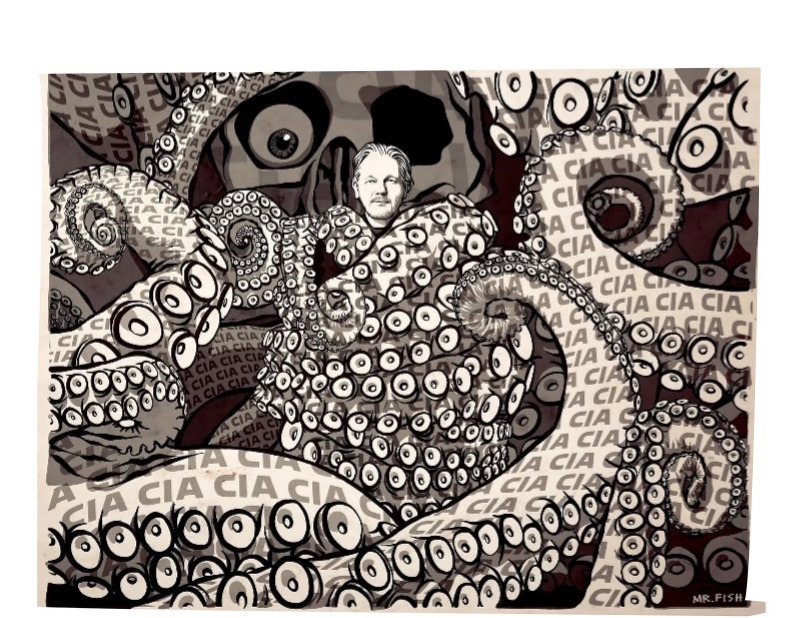
the grave threat the Espionage Act poses to journalism and the First Amendment
SOTT, Jordan Howell The FIRE, Wed, 26 Jun 2024
Julian Assange spent seven years in self-exile in London’s Ecuadorian Embassy avoiding arrest, and five more in prison, for publishing classified documents on WikiLeaks.
Julian Assange is a free man, and one of the most contentious press freedom controversies in living memory may finally be coming to a close.
The WikiLeaks founder reached a plea deal with the Department of Justice on Monday after spending five years in an English prison fighting extradition to the United States. Federal officials sought to charge Assange with conspiracy to obtain and disclose national security information under the Espionage Act of 1917.
Assange and WikiLeaks shocked the world in 2010 by publishing hundreds of thousands of secret military documents and diplomatic cables related to the wars in Iraq and Afghanistan that were leaked by Army intelligence analyst Chelsea Manning. Months later, Assange was on the run and Manning was in jail.
Assange claimed that by receiving and publishing confidential information, what he did was no different than the type of routine news reporting that journalists around the world engage in every day. As the Supreme Court ruled in New York Times Co. v. United States (1971), better known as “The Pentagon Papers” case, publishing leaked documents is protected under the First Amendment.
FIRE has long opposed use of the Espionage Act to curtail the rights of journalists to source information. And in December 2022, FIRE signed an open letter organized by the Committee to Protect Journalists along with 20 other civil liberties groups calling on the federal government to drop its charges against Assange.
“We are united . . . in our view that the criminal case against him poses a grave threat to press freedom both in the United States and abroad,” we argued. “[J]ournalists routinely engage in much of the conduct described in the indictment: speaking with sources, asking for clarification or more documentation, and receiving and publishing official secrets. News organizations frequently and necessarily publish classified information in order to inform the public of matters of profound public significance.”
Assange’s 12 year ordeal, including seven years in self-exile in the Ecuadorian Embassy in London before his arrest and imprisonment, underscores the continued threat that the century-old Espionage Act still poses to civil liberties today — and not just in the United States. Assange is not a U.S. citizen, nor was he ever a resident. But because of modern extradition treaties, there were few places in the world where he could travel to escape the Act’s reach,
Under the terms of Monday’s deal, Assange pleaded guilty to the charges and was sentenced to 62 months incarceration, but with credit for time served, according to documents filed with the U.S. District Court for the Northern Mariana Islands.
Ultimately, freedom of the press is what was at stake with the government’s case against Assange. It was never only about him. The precedent that would have been set by his extradition and trial would have sent a chilling message to journalists across the country and the world: You can run, but you can’t hide from the Espionage Act.
What is the Espionage Act?……………………………………………………………………………………….Based on the Defense Secrets Act of 1911, the Espionage Act of 1917 included much stiffer penalties — including the death penalty — for sharing secret or confidential information or otherwise interfering with the operations of the U.S. military.
The Espionage Act made it a crime to obtain information regarding national defense “with intent or reason to believe” that doing so would hurt the U.S. or to advantage another country. While subsequent amendments and court decisions have refined its language and scope, its core purpose remains the same.
Espionage Act and the Supreme Court
The law was immediately controversial because its use was not limited to actual acts of espionage. Rather, the Espionage Act allowed the government to clamp down on anyone who opposed the war effort.
In Schenck v. United States, in 1919, the Supreme Court upheld the conspiracy conviction against socialist Charles Schenck under the Espionage Act for distributing anti-war leaflets that urged people to boycott the draft.
The problem with the Court’s ruling in Schenck, as subsequent decisions would affirm, is that Schenk’s speech was not calling for violence or even civil disobedience. Rather, his speech was precisely the kind of political expression that decades of subsequent Supreme Court decisions would ultimately uphold. Numerous convictions under the Espionage Act would make their way to the Court, including that of socialist presidential candidate Eugene Debs, who was arrested for giving a speech opposing the war.
Since then, one of the most nefarious uses of the Espionage Act has been to silence journalists. At least insofar as publishing the leaked documents on the Wikileaks website, what Assange did was little different than what The New York Times and The Washington Post did in 1971 when they published and reported on thousands of pages from a classified report about the war in Vietnam.
……………………………………….As the Supreme Court has ruled, freedom of the press is a foundational principle, enshrined in the Bill of Rights. And though Julian Assange is finally free, FIRE continues to have serious concerns about the grave threat the Espionage Act poses to journalism and the First Amendment. https://www.sott.net/article/492768-Why-Julian-Assange-couldnt-outrun-the-Espionage-Act
The State Failed to Break Assange

Julian Assange has not been freed, passive voice, the beneficiary of decisions taken by the American and British judiciaries — and almost certainly in the Biden regime’s upper reaches. Julian Assange has achieved his freedom, actively. Even during the darkest moments of his years under house arrest, in asylum at Ecuador’s London embassy, and at Belmarsh, he never surrendered his sovereignty. He remained ever the captain of his soul, and never did he allow his captors entry onto his ship.
SCHEERPOST, JULY 1, 2024 Patrick Lawrence
After apparently lengthy negotiations via Julian Assange’s attorneys, the WikiLeaks founder agreed to plead guilty to one felony charge of illegally obtaining and publishing U.S. government documents of various kinds — many standing as evidence of war crimes and human rights abuses, others exposing the Democratic Party’s corruptions during the presidential campaign of Hillary Clinton in 2016.
Assange was sentenced Wednesday to a term of five years and two months, precisely the time he spent at Belmarsh, the maximum-security prison in southeast London. It was from Belmarsh that Assange fought requests for his extradition to the U.S., where he would have faced multiple charges and a lengthy sentence under the 1917 Espionage Act. When he departed for Australia at the conclusion of the proceeding in Saipan, the largest of the Northern Marianas and also the capital city, he became a free man for the first time in 14 years, counting from his time under house arrest in 2010.
Let us take the utmost care with our diction at this surprising and welcome turn. This will enable us to fathom the moment clearly.
Julian Assange has not been freed, passive voice, the beneficiary of decisions taken by the American and British judiciaries — and almost certainly in the Biden regime’s upper reaches. Julian Assange has achieved his freedom, actively. Even during the darkest moments of his years under house arrest, in asylum at Ecuador’s London embassy, and at Belmarsh, he never surrendered his sovereignty. He remained ever the captain of his soul, and never did he allow his captors entry onto his ship.
It was for this, most fundamentally, that Assange has suffered these past years, especially the five he spent in a cell at Belmarsh. The project was precisely to destroy his sovereignty, to break him one way or another, and he refused to break. His will — and I simply cannot imagine the awesome muscularity of it — has seen him through to victory.
When news of his impending freedom arrived with us last Monday evening, I reacted without hesitation, “It is not a bad deal. Everyone knows the truth and worth of what Assange did. Nothing lost. A good man’s life hung in the balance — this a gain.”
“Everyone” seems already an overestimation, but I will get to this in a moment.
Among the curious details of Assange’s plea is the choice of the federal courthouse in the Northern Marianas, a U.S. possession, for the denouement of his case. Assange’s legal team requested this peculiar location, let us not miss. It is remote from the U.S. mainland but close to his native Australia. There are two things to surmise from this, I think.
One, it is likely Assange’s attorneys thought it a very bad idea for their client to set foot on American soil anywhere near the court in Washington’s environs where cases of this kind, national-security cases, are customarily tried — tried before jurors drawn from a pool well populated with active and retired national security operatives, bureaucrats and assorted apparatchiks.
That the locale for the final settlement was negotiated away from the District Court of Eastern Virginia indicates that Assange’s lawyers remained mistrustful of U.S. assurances of a fair treatment under the law even while their talks proceeded.
Two, and the larger point here, moving the case to so out-of-the-way a courtroom indicated that Assange and his legal defense almost certainly had considerable leverage in determining the terms under which he achieved his freedom. This tells us something important about the years Assange spent at Belmarsh subjected to disgracefully punitive conditions and the circus various judges, Vanessa Baraitser high among them, made of the British courts.
I have long assumed, as many others may have, that the Biden regime and its predecessor simply did not want Assange extradited because it did not want to take up a trial that would more or less automatically lead to a sentence of 170 years. Too potentially messy, too politically risky, too harsh a light on this administration’s hypocrisies in the matter of press freedom and its indifference to, if not its approval of, the British authorities’ inhumane treatment of a man whose organization exposed war crimes.
How else to explain the lengthy delays in the London courts these past five years? And I cannot but think with something close to conviction that the corporate press in America, chiefly The New York Times, had some modest voice in the decision to negotiate a plea that reflects to some extent the Assange side’s terms?
The Times has avoided serious reporting of the Assange case for years. Embarrassing it would have been for the paper to report proceedings in Eastern Virginia, as it would have been obliged to do. We all remember that The Times made full use of WikiLeaks releases until, in April 2017, Mike Pompeo denounced Assange as “a state actor of Russia.” It was at that point Washington turned frontally against the organization and its founder, and the corporate press dutifully followed the lead of Trump’s egregious secretary of state.
The Biden regime has managed at last to drop a hot potato, but it is a stretch to assume it has not burned its fingers. As others have remarked, it could have vacated its case entirely and, indeed, gone so far as to offer Assange compensation for his suffering while facing unjust charges.
That would have marked a dramatic redemption. Instead, it leaves the door still wide open to pursuing cases such as Assange’s whenever a reporter’s truths are similarly inconvenient. This is self-inflicted damage atop years of self-inflicted damage, in my read. The Biden government’s exit from this case more or less mutilates any claim it will henceforth assert to respect press freedom and First Amendment rights.
Sheer Endurance
I measure the magnitude of Julian Assange’s triumph not in passing political terms, although the politics of his achievement of freedom are important. I view it in more personal terms. His greatest victory lies in the strength and sheer endurance he summoned and consistently displayed as the machinery of two sovereign states attempted to destroy him.
Several years ago, readers will recall, Nils Melzer testified in Baraitser’s court that Assange’s treatment met official definitions of psychological and physical torture. Not long after the U.N.’s special rapporteur on torture gave his testimony, I began an essay on the Assange case for Raritan, the cultural and political journal. It came to me as I wrote “Assange Behind Glass,” which I reproduce here from my web site archives, that we had to see it in the context of the “total domination” Hannah Arendt explored in The Origins of Totalitarianism, her look back, in 1951, at the horrors of the 20th century’s first half. “Its intent is to strip humanity of all identity and individuation,” I wrote of Arendt’s theme. And from her text:……………………………………………………………………………………………………………………….
…………….Are there undisclosed codicils attaching to the Assange’s camp’s plea agreement? Will his professional activities henceforth be curtailed by agreement? These are inevitable questions, even if one does not care to pose them. The answers are unclear and may never be clear. Out of respect and admiration for a man who has just won his freedom after paying a very high price in his fight for it, I leave these matters to him and those around him. https://scheerpost.com/2024/07/01/patrick-lawrence-the-state-failed-to-break-assange/
1 This month
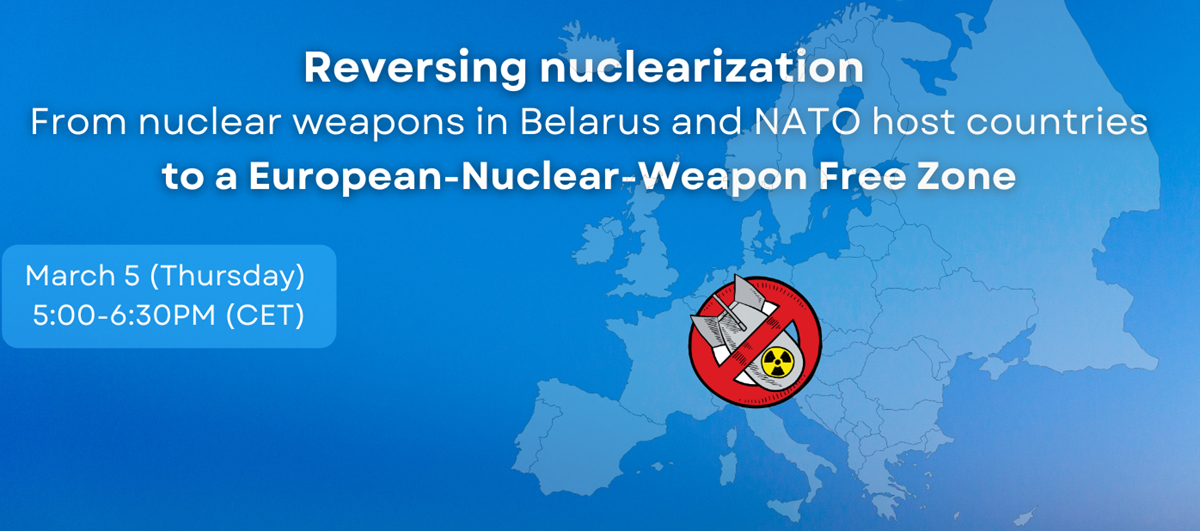
6 March -Online – Reversing nuclearization:
From nuclear weapons in Belarus and NATO host countries to a European-Nuclear-Weapon Free Zone
Mar 6, 2026 03:00 AM in Canberra, Melbourne, Sydney

of the week – Australians for War Powers Reform (AWPR)
To see nuclear-related stories in greater depth and intensity
 Antinuclear