‘Bring Julian home’: the Australian campaign to free Assange
Assange’s supporters say what Wikileaks revealed about power and access to information is as relevant today as ever.
Aljazeera, By Lyndal Rowlands 19 May 2024
Melbourne, Australia – At home in Australia, Julian Assange’s family and friends are preparing for his possible extradition to the United States, ahead of what could be his final hearing in the United Kingdom on Monday.
Assange’s half-brother Gabriel Shipton, who spoke to Al Jazeera from Melbourne before flying to London, said he had already booked a flight to the US.
A filmmaker who worked on blockbusters like Mad Max before producing a documentary on his brother, Shipton has travelled the world advocating for Assange’s release, from Mexico City to London and Washington, DC.
Earlier this year, he was a guest of cross-bench supporters of Assange at US President Joe Biden’s State of the Union address.
The invitation reflected interest in his brother’s case both in Washington, DC and back home in Australia. Biden told journalists last month he was “considering” a request from Australia to drop the US prosecution.
Assange rose to prominence with the launch of Wikileaks in 2006, creating an online whistleblower platform for people to submit classified material such as documents and videos anonymously. Footage of a US Apache helicopter attack in Baghdad, which killed a dozen people, including two journalists, raised the platform’s profile, while the 2010 release of thousands of classified US documents on the wars in Afghanistan and Iraq, as well as a trove of diplomatic cables, cemented its reputation.
Shipton told Al Jazeera the recent attention from Washington, DC had been notable, even as his brother’s options to fight extradition in the UK appeared close to running out.
“To get attention there on a case of a single person is very significant, particularly after Julian’s been fighting this extradition for five years,” Shipton told Al Jazeera, adding that he hoped the Australian prime minister was following up with Biden.
We’re always trying to encourage the Australian government to do more.”
A test for US democracy
Assange’s possible extradition to the US could see freedom of expression thrown into the spotlight during an election year that has already seen mass arrests at student antiwar protests.
Shipton told Al Jazeera the pro-Palestinian protests had helped bring “freedom of speech, freedom to assembly, particularly in the United States, front of mind again”, issues he notes have parallels with his brother’s story.
While Wikileaks published material about many countries, it was the administration of former US President Donald Trump that charged Assange in 2019 with 17 counts of violating the Espionage Act.
US lawyers argue Assange is guilty of conspiring with Chelsea Manning, a former army intelligence analyst, who spent seven years in prison for leaking material to WikiLeaks before former US President Barack Obama commuted her sentence.
“It’s an invaluable resource that remains utterly essential to understand how power works, not just US power, but global power,” Antony Loewenstein, an independent Australian journalist and author, said of the Wikileaks archive.
“I always quote and detail [Wikileaks’s] work on a range of issues from the drug war, to Israel/Palestine, to the US war on terror, to Afghanistan,” Loewenstein said, noting that Wikileaks also published materials on Bashar al-Assad’s Syria and Vladimir Putin’s Russia.
“It’s just an incredible historical resource,” he said.
Loewenstein’s most recent book, the Palestine Laboratory, explores Israel’s role in spreading mass surveillance around the world, another issue Loewenstein notes, that Assange often spoke about.
“One thing that Julian has often said, and he’s correct, is that the internet is on the one hand an incredibly powerful information tool… but it’s also the biggest mass surveillance tool ever designed in history,” said Loewenstein……………………………………………. more https://www.aljazeera.com/features/2024/5/19/bring-julian-home-the-australian-campaign-to-free-assange
The Heroism of David McBride
By John Kiriakou https://consortiumnews.com/2024/05/16/john-kiriakou-the-heroism-of-david-mcbride/
By 2014 McBride had compiled a dossier into profound command failings that saw examples of potential war crimes in Afghanistan overlooked and other soldiers wrongly accused. On Tuesday he was sentenced to nearly six years in jail.
Sometimes a whistleblower does everything right. He or she makes a revelation that is clearly in the public interest. The revelation is clearly a violation of the law. And then he or she is even more clearly abused by the government. It would be great if these stories always had happy endings. Unfortunately, they don’t.
In this case, the whistleblower, the hero, Australian David McBride has been sentenced to five years and eight months in prison for telling the truth. He will not be eligible for parole for 27 months.
David McBride is former British Army officer and a lawyer with the Australian Special Forces who blew the whistle on war crimes committed by Australian soldiers in Afghanistan, specifically the killing of 39 unarmed Afghan prisoners, farmers, and civilians in 2012.
After failing to raise a response through official channels, McBride shared the information with the Australian Broadcasting Corporation (ABC), which published a series of major reports based on the material.
The ABC broadcasts in 2017 led to a major inquiry that upheld many of the allegations. Despite this, the ABC and its journalists themselves came under threat of prosecution for their work on the story.
The ABC offices in Sydney were raided by the national police, but in the end the government did not prosecute an ABC journalist because it was not in the public interest. McBride himself, however, was prosecuted for dissemination of official information.
Two Tours in Afghanistan
Let’s go back a few years. McBride at the time already was a seasoned attorney. After studying for a second law degree at Oxford University, he joined the British military and eventually moved back to Australia where he became a lawyer in the Australian Defence Forces (ADF). In that role he had two tours in Afghanistan in 2011 and 2013.
While on deployment, McBride became critical of the terms of engagement and other regulations that soldiers were working under, which he felt were endangering military personnel for the sake of political imperatives determined elsewhere.
By 2014 McBride had compiled a dossier into profound command failings that saw examples of potential war crimes in Afghanistan overlooked and other soldiers wrongly accused. His internal complaints were suppressed and ignored.
McBride’s reports also looked at other matters, including the military’s handling of sexual abuse allegations. After his use of internal channels had proven ineffective, McBride gave his report to the police. And eventually, he contacted journalists at ABC.
ABC’s Afghan Files documented several incidents of Australian soldiers killing unarmed civilians, including children, and questioned the prevalent “warrior culture” in the special forces. Subsequent to McBride’s disclosures, the behavior of other Coalition Special Forces in Afghanistan also came under sustained investigation.
In many ways, McBride’s reports went further than the issues identified by ABC. Amid prevalent rumors that Australian troops were responsible for war crimes, questionable deaths in Afghanistan had led to calls for investigations.
Report Vindicated McBride & ABC
In November 2020, the Brereton report (formally called the Inspector General of the Australian Defence Force Afghan Inquiry report) was published, utterly vindicating McBride and the ABC. Judge Paul Brereton found evidence of multiple incidents involving Australian personnel that had led to 39 deaths. Among his recommendations were the investigation of these incidents for possible future criminal charges.
There would be almost no criminal charges, however. At least, there would be only one eventual criminal charge against one single soldier in the murder of Afghan civilians. There have been no charges against the officers who covered up the war crimes.
Instead, though, there would be serious charges against McBride for “theft of government property” (the information) and for “sharing with members of the press documents classified as secret.” He faced life in prison.
McBride’s sentence illustrates the challenges that Australian whistleblowers face when reporting evidence of waste, fraud, abuse, illegality, or threats to the public health or public safety.
First, just like in the United States, there are no protections for national security whistleblowers. McBride took his career — indeed, his life — into his hands when he decided to go public with his revelations. But what else could he do?
Second, as in the United States, there is no affirmative defense. McBride, like Edward Snowden, Jeffrey Sterling, Daniel Hale and like me, was forbidden from standing up in court and saying, “Yes, I gave the information to the media because I witnessed a war crime or a crime against humanity. What I did was in the public interest.”
Those words are never permitted to be spoken in a court in the United States or Australia.
Recalling Nuremberg
Third, Australia is in dire need of some legal reforms. The judge in McBride’s case said at sentencing that McBride, “had no duty as an army officer beyond following orders.” That defense was attempted at Nuremberg and it failed. It’s time for the Australian judiciary to get into the 21st century.
There are a couple points of light in this whole fiasco. The Brereton Commission did indeed recommend that 19 members of the Australian Special Forces be prosecuted for war crimes. So far, one has been charged with a crime. He is accused of shooting and killing a civilian in a wheat field in Uruzgan Province in 2012.
Indeed, Andrew Wilkie, a former Australian government intelligence analyst-turned-whistleblower, and now member of Parliament, says that “the Australian government hates whistleblowers” and that it wanted to punish David McBride and to send a signal to other government insiders to remain silent, even in the face of witnessing horrible crimes. I would say exactly the same thing about the United States.
I’m proud to call David McBride a friend. I know exactly what he’s going through right now. But his sacrifice will not be in vain. History will smile on him. Yes, the next several years will be tough. He’ll be a prisoner. He’ll be separated from his family. And when he gets out of prison, well into his 60s, he’ll have to begin rebuilding his life. But he is right and his government is wrong. And future generations will understand and appreciate what he did for them.
John Kiriakou is a former C.I.A. counterterrorism officer and a former senior investigator with the Senate Foreign Relations Committee. John became the sixth whistleblower indicted by the Obama administration under the Espionage Act — a law designed to punish spies. He served 23 months in prison as a result of his attempts to oppose the Bush administration’s torture program.
And McBride will be allowed to appeal his conviction. Still any other light at the end of the tunnel is likely an oncoming train, rather than relief for the whistleblower.
But the bottom line is this. There is a war against whistleblowers in Australia just like there is in the United States.
David McBride goes to prison – and Australian democracy takes a hit
Peter Greste, Professor of Journalism and Communications, Macquarie University, 17 May 24, https://theconversation.com/david-mcbride-goes-to-prison-and-australian-democracy-takes-a-hit-230007—
Governments and their agencies wield awesome power. At times, it is quite literally the power over life and death. That is why in any functioning democracy, we have robust checks and balances designed to make sure power is exercised responsibly and with restraint.
So, what message does a sentence of more than five years in prison for someone who exposed credible allegations of war crimes by Australian soldiers send?
On Tuesday, ACT Supreme Court Justice David Mossop despatched the former military lawyer David McBride to prison for five years and eight months, for passing classified military documents to journalists. Those documents formed the basis of the ABC’s explosive “Afghan Files” investigation, revealing allegations that Australian soldiers were involved in the unlawful executions of unarmed civilians.
It is hard to think of any whistleblowing more important.
McBride’s case forced us to confront the way our own troops had been conducting the war in Afghanistan, as well as the government’s ongoing obsession with secrecy over the public interest.
McBride had been concerned about what he saw as systemic failures of the SAS commanders, and their inconsistency in dealing with the deaths of “non-combatants” in Afghanistan. In an affidavit, he said he saw the way frontline troops were being –
improperly prosecuted […] to cover up [leadership] inaction, and the failure to hold reprehensible conduct to account.
He initially complained internally, but when nothing happened he decided to go public. In 2014 and 2015, McBride collected 235 military documents and gave them to the ABC. The documents included 207 classified as “secret” and others marked as cabinet papers.
It is hard to deny the truth of what McBride exposed. The Brereton Inquiry later found what a parliamentary briefing described as “credible information” of 23 incidents in which non-combatants were unlawfully killed “by or at the direction of Australian Special Forces”. The report said these “may constitute the war crime of murder”.
Brereton went on to recommend prosecutions of the soldiers who were allegedly responsible. Yet, the first person to face trial and be sent to prison in the whole debacle is not any of those who might have been responsible for alleged killings, but the man who exposed “misconduct” in the Australian Defence Force.
Much has been made of McBride’s reasons for going to the media, but this focus on motives is a form of misdirection. Whistleblowers take action for a host of reasons – some of them less honourable than others. But ultimately, what matters is the truth of what they expose, rather than why.
That is why we recognise media freedom as an essential part of a healthy democracy, including the right – indeed the responsibility – of journalists to protect confidential sources. Unless sources who see wrongdoing can confidently expose it without fear of being exposed and prosecuted, the system of accountability falls apart and gross abuses of power remain hidden.
It is also why the formal name for Australia’s whistleblower protection law is the “Public Interest Disclosure Act”.
This law is designed to do what it says on the tin: protect disclosures made in the public interest, including those made through the media. It recognises that sometimes, even when the law imposes certain obligations of secrecy on public servants, there may be an overriding interest in exposing wrongdoing for the sake of our democracy.
As a highly trained and experienced military lawyer, McBride knew it was technically illegal to give classified documents to the media. The law is very clear about that, and for good reason. Nobody should be able to publish government secrets without a very powerful justification.
But nor should the fact that a bureaucrat has put a “secret” stamp on a document be an excuse for covering up serious crimes and misdemeanours.
In McBride’s case, the judge accepted the first premise, but rejected the second.
This is why my organisation, the Alliance for Journalists’ Freedom, is advocating for a Media Freedom Act. The act would oblige the courts to weigh up those competing public interests – the need for secrecy in certain circumstances against the sometimes more compelling need to publish and expose wrongdoing – rather than assume secrecy as a given.
It is hard to overstate the impact this case is likely to have on anybody with evidence of government misdeeds. Do they stay quiet and live with the guilt of being complicit, or do they speak up like McBride and others, and risk public humiliation, financial ruin and possibly even prison?
Attorney-General Mark Dreyfus has committed to reforming the whistleblower protection regime, and before the last election, promised to set up an independent Whistleblower Protection Authority. Those commitments are laudable, but they ring hollow while McBride sits in prison and another prominent whistleblower, Richard Boyle from the Australian Taxation Office, faces trial later this year.
It is hard to see the former military lawyer being locked in a cell, and say Australia is either safer, or better because of it.
“An Awkward Problem”: Julian Assange and the Australian dog that didn’t bark
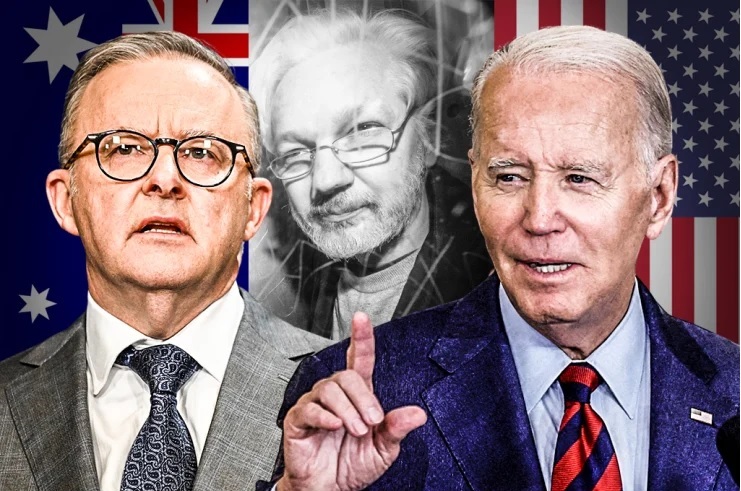
a clear Australian Government policy to limit direct engagement on the Assange case until after he has been extradited to the United States, put to trial, convicted, sentenced and exhausted all appeal rights.
by Philip Dorling and Rex Patrick | Apr 13, 2024, https://michaelwest.com.au/julian-assange-an-awkward-problem-for-albanese/?utm_source=newsletter&utm_medium=email&utm_term=2024-04-18&utm_campaign=Michael+West+Media+Weekly+Update
Joe Biden says he’s “considering” an end to the prosecution of Julian Assange. Anthony Albanese says, “enough is enough,” but not much else. Rex Patrick and Philip Dorling discuss the latest developments in the Assange case.
That’s the position behind the Government’s careful words about bringing the matter to a close.
At no point has the Australian Government called publicly for the espionage charges to be dropped and the extradition process to be ended.
A plea deal?
Last month, the Wall Street Journal reported the US Justice Department has been considering a proposed plea deal with Assange, dropping the espionage charges and allowing him to admit to a misdemeanour concerning the mishandling of classified documents.
According to the Journal the Justice Department was exploring ways to end the long London court battle as Assange continues to fight against extradition. It isn’t clear whether the move for a plea deal has come from Justice or Assange’s legal team. In any case, Assange’s lawyers said they’d been “given no indication” of any change in the US position.
President Biden may have been referring to the question of a plea deal as much as any representations from the Australian Parliament.
A plea deal might well be under consideration, but it’s clearly not a done deal yet, and a radical reduction in the charges, with Assange walking free in London and his time in His Majesty’s Prison Belmarsh taken into account, sounds like a big ask.
That dog ain’t barking…
One thing’s clear, however, Albanese hasn’t followed up on the parliamentary resolution with any personal diplomatic push on the Assange case.
One might have thought that Albanese would have directly engaged President Biden or else directed new representations across the top levels of the US Administration.
If that were the case, one would expect Albanese’s own Department to be closely engaged, working with DFAT and the Australian Embassy in Washington. Albanese is a careful, process-driven prime minister, so one would expect there to be PM&C briefing papers and correspondence. If absolutely nothing else one would expect there to be a Parliamentary Question Time Brief.
With such expectations, on March 7, 2024, Rex Patrick submitted a new FOI application for access to “PM&C submissions, talking points or other documents provided to Prime Minister Albanese between 1 February 2024 and 29 February 2024 that refer or relate to Julian Assange”.
Yesterday, the same day as Albanese’s latest comments that his government was using “all of our diplomatic efforts at every level”, PM&C provided their FOI response.
Dave Titheridge, head of the Department’s Global Interests Branch, advised: “I am refusing your request for access … as the documents you have requested do not exist”.
PM&C conducted an extensive search, including through its email system, Parliamentary Document Management System and electronic records repository and turned up nothing.
Nothing happening here – either before or after the parliamentary resolution.
Zero, zip, zilch, nada.
What’s next?
So, where does this leave Assange? His appeal options in London are nearly at an end. Perhaps his lawyers will finally get lucky. Perhaps President Biden is “considering” his case. Perhaps there will be a plea deal.
But Assange may well be extradited and spend decades rotting in a US maximum security prison. He might die there. He could also eventually come home, but as a prisoner in shackles, not as a free man.
Whatever happens, however, it won’t be down to a big effort – or barking – from the Albanese Government.
Supporters of Julian Assange were encouraged on Thursday by US President Joe Biden’s off-the-cuff- remark that his administration was “considering” an Australian request to end the espionage prosecution of the WikiLeaks founder.
Assange’s spouse, Stella Assange, called on Biden to “do the right thing” and “drop the charges”. Prime Minister Anthony Albanese said Australia was using “diplomatic efforts at every level to communicate that it is time that this was brought to a close, enough is enough.”
However, getting to the bottom of what governments do in the secretive world of diplomacy can often be akin to investigating a murder mystery. The clues are elusive and fragmentary. In the case of imprisoned Australian journalist Julian Assange, it’s a case of a dog that didn’t bark.
Parliamentary action
Media reports attributed the apparent shift in the US position to Albanese’s support for a parliamentary motion moved by independent MP Andrew Wilkie on February 14 that declared the Assange extradition proceedings have “gone on for too long” and “underline[d] the importance of the UK and USA bringing the matter to a close so that Mr Assange can return home to his family in Australia”.
Albanese said his government had supported the motion “because it is the right thing to do.” He added that he had raised the Assange case “at the highest levels” with the US and UK with “a calibrated and deliberate approach” that included discussions with Assange’s lawyers. In that context, the parliamentary resolution was “important… it’s important to send that message.”
Quiet diplomacy
It’s one thing to express support for “bringing the matter to a close”; but what does that mean in practice? For Assange supporters, it means the US dropping the prosecution and Assange returning to Australia as a free man.
However, the Albanese Government’s understanding and expectations are likely rather different.
FOI inquiries by Rex Patrick over the past eighteen months have shown that the Albanese Government’s track record on the Assange case has been patchy at best. The government’s “quiet diplomacy” has been minimalist. FOI applications directed toward the Department of Foreign Affairs and Trade, including Australia’s Embassy in Washington, have revealed little evidence of concerted diplomatic activity,
This isn’t to say that Albanese hasn’t raised the Assange case at the “highest levels.” He undoubtedly has, but it’s likely involved mentioning it as a politically awkward problem rather than a push to secure Assange’s freedom.
In response Secretary of State Antony Blinken made it publicly clear the US Government was most reluctant to intervene in the Justice Department’s prosecutorial process – an issue of obvious political sensitivity given the criminal charges brought against former president Donald Trump.
FOI inquiries also unearthed briefings for Attorney-General Mark Dreyfus that revealed a clear Australian Government policy to limit direct engagement on the Assange case until after he has been extradited to the United States, put to trial, convicted, sentenced and exhausted all appeal rights. Only then could Assange apply under the International Transfer of Prisoners scheme to serve a sentence of imprisonment in Australia. Only then would the Attorney-General formally consider that possibility,
Flicker of Hope: Biden’s Throwaway Lines on Assange
April 12, 2024 by: Dr Binoy Kampmark, https://theaimn.com/flicker-of-hope-bidens-throwaway-lines-on-assange/
Walking stiffly, largely distracted, and struggling to focus on the bare essentials, US President Joe Biden was keeping company with his Japanese counterpart, Prime Minister Fumio Kishida, when asked the question. It concerned what he was doing regarding Australia’s request that the WikiLeaks founder Julian Assange be returned to Australia.
Assange, who has spent five tormenting years in Belmarsh Prison in London, is battling extradition to the US on 18 charges, 17 tenuously and dangerously based on the US Espionage Act of 1917.
The words that followed from the near mummified defender of the Free World were short, yet bright enough for the publisher’s supporters. “We’re considering it.” No details were supplied.
To these barest of crumbs came this reaction from from Australian Prime Minister Anthony Albanese on ABC’s News Breakfast: “We have raised on behalf of Mr Assange, Australia’s national interest, that enough is enough, that this needs to be brought to a conclusion, and we’ve raised it at each level of government in every possible way.” When pressed on whether this was merely an afterthought from the president, Albanese responded with the usual acknowledgments: the case was complex, and responsibility lay with the US Department of Justice.
One of Assange’s lawyers, the relentless Jennifer Robinson, told Sky News Australia of her encouragement at Biden’s “response, this is what we have been asking for over five years. Since 2010 we’ve been saying this is a dangerous precedent that’s being set. So, we certainly hope it was a serious remark and the US will act on it.” Assange’s brother, Gabriel Shipton, also told Sky News that the statement was significant while WikiLeaks editor-in-chief, Kristinn Hrafnsson thought the utterance “extraordinary”, cautiously hoping “to see in the coming days” whether “clarification of what this means” would be offered by “those in power” and the press corps.
The campaign to free Assange has burgeoned with admirable ferocity. The transformation of the WikiLeaks founder from eccentric, renegade cyber thief deserving punishment to prosecuted and persecuted scribbler and political prisoner has been astonishing.
The boggling legal process has also been shown up as woefully inadequate and scandalous, a form of long-term torture via judicial torment and deprivation. The current ludicrous pitstop entails waiting for a UK Court of Appeal decision as to whether Assange will be granted leave for a full reconsideration of his case, including the merits of the extradition order itself.
The March 26 Court of Appeal decision refused to entertain the glaringly obvious features of the case: that Assange is being prosecuted for his political views, that due process is bound to be denied in a country whose authorities have contemplated his abduction and murder, and that he risks being sentenced for conduct he is not charged with “based on evidence he will not see and which may have been unlawfully obtained.” The refusal to entertain such material as the Yahoo News article from September 2021 outlining the views of intelligence officials on kidnapping and assassination options again cast the entire affair in a poor light.
Even if Assange is granted a full hearing, it is not clear whether the court will go so far as to accept the arguments. The judges have already nobbled the case by offering US prosecutors the chance to offer undertakings, none of which would or could be binding on the DOJ or any US judge hearing the case. Extradition, in other words, is likely to be approved if Assange is “permitted to rely on the First Amendment”, “is not prejudiced at trial (including sentence) by reason of his nationality” and that he “is afforded the same First Amendment protection as a United States citizen, and that the death penalty not be imposed.” These conditions, on the face of it, look absurd in their naïve presumption.
Whether Biden’s latest casual spray lends any credibility to a change of heart remains to be seen. In December 2010, when Vice President in the Obama administration, Biden described Assange as a “high-tech terrorist” for disclosing State Department cables. He failed to identify any parallels with previous cases of disclosures such as the Pentagon papers.
Craig Murray, former British diplomat and Assange confidant, adds a note of cautious sobriety to the recent offering from the president: “I’m not going to get too hopeful immediately on a few words out of the mouth of Biden, because there has been no previous indication, nothing from the Justice Department so far to indicate any easing up.”
For all that, it may well be that the current administration, facing a relentless publicity campaign from human rights organisations, newspapers, legal and medical professionals, not to mention pressure from both his own party in Congress and Republicans, is finally yielding. Caution, however, is the order of the day, and nothing should be read or considered in earnest till signatures are inked and dried. We are quite a way off from that.
Purgatorial Torments: Assange and the UK High Court

Australian Independent Media, March 27, 2024, by: Dr Binoy Kampmark
What is it about British justice that has a certain rankness to it, notably when it comes to dealing with political charges? The record is not good, and the ongoing sadistic carnival that is the prosecution (and persecution) of Julian Assange continues to provide meat for the table.
Those supporting the WikiLeaks publisher, who faces extradition to the United States even as he remains scandalously confined and refused bail in Belmarsh Prison, had hoped for a clear decision from the UK High Court on March 26. Either they would reject leave to appeal the totality of his case, thereby setting the wheels of extradition into motion, or permit a full review, which would provide some relief. Instead, they got a recipe for purgatorial prolongation, a tormenting midway that grants the US government a possibility to make amends in seeking their quarry.
A sinking sense of repetition was evident. In December 2021, the High Court overturned the decision of the District Court Justice Vanessa Baraitser to bar extradition on the weight of certain assurances provided by the US government. Her judgment had been brutal to Assange in all respects but one: that extradition would imperil his life in the US penal system, largely due to his demonstrated suicidal ideation and inadequate facilities to cope with that risk.
With a school child’s gullibility – or a lawyer’s biting cynicism – the High Court judges accepted assurances from the Department of Justice (DOJ) that Assange would not face the crushing conditions of detention in the notorious ADX Florence facility or suffer the gagging restrictions euphemised as Special Administrative Measures. He would also receive the appropriate medical care that would alleviate his suicide risk and face the prospect of serving the balance of any sentence back in Australia. The refusal to look behind the mutability and fickle nature of such undertakings merely passed the judges by. The March 26 judgment is much in keeping with that tradition.
The grounds for Assange’s team numbered nine in total entailing two parts. Some of these should be familiar to even the most generally acquainted reader. The first part, comprising seven grounds, argues that the decision to send the case to the Home Secretary was wrong for: ignoring the bar to extradition under the UK-US Extradition Treaty for political offences, for which Assange is being sought for; that his prosecution is for political opinions; that the extradition is incompatible with article 7 of the European Convention on Human Rights (ECHR) noting that there should be no punishment without law; that the process is incompatible with article 10 of the ECHR protecting freedom of expression; that prejudice at trial would follow by reason of his non-US nationality; that the right to a fair trial, protected by article 6 of the ECHR, was not guaranteed; and that the extradition is incompatible with articles 2 and 3 of the ECHR (right to life, and prohibiting inhuman and degrading treatment).
The second part of the application challenged the UK Home Secretary’s decision to approve the extradition, which should have been barred by the treaty between the UK and US, and on the grounds that there was “inadequate specialty/death penalty protection.”
In this gaggle of imposing, even damning arguments, the High Court was only moved by three arguments, leaving much of Baraitser’s reasons untouched. Assange’s legal team had established an arguable case that sending the case to the Home Secretary was wrong as he might be prejudiced at trial by reason of his nationality. Following from that “but only as a consequence of that”, extradition would be incompatible with free speech protections under article 10 of the ECHR. An arguable case against the Home Secretary’s decision could also be made as it was barred by inadequate specialty/death penalty protection.
What had taken place was a dramatic and savage pruning of a wholesome challenge to a political persecution garishly dressed in legal drag. On the issue of whether Assange was being prosecuted for his political opinions, the Court was happy to accept the woeful finding by Baraitser that he had not. The judge was “entitled to reach that conclusion on the evidence before her, and on the unchallenged sworn evidence of the prosecutor (which refutes the applicant’s case).” While accepting the view that Assange “acted out of political conviction”, the extradition was not being made “on account of his political views.” Again, we see the judiciary avoid the facts staring at it: that the exposure of war crimes, atrocities, torture and various misdeeds of state are supposedly not political at all.
………………………………………………………………………………………….. Of enormous, distorting significance was the refusal by the High Court to accept “fresh evidence” such as the Yahoo News article from September 2021 outlining the views of intelligence officials on the possible kidnapping and even assassination of Assange.
…………….Imaginatively, if inexplicably, the judges accepted her finding that the conduct by the CIA and UC Global regarding the Ecuadorian embassy had no link with the extradition proceedings. With jaw dropping incredulity, the judges reasoned that the murderous, brutal rationale for dealing with Assange contemplated by the US intelligence services “is removed if the applicant is extradited.” In a fit of true Orwellian reasoning, Assange’s safety would be guaranteed the moment he was placed in the custody of his would-be abductors and murderers.
The High Court was also generous enough to do the homework for the US government by reiterating the position taken by their brother judges in the 2021 decision. Concerns about Assange’s mistreatment would be alleviated by granting “assurances (that the applicant is permitted to rely on the First Amendment, that the applicant is not prejudiced at trial (including sentence) by reason of his nationality, that he is afforded the same First Amendment protection as a United States citizen, and that the death penalty not be imposed).” Such a request is absurd for presuming, not only that the prosecutors can be held to their word, but that a US court would feel inclined to accept the application of the First Amendment, let alone abide by requested sentencing requirements.
The US government has been given till April 16 to file assurances addressing the three grounds, with further written submissions in response to be filed by April 30 by Assange’s team, and May 14 by the Home Secretary. Another leave of appeal will be entertained on May 20. If the DOJ does not provide any assurances, then leave to appeal will be granted. The accretions of obscenity in the Assange saga are set to continue. more https://theaimn.com/purgatorial-torments-assange-and-the-uk-high-court/
The Empire Slowly Suffocates Assange Like It Slowly Suffocates All Its Enemies
CAITLIN JOHNSTONE, MAR 27, 2024, https://www.caitlinjohnst.one/p/the-empire-slowly-suffocates-assange?utm_source=post-email-title&publication_id=82124&post_id=142993532&utm_campaign=email-post-title&isFreemail=true&r=1ise1&triedRedirect=true&utm_medium=email
The British High Court has ruled that WikiLeaks founder Julian Assange may potentially get a final appeal against extradition to the United States, but only within a very limited scope and only if specific conditions are met.
The court ruled that Assange may appeal only on the grounds that his freedom of speech might be restricted in the US, and that there is a possibility he could receive the death penalty. If the US provides “assurances” that neither of these things will happen, then the trial moves to another phase where Assange’s legal team may debate the merits of those assurances. If the US does not provide those assurances, then the limited appeal will move forward.
Absurdly, the court determined that Assange’s lawyers may not argue against extradition on matters as self-evidently critical as the fact that the CIA plotted to assassinate him, or on the basis that he is being politically persecuted for the crime of inconvenient journalism.
The mass media are calling this a “reprieve”, even “wonderful news”, but as Jonathan Cook explains in his latest article “Assange’s ‘reprieve’ is another lie, hiding the real goal of keeping him endlessly locked up,” that’s all a bunch of crap.
“The word ‘reprieve’ is there — just as the judges’ headline ruling that some of the grounds of his appeal have been ‘granted’ — to conceal the fact that he is prisoner to an endless legal charade every bit as much as he is a prisoner in a Belmarsh cell,” writes Cook. “In fact, today’s ruling is yet further evidence that Assange is being denied due process and his most basic legal rights — as he has been for a decade or more.”
Cook writes the following:
“The case has always been about buying time. To disappear Assange from public view. To vilify him. To smash the revolutionary publishing platform he founded to help whistleblowers expose state crimes. To send a message to other journalists that the US can reach them wherever they live should they try to hold Washington to account for its criminality.
“And worst of all, to provide a final solution for the nuisance Assange had become for the global superpower by trapping him in an endless process of incarceration and trial that, if it is allowed to drag on long enough, will most likely kill him.”
This kind of slow motion strangulation is how the empire operates all the time these days, across all spheres. Helping Israel starve Gaza while slowly pretending to work toward solutions. Drawing out a proxy war in Ukraine for as long as possible to bleed Russia. Slowly killing Assange in prison without trial under the pretense of judicial proceedings.
The US-centralized empire hunts not like a tiger, killing its prey with one fatal bite to the jugular, but more like a python: slowly suffocating the life out of its prey until it perishes. It favors the long, drawn-out, confusing strangulation of inconvenient populations and individuals, carried out under the cover of bureaucracy and propaganda spin. In today’s world it prefers sanctions, blockades and long proxy conflicts over the big Hulk-smash ground invasions we saw it carry out in places like Iraq and Vietnam.
These slow suffocations can take more time, but what they lack in efficiency they make up for in the quality of perception management. It’s bad PR to just openly invade countries and murder people, which is why the leaders of the western empire have been able to wag their fingers at Putin despite their being quantifiably far more murderous than Russia. People start snapping out of the propaganda matrix you spent so much time building for them and begin organizing against the political status quo your power is premised on.
So they opt for slow strangulation strategies where they can confuse the public about what’s happening and who’s responsible, outsourcing the blame to other parties while posing as the good guy who’s trying to bring peace and stability. It takes time, but the empire has time to burn. That’s what happens when you’re the most powerful empire in the history of civilization; you have the luxury of biding your time while orchestrating large-scale, long-term operations to advance your power agendas.
Meanwhile Gaza starves, Ukraine bleeds, and Assange languishes in prison, each needing this to end with more urgency every day.
Julian Assange and the Plea Nibble

Barry Pollack, one of Assange’s legal representatives, has not been given any indication that the department would, as such, accept the deal, a point he reiterated to Consortium News: “[W]e have been given no indication that the Department of Justice intends to resolve the case.”
March 23, 2024 by: Dr Binoy Kampmark https://theaimn.com/julian-assange-and-the-plea-nibble/
Be wary of what Washington offers in negotiations at the best of times. The empire gives and takes when it can; the hegemon proffers and in equal measure and withdraws offers it deems fit. This is all well known to the legal team of WikiLeaks’ founder Julian Assange, who, the Wall Street Journal “exclusively” reveals, is in ongoing negotiations with US Justice Department officials on a possible plea deal.
As things stand, the US Department of Justice is determined to get its mitts on Assange on the dubious strength of 18 charges, 17 confected from the brutal Espionage Act of 1917. Any conviction from these charges risks a 175-year jail term, effectively constituting a death sentence for the Australian publisher.
The war time statute, which was intended to curb free speech and muzzle the press for the duration of the First World War, was assailed by Wisconsin Republican Senator Robert La Follette as a rotten device that impaired “the right of the people to discuss the war in all its phases.” It was exactly in time of war that the citizen “be more alert to the preservation of his right to control his government. He must be most watchful of the encroachment of the military upon the civil power.” And that encroachment is all the more pressing, given the Act’s repurposing as a weapon against leakers and publishers of national security material. In its most obscene incarnation, it has become the US government’s political spear against a non-US national who published US classified documents outside the United States.
The plea deal idea is not new. In August last year, the Sydney Morning Herald pounced upon comments from US Ambassador to Australia Caroline Kennedy that a “resolution” to the Assange imbroglio might be on the table. “There is a way to resolve it,” the ambassador suggested at the time. Any such resolution could involve a reduction of any charges in favour of a guilty plea, subject to finalisation by the Department of Justice. Her remarks were heavily caveated: this was more a matter for the DOJ than the State Department or any other agency. “So it’s not really a diplomatic issue, but I think there absolutely could be a resolution.”
The WSJ now reports that officials from the DOJ and Assange’s legal team “have had preliminary discussions in recent months about what a plea deal could look like to end the lengthy legal drama.” These talks “remain in flux” and “could fizzle.” Redundantly, the Journal reports that any such agreement “would require approval at the highest levels of the Justice Department.”
Barry Pollack, one of Assange’s legal representatives, has not been given any indication that the department would, as such, accept the deal, a point he reiterated to Consortium News: “[W]e have been given no indication that the Department of Justice intends to resolve the case.”
One floated possibility would be a guilty plea on a charge of mishandling classified documents, which would be classed as a misdemeanour. Doing so would take some of the sting out of the indictment, which is currently thick with felonies and one conspiracy charge of computer intrusion. “Under the deal, Assange could potentially enter that plea remotely, without setting foot in the US.” Speculation from the paper follows. “The time he has spent behind bars in London would count toward any US sentence, and he would be likely to be free to leave prison shortly after any deal has concluded.”
With little basis for the claim, the report lightly declares that the failure of plea talks would not necessarily be a bad thing for Assange. He could still “be sent to the US for trial”, where “he may not stay for long, given the Australia pledge.” The pledge in question is part of a series of highly questionable assurances given to the UK government that Assange’s carceral conditions would not include detention in the supermax ADX Florence facility, the imposition of notorious Special Administrative Measures, and the provision of appropriate healthcare. Were he to receive a sentence, it would be open to him to apply and serve its balance in Australia. But all such undertakings have been given on condition that they can be broken, and transfer deals between the US and other countries have been plagued by delays, inconsistencies, and bad faith.
-ADVERTISEMENT-
The dangers and opportunities to Assange have been bundled together, a sniff of an idea rather than a formulation of a concrete deal. And deals can be broken. It is hard to imagine that Assange would not be expected to board a flight bound for the United States, even if he could make his plea remotely. Constitutional attorney Bruce Afran, in an interview with CN Live! last August, suggested that a plea, taken internationally, was “not barred by any laws. If all parties consent to it, then the court has jurisdiction.” Yes, but what then?
In any event, once on US soil, there is nothing stopping a grand volte face, that nasty legal practice of tagging on new charges that would carry even more onerous penalties. It should be never forgotten that Assange would be delivered up to a country whose authorities had contemplated, at points, abduction, illegal rendition, and assassination.
Either way, the current process is one of gradual judicial and penal assassination, conducted through prolonged proceedings that continue to assail the publisher’s health even as he stays confined to Belmarsh Prison. (Assange awaits the UK High Court’s decision on whether he will be granted leave to appeal the extradition order from the Home Office.) The concerns will be how to spare WikiLeaks founder further punishment while still forcing Washington to concede defeat in its quest to jail a publisher. That quest, unfortunately, remains an ongoing one.
The Last Flurry: The US Congress and Australian Parliamentarians seek Assange’s Release
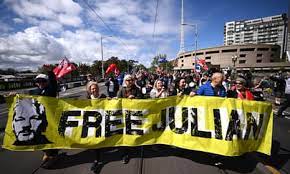
January 19, 2024 : Dr Binoy Kampmark, https://theaimn.com/the-last-flurry-the-us-congress-and-australian-parliamentarians-seek-assanges-release/
On February 20, Julian Assange, the daredevil publisher of WikiLeaks, will be going into battle, yet again, with the British justice system – or what counts for it. The UK High Court will hear arguments from his team that his extradition to the United States from Britain to face 18 charges under the Espionage Act of 1917 would violate various precepts of justice. The proceedings hope to reverse the curt, impoverished decision by the remarkably misnamed Justice Jonathan Swift of the same court on June 6, 2023.
At this point, the number of claims the defence team can make are potentially many. Economy, however, has been called for: the two judges hearing the case have asked for a substantially shortened argument, showing, yet again, that the quality of British mercy tends to be sourly short. The grounds Assange can resort to are troublingly vast: CIA-sponsored surveillance, his contemplated assassination, his contemplated abduction, violation of attorney-client privilege, his poor health, the violation of free-speech, a naked, politicised attempt by an imperium to capture one of its greatest and most trenchant critics, and bad faith by the US government.
Campaigners for the cause have been frenzied. But as the solution to Assange’s plight is likely to be political, the burden falls on politicians to stomp and drum from within their various chambers to convince their executive counterparts. In the US Congress, House Resolution 934, introduced on December 13 by Rep. Paul A. Gosar, an Arizona Republican, expresses “the sense of the House of Representatives that regular journalistic activities are protected under the First Amendment, and that the United States ought to drop all charges against and attempts to extradite Julian Assange.”
The resolution sees a dramatic shift from the punishing, haute view taken by such figures as the late Democratic Senator Dianne Feinstein, who was one of the first political figures to suggest that Assange be crucified on the unsteady timber of the Espionage Act for disclosing US cables and classified information in 2010. The resolution acknowledges, for instance, that the disclosures by WikiLeaks “promoted public transparency through the exposure of the hiring of child prostitutes by Defense Department contractors, friendly fire incidents, human rights abuses, civilian killings, and United States use of psychological warfare.” The list could be sordidly longer but let’s not quibble.
Impressively, drafters of the resolution finally acknowledge that charging Assange under the Computer Fraud and Abuse Act (CFAA) for alleged conspiracy to help US Army intelligence analyst Chelsea (then Bradley) Manning access Defense Department computers was a fabled nonsense. For one, it was “impossible” – Manning “already had access to the mentioned computer.” Furthermore, “there was no proof Mr Assange had any contact with said intelligence analyst.”
Ire is also directed at the espionage counts, with the resolution noting that “no other publisher has ever been prosecuted under the Espionage Act prior to these 17 charges.” A successful prosecution of the publisher “would set a precedent allowing the United States to prosecute and imprison journalists for First Amendment protected activities, including the obtainment and publication of information, something that occurs on a regular basis.”
Acknowledgment is duly made of the importance of press freedoms to promote transparency and protect the Republic, the support for Assange, “sincere and steadfast”, no less, shown by “numerous human rights, press freedom, and privacy rights advocates and organizations”, and the desire by “at least 70 Senators and Members of Parliament from Australia, a critical United States ally and Mr Assange’s native country” for his return.
Members of Australia’s parliament, adding to the efforts last September to convince members of Congress that the prosecution be dropped, have also written to the UK Home Secretary, James Cleverly, requesting that he “undertake an urgent, thorough and independent assessment of the risks to Mr Assange’s health and welfare in the event that he is extradited to the United States.”
-ADVERTISEMENT-
The members of the Bring Julian Assange Home Parliamentary Group draw Cleverly’s attention to the recent UK Supreme Court case of AAA v Secretary of State for the Home Department which found “that courts in the United Kingdom cannot just rely on third party assurances by foreign governments but rather are required to make independent assessments of the risk of persecution to individuals before any order is made removing them from the UK.
It follows that the approach taken by Lord Justices Burnett and Holroyde in USA v Assange [2021] EWHC 3133 was, to put it politely, a touch too confident in accepting assurances given by the US government regarding Assange’s treatment, were he to be extradited. “These assurances were not tested, nor was there any evidence of independent assessment as to the basis on which they could be given and relied upon.”
The conveners of the group point to Assange’s detention in Belmarsh prison since April 2019, his “significant health issues, exacerbated to a dangerous degree by his prolonged incarceration, that are of very real concern to us as his elected representatives.” They also point out the rather unusual consensus between the current Australian Prime Minister, Anthony Albanese, and his opposition number, Peter Dutton, that the “case has gone on for too long.” Continued legal proceedings, both in the UK, and then in the US were extradition to take place “would add yet more years to Mr Assange’s detention and further imperil his health.”
In terms of posterity’s calling, there are surely fewer better things at this point for a US president nearing mental oblivion to do, or a Tory government peering at electoral termination to facilitate, than the release of Assange. At the very least, it would show a grudging acknowledgment that the fourth estate, watchful of government’s egregious abuses, is no corpse, but a vital, thriving necessity.
Cancelling the Journalist: The Australian ABC’s Coverage of the Israel-Gaza War
- January 18, 2024, by: Dr Binoy Kampmark, https://theaimn.com/cancelling-the-journalist-the-abcs-coverage-of-the-israel-gaza-war/#
What a cowardly act it was. A national broadcaster, dedicated to what should be fearless reporting, cowed by the intemperate bellyaching of a lobby concerned about coverage of the Israel-Gaza war. The investigation by The Age newspaper was revealing in showing that the dismissal of broadcaster Antoinette Lattouf last December 20 was the nasty fruit of a campaign waged against the corporation’s management. This included its chair, Ita Buttrose, and managing director David Anderson.
The official reason for that dismissal was disturbingly ordinary. Lattouf had not, for instance, decided to become a flag-swathed bomb thrower for the Palestinian cause. She had engaged in no hostage taking campaign, nor intimidated any Israeli figure. The sacking had purportedly been made over sharing a post by Human Rights Watch about Israel that mentioned “using starvation of civilians as a weapon of war in Gaza”, calling it “a war crime”. It also noted the express intention by Israeli officials to pursue this strategy. Actions are also documented: the deliberate blocking of the delivery of food, water and fuel “while wilfully obstructing the entry of aid.” The sharing by Lattouf took place following a direction not to post on “matters of controversy”.
Human Rights Watch might be accused of many things: the dolled up corporate face of human rights activism; the activist transformed into fundraising agent and boardroom gaming strategist. But to share material from the organisation on alleged abuses is hardly a daredevil act of dangerous hair-raising radicalism.
Prior to the revelations in The Age, much had been made of Lattouf’s fill-in role as a radio presenter, a stint that was to last for five shows. The Australian, true to form, had its own issue with Lattouf’s statements made on various online platforms. In December, the paper found it strange that she was appointed “despite her very public anti-Israel stance” (paywalled). She was also accused of denying the lurid interpretations put upon footage from protests outside Sydney Opera House, some of which called for gassing Jews. And she dared accused the Israeli forces of committing rape.
It was also considered odd that she discuss such matters as food and water shortages in Gaza and “an advertising campaign showing corpses reminiscent of being wrapped in Muslim burial cloths.” That “left ‘a lot of people really upset’.” If war is hell, then Lattouf was evidently not allowed to go into quite so much detail about it – at least when concerning the fate of Palestinians at the hands of the Israeli war machine.
What also transpires is that the ABC managers were not merely targeting Lattouf on their own, sadistic initiative. Pressure of some measure had been exercised from outside the organisation. According to The Age, WhatsApp messages had been sent to the ABC as part of a coordinated campaign by a group called Lawyers for Israel.
The day Lattouf was sacked, Sydney property lawyer Nicky Stein buzzingly began proceedings by telling members of the group to contact the federal minister for communication asking “how Antoinette is hosting the morning ABC Sydney show.” Employing Lattouff apparently breached Clause 4 of the ABC code of practice on impartiality.
Stein cockily went on to insist that, “It’s important ABC hears from not just individuals in the community but specifically from lawyers so they feel there is an actual legal threat.” She goes on to read that a “proper” rather than “generic” response was expected “by COB [close of business] today or I would look to engage senior counsel.”
-ADVERTISEMENT-
Did such windy threats have any basis? No, according to Stein. “I know there is probably no actionable offence against the ABC but I didn’t say I would be taking one – just investigating one. I have said that they should be terminating her employment immediately.” Utterly charming, and sufficiently so to attract attention from the ABC chairperson herself, who asked for further venting of concerns.
Indeed, another member of the haranguing clique, Robert Goot, also deputy president of the Executive Council of Australian Jewry, could boast of information he had received that Lattouf would be “gone from morning radio from Friday” because of her anti-Israeli stance.
There has been something of a journalistic exodus from the ABC of late. Nour Haydar, an Australian journalist also of Lebanese descent, resigned expressing her concerns about the coverage of the Israel-Gaza conflict at the broadcaster. There had been, for instance, the creation of a “Gaza advisory panel” at the behest of ABC News director Justin Stevens, ostensibly to improve the coverage of the conflict. “Accuracy and impartiality are core to the service we offer audiences,” Stevens explained to staff. “We must stay independent and not ‘take sides’.”
This pointless assertion can only ever be a threat because it acts as an injunction on staff and a judgment against sources that do not favour the accepted line, however credible they might be. What proves acceptable, a condition that seems to have paralysed the ABC, is to never say that Israel massacres, commits war crimes, and brings about conditions approximating to genocide. Little wonder that coverage on South Africa’s genocide case against Israel in the International Court of Justice does not get top billing on in the ABC news headlines.
Palestinians and Palestinian militias, on the other hand, can always be written about as brute savages, rapists and baby slayers. Throw in fanaticism and Islam, and you have the complete package ready for transmission. Coverage in the mainstays of most Western liberal democracies of the Israeli-Palestinian conflict, as the late Robert Fisk pointed out with pungency, repeatedly asserts these divisions.
After her signation Haydar told the Sydney Morning Herald that, “Commitment to diversity in the media cannot be skin deep. Culturally diverse staff should be respected and supported even when they challenge the status quo.” But Haydar’s argument about cultural diversity should not obscure the broader problem facing the ABC: policing the way opinions and material on war and any other divisive topic is shared. The issue goes less to cultural diversity than permitted intellectual breadth, which is distinctly narrowing at the national broadcaster.
Lattouf, for her part, is pursuing remedies through the Fair Work Commission, and seeking funding through a GoFundMe page, steered by Lauren Dubois. “We stand with Antoinette and support the rights of workers to be able to share news that expresses an opinion or reinforces a fact, without fear of retribution.”
Kenneth Roth, former head of Human Rights Watch, expressed his displeasure at the treatment of Lattouf for sharing HRW material, suggesting the ABC had erred. ABC’s senior management, through a statement from managing director David Anderson, preferred the route of craven denial, rejecting “any claim that it has been influenced by any external pressure, whether it be an advocacy group or lobby group, a political party, or commercial entity.” They would, wouldn’t they?
‘Do or die’: MPs launch urgent bid to spare Assange from US extradition.
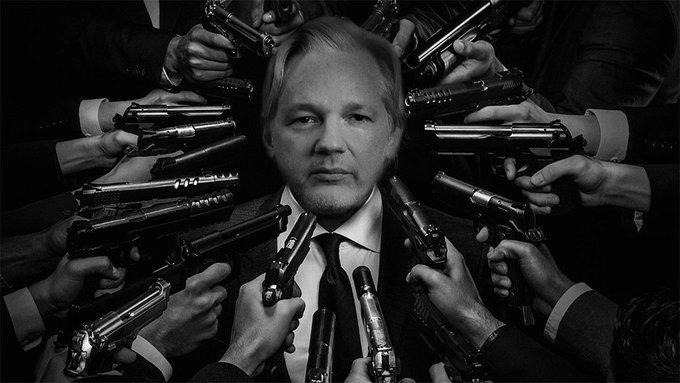
By Matthew Knott, January 15, 2024 — https://www.theage.com.au/politics/federal/do-or-die-mps-launch-urgent-bid-to-spare-assange-from-us-extradition-20240114-p5ex2h.html
Australian politicians across the political divide have launched a last-ditch bid to prevent Julian Assange from being extradited to the United States to face espionage charges as the WikiLeaks founder faces a crucial final legal challenge in Britain next month.
The four co-convenors of the cross-party Bring Julian Assange Home Parliamentary Group wrote to British Home Secretary James Cleverly arguing for an urgent review of Assange’s case. This was in light of a judgment in the Supreme Court of the UK in November, striking down Prime Minister Rishi Sunak’s controversial plan to send asylum seekers to Rwanda.
On February 20 and 21, two British High Court judges will review an earlier ruling that refused Assange permission to appeal his extradition order. This is expected to be his final bid to prevent being sent to the US.
Assange faces decades in prison over his role in the publication of US classified files and diplomatic cables relating to the wars in Afghanistan and Iraq.
“If he loses in the UK courts next month he could be extradited to the USA within 24 hours,” Assange’s brother Gabriel Shipton said of the High Court review.
“This is literally a do-or-die scenario for Julian.”
Assange’s lawyer Jennifer Robinson has argued he was at high risk of suicide if the High Court rejects his final appeal, saying Assange was so mentally unwell that he would be unlikely to survive extradition.
Liberal MP Bridget Archer, Labor MP Josh Wilson, independent MP Andrew Wilkie and Greens Senator David Shoebridge wrote in their letter to Cleverly: “We are deeply concerned that the legal proceedings involving Mr Assange will now continue, first in the United Kingdom and then in the United States, if extradition is ordered and consented to by you.
“This would add yet more years to Mr Assange’s detention and further imperil his health.
“To this end, we are requesting that you undertake an urgent, thorough and independent assessment of the risks to Mr Assange’s health and welfare in the event he is extradited to the United States.”
As Home Secretary, Cleverly is one of the government’s most powerful ministers, presiding over law enforcement, national security and immigration and with oversight of the domestic counter-intelligence agency MI5.
The MPs argued in their letter that the judges’ reasoning in the Rwanda Supreme Court case – which found it was illegal for Britain to send asylum seekers to Rwanda – “clearly has direct relevance to the extradition proceedings involving Julian Assange”.
“The decision found that courts in the United Kingdom cannot just rely on third-party assurances by foreign governments but rather are required to make independent assessments of the risk of persecution to individuals before any order is made removing them from the UK,” they wrote.
The MPs said that the justices in Assange’s key extradition hearing had “expressly relied on the ‘assurances’ of the United States as to Mr Assange’s safety and welfare should he be extradited to the United States for imprisonment and trial.
“These assurances were not tested, nor was there any evidence of independent assessment as to the basis on which they could be given and relied upon.”
The MPs wrote that they were deeply worried about Assange being sent to a high-security American prison because he “has significant health issues, exacerbated to a dangerous degree by his prolonged incarceration, that are of very real concern to us as his elected representatives”.
In 2021, District Judge Vanessa Baraitser blocked the attempt to extradite Assange on the basis that the harsh conditions of US solitary confinement would create a substantial suicide risk. Her ruling was overturned on appeal.
Republicans and Democrats Unite to Push for Assange’s Freedom
Sixteen members of Congress signed a letter to President Biden urging him to drop the case against the WikiLeaks founder.
By Dave DeCamp / Antiwar.com https://scheerpost.com/2023/11/12/republicans-and-democrats-unite-to-push-for-assanges-freedom
Abipartisan group of 16 members of Congress has called on President Biden to drop the case against WikiLeaks founder Julian Assange, warning of the grave threats to press freedom if he is convicted.
The lawmakers made the call in a letter sent to President Biden on Wednesday. The effort was led by Reps. Thomas Massie (R-KY) and James McGovern (D-MA), who began circulating the letter to their colleagues for signatures last month.
“It is the duty of journalists to seek out sources, including documentary evidence, in order to report to the public on the activities of government,” the letter reads, according to a press release from Assange Defense.
“The United States must not pursue an unnecessary prosecution that risks criminalizing common journalistic practices and thus chilling the work of the free press. We urge you to ensure that this case be brought to a close in as timely a manner as possible,” the letter states.
The letter was also signed by Reps. Alexandria Ocasio-Cortez (D-NY), Jamaal Bowman (D-NY), Ayanna Pressley (D-MA), Greg Casar (D-TX), Ilhan Omar (D-MN), Cori Bush (D-MO), Rashida Tlaib (D-MI), Eric Burlison (R-MO), Marjorie Taylor Greene (R-GA), Paul Gosar (R-AZ), Jesús García (D-IL), Pramila Jayapal (D-WA), Matthew Rosendale (R-MT), and Sen. Rand Paul (R-KY).
The letter comes as the Biden administration has been under pressure from the Australian government to free Assange, who is an Australian citizen. In September, a delegation of Australian members of parliament from across the political spectrum visited Washington and met with US officials to lobby for Assange. Australian Prime Minister Anthony Albanese brought up the case with President Biden when he visited the White House in October.
Assange faces up to 175 years in prison if extradited to the US and convicted for exposing US war crimes. The charges stem from documents published by WikiLeaks that Assange obtained from his source, former Army Private Chelsea Manning, a standard journalistic practice. Assange has been held in London’s Belmarsh Prison since April 2019 as his legal team is fighting against US efforts to extradite him.
Australians Call to End Long Persecution of WikiLeaks’ Julian Assange.
ROBIN ANDERSEN, 25 Oct 23 https://fair.org/home/australians-call-to-end-long-persecution-of-wikileaks-julian-assange/
As WikiLeaks founder and Australian citizen Julian Assange has nearly exhausted his appeals to British courts against a US extradition order, Australia has ramped up its advocacy on his behalf. Six Australian MPs held a press conference outside the US Department of Justice on September 20 to urge the Biden administration to halt its pursuit of Assange (Consortium News, 9/20/23).
They came representing an impressive national consensus: Almost 80% of Australian citizens, and a cross-party coalition in Australia’s Parliament, support the campaign to free Assange (Sydney Morning Herald, 5/12/23). Opposition leader Peter Dutton joined Prime Minister Anthony Albanese in urging Assange’s release.
The day before, an open letter to the Biden administration signed by 64 Australian parliamentarians appeared as a full-page ad in the Washington Post. It called the prosecution of Assange “a political decision” and warned that, if Assange is extradited, “there will be a sharp and sustained outcry” from Australians.
Given what is at stake for freedom of the press in the Assange case, and the intensified pressure from Australia—a country being wooed to actively enlist in the US campaign against China by spending $368 billion on nuclear submarines and supersonic missiles (Sydney Morning Herald, 8/10/23)—we ought to expect coverage from the Washington Post, New York Times and major broadcast networks. But coverage of the press conference was virtually absent from US corporate media.
Prosecuting publishing
The US has been seeking to extradite Assange from Britain on charges relating to the leaking of hundreds of thousands of documents to international media in 2010 and 2011, many of which detailed US atrocities carried out in the Afghanistan and Iraq wars and other human rights violations, such as the torture of detainees at Guantánamo Bay (Abby Martin, 3/10/23).
In 2019, President Donald Trump’s administration brought Espionage Act charges against Assange for obtaining and publishing leaked documents, a dramatic new attack on press freedom (FAIR.org, 8/13/22). Assange could face 175 years in a supermax prison if convicted under the Espionage Act, “a relic of the First World War” meant for spies (American Constitution Society, 9/10/21), and not intended to criminalize leaks to or publications by the press. The Biden administration has rolled back much of the legal mechanism used by Trump to attack journalists, but President Joe Biden has reaffirmed the call to extradite Assange.
Assange also coordinated with international news outlets to publish other material known as Cablegate about the “inner-workings of bargaining, diplomacy and threat-making around the world” (Intercept, 8/14/23). Indeed, the New York Times (e.g., 11/28/10) published many articles based on the WikiLeaks documents, which had been sent to Assange by US army whistleblower Chelsea Manning.
US officials have repeatedly justified their case by charging that Assange put lives at risk; to date, no evidence has surfaced that any individuals were harmed by the leaks (BBC, 12/1/10; Chelsea Manning, Readme.txt, 2022). As the Columbia Journalism Review (12/23/20) admonished, don’t let the Justice Department’s
misdirection around “blown informants” fool you—this case is nothing less than the first time in American history that the US government has sought to prosecute the act of publishing state secrets, something that national security reporters do with some regularity.
US officials have repeatedly justified their case by charging that Assange put lives at risk; to date, no evidence has surfaced that any individuals were harmed by the leaks (BBC, 12/1/10; Chelsea Manning, Readme.txt, 2022). As the Columbia Journalism Review (12/23/20) admonished, don’t let the Justice Department’s
misdirection around “blown informants” fool you—this case is nothing less than the first time in American history that the US government has sought to prosecute the act of publishing state secrets, something that national security reporters do with some regularity.
In failing health after suffering a stroke, Assange has been held in London’s high-security Belmarsh Prison since he was removed from the Ecuadorian Embassy in April 2019. He had sought asylum at the embassy in London in 2012 to avoid being sent to Sweden for questioning over sexual assault allegations, because Sweden would not provide assurances it would protect him from extradition to the US. Sweden dropped charges against Assange in November 2019 (BBC, 11/19/19), after he was in British custody.
International condemnation
The Australian diplomatic mission coincided with the convening of the UN General Assembly in New York City, where President Lula da Silva of Brazil condemned the prosecution of Assange, offering yet another opportunity for US corporate media to cover the strong international opposition to Assange’s treatment.
A video (9/19/23) of Lula speaking at the opening of the UN General Assembly was widely circulated on social media. “Preserving press freedom is essential,” Lula declared. “A journalist like Julian Assange cannot be punished for informing society in a transparent and legitimate way.”
Former British ambassador Craig Murray commented about Lula’s reception at the UN (Twitter, 9/17/23):
It is really not normal for the hall at the UN General Assembly to break into this kind of spontaneous applause. The US has been losing the room internationally for a decade. The appalling treatment of Julian is a focus for that.
US media absence
Yet, with a few exceptions (Fox News, 9/20/23; The Hill, 9/21/23; Yahoo News, 9/21/23), none of this made the major US news outlets.
Over a week later, Business Insider (10/1/23) ran a long piece that featured an interview with Gabriel Shipton, Assange’s half-brother. It pointed out that Assange had become an obstacle to US plans to involve Australia in its aggression toward China, quoting the PM. But the piece also hashed through a number of long-debunked claims, including one that reminded readers that Mike Pompeo once called Assange “a fugitive Russian asset” (FAIR.org, 12/03/18; Sheerpost 2/25/23), and another that repeated US assertions that WikiLeaks releases would put the US at risk.
The New York Times has been conspicuously absent from the coverage of Assange. Though the Times signed a joint open letter (11/28/22) with four other international newspapers that had worked with Assange and WikiLeaks, appealing to the DoJ to drop its charges, the paper has remained almost entirely silent on both Assange and the issues raised by his continued prosecution since then.
As FAIR pointed out, during the Assange extradition hearing in London, the Times
published only two bland news articles (9/7/20, 9/16/20)—one of them purely about the technical difficulties in the courtroom—along with a short rehosted AP video (9/7/20).
There were no editorials on what the case meant for journalism. FAIR contributor Alan MacLeod noted that the Times seemed to distance itself from Assange and WikiLeaks, and its own reporting on the Cablegate scandal, coverage that boosted the papers’ international reputation.
Other opportunities for coverage have been missed by the Times. For instance, Rep. Rashida Tlaib wrote a letter (4/11/23), signed by six other members of the Progressive Caucus, calling for the DoJ to drop the charges against Assange. Tlaib cited support from the ACLU, Amnesty International, Reporters Without Borders, the Committee to Protect Journalists, Defending Rights & Dissent and Human Rights Watch, and many others, stating that his prosecution “could effectively criminalize” many “common journalistic practices.” The letter was covered by The Nation (4/14/23), the Intercept (3/30/23), Fox News (4/1/23), The Hill (4/11/23) and Politico (4/11/23), but the Times and other major newspapers were conspicuously silent.
When Assange lost his most recent appeal against extradition in June, a few outlets reported the news online (e.g., AP, 6/9/23; CNN, 6/9/23), but not a single US newspaper report could be found in the Nexis news database. (Newsweek‘s headline framed the news as a “headache for Biden”—6/8/23—rather than a blow for press freedom.) The Times only vaguely referred to the news (Assange “keeps losing appeals”) two weeks later in a feature (6/18/23) on the late whistleblower Daniel Ellsberg, who had criticized Biden’s decision not to drop the case against Assange.
The world is watching
A huge collective breath is being held as the world watches to see what will happen to Assange, the most famous publisher on the globe. Will he be returned to his country and his family by Christmas, as the Australian MPs have requested? Or will Britain and the US continue to slowly execute him?
Assange’s case is expected to be discussed during Prime Minister Albanese’s current visit to the US, which includes a state dinner hosted by Biden on October 25. MP Monique Ryan, part of the pro-Assange delegation, told news outlets: “Our prime minister needs to see this as a test case for standing up to the US government. There are concerns among Australians about the AUKUS agreement, and whether we have any agency” (Business Insider, 10/1/23).
As Common Dreams (9/19/23) quoted from the delegation’s letter:
We believe the right and best course of action would be for the United States’ Department of Justice to cease its pursuit and prosecution of Julian Assange…. It is well and truly time for this matter to end, and for Julian Assange to return home.
Chris Hedges: Craig Murray on the ‘Slow Motion Execution’ of Assange
And I saw, 100% for certain, that the judge came into court with her ruling already typed out before she heard the arguments, and she sat there almost pretending to listen to what the defense was saying for now and what the prosecution was saying for now. Then she simply read out the ruling.
Chris Hedges: She’s like the Queen of Hearts in Alice in Wonderland giving the verdict before she hears the sentence.
SCHEERPOST, September 17, 2023
Julian Assange continues to fight extradition to the United States to face prosecution under the Espionage Act, a growing chorus of voices is rising to demand an end to his persecution. Hounded by US law enforcement and its allies for more than a decade, Assange has been stripped of all personal and civil liberties for the crime of exposing the extent of US atrocities during the War on Terror. In the intervening years, it’s become nakedly apparent that the intent of the US government is not only to silence Assange in particular, but to send a message to whistleblowers and journalists everywhere on the consequences of speaking truth to power. Former British ambassador to Uzbekistan, Craig Murray, who was fired for exposing the CIA’s use of torture in the country, joins The Chris Hedges Report to discuss what Julian Assange’s fight means for all of us.
TRANSCRIPT
Chris Hedges: Craig Murray, the former British ambassador to Uzbekistan, was removed from his post after he made public the widespread use of torture by the Uzbek government and the CIA. He has since become one of Britain’s most important human rights campaigners and a fierce advocate for Julian Assange as well as a supporter of Scottish independence. His coverage of the trial of former Scottish first minister Alex Salman, who was acquitted of sexual assault charges, saw him charged with contempt of court and sentenced to eight months in prison. The very dubious sentence, half of which Craig served, upended most legal norms. He was sentenced, supporters argued, to prevent him from testifying as a witness in the Spanish criminal case against UC global director, David Morales, being prosecuted for installing a surveillance system in the Ecuador embassy when Julian Assange found refuge that was used to record the privileged communications between Julian and his lawyers.
Morales is alleged to have carried out this surveillance on behalf of the CIA. Murray has published some of the most prescient and eloquent reports from Julian’s extradition hearings and was one of a half dozen guests, including myself, invited to Julian and Stella’s wedding in Belmarsh Prison in March 2022. Prison authorities denied entry to Craig, based on what the UK Ministry of Justice said were security concerns, as well as myself from attending the ceremony.
Joining me to discuss what is happening to Julian Assange and the rapid erosion of our most basic democratic rights is Craig Murray.
And to begin, Craig, I read all of your reports from the trial which are at once eloquent and brilliant. It’s the best coverage that we’ve had of the hearings. But I want you to bring us up to date with where we are with the case at this moment.
Craig Murray: Yeah. The legal procedures have been extraordinarily convoluted after the first hearings for the magistrate ruled that Julian couldn’t be extradited, on essentially, health grounds. Due to the conditions in American prisons, the US then appealed against that verdict. The high court accepted the US appeal on extraordinarily dubious grounds based on a diplomatic note giving certain assurances which were conditional and based on Julian’s future behavior. And of course, the US government has a record of breaking such assurances, and also, those assurances could have been given at the time of the initial hearing and weren’t.
Chris Hedges: I don’t think those assurances have any… It was a diplomatic note. It has no legal validity.
Craig Murray: It has no legal validity. It’s not binding in any sense. And as I say, it is in itself conditional. It states that they may change this in the future. It actually says that –
Chris Hedges: Well, based on his behavior.
Craig Murray: – Based on his behavior, which they will be the sole judges of.
Chris Hedges: Of course.
Craig Murray: And which won’t involve any further legal process. They will decide he’s going into a supermax because they don’t like the way he looks at guards or something. It’s utterly meaningless. And so the US, having won that appeal so Julian could be extradited, it was then Julian’s turn to appeal on all the points he had lost at the original extradition. Those include the First Amendment, they include freedom of speech, obviously, and they include the fact that the very extradition treaty under which he’s being extradited states that there shall be no political extradition and this is plainly a very political case and several other important grounds. That appeal was lodged. Nothing then happened for a year. And that appeal is an extraordinary document. You can actually find it on my website, CraigMurray.org.uk.
I’ve published the entire appeal document and it is an amazing document. It’s an incredible piece of legal argument. And some of the things it sets out like the fact that the US key witness for the charges was an Icelandic guy who they paid for his evidence. They paid him for his evidence and he is a convicted pedophile and convicted fraudster. And since he has said he lied in his evidence and he just did it for the money. That’s one example of the things you find. The documentation is not dry legal documentation at all. It’s well worth going and looking through Julian’s appeal. That appeal ran to 150 pages plus supporting documents.
For a year, nothing happened. Then two or three months ago it was dismissed in three pages of double-spaced A4, in which the judge, Judge Swift, said that there were no legal arguments, no coherent legal arguments in this 150 pages and it followed no known form of pleading and it was dismissed completely. And the thing is that the appeal was written by some of the greatest lawyers in the world. It’s supervised and written by Gareth Pierce, who I would say is the greatest living human rights lawyer. Those people have seen the film In the Name of the Father, starring Daniel Day-Lewis…………………………………….
She’s won numerous high-profile cases. She has enormous respect all around the world and this judge, who is nobody, is saying that there’s no validity to her pleadings which follow no known form of pleading. This is quite extraordinary.
Chris Hedges: Am I correct in that he was a barrister, essentially, for the defense ministry? He was served the interests of the UK government and that’s essentially got him his position. Is that correct?
Craig Murray: Exactly. He was the lead barrister for the security services. Well, he was a banister who specialized in working for the security services.
……………………………………………………And I saw, 100% for certain, that the judge came into court with her ruling already typed out before she heard the arguments, and she sat there almost pretending to listen to what the defense was saying for now and what the prosecution was saying for now. Then she simply read out the ruling.
Chris Hedges: She’s like the Queen of Hearts in Alice in Wonderland giving the verdict before she hears the sentence.
……………………………..On the most basic level, the evisceration of attorney-client privilege because UC Global recorded the meetings between Julian and his lawyers, that in a UK court, as in a US court alone, should get the trial invalidated
Craig Murray: In any democracy in the world, if your intelligence services have been recording the client’s attorney consultations, that would get the case thrown out. ………………………….
……………………………………………………………………………………………………………….at times it seemed as though they were deliberately doing things as slowly as possible.
Chris Hedges: Well, this is what Neils Melzer, the special repertoire on torture for the UN, said that he called it, a slow motion execution, were his words.
………………………………..Craig Murray: It was because of my advocacy for and friendship with Julian. That’s why they put me in jail. I was in the cell, my cell was 12 feet by eight feet which is slightly larger than Julian’s cell, and I was kept in solitary confinement for 23 hours a day, sometimes 23.5 hours a day for four months. And that’s extremely difficult. It’s extremely difficult. But I knew when I was leaving, I had an end date. To be in those conditions as Julian has been for years and years and no idea if it will ever stop, no idea if you’ll ever be let out alive, let alone not having an end date, I can’t imagine how psychologically crushing that would be……………………………………………………………………………….
Craig Murray: The immediate thing that will happen is that Julian’s lawyers will try to go to the European Court in Strasbourg –
Chris Hedges: To the European Court of Human Rights.
Craig Murray: – The European Court of Human Rights to submit an appeal and get the extradition stopped, pending an appeal. The worry is that Julian would instantly be extradited and that the government wouldn’t wait to hear from a European Court.
Chris Hedges: Explain to Americans what it is and what jurisdiction it has in the UK, the European Court.
Craig Murray: Yeah, the European Court of Human Rights is not a European Union body. It’s a body of the Council of Europe. It has jurisdiction over the European Convention on Human Rights which guarantees basic human rights and therefore it has legally binding jurisdiction over human rights violations in any member state of the treaty. So it does have a legally binding jurisdiction and is acknowledged as such, normally, by the UK government. They’re very powerful voices within the current conservative government in the UK which wants to exit the convention on human rights. But at present, that’s not the case. The UK is still part of this system. And so the European Court of Human Rights has legally binding authority over the government of the United Kingdom purely on matters that contravene human rights.
Chris Hedges: And if they do extradite him, they’ve essentially nullified that process, the fear is that, of course, the security services would know about the ruling in advance. He’d be on the tarmac and shuttled in, sedated, and put in a diaper and hooded or something and put on a CIA flight to Washington. I want to talk about if that happens. It’s certainly very possible. What we need to do here, and I know part of the reason you’re in the US, is to prepare for that should it take place. You will try and cover the hearings and trial here as you did in the UK but let’s talk about where we go if that event occurs.
Craig Murray: Yeah. The first thing to say is that if that happens, on the day it happens, it will be the biggest news story in the world; It would be a massive news story. So we have to be prepared. We have to know who, from the Assange movement or who from his defense team, who’s going to be the spokesman, who are going to be the spokespeople, who are going to be offered up to all the major news agencies? We have to affect the story on day one. Because if you get behind the story – And we know what their line will be. They’ll put out all these lies about people being killed because of WikiLeaks, about the American insecurity being endangered, we know all the propaganda that they will try to flood the airwaves with – So we need to be ready and ahead of the game to know who our people are, who are going to be offered up to interview, who are going to proactively get onto the media, and not just the alternative media like this media, but onto the so-called mainstream as well, and get out the story…………………………………………………………………………………………………………………………………………………………………
Chris Hedges. ………………….my reading of it is that they don’t care how they look. And part of it is to send a message. It doesn’t matter what nationality you are, it doesn’t matter where you are. WikiLeaks is not a US-based publication, it doesn’t matter where you are. If you expose the information that Julian and WikiLeaks exposed, we’re going to come for you. Isn’t that the message?
Craig Murray: That’s absolutely right. And this, again, it’s amazing they don’t see the dangers in this claim of universal jurisdiction. …………………….
This claim of universal jurisdiction is extraordinary. And what’s even more extraordinary is they’re claiming universal jurisdiction but Julian is under their jurisdiction because he published American Secrets even though he’s not an American and he wasn’t in America. And at the same time, while they claim jurisdiction over him, they’re claiming he has no First Amendment rights because he’s an Australian.
The combination of we have jurisdiction over you, you have all the liabilities that come with that but you have none of the rights that come with that because you’re not one of our citizens, that’s pernicious. It’s so illogical and so vicious. …………………………………………
Chris Hedges: I want to close because there’s been noise out of Australia. The ambassador, Carolyn Kennedy, said that they might consider a plea deal. I have put no credence in it. It’s all smoke but I wondered what you thought.
Craig Murray: Yeah. It’s an attempt to placate Australian public opinion. Public opinion in Australia is extremely strong. Over 80% of Australians want Julian released and allowed to go home to Australia. Blinken came there and made some very hostile and un-diplomatic remarks at a time when Australia was allowing the US to base nuclear weapons on its side. Caroline Kennedy came out… It’s a lie, frankly. There has been no approach from a justice department or from the State Department to doing any plea deal. It’s purely smoke and mirrors to try to distract the Australian public. Caroline Kennedy was lying to the Australian public. That’s pure and simple.…………..
63 Members of Parliament call on US to free Assange
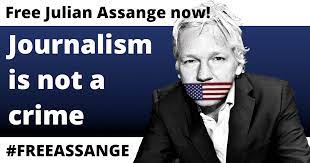
Sixty-three MPs and senators have written a strong letter calling on the US to stop persecuting WikiLeaks founder Julian Assange and warning of ‘a sharp and sustained outcry in Australia’ if he is extradited from the UK
ENOUGH IS ENOUGH’
Sixty-three Australian MPs and senators have signed a letter demanding that “the prosecution and incarceration of the Australian citizen Julian Assange must end”, Guardian Australia reports, warning it is eroding our respect for the US justice system.
The WikiLeaks founder, who is languishing in the UK’s Belmarsh prison, has suffered for a decade in various states of incarceration — it’s “wrong”, “serves no purpose” and is “unjust” for him to be further persecuted, they wrote. The US wants him on charges under the Espionage Act because of the publication of hundreds of thousands of documents on the Iraq and Afghanistan wars. But if he is extradited, “there will be a sharp and sustained outcry in Australia”.
The latest supporters included Labor’s Shayne Neumann and Louise Pratt, and the Coalition’s Melissa Price, and Opposition leader Peter Dutton has also called for Assange’s return. A bipartisan Assange delegation leaves for Washington next week. https://www.crikey.com.au/2023/09/14/63-mps-letter-us-free-assange/
1 This month

of the week – Australians for War Powers Reform (AWPR)
To see nuclear-related stories in greater depth and intensity
 Antinuclear