The CIA Plot to Kidnap or Kill Julian Assange in London is a Story that is Being Mistakenly Ignored
The CIA Plot to Kidnap or Kill Julian Assange in London is a Story that is Being Mistakenly Ignored https://www.counterpunch.org/2021/10/05/the-cia-plot-to-kidnap-or-kill-julian-assange-in-london-is-a-story-that-is-being-mistakenly-ignored/?fbclid=IwAR3t BY PATRICK COCKBURN 5 October 21, Three years ago, on 2 October 2018, a team of Saudi officials murdered journalist Jamal Khashoggi in the Saudi consulate in Istanbul. The purpose of the killing was to silence Khashoggi and to frighten critics of the Saudi regime by showing that it would pursue and punish them as though they were agents of a foreign power.
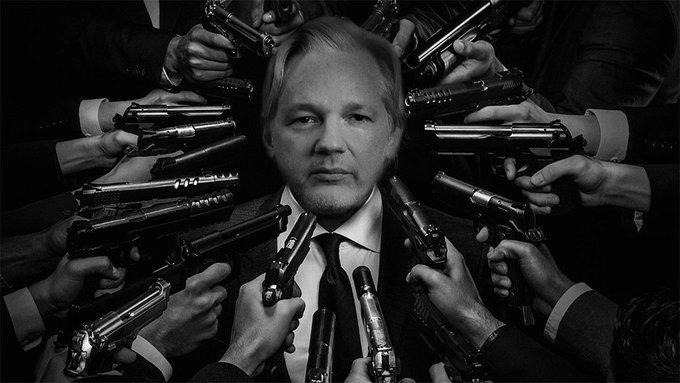
It was revealed this week that a year before the Khashoggi killing in 2017, the CIA had plotted to kidnap or assassinate Julian Assange, the founder of WikiLeaks, who had taken refuge five years earlier in the Ecuador embassy in London. A senior US counter-intelligence official said that plans for the forcible rendition of Assange to the US were discussed “at the highest levels” of the Trump administration. The informant was one of more than 30 US officials – eight of whom confirmed details of the abduction proposal – quoted in a 7,500-word investigation by Yahoo News into the CIA campaign against Assange.
The plan was to “break into the embassy, drag [Assange] out and bring him to where we want”, recalled a former intelligence official. Another informant said that he was briefed about a meeting in the spring of 2017 at which President Trump had asked if the CIA could assassinate Assange and provide “options” about how this could be done. Trump has denied that he did so.
The Trump-appointed head of the CIA, Mike Pompeo, said publicly that he would target Assange and WikiLeaks as the equivalent of “a hostile intelligence service”. Apologists for the CIA say that freedom of the press was not under threat because Assange and the WikiLeaks activists were not real journalists. Top intelligence officials intended to decide themselves who is and who is not a journalist, and lobbied the White House to redefine other high-profile journalists as “information brokers”, who were to be targeted as if they were agents of a foreign power.
Among those against whom the CIA reportedly wanted to take action were Glenn Greenwald, a founder of the Intercept magazine and a former Guardian columnist, and Laura Poitras, a documentary film-maker. The arguments for doing so were similar to those employed by the Chinese government for suppressing dissent in Hong Kong, which has been much criticised in the West. Imprisoning journalists as spies has always been the norm in authoritarian countries, such as Saudi Arabia, Turkey and Egypt, while denouncing the free press as unpatriotic is a more recent hallmark of nationalist populist governments that have taken power all over the world.
It is possible to give only a brief precis of the extraordinary story exposed by Yahoo News, but the journalists who wrote it – Zach Dorfman, Sean D Naylor and Michael Isikoff – ought to scoop every journalistic prize. Their disclosures should be of particular interest in Britain because it was in the streets of central London that the CIA was planning an extra-judicial assault on an embassy, the abduction of a foreign national, and his secret rendition to the US, with the alternative option of killing him. These were not the crackpot ideas of low-level intelligence officials, but were reportedly operations that Pompeo and the agency fully intended to carry out.
This riveting and important story based on multiple sources might be expected to attract extensive coverage and widespread editorial comment in the British media, not to mention in parliament. Many newspapers have dutifully carried summaries of the investigation, but there has been no furor. Striking gaps in the coverage include the BBC, which only reported it, so far as I can see, as part of its Somali service. Channel 4, normally so swift to defend freedom of expression, apparently did not mention the story at all.
In the event, the embassy attack never took place, despite the advanced planning. “There was a discussion with the Brits about turning the other cheek or looking the other way when a team of guys went inside and did a rendition,” said a former senior US counter-intelligence official, who added that the British had refused to allow the operation to take place.
But the British government did carry out its own less melodramatic, but more effective measure against Assange, removing him from the embassy on 11 April 2019 after a new Ecuador government had revoked his asylum. He remains in Belmarsh top security prison two-and-a-half years later while the US appeals a judicial decision not to extradite him to the US on the grounds that he would be a suicide risk.
If he were to be extradited, he would face 175 years in prison. It is important, however, to understand, that only five of these would be under the Computer Fraud and Abuse Act, while the other 170 potential years are under the Espionage Act of 1917, passed during the height of the patriotic war fever as the US entered the First World War.
Only a single minor charge against Assange relates to the WikiLeaks disclosure in 2010 of a trove of US diplomatic cables and army reports relating to the Iraq and Afghan wars. The other 17 charges are to do with labeling normal journalistic investigation as the equivalent of spying.
Pompeo’s determination to conflate journalistic inquiry with espionage has particular relevance in Britain, because the home secretary, Priti Patel, wants to do much the same thing. She proposes updating the Official Secrets Act so that journalists, whistle-blowers and leakers could face sentences of up to 14 years in prison. A consultative paper issued in May titled Legislation to Counter State Threats (Hostile State Activity) redefines espionage as “the covert process of obtaining sensitive confidential information that is not normally publicly available”.
The true reason the scoop about the CIA’s plot to kidnap or kill Assange has been largely ignored or downplayed is rather that he is unfairly shunned as a pariah by all political persuasions: left, right and centre.
To give but two examples, the US government has gone on claiming that the disclosures by WikiLeaks in 2010 put the lives of US agents in danger. Yet the US Army admitted in a court hearing in 2013 that a team of 120 counter-intelligence officers had failed to find a single person in Iraq and Afghanistan who had died because of the disclosures by WikiLeaks. As regards the rape allegations in Sweden, many feel that these alone should deny Assange any claim to be a martyr in the cause of press freedom. Yet the Swedish prosecutor only carried out a “preliminary investigation” and no charges were brought.
Assange is a classic victim of “cancel culture”, so demonised that he can no longer get a hearing, even when a government plots to kidnap or murder him.
In reality, Khashoggi and Assange were pursued relentlessly by the state because they fulfilled the primary duty of journalists: finding out important information that the government would like to keep secret and disclosing it to the public.
Patrick Cockburn is the author of War in the Age of Trump (Verso).
CIA Reportedly Considered Kidnapping, Assassinating Julian Assange
CIA Reportedly Considered Kidnapping, Assassinating Julian Assange
Mike Pompeo was apparently motivated to get even with Wikileaks following its publication of sensitive CIA hacking tools https://www.rollingstone.com/politics/politics-news/cia-julian-assange-kidnap-assasinate-1232546/
ByWILLIAM VAILLANCOUR The CIA reportedly plotted to kidnap Julian Assange, and some senior officials in the agency and the Trump administration allegedly went so far as to consider options for how to assassinate the WikiLeaks founder, Yahoo! Newsreported Sunday.
According to the report, then-director Mike Pompeo was apparently motivated to get even with Wikileaks following its publication of sensitive CIA hacking tools, which the agency found to be “the largest data loss in CIA history.”
Pompeo and others “were completely detached from reality because they were so embarrassed about Vault 7,” according to a former Trump national security official, referring to the document dump. “They were seeing blood.”
Additional CIA plans allegedly included “extensive spying on WikiLeaks associates, sowing discord among the group’s members, and stealing their electronic devices.”
The report, based on conversations with more than 30 former officials, notes that the CIA’s plans for Assange reportedly led to strenuous debates regarding their legality. Some administration officials were so concerned that they felt the need to tell members of Congress about Pompeo’s suggestions.
Assange is currently imprisoned in London as courts weigh a U.S. request to extradite him.
New Australian law allows security agencies to spy on, and manipulate your data – mainstream media ignores this.

Human rights violations now enshrined in legislation – in Australia, https://www.michaelwest.com.au/human-rights-violations-now-enshrined-in-legislation-in-australia/, By Greg Barns, September 5, 2021 Last week, the Morrison government, supported by the ALP, passed a law that allows for security agencies, on the most flimsy of pretexts, to access and manipulate the electronic data of any citizen. It continues the slide into authoritarianism that started with the Tampa affair 20 years ago.
The “Identity and Disrupt Bill 2021” shows the dangerous capture of the body politic by Australian Federal Police (AFP) and Australian Crime Commission (ACC) and other agencies is today. It shows little or no regard for the right to privacy and the rule of law more broadly. And it adds to the already wide suite of powers security agencies have acquired in recent years to surveil and track us.
Here is how this law works. An AFP or ACC officer “may apply to a judge or a member of the Administrative Appeals Tribunal” for what is called a “data disruption warrant”. This means the officer can add, copy, delete or alter data held in the computer.
The threshold for getting such a warrant is low. All the officer needs to show is that he or she “suspects on reasonable grounds that” an offence is being, or is “likely to be” committed or has been committed, and that disruption of data held in the computer “is likely to substantially assist in frustrating the commission of offences involving that computer”.
If that is not troubling enough, there is power for the officer to seek the immediate issue of the warrant, if it is “impracticable” for them to prepare an affidavit setting out the basis for seeking the warrant. The affidavit does not have to be filed until 3 days later. And they can get the warrant by “telephone, fax, email or any other means of communication.”
But this warrant is not the only new surveillance tool in the legislation. There is a “network activity warrant” which lets law enforcement access, for example, the dark web.
And perhaps most troubling of all, is the ability, again with a low threshold set, for law enforcement officials to take over a person’s online accounts. The so called “account takeover warrant” can be sought from magistrate if the AFP or ACC officer has the same reasonable grounds belief as for a data disruption warrant, and they are of the view that:
But don’t worry, because the law has a 5 year sunset clause. It will be overseen by the Inspector General of Intelligence and Security, and the Independent National Security Legislation Monitor will review the bill in 2024. Of course the minister responsible, Peter Dutton, will ensure the powers are not abused by the AFP and ACC.
The self-serving rhetoric and justification for this latest assault on the rule of law and human rights in Australia from the AFP and ACC is that they need to be able to fight online criminal activity with all available tools. When have you ever heard a security or law enforcement agency say anything different?
This legislation reflects another failure on the part of the legislature to scrutinise and check the power of executive government. But this is now de rigueur when it comes to legislation involving an increase of intrusive powers which governments of all persuasions introduce these days.
The capacity of the AFP and ACC to invade an individual’s online accounts could lead to the destruction of exculpatory data, the manipulation of data, and the unlawful sweeping up of “evidence” that is unrelated to the warrant; or even remove what may be used as proof of innocence.
There will also be the enhanced capacity to entrap individuals. This is a practice rightly outlawed in the US and most European democracies, but sadly condoned here by the High Court in a series of cases.
Australia does not have a national human rights charter or law. Such instruments are a bulwark against authoritarianism and help to ensure abuses of power by law enforcement and security agencies are kept in check. A proper human rights charter would render such sweeping powers as we see in the Identity and Disrupt Bill illegal.
The fourth estate is also not doing its job. Other than some coverage in the tech media, there has been very little by way of comment from the mainstream media. While the frenzied criticising of the Government’s use of Covid powers continues unabated, legislation that violates our rights to privacy and threatens our human rights hardly cause a stir.
Australian government moves to limit charities’ ability to campaign during election period.
Charity sector faces new advocacy threat, Sector leaders say the government is trying to make charities less visible during election periods, Pro Bono Australia, Luke Michael | 16 August 2021 Charities are deeply concerned by a new government proposal that would force more community groups to register as political campaigners, amid fears this will restrict charitable advocacy at election times.
The Morrison government has introduced a new bill to lower the expenditure threshold for political campaigners from $500,000 to $100,000 during the financial year, or for any of the three previous years.
This means any organisation spending more than this amount seeking to influence voters in an election will be subject to extra reporting requirements and restrictions.
Assistant Minister for Electoral Matters Ben Morton said this would enhance public confidence in Australia’s political processes by making these groups more transparent, in line with political parties and candidates.
He said these amendments did not “represent a significant change” for organisations that meet the updated thresholds, noting many already need to submit a return to the Australian Electoral Commission as a third party campaigner.
But charity sector leaders argue the new requirements would be onerous and stifle the voices of community groups.
Community Council for Australia CEO David Crosbie told Pro Bono News charities were very different from political parties and should not be treated as such.
He said the threat of being labelled a political campaigner would restrict charitable advocacy at election times.
“Charities advocate on their issues only and do not seek political power,” Crosbie said.
“The level of reporting and transparency required of those who would represent us needs to be a much higher bar than individual charities advocating on their public benefit charitable purpose.
“Even though some political parties may think it is in their political interests if charities are less visible during election periods, the reality is that silencing charitable voices also silences voices from the community, and that is never good for democracy or for Australia………
The Australian Conservation Foundation’s (ACF) democracy campaigner, Jolene Elberth, noted that charities have made it clear during committee reviews that lowering the threshold would hurt the sector.
“The existing ‘political campaigner’ threshold was determined after extensive consultation with civil society only a couple of years ago,” Elberth said.
“The committee that recommended lowering the threshold provided only two paragraphs of reasoning for this proposed change and did not give any evidence or reference submissions it had received.
“This is not evidence-based policy making.”
Elberth said while this change seemed small, it would have the effect of silencing community voices.
She said elections were crucial times for charities to highlight policy reforms in the public interest and elevate important issues.
“The government should encourage many diverse voices during election campaigns, not seek to silence them, as these bills would do,” she said……..
While the ALP’s position on the legislation is currently unclear, the Greens has already voiced its opposition to the changes.
Greens deputy leader Senator Larissa Waters said: “This is another dangerous attack on civil society groups and an attempt to limit their advocacy by adding additional financial and disclosure burdens.”
You can take a look at the bill here. https://probonoaustralia.com.au/news/2021/08/charity-sector-faces-new-advocacy-threat/
A Day in the Death of British Justice – the case of Julian Assange

WikiLeaks has given us real news about those who govern us and take us to war, not the preordained, repetitive spin that fills newspapers and television screens. This is real journalism; and for the crime of real journalism, Assange has spent most of the past decade in one form of incarceration or another, including Belmarsh prison, a horrific place.
Diagnosed with Asperger’s syndrome, he is a gentle, intellectual visionary driven by his belief that a democracy is not a democracy unless it is transparent, and accountable.
JOHN PILGER: A Day in the Death of British Justice, Consortium News, August 12, 2021 The reputation of British justice now rests on the shoulders of the High Court in the life or death case of Julian Assange.
I sat in Court 4 in the Royal Courts of Justice in London Wednesday with Stella Moris, Julian Assange’s partner. I have known Stella for as long as I have known Julian. She, too, is a voice of freedom, coming from a family that fought the fascism of Apartheid. Today, her name was uttered in court by a barrister and a judge, forgettable people were it not for the power of their endowed privilege.
The barrister, Clair Dobbin, is in the pay of the regime in Washington, first Trump’s then Biden’s. She is America’s hired gun, or “silk”, as she would prefer. Her target is Julian Assange, who has committed no crime and has performed an historic public service by exposing the criminal actions and secrets on which governments, especially those claiming to be democracies, base their authority.
For those who may have forgotten, WikiLeaks, of which Assange is founder and publisher, exposed the secrets and lies that led to the invasion of Iraq, Syria and Yemen, the murderous role of the Pentagon in dozens of countries, the blueprint for the 20-year catastrophe in Afghanistan, the attempts by Washington to overthrow elected governments, such as Venezuela’s, the collusion between nominal political opponents (Bush and Obama) to stifle a torture investigation and the CIA’s Vault 7 campaign that turned your mobile phone, even your TV set, into a spy in your midst.
WikiLeaks released almost a million documents from Russia which allowed Russian citizens to stand up for their rights. It revealed the Australian government had colluded with the U.S. against its own citizen, Assange. It named those Australian politicians who have “informed” for the U.S. It made the connection between the Clinton Foundation and the rise of jihadism in American-armed states in the Gulf.
Continue readingUK High Court sides with US against Assange
UK High Court sides with US against Assange, WSW,Thomas Scripps11 August 2021 , The UK’s High Court has allowed the United States to appeal on two additional grounds the refusal of Julian Assange’s extradition by a lower court.Assange, the founder of WikiLeaks still held in Belmarsh maximum security prison, is threatened with extradition on charges under the Espionage Act with a potential life sentence for revealing state war crimes, torture, surveillance, corruption and coup plots.
On January 4, District Judge Vanessa Baraitser blocked extradition, ruling that it would be oppressive by virtue of his mental health and put him at substantial risk of suicide.Lawyers for the US government sought to appeal the decision on the five grounds:
- That Baraitser made errors of law in her application of the test under section 91 of the 2003 Extradition Act, which bars extradition if the person’s mental or physical condition would render it unjust or oppressive.
- That she ought to have notified the US ahead of time, to give the government the opportunity to provide assurances to the court that Assange’s health would be looked after.
- That the judge should not have accepted or at least given less weight to the evidence of the defence’s principal psychiatric expert, Professor Kopelman.
- That Baraitser erred in her overall assessment of the evidence on suicide risk.
- That the US has since provided the UK with a package of assurances about the conditions in which Assange would be held.
The US was initially granted leave to appeal on grounds one, two and five, but denied three and four. At a preliminary hearing yesterday in front of Lord Justice Holroyde and Mrs Justice Farbey, that decision was overturned and grounds three and four were granted as well.
Their decision confirms that the January 4 ruling against extradition was only a tactical pause in an ongoing pseudo-legal manhunt, which is again proceeding apace.
Baraitser’s original decision accepted every one of the prosecution’s anti-democratic, factually unsustainable arguments except on the single point of Assange’s mental health, leaving his fate hanging by a thread. Now the US is being given the opportunity to bulldoze this last remaining obstacle.As Assange’s legal team argue in their Notice of Objection, none of the points made in the appeal by the US stand up to scrutiny………………
https://www.wsws.org/en/articles/2021/08/11/assa-a11.html?fbclid=IwAR1KNVz7_kATvh53WeOYZ5iKOlCrE3-4Q9jGh9dv79DUkXxeezC91VXjmbU
Liberal-led committee raises concerns about Morrison government’s charity crackdown
Liberal-led committee raises concerns about Morrison government’s charity crackdown, Concetta Fierravanti-Wells fears the regulations could curb political protest and freedom of speech Guardian Daniel Hurst, 16 July 21, A Coalition-chaired committee has raised concerns about the Morrison government’s crackdown on charities suggesting the new regulations could curb certain types of political protests and freedom of speech.
In a newly released letter, the conservative Liberal senator Concetta Fierravanti-Wells also says the government has been too vague in explaining what sorts of offences could lead to charities being deregistered.
An alliance of more than 30 charities welcomed the intervention, with Tim Costello saying it sends “a clear signal that these laws are unprecedented and an unjustified regulatory overreach”.
Late last month, the government said it would press ahead with new regulations to expand the types of offences for which charities could be deregistered, prompting the sector to raise fears the crackdown could silence their advocacy work.
Under the changes, which the government says will reinforce trust and confidence in the sector, the regulator would be empowered to investigate charities engaging in or promoting serious unlawful acts of trespass, vandalism, theft or assault and threatening behaviour.
This will apply regardless of whether they are classified as an indictable offence or the less serious category of summary offences under state and territory laws.
Charities will be prohibited from using their resources – including social media accounts – to “actively promote” others to engage in unlawful activities.
Fierravanti-Wells has written to the assistant treasurer, Michael Sukkar, seeking a response to a range of concerns, including the potential effect on the implied freedom of political communication in Australia.
Fierravanti-Wells is chair of the parliamentary committee that monitors how ministers are making use of their powers to issue regulations.
In her letter to Sukkar on behalf of the committee (PDF), she says while the government has provided some examples of the type of offences to which the rules may apply, “it is unclear what the full scope of the offences may be”.
The government has not provided enough detail about the charities commissioner’s discretionary powers, why they are needed, and any safeguards – even though that information “is important to enable charities to clearly understand their obligations”.
“The committee concerns are particularly amplified noting that the discretionary powers to be exercised by the commissioner may relate to the determination of whether a criminal law has been breached,” Fierravanti-Wells writes.
Similarly, she says, the government has not provided information about whether the measure “may limit registered entities’ implied freedom of political communication, by preventing them from engaging in, or supporting certain activities”.
“This may include limiting their ability to engage in, or support, certain types of political protest,” she writes, without making any assessment as to whether the regulations are constitutional.
Fierravanti-Wells asks Sukkar to explain by 28 July “how the instrument is compliant with the implied freedom of political communication, and whether the explanatory statement can be amended to include this analysis”.
Costello, the chair of the Community Council for Australia and former chief of World Vision Australia, said it was “heartening to see that this important committee shares the concerns of charities from across the sector, which have formed a broad alliance to condemn these egregious regulations”.
“Giving the charity commissioner power to shutter a charity for a minor offence by a member is the equivalent of the electoral commissioner having discretion to deregister the Liberal party because a party member damages someone’s lawn when putting up a sign,” Costello said in a statement on Friday.
Dr Cassandra Goldie, the head of the Australian Council of Social Service, said a healthy democracy was “one where communities and their charities are free to speak up and act in the interests of the people they represent and serve”………… https://www.theguardian.com/australia-news/2021/jul/17/liberal-led-committee-raises-concerns-about-morrison-governments-charity-crackdown
British court ruling heightens danger of Assange extradition to the US
British court ruling heightens danger of Assange extradition to the US, WSWS, Oscar Grenfell, 12 July 21, Last week’s ruling by the British High Court allowing prosecutors to appeal an earlier judgment blocking Julian Assange’s extradition, poses the very real danger that the WikiLeaks publisher will be dispatched to his American persecutors in the not-too-distant future.
The ruling is a microcosm of the Assange case as a whole. As they have for the past decade, the British courts have thrown aside the WikiLeaks founder’s legal and democratic rights. They have granted a US appeal that is both duplicitous and irregular under conditions in which the entire attempt by the American state to prosecute Assange has been exposed as an illegal frame-up.
The US appeal is a damning refutation of those, including among Assange’s own supporters, who have peddled dangerous illusions that the US administration of President Joe Biden may drop the prosecution if a sufficient number of moral pleas are addressed to the new occupant of the White House.
The appeal was first issued in the dying days of the Trump administration but it was continued, honed and argued for by Biden’s Justice Department. Assange remains in London’s maximum-security Belmarsh Prison and faces the prospect of lifetime incarceration in the US because Biden is determined to press ahead with the prosecution of a journalist and publisher for exposing American war crimes, human rights violations and illegal spying operations.
That is because the Assange prosecution is viewed as a crucial precedent by the imperialist powers for the suppression of dissent and anti-war opposition amid a ratcheting up of the preparations for military conflict, including the Biden administration’s threats and provocations against China, and the first signs of a resurgence of working-class struggle.
The appeal also confirms the warnings made by the World Socialist Web Site about January’s British District Court decision that barred extradition.
Judge Vanessa Baraitser accepted all the substantive arguments of the US prosecutors, including their right to try a publisher under the Espionage Act. Her ruling, prohibiting extradition, was framed in the narrowest terms. Its purpose was to defuse a groundswell of opposition to the prospect of Assange’s extradition and to provide the US with ample scope for appeal.
Baraitser ruled that extradition would be “oppressive.” Assange’s compromised health and the conditions of his imprisonment in the US would likely result in his suicide.
The deliberate consequence of that judgment was that there was only a legal sliver between Assange and extradition.
The US has exploited this with its appeal claiming that the conditions of imprisonment would not be so oppressive. It has proposed worthless assurances that Assange would not be held under Special Administrative Measures (SAM), regulations that impose almost total isolation on a prisoner, and that he could serve out his sentence in Australia.
The extradition hearing had heard harrowing testimony about the dire psychological consequences of SAMs and conditions at the supermax ADX Florence prison where they are frequently imposed.
The US arguments, accepted as a legitimate basis of appeal by the British court, were demolished by Stella Moris, Assange’s partner and an international human rights lawyer.
In a statement issued on Friday, Moris wrote: “Reports about US undertakings are grossly misleading. On any given day 80,000 prisoners in US prisons are held in solitary confinement. Only a handful are in ADX/under special administrative measures. ADX is just one of dozens of self-described supermax prisons in the United States. The US government also says it may change its mind if the head of the CIA advises it to do so once Julian Assange is held in US custody.
“With regard to the supposed concession of allowing Julian to serve jail time in Australia, it was always his right to request a prisoner transfer to Australia to finish serving his sentence because he is an Australian. It is no concession at all. There are existing agreements between the US and Australian authorities. What is crucial to understand is that prisoner transfers are eligible only after all appeals have been exhausted. For the case to reach the US Supreme Court could easily take a decade, even two.
“What the US is proposing is a formula to keep Julian in prison effectively for the rest of his life. The only assurance that would be acceptable would be for the Biden Administration to drop this shameful case altogether, once and for all. He should not be in prison for a single day, not in the UK, not in the United States, not in Australia—because journalism is not a crime.”
As Moris noted, the US appeal itself reserved the “right” to impose SAMs once Assange is on US soil. Testimony at the extradition hearing, including from a former US prison warden, established that the imposition of SAMs is essentially extra-judicial, often being introduced at the say-so of the intelligence agencies, and with no genuine means of appeal.
“What the US is proposing is a formula to keep Julian in prison effectively for the rest of his life. The only assurance that would be acceptable would be for the Biden Administration to drop this shameful case altogether, once and for all. He should not be in prison for a single day, not in the UK, not in the United States, not in Australia—because journalism is not a crime.”
As Moris noted, the US appeal itself reserved the “right” to impose SAMs once Assange is on US soil. Testimony at the extradition hearing, including from a former US prison warden, established that the imposition of SAMs is essentially extra-judicial, often being introduced at the say-so of the intelligence agencies, and with no genuine means of appeal.
The hearings, moreover, heard evidence of a case in which similar assurances were immediately thrown out the door once extradition was secured……………
Thordarson has now admitted, however, that almost all his testimony consisted of lies proffered in exchange for immunity from US prosecution. The American government thus submitted a false indictment to the British courts……….https://www.wsws.org/en/articles/2021/07/12/assa-j12.html?pk_campaign=assange-newsletter&pk_kwd=wsws
Australian Members of Parliament from right and left parties call on US President Biden to drop charges against Julian Assange,
Australian MPs call on US President Biden to drop charges against Assange, https://www.smh.com.au/politics/federal/australian-mps-call-on-us-president-biden-to-drop-charges-against-assange-20210629-p585a1.html By Rob Harris, June 30, 2021 Former security analyst turned federal Labor MP Peter Khalil has joined a group of Australian politicians directly lobbying the United States to drop an appeal over a British court’s ruling against the extradition of the WikiLeaks co-founder Julian Assange.
In a video message to US President Joe Biden released on Wednesday evening Australian time, 11 federal MPs from across the political spectrum have also appealed to Washington to drop its espionage charges against the Australian citizen and for the British government to allow him to return home.
Before entering politics Mr Khalil, the member for the Victorian seat of Wills, was director of National Security Policy of the Coalition Provisional Authority in Iraq. As a national security adviser to former prime minister Kevin Rudd, he was personally named in diplomatic cables sent to Washington by the US Embassy, which were later released by Wikileaks.
While he has previously criticised Mr Assange’s actions in helping obtain and leak classified information on the wars in Afghanistan and Iraq, Mr Khalil said the case was “not just about one individual”.
“In an era where rising authoritarian regimes are denying and attacking freedom of the press, such as the shut down of Hong Kong’s Apple Daily by the Chinese Community Party, it is more important than ever that when it comes to condemning the denial of press freedom the rhetoric of liberal democracies is actually matched with substantive actions to protect the right of journalists and the media to do their work freely to hold governments to account,” Mr Khalil said.
He said while the Obama administration had clearly chosen not to indict Mr Assange because it would set a damming precedent against journalistic practice and behaviour, the Trump administration aggressively pursued the case.
“Therein lies the problem. These charges are so broad-based that if successful they would go well beyond this individual case – they would impact investigative journalism and open up prosecutions of countless media doing this journalism, they would have a chilling effect on all journalists reporting on national security and foreign affairs matters,” he said.
The 49-year-old Mr Assange has been in Belmarsh Prison since April 2019 trying to avoid extradition to the US to face charges on multiple counts of conspiring with and directing others, from 2009 to 2019, to illegally obtain and release US secrets.
In doing so he aided and abetted hacking, illegally exposed confidential US sources to danger and used the information to damage the US, according to the charges. If convicted on all counts he faces a prison sentence of up to 175 years.
In 2012 Mr Assange sought asylum at the Ecuadorean embassy to avoid extradition to Sweden on a rape allegation that he denied. An investigation into the 2010 rape allegation has since been dropped by Swedish prosecutors.
He was awarded a Walkley award, Australian journalism’s highest honour, in 2011 for a “most outstanding contribution to journalism” for his “brave, determined and independent stand for freedom of speech and transparency”.
In March this year Nationals MP George Christensen, Independent Andrew Wilkie and Labor’s Julian Hill personally met with the US embassy’s charge d’affaires, Michael Goldman, arguing that Mr Assange should be allowed to return home.
A 24-member parliamentary group established to support Mr Assange’s bid to return home contains members from all major parties, including now Deputy Prime Minister Barnaby Joyce.
Prime Minister Scott Morrison said in January Mr Assange would be allowed to return to Australia if all charges were dropped. He said consular support had consistently been offered to Mr Assange, but made clear the government were “not parties to those set of proceedings”.
.
U.S. government offers meaningless assurances on Julian Assange’s well-being, as it gets right to appeal on UK court ruling against his extradition

UK High Court grants US government right to appeal on Assange extradition, World Socialist Website, Laura Tiernan7 July 2021 Stella Moris, the partner of imprisoned WikiLeaks publisher Julian Assange, spoke outside Britain’s High Court yesterday warning he is “still at risk of extradition” after a judge decided the US government can appeal an earlier court ruling that blocked his extradition on health grounds.
The judge also ruled that Assange must remain in prison until the appeal is heard, effectively extending his incarceration for at least many more months.The ruling underscores the Biden administration’s determination to ensure Assange’s removal to the US. According to a report in the Wall Street Journal, based on excerpts of the judge’s ruling supplied by the UK Crown Prosecution Service, the US government offered “assurances” that Assange would not be imprisoned in oppressive conditions and could be permitted to serve any sentence in Australia.Such assurances are meaningless. Once Assange is in US custody, those pledges will be cast aside. The Wall Street Journal reported: “The US said it reserved the right to impose special measures on Mr. Assange, or hold him in a Supermax jail, if ‘he were to do something subsequent to the offering of these assurances’ that meets the test for applying them.”
Assange has been denied bail and remains detained in London’s Belmarsh Prison despite a January decision by District Court Judge Vanessa Baraitser denying his extradition to the US. Assange faces trumped-up charges under the Espionage Act over his exposure of war crimes, illegal mass surveillance and torture by the US and its allies. He has been held captive in the UK for a decade.
Baraitser ruled January 4 that Assange’s extradition to a US federal prison would be “oppressive” because of his compromised mental health and risk of suicide. The US Department of Justice (DoJ) under President Donald Trump immediately appealed Baraitser’s decision. Two days later, Trump mounted a fascist coup attempt in Washington D.C. The Democrats under Joseph Biden and Kamala Harris have seamlessly continued US imperialism’s political vendetta against Assange.The WikiLeaks publisher is being held in violation of his First Amendment rights to free speech and freedom of the press and in breach of international human rights law.
Britain’s High Court has reportedly granted a right of appeal to the US on three grounds. The court will decide whether Baraitser applied the Extradition Act correctly; whether sufficient advance notice was given of the court’s decision, and whether “assurances” by the US over mitigating the risk of suicide were properly considered.A date for the appeal hearing has not been announced, but it will likely take place after the courts’ summer recess. This leaves Assange imprisoned at Belmarsh indefinitely in conditions long condemned by doctors and human rights lawyers as “psychological torture.”
In a letter sent yesterday to Biden and US Attorney General Merrick Garland by Doctors for Assange, 250 doctors from 35 countries demanded the dropping of all charges against the WikiLeaks publisher. They denounced his ongoing imprisonment due to the US appeal as “amounting to cruel, inhuman and degrading treatment in the UK.”……….. https://www.wsws.org/en/articles/2021/07/08/gnkp-j08.html?pk_campaign=assange-newsletter&pk_kwd=wsws
U.S. proposals about extradition of Julian Assange are designed to keep him in prison for life
Assange fiancee rejects US proposals over possible extradition
Stella Moris says measures intended to keep her partner ‘in prison effectively for the rest of his life’, https://www.theguardian.com/media/2021/jul/08/julian-assange-fiancee-rejects-us-proposals-over-possible-extradition Ben Quinn@BenQuinn75, Thu 8 Jul 2021
US assurances that Julian Assange would not be held under the strictest maximum-security conditions if extradited from the UK have been rejected by his fiancee, who described them as a formula to keep him in prison for the rest of his life.
Details of the proposals made to British authorities emerged after permission was granted this week to appeal against January’s ruling that the Wikileaks co-founder cannot be extradited on mental health grounds.
They include assurances that Assange, if convicted in relation to charges of alleged espionage and hacking, would be allowed to serve any jail time in his native Australia.
The package contains a particular assurance that Assange would not be subject to “special administrative measures” (SAMs) in US custody or imprisoned at the “supermax” prison in Florence, Colorado, procedures reserved for high-security prisoners. The assurances were subject to change if he were to “do something” subsequently that met the US test for the imposition of the high-security measures.
Details were contained in excerpts of the UK court ruling granting limited permission to appeal, which were released by the Crown Prosecution Service.
In January, the district judge Vanessa Baraitser ruled Assange could not be extradited because of concerns over his mental health and risk of suicide in a US prison.
Stella Moris, Assange’s fiancee, described reports about US undertakings as “grossly misleading”, adding that 80,000 prisoners in US prisons were held in solitary confinement on any given day and only a handful were held in the conditions specifically mentioned in the proposals.
“The US government also says it may change its mind if the head of the CIA advises it to do so once Julian Assange is held in US custody,” she added.
In relation to him serving jail time in Australia, she said that it had always been his right to request a prison transfer to finish serving his sentence.
“What is crucial to understand is that prisoner transfers are eligible only after all appeals have been exhausted. For the case to reach the US supreme court could easily take a decade, even two.
“What the US is proposing is a formula to keep Julian in prison effectively for the rest of his life.”
Nick Vamos, a partner at the Peters & Peters law firm and a former head of extradition at the Crown Prosecution Service, said it was “highly unusual” for the US Department of Justice to offer broader assurances to a foreign court on prisoner treatment upfront. In fact, he said it had previously refused to do so in terrorism cases.
“It’s not unusual in extradition, but it is for the Americans to give this type of assurances because their previous approach over many years has been to say, ‘the US legal system is a fair one and our prison system is capable of dealing with people with all kinds of conditions,’” he said.
While a date has yet to be set for a high court hearing in relation to the US appeal, Vamos suggested things could move “quite quickly”.
While the ruling earlier this year had gone in Assange’s favour, he added: “The difficulty he and his legal team now have is that, if the court says we are denying extradition because we are concerned about his treatment, we are worried that a, b or c might happen, and the requesting state then provides an assurance which says, ‘under no circumstance will that ever happen’, then it defeats the objection.
“There’s also a longstanding history of our courts accepting the assurances from requesting states. The question is: ‘Does the assurance address it in fact or can it be undermined by suggesting that it is not quite as good as it appears or that they will dishonour it anyway?’”
Maralinga nuclear bomb tests – British and Australian governments’ callous cruelty to First Nations people.

Australia’s Chernobyl: The British carried out nuclear tests on Indigenous land. It will never heal. https://www.mamamia.com.au/maralinga-nuclear-testing/ CHELSEA MCLAUGHLIN, JULY 5, 2021 For tens of thousands of years, the Aṉangu people lived on the warm, red earth of their country.
The land provided them with food, water and shelter as they travelled around an area we now know as outback Far North South Australia.

But after colonisation, they were moved off their land: forcibly removed, sent into missions across the region and displaced by train lines linking Australia’s east and west that impacted their water supply.
Much of the information around the tests was highly classified, and some information remains so.
For tens of thousands of years, the Aṉangu people lived on the warm, red earth of their country.
The land provided them with food, water and shelter as they travelled around an area we now know as outback Far North South Australia.
But after colonisation, they were moved off their land: forcibly removed, sent into missions across the region and displaced by train lines linking Australia’s east and west that impacted their water supply.
Much of the information around the tests was highly classified, and some information remains so.
Thirty per cent of the British and Australian servicemen who were exposed during these tests died of cancer, though a Royal Commission in 1984 was not able to reach a conclusion linking their health issues directly to the blasts.
Similarly, many locals died prematurely, went blind and suffered from illness that may have been linked to radiation.
British nuclear scientists, wanting to determine the long-term effects of the tests on Australia and its citizens, ordered the testing of dead Australian infants and children for radiation contamination.
Between 1957 and 1978 in hospitals around Australia, bones were secretly removed from 21,830 bodies. They were reduced to ash and sent away to be analysed for the presence of Strontium 90, a radioactive isotope produced by nuclear fission.
Unsurprisingly, none of the First Nations people of the region were told about the tests and many of the bones were taken without permission.
Associate professor Liz Tynan, the author of Atomic Thunder: The Maralinga Story, told Mamamia‘s The Quicky First Nations people were still in the area during the periods of testing, and this led to disastrous consequences.
Tynan said the Milpuddie family – Charlie, Edie, two kids and their dogs – were found by British service personnel in 1957, camped on the crater left by the bomb Marcoo soon after it had been detonated.
They were rounded up and most of the family, not Edie, but most of them, were given showers. Edie didn’t wish to have a shower,” Tynan explained.
“They were tested for radioactivity and the geiger counters did detect radioactivity, particularly on the young boy Henry. Anyway, there were rather insensitively treated I suppose, given showers, had clothes put on them and then take off down south to a mission.”
Their dogs were shot in front of them. Edie was pregnant at the time, and she later lost her child.
“It was a tragic story and indicative of the callous approach to Indigenous people that was displayed by both the British government and their officials that were conducting the tests, and by the Australian government as well,” Tynan said.
Following the testing, many Aṉangu people returned to the area, but the lands that had previously sustained and protected them were now poison.
We still don’t know the truth impact of the bombs at Maralinga, as well as nearby Emu Fields and the Montebello Islands off the coast of Western Australia.
“The South Australian Department of Health commissioned a fairly extensive study, [but] that study was hampered by the fact there was no base-line data from which to understand the general health of the population before the tests,” Tynan said.
The study did show an increase in various cancers, but most of the findings were inconclusive due to a lack of information. Indigenous Australians were not counted in the census at the time and there was very little known about the health of the populations.
In 1964, a limited cleanup of the Maralinga site, named ‘Operation Hercules’, took place.
A year after a 1966 survey into the level of contamination at the site, a second clean-up titled ‘Operation Brumby’ filled 21 pits with contaminated equipment and covered them with 650 tonnes of concrete.
Tynan said it was later found the survey data was drastically wrong, and the contamination was 10 times worse than thought.
It wasn’t until decades later, with the help whistleblowers and scientists, that the government began to realise the true, horrifying extent of the damage done to the land at Maralinga.
Under an agreement between the governments of the United Kingdom and Australia in 1995, another clean-up took place. And while this was more thorough than the previous, it still came with issues.
Whistleblower Alan Parkinson, who wrote the 2007 book Maralinga: Australia’s Nuclear Waste Cover-up, exposed the unsatisfactory methods.
The plan had been to treat several thousand tonnes of debris contaminated with plutonium by a process called situ vitrification. Against the advice of Parkinson, the government extended the contract of the project manager, even though that company had no knowledge of the complex process of vitrification.
Parkinson was let go from the project.
The government and the project manager then embarked on a hybrid scheme in which some pits would be exhumed and others treated by vitrification. After successfully treating 12 pits, the 13th exploded and severely damaged the equipment. The government then cancelled the vitrification and simply exhumed the remaining pits, placed the debris in a shallow pit and covered it with clean soil.
Parkinson told The Quicky another, complete clean-up of Maralinga could take place, but it was unlikely because of the cost and the courage it would take to admit the previous attempts were insufficient.
Around the same time as the 90s clean up was the Australian government push for a nuclear waste dump to be located nearby.
Fearing even further poisoning of their country, First Nations woman Eileen Wani Wingfield co-founded the Coober Pedy Women’s Council to campaign against the proposal.
The plan was eventually abandoned, but has popped up again in many forms over the decades. Currently, the Coalition is amending a bill that could see a site set up near Kimba.
Glen Wingfield, Eileen’s son, has spent his life working and learning from his parents’ tireless campaign for protection of their country.
The theme of NAIDOC Week 2021 is Heal Country! but as Wingfield told The Quicky, much of the Aṉangu lands in and around Maralinga are beyond healing.
“A lot of the Aboriginal communities that live in and around that area, they just will not and do not go back near that country. I think that’s a word, healing, that we can’t use in the same sentence with that area.”
Tynan agreed, saying there are parts of the area that will be uninhabitable for a quarter of a million years.
“There are parts of the site that you can’t go to, that are still very dangerous,” she said.
“The real problem at Maralinga was the plutonium which was detonated in a series of trials… The particular type of plutonium they used, plutonium 239, has a half-life of 21,400 years which takes hundreds of thousands of years for that radioactivity to diminish.”
Wingfield said the broken connection between these people and their lands is “just downright disgraceful and horrible”.
“No amount of conversation will ever cover what’s been done for people in and around. The lasting effects of health issues on people have been passed through people who were there to generational abnormalities… I think when you talk compensation and stuff, I don’t think we’ll ever get close.”
Australian government’s unnecessary crackdown on charities and on peaceful protest

The government is clamping down on charities — and it could have a chilling effect on peaceful protest, The Conversation, Krystian Seibert
Industry Fellow, Centre for Social Impact, Swinburne University of TechnologyJuly 2, 2021 The Australian government introduced new regulations last week that could have a major chilling effect across Australia’s diverse charities sector.
The government’s aim was clear: the regulations are intended to target “activist organisations”, and specifically crack down on “unlawful behaviour”.
Despite this rhetoric, there is no evidence unlawful behaviour by charities is a problem of any significance. By clamping down on charities in this way, the government is not only curtailing their ability to organise peaceful protests, it is imposing more unnecessary red tape on an already highly-regulated sector.
What would the regulations do?
The regulations would give the Australian Charities and Not-for-profits Commission (ACNC) new powers to take action against a charity if it commits, or fails to adequately ensure its resources aren’t used to commit, certain types of “summary offences”.
These are generally a less serious type of criminal offence, and can include acts such as trespassing, unlawful entry, malicious damage or vandalism.
If the ACNC commissioner believes a charity is not complying with the regulations, they would be able to take enforcement action, which may include deregistering the charity. This would lead to the charity losing tax concessions — one of the incentives for people to donate to them.
In effect, the regulations mean that if a charity organised a protest in front of a government department and initially refused to leave, this could be considered trespassing. And this could then be grounds to have the charity deregistered.
Are these regulations necessary?
There is little, if any, evidence of a need for the regulations.
First, a comprehensive review of the ACNC legislation commissioned by the government in 2018 did not identify any issues with unlawful behaviour by charities.
In fact, the review recommended removing the ACNC’s existing power to take action against charities that commit serious breaches of the law. It pointed out that charities must already comply with all laws that they are subject to, and it is not the ACNC’s responsibility to monitor compliance or impose sanctions for breaches.
Despite this, the new regulations would extend the reach of the ACNC and expand its existing powers even further.
And importantly, there is no evidence charities — or their staffs or volunteers — are engaging in widespread unlawful activity. When questioned at a recent Senate Estimates hearing, ACNC Commissioner Gary Johns said the commission’s data did not indicate this was a problem.
Even the government’s own regulatory impact assessment asserts only a “small number” of charities have engaged in unlawful behaviour. However, even this claim is not backed up by solid evidence, with the assessment saying it is based on.
Charities are already highly regulated
Charities in Australia are already highly regulated and subject to a broad range of obligations. They must also abide by any number of laws, for example, occupational health and safety and criminal laws.
And the ACNC already has extensive investigation and compliance powers. If charities breach any of the laws they are subject to, they can be sanctioned just like other organisations — and the same applies to their staff.
In addition, charities are already required to take steps to ensure their directors comply with duties, such as acting with reasonable care and diligence. This includes monitoring and managing risks arising from a charity’s activities.
Drafted in a vague way
Perhaps most concerningly, the proposed regulations are worded in a very vague manner, and although improvements were made in response to public consultation on a draft version, major problems remain……………….. https://theconversation.com/the-government-is-clamping-down-on-charities-and-it-could-have-a-chilling-effect-on-peaceful-protest-163493
The appalling mistreatment of Australian citizen, Julian Assange, – by USA, UK, and Australia
CHRIS HEDGES ON THE RULING CLASS’ REVENGE AGAINST JULIAN ASSANGE, May 31, 2021 · by Rise Up Times ·
Pulitzer Prize-winner Chris Hedges joins Robert Scheer to discuss the WikiLeaks founder’s plight as he languishes in a British prison. SCHEER INTELLIGENCE: A ROBERT SCHEER PODCAST
BY MODERATOR SCHEERPOST MAY 7, 2021
The mistreatment of WikiLeaks founder Julian Assange over the past decade has been defined as “psychological torture” by the UN Special Rapporteur on Torture, Nils Melzer. Yet, there is still no real end in sight to Assange’s promethean plight. Several months after a British judge blocked his extradition to the U.S.–citing that conditions in America’s inhumane prison system would be detrimental to his health–the WikiLeaks founder continues to be held in a maximum security prison in the U.K. The U.S. government, first under Donald Trump’s rule and now under Joe Biden’s, is appealing the extradition ruling. With a new decision in the case is due to be announced any day now, Pulitzer Prize-winning journalist and ScheerPost columnist Chris Hedges joins Robert Scheer on this week’s installment of “Scheer Intelligence” to discuss what Hedges has called Assange’s “martyrdom.”
Scheer and Hedges assert that Assange’s case is a clear threat to freedom of the press given that he acted in the capacity of a publisher in the same way the global media outlets that printed the content released by WikiLeaks did. Should the publishers of the Washington Post, New York Times and other media have been charged with a crime for publishing the content? Hedges and Scheer, who have both been staunch supporters of the WikiLeaks founder, conclude that there can only be one reason for all recent Republican and Democratic administrations to doggedly persecute Assange: he is a major threat to the establishment’s most sinister interests.
“Your job [as a publisher] is not to be partisan,” says Hedges. “Your job is to expose the machinations of power, the crimes of power, the lies of power–whoever’s in power. And that’s precisely what Julian did. when he was going after Bush with the Iraq War Logs, the Democrats loved him. But as soon as his journalistic integrity led him to also expose the inner workings of the Democratic Party establishment, they turned on him as vociferously as the Republicans.
“I’ve been stunned at what an egregious assault [Assange’s persecution] is on press freedom and how the institutions that purport to care about freedom of the press have been complicit in the persecution of Julian.”
As Assange is tortured before our eyes, Hedges decries the silence of organizations such as PEN, which “are tasked with holding up the kind of liberties and press freedoms that we care about.” The award-winning journalist argues that PEN and others have not only sold out to their liberal donor base, but have been “taken over” by Democratic establishment figures such as Suzanne Nossel, the current head of PEN America and former member of the State Department under Secretary of State Hillary Clinton. Scheer also highlights the plight of another person who has become collateral damage in America’s tyrannical mission against Assange.
“The real hero of this whole thing is Chelsea Manning,” says Scheer. “The U.S. government has been tormenting Chelsea Manning because they basically want to get her to say: ‘Julian Assange put me up to this; he’s the really bad guy.’ It’s a horrible story of government torture and manipulation that you have this rare, exemplary citizen, Chelsea Manning, who does the right thing and says our government, in our name, is committing war crimes–killing innocent children and journalists and everything–and then they want to now break her so she’ll go against Julian Assange.”
Listen to the full conversation between Hedges and Scheer as they examine in detail the U.K.’s role in the Assange trial, as well as discuss the very real dangers the results of the case could pose to journalists and journalism the world over.
TRANSCRIPT
RS: Hi, this is Robert Scheer with another edition of Scheer Intelligence, where the intelligence comes from my guests. And in this case, unquestionably; a very shrewd observer, Chris Hedges, longtime correspondent, bureau chief for the New York Times, and wrote for a lot of other publications.
But I want to get Chris on now with some urgency, because I’m really concerned about the fate of Julian Assange. I’ve turned 85; in my whole life I don’t think I’ve had, experienced a case of such splendid indifference to press freedom and the suffering of a brave journalist in this country, in the United States. He’s of course not from the U.S., which makes it even more appalling that he’s being held under terrible conditions in an English prison……………….. https://riseuptimes.org/2021/05/31/chris-hedges-on-the-ruling-class-revenge-against-julian-assange/
Assange’s partner exposes ongoing denial of his legal and democratic rights,
 Assange’s partner exposes ongoing denial of his legal and democratic rights, https://www.wsws.org/en/articles/2021/02/22/assa-f22.html?pk_campaign=assange-newsletter&pk_kwd=wsws, Oscar Grenfell, 21 February 2021 In an online post last week, Stella Moris, the partner of Julian Assange and mother of his two young children, outlined the ongoing denial of the WikiLeaks founder’s fundamental legal and democratic rights, even after a British Magistrates’ Court ruled early last month against his extradition to the United States. Assange’s partner exposes ongoing denial of his legal and democratic rights, https://www.wsws.org/en/articles/2021/02/22/assa-f22.html?pk_campaign=assange-newsletter&pk_kwd=wsws, Oscar Grenfell, 21 February 2021 In an online post last week, Stella Moris, the partner of Julian Assange and mother of his two young children, outlined the ongoing denial of the WikiLeaks founder’s fundamental legal and democratic rights, even after a British Magistrates’ Court ruled early last month against his extradition to the United States.
Moris provided a succinct summary of the issues of democratic principle at stake, in the US attempt to prosecute Assange for lawful publishing activities that exposed war crimes, and updated his supporters on the current stage of the legal campaign to secure his freedom. The January 4 verdict, forbidding extradition, had “taken into account” the “extensive medical evidence” presented during last year’s trial, Moris explained. Assange’s dispatch to the US had been blocked on the grounds that it would be “oppressive.” His health issues, including serious depression, and the brutal character of the US prison system, meant there would be a great risk of Assange taking his own life if he were extradited. The US immediately responded, in the final days of the administration of President Donald Trump, by formally signalling an appeal. Trump’s Democratic Party successor, President Joe Biden, in his first weeks in office, rejected calls by civil liberties and press freedom organisations for the US Department of Justice to drop its pursuit of Assange, demonstrating the bipartisan character of the persecution. The High Court will decide after March 29 whether prosecutors, acting on behalf of the US state, will be permitted to proceed with their appeal. Moris stated that the next stage for the defence was to submit a response to the US grounds of appeal. She then reviewed the anti-democratic implications of Judge Vanessa Baraitser’s January 4 ruling. It had denied Assange’s extradition on health grounds, but “did not side with him on the wider public interest arguments.” Baraitser had upheld virtually all of the prosecution’s substantive arguments, effectively green-lighting future attempts by governments to prosecute journalists and publishers for exposing material that they deem to be “classified” and of “national security” significance, regardless of the public interest of what is exposed. Continue reading |
1 This month

of the week – Australians for War Powers Reform (AWPR)
To see nuclear-related stories in greater depth and intensity
 Antinuclear