Australian government’s brazen duplicity concerning Julian Assange
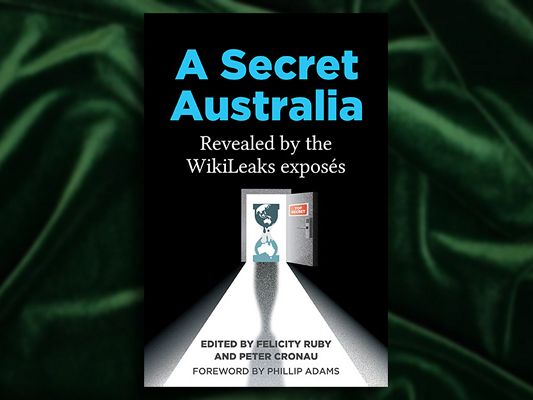 What Assange and WikiLeaks said about Australia, https://www.smh.com.au/culture/books/what-assange-and-wikileaks-said-about-australia-20210129-p56xyo.html
By Jessie Tu February 4, 2021 He has been called “truth-telling hero”, “evil and perverted traitor”, “heroic, trickster, mythical – reviled”. Robert Manne called him the “most consequential Australian of the present time”. The new US President has called him a “high-tech terrorist”.
The protean narratives of Julian Assange, who will be 50 in July, have been brewing since 2010, when his website published “The Afghan War Diaries”, “Iraq War Logs” and “Collateral Murder”, a video showing the US military killing two Reuters employees in Iraq.
December marked 10 years since Assange has been “arbitrarily detained” in Britain, according to Felicity Ruby and Peter Cronau in their introduction to A Secret Australia – a collection of 18 essays that survey the impact WikiLeaks has had on Australia’s media landscape and the consequences of our government’s attraction towards America’s intelligence and military empire.
The potpourri of authors and thinkers includes Julian Burnside, Antony Loewenstein, Scott Ludlam and Helen Razer, who critique “the powers opposed to openness and transparency” and examine the evidence, “not the likelihoods, the probabilities, the suspicions, and assumptions” around the “subversive, technology-based publishing house”.
WikiLeaks invented a “pioneering model of journalism” – one that embodied the “contemporary spirit of resistance to imperial power”, says Richard Tanter, from the school of political and social sciences at the University of Melbourne. It brought renewed debates on free speech, digital encryption and questions around the management and protection of whistleblowers who risk their lives to expose covert, deceitful actions by governments.
The documents exposed the “brazen duplicity” of the Australian government towards its citizens and presented “off-stage alliance management conversations”, Tanter writes. They invited the layperson into the green room of the performance that is politics and international diplomacy.
WikiLeaks unmasked reports that showed governments recommending media strategies to deceive the public, demonstrating their unethically utilitarian approach to international diplomacy and governance and “enlightened the public on the dark corners of wars”, writes journalist and author Antony Loewenstein.
Assange is still in a cell at London’s Belmarsh Prison, facing an appeal by the United States in its bid to extradite him to face charges for the 2010 publications. He is continuing to be “denied adequate medical care” and “denied emergency bail in light of the COVID-19″, says Lissa Johnson, a clinical psychologist and writer for New Matilda – one of the few Australian publications that have paid genuine attention to the WikiLeaks saga.
In Australia, there’s been a “striking absence of a solid debate on WikiLeaks in the mainstream public discourse”, according to Benedetta Brevini, a journalist and media activist who insists that our concerning “lack of a thorough and sustained debate” is incomprehensible. Loewenstein calls Australia’s lack of journalistic solidarity with Assange “deeply shameful”. He says we have an “anodyne media environment” – perhaps not unsurprising, considering our highly concentrated media market, one of the most severe in the world.
The standout essays come from Guy Rundle and Helen Razer – whose amusing voice cuts through the somewhat parched tenor of cold academic-speak that lightly threads through the other essays. Her addition is a breath of fresh air in the middle of a chain of same-same arguments.
The most useful essay is Rundle’s take on the historical basis for WikiLeaks. He surveys the swirling currents of Australian history that led to its founding, identifying WikiLeaks as a continuation of political activist Albert Langer’s resistance to capital.
“We need a whole new organisation of how recent Australian history is told,” Rundle concludes, seconding Lissa Johnson’s opinion that we demand citizens who “cut across the acquiescence and consent, remove the deadbolt on the torture chamber door, turn down the music and expose what is going on inside”. This collection of polemics, though at times repetitive, takes us closer to a future where these demands no longer seem beyond reality.
Biden administration presses for Julian Assange to be extradited to USA
Biden administration files appeal pressing for Assange extradition, Yahoo News, Sat, 13 February 2021 The administration of US President Joe Biden has appealed a British judge’s ruling against the extradition of WikiLeaks founder Julian Assange, a Justice Department official said Friday.
A brief filed late Thursday declared Washington’s desire to have Assange stand trial on espionage and hacking-related charges over WikiLeaks’ publication of hundreds of thousands of US military and diplomatic documents beginning in 2009.
The Justice Department had until Friday to register its stance on Judge Vanessa Baraitser’s January 4 ruling that Assange suffered mental health problems that would raise the risk of suicide if he were sent to the United States for trial.
“Yes, we filed an appeal and we are continuing to pursue extradition,” Justice Department spokesman Marc Raimondi told AFP.
After Baraitser’s decision, which did not question the legal grounds for the US extradition request, Donald Trump’s administration moved to appeal.
But Biden’s stance was not clear, and he was pressured by rights groups to drop the case, which raises sensitive transparency and media freedom issues.
After WikiLeaks began publishing US secrets in 2009, then-president Barack Obama, whose vice president was Biden, declined to pursue the case.
Assange said WikiLeaks was no different than other media constitutionally protected to publish such materials.
Prosecuting him, too, could mean also prosecuting powerful US news organizations for publishing similar material — legal fights the government would likely lose.
But under Trump, whose 2016 election was helped by WikiLeaks publishing Russian-stolen materials damaging to his rival Hillary Clinton — the Justice Department built a national security case against Assange.
In 2019 the native Australian was charged under the US Espionage Act and computer crimes laws with multiple counts of conspiring with and directing others, from 2009 to 2019, to illegally obtain and release US secrets……….
Assange has remained under detention by British authorities pending the appeal.
Earlier this week 24 organizations, including Human Rights Watch, Amnesty International USA and Reporters Without Borders, urged Biden to drop the case.
“Journalists at major news publications regularly speak with sources, ask for clarification or more documentation, and receive and publish documents the government considers secret,” they said in an open letter.
“In our view, such a precedent in this case could effectively criminalize these common journalistic practices.”
Assange’s fiancée Stella Moris said in a statement that Baraitser’s January decision that Assange was a high risk for suicide and that US prison facilities were not safe remained a strong reason to deny extradition.
Baraitser “was given clear advice by medical experts that ordering him to stand trial in the US would put his life at risk,” she said.
“Any assurances given by the Department of Justice about trial procedures or the prison regime that Julian might face in the US are not only irrelevant but meaningless because the US has a long history of breaking commitments to extraditing countries,” she said https://au.news.yahoo.com/biden-administration-files-appeal-assange-171637702.html
Julian Assange nominated by French parliamentarians for Nobel Peace Prize
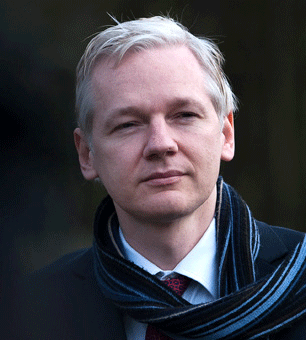 A Nobel Peace Prize for Julian Assange! https://melenchon.fr/2021/01/28/un-prix-nobel-de-la-paix-pour-julien-assange/ Thursday 28 January 2021, I decided to nominate journalist Julian Assange for the Nobel Peace Prize, as I have the power to do as a parliamentarian. Julian Assange is a hero of freedom. The WikiLeaks initiative has raised awareness of war crimes and serious human rights abuses. It is right that the peoples of the world express their gratitude to him. A Nobel Peace Prize for Julian Assange! https://melenchon.fr/2021/01/28/un-prix-nobel-de-la-paix-pour-julien-assange/ Thursday 28 January 2021, I decided to nominate journalist Julian Assange for the Nobel Peace Prize, as I have the power to do as a parliamentarian. Julian Assange is a hero of freedom. The WikiLeaks initiative has raised awareness of war crimes and serious human rights abuses. It is right that the peoples of the world express their gratitude to him.
On January 4, 2021, British justice refused his extradition to the United States, but maintained his imprisonment. More than ever, Julian Assange needs the protection of the peoples of the world. Granting him the Nobel Peace Prize would allow that.
|
|
|
Australia’s environmental scientists intimidated, silenced by threats of job loss
 Australia’s environmental scientists intimidated, silenced by threats of job loss, Michael West Media, by Elizabeth Minter | Jan 17, 2021 The silencing of environmental scientists, as revealed in a study late last year, profoundly damages our democracy, wastes taxpayers’ money, takes a huge personal toll, allows fake news to proliferate and short-changes the public. Elizabeth Minter reports. Australia’s environmental scientists intimidated, silenced by threats of job loss, Michael West Media, by Elizabeth Minter | Jan 17, 2021 The silencing of environmental scientists, as revealed in a study late last year, profoundly damages our democracy, wastes taxpayers’ money, takes a huge personal toll, allows fake news to proliferate and short-changes the public. Elizabeth Minter reports.
“I declared the (action) unsafe. I was overruled and … was told to be silent or never have a job again.” “We are often forbidden (from) talking about the true impacts of, say, a threatening process […] especially if the government is doing little to mitigate the threat.” “I was directly intimidated by phone and Twitter by (a senior public servant).” “… governments allow (industry) to treat data collected as commercial in confidence. This means experts most able to comment on the details of big mining and construction projects are hopelessly conflicted and legally gagged from discussing these projects in public.” “(Government) staff are rewarded or penalized on the basis of complying with opinions of senior staff regardless of evidence.” “I proposed an article in The Conversation about the impacts of mining […] The uni I worked at didn’t like the idea as they received funding from (the mining company).” All in a day’s workAll these comments, straight from the mouths of some of Australia’s most esteemed scientists, highlight the threats faced by ecologists, conservation scientists, conservation policy makers and environmental consultants, whether they are working in government, industry or universities. The scientists were responding to an online survey as part of a study conducted by academics Don Driscoll, Georgia Garrard, Alexander Kusmanoff, Stephen Dovers, Martine Maron, Noel Preece, Robert Pressey and Euan Ritchie. In an ironic twist, one of the research team’s initial members declined to contribute to the project for fear of losing funding and therefore their job. As the study’s authors note, scientists self-censor information for fear of damaging their careers, losing funding or being misrepresented in the media. In others, senior managers or ministers’ officers prevented researchers from speaking truthfully on scientific matters. This means important scientific information about environmental threats often does not reach the public or decision-makers, including government ministers. This information blackout, termed “science suppression”, can hide environmentally damaging practices and policies from public scrutiny. Survey methodology……….Ministers not receiving full informationSome 75% of the scientists surveyed reported having refrained from contributing to public discussion when given the opportunity – most commonly in traditional or social media. A small number self-censored conference presentations (9%) and peer-reviewed papers (7%). For scientists working in government, the main reasons they didn’t comment was because of attitudes of senior management (82%), workplace policy (72%), a minister’s office (63%) and middle management (62%). Fear of what would happen to their career prospects (49%) and concern about media misrepresentation (49%) also discouraged those working in government from speaking publicly. Almost 60% of scientists working in government and 36% of scientists in industry reported that internal communications were modified………… Critical conservation issues suppressedThe most common issue on which information was suppressed was threatened species. About half of industry and government scientists, and 28% of academics, said their commentary was constrained. Scientists working in government also reported not being able to comment on logging and climate change………….. The system is brokenOf those scientists who had spoken publicly about their research, 42% had been harassed or criticised for doing so. Of those, 83% believed the harassers were motivated by political or economic interests……. Change is neededAs witnessed by the past four years of Donald Trump’s presidency, it has never been more important to ensure that the public are exposed to facts and information from trusted sources……. The study was published late last year in Conservation Letters, a journal of the Society for Conversation Biology. https://www.michaelwest.com.au/australias-environmental-scientists-intimidated-silenced-by-threats-of-job-loss/ |
|
Judge’s refusal to extradite Julian Assange is still part of cowardly process to deny freedom of information
The personal conveniently distracts from the political in the Assange story, https://www.theage.com.au/national/the-personal-conveniently-distracts-from-the-political-in-the-assange-story-20210107-p56siu.html
Elizabeth Farrelly Judge Vanessa Baraitser’s refusal to extradite Julian Assange for “mental health” reasons may look humanitarian but is in fact a deft political move. In reducing what should be an argument of law and principle to a test of personality, Baraitser managed at a blow to impugn Assange’s stability, repudiate any suggestion of innocence and open the door for America to prove the comforts of its solitary confinement and thereby win his extradition.
It’s a story of many twists and turns but underlying it throughout is a profound and widespread moral cowardice.
Baraitser’s 132-page ruling found that although the UK-US Extradition Treaty of 2003 specifically prohibits extradition for “political offence”, this provision never became law in the UK and therefore has no effect. In essence, the treaty is worthless.
The court also supported all 18 of the espionage charges against Assange, arguing that WikiLeaks’ hacking and publication “would amount to” offences in English law. Baraitser identified eight charges under the UK Official Secrets Act that would be, she said, equivalent.
Interestingly, this “would have” construction does not apply to the treaty question. Had Assange engaged in the same conduct in America, targeting British government information, he could not have been extradited because America’s “monist” system regards any treaty as law once signed. So it’s ironic that undermining this particular protection is a key US argument.
Anyone who saw the 2019 docudrama Official Secrets, chronicling the leakage by GCHQ analyst-turned-whistleblower Katharine Gun of information on US-UK dirty dealing in drumming up UN support for the Iraq war, will understand just how murky and terrifying such prosecutions can become.
This fear, and the persistent cowardice of yielding to it, is the theme of Assange’s story. I’ve written about Assange several times. I visited him in Ecuador’s embassy. Yet each time, I’ve found myself reluctant.
Seven years ago, when I met him, Assange was ebullient and hopeful, even funny. Now, as Baraitser says, he is “a depressed and sometimes despairing man who is genuinely fearful about his future”. Assange, she said, was at “high risk of serious depression leading to suicide if he were to be extradited and placed in solitary confinement for a long period”.
Baraitser noted the “bleak” conditions of Assange’s likely US confinement would include “severely restrictive detention conditions designed to remove physical contact and reduce social interaction and contact with the outside world to a bare minimum”, with family limited to one supervised 15-minute phone call a month. Detailing Assange’s mental state, she opined that his risk of suicide, in such conditions, was “very high”. This is the loophole she offers the appellant US prosecutor.
Those fears – his of 175 years in solitary (honestly, who wouldn’t top themselves?) and hers of his suicide – underpin her judgment. But there are other, more insidious fears at play here.
Such fears, I see now, feed my reluctance to revisit the Assange story: fear, in particular, of confronting the terrifying truth about our imperial system. Regardless of Assange’s innocence or guilt, the simple facts of what our controlling powers can do to you if you step out of line are terrifying.
But this small, individual fear also operates, very effectively, at nation level.
From the start, the case against Assange has contrived to turn issues of principle into questions of personality. The initial Swedish rape charges, since dropped for lack of evidence as the witness’s recollections after so long were clouded, were extremely personal, spinning off the cancellation of his credit cards upon his arrival in Stockholm, forcing him to accept hospitality; the seductions, the sex – which everyone agrees was consensual – his failure to wear a condom although asked and reluctance to take an STD test. Then the left turned against him because of the Clinton leaks – which one suspects would have been fine, had they been directed at the other side – and perceptions about Assange’s ego. He was vain, it was said, and narcissistic. As if that itself were a crime, reason enough to let him rot in solitary.
The personal and emotive nature of all this – the Swedish prosecutor’s refusal to interview him in London, Britain’s willingness to imprison him for a year on bail charges, America’s determination to prosecute him for exposing their war crimes (in the Iraq War Logs of October 2010 and the film Collateral Murder showing air crew shooting unarmed civilians from a helicopter) and the description of WikiLeaks by US Secretary of State Mike Pompeo as “a hostile non-state intelligence service” – all suggest a bigger picture, and smaller values, than mere truth or justice.
It’s often said that Assange endangered the lives of US informers but, as Baraitser notes, no causality has been shown. Even the Senate Committee on Armed Service said, “the review to date has not revealed any sensitive sources and methods compromised by disclosure”. It is said that Assange, by dumping hacked emails from Hillary Clinton’s campaign, gave us Trump. But if she was engaged in skulduggery as alleged, wasn’t it better for the world to make its own judgment?
When you look coldly at the facts it’s hard not to suspect that Sweden was coerced into the original charges and that Britain and Ecuador have been similarly pressured. Certainly Australia’s persistent refusal to intervene for Assange, an Australian citizen who has broken no Australian law, suggests a similar abject timidity in the face of US might.
That’s the fear that guys like Assange and Edward Snowden make us confront. And it’s why they deserve, at the very least, a fair and open trial.
Assange hearing outcome could set an “alarming precedent” for free speech
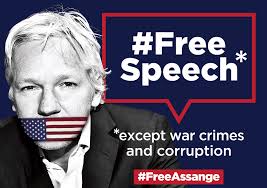 Assange hearing outcome could set an “alarming precedent” for free speech https://www.indexoncensorship.org/2020/12/assange-hearing-outcome-could-set-an-alarming-precedent-for-free-speech/ Benjamin Lynch Assange hearing outcome could set an “alarming precedent” for free speech https://www.indexoncensorship.org/2020/12/assange-hearing-outcome-could-set-an-alarming-precedent-for-free-speech/ Benjamin Lynch
People need to “forget what they think they know” about WikiLeaks founder Julian Assange and recognise that if he is extradited to the USA, it would set a worrying precedent for media freedom. We speak to his partner about the case. Assange’s partner, Stella Moris, is remaining resolute despite his extradition hearing decision being less than a month away and him being held in a prison that has recently had a Covid-19 outbreak.
Speaking over the phone to Index, Moris discusses the hearing’s details and what it could mean for the future of freedom of expression. And she talks about the deep implications it has had for her and her young family. “Obviously it is very difficult. I speak to Julian on a daily basis unless there is a problem. [But] he is in prison. Soon to be for two years. He has been there for longer than many violent prisoners who are serving sentences. All in all, he has been deprived of his liberty for ten years now,” she told Index. She adds: “The kids speak to their father every day; we try to normalise it as much as we can for them. But of course, this is not a normal situation and our lives are on hold. It is inhumane and shouldn’t be happening in the UK.” The current hearing – which will decide whether there are grounds for Assange to stand trial in the USA – should reach a conclusion on 4 January. A trial in the USA (should the decision go against Assange) will have major ramifications for free speech and whistleblower journalism. The WikiLeaks founder is charged with conspiring with US intelligence analyst Chelsea Manning and hackers from groups such as Anonymous and LulzSec to obtain and publish classified information. Each of the 18 charges laid by US authorities, if Assange is extradited and convicted, carry a maximum penalty of 10 years. The allegations brought forward under the 1917 Espionage Act, alongside one other under the Computer Fraud and Abuse Act, mean Assange could face up to 175 years in prison – effectively a life sentence. Manning was initially sentenced to 35 years, but under the Obama administration her sentence was commuted to less than seven years. It is easy to get sidetracked about the current extradition hearing and get into arguments about whether Assange is a journalist, whether he is guilty of other crimes or whether the publication of the documents brought harm to anyone involved. Instead people’s attentions should focus on the precedent that will be set should the case go to trial in the USA. As it stands the case is unprecedented. No publisher has ever been tried under the Espionage Act, which itself was essentially created for spies imparting official secrets either for profit or otherwise. This is perhaps a direct contradiction of rulings of the courts in the UK. In December 2017, the UK’s information tribunal recognised WikiLeaks as a media organisation, in direct contradiction to the view of the US State Department. Australia’s media union, the Media, Arts and Entertainment Alliance, also presented an honorary member card to Assange’s Melbourne-based lawyer. Amidst the noise of the separate matters around the case, Moris insists people need to “forget what they think they know” and assess the issues involved. “There are a lot of assumptions being made over what this case is really about. There are all these sideshows. It is not about people being harmed because the US has admitted it has no evidence to make this argument. It comes down to the fact that the material published was classified. People who care about free speech and press freedom need to forget what they think they know about this case and look at it afresh and understand Julian is in prison for publishing. This is not something that democracies do.” “Are they saying what he published was not in the public interest? They say that is irrelevant. They can’t deny [what he published] wasn’t in the public interest because he was publishing information and evidence of state crimes, of state abuse, torture, of rendition, blacksites and of illegal killings. What they are arguing is that Julian published information that was secret and therefore he can be prosecuted over it.” ournalists publishing secret information is not new (nor is pressure for them not to publish) and can often be key to upholding democracy and ensuring states act properly. The Watergate revelations relied heavily on news organisations pressing on with publication despite attempts by the USA to stop them, including the threat of jail time. It proved a significant victory for free speech. If Assange is extradited and tried the case will impact journalists and the media “for years to come”, says Rebecca Vincent, director of international campaigns at Reporters Without Borders (RSF). “It feels like many in the media do not see the implications of this case as something that will possibly affect them,” she told Index. “This case will have ramifications on the climates for journalism and press freedom internationally for years to come.” “This is the first time we have seen the US government prosecute anybody for publishing leaked information. If they are successful, they will not stop with Assange and WikiLeaks. This could be applied, in theory, to any media outlet.” It’s common for journalists and publishers to cite a public interest defence for disputed documents. It is a centrepiece of a defence case against libel, for instance. “The information published was certainly in the public interest; it served to inform extensive public interest reporting that exposed war crimes and other illegal actions by states,” said Vincent. “The Espionage Act lacks a public interest defence. He cannot use it if he is sent to the United States and tried.” Essentially, what this means is that Assange is being treated as a spy not a publisher. If Assange is extradited and loses his case against the US government, any time classified information is published by a journalist there will be a precedent set that they can be charged and tried as a spy in the same way. “These sorts of cases are really highlighting the need for more robust legislation that cannot be manipulated to be used against journalists, whistleblowers and other sources. Ultimately, it is the public’s right to access information that is being impacted,” Vincent added. “You can see this for what it is; this very much feels like a political prosecution by states that are not meant to engage in this behaviour. The reason our states can get away with this is because of a lack of public pressure. A lack of public sympathy has resulted in a lack of widespread public pressure to hold our governments to account.” |
|
Law and Disorder: The case of Julian Assange
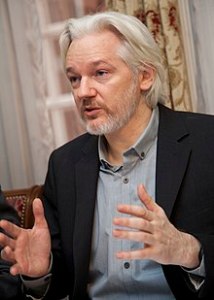 In the case of Julian Assange, what is on trial is nothing less than our right to know what is done by governments in our name, and our capacity to hold power to account.
What kind of law allows pursuit of charges under the 1917 United States Espionage Act — for which there is no public interest defence — against a journalist who is a foreign national?
The closing argument of the defence in the extradition hearing of WikiLeaks founder and publisher Julian Assange has been filed. For this and other reasons it is apposite to consider the authority invested in the law before which, in democratic societies, we are ostensibly all equal.
In fact, notwithstanding the familiar claims of objectivity (and as `everybody knows’ in Leonard Cohen’s famous lyric) the reality is somewhat different. Jokes about the law attest to this:
‘One law for the rich…’
‘Everyone has the right to their day in court — if they can pay for it’
‘What’s the difference between a good lawyer and a great one? A good lawyer knows the law. A great lawyer knows the judge’
The term ‘legal fiction’ calls into question the relationship between law, objectivity, and truth. On the one hand, law is the essential pillar of a functioning society. On the other, it is replete with anomalies both in conception and execution. To what extent can these perspectives be reconciled? High stakes are attached to this question.
Questioning claims of objectivity in the context of law.
The Australian government”s intimidation of whistleblowers – the torture of Julian Assange
Torture of Julian Assange by Australian governments sends powerful message to whistleblowers, Michael West Media by Lissa Johnson | Nov 26, 2020
Australia has used a range of torture techniques against Julian Assange, writes Dr Lissa Johnson. Governments have isolated and demonised him; flatly rejected evidence of ill-treatment; refused to respond to specific allegations; and divested themselves of any responsibility. Leaders can’t, or won’t, accept the difference between psychological torture and ‘a legal matter’.
Julian Assange has set a number of firsts for Australia, including:
- The first Walkley award winner whose journalism has attracted a possible 175 years in US prison.
- The first journalist to be prosecuted as a spy by the US government, under its 1917 Espionage Act.
- The first citizen of an ostensibly democratic state (Australia) whom a UN official has found to be the target of a campaign of collective persecution and mobbing by other so-called democratic states.
As the UN Rapporteur on Torture, Nils Melzer, observed:
In 20 years of work with victims of war, violence and political persecution I have never seen a group of democratic states ganging up to deliberately isolate, demonise and abuse a single individual for such a long time and with so little regard for human dignity and the rule of law.
As part of this mobbing and collective persecution, Assange is the first Australian journalist to be tortured for journalism in the UK.
On 9 May 2019, Professor Melzer visited Assange in Belmarsh prison, accompanied by two medical experts specialising in the assessment and documentation of torture. On 31 May, Melzer reported that they had found Assange to be suffering all symptoms typical of prolonged exposure to psychological torture.
On 1 November 2019, Melzer warned that, unless the UK government urgently changed course, it may soon end up costing his life.
What torture?
Julian Assange is being held in ‘Britain’s Guantanamo’, Belmarsh prison, a high-security facility designed for those charged with terrorism, murder and other violent offences. He has been held in solitary confinement for 22 to 23 hours a day.
He knows that US-aligned security contractors have written in emails that he will make a nice bride in prison, and needs his head dunked in a full toilet bowl at Gitmo. He knows he is headed for life in US supermax prisons, where prisoners are held in perpetual solitary and chains.
‘If this man gets extradited to the United States, he will be tortured until the day he dies’, Profesor Melzer has cautioned.
To heighten the torment, Assange has been prevented from preparing his defence against extradition in violation of his human rights as a defendant.
He has been granted negligible access to his lawyers and is prevented from researching his own defence. The only purpose is to render him helpless, intensifying his trauma.
A Message from the Australian Government
Assange’s experience sets an example to anyone thinking of airing the dirty secrets of those in power: the genuinely dirty secrets, such as wantonly slaughtering and torturing innocent people and covering it up.
Like all public torture, it sends a message to onlookers: this could happen to you.
And the message from the Australian government to any Australian journalists looking on? You’re on your own.
The US government is seeking to retrospectively apply its own Espionage Act to non-US citizens in foreign lands, while simultaneously withholding the free speech protections of its Constitution. The upshot would be that non-US citizens, and non-US journalists, would be vulnerable to prosecution wherever they may be, whenever the United States saw fit.
Should a host country oblige, that journalist’s only hope would be the protection of their own government. And the message from the Australian government? Not a chance.
A climate of consent
But can the government do anything to stop the torture of Assange in the UK? Or are its hands tied?
Australia ratified the Convention Against Torture in 1989. It therefore has a positive duty to take ‘effective legislative, administrative, judicial and other measures to prevent acts of torture’ of its citizens. According to the Federal Attorney-General’s website, however, that duty applies to ‘territories within Australia’s jurisdiction’.
So who is responsible for protecting Australian citizens from torture overseas?
Australian officials can raise concerns with their overseas counterparts when they are concerned about gross violations of citizens’ rights as happened in the cases of Melinda Taylor, James Ricketson, David Hicks and Peter Greste.
They could also make a submission to the Committee against Torture that a state is ‘not fulfilling its obligations under this Convention’.
n Assange’s case, however, the government has opted for ‘consent and acquiescence’ under Article 1 of the convention. Consent and acquiescence is listed alongside inflicting and instigating torture as part of the very definition of torture.
‘Standard’ fare
DFAT representatives say repeatedly that Assange’s treatment In the UK is perfectly normal. ‘Standard’. ‘No different’ from the treatment of other UK prisoners. Routine, in other words. Nothing to see here.
When reminded that Assange had been handcuffed 11 times, stripped naked twice and moved between five holding cells after the first day of his extradition hearing, a DFAT representative described this as ‘standard prison to court and court to prison procedure’.
What the official failed to explain is that treatment is only ‘standard’ and normal for prisoners charged with terrorism or other violent offences.
It is not remotely normal for journalists with no criminal history, and no history or risk of violence, to be detained under the most punitive conditions that UK law enforcement has to offer.
As an exercise in “consent and acquiescence” DFAT representatives performed their duties well.
Sanitising, normalising language minimises and trivialises abuse………….
‘Not our responsibility’ has been the Australian government’s refrain. Australian government officials ‘don’t provide running commentaries on legal matters before the courts in other parts of the world’, asserted the Foreign Minister.
Australia is ‘not a party to the legal proceedings in the United Kingdom’, stressed a DFAT official when asked why Australia had not intervened in Assange’s case during Senate Estimates. ‘We have no standing in the legal matter that is currently before the courts.’
Perhaps the Australian government doesn’t understand the seriousness of the abuses taking place in the UK. Perhaps ministers and their advisors are unaware of the difference between psychological torture and a ‘legal matter’. Psychological torture is, after all, not commonly well understood.
It is possible that the Australian government merely fails to grasp the gravity of ignoring Professor Melzer’s warnings. However, when the group Doctors for Assange wrote to the Australian government in December 2019, they detailed the medical and psychological basis of their concerns for Assange’s life and health…………..
New normal in Australia?
Assange is not the first person in Australia to be subjected to torture and other cruel, inhuman or degrading treatment. Australia’s abuse of asylum seekers and refugees has been found to violate the Convention Against Torture. Aboriginal Australians, among the most incarcerated groups on earth, have been dying in custody, buried under acquiescent consent, for decades, and historically for hundreds of years.
The Human Rights Measurement Index 2019 has given Australia a 5.5 out of 10 rating for ‘freedom from torture’, noting, ‘Torture is a serious problem in Australia … a large range of people [are] at particular risk of torture or ill-treatment, with Aboriginal people and Torres Strait Islanders at the top of the list’…….
Through sending a message to journalists worldwide by torturing Assange, the abusive licence deployed against other persecuted groups is being expanded to take in journalism. The targeting of journalists around the world matters because journalists cut across the acquiescence and consent, remove the deadbolt on the torture chamber door, turn down the music, and expose what is going on inside. Every persecuted and abused group or person needs them, to break the cycle of violence by breaking the silence.
We do torture here. It is our problem. In Julian Assange’s case, the biggest problem appears to be that torturing journalists is becoming the new normal in Australia.
This edited extract is reproduced from A Secret Australia: Revealed by the WikiLeaks Exposés, edited by Felicity Ruby and Peter Cronau, Monash University Publishing, December 2020. https://www.michaelwest.com.au/torture-of-julian-assange-by-australian-governments-sends-powerful-message-to-whistleblowers/
Julian Assange ‘targeted as a political opponent of Trump administration and threatened with the death penalty’
|
Julian Assange ‘targeted as a political opponent of Trump administration and threatened with the death penalty’ Evening Standard. By Tristan Kirk. @kirkkorner
09 September 2020, Wikileaks founder Julian Assange has been targeted as a “political opponent” of President Trump’s administration and threatened with the death penalty, the Old Bailey heard today.
Professor Paul Rogers, a lecturer in peace studies at Bradford University and specialist on the ‘War on Terror’, said Assange’s opinions put him “in the crosshairs” of Trump’s top team. Giving evidence to Assange’s extradition hearing this morning, he said he believes the prosecution case is part of a drive in the United States to target “dissenters”. “In my opinion Mr Assange’s expressed views, opinions and activities demonstrate very clearly ‘political opinions’”, he told the court. “The clash of those opinions with those of successive US administrations, but in particular the present administration which has moved to prosecute him for publications made almost a decade ago, suggest that he is regarded primarily as a political opponent who must experience the full wrath of government, even with suggestions of punishment by death made by senior officials including the current President.”………
Professor Rogers, in his witness statement, said Assange’s work involved exposing secrets that the US government wanted to keep hidden, he had been in conflict with the Obama administration, but there was “no question” that Assange had been targeted as a political opponent by Trump’s officials. “The opinions and views of Mr Assange, demonstrated in his words and actions with the organisation WikiLeaks over many years, can be seen as very clearly placing him in the crosshairs of dispute with the philosophy of the Trump administration”, he said. Assange’s legal team argue that a decision was taken under President Obama not to prosecute the Wikileaks activist, but that move was overturned under Trump. https://www.standard.co.uk/news/uk/julian-assange-donald-trump-administration-old-bailey-hearing-a4543656.html?fbclid=IwAR3Rj4n0Lzlt5GmE1lXZXoMVDsOS5BdT9sEKgj82SCmMnpNLFQ6ZfEzVUOI |
|
Adani hires spying on activist’s daughter on way to school
|
Private investigator hired by Adani secretly photographed activist’s daughter on way to school
Exclusive: investigator’s affidavit shows he surveilled and followed anti-Adani activist Ben Pennings’ wife and daughter, Guardian, Ben Smee @BenSmee – 28 Oct 20, A private investigator working for Adani took covert photographs of an environmental activist walking his nine-year-old daughter to primary school, court documents have revealed.The affidavit of the investigator – who was instructed by lawyers representing Adani in its civil case against activist Ben Pennings – also revealed he surveilled Pennings’ wife, trawled her Facebook page and followed her to work. Guardian Australia can reveal documents detailing the surveillance of Pennings and his family were tendered to the Queensland supreme court in a recent “Anton Piller” case, in which Adani had sought permission to conduct an unannounced search of the activist’s family home. The Queensland supreme court and court of appeal both rejected the move, saying the search could result in “humiliation and family distress”. An email from the law firm representing Adani against Pennings, Dowd and Co, instructed a private investigator, Garry Andrew Sweet, to conduct surveillance for “the consideration of vulnerable persons … at the time of execution of any search warrant”……… Pennings said: “This is Adani all over. This is what Labor and the LNP actively support. Politicians would go berserk if anyone followed the partner and kids of a mining executive. Adani takes photographs of my daughter walking to primary school but unless anything changes this election Labor and the LNP will still allow them to operate in Queensland. “Queensland Labor has had plenty of opportunity to stand up against Adani’s intimidation of scientists and concerned citizens. It’s absolutely appalling they’ve given Adani a royalty holiday instead.”……. The mining company building the controversial Carmichael coalmine is suing Pennings, from the group Galilee Blockade, for conspiracy, intimidation and breach of confidence. …..https://www.theguardian.com/business/2020/oct/28/private-investigator-hired-by-adani-secretly-photographed-activists-family |
|
|
The Guardian was grossly unfair to Julian Assange. They could still make up for this.
The Guardian’s Silence Let UK Trample on Assange’s Rights in Effective Darkness https://consortiumnews.com/2020/10/21/the-guardians-silence-let-uk-trample-on-assanges-rights-in-effective-darkness/?fbclid=IwAR16w5kNgLGJ3jyFI6QvKZmxJ5tn_LjZcD90a7FOG-ZQ8jaGzUYKlhnRT8M
Jonathan-Cook.net WISE Up, a solidarity group for Julian Assange and whistleblower Chelsea Manning, is due to stage a demonstration outside The Guardian offices on Oct. 22 to protest the paper’s failure to support Assange as the U.S. seeks his extradition in an unprecedented assault on press freedom.
The date chosen for the protest marks the 10th anniversary of The Guardian’s publication of the Iraq war logs, leaked by Manning to Assange and which lie at the heart of the U.S. case to reclassify journalism exposing crimes against humanity as “espionage.”
Here is my full statement, part of which is due to be read out, in support of Assange and castigating The Guardian for its craven failure to speak up in solidarity with its former media partner:
Julian Assange has been hounded out of public life and public view by the U.K. and U.S. governments for the best part of a decade.
Now he languishes in a small, airless cell in Belmarsh high-security prison in London — a victim of arbitrary detention, according to a UN working group, and a victim of psychological torture, according to Nils Melzer, the UN’s expert on torture.
If Judge Vanessa Baraitser, presiding in the Central Criminal Court in London, agrees to extradition, as she gives every appearance of preparing to do, Assange will be the first journalist to face a terrifying new ordeal — a form of extraordinary rendition to the United States for “espionage” — for having the courage to publish documents that exposed U.S. war crimes and crimes against humanity.
The Guardian worked with Assange and WikiLeaks on vitally important documents – now at the heart of the U.S. case against Assange – known as the Afghanistan and Iraq war logs. The latter were published exactly a decade ago today. They were a journalistic coup of global significance, and the paper ought to be profoundly proud of its role in bringing them to public attention.
During Assange’s extradition hearing, however, The Guardian treated the logs and its past association with Assange and WikiLeaks more like a dirty secret it hoped to keep out of sight. Those scoops furnished by Assange and whistleblower Chelsea Manning enriched the paper financially, and bolstered its standing internationally. They also helped to pave its path into the lucrative U.S. market.
Unlike Assange and Manning, The Guardian has suffered no consequences for publishing the logs. Unlike Assange and Manning, the paper has faced no retribution. While it profited, Assange continues to be made an example of — to deter other journalists from contemplating following in his footsteps.
The Guardian owes Assange.
- It owes him a huge debt for allowing it to share in the journalistic glory of WikiLeaks’ revelations.
- It owes him a duty of care as its partner in publishing the logs.
- It owes him its voice loudly denouncing the abuse of a fellow journalist for doing the essence of journalism — holding the powerful to account.
- It owes him and its own staff, and the young journalists who will one day take their place, its muscle in vigorously defending the principle of a strong and free press.
- It owes him, and the rest of us, a clear profession of its outrage as the U.S. conducts an unprecedented assault on free speech, the foundation of a democratic society.
And yet The Guardian has barely raised its voice above a whisper as the noose has tightened around Assange’s — and by extension, our — neck. It has barely bothered to cover the dramatic and deeply disturbing developments of last month’s extradition hearing, or the blatant abuses of legal process overseen by Baraitser.
The Guardian has failed to raise its editorial voice in condemnation either of the patently dishonest U.S. case for extradition or of the undisguised mistreatment of Assange by Britain’s legal and judicial authorities.
The paper’s many columnists ignored the proceedings too, except for those who contributed yet more snide and personal attacks of the kind that have typified The Guardian’s coverage of Assange for many years.
It is not too late for the paper to act in defence of Assange and journalism.
Assange’s rights are being trampled under foot close by The Guardian’s offices in London because the British establishment knows that these abuses are taking place effectively in darkness. It has nothing to fear as long as the media abdicates its responsibility to scrutinize what amounts to the biggest attack on journalism in living memory.
Were The Guardian to shine a light on Assange’s case — as it is morally obligated to do — the pressure would build on other media organizations, not least the BBC, to do their job properly too. The British establishment would finally face a countervailing pressure to the one being exerted so forcefully by the U.S.
The Guardian should have stood up for Assange long ago, when the threats he and investigative journalism faced became unmistakable. It missed that opportunity. But the threats to Assange — and the causes of transparency and accountability he champions — have not gone away. They have only intensified. Assange needs the Guardian’s support more urgently, more desperately than ever before.
Jonathan Cook is a former Guardian journalist (1994-2001) and winner of the Martha Gellhorn Special Prize for Journalism. He is a freelance journalist based in Nazareth. If you appreciate his articles, please consider offering your financial support.
This article is from his blog Jonathan Cook.net.
New government Bill could target journalists, environmental and human rights groups
|
Tue 20 Oct 2020 Journalists and advocacy groups could face compulsory questioning by Asio as part of a proposed expansion of the spy agency’s powers, according to external legal advice prepared by leading barristers.With senior officials of Asio due to give evidence to Senate estimates hearings on Tuesday, the new advice seen by Guardian Australia argues a bill before parliament to extend the reach of questioning powers could have a “chilling effect” on the willingness of people to speak to journalists. It also argues some of the work of civil society organisations – especially those involved in environmental and human rights advocacy – may be caught by the broad definition of “acts of foreign interference” because it includes clandestine acts that “are otherwise detrimental to the interests of Australia”. Members of civil society groups could face potential questioning and the use of tracking devices, according to the advice commissioned by progressive group GetUp and prepared by Sydney-based barrister Dominic Villa SC – an expert in public and administrative law – and fellow barrister Diana Tang, both of New Chambers. The government’s bill – which is currently being scrutinised by parliament’s intelligence committee – would expand the range of matters that are subject to compulsory questioning powers beyond terrorism-related matters. The changes would allow the agency to question adults over espionage and foreign interference, amid warnings from Asio that there are now mores spies and proxies operating in Australia than at the height of the cold war……… “Despite well-recognised professional and ethical obligations of a journalist to maintain anonymity and confidentiality of a source, if so questioned under a warrant, a journalist would be required to disclose the identity of a confidential source.” The advice says there is no exception or exclusion provided for in the bill that would enable a journalist to refuse to answer a question on the basis it would reveal a confidential source. “There may therefore be a chilling effect on the willingness of people to speak to journalists about issues of political significance, including security matters and foreign relations.” Villa and Tang argue the proposed laws may also “undermine the important role played by civil society organisations in holding government to account”, partly because a “foreign power” is defined to include “a foreign political organisation”. The advice argues civil society organisations operating in Australia may “collaborate with or receive support from a foreign political organisation that shares a common interest or objective, in their advocacy campaigns”……… https://www.theguardian.com/media/2020/oct/20/chilling-attack-on-democracy-proposed-asio-powers-could-be-used-against-journalists |
|
Persecuting Assange Is a Real Blow to Reporting and Human Rights Advocacy’
Persecuting Assange Is a Real Blow to Reporting and Human Rights Advocacy’
CounterSpin interview with Chip Gibbons on Assange extradition Fair, 15 Oct 20,
Assange’s case, the unprecedented use of the Espionage Act to go after a journalist, has dire implications for all reporters. But this country’s elite press corps have evidently decided they can simply whistle past it, perhaps hoping that if and when the state comes after them, they’ll make a more sympathetic victim.
Joining us now to discuss the case is Chip Gibbons. He’s policy director at Defending Rights & Dissent. He joins us now by phone from Washington, DC………..
CG: Sure. So the US has indicted Julian Assange with 17 counts under the Espionage Act, as well as a count under the Computer Fraud and Abuse Act.
Assange is not a US person; he’s an Australian national. He was inside the Ecuadorian embassy for a number of years, as Ecuador had granted him asylum, and the UK had refused to basically recognize that and let him leave the country, so he was de facto imprisoned inside the embassy. And after the indictment the US issued, the new government of Ecuador—which is much less sympathetic to Assange than the previous Correa government—let the US come in the embassy and seize him.
And the US is seeking Assange’s extradition to the US from the UK. I guess it’s, probably, technically a hearing, but Kevin’s point was that it’s more like what we would think of as a trial, in that there’s different witnesses, there’s expert testimony, there’s different legal arguments at stake.
The defense, the witness portion of it, has closed; it ended last week. And there’s going to be closing arguments submitted in writing, and then the judge will render a decision, and that decision will be appealable by either side. So regardless of the outcome, we can expect appeals. So it does very closely mirror what we would think of more like a trial than a hearing in the US court context.
It’s important to really understand what’s at stake with Assange’s extradition. He is the first person ever indicted by the US government under the Espionage Act for publishing truthful information.
The US government has considered indicting journalists before: They considered indicting Seymour Hersh, a very famous investigative reporter. They considered indicting James Bamford, because he had the audacity to try to write a book on the National Security Agency. But they’ve never done that.
And Obama’s administration looked at the idea of indicting Assange and said, “No, this would violate the First Amendment, and it would open the door to all kinds of other bad things.” But the Trump administration clearly doesn’t have those qualms……..
It is very interesting to see how this plays out in a US court in the current environment. If whoever—Trump or Biden, whoever is president, when this finally comes to the US—actually pursues this, and they actually are allowing the persecution of journalists, that’s going to be a really dark, dark assault on free expression rights.
And it’s worth remembering—and Julian Assange is clearly very reviled in the corporate media and the political establishment right now—but the information he leaked came from Chelsea Manning, it dealt with US war crimes; and he worked with the New York Times, the Guardian, Der Spiegel, Le Monde, Al Jazeera, to publish this information. So if he can go to jail for publishing this, why can’t the New York Times? And is that a door anyone wants to open? There is a big press freedom angle here.
I also want to talk about the facts, though: What did Julian Assange publish, and why did it matter? ………..
Julian Assange is accused of publishing information about war crimes, about human rights abuses and about abuses of power, that have been tremendously important, not just for the public’s right to know, but also have made a real difference in advocacy around those issues. People were able to go and get justice for victims of rendition, or able to go and get court rulings in other countries about US drone strikes, because of this information being in the public domain. So attacking Assange, persecuting Assange, disappearing him into a supermax prison, this is a real blow to reporting and human rights advocacy. ………
JJ: Right. And, finally, the journalists who are holding their nose right now on covering it aren’t offering to give back the awards that they won based on reporting relying on WikiLeaks revelations. And James Risen had an op-ed in the New York Times a while back, in which he was talking about Glenn Greenwald, but also about Julian Assange, and he said that he thought that governments—he was talking about Bolsonaro in Brazil, as well as Donald Trump—that they’re trying out these anti-press measures and, he said, they “seem to have decided to experiment with such draconian anti- press tactics by trying them out first on aggressive and disagreeable figures.”………. https://fair.org/home/persecuting-assange-is-a-real-blow-to-reporting-and-human-rights-advocacy/
As Julian Assange faces extradition to USA, global press freedom is endangered
|
Assange Faces Extradition for Exposing US War Crimes, BY Marjorie Cohn, Truthout, October 11, 2020 Three weeks of testimony in Julian Assange’s extradition hearing in London underscored WikiLeaks’s extraordinary revelation of U.S. war crimes in Iraq, Afghanistan and Guantánamo Bay. But the Trump administration is seeking to extradite Assange to the United States to stand trial for charges under the Espionage Act that could cause him to spend 175 years in prison.
Assange founded WikiLeaks during the Bush administration’s “war on terror,” which was used as a pretext to start two illegal wars and carry out a widespread program of torture and abuse of prisoners at Guantánamo and the CIA black sites. On October 8, 2011, Assange told a Stop the War Coalition rally in London’s Trafalgar Square, “If wars can be started by lies, peace can be started by truth.” In 2010 and 2011, WikiLeaks published classified material that Army intelligence analyst Chelsea Manning had provided to the organization. Manning was prosecuted, convicted and sentenced to 35 years in prison for leaking the documents. As he left office, Barack Obama commuted her sentence to the seven years she had already served. That commutation provoked “tremendous anger” in the Trump administration and drew Trump’s attention to Assange, Eric Lewis testified. Lewis, chairman of the board of Reprieve U.S. and lawyer for Guantánamo and Afghan detainees, called this “a politically motivated prosecution.” The files that WikiLeaks published contained 90,000 reports about the war in Afghanistan, including the Afghan War Logs, which documented a greater number of civilian casualties by coalition forces than the U.S. military had reported. In addition, WikiLeaks published nearly 400,000 field reports about the Iraq War, more than 15,000 unreported deaths of Iraqi civilians, and the systematic murder, torture and rape by the Iraqi army and authorities that were ignored by U.S. forces. WikiLeaks also published the Guantánamo Files, 779 secret reports constituting evidence of the U.S. government’s abuse of approximately 800 men and boys, ages 14 to 89. That abuse violated the Geneva Conventions and the Convention Against Torture and Other Cruel, Inhuman or Degrading Treatment or Punishment. Perhaps the most notorious release by WikiLeaks was the 2007 “Collateral Murder” video, which depicts a U.S. Army Apache helicopter target and fire on unarmed civilians in Baghdad. At least 18 civilians were killed, including two Reuters reporters and a man who came to rescue the wounded. Two children were injured. A U.S. Army tank drove over one of the bodies, cutting it in half. The video contained evidence of three separate war crimes prohibited by the Geneva Conventions and the U.S. Army Field Manual. As they are firing on the civilians, U.S. gunmen can be heard saying, “Look at those dead bastards.” In his written testimony, investigative journalist Nicky Hager drew a parallel between the Collateral Murder video and the television image of George Floyd screaming “I can’t breathe.” Assange Cannot Be Extradited for a Political OffenseThe 2003 U.S.-U.K. Extradition Treaty forbids extradition for a political offense. Although the treaty doesn’t define “political offense,” it generally includes espionage, treason, sedition and crimes against state power. Trump is asking the U.K. to extradite Assange for exposing war crimes. This is a classic political offense. Assange is charged under the Espionage Act and espionage constitutes a political offense as well……….. Assange’s Prosecution Violates Freedom of PressWhile the Obama administration declined to file criminal charges against Assange for fear of setting a dangerous precedent, Team Trump demonstrated no such forbearance. By charging Assange under the Espionage Act, Trump is making him a poster boy for its full court press against the media, which he calls “the enemy of the people.” Assange’s prosecution would send an ominous message to all journalists: report the unvarnished truth at your peril. No media outlet or journalist has ever been prosecuted under the Espionage Act for publishing truthful information, which is protected First Amendment activity. Journalists are permitted to publish material that was illegally obtained by a third person and is a matter of public concern. The U.S. government has never prosecuted a journalist or newspaper for publishing classified information, an essential tool of journalism. Information-gathering, reporting and disclosure fit the classic definition of activity protected by the First Amendment’s guarantee of freedom of the press. There is no distinction between what WikiLeaks did and what The New York Times, Der Spiegel, Le Monde, El País and The Guardian did as well. They all published articles based on documents WikiLeaks released. This is the reason Obama administration — which prosecuted an enormous number of whistleblowers — considered, but refrained from, indicting Assange. ……… WikiLeaks Didn’t Endanger Informants and Saved LivesAlthough the U.S. government claims that Assange endangered informants named in the published documents, John Goetz, an investigative reporter who worked for Germany’s Der Spiegel, testified that Assange took pains to ensure that the names of U.S. informants in Iraq and Afghanistan were redacted to protect their identities. …….. Moreover, WikiLeaks’s revelations actually saved lives. After WikiLeaks published evidence of Iraqi torture centers the U.S. had established, the Iraqi government refused Obama’s request to extend immunity to U.S. soldiers who commit criminal and civil offenses there. As a result, Obama had to withdraw U.S. troops from Iraq. WikiLeaks also revealed evidence of wrongdoing by other countries besides the United States. The organization uncovered Russian surveillance, published exposés of Bashar al-Assad in Syria, and some say WikiLeaks’s exposure of corruption in Tunisia and torture in Egypt helped catalyze the Arab Spring………… Assange’s Prosecution Will Chill JournalismOstensibly to get around allegations that it is prosecuting Assange for conducting journalism, the Trump administration is trying to paint him as a hacker by accusing him of conspiring with Manning to break into a government computer to steal government documents, in violation of the Computer Fraud and Abuse Act. But, as Patrick Eller, a digital forensic expert, testified, the attempted cracking of the password hash was not technologically possible in 2010, when the conversation between Assange and Manning occurred. Even if it were feasible, the purpose would not have been to conceal Manning’s identity and it would not have given Manning any increased access to government databases. The prosecution of Assange would set a disturbing example for journalists and media outlets that publish information critical of the government. Team Trump singled out Assange to deter journalists from publishing material that criticizes U.S. policy. If Assange is extradited to the United States and convicted of the charges against him, it would chill journalists from reporting the facts for fear they could be indicted under the Espionage Act………. When she set the November 16 date for the defense to submit closing arguments, Judge Vanessa Baraitser asked the defense how the U.S. presidential election would affect its case and declared that her decision on extradition would come after that election, stating, “That’s one of the factors going into my decision.” Kristinn Hrafnsson, editor-in-chief of WikiLeaks, said that the judge “acknowledged what has been clear since even before the first indictment against Julian Assange was unsealed — that this is a politically motivated prosecution.” Baraitser, who has granted extradition in 96 percent of the cases that have come before her, plans to issue her ruling on January 4. If she grants extradition, there will be several levels of appeals, including to the European Court of Human Rights. The stakes could not be higher. https://truthout.org/articles/assange-faces-extradition-for-exposing-us-war-crimes/?eType=EmailBlastContent&eId=614ce999-9844-4d61-a600-169db0c99052 |
Julian Assange could face life in America’s most dreaded ‘Supermax’ prison
 Julian Assange ‘faces fate worse than death’ in US: WikiLeaks founder could serve life in isolation at dreaded ‘Supermax’ prison that’s home to America’s most violent terrorists and drug lords if extradited, court hears Daily Mail, 30 Sept 20, Julian Assange ‘faces fate worse than death’ in US: WikiLeaks founder could serve life in isolation at dreaded ‘Supermax’ prison that’s home to America’s most violent terrorists and drug lords if extradited, court hears Daily Mail, 30 Sept 20,
Julian Assange ‘faces a fate worse than death’ in a lifetime of isolation at the ‘Supermax’ prison currently home to America’s most violent terrorists and drug lords if he is extradited, a court has heard. The Wikileaks founder, 49, could live out his years alone at maximum security ADX Colorado jail where he would spend 23 hours in a cell if he is convicted of espionage offences in the US. Assange is wanted in the US for allegedly conspiring with army intelligence analyst Chelsea Manning to expose military secrets between January and May 2010 Prison expert Joel Sickler said the US government had ‘raised the possibility of sending Mr Assange to ADX’. ……… I believe, based on my understanding of the case, that this is a not unlikely proposition.’ He said Supermax was the only prison criticised as inhumane by its own staff, adding: ‘Robert Hood, the Warden says, “this is not built for humanity. I think that being there day by day, it’s worse than death”.’…….. The WikiLeaks founder could be placed on a prison regime called Special Administrative Measures (SAMS). This means he could be deprived of meals, phone calls, visits or interaction with other inmates. Mr Sickler, who advises federal prison defence attorneys, said: ‘Based on decades of experience, over a dozen of my clients committed suicide, it can be done. ‘I think he is only going to go there if he is a SAMS inmate. There is an outside chance he will go there on other grounds. ‘SAMS will seal his fate. If he is given a life sentence he must start at a United State Penitentiary. ‘He is someone our government alleges has knowledge of certain highly qualified information.’……… ‘Officially known as Administrative Maximum-Security United States Penitentiary (“ADX”); it is most known by its shorthand name, “Supermax”,’ Mr Sickler added. ‘This is a facility is the most feared by inmates and is where the most violent offenders in the nation are sent. ‘And this is where the Government, according to its own affidavit, sees as a potential prison placement for Mr Assange. He said it was the solitary nature of the ADX that made it so difficult for its inmates to bear. ‘Should Mr Assange be sent to ADX he will almost certainly spend all his time in ADX in solitary,’ he added……….. https://www.dailymail.co.uk/news/article-8781275/Julian-Assange-faces-fate-worse-death-WikiLeaks-founder-serve-life-isolation.html?fbclid=IwAR21x4PeHIIn2pjMDgqjBSqfqA2pK5YPTZ9Q4q4SOG066tGN_aKkZj91ROE |
|
1 This month

of the week – Australians for War Powers Reform (AWPR)
To see nuclear-related stories in greater depth and intensity
 Antinuclear