How the fossil fuel industry has screwed energy consumers, REneweconomy, By Giles  Parkinson on 24 March 2017 As we absorb the hysterical claims – in the ABC, Fairfax, the Murdoch media and commercial TV – about the prospect of imminent power shortages, let’s just cast our eyes back just two and a half years when the fossil fuel industry was predicting …. wait for it …. an unprecedented supply glut.
According to the Australian Energy Market Operator at the time, there would be no need for any new generation for up to 10 years in south-eastern Australia, because of what was then described as that “unprecedented glut”.
“What we’re saying is that is that there’s an oversupply of generation capacity at present,” an AEMO spokesman, Joe Adamo, told the ABC at the time. And you can see that from those forecasts there. [graph on original]
The fossil fuel industry and big business seized on those forecasts to argue forcefully that the renewable energy target should be heavily cut, if not scrapped.
The Abbott government needed no encouragement, and despite being foiled by the Senate in its attempts to kill it entirely, it did succeed in cutting the RET, and sparking an investment drought that lasted from 2013 until the end of last year.
As Alan Pears and David Leitch each wrote in separate pieces on Thursday, Australian consumers and businesses are now paying the price for that act of policy vandalism, and the huge delays in investment in renewable energy that occurred thanks to the Abbott government.
Leitch puts the extra cost – in terms of wholesale electricity prices – at more than $11 billion. And soon enough, that will filter through to retail costs, already surging out of control according to a recent study by the Grattan Institute (and many others)……
Fast forward to now, and even though there has been no increase in demand, the fossil fuel industry is revelling in unprecedented profits, as spot and future price soar across the nation – particularly in the coal states.
Because of the lack of competition that could have been introduced if the RET policy was held steady, the incumbent generators can now use their market power to artificially inflate prices, and somehow convince mainstream media and conservative politicians that it is all the fault of wind and solar.
“It looks like the generators succeeded, as expected, in delaying investment until they could enjoy a price bonanza as they withdraw faster than replacement can get underway now,” says one senior executive, who declined to be named.
Spark Infrastructure, which runs two of the three networks in Victoria, and the only network in South Australia, was not so shy, writing in its submission to the Finkel Review that fossil fuel generators were deliberately dealing in “scarcity” to push up prices.
They did this, it said, by deliberately withdrawing capacity at critical times…….
The South Australian government, to its credit, has decided to try and tackle this nonsense by introducing an “energy supply target”, which seems deliberately calibrated to ensure that the fossil fuel industry does not shut down more capacity, and create more scarcity………http://reneweconomy.com.au/fossil-fuel-industry-screwed-energy-consumers-18974/
March 25, 2017
Posted by Christina Macpherson |
AUSTRALIA - NATIONAL, climate change - global warming, media |
Leave a comment
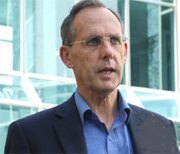 Former Greens leader Bob Brown to launch alliance to oppose Adani coalmine https://www.theguardian.com/business/2017/mar/22/former-greens-leader-bob-brown-to-launch-coalition-to-oppose-adani-coalmine The Stop Adani Alliance says north Queensland coalmine would ‘fuel catastrophic climate change’, Guardian, Paul Karp, 22 Mar 17, The former Greens leader Bob Brown will launch a new alliance of 13 environmental groups opposed to Adani’s Carmichael coalmine on Wednesday in Canberra.
The Stop Adani Alliance will lobby against the coalmine in northern Queensland, citing new polling that shows three-quarters of Australians oppose subsidies for the mine when told the government plans to loan its owners $1bn.
The alliance’s declaration argues the mine will “fuel catastrophic climate change” because burning 2.3bn tonnes of coal from the mine over 60 years of operation would create 4.6bn tonnes of carbon dioxide. It states the project would “trash Indigenous rights”, citing the fact Adani does not have the consent of the Wangan and Jagalingou people.
The alliance’s members include the Bob Brown Foundation, the Australian Conservation Foundation, 350.org, Get Up, the Australian Youth Climate Coalition, the Seed Indigenous Youth Climate Network and the Australian Marine Conservation Society.
The alliance will call for:
Urgent and serious action to cut carbon pollution;
- A complete withdrawal of the Adani Carmichael mine, rail and port project;
- A ban on new coalmines and expansions in Australia; and
- An end to public subsidies for polluting projects.
Brown said the groups were “drawing a line in the sand with Adani, just as previous generations did with the Franklin River dam”, a campaign of which he was a leader.
“Adani’s coalmine will be the most dangerous in our history, ramping up global carbon pollution precisely when emissions need to be drastically cut,” he said.
Brown will be joined at the launch in Canberra by alliance spokesman and president of the Australian Conservation Foundation, Geoff Cousins, and Seed Indigenous Youth Climate Network codirector Amelia Telford.
According to a new ReachTel poll taken on 14 March, 74.8% of voters agree that “Adani should fund its own project” rather than rely on a proposed $1bn loan from the federal government.
The poll replicates results in January that showed three-quarters of respondents were opposed to loaning $1bn for a train line to the Adani coalmine.
The government’s Northern Australia Infrastructure Fund granted Adani “conditional approval” for a $1bn loan in December 2016.
March 24, 2017
Posted by Christina Macpherson |
AUSTRALIA - NATIONAL, climate change - global warming, Queensland |
Leave a comment
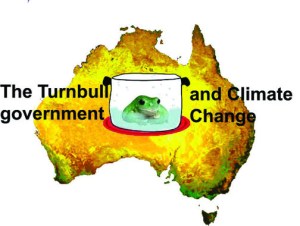 Two quit Australian climate authority blaming government ‘extremists’ John Quiggin and Danny Price resign over Coalition’s ‘rightwing anti-science activists’ and climate change political point-scoring, Guardian, Helen Davidson, 23 Mar 17, Two members of the Climate Change Authority have resigned, with one accusing the government of being beholden to rightwing, anti-science “extremists” in its own party and in the media.
John Quiggin told Guardian Australia he informed the federal minister for environment and energy, Josh Frydenberg, of his resignation on Thursday. It follows the resignation of fellow climate change authority member, Danny Price, who quit on Tuesday.
“The government’s refusal to accept the advice of its own authority, despite wide support for that advice from business, environmental groups and the community as a whole, reflects the comprehensive failure of its policies on energy and the environment,” Quiggin said.
“These failures can be traced, in large measure, to the fact that the government is beholden to rightwing anti-science activists in its own ranks and in the media. Rather than resist these extremists, the Turnbull government has chosen to treat the vital issues of climate change and energy security as an opportunity for political point-scoring and culture war rhetoric.”
Quiggin said his immediate reason for resigning was the government’s failure to respond to the authority’s third report of the special review into potential climate policies, which the government had requested and which it was legally required to respond to.
“The government has already indicated that it will reject the key recommendations of the review, particularly the introduction of an emissions intensity scheme for the electricity industry.”
Quiggin said he didn’t believe there was anything to be gained “by giving objective advice based on science and economic analysis to a government dominated by elements hostile to both science and economics”…….https://www.theguardian.com/environment/2017/mar/23/two-quit-australia-climate-change-authority-john-quiggin-danny-price
March 24, 2017
Posted by Christina Macpherson |
AUSTRALIA - NATIONAL, climate change - global warming, politics |
Leave a comment
http://wanganjagalingou.com.au/senate-inquiry-report-tabled-labor-support-for-native-title-bill-profoundly-disappointing/ 21 March 2017:
 “Wangan and Jagalingou (W&J) Traditional Owners fighting Adani’s Carmichael mine are profoundly disappointed that Labor senators have today backed in the Government’s rushed and ill-considered amendments to the Native Title Act, giving a free kick to Indian billionaire Gautam Adani and plans for a Qld coal mine.
“The Native Title Amendment (Indigenous Land Use Agreements) Bill 2017 is designed to overturn the recent McGlade decision that upheld the Native Title Act requirement that all applicants are needed to sign a land use agreement. The bill is expected to be debated in the Senate today.
“Senior spokesperson for the Wangan and Jagalingou (W&J) Traditional Owners Council Mr Adrian Burragubba said, “Labor has lined up with the Government to wind back our rights – and their own commitment to land rights. They have swallowed the arguments of the mining and agricultural lobby that there is a crisis that needs an urgent response. …
“Youth spokesperson for the W&J Traditional Owners Council Ms Murrawah Johnson said, “The major parties have given Adani and their dirty mine a free kick today.
““Politicians at the Federal and State level are falling over themselves to push this controversial proposed mine through, denying us our rights to self-determination. …
“Mr Colin Hardie, Lawyer for the W&J native title claimants objecting to Adani’s purported ILUA said, “The risk involved in this legislation is so great it should not be proceeding.
It is a case where the cure is worse than the complaint. My clients will retain their objection to the purported Adani ILUA in the court, and consider grounds for challenging the legislation”. … “
March 24, 2017
Posted by Christina Macpherson |
aboriginal issues, AUSTRALIA - NATIONAL, climate change - global warming, politics |
Leave a comment
Ian Chappell stands by Adani mine letter despite being called ‘elitist’ by Coalition MPAdani ‘categorically’ rejects letter signed by 91 prominent Australians as protesters confront Queensland premier during tour of Adani’s Indian HQ, Guardian, Joshua Robertson, 17 Mar 17 “……A new ReachTel poll has found 73% of Australians agree that “the best thing for Australia would be for Adani to invest in large-scale solar power stations, rather than a new coalmine”.
The poll, commissioned by the Australian Marine Conservation Society, surveyed 2,134 Australian residents on Tuesday.
They were also asked whether the Queensland premier, Annastacia Palaszczuk, and regional mayors currently on a trade mission to India should be “seeking investment in clean energy solutions like new solar power stations or in coalmines”.
It found 72.1% preferred solar while 14.6% preferred coal.
A copy of the open letter shows 91 signatories, including former Australian environment minister Peter Garrett, Perth-based UK-born comedian and author Ben Elton and investment banker Mark Burrows.
It “respectfully” called on Adani’s billionaire chairman, Gautam Adani, to drop the mine plan for three reasons. It would drive global warming that threatened the Great Barrier Reef nearby, it loomed as a “public health disaster” according to the medical journal Lancet; and it “does not have wide public support in Australia”, the letter said.
ACF is appealing a federal court finding against its challenge to commonwealth approval of the Adani mine on the grounds it did not account for climate change impacts on the Great Barrier Reef through carbon emissions.
The court ruled the federal environment minister was entitled to find that if Adani did not go ahead, emissions would come from coal sourced elsewhere. The ACF argues this is “the drug dealer’s defence”.https://www.theguardian.com/environment/2017/mar/17/ian-chappell-stands-by-adani-mine-letter-despite-being-called-elitist-by-coalition-mp
March 19, 2017
Posted by Christina Macpherson |
AUSTRALIA - NATIONAL, climate change - global warming, solar |
Leave a comment
“
One, the Carmichael mine would be the
biggest coal mine ever dug in Australia.
Once its coal is burnt, it will contribute more
climate-changing pollution to the atmosphere
than the entire country of New Zealand does every year. …
“Two, coal is a killer.
Coal is the biggest single cause of air pollution in Australia. …
Last month The Lancet, one of the world’s leading medical journals, published a report that described your company’s Carmichael mine proposal as a
“public health disaster”. …
“Three, this mine proposal does not have wide public support in Australia
and does not have the support of the Traditional Owners of the land where the mine would be dug.
There are concerns about the impact the mine will have on groundwater resources and on nearby farmers who rely on this water for their livelihoods. …
“We the undersigned – and we believe all Australians – would support and welcome moves by your company to invest further in renewable energy in Australia. … “
March 18, 2017
Posted by Christina Macpherson |
aboriginal issues, climate change - global warming, Queensland |
Leave a comment
 ‘Three quarters of Australians polled want Qld Premier and Mayors, on their trade mission to India, to pursue Adani investment in solar not coal’
~ Australian Marine Conservation Society | AMCS https://www.marineconservation.org.au/news.php/892/media-release-stop-adani-australian-delegation-release-new-poll-attend-adani-hq-mtg
17 March 2017:
” New poll shows three quarters of people believe Qld Premier & Regional Mayors, in India today, should pursue solar not coal.
Meeting between Adani HQ Senior Management and community delegation of Geoff Cousins AO, Qld farmer, tourism operator and reef campaigner.
With the hotly contested Third Test between India and Australia underway, former Cricket Captain Ian Chappell says renewable energy is the future. … ”
Ian and Greg Chappell call on Adani to abandon Carmichael mine project
‘Former Australian test captains say opposition to mine in Australia could affect sporting ties with India, in letter directly appealing to Adani boss’
https://www.theguardian.com/business/2017/mar/16/ian-and-greg-chappell-call-on-adani-to-abandon-carmichael-mine-project
~ Joshua Robertson @jrojourno 16 March 2017: ” … The Chappells, well-known through their sporting exploits in India where the Australian team is currently playing, joined 90 prominent Australians in the letter, which will be delivered to Adani’s head office on Thursday. … ”
March 18, 2017
Posted by Christina Macpherson |
climate change - global warming, Queensland |
Leave a comment
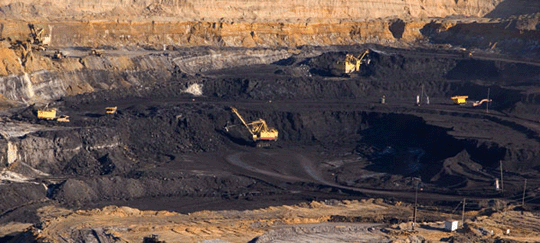 Adani: Indian fishermen warn Australia against environmental impact ahead of coal mine talks ABC AM By South Asia correspondent James Bennett , 17 Mar 17 Fishermen in India say a local Adani project is harming them and killing off sea life, warning Australia to be wary as Queensland’s Premier Annastacia Palaszczuk prepares to decide whether to proceed with the Carmichael coal mine.
Key points:
- Noor Mohammad said the Adani project’s coal dust, stream discharge harmed the community
- Adani has been heavily criticised for a series of environmental breaches during construction of Gujarat project
- Comment was sought from Adani on measures it had taken to address the ash problem, but the ABC received no response
Ms Palaszczuk and eight regional mayors are preparing to sit down with the chairman of Adani Enterprises, Gautam Adani, ahead of the company deciding whether to proceed with the proposed mine.
The Queenslanders will be shown the Adani’s Gujarat port and power station, which itself has a chequered environmental record, of which the local fishermen said Australia should be wary……http://www.abc.net.au/news/2017-03-17/fishermen-warn-australia-against-adani-mine-environmental-impact/8362230
March 18, 2017
Posted by Christina Macpherson |
climate change - global warming, politics, Queensland |
Leave a comment
Australia’s peak business lobby calls for emissions intensity scheme,
Business Council of Australia joins growing push for ‘signal that will support the investment needed for the electricity system’, Guardian, Gabrielle Chan, 16 Mar 17, The nation’s peak business body has joined the growing calls for an emissions intensity scheme (EIS) and argued coal-fired power stations should give three years notice for closure in its submission to the chief scientist’s electricity review.
Jennifer Westacott, the chief executive of the Business Council of Australia (BCA) also called for no further changes to the renewable energy target (RET), given it was the foundation significant investments. She also said there was no need for state-based targets.
Westacott, representing the biggest businesses in the country, argued that in the medium to long term, an EIS was both technology-neutral and would provide the policy signal currently missing to drive investment in energy.The nation’s peak business body has joined the growing calls for an emissions intensity scheme (EIS) and argued coal-fired power stations should give three years notice for closure in its submission to the chief scientist’s electricity review.
Jennifer Westacott, the chief executive of the Business Council of Australia (BCA) also called for no further changes to the renewable energy target (RET), given it was the foundation significant investments. She also said there was no need for state-based targets.
Westacott, representing the biggest businesses in the country, argued that in the medium to long term, an EIS was both technology-neutral and would provide the policy signal currently missing to drive investment in energy…….
The BCA’s submission is the latest to urge the chief scientist, Alan Finkel, to recommend an EIS for the energy sector, effectively imposing a carbon price. Other groups calling for an EIS or carbon market mechanism include Energy Networks Australia, retailer Energy Australia, electricity provider AGL, the Climate Change Authority, the National Farmers Federation and the CSIRO…….https://www.theguardian.com/australia-news/2017/mar/16/australias-peak-business-lobby-calls-for-emissions-intensity-scheme
March 17, 2017
Posted by Christina Macpherson |
AUSTRALIA - NATIONAL, climate change - global warming |
Leave a comment
Finance sector could face climate-risk testing, says Australian watchdog
Regulator says it may add climate change to the list of scenarios it asks institutions to run to check economic resilience, Guardian, Gabrielle Chan, 9 Mar 17, Australia’s financial institutions could be required to test climate-risk scenarios as international regulators continue to warn of the economic dangers posed by climate change.
Geoff Summerhayes, executive board member of the Australian Prudential Regulation Authority (Apra), told a Senate committee that climate scenario testing could be added to the other common scenarios Apra requires financial institutions to face to ensure their systems are robust.
It’s been more than a year since the COP21 Paris climate change conference, when the former New York City mayor Michael Bloomberg was appointed to head a taskforce to provide investors, insurers, banks and consumers with more information. The move was part of plans for a voluntary industry-led code announced by the Financial Stability Board (FSB), the G20 body that monitors and makes recommendations about the financial system.
Last month Summerhayes warned climate change posed a material risk to the entire financial system and urged companies to start adapting. Apra is the regulator that oversees the $6tn industry made up of banks, building societies, superannuation, insurance companies and other financial institutions.
Summerhayes said Apra already sent out common scenarios for institutions to test. These scenarios have an economic factor, including an asset price shock and, in the case of the insurance industry, a potential liabilities scenario as well.
“It is possible in the future that climate could be such a risk that we would want to test,” Summerhayes said. “That is not in our current plans but it is possible as other emerging risks are, that we would scenario test.”
He acknowledged the Bank of England’s Prudential Regulatory Authority (PRA) had been very active on climate change. The bank’s governor, Mark Carney, has warned of financial crises and falling living standards unless corporations faced up to the risks. “Apra is not first prudential regulator to make statements about climate,” he said.
Emma Herd, the chief executive of Investor Group on Climate Change, told the committee the political debate in recent years had stopped companies speaking publicly about their strategic response to climate change…….
The Senate inquiry, initiated by Greens senator Peter Whish-Wilson and restarted after the federal election, is looking into carbon risk and disclosure in corporate Australia.https://www.theguardian.com/business/2017/mar/08/finance-sector-could-face-climate-risk-testing-says-australian-watchdog
March 11, 2017
Posted by Christina Macpherson |
AUSTRALIA - NATIONAL, business, climate change - global warming |
Leave a comment
No such thing as ‘clean coal’: WA premier http://www.heraldsun.com.au/news/breaking-news/no-such-thing-as-clean-coal-wa-premier/news-story/024ed06c5553067ecbc2c68361d1b7ff Tom Rabe, Australian Associated Press March 7, 2017
There’s no such thing as clean coal, says West Australian premier Colin Barnett, placing him at odds with his federal Liberal counterparts.
Mr Barnett dismissed the notion of clean coal when outlining the balance of energy production in WA, saying more than half of the state’s energy came from natural gas, which he described as a clean technology.
“I mean, all this stuff about clean coal, no such thing as clean coal,” Mr Barnett said. “Natural gas is cleaner, produces less than half of the emissions of a coal power station so it’s a good technology to use.”
Mr Barnett said if re-elected his Liberal government would move to balance energy production between gas, renewable and coal.
Mr Barnett’s comments on clean coal differ with those of his federal counterparts, who are working to finance new coal-fired power.
The federal government is exploring how it can allow the Clean Energy Finance Corporation to invest in the so-called ultra-supercritical coal-fired power plants and carbon capture and storage.
Prime Minister Malcolm Turnbull, who is currently in Indonesia, was unavailable for comment.
March 11, 2017
Posted by Christina Macpherson |
climate change - global warming, Western Australia |
Leave a comment
Renewable energy spike led to sharp drop in emissions in Australia, study shows [excellent graphs] Surge in October last year helped greenhouse gas emissions fall by 3.57m tonnes in December quarter, Guardian, Joshua Robertson and Nick Evershed, 10 Mar 17 A sharp drop in Australia’s greenhouse gas emissions at the end of last year came courtesy of a spike in renewable energy generation in a single month, according to a new study.
Australia’s emissions fell by 3.57m tonnes in the three months to December, putting them back on track to meet quarterly commitments made in Paris after a blowout the previous quarter.
The fall is the largest for the quarter since the government began recording emissions in 2001. The report’s authors said this was entirely due to record levels of hydro and wind generation in October. This brought emissions for the year to December to below the year to December 2015.
But projected emissions for the December quarter were still 6.89m tonnes over levels demanded by scientifically based targets set by the government’s Climate Change Authority.
And, long term, the results show Australia is set to run more than 300m tonnes over what is required to meet its Paris targets in 2030.
The analysis was produced by Ndevr Environmental, which analyses data for all Australia’s major emissions sources and compares the results with the government’s commitments made in Paris and the cuts recommended by the Climate Change Authority.
It aims to produce a more timely account than the government’s, which is six to nine months behind.
In the four years to December 2016, Australia emitted 20.7% of its share of what the world can emit between 2013 and 2050 if it intends to maintain a good chance of keeping warming to below 2C.
If Australia continues to emit carbon pollution at the average rate of the past year, it will spend its entire carbon budget by December 2031. Projected to the current second, the graphic shows how much of the carbon budget has been spent.
Matt Drum, the managing director of Ndevr Environmental, said the figures showed renewable energy was “the only thing that’s keeping us in the ballgame” of meeting climate commitments……..
Direct Action is the federal government’s primary carbon reduction tool, which pays polluters to pollute less through a reverse auction – the emissions reduction fund.
There is no evidence the emissions bought through that fund, now largely spent, reduce overall emissions and many of the emissions the government pays to avoid are unlikely to have occurred anyway. https://www.theguardian.com/environment/2017/mar/09/renewable-energy-spike-led-to-sharp-drop-in-emissions-in-australia-study-shows
March 11, 2017
Posted by Christina Macpherson |
climate change - global warming, energy |
Leave a comment
 AUSTRALIA’S ANGRY SUMMER #CLIMATECHANGE #AUSPOL https://jpratt27.wordpress.com/2017/03/08/australias-angry-summer-climatechange-auspol/
More than 200 weather records were broken during the intense, “angry summer” just finished, putting stress on Australians and the ageing energy system.
A report from the Climate Council, released on Wednesday, says the summer was characterised by intense heatwaves, hot days and bushfires in central and eastern Australia but heavy rainfall and flooding in the country’s west.
Climate scientist Will Steffen said the effects of climate change could be seen in the 200 records broken in 90 days.
“We’re experiencing unprecedented extreme heat and setting new records at an alarming rate, with every part of Australia feeling the impact,” he said.
“Extreme weather will continue to intensify through this century if we continue to sit on our hands and fail to move rapidly to get fossil fuels out of our economy.”
Extreme weather events have dominated a wetter-than-average year in Australia, with the country also clocking its fourth-warmest year on record in 2016.
Fellow climate councillor and energy expert Andrew Stock said the “ageing, inefficient and polluting” energy system already struggled to cope with heatwaves and extreme weather and would come under even more pressure as these intensified.
The energy system is under scrutiny after blackouts in South Australia and load shedding in NSW during hot days.
“It’s time for Australia to power our economy with a 21st century energy system, one which deploys proven renewable technology and storage solutions instead of relying on high greenhouse emitting fossil fuels,” Mr Stock said.
“These fossil fuels are the very culprits feeding the extreme weather cycle. We have to stop backing the wrong horse.”
The federal government is facing increasing calls – including from big business and electricity generators – to give certainty to the energy sector and put in place some kind of carbon price, such as an emissions intensity scheme.
Records broken over the 2016-17 summer include:
Hottest summer on record for Sydney, NSW as a whole, Brisbane, and Canberra
Hottest Adelaide Christmas day in 70 years at 41.3 degrees
NSW town Moree had 54 consecutive days with temperatures reaching 35 degrees or higher
Canberra had 18 days with temperatures 35 degrees or higher (previously predictions said this wouldn’t happen until after 2030)
Highest summer rainfall for Perth at 192.8mm
Wettest December on record for parts of the Kimberley
Highest daily January rainfall in the east Kimberley
Press link for more: SBS.com
March 11, 2017
Posted by Christina Macpherson |
AUSTRALIA - NATIONAL, climate change - global warming |
Leave a comment
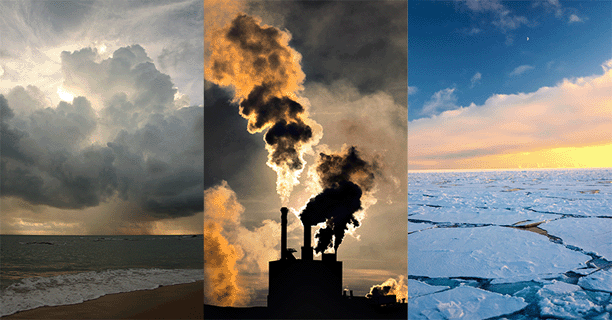
Climate change impact on Australia may be irreversible, five-yearly report says State of the Environment report says heritage and economic activity are being affected and the disadvantaged will be worst hit, Guardian, Katherine Murphy, 7 Mar 17, An independent review of the state of Australia’s environment has found the impacts of climate change are increasing and some of the changes could be irreversible.
The latest State of the Environment report, a scientific snapshot across nine areas released by the federal government every five years, says climate change is altering the structure and function of natural ecosystems in Australia, and is affecting heritage, economic activity and human wellbeing.
It warns climate change will result in “location specific vulnerabilities” and says the most severe impacts will be felt by people who are socially and economically disadvantaged.
Record high water temperatures caused “widespread coral bleaching, habitat destruction and species mortality” in the marine environment between 2011 and 2016, it says.
The minister for energy and the environment, Josh Frydenberg, was due to release the report card on Tuesday morning……
Australia’s heavily populated coastal areas are under pressure, as are “growth areas within urban environments, where human pressure is greatest”, the report finds.
Grazing and invasive species continue to pose a significant threat to biodiversity.
“The main pressures facing the Australian environment today are the same as in 2011: climate change, land use change, habitat fragmentation and degradation, and invasive species,” the report’s summary says. “In addition, the interactions between these and other pressures are resulting in cumulative impacts, amplifying the threats faced by the Australian environment……
The report criticises the lack of “an overarching national policy that establishes a clear vision for the protection and sustainable management of Australia’s environment to the year 2050”.
It points to poor collaboration, gaps in knowledge, data and monitoring and a lack of follow-though from policy to action.
“Providing for a sustainable environment both now and in the future is a national issue requiring leadership and action across all levels of government, business and the community,” it says. “The first step is recognising the importance and value of ecosystem services to our economy and society…….
Late last year, the government established a review of its Direct Actionclimate policy. The current policy has been widely criticised by experts as inadequate if Australia is to meet its international emissions reduction targets under the Paris climate change agreement.
Shortly after establishing the review, Frydenberg ruled out converting the Direct Action scheme to a form of carbon trading after a brief internal revolt. Many experts argue carbon trading would allow Australia to reduce emissions consistent with Paris commitments at least cost to households and businesses……https://www.theguardian.com/environment/2017/mar/07/climate-change-impact-australia-may-be-irreversible-report
March 8, 2017
Posted by Christina Macpherson |
AUSTRALIA - NATIONAL, climate change - global warming |
Leave a comment
 Farmers back emissions trading scheme, THE AUSTRALIAN, SARAH MARTIN, 7 Mar 17, Australia’s peak farming group has thrown its support behind a carbon price to fix the country’s energy woes, calling on the government to reconsider its opposition to an emissions intensity scheme in the electricity sector.
In its submission to the Finkel review of the Australian energy market, the National Farmers Federation has warned the agriculture sector is struggling without “secure, reliable and affordable” power supply and urges a bipartisan approach to energy policy.
NFF president Fiona Simson said the sector believed the cheapest path to a low-emissions future was “some form of market-based approach”, which could include an emissions intensity scheme.
“For us it is about having everything on the table; we certainly want security of supply, we want affordable power, we are technology neutral and we know we’re moving towards lower emissions,” Ms Simson said.
“It is just how we can actually put everything on the table to guarantee a long-term national plan facilitating a smooth, reliable transition to lower emissions generation.”……
The federal government has ruled out adopting an EIS.
Chief Scientist Alan Finkel is reviewing the national energy market and is expected to finalise his report to the Council of Australian Governments by mid-year. http://www.theaustralian.com.au/national-affairs/climate/farmers-back-emissions-trading-scheme/news-story/04146e9fba702b03c5730c9034a36af4
The Australian Institute of Architects has told the review government needs to focus on the demand side of the energy equation, arguing that making changes to energy efficiency of buildings could deliver up to 28 per cent of the 2030 emissions reduction target and achieve $20 billion in energy savings.
“Buildings contribute to nearly half of the country’s electricity consumption and the building sector offers a great opportunity for more energy productivity gains,” said institute president Ken Maher.
March 8, 2017
Posted by Christina Macpherson |
AUSTRALIA - NATIONAL, climate change - global warming, politics |
Leave a comment






 Antinuclear