Greens urge Queensland government to reject $1 billion taxpayer-funded loan for Adani coal rail line
 NAIF funding: Greens call for Queensland government to put stop to Adani loan, SMH. Felicity Caldwell, 12 Dec 16. Premier Annastacia Palaszczuk should reject a $1 billion taxpayer-funded concessional loan for the Adani Carmichael mine’s rail line, the Queensland Greens say.
The Greens say the Premier has the power to reject funding under the federal government’s Northern Australia Infrastructure Facility………Last week, Ms Palaszczuk met with Mr Adani and announced Townsville would be home to the Carmichael mine’s regional headquarters.
The Greens’ statewide campaign calling on the government to reject the NAIF loan and protect the reef will start in the electorate of Mount Coot-tha, targeting Environment Minister Steven Miles’ seat.
Billboards will be erected in the electorate and will be accompanied with online videos and a doorknocking campaign. http://www.smh.com.au/business/mining-and-resources/naif-funding-greens-call-for-queensland-government-to-put-stop-to-adani-loan-20161212-gt9erv.html
Sydney Lord mayor Clover Moore orders decisive action on climate change
 Sydney mayor Clover Moore orders urgent action on climate change http://www.smh.com.au/nsw/sydney-mayor-clover-moore-orders-urgent-action-on-climate-change-20161212-gt98ly.html Lisa Visentin
 The Paris Agreement commits signatories, including Australia, to “hold average temperature increase to well below 2 degrees and pursue efforts to keep warming below 1.5 degrees above pre-industrial levels”.
“It was clear from the conference that we need bolder action at a faster rate if we are to play our part in meeting the Paris Agreement,” Cr Moore stated in her report from the summit, which was tabled at Monday night’s council meeting.
At the meeting, she called on council staff to come back to council in February “with actions to accelerate our emissions reductions over the next four years”.
Fast-tracking the city’s move towards zero-carbon buildings, including developing a clear target date by which building standards should be in place, were key priorities, she said. She also called on City of Sydney chief executive Monica Barone to bring forward the city’s Draft Environmental Action Plan to the council’s first meeting in 2017 with a clear list of priorities in line with the C40 Summit.
Cr Moore said research presented at the summit provided cities with clear targets which, if adopted, would deliver 40 per cent of the savings need to achieve the ambition of the Paris Agreement.
Cr Moore’s report and recommendations were adopted unanimously by council.
The focus of Monday night’s council meeting on climate change policy comes after the Turnbull government’s beleaguered week in the policy arena, which culminated in a fractious meeting with state premiers at Friday’s Council of Australian Government meeting.
The week was dominated by Coalition intransigence on climate change, even as a report by chief scientist Alan Finkel warned Australia had no clear path to meeting the 2030 emissions target taken to the Paris climate deal under existing policies.
This report was preceded by a policy capitulation by Environment Minister Josh Frydenberg, who promptly dumped plans for a review of the Coalition’s direct action policy to examine whether to introduce an emissions intensity scheme for the electricity industry – a form of carbon pricing – after vocal opposition from the Coalition backbench.
Fairfax Media then revealed the Turnbull government had been sitting on advice that an emissions intensity scheme would save households and businesses up to $15 billion in electricity bills over a decade. The Paris Agreement commits signatories, including Australia, to “hold average temperature increase to well below 2 degrees and pursue efforts to keep warming below 1.5 degrees above pre-industrial levels”.
The Australian tax-payer is the sole investor in Adani’s coal export plans.
Aside from the culture, environment and cost, is Adani a good investment?, The Age, Julien Vincent , 13 Dec 16,
The Australian public is the sole investor in Adani’s coal export plans.
Adani is an Indian conglomerate that wants to build the largest thermal coal mine in Australia, a rail line of almost 400 kilometres connecting it to the coast, and a coal export terminal in the Great Barrier Reef World Heritage Area. The coal would be shipped out through the reef, giving it a perfect view of the bleaching and mortality that has been decimating our valuable natural icon recently before being burned in power stations overseas, only to further contribute to climate change and ocean acidification, considered the greatest long-term risks to the reef.
Given that the reef sustains 60,000 jobs and provides $6 billion per year of economic benefit to Australia, investors may want to consider conflicts of interest before moving ahead.
Some other niggling environmental risks investors might want to consider is the drainage of 12 billion litres per year of water from the Great Artesian Basin and the impacts of coal dust on people’s health along the transport corridor, along with particulate matter from the power stations as the coal is burned.
We’d also want to be content with supporting a mine that has not received free, prior and informed consent from traditional owners, potentially making this a major human rights issue.
But enough of the existential threats posed to culture, people, sites of natural World Heritage and the climate.
Let’s look at the numbers. Last week’s proposal by the Australian government of a $1 billion loan from the Northern Australia Infrastructure Fund means as investors we need to understand the business case.
First of all, don’t be put off by Adani’s corporate debt, which is two-and-a-half times the size of the company. Or the fact that Adani’s share price is down 20 per cent this year. This loan would actually be going to Adani’s private family company, based in Singapore and ultimately owned by Atulya Resources in the Cayman Islands, where we can be sure the money will be totally secure.
The mine will supply new coal power stations in India, whose power minister said yesterday would not be required until 2022, and who wants to get India off imported coal within the next few years. The power will only cost twice that of new renewable energy, and so an exciting market has been identified among those living in energy poverty.
Should the India option fail, the coal could be sold onto the seaborne market, which has declined by 10 per cent in recent years, Goldman Sachs, Deutsche Bank, Bernstein and others declaring it in structural decline.
Conditions like these have frightened off a few more faint-hearted commentators, such as the Queensland Treasury under the Newman government, which described the project as unbankable. Or Wood Mackenzie, which still considers the project as having a negative net present value.
Should the India option fail, the coal could be sold onto the seaborne market, which has declined by 10 per cent in recent years, Goldman Sachs, Deutsche Bank, Bernstein and others declaring it in structural decline.
Conditions like these have frightened off a few more faint-hearted commentators, such as the Queensland Treasury under the Newman government, which described the project as unbankable. Or Wood Mackenzie, which still considers the project as having a negative net present value…….
It’s clear that our investment is going to make a major difference. But will it be enough? $1 billion is a huge lifeline but depending on what assumptions you make about the scale of the project or who you’re prepared to believe, this project is going to cost anywhere from $7 billion to $21 billion……http://www.theage.com.au/business/mining-and-resources/aside-from-the-culture-environment-and-cost-is-adani-a-good-investment-20161213-gta0nq.html
Heatwaves are killers – and they are getting worse
 Heatwaves are more deadly than bushfires and they’re going to get worse, Canberra Times, Karl Kruszelnicki , 13 Dec 16 In 2009, the terrible Black Saturday bushfires killed 173 people. What most Australians don’t realise is that the crippling heat around the horrendous bushfires killed 374 people.
In the European heatwave of 2003, 50,000-70,000 people died between June and August. The Russian heatwave of 2010 killed about 55,000 people.
A bushfire leaves obvious signs of the cause of death (burns, blisters, etc), but a heatwave does not. Deaths from heatwaves are revealed indirectly. In Victoria in 2009, the first sign that the heatwaves were killing people was the morgues filling up. The unexpected extra corpses had to be stored in universities, mortuaries, funeral parlours and the like.
There are many definitions of a heatwave. The one from the World Meteorological Organisation (WMO) is widely accepted. According to the WMO, a heatwave happens when you have five days in a row, each with a daily maximum temperature five-or-more degrees higher than the average maximum temperature……..
The science is quite clear that climate change (which has been accepted as real since in 1988, and yes, we caused it) is worsening heatwaves. Dr Thomas Knutson and colleagues from the US Geophysical Fluids Dynamics Laboratory in Princeton University wrote a paper showing that (with a very high degree of confidence) climate change caused the extreme heat Australia experienced in 2013.
In Australia, heatwaves now arrive earlier, are hotter, and last longer……http://www.canberratimes.com.au/comment/heatwaves-are-more-deadly-than-bushfires-and-theyre-going-to-get-worse-20161212-gt9fyl.html
Local councils, consumers, energy companies lead the way to clean energy
 Fossil fuel divestment is worth $7tn globally yet Australia still clings to coal, Guardian,
Blair Palese, 13 Dec 16 While the Australian government lags behind on climate change action, consumers, local councils and energy companies lead the way to clean energy. The Turnbull government has been an utter disappointment on so many things but nowhere as much as on the biggest issue of our time: climate change.
Unable to shrug off the legacy of the climate-denying Abbott government, it has been bullied out of any climate change ambition by science-denying fringe elements on the right.
The list of dishonourable mentions are long. Despite signing the Paris agreement last year, the Australian government has consistently undermined any efforts to keep the world below the safe level of 2C. Last week’s backflip on the idea of a carbon-intensity emissions trading scheme – supported by most of the banks and the energy sector as the best way to reduce emissions and provide a level-playing field – is just the latest in a long line.
But the biggest worry is seeing Turnbull’s coal-loving ministers push through the Adani mega coalmine in Queensland, replete with the offer of a $1bn taxpayer-funded loan to build a railway line through rich farmland to a coal terminal on the Great Barrier Reef. If constructed, the Adani mine will almost certainly condemn the Great Barrier Reef to the annals of history, not to mention blowing almost any chance of us living in a safe climate future.
But while climate change is mired in partisanship and cheap political point-scoring on a federal level, Australian organisations, driven by a strong market shift away from polluting fossil fuels, particularly coal, are leading the way towards the clean economy.
On Tuesday a report by global financial outfit Arabella shows that fossil fuel divestment is now worth an astounding A$7tn globally. It spans almost 700 organisations as diverse as the Norwegian Sovereign Wealth Fund, the City of Newcastle and the Australian National University.
This $7tn that is not invested in coal, oil and gas provides a significant financial indicator to back up what we already know: fossil fuels are on the nose.
While Australia may be lagging on a government level, many of our businesses are leading the world in waking up to the risks posed by fossil fuels and the opportunities of the new clean economy.
The Arabella report highlights that Australia has the most divestments per capita of any developed nation. And these organisations that have divested are by no means radical. It is groups such as the Australian Capital Territory’s government, Australian Academy of Science, the Royal Australasian College of Physicians and the National Tertiary Education Union. Add to the mix almost 30 local government councils, 10 super funds, a handful of our top universities and you get the picture.
There is even a chance you live in a fossil-free council considering that more than one in 10 Australians now live in a council area that has sworn off fossil fuels…….https://www.theguardian.com/sustainable-business/2016/dec/13/fossil-fuel-divestment-is-worth-7tn-globally-yet-australia-still-clings-to-coal
Prime Minister Malcolm Turnbull talks complete rubbish on climate policy
Turnbull’s two key political messages since Frydenberg’s unseemly capitulation to conservatives earlier in the week – that we won’t do carbon pricing lest it inflate power bills, and that governments have a fundamental obligation to keep the lights on – are entirely inconsistent with the actions the government is taking
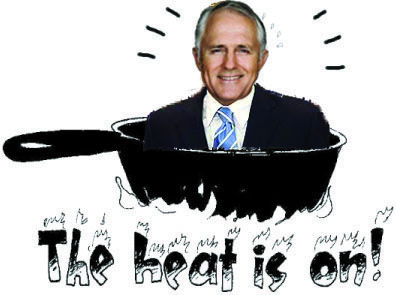 On climate policy and power prices Turnbull is talking rubbish. Here are some facts, Guardian, Katharine Murphy, 9 Dec 16
An emissions trading scheme is the cheapest way meet Australia’s climate commitments – which will be news to anyone listening to the Coalition. I just want to be very, very clear that energy prices are too high already. We will do everything that we can to put downward pressure on energy prices. We will not impose a carbon tax, or an emissions trading scheme – that is our position.
This is the prime minister, Malcolm Turnbull, talking to the Melbourne radio host, Neil Mitchell, on Thursday, talking nonsense as it turned out – which is what the government has been doing all week on the subject of climate change.
How do I know he was talking nonsense?
There are any number of reports we can draw on to call out what can only be described as unmitigated, lowest common denominator, political crap emanating from the mouth of the prime minister – but I’ll just pick a couple.
Let me share with you the findings of a report that lobbed into the public domain at the start of the week, sandwiched between the government opening what could have been a rational and productive conversation about climate change and energy policy, and the government melting in a small puddle of panic. Continue reading
Traditional Owners construct ‘legal line of defence’ against Adani and Qld Govt
 http://wanganjagalingou.com.au/traditional-owners-construct-legal-line-of-defence-against-adani-and-qld-govt/ 7 December 2016:
“Announce Full Bench Supreme Court Appeal – natural justice sought
“Express Anger at Gautam Adani’s Failure to Meet
“The Wangan and Jagalingou (W&J) Traditional Owners Council have today announced a further action in their legal line of defence of their lands and rights against the imposition of Adani’s “mine of mass destruction”. They have also expressed offence at multi-billionaire Mr Gautam Adani’s failure to meet with them during his visit to Australia to spruik the Carmichael project.
“Leading Aboriginal rights advocate, primary W&J Traditional Owner and Council spokesperson, Mr. Adrian Burragubba, says, “We are constructing a legal line of defence because the Queensland Government and Adani are trying to bulldoze us aside. We will not stand by while they sing from the same song sheet about their grandiose but hollow plans.
We are acting in the courts to stop this destructive project. Our people, the Australian community, and the world deserve better than this cavalier, unjust and outdated approach to our shared future” …
“W&J youth leader and council spokesperson, Ms. Murrawah Johnson, says,
“It is our obligation as Traditional Owners to safeguard the future for our people and secure our lands and waters against this ‘mine of mass destruction’.
The W&J Council members have vowed to do everything in our power to stop the mine proceeding,
and we will take our concerns to the High Court if necessary.
““We are not easily intimidated. We will fight this mine until Mr Adani and his people pack their bags and head home”, she said.
“Lawyer for the Supreme Court Appeal and other matters, Mr. Colin Hardie says,
“There are reasonable grounds for my clients to argue that they were denied natural justice
by the Minister for Mines in the issuing of the mining leases for the Carmichael Mine.
The denial of natural justice can create significant costs and cause distress to Traditional Owners,
leading to a profound devaluing of their native title to land and waters. … “
Australian govt’s honest advertisement on climate and Adani coal mine
Honest Government Advert – Carmichael Coal Mine
Australia’s gutless Minister for Environment and Energy – Josh Frydenberg
 What an extraordinary, gutless capitulation by Josh Frydenberg Forget climate policy intricacies – through this pathetic retreat the government has again revealed its true nature, Guardian, Katharine Murphy, 9 Dec 16, What an extraordinary capitulation.
Just 24 hours of controversy from entirely predictable quarters and a carefully calibrated process to try to engineer a truce in Australia’s utterly wretched climate politics has been all but abandoned by its architects.
Josh Frydenberg has gone in the space of 24 hours from saying quite clearly the government would consider an emissions intensity trading scheme for the electricity sector to trying to pretend he said no such thing.
The retreat is, frankly, unseemly.
Actually, the retreat is more than unseemly, it’s pathetic – and the consequences of it stretch far beyond yet another apparent failure to do what needs to be done to ensure our economy makes an orderly transition to the carbon-constrained world that the Turnbull government willingly accepted when it signed Australia up to the Paris international climate agreement this time 12 months ago……
On climate policy the Coalition has backed itself into a tight corner of its own making – and it shows no sign of finding the courage, the steadiness or the integrity to try to manage its way out. https://www.theguardian.com/australia-news/2016/dec/07/what-an-extraordinary-gutless-capitulation-by-josh-frydenberg
Not justified, not financially viable – Adani’s huge coal mine project
Adani’s mega mine neither financially viable nor justified, says energy analyst, ABC News, By Casey Briggs, 8 Dec 16, Adani’s mega coal mine in north Queensland is neither “financially viable nor strategically required” an energy commentator claims.
The mining giant will begin construction on its $22 billion Carmichael coal mine in the Galilee basin in central Queensland next year.
This week, Adani announced the mine’s regional headquarters will be in Townsville, and the State Government is promoting an “ironclad” handshake deal with the company to source workers from regional Queensland.
Despite the announcements, energy analyst Tim Buckley from the anti-coal think tank The Institute for Energy Economics and Financial Analysis (IEEFA) said there is still doubt over whether the mine is even viable.
“All of my financial analysis over the last four years says the mine is neither financially viable nor strategically required or justified,” Mr Buckley said.
“Financial closure is going to be a major obstacle, I have absolutely no doubt.”
“As the company has admitted, they have not been talking to any financial institutions about this project”
Federal government should study India first
A number of Australian and international banks have reportedly ruled out financing the mine. Adani has also applied for public financing for a $1 billion rail link from the Commonwealth Government, but it’s unclear if the loan will be granted.
Mr Buckley said the Indian Government’s plans to reduce and potentially end coal imports threatens the justification for the project. “[The Australian Government should] go and study what’s happening in India … before they give a billion dollars in taxpayer subsidy to a foreign billionaire who made an investment decision at the height of the coal boom in 2011 and hasn’t progressed the project for six years,” said Mr Buckley.
At the Paris climate summit in November 2015 India’s prime minister Narendra Modi declared that in the 21st century “the world must turn to the sun to power the future”…….http://www.abc.net.au/news/2016-12-08/adani-mega-mine-neither-viable-nor-required-says-analyst/8100906
Australian govt promotes coal and nuclear, despite public opinion and Asian Infrastructure Investment Bank policy
the Australian government’s desire to have the AIIB’s investment strategy give more priority to fossil fuel projects runs contrary to Australian public opinion.
According to an online poll from Market Forces, taken between 15 and 19 August by Essential Research, 62% of Australians would prefer multilateral banks like the AIIB and World Bank to use taxpayer dollars to fund renewable energy projects.
The poll, of 1,017 respondents, found just 13% of Australians would prefer money to fund fossil fuel projects (with 26% unsure).
Australia lobbies infrastructure bank to invest in coal and nuclear power https://www.theguardian.com/business/2016/dec/06/australia-lobbies-infrastructure-bank-to-invest-in-coal-and-nuclear-power Asian Infrastructure Investment Bank releases draft energy strategy prioritising renewable projects, Guardian, Gareth Hutchens, The Australian government is lobbying for the Asian Infrastructure Investment Bank to put more emphasis on coal and nuclear after concerns renewable energy projects were being prioritised.
Draft guidelines were circulated by the bank that suggest it should prioritise investments in renewable energy projects across Asia while the Turnbull government has argued fossil fuels will play a significant role in energy generation in the region for decades to come..
Australia joined the AIIB in June 2015, with then-treasurer Joe Hockey pledging an initial $930m to the bank. The AIIB has been working with the Asian Development Bank, the World Bank, and a range of other banks to satisfy an estimated US$8tn infrastructure shortfall across Asia.
The bank is still in the process of creating its identity, but its founding members, including Australia, have declared the AIIB should be a “green bank.”
The draft guidelines suggest the AIIB should not consider financing nuclear plants at this stage, because the bank would “have to develop the capacity to be involved in such complex and capital-intensive projects”. It says this decision could be revisited if justified.
It also suggests the AIIB should prioritise renewable energy generation over fossil fuel power. Continue reading
Turnbull must reject dirty deal with Adani
Don’t put the interests of big polluters ahead of the interests of the Australian people. PM Malcolm Turnbull appears to be preparing to give multinational mining company Adani $1 billion of Australian taxpayers’ money to fund a coal-carting railway line from the Galilee Basin to the Great Barrier Reef coast.
Media reports today say up to $1 billion of the Northern Australia Infrastructure Facility (NAIF) has been earmarked for the project.
“It seems Prime Minister Turnbull is preparing to put the interests of big polluters ahead of the interests of the Australian people and misuse a billion dollars of public money to support the mega-polluting Carmichael coal project,” said ACF CEO Kelly O’Shanassy.
“This would be a serious misuse of public money, a breach of previous assurances and would turn NAIF into the ‘Dirty Energy Finance Corporation’.
“Adani has a mining licence, but no social licence.
“Any investment in coal in the 21st Century is a dud investment. Australians will lose this money and it will fund the death of the much-loved Great Barrier Reef.
“The Northern Australia Infrastructure Facility (NAIF) is supposed to fund projects that are in the public interest, not coal mines that will create more reef-wrecking climate pollution and jeopardise up to 70,000 jobs that rely on a healthy Great Barrier Reef.
“The NAIF board must release the assessment documents that show how it has determined the environmental and social benefits of this project.
“The government wouldn’t fund SPC Ardmona or the car industry, but it appears willing to fund a billionaire coal company with a dubious environmental record.”
In India, Adani has faced numerous accusations of damaging the environment and failing to comply with regulations and laws.
“If Adani is unable to fund the mine, Australia will be left with a railway to nowhere and an unpaid billion dollar loan,” Ms O’Shanassy said. “Prime Minister Turnbull can choose to entrench Australia’s dependence on a dirty, declining industry or protect the reef and steer us to a brighter, cleaner future.”
Initiative to cope with climate refugees – Platform on Disaster Displacement.
How do we deal with the prospect of increased climate migration? The Conversation, December 1, 2016 On average, one person is displaced each second by a disaster-related hazard. In global terms, that’s about 26 million people a year.
Most move within their own countries, but some are forced across international borders. As climate change continues, more frequent and extreme weather events are expected to put more people in harm’s way.
In the Pacific region alone, this year’s Cyclone Winston was the strongest ever to hit Fiji, destroying whole villages. Last year, Cyclone Pamdisplaced thousands of people in Vanuatu and Tuvalu – more than 70% of Vanuatu’s population were left seeking shelter in the storm’s immediate aftermath.
However, future human catastrophes are not inevitable. The action – or inaction – of governments today will determine whether we see even greater suffering, or whether people movements can be effectively managed.
Human impact
International law does not generally regard people displaced by disasters as refugees, and national responses are ad hoc and unpredictable, resulting in protection gaps.
However, on July 1, a landmark new intergovernmental initiative kicked off: the Platform on Disaster Displacement. Led by the governments of Germany and Bangladesh, and with Australia as a founding member, it addresses how to protect and help people displaced by the impacts of disasters and climate change, one of the biggest humanitarian challenges of the 21st century.
The Platform does not merely envisage responses after disasters strike, but also policy options that governments can implement now to prevent future displacements………
Governments also need to develop more predictable humanitarian and temporary stay arrangements to assist those displaced across a border after a disaster. They also need to ensure that those displaced internally have their needs addressed and rights respected.
Facilitating migration away from at-risk areas can open up opportunities for new livelihoods, skills, knowledge and remittances, at the same time as relieving demographic and resource pressures.
Planned response
Indeed, in this context, the Australian government has acknowledged that the promotion of safe and well-managed migration schemes is a key part of building resilience.
The Kiribati–Australia Nursing Initiative is a good example. Kiribati is a Pacific Island nation that is very vulnerable to the impacts of climate change, and which lacks extensive educational and employment opportunities.
The Initiative enabled around 90 young people from Kiribati to train in Australia as nurses, providing them with an opportunity to secure a job in the healthcare sector either in Australia, overseas or back home.
On a larger scale, planned relocations can also help people to move out of harm’s way before disaster strikes, or to relocate to safer locations in the aftermath of a disaster if it’s not safe for them to go home. This requires careful consultation with those affected, ensuring that their rights and interests are safeguarded.
The Platform on Disaster Displacement will implement the Nansen Initiative’s Protection Agenda by building strong partnerships between policymakers, practitioners and experts……… https://theconversation.com/how-do-we-deal-with-the-prospect-of-increased-climate-migration-69614
No real action from Federal govt in its new “response plan” on the Barrier Reef
Great Barrier Reef: Australia’s ‘response plan’ draft contains no new action or funding
‘Confidential’ draft acknowledges coral bleaching but does not make any attempt to address climate change, Guardian, Michael Slezak 30 Nov 16 The Australian government’s official “response plan” to the worst ever bleaching event on the Great Barrier Reef commits it to no new action, pledges no new money and does not make any attempt to address climate change, according to a draft seen by the Guardian.
The Northern Great Barrier Reef Response Plan, marked “draft” and “confidential”, begins by describing the bleaching event as “the worst ever coral bleaching” and attributes its cause to climate change.
It says: “In the aftermath of the bleaching event it is more important than ever to building [sic] the resilience of the reef.” But the recommendations appear to contain no new money for action to help build resilience.
It says the plan will be “nested under the Reef 2050 plan”, which is a document the federal and Queensland governments created to convince Unesco not to include the Great Barrier Reef on its “world heritage in danger” list.
On Thursday the government needs to report to the Unesco world heritage committee on the implementation of the Reef 2050 plan, as well as how it has been funded.
But, in June, the Guardian revealed Australia would also need to report on how it is responding to this year’s bleaching event.
At the time, Tim Badman, the director of the IUCN’s world heritage program, which advises the committee on the state of its natural world heritage properties, told the Guardian: “We would expect that that report from Australia is going to cover all the significant things that have happened since June 2015 and whether there are changes in the picture of the management or the response that is needed … The bleaching event is a new issue to be considered.”
It is not known whether this plan is what the government intends to present to Unesco in response to that requirement.
It was revealed this week the bleaching appeared to kill about 67% of coral in the northern third of the reef. Across the entire reef, early estimates suggested about 22% of coral had died but scientists now say that figure is likely to be higher.
But the government’s plan for dealing with the bleaching, at least in its draft from October, appeared unable to point to any significant new action……..https://www.theguardian.com/environment/2016/nov/30/great-barrier-reef-australias-response-plan-draft-contains-no-new-action-or-funding
Adani Carmichael coal mine faces many more questions and legal hurdles
Carmichael mine jumps another legal hurdle, but litigants are making headway, The Conversation, Lecturer in Law, The University of Queensland, 27 Nov 16 The Carmichael coal mine planned for Queensland’s Galilee Basin has cleared another legal hurdle, with the state’s Supreme Court dismissing a legal challenge to the validity of the Queensland government’s decision to approve the project.
The court found in favour of the Queensland Department of Environment and Heritage Protection, ruling that its approval of Indian firm Adani’s proposal was within the rules.
The decision is another setback for environmentalists’ bid to stop the controversial project. But Adani does not yet have a green light to break ground on the project, and legal questions still remain, both about this project and about climate change litigation more generally.
The Supreme Court ruling Continue reading
1 This month

of the week – Australians for War Powers Reform (AWPR)
To see nuclear-related stories in greater depth and intensity
 Antinuclear