Australia’s inevitable path away from fossil fuels investment
Dim future for coal as renewables rise, research finds SMH, September 4, 2013 Peter Hannam Carbon economy editor, Australia’s energy industry is on an inevitable path away from fossil fuels and further investment in the sector, particularly in coal, would be very risky, according to research by UNSW.
New analysis comparing the likely costs of pursuing 100 per cent renewable energy for the power sector by 2030 against a range of coal and gas options found a shift to commercially available clean energy would be cost-effective and relatively low-risk.
The tragedy is that superannuation and other funds have invested in this industry
The research assumptions included a price on carbon emissions of at least $56 per tonne by 2030, as modelled by the Australian Treasury, and estimated a range of costs for capturing and storing emissions from coal or gas-fired power plants underground………
“We think that whatever the year-to-year politics in Australia, in the long run there will be quite high prices for carbon around the world inevitably,” Professor Diesendorf said.
The research builds on earlier work, including from the Australian Energy Market Operator, which found Australia could shift towards 100 per cent renewable energy for its power sector for a similar cost of using fossil fuels without undermining reliability.
The modelling assumed wind would provide about 46 per cent of energy to the power sector, with concentrated solar thermal power 21 per cent, solar photovoltaics 20 per cent, and the remainder sourced from biofuels and hydropower. The risks of sticking with fossil fuels included being tied to nascent carbon capture and storage technology and being exposed to gas prices that are expected to rise steeply in the future.
“There is no need to invest in new, expensive, unproven, high-risk, fossil-fuel technologies,” Professor Diesendorf said……..
UNSW’s Professor Diesendorf predicted further investments in the coal industry would be risky as the local and international economy faces up to a more carbon-constrained future.
“A lot of that could be dramatically stranded assets in the future,” he said. “The tragedy is that superannuation and other funds have invested in this industry.”
Liberal candidate for Hume, Angus Taylor, tipped to fight against renewable energy

 Controversial wind farm gets clean bill of health SMH, September 3, 2013 Peter Hannam “……….Opposition hopes Lyn Jarvis, a member of the Bodangora Wind Turbine Awareness Group, said her community group remains opposed to the wind farm despite the NSW Health and Planning Assessment Commission’s findings.
Ms Jarvis said the commission had ignored an independent noise assessment by Steven Cooper, an acoustics technician that found the wind turbines would be harmful.
“It’s fallen on deaf ears,” she said. “We had 94 per cent of the submissions against the development.”
The group is pinning its hopes on the election of Liberal candidate for Hume, Angus Taylor, to help lead a pushback against renewable energy, particularly wind farms.
“Hopefully, he will pull the renewable energy credits and it won’t get built – or any wind farms won’t get built in inappropriate places,” Ms Jarvis said. http://www.smh.com.au/business/carbon-economy/controversial-wind-farm-gets-clean-bill-of-health-20130903-2t1u2.html#ixzz2dxXonk7R
Solar farm in ACT will be up and running in 2014, funding secured
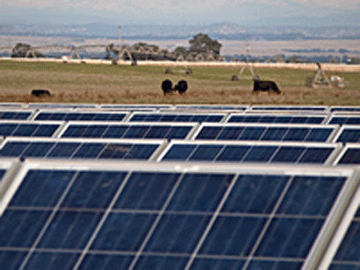
 Royalla Solar Farm Secures Cash http://www.energymatters.com.au/index.php?main_page=news_article&article_id=3923 4 Sept 13 The parties involved with the ACT’s Royalla Solar Farm have secured financial backing via ANZ and National Australia Bank.
The FRV Royalla Solar Farm will be constructed 23 kilometres south of Canberra’s centre. Approximately 83,000 solar panels at the facility will generate enough electricity to supply the power needs of around 4,500 homes.
Clean Energy Council Chief Executive David Green has congratulated the companies involved with securing the backing.
“The financial backing is obviously welcome news for both FRV (Fotowatio Renewable Ventures) and Acciona who are working together to deliver the project,” he said. “The ACT Government’s Solar Auction has been a game-changer in supporting this new form of renewable energy at the lowest cost to consumers.”
Construction of the plant is due to be completed in 2014. Continue reading
New South Wales Health and Planning Commission find wind farm no risk to health
Controversial wind farm gets clean bill of health SMH, September 3, 2013 Peter Hannam Carbon economy editor A controversial $200 million wind farm that divided a local community and drew opposition from a nearby maximum security jail has secured planning approval to proceed.
Infigen Energy’s 33 turbine wind farm planned for Bodangora, near Dubbo in central NSW, was approved by the state’s Planning Assessment Commission late last week with the ruling only made public on Monday.
In a potential setback to opposition at other proposed wind farm sites, the commission dismissed community concerns that noise from the turbines would affect their health. The commission said NSW Health “was very clear in its advice” that “there is no published scientific evidence to link wind turbines with adverse health effects”.
The commission’s findings are “an important precedent” for the state, said Simon Chapman, a professor of public health at the University of Sydney. They add to almost 20 other official reports, such as from the Victorian government in May, that examined wind farms and health, he said.
“All of them are consistent in saying that there is no good evidence that wind turbines directly cause health effects,” Professor Chapman said. The NSW government has been considering draft guidelines for wind farms for about two years, including rules for a two-kilometre setback. Such a range is applied in Victoria and claimed by the wind energy industry to be among the toughest anywhere.
Frank Boland, Infigen’s senior development manager for the 100-megawatt project, welcomed the commission’s ruling for the Bodangora site.
“It not only gives us comfort but also should give comfort to anyone who did have health concerns about the project,” Mr Boland said. “We don’t see any causal link between wind turbines and health, full stop.”
The NSW Health statement “is relevant to other states as well”, Mr Boland said, adding that its ruling could help secure planning approval for a similar-sized wind farm planned by Infigen at Flyers Creek, south of Orange, and for projects elsewhere…….. http://www.smh.com.au/business/carbon-economy/controversial-wind-farm-gets-clean-bill-of-health-20130903-2t1u2.html#ixzz2dxXonk7R
South Australia’s drop in electricity consumption partly due to solar panels
 Solar Panels Reducing South Australia’s Electricity Consumption by Energy Matters, 2 Sept 13, Expected growth in energy consumption in South Australia over the next decade has been lowered; thanks in part to solar PV.
The 2013 South Australian Electricity Report (SAER), prepared by the Australian Energy Market Operator (AEMO), says the state’s annual energy consumption was 13,330 gigawatt hours (GWh) in 2012-13; down by 42 GWh compared to 2011-12.
Looking ahead, electricity consumption is forecast to decrease by 0.1% per year over the 10-year outlook period……. http://www.energymatters.com.au/index.php?main_page=news_article&article_id=3919
South Australia on track to lead the world in renewable energy use
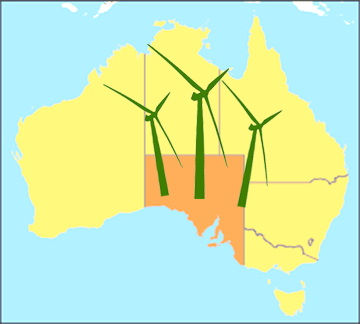

it would make South Australia the most advanced industrialised economy in the world in the adoption of variable renewables, and a test case for the incorporation of such energy sources into a broader grid.
South Australia heads to 50% renewables within a decade, (excellent graphs) http://reneweconomy.com.au/2013/south-australia-heads-to-50-renewables-within-a-decade-21296 REneweconomy By Giles Parkinson on 2 September 2013 Already, one in five houses in South Australia has rooftop solar PV, and a new AEMO document predicts this could treble by 2022. With wind already supplying 27% of power, and new wind farms coming on, the state will likely have 50% of wind and solar within 10 years.
The state of South Australia is emerging as one the leading regions in the world in the take-up of variable renewable energy sources such as wind energy and rooftop solar PV, and could be the first industrial economy to reach 50 per cent variable renewable generation.
According to figures included in a report by the Australian Energy Market Operator, that could happen well within a decade. That would make it the most advanced industrialised economy in the world in the adoption of variable renewables.
In a special report on the state released late last week, AEMO noted that 31 per cent of the state’s energy consumption was met by wind and solar in 2012/13, with more than 1,250MW of large scale wind farms, and a further 400MW of solar PV installed on one out of every five homes in the state. Continue reading
Australia’s old coal power stations refitted as renewable energy plants
Old power stations fired-up by renewable energy http://www.businessspectator.com.au/news/2013/9/2/renewable-energy/old-power-stations-fired-renewable-energy By a staff reporter , 2 Sept 13, The Australian Renewable Energy Agency has contracted Parsons Brinckerhoff to examine the potential for use of renewable energy by existing fossil fuel power stations through hybridisation in Australia. For example coal-fired power stations can burn biomass material such as wood in conjunction with coal. Also it is possible for solar thermal mirrors to heat water for steam turbines in conjunction with gas or coal.
The study will assess 100MW or larger fossil fuel plants that are grid connected. The study evaluates all applicable plants for resource and technology suitability and fatal flaws. The potential plants will then be subjected to a multi-criteria assessment process to see if there are any characteristics that rule out renewable hybridisation and to identify the total expected opportunity of hybridisation.
ARENA will host a workshop on 26 September to gather views from stakeholders on important challenges, opportunities and issues related to hybridisation. To register for the workshop see:https://arena-hybridworkshop.eventbrite.com.au/.
ARENA anticipates using the report findings as an input in the design of any potential strategic initiative in this area.
Australia’s clean solar energy revolution is well underway
 It’s in everyone’s interest to generate as much renewable energy as possible – except existing power providers that rely on burning coal or gas
Money trail backs the clean energy revolution, SMH, Ben Cubby, Peter Hannam 31 Aug 13 Across Australia, thousands of rooftops have been turned into solar-power money generators. Here’s a bright idea: what if, instead of paying for solar panels to keep your electricity bills down, you asked a solar company to put them on your roof for free, then paid them back with excess energy that you didn’t need?
What we are seeing is a transition from high carbon to a low carbon system.
If that sounds fanciful, bear in mind that a decade ago there were just a few hundred working solar-powered home in the country, run mostly at significant personal expense by enthusiasts. By the end of last year, 936,810 solar systems were installed, and the number cruised past 1 million earlier this year.
Slowly but surely, renewable energy is eating into the business model of the fossil-fuel-burning energy generators. Those in the industry liken it to the effect the internet is having on publishing: disrupting revenue, overturning tradition and, literally, tilting the balance of power in favour of the customer, rather than big corporations. Continue reading
Australian government urged to act on energy efficiency – Australian Council of Social Service
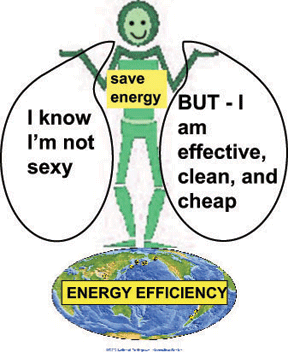 Australian social service council urges government action on energy efficiency http://www.renewableenergymagazine.com/article/australian-social-service-council-urges-government-action-20130829 Renewable Energy Magazine 30 Aug 13 The Australian Council of Social Service is calling for urgent government action on affordable energy for low income households according to a new report.
The report, entitled Energy Efficiency and People on Low Incomes, identifies measures to empower households to become active participants in controlling their energy use as well as becoming more involved in the energy market and reducing energy costs.
“Energy efficiency should be a key policy response to address the impacts of rising energy prices, yet we’ve heard little mention of it in the current political debates about cost of living pressures and energy affordability” said Andrea Pape, ACOSS Senior Policy Officer. “ACOSS advocates an energy efficiency policy agenda which includes direct investment in building and fixture upgrades as well as incentives to stimulate private landlord investment in energy efficiency measures.”
Ms Pape added that the policy proposals are designed to improve energy efficiency in low income households including both private rental and social housing. Investment will improve affordability, climate resilience and health outcomes for current and future occupants.
People on low incomes in Australia, as in many other countries around the world, are especially prone to the burden of energy price rises but they lack the capital investment required to upgrade the energy efficiency of their homes and are also more likely to own inefficient appliances. This has resulted in a lower incidence of measures such as insulation in low income housing and tenanted properties. While government programmes have been beneficial, they also need to be complemented by measures that deliver energy efficiency over the long term, particularly with regard to building and fixture upgrades.
“Targeted retrofits of the worst performing social housing where health, climate and hardship risks are greatest should be a high priority” continued Ms Pape. “We know that those most at risk from heatwaves are low income people, the elderly and people living with disabilities or health issues. We need to build the safety and resilience of our housing stock, and we need to start with the most vulnerable households first. This is a sensible approach in the current fiscal environment and we urge all sides of politics to commit to action on this important front.”
ACOSS proposals include the introduction of landlord tax incentives for energy efficiency measures in rental properties, the introduction of energy efficiency standards for rental properties along with mandatory disclosure of energy and water efficiency of all properties at point of sale, additional funding for targeted retrofits for the worst performing and highest risk social housing stock and financial support to help low income households afford the up-front costs of energy efficiency upgrades.
Further information: Australian Council of Social Service (ACOSS)
Wind power bonanza from windy weather in South Australia, NSW, and Tasmania
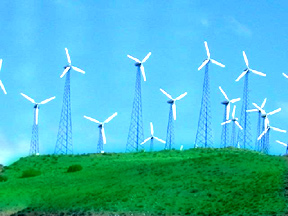 Blustery Weather Generated A Wind Power Bonanza http://www.energymatters.com.au/index.php?main_page=news_article&article_id=3907 25 Aug 13, Wind farms in Australia’s National Electricity Market cranked a record amount of power for the week beginning August 11.
During the period, 47% of South Australia’s power was supplied by the wind and Victoria’s wind farms contributed 10% to that state’s electricity needs. Tasmania and New South Wales had their second and third highest levels of wind power generation respectively.
While the blustery conditions caused havoc for emergency services, it’s an ill wind that blows nobody any good as they say.
“The positive was the large amount of clean energy that was produced by the wind farms on Australia’s southern coastline, breaking records for the amount of wind power generated in a single week in South Australia and Victoria,” said Clean Energy Council Policy Director Russell Marsh.
“What this shows is that wind power is working. It generates very useful amounts of power and also helps farmers who host wind turbines by providing them with income.” Mr. Marsh says based on data sourced from the Australian Electricity Market Operator (AEMO); wind power provided a record 7.6 per cent of all power generated across the entire National Electricity Market during that week; the equivalent of supplying more than 2.3 million homes.
Under normal conditions, South Australia’s wind farms contribute about one quarter of the state’s total electricity production. In 2011/12, wind generationblew past coal to become the second largest source of electricity in South Australia. The state, which has around 40% of Australia’s installed wind capacity, reached its target of generating 20% of electricity from renewable energy in 2011.
South Australia now has its sights set on producing one third of its electricity from renewable sources by 2020. Like its previous target, that is expected to be met well ahead of schedule.
Australian government study finds renewable energy economically viable
 Greens leader Christine Milne described it as ”astonishing” that the government appeared to bury both the ”stunning” study and its summary findings.
”It puts a wrecking ball through claims by the Coalition and Labor that we can’t go a lot harder and set a 90 per cent target by 2030,” Senator Milne said. The operator should expand its study and release the modelling. ”Further work is required to factor in some costs and the many benefits of renewable energy that this first study ignored,” Senator Milne said
Renewable energy study tips viable reality by 2030 The Age, August 24, 2013 Peter Hannam Carbon economy editor Renewable energy such as wind, solar and hydro power could supply electricity at prices comparable to fossil fuels by 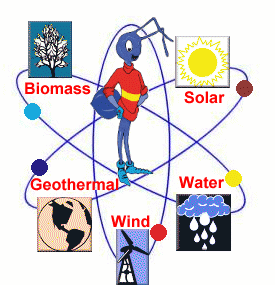 2030, according to a study commissioned by the federal government.
Modelling by the Australian Energy Market Operator shows that 100 per cent of power from clean energy would be technically viable by 2030 – although with a price tag ranging from $219 billion to $252 billion.
But a Community Summary of the report published this month without fanfare by the government has rekindled debate by stating that 100 per cent renewable power may cost no more than fossil fuels.
Based on the operator’s study and other modelling by Treasury, the CSIRO and the University of New South Wales, the summary concluded: ”Indicative wholesale electricity prices generally fall within a reasonably narrow range of around $100-$130 per megawatt-hour in 2030, and around $110-$150 per MWh in 2050
Consumers, who have seen electricity prices rise about 70 per cent over the past four years, may find the price trajectory – whether based on renewable energy or not – surprising. NSW and Victoria now have wholesale power prices of just under $60 per MWh. Still, the findings have cheered clean energy advocates, not least because curbing carbon emissions from the power sector – accounting for about 35 per cent of Australia’s total – would make big inroads in meeting climate change goals.
”It’s kind of incredible that we haven’t modelled (a 100 per cent goal) before now, given that the costs are basically the same,” said Jenny Riesz, a research associate at the UNSW’s centre for energy and environmental markets.
Dr Riesz is part of a UNSW team now examining the potential for additional benefits from a transition to much more renewable energy. Continue reading
Wind power could prove to be an economic boom for Cloncurry, Queensland
The project, expected to cost the sire $8 to $9 million dollars, already has support from local miner CuDeco and three potential pilot program sites will be tested over the next few weeks.
 Wind power the future for Cloncurry Yes 2 renewables, n August 23, 2013 by martanieczyporuk Even in the far reaches of Australia, the benefits of wind energy are gaining interest among communities. The small town of Cloncurry can see a big future in wind. The North West Starreports on the Mayor’s proposal: ….
Friends of the Earth Australia renewable projects coordinator Leigh Ewbank said the ‘visionary’ idea could see the shire follow in the footsteps of a small French village that increased their budget from $573,000 to $3.29 million after installing 11 wind turbines.
“Income generated by a wind farm in the small French village of Afrons has resulted in a five-fold increase in the town’s budget,” he said. Continue reading
A bold, but feasible, plan for Australia as renewable energy exporter
The economic equation is moving in the right direction as the price of renewables drops sharply, and as the world starts to put a price on the negative externalities of fossil fuels, including carbon emissions. Yes it is technically formidable, and assembling the necessary geopolitical and financial architecture to make it happen won’t be trivial.
But the drivers are compelling.
This project would secure sustainable energy and low carbon futures for the fastest growing region on Earth,
This project would catapult us to the forefront of the technology savvy and rapidly growing green energy sector, generating many thousands of high-tech jobs in Australia and beyond.
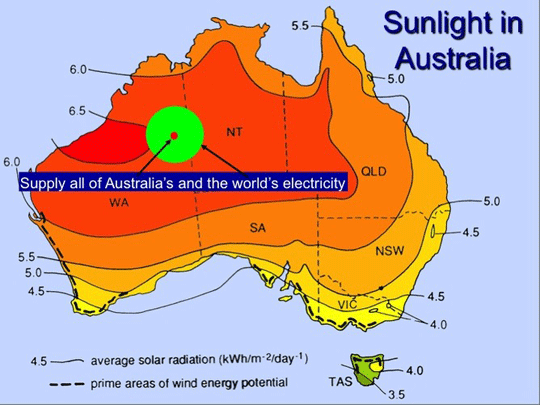
North Australia’s electrifying future: powering Asia with renewables REneweconomy, By Andrew Blakers on 21 August 2013
By Andrew Campbell, Andrew Blakers and Stuart Blanch
It may just be election season, but big dreams for the development of northern Australia are back in fashion. So here’s our piece of “next-frontier”, big-picture 21st-century thinking. It may even have room for a dam or two.
A Snowy scheme for the 21st century
Imagine a project that could help Indonesia achieve energy security, dramatically cut energy poverty for hundreds of millions, catalyse renewable energy production in Assocation of South East Asian Nations (ASEAN) countries, cut regional carbon pollution, and transition Australia’s energy exports from risky fuels to renewable energy.
Sounds far-fetched? In fact, such a proposal has already been published in the international peer-reviewed literature. It takes several existing technologies already in widespread deployment, and joins them together in a new configuration on an unprecedented scale, in a region with enormous natural competitive advantage — north-western Australia.
Here’s the plan. Continue reading
Wind energy facts – including 47% of South Australia’s energy last week
Wind supplied 47% of South Australia’s energy last week http://reneweconomy.com.au/2013/wind-supplied-47-of-south-australias-energy-last-week-67550 By Ketan Joshi on 20 August 2013 VERY GOOD GRAPHS in this article
Science Week was from August 10-18, inclusive. The Australian Energy Market Operator (AEMO) makes 5-minute generation data available through a gargantuan database. I’ve chosen to focus on South Australia and Victoria, states which lead the way in installed wind generation – there are 22 wind farms I’ve obtained generation data for, summarised in the table below.
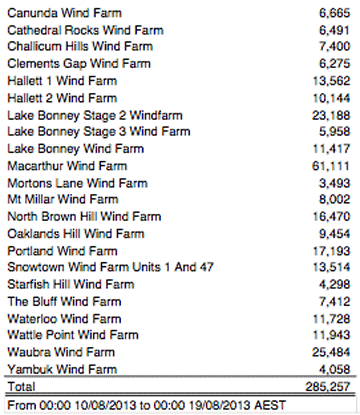
The total generation of those 22 wind farms was 285,257 megawatt hours. But what does that deliver to the energy market? The average Sydney household consumes 11.6 KWh per day, or 0.104 MWh over 9 days. So, the generation of wind farms throughout science week could power ~2.7 million homes – enough for all of Greater Sydney, and all of Greater Adelaide. That statistic alone is a firm reminder that wind power is a formidable player in the supply of energy. Continue reading
Fact checking the clams about “wind turbine syndrome”
DO WIND TURBINES CAUSE HEALTH PROBLEMS? > CHECK THE FACTS HTTP://WWW.FACTSFIGHTBACK.ORG.AU/DO-WIND-TURBINES-CAUSE-HEALTH-PROBLEMS-CHECK-THE-FACTS/ Facts Fight Back, August 20, 2013 ·
Who: “[Health concerns are] justified on the scientific evidence. We know from evidence from field studies… that low frequency noise actually causes health problems, physiological damage to people.” Senator Nick Xenophon
The claim: There is scientific evidence that wind turbines cause health problems.
The facts: In July 2010, the National Health and Medical Research Council reviewed the literature and found that there is currently no published scientific evidence to positively link wind turbines with adverse health effects.
In January 2012, an Independent Expert Panel in the US released a Wind Turbine Health Impact Study Report for the Massachusetts Department of Environmental Protection and the Department of Public Health. The reportfound that literature on human response to wind turbines related to self-reporting of “annoyance”.
The finding: Negative health outcomes appear to be caused by people being stressed by incorrect information about wind turbines not from the actual wind turbines. There is no evidence to show that wind turbines cause health problems.
Discussion of evidence: Reviews of the scientific literature have found that wind turbines cause no ill health effects. Health effects that are reported are consistent with stress and further studies have shown that there is a correlation between these adverse impacts and exposure to negative health information about wind turbines. Senator Xenophon is incorrect to say there is scientific evidence that point to wind turbines causing adverse health effects in humans.
1 This month

of the week – Australians for War Powers Reform (AWPR)
To see nuclear-related stories in greater depth and intensity
 Antinuclear