Get informed on solar energy panels
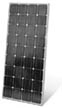 Surviving The Solar Panel Installation Stampede http://www.energymatters.com.au/index.php?main_page=news_article&article_id=3478 by Energy Matters , 21 Nov 12, Households in a hurry to have a solar panel system installed before the looming subsidy cut deadline still need to exercise caution and understand what it is they are buying – and who they are buying it from.
It’s an unfortunate situation that in any rush on solar, there will be victims of unethical providers. While these are certainly a minority in the industry, they do cause a lot of damage that also tarnishes the many reputable players.
When consumers have time to make a decision, they will tend to choose wisely; but with announcements such as the early end to the Solar Credits multiplier; the pressure is on to select a system and a solar panel installer – and mistakes can be made.
Energy Matters’ free Solar Power Consumer Guide is designed to help consumers select the right solar power system and avoid potential pitfalls. The online version primarily examines the tricks and traps and the more detailed 23 page download version covers the following topics: Continue reading
So far, Australian government catering to big utilities, to damage rooftop solar industry
Rooftop solar PV poses a greater threat to the business models of the utilities because it gets behind the meter. This means that, unlike the boom in air conditioners in recent years, rooftop solar PV reduces demand on the network rather than adds to it. The business models of all generators, distributors and retailers have long been based around the unwavering assumption of growing demand. They are simply not able to deal with with the absence of growth – and for this reason, rooftop solar PV is likely to have an even greater impact on their business models than more wind farms
 Is Australia’s solar industry being blindsided by utilities?, REneweconomy, By Giles Parkinson 19 November 2012 Beware of people bearing gifts, the old saying goes. And beware of politicians bearing promises of a reduction in electricity bills.
The Federal Government last Friday announced the early closure of its Solar Credits scheme which offered a multiplier in the number of renewable energy certificate issued for the output of a rooftop solar PV systems.
It justified this on the basis that it would save Australian electricity consumers between $80 and $100 million in 2013. But this amounts to be just $10 a year, or 20c per household a week, in an average bill of more than $2,000. If the government were really serious about reducing the impact on electricity bills from the scheme, there were numerous other options.
It could, for instance, be pushing for a change in the rules that allow utilities to pass on a fixed $40 price for each certificate, rather than the much lower market price. (Only the ACT pricing regulator has reduced the pass-through cost, although NSW’s IPART is considering it). Such a move would save perhaps one quarter of the estimated $1.2 billion cost of the scheme this year. Even that amounts to less than 2 per cent of electricity bills – and is forecast to decline to around 0.8 per cent in coming years.
So what is the government up to? The decision announced by Climate Change Minister Greg Combet on Friday took the solar industry by surprise. It’s not so much the financial impact of the decision that worries the industry – it will reduce the savings of a 1.5kW system by around $700, but this was going to happen in July anyway. As Nigel Morris pointed out in his blog, the biggest impact is to effectively cancel Christmas for solar installers, because they will be too busy trying to cope with the last minute rush.
What really worries the solar industry is the form guide of the decision, its timing– coming in the middle of a review of the Renewable Energy Target by the Climate Change Authority – and its arbitrary nature. Continue reading
Victoria needs renewable energy planning (let’s kick Baillieu out)
 Hot planning issue as solar left in shade, The Age November 18, 2012 Jason Dowling HOME owners are calling for solar panels to be protected with new planning rules and compensation should a neighbour build up and block sunlight to rooftops.
Victorian residents spending thousands of dollars installing solar power systems to offset escalating electricity prices now have no protection for their investment. There have been more than 142,000 roof-top solar systems installed in Victoria since 2000 – one in 15 Victorian homes now has solar panels.
The shading of solar panels as Melbourne’s housing density increases is becoming a hot planning issue.
Planning and building regulations protect north-facing windows and shading of back yards but do not specifically address the shading of solar panels…..
Stephen Ingrouille, owner of solar company Going Solar, said shading was occurring more frequently and could have a big impact on solar panels.
”The one thing they [solar panels] do need is direct sunlight and so they just have to be in full sun. And any shading, even shading over a portion of one corner of one cell can actually knock out a whole bank of cells – that’s the issue,” he said.
He said protection for solar panels through building and planning rules was needed.
http://www.theage.com.au/victoria/hot-planning-issue-as-solar-left-in-shade-20121117-29j1g.html#ixzz2ChetfaFZ
Australia’s solar rooftop industry looked successful, so government caved in to fossil fuel lobby to stop it
 Greens leader, Senator Christine Milne, said the government’s move, combined with a decision to delay taxing methane gas emissions from mines and landfills, “gives the fossil fuel industry a reprieve.”
“It seems incredible that the government wants to bring forward harm to renewable energy industries but delay cost impacts to fossil fuel polluters,” she said.
Solar scheme shift stuns industry, SMH, November 16, 2012 – Peter Hannam Carbon economy editor A rebate for rooftop solar panels will be halved six months earlier than planned in a move blasted by an industry group
as “diabolical”. Climate Change Minister Greg Combet announced the solar credits scheme would end in January next year “due to continued strong demand for household solar”….. Continue reading
Some surprising trends in Australia’s large scale electricity generation
Australia’s renewable energy map – off-grid, it’s another story By Giles Parkinson on 16 November 2012
The Bureau of Research and Resource Economics this week released an update on Australia’s large scale electricity generation – what has just been built, what is been built, and what’s in the pipeline.
It’s a useful update, but it highlights some surprising trends, and some lost opportunities.
 It notes, for instance, that of the 20 large scale plants under construction, all but six are in renewable energy. And of those six gas fired and coal fired plants that are being built, only one – Eraring Energy’s 240MW expansion in NSW – is connected to the National Electricity market
The others are located either in WA’s own market, or in off-grid and mini-grid locations around major mining areas – Queensland’s Mt Isa, the Pilbara region in WA, and the Northern Territory. The irony here is that these developments are mostly high-cost and are in areas that should afford renewables such as wind and solar the best chance of deployment on an economic basis. The fact that it hasn’t is one of the main problems that Greg Bourne is trying to address as chairman of the Australian Renewable Energy Agency.
You’d think that miners – given their profits – and the high cost of energy in remote locations would be enthusiastic supporters, but it seems they need to have a subsidized example before they embrace the idea.
The fossil fuel component of the new build accounts for just less than one third of the 3,017MW of plant under construction, and about a similar share of the cost.
Of the renewables projects, most are in wind (just one in solar), and half are in Victoria, despite that state’s blustering about renewable energy and it’s dangers on health and amenity…. http://reneweconomy.com.au/2012/australias-renewable-energy-map-off-grid-its-another-story-10111
Australian Renewable Energy Agency (ARENA) promoting regional renewables
ARENA’s regional outlook; Solar Dawn discontinued, http://ecogeneration.com.au/news/arena/078757/ , 16 November 2012 A new program to increase renewable energy uptake in regional and remote areas of Australia has been announced by the Australian Renewable Energy Agency, as part of its inaugural General Funding Strategy and Investment Plan for 2012-15 .
The Australian Renewable Energy Agency (ARENA) also announced that it will no longer pursue development of the 250 MW Solar Dawn project in Queensland.
ARENA Chair Greg Bourne said the General Funding Strategy and accompanying Investment Plan for 2012-15 includes strategic, supporting and complementary initiatives to drive long-term change. Continue reading
Australian govt puts the brakes on rooftop solar, after intense lobbying by fossil fuel utilities
for most Australians from January 1, there will be virtually no additional subsidies for rooftop solar PV installations.
The solar industry was stunned by the move and still had not figured out its implications.
the decision also comes after intense public lobbying from utilities and generators, particularly Origin Energy
Canberra brings early end to rooftop Solar Credits scheme http://reneweconomy.com.au/2012/canberra-brings-early-end-to-rooftop-solar-credits-scheme-97164 By Giles Parkinson 16 November 2012The Federal Government has announced the early closure of its Solar Credits scheme, meaning that rooftop solar PV installations will receive only one renewable energy certificate for every megawatt hour of electricity produced from January 1.
The closure of the scheme, six months early, is the second time the government has intervened in the program, which was originally intended to end in 2015. Last year, it announced that the closure was being brought forward by 12 months. Continue reading
Electricity from sugar power at Mackay, Queensland – AUDIO
 AUDIO Mackay running on sugar power http://www.abc.net.au/rural/news/content/201211/s3633288.htm By Michael Cavanagh, 15/11/2012 From today, 30 per cent of the electricity needs of Mackay on Queensland’s central coast will be supplied by the Racecourse Sugar Mill located on the city’s outskirts.
The bagasse, or sugar waste, has long been used to power the mill’s operations. Now, with the use of more efficient boilers and a newsteam turbine generator, the excess will be pushed into the town’s electricity grid.
Mackay Sugar is one of Australia’s top 500 carbon emitters. Business development manager John Hodgson says this is a further reason to move away from more traditional power.
“So we have a liability for those emissions and we desperately want to get off that list of high emitters so that is another big incentive to displace coal with stored bagasse.”
The Racecourse Mill cogeneration project is costing around $120 million. A small part of this is government funding, with the bulk coming from Mackay Sugar.
The man with his hand on the purse is Mackay Sugar CEO Quinton Hildebrand. He says it’s a “good commercial venture” with an expected “payback” over the next six years. Mackay Sugar receives payments on a monthly basis, which are calculated on the power exported.
South Africa leads in solar thermal, where sunny Australia fears to go
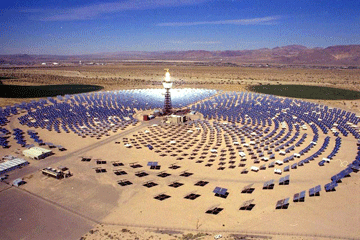 Australia concedes lead in solar thermal technology to South Africa, REneweconomy, By Giles Parkinson 12 November 2012 It is ironic that in the same week that the ambitious $1.2 billion Solar Dawn solar thermal project in south-west Queensland should finally be put to rest, construction of two solar thermal projects – with storage – should begin in South Africa.
The last chance for the Solar Dawn consortium led by French nuclear giant Areva for the construction of a 250MW solar thermal plant in Queensland, or even a scaled down version of it, was removed when the Australian Renewable Energy Agency rejected its funding proposal – after the federal government had done so under the previous Solar Flagships program.
Meanwhile, in South Africa, the Spanish group Abengoa last week began construction of two solar thermal projects boasting a mixture of solar tower and parabolic trough technologies. The 50MW Khi Solar One and 100MW KaXu Solar One CSP (concentrating solar power, another name for solar thermal) projects will feature storage and dry cooling technologies, to reduce water demands.
These are the sort of projects that should be pioneered and deployed in Australia. Instead, Australia’s obsession with grandiose schemes, its inflexible funding arrangements, and the lack of true support from state governments and major utilities, mean South Africa will lead and Australia will follow.
The failure of the Solar Flagships program, or the inability of various projects to lock in power price arrangements is not a failure of technology, as many would like to portray it, but a failure of policy – where the hubris of government overwhelms sound technical advice from the industry. It was an idea dreamed up by the egos in the office of Prime Minister Kevin Rudd, and the bureaucrats were never able to meet the impossible task of matching such grandiose dreams – of having the biggest, but not necessarily the best – with sound policies. The coup-de-grace was delivered by Queensland Premier Campbell Newman in a similarly grand-standing gesture…..
The one opportunity that Australia now has for a solar thermal project in the short term may well be in Port Augusta, where Alinta has held some discussions with ARENA, for a possible replacement of its coal-fired power stations there. What they may propose, however, is a hybrid systems no dissimilar to the solar booster that is currently being built in Queensland by Areva.
But the importance of solar thermal should not be underestimated. Even the Energy White Paper, a conservative document prepared by the Federal Energy ministry and released last week, said 16 per cent of Australia’s electricity demand could be sourced from solar thermal by 2050. That could make Australia a leader in solar thermal, but for the moment it trails……
South Africa is succeeding with stand alone systems because it has introduced a market-focused system that has successfully attracted many of the world’s largest solar and other alternative energy developers, through an auction-based system that has attracted more than $5 billion of projects in its first two auctions.
The ACT is the only state or territory government that has pursued a similar strategy, albeit at a much smaller scale. It has so far had one round of bidding that should see a 20MW solar PV project being built near Canberra by the end of 2013…… http://reneweconomy.com.au/2012/australia-concedes-lead-in-solar-thermal-technology-to-south-africa-91812
New ultrafast transmission technology is a boon for renewable energy
 Capable of carrying electricity over long distances much more efficiently than alternating current (AC), HVDC transmission is seen as a way of transporting renewable energy from remote utility-scale locations — such as desert solar power facilities and offshore wind farms — to consumption centers at much lower cost than existing transmission infrastructure.
Big boost for renewable energy: ABB’s game changing hybrid, REneweconomy, By Cleantechnica 12 November 2012 Solving a problem that has handicapped use of high-voltage direct current (HVDC) in transmission lines, networks, and power grids for more than 100 years, multinational power engineering giant ABB has announced that it has designed and developed a hybrid DC breaker capable of interrupting DC power flows “equivalent to the output of a nuclear power station within five milliseconds… as fast as a honeybee takes per flap of its wings.”
The hybrid DC breaker combines “advanced ultrafast mechanical actuators with ABB’s in-house semiconductor IGBT valve technologies or power electronics.” ABB management deems it a “game changer.” Continue reading
Still hope for Mallee solar energy, despite federal funds not available
“But we do have another solar power station under way with Silex Systems, as well as a number of other companies who have shown interest,”
Lights fade: $700m Mallee solar park misses out on federal funding
http://www.sunraysiadaily.com.au/story/962578/lights-fade-700m-mallee-solar-park-misses-out-on-federal-funding/?cs=1259 By Allan Murphy Nov. 13, 2012 PLANS for a $700 million Mallee solar park, described as one of the largest solar power station projects in the world, may be scuttled after the proposal again failed to attract federal funding.
Australian Renewable Energy Agency (ARENA) yesterday said it would not pursue the EnergyAust-ralia (formerly TRUenergy) project despite an available funding increase of half a billion dollars.
The agency said it was forced to make “tough decisions” to increase renewable energy uptake in regional and remote Australia. Member for Mildura Peter Crisp last month said he was “genuinely worried” about EnergyAustralia’s bid to establish the Mallee Solar Park south of Mildura, despite the State Government committing $100 million towards
the proposal. Continue reading
Origin Energy’s push for gas, against renewabl eenergy
Origin Energy under scrutiny over anti-renewables stance (includes video) Indymedia 13 Nov 2012 By takver Origin Energy, Australia’s largest energy retailer, came under intense scrutiny today from shareholders at the Annual General Meeting in Sydney over it’s energy portfolio placing great emphasis on development of gas, poor investment in wind and solar power, and a campaign by Managing Director Grant King to destabilise the Renewable Energy Target.
At one stage a banner was quickly unfurled infront of the board on the stage which said “Origin: Build wind and solar, not coal and gas”. Continue reading
Australia’s Energy White Paper – in the right direction, but SOLAR is going even faster
 Rooftop solar generators now produce electricity for less than the retail tariff everywhere in Australia. This could fundamentally change the nature of the electricity business, leading to the establishment of millions of small generators to supplement wind farms and large conventional generators.
Energy White Paper underestimates solar http://theconversation.edu.au/energy-white-paper-underestimates-solar-10645 Andrew Blakers 10 Nov 12 The 2012 Energy White Paper has much to commend it. In particular, the far greater acknowledgement of the need to shift to clean energy sources is a fundamental shift from previous White Papers.
The emphasis on the need for power demand management, rather than simply meeting peak demand though capital expenditure, is also very welcome.
The energy landscape is changing rapidly. A fundamental change is the extraordinarily rapid decline in the cost of solar energy. Results from the 2012 Australian Energy Technology Assessment of various energy technologies is included. This was a radical departure from previous Government assessments in that it recognised that solar and wind are on track to be low cost, fully competitive energy generation technologies rather soon.
The White Paper notes that “few could have predicted the dramatic reduction in solar PV costs that has occurred
over the past few years”. The White Paper could perhaps have emphasised more strongly the large implications of this fact for electricity providers. Continue reading
New “solar smoothers” solve problems of “intermittent’ renewable energy
Innovative solar smoother manages fluctuations from alternative energy sources http://www.pacetoday.com.au/news/innovative-solar-smoother-helps-manage-fluctuatio 9 November, 2012 Kevin Gomez Western Australia’s Horizon Power recently released new specifications that have a major impact on the renewable energy industry.
The State-owned regional utility required a smoothing device to be installed on every new solar power system to help with power fluctuations. Horizon Power’s infrastructure was having difficulties coping with the unstable power, due to injection of solar energy from private systems.
The utility operates WA’s remote electricity supply systems and some local generation facilities and retails electricity to almost 30,000 customers in the Kimberley, Gascoyne, Mid West and southern Goldfields.
Horizon Power generates some electricity from renewable sources, including wind power in coastal areas and small scale solar power schemes. Currently there are too many solar panels feeding into generator-based mini-grids in some towns in rural WA. When the mini-grid experiences large changes in the injection of solar power, for example on cloudy
days, the generators have to work hard to keep up. If a large cloud passes by, then the solar power injection level will
suddenly drop and generators will need to work hard to keep the power flowing.
Horizon Power has introduced the changes to ensure that these “black holes” of power are avoided. This is achieved via a “solar smoothing” equipment. The smoothing device will provide back-up power to the grid while the generators ramp up and down – reducing the long term wear and tear of the equipment.
The introduction of the specifications will ensure that Horizon’s infrastructure is protected, whilst also allowing space for new solar farms, where the hosting capacity has been reached. Continue reading
Martin Ferguson keeps nuclear door open, while pretending to promote renewables
 The big talking points from the Energy White Paper REneweconomy, By Giles Parkinson 9 November 2012, “…….Ferguson may (begrudgingly) acknowledge that nuclear is not part of the Labor Party platform, but he clearly wants to keep the door open. As he said in the draft white paper, and repeated in the final edition, nuclear might be the only option for a zero-emission future if other technologies such as carbon capture, large scale solar and other renewables fail to develop in the next decade.
“If those technologies fail to develop as expected, future Australian governments may need to consider other clean energy alternatives to meet our emissions reduction targets and to minimise the risk of higher adjustment costs,” the Energy White Paper says. Bet get a wriggle on then. But it’s just a little ironic, given his department’s botched handling of the funds designed to bring those technologies to the market – and here you could cite any number of schemes such as Solar Flagships, the Renewable Energy Development Program, and the Geothermal Drilling Program.
Thankfully, the Greens and the Independents forced the Labor Party to put these together under an independent body called the Australian Renewable Energy Agency, which is about to swing into action. Ferguson, however, would have been pleased by the CSIRO’s eFutureonline modelling tool, which displays a nuclear scenario that can best be described as wishful thinking. But as the Energy White Paper admits, the establishment of a commercially based nuclear energy industry in Australia would also require additional financial and/or other forms of government support, and a social licence to operate….”
1 This month


Help Aunty Sue Protect Her Land and Sacred Sites From Destructive Rocket Testing.
.

Australians deserve the truth
about
AUKUS – https://aukuspublicinquiry.com/

PETITION – To: Prime Minister Anthony Albanese and the Australian Labor Government

of the week – Australians for War Powers Reform (AWPR)
To see nuclear-related stories in greater depth and intensity

