Solar panel popularity cuts demand
Adelaide Now, Julian Swallow August 09, 2012 REDUCED electricity consumption and growing use of renewable energy will cause a five-year delay in the need for extra generation investment in SA, a new report says. Continue reading
Australians taking up decentralised solar power – with a vengeance!
 The federal government’s principal forecasting body last week said its landmark assessment of 40 different technologies indicated that by 2030, solar PV would be the cheapest of all available
  technologies
Off grid and on household and commercial rooftops, solar PV is already offering a cheaper alternative.
nearly four million Australians are living in a home with solar hot water or a PV system – and that means they don’t listen to the bulls*** that it is not working, not ready or unreliable.”
Bolt from the blue: How Australia got gold in rooftop solar REneweconomy By Giles Parkinson 6 August 2012 Australia has long been regarded as one of the pioneers of the global solar photovoltaic industry, courtesy of its excellent research at institutions such as UNSW and elsewhere. Now, thanks to its excellent solar resource, rising electricity costs and the falling cost of solar PV, it is now emerging as the leading market for rooftop solar as well.
It wasn’t that long ago that visitors from Europe expressed their astonishment about the lack of solar panels on Australia’s rooftops. But, as one industry leader noted the other day, the growth of PV in Australia has jumped 6,900 per cent between the Beijing Olympics and the London Olympics – enough to earn it a gold medal in deployment.
As consulting group SunWiz noted last month, Australia installed more small-scale rooftop PV (systems less than 10kW) on households in 2011 than Germany, with 795MW vs 759MW. It now has an estimated 1.7 gigawatts of solar PV installed on rooftops, and is expected to get to 2,000MW by the end of the year. The Australian Energy Markets Operator recently said there could be 12,000MW to 18,000MW of rooftop solar PV in the country by 2030. Sunwiz and Solar Business Services say 18,000MW is conceivable by 2022. Continue reading
Port Augusta, South Australia, encouraged by government interest in solar thermal energy
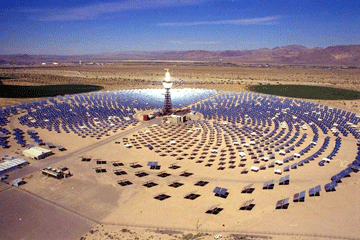 Minister on solar thermal fact-finding tour http://www.abc.net.au/news/2012-08-02/minister-on-solar-thermal-fact-finding-tour/4171960 August 02, 2012 South Australia’s Mineral Resources and Energy Minister, Tom Koutsantonis, will travel to Nevada to research the viability of solar thermal energy. The Minister met solar thermal lobbyists and local government representatives in Port Augusta yesterday. He was given documentation showing the community’s support for the local power stations to be converted to the renewable source.
Mr Koutsantonis says the trip to the United States is to explore and clarify details of solar thermal energy. “We understand gas power generation, we understand coal power generation, we understand wind – in terms of renewable energy we’re
basically the epicentre of Australia,” he said. “If South Australia was a country in its own right we would be number
two in the world for renewable energy.”
Mr Koutsantonis says he is willing to lobby the Federal Government and Alinta Energy to invest in solar thermal.
Port Augusta Mayor Joy Baluch says she is pleased the State Government is supporting a conversion to solar thermal energy for local power stations and is learning more about how the technology works.
“Our conversation has been extremely encouraging to the fact that the Minister is going to Nevada personally to check out the existing and operating solar thermal plant,” she said.
180,000 homes to be powered by Snowtown wind farm, (South Australia)
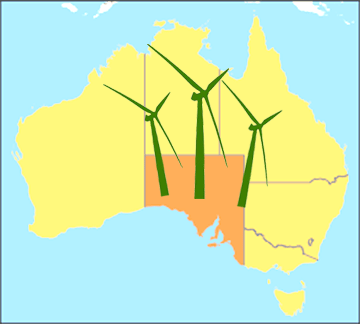 Siemens and TrustPower to build largest wind farm in South Australia, PACE, 3 August, 2012 Kevin Gomez, TrustPower has appointed Siemens as their turn-key supplier to construct South Australia’s largest wind farm at Snowtown using for the first time in Australia, gearless drive wind turbine technology.
With the project formally reaching financial close, the Snowtown II wind farm development will be capable of generating 270 megawatts of renewable energy and powering approximately 180,000 South Australian homes……. South Australia has now set a target of 33 per cent renewable energy by 2020. The new Snowtown II wind farm is set to help achieve this target.
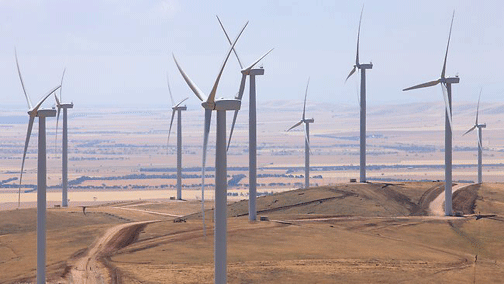
Snowtown II is co-located with the existing Snowtown wind farm, which will more than triple the renewable energy generation of the region. Early preparations have commenced at the site with construction commencing inAugust 2012 to ensure the project is fully operational by the end of 2014…. http://www.pacetoday.com.au/news/siemens-and-trustpower-to-build-largest-wind-farm
Reports indicate that Australia is set for huge change to renewable energy
 Poised for energy game-changer http://www.theaustralian.com.au/business/companies/poised-for-energy-game-changer/story-fn91v9q3-1226441797585 BY: GILES PARKINSON The Australian August 03, 2012 The Bureau of Resources and Energy Economics has found that solar and wind will be less expensive than new coal or gas by 2020
A WEEK ago, the Climate Institute published the results of a survey that showed Australians, despite being largely undecided about climate change, much preferred solar and wind energy over coal power and nuclear.
It was a choice largely driven by the urge to be clean and green, and two key reports delivered in the past year affirm their choice: solar and wind are the cheapest options too. The reports — a study by AECOM and a more detailed, landmark analysis of 40 technology options by the government forecaster, the Bureau of Resources and Energy Economics — suggest we are on the verge of a profound change in sentiment in the debate about renewables.
The studies have effectively blown the argument that the nation’s 20 per cent renewable energy target should be canned or wound back on the basis that it is too expensive.
BREE found that wind and solar will be less expensive than new coal or gas by 2020 and will be the cheapest of all energy options by 2030. Its findings suggest that the RET, because it encourages deployment, simply accelerates the fall in the cost curve. AECOM’s report found that building more renewables generation such as wind and solar would
enable the nation to protect against rising gas prices, which are seen as inevitable as gas is funnelled through the massive liquefied natural gas plants to the export market.
Australia’s energy assessment includes nuclear power, IGNORES DECOMMISSIONING COSTS
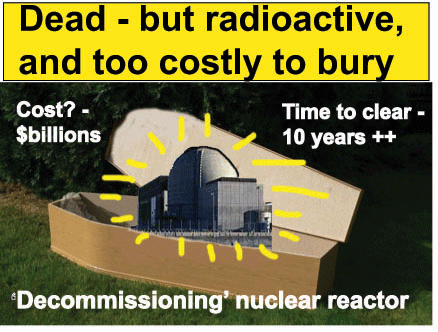 BREE says the cost of building a new nuclear facility 2012 in Australia would be less than A$100/MWh, rising to $126/MWh in 2050. But BREE says it did not factor in decommissioning costs.
Australia sees PV and wind as cheapest sources by 2030  http://www.rechargenews.com/business_area/finance/article319046.ece1 August 12, By 2030, solar PV and onshore wind farms are expected to provide some of the lowest-cost alternatives to coal and gas-fired power stations, with PV likely to be considerably cheaper than all
  other energy forms by 2050, Australia’s chief energy forecasting body says.
In The Australian Energy Technology Assessment (AETA), the Australia’s energy assessment compares the levelised cost of electricity (LCOE) – that is the price at which electricity must be produced from a specific source to break even – of 40 different generation technologies.
It finds the costs of PV have dropped sharply in the past two to three years as a result of a rapid increase in global production of solar modules. Continue reading
Outback Aboriginal company joins forces with solar power company
Aboriginal people to install solar systems in remote WA communities http://www.abc.net.au/rural news/content/201207/s3556353.htm ABC rural news By Babs McHugh , 30/07/2012 An Indigenous mining company has joined forces with a solar power company to build renewable energy systems in remote Western Australia.
Carey Power plans to train and employ local Aboriginal people to install and maintain the power systems, which will also be rolled out to mine sites.
Minnie King is a Torres Strait Islander who’ll run the company, which has already signed a memorandum of understanding (MOU) with an Aboriginal Corporation in the Northern Territory to look at power solutions there.
She says Carey Power will be initially focused on solar energy projects, using panels bought in China.
“We’re interested in looking at perhaps doing hybrids, where there are existing diesel generation systems in communities, looking at installing solar there, perhaps solar farms,” she said. “But in saying that, there are other technologies that we would be interested in exploring down the track.”
Lower income suburbs in Victoria taking to solar energy in a big way
Tarneit and neighbouring suburbs Hoppers Crossing and Truganina have more solar power installed than any other postcode in the state – 2564 systems, with a capacity of 5.1 megawatts.
Werribee, just a little further down the Princes Freeway, is second on the list of Victorian solar postcodes. The top five are rounded out by other lower-income, outer-suburban areas: Cranbourne, Caroline Springs and Grovedale in Geelong.
”I don’t think the government or public have appreciated just how profound or rapid the change will be in the solar market over the next couple of years.”
Out on the fringe, solar comes of age, The Age, July 28, 2012,  Adam Morton UNTIL recently, Tarneit, about 25 kilometres west of the Melbourne CBD, was mostly grazing paddocks, a place without a post
office. Now there is barely a cow left. Between the 2006 and 2011 censuses, the population of the outer suburb boomed, tripling to more than 20,000 as the city sprawled and first home buyers snapped up new affordable housing.
The residents of Tarneit are much like those in other developing areas on the city’s fringe. As you might expect, they earn less than the average Victorian. Perhaps less predictably, they are also much more likely to have solar panels on their roofs.
While the myth of solar panels as a purely upper-middle-class luxury persists, new data released by the Clean Energy Regulator suggests it is misplaced. Continue reading
Dick Smith promoting CSIRO’s electric car
 the CSIRO test car is designed in such a way that it can be used as a household power source, feeding electricity back into the 240-volt grid, and being charged up again at night when power demand is low.
Dick Smith visits Newcastle CSIRO centre http://www.theherald.com.au/news/local/news/general/dick-smith-visits-newcastle-csiro-centre/2637702.aspx BY IAN KIRKWOOD 28 Jul, 2012 AS an avowed skeptic, entrepeneur and philanthropist Dick Smith says renewable energy is a good thing whether climate change is real or not.
“While I think we could be altering our climate, I think most business people like me are climate change deniers and I think we could be affecting the climate but coal and oil are going to run out one day,” Mr Smith said in Newcastle yesterday. Continue reading
Wind farm at Collector supported, despite one small “astroturf” group’s opposition
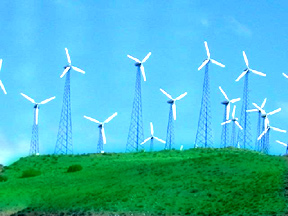 Wind farm claims local supporters, Canberra Times, July 27, 2012, John Thistleton Proponents of a $400 million, 68-turbine wind farm at Collector say most of the village residents support the project, which has moved a step closer to approval.
RATCH-Australia is expected to take two years building the region’s latest wind farm near the Federal Highway at Collector. It will generate up to 228 megawatts of electricity, or enough energy to power around 80,000 homes annually.
Chief executive Steve Loxton said the 60-day public exhibition period represented the culmination of years of research.
”Our surveys of local Collector residents confirm that there is strong support for renewable energy Continue reading
Australians support renewable energy, despite the vitriolic campaign against climate scientists,
 Australians’ strong renewables backing, Climate Spectator, 25 Jul 2012, Lane Crockett As reported yesterday, the Climate Institute launched Climate of the Nation 2012 which is an annual research piece that seeks to understand the attitudes of Australians regarding climate change and energy.
While this year’s report finds that Australians are exhausted by the politics around climate policy and are somewhat confused on climate change science their vision of a low-carbon future is crystal clear: they want renewable energy.
Increasing the amount of renewable energy is perceived as the most effective greenhouse gas emission reduction policy, which along with energy efficiency rated well ahead of other suggested measures.
For the last few years climate change and its solutions have been the target of a well-oiled campaign against innovation, efficiency and clean energy investment. This campaign has included vitriolic attacks directed at highly regarded members of the scientific community, vain attempts to debunk well-established climate change science and highly inaccurate and
misleading claims made about possible solutions such as renewable
energy. Continue reading
Australia’s exceptional potential for wave energy
 AUDIO Australia to catch the wave and hang ten (per cent that is) July 25, 2012 Australia’s coast line in the Southern Ocean has the best wave resources. Particular areas to note are the west coast of Tasmania, the southern ocean in Victoria and south-west Western Australia. (Phys.org) –– Australia’s oceans hold a bounty of energy and could produce 24-hour power, either from the tides, currents or waves.
A study by CSIRO has found that the waves in the ocean could supply about 10 per cent of Australia’s electricity by 2050. This is equivalent to powering a city the size of Melbourne. Ian Cresswell, Director CSIRO Wealth from Oceans Flagship said understanding the potential of this clean, sustainable energy source was important for CSIRO. Continue reading
Australia now poised for renewable energy investment
 “There is no other industry that is growing at 40% a year,” “Many countries need to change their fuel capacity and replace it with clean energy, so there are a lot of possibilities in the renewable market. And it is so much quicker and easier to build renewable generation than conventional generation.”..
Australia risks missing out on green energy investment. Crikey, by Giles Parkinson of RenewEconomy 25 July 12 Australia has already been bypassed once by the world’s leading renewable energy developers, and risks doing so again if it makes more changes to its green energy policies, according to one of the world’s biggest energy groups.
The Australian clean energy market nearly became a wasteland after the Howard government refused to extend its hugely successful start to the country’s first Renewable Energy Target, causing many international and Australian companies to leave the country and manufacturing facilities to be closed.
There are concerns of a similar flight of interest, and capital, if the government makes changes to its 2020 Renewable Energy Target, which is expected to be the bedrock for some $20 billion of investment in wind energy and solar farms in the next eight years. Continue reading
Solar energy with molten salt storage a good option for remote mining areas in Australia
Australia risks missing out on green energy investment Crikey, by Giles Parkinson of RenewEconomy 25 July 12“……..Acciona is also one of the leading companies in concentrated solar thermal — building plants boasting parabolic trough and solar tower technologies, and recently adding molten salt storage so that such plants can become “dispatchable” like gas-fired power station
He said even solar thermal CSP is also already operating at about $150/MWh in countries with good sun, such as South Africa and Australia, and Acciona argues that this should draw the attention of big miners such as BHP Billiton and Rio Tinto, which are paying $300/MWh or more for diesel at remote mine sites.
“There’s got to be a shift in mindset from having a diesel generation plant they know well and which is relatively cheap to build, to shifting towards a highly technical generation source and perhaps outsourcing the management and ownership of that asset through a third party that knows how to operate that,” Thompson said.
Mateo says PV is heading towards $100/MWh and it was interesting to note that in some countries, financing had been offered by banks without subsidies from the government, and even without power purchase agreements. In Chile, for instance, the cost of energy is $100/MWh, which allows wind and solar PV, in some instances, to compete. Mateo said there could be opportunities to combine CSP installations with solar PV….. http://www.crikey.com.au/2012/07/24/australia-risks-missing-out-on-green-energy-investment/
Victoria’s outstanding potential for renewable energy is being neglected
 Victoria missing out on renewable energy http://www.abc.net.au/news/2012-07-23/victoria-missing-out-on-renewable-energy/4147502?section=vic July 23, 2012 Victoria is “blessed” with its renewable energy capacity: Tim Flannery. The Climate Commission says Victoria’s renewable energy resources are barely being tapped.
Chief climate commissioner Professor Tim Flannery says we are entering a new chapter of climate change and Victoria should be making a sharp shift to renewable energy such as wind and solar power. “Victoria has got fabulous wind resources, the envy of places like Europe and fantastic solar resources too,” Professor Flannery said. Continue reading
1 This month



Help Aunty Sue Protect Her Land and Sacred Sites From Destructive Rocket Testing.
.

Australians deserve the truth
about
AUKUS – https://aukuspublicinquiry.com/

PETITION – To: Prime Minister Anthony Albanese and the Australian Labor Government

of the week – Australians for War Powers Reform (AWPR)
To see nuclear-related stories in greater depth and intensity

