The complex truth about gas and renewables
ReNewEConomy, Kane Thornton, May 16, 2025
Energy policy in Australia has long suffered at the hands of a simple lie being easier to accept than a complex truth. The federal election was remarkable in all sorts of ways, but one of those was that the Australian public backed a complex truth and they overwhelmingly rejected a simple lie.
They rejected nuclear power and a massive campaign to hoodwink Australia into backing a solution riddled with risk and uncertainty, likely to have enormous costs and be decades away. Instead, they provided a strong mandate for Australia to proceed with renewables, backed up by batteries, pumped hydro and a small amount of gas.
At the start of this year, amidst waves of misinformation and anticipating another contentious election campaign, the clean energy industry launched a new campaign to ensure the Australian public got the facts. We wanted to make sure the Australian public had access to the facts about clean energy and the alternatives. It’s working.
As the dust settles on the election, we have a lot more to do to ensure the public understand the complexity and nuance of Australia’s energy transition. One of those areas is about the role of gas in the electricity system. So let’s get it straight.
Firstly, the fact is that a small amount of gas-fired electricity generation is playing an important role today, and according to the experts will be necessary for the foreseeable future. That might be an inconvenient truth for some people, but it is the reality for now. It’s a small role, compared to the massive role renewable energy and energy storage is already playing and is expected to in the future.
The Australian Energy Market Operator (AEMO) states that “As coal-fired power stations retire, renewable energy connected with transmission and distribution, firmed with storage, and backed up by gas-powered generation is the lowest-cost way to supply electricity to homes and businesses through Australia’s transition to a net zero economy”
They saw through unprecedented misinformation and a ferocious campaign against renewable energy and for nuclear power. More than anything, Australian’s demonstrated they wanted the truth and could handle that truth. No one said that replacing Australia’s aging coal generation fleet over a decade or so would be easy, or straight forward. But the election showed that it’s time for more honesty with the Australian public.
Importantly, AEMO also projects that gas generation capacity (MW) will produce much less energy (MWh – actual output) than it does today, with a reduced capacity factor for any gas generation of around 7% on average.
AEMO projects gas generation will play a narrower and more focussed role, providing rare but important coverage of seasonal shortfalls, as opposed to its current role in regularly providing peaking support. AEMO is currently forecasting that gas-fired generation capacity will increase from 11.5 GW now to 15 GW in 2050, including replacement of 9.3 GW of the current capacity that is expected to retire over coming decades.
This 15 GW is a relatively small amount of gas capacity when considered alongside the 135 GW of new large-scale renewable generation and the 56 GW of combined utility and distributed energy storage needed by 2050.
The experts tell us that energy storage will play a much bigger role than gas generation in the long term. Energy storage represents a cleaner, lower cost alternative to gas generation and investors are pouring billions into developing more of these assets – last year alone we saw a record 4,000 MW of new energy storage projects, with more than double that due to connect in the next few years. The faster we can deploy clean energy and a range of storage solutions, the faster we can reduce our reliance on gas…………………………………………….. https://reneweconomy.com.au/the-complex-truth-about-gas-and-renewables/
Nuclear future off the agenda in Port Augusta, as locals turn to renewables and mining
ABC News, By Kathryn Bermingham, Stateline, 15 May 25
In short:
Port Augusta was thrust into the spotlight when it was announced as one of several sites earmarked, under a Coalition election pledge, to host a nuclear reactor.
While the Coalition has not formally abandoned the plan, its resounding defeat at the recent federal election suggested voters did not embrace the idea.
What’s next?
As Port Augusta looks ahead, locals say its future could lie in several directions, including renewables and mining…………………………………………………………………………………………….
Nuclear off the agenda
Port Augusta was thrust into the national spotlight last year when it was announced as one of the sites earmarked to host a nuclear reactor under a Coalition election pledge.
While the Coalition has not formally abandoned the plan, its resounding defeat at the recent federal election suggested voters did not embrace the idea……………………….
………………………. A future in power generation
Greg Bannon felt the region had scarcely settled one nuclear debate — the now-scrapped proposal to build a low-level nuclear waste dump near Kimba — when the Coalition’s plan was put forward.
“It was really like a punch in the guts,” he said.
Mr Bannon, who lives 40 kilometres from Port Augusta at Quorn and had campaigned against the dump, said Port Augusta has had to reinvent itself in the past and could do so again.
“We also had a very big railway workshop here, it was a huge employer with lots of apprenticeships,” he said.
“Railways built everything. So that was a big loss when that was taken away and of course the most recent large employer has been the coal-fired power station.”
He said the transition to renewables had been more economically beneficial than some gave it credit for — and maintained that Port Augusta’s future was still in energy generation.
“Renewables have provided jobs,” he said.
“We’ve got Sundrop Farm down there, which … grows tomatoes from gulf water that’s been desalinated and solar mirrors.”………………………………………………….. https://www.abc.net.au/news/2025-05-15/nuclear-off-the-table-for-port-augusta/105285976
Australians choose batteries over nuclear after election fought on energy
By climate reporters Jess Davis and Jo Lauder, ABC News, 6 May
When Peter Dutton unveiled his party’s nuclear energy plan last year, it opened up a seismic difference between the two major parties.
It offered a real choice for Australian voters over the future of the country’s energy policy.
“I’m very happy for the election to be a referendum on energy, on nuclear, on power prices, on lights going out, on who has a sustainable pathway for our country going forward,” he said.
Taken on those terms, Saturday’s election outcome was an endorsement of renewable energy over nuclear.
“It’s clearly a referendum on energy policy, given the prominence of energy throughout the entire election campaign,” Clean Energy Council CEO Kane Thornton said.
“I think it’s an emphatic victory for Australia’s transition to clean energy.”
At a household level, Labor offered a significant discount on home batteries to accompany the booming solar on rooftops all across the country, aiming to get 1 million batteries installed under the scheme by 2030.
The last election saw a new generation of independents join the parliament, riding a wave of climate concern. Any expectation that the “teals” were a single-election trend has been dispelled, with most of them set to be returned, and new ones joining their ranks.
While the Greens have an anxious wait ahead to see how many lower seats they’ll win, they recorded their highest-ever primary vote and will hold the balance of power in the Senate with 11 senators.
After losing the Liberal heartland to the teals in the last election, the Coalition decided to pitch instead to the outer suburbs.
But the decision to campaign against renewables, and scrap climate policies such as the EV tax breaks, seems to mismatch the views of middle Australia.
Outer suburbs embrace solar power
Dutton set out to make up gains in the outer suburbs by offering a discount on the fuel excise. But the data for solar uptake and electric cars paints a very different picture to the caricature of solar and batteries as a plaything for the inner city.
While energy may not have been a top concern for voters, it’s the outer suburbs where our love for rooftop solar is at its highest, especially in Queensland and Western Australia.
In Dutton’s former electorate of Dickson, some 60 per cent of households have a solar system, double the national average, according to data from the Clean Energy Regulator……………………………………………… https://www.abc.net.au/news/2025-05-06/federal-election-shows-voters-support-renewables-over-nuclear/105252888
Australia lays out red carpet for rapid green energy transition. Can Labor seize the moment?

Giles Parkinson, May 4, 2025, https://reneweconomy.com.au/australia-lays-out-red-carpet-for-rapid-green-energy-transition-can-labor-seize-the-moment/
What an opportunity Australia has before it.
The thumping victory to Labor, unimaginable just months ago, or even while chomping on the democracy sausage on Saturday afternoon, means that the Australian federal government now has a clear mandate to do something great – accelerate the transition to renewables and get really serious about climate targets.
Australia has rejected the Gina Rinehart vision of a nuclear-powered, iron-domed Australia living in climate denial and perpetual fear.
The foot soldiers Australia’s richest person sent into electoral battle, armed with real and imaginary MAGA caps, have been dispatched by voters. Opposition leader Peter Dutton has lost his seat, and energy spokesman Ted O’Brien very nearly did.
There will now be nearly as many independents in the lower house as there are Liberals, or members of the LNP or Nationals. How envious must the Americans feel! Trumpism has been repudiated. Common sense, respect for the science, and empathy has prevailed. And Australia can even be sure there will be another election in three years time. The US, not so much.
It is remarkable that, after two decades of political argy-bargy, the loudest and sanest voices across the floor from Labor will not be from seeking favours from the fossil fuel industry, but from those urging the government to go harder, to aim higher.
Green industry can hardly believe it, and leaders such as Andrew Forrest have already found their voice.
“This result sends a clear and unequivocal message: Australians will back and support policies that recognise the economic opportunities which come from acting on the existential threat of climate change,” Forrest said in a statement on Sunday.
“It shows that any party which seeks to govern this country must have a serious and credible plan to confront the climate crisis.
“In a turbulent world, Australia remains a strong, principled and pragmatic voice. We must now use that voice to back science, seize the green energy opportunity, and strengthen our role in the world with compassion, ambition and purpose.”
Forrest has been outspoken in his criticism of net zero targets, describing them as a “con”, because they essentially let fossil fuels off the hook for real action. He has set a target of “real zero” at his Pilbara iron ore mines by the end of the decade, which means burning no diesel and no gas for electricity or transport by 2030.
It is a stunningly ambitious goal, but in keeping with the need to act decisively on climate change. Australia’s climate targets are still lacklustre, but its government cannot now argue that it does not have the mandate to be bold.
In a few months Australia, which wants to host the 2026 UN climate conference, will need to submit its 2035 emissions reduction target. It has to respect the science. Is Labor satisfied with power for the sake of being in power, or does it wish to leave a lasting legacy, or will we regret it not being in minority government. It likely has another six years to actually Do Something.
But challenges remain, and while the election may be won, that could turn out to be the easy part. Energy and climate minister Chris Bowen and the Labor team have some thinking to do about the best and most equitable way to deliver the second and most challenging part of the green energy transition.
It’s 20 years since John Howard, under intense pressure from a fossil fuel lobby horrified by a proposed extension to the mandatory renewable energy target that would have doubled the share of wind and solar from 1 pct to 2 per cent of generation, threw that policy out the door.
Australia is now at 40 per cent renewables, aiming to double that to 82 per cent renewables by 2030. South Australia, already at more than 70 per cent wind and solar, aims to reach 100 per cent “net renewables” by the end of 2027.
Bowen’s big challenge to deliver that federal target is to ensure that enough wind and solar gets built in time, and at scale. Challenges remain in equipment supplies, inflation in civil construction costs, and securing a skilled labour force – and the likes of Barnaby Joyce in the principality of New England will not easily give up their fight.
Bowen’s focus will be making sure that the Capacity Investment Scheme delivers wind, solar and storage in the right timeframe, but even that won’t be enough to reach the party’s target.
Policies and planning blueprints will need to adapt. The Tim Nelson review of market rules and incentives will be critical, as will the next edition of the Integrated System Plan. More needs to be done to encourage electrification, consumer energy resources, and alternatives to big transmission and renewable energy zones.
And there is going to be fascinating debate among the grid experts about how to manage the final stages of this transition from a centralised grid dominated by fossil fuels, to a distributed, inverter-based system built around consumer assets, large-scale wind and solar, and storage.
Australia is at the forefront of this transition, and the Australian public, and particularly its media, needs to get its head around the issues, because consumers are going to be at the heart of this – and they needed to be informed, not misled.
“Now is the time for conviction and courage to double down and move at the speed the climate science dictates,” says Tim Buckley, from Climate and Energy Finance. “There are plenty of challenges, but the risks and costs of too-slow action are clear. This is an intergenerational game changer moment!”
Australians choose batteries over nuclear after election fought on energy

While the Greens have an anxious wait ahead to see how many lower seats they’ll win, they recorded their highest-ever primary vote and will hold the balance of power in the Senate with 11 senators.
While the Greens have an anxious wait ahead to see how many lower seats they’ll win, they recorded their highest-ever primary vote and will hold the balance of power in the Senate with 11 senators.
ABC News, By climate reporters Jess Davis and Jo Lauder, 6 May 25
When Peter Dutton unveiled his party’s nuclear energy plan last year, it opened up a seismic difference between the two major parties.
It offered a real choice for Australian voters over the future of the country’s energy policy.
“I’m very happy for the election to be a referendum on energy, on nuclear, on power prices, on lights going out, on who has a sustainable pathway for our country going forward,” he said.
Taken on those terms, Saturday’s election outcome was an endorsement of renewable energy over nuclear.
“It’s clearly a referendum on energy policy, given the prominence of energy throughout the entire election campaign,” Clean Energy Council CEO Kane Thornton said.
“I think it’s an emphatic victory for Australia’s transition to clean energy.”
At a household level, Labor offered a significant discount on home batteries to accompany the booming solar on rooftops all across the country, aiming to get 1 million batteries installed under the scheme by 2030.
The last election saw a new generation of independents join the parliament, riding a wave of climate concern. Any expectation that the “teals” were a single-election trend has been dispelled, with most of them set to be returned, and new ones joining their ranks.
While the Greens have an anxious wait ahead to see how many lower seats they’ll win, they recorded their highest-ever primary vote and will hold the balance of power in the Senate with 11 senators.
After losing the Liberal heartland to the teals in the last election, the Coalition decided to pitch instead to the outer suburbs.
But the decision to campaign against renewables, and scrap climate policies such as the EV tax breaks, seems to mismatch the views of middle Australia.
Outer suburbs embrace solar power
Dutton set out to make up gains in the outer suburbs by offering a discount on the fuel excise. But the data for solar uptake and electric cars paints a very different picture to the caricature of solar and batteries as a plaything for the inner city.
While energy may not have been a top concern for voters, it’s the outer suburbs where our love for rooftop solar is at its highest, especially in Queensland and Western Australia.
In Dutton’s former electorate of Dickson, some 60 per cent of households have a solar system, double the national average, according to data from the Clean Energy Regulator………………………………………………………………………………………………………………….. https://www.abc.net.au/news/2025-05-06/federal-election-shows-voters-support-renewables-over-nuclear/105252888
Australia lays out red carpet for rapid green energy transition. Can Labor seize the moment?
Giles Parkinson, May 4, 2025. https://reneweconomy.com.au/australia-lays-out-red-carpet-for-rapid-green-energy-transition-can-labor-seize-the-moment/
What an opportunity Australia has before it.
The thumping victory to Labor, unimaginable just months ago, or even while chomping on the democracy sausage on Saturday afternoon, means that the Australian federal government now has a clear mandate to do something great – accelerate the transition to renewables and get really serious about climate targets.
Australia has rejected the Gina Rinehart vision of a nuclear-powered, iron-domed Australia living in climate denial and perpetual fear.
The foot soldiers Australia’s richest person sent into electoral battle, armed with real and imaginary MAGA caps, have been dispatched by voters. Opposition leader Peter Dutton has lost his seat, and energy spokesman Ted O’Brien very nearly did.
There will now be nearly as many independents in the lower house as there are Liberals, or members of the LNP or Nationals. How envious must the Americans feel! Trumpism has been repudiated. Common sense, respect for the science, and empathy has prevailed. And Australia can even be sure there will be another election in three years time. The US, not so much.
It is remarkable that, after two decades of political argy-bargy, the loudest and sanest voices across the floor from Labor will not be from seeking favours from the fossil fuel industry, but from those urging the government to go harder, to aim higher.
Green industry can hardly believe it, and leaders such as Andrew Forrest have already found their voice.
“This result sends a clear and unequivocal message: Australians will back and support policies that recognise the economic opportunities which come from acting on the existential threat of climate change,” Forrest said in a statement on Sunday.
“In a turbulent world, Australia remains a strong, principled and pragmatic voice. We must now use that voice to back science, seize the green energy opportunity, and strengthen our role in the world with compassion, ambition and purpose.”
Forrest has been outspoken in his criticism of net zero targets, describing them as a “con”, because they essentially let fossil fuels off the hook for real action. He has set a target of “real zero” at his Pilbara iron ore mines by the end of the decade, which means burning no diesel and no gas for electricity or transport by 2030.
It is a stunningly ambitious goal, but in keeping with the need to act decisively on climate change. Australia’s climate targets are still lacklustre, but its government cannot now argue that it does not have the mandate to be bold.
In a few months Australia, which wants to host the 2026 UN climate conference, will need to submit its 2035 emissions reduction target. It has to respect the science. Is Labor satisfied with power for the sake of being in power, or does it wish to leave a lasting legacy, or will we regret it not being in minority government. It likely has another six years to actually Do Something.
But challenges remain, and while the election may be won, that could turn out to be the easy part. Energy and climate minister Chris Bowen and the Labor team have some thinking to do about the best and most equitable way to deliver the second and most challenging part of the green energy transition.
It’s 20 years since John Howard, under intense pressure from a fossil fuel lobby horrified by a proposed extension to the mandatory renewable energy target that would have doubled the share of wind and solar from 1 pct to 2 per cent of generation, threw that policy out the door.
Australia is now at 40 per cent renewables, aiming to double that to 82 per cent renewables by 2030. South Australia, already at more than 70 per cent wind and solar, aims to reach 100 per cent “net renewables” by the end of 2027.
Bowen’s big challenge to deliver that federal target is to ensure that enough wind and solar gets built in time, and at scale. Challenges remain in equipment supplies, inflation in civil construction costs, and securing a skilled labour force – and the likes of Barnaby Joyce in the principality of New England will not easily give up their fight.
Bowen’s focus will be making sure that the Capacity Investment Scheme delivers wind, solar and storage in the right timeframe, but even that won’t be enough to reach the party’s target.
Policies and planning blueprints will need to adapt. The Tim Nelson review of market rules and incentives will be critical, as will the next edition of the Integrated System Plan. More needs to be done to encourage electrification, consumer energy resources, and alternatives to big transmission and renewable energy zones.
And there is going to be fascinating debate among the grid experts about how to manage the final stages of this transition from a centralised grid dominated by fossil fuels, to a distributed, inverter-based system built around consumer assets, large-scale wind and solar, and storage.
Australia is at the forefront of this transition, and the Australian public, and particularly its media, needs to get its head around the issues, because consumers are going to be at the heart of this – and they needed to be informed, not misled.
“Now is the time for conviction and courage to double down and move at the speed the climate science dictates,” says Tim Buckley, from Climate and Energy Finance. “There are plenty of challenges, but the risks and costs of too-slow action are clear. This is an intergenerational game changer moment!”
Renewable energy investors demand answers on Coalition nuclear plan

the Coalition’s policy costings make clear there has been no analysis of electricity price impacts.
Te Age, By Nick Toscano, April 22, 2025
Renewable energy developers are pressing Opposition Leader Peter Dutton to reveal how much more wind and solar would be allowed to join the electricity grid under his plan to embrace nuclear reactors, amid intensifying doubts about what technology mix the Coalition is targeting.
Energy has become a key battleground issue ahead of the May 3 election, with voters set to decide between the Albanese government’s plan for renewables to make up 82 per cent of the grid by 2030 and the Coalition’s push to abandon that target in favour of building seven nuclear generators across the mainland by 2050.
Dutton says his plan for taxpayers to fund and own nuclear facilities would be cheaper than Labor’s strategy. To support this claim, he cites modelling from Frontier Economics comparing the total cost of the government’s renewables-dominated proposal against the Coalition’s competing vision for a grid powered 37 per cent by nuclear generation and 54 per cent by renewables.
But when quizzed about the impact of slowing the renewable rollout to ensure it did not exceed 54 per cent of the 2050 power mix, opposition energy spokesman Ted O’Brien insisted there was “no policy we have which is capping any technology”………………………………..
…..representatives for some of Australia’s largest renewable energy companies said O’Brien’s indication that the Coalition did not intend to stick to the technology mix outlined in its own modelling raised serious questions about its case for nuclear.
The Clean Energy Council, an industry group, has demanded urgent clarification on how much additional wind, solar and batteries the Coalition intended to allow beyond 54 per cent.
“There are enormous questions as far as their plans and targets for renewable energy are concerned,” Clean Energy Council chief executive Kane Thornton said.
The Coalition had stated its nuclear plan would significantly reduce the need for “industrial-scale” renewable energy and transmission lines in regional areas, Thornton said.
“Is that no longer the case? Have they changed their policy? And if so, what level of renewable energy deployment will they be targeting?” he asked.
Whether the 54 per cent ceiling on renewables in the Frontier modelling would constitute a “hard and fast cap” is a question that has come up in recent meetings between clean energy developers and the Coalition, according to industry sources, who requested anonymity to discuss private briefings.
The share of electricity generated from sun, wind and water is expanding each year in Australia, already comprising about 40 per cent of the power grid.
“If Peter Dutton is elected, he will find out that the [renewables] market is more mature than he might have anticipated,” one source said. “Even if it wanted to, the industry’s momentum will be difficult to slow.”
As Australia’s ageing coal-fired power plants near the end of their lives, Labor has followed the Australian Energy Market Operator’s advice about the best and lowest-cost path to transition away from coal. Those measures include accelerating the build-out of renewables, backed up by transmission lines, and fast-starting gas-fired turbines and storage assets such as batteries and pumped hydroelectric dams to stash clean energy for when it’s not sunny or windy……………..
Against the urging of the energy industry, the Coalition is promoting a “coal-to-nuclear” transition, which relies on keeping polluting coal-fired power plants in the grid for potentially another 25 years until nuclear facilities are up and running.
The nation’s biggest coal plant operators, including AGL, say their ageing generators cannot continue operating that long without raising the risk of higher prices for consumers and more sudden outages.
Dutton often says his nuclear plan would lead to a 44 per cent reduction in people’s energy bills compared with what they would be under Labor. However, the Coalition’s policy costings make clear there has been no analysis of electricity price impacts.
The Frontier Economics report calculated that the Coalition’s plan for the electricity grid would be 44 per cent cheaper to build and operate than Labor’s – not that power prices would be 44 per cent cheaper.
The CSIRO and the energy market operator have cautioned that nuclear is an expensive power source, and have determined that Australia’s first nuclear plant would cost at least $16 billion and take years longer to build than the Coalition suggests. https://www.theage.com.au/business/companies/renewable-energy-investors-demand-answers-on-coalition-nuclear-plan-20250418-p5lsr4.html
Forget nuclear, Australia is on fast lane to 100pc renewables
by Andrew Blakers | Apr 11, 2025 https://michaelwest.com.au/forget-nuclear-australia-is-on-fast-lane-to-100pc-renewables-solar/
Gas is the talk of the town, while nuclear is not, but a massive increase in solar power generation capacity has already put Australia on the fast track to a 100% renewable energy future. Solar cell engineer
Andrew Blakers explains.
An academic living in cold Canberra retired his gas heaters a few years ago and installed electric heat pumps for space and water heating. His gas bill went to zero. He also bought an electric vehicle, so his petrol bill went to zero.
He then installed rooftop solar panels that export enough solar electricity to the grid to pay for electricity imports at night, so his electricity bill also went to zero. That Canberra academic will get his money back from these energy investments in about eight years.
I am that academic.
Solar energy is causing the fastest energy change in history. Along with support from wind energy, it offers unlimited, cheap, clean and reliable energy forever.
With energy storage effectively a problem solved, the required raw materials impossible to exhaust — despite some misconceptions in the community — and an Australian transition gathering pace,
“solar and wind are becoming a superhighway to a future of 100 percent renewable energy.“
While the technological arguments for solar and wind power are compelling, it’s clear renewables have to overcome obstacles.
One is the division over the impact of the rollout of renewable energy infrastructure. It has divided affected communities across the country and needs to be addressed. Generous compensation and effective education about large regional economic opportunities are good ways forward.
There is also the political debate about what form Australia’s energy transition should take.
Solar surge
Yet, beyond those issues, solar offers unlimited energy for billions of years and provides the cheapest energy in history with zero greenhouse gases, zero smog and zero water consumption.
That explains why solar energy generation is growing tenfold each decade and, with support from wind, dominates global power station construction markets, while global nuclear electricity generation has been static for 30 years and is largely irrelevant.
In 2024, twice as much new solar generation capacity — about 560 gigawatts — was added compared with all other systems put together. Wind, hydro, coal, gas and nuclear added up to about 280 gigawatts.
There will be more global solar generation capacity in 2030 than everything else combined, assuming current growth rates continue. Solar generation will pass wind and nuclear generation this year and should catch coal generation around 2031.
About 37 percent of Australia’s electricity already comes from solar and wind, with an additional 6 percent from hydroelectric power stations that were built decades ago.
“More solar energy is generated per person in Australia than in any other country.”
Solar is by far the best method of removing fossil fuels, which cause three-quarters of global greenhouse gas emissions, from the economy.
In Australia, 99 percent of new generation capacity installed since 2015 has been solar and wind, and it is all private money. The energy market is saying very clearly that solar and wind have won the energy race and energy policies are consistent with reaching the government target of 82 percent renewable electricity by 2030.
Solar on the roof coupled with energy storage in a hot water tank, an EV battery and a home battery allows a family to ride through interruptions to gas, petrol and electricity supply and that energy resilience can apply at domestic, city, state and national levels.
Managing the balance
Balancing high levels of solar and wind energy to avoid supply interruptions is straightforward at low cost using off-the-shelf technology available from vast production lines. New transmission brings new solar and wind power into the cities and also smooths out the vagaries of local weather by transmitting solar and wind electricity to where it is needed.
For example, if it is raining in Victoria and sunny in New South Wales, then electricity can be transmitted south. Storage comprises batteries for short-term storage of a few hours and pumped hydro energy storage for hours to days.
“Together, batteries and pumped hydro solve the energy storage issues.“
Pumped hydro energy storage provides about 95 percent of global energy storage. It typically comprises two reservoirs located a few kilometres apart and with an altitude difference of between 500 and 1,000 metres.
On sunny or windy days, renewable sources like solar or wind power are used to pump water into the uphill reservoir, and during the night, the water flows back downhill through the turbine to recover the stored energy.
The same water can go up and down between the reservoirs for 100 years. Global potential pumped hydro energy storage is equivalent to two trillion electric vehicle batteries.
Australia has about 300 times more pumped hydro energy storage potential than needed to support 100 percent renewable electricity. It already has three pumped hydro systems, with two more under construction.
Globally, the world has more than 820,000 potential pumped hydro sites, which is about 200 times more than we need to support a 100 percent renewable energy system.
When eventually complete, Snowy 2.0 will provide 85 percent of energy storage in the national energy market at a cost 10 times lower than equivalent batteries and with a lifetime that is five times longer.
Myths and misconceptions
There are those — often vested interests — who throw up arguments against solar energy, regardless of what the facts say about its merits.
Here are a few:
- It takes up valuable farmland. Most of the area in solar and wind farms remains in use for agriculture. The area withdrawn from agriculture to generate all our energy from solar and wind is very small, equating to about the size of a large living room per person.
- The rural landscape can’t fit in any more solar and wind farms. Heat maps developed by researchers at the Australian National University show the vast number of good locations for solar and wind farms.
- Renewable infrastructure is a blight on the landscape. Hosts of solar and wind farms (and their neighbours) are generously compensated, while hosts of transmission lines are paid more than $200,000 per km. All the solar farms, wind farms, transmission and pumped hydro are in regional areas, which means that vast amounts of money and employment are flowing into regional areas. Solar farms are usually invisible from other properties. Open-cut roads, buildings, open-cut coal mines and gas fields are also visible in the landscape. People in cities have a far more cluttered view from their windows than rural people.
- We will run out of critical minerals. No critical minerals are required, only substitutable minerals. Solar panels require silicon for the solar cells, glass, plastic and conductors, which are made from extremely abundant materials.
- We will drown in solar panel waste. The amount of solar panel waste generated when all energy (not just electricity) comes from solar amounts to about 16 kg per person per year (mostly glass). Panel waste is a small and solvable problem.
Coalition nuclear plan will plough $58bn wrecking ball through renewable energy projects, analysis warns
Going nuclear will cost ‘real dollars for farmers, real dollars for country towns and real blue-collar jobs’, Clean Energy Council says
Guardian, Adam Morton Thu 10 Apr 2025
Coalition nuclear plan will plough $58bn wrecking ball through renewable energy projects, analysis warns
Going nuclear will cost ‘real dollars for farmers, real dollars for country towns and real blue-collar jobs’, Clean Energy Council says
- Election 2025 live updates: Australia federal election campaign
- Polls tracker; election guide; full federal election coverage
- Anywhere but Canberra; interactive electorates guide
- Listen to the first episode of our new narrative podcast series: Gina
- Get our afternoon election email, free app or daily news podcast
Adam Morton Climate and environment editorThu 10 Apr 2025 01.00 AESTShare
A Coalition proposal to limit the rollout of renewable energy could stop at least $58bn of private investment in new developments and halt billions of dollars in flow-on spending in communities, new analysis has warned.
The estimation by consultants Green Energy Markets, on behalf of industry group the Clean Energy Council (CEC), assessed what would happen if renewable energy in Australia was capped at 54% of total use, the level assumed in Frontier Economics modelling relied on by the Coalition to support its nuclear power policy.
The analysis compared this with Labor’s promise to have 82% renewable energy by 2030. It found the 54% level would likely be met in 2028. Stopping industry expansion at that level would result in nearly 29 gigawatts of new large-scale solar and windfarms not being built.
Those developments would be expected to lead to 37,700 full-time-equivalent construction jobs and 5,000 ongoing jobs in operations and maintenance.
The CEC’s chief executive, Kane Thornton, said the Coalition’s position would cost “real dollars for farmers, real dollars for country towns and real blue-collar jobs that pay Australians’ bills”.
“The clean energy sector injected $40bn in essential electricity infrastructure into the national economy over the past five years alone,” Thornton said. “We need all sides of politics to embrace this private-sector investment into regional Australia.”
The analysis was released ahead of a debate between the climate change and energy minister, Chris Bowen, and the opposition shadow minister, Ted O’Brien, on Thursday…………………………………………………………………………………………………………………………..https://www.theguardian.com/australia-news/2025/apr/10/coalition-nuclear-plan-will-plough-58bn-wrecking-ball-through-renewable-energy-projects-analysis-warns
As the debate around renewables and nuclear continues, here is what the experts say

It’s ludicrous to suppose that nuclear energy will have a resurrection. It’s akin to saying that film cameras will take over from digital cameras.“
“Nuclear is being deployed at about two gigawatts per year around the world. Solar and wind last year did 700 gigawatts,”
By Adam Shirley, Stateline, ABC News 10 Apr 25
Russell Mowbray lives in one of the 39 per cent of all Australian homes that have solar panels.
His house renovation doesn’t include loads of energy features, that are in his words “the bee’s knees”, but what his growing family can afford.
Installing solar was a priority.
“That’s the big one. As soon as you go and do all these new fancy things they come with bills, but offsetting those costs helps massively,” Mr Mowbray said.
“Most of the roof is covered, apart from the odd skylight here and there, but most of that’s covered with panels … We’re getting a fair bit [of power] and not paying a great deal.
“We’re not actually paying anything in summer. So summers are free!”
On how his energy use has changed, Mr Mowbray is blunt.
“It’s not like a conscious decision now that we have to go and turn the air conditioning off or … we can’t use the heating,” he said.
Mr Mowbray runs a house extension and renovation company.
He said every single customer asked him about solar power and electricity.
“There’s limits of costs on what [customers] want to put into their solar and energy efficiencies … Most are pretty comfortable putting solar on because that’s a nice, easy, quick way to help them out with bills. That’s the end game,” he said.
A heated debate
Modern day solar panels have their origins in suburban Canberra.
When ANU professor of engineering Andrew Blakers switched to studying solar energy in the 1980s, it was a little-known niche industry.
“When I started, solar energy was a very small endeavour, small panels in remote areas and on satellites … and today, it is a global juggernaut,” he said.
Professor Blakers has been a key influence in that industry.
He’s watched Australia’s current and future energy needs become a very hot topic.
The source — and cost — of our power is a key federal election issue, with the opposition arguing nuclear must be a key component of our energy mix.
It’s an issue Professor Blakers has a clear position on.
“Pure politics is driving the so-called debate on nuclear energy,” he said.
“It’s ludicrous to suppose that nuclear energy will have a resurrection. It’s akin to saying that film cameras will take over from digital cameras.”
Australian households don’t have the choice of nuclear power right now, and it’s unclear if there will ever be an option of household nuclear systems anywhere in the world.
Household solar systems have been around for a while, and costs have reduced significantly in the past 10 years.
Depending on which state or territory you live in, the payback period for a fully installed system is four-and-a-half to eight years.
And depending on the size of the system, a household will save anywhere from $510 to $1,120 every year on power bills.
……. UNSW associate professor Edward Obbard has decades of experience in nuclear engineering and design. He acknowledges that compared to other sources, nuclear power is “an expensive form of electricity”…………………..
We have renewable technology ‘that works’
Alison Reeve is the deputy program director of energy at the Grattan Institute.
Part of her job is to assess the most practical, cheapest and reliable energy that Australians need.
She said the vast majority of energy in Australia should come from solar and wind plus storage, with a small amount — two to 10 per cent — of gas……………………
“Two things to understand about nuclear power. One is that it’s the most expensive form of generation, and the second one, that it takes a long time to build.”
‘We’re going to live in a changed climate’
A challenge is the need to lay cables and connections for new power sources across the country.
Both Professor Blakers and Ms Reeve acknowledge this, but argue it’s a problem that can be solved.
They say that if Australia continues to follow the renewable path it’s on, there are significant economic benefits………………………………………………………..
The unstoppable momentum of solar
As Australians make day-to-day decisions about how to reduce their bills, Russell Mowbray says renovations and rebuilds are all going in one direction.
“It’s always part of the conversation with the clients we’re dealing with,” he said…………………
And Professor Blakers points to the broader numbers to illustrate what he says is unstoppable momentum.
“Nuclear is being deployed at about two gigawatts per year around the world. Solar and wind last year did 700 gigawatts,” he said.
“It’s game over.”
What Australians are saying about energy prices……………………………..https://www.abc.net.au/news/2025-04-10/act-solar-and-nuclear-experts/105155684
How bloated energy supply projections are usually wrong – a history of energy efficiency tells us why
As we can see, overblown energy projections are now manifesting themselves in new ways. In Australia, the Australian Energy Market Operator (AEMO) is being criticised for imagining a future natural gas supply shortage. This is despite the fact that natural gas use in Australia is declining because of increasing electrification of services (See HERE).
One problem that obscures this, and makes the energy supply lobby ignore energy efficiency, is that the electricity supply and natural gas supply interests are intertwined. AEMO in Australia feels the need to bang the drum for natural gas, even though electrification is more efficient and more sustainable than natural gas.
David Toke, Substack, Mar 23, 2025
There’s a general belief going around about surging energy demand in developed countries like the USA and the UK. Goldman Sachs, for example, has been leading the chorus proclaiming massive AI-led increases in energy demand (See HERE). But such claims are likely much exaggerated. They are the latest in a history of falsely predicted energy bubbles. These have served the interests of the big energy corporations and their bizarre demands for state funding of technologies like small modular reactors (see my post HERE). I want to discuss this history of bloated projections of future energy consumption. I want to talk about how it is that they are false prophets, both in history and now.
Yes, we need to electrify the economy to make it more energy-efficient using things like heat pumps and EVs. These technologies will increase electricity demand, but they will actually reduce overall energy demand, not increase it. The stories about ‘surging’ energy demand imply absolute increases in energy consumption, not relative shifts.
The (historical) role of bloated projections of future energy consumption has been to distract attention from energy efficiency improvements. These are important, if not the overriding, means through which the bloated energy projections are confounded. It is doubly true today when we desperately need to encourage energy efficiency through electrification. This will reduce emissions, increase energy security and create more demand for renewable energy.
A history of bloated energy projections
Bloated projections in the USA
Yes, we’ve been here before. The big energy corporations with their demands for massive investment in centralised power plant trade on the fact that the general public do not remember the past and the inaccuracy of the past claims of massive increases in energy consumption.
In the 1970s it became clear that the world could not survive unsustainable increases in energy production and pollution. This was, by the way, before climate change became a major issue even within the green movement. Amory Lovins led the way in charting a strategy based on decentralised energy consumption in a book called ‘Soft Energy Paths’. published in 1977. He noted how the US Government and its agencies were predicting a doubling of energy consumption in the year 2000 compared to 1975 (note: all energy not just electricity). They were predicting a massive increase in reliance on coal and nuclear power.
Lovins talked about what he called an alternative ‘soft energy path’ to this ‘hard energy path’. In his projection total energy projection increased by only around a third by 2000, and thereafter began to decline (pages 29 and 38 compared)1. He mused about how solar photovoltaics ‘could be used, to increase the range of functions now performed by electricity’ (page 143). Amazingly his projection of total US energy consumption by 2000 turned out to be broadly correct, even though many of his general policy rescriptions were not adopted. Energy consumption increased by only around a third compared to the confident predictions made by Government agencies and reports supported by big corporations.
Exaggeration of future energy demand is the usual practice of the Government. The US Government’s Energy Information Administration (EIA) publishes a lot of very useful data about energy. However its future energy projections are riddled with overestimations………………………………………..
I am focusing on the USA because I have more data for this discussion. The same general position holds in the UK………………………………
As we can see, overblown energy projections are now manifesting themselves in new ways. In Australia, the Australian Energy Market Operator (AEMO) is being criticised for imagining a future natural gas supply shortage. This is despite the fact that natural gas use in Australia is declining because of increasing electrification of services (See HERE).
How energy efficiency deflates bloated energy demand projections
Energy efficiency is the creeping destroyer of energy demand projections. I call it ‘creeping’ energy efficiency because this is often missed by people who are modeling projections of future energy. They simply do not know what improvements in energy efficiency there are going to be. But they do know how much is generated by power stations or supplied by gas. So they just do multiplication sums involving the supply-side data they do know about and they do not make radical enough assumptions about the development of energy efficiency.
Recently I have seen projections of the impact of AI on energy consumption derived by assuming a constant relationship between the amount of AI and data centres and energy consumption. They then multiply the expected expansion of AI by the current expected energy consumption of AI and arrive at some very large quantities. But this is stupid.
It is as if somebody in the year 1900 was projecting how much coal was going to be used in power stations in the future relying on the energy efficiency of a coal-fired power plant existing in 1900. This was around 10 percent (ie 10 percent of the coal’s energy was converted into electricity). Of course, this energy efficiency increased, ultimately to over 40 percent. So anybody doing these sums about future coal consumption would have gotten their answers absurdly wrong. Nowadays coal is on its way out, in the West, at least. But as will coal-fired power plants, the efficiencies of AI will improve. This may happen very rapidly.
Early 2025 saw the emergence of DeepSeek, an AI system that is radically cheaper than other US based systems. They, reportedly, have reduced energy consumption by around 75 per cent (see HERE), or perhaps even more according to some estimates (see HERE). Other companies will have to try to emulate their success since they will struggle to compete if they do not. According to an analysis of the company’s efforts:
‘DeepSeek’s research team disclosed that they used significantly fewer chips than their competitors to train their model. While major AI companies rely on supercomputers with 16,000+ chips, DeepSeek achieved comparable results using just 2,000. This strategic approach could mark a turning point in AI energy efficiency and resource allocation.’ (see HERE)
After the emergence of DeepSeek, much of the conversation on the energy demand from AI centres briefly paused. Then, the lessons of the example of DeepSeek apparently lost the cacophony of voices carried on from before in the vein of talking about ‘surging’ AI-related demand for energy.
So as was the case with coal-fired power plants, the efficiencies of AI will improve. This will happen very rapidly indeed if DeepSeek is anything to go by since the other AI companies will have to keep up with improving efficiencies and cutting costs if they are to keep up with the competition.
…………………. even in the case of the USA, it has all been much overblown. Certainly AI and data centers are unlikely to produce a substantial increase in energy demand in the UK. Indeed, AI is likely to induce declines in energy consumption, as I argue in an earlier post (see HERE).
Energy Efficient lighting
A good case study of how energy efficiency almost silently hacks away at energy is lighting…………………………………………………………………………….
Future energy efficiency
Often talk about likely increases in electricity consumption to power more energy-efficient technologies like EVs and heat pumps becomes confused with talk about surges in energy demand through data centres (which are overblown, as I argue). Heat pumps and EVs will reduce energy consumption overall – by pretty large amounts. Battery-electric technology will expand to all of transport (ultimately even including aircraft). Heat pumps will provide residential, commercial, and industrial space heating. The energy-saving potential is immense. Up to half of all energy consumption could be saved. Energy consumption has already stabilised in most western states – and has reduced in some such as the UK.
Conclusion
As we have seen, in the past clams of projected surges in energy demand have been undermined by greater energy efficiency. So why is it that demands for energy supply increases to meet overblown estimations of surges in energy demand receive so much more publicity than energy efficiency?
One major reason is that big corporations whose interests are concerned with building large power stations have concentrated political power. The lobby for greater energy efficiency has a much more diffuse base. But today the renewable energy lobbies and the energy efficiency lobbies should have a much keener interest in working together. To create a much bigger market for renewable electricity, electrification needs to be rapidly developed.
One problem that obscures this, and makes the energy supply lobby ignore energy efficiency, is that the electricity supply and natural gas supply interests are intertwined. AEMO in Australia feels the need to bang the drum for natural gas, even though electrification is more efficient and more sustainable than natural gas. The big energy corporations tend to sell both electricity and gas, and so they will try and promote both of them.
We need to combat the influence of the big corporations. We need to put our shoulders on the wheel in backing incentives and regulations to be shifted in favour of energy efficiency. Otherwise the energy transition will take much longer to happen.
https://davidtoke.substack.com/p/how-bloated-energy-supply-projections
The Coalition MP who tried to stop the solar farm that will help save thousands of local jobs

What is clear is that if the LNP had its way, and was in a position to deliver on its ideological infatuation with coal and nuclear, old energy paradigms and its obsession with “baseload”, then the smelters and the refineries would not survive beyond the end of the decade.
Giles Parkinson, Mar 16, 2025, https://reneweconomy.com.au/the-coalition-mp-who-tried-to-stop-the-solar-farm-that-will-help-save-thousands-of-local-jobs/
If you ever need an example of the idiocy and the ignorance behind the Coalition and LNP campaign against renewable energy in Australia, a good place to start would be the federal MP for Flynn, Colin Boyce.
The LNP member has staged a relentless campaign against renewables, and the proposed Smoky Creek solar project in his electorate in particular. Boyce has argued that they are “reckless”, and he has amplified numerous scare campaigns about heat islands and toxic runoffs, and even homelessness that these projects allegedly cause.
Just a few weeks ago, Boyce argued that wind and solar could not possibly provide the necessary power for the biggest employer in his own electorate, and the biggest energy consumer in the state, the Boyne Island smelter.
“The Gladstone community and the Boyne smelter rely heavily on reliable, predictable and affordable power. The reality of wind and solar output, for anyone enjoying their air-conditioning in this current heat, is that it cannot provide any of this,” Boyce wrote on his web page on January 22.
“It is not a 24-hour baseload solution. It isn’t always windy and it’s certainly not that sunny after 7pm.” Nuclear, Boyce suggested, is the only solution to replace coal fired power.
How wrong, how ill-informed, and how irresponsible can a local MP be?
Last week, Rio Tinto – the owner of the Boyne Island aluminium smelter and the Yarwun and Queensland Alumina refineries that together employ more than 3,000 people in Gladstone alone – announced the future of these assets will be secured, precisely because they have been able to sign deals for wind, solar and battery storage.
Rio Tinto last week signed 20-year off take deal with the 600 MW Smoky Creek solar farm and its huge 600 MW, 2,400 MWh DC coupled battery, adding to the previously announced contracts with the 1.4 GW Bungaban wind project and the 1.2 GW Upper Calliope solar project.
“These agreements are integral to repowering our Gladstone aluminium operations with affordable, reliable and lower carbon energy for decades to come,” said the head of Rio Tinto Australia Kellie Parker.
“For the first time, we have integrated crucial battery storage in our efforts to make the Boyne aluminium smelter globally cost-competitive, as traditional energy sources become more expensive.”
Rio Tinto says the deal with the Smoky Creek solar and battery means the company now has contracts in place for 80 per cent of its bulk energy needs in Gladstone, and 30 per cent of its “firming” requirements. But it is confident, given the plunging cost of battery storage technologies, that this gap can be readily addressed.
What is clear is that if the LNP had its way, and was in a position to deliver on its ideological infatuation with coal and nuclear, old energy paradigms and its obsession with “baseload”, then the smelters and the refineries would not survive beyond the end of the decade.
Coal fired generation is now too costly and the local coal generators are getting old, the alumina and aluminium products must compete in a world that demands low emission supplies, and nuclear is too far away – and way too expensive – to help.
Boyce’s argument against Smoky Creek is a taste of the nonsense, lies and deliberate misinformation peddled by the LNP, the Murdoch media, conservative “think-tanks” and nuclear boosters and then recycled back through frightened and ill-informed constitutents.
Boyce’s arguments against the Smoky Creek project included claims about “run -off” from solar farms affecting the barrier reef, of destroyed farming land, of businesses lost, and homelessness.
He has warned of “heat islands” (a disproved nonsense) and in 2023 wrote to the regulator warning that his constituents were “lying awake at night, concerned about the radiation and heat energy will affect their herds, their families, and their health.”
Boyce has long campaigned against Smoky Creek, standing up in Queensland state parliament in May, 2021, as the then member for Callide, complaining that the project would only employ five people on a full time basis. He didn’t consider the thousands of jobs that could be saved by the project going ahead.
That speech to parliament – you can watch the video here – was delivered less than five hours after the Callide coal generator, experienced a devastating explosion that very nearly caused a state-wide blackout, and might have were it not for the intervention of big batteries that the Coalition still dismisses as useless.
But Boyce, without a hint of irony, declared that the Callide explosion “reiterates the fact that we need baseload power.”
The biggest employer in his electorate, and the biggest consumer of energy in Australia, begs to differ. Perhaps it’s time that Boyce and his LNP colleagues listen to what they have and other experts have to say.
Giles Parkinson is founder and editor of Renew Economy, and of its sister sites One Step Off The Grid and the EV-focused The Driven. He is the co-host of the weekly Energy Insiders Podcast. Giles has been a journalist for more than 40 years and is a former deputy editor of the Australian Financial Review. You can find him on LinkedIn and on Twitter.
New report confirms nuclear fears: Higher bills, higher emissions
Australians for Affordable Energy February 24, 2025, https://theaimn.net/new-report-confirms-nuclear-fears-higher-bills-higher-emissions/
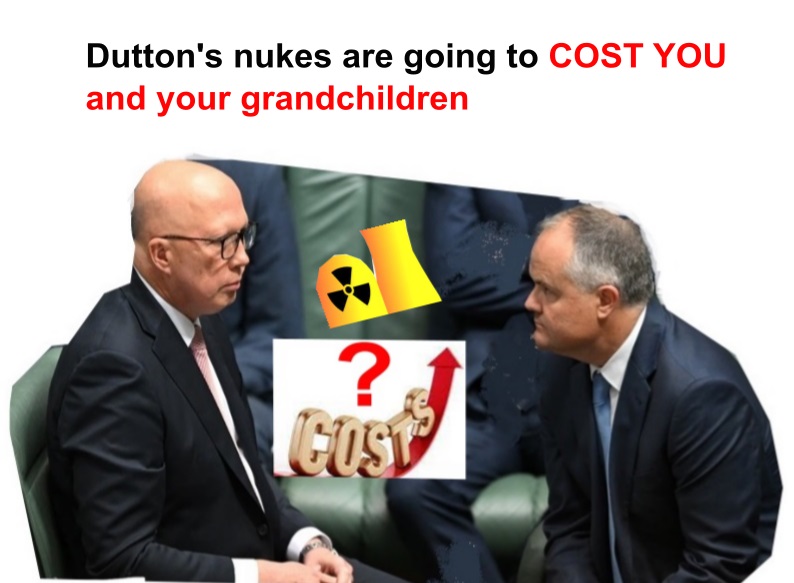
The Climate Change Authority’s latest report confirms the risks of delaying a clean energy future in favour of nuclear power will lead to higher emissions and increased costs for households.
The report warns that the Coalition’s nuclear energy proposal could add a staggering 2 billion tonnes of emissions while increasing costs for households, resulting in Australia missing its 2030 emissions targets and delaying the transition to clean energy until 2042.
“This report confirms our worst fears – betting on nuclear power isn’t just expensive, it’s a lose-lose for Australian families. Every year we waste waiting on nuclear means higher power bills and more emissions,” Jo Dodds, spokesperson for Australians for Affordable Energy, said.
“The Climate Change Authority has done the hard numbers. They’re telling us that going down the nuclear path means we’ll miss our 2030 targets and won’t get clean energy until 2042. That’s an extra 2 billion tonnes of emissions while we sit around waiting for nuclear plants that might never show up.
“Guess who pays for the delay? Everyday Australians – through their power bills and taxes.”
Crucial questions about the impact nuclear power will have on household budgets remain unanswered.
“Australians still need answers to fundamental questions: What is it going to cost? When will it actually deliver? What happens to our bills while we wait? What happens to our emissions?” Ms Dodds said.
“Families are already struggling with the cost of living and they can’t afford to bankroll expensive nuclear experiments that won’t deliver for decades all while their bills continue to rise. Every year we spend chasing nuclear dreams instead of getting on with real solutions is another year of higher costs for Australian households.
“We need to have a serious talk about our energy choices. This report makes it crystal clear – nuclear means paying more to get less and waiting longer to get it.
“Australian families deserve better.”
Australians for Affordable Energy is urging policymakers to focus on practical, cost-effective energy solutions that can deliver cleaner, more affordable power right now – not in decades.
Australia’s new chief scientist open to nuclear power but focused on energy forms available ‘right now’
Prof Tony Haymet says nuclear industry will need to ‘rebuild their social licence’ while noting solar and wind are ‘incredibly cheap’.
Josh Butler, Guardian 28th Jan 2025 –
Australia’s new chief scientist has said he is open to the prospect of nuclear power playing a role in the country’s energy mix, but remained focused on forms of energy that were “available to help us right now”.
On his first day in the job, Prof Tony Haymet said new energy-intensive technologies like artificial intelligence could be powered by renewables, but that he thought serious discussions about nuclear in Australia were likely to be years away.
“If you go back and look at Chernobyl and Three Mile Island and so on, there wasn’t enough transparency and openness. I think the nuclear industry has accepted the fact that they have to rebuild their social licence to operate,” Haymet told a press conference when asked about small modular reactors (SMRs).
“You know, for the next chief scientist in 2030 or 2040, I think you can re-ask your question.”
Haymet said Australia shouldn’t “rule out any energy source” but said new technologies, like AI datacentres, would require much more power in the short term.
“So I’m looking at the slate of energies that are going to be available to help us right now. If we wait until we perfect wave energy or nuclear fusion, or some other source of power, we’re going to miss the bus,” he said……………………………………….
The CSIRO’s GenCost report in December reaffirmed that electricity from nuclear energy in Australia would be at least 50% more expensive than power from solar and wind, backed up with storage. Electricity from SMRs would be significantly more expensive again, with the report rejecting opposition claims that nuclear power plants could be developed in Australia in less than 15 years.
The former chair of the Antarctic Science Foundation and high-level working groups on climate change, Haymet has also held senior roles at the CSIRO, with a particular focus on oceans.
Amid a heated debate on nuclear energy, sparked by the Coalition’s pledge to build conventional large reactors and SMRs – a developing technology that does not exist anywhere on a commercial basis – Dutton and his shadow ministers have been strongly critical of scientific reports and experts who have cast doubt on the viability of an Australian nuclear power industry.
Energy experts have noted the Coalition’s modelling forecasts much lower consumption of energy in Australia than Labor’s renewables-focused energy policy, which the treasurer, Jim Chalmers, claimed would see a $4tn hit to Australia’s economy. The Coalition modelling does not forecast a reduction in power bills and the Coalition senator Matt Canavan admitted the plan was “unachievable”.
At the press conference alongside the science minister, Ed Husic, Haymet strongly backed his former colleagues in the CSIRO.
“You may not be surprised to hear that I think the CSIRO report is a very fine piece of work. I don’t know of any mistakes in it, and if you do, please let me know. Having been inside CSIRO, I see the care and the diligence that goes into these reports,” he said. https://www.theguardian.com/australia-news/2025/jan/28/australia-nuclear-power-plan-tony-haymet-chief-scientist
Peter Dutton’s “always on” nuclear power is about as reliable as wind and solar – during a renewables drought
France’s nuclear fleet has particularly struggled in recent years. According to the World Nuclear Industry Status Report, its 55 reactors were subject to outages lasting between five days and a year in 2023 and only one reactor, Saint Alban-2, produced all year round.
Renew Economy, Royce Kurmelovs, Jan 14, 2025
One of Peter Dutton’s key selling points for nuclear power, its “always on” reliable generation of electricity, has been put to the test in a new analysis, which found that a fleet of modern nuclear plants is, on balance, about as reliable as a fleet of wind and solar farms – if those wind and solar farms were in the midst of a very bad renewable energy drought.
The analysis by David Osmond, a senior wind engineer who runs weekly simulations of Australia’s main electricity grid, compared outages experienced by solar and wind during renewables droughts – known as “dunkelflaute” – to outages in nuclear energy generators.
For the renewable energy side of the equation, Osmond draws on Griffith University modelling of 42 years of synthetic wind and solar data quantifying the risk of renewable energy droughts to Australia’s future energy supply.
The nuclear side of the equation is based on Osmond’s own analysis of seven years of daily nuclear fleet data since 2018 from European countries with four or more reactors.
Noting there has been more investigation into renewable droughts and the reliability of solar and wind in Australia than nuclear, Osmond sought to examine the “worst case scenario” for nuclear – periods with simultaneous issues with multiple reactors.
Using fleet data grouping outage periods into peak and off-peak months, Osmond found that during its “worst week” in any month, nuclear experienced a reduction to 8% to 70% of average output, and 44% to 77% in peak months – comparable to the “worst week” experienced by renewable energy over the modelled 42 years.
Nuclear isn’t 100% reliable,” Osmond writes on BlueSky. “Multiple outages can occur simultaneously, even during peak demand months.
“Analysis of European nuclear data suggests weekly fleet output during peak season can drop below 60% of average levels. This is comparable to the effect of a bad renewable drought on wind+solar generation in Australia.”
Osmond says that when it comes to wind and solar, the data shows “the worst week for wind and solar is likely to be about 50 percent of the long-term average” making the two technologies roughly comparable.
“I found for the countries that I studied, most of the nuclear outages in the last eight years of data I looked at was equivalent to a renewable drought in Australia,” Osmond said.
“When I looked at the data for nuclear, the worst week for nuclear in peak season, for most countries, seemed to be about 60 percent of average.”…………………………………………………………
Nuclear outages can occur either on a schedule where maintenance needs to be carried out, or may be “forced” either through the discovery of a problem, a technical fault, an emergency or an external factor that knocks one or several reactors offline, sometimes simultaneously.
Some reactors like Finland’s new Olkiluoto 3 – a reactor that took 18 years to build and forced its French developer to be bailed out – have experienced technical faults that have periodically sent it offline. And According to Professor M.V. Ramana, a physicist from the University of British Columbia and author of the book Nuclear is Not the Solution, says that nuclear plants are also vulnerable to climate impacts.
“Nuclear plant operations are being challenged by hurricanes, forest fires – things of that sort,” Professor Ramana says. “But that trend has not led to as dramatic declines in power capacity as was the case in France.”
In August 2022 a combination of drought and heatwaves forced half the reactors offline as the water in rivers warmed to the point where it could not be used for reactor cooling.
“Nuclear plans will need an external source of water for cooling,” Professor Ramana says. “The challenge is much more for nuclear power plants that are inland where they have to rely on lakes or rivers, where the temperature can go up much more in summer.
“And that’s what we’re seeing in the case of countries like France and Western Europe in general. Even the French authorities expect that this problem is going to get worse, so they are making plans for that.”
France’s nuclear fleet has particularly struggled in recent years. According to the World Nuclear Industry Status Report, its 55 reactors were subject to outages lasting between five days and a year in 2023 and only one reactor, Saint Alban-2, produced all year round.
The report found that on any given day, at least 11 units were offline across all of France with the highest number of reactors shut down on the same day reaching 28. When it came to partial days offline, 19 or more units were offline for least part of the day for 252 days, or 69% of the year.
Though nuclear has a higher capacity factor – the ratio of energy output over a given time – than solar and wind, Osmond says much of the discussion of nuclear in Australia has falsely assumed it is 100% reliable.
These assumptions will skew any modelling, he says, as they do not account for what it takes to manage the variability of both technologies.
“If you want a solution that doesn’t rely on gas, you can overbuild renewables,” Osmond said. “If you build renewables to cover twice your annual needs, that means even on your worst year, you’ll have enough generation.”
“Likewise, if you wanted to rely entirely on nuclear you’d need to overbuild your nuclear so that if you have multiple simultaneous outages, you can make sure you’ll have enough power during those occasions or where power is extreme.”
“Of course having 50% overbuild of nuclear is far more expensive than 100% overbuilding of renewables.” https://reneweconomy.com.au/peter-duttons-always-on-nuclear-power-is-about-as-reliable-as-wind-and-solar-during-a-renewables-drought/
1 This month
To see nuclear-related stories in greater depth and intensity
– go to https://nuclearinformation.wordpress.com/


 Antinuclear