This talk of nuclear is a waste of time: Wind, solar and firming can clearly do the job

RENEW ECONOMY, David Leitch, Dec 30, 2024
Australia’s economic future will be at risk if we stop the wind and solar construction to build nuclear. Big energy-intensive manufacturing industries such as aluminium smelters would likely be forced to close, and the risk of blackouts from forcing coal generators to stay on line would be huge.
Wind, solar and firming can clearly do the job. Every hurdle from reliability to inertia has been overcome. There is no need and no reason to change course. Certainly economics is not a reason.
• Makes blackouts more likely by forcing coal stations, already expensive to maintain, that require government support and are increasingly unreliable to go for much longer. The idea of replacing the coal plants with gas while we wait is likely not very realistic, largely because gas plants themselves are expensive and hard to permit and because if asked to run in shoulder mode they are not very efficient and require lots of gas. And right now we are already looking at importing LNG.
If the nuclear plants are 5, 10 or 15 years late, as is entirely possible, it would require heroic assumptions to see the coal fleet managing the gap.
More to the point it’s a completely avoidable and unnecessary risk. Australia is well set on its transition path.
There are some inevitable cost up and downs but no show stoppers have been identified. Every hurdle from reliability to inertia has been overcome. There is no need and no reason to change course. Certainly economics is not a reason.
• Increases emission costs by between A$57 and A$72 bn (NPV @ 7%) even in the very unlikely event the plants are built on time as compared to the present ISP.
• The nuclear plants stand a good chance of being well over budget and late. That’s because:
° Globally that is often but not always the case. By and large the nuclear industry is one of the most likely global industries to be late and over budget.
There is no real nuclear expertise in Australia;
° It will have to be more or less forced on an industry set on a different course;
° It will likely be government owned and developed and the record on that in Australia is poor;
° In general for most capital intensive industries there is an Australia cost premium relative to global averages. This in the end will disadvantage us compared to other countries in terms of the cost of energy.
• Likely will destroy the value of CER (consumer energy resources – rooftop solar, home batteries and EVs) in Australia.
• Will result in the temporary halt in the transition to a firmed VRE system which is already 20 years down the track with a penetration rate of say 50% within 18 months.
• Equally the LNP and by comparison Frontier don’t appear to have done the work or to understand the demand forecasts. The LNP bleat on about EVs, but the real differences are hydrogen, large industrial loads and business demand. One suspects that the aluminium industry in Australia will die if it has to wait for nuclear.
• Finally the old concept of baseload is changing, but in my opinion firming costs are cheaper the bigger the portfolio. This implies firming should sit at least with a large gentailer or possibly with a State or even Federal Govt.
The existing wind and solar build out is working, and it’s far too risky to rely on old coal plants
The biggest, by far, reason for the electricity industry to push back against the ideological LNP Nuclear plan is its far, far too risky.
Australia has a plan to decarbonise. It’s not a perfect plan, no plan survives first contact, but it’s capable of and is in fact being achieved. We are roughly already at 40% VRE. We have at least 20 years experience at developing and integrating wind, solar, behind the meter assets and batteries.
We know the issues around transmission and social license and cost and reliability. There are well developed plans for each issue and a wealth of industry finance and expertise.
The assets to take us from 40% VRE to 50% are already under construction, some are just starting to enter service.
The insurance finance to add another 12 GW of VRE and 4 GW of firming assets (essentially batteries) is already either awarded or in tender through the CIS.
The LNP wants to bring this to a crashing halt, keep our few, increasingly ageing and unreliable coal stations going for another 20 years while it starts up an industry in which Australia has zero comparative advantage and zero experience.
Only in politics could conmen say things with such a straight face. The risk of the coal stations failing is very high. Other stations like Eraring have full ash dams. Yallourn is already on Government support, Vales Point and particularly Mt Piper have coal supply issues………………………………………………………………………..
The errors and sleights of hand in Frontier’s nuclear v ISP analysis………………………………………………………………………………………………………………..
Govt funded and managed likely increases risks very significantly
As far as I know the electricity industry in Australia has expressed zero interest in nuclear and obviously some parts of the industry that are busy building wind and solar will be actively opposed. Clearly this in itself is likely to raise costs. That is, the nuclear plants will have to be forced on the industry to a greater or lesser extent.
Again although the plans are very vague the understanding is that they will Goverment funded and owned. Leaving aside all questions of ideology, in my opinion having the Goverment manage the program rather than industry means that there will be less expertise at almost every stage.
I could rant on about this, the mind truly does boggle a bit at the possible negative outcomes, but perhaps it is sufficient to say that having the Goverment step into this area where it has no expertise raises the odds of cost and delay outcome substantially…………………………………………………………………………………………………………………….. more https://reneweconomy.com.au/this-talk-of-nuclear-is-a-waste-of-time-wind-solar-and-firming-can-clearly-do-the-job/
Look at the networks, not nuclear, to reduce energy bills
RENEW ECONOMY, Tristan Edis, Dec 19, 2024
The next election is shaping up to become a competition between politicians about which type of big power stations – nuclear or renewables – will help lower or drive-up power bills.
The fact that paying for big power stations makes up only a third of the power bill will probably be completely missed by both sides of politics. If politicians really want to help households lower their energy bills, there’s better places to go looking than the next big power station.
One of the places they seem to always glance past are the energy network monopolies. I suppose politicians can’t quite fathom how they might be able to turn this into a vote winner. But if you genuinely want to help lower energy bills you can’t afford to look past them.
As I explained in a prior article, the monopoly businesses operating our electricity networks have over 2014 to 2022 managed to manipulate the regulations and the regulator to generate profits 70% greater than the regulator had originally thought they’d capture.
This came on the back of a huge blow-out in expenditure and incredible shareholder returns for many of these networks over the 2008 to 2013 period.
Critically, electricity networks have not delivered these increased profits through better efficiency, with total factor productivity of networks today being worse now than it was back in 2006 when the Australian Energy Regulator began measuring productivity.
In terms of gas networks the story is worse, with the Regulator signing off on prices that gave these businesses profits 90% greater than the Regulated had anticipated.
What’s absolutely staggering is the energy network monopolies are mounting a lobbying campaign to extend their monopoly reach beyond poles and wires and into distributed batteries, electric vehicle charging and the management of household electrical devices.
Yet these technologies can be provided to consumers at lower cost via competitive markets and simply don’t need to be delivered or controlled by network monopolies.
The reality is that we can’t rely on the Australian Energy Regulator to keep these monopolies in check. Instead our best hope to address networks’ excessive charges is likely to be competition.
By shifting away from gas appliances to electric alternatives we can minimise our reliance on gas pipelines.
That, of course, still leaves us reliant on electricity networks. In this case though there is also the potential for competition through use of a combination of solar, batteries and energy efficient appliances and homes.
Also, if electric vehicles are charged during the daytime and outside evening demand peaks they can vastly improve utilisation efficiency of network capacity.
Even better, the technology is available for these vehicles to discharge power during peak demand periods to compete against networks augmenting capacity and large peaking power plants.
Energy networks’ lobbying campaign seeks to suggest they just want to help us make effective use of these technologies to address climate change. Yet effective use of these technologies entails less demand for network capacity.
Why would they want to undermine their own revenue base? And why should we turn to a monopoly to roll out technologies which could be procured competitively from businesses that are vastly more experienced in providing these technologies to consumers than the networks?
Where this is most insidious is the concept of so called “community batteries.” Networks are keen to market “community batteries” – which in reality are network monopoly-owned batteries – as a more efficient and fairer option than households adopting their own battery. This is based on the claim that by building bigger batteries, networks will be able to capture economies of scale to deliver batteries more cheaply.
But as I’ve explained previously, and now corroborated in data gathered by the ARENA, it’s just not true. Network-provided batteries are significantly more expensive than household batteries.
Yet this is not their only area of poor performance in supporting the use of distributed energy solutions…………………………………………………………………………… more https://reneweconomy.com.au/look-at-the-networks-not-nuclear-to-reduce-energy-bills/?fbclid=IwY2xjawHYFmJleHRuA2FlbQIxMQABHRWjory7UuJpQrd_U1wReQbbc2h5lgpmbHM
Solar switch off: Dutton’s nuclear plan amounts to declaration of war against household energy systems
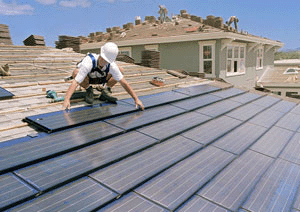
Giles Parkinson, Dec 16, 2024, https://reneweconomy.com.au/solar-switch-off-duttons-nuclear-plan-is-a-declaration-of-war-against-household-energy-systems/
Did you notice the headlines when Australia’s energy regulators gave notice of new protocols that would allow rooftop solar systems to be switched off – maybe once a year in an emergency to ensure that the lights stay on?
Imagine, then, the potential response to news that rooftop solar system might have to be switched off, or curtailed, on an almost daily basis – just to accommodate the 14 gigawatts of nuclear power that the Coalition says it intends to jam into the Australian grid should it be returned to government.
That is the reality from Peter Dutton’s focus on large centralised, baseload power systems, which, to be successful, must put a stop of the switch towards distributed and flexible consumer energy resources, much of it owned and operated by households and small businesses.
The Dutton nuclear plan has already shocked many with its cavalier disregard for climate science, grid engineering, energy reliability, and the costs to the country and consumers.
It says it is unable to say if or when its power plan might deliver a reduction in energy prices, but the biggest shock of all might be what it means for households, and the consumer energy resources (CER) that they might want to own – rooftop PV, home batteries and electric vehicles.
Basically, it assumes that the growth of CER and the electrification of home heating, cooling and other gas use is stopped.
The dominance of the grid is retained, initially by the big utilities who have so comprehensively screwed consumers in recent years, and then by big government, who will have to be the owners of the nuclear plants because no private investor will risk its money on the technology.
Some in the industry are describing this as an effective declaration of war against household solar and consumer resources on behalf of the fossil fuel industry and nuclear ideologues – a triumph of big government over the rights and opportunities of individual households and businesses.
Federal energy minister Chris Bowen has seized on this, and held a press conference over the weekend with the head of the Smart Energy Council to underline the fact that rooftop solar systems may have to be heavily curtailed – switched off, in effect, on a daily basis to accommodate Dutton’s nuclear plans.
This is supported by the likes of Tesla, which in a late submission to the federal nuclear inquiry sent on Friday says that rooftop PV will have to “severely curtailed” to accomodate nuclear power. Tesla says there is no room on the main grid for more than 2 gigawatts of “baseload power”.
But, first, a recap on what the Coalition has said it will do to accommodate its proposed fleet of 14 gigawatts of nuclear power capacity.
It has made clear it will scrap Australia’s near term Paris climate target, and delay any meaningful emission cuts until the 2040s because it wants to keep burning coal and gas, rather than installing wind, solar and storage.
It has vowed to cancel at least half of the proposed offshore wind zones, and rip up contracts signed by the government.
The Coalition’s own modelling suggests that the roll out of large scale wind and solar will be slowed to a crawl, but it offers no explanation as to how energy reliability will be maintained when it seeks to force two thirds of the country’s ageing and increasingly decrepit coal fired power station to stay on line until the 2040s.
We now know it will cost NSW up to $450 million to keep half of the 42-year-old Eraring coal generator on line for an extra two years – so how much will it cost to extend the life of an entire fleet of similarly aged generators, some even older, for another decade? The Coalition doesn’t say.
The Coalition claims nuclear will cost $264 billion less than Labor’s renewable focused plan. But its own modelling makes clear this is not the case, and that number comes from comparing two completely different scenarios.
And on a like for like basis, the difference is much smaller, just $64 billion, and that number is rubbery at best is only because it models 13.2 GW of new nuclear built at a cost of just $140 billion, even though it is costing the UK, with a nuclear arsenal and long established civilian nuclear industry, $92 billion to build a single 3.2 GW nuclear plant.
The Coalition has refused to say how, or even if, consumer prices will fall given the greater dependence on expensive and polluting fossil fuel generation over the next two decades, followed by the construction of the most expensive source of generation, nuclear.
But its own modelling depicts a dystopian future that should concern all households. It assumes significantly less electricity production, suggests a much smaller economy and a slow take up of electrification and electric vehicles.
This is critically important. Almost every energy expert in the country predicts that more than half of all electricity production by the 1940s will come from consumers themselves – through rooftop solar, smart appliances and supported by household batteries and EVs that will provide crucial support for the grid.
In the Coalition’s plan, this does not exist.
And the reason for that is quire simple: If the Coalition’s fleet of nuclear power plants are to deliver the modelled 38 per cent of all power generation, they will need to be operating at very high capacity factors, meaning they will seek to be “always on”.
That means generating at or near 13 GW at all times. Even in the middle of the day, when rooftop solar has been eating into demand to such an extent that minimum “operating” demand levels – the demand that must be met by large scale energy sources – has already fallen to 10 GW.9
Another 50 GW of rooftop solar is predicted by the time that the Coalition’s nuclear power plants are built.
Federal energy and climate minister Chris Bowen says this would result in rooftop solar being curtailed about 67 per cent of the time – or several hours a day, every day, on average, and a lot not being installed.
“What we would see is solar, Australia’s booming solar industry stopped in its tracks,” Bowen said.
“Analysis shows that more than 60% of the rooftop solar operating during the day would have to be switched off in that circumstance, couldn’t feed into the grid.
“More than 60% on a regular basis, would just not be able to operate and feed into the grid at any particular time.
“Now that undermines the fundamental economics of the rooftop solar industry, which is developed in Australia in no small part due to the Renewable Energy Target the previous Labor government put in place, which the Liberal Party opposed, which Tony Abbott tried to abolish, and which they still don’t believe in.”
SEC chief executive John Grimes agreed, noting that there are 4 million households and small business owners saving money with rooftop solar.
“This is a solar stopper policy. Peter Dutton wants to take that away from Australians, and worse than that, he wants to take away the pathway for the 4 million more who want to get solar on their rooftop.
“What we should be doing is backing in the government scheme to make solar cheaper for all Australians. We should be putting solar on every rooftop, because that is the pathway to cost of living reductions.”
Others agree. Tesla, the Australian market leader in electric vehicles and household batteries, says rooftop solar will have to be “severely curtailed” if nuclear is jammed into the grid. It says there is barely room for 1 GW of baseload in big grids such as NSW and Queensland, and no room at all in South Australia and Western Australia.
“Any large-scale build out of this type of inflexible baseload supply will therefore be impacted by minimum generation levels, resulting in either low-capacity factors for the nuclear plants and/or unit decommitment (bidding out of the market), or severe curtailment of cheaper rooftop solar and renewables,” Tesla writes
Dutton’s obsession with baseload, and his failure to understand the flexibility and advantages of consumer resources and new technologies, was revealed on Friday when he sought to demonise rooftop solar by claiming it could not charge an EV and a household battery at the same time.
Of course, that is complete nonsense. But it continues a disturbing theme among the Coalition front bench, who have taken turns to mock EVs, big batteries, and in Duttons’s case even make fun of the fact that climate change is threatening the very existence of low-lying Pacific nations.
Clean Energy Council chief Kane Thornton says Dutton’s plan will be a massive shock and concern to investors who have invested $40 billion into large-sale renewable energy in Australia since 2020.
“A nuclear-powered energy grid would also be a disaster for the four million Australian homes that have already installed a rooftop solar system as a way to lower their power bills,” Thornton said in a statement.
“These systems would have to be switched off regularly if Australia was to move to inflexible nuclear power.
“This would be absurd, forcing the cheapest form of generation on people’s homes to turn off so that the most expensive could continue to operate around the clock.”
Biggest losers from Coalition’s nuclear plan will be Australia’s 4 million solar households, industry says
Sophie Vorrath, Dec 14, 2024, https://reneweconomy.com.au/biggest-losers-from-coalitions-nuclear-plan-will-be-australias-4-million-solar-households-industry-says/
Introducing nuclear power into Australia’s energy mix would be a disaster for the climate and for electricity prices and for renewable energy investors – but the biggest loser would likely be Australia’s four million-and-counting solar households.
Reactions to the release of the Coalition’s long awaited nuclear power policy costings have flooded Renew Economy’s inbox on Friday, ranging from disbelief and astonishment to anger, frustration and dismay.
“Promising Australians a doubling of their power bills in a cost of living crisis is the worst Christmas present ever,” Smart Energy Council chief John Grimes said.
Introducing nuclear power into Australia’s energy mix would be a disaster for the climate and for electricity prices and for renewable energy investors – but the biggest loser would likely be Australia’s four million-and-counting solar households.
Reactions to the release of the Coalition’s long awaited nuclear power policy costings have flooded Renew Economy’s inbox on Friday, ranging from disbelief and astonishment to anger, frustration and dismay.
“Promising Australians a doubling of their power bills in a cost of living crisis is the worst Christmas present ever,” Smart Energy Council chief John Grimes said.
“To create space for inflexible nuclear power plants ramming energy into the grid, millions of household solar systems will be the first casualty,” Grimes said in September when the analysis was released, noting that solar is already being switched off in South Australia when it exceeds demand.
“Nuclear reactors cannot be switched off, meaning they continue forcing power into the grid even when solar is literally producing free electricity for 4 million Australians,” he added on Friday.
“Nuclear and solar do not mix, and it will be Australians who have to pay the price for that.”
The Smart Energy Council has also slammed the Coalition’s costings of its nuclear plans, describing every single line as contestable.
“The renewable energy transition will cost a fraction of the real world cost of nuclear, is largely being paid for by private capital, and is forming the cheapest, cleanest and most reliable power grid,” Grimes says.
“The renewable energy transition will cost a fraction of the real world cost of nuclear, is largely being paid for by private capital, and is forming the cheapest, cleanest and most reliable power grid.”
It’s a common criticism.
“Peter Dutton’s nuclear numbers have more holes than Swiss cheese, leaving out big ticket items like the costs of dealing with radioactive waste,” says the Climate Council CEO Amanda McKenzie.
Nicki Hutley, Climate Councillor and esteemed economist, said on Friday that it was “shocking” to see the the LNP “knowingly mislead Australians on the true costs of nuclear.”
“If we’re going to debate the economics of energy it must be based on real-world evidence–not dodgy modelling that obscures the real price tag.”
“Nuclear doesn’t add up for Australia. …International experience has proven that nuclear is a financial black hole, with the average project costing more than double its original estimate, and projects like the UK’s Hinkley Point C costing triple. We’re already seeing renewables deliver power faster and at lower cost today.”
Clean Energy Council chief Kane Thornton says Dutton’s plan will cap renewable energy at 54 per cent by 2050, despite the nation being on track to hit 48 per cent by the end of next year.
“This new target would represent a dramatic slowdown in the installation and investment of renewable energy across Australia and will be a massive shock and concern to investors who have invested $40 billion into large-sale renewable energy in Australia since 2020,” Thornton said on Friday.
“A nuclear-powered energy grid would also be a disaster for the four million Australian homes that have already installed a rooftop solar system as a way to lower their power bills. These systems would have to be switched off regularly if Australia was to move to inflexible nuclear power.”
“This would be absurd, forcing the cheapest form of generation on people’s homes to turn off so that the most expensive could continue to operate around the clock,” Thornton said.
Guillame Roger, an Associate Professor of Economics at Monash University, says the Coalition’s plan “objectively hovers between fantasy and hopeful naivete.”
“First, SMR do NOT exist today. There is not even a prototype of them. So we have absolutely no idea what they really cost. Second, the cost figures are hopelessly understated.
“The last nuclear plant built in the Western world today (Flamanville 3 in France) is 10 billion Euros over budget (at 13.2 billion euros, so A$20 billion total) and 12 years behind schedule; construction started in 2007.
“There is no mention of the maintenance costs of these nuclear plants. The refurbishment cost of the nuclear fleet in France (58 units) is estimated to cost 50 billion Euros over a decade (over A$75 billion), and is likely an understatement.
“Last, there is no actual model of the interaction of nuclear baseload and renewables in the wholesale market. Nuclear is even more rigid in its operation than coal.
“Today we routinely see negative prices in the NEM when renewables produce. Old coal-fired power plants that are already written off eat these intraday losses. But how will nuclear pay for itself then?,” Roger asks.
John Quiggan, a professor of economics at the University of Queensland, says the nuclear part of Dutton’s energy strategy is just a distraction, and will probably never be built.
“What matters is the disastrous decision to abandon our Paris commitments, keep coal going as long as possible and then rely on gas. A Dutton government can and will take immediate steps to implement this decision,” Quiggan says.
Associate Professor Roger Dargaville from Monash University says the biggest flaw in the coalition’s is that it completely fails in the primary objective to reduce carbon emissions quickly.
“For nuclear to be part of the mix, coal-fired generators need to be kept going well beyond their current scheduled shut down timetable, resulting in carbon emissions for the electricity sector way above the target set by the current government (i.e. 82% renewables by 2030),” Dargaville said on Friday.
“To meet Australia’s UNFCCC Paris commitments, the electricity sector must do most of the heavy lifting in the next decade while transport and industry will take longer to decarbonise.
“The plan presented by the coalition fails to acknowledge this simple fact, and therefore any costings which it comes up with are not a relevant or useful comparison.”
The Queensland Conservation Council says its concern is the impact on industry, regional communities and solar households in the state.
“Queensland industry is already turning to renewable energy backed by storage to remain globally competitive. Rio Tinto is tendering for firmed renewables to power their Gladstone smelter,” said QCC deputy director Anthony Gough.
“This nuclear fantasy is designed to delay the renewable roll out, and in doing so it could devastate regional communities if industry closes shop because they can’t access the affordable clean energy they need now.
“Our research found that just building one nuclear power plant in Queensland would mean we have to switch off 45,000 rooftop solar systems every day to make room in the grid.”
Sophie is editor of One Step Off The Grid and deputy editor of its sister site, Renew Economy. She is the co-host of the Solar Insiders Podcast. Sophie has been writing about clean energy for more than a decade.
6 million have solar and will vote
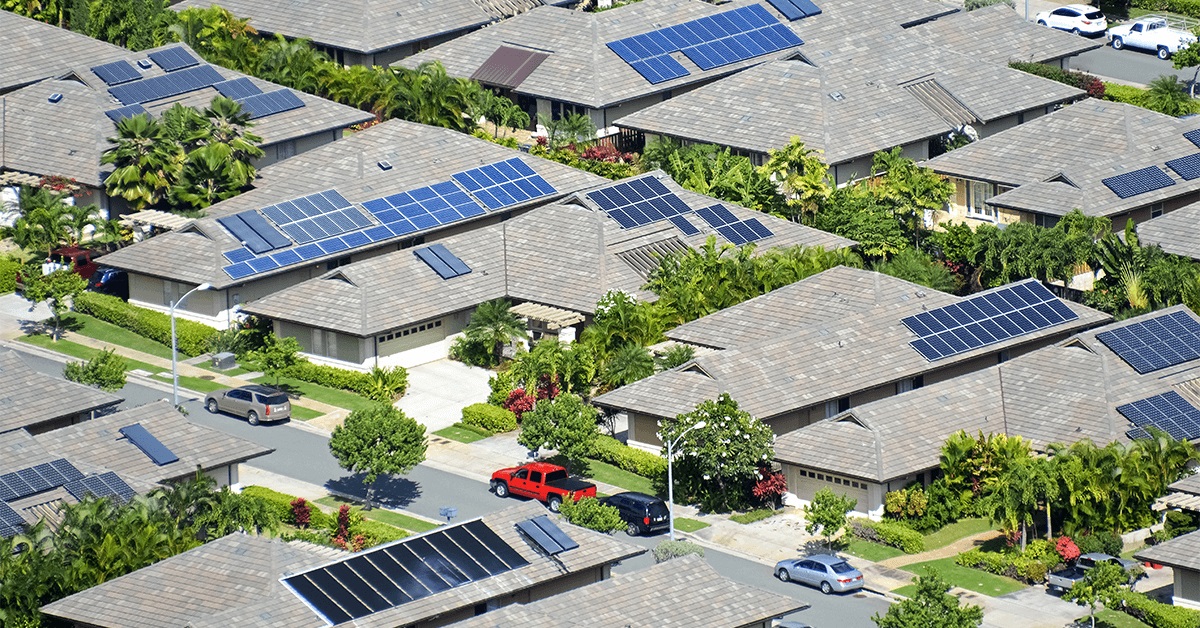
The signature [nuclear] Coalition policy for the 2025 election will be a huge government-owned energy monolith.
The overall costs will be borne by taxpayers because the publicly owned reactors will bear them. But the overall profits will be made by the private sector which will queue up for the construction contracts and whose profits will balloon as the costs of construction inevitably and uncontrollably blow out.
the real aim of the exercise is not to produce the cleanest energy at the lowest cost, but to keep the profits of the fossil industry flowing for as long as possible.
Crispin Hull, 17 Dec 24
Opposition Leader Peter Dutton’s announcement on nuclear energy last week contained a welcome development. For the first time since about 1989, the Coalition has acknowledged that only governments can do some of the really big-ticket items.
Since about 1990, the Coalition has said, Private Sector Good, Public Sector Bad. But with the program to build seven nuclear power stations, the Coalition acknowledges that only the public sector can do it.
The publication of Fightback! by then Opposition Leader John Hewson in 1992 was the touchstone of conservative policy: the private sector was more efficient and could do things quicker and better than the great big bloated public sector full of lazy, box-ticking public servants. Taxpayers and consumers would be much better off, they argued.
If you can find it in the Yellow Pages, they said, buy it there. Or these days, Google it. Don’t let the Government do it, they said. The Government is not the solution to the problem. The Government is the problem, as Ronald Reagan said. Get government out of the way, and the private sector will provide the solution.
So, what has happened now? The signature Coalition policy for the 2025 election will be a huge government-owned energy monolith.
Gulp.
That will require the unlearning of three decades of conservative policy.As it happens, though, much of that policy was a cruel hoax. Far from being cheaper and more efficient, the neo-liberal conservatives did not – to use market parlance – factor in two critical elements of private-sector contracting: fraud and profit gouging.
Since about 1990 in Australia we have seen, through privatisation, a major shift of wealth and income up to the top two percentiles at the cost of people on middle income. From employees and small business to the managers and shareholders of big business.
In the 1990s, the neo-liberals (read, the Coalition) harped on about reducing the role of government, particularly government spending. It did not happen. Government spending remained at 38 percent throughout the 1990s’ privatisations and downsizing. All that happened was that the spending went from public health, education, and welfare into subsidies and tax breaks for the fossil-fuel industry, other big corporates, and private health, education and other providers.
Public spending remained stubbornly the same.
It will be the same with the nuclear reactors. The overall costs will be borne by taxpayers because the publicly owned reactors will bear them. But the overall profits will be made by the private sector which will queue up for the construction contracts and whose profits will balloon as the costs of construction inevitably and uncontrollably blow out.
Importantly, even though the Coalition is going for a massive program of government spending and ownership for its nuclear reactors, it has relied on a private firm of economists to do the costings. Surely, if such a massive spend and risk is to be undertaken by the public sector, you would want the public sector to do the costings.
As it happens, we have that. The CSIRO has costed and re-costed nuclear energy and come up with the same result: higher electricity bills and greater dangerous carbon emissions.
The private-sector costings, on the other hand, look like an exercise in: “These are the conclusions upon which we have based our facts.”
This is because the real aim of the exercise is not to produce the cleanest energy at the lowest cost, but to keep the profits of the fossil industry flowing for as long as possible.
However, it is an electorally risky exercise. Not because a generally financially illiterate electorate will see nuclear as a white elephant, but rather because an ever-growing portion of the electorate has rooftop solar and know it pays off.
Further, in the unlikely event that nuclear goes ahead there will be times when the grid has too much power and domestic solar generators will be blocked from exporting their product to the grid because nuclear power stations cannot be turned on and off without enormous cost and difficulty.
That is going to annoy the owners of four million rooftop solar systems. It would be about as popular as taking away Medicare.
The electoral dynamics for nuclear are made worse for the Coalition because more than three million of those solar systems are on the roofs of stand-alone houses – in the very suburbs and regions which the Coalition hopes to take from Labor. That is about six million voters in an electorate of 18 million.
Moreover, those six million voters are proselytising about the value of solar, and lots of tenants and unit holders – hitherto shut out of solar – want to get a slice of the action sooner rather than later.
The big trouble with nuclear is spending vast amounts of public money with no electricity generation for at least a decade, more likely a lot more. Whereas every bit of renewable infrastructure generates from Day 1 and every battery stores from Day 1. Voters prefer the here-and-now to spending on something they might never see.
Nuclear is a matured industry. It not going to get much more efficient, if at all. Whereas the efficiency of solar, wind, and batteries continues on an upward trajectory well beyond previous expectations.
When you add electric vehicles, the renewables pay for themselves very quickly.
The task for Australia now is to reduce our reliance on our $30 billion a year of imported oil. And to reduce our reliance on $30 billion a year of thermal coal exports before the world does it for us. These are energy and national-security issues.
The Coalition’s decades-long nuclear program and Labor’s continued approval of coal mines fail to meet the urgency and magnitude of the national-security risks arising from climate change and fossil-fuel reliance.
A government’s first priority should be national security: not just from the threat of arms but the threats of disasters and supply-chain disruption.
We need politicians who think about the long-term security of their people not the short-term profits of big corporations and the donations which come from them.
The Coalition’s master plan: Bring large scale wind, solar and battery storage installations to a halt
Giles Parkinson, Renew Economy 13th Dec 2024,
If you really want to understand where the federal Coalition’s nuclear energy policy is taking us, and it’s real purpose, you need to turn to Figure 6 on the costings analysis provided by its consultant Frontier Economics.
This is the estimation of capacity installed on Australia’s main grid over the next 25 years. It is based on Coalition leader Peter Dutton’s preferred scenario – the one he used to emblazon the claims of $260 billion in savings across the front pages of the mainstream media on Friday.
Since this is the comparison that Dutton is seeking to sell to the Australian public, let’s look at in detail.
In contrast to the Australian Energy Market Operator’s Step Change scenario, the one that the federal Labor government has used for its policy and planning blueprint, the Coalition’s Progressive Scenario imagines a world still revolving around the concept of baseload power, of petrol and diesel powered cars, of gas-powered homes and a lot less renewables.
The scenario also assumes a lot less rooftop solar, which means that the Coalition is banking on consumers buying more from the grid, and paying money to big utilities such as the Hong Kong owned ElectricityAustralia.
But the Frontier model focuses only on large scale capacity and generation. For large scale solar it is a bad look: Just a doubling of capacity from 2025 to 2050. Given that 5 GW of capacity is likely already locked in, that reduces the rollout of large scale solar to a trickle over the next two decades.
For wind, the story is actually worse. The modelling assume no offshore wind at all, given the Coalition’s promise to scrap the newly declared offshore wind zones, and despite the legislated target in Victoria of 9 GW by 2040.
For onshore wind, Frontier puts the installed capacity in 2025 at 12.8 GW (according to OpenNEM it would be closer to 14 GW by the end of that year, and predicts the total rising to 28 GW by 2050.
Given that more than 5 GW of wind power is already locked in and under construction or contract, then that is a painfully slow build rate over the coming two decades.
It’s the Coalition telling local and international investors: “F*** off we don’t want you here:” And forcing consumers to buy more power from the big utilities at the same time.
Apart from scrapping the offshore wind zones, the federal Coalition has also promised to “rip up contracts” for large scale underwriting agreements written with the federal government.
According to the Frontier report , Large scale renewables total 49 per cent (wind 32 per cent and solar 17 per cent) by 2050, with nuclear likely to be 38 per cent, assuming that everything gets built in time. The graph above shows limited growth in each of wind, solar and utility storage after 2030.
“This … would represent a dramatic slowdown in the installation and investment of renewable energy across Australia and will be a massive shock and concern to investors who have invested $40 billion into large-sale renewable energy in Australia since 2020,” Clean Energy Council CEO Kane Thornton said.
“Australia has been a world leader in rooftop solar with over four million systems installed on homes and small businesses and an additional 300,000 plus systems being installed every year. The Coalition’s plan means millions of Australians would miss out on the chance to install solar.”
And Thornton also pointed out that it would not be good for the owners of rooftop solar. Currently, households are up in arms at the prospect of having their panels switched off – in an emergency – once or twice a summer.
In the Coalition’s nuclear plan, it would likely be a daily occurrence to ensure that the nuclear generators are “always on.”
“A nuclear-powered energy grid would also be a disaster for the four million Australian homes that have already installed a rooftop solar system as a way to lower their power bills,” Thornton said. “These systems would have to be switched off regularly if Australia was to move to inflexible nuclear power.”
Renewable energy trounces nuclear on generation costs

By Marion Rae, December 9 2024 – https://www.newcastleherald.com.au/story/8841115/renewable-energy-trounces-nuclear-on-generation-costs/
Power planners have found nuclear energy does not stack up for Australia even after considering new parameters, with large-scale solar and big batteries still the lowest-cost option.
In an official update released on Monday, as the federal opposition prepares to release its costings, scientists warn taxpayers will need deep pockets and a lead time of at least 15 years to develop nuclear energy generation.
For the seventh straight year, renewables were the lowest-cost of any new-build electricity-generating technology.
After a global energy crisis and equipment supply crunch several years ago, large-scale solar and lithium battery storage have weathered the inflationary period the best of all technologies.
The cost of batteries recorded the largest annual reduction, with capital costs down by one-fifth. Rooftop solar costs are also coming down.
Australian Conservation Foundation nuclear policy analyst Dave Sweeney said four million households with rooftop solar, energy producers and retailers have already voted with their feet and wallets.
“Nuclear is not right for Australia, which has some of the best renewable energy resources on the planet,” he said.
The GenCost 2024-25 Report released for consultation comes as the coalition pushes for an end to Australia’s nuclear ban and promises to have reactors online in as soon as 10 years if elected in 2025.
Opposition Leader Peter Dutton, eyeing sites in seven regional centres, has pledged to release the coalition’s nuclear costings “this week”.
But nuclear energy generation would be 1.5 to two times more expensive than large-scale solar, according to the analysis by the national science agency CSIRO and the Australian Energy Market Operator.
A one-gigawatt nuclear plant has a price tag of roughly $9 billion, but the bill would double to $18 billion as the first of its kind.
Operators would also need to establish new connection points to safely supply the national electricity grid, experts warn.
Advocates have demanded greater recognition of the potential cost advantages of nuclear’s long operating life compared to solar panels and wind turbines, but CSIRO chief energy economist and GenCost lead author Paul Graham said he found none.
“Similar cost savings can be achieved with shorter-lived technologies including renewables, even when accounting for the need to build them twice,” Mr Graham said.
Nuclear’s capacity factor – referring to how much of a year a reactor could operate at full tilt – remains unaltered at 53-89 per cent based on verifiable data and consideration of Australia’s unique electricity generation needs.
Nor would the often-touted United Arab Emirates example of a relatively quick 12-year nuclear construction time-frame be achievable here, the report found, because Australians require consultation.
“The facts are laid out very clearly in the GenCost report, and our government respects the work of CSIRO scientists and researchers and listens to that advice,” Industry and Science Minister Ed Husic said.
“Peter Dutton’s nuclear fantasy not only threatens to blow out the budget, it also threatens jobs and household power bills,” he said.
Energy Minister Chris Bowen said renewables remain the cheapest new-build electricity generation in Australia to 2050, as standalone assets and when also accounting for the required storage, transmission and firming.
The report is open for industry, community and political feedback until February 11.
CSIRO reaffirms nuclear power likely to cost twice as much as renewables
By energy reporter Daniel Mercer and National Regional Affairs Reporter Jane Norman, ABC News, 9 Dec 24
In short:
The CSIRO’s new GenCost report again says a nuclear power plant for Australia would likely cost twice as much as renewable energy.
Australia’s leading science agency also said nuclear power plants enjoyed relatively little financial advantage from their long lives and would run at a capacity similar to coal.
What’s next?
Opposition Leader Peter Dutton prepares to release the much-anticipated costings of the Coalition’s nuclear power policy this week.
Building a nuclear power plant in Australia would likely cost twice as much as renewable energy even accounting for the much longer life-span of reactors, according to a new report from Australia’s leading science agency.
In its latest economic analysis of the cost of building various energy projects, the CSIRO found nuclear plants enjoyed relatively little financial advantage from their long lives, which could be double a solar or wind farm.
It comes as the Opposition Leader Peter Dutton prepares to release the much-anticipated costings of the Coalition’s nuclear power policy this week. Mr Dutton has repeatedly said the policy would help bring down power bills, a claim challenged in this latest report.
The CSIRO regularly releases the GenCost report, which looks at the cost of Australia’s energy sources. It has consistently found renewable to be the cheapest option, despite a run of inclusions at the request of critics to make changes to the modelling — the latest being the life span of a nuclear plant.
And the agency said there was little evidence to suggest nuclear reactors in Australia would be able to benefit from running flat-out around the clock, noting they would face the same forces that are hollowing out the business case for coal.
The conclusions come after the CSIRO copped heavy criticism over a report in May that found Australia’s first nuclear power plant would cost up to $17 billion in today’s dollars and not be operational until 2040.
At the time, critics including opposition energy spokesman Ted O’Brien, who is spearheading the Coalition’s case for nuclear power, said the CSIRO analysis was flawed.
………………….an update of its GenCost report — which it carries out annually alongside the Australian Energy Market Operator — the CSIRO has largely stood by its earlier findings.
Nuclear’s long life ‘no advantage’
………………….CSIRO chief economist Paul Graham said even if a nuclear project could get a loan with a 60-year term, higher interest payments would wipe out many of the supposed gains.
……………………… low costs would be short-lived because nuclear reactors faced substantial refurbishment costs running into billions of dollars after about 40 years of operation.
For these reasons, Mr Graham said there was no “unique” cost advantage offered by nuclear compared with renewable energy projects backed by transmission lines and so-called firming technologies such as batteries and gas plants.
…………………………………………………………………………… No plant likely until 2040
On the subject of lead times to build nuclear, Mr Graham was steadfast.
He said suggestions Australia would be able to build its first nuclear reactor in sooner than 15 years seemed to stretch plausibility.
Nuclear proponents have pointed as an example to the United Arab Emirates, which went from having no reactors to commissioning its first project in 12 years.
Mr Graham said the UAE was, in many ways, a best-case scenario for the nuclear industry but the country was hardly comparable to Australia.
The UAE was an absolute monarchy with an autocratic style of government but Mr Graham said Australia was a democracy where policies were subject to many checks and balances.
Accordingly, he said overturning Australia’s ban on nuclear power, “planning, permitting and financing” a reactor would be a daunting task that took a lot of time.
……………………… “After we evaluated these three topics, potential for longer life, how often nuclear generates throughout the year, when we applied those numbers, we are still finding that large-scale nuclear would be 1.5 to 2.5 times the cost of generating from firmed solar and wind,” Mr Graham said.
……………………………….In line with its earlier findings, the CSIRO concluded renewable energy and the technologies required to back it up would be the cheapest way of meeting Australia’s future energy needs.
Energy Minister Chris Bowen said the CSIRO had accommodated the Coalition’s concerns and still found that Labor’s renewables-led approach was the cheapest way of overhauling the electricity grid.
He described the nuclear policy as “wildly optimistic”, in light of the report’s findings.
“[It] thought about those criticisms, analysed those criticisms and found that those criticisms don’t stack up,” Mr Bowen said.
………………………………..In what Mr Graham described as an “amazing achievement” in an inflationary environment, the CSIRO found battery costs had tumbled 20 per cent in the 12 months to June 30, while there had been back-to-back decreases of 8 per cent for large-scale solar.
Wind projects, by contrast, increased by 2 per cent last year following a whopping jump of 35 per cent in 2022-23 and an 8 per cent hike in 2023-24.
Cost estimates for miniature nuclear plants called small modular reactors (SMRs), meanwhile, were still by far and away considered the most expensive type of new energy project……https://www.abc.net.au/news/2024-12-09/nuclear-power-plant-twice-as-costly-as-renewables/104691114
Big batteries and EVs to the rescue again as faults with new nuclear plant cause chaos on Nordic grids
The Australian Energy Market Operator has already made clear that its biggest headache is managing the unexpected outages of big generators, such as the ageing and increasingly unreliable coal fired power stations that the federal Coalition wants to keep open while it waits for nuclear to be rolled out and commercial SMRs to be invented.
Giles Parkinson, Nov 19, 2024 https://reneweconomy.com.au/big-batteries-and-evs-to-the-rescue-again-as-faults-with-new-nuclear-plant-cause-chaos-on-nordic-grids/?fbclid=IwY2xjawGqC8xleHRuA2FlbQIxMQABHadLKvCjeIJudeDt86k27LkV53Q1FcfYmtcRSA_HGcWU1b1TmW7voTgIOA_aem_wwFpyxMordh4V_FbOJ3lfw
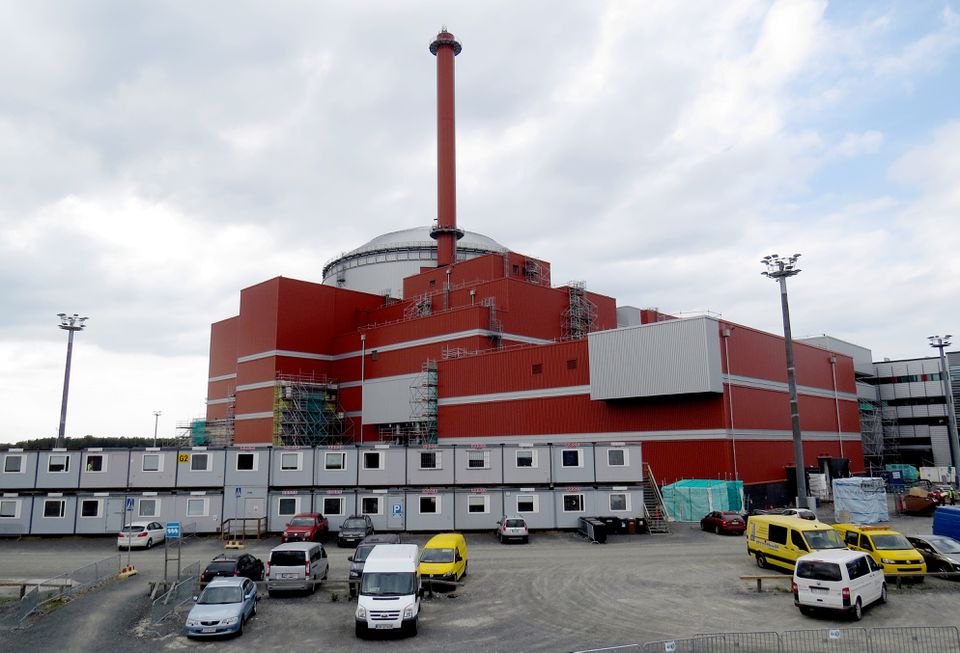
The newest and most powerful nuclear reactor in Europe that was delivered more than a decade late and nearly four times over budget is also proving to be a headache for grid operators now that it is finally up and running.
On Sunday, the 1,600 megawatt Olkiluoto 3 nuclear reactor tripped again, the latest in a series of faults and outages that have plagued the new facility and caused the market to reach out for back-up power to fill the gap.
Olkiluoto owner TVO says the reactor tripped on Sunday due to a turbine malfunction in the generator’s seal oil system. “The repair is taking longer than expected, and based on the current information, the plant is estimated to return to electricity production in approximately two days,” it said in a statement.
It’s not the first time the unit has failed. In October, it was forced to reduce power suddenly when one of the reactor’s control rods unexpectedly dropped into the reactor.
Its sister reactor, Olkiluoto 2, was off line for three weeks due to a faulty water-cooled rotor that had to be replaced and will run for months at reduced output because of the fear of failure.
But on Sunday, when the entire 1,600 MW capacity of Olkiluoto 3 was taken out of the system with no notice, it had a big impact on the grid, sending frequency plunging to 49.55 Hz, well outside the normal band.
“Olkiluoto is starting to compete with the Swedish nuclear power plant, Forsmark, for being the leading cause of major (loss of generation) disturbances in the Nordic power system,” writes Andreas Barnekov Thingvad, a Denmark-based trading systems director at battery company Hybrid Greentech.
He says his company contributed to the market response to stabilise frequency (see graph on original ) and the grid with its portfolio of batteries and virtual power plants, including electric vehicles.
Olkiluoto was finally connected to the grid last year, at an estimated cost of €11 billion ($18 billion) compared to the original budget of €3 billion. That cost blowout forced its developer, the French company Areva, to be bailed out by the French government.
When it did come online, nuclear boosters in Australia hailed it as being responsible for a steep fall in electricity prices. They failed to mention the fact that the reactor was more than a decade late, and Finland was forced to turn to highly expensive Russian gas in the interim to make up the shortfall.
Indeed, TVO, the reactor owner, says now that the new reactor has been commissioned, there is often too much production on the Finnish grid, and the reactor has to be dialled down, or curtailed, in much the same way that renewables often are. It is still not allowed to run at full capacity.
“The electricity system in Finland faces on an increasingly frequent basis a situation where more down-regulating production capacity is needed because there is too much production,” TVO notes.
The new reactor has also spent large periods off line (see the graph above from TVO’s most recent interim report). Its annual outage was supposed to last 37 days, but stretched to double that, to 74 days. TVO blamed “defect repairs and technical problems with inspection equipment took more time than had been planned.”
The point of this story is to highlight another bit of nonsense from the nuclear lobby, who like to claim that renewable sources such as wind and solar require back up, while nuclear does not.
That is simply not true, and the world’s big investment in pumped hydro in the 1970s and 1980s was principally designed to provide back up to nuclear reactors then in vogue. Ontario has ordered some of the world’s biggest batteries to support its nuclear fleet, most of which will be offline for several years for upgrades and maintenance.
Thingvad noted the multiple recent outages that had occurred in both the Finnish and Swedish nuclear reactors over the last few months:
- – On November 17th, at 15:25:51, Olkiluoto 3 had another turbine failure, tripping all 1600 MW of generation and causing the Nordic system frequency to drop to 49.59 Hz. The failure is expected to last several days.
- – On September 3rd, Olkiluoto 3 experienced a fault that caused it to drop 640 MW, leading the Nordic frequency to fall to 49.77 Hz.
- – On June 10th, Forsmark Block 3 experienced a reactor trip of 1172 MW, causing the Nordic system frequency to drop to 49.61 Hz.
- – On June 3rd, 2024, Olkiluoto 3, with 1600 MW, suddenly tripped due to a turbine malfunction. The Nordic system frequency dropped to 49.58 Hz.
- – On May 13, 2024, the Forsmark Block 1 nuclear power plant in Sweden, which has a capacity of 1 GW, tripped due to a grid failure. Forsmark experienced multiple outages – each of at least a gigawatt – in 2023.
- The scale of such outages would be significant in a grid like Australia, where the biggest single unit – at the Kogan Creek coal fired generator in Queensland – is 750 MW.
If, as the federal Coalition proposes, it wants to put in units sized at a gigawatt or more, then the market operator will have to invest in more standby capacity in case of the inevitable trips and outages.
The bigger the unit, the more back up power that is required. Wind and solar may be variable, but those variations are easily and reliably predicted. The sudden loss of a 1,600 MW facility is not.
The Australian Energy Market Operator has already made clear that its biggest headache is managing the unexpected outages of big generators, such as the ageing and increasingly unreliable coal fired power stations that the federal Coalition wants to keep open while it waits for nuclear to be rolled out and commercial SMRs to be invented.
“The repeated outages at Olkiluoto and Forsmark nuclear plants are a stark reminder of the critical need for grid resilience and diversification in our energy systems,” noted Eric Scheithauer-Hartmann, a German-based energy executive.
“It’s encouraging to see companies like Hybrid Greentech stepping up to support the Nordic power grid with advanced battery storage and intelligent energy solutions.
“As we continue to face challenges with traditional power generation, investing in smart grid technologies and renewable integration isn’t just beneficial—it’s essential for maintaining stability and meeting future energy demands.”
Grazing sheep among solar panels could produce higher quality wool, study finds
Sophie Vorrath, Nov 1, 2024,
https://reneweconomy.com.au/grazing-sheep-among-solar-panels-could-produce-higher-quality-wool-study-finds/
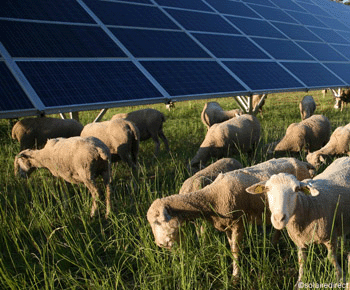
The co-location of solar farming with sheep grazing does not have a negative affect on wool production and could even improve the quality of the wool produced, a new study has found.
The study is based on the results of a second round of wool testing at the Wellington solar farm, south east of Dubbo in New South Wales, which has shared its site with 1,700 merino sheep for the past three years.
Legend has it that the decision to graze sheep at the solar farm came about when an employee of Lightsource bp, the owner of the Wellington project, complained to a local, sixth-generation wool farmer about the hassle and cost of mowing the solar farm six times a year.
According to Tony Inder, who heads up the Allendale Merino Stud, the effect on his sheep has been a lot better than he thought it would be – he says the wool quality they are producing has “increased significantly.”
But Lightsource bp – which is now wholly owned by the oil and gas giant BP, after completing the acquisition of the remaining 50.03% interest – has used the opportunity to gather some formal data.
The study, conducted by EMM Consulting with support from Elders Rural Services, compares two groups of merino sheep – one group grazed in a regular paddock and the other at the Wellington solar farm.
The latest findings show grazing sheep among solar panels does no harm to wool production, even in the case of pre-existing high-quality standards. And it says that some parameters even indicate an improvement in wool quality, although conclusive benefits require further long-term measurement.
Lightsource bp says that while the study at the Wellington solar farm is ongoing, it is another indication that solar farms can exist side-by-side with sheep farming, for the benefit of both enterprises.
“These results are very encouraging and highlight the potential for solar farms to complement agricultural practices,” says Emilien Simonot, Lightsource bp’s head of agrivoltaics.
“By integrating sheep farming with solar energy production, we can achieve dual benefits of sustainable energy together with agricultural output.” . By co-locating grazing with renewable energy, land can remain in agricultural use, offering farmers additional revenue while contributing to cleaner energy for the planet.
“Finding ways for agriculture and clean energy to work together is crucial for a more sustainable future,” says Brendan Clarke, interim head o environmental planning Australia and NZ at Lightsource bp.
“The promising results from this study indicate that we are on the right path, and working closely with farmers to grow our knowledge in this area is paramount.”
As for the sheep, Inder says they “just do really well” when grazing among the Wellington solar farm panels.
“I like to say that panel sheep are happy sheep.”
Sophie is editor of One Step Off The Grid and deputy editor of its sister site, Renew Economy. She is the co-host of the Solar Insiders Podcast. Sophie has been writing about clean energy for more than a decade.
Potential issues’ with Coalition’s planned nuclear reactor sites, safety expert warns
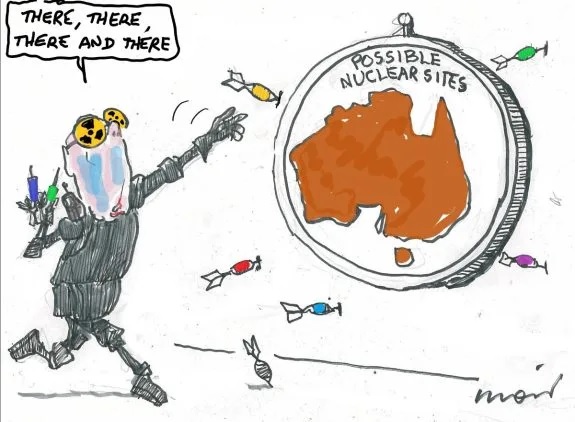
Government agencies and departmental officials spend full day scrutinising Peter Dutton’s controversial plan to build seven nuclear power plants.
Graham Readfearn, The Guardian, 24 Oct 24
A senior government nuclear safety official says the sites of coal-fired power plants “might not be adequate” to house the opposition’s proposed taxpayer-funded nuclear reactors.
Government agencies and departmental officials were grilled in parliament on Wednesday at a government-backed inquiry into nuclear energy. The inquiry was tasked with scrutinising the Coalition’s controversial plan to lift Australia’s ban on nuclear power and build taxpayer-funded reactors at seven sites.
Several officials told the inquiry it would take at least 10 to 15 years to start generating nuclear power once a future government confirmed an intention to build reactors.
The opposition leader, Peter Dutton, has said the Coalition expects to be able to build a small reactor by 2035 or a larger reactor as early as 2037.
The Coalition has said putting reactors at the sites of coal-fired power stations would reduce the need to build expensive transmission lines and towers to connect renewables to the grid.
At Wednesday’s inquiry, the Nationals MP Darren Chester asked the chief regulatory officer of the Australian Radiation Protection and Nuclear Safety Agency, Jim Scott, if that approach could save time.
Scott said it likely would, but added that this “presupposes that the sites of current coal-fired plants would be adequate for nuclear sites, because that might not be the case”.
He said: “You have to look at external events – flooding, natural events – that could occur. That’s part of the siting process. Given that, the potential issue [is] that the sites of current coal-fired plants might not be adequate for nuclear plants.”
Simon Duggan, a deputy secretary in the energy department, listed some of the steps that would be needed for nuclear to go ahead, including setting up management frameworks for health, safety, security, environmental impacts, as well as transport of nuclear fuels and waste, storage of waste and the workforce capability to build, maintain and regulate plants.
“Based on the work and the assessments that you have seen from bodies such as CSIRO and the [International Energy Agency] you are looking at around a 10- to 15-year timeframe to put all those prerequisites in place in order to have nuclear power capability in Australia,” Duggan said.
Many officers raised the issue of social licence and community consultation, saying this would be a critical step if any nuclear reactors were to be built in the future.
The opposition energy spokesman, Ted O’Brien, who is also deputy chair of the inquiry, attacked analysis from the energy department which the energy minister, Chris Bowen, said showed the Coalition’s plan would mean a gap of at least 18% between electricity supply and demand.
Duggan said the analysis was based on assumptions supplied by the minister, where there would be no new investment in renewable energy, and that coal-fired power stations would stick to the closure schedule assumed by the Australian Energy Market Operator…………………………………………….
Clare Savage, chair of the Australian Energy Regulator, told the inquiry she did not believe nuclear could be deployed in enough time to cover the closure of coal-fired power plants, which she said were becoming increasingly less reliable as they aged.
She told the inquiry that on the same day of the hearing, 26% of the total capacity of Australia’s coal-fired power fleet was offline. Eleven per cent of the coal fleet was down due to unplanned outages, she said.
https://www.theguardian.com/australia-news/2024/oct/24/peter-dutton-nuclear-plant-sites-issues
South Australia sets spectacular new records for wind, solar and negative demand
Giles Parkinson, Sep 30, 2024, https://reneweconomy.com.au/south-australia-sets-spectacular-new-records-for-wind-solar-and-negative-demand/
Records continue to tumble across Australia’s main grids as the spring weather boosts the output of wind and solar and mild weather moderates demand, but none are as spectacular as those being set in South Australia.
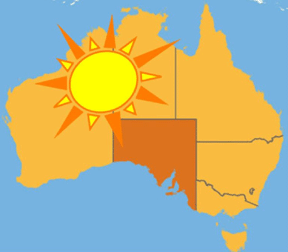
The state’s unique end-of-the-line grid already leads the country, and arguably the globe, in the integration of variable wind and solar, with an average of more than 70 per cent of its demand over the last year and a world-first target of 100 per cent net renewables by 2027.
On Sunday, at 9.35 am, the state set a new milestone, setting a new record share of wind and solar (as a percentage of state electricity demand) of 150.7 per cent, beating a record set on Christmas Day last year, when – for obvious reasons – there was little electricity demand.
As Geoff Eldridge, from GPE NEMLog, notes, this means that the rooftop PV, along with large scale wind and solar farms, were generating 50.7 per cent more power than the state’s total electricity demand at the time.
The scale of excess output was further crystallised later in the day with a new minimum record for instantaneous residual demand, which hit minus 927 megawatts at 12.35pm.
Eldridge says residual demand is what’s left for other generators to supply after wind and solar have met a share of the demand. A negative residual demand means wind and solar were producing more electricity than SA needed, resulting in excess renewable generation which can be managed by exporting and battery charging. The remainder is curtailed.
Of the surplus 927 MW, the state was exporting 685 MW to Victoria, while another 163 MW was being soaked up by the state’s growing fleet of battery storage projects, and 730 MW of output was curtailed. Prices at the time were minus $47/MWh, a good opportunity for batteries to charge.
A further 84 MW was being produced by a couple of gas generators – not because their power output was needed, but because the state, at least for the moment, relies on them for essential grid services such as system strength and fault current.
That will be reduced considerably when the new link to NSW is completed in a few years, and it will allow the state to both export more, and import more when needs be.
“Balancing the system with such high renewable penetration is challenging but necessary as the energy transition progresses,” Eldridge says. “Managing excess generation through exports, storage, and curtailment is critical to keeping the grid stable and efficient.”
It wasn’t the only record to fall over the weekend. In Queensland, the country’s most coal dependent state in terms of annual share of demand and generation, large scale solar hit a record share of 34 per cent, and coal output – in megawatt terms – hit a record low of 2,882 MW.
The Queensland coal fleet capacity is more than 8,000 MW, so that is about as low as it can run until more units are closed down.
In Victoria on Saturday, just before the AFL grand final, rooftop solar also hit a new record output of 3,164 MW – although it did not push operational demand down low enough for the market operator to enact Minimum System Load protocols and possibly switch off some rooftop solar panels to maintain grid stability.
It had flagged a potential MSL event on Friday but cancelled it in the morning. Those events will likely occur at other times in spring and over the summer holidays, although the market operator is now working on new rules for big batteries to avoid a potentially unpopular and unwieldy solar switch off.
Australians are installing batteries at a record rate, as rooftop solar heads for major new milestone.
ReNewEconomy, Sophie Vorrath, Sep 25, 2024
Australia is hurtling towards a major new milestone of 25 gigawatts (GW) total installed rooftop solar capacity, and adding behind-the-meter batteries to the mix at a record rate, as households and businesses continue their march to cheaper bills and energy independence.
The Clean Energy Council’s bi-annual Rooftop Solar and Storage Report for the first half of 2024, published on Wednesday, puts the cumulative total of panels installed on rooftops around the country at 24.4 GW, well on track to passing the 25 GW mark by the end of the year.
This is now clearly more than the remaining total combined power generating capacity of black and brown coal-fired power stations in the country, which stood at 21.3 GW in the financial year to 2023-24.
According to the CEC report, put together using data provided by solar consultancy SunWiz, nearly 30,000 battery sales were recorded in the first half of 2024, taking the cumulative total past 140,000 and pushing the rolling 12-month quarterly average of battery sales to a record of 14,555.
The data shows 20.7 per cent of rooftop solar installations had an accompanying small-scale battery in the first half of 2024, while the attachment rate of batteries connected to solar households reached a high of 19% – a 5% increase on the same time a year ago…………………………………………………..
CEC modelling showed households could achieve annual bill savings of between $900 and $1000 a year with non-orchestrated batteries and between $1150 and 1500 per year with orchestrated batteries trading energy with the grid.
More batteries are also expected to deliver benefits to those who cannot access home solar and storage, as they drive down energy costs and deliver other benefits to the grid.
“It is a win-win outcome,” says Hristadoulidis. “In the midst of a slower economy, solar PV and home batteries can play a key role is lifting economic activity by support for thousands of Australian installers and businesses working in the sector, as well as lowering energy bills for all Australians.”
Other highlights from the CEC report come from the state-by-state rooftop PV tally, which sees New South Wales maintain its long-time domination of the rankings, with another 454 MW of new rooftop PV installed in the first half of 2024.
This makes NSW the second state to pass one million total rooftop PV installations – Queensland did this last year – and takes its cumulative installed capacity to an impressive 6.6GW; the highest of any state and more than a quarter of the national capacity.
In second and third place are Queensland, with 360MW added in the first half of 2024, and Victoria, where 246MW was added.
Rooftop solar system sizes, meanwhile, keep getting bigger, as households start to electrify everything – including their trannsport.
The data shows the growth in the average system size in the first half of 2024 grew slightly to 9.7 kW, a new bi-annual record and a far cry from 10 years ago, when the average system size was 4.3 kW. https://reneweconomy.com.au/australians-are-installing-batteries-at-a-record-rate-as-rooftop-solar-heads-for-major-new-milestone/
Households surge ahead in rooftop solar as renewable projects break bottleneck

By Caitlin Fitzsimmons, September 25, 2024, https://www.theage.com.au/environment/climate-change/households-surge-ahead-in-rooftop-solar-as-renewable-projects-break-bottleneck-20240924-p5kd2t.html
Consumers are leading the national transition to renewable energy, installing four times more electricity generation through rooftop solar in the first half of this year than all the commercial projects combined.
Households added 1.3 gigawatts (1300 megawatts) of power capacity to the national electricity grid through 141,364 new rooftop solar installations in the first six months of 2024, a Clean Energy Council report says, while only 310 megawatts of commissioned large-scale generation projects came online during the same period.
SunWiz managing director Warwick Johnston said large-scale solar and wind projects were large investment decisions facing “headwinds” in the planning system, and these same barriers were not there for rooftop solar.
“You’re looking at lots of people making very comparatively small investment decisions on the basis of really just their personal situation,” Johnston said.
“It’s a lot easier to get a permit to connect your solar to the grid, and you don’t need environmental studies or any of those sorts of things when you’re just putting solar on your own roof.”
However, a significant amount of large-scale renewable energy is in the pipeline, and new figures from the Clean Energy Regulator suggest projects are finally passing the bottleneck of approvals.
The Clean Energy Council report, using SunWiz figures for rooftop solar, says NSW became the second state behind Queensland to surpass one million rooftop solar installations, adding 454 megawatts of extra capacity.
Clean Energy Council co-chief policy and impact officer, Con Hristodoulidis, said Australia was a global leader in rooftop solar, in part because of good policy with consumer incentives from both the Commonwealth and state governments for about 12 years.
“The beauty of Australia is we’ve got a high proportion of [freestanding] housing … so the ability for people to put solar on their roof has been a lot easier than some of the other countries that are more apartment-based,” Hristodoulidis said. “And finally, we’ve got some sun.”
The average system size is now 9.7 kilowatts, compared with 7.4 kilowatts five years ago and 4.3 kilowatts a decade ago. Johnston said 20 per cent of solar panel installations in 2023 were upgrades to existing systems.
Australia now has 24.4 gigawatts of installed rooftop solar capacity, compared with 21.3 gigawatts of coal-powered electricity in the 2023-24 financial year.
The report also says about one in five solar installations nationally included a household battery in the first half of the year, adding nearly 30,000 units for a cumulative total of more than 140,000.
Johnston said the uptake of batteries was driven by falling feed-in tariffs, making it more economical to store energy to use later and to ensure an uninterrupted power supply.
“People are sick of sending their solar power out to the grid and only getting a pittance for it, whereas those batteries mean that they can take charge of their own power needs,” Johnston said.
“The other aspect is people seeing increasingly strong weather-related blackouts … and batteries are providing that insurance for their own electricity supply.”
The Victorian government has low-interest loans for household batteries, and NSW has a rebate scheme starting in November. The Clean Energy Council is calling for federal incentives.
The Clean Energy Council figure of 310 megawatts for large-scale renewables counts only generators that started distributing electricity into the grid in the first half of 2024, rather than projects in the approval or construction phase.
The Clean Energy Regulator, in a separate report, said it approved 1.4 gigawatts of large-scale renewable generation in the first half of 2024 and 2.5 gigawatts of applications were awaiting assessment at the mid-point of the year.
The regulator also reported that 1.8 gigawatts of large-scale renewable capacity reached the “financial investment decision” stage in the first half, which means the proponent has committed financial resources and is ready to build.
Minister for Climate Change and Energy Chris Bowen said the figures showed the government’s renewables plan was “on track and building momentum”.
We don’t need nuclear power – the path to cheaper electricity is renewables
The Australia Institute, by Matt Saunders
The last thing Australia energy market needs is nuclear power. The data is clear – more renewables will lead to cheaper electricity.
Tomorrow the opposition leader, Peter Dutton, is discussing his plans to introduce nuclear power with anti-renewable energy commentator, Chris Uhlmann. No doubt we will hear the same claims about renewable energy causing electricity prices to be high and the need for nuclear power to keep prices down that both men have said in the past.
And just as was the case in the past, such claims will again be wrong.
The increased use of renewables in supplying electricity is not the cause of higher retail electricity prices – and it is clear that more renewables will lead to lower prices.
Research and data from the Australian Competition and Consumer Commission (ACCC), the Australian Energy Market Operator (AEMO), the Australian Energy Regulator (AER) and the CSIRO all make it abundantly clear that renewables are the cheapest form of electricity, and that the high cost of energy is driven by the cost of gas and coal produced electricity.
It is not surprising that people can be misled about the cause of electricity prices. Australia’s National Electricity Market (NEM) is a complex market stretching to 1,925 pages of rules and regulations such that any explanation of price determination will be greatly simplified.
So let us set out the two key issues to understanding retail electricity prices:
1. The cost of generating electricity (the wholesale price) is a surprisingly small component of the many costs that contribute to household electricity prices.
2. The wholesale price is rarely determined by the costs of generating electricity from wind and solar. Wholesale prices are most often determined by other forms of power generation, mainly fossil fuel sources, that are more expensive than most renewable generation.
According to the ACCC the wholesale price makes up only 33% of retail electricity prices. The other components that make up the retail price of electricity include network costs (transmission and distribution), retail costs and margins, and environmental costs
If wholesale electricity prices were to double then retail prices would increase a maximum of only 33% per cent. According to earlier ACCC research about two thirds of the increase in electricity prices over the last ten years caused the increase in transmission costs.
Renewables Do NOT SET Wholesale prices
Perhaps the most confusing aspect of the NEM is how prices are set (so much so that websites like Wattclarity can devote themselves to disentangling what is going on!)………………………………………………………………………
the best way to reduce electricity prices is to:
- reduce demand for electricity through energy savings measures that reduces the periods when the wholesale price is set by expensive fossil-fuel generation such as gas.
- increase production of renewables – so that it can more regularly be the price setter in the system.
Despite what you might hear tomorrow, or from others, the key to lower energy prices is not nuclear, let alone more gas, but much, much more renewable energy. While the energy market continues to rely on gas and coal, Australians will continue to pay higher prices for their electricity, and if nuclear were ever to come into the system, the price would jump even higher. https://australiainstitute.org.au/post/we-dont-need-nuclear-power-the-path-to-cheaper-electricity-is-renewables/
1 This month
To see nuclear-related stories in greater depth and intensity
– go to https://nuclearinformation.wordpress.com/


 Antinuclear