Desperate coal industry sponsors attacks on wind farms
 Coal is behind the attacks on wind turbines. It’s fighting for its life, The Age, Peter Martin, 27 July 16
First they were supposed to be destroying birds, then sleep. Now wind turbines are being blamed for destroying the Australian electricity market and pushing prices as high as $14,000 per megawatt hour.
As Victoria gives the green light for a massive $650 million wind farm with up to 104 turbines at Dundonnell, 200 kilometres west of Melbourne, and with talk of more wind farms in NSW a Liberal senator has been calling for a moratorium on new turbines until the Productivity Commission examines what they are doing to prices.
“There should be no further subsidies paid for an intermittent and unreliable power source that can be seen as as proven failure,” Senator Chris Back is quoted as saying, in an apparent attempt to prejudge the inquiry he is calling for.
On the face of it, it’s an odd idea: that adding a new and very cheap source of power should push up prices (wind turbines cost next to nothing to operate). And for the record, it’s not true. South Australia has more wind turbines than any other state. They supply more than one-third of its power. Yet a graph prepared by the Australian National University’s Hugh Saddler shows that South Australia’s average electricity price was much higher when they only provided 10 per cent.
The complaint is about spot prices, those instant short-lived prices the big industrial users have to pay if they haven’t insured against sudden movements, as a lot have not………
With fewer coal-fired plants, and with wind plants scattered throughout the nation, the system has the potential to work surprisingly well. Energy analyst David Leitch points out that in South Australia most of the wind turbines fire up at the same time, but if they were also placed in northern NSW and Tasmania (where the wind blows at very different times) each would fill the other’s gaps.
South Australia and Tasmania overlap only 10 per cent of the time. At other times, the gap would be filled by storage: either batteries or water storage as wind power pumps water up to the top of mountains while the wind’s abundant and lets it drop through hydro plants when it’s not.
Wind needn’t be a problem, regardless of what you’ve been told. But it does leave very little role for coal, which supplies base load power for which a wind-dominated system would have little use.
With fewer coal-fired plants, and with wind plants scattered throughout the nation, the system has the potential to work surprisingly well. Energy analyst David Leitch points out that in South Australia most of the wind turbines fire up at the same time, but if they were also placed in northern NSW and Tasmania (where the wind blows at very different times) each would fill the other’s gaps.
South Australia and Tasmania overlap only 10 per cent of the time. At other times, the gap would be filled by storage: either batteries or water storage as wind power pumps water up to the top of mountains while the wind’s abundant and lets it drop through hydro plants when it’s not.
Wind needn’t be a problem, regardless of what you’ve been told. But it does leave very little role for coal, which supplies base load power for which a wind-dominated system would have little use. http://linkis.com/www.theage.com.au/co/1H46Y
Renewables not to blame for South Australia’s electricity papers – says Energy Minister Josh Frydenberg
 Frydenberg says renewables not to blame for South Australia energy “crisis”, REneweconomy By Giles Parkinson on 28 July 2016 Josh Frydenberg, the minister newly elevated to the combined energy and environment portfolio, says that renewable energy was not to blame for the recent energy “crisis” in South Australia, although he did deliver some mixed messages about how the government proposes to move forward.
Frydenberg delivered a series of interviews on Wednesday, the first since he was appointed to the new position in a reshuffle by the re-elected Turnbull government, and this included a “chat” with ABC personality Annabel Crabb at a dinner function at the Clean Energy Summit.
Asked about the recent electricity spikes in South Australia, Frydenberg said it was a “complex picture” that included a reduced capacity on the inter-connector, a cold snap that spiked demand, a big shift in gas prices, and the “intermittency issue about wind and solar.”
But he also noted that in 2008, as RenewEconomy has reported, the price of wholesale electricity in South Australia peaked above $5,000/MWh more than 50 times. That was before wind and solar were in that state, he said, and noted there had only been three such peaks so far this year.
“People have to understand that this volatility is not a new thing. It was back there in 2008 …. so to say that (this price spike) is the fault of renewables is not an accurate assessment,” Frydenberg said, to the applause of the audience of around 400 people.
This, however, was not how The Australian interpreted events, who attributed Frydenberg’s comments about the crises in South Australia and Tasmania as a “wake-up” call about the problems created by wind and solar.
Tasmania, it should be remembered, suffered the highest wholesale prices in Australia last financial year because its electricity supply was restricted by the loss of the Basslink cable and much of its hydro capacity due to drought. Most analysts say it was its lack of investment in wind and solar that forced it to rely heavily on expensive back-up gas and diesel…….
Frydenberg appeared well briefed, non-confrontational, and recognised the growing role of technologies such as wind, solar and battery storage whose costs had fallen quickly and would continue to do so. He also appeared to be listening, people said.
The role of coal, Frydenberg accepted, is declining, and the transition to clean energy is inevitable. But he was reluctant to put any time frames on the inevitable move to zero emissions technology, apart from saying that a shift to 100 per cent renewable energy was not going to happen overnight.
But while his comments were soothing for an industry just regaining its confidence after being battered and bruised by the first term of the Abbott-Turnbull government and the key policy decisions of Frydenberg’s good friend, the previous environment minister Greg Hunt, his next moves will be scrutinised intensely.
There is great concern about a push by the incumbent energy industry, such as the Energy Supply Council to force state governments to abandon their individual state targets, a move that will be strongly resisted by South Australia, Victoria, Queensland and the ACT……..http://reneweconomy.com.au/2016/frydenberg-says-renewables-not-to-blame-for-south-australia-energy-crisis-75546
Wind and solar are NOT responsible for the doubling of wholesale energy prices in South Australia
South Australia’s ‘absurd’ electricity prices: renewables are not to blame, Guardian
Tristan Edis, 28 July 16
Wind and solar are not responsible for the doubling of wholesale energy prices in SA – that’s just part of the spin that says renewables are expensive. Reading many of the newspapers over the past few weeks you’d think South Australia had become a horrible case study in the dangers of too much renewable energy……
Politicians are now responding, with Liberal Senator Chris Back calling for a ban on new wind farms until after a review by the Productivity Commission. Meanwhile Senator Nick Xenophon’s party are backing a Senate inquiry.
Yet everyone has missed the main cause of a doubling in SA power price rises – a doubling in gas prices.
What makes it all especially worrying is the blame attributed to renewable energy appears to have originated from a public relations campaign initiated by the lobby group for the big power generators………
wholesale market data suggests renewable energy has actually been depressing power prices, not increasing them. In the months before and after the Northern Coal Power Station was taken off-line, South Australia’s wind farms, without exception, bid their entire available output into the market for a price less than a single dollar. Meanwhile rooftop solar doesn’t even bid into the market, with its output just reducing the demand for generators that do bid into the wholesale market.
This is not to suggest renewable energy imposes no costs. It is certainly true that wind and solar require a subsidy, but its cost is distributed equally across all electricity consumption around the nation via the federal RenewableEnergy Target scheme. It isn’t allocated to states depending on how many wind farms or solar panels they have installed.
The idea that renewables are to blame for the doubling in South Australian wholesale prices is an idea the Australian Energy Council, which represents big power companies, have been pushing since late last year. This campaign has sought to paint South Australia as an “accidental experiment” in the dangers of too much renewable energy.
If you scratch the surface they actually acknowledge renewable energy is depressing wholesale power prices. But they claim it pushes prices so low that, rather strangely, it is apparently increasing prices……..
It was only with the addition of wind and solar to the existing mix of coal plus the interconnector that gas could be driven down to less than a third of the electricity market. This acted to substantially shield SA from power price rises, not induce them.
So it is LNG plants, not wind and solar, that are responsible for South Australia’s “absurd” electricity prices. https://www.theguardian.com/commentisfree/2016/jul/27/south-australias-absurd-electricity-prices-renewables-are-not-to-blame
Large-scale solar the next wave of renewable energy
Jul 27 2016. The federal government has allocated more than $600 million to help large-scale solar projects get off the ground, as utility solar photovoltaic projects become the next wave of renewable energy to be embedded into the national electricity market…...(subscribers only)
http://www.afr.com/news/politics/largescale-solar-the-next-wave-of-renewable-energy-20160727-gqeo4k
Queensland’s Mt Emerald wind farm – construction to start in December
Construction Mt Emerald wind farm expected to start in December The Cairns Post July 28, 2016 CONSTRUCTION on the Tablelands’ Mt Emerald wind farm is expected to start in December, following the selection of preferred contractors for the $360 million project.
Developer Ratch Australia has awarded its wind farm contract to Dutch manufacturers Vestas and the Sydney-based Downer Group.
Vestas and Downer will share responsibility for the entire 180MW project, including supply and construction of more than 50 turbines, a substation, cabling to the grid, civil and electrical works, and wind monitoring equipment.
The announcement follows Ergon Energy’s decision to purchase all of the electricity generated by the wind farm through to the end of 2030……..http://www.cairnspost.com.au/news/cairns/construction-mt-emerald-wind-farm-expected-to-start-in-december/news-story/09b600f1c8d9b6e2a4eb929d34b27768
Tough new guidelines for New South Wales wind farms
Tilting against windmills? Industry doubts NSW support for wind farms, SMH, Peter Hannam, 28 July 16 New wind farm guidelines are expected to impose tough requirements on developers to limit their visual impact in a move that proponents say will put NSW at a disadvantage to other states.
The proposed guidelines, requiring developers to prepare visual impact assessments according to the height of turbines, were disclosed by the planning department to a select group of prospective wind energy developers on the sidelines of a two-day clean energy summit in Sydney on Thursday. Continue reading
Green bonds fast gaining popularity
 Green bonds the new black in the market as environmental financing surges, ABC News, 26 July 16 By business reporter Stephen Letts The environmentally sensitive shoots developing in the global bonds market appear to be heading for a serious growth spurt with another record quarter of “green bonds” issuance.
In a research note on the sector, the credit ratings agency Moody’s found environmentally focused green bond issuance in the June quarter hit a record $US20.3 billion ($27 billion), well above the $US16.9 billion ($22.5 billion) recorded in the first quarter of the year.
Added together, the two quarters raised almost 90 per cent more capital than in the first half of 2015.
“The global green bond market is now poised to reach $US75 billion ($100 billion) in total volume for 2016 and so set a new record for the fifth consecutive year, given the strong issuance already observable in the first two weeks of Q3,” Moody’s senior vice president Henry Shilling said.
That fresh flow in the third quarter includes $300 million worth of bonds from Victoria put out to tender earlier this month, the first green issuance from an Australian state or federal government……
Clean energy projects dominate the market
The increasing demand has been supported by many big pension funds now carrying mandates that stipulate portfolios must hold required levels of environmentally friendly investments.
Around two-thirds of green bond proceeds in the quarter were directed to renewable energy and energy efficient projects, with clean transport accounting for a further 17 per cent of the money raised.
The US dominated issuance, with 23 per cent of the market, followed by the big development agencies such as the World Bank, with 17 per cent, although China is expected to bounce back to its dominant position in the market with $US3 billion worth of bonds in the pipeline for sale in coming months……. http://www.abc.net.au/news/2016-07-27/green-is-new-black-in-the-bonds-market-environmental-finance/7664414
Canberra solar project co-located with wind farm
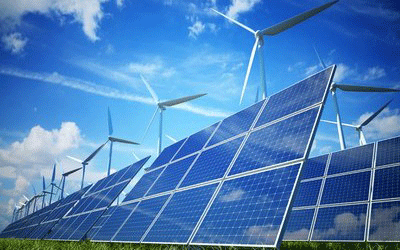 Gullen Range Wind Farm adds solar project in Australian first, Canberra Times John Thistleton 27 July 16
Australia’s first large-scale solar farm to be co-located with wind turbines will be built near Canberra, saving money and creating a more reliable, cheaper renewable energy model.
The 10 MW solar photovoltaic plant near the existing Gullen Range Wind Farm, 28 kilometres north west of Goulburn, will likely be followed by more co-located generators, says the Australian Renewable Energy Agency, which is providing $9.9 million for the $26 million project.
ARENA chief executive Ivor Frischknecht said under the co-location model developers could save money on grid connection, approvals and site development costs including access tracks by co-locating wind and solar plants, while also reducing environmental impacts. Proponents expect savings of about $6 million.
Mr Frischknecht said solar and wind were complementary sources of renewable energy that produced power at different times of the day and year.
“Co-location provides more continuous energy generation, as wind farms tend to generate more energy overnight while solar only generates during the day. Gullen Wind Farm generates more power in winter and the new solar farm will generate more in summer,” Mr Frischknecht said.
“It could also unlock new markets for medium-scale solar PV projects, because scale isn’t as important for competitiveness when plants are co-located.”……http://www.canberratimes.com.au/business/energy/gullen-range-wind-farm-adds-solar-project-in-australian-first-20160726-gqdqqh.html
Nick XenophonTeam backs 40pc renewables
Xenophon party backs renewables but wants Senate electricity inquiry The Australian July 25, 2016
NXT federal MP Rebekha Sharkie, who won the Adelaide Hills seat of Mayo from Liberal Jamie Briggs, said the party was committed to the renewables target, but NXT wanted a Senate inquiry into electricity prices “so we can get the arguments on the table and look to a solution”.
Ms Sharkie believed a second interconnector between South Australia and the eastern states could help the situation, though it had been discussed for 15 years without action…….http://www.theaustralian.com.au/news/nation/xenophon-party-backs-renewables-but-wants-senate-electricity-inquiry/news-story/3a2920c0274a22994f377395acb6b5bc
Solar and battery mini grid hits the suburbs

Australian Mini-Suburb ‘Tesla Town’ Project with Powerwalls gives a glimpse into future sustainable communities, Electrek, Nathaniel Kobza, 15 July 16 Near Melbourne, Australia lies an incredible suburban project underway dubbed Yarrabend. This development is currently home to 60 houses and is planned to eventually hit around 2500. What is unique about this venture is not only the art, food or shopping that will be near it, but that all of the houses will come standard with Tesla Powerwalls and solar panels. Via the Heidelberg Leader, Nick Marinakis, sales and marketing manager of the Glenvill development team for Yarrabend, states that the suburb…
will achieve the highest possible ESD rating under the UDIA (Urban Development Institute of Australia) Envirodevelopment scheme, a first for an infill development site in Melbourne.
UDIA’s chief executive, Danni Addison, said that a big reason that this will receive the highest rating is because it will “be one of the most environmentally sustainable developments in Australia.” Further, Ms. Addison goes on to explain:
Some areas that are a standout include water reduction of 43 per cent, landfill reduced by 80 per cent and the potential to reduce energy use by 34 per cent. The Powerwalls, combined with solar panels, will mean that future residents will be able to benefit in a variety of ways, including dramatically smaller power bills and knowing that the majority of their energy usage is coming from a clean and renewable source…….http://electrek.co/2016/07/15/australian-mini-suburb-tesla-town-project-with-powerwalls-gives-a-glimpse-into-future-sustainable-communities/
Canberra’s solar farms with sun- tracking technology
Mr Han says the ACT’s solar projects are small, but internationally the industry is indebted to Australia.
“In China scales are much bigger, ultimately the solar voltaic cell is actually Australian technology that was originally developed out of the University of NSW,” Mr Han said. “That technology was commercialised in China as well as Europe. A lot of the technology and breakthroughs we still owe to Australia research and development.”
The proponents say the ACT is Australia’s front -runner in solar projects.
“The long term off-take agreements, or power purchase agreements, mean it has a reliable and predictable revenue stream for owners and investors, ” Mr Crockett said.
 “The ACT has proved how efficient, effective and cheap it is to transition your electricity sector, you are seeing now the Victorian Government is going to do something very similar,” Mr Crockett said.
Mugga Lane and Williamsdale solar farms to begin tracking sun by year’s end http://www.canberratimes.com.au/business/energy/mugga-lane-and-williamsdale-solar-farms-to-begin-tracking-sun-by-years-end-20160718-gq8lrg.html July 21 2016 John Thistleton
A GPS-guided pile-driver sinking steel posts into the ground is swiftly changing the landscape in South Canberra for a new solar farm. Continue reading
South Australia to get world’s biggest solar + storage project
World’s biggest solar + storage projects planned for Australia http://reneweconomy.com.au/2016/worlds-biggest-solar-storage-projects-planned-australia-95528 By Giles Parkinson on 19 July 2016 Australian infrastructure investor Lyon Group says it plans to build the world’s biggest solar plus storage project in South Australia in the next two years, and sees a huge future for combined solar and battery storage plants..
Lyon Group’s David Green – which worked on developing a soon-to-be built 30MW solar plant and 1.4MW/5.3MWh lithium battery storage facility near Cooktown, in far north Queensland, before selling it to German-based company Conergy – plans a series of other projects and claims a pipeline of more than 300MW of solar and up to 60MW of battery storage.
The first new project is planned for South Australia, with a 100MW solar PV plant to be combined with a battery storage array of up to 40MW, Green says the plant could be in operation near Roxby Downs by early 2018, and there are plans for other similar projects around the country.

The first stage of what is known as the Kingfisher project – 20MW of solar PV plus a minimum 2MW battery storage – is expected to be running late next year.
The project is one of the finalists in the Australian Renewable Energy Agency funding round for large scale solar, which is expected to allocate monies to 10 or more projects when decisions are announced next month.
Green says the company – which has previously invested in coal, gas and wind projects, but is now specialising in solar and storage – is looking to be a global industry leader in solar plus storage.
“The genie is out of the bottle. There will be a burst of activity now in large scale solar + battery projects. This is the real battery storage story coming out of Australia – batteries used to convert large scale solar to effectively baseload, or peaking plant.”
The combination of solar and storage means the facilities can compete on two levels – providing clean energy and dispatchable power, either to household or large energy users, and also re-enforcing the edge the grid, in some cases avoiding the costs of grid upgrades. Continue reading
Victoria to get record-breaking wind farm
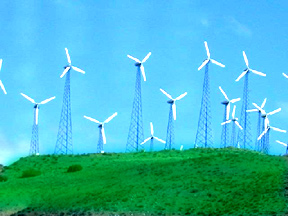 Record-breaking, brolga-friendly, $650m wind farm gets government green light, The Age, July 19 2016 Benjamin Preiss Victoria’s most productive wind farm generating enough power for 140,000 households will be built in the south-west after the state government approved the plans.
The $650 million wind farm, to be built near Dundonnell, will have 96 turbines. Once completed, it will produce enough power to supply the combined populations of Ballarat and Warrnambool.
The project will create an estimated 300 jobs during construction, with 16 positions once it is built…….The wind farm’s layout was designed to accommodate brolga breeding and flocking habits, according to the government………http://www.theage.com.au/victoria/recordbreaking-brolgafriendly-wind-farm-gets-government-green-light-20160719-gq8o3t.html
83-Percent Of south Australia’s Electricity From Wind last weekend
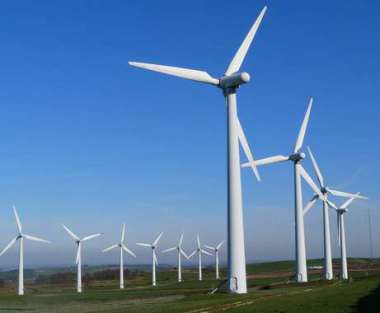 South Australia Just Produced 83-Percent Of Its Electricity From Wind Energy HTTP://WWW.HEXAPOLIS.COM/2016/07/16/ BY: SUKANYA MUKHERJEE JULY 16, 2016
Thanks to a particularly windy weekend, South Australia recently saw nearly 83-percent of its total electricity coming solely from eco-friendly wind energy. Although the harsh weather conditions led to power outages in some of the places, its advantages far outweigh the temporary inconvenience. According to officials, wind turbines installed in the area captured much of the ambient energy, which was used to meet more than two-thirds of the region’s total electricity demands last Monday.
When it comes to renewable power, South Australia is one of the front runners, boasting both solar and wind energy. Investments of up $6 billion have resulted in the installation of as many as 638 wind turbines in the area. According to Alicia Webb of Australia-based Clean Energy Council, an organization dedicated to improving renewables and conversion efficiency, the industry has also generated “hundreds” of jobs. Given the current trend, the region will soon see wind and solar power overtaking conventional fossil fuels. Webb said:
Southern Australia…is in the midst of a remarkable transformation, with more than 40 percent of its power needs coming from renewable energy last year. It is clear that modern economies can run on increasingly higher levels of renewable energy, and it is clear from South Australia’s example that other mainland states can go much further with no loss of reliability.
With oil and volatile gas prices skyrocketing in recent years, wind turbines in South Australia actually help produce electricity at lower costs, especially during windy weather. As pointed out by Webb, the area’s total “installed solar capacity” will likely reach five gigawatts in the coming months. These steps are part of the government’s efforts to meet the targets declared in the Paris agreement. In addition to renewables, researchers in South Australia are coming up with new, innovative technologies that could in turn help reduce environmental pollution. Via: CleanTechnica
Greening of south-east Queensland – City of Logan leads
 Logan becoming south-east Queensland’s greenest city , Brisbane Times, July 17 2016 The greener side of Logan is starting to show through, with the south-east Queensland city embracing solar energy, recycling initiatives, DIY kits and sustainable living workshops.
Energex statistics from June revealed Logan was ahead of nearby cities when it came to solar power, with more than a quarter of all properties having solar panels on their roofs.
This was compared to 17 per cent in Brisbane and 18 per cent on the Gold Coast.
The city of more 308,000 residents is 70 per cent rural or semi-rural, an appealing factor for those in the area who enjoy their open spaces…….
“A lot of schools are becoming a lot more sustainable, Calvary Christian College at Springwood have their own chickens and sell their eggs, the children involved in gardening, selling produce, checking the eggs,” ………..http://www.brisbanetimes.com.au/queensland/logan-becoming-southeast-queenslands-greenest-city-20160717-gq7mp0.html
1 This month
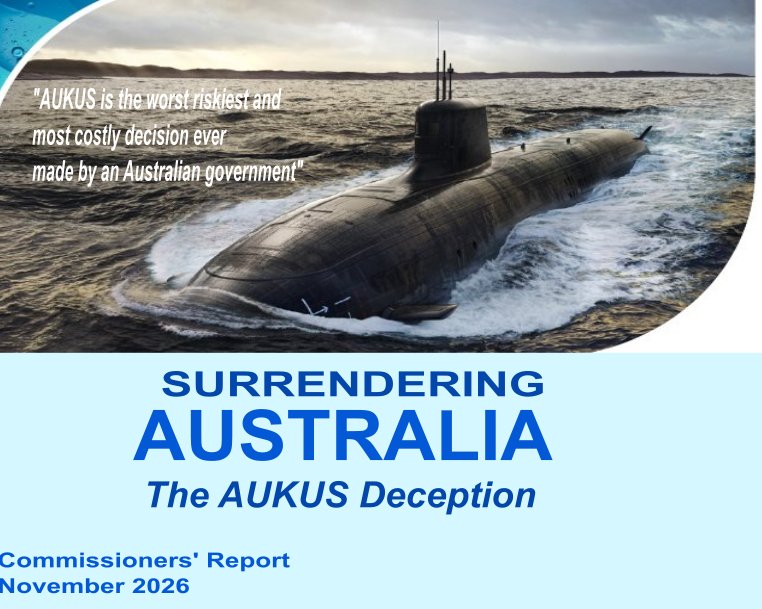

4 November – Will AUKUS keep us safe – at what cost?
the Commissioners of the AUKUS Public Inquiry present their findings at the National Press Club of Australia in Canberra. iview.abc.net.au/show/national-press-club-address
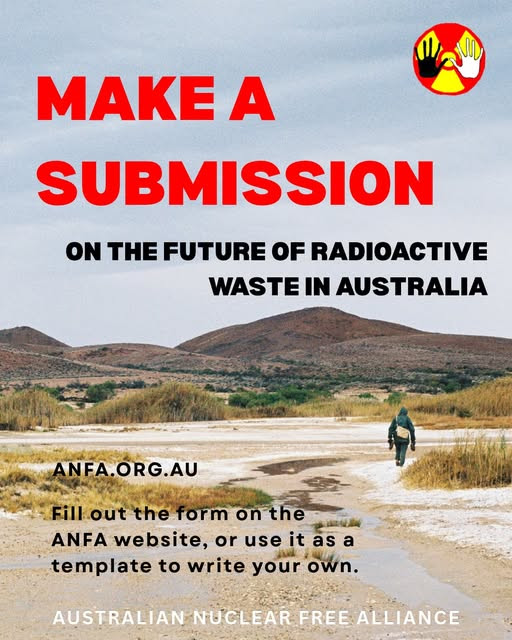
Submissions to the federal government’s new draft framework close on the 13th November 2026.
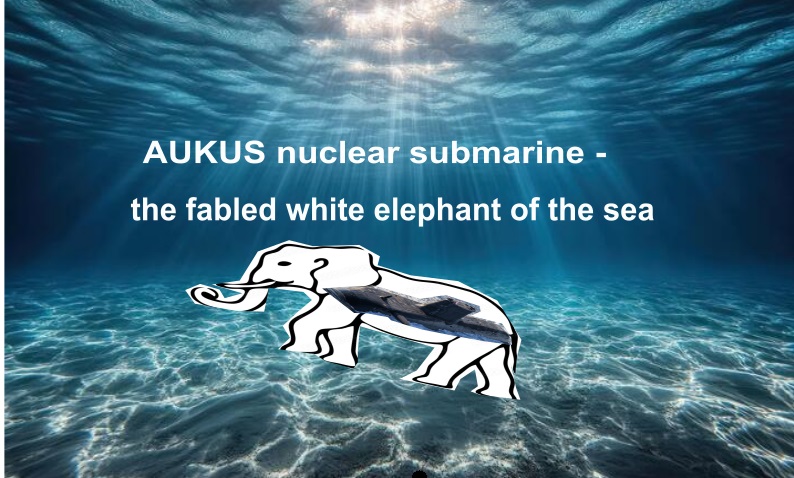
Australians deserve the truth
about
AUKUS – https://aukuspublicinquiry.com/

PETITION – To: Prime Minister Anthony Albanese and the Australian Labor Government

of the week – Australians for War Powers Reform (AWPR)
To see nuclear-related stories in greater depth and intensity

