Rooftop solar power in Western Australia produces more electricity than the State’s biggest power turbine
 Rooftop solar producing more energy than WA’s biggest turbine, ABC Radio AM 5 Jan 16 By Anthony Stewart Rooftop solar panels in the South-West Interconnected System (SWIS) in Western Australia are now producing as much energy as the state’s largest power turbine, according to research from Curtin University.

SWIS stretches from Kalbarri north of Perth to Ravensthorpe in the state’s south, taking in the Perth metropolitan area. Curtin University sustainability professor Peter Newman said 20 per cent of homes across the grid have rooftop solar panels installed.
“We are in the extraordinary position of saying that Perth [SWIS] now has rooftop solar as the largest supplier of electricity, it’s the biggest power station in WA,” he said.
“It’s nearly 500 megawatts and it’s growing rapidly, by 2020 we could have half of Perth’s [SWIS] households with rooftop solar.”……
Professor Newman said the state’s electricity utilities needed to rapidly adapt to the growth in solar.
“They didn’t predict it, they have all these contracts for coal and gas that go 20 or 30 years and they have even got an old power station out of mothballs, fixed it up, but never turned it on,” he said.
“Despite the boom times we actually reduced our power consumption during this period because people are just not needing it if you’ve got the PV’s [photovoltaic] on the roof.”
Energy utility Synergy has been contacted for comment.
Batteries to drive solar boom….. http://www.abc.net.au/news/2016-01-04/rooftop-solar-panels-bigger-than-biggest-turbine-wa/7066240
Enova – Australia’s first community-owned renewable energy retailer
“what we do is we buy from the national energy market and sell to you; it comes through the grid. “In order for you to have renewable energy, we enter into agreements to purchase green power from accredited renewable energy providers, so that whenever we are selling you energy we are offsetting that with green energy certificates.”
Ms Crook said Enova also hoped to increasingly buy from local renewable energy generators.
“What we hope to be doing is facilitating the development of community-scale renewable generation,”
 Australia’s first community-owned renewable energy retailer Enova to open its doors in Byron Bay http://www.abc.net.au/news/2016-01-05/australia-first-community-owned-energy-retailer-enova/7068420 ABC North Coast, 5 Jan 16 By Samantha Turnbull Australia’s first community-owned renewable energy retailer, Enova, is about to open its doors in northern New South Wales after raising $3.8 million from 1,090 investors.
Seventy-five per cent of the voting shares are held on the NSW north coast, but chair Alison Crook said the company had attracted investors from every state and territory in Australia. Continue reading
New Directive to Clean Energy Finance Corporation (CEFC) supports renewable energy investment
 New clean energy investment mandate a shift from policy proposed by Abbott
Directive to CEFC to focus on innovative and emerging technologies will enhance support for windfarms and small-scale solar projects, Guardian, Shalailah Medhora, 24 Dec 15. The Clean Energy Finance Corporation (CEFC) has been directed to focus on innovative and emerging technologies, reversing a mandate by the former prime minister Tony Abbott that would have specifically blocked funding for windfarms and small-scale solar projects.
The mandate came into effect on Thursday, with a new clause outlining the shift in focus.
“As part of its investment activities in clean energy technologies, the corporation must include a focus on supporting emerging and innovative renewable technologies and energy efficiency, such as large-scale solar, storage associated with large- and small-scale solar, offshore wind technologies, and energy efficiency technologies for cities and the built environment,” the clause said. “ This will in turn increase the uptake of emerging technologies such as large-scale solar and energy efficiency.”
The investment mandate is not exclusive, meaning that established technologies can still be funded, and not retrospective, so projects that have already been funded will not be affected.
“The CEFC will therefore continue to pursue a diverse range of investment activities that are within the scope of the CEFC Act and this new investment mandate,” a statement by the body said.
“Together, the new investment mandate and the accompanying explanatory statement provide guidance on how the CEFC should approach investment in mature and established technologies, such as conventional onshore wind and conventional hydro,” it said. “It is the government’s expectation that, in many circumstances, projects involving mature technologies should be able to secure finance from commercial financing sources.”
The mandate is a shift from what Abbott proposed in July, when he said the body should no longer fund small-scale solar projects such as rooftop panels and wind technology…….
The CEFC chairwoman, Jillian Broadbent, wrote to the environment minister, Greg Hunt, and the finance minister, Mathias Cormann, welcoming the new mandate. She said it was an “appropriate approach that allows the CEFC to support the Australian government policy priorities while still allowing a measure of investment flexibility”. …….http://www.theguardian.com/environment/2015/dec/24/new-clean-energy-investment-mandate-a-shift-from-policy-proposed-by-abbott
Broken Hill has Southern hemisphere’s largest solar energy project
 The industry is looking for assurance that Prime Minister Malcolm Turnbull is more climate-friendly than his predecessor, Tony Abbott, who said coal was “good for humanity.”
How Broken Hill became a solar power trailblazer, SMH December 22, 2015 James Paton Broken Hill spawned the world’s largest mining company and generated more than $75 billion in wealth. Now as its minerals ebb, Australia’s longest-lived mining city is looking to tap a more abundant resource.
On the sun-baked edge of the outback city, 700 miles west of Sydney, a solar farm the size of London’s Hyde Park shimmers like an oasis – its panels sending enough electricity to the national grid to power 17,000 homes a year.
Combined with a sister plant, the AGL Energy and First Solar project is the largest of its type in the southern hemisphere. Clean energy advocates are counting on the 140-hectare development to make Broken Hill, which at one time boasted the world’s most successful silver mine, a trailblazer once again. Continue reading
Australia leads the world in home rooftop solar
 Australia’s Small-Scale Rooftop Solar Installations Hit 4.59 GW In 2015 http://cleantechnica.com/2015/12/29/australias-small-scale-rooftop-solar-installations-hit-4-59-gw-in-2015/ by Glenn Meyers Propelling a global boost in renewable energy, Australia’s Clean Energy Regulator has reported small-scale rooftop solar totaled 4.59 GW in 2015. As reported by pv-magazine, data released by the Clean Energy Regulator shows 119,000 new small-scale PV installations have taken place in 2015. While not as sizable as 2014, this number distinguishes Australia with the highest portion of residential buildings with rooftop PV globally.
The Australia small-scale rooftop solar numbers also show the nation has maintained its world lead the world in deployment of rooftop solar. Counting a December 1 calculation, Australia has reached 1.49 million small-scale PV installations. This total is based on data released by this country’s Clean Energy Regulator.
The Clean Energy Regulator was established on 2 April 2012 as an independent statutory authority by the Clean Energy Regulator Act 2011, and operates as part of the Environment portfolio.
Clean Energy Finance Corporation (CEFC) estimates the nation will have another 300 MW of large-scale PV by the end of 2015. “Renewable energy is essential to Australia’s future economic growth and prosperity in a carbon-constrained world and to helping lower Australia’s carbon emissions. The transformation of Australia’s energy sector will require around $100 billion in investment in the renewables sector over the period to 2050.”
The CEFC Act has provided that a minimum of 50% of the CEFC portfolio be invested in renewable energy technologies, related enabling technologies and hybrid technologies that integrate renewable energy technologies by 1 July 2018.
CEFC reports on Australian solar potential
The CEFC has stated, “With the highest average solar radiation per square metre of any country in the world, and substantial cost reductions in solar technology over recent years, there is significant future opportunity for growth in deployment of solar technologies in Australia.”
CEFC has invested in both large and small-scale solar projects using solar photovoltaics. It reports the demand for solar financing continues to be strong, with solar projects valued over $3 billion.
The clean energy report shows a solid foundation for small-scale solar is in place.
Queensland’s Fraser Coast Region could bloom with solar farm, says Councillor
 Solar Farm ‘Common Sense’ For Queensland’s Fraser Coast December 30, 2015 Energy Matters “There are many issues on the Fraser Coast Region; none of which are more important than rising energy prices,” says Cr. Loft; who also points to issues with unreliable delivery of electricity.
The councillor states the construction of a solar farm within the region’s boundaries could provide savings for Council of around 15%, freeing up hundreds of thousands of dollars in working capital that could be redirected to other community needs.
In addition to savings, creating jobs and a more robust electricity supply, Cr. Loft says benefits for the region would include “the ability to portray the Fraser Coast Council as an environmentally friendly and green community, compatible with our magnificent natural environment.”
The Fraser Coast sits within the Great Sandy Biosphere, which is part of a world network of Biosphere Reserves.
The proposed feasibility study would include profiling the electricity consumption of Council and major consumers of electricity in the Shire; determining total Shire electricity consumption, potential locations for the facility and the most appropriate technology, e.g. solar panels, CPV or solar thermal + storage.
Cr. Loft believes now is a good time for a major solar power project……..
The Fraser Coast Council incorporates Fraser Island – the world’s largest sand island – and towns including Maryborough, Burrum Heads, Hervey Bay and Brooweena.
Queensland is Australia’s leading state in terms of total solar capacity and it also has the highest number of small scale solar power systems – more than 460,000 installations. http://www.energymatters.com.au/renewable-news/fraser-coast-solar-em5271/
Solar thermal plant at Forbes, New South Wales,has great potential
“This sort of technology will put massive amounts of money into regional Australia if it takes off “.
“It could be very significant here in Australia but also, there are significant overseas opportunities for Vast where Australia could earn export dollars.”
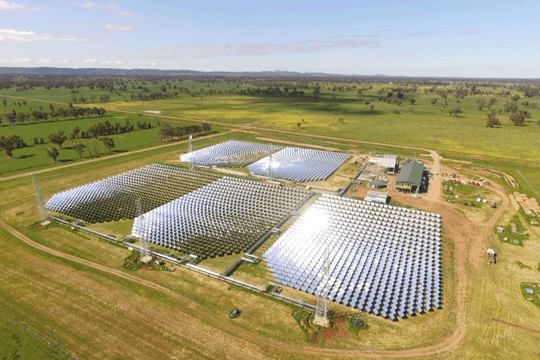
Developer of $20 million Australian-first solar thermal pilot plant predicts sunny future under Turnbull ABC Central West By Melanie Pearce 23 Dec 15 After hours of steady rain, there is not a ray of sunshine in sight and the mud is thick on the ground at the $20 million Jemalong pilot solar thermal plant near Forbes in central west New South Wales.
But in a way, the fact it is overcast helps to explain the importance of this technology, which enables both capture and storage of energy from the sun, according to James Fisher, chief technology officer of Vast Solar.
The engineer, who formerly worked in the fossil fuel industry and said he never thought renewables could compete with coal, now has a much sunnier outlook on the subject.
Technology behind solar thermal power plant
The Australian company has developed what it hopes will be a low-cost, high-efficiency Concentrated Solar Power (CSP) generation technology.
The Jemalong pilot plant will be ready for commissioning in mid-January and is designed to prove the technology works. Continue reading
South Australia power networks cannot impose tariff on solar homes
Federal Court rejects SA Power Networks’ proposed charge on solar-powered households http://www.abc.net.au/news/2015-12-23/federal-court-rejects-solar-household-charge/7050600 The Federal Court has dismissed an appeal by SA Power Networks to charge a tariff on homes with solar panels.
The electricity distributor wanted it to approve a tariff of about $100 a year.
It argued that solar-powered houses have different energy consumption patterns and are effectively subsidised by houses without panels.
SA Power Networks took the matter to court when the Australian Energy Regulator rejected the proposed charge.
The distributor said that it was “disappointed by the appeal decision” and maintained that its application was about “fair and equitable cost-sharing among customers”.
“This was not about additional revenue,” SA Power networks said in a statement.
Solar farm for Parkes, could double as sheep farm
French company plans 240ha solar farm for Parkes http://www.abc.net.au/news/2015-12-18/240ha-solar-farm-planned-for-parkes/7035218 Landholders adjoining a proposed solar farm near Parkes in central west New South Wales are being assured they will not be adversely affected by the development. The proponent Neoen is planning a 240-hectare plant west of the town that will include about 245,000 solar panels.
Cattle producer John Smeaton plans to lease his land to the company and says planting trees around the site will address any concerns about glare.
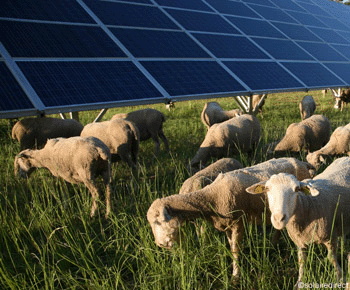 He said he was confident the area would remain productive and become ideal for grazing sheep.”These panels, cattle would wreck them, the only thing they could run there could be sheep,” Mr Smeaton said.
“Some of the other neighbours might be interested in running sheep there.
“From a fire prevention point of view I think it’s necessary for something to take the grass down, because it’s fertile farm land and the grass can grow a metre or more high and it grows hot when it burns.”
The company plans to create 120 jobs during construction if it is successful in getting grant funding and planning approvals next year. Mr Smeaton said it would also have tourism potential.
Research into wind turbines and their role in reducing carbon emissions
The effect of increasing the number of wind turbine generators on carbon dioxide emissions in the Australian National Electricity Market from 2014 to 2025, Australian policy Online
18 December 2015……
Battery storage for renewable energy: boom expected in 2016
2016 boom in uptake of electricity battery-storage systems predicted by Clean Energy Council, ABC Radio 17 Dec 15 The year ahead will see a booming take-up of battery-storage energy systems, the Clean Energy Council predicts.
Key points:
- Battery storage costs ‘becoming affordable’
- Clean Energy Council says best power deals require aggressive ‘shopping around’
- Fewer power lines in bushfire risk zones could have benefits
“The main barrier has been that batteries have been fairly high cost but that cost is really coming down,” solar policy manager Darren Gladman told 891 ABC Adelaide.
“People are expecting in the next year or two batteries will become quite affordable and it’ll become a real option for households and businesses.”
He said South Australia and Queensland led the world in uptake of solar panel rooftop systems and battery storage of that energy was the next logical step.
“We don’t have a lot of big solar farms in Australia but we do have a lot of rooftop solar,” he said……..http://www.abc.net.au/news/2015-12-17/battery-electricity-storage-systems-2016-clean-energy-council/7037416
In Australian Capital Territory panasonic home battery trial launched
First panasonic home battery trial launched in the ACT December 11, 2015 David Ellery Reporter for The Canberra Times ActewAGL has partnered with Panasonic to promote the installation of solar panel and storage battery packages across the territory. Continue reading
New wind farms to go ahead as Turnbull removes barrier to Clean Energy investment
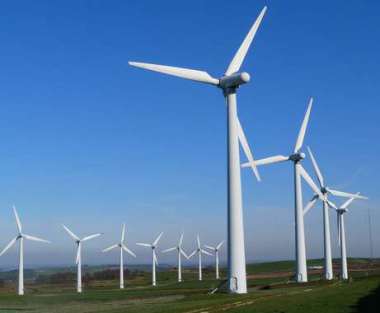 End of Tony Abbott’s war on wind farms gives green light to Capital Region projects, Canberra Times, December 13, 2015 Clare Sibthorpe Canberra Times reporter Prime Minister Malcolm Turnbull’s decision to lift Tony Abbott’s controversial ban on government investment in wind power has been embraced by the Australian Capital Region farming community.
On Sunday, Fairfax Media revealed Environment Minister Greg Hunt has issued the Clean Energy Finance Corporation with new orders that negate the Abbott government’s June decree, which prohibited the $10 billion green bank from investing in new wind power projects.
The move gives the Clean Energy Finance Corporation the green light to fund many wind farms in the Southern Tablelands – one of Australia’s fastest growing wind investment regions – enabling them to progress from planning to construction.
Crookwell farmer and NSW regional organiser for the Australian Wind Alliance, Charlie Prell, said wind farms now able to access funding include Collector, Rye Park, Yass Valley, Bango, Rugby, Crookwell two and three, Capital two, and Boco two.
“All of these wind farms will contribute massively to the local economy, not only during construction, but over the life of the wind farms,” Mr Prell said.
“It’s giving farmers in these regions a passive income stream with making our operations more sustainable, financially and environmentally, and giving local businesses the opportunity to participate in construction activities.”
Under the new mandate, the corporation will be allowed to invest in any wind projects provided they involve “emerging and innovative” technology, although it does encourage it to “focus on offshore wind technologies”.
Mr Prell said the wind farms already operating in this area have contributed significantly to small business, particularly in Goulburn, Bungendore, Taralga and Crookwel……..http://www.canberratimes.com.au/act-news/end-of-tony-abbotts-war-on-wind-farms-gives-green-light-to-capital-region-projects-20151213-glmer9.html
Australian Renewable Energy Agency (ARENA) funding new solar technology to reduce solar costs
 ARENA supports new, cheaper solar technology to reduce cost of renewable energy in Australia, IBT By Darwin Malicdem on December 07 2015 The Australian Renewable Energy Agency (ARENA) is aiming to reduce the cost of renewable energy in the country by providing a funding boost to an innovative solar cell technology. The new perovskite solar cells could significantly be cheaper than and as efficient as existing solar cells.
ARENA will be providing about $892,000 to CSIRO for the development and application of guidelines for assessing the performance of the perovskite solar photovoltaic (PV) cells. The materials of perovskite can be used in solar cells with a less cost and labour intensive process compared to silicon.
ARENA aims to accelerate the development of perovskite solar PV cells in the country. “If perovskite solar cell technology matures to commercialisation, it has the potential to provide cheaper power from the sun,” said ARENA CEO Ivor Frischknecht.
CSIRO is planning for new methods and guidelines applicable to perovskite solar cells, as international standards to measure solar PV cell performance are only applicable for silicon wafer cells…….http://www.ibtimes.com.au/arena-supports-new-cheaper-solar-technology-reduce-cost-renewable-energy-australia-1490089
Queensland Premier says “focused on solar and wind’ but also ‘committed to coal’
 Queensland to boost renewable energy target in wake of Paris climate agreement, Palaszczuk says, ABC News 13 Dec 15 By Jessica van Vonderen Queensland will look to lift its renewable energy target in the wake of the Paris agreement to tackle climate change.
Envoys from 195 nations agreed on the weekend to transform the world’s fossil fuel-driven economy within decades and slow the pace of global warming to well below 2 degrees Celsius.
Premier Annastacia Palaszczuk said her government was focused on wind and solar farms, while maintaining a commitment to coal……
University of Queensland’s Matt McDonald, a reader in international relations who attended the negotiations in Paris, told 612 ABC Brisbane there were lots of discussions about mining, in particular the proposed $16 billion Carmichael coal mine in central Queensland.
“It does raise a series of questions about whether Australia and businesses really want to commit to that scale of investment into fossil fuel, given all the signals that are pushing in the other direction,” Mr McDonald said.
“So there’s a lot of concern about a future of that type of mining program.” http://www.abc.net.au/news/2015-12-13/firm-focus-on-renewables-palaszczuk-says/7024762
1 This month


Help Aunty Sue Protect Her Land and Sacred Sites From Destructive Rocket Testing.
.

Australians deserve the truth
about
AUKUS – https://aukuspublicinquiry.com/

PETITION – To: Prime Minister Anthony Albanese and the Australian Labor Government

of the week – Australians for War Powers Reform (AWPR)
To see nuclear-related stories in greater depth and intensity

