Environment Minister Greg Hunt full of praise for Clean Energy Finance Corporation
the new Greg Hunt was full of praise for ARENA and the CEFC, listing them as one of the “successes and tangible outcomes” his government had overseen.
“The Clean Energy Finance Corporation and the Australian Renewable Energy Agency are our major instruments to research, develop, test, and demonstrate emerging technology and solutions,” Hunt said.
while we welcome this change in tone, it is worth noting that the ARENA, CEFC and CCA Abolition Bills are still on the House of Representatives and Senate Notice Papers, meaning the government hasn’t formally changed their policies to abolish them.
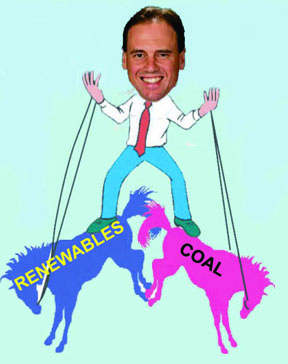 Hunt hails ‘green shift’, praises ARENA, CEFC http://reneweconomy.com.au/2015/hunt-hails-green-shift-praises-arena-cefc-24228 By Sophie Vorrath on 14 October 2015 Pop news quiz: Which Australian politician said the following this week: “It gives me great pleasure today to share my views on the required ‘green shift’ toward a more vibrant, resilient and low emissions society.”
If you answered Richard di Natale, you are wrong. It was Greg Hunt, in a speech titled “Australia’s Green Shift”, delivered to Australia’s Norwegian Embassy on Wednesday.
Yes, the federal environment minister – who as recently as July this year described the Labor Opposition’s comparatively ambitious renewable energy and emissions reduction targets “a triple-hit on electricity prices” – is now all about shifting to green, and wants everyone to know it.
“The Australian Government is driving this transformation in Australia and working globally to build a future that reflects the Sustainable Development Goals,” he said – a sentence it is safe to say he would never had uttered under his former boss, Tony Abbott. Continue reading
With solar power, rooftop panels have exceeded grid parity
 Rooftop solar costs vs the grid: A city by city guide http://onestepoffthegrid.com.au/rooftop-solar-costs-vs-the-grid-a-city-by-city-guide/ By Giles Parkinson on October 21, 2015 You may have heard of the expression “grid parity”. In the case of rooftop solar panels, it is the point where the cost of energy supplied from your own rooftop solar array falls below the cost of grid-power.
It is also known as “socket parity”, because it compares the price of rooftop solar power to the cost of grid-sourced power at the electricity sockets in your house.
Australia was one of the first countries in the world to reach grid or socket parity – thanks to its high electricity prices (largely due to soaring network costs), and its excellent sunshine. There are now nearly 100 countries that have reached the same benchmark.
But Australia has not just reached socket parity, it has smashed it. In most cities in Australia, the cost of rooftop solar is now less than half the price of grid-based power. Indeed, even some utilities offer to install rooftop solar on your roof for free, and charge only 11c/kWh for the output.
A new report from Beyond Zero Emissions, which recommends Australia set a path to 100 per cent renewable energy, highlights those cost differences. Continue reading
Kerang, Victoria, gets economic boost from Lalbert solar farm
 Lalbert solar farm near Kerang tipped to boost jobs as Solar Choice secures investor for $550m project ABC News, The company behind one of the largest solar farms in Australia says it expects the project to create up to 150 jobs for northern Victoria.
Construction of the $550 million solar farm on a 526 hectare property at Lalbert, west of Kerang, should start midway through next year, after the company Solar Choice secured an investor to finance the project.
The farm will have a production capacity of 350 megawatts and has the potential to power about 220,000 homes…….
Gannawarra Shire’s Roger Griffiths said the farm was another step towards developing Kerang’s future as a centre for renewable energy investment.
“What this does is just offers that bit of diversity, it props up our rate base and it provides a lot of other benefits right throughout the community,” he said.
“So we’re more than happy to have it on board and fingers crossed that everything runs smoothly and we see a booming new industry in and around Kerang in the next five to 10 years’ time.” http://www.abc.net.au/news/2015-10-16/lalbert-solar-farm-near-kerang-tipped-to-boost-jobs/6859508
Wind farms seek contracts in Australian Capital Territory
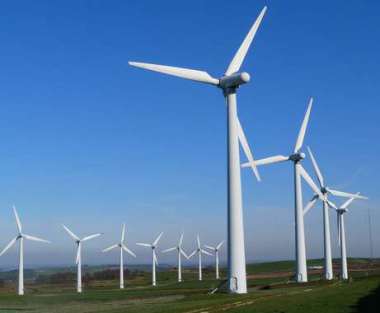 Fifteen wind farms vie for ACT contracts as second auction round closes, Canberra Times, October 16, 2015 Stephen Jeffery The Canberra Times reporter Environment Minister Simon Corbell believes the ACT is still a strong renewable energy “buyers’ market” after receiving 15 proposals to supply Canberra with 200 extra megawatts of wind power from 2018.
The territory government’s second large-scale wind energy auction closed bidding on Wednesday, having attracted only three fewer proposals than the last round in February.
The closure of bids in the “reverse auction” process, in which wind farms compete to be among two or three to supply the ACT with energy in exchange for a feed-in tariff, comes as the Department of Environment and Planning’s annual report showed 18.5 per cent of the territory’s energy was supplied from renewable resources in the last financial year.
The figure, up from 14.2 per cent in 2010/11, showed a major acceleration in renewable power uptake was needed if the government was the reach its target of green energy supplying 90 per cent of the ACT’s needs by 2020. But the document also notes successful wind farm bidders from the first auction are due to come online between 2016 and mid-2017, contributing to about 25 per cent of the ACT’s expected electricity demand in 2020.
Mr Corbell said the winning farms from the most recent auction would contribute an additional 25 per cent of forecast 2020 demand to the supply, while solar farms launched between 2014 and 2016 would provide an additional three per cent.
“This second wind auction will cut over half of the emissions associated with electricity usage in each and every Canberra household,” he said.”Our early review of bid pricing indicates we are still in a very strong buyers’ market.”………
The government plans for the bulk of renewable energy infrastructure to be in place by 2018, with a target of green energy supplying 80 per cent of electricity in that year.That would leave only 10 per cent of power to be switched to renewables in the final two years before the target is achieved.
An interim report released earlier this year showed the ACT’s greenhouse gas emissions had fallen 8 per cent between 2011/12 and 2013/14. http://www.canberratimes.com.au/act-news/fifteen-wind-farms-vie-for-act-contracts-as-second-auction-round-closes-20151014-gk9i1s.html#ixzz3olgThmLR
South Australia: subsidy for large-scale solar photovoltaic (PV) projects
 Rooftop solar subsidies for SA business http://www.heraldsun.com.au/news/breaking-news/rooftop-solar-subsidies-for-sa-business/story-fni0xqi4-1227569000315
CLIMATE Change Minister Ian Hunter says the subsidy for large-scale photovoltaic (PV) projects, between 10 and 50 megawatts, will help businesses take advantage of a $100 million commonwealth funding pool aimed at increasing the uptake of solar panels.
“This is a great opportunity for potential developers to bring the cost of solar PV down to a price comparable to wind energy,” Climate Change Minister Ian Hunter said on Wednesday.
Energy utilities face challenge as community energy increases
 Community energy projects pose challenge for mainstream suppliers, The Age, October 11, 2015 Angela Macdonald-Smith Energy Reporter A gradual loss of trust in mainstream electricity suppliers and a growing sense of local engagement have driven huge growth in community-based renewable-energy projects in Britain, with a similar trend potentially taking hold in Australia.
Volker Beckers, the former head of British energy supply giant Npower who now chairs London-based Albion Community Power, said traditional large energy suppliers risk losing customers to the smaller, local outfits.
Community ventures typically take advantage of community support to push renewable energy projects through planning processes, while building a customer base that in some cases in Britain have reached into the hundreds of thousands, eroding the market share of larger utilities. A surge in community energy projects in Britain, where they now number as many as 5000, was creating “healthy competition” for the big six utilities, which were having to quickly respond with increased customer focus, he said.
“Community energy means business models have to become more customer centric,” Mr Beckers told Fairfax Media while in Melbourne to attend a conference. “In my view the big utilities which can respond and adapt as quickly as the small-scale renewable-energy companies can do will survive. Others will have to completely redefine their business model.”
Mr Beckers pointed to research carried out in Europe that found the “net promoter score”, a recognised method of gauging the loyalty and support of a firm’s customers, was typically 20-35 per cent higher for community energy companies than traditional utilities. Support from a local community can be 20-30 per cent higher for a wind farm that is being built by a local company, for example, rather than a more anonymous mainstream utility, because people believe that the benefit of having local generation will flow back to that community.
Mr Beckers said the ventures were “an example of the shared economy in the energy area”, where people were more supportive of a product where it gets generated. That leads to lower administration and operating costs, with savings flowing back to customers in the community.
“It’s a win-win for both sides, customers and companies alike,” he said.
Australia has an increasing number of community energy projects, put at 70 by non-profit organisation Embark Australia, which works to accelerate the uptake of community renewable energy. About 16 are already generating power……….. http://www.theage.com.au/business/energy/community-energy-projects-pose-challenge-for-mainstream-suppliers-20151007-gk3vq3.html#ixzz3oUuoUgeT
Broken Hill’s solar mega-plant operational this year
Broken Hill mega-plant solar panels lift the roof http://www.theaustralian.com.au/national-affairs/climate/broken-hill-mega-plant-solar-panels-lift-the-roof/story-e6frg6xf-1227565295647?sv=2fcdf280bb239bfc36e6b071c20e2458 OCTOBER 12, 2015 Sid Maher
The final panels on the biggest large-scale solar power station in the southern hemisphere will be installed at Broken Hill today, paving the way for the plant to be fully operational by year’s end.
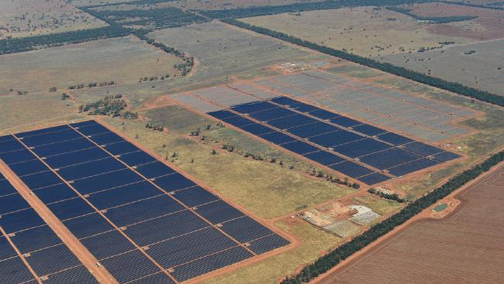
The 53-megawatt solar plant, a partnership between AGL and First Solar, will work in conjunction with the 102MW Nyngan solar plant to produce enough electricity to power about 50,000 average Australian homes. The Nyngan plant began operating six months ago. “There is a real sense of momentum driving large-scale solar in Australia today,’’ Australian Renewable Energy Agency acting chief executive Ian Kay said.
The large-scale solar plant begins operation as more than 1.4 million households in Australia have solar panels on their roofs, providing the highest penetration at the household level in the world.
However, the government is trying to drive more solar uptake at the commercial level as part of the 23.5 per cent renewable energy target. Environment Minister Greg Hunt has set a priority of increasing the uptake of utility- scale solar as part of the government’s renewable energy mix.
The government through ARENA had provided $166.7 million towards the $440m AGL Solar Project.
“As well as powering Australian homes with renewable energy, this project is also assisting AGL to transition towards a decarbonised economy. It’s a win-win scenario,’’ Mr Hunt said.
Mr said there was $350m available through ARENA and the Clean Energy Finance Corporation to further accelerate growth in the sector. ARENA has a $100m large-scale solar round that could double the capacity of large-scale solar.
AGL executive general manager group operations Doug Jackson said the Broken Hill Solar Plant was already generating up to 27MW of renewable energy into the grid and the remaining 26MW was expected to be brought on line this month.
First Solar’s regional manager for the Asia Pacific, Jack Curtis, said the project combined industry leading thin film modules and construction techniques. He said the Broken Hill plant contained 677,760 of First Solar’s advanced PV modules. The Cadmium Telluride modules offered significant efficiency and reliability advantages over typical crystalline silicon modules, Mr Curtis said.
National Affairs Editor
A network of micro-grids for Australia’s energy future?
Australia’s energy future could be network of micro-grids http://reneweconomy.com.au/2015/australias-energy-future-could-be-network-of-micro-grids-84534 By Giles Parkinson on 13 October 2015
The creation of micro-grids is seen by many leading players as an obvious solution to Australia’s soaring electricity costs, where the grid has to cover huge areas, at the cost of massive cross-subsidies that support it.
The major network operators in Queensland, NSW, South Australia and Western Australia see micro-grids as an obvious solution to the challenge and cost of stringing networks out, sometimes more than 1,000km away from the source of generation.
In Western Australia and Queensland, these subsidies amount to more than $500 a household. The cost of service to regional consumers in Queensland is far above the cost of service to those in the south-east corner. To address this, these states are proposing to take some small communities, and towns like Ravensthorpe in Western Australia off the grid. In New South Wales, some towns are taking the initiative themselves.
In northern rivers region, the township of Tyalgum revealed it is considering a micro-grid that would allow it to largely, or entirely, look after its own energy needs.
Indeed, the whole Byron shire is considering micro-grids as part of its efforts to become “zero net emissions” within the next decade, and to source 100 per cent of its electricity needs from renewables.
But micro-grids are not just about grid defection. While it will make sense for those towns and communities at the edge of the network to become self-sufficient and disconnect entirely, most micro-grids will remain connected to the network, helping to reshape a centralised grid to one focused on more efficient decentralised renewable power generation sources and storage. Continue reading
Solar cars for Australia
R** Solar cars tested in tough NT conditions ahead of World Solar Challenge 2015
On a remote road an hour out of Darwin, dozens of solar-powered cars have been pushed to the limits for the past two weeks.
http://www.abc.net.au/news/2015-10-11/solar-cars-tested-in-nt-conditions/6842916
R** Solar car on track to become Australia’s first road-legal solar vehicle.
3 October 2015. This group of students are the latest in a long line of undergraduates from the University of New South Wales that have been working on solar cars.
http://www.abc.net.au/radionational/programs/offtrack/sunswift-solar-car/6810376
Australian Capital Territory inviting Tesla Motors to research renewable energy
Canberra asks Tesla Motors to host research presence in ACT , ABC News 10 Oct 15 The ACT Government is pitching to one of the world’s leading renewable energy companies, asking it to consider establishing a research hub in Canberra. Chief Minister Andrew Barr last week sat down with executives at US giant Tesla Motors at the company’s headquarters in California.
Tesla are already selling electric cars in Australia – as well as developing new storage technology for renewable energy. Mr Barr wants the company to set up a research and development presence in Canberra, highlighting the city’s investment in renewables.
A spokesman for Mr Barr said it was a “productive meeting”, and a formal letter had been sent to the company. In the letter to Tesla management, Mr Barr said Canberra offered a “unique location advantage” for the renewable energy industry.
“The ACT has the most aggressive renewable energy and emissions reductions targets in the nation, by a significant margin, and amongst the most aggressive in the world,” he said. “Our region also includes a world-class expertise in renewable energy and energy storage technology research and development, across both public and private organisations.
“Employment in the ACT renewable energy sector grew over 400 per cent during the last five years.”
From next year, Tesla’s wall-mounted Powerwall batteries will be available in Australian homes.
The company will be utilising software from Canberra start up firm Reposit Power when Powerwall is launched, allowing solar panel owners to sell power back to the grid. Mr Barr used the Canberra-based company’s success was an example as to why Tesla should make further ties with the capital.
“I understand Reposit Power’s technology is unique and is an example of the innovative environment in Canberra,” he said……http://www.abc.net.au/news/2015-10-10/canberra-launches-bid-to-tesla-motors-to-host-research-hub/6843812
Perth home entirely powered by solar energy shows the way
 Perth gets first home powered almost totally by solar http://www.abc.net.au/news/2015-10-08/first-perth-home-almost-totally-solar-powered/6835726 By Kathryn Diss A Hilton home has become the first in Perth to use the Sun to meet almost all of its power needs by storing the energy in batteries while still remaining
 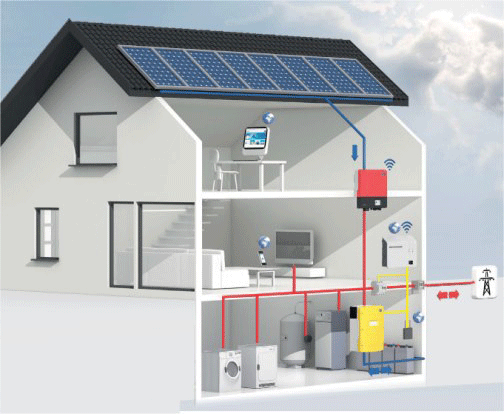 connected to the power grid. (diagram at left not realistic!)
The home uses solar for 97 per cent of its power needs and also offloads excess supply onto the grid, in what could become a mainstream feature in the future.
Environmental scientist Josh Byrne built the home in Perth’s southern suburbs two years ago with a 10-star energy rating.
But despite having an energy efficient home solar panels on his roof, Mr Byrne was still paying power bills.
So, Curtin University’s Jemma Green proposed a battery storage trial at the home to try to further reduce his power bills. She had spent the past year researching and getting approvals for the project while seeking funding to pay for the batteries and her research. Continue reading
New South Wales town Uralla shows the way to q100% renewable energy
NSW town provides blueprint for 100% renewable energy communities, One Step Off The Grid By Giles Parkinson on October 6, 2015 (interesting diagrams), The NSW town of Uralla has outlined plans to go 100 per cent renewable energy, in a government-sponsored blueprint that could become the model of many other towns in NSW and other states to follow suite.
The Zero Net Energy Town – the Uralla Case study – was released today and describes a two-stage process that the town could adopt to go 100 per cent renewable, or “zero net energy”. It is a blueprint that others can follow, and two dozen towns in the state have already expressed interest.
The good news is that Uralla – population 6,034 and in the heart of Barnaby Joyce’s New England electorate – can get most of the way to their council’s objective of becoming “zero net energy” just by using measures that are proven and that will save them money.
These include things such as LED lighting and home insulation, and producing energy on site, particularly with solar PV. These measures will save the town around $2.2 million a year in energy costs, the study finds. Continue reading
Study finds that storage for solar energy can replace gas in our electricity networks
Storage can replace gas in our electricity networks and boost renewables http://reneweconomy.com.au/2015/storage-can-replace-gas-in-our-electricity-networks-and-boost-renewables-21141 By Dylan McConnell on 6 October 2015 (Good graphs on original)
Energy storage is often considered the holy grail of the electricity sector. Tesla’s Powerwall home battery system, for instance, allows households to store energy from solar panels, to be used when the sun isn’t shining. It is seen as a vital piece of the puzzle in a future with more renewable energy.
Storage is great for households, but could also be as important in the wider electricity network. Here’s how it could work. Continue reading
New low-cost, high efficiency solar panel launched in Australia
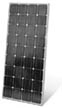 SunEdison Launches World First P-Series Solar Panel in Australia October 6, 2015 Energy Matters Global solar leader SunEdison, Inc. (NYSE:SUNE) has today launched its low-cost, high efficiency SE-P265NPB solar panel; available exclusively in Australia.
This 265W panel is set to play a significant role in the nation’s solar power revolution and is the first SunEdison panel available in the Australian market.
“This module boasts all the hallmarks of quality Australian installers have come to expect; including a very low temperature coefficient, 35mm silver frame and MC4 connectors,” said SunEdison Australia Managing Director, Jeremy Rich.
SunEdison’s first foray into the Australian market with the SE-P265NPB polycrystalline solar panel offers an outstanding model efficiency of 16.2% and a better return on investment for Australian consumers based on the higher volume of watts per module. Multi-MPPT transformerless inverter compatible, the SE-P265NPB features a positive power tolerance and is Potential Induced Degradation (PID) free.
As a vertically integrated Tier-1 manufacturer, SunEdison has an impressive track record in the development and operation of solar power stations, with 50 years experience in the production of silicon and solar technology…….
ADDITIONAL INFORMATION:
- The SunEdison SE-P265NPB solar panel is a 60-cell module with four bus bars per cell, helping maximise its energy harvesting capabilities.
- This panel is considered a “greener” module in terms of embodied energy as cells are fired in furnaces at triple the density of other systems.
- The bus bar printing technology enables printing of both cell fingers and bus bars in two separate steps, meaning great precision and allowing the print pattern for fingers and bus bars to be independently optimised.
- Sealed process bars are used to avoid contamination of the cells.
- Cells that do not pass rigorous testing processes are on-sold to other manufacturers for use in lower-spec panels.
- The SE-P265NPB comes with a 10 year limited warranty on materials and workmanship, and a 25 year linear power warranty.
BROCHURE AND DATASHEET:
Report shows opportunity for clean energy jobs worth $370 bn
Australian clean energy jobs could be worth $370 bn in 10 years http://reneweconomy.com.au/2015/australian-clean-energy-jobs-could-be-worth-370bn-in-10-years-39526 By Sophie Vorrath on 29 September 2015 Australia’s renewable energy industry could generate $370 billion worth of jobs over the next 10 years using current technology, a new report has found. The report, released on Tuesday by Beyond Zero Emissions, aims to illustrate how Australia can transition from coal-fired power to renewables, shifting the economy along with it.
“Our research with Melbourne University into energy generation in Australia shows that we can create $370 billion of green energy jobs with current technology, instead of using coal-fired power stations,” said Beyond Zero Emissions CEO Stephen Bygrave.

When you add to this smart homes and buildings, as well as low-carbon land use, high speed rail and electric vehicle options, the green jobs climb towards $1 trillion dollars in value, Dr Bygrave says.
The report’s findings coincide with a new policy proposal from the Greens that calls for a levy to be imposed on coal mining companies to help pay for the transition away from fossil fuels, including for the rehabilitation of retired mines and retraining workers for clean energy jobs.
BZE is also set to launch a new book on October 2, at the Smart Future Cities Conference showing how easily existing Australian homes can be retrofitted to eliminate electricity and gas bills – a follow-up to its Zero Carbon Australia Buildings Plan, that was researched over 3 years.
“The Buildings Plan showed that all residential and commercial buildings in Australia could be converted to generate as much energy as they consumed, creating $270 billion of green jobs in the construction industry,” Bygrave said.
“The new book, The Energy Freedom Home, shows how every home can produce more energy than it consumes. And with rising electricity and gas prices and falling rooftop solar prices, Australian households can affordably revolutionise the way they power their homes.
“Our research shows that millions of ordinary Australian homes can be transformed to be high performing, comfortable and cheaper to run. The transformation is easy since 1.4 million homes already have rooftop solar.”
To illustrate their theory, BZE along with the University of Newcastle have retrofitted a brick veneer family home in North Lambton, Newcastle, that was originally built in 2000.
The retrofits, which began in 2009 and are based on the guidelines provided by the Energy Freedom Home program now save the household $1,200 a year on power bills, with credits during the year. By 2013 the house was transformed into a comfortable, passive solar house, generating more energy from the PV system in the year than it uses.
“We removed the gas systems for health, safety and cost reasons, and have found we use less energy now than when we had both electricity and gas,” said the house’s owner, who monitors it for energy, water, temperature and humidity.
As part of the Smart Future Cities conference, the home in North Lambton will be open on 10am and at 10:30am on Saturday 3rd October for free limited tours.
1 This month

of the week – Australians for War Powers Reform (AWPR)
To see nuclear-related stories in greater depth and intensity
 Antinuclear