The 3 demands at the top of the IPA’s 75-strong wish list for a “better Australia” were the repeal of the carbon price, the abolition of the Department of Climate Change and clean energy funds.

 Tony Abbott’s Year of Leading Dangerously, REneweconomy By Giles Parkinson on 8 September 2014 Just over a year ago, after it became clear that Tony Abbott’s Coalition would sweep to a federal election victory, the predominant thought among many in the clean energy and climate policy space was: Well, he won’t be that bad, will he?
Yes, he will, and he has been. As we noted in our pre-election summary on September 6 last year, there was every reason to believe that anAbbott government could be worse than people feared. And not it should be noted, by doing anything Abbott hadn’t already flagged, but by doing exactly what he said he would do.
Several months earlier, RenewEconomy flagged Five ways Abbott could kill renewables in Australia. They were: Kill the carbon price, the Clean Energy Finance Corp and the Australian Renewable Energy Agency, make the renewable energy target unworkable, and disband the Climate Change Authority.
He has acted on all five. Here’s how he has progressed.
Can the carbon price. Tick.
Can or dilute the Renewable Energy Target, and make it unworkable. Tick. The Abbott government now has the recommendation it needs, from the controversial Warburton Review, now it just a matter of implementing them. The uncertainty in the industry has brought all large-scale investment to a halt.
Axe the Climate Change Authority. This was one of the government’s first acts. It hasn’t yet succeeded, but the CCA has been gutted by the departure of many key personal. It has been sidelined from the RET Review, and its key findings on climate policies and emissions targets are ignored by the government, and ipso facto by mainstream media.
Can the Australian Renewable Energy Agency. It’s still trying, with a vote to be presented to the Senate later this month. Funding has already been cut, but Abbott wants to cut all future funds and absorb the running of the committed projects back within a government department.
Can the Clean Energy Finance Corporation. It tried, but once again the Senate has stymied its attempts. Still, the CEFC can be directed where to direct its funds, and it is increasingly likely it will be given modified mandates to help out with the discredited Emissions Reduction Fund, the key plank of Direct Action policy.
A lot of what Abbott has sought to achieve in his first year was mandated by the Institute of Public Affairs, the conservative think tank that has become a voice for extreme right views and vested interests. Continue reading
In spite of Tony Abbott, Australia’s Largest Solar Farm Opened
Australia’s Largest Solar Farm Opened http://www.energymatters.com.au/index.php?main_page=news_article&article_id=4477 4 Sept 14 Canberra’s Royalla Solar Farm, owned by Spanish company Fotowatio Renewable Ventures (FRV), was opened on Wednesday.
The 24MWp solar power plant is located just south of Tuggeranong, approximately 23 kilometres south of the Canberra CBD and will generate enough electricity to supply around 4,500 Canberra homes.
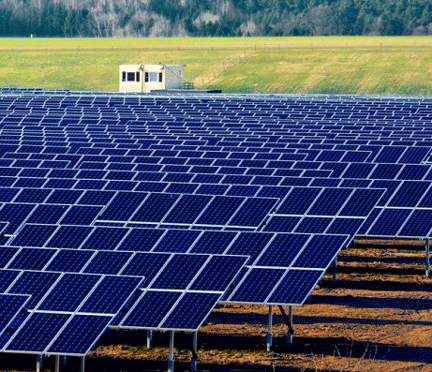
Comprised of 83,000 solar panels, it’s not only largest solar farm in Australia, Royalla is also the first large scale solar facility connected to the National Electricity Market (NEM).
Among those at the opening were ACT Environment Minister Simon Corbell, Spanish foreign minister Jose Manuel Garcia-Margallo, Australian Solar Council CEO John Grimes and Clean Energy Council Acting Chief Executive Kane Thornton.
“This project has helped to demonstrate the exciting opportunity and massive benefits that large scale solar can deliver in Australia,” said Mr. Thornton.
“The Royalla Solar Farm is a showcase for what is possible using today’s technology, and has utilised many local businesses, suppliers and contractors to deliver a real boost to the local economy.” Continue reading
Australia’s top engineers call for keeping Renewable Energy Target as it is
“The RET is clearly delivering benefits for Australia, and Engineers Australia does not support moves to dilute or weaken its operation.
“Engineers are central players in delivering Australia’s energy infrastructure, and we stand by the need to create a long-term and sustainable energy sector in this country. Ongoing investment in renewables is a critical component of our energy security mix.
“Heavy reliance on fossil fuels creates a major vulnerability in our economy. If significant global action on greenhouse gas reductions occurs, the consequences for Australian energy exports and even Australia goods and services, due to their high carbon footprints, may be severe.
-“While we welcome strong public debate on this topic, we urge the government to stand by the RET in its current form. Engineers Australia believes that the RET should be retained to at least its present level,” said Dr Howe. –
Ignore incorrect Report on Renewable Energy Target – say investors
 any changes to the RET scheme would need to pass through both the House of Representatives and the Senate and that Mackay Sugar would “continue to engage in the political process to urge government to adopt a more favourable approach”
Investors urge Australian Prime Minister Tony Abbott to ignore renewable energy target report KERRIE SINCLAIR THE COURIER-MAIL SEPTEMBER 02, 2014
AUSTRALIAN super funds with hundreds of millions of dollars ring-fenced for investment in renewable energy are poised to invest offshore unless the Federal Government makes a strong, long-term commitment to renewables.
The Investor Group on Climate Change, which represents Australian institutional investors with $1 trillion in funds under management, on Tuesday said it will urge the Abbott government to ignore a report which it said used incorrect investment assumptions. Continue reading
Victoria’s Liberal government systematically destroying renewable energy
 Napthine government accused of attacking renewable energy incentives August 31, 2014 Josh Gordon State political editor for The Age. The Napthine government has been accused of systematically destroying renewable energy as green groups prepare for a ground offensive targeting key electorates ahead of the November 29 election.
A report by Environment Victoria claims the government has made 25 attacks on clean energy, including “extreme” restrictions on wind farms, removing the 20 per cent emissions reduction target from the Climate Change Act, cutting and restricting the solar feed-in tariff, scrapping a commitment to replace street lights with energy efficient light bulbs, cancelling the solar hot water rebate and opposing the carbon tax.
Since the November 2010 election, the environment has remained on the periphery of state politics. In the latest Age/Nielsen poll, it ranked sixth on a list of nine key issues for voters, behind health, education, jobs, financial management and public transport.
But with the Abbott government considering breaking an election pledge by scaling down Australia’s renewable energy target, the state government is believed to be examining various options for an environment policy to counter voter concerns.
attacks were announced to the public before the 2010 election, and it is difficult to see how they have benefited the people of Victoria.”
The antagonistic claims follow a submission to the federal review of Australia’s renewable energy target by the Napthine Government. It argues the renewable energy target – ensuring that at least 20 per cent of Australia’s electricity is derived from clean sources – should be scaled back and suggests gas-fired power and power generated using waste wood from native forest logging should be counted……..
Mr Wakeham said renewable energy had increased its share in spite of state government policy, largely because of the federal renewable energy target, something which the state government’s colleagues in Canberra want to destroy.
Environment Victoria is preparing to target key marginal electorates – including some of the crucial “sandbelt” seats on the eastern side of Port Philip Bay – using hundreds of trained volunteers.
Environment Victoria chief executive Mark Wakeham accused the government of running an agenda to destroy clean energy because it was “joined at the hip” with coal companies, risking billions of dollars of investment.

“Most of Victoria’s policy agenda for a cleaner and more efficient energy mix has been deliberately dismantled over the past four years,” Mr Wakeham said. ”
Powershop – Australia’s only real renewable energy electricity retailer, has the others worried
 Electricity Retailers Paying Price For Undermining RET http://www.energymatters.com.au/index.php?main_page=news_article&article_id=4472 1 Sept 14, According to national solar provider Energy Matters; electricity retailers backing a reduction or abolishing of the Renewable Energy Target are paying the ultimate price – losing customers.
Energy Matters CEO Jeremy Rich says households and businesses disgusted by the position of some retailers – including Energy Australia, Origin Energy and AGL – are taking their business elsewhere.
“We’re aware some of our customers have made the shift to other electricity retailers purely on the basis of support for the Renewable Energy Target,” says Mr. Rich. “It’s not just solar households making the switch to RET-friendly retailers either – even some of those without panels installed are rebelling in a display of solidarity.”
“We certainly encourage households and businesses to shop around and select a retailer aligned with their own views about Australia’s clean energy future – and to let the retailer they are leaving know why.”
According to Greenpeace, Origin Energy, EnergyAustralia and AGL currently provide electricity to over three quarters of Australian households.
“‘The Dirty Three’ sometimes market themselves as environmentally conscious, but their ‘green’ initiatives are small compared to their investments in coal and gas generation,” says the group. “Recently these companies have been undermining Australia’s Renewable Energy Target.” One of the companies disillusioned consumers are gravitating to is Powershop; Australia’s first 100% carbon neutral energy retailer.
“Powershop believes support for renewable energy is demonstrated by deeds not words, and we know that our customers are looking to make their support for renewable energy real,” says part of a statement from the company; which was named the greenest retailer in Australia by Greenpeace and the Total Environment Centre in August.
Powershop’s offers are available to residents of Victoria only at this point in time. The company can be contacted on 1800 462 668.
Another company benefiting from the RET-inspired rebellion is Momentum Energy; which provides services in New South Wales, South Australia and Victoria.
Momentum Energy’s SmilePower offers clean energy from a hydro system that has been powering Tasmania for nearly 100 years. Electricity generated in Tasmania is transmitted across Bass Strait via the Basslink undersea cable and into the NEM (National Electricity Market). Momentum Energy can be contacted on 1800 SWITCH (1800 794 824).
“Switching electricity retailers is usually a quick and easy process these days,” says Mr. Rich. “Often a few minutes on the phone is all it takes to find a comparable or even better deal. It’s a simple action that can save money while sending a very clear message – hands off the Renewable Energy Target!”
Dick Warburton’s RET Review puts thousands of Australia’s solar energy businesses at risk
Why Warburton wants to set solar industry back a decade REneweconmy, By Giles Parkinson on 1 September 2014 “………In the long term, it seems that the solar market in Australia – which could be leading the world – will be set back a decade.
That seems to be the clear and deliberate intention of the RET review panel, which says that large-scale solar farms are not needed, and not desirable. It expects its recommendations on the small-scale solar sector to set the market back by around 10 years.
Yingli Green Energy, the world’s biggest solar module manufacturer, warned that if these recommendations are adopted, Australia will be left behind in a world that is embracing renewable energy as a tangible player in the global energy mix.
“Australia’s extremely high levels of solar radiation mean that solar PV technology is particularly efficient in producing energy outputs,” Yingli’s Australian head Daman Cole said in a statement.
“This country can lead in the adoption, investment and innovation in solar energy. Academically, our universities lead the world in solar photovoltaic innovation, but regretfully the political uncertainty is hurting Australia’s solar industry.
“While we remain stranded in uncertainty around Australia’s clean energy future, the solar industry is experiencing strong growth in many other markets such as China, Japan, South East Asia and the Americas.
The problem with solar is that it is being adopted at a rate unforeseen and unimagined by the fossil fuel industry. Australia leads the world in residential rooftop solar, with more than one in five houses having solar systems, or 1.3 million homes, with a total of 3.3GW installed – even if it does trail in large scale installations. (The first utility-scale solar farm to be connected to the National Electricity Market will be formally opened this week).
Various official studies, such as those done by the market operator in WA, have predicted that installation rates could treble – reaching three-quarters of residential homes, and 90 per cent of businesses. New financial models would allow rental homes and apartments to become part of the market.
This is causing massive problems for generators, such as those owned by the Queensland government and recently sold by the NSW government, because it is eating away at demand, andrevenue, at what used to be the most profitable time of the day.
The RET review variously describes rooftop solar as causing cross-subsidies, an assessment repeated by the AEMC in its analysis of network costs and tariffs, but rarely are the benefits brought to the front. Last week, the South Australian network operator said that the 565MW of rooftop solar in that state – it has the highest penetration – had delivered clear benefits in moving and reducing the peak, and for grid stability.……..
A new report by the REC Agents Association on Monday warned that 1,000 small and medium-sized businesses could collapse if the RET Review recommendations were implemented.
It says that the solar industry currently comprises more than 3,800 businesses, with annual retail sales of more than $2.5 billion.
“Should the Government axe or significantly reduce the Renewable Energy Target, we would see a 40-50 per cent reduction in demand for solar and the closure of at least a thousand small businesses,” it says.
It says the absolute majority (96%) of the 3,800 solar businesses in Australia are SME sized businesses, and more than 93 per cent of the roughly 21,000 Australians who work in the Australian solar industry work in SME’s.
“It has been one of Australia’s fastest growing employment and business sectors, having grown twenty fold in the last decade. In less than ten years, the industry has created more than $17 billion of direct retail sales and tens of billions of flow on expenditure on in-direct support services.” http://reneweconomy.com.au/2014/warburton-wants-set-solar-industry-back-decade-57479
Australians to lose jobs, businesses, if RET scaled back
Renewable Energy Target: Who benefits from scaling back the scheme?NEWS.COM.AU AUGUST 30, 2014 “……..WHO LOSES?
The clean industry sector has railed against scaling back the scheme, warning it would gut future investment in renewables in Australia, damage the $10 billion already committed and put 21,000 jobs at risk.
Australians would also lose subsidies for installing devices such as solar hot water, panels or wind turbines. This is worth about $2500 for those installing a typical three kilowatt solar power system.
Australian National University’s Professor Andrew Blakers, said most of Australia’s fossil fuel stations would be retired over the next few decades.
“The RET target of 41,000 gigawatt hours by 2020 drives renewable energy investment at a sufficient annual rate to reach more than 90 per cent renewable electricity if continued until 2040,” he told The Conversation. “Thus Australia has the wonderful prospect of moving to a clean electricity future at approximately zero net cost, as retiring coal and gas power stations are replaced by renewable energy.”
Infigen Energy has warned the proposed changes offered the “worst outcomes for electricity consumers”. The wind farm operators said modelling in the review showed the RET would result in a net benefit to consumers compared to closing the scheme.
“The claims that the RET would drive up electricity prices have once again been shown to be incorrect,” Infigen managing director Miles George said in a statement. He said the results were driven by ideology, not facts.
Clean Energy Council CEO Kane Thornton said scaling back the scheme would only serve old-coal generators well past their use-by date.
“These recommendations would stop renewable energy in its tracks, stifling competition within the Australian energy market and ultimately disadvantaging electricity customers,” he said in a statement.
The wider industry has also warned of a sovereign risk issue if a message is sent globally that Australia is not open for business
“A huge solar farm in Mildura has halted development; Hydro Tasmania stands to lose millions, and countless other innovative businesses, as well as the jobs and families they support, are now in danger,” Ms Milne said.
“The Renewable Energy Target is cutting pollution, rolling out investment, creating jobs and will bring power bills down. Why on earth would we get rid of it?
“Once renewable energy projects are built, they cost almost nothing to run. They are crucial to keeping power prices under control, because the cheap energy they produce drives down the wholesale price of power.
“The reality is that the fossil fuels sector can’t handle the competition from renewables, so the Abbott government is trying to delay the inevitable……..http://www.news.com.au/technology/environment/renewable-energy-target-who-benefits-from-scaling-back-the-scheme/story-fnjww1r5-1227042169344
Yea! Boo! Australian government destabilises the solar power industry
Australia’s solar installers face another boom and bust http://www.smh.com.au/environment/climate-change/australias-solar-installers-face-another-boom-and-bust-20140829-10a17h.html#ixzz3C28RqcIn Solar energy installers are expecting a boom then sharp contraction of their businesses as the Abbott government prepares to take an axe to renewable energy support. Continue reading
Australia led the world in solar power – and then what happened?
 How Australia Perfected Solar Power and Then Went Back to Coal https://news.vice.com/article/how-australia-perfected-solar-power-and-then-went-back-to-coal By Julian Morgans August 30, 2014 There was a time in the 1980s when Australia led the world in solar technology. To begin with, Australia receives more solar radiation per square foot than anywhere on the planet, and that presents an obvious advantage. But the true catalyst was geography: two thirds of the country consists of uninhabited desert. This posed problems for engineers tasked with constructing a national telephone network in the early 1970s. The solution was to build remote relay stations powered with solar energy, which at the time was a fledgling, expensive technology. Yet by 1978 the national provider, Telecom, had developed reliable solar cells that could be installed affordably across the country and be infrequently maintained. International recognition came in 1983 when Perth was tapped with hosting the Solar World Congress.
Fast-forward to 2014 and Australian solar power is in a very different place. This week a proposed solar farm with 2,000 dishes—capable of powering 30,000 homes—was canceled amid uncertainty about the future of renewable energy. This comes at a time when every one of the country’s proposed solar farms are on hold and coal operators push legislation to strangle solar proliferation. So what happened? Continue reading
No surprise! Abbott’s RET Review Panel comes up with a climate sceptic report
 Costs of Australia’s renewable energy target ‘not justifiable’: review, SMH, August 28, 2014 – Lisa Cox National political reporter Tony Abbott has been given cover to break an election promise not to touch Australia’s renewable energy target after his hand-picked review panel recommended the scheme be dramatically cut back.
Clean energy industry leaders said the findings of the review, headed by businessman and climate sceptic Dick Warburton, represented the “worst case scenario” and would cost thousands of jobs and more than $10 billion in investment if the government adopted its recommendations. Clean Energy Council acting chief executive Kane Thornton said the proposals would “shut down the future of the industry” in Australia………
The panel recommended two options for Australia’s renewable energy target, which is currently set at 41,000 gigawatt hours of electricity from large-scale renewable energy by 2020 – now equivalent to about 27 per cent of expected generation.
Under the first option, the scheme would be closed to new investment beyond those under construction or winning full financial commitment within a month of the change. This scenario would slash the target to about 15 per cent.
Under the second option, the target would be set at 20 per cent. The target would be reset each year and new renewable energy power stations be given approval only if electricity demand increased. The target was one of the few climate change-related measures to enjoy bipartisan support before last year’s election………
Any change proposed by the government will set the scene for another parliamentary fight, with Labor, the Greens and Palmer United Party all opposed.
Analysis conducted for the report found coal-fired power stations would be the biggest beneficiaries of a cut in the target. The review acknowledged that the scheme had lowered wholesale electricity prices and that its impact on household bills over time would be “relatively small”. But the panel found the cost for emissions-intensive companies was not justifiable, and called on the government to find lower cost alternatives to cut carbon emissions.
The Greens said it was no surprise that a review led by a climate sceptic had “trashed” the target. Greens leader Christine Milne said both options put forward would destroy the renewable energy sector. “I’m glad this dangerous and ignorant report is finally public so everyone can see it for the climate denier drivel it is,” she said.
It is expected to be at least a fortnight before the government responds. http://www.smh.com.au/federal-politics/political-news/costs-of-australias-renewable-energy-target-not-justifiable-review-20140828-109m04.html#ixzz3BoVhIvbL.
Review of Renewable Energy Target helps fossil fuel lobby, aims to close large scale renewable energy schemes
RET Review panel calls for large-scale, solar schemes to close REneweconomy, By Giles Parkinson on 28 August 2014 The RET Review panel appointed by Prime Minister Tony Abbott has effectively rubber stamped the lobbying of the fossil fuel industry and called for the closure of Australia’s renewable energy target to new entrants as one of two options it is recommending to the government.
It is also calling for the immediate closure, or rapid wind back, of the small-scale renewable energy scheme, which supports rooftop solar and solar hot water. It says this scheme should either close now, or by 2020 at the latest. It also says it should be restricted to installations of less than 10kW – effectively cutting out the commercial-scale solar market. (It was previously open to 100kW systems).
As for the large-scale scheme, the panel says the two options are effective closure to new entrants, or a form of modification to restrict it to a “real” 20 per cent of demand.
If the government accepts either of the recommendations, Australia would become the first country to either ditch a renewable energy target, or wind it back – in much the same way as it was the first to scrap a carbon price.
Abbott is said to be in favour of the most drastic action, which is effective closure to new entrants. He personally appointed the panel, rather than follow the statutory requirements to have the review done by the Climate Change Authority, which just 18 months ago rejected the same arguments that the new panel has now accepted.
Although any legislative changes will be resisted and probably stopped in the Senate, the uncertainty will be enough to kill investment in large scale renewables. Changes to the small scale target could be done without the need for parliamentary approval……..
Here is the full list of recommendations:……..
http://reneweconomy.com.au/2014/ret-review-panel-calls-for-large-scale-solar-schemes-to-close-39648
Australian National University devises lightweight solar gear for soldiers
Australia’s Solar Soldiers http://www.energymatters.com.au/index.php?main_page=news_article&article_id=4467 28  Aug 14 The Australian National University says it will seek to commercialise its design of a wearable solar panel system for soldiers after successful field tests demonstrated the technology could easily replace heavy battery packs normally used to power combat equipment.
The Soldier Integrated Power System (SIPS) was developed by scientists at the ANU Centre for Sustainable Energy Systems. SIPS will dramatically reduce the weight members of the Australian Defence Force must now carry in order to power an increasingly tech-heavy arsenal.
“Much of the equipment carried by Australian soldiers requires heavy battery packs, such as night-vision goggles, lights, GPS devices and communication systems. Currently, soldiers depend on conventional batteries to power these devices,” said ANU Project Development Manager Dr Igor Skryabin.
Energy Matters reported on the ANU’s plan to integrate SLIVER cells into a solar vest for soldiers in 2011, when nations such as the USA and UK were fitting infantry with portable solar panels and inverters for use in combat missions. But the ANU team were primarily focused on designing a simple system that would ensure the mobility of Australian infantry.
The solar panel system is based on the ANU’s SLIVER solar cell – flexible solar cells the thickness of a human hair but with a high power-to-weight ratio of more than 200 watts per kilogram. They are also bi-facial, allowing either side of the cell to convert light to energy.
In a 72-hour field test under real mission conditions, the ANU flexible panels produced sufficient power to maintain battery charge. In sunny conditions the panels fully charged the batteries.
“The trials were performed by soldiers in a real mission environment with normal usage of power,” Dr Skryabin said. “Based on the success of this demonstration, ANU will be commercialising the project outcomes with industrial partners.”
The SIPS project was a collaboration between the ANU, CSIRO and Tectonica Australia, as part of a $2.3 million contract awarded under round 15 by the Capability and Technology Demonstrator (CTD) Program managed by the Defence Science and Technology Organisation.
Pandering to coal-fired utility companies. Tony Abbott is out to destroy the Renewable Energy Target
Abbott and some in his Cabinet are close to the coal-fired electricity generators whose business model the target is helping to destroy.
Unused to competition, even competition that coal-fired generators knew was coming, they feel wronged.
But their beef is nothing to that of the less well-connected solar and wind generators who would be hung out to dry by a changed or axed target.
They’ve invested $11 billion to date on the understanding that both sides of politics meant what they said when they set the requirement at 41,000 gigawatt hours. Some will go bankrupt if the Renewable Energy Target is abandoned. Others will never invest in Australia again.
 Renewable energy target in the spotlight http://www.smh.com.au/comment/renewable-energy-target-in-the-spotlight-20140825-107zn1.html August 26, 2014 Peter Martin Economics Editor, The Age So concerned was Greg Hunt about the future of the solar industry that he went skydiving at Tooradin in his electorate of Flinders to back an industry he said was in freefall.
That was in 2008 when he was shadow environment minister. Labor had means tested its solar panel rebate. More recently, after the 2013 election, he promised $500 million for a One Million Solar Roofs program and a further $50 million each for a Solar Towns and Solar Schools program. He was going to plant 20 million trees and keep the Renewable Energy Target.
The budget killed his One Million Solar Roofs program, shrank his Solar Towns program to just over $2 million and made no mention of his Solar Schools program.
The Renewable Energy Target stands, just. Introduced by the Howard government in 2001, it forces electricity retailers to buy an increasing number of gigawatt hours of electricity from renewable sources peaking at 41,000 a year in 2020 and staying there for a decade.
It’s given foreign and Australian investors the confidence to build $10 billion of new wind and solar farms knowing there’ll be a market for what they produce.
Even better, it’s had bipartisan support. The targets are locked in by law.
Cutting or axing them mid stream would leave the investors stranded with little hope of making good on the money they’ve outlaid. Continue reading
AUDIO: Over 20,00 jobs at risk if Renewable Energy Target is changed
 AUDIO Jobs at risk from renewable energy target changes http://www.abc.net.au/am/content/2014/s4073035.htm Matthew Doran reported this story on Saturday, August 23, 2014 ELIZABETH JACKSON: A green energy analyst says any changes to the Renewable Energy Target, which is currently under Federal Government review, will affect far more than the environmental sector in Australia.
 It’s estimated that more than 20,000 people are employed in a variety of roles across the renewable industry sector, from construction to research and development. But the ongoing uncertainty is spooking a growing number of developers.From Adelaide, Matthew Doran reports. Continue reading
1 This month
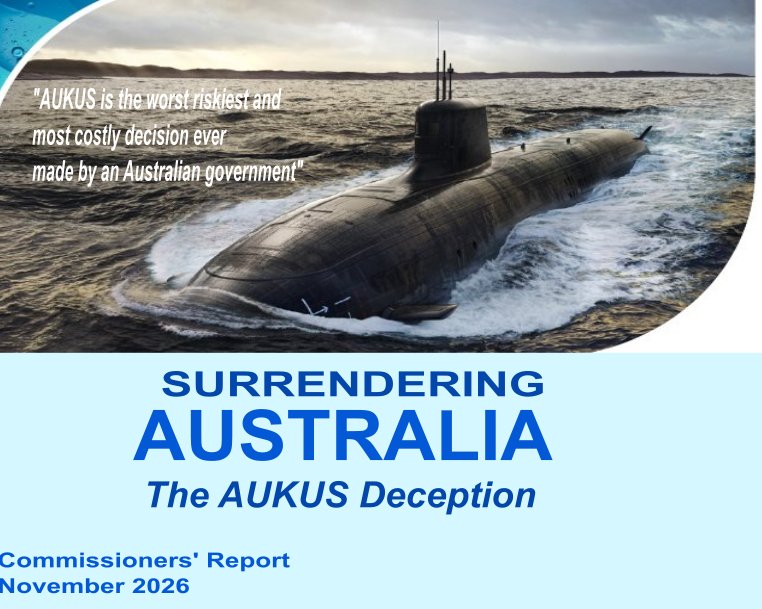
Read the Public Inquiry Report, the Commissioners’ report, Surrendering Australia: The AUKUS Deception is available to download for free at aukuspublicinquiry.com. Or just watch the replay of the National Press Club Luncheon.
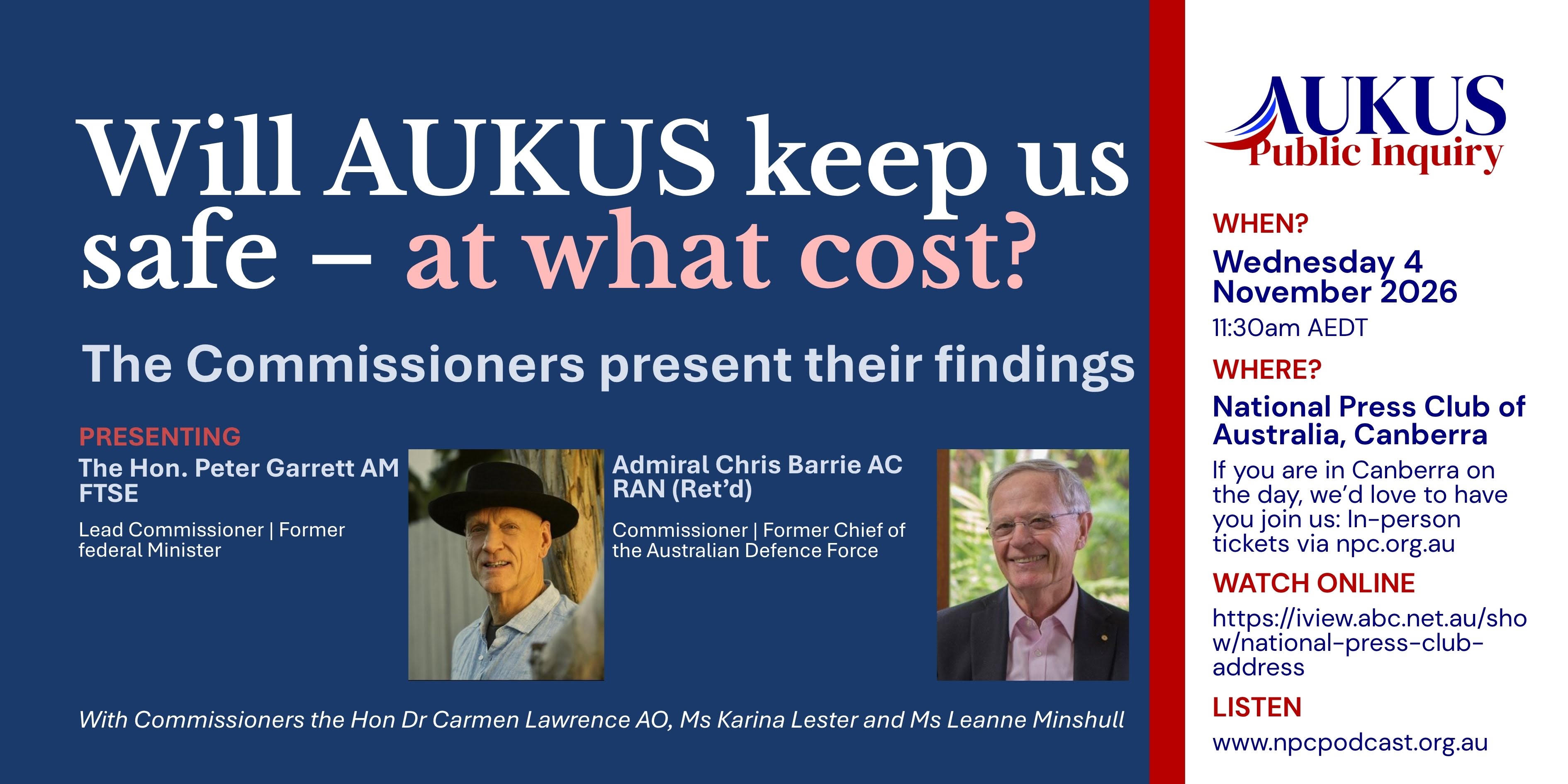
4 November – Will AUKUS keep us safe – at what cost?
the Commissioners of the AUKUS Public Inquiry present their findings at the National Press Club of Australia in Canberra. iview.abc.net.au/show/national-press-club-address
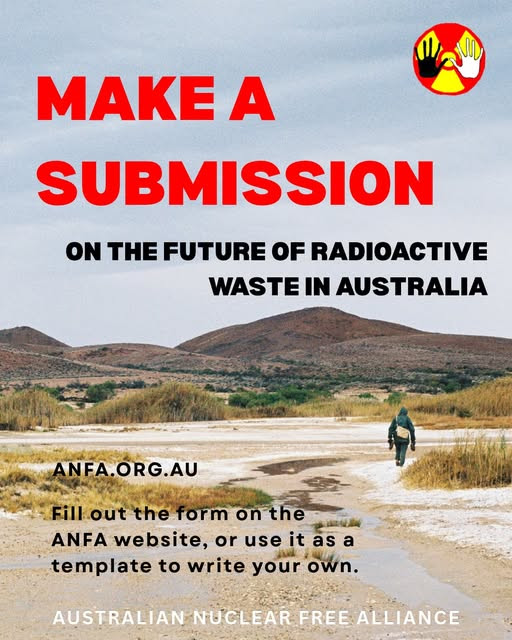
Submissions to the federal government’s new draft framework close on the 13th November 2026.
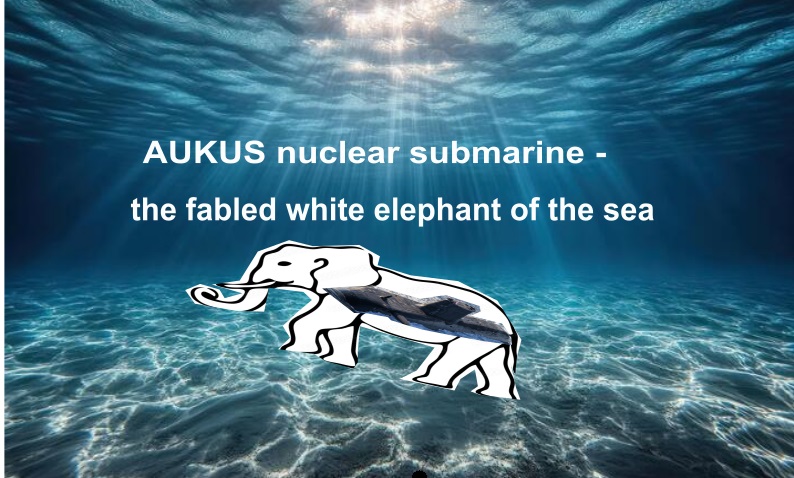
Australians deserve the truth
about
AUKUS – https://aukuspublicinquiry.com/

PETITION – To: Prime Minister Anthony Albanese and the Australian Labor Government

of the week – Australians for War Powers Reform (AWPR)
To see nuclear-related stories in greater depth and intensity

