Some solar panels are shoddy quality: vast majority are good quality
 Solar experts claim multi-billion dollar subsidies wasted on cheap and dodgy panels, The Age February 22, 2015 Heath Aston Political reporter More Australians are buying cheap rooftop solar panels that fail long before their promised lifespan, prompting claims a federal rebate scheme needs to be overhauled to prevent dodgy systems receiving public subsidies.
Solar industry experts say lax rules covering the scheme – which provides incentives of up to $4350 for a $5500 rooftop system – mean it is not always delivering the environmental benefits promised.
They blame an explosion of cheap, mainly Chinese-produced solar panels that have flooded the market over the past five years that are failing to provide the 15 years of clean power expected. Installers in four states told Fairfax Media that the worst systems stopped working within 12 months, with others “falling apart” within two or three years.
Clean Energy Council chief executive Kane Thornton played down the scale of failures and warned against blaming production faults on systems from one country.
He said the “Chinese success story” had led to prices for solar tumbling dramatically, allowing more households to invest in green energy.
“If someone is getting a subsidy there is an expectation that the benefit to the environment and society equals or outweighs that cost. There are cases of systems not running for 15 years and people have got rid of them, but from our point of view most will run for 25 years,” he said.
“There are cases that come up just like in any industry, but failure rates are low.”…….
Nigel Morris, a solar industry analyst and consultant to the Clean Energy Council, said he wasn’t aware of any statistics that showed a widespread problem.
“Is the industry perfect? Absolutely not. Do we occasionally have quality issues with product and installations? Yes, we do … There is evidence to say it is not endemic.” http://www.theage.com.au/environment/solar-experts-claim-multibillion-dollar-subsidies-wasted-on-cheap-and-dodgy-panels-20150221-13kqub.html
A recent Choice survey found, while more than 80 per cent of solar system owners were satisfied with what they had bought, 17% of owners of Chinese-made solar systems and 11 per cent of those with a German inverter had experienced problems of some kind.
South Australia: huge solar project from Origin Energy
 Origin Energy to build Australia’s biggest rooftop solar array http://reneweconomy.com.au/2015/origin-energy-build-australias-biggest-rooftop-solar-array-78459 By Giles Parkinson on 19 February 2015
Origin Energy and Zen Energy Systems are to build a 3MW solar system on the rooftop of the old Mitsubishi factory in Tonsley, Adelaide, in what will be the largest rooftop solar array in the country.
The awarding of the contracts was announced by the South Australian government this week. The intention to build the array was first announced late last year. Origin Energy will own the rooftop array and sell the output to the tenants of the Tonsley high tech centre (artists impression to the right), under a power purchase agreement that it is looking at replicating elsewhere in the country.
Indeed, Origin Energy managing director Grant King says the company is “changing its view” on electricity markets, and is particularly interested in the economics of utility-scale solar in Australia.
“We are working hard to understand economics of utility scale solar in Australia,” King told an analysts briefing.
Origin has also revealed it has bought a 40 per cent stake in the 69MW Javiera solar project in Chile (pictured right), which is being built by SunEdison in the Atacama desert, without subsidies, and will supply electricity mainly the nearby Los Pelambres copper project.
Origin Energy says this will also help it understand the economics of large-scale solar – both in international markets, and in Australia.
Zen – a tenant in the Tonsley complex – has been awarded the installation and maintenance contract.
“It’s a great job to get to ramp up our capacity and profile with a number of multi-megawatt jobs in the pipeline currently evolving for ZEN around Australia,” managing director Richard Turner said.
South Australia Innovation Minister Kyam Maher said the tender for the 3MW solar project had attracted a huge response from tenderers. “Tonsley is fast gaining a reputation as an innovation precinct with a focus on sustainability and urban renewal, so it’s not surprising that a project of this size has attracted significant interest,” he said.
Climate Change Minister Ian Hunter said the project would add to South Australia’s credentials as a national leader in renewable energy.
Hunter noted that South Australia has 41 per cent of the nation’s operating wind farm capacity and one in four households have rooftop solar panels.
“If South Australia was a nation, we would rank second only to Denmark as the world leader in terms of installed wind power on a per capita basis,” he said.
Origin’s head of energy markets, Frank Calabria, said the company was delighted to be named preferred partner for the innovative Tonsley project, which will see Origin build, own, and retail the electricity generated by the 3MW solar array.
“We are excited about this project, which will be the largest rooftop solar array Origin has installed, as it builds on our solar leadership and demonstrates our renewed focus on our solar business.
$1 billion solar farm for Toowoomba, Queensland
 Toowoomba council approves $1bn solar farm STAFF WRITERS, JOHN CONROY FEBRUARY 12, 2015 http://www.couriermail.com.au/news/queensland/toowoomba-council-approves-1bn-solar-farm/story-fnn8dlfs-1227216531992 APPROVAL has been given for the largest solar farm in the country — and possibly the largest proposed in the world — to be built in Queensland.
Construction on the 13,000-acre Bulli Creek site near Powerlink’s substation near Millmerran, southwest of Toowoomba, is expected to start next year. It will be on cleared, flat cattle grazing land.
Developer Solar Choice has received approval from Toowoomba Regional Council for a total footprint of up to 2 gigawatts over the next eight years.
The solar farm will be built in stages of multiple 100MW-plus phases, within a total planning approved envelope of 2GW.
“The Bulli Creek project is attracting attention from a range of global investors prepared to take a medium- and long-term view,” Solar Choice said, stating it remained open to a large-scale investor.
“The Bulli Creek Solar Farm is one of a very small and select number of mega-scale solar projects that Solar Choice has strategically located at transmission nodes on broad-acre lands with high solar irradiation.”
Solar Choice said the approval of the potential 2GW farm shows claims the 2020 Renewable Energy Target can’t be met are false.
Managing director Angus Gemmell said if the farm reached its full potential it would take Australia 25 per cent closer to achieving the mandated 41,000GWh target by 2020.
“There are a lot of people saying there’s not enough of a pipeline to reach the target. This project shows it could absolutely be reached,” Mr Gemmell said.
“We need 8GW by 2020 to reach the target and this project could represent one quarter of that.”
Mr Gemmell called on the Federal Government to end the uncertainty around the large-scale RET, saying that ‘big solar’ had strong support among regional communities.
“The (Toowoomba) council decision is an exciting milestone, we’re a third of the way there,” he said.
By the end of 2015, Broken Hill’s huge solar energy plant will be completed
Broken Hill solar plant on track to complete at end of 2015, change of community engagement approach ABC News By Gavin Coote The company developing the $200 million Broken Hill solar plant says the project is on track to be complete at the end of this year.
The 140 hectare development will be the second largest in Australia, trailing the sister project in Nyngan, and began construction last October.
AGL project manager Adam Mackett said it was set to employ 150 people in the peak phase of construction, and currently 60 per cent of the employees were local……http://www.abc.net.au/news/2015-02-03/broken-hill-solar-plant-on-track-for-completion-by-end-of-2015/6064714
Massive Upper Hunter wind and solar farm underway, despite Abbott govt
Upper Hunter wind and solar farm operator undeterred by RET changes http://www.abc.net.au/news/2015-01-31/upper-hunter-wind-and-solar-farm-operator-undeterred-by-ret-cha/6059566 The company behind a massive Upper Hunter wind and solar farm has not been deterred by renewable energy target changes, with work on its project now underway.
Pamada plans to have 34 wind turbines, along with its solar plant and associated substations, at its Kyoto energy Park near Scone. Access roads have been constructed, ahead of work starting on a site compound.
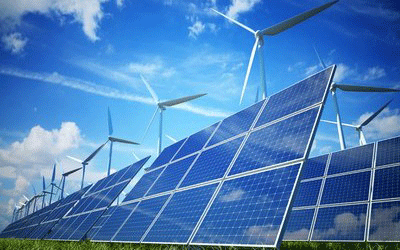
Reductions in the Renewable Energy Target (RET) have hampered the project, but project director Mark Sydney said he is determined to push ahead. “We’ve got a lot of support in the community, for a whole lot of reasons,” he said. “Yes we have started work.
“We have access happening, but we will then continue in a measured way to do everything we can until hopefully government policy changes a little bit better for investor outlook in renewables.”
Mr Sydney said his company is undeterred by the RET changes, mindful of the benefits the project could have. “With the new technology, if you just looked at the residences and businesses aside, probably the Upper Hunter, the Hunter and half of Newcastle would come from just the wind turbines themselves,” he said. “Most of the Hunter could easily be served by just the wind farm.”
Solar power systems in Australia save money for households, businesses, schools and community organisations
 Solar power systems can contribute significantly to reducing energy costs for a household, business, school or community organisation. And with consistent rising electricity prices, the benefits of solar will only continue to accumulate over the 25 year life of an installed system. “The benefits of solar can be multiplied when used in conjunction with other energy-saving measures
Instead of making it difficult, the Government should be making it easier for educational institutions, religious organisations and small businesses to cut their power bills,”
Why Supporting Renewable Energy in Australia Will Save Both Money and the Environment: Geelong Solar Power Company Reveals http://www.webwire.com/ViewPressRel.asp?aId=195168#.VMvuodKUcnk WEBWIRE – Tuesday, January 27, 2015
VICTORIA, Australia January 2015 – When Tony Abbot took his seat as Australian Prime Minister in September 2013, the Liberal Party took a conscious step away from prioritising climate change on the political agenda and backing the Renewable Energy Target scheme (RET scheme). Since then, it has become increasingly clear that the coalition is hesitant to support environmental progression in commercial industries, evidenced by the most recent proposal to cut the solar rebate to small and medium sized businesses, including schools and churches. Continue reading
Australian entrepreneurs ready for the solar energy revolution: let’s keep Renewable Energy Target
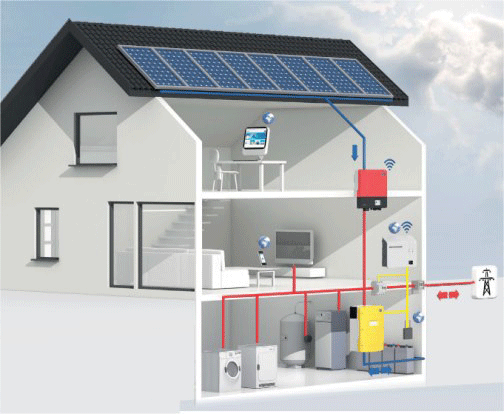 There are over 2 million homes with solar PV or solar water heating installed on their homes, which equates to 24 per cent of all Australian homes. This growth, the shift in consumption patterns and changing paradigm of how our electricity industry delivers energy is a direct result of the Renewable Energy Target. It is making Australians more personally responsible for the way they consume electricity. The “age of entitlement” is over and the Renewable Energy Target is a positive driver.
A Labor win in Queensland will be a win for solar energy

 Queensland Labor Promises Solar Support http://www.energymatters.com.au/renewable-news/queensland-labor-solar-em4657/ January 26, 2015 Queensland Opposition Leader Annastacia Palaszczuk has committed Labor to boosting the state’s renewable energy sector if it wins the election.
“In office Labor will call for proposals to generate 40-megawatts of base-load renewable energy including solar power. This will be used as a trial for more renewable power plants,” said Ms. Palaszczuk.
Labor would also investigate introducing competition in the power sector by enabling remote area councils to generate electricity from renewables to be sold at a lower cost to consumers.
“We will also initiate a renewable energy study to investigate measures to create an export-orientated renewable energy economy here in Queensland,” said Ms. Palaszczuk; who additionally promised an independent review to determine a fair price for a solar feed-in tariff based on all the benefits it provides, “rather than the requirements of large companies.”
Ms. Palaszczuk accused the LNP of being stuck in the past and pointed out after the last election Campbell Newman reneged on promises on renewable energy; cutting $660 million in related programs.
Clean Energy Council Chief Executive Kane Thornton said while Queensland has seen a huge number of households install solar power systems, the state trails behind others when it comes to new large-scale renewable energy developments.
“The Queensland Opposition’s plan to generate 40 megawatts of power from solar and other renewable sources is a welcome move, particularly in light of the ongoing review of the federal Renewable Energy Target – which has caused investment in the sector to collapse,” said Mr Thornton.
The Australian Solar Council also welcomed Labor’s announcement.
“Labor has released a solar plan for the Sunshine State, which is responsible and affordable and will restore confidence in a battered solar industry,” said Australian Solar Council CEO John Grimes.
“Labor’s solar policy stands in stark contrast to the contempt shown by the Newman and Abbott Governments towards solar families and workers.”
If the Council’s Save Solar Community Forum in Townsville last week is anything to go by, the LNP should be very worried – it was a standing room only event. The next forum is at Springwood on Thursday, January 29.
Last week the Greens also unveiled their solar policy, which would ensure all Queensland solar households are paid a fair price for their electricity exports. The policy would also provide 100,000 extra households the opportunity to control their power bills by installing solar.
Rooftop solar to become the most cost competitive primary source of energy in Australia.
In Australia more than 4 gigawatts (peak generation capacity) of solar panels are mounted on more than a million Australian roofs to date, adding up to about 7% of Australia’s electricity generation capacity.

As solar panels do not always produce all the electricity they possibly can, rooftop solar today contributes around 2% of Australia’s total electricity generation. But in some states during the day, solar’s contribution already reaches double digits. You can watch solar generation live here.
But what’s next for rooftop solar? It’s likely that costs will continue to fall, eventually making solar the dominant source of electricity in many parts of the world including Australia. Here’s the evidence. (graphs) ……… Continue reading
Clean Energy Finance Corporation boosts commercial Solar Energy with Power Purchase Agreements (PPAs)
 CEFC Provides $20 Million For Solar PPA Programs http://www.energymatters.com.au/renewable-news/cefc-solar-ppa-em4654/ January 22, 2015 Australia’s Clean Energy Finance Corporation (CEFC) has announced it will provide up to $20 million to accelerate the uptake of commercial solar power systems.
The senior debt finance will be provided to ET Solar Australia to go towards a Power Purchase Agreement (PPA) program. A solar PPA is a long term contract to purchase electricity generated by a solar power system installed at a company’s facilities.
There is huge scope to expand and deepen the solar PV market in the commercial sector,” said CEFC CEO Oliver Yates. “We see the PPA finance model as a way to remove the barrier of the upfront capital requirement which should enable many more Australian businesses to benefit from solar, reducing energy costs and lowering emissions.”
The CEFC backed program, already underway with a shopping center solar carport pilot project in Queensland, will see the installation of systems ranging between 30KW and 2MW. The program has an emphasis on major energy users; including shopping centers, mining and manufacturing businesses.
PPA’s provide long-term peace of mind on the price companies pay for the solar component of the power they use – and that electricity is significantly cheaper than the cost of mains grid supplied power. If grid electricity prices increase, overall savings will increase.
The PPA model overcomes the barrier of significant payback periods, enabling customers to achieve immediate savings on their energy bills.
The program isn’t the first time the CEFC has backed a solar leasing type initiative. Last year, the CEFC announced it will provide finance of up to $70 million for SunEdison programs offering long-term leasing and power purchase agreements for commercial and residential solar installations.
The CEFC says the PPA model has proven highly successful elsewhere and more than 75 per cent of new home solar power systems in California are installed under lease financing.
By the end of June last year, the Clean Energy Finance Corporation had contracted investments of over $900 million in projects with a total value of over $3 billion. Its 40 direct investments and 25 projects co-financed under aggregation programs are expected to achieve a positive net benefit Australian taxpayers.
Australia’s wonderful achievements in renewable energy, despite the Abbott government
The federal government’s decision to abolish the Renewable Energy Target (RET) is not only a planned demise of a potentially thriving industry but, to use the words of environmentalist David Suzuki, criminal negligence against future generations.
This is especially so in Australia’s rural communities, where renewable energy has always been a means of providing electricity when connecting to the grid is not viable. It is important now in times of prolonged drought that farmers can use some of their land to invest in solar and wind farms to subsidise their income.
Renewable energy rises to power https://www.greenleft.org.au/node/58094, January 24, 2015 By Lisa Hinde Despite the brutal cuts to leading renewable energy bodies by the Coalition government last year, incredible benchmarks in the field have been achieved.
Last month, a team operating out of the University of NSW recorded the highest level of efficiency for a photovoltaic solar panel, converting 40% of the light into electricity. The average efficiency of rooftop solar panels is about 15-18% so exciting possibilities exist with this huge leap in conversion. As the technology develops, the industry will experience an influx of more compact units capable of using even more of the sun’s energy with less space and equipment required.

September 30 marked the day that South Australia exceeded 100% of their required power using only wind and rooftop solar. This is bad news for fossil fuels in SA, which are effectively priced out of the market by renewables that are able to go as low as necessary to sell their power as it occurs.
The ACT showcased its entrepreneurial talent by securing the development of Australia’s largest solar farm by reverse auction. Switched on late last year, the solar farm generates 20 megawatts with the capacity to power 4500 homes, helping the ACT to achieve its target of 90% renewables by 2020.
On December 23 it was quietly announced that the second year of the carbon tax’s operation led to a 1.4% drop in total emissions (including a 4% drop in electricity). To somehow justify being the only country to abolish a carbon tax, Environment minister Greg Hunt campaigned relentlessly as to its ineffectiveness. Continue reading
Queensland: McKinlay Shire plans solar panels for business and Council buildings
McKinlay Shire solar levy to help businesses cut power bills ABC News, By Kate Stephens 22 Jan 2015, A north-west Queensland council says it is moving ahead with an innovate plan to help local businesses reduce their power bills.
The McKinlay Shire has put out an expression of interest for a renewable energy company to install solar panels on 14 local businesses and some council building…..http://www.abc.net.au/news/2015-01-22/outback-qld-council-sheds-light-on-solar-panels/6034296
Gunnedah Shire Council takes the solar power plunge
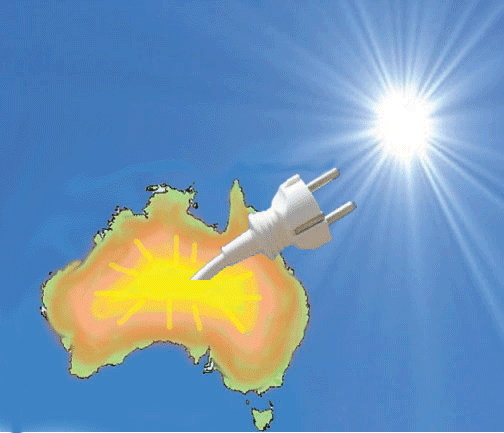 Gunnedah moves to solar power ABC News 19 Jan 2015, Gunnedah Shire Council is the latest in a string of local governments across the region to join a movement embracing solar energy to power public buildings.
The council is in the process of installing solar systems across a number of public buildings, including Council’s administration building, Gunnedah Shire Library and the works depot.
Mayor Owen Hasler said the buildings are historically high energy users and transitioning to solar is expected to save council thousands of dollars annually.
“We want to be seen as being proactive in reducing council’s carbon footprint, and secondly of course there’s also the financial implications,” he said.
“It reduces our operational costs and effectively makes savings for our ratepayers.
“For example in the depot, we’re expecting to save over $6,000 per annum and the administration building about $5,500.”……..http://www.abc.net.au/news/2015-01-19/gunnedah-moves-to-solar-power/6025214
Australia’s unstoppable solar energy revolution
“If you look at what the mainstream analysts are saying now, they are talking about the solar revolution,” said Parkinson. “Even the energy distributors in Australia, they are talking about the end of centralisation and the rise of the micro-grid.” According to Parkinson, solar is now at “grid parity” with traditional sources of electricity.
 “You can’t address climate change using heavily centralised, obsolete, hideously risky fission reactors,” Milne told Al Jazeera. “It’s a humiliating stance. Australia needs to phase out fossil fuels and move to 100 percent renewable energy for the climate – and for our economy.”
Australia’s rising solar power ‘revolution‘, Aljazeera, After record-breaking solar project, scientists question why coal-dominated nation ignores renewable innovation. Royce Kurmelovs 13 Jan 2015 Adelaide, Australia – Australian researchers broke the world’s solar power efficiency record last month with their design of a novel commercial energy system, raising hopes the fossil-fuel dominated country may someday switch off its reliance on coal.
Led by Professor Martin Green, the University of New South Wales team worked with a local company to create a highly efficient solar energy system that uses mirrors to concentrate sunlight onto a central solar panel to generate electricity.
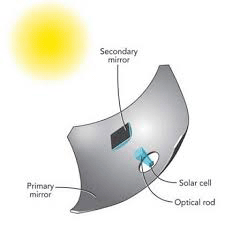 The method is known as concentrator photovoltaics (CPV), and the end product is a system with an efficiency of 40 percent – meaning 40 percent of the sunlight hitting the solar panels is converted into energy, the highest such level ever achieved.
Most importantly, the design uses readily available materials that makes putting the system into operation easier – and cheaper – than trying to commercialise more experimental designs.
Green, who is also the director for the Australian Centre for Advanced Photovoltaics, has a history of this kind of innovation.In 2011, he and his team built a solar cell that operated with 19.3 percent efficiency and soon after pushed this to 19.4 percent, edging out the previous record holder with 18.9 percent efficiency.
Off the grid
This kind of innovation has become the hallmark of the solar energy industry, and it is only going to grow, according to Green. Continue reading
Canberra’s Majura Valley solar farm will use advanced sun-tracking technology
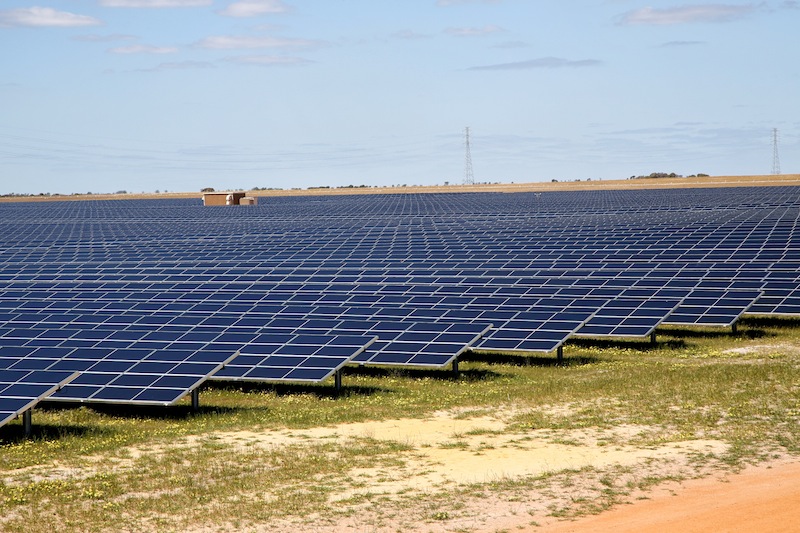 Majura Valley solar farm system tracks sun January 4, 2015 John Thistleton Reporter for The Canberra Times. Sun-tracking technology for solar panels will be deployed for the first time in Australia at a new solar farm in the Majura Valley on Canberra’s eastern fringe.
Solar Choice is developing and will operate the $6.5 million solar farm, which will feature a QBotix robotic tracking system, developed in California in 2012. The system is used in the United States, Japan and Europe.
Self-charging, track-mounted robots adjust the tilt and orientation of individual solar arrays throughout the day to gain maximum exposure to the sun.
Solar Choice, a brokerage firm which develops and manages solar projects throughout Australia and Britain, is finalising details for the 2MW first stage of its Canberra venture, which will generate about 3 million kWh of clean energy………http://www.canberratimes.com.au/act-news/majura-valley-solar-farm-system-tracks-sun-20150104-12hitb.html
1 This month

of the week – Australians for War Powers Reform (AWPR)
To see nuclear-related stories in greater depth and intensity
 Antinuclear