Solar air conditioning on show at Brisbane’s Clean Energy Event
 Kingtec Solar to Showcase Solar Powerered Air Conditioner in Australia’s Clean Energy Week Event Visit http://kingtecsolar.com for further information Event runs July 24-26 at the Brisbane Convention & Exhibition Centre Australia Melbourne, Australia, July 9th, 2013: Kingtec Solar, a recognized leader in solar powered air condition technology, is pleased to announce its participation in events at the Clean Energy Week, Australia’s largest solar event. Following its exceptional success last year (2012) in Sydney, where over 2500 delegates from local and international organization participated; this year’s events take place at the Brisbane Convention & Exhibition Centre from July 24th to 26th. …….
Kingtec’s current PV solar air conditioner line-up includes:
K25FT – Solar Split Ductless
K25CJ – Solar Window Air Conditioner
K25DZ – Solar RV Roof Top AC
and have special significance for businesses and homeowners in areas hit by constant blackouts or rolling brownouts.
Kingtec Solar’s unique PV-powered air conditioners are designed with simplicity and economy in mind, and are built to run using free and abundant solar renewable energy. We deliver 100% zero energy consumption for up to 7 1/2 hours on as little as 1000 watts of solar panels for a 16000 BTU AC. These air conditioners feature tri-energy inputs from any combination of solar, grid or batteries and can run in three modes: Energy Saving, Off Grid, or Hybrid.
And while you get a durable renewable energy solution, you not only save the planet by reducing your personal CO2 footprint, but also save on energy bills. Our air conditioners will run 100% on solar with grid or batteries! ……
To learn more about Kingtec Solar and it’s solutions, visit us online at: http://kingtecsolar.com/
Solar micro grids and off grid solar power – solutions for Australia
 NRG looking at solar-based micro grids in Australia REneweconomy By Giles Parkinson on 10 July 2013 NRG Energy, the largest privately owned power generation company in the US, says it is looking at entering the Australian market with off-grid and micro-grid solutions that will be based around solar and storage……..
Todd Michaels, a senior director with NRG Solar, its newly created subsidiary says some of the company’s large industrial customers, with significant operations in Australia, are looking at solar-based micro grids to reduce costs in their operations.
“They are burning diesel fuel and they want NRG to come up with micro grid solution to address that,” Michaels told RenewEconomy in an interview at the InterSolar conference in San Francisco. “Solar PV will be a large component of that solution.” Continue reading
A warning that some solar panels are inferior
 Inferior Solar Panels Invade Australia Energy Matters 9 JULY, 2013: Inferior solar panels are being sold to unsuspecting Australians, with the cost in lost energy production calculated for the first time at $3,261* per household.
It is estimated 397,545 Australian homes have inferior ‘Tier 3’ solar panels installed, which are generally considered lower-grade due to the way they are manufactured. Three tiers of solar panel manufacturers were defined in an independent report by Pike Research in 20112.
Energy Matters’ Nick Brass explains why so many people have installed these ‘Tier 3’ solar systems.
“Unfortunately, people don’t realise they’ve purchased a second rate system. Unlike many consumer electronics that have brands famous for quality, the solar market in Australia is dominated by unknown brands – even though premium Tier 1 panels such as REC and Panasonic exist 3. Tier 2 panels can also be solid performers, but performance can vary wildly between the various brands2.” Continue reading
Solar energy storage being developed in a big way in Nevada
Solar towers and storage – about to change the energy game? http://reneweconomy.com.au/2013/solar-towers-and-storage-about-to-change-the-energy-game-91721, By Giles Parkinson on 4 July 2013
The $1 billion Crescent Dunes project near Tonopah in the Central Nevada Desert, some 300kms north of Las Vegas, was developed by the Santa Monica-based SolarReserve and features the company’s market leading molten salt power tower technology with fully integrated energy storage.
What makes it unique and a potential game changer in the electricity industry is the flexibility and dispatchability of its power, meaning that it can deliver electricity whenever it is needed by customers; and its cost, which already beats diesel, is competitive with new build coal and gas generation.
The Crescent Dunes facility will have 10 hours of molten salt storage, which on average will allow it to deliver 110MW of baseload capacity to Las Vegas between the hours of 12 noon and midnight each day, when the city needs it most to power the lights and air conditioning of its casinos and entertainment palaces. It has signed a 25-year power contract with NV Energy, Nevada’s largest utility, to do that.
Tom Georgis, SolarReserve’s senior vice president of development, says the unique capabilities of the technology means that the plant could have been configured in any number of ways. With a 180MW turbine, for instance, it could have produced power for 10 hours each day, which was the original intention. With a smaller turbine, and more than 20 hours storage, it could have delivered 50MW of base-load power 24/7.
In the end, Nevada pitched for midday to midnight to suit its needs. In effect, the plant is providing baseload power for a fixed period each day – delivering the benefits of coal-fired power without the downsides, which is of course heavy pollution and an ability to be switched off at will or at regular intervals.
‘You can’t do that with a coal fired facility,” Georgis says of the Nevada contract. But the technology also allows it to compete with gas-fired generation, both in the ability to provide baseload and as a peaking plant.
Next year, SolarReserve begins construction of the 150MW Rice Solar Energy Plant in Southern California, which will act more like a peaking power station to suit that state’s needs. Proposals the company will take to Chile, Australia and the Middle East will likely be for baseload power. (We will explain more about those plans in the next two days).
“This should be the winning technology. It has all the attributes you looking for to displace conventional generation,” Georgis says. “It’s not just fulfilling renewable energy targets, you are displacing any new build fossil plants – from nuclear, gas and coal. This is going to change the discussion in energy markets, certainly around the idea that renewables are variable.”
Georgis says there is a lot of confusion about storage and what it means. He says the way to think about it is in the amount of electricity produced by a solar tower plant over a year……….

The Crescent Dunes plant will not be the first of its type, but it will be the biggest to date, and the first built to what Georgis describes as “utility scale”. The 18MW Gemasolar plant (pictured) has been operating in Spain for the last 18 months, and the 10MW Solar Two demonstration facility near Barstow in California’s Mojave Desert was operated by the Department of Energy in the 1990s.
Australian Government helps Tonga change from costly diesel to cheaper solar energy
ADB And Australian Government Helping Tonga Go Solar, http://www.energymatters.com.au/index.php?main_page=news_article&article_id=3823 4 July 13 The Asian Development Bank (ADB) and the Australia Government are kicking in to fund the construction and installation of solar power systems on nine of Tonga’s outer islands.
Tonga is comprised of 176 islands scattered over 700,000 square kilometres of the southern Pacific Ocean and is home to 103,000 people. Tonga currently depends on expensive and polluting imported diesel for 90% of its electricity generation. In some areas, the cost of electricity can be as high as 74 cents per kilowatt hour.
The Outer Islands Renewable Energy Project will help to change that by funding solar power systems on Eua, Vava’u and Ha’apai, along with four outer islands in the Ha’apai group as well as on Niuatoputapu and Niuafo’ou. The solar arrays will be connected to state and community owned power distribution networks on most of the target islands.
ADB will provide a $2 million (currency unknown at the time of publishing) grant from its concessional Asian Development Fund, while the Australian Agency for International Development (AUSAid) will provide a $4.5 million grant, to be administered by ADB.
The Government of Tonga will contribute $300,000 equivalent; for a total investment cost of $6.8 million.
The total installation will be reasonably small; around 1.25 megawatts capacity, but it will reduce diesel imports by an estimated 0.48 million litres a year. A litre of diesel generates approximately 2.6 kilograms of carbon emissions; so the project will offset around 1,248 tonnes of CO2 a year.
The Outer Islands Renewable Energy Project will be executed by Tonga’s Ministry of Finance and National Planning and will be implemented over 6 years with an estimated completion date of December 2019. Consultants will provide training on the operation and maintenance of the facilities along with management services that will extend for at least 5 years after completion of the training.
Tonga’s interest in solar goes beyond cheap electricity – the multiple effects of climate change pose a significant threat to the nation
Solar energy in Victoria continues to soar
 Victoria’s Solar Electricity Production Soars http://www.energymatters.com.au/index.php?main_page=news_article&article_id=3819, 2 July 13 Solar energy supplied 550 gigawatt-hours to Victoria in 2012 – 14 per cent of all renewable electricity – says the Clean Energy Council.
The CEC recently released its Renewable Energy in Victoria 2012 report; which provides an overview of Victoria’s electricity generation from renewable energy sources last year.
According to the report, the 550 gigawatt-hours figure was more than double solar’s contribution in 2011; which was 225 gigawatt-hours. In 2009, output was just 18 gigawatt-hours.
Installed solar panel capacity in 2012 in Victoria jumped from 270 megawatts to 418 megawatts. This was due to the uptake of home solar power, which accounted for all but 1 megawatt of installed capacity.
Uptake was spurred on by rapidly ballooning domestic power bills – and with more electricity price rises on the way; solar will likely continue to see solid gains.
While commercial solar installations were still a bit player last year, the CEC says low solar panel prices may see further uptake by the commercial sector during 2013.
The other renewable energy technology that saw significant increases in capacity and production last year was wind power. In 2012, Victoria’s wind farms generated 1674 gigawatt-hours, of clean electricity; up from 1280 gigawatt-hours in 2011.
The state’s 11 commercial wind farms over 1 MW in capacity generated enough electricity last year to provide the power needs of over 230,000 average Australian homes. Wind energy accounted for more than 27 per cent of Victoria’s renewable electricity generation capacity last year.
The report states Victoria’s installed renewable energy capacity has almost tripled since 2000, increasing from 668 megawatts to more than 1860 megawatts by the end of last year.
Victoria’s total renewable energy electricity generation was 3825 gigawatt-hours, in 2012; an increase of 874 gigawatt-hours, or nearly 30 per cent more than in 2011. The Renewable Energy in Victoria 2012 report was created with assistance from Sustainability Victoria. The full report can be downloaded here (PDF).
Productivity Commission agrees: solar energy not the cause of high electricity prices
 Productivity Commission Says ‘Go West’ For Solar http://www.energymatters.com.au/index.php?main_page=news_article&article_id=3818 2 July 13, The Productivity Commission’s Electricity Network Regulatory Frameworks final inquiry report laments that not enough small scale solar power systems have been installed facing west.
The report states average electricity prices across Australia have risen by 70 per cent in real terms from June 2007 to December 2012 – but doesn’t point the finger at solar. It acknowledges what has been known for years; network costs in most states are the main culprit and offers a series of recommendations for addressing the issues. Continue reading
Victorian Electricity Distributors quietly move to sabotage new home solar installations
 Electricity Distributors Cast Shadow over Solar 1 July 13, Victorian Electricity Distributors have quietly introduced new hurdles to the installation of grid connected solar systems. CitiPower and Powercor have both introduced a pre-approval process and criteria which are likely to result in many customers’ applications to install grid connected solar systems being rejected.
NECA Victoria Executive Director, Philip Green said “these criteria are likely to result in many rural customers being unable to connect to the grid while in urban areas customers will have their applications knocked back on the basis that there are too many existing solar systems in their area.”
“Your neighbours may all have grid connected solar, however the electricity distributors can knock you back – it seems to be a matter of first in, best dressed” said Mr Green. “In addition, these policies appear designed to hamper the spread of solar into the commercial and industrial sectors.”
The distributors justify their policies on the basis that grid connected solar has effects on power quality and network integrity issues.
“The community has suffered massive increases in electricity prices over recent years with much of this increase going to upgrade (some would say gold plate) the network” said Mr Green. “Unsurprisingly many consumers are looking to mitigate the high cost of electricity by installing solar and yet they’re being told that can’t connect to the network that they’ve helped pay to upgrade.”
“Distributors should not be at liberty to proceed and introduce restrictive policies that
will impede the community’s best efforts to help reduce its impact upon the environment,” said Mr Green.
The policies have not been widely communicated to either the community or sellers and installers of solar systems meaning that some customers who enter into sales contracts may never be able to conn ect to the grid. NECA also understand that other electricity distributors are likely to introduce similar policies.
Only last year, the Victorian Competition and Efficiency Commission released its Inquiry into Feed-in Tariffs & Barriers to Distributed Generation Final Report Power from the People. Neither this report nor the Victorian Government’s response to it canvassed or proposed policies like these. “We call upon the Victorian Government to intervene” said Mr Green.
–
Solar energy storage could be revolutionised by Australian invention
 Australian Invention Could Revolutionise Solar Energy Storage http://www.energymatters.com.au/index.php?main_page=news_article&article_id=3816 1 July 13, ANU researchers have developed a material that can store large amounts of power rapidly – and with very little energy loss. Based on the mineral rutile, it is a ‘dielectric’ material; which are used in the construction of capacitors.
The researchers say their material is superior to current capacitors in energy absorption, is cheaper to manufacture and can function effectively in a massive temperature range: -190°C to 180°C.
“With further development, the material could be used in ‘supercapacitors’ which store enormous amounts of energy, removing current energy storage limitations and throwing the door wide open for innovation in the areas of renewable energy, electric cars, even space and defence technologies,” says Associate Professor Liu of the ANU Research School of Chemistry. Continue reading
Australian interactive map shows you solar power numbers in your area
and the winner in terms of saturation is the electorate of Mayo in South Australia, with 25.43% of homes in that region having rooftop solar panel systems installed.
Australia’s Top Solar Electorates Plus Interactive Map http://www.energymatters.com.au/index.php?main_page=news_article&article_id=3805 24 June 13, If you’ve ever wondered how many solar power systems are installed in your electoral region, this interactive map will tell you that and more.
Created by The Guardian’s Nick Evershed based on details from 100% Renewable’s Solar Scorecard project (which sourced its information from Australia’s Clean Energy Regulator), the interactive map displays the number of home solar installations by electorate, estimated capacity, carbon emissions reduction, electricity bill savings and installation cost.
Northern Territory – Lingiari Continue reading
Regional Australia’s Renewables (IRAR) programs- will halve remote area’s electricity costs
 In fact, the cost of diesel generation – sometimes more than $400/MWh – is probably closer to four times the cost of wind energy than two times, and is well above the cost of solar PV. Many developers of solar plants – be it solar PV or new technologies such as solar thermal or graphite blocks – are targeting remote regions because of the high costs of diesel,
ARENA targets 150MW in remote renewables program http://reneweconomy.com.au/2013/arena- targets-150mw-in-remote-renewables-program-38423 By Giles Parkinson 7 June 2013
Financial benefits of solar power leading South Australians to make the switch
 Households in South Australia are increasingly turning to solar power to alleviate or even obliterate energy bill woes. National solar energy provider Energy Matters estimates a good quality solar power system installed in Adelaide can return a financial benefit of between $1,502 – $1,711 annually.
South Australian Electricity Prices Biting Hard http://www.energymatters.com.au/index.php?main_page=news_article&article_id=3784, 10 June 13 The last 6 months of 2012 saw a substantial increase in the number of SA households turning to electricity instalment plans and joining electricity retailer hardship programs says the Essential Services Commission of South Australia. Continue reading
Large solar system installed at Geraldton, Western Australia
Western Australian Company Installs 100kW Solar Power System http://www.energymatters.com.au/index.php?main_page=news_article&article_id=3780, 7 June 13, Diab Engineering in Geraldton, Western Australia, has gone solar in a big way.
Designed, installed and commissioned by Perth and Brisbane based Infinite Energy, the 99.8kW rooftop system consists of 416 solar panels; plus 6 SMA Sunny Tripower inverters supplied by Energy Matters’ sister company,Apollo Energy.
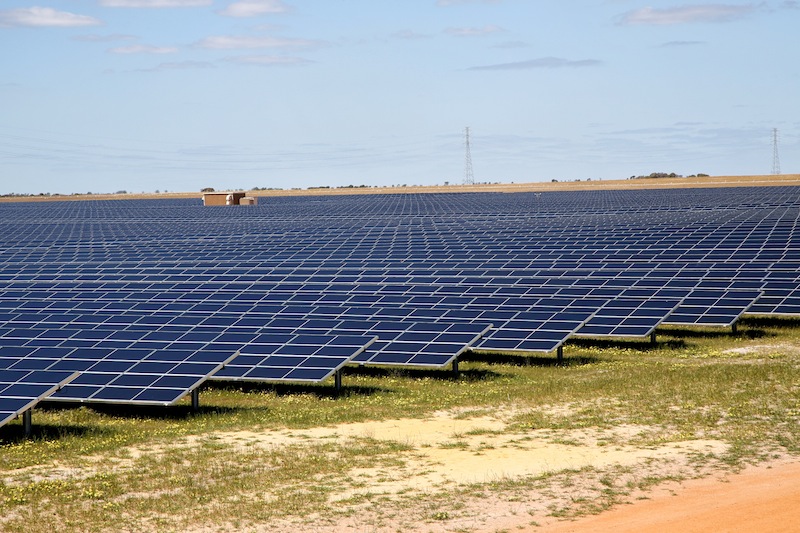
The array is mounted using an Australian designed and manufactured SunLockmounting system; also provided via Apollo Energy.
Diab Engineering’s installation incorporates a special system that monitors electricity consumption on the site and solar production in real time. Continue reading
Queensland Competition Authority (QCA) clears solar households as cause of higher electrcity charges
Queensland Solar Households Vindicated http://www.energymatters.com.au/index.php?main_page=news_article&article_id=3772 3 June 13 Plans by Queensland Premier Campbell Newman and Energy Minister Mark McArdle to whack solar households with higher electricity charges appear to have been scuttled.
On Friday, the Queensland Competition Authority (QCA) released its Final Determination on regulated retail electricity prices for 2013-14. A typical Queensland customer’s annual bill will increase from $1,184 to $1,451. However, it has not recommended an extra charge for solar users.
Prior to the QCA’s final determination, Premier Newman was pushing a proposal to charge all solar homes an extra $200 a year; even though the Government had promised in December last year that there would be no fixed charge of any sort on people using solar.
Queensland Energy Minister Mark McArdle also launched an attack on solar households, placing the blame for power price increases primarily on green schemes.
This has not been echoed by the QCA, which says the increases are being primarily driven by increases in network charges. The QCA also points out the freezing of electricity rates by the Newman Government in 2011/12 has resulted in a bigger jump now.
The Clean Energy Council has applauded the QCA for moving away from the proposal to levy an extra charge on solar power users, an issue the CEC had heavily lobbied on.
“The QCA’s rigorous and comprehensive analysis of power price rises in Queensland has made it clear that renewable energy was a much smaller contributor to electricity bills than most other factors,” said Clean Energy Council Chief Executive David Green.
Mr. Green pointed out when anyone installs an air-conditioner, it costs all electricity users an estimated $7000 to pay for network upgrades. He also addressed the myth that solar users were “rich”; stating Queensland’s solar hotspots were Bundaberg, Hervey Bay, Ipswich, Toowoomba and Beenleigh. Even though the QCA has made it clear that network charges are the major culprit in upcoming electricity price rises, the Queensland Government’s demonising of solar has continued since the Final Determination was released.
Following the Queensland Competition Authority’s announcement; Solar Citizens, an advocacy group representing current and future solar users, has written to Premier Newman and Mark McArdle asking them to address a number of critical questions about what it says are Mr McArdle’s misleading statements on the impact of solar on energy costs in Queensland.
Spurred on by threats to solar households such as those recently issued by the Queensland Government, Solar Citizens is in a recruitment drive to bolster its numbers to ensure Australian solar users are well represented under a united front – and the group’s numbers are rapidly growing.
There are now over 300,000 solar users in Queensland, who have invested over $2.2 billion dollars of their own money into reducing their electricity costs and carbon emissions impact. The upcoming electricity rate increases will see that number grow.
According to national solar provider Energy Matters, a good quality 4kW solar power system installed in Brisbane can return a financial benefit of up to $1,960 a year. Energy Matters now also offers Queensland households a zero deposit payment plan option.
Farming the sun – Australia’s first community-run solar farm at Lismore?
North coast looks at sustainable energy alternatives, By ABC North Coast, 31 May 13, “………… Lismore could host Australia’s first community solar farm, as part of the new Farming the Sun project. Adam Blakester is in charge of the project which has received funding to establish seven or more community-owned solar farms around the country.
Mr Blakester said Farming the Sun is about bringing the community together and strengthening the local economy. It would mean local people would invest in the project and then on-sell the energy to a local organisation. “It’s really a community building project and particularly about learning and understanding electricity and energy which is an increasingly significant issue for all of us on a local scale and a global scale.
“That solar farm is owned by a local company; which is local people as shareholders – so that’s the community ownership.”……. He said while community-run solar farms haven’t been viable in the past, solar energy has just recently become more affordable than grid power. “Now, it’s financially cheaper to produce your own electricity with a solar panel, than to buy it off the electricity grid.
“By locally owning it, the money we’re spending on electricity starts to be recirculated for the life of this solar farm in the local region and local economy.”
A memorandum of understanding was signed last night by Lismore City Council, and by Starfish enterprises which – along with the NSW Office for Environment and Heritage and The Earth Welfare Foundation – has contributed funding towards the Farming the Sun project. …….
A feasibility study will now be conducted to see if it can go ahead in Lismore. http://www.abc.net.au/local/stories/2013/05/31/3771758.htm?site=northcoast
1 This month

of the week – Australians for War Powers Reform (AWPR)
To see nuclear-related stories in greater depth and intensity
 Antinuclear