Hi-tech renewable energy jobs reviving south-west Victoria’s economy
 High-tech, clean energy jobs key to future of Geelong, south-west Victoria, ABC News, 5 June 16 By Cameron Best Steve Garner understands how important his wind farm manufacturing business is for the town of Portland in south-west Victoria.
As the state’s traditional manufacturing base continues to decline, jobseekers and the wider economy are looking for the jobs of the future.
Six months ago, Mr Garner’s Keppel Prince Engineering facility lay idle under the Federal Government’s freeze on new wind energy investment and former prime minister Tony Abbott’s desire to reduce the growth rate of what he labelled as “visually awful” wind farms.
Now, under a new Clean Energy Finance Corporation mandate, the production line at Keppel Prince is back up and running with about 300 workers making towers for a project near Ararat.
It has come just in time for Portland, which is facing the possibility of life without its major employer……
“the stronger we can grow something like this [facility], that actually does create a lot of jobs, the better off we’re going to be.
“And if we get government support to do that, we’ve then got a sustainable business for a long period of time.”…
New-wave tech replacing manufacturing of old
High-tech industries are springing up to utilise some of the skilled workers coming out of the automotive industry but in order to remain globally competitive, this new wave of advanced manufacturers cannot afford to be as labour-intensive as the companies of old…….http://www.abc.net.au/news/2016-06-05/high-tech,-clean-energy-jobs-the-key-to-geelong-future/7476816
Queensland wind farm creating jobs, powering a city
 Wind farm at Mount Emerald, near Cairns, set to create 150 jobs http://www.couriermail.com.au/news/queensland/wind-farm-at-mount-emerald-near-cairns-set-to-create-150-jobs/news-story/6ddd2419660c8f1666822dfde3024a8f May 27, 2016 A WIND farm to be built in far north Queensland will generate enough renewable energy to power a regional city. Ergon Energy and proponents Ratch Australia and Port Bajool on Friday signed a power purchase agreement to build the 170 megawatt Mount Emerald Wind Farm, near Cairns.
About $400 million in total expenditure is projected during the project’s two-year construction phase and 25-year operational period.
The project is also expected to boost the region’s economy by $900 million through direct and indirect flow-on impacts.
Energy Minister Mark Bailey said the project would mean the state’s wind energy production, which sat at 12 megawatts, would be increased by 15 times.
South Australia runs over 50% on renewable energy
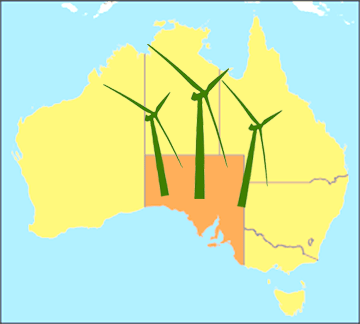 South Australia runs mainly on renewable energy following coal
 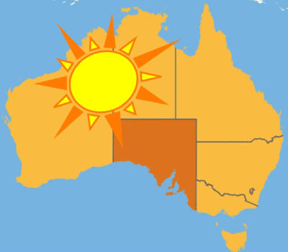 plant closure, The Independent, Gabriel Samuels 12 May 16 Majority of energy comes from solar and wind but the transition has been fraught with difficulties South Australia now gets the bulk of its electricity from wind and solar power, following the closure of its last coal-fired power station.
The state, which includes the city of Adelaide, exclusively has gas generators, solar panels and wind turbines serving a population of 1.7 million.
More than 50% of the region’s electricity stems from wind and solar with the remainder coming from energy efficient combined cycle gas plants.
The final coal station still in operation in Port Augusta closed down on May 9 after operating for 31 years. It generated 520 megawatts of power from coal but failed to compete with the falling price of clean renewable energy. Its closure produced a brief faltering in wholesale energy prices across the state.
The RenewablesSA transition initiative was established by the state govenment in late 2009 with a promise of $10 billion invested in low carbon generation by 2025…….
The state plans to become Australia’s wind and solar capital and is working towards complete reliance on natural sources
The state’s leading electricity provider, SA Power Networks, yesterday announced it will undertake Australia’s largest trial of storage batteries in solar homes in a bid to defer a $3 million network upgrade.
Meanwhile, last week Portugal ran entirely on renewable energy for four consecutive days between Saturday and Wednesday, in a bid to become completely reliant on natural resources.
The Independent has contacted RenewablesSA for comment. http://www.independent.co.uk/news/world/australasia/south-australia-runs-entirely-renewable-energy-following-coal-plant-closure-a7037646.html
Australia wasting over $2.5 million investigating “wind turbine syndrome’ ?
 True cost to taxpayers of investigating wind farm complaints tops $2.5 million, The Age April 2, 2016 –Nicole Hasham Environment and immigration correspondent The price of the part-time wind farm commissioner created by the former Abbott government is three times more than first thought, costing taxpayers more than $2 million to monitor and investigate complaints against the wind industry.
It has also emerged that the Independent Scientific Committee on Wind Turbines, which advises the government on potential health and environmental effects of the industry, has held just two short teleconferences in five months and provided no advice, despite costing up to $174,000 a year.
The hefty bill has fuelled criticism over the commissioner and committee, which Environment Minister Greg Hunt agreed to establish as part of crossbench negotiations to pass the government’s revised Renewable Energy Target. Senators John Madigan and David Leyonhjelm were the key proponents of the policy.
Critics said the measures were a bid to thwart the roll-out of clean energy under Mr Abbott, who had called wind farms “visually awful”. Former treasurer Joe Hockey also decried them as “utterly offensive”.
As Fairfax Media reported last year, the part-time National Wind Farm Commissioner Andrew Dyer will be paid $205,000 annually over three years to monitor the wind industry and respond to community complaints about turbine noise and health effects.
However this sum is just a small proportion of the cost of establishing the role.
Official figures provided to a Senate committee show the wind farm commissioner’s office is expected to cost $2.03 million over four years, including $680,000 in 2017-18.
This cost includes travel, IT, office accommodation and four staff as well as Mr Dyer’s part-time salary, which is more than an average full-time federal backbencher……
The figures also show the independent scientific committee is expected to cost $507,000 over four years, comprising administered and departmental expenses.
Late in March the Department of the Environment told Fairfax Media the committee had held “two short meetings” in December and February and “has not provided any advice to government at this stage”.
The meetings were held by teleconference or videoconference, and the committee is expected to meet about every two months.
Announcing the committee last October, Mr Hunt said it would “build on the work of the National Health and Medical Research Council”.
Reviews by a number of state and federal government health bodies including the NHMRC have so far found no clear evidence of a link between wind farms and medical conditions. The Australian Medical Association last year released a statement saying the available evidence did not support the concept that wind farm noise harmed humans.
Labor’s environment spokesman Mark Butler said it did not support the commissioner’s appointment and “it is ridiculous that the Turnbull Liberal government will waste money on this commissioner, but is happy to rip money out of the renewable energy sector”. http://www.theage.com.au/federal-politics/political-news/true-cost-to-taxpayers-of-investigating-wind-farm-complaints-tops-25-million-20160401-gnvwoc.html#ixzz44bwvO1oa
Turnbull cuts climate research money – spends it on ‘wind farm health effects’
‘Quite disgraceful’: NHMRC doles out $3.3m to study windfarm effects on health, The Age, March 23, 2016 Peter Hannam Environment Editor, The Sydney Morning Herald Australia’s top medical research body has given two researchers $3.3 million to study the effects of wind farms on human health despite its own year-long study finding no “consistent evidence” that a problem exists.
The National Health and Medical Research Council (NHMRC) awarded Guy Marks, a professor at the University of NSW $1.94m, to study the health impacts of infrasound – sound waves typically inaudible to humans – generated by wind turbines.
Peter Catcheside, an associate professor at Flinders University, secured $1.36m to investigate whether wind farms disturb sleep compared with traffic noise.
The outcomes of these studies, promoted by a so-called targeted call for research, will assist in developing policy and public health recommendations regarding wind turbine development and operations, the council said.
The research call was criticised last year, with even NSW and Victorian health officials calling for the NHMRC “to make it clear that the total available evidence (parallel and direct) suggest[s] little health risk,” according to emails from these health officials seen by Fairfax Media.
Senior members of the Abbott government, including then Prime Minister Tony Abbott, made public their opposition to wind farms. Then Treasurer Joe Hockey also dubbed wind turbines as “utterly offensive” and “a blight on the landscape”.
Simon Chapman, an emeritus professor of public health at the University of Sydney, said there had been at least 25 reviews internationally – including by the NHMRC – that showed “very little evidence of direct effects” from wind farms.
Effects that did exist could be put down to psycho-social factors, such as pre-existing antipathy to wind farms, resentment by locals who had received no benefit from turbines in their region, and anxiety of perceived health impacts, Professor Chapman said.
“It’s really quite disgraceful – it’s money literally poured down the drain,” he said. “There is no health or medical agency in the world that would give any rational priority to wind farms and health. “Potentially hundreds of researchers who had just missed on funding research would be angry as the money is being spent on wind farm research.”
Fairfax Media has sought additional comment from the NHMRC.
Senator Kim Carr, shadow science minister, said the funding came at a time when the Turnbull government was taking the axe to hundreds of scientists – including climate researchers – at the CSIRO.”The Liberals cannot plead innocence in cutting climate and manufacturing research in the CSIRO…while handing out money for contentious research into things like the supposed health effects of wind farms,” he said.
“The Abbott-Turnbull Government is hell-bent on politicising Australian research,” he said. http://www.theage.com.au/environment/quite-disgraceful-nhmrc-doles-out-33m-to-study-windfarm-effects-on-health-20160321-gnnzhe.html#ixzz43wzQSmqb
Wind farm commissioner – the cons and pros of the position
Wind farm commissioner insists he’s good value for taxpayers at $200,000 a year, SMH March 25, 2016 Tom Arup Environment editor, The Age Australia’s wind farm commissioner has insisted taxpayers are getting good value for money out of his $200,000 a year salary.
In an interview with Fairfax Media, Andrew Dyer, who was appointed to the wind energy watchdog post in October, said he believed there were genuine issues around wind farms to be solved and he was one of a handful of people with the skills to do it.
The national wind farm commissioner has been a highly contested position since it was first created by then Prime Minister Tony Abbott last year.
Critics say the position – established via a deal with anti-wind crossbench Senators – was another attempt to stymie the roll-out of clean energy under then Prime Minister Tony Abbott. There has also been a heavy focus from critics on Mr Dyer’s $205,000 a year remuneration and the job’s classification as part-time.
Mr Dyer said he could not claim to be full-time while holding other positions, including volunteer board spots, chairing a private company and involvement with Monash University’s sustainability unit, but added: “I can assure you it is a very big load.”……….
The most controversial element of the wind farm debate is claims infrasound (inaudible noise) from wind farms can make people sick. A long list of symptoms have been ascribed to so called “wind turbine syndrome”, including sleeplessness, headaches, nausea, memory loss and tinnitus.
But numerous health and government assessments – including by the National Health and Medical Research Council – have repeatedly found no link between wind farm infrasound and health problems.
Mr Dyer said this had also been his advice, though no health complaint, whatever the reason, should be ignored.
More research into the issue should be done, he said. This week $3.3 million in government research grants to study the health effects of wind farms were announced……..
Mr Dyer has worked in the energy industry for many years and in many roles. During that time he has been a notable champion of solar thermal technology.
He pointed to previous comment pieces he had written stressing a “balance of technologies” in the energy supply. He told Fairfax Media wind energy “will be a major part of that balance into the future.”
What impact might he have on the industry then?
Mr Dyer conceded he had no legal authority to order changes to projects, but he could personally work with complainants and companies to try reach workable solutions to disputes.
“Industry has been very supportive of my role and appointment because they know if complaints aren’t dealt with properly then it will continue to have a negative impact on them and raise the potential for further regulation,” Mr Dyer said. http://www.smh.com.au/environment/wind-farm-commissioner-insists-hes-good-value-for-taxpayers-at-200000-a-year-20160317-gnl6du.html#ixzz43wyFcFNc
Big financial benefits in locating solar and wind power together
 The study’s key findings:
– Co-location potential: The technical capacity of existing wind farms to accommodate co-located solar farms is estimated at over 1 GW. Growth in renewables driven by the Renewable Energy Target is expected to open up technical capacity for an additional 1.5 GW of solar PV to be co-located at new wind farms built by 2020. However, the relative financial competitiveness of these opportunities (combined with relevant policy) may limit the uptake of the full technical potential of co-location.
– Firming effect: Given the intermittent nature of renewable technologies, pairing resources in regions dominated by one particularly technology will likely have a “firming” effect. This reduction in the overall facility’s degree of intermittency results in an improved capacity factor at the connection point and can mitigate associated network constraints in regions dominated by a single generation type.
ARENA: Solar and wind co-location can deliver significant cost savings http://www.pv-magazine.com/news/details/beitrag/arena–solar-and-wind-co-location-can-deliver-significant-cost-savings-_100023809/#axzz43rWPStli 21. MARCH 2016 SOPHIE VORRATH
A total of at least 1GW of large-scale solar could be added to existing Australian wind farms, boosting renewable energy development, generation, and and smoothing its delivery to the grid, according to a new report from the Australian Renewable Energy Agency. Based on data from 10 existing wind farms around Australia, the report – released on Monday and previewed last Thursday at the Wind Wind Industry Forum in Melbourne – found that major savings could be achieved for developers using co-location, particularly in the grid connection infrastructure. Continue reading
Omigawd! Australia’s peak medical body is funding research into ‘wind turbine sickness’
Medical body pledges $3.3m for research into ‘wind turbine sickness’ ABC News By environment reporter Sara Phillips 22 Mar 16 Australia’s leading medical funding body, the National Heath and Medical Research Council (NHMRC), has awarded $3.3 million to two researchers to look into whether proximity to wind turbines causes illness.
Key points:
- One researcher to investigate wind turbine noise and sleep, mood and cardiovascular health
- Another to look into impacts of wind turbine noise on sleep
- Total of the two grants is $3.3m – much higher than average
- Some have questioned why the turbine research received funding ahead of other projects
More research was recommended by a year-long study into wind turbine sickness by the NHMRC that found “no direct evidence that exposure to wind farm noise affects physical or mental health”.
It recommended $2.5 million over five years to fund researchers to undertake further study…….
Questions raised over research funding
Clean Energy Council policy manager Alicia Webb said multiple studies, both in Australia and overseas, had already concluded there is no evidence that wind farms cause adverse health effects in humans.
“This finding has been backed up by statements from leading national organisations such as the Australian Medical Association and the Australian Association of Acoustical Consultants, which have said there is not enough infrasound produced by wind farms to have a negative effect on humans living near wind farms,” she said.
John Iser from Doctors for the Environment questioned why the wind turbine sickness research received funding ahead of other projects.
“While we always welcome good quality research, the proposed studies are far removed from a real-life setting,” Dr Iser said.
“We live in a world with many pressing health concerns, it’s worrying that research on these issues will go begging while studies on wind farms receive millions of dollars.
“Only about 15 per cent of all grant applications receive NHMRC funding.” http://www.abc.net.au/news/2016-03-22/3.3m-pledged-for-research-into-wind-turbine-sickness/7267946
Sapphire Wind Farm to bring huge benefits to Australian Capital Territory’s economy
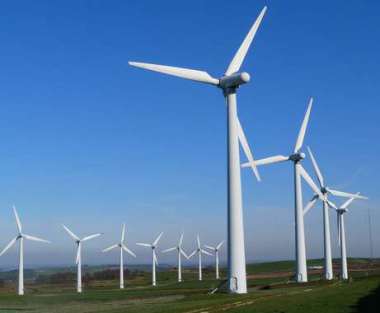 Latest wind auction winner promises millions in benefits to Canberra economy, SMH March 4, 2016 – Tom McIlroy Legislative Assembly reporter at The Canberra Times The fifth and final winner of the ACT government’s large-scale wind reverse-auction will provide enough power for more than 48,000 Canberra homes.
Environment and Climate Change Minister Simon Corbell has announced Sapphire Wind Farm, 18 kilometres west of Glenn Innes in north-eastern New South Wales, as the latest successful proponent from the government’s second wind auction, promising an estimated $100 million dollars in economic benefits to the ACT
Sapphire has been awarded a feed-in-tariff of $89.10 per mW/h for 100mW capacity. The company will spend $34 million on development of an ACT-based asset and operations management centre, relocating operations from Newcastle.
A spokesman for Mr Corbell said the consortium behind the bid included companies Continental Wind Partners and Wind Energy Holdings.
“By the time Sapphire starts producing energy in 2018, the ACT will be sourcing 80 per cent of its energy needs from renewable sources and well on the way to achieving 90 per cent by 2020,” Mr Corbell said.
In August last year, the government called for bids in its second wind auction to power up to 106,000 Canberra homes, seeking 200 megawatts in new capacity to come online within three years.
It follows two previous auctions: in 2013, three solar farms won 20-year feed-in deals, delivering 40 megawatts capacity, and in a wind auction earlier this year three wind farms won similar deals, delivering 200 megawatts among them.
CWP Renewables managing director Alex Hewitt said the auction result had allowed commencement of construction of what will be the largest wind farm in the NSW. http://www.smh.com.au/environment/energy-smart/latest-wind-auction-winner-promises-millions-in-benefits-to-canberra-economy-20160303-gn9n0a.html
AGL proceeding with Silverton wind farm project in far west NSW
AGL vows to go ahead with Silverton wind farm project in far west NSW ABC Broken Hill
By Declan Gooch 27 Feb 16 Energy company AGL has reaffirmed its commitment to the Silverton wind farm project in far west New South Wales, and says studies of the site will get under way within weeks.
The proposed site along the Barrier Ranges just outside the Silverton township was first proposed in 2007 by Epuron, but stalled after AGL took over in 2012. AGL blamed uncertainty about the federal government’s Renewable Energy Target for the pause, with development approval set to run out in May.
The company announced at a community meeting on Thursday night it applied that day to have another five years added to the approval, and announced a new project manager, Adam Mackett.”We’re already doing work through the hydrogeological study where we’re committed to this project, so we’re showing that,” Mr Mackett said. “It is a half-a-billion-dollar project so before we then fully commit to constructing it we need to do a bit of work.”
Mr Mackett is no stranger to the state’s far west, having managed the construction of the Broken Hill solar farm around 25 minutes away. He also oversaw the construction of South Australia’s Hallett wind farm.
“We’re confident of having [the Silverton project] extended, we think the Silverton wind farm is a fantastic opportunity.”
AGL hopes the wind farm will generate enough power to supply around 120,000 average homes.
Funding will be contributed from AGL’s newly-announced Powering Australian Renewables Fund, which will be seeded partly by the Broken Hill solar farm……… AGL said it hopes its Powering Australian Renewables fund will be set up by the middle of the year, and that the extension to the project’s approval will be signed off in the next three months. http://www.abc.net.au/news/2016-02-26/agl-vows-to-go-ahead-with-silverton-wind-farm-project/7202338
Renewable energy an economic boon for Australia’s drought affected rural communities
 Renewable energy drought-proofing our farms http://www.weeklytimesnow.com.au/news/opinion/renewable-energy-droughtproofing-our-farms/news-story/558287ca3caffe6c939d83ad1de43e1a February 3, 2016 ANDREW THOMSON The Weekly Times
 Renewable energy is not only a tool to provide clean energy and control the emissions that are changing our climate. It is also a growth industry offering employment and revenue opportunities almost exclusively in regional and rural communities.
For many farming landowners, such as Peter, Leigh and David Watts, of Yeungroon, featured in The Weekly Times last week, lease payments from turbines are a way to drought-proof farms by ensuring ongoing income in tough times.
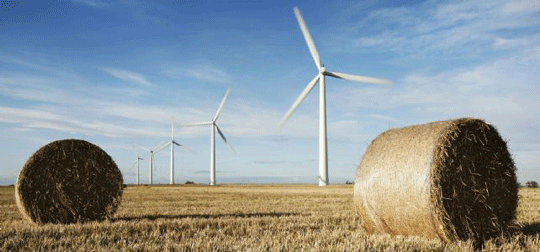
There is enormous potential to grow the partnerships between rural communities and renewable energy providers.
Prime Minister Malcolm Turnbull has signalled a new approach to renewable energy and this has given businesses such as energy company Acciona the confidence to make major investments in Australia.
Last month, it announced plans to progress the Mt Gellibrand wind farm proposal, which would provide clean power to more than 100,000 households. The project would create more than 100 jobs in the building phase, about 10 ongoing roles, and deliver substantial revenue for the life of the wind farm to landowners, council and the wider community.
Australia’s Renewable Energy Target has generated $18.5 billion of investment and, under the revised target, we expect to see at least another $10 billion by 2020.
Today the industry employs more people than the coal-generation sector in Australia. With stable policy settings, a clear direction on emissions targets and an understanding that Australia requires a more sophisticated approach to energy policy, the renewables sector is well placed to innovate and grow.
Improving technology in the wind sector means we can now generate more electricity from fewer turbines and maintain an income stream for landowners, councils and community organisations in regional and rural communities. It is my hope regional Australia and the renewables sector can grow together. Andrew Thomson is managing director of energy company Acciona
AFL Footee Chief Gillon McLachlan a neanderthal anti-wind crusader
AFL chief executive Gillon McLachlan to fight massive Mid Murray wind farm development in court, Th eAdvertiser January 30, 2016 9:50pm
Mr McLachlan has appealed against the approval of the $700 million wind farm, to feature 114 turbines standing up to 165m high dotted along the ranges between Palmer, Tungkillo and Sanderston.
The appeal is listed against wind farm developers Trustpower, the Mid Murray Council, Environment Protection Agency, the Planning Department and the Environment Minister.
A preliminary conference is scheduled to be heard in the Environment, Resources and Development Court by Commissioner Lolita Mohyla at 3.30pm tomorrow.
Mr McLachlan’s is one of four appeals filed against the wind farm, which was approved by the Mid Murray Council’s development assessment panel on December 18. He yesterday declined to comment about the appeal.
In December, he submitted a video message to the development assessment panel opposing the wind farm being built.
Even if it were to be conclusively established wind farms do not produce health problems, it’s annoying and affects quality of life,” he said.
“I was frankly heartbroken that this land will be forever marred by enormous man-made structures.”
New Directive to Clean Energy Finance Corporation (CEFC) supports renewable energy investment
New clean energy investment mandate a shift from policy proposed by Abbott
Directive to CEFC to focus on innovative and emerging technologies will enhance support for windfarms and small-scale solar projects, Guardian, Shalailah Medhora, 24 Dec 15. The Clean Energy Finance Corporation (CEFC) has been directed to focus on innovative and emerging technologies, reversing a mandate by the former prime minister Tony Abbott that would have specifically blocked funding for windfarms and small-scale solar projects.
The mandate came into effect on Thursday, with a new clause outlining the shift in focus.
“As part of its investment activities in clean energy technologies, the corporation must include a focus on supporting emerging and innovative renewable technologies and energy efficiency, such as large-scale solar, storage associated with large- and small-scale solar, offshore wind technologies, and energy efficiency technologies for cities and the built environment,” the clause said. “ This will in turn increase the uptake of emerging technologies such as large-scale solar and energy efficiency.”
The investment mandate is not exclusive, meaning that established technologies can still be funded, and not retrospective, so projects that have already been funded will not be affected.
“The CEFC will therefore continue to pursue a diverse range of investment activities that are within the scope of the CEFC Act and this new investment mandate,” a statement by the body said.
“Together, the new investment mandate and the accompanying explanatory statement provide guidance on how the CEFC should approach investment in mature and established technologies, such as conventional onshore wind and conventional hydro,” it said. “It is the government’s expectation that, in many circumstances, projects involving mature technologies should be able to secure finance from commercial financing sources.”
The mandate is a shift from what Abbott proposed in July, when he said the body should no longer fund small-scale solar projects such as rooftop panels and wind technology…….
The CEFC chairwoman, Jillian Broadbent, wrote to the environment minister, Greg Hunt, and the finance minister, Mathias Cormann, welcoming the new mandate. She said it was an “appropriate approach that allows the CEFC to support the Australian government policy priorities while still allowing a measure of investment flexibility”. …….http://www.theguardian.com/environment/2015/dec/24/new-clean-energy-investment-mandate-a-shift-from-policy-proposed-by-abbott
Research into wind turbines and their role in reducing carbon emissions
The effect of increasing the number of wind turbine generators on carbon dioxide emissions in the Australian National Electricity Market from 2014 to 2025, Australian policy Online
18 December 2015……
New wind farms to go ahead as Turnbull removes barrier to Clean Energy investment
End of Tony Abbott’s war on wind farms gives green light to Capital Region projects, Canberra Times, December 13, 2015 Clare Sibthorpe Canberra Times reporter Prime Minister Malcolm Turnbull’s decision to lift Tony Abbott’s controversial ban on government investment in wind power has been embraced by the Australian Capital Region farming community.
On Sunday, Fairfax Media revealed Environment Minister Greg Hunt has issued the Clean Energy Finance Corporation with new orders that negate the Abbott government’s June decree, which prohibited the $10 billion green bank from investing in new wind power projects.
The move gives the Clean Energy Finance Corporation the green light to fund many wind farms in the Southern Tablelands – one of Australia’s fastest growing wind investment regions – enabling them to progress from planning to construction.
Crookwell farmer and NSW regional organiser for the Australian Wind Alliance, Charlie Prell, said wind farms now able to access funding include Collector, Rye Park, Yass Valley, Bango, Rugby, Crookwell two and three, Capital two, and Boco two.
“All of these wind farms will contribute massively to the local economy, not only during construction, but over the life of the wind farms,” Mr Prell said.
“It’s giving farmers in these regions a passive income stream with making our operations more sustainable, financially and environmentally, and giving local businesses the opportunity to participate in construction activities.”
Under the new mandate, the corporation will be allowed to invest in any wind projects provided they involve “emerging and innovative” technology, although it does encourage it to “focus on offshore wind technologies”.
Mr Prell said the wind farms already operating in this area have contributed significantly to small business, particularly in Goulburn, Bungendore, Taralga and Crookwel……..http://www.canberratimes.com.au/act-news/end-of-tony-abbotts-war-on-wind-farms-gives-green-light-to-capital-region-projects-20151213-glmer9.html
1 This month

of the week – Australians for War Powers Reform (AWPR)
To see nuclear-related stories in greater depth and intensity
 Antinuclear