The Release of Julian Assange: Plea Deals and Dark Legacies
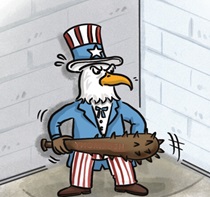
It ultimately goes to the brutal exercise of US extraterritorial power against any publisher, irrespective of outlet and irrespective of nationality…………….. the measure extracts a pound of flesh from the fourth estate. It signals that the United States can and will seek out those who obtain and publish national security information that they would rather keep under wraps under spurious notions of “harm”.
June 27, 2024, by: Dr Binoy Kampmark https://theaimn.com/the-release-of-julian-assange-plea-deals-and-dark-legacies-2/
One of the longest sagas of political persecution is coming to its terminus. That is, if you believe in final chapters. Nothing about the fate of Julian Assange seems determinative. His accusers and inquisitors will draw some delight at the plea deal reached between the WikiLeaks founder’s legal team and the US Department of Justice. Others, such as former US Vice President, Mike Pence, thought it unjustifiably lenient.
Alleged to have committed 18 offences, 17 novelly linked to the odious Espionage Act, the June 2020 superseding indictment against Assange was a frontal assault on the freedoms of publishing and discussing classified government information. At this writing, Assange has arrived in Saipan, located in the US commonwealth territory of Northern Mariana Islands in the Western Pacific, to face a fresh indictment. It was one of Assange’s conditions that he would not present himself in any court in the United States proper, where, with understandable suspicion, he might legally vanish.
As correspondence between the US Department of Justice and US District Court Chief Judge Ramona V. Manglona reveals, the “proximity of this federal US District Court to the defendant’s country of citizenship, Australia, to which we expect he will return at the conclusion of proceedings” was also a factor.
Before the US District Court for the Northern Mariana Islands, he will plead guilty to one count of conspiracy to obtain and disclose national defence information under the Espionage Act of 1917, or section 793(g) (Title 18, USC). The felony carries a fine up to $10,000 and/or up to 10 years in prison, though Assange’s time in Belmarsh Prison, spent on remand for some 62 months, will meet the bar.
The felony charge sheet alleges that Assange knowingly and unlawfully conspired with US Army intelligence analyst Chelsea Manning, then based at Operating Base Hammer in Iraq, to receive and obtain documents, writings and notes, including those of a secret nature, relating to national defence, wilfully communicated those documents from persons with lawful possession of or access to them to those not entitled to receive them, and do the same from persons unauthorised to possess such documents.
Before turning to the grave implications of this single count and the plea deal, supporters of Assange, including his immediate family, associates and those who had worked with him and drunk from the same well of publishing, had every reason to feel a surreal sense of intoxication. WikiLeaks announced Assange’s departure from London’s Belmarsh Prison on the morning of June 24 after a 1,901 day stint, his grant of bail by the High Court in London, and his release at Stansted Airport. Wife Stella regularly updated followers about the course of flight VJ199. In coverage posted of his arrival at the federal court house in Saipan, she pondered “how overloaded his senses must be, walking through the press scrum after years of sensory depravation and the four walls” of his Belmarsh cell.
As for the plea deal itself, it is hard to fault it from the emotional and personal perspective of Assange and his family. He was ailing and being subjected to a slow execution by judicial process. It was also the one hook upon which the DOJ, and the Biden administration, might move on. This being an election year in the US, the last thing President Biden wanted was a haunting reminder of this nasty saga of political persecution hovering over freedom land’s virtues.
There was another, rather more sordid angle, and one that the DOJ had to have kept in mind in thinning the charge sheet: a proper Assange trial would have seen the murderous fantasies of the CIA regarding the publisher subject to scrutiny. These included various possible measures: abduction, rendition, even assassination, points thoroughly explored in a Yahoo News contribution in September 2021.
One of the authors of the piece, Zach Dorfman, posted a salient reminder as news of the plea deal filtered through that many officials during the Trump administration, even harsh critics of Assange, “thought [CIA Director Mike] Pompeo’s extraordinary rendition plots foolhardy in the extreme, and probably illegal. They also – critically – thought it might harm Assange’s prosecution.” Were Pompeo’s stratagems to come to light, “it would make the discovery process nightmarish for the prosecution, should Assange ever see trial.”
From the perspective of publishers, journalists and scribblers keen to keep the powerful accountable, the plea must be seen as enormously troubling. It ultimately goes to the brutal exercise of US extraterritorial power against any publisher, irrespective of outlet and irrespective of nationality. While the legal freight and prosecutorial heaviness of the charges was reduced dramatically (62 months seems sweetly less imposing than 175 years), the measure extracts a pound of flesh from the fourth estate. It signals that the United States can and will seek out those who obtain and publish national security information that they would rather keep under wraps under spurious notions of “harm”.
Assange’s conviction also shores up the crude narrative adopted from the moment WikiLeaks began publishing US national security and diplomatic files: such activities could not be seen as journalistic, despite their role in informing press commentary or exposing the venal side of power through leaks.
From the lead prosecuting attorney Gordon Kromberg to such British judges as Vanessa Baraitser; from the national security commentariat lodged in the media stable to any number of politicians, including the late California Democrat Dianne Feinstein to the current President Joe Biden, Assange was not of the fourth estate and deserved his mobbing. He gave the game away. He pilfered and stole the secrets of empire.
To that end, the plea deal makes a mockery of arguments and effusive declarations that the arrangement is somehow a victory for press freedom. It suggests the opposite: that anyone publishing US national security information by a leaker or whistleblower is imperilled. While the point was never tested in court, non-US publishers may be unable to avail themselves of the free speech protections of the First Amendment. The Espionage Act, for the first time in history, has been given a global, tentacular reach, made a weapon against publishers outside the United States, paving the way for future prosecutions.
Julian Assange Is Finally Free, But Let’s Not Forget the War Crimes He Exposed
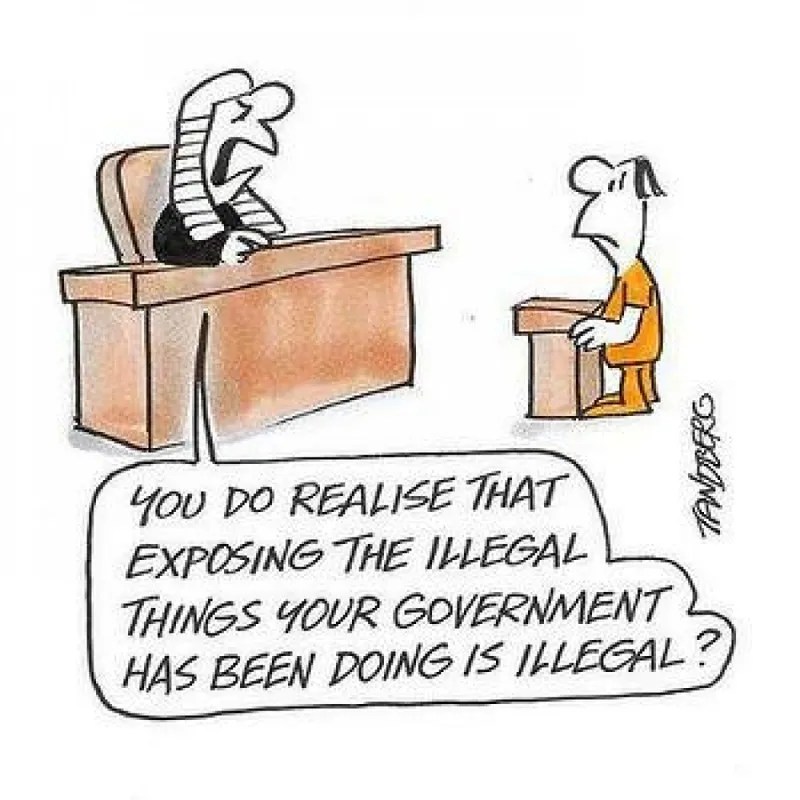
Contrary to US government claims, WikiLeaks’s revelations actually saved lives — and drove demand for US accountability.
| By Editor on June 29, 2024 https://truthout.org/articles/julian-assange-is-finally-free-but-lets-not-forget-the-war-crimes-he-exposed/ |
After a 14-year struggle, including five years spent in Belmarsh, a maximum-security prison in London, WikiLeaks publisher Julian Assange is finally free. Under the terms of a plea deal with the U.S. Department of Justice, Assange pled guilty to one count of conspiracy to obtain documents, writings and notes connected with the national defense under the Espionage Act. Assange was facing 175 years in prison for 18 charges in the indictment filed by the Trump administration and pursued by the Biden administration.
The plea agreement requires that before entering his plea, Assange must have done everything he could to either return or destroy “any such unpublished information in his possession, custody, or control, or that of WikiLeaks or any affiliate of WikiLeaks.”
As stipulated in the plea deal, Ramona Manglona, U.S. Chief Judge of the District Court for the Northern Mariana Islands, sentenced Assange to 62 months with credit for the time he served in Belmarsh Prison. The U.S. sentencing guidelines say the range for this “offense” is 41-51 months, so Assange served 11 to 21 months longer than this type of case would typically garner.
Assange was prosecuted because WikiLeaks exposed U.S. war crimes in Iraq, Afghanistan and Guantánamo Bay. In 2010, U.S. Army intelligence analyst Chelsea Manning, who had a “TOP SECRET” U.S. security clearance, furnished WikiLeaks with 700,000 documents and reports, many of which were classified “SECRET.”
These documents included the “Iraq War Logs,” 400,000 field reports documenting 15,000 unreported deaths of Iraqi civilians, as well as systematic rape, torture and murder after U.S. forces transferred detainees to a notorious Iraqi torture squad.
They also contained the “Afghan War Diary,” comprising 90,000 reports that documented more civilian casualties by coalition forces than the U.S. military had reported. And they included the “Guantánamo Files” — 779 secret reports containing evidence that 150 innocent people had been held at Guantánamo Bay for years. The reports explain how the nearly 800 men and boys there had been tortured and abused, which violated the Geneva Conventions and the Convention Against Torture and Other Cruel, Inhuman or Degrading Treatment or Punishment.
Manning also provided WikiLeaks with the infamous 2007 “Collateral Murder” video, which depicts a U.S. Army Apache attack helicopter crew targeting and killing 12 unarmed civilians in Baghdad, including two Reuters journalists, as well as a man who came to rescue the wounded. Two children were injured in the attack. A U.S. Army tank drove over one of the bodies, severing it in two. In a conversation after the attack, one pilot said, “Look at those dead bastards,” and the other responded, “Nice.” The video reveals evidence of three violations of the Geneva Conventions and the U.S. Army Field Manual.
WikiLeaks provided material for news outlets around the world to report on U.S.-led atrocities. Informing the public about the illegality of George W. Bush’s “war on terror” resulted in calls for accountability.
“10 years on, the War Logs remain the only source of information regarding many thousands of violent civilian deaths in Iraq between 2004 and 2009,” John Sloboda, co-founder of Iraq Body Count (IBC), wrote in his submitted testimony for Assange’s extradition hearing in October 2020. IBC is an independent NGO that has done the only comprehensive monitoring of credibly reported casualties in Iraq since Bush’s 2003 invasion.
“WikiLeaks cables have contributed to court findings that US drone strikes are criminal offences and that criminal proceedings should be initiated against senior US officials involved in such strikes,” Clive Stafford Smith, co-founder of Reprieve and attorney for seven Guantánamo detainees, wrote in his submitted testimony.
“They took a hero [Assange] and turned him into a criminal,” Vahid Razavi, founder of Ethics in Tech, told Common Dreams. “Meanwhile, all of the war criminals in the files exposed by WikiLeaks via Chelsea Manning are free and never faced any punishment or even their day in court.”
The Iraq War Logs
The Iraq War Logs contained extensive evidence of U.S. war crimes. Several reports of detainee abuse were supported by medical evidence. Prisoners were blindfolded, shackled and hung by their ankles or wrists. They were subjected to punching, whipping, kicking, electrocution, electric drills, and cutting off fingers or burning with acid. Six reports document the apparent deaths of detainees.
Secret U.S. Army field reports revealed that U.S. authorities refused to investigate hundreds of reports of murder, torture, rape and abuse by Iraqi soldiers and police. The coalition had a formal policy of ignoring these allegations, marking them “no investigation is necessary.”
Although U.S. and U.K. officials maintained that no official records of civilian casualties existed, the logs document 66,081 noncombatant deaths out of 109,000 fatalities from 2004-2009.
The log describes video footage of Iraqi army officers executing a prisoner in Tal Afar. It says, “The footage shows approximately 12 Iraqi army [IA] soldiers. Ten IA soldiers were talking to one another while two soldiers held the detainee. The detainee had his hands bound … The footage shows the IA soldiers moving the detainee into the street, pushing him to the ground, punching him and shooting him.”
The Afghan War Diary
The Afghan War Diary also revealed evidence of U.S. war crimes from 2004-2009. The reports describe how a secret “black” unit composed of special operations forces hunted down accused Taliban leaders for “kill or capture” without trial. Secret commando units — classified groups of Navy and Army special operatives — used a “capture/kill list,” which resulted in the killing of civilians, angering the Afghan people.
Moreover, the CIA expanded paramilitary operations in Afghanistan, carrying out ambushes, ordering airstrikes and conducting night raids. The CIA financed the Afghan spy agency, operating it like a subsidiary.
A 2007 meeting between Afghan district officials and U.S. civil affairs officers was documented in the reports. Afghan officials are quoted as saying, “The people of Afghanistan keep loosing [sic] their trust in the government because of the high amount of corrupted government officials. The general view of the Afghans is that the current government is worst [sic] than the Taliban.”
The logs recorded numerous civilian casualties from airstrikes, shootings on the road, in villages and at checkpoints; many were caught in the cross fire. The victims weren’t suicide bombers or insurgents. Several deaths were not reported to the public.
The Guantánamo Files
The Guantánamo Files say that only 220 of the 780 people held at the prison camp since 2002 were classified as “dangerous international terrorists.” Of the rest of the detainees, 380 were classified as low-level foot soldiers and 150 were considered innocent Afghan or Pakistani civilians or farmers.
Many detainees were held at Guantánamo for years based on paltry evidence or confessions extracted by torture and abuse. Among the detainees, for example, were an 89-year-old Afghan villager with senile dementia and a 14-year-old boy who was the innocent victim of a kidnapping.
The files document a system aimed more at extracting intelligence than detaining dangerous terrorists. One man was transferred to Guantánamo because he was a mullah with special knowledge of the Taliban. A taxi driver was sent to the prison camp because he had general knowledge of certain areas in Afghanistan. An Al Jazeera journalist was held at Guantánamo for six years to be interrogated about the news network.
Nearly 100 detainees were classified with depressive or psychotic disorders. Several joined hunger strikes to protest their indefinite detention or attempted suicide, the files revealed.
No One Was Harmed by WikiLeaks’s Revelations
Although the U.S. government alleged that WikiLeaks’s publication of information had caused “great harm,” they “admitted there was not a single person anywhere that they could produce that was harmed by these publications,” Assange’s attorney Barry Pollack said at a June 26 press conference in Australia.
The plea agreement says, “Some of these raw classified documents were publicly disclosed without removing or redacting all of the personally identifiable information relating to certain individuals who shared sensitive information about their own governments and activities in their countries with the U.S. government in confidence.”
The U.S. government claims that Assange endangered U.S. informants who were named in the published documents. But John Goetz, an investigative reporter who worked for Germany’s Der Spiegel, testified at the 2020 extradition hearing that Assange went to great lengths to ensure that the names of informants in Iraq and Afghanistan were redacted. Goetz said that WikiLeaks underwent a “very rigorous redaction process” and Assange repeatedly reminded his media partners to use encryption. Indeed, Goetz said, Assange tried to stop Der Freitag from publishing material that could result in the release of unredacted information.
Moreover, WikiLeaks’s revelations actually saved lives. After WikiLeaks published evidence of Iraqi torture centers established by the U.S., the Iraqi government refused then-President Barack Obama’s request to grant immunity to U.S. soldiers who committed criminal and civil offenses there. As a result, Obama had to withdraw U.S. troops from Iraq.
Obama took credit for ending U.S. military involvement in Iraq. But he had tried for months to extend it beyond the December 31, 2011, deadline his predecessor negotiated with the Iraqi government. Negotiations broke down when Iraq refused to grant criminal and civil immunity to U.S. troops.
What Assange’s Plea Bargain Means for Free Speech
Before she accepted Assange’s guilty plea, Judge Manglona asked him what he did to violate the law. “Working as a journalist, I encouraged my source to provide information that was said to be classified,” Assange said. “I believed the First Amendment protected that activity, but I accept that it was a violation of the espionage statute.” Assange then added, “The First Amendment was in contradiction with the Espionage Act, but I accept that it would be difficult to win such a case given all these circumstances.”
Even though Assange will go free, his plea deal raises concerns for First Amendment advocates in the U.S.
“The United States has now, for the first time in the more than 100-year history of the Espionage Act, obtained an Espionage Act conviction for basic journalistic acts,” David Greene, head of civil liberties at the Electronic Frontier Foundation, told The New York Times. “These charges should never have been brought.”
Charlie Savage, who has covered the Assange case extensively for years, warned that Assange’s plea sets a “new precedent” that “will send a threatening message to national security journalists, who may be chilled in how aggressively they do their jobs because they will see a greater risk of prosecution.” But, Savage noted, since Assange pled guilty and didn’t mount a constitutional challenge to the Espionage Act, that eliminated the risk that the U.S. Supreme Court would ultimately sanction a narrow interpretation of First Amendment press freedoms.
“WikiLeaks published groundbreaking stories of government corruption and human rights abuses, holding the powerful accountable for their actions,” WikiLeaks said in a statement announcing the plea agreement. “As editor-in-chief, Julian paid severely for these principles, and for the people’s right to know. As he returns to Australia, we thank all who stood by us, fought for us, and remained utterly committed in the fight for his freedom.”
There is no doubt that but for the sustained activism of people around the world and the work of his superb legal team, Julian Assange would still be languishing behind bars for revealing evidence of U.S. war crimes.
Julian Assange is free, but curly legal questions about his case remain
National Tribune, 26 Jun 2024, Holly Cullen, Adjunct Professor in Law, The University of Western Australia
Today Julian Assange walked out of the Federal Court Building in Saipan, North Marianas Islands, a free man. He pleaded guilty to one count of breaching the US Espionage Act.
With the court accepting his 62 months already spent in Belmarsh Prison as a sufficient sentence, he has no more case to answer, and no more sentence to serve.
However, this case leaves behind it a trail of unanswered legal questions and unresolved controversies. In particular, there are questions of fundamental human rights that can only now be addressed in future cases, if ever.
Can freedom of speech concerns stop extradition?
Once Assange had formally pleaded guilty, the US government’s lawyers announced they would immediately withdraw the request to extradite Assange from the UK.
That means the appeal that would have been heard later this year will not go ahead.
To recap, in May the UK High Court gave Assange the right to appeal the UK Home Secretary’s order for his extradition. This was granted on two grounds, both related to free speech.
The first ground of appeal accepted by the court was that extradition would be incompatible with Assange’s right to freedom of expression, as guaranteed in the European Convention on Human Rights.
The second ground, related to the first, is that he would be discriminated against on the basis of his nationality because he could, as a non-citizen of the US, be unable to rely on First Amendment freedom of speech rights.
But as this appeal is no longer proceeding, the issue of whether a threat to the accused’s freedom of expression can stop extradition will therefore not be argued or decided. The European Court of Human Rights and other human rights bodies have never addressed this point. It’s unlikely to arise again soon.
An espionage precedent?
Also on freedom of expression, the relationship between the US Espionage Act and the First Amendment of the US Constitution remains an open question.
In today’s pleadings, Assange and the US government took different views on whether the exercise of freedom of expression should constitute an exception to the offences under the Espionage Act. Nonetheless, Assange accepted that no existing US case law established such an exception.
This leads to the question of whether today’s guilty plea establishes a precedent for prosecuting journalists for espionage.
In the strict legal meaning of precedent in common law, which refers to a binding judicial interpretation, it does not.
The judge made no determination on whether Assange or the US government was legally correct. However, the US government can now point to this case as an example of securing a conviction against a journalist under the Espionage Act.
The question of how much a non-national of the US can rely on the First Amendment likewise continues to be on the table. This issue would also have been addressed in the extradition appeal, as a question of whether Assange would be discriminated against on the basis of his nationality.
Detention or confinement?
Finally, today’s hearing revived the question of whether the time Assange spent in the Ecuadorian embassy between 2012 and 2019 counts as detention.
As the judge moved to determine whether the sentence of “time served” was a sufficient penalty for his offence, the US government insisted the judge could only consider the 62 months in Belmarsh……………………………………………………
Today, the main story is that Assange no longer faces prosecution for espionage and is now free to return to his family. However, some of the legal issues emerging from this case remain tantalisingly unresolved. https://www.nationaltribune.com.au/julian-assange-is-free-but-curly-legal-questions-about-his-case-remain/
Why WikiLeaks founder will plead guilty – and what happens next
Angus Thompson and Millie Muroi, June 25, 2024 , The Age
WikiLeaks founder Julian Assange, 52, has struck a plea deal with the United States that is set to end a years-long legal pursuit over the release of classified documents.
He is expected to plead guilty to conspiring to unlawfully obtain and disseminate classified national defence information in a court in the Northern Mariana Islands at 9am on Wednesday (AEST) but will avoid jail time in the US after spending several years fighting extradition from London’s maximum-security Belmarsh Prison.
Why was Julian Assange released?
Assange is en route to Saipan, the largest of the Northern Mariana Islands, which are a US commonwealth in the western Pacific. There he will face a US Federal Court judge on a single charge of breaching the Espionage Act with the mass release of secret documents leaked by former intelligence analyst Chelsea Manning.
He faced 18 espionage charges after being indicted in early 2019 by the US Justice Department, which began legal proceedings to seek his extradition from Britain in the same year.
The charges sparked a global outcry over press freedom and led a cross-party coalition of Australian politicians, including former Nationals leader Barnaby Joyce and teal independent Monique Ryan, to travel to the US in 2023 to pressure the Biden administration to drop its pursuit.
US President Joe Biden told a press conference earlier this year he was “considering” a deal over Assange, after Prime Minister Anthony Albanese raised it during his October 2023 US visit.
“I’ve made it clear that enough is enough – that it’s time it was brought to a conclusion,” Albanese said.
How long did Assange spend in prison?
Assange was first detained in 2010 and sent to London’s Wandsworth Prison after a Swedish court ordered his arrest on sex crime allegations. He was freed on bail with a £240,000 surety, but in February 2011, a London court ordered Assange’s extradition to Sweden.
The British Supreme Court rejected his final appeal against the extradition in June 2012. Five days later, he took refuge in Ecuador’s embassy in London, seeking political asylum……………………………………………………………….
What does the plea deal mean for Assange’s future?
Assange is expected to face a US judge at 9am local time in Saipan, who is expected to approve the plea deal, meaning he will avoid the maximum 175 years he faced in the US under the original charges.
His future is largely unknown beyond that, however, in a post on social media platform X on Tuesday morning celebrating Assange’s release, WikiLeaks said he was expected to return to Australia.
What has been the Australian government’s response?
Albanese has so far been tight-lipped about Assange’s release. But Coalition and Greens MPs welcomed the announcement. Opposition foreign affairs spokesman Simon Birmingham said he welcomed the fact Assange’s decision to plead guilty would bring an end to the “long-running saga”.
Nationals MP Joyce said the issue was about “extraterritoriality” and went beyond Assange as an individual. “It’s about an issue, about an Australian citizen, who did not commit a crime in Australia,” he said.
Greens senator David Shoebridge said whistleblowers such as Assange continued to pay an unfair price for revealing unethical and criminal actions of governments. https://www.theage.com.au/politics/federal/why-wikileaks-founder-has-been-set-free-and-what-happens-next-20240625-p5joia.html
‘Julian Assange Is Free’: WikiLeaks Founder Strikes Plea Deal With US
“We thank all who stood by us, fought for us, and remained utterly committed in the fight for his freedom,” said WikiLeaks. “Julian’s freedom is our freedom.”
COMMON DREAMS STAFF, Jun 24, 2024, https://www.commondreams.org/news/julian-assange-plea-deal
WikiLeaks founder Julian Assange on Monday reached a deal with the U.S. government, agreeing to plead guilty to one felony related to the disclosure of national security information in exchange for his release from Belmarsh Prison in the United Kingdom.
A related document was filed in federal court in the Northern Mariana Islands, a U.S. commonwealth. Under the plea agreement, which must still be approved by a judge, the Department of Justice will seek a 62-month sentence, equal to the time that the 52-year-old Australian has served in the U.K. prison while battling his extradition to the United States.
Assange faced the risk of spending the rest of his life in U.S. prison if convicted of Espionage Act and Computer Fraud and Abuse Act charges for publishing classified material including the “Collateral Murder” video and the Afghan and Iraq war logs. Before Belmarsh, he spent seven years in the Ecuadorian Embassy in London with asylum protections.
“Julian Assange is free,” WikiLeaks declared on the social media platform X, confirming that he left Belmarsh Friday “after having spent 1,901 days there,” locked in a small cell for 23 hours a day.
He was granted bail by the High Court in London and was released at Stanstead Airport during the afternoon, where he boarded a plane and departed the U.K.,” WikiLeaks said. “This is the result of a global campaign that spanned grassroots organizers, press freedom campaigners, legislators, and leaders from across the political spectrum, all the way to the United Nations.”
“He will soon reunite with his wife Stella Assange, and their children, who have only known their father from behind bars,” the group continued. “WikiLeaks published groundbreaking stories of government corruption and human rights abuses, holding the powerful accountable for their actions. As editor-in-chief, Julian paid severely for these principles, and for the people’s right to know. As he returns to Australia.”
The news of Assange’s release was celebrated by people around the world, who also blasted the U.S. for continuing to pursue charges against him and the U.K. for going along with it.
“Takeaway from the 12 years of Assange persecution: We need a world where independent journalists work in freedom and top war criminals go to prison—not the other way around,” the progressive advocacy group and longtime Assange supporter RootsAction said on social media.
Leftist Colombian President Gustavo Petro said in a statement: “I congratulate Julian Assange on his freedom. Assange’s eternal imprisonment and torture was an attack on press freedom on a global scale. Denouncing the massacre of civilians in Iraq by the U.S. war machine was his “crime”; now the massacre is repeated in Gaza I invite Julian and his wife Stella to visit Colombia and let’s take action for true freedom.”
Australian Greens leader Adam Bandt, who represents Melbourne in Parliament, said on social media that “Julian Assange will finally be free. While great news, this has been over a decade of his life wasted by U.S. overreach.”
“Journalism is not a crime,” Bandt added. “Pursuing Assange was anti-democratic, anti-press freedom, and the charges should have been dropped.”
The women-led peace group CodePink said in a statement:
Without Julian Assange’s critical journalism, the world would know a lot less about war crimes committed by the United States and its allies. He is the reason so many anti-war organizations like ours have the proof we need to fight the war machine in the belly of the beast. CodePink celebrates Julian’s release and commends his brave journalism.
One of the most horrific videos published by WikiLeaks was called “Collateral Murder,” footage of the U.S. military opening fire on a group of unarmed civilians–including Reuters journalists–in Baghdad. While Julian has been in captivity for the past 14 years, the war criminals that destroyed Iraq walked free. Many are still in government positions today or living off the profits of weapons contracts.
While Julian pleads guilty to espionage—we uphold him as a giant of journalistic integrity.
Vahid Razavi, founder of Ethics in Tech and host of multiple NSA Comedy Nights focusing on government mass surveillance, told Common Dreams that “they took a hero and turned him into a criminal.”
“Meanwhile, all of the war criminals in the files exposed by WikiLeaks via Chelsea Manning are free and never faced any punishment or even their day in court,” he added. “You can kill journalists with impunity, just like Israel is doing right now in Gaza.”
British journalist Afshin Rattansi said, “Let no one think that any of us will ever forget what the British state did to the most famous journalist of his generation.”
“They tortured him—according to the United Nations special rapporteur on torture—at the behest of the United States,” Rattansi noted.
Andrew Kennis, a professor of journalism and social media at Rutgers University, told Common Dreams that “Julian Assange is nothing less than the Daniel Ellsberg of our time.”
Julian Assange’s five-year battle against extradition to the US continues as he WINS last-ditch legal battle to lodge appeal
‘Today is a victory, but part of the victory only.’
‘Today marks a turning point. We went into court and we sat and heard the United States fumbling through their arguments, trying to paint lipstick on a pig.
‘We are relieved as a family that the courts took the right decision today but how long can this go on for?
Daily Mail, By GEORGE ODLING and ELIZABETH HAIGH, 21 May 24
WikiLeaks founder Julian Assange‘s five-year battle against extradition to the US for espionage charges continues after he won a last-ditch legal battle to appeal.
‘Well, the judges were not convinced. Everyone can see what is going on here. The United States’ case is offensive.
‘It offends our democratic principles, it offends our right to know, it’s an attack on journalists everywhere.
‘We are relieved as a family that the courts took the right decision today but how long can this go on for? Our eldest son just turned seven.
‘All their memories of their father are in the visiting hall of Belmarsh prison, and as the case goes along, it becomes clearer and clearer to everyone that Julian is in prison for doing good journalism, for exposing corruption, for exposing the violations on innocent people in abusive wars for which there is impunity.
There were gasps of relief from the Australian’s wife and other supporters in the High Court as Dame Victoria Sharp said she and Mr Justice Johnson had decided they were not satisfied with assurances given by US prosecutors.
The judges had last month dismissed most of Assange’s legal arguments but said he would be able to bring an appeal on three grounds unless the US provided ‘satisfactory assurances.’
These were that Assange would be protected by and allowed to rely on the First Amendment, that his trial would not be prejudiced by his nationality and that the death penalty would not be imposed.
Dame Victoria told the court they were not satisfied Assange was guaranteed protection under the First Amendment.
Speaking outside court, Assange’s wife Stella said the judges had made the ‘right decision’, adding: ‘He should be given the Nobel prize and he should walk freely with the sand beneath his feet. He should be able to swim in the sea again. Free Assange.’
Delivering the ruling, Dame Victoria told the court: ‘We have carefully considered the submissions made in writing and orally.
‘First, in respect of the appeal under section 103 of the Extradition Act, we have decided to give leave to appeal on grounds four and five.’
Assange’s lawyer, Edward Fitzgerald KC, said he was satisfied with assurances that if the WikiLeaks founder was extradited and convicted he would not face the death penalty.
But lawyers for the US said that the fact that Assange is accused of illegally obtaining and disseminating confidential defence information means he was not guaranteed protection by the First Amendment regardless of nationality.
In written submissions, he said: ‘The position of the US prosecutor is that no-one, neither US citizens nor foreign citizens, are entitled to rely on the First Amendment in relation to publication of illegally obtained national defence information giving the names of innocent sources to their grave and imminent risk of harm.’
This principle applies to both US and non-US citizens irrespective of their nationality, he added.
The US has provided an assurance that if extradited, Assange ‘will be entitled to the full panoply of due process trial rights, including the right to raise, and seek to rely upon, the first amendment as a defence.’
Assange’s wife, Stella, has previously dismissed this pledge as ‘weasel words.’
The ruling will no doubt increase calls in Assange’s native Australia for the government to intervene on his behalf.
More than a hundred supporters gathered outside the Royal Courts of Justice to wave banners emblazoned with logos including ‘If Assange goes, free speech goes with him.’
Assange declined to attend the hearing but Mrs Assange sat next to his father John Shipton in the well of court 4.
Supporters of Julian Assange cheered as news of the decision to allow his appeal against extradition to the United States filtered out of the courtroom.
Hundreds of people gathered outside the Royal Courts of Justice in London, with many holding signs, flags and banners, while a band is also playing music.
Several speakers addressed crowds on a stage erected adjacent to the court building, with one telling supporters: ‘Today is a victory, but part of the victory only.’
Following the decision, one man with a megaphone said to Assange supporters: ‘We have to do more.’
Among the supporters chanting ‘Free Julian Assange’ were former Labour leader Jeremy Corbyn and Labour MP Apsana Begum.
Kaylaa Sandwell travelled from east London to attend the rally and said: ‘It was obvious from the beginning that they want to silence him and I think he’s a very honest man, and he’s spoken up for us, so we need to really support that.
‘He needs to be freed because he hasn’t done anything wrong.
‘If he doesn’t get freed, we won’t have a free press anymore.’
Speaking outside the Royal Courts of Justice after Julian Assange won a bid to bring an appeal against his extradition to the United States, his wife, Stella Assange, said that judges ‘reached the right decision’ and called on the US to drop the ‘shameful’ case.
She said: ‘Today marks a turning point. We went into court and we sat and heard the United States fumbling through their arguments, trying to paint lipstick on a pig.
‘Well, the judges were not convinced. Everyone can see what is going on here. The United States’ case is offensive.
‘It offends our democratic principles, it offends our right to know, it’s an attack on journalists everywhere.
‘We are relieved as a family that the courts took the right decision today but how long can this go on for? Our eldest son just turned seven.
‘All their memories of their father are in the visiting hall of Belmarsh prison, and as the case goes along, it becomes clearer and clearer to everyone that Julian is in prison for doing good journalism, for exposing corruption, for exposing the violations on innocent people in abusive wars for which there is impunity.
On top of that impunity they have gone after the man who put that impunity onto the public record.
‘The Biden administration should distance itself from this shameful prosecution, it should have done so from day one, but it may be running out of time to do the right thing.
‘Everyone can see what should be done here. Julian must be freed. The case should be abandoned. He should be compensated.
‘He should be given the Nobel prize and he should walk freely with the sand beneath his feet. He should be able to swim in the sea again. Free Assange.’
She continued: ‘The judges reached the right decision. We spent a long time hearing the United States putting lipstick on a pig, but the judges did not buy it.
‘As a family we are relieved, but how long can this go on? The United States should read the situation and drop this case now.’
The 52-year-old was indicted by a US grand jury in 2018 on 17 espionage charges and a charge of unlawful use of a computer, which Assange’s lawyers claim could see him sentenced to 175 years in jail.
American prosecutors allege that the Australian encouraged and helped former US army intelligence analyst Chelsea Manning to steal the cables, which they claim put the lives of covert sources around the globe at risk.
President Joe Biden has faced persistent pressure to drop the case filed by his predecessor Donald Trump.
Assange had previously lived inside the Ecuadorian Embassy in Knightsbridge, west London, for almost seven years until he was eventually dragged out in 2019 when the Ecuadorian government withdrew his asylum.
He entered as a fugitive in 2012 to avoid extradition to Sweden on sexual assault charges, which he denied and which Sweden dropped in 2019………………………………………………………………………. more https://www.dailymail.co.uk/news/article-13438235/julian-assange-wikileaks-death-penalty-high-court.html
David McBride goes to prison – and Australian democracy takes a hit
Peter Greste, Professor of Journalism and Communications, Macquarie University, 17 May 24, https://theconversation.com/david-mcbride-goes-to-prison-and-australian-democracy-takes-a-hit-230007—
Governments and their agencies wield awesome power. At times, it is quite literally the power over life and death. That is why in any functioning democracy, we have robust checks and balances designed to make sure power is exercised responsibly and with restraint.
So, what message does a sentence of more than five years in prison for someone who exposed credible allegations of war crimes by Australian soldiers send?
On Tuesday, ACT Supreme Court Justice David Mossop despatched the former military lawyer David McBride to prison for five years and eight months, for passing classified military documents to journalists. Those documents formed the basis of the ABC’s explosive “Afghan Files” investigation, revealing allegations that Australian soldiers were involved in the unlawful executions of unarmed civilians.
It is hard to think of any whistleblowing more important.
McBride’s case forced us to confront the way our own troops had been conducting the war in Afghanistan, as well as the government’s ongoing obsession with secrecy over the public interest.
McBride had been concerned about what he saw as systemic failures of the SAS commanders, and their inconsistency in dealing with the deaths of “non-combatants” in Afghanistan. In an affidavit, he said he saw the way frontline troops were being –
improperly prosecuted […] to cover up [leadership] inaction, and the failure to hold reprehensible conduct to account.
He initially complained internally, but when nothing happened he decided to go public. In 2014 and 2015, McBride collected 235 military documents and gave them to the ABC. The documents included 207 classified as “secret” and others marked as cabinet papers.
It is hard to deny the truth of what McBride exposed. The Brereton Inquiry later found what a parliamentary briefing described as “credible information” of 23 incidents in which non-combatants were unlawfully killed “by or at the direction of Australian Special Forces”. The report said these “may constitute the war crime of murder”.
Brereton went on to recommend prosecutions of the soldiers who were allegedly responsible. Yet, the first person to face trial and be sent to prison in the whole debacle is not any of those who might have been responsible for alleged killings, but the man who exposed “misconduct” in the Australian Defence Force.
Much has been made of McBride’s reasons for going to the media, but this focus on motives is a form of misdirection. Whistleblowers take action for a host of reasons – some of them less honourable than others. But ultimately, what matters is the truth of what they expose, rather than why.
That is why we recognise media freedom as an essential part of a healthy democracy, including the right – indeed the responsibility – of journalists to protect confidential sources. Unless sources who see wrongdoing can confidently expose it without fear of being exposed and prosecuted, the system of accountability falls apart and gross abuses of power remain hidden.
It is also why the formal name for Australia’s whistleblower protection law is the “Public Interest Disclosure Act”.
This law is designed to do what it says on the tin: protect disclosures made in the public interest, including those made through the media. It recognises that sometimes, even when the law imposes certain obligations of secrecy on public servants, there may be an overriding interest in exposing wrongdoing for the sake of our democracy.
As a highly trained and experienced military lawyer, McBride knew it was technically illegal to give classified documents to the media. The law is very clear about that, and for good reason. Nobody should be able to publish government secrets without a very powerful justification.
But nor should the fact that a bureaucrat has put a “secret” stamp on a document be an excuse for covering up serious crimes and misdemeanours.
In McBride’s case, the judge accepted the first premise, but rejected the second.
This is why my organisation, the Alliance for Journalists’ Freedom, is advocating for a Media Freedom Act. The act would oblige the courts to weigh up those competing public interests – the need for secrecy in certain circumstances against the sometimes more compelling need to publish and expose wrongdoing – rather than assume secrecy as a given.
It is hard to overstate the impact this case is likely to have on anybody with evidence of government misdeeds. Do they stay quiet and live with the guilt of being complicit, or do they speak up like McBride and others, and risk public humiliation, financial ruin and possibly even prison?
Attorney-General Mark Dreyfus has committed to reforming the whistleblower protection regime, and before the last election, promised to set up an independent Whistleblower Protection Authority. Those commitments are laudable, but they ring hollow while McBride sits in prison and another prominent whistleblower, Richard Boyle from the Australian Taxation Office, faces trial later this year.
It is hard to see the former military lawyer being locked in a cell, and say Australia is either safer, or better because of it.
Australian war crimes whistleblower David McBride jailed for six years
Eight years after Australia began investigating alleged war crimes in Afghanistan, a whistleblower is the first to be punished.
By Al Jazeera Staff, 14 May 2024
Former Australian Army lawyer David McBride has been sentenced to five years and eight months for revealing information about alleged Australian war crimes in Afghanistan.
Supporters of McBride have long expressed his concern that the Australian government was more interested in punishing him for revealing information about war crimes rather than the alleged perpetrators.
“It is a travesty that the first person imprisoned in relation to Australia’s war crimes in Afghanistan is not a war criminal but a whistleblower,” said Rawan Arraf, the executive director of the Australian Centre for International Justice, in a statement released after the sentencing.
“This is a dark day for Australian democracy,” Kieran Pender, the acting legal director of the Melbourne-based Human Rights Law Centre, said in the same statement, noting McBride’s imprisonment would have “a grave chilling effect on potential truth-tellers”.
McBride, who arrived at the Supreme Court in Canberra, Australia this morning with his pet dog and surrounded by supporters, will remain behind bars until at least August 13, 2026, before he is eligible for parole.
In an interview with Al Jazeera before his trial began last year, McBride said he had never made a secret of sharing the files.
“What I want to be discussed is whether or not I was justified in doing so,” McBride stressed.
The former Australian Army lawyer’s sentencing comes almost seven years after Australian public broadcaster, the ABC, published a series of seven articles known as the Afghan Files based on information McBride provided.
The series led to an unprecedented Australian Federal Police raid on ABC headquarters in June 2019 but details published in the series were also later confirmed in an Australian government inquiry, which found there was credible evidence to support allegations war crimes had been committed.
A Spokesperson for the Office of the Special Investigator (OSI) told Al Jazeera that a former Australian Special Forces soldier who was charged with one count of the war crime of murder on March 20, 2023, is on bail with a mention scheduled for July 2, 2024.
“This is the first war crime arrest resulting from [joint investigations between the Office of the Special Investigator (OSI) and the Australian Federal Police]”, the spokesperson said.
The spokesperson also said the investigations were “very complex” and “expected to take a significant amount of time” but that they were conducting them as “thoroughly and expeditiously as possible”.
In a separate case last year, an Australian judge found Australia’s most decorated soldier Ben Roberts-Smith was “complicit in and responsible for the murder” of three Afghan men while on deployment. The finding was made in defamation proceedings brought by Roberts-Smith against three Australian newspapers who had reported on the allegations against him.
Roberts-Smith has appealed against the defamation ruling.
‘Greyer, murkier, messier’
McBride’s sentencing comes four months after Dan Oakes, one of two ABC journalists who wrote the Afghan Files, was awarded an Order of Australia Medal, with the citation simply saying he was recognised “for service to journalism”.
Oakes was quoted by the ABC at the time as saying, “I’m very proud of the work we did with the Afghan Files and I know that it did have a positive effect in that it helps bring some of this conduct to light………………………………………………………………….
In a joint statement from several Australians issued after the hearing, Peter Greste, the executive director of the Alliance for Journalists’ Freedom, said that “press freedom relies on protections for journalists and their sources”. He also noted that Australia had recently dropped to 39th in the global press freedom rankings.
Greste is a former Al Jazeera reporter who was jailed with two colleagues in Egypt from 2013 to 2015 on national security charges brought by the Egyptian government.
“As someone who was wrongly imprisoned for my journalism in Egypt, I am outraged about David McBride’s sentence on this sad day for Australia,” said Greste.
McBride is one of several Australians facing punishment for revealing information, while high-profile Australian Julian Assange will face hearings on his potential extradition from the United Kingdom to the United States later this month.
Faulty Assurances: The Judicial Torture of Assange Continues
April 17, 2024, Dr Binoy Kampmark, https://theaimn.com/faulty-assurances-the-judicial-torture-of-assange-continues/
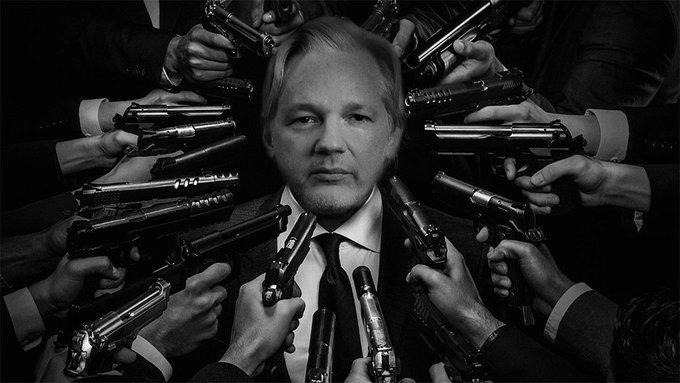
Only this month, the near comatose US President, Joe Biden, made a casual, castaway remark that his administration was “considering” the request by Australia that the case against Julian Assange be concluded. The WikiLeaks founder has already spent five gruelling years in London’s Belmarsh prison, where he continues a remarkable, if draining campaign against the US extradition request on 18 charges, 17 incongruously and outrageously based on the US Espionage Act of 1917.
Like readings of coffee grinds, his defenders took the remark as a sign of progress. Jennifer Robinson, a longtime member of Assange’s legal team, told Sky News Australia that Biden’s “response, this is what we have been asking for over five years. Since 2010 we’ve been saying this is a dangerous precedent that’s being set. So, we certainly hope it was a serious remark and the US will act on it.” WikiLeaks editor-in-chief Kristinn Hrafnsson found the mumbled comment from the president “extraordinary”, hoping “to see in the coming days” whether “clarification of what this means” would be offered by the powerful.
On April 14, the Wall Street Journal reported that Canberra had asked their US counterparts whether a felony plea deal could be reached, enabling the publisher to return to Australia. “Prosecutors and a lawyer for Assange have discussed a range of potential deals, including those that include pleading guilty to a felony under the espionage law under which he was indicted, and those of conspiring to mishandle classified information, which would be a misdemeanor, people familiar with the matter have said.”
Last month, the UK High Court gave what can only be regarded as an absurd prescription to the prosecution should they wish to succeed. Extradition would be unlikely to be refused if Assange was availed of protections offered by the First Amendment (though rejecting claims that he was a legitimate journalist), was guaranteed not to be prejudiced, both during the trial and in sentence on account of his nationality, and not be subject to the death penalty. That such directions were even countenanced shows the somewhat delusionary nature of British justices towards their US counterparts.
On April 16, Assange’s supporters received confirmation that the extradition battle, far from ending, would continue in its tormenting grind. Not wishing to see the prospect of a full hearing of Assange’s already hobbled arguments, the US State Department, almost to the hour, filed the assurances in a diplomatic note to the Crown Prosecution Service (CPS). “Assange,” the US Embassy in London claimed with aping fidelity to the formula proposed by the High Court, “will not be prejudiced by reason of nationality with respect to which defenses he may seek to raise at trial and at sentencing.”
Were he to be extradited, “Assange will have the ability to raise and seek to rely upon at trial (which includes any sentencing hearing) the rights and protections given under the First Amendment of the Constitution of the United States.” An obvious caveat, and one that should be observed with wary consideration by the High Court judges, followed. “A decision as to the applicability of the First Amendment is exclusively within the purview of the US Courts.”
The US embassy also promised that, “A sentence of death will neither be sought nor imposed on Assange. The United States is able to provide such assurance as Assange is not charged with a death-penalty eligible offense, and the United States assures that he will not be tried for a death-eligible offense.” This undertaking does not dispel the threat of Assange being charged with additional offences such as traditional espionage, let alone aiding or abetting treason, which would carry the death penalty.
In 2020, Gordon Kromberg, the chief Department of Justice prosecutor behind the case, told the Central Criminal Court of England and Wales that the US “could argue that foreign nationals are not entitled to protections under the First Amendment, at least as it concerns national defense information.” There was also the likelihood that Assange, in allegedly revealing the names of US intelligence sources thereby putting them at risk of harm, would also preclude the possibility of him relying on such protections.
-ADVERTISEMENT-
That the zealous Kromberg will be fronting matters should Assange reach US shores is more than troubling. Lawyers and civil rights activists have accused him of using the Eastern District Court of Virginia for selective and malicious prosecutions. As Murtaza Hussain of The Intercept observed with bleak accuracy in July 2021, “[r]ather than being pushed into obscurity by these efforts, today he is serving as a key figure in one of the most important civil liberties cases in the world.”
The High Court also acknowledged Kromberg’s views at trial regarding the possibility that the First Amendment did not cover foreign nationals. “It can fairly be assumed that [Kromberg] would not have said that the prosecution ‘could argue that foreign nationals are not entitled to protections under the First Amendment’ unless that was a tenable argument that the prosecution was entitled to deploy with real prospect of success.” These latest assurances do nothing to change that fact.
A post from Assange’s wife, Stella, provided a neat and damning summary of the embassy note. “The United States has issued a non-assurance in relation to the First Amendment, and a standard assurance in relation to the death penalty. It makes no undertaking to withdraw the prosecution’s previous assertion that Julian has no First Amendment rights because he is not a US citizen. Instead, the US has limited itself to blatant weasel words claiming that Julian can ‘seek to raise’ the First Amendment if extradited.”
Biden Administration Defies Australia’s Call To End Assange Case, Submits ‘Assurances’ To UK Court
Streamed live on 17 Apr 2024, Join Kevin Gosztola, author of “Guilty of Journalism: The Political Case Against Julian Assange,” as he covers the U.S. government’s “assurances” that were submitted to a British appeals court. They represent a clear indication that President Joe Biden’s administration is not going to end the case. If Biden was “considering” a plea deal for Assange, as was reported, he has made the decision to keep pursuing extradition and a U.S. trial on Espionage Act charges.
Assange Extradition Case Moves Forward While The CIA Covers Its Tracks

CAITLIN JOHNSTONE, APR 17, 2024 https://www.caitlinjohnst.one/p/assange-extradition-case-moves-forward?utm_source=post-email-title&publication_id=82124&post_id=143660864&utm_campaign=email-post-title&isFreemail=true&r=1ise1&triedRedirect=true&utm_medium=email
So they’re really doing it. The Biden administration is really ignoring Australia’s request to end the case against Julian Assange, and they’re proceeding with their campaign to extradite a journalist for telling the truth about US war crimes.
In order to move the extradition case forward, per a British high court ruling US prosecutors needed to provide “assurances” that the US would not seek the death penalty and would not deprive Assange of his human right to free speech because of his nationality. The US provided the assurance against the death penalty (which they’d previously opposed doing), and for the free speech assurance they said only that Assange will be able to “raise and seek to rely upon” US First Amendment rights, adding, “A decision as to the applicability of the First Amendment is exclusively within the purview of the U.S. Courts.”
Which is basically just saying “I mean, you’re welcome to TRY to have free speech protections?”
At the same time, CIA Director William Burns has filed a State Secrets Privilege demand to withhold information in a lawsuit against the agency by four American journalists and attorneys who were spied on during their visits to Assange at the Ecuadorian embassy in London. State secrets privilege is a US evidentiary rule designed to prevent courts from revealing state secrets during civil litigation; the CIA began invoking it with the Assange lawsuit earlier this year.
Burns argues:
“I am asserting the state secrets and statutory privileges in this case as I have determined that either admitting or denying that CIA has information implicated by the remaining allegations in the Amended Complaint reasonably could be expected to cause serious — and in some cases, exceptionally grave — damage to the national security of the United States. After deliberation and personal consideration, I have determined that the complete factual bases for my privilege assertions cannot be set forth on the public record without confirming or denying whether CIA has information relating to this matter and therefore risking the very harm to U.S. national security that I seek to protect.”
Which is obviously a load of horse shit. As Assange himself tweeted in 2017, “The overwhelming majority of information is classified to protect political security, not national security.” Burns isn’t worried about damaging “the national security of the United States,” he’s worried about the potential political fallout from information about the CIA spying on American lawyers and journalists while visiting a journalist who was being actively targeted by the legal arm of the US government.
Political security is also why the US is working to punish Julian Assange for publishing inconvenient facts about US war crimes. The Pentagon already acknowledged years ago that the Chelsea Manning leaks for which Assange is being prosecuted didn’t get anyone killed and had no strategic impact on US war efforts, so plainly this isn’t about national security. It’s just politically damaging for the criminality of the US government to be made public for all to see.
They’re just squeezing and squeezing this man as hard as they can for as long as they can get away with to keep him silent and make an example of him to show what happens when journalists reveal unauthorized information about the empire. Just like Gaza, the persecution of Julian Assange makes a lie of everything the US and its western allies claim to stand for, and reveals the cruel face of tyranny beneath the mask of liberal democracy.
Purgatorial Torments: Assange and the UK High Court

Australian Independent Media, March 27, 2024, by: Dr Binoy Kampmark
What is it about British justice that has a certain rankness to it, notably when it comes to dealing with political charges? The record is not good, and the ongoing sadistic carnival that is the prosecution (and persecution) of Julian Assange continues to provide meat for the table.
Those supporting the WikiLeaks publisher, who faces extradition to the United States even as he remains scandalously confined and refused bail in Belmarsh Prison, had hoped for a clear decision from the UK High Court on March 26. Either they would reject leave to appeal the totality of his case, thereby setting the wheels of extradition into motion, or permit a full review, which would provide some relief. Instead, they got a recipe for purgatorial prolongation, a tormenting midway that grants the US government a possibility to make amends in seeking their quarry.
A sinking sense of repetition was evident. In December 2021, the High Court overturned the decision of the District Court Justice Vanessa Baraitser to bar extradition on the weight of certain assurances provided by the US government. Her judgment had been brutal to Assange in all respects but one: that extradition would imperil his life in the US penal system, largely due to his demonstrated suicidal ideation and inadequate facilities to cope with that risk.
With a school child’s gullibility – or a lawyer’s biting cynicism – the High Court judges accepted assurances from the Department of Justice (DOJ) that Assange would not face the crushing conditions of detention in the notorious ADX Florence facility or suffer the gagging restrictions euphemised as Special Administrative Measures. He would also receive the appropriate medical care that would alleviate his suicide risk and face the prospect of serving the balance of any sentence back in Australia. The refusal to look behind the mutability and fickle nature of such undertakings merely passed the judges by. The March 26 judgment is much in keeping with that tradition.
The grounds for Assange’s team numbered nine in total entailing two parts. Some of these should be familiar to even the most generally acquainted reader. The first part, comprising seven grounds, argues that the decision to send the case to the Home Secretary was wrong for: ignoring the bar to extradition under the UK-US Extradition Treaty for political offences, for which Assange is being sought for; that his prosecution is for political opinions; that the extradition is incompatible with article 7 of the European Convention on Human Rights (ECHR) noting that there should be no punishment without law; that the process is incompatible with article 10 of the ECHR protecting freedom of expression; that prejudice at trial would follow by reason of his non-US nationality; that the right to a fair trial, protected by article 6 of the ECHR, was not guaranteed; and that the extradition is incompatible with articles 2 and 3 of the ECHR (right to life, and prohibiting inhuman and degrading treatment).
The second part of the application challenged the UK Home Secretary’s decision to approve the extradition, which should have been barred by the treaty between the UK and US, and on the grounds that there was “inadequate specialty/death penalty protection.”
In this gaggle of imposing, even damning arguments, the High Court was only moved by three arguments, leaving much of Baraitser’s reasons untouched. Assange’s legal team had established an arguable case that sending the case to the Home Secretary was wrong as he might be prejudiced at trial by reason of his nationality. Following from that “but only as a consequence of that”, extradition would be incompatible with free speech protections under article 10 of the ECHR. An arguable case against the Home Secretary’s decision could also be made as it was barred by inadequate specialty/death penalty protection.
What had taken place was a dramatic and savage pruning of a wholesome challenge to a political persecution garishly dressed in legal drag. On the issue of whether Assange was being prosecuted for his political opinions, the Court was happy to accept the woeful finding by Baraitser that he had not. The judge was “entitled to reach that conclusion on the evidence before her, and on the unchallenged sworn evidence of the prosecutor (which refutes the applicant’s case).” While accepting the view that Assange “acted out of political conviction”, the extradition was not being made “on account of his political views.” Again, we see the judiciary avoid the facts staring at it: that the exposure of war crimes, atrocities, torture and various misdeeds of state are supposedly not political at all.
………………………………………………………………………………………….. Of enormous, distorting significance was the refusal by the High Court to accept “fresh evidence” such as the Yahoo News article from September 2021 outlining the views of intelligence officials on the possible kidnapping and even assassination of Assange.
…………….Imaginatively, if inexplicably, the judges accepted her finding that the conduct by the CIA and UC Global regarding the Ecuadorian embassy had no link with the extradition proceedings. With jaw dropping incredulity, the judges reasoned that the murderous, brutal rationale for dealing with Assange contemplated by the US intelligence services “is removed if the applicant is extradited.” In a fit of true Orwellian reasoning, Assange’s safety would be guaranteed the moment he was placed in the custody of his would-be abductors and murderers.
The High Court was also generous enough to do the homework for the US government by reiterating the position taken by their brother judges in the 2021 decision. Concerns about Assange’s mistreatment would be alleviated by granting “assurances (that the applicant is permitted to rely on the First Amendment, that the applicant is not prejudiced at trial (including sentence) by reason of his nationality, that he is afforded the same First Amendment protection as a United States citizen, and that the death penalty not be imposed).” Such a request is absurd for presuming, not only that the prosecutors can be held to their word, but that a US court would feel inclined to accept the application of the First Amendment, let alone abide by requested sentencing requirements.
The US government has been given till April 16 to file assurances addressing the three grounds, with further written submissions in response to be filed by April 30 by Assange’s team, and May 14 by the Home Secretary. Another leave of appeal will be entertained on May 20. If the DOJ does not provide any assurances, then leave to appeal will be granted. The accretions of obscenity in the Assange saga are set to continue. more https://theaimn.com/purgatorial-torments-assange-and-the-uk-high-court/
The Empire Slowly Suffocates Assange Like It Slowly Suffocates All Its Enemies
CAITLIN JOHNSTONE, MAR 27, 2024, https://www.caitlinjohnst.one/p/the-empire-slowly-suffocates-assange?utm_source=post-email-title&publication_id=82124&post_id=142993532&utm_campaign=email-post-title&isFreemail=true&r=1ise1&triedRedirect=true&utm_medium=email
The British High Court has ruled that WikiLeaks founder Julian Assange may potentially get a final appeal against extradition to the United States, but only within a very limited scope and only if specific conditions are met.
The court ruled that Assange may appeal only on the grounds that his freedom of speech might be restricted in the US, and that there is a possibility he could receive the death penalty. If the US provides “assurances” that neither of these things will happen, then the trial moves to another phase where Assange’s legal team may debate the merits of those assurances. If the US does not provide those assurances, then the limited appeal will move forward.
Absurdly, the court determined that Assange’s lawyers may not argue against extradition on matters as self-evidently critical as the fact that the CIA plotted to assassinate him, or on the basis that he is being politically persecuted for the crime of inconvenient journalism.
The mass media are calling this a “reprieve”, even “wonderful news”, but as Jonathan Cook explains in his latest article “Assange’s ‘reprieve’ is another lie, hiding the real goal of keeping him endlessly locked up,” that’s all a bunch of crap.
“The word ‘reprieve’ is there — just as the judges’ headline ruling that some of the grounds of his appeal have been ‘granted’ — to conceal the fact that he is prisoner to an endless legal charade every bit as much as he is a prisoner in a Belmarsh cell,” writes Cook. “In fact, today’s ruling is yet further evidence that Assange is being denied due process and his most basic legal rights — as he has been for a decade or more.”
Cook writes the following:
“The case has always been about buying time. To disappear Assange from public view. To vilify him. To smash the revolutionary publishing platform he founded to help whistleblowers expose state crimes. To send a message to other journalists that the US can reach them wherever they live should they try to hold Washington to account for its criminality.
“And worst of all, to provide a final solution for the nuisance Assange had become for the global superpower by trapping him in an endless process of incarceration and trial that, if it is allowed to drag on long enough, will most likely kill him.”
This kind of slow motion strangulation is how the empire operates all the time these days, across all spheres. Helping Israel starve Gaza while slowly pretending to work toward solutions. Drawing out a proxy war in Ukraine for as long as possible to bleed Russia. Slowly killing Assange in prison without trial under the pretense of judicial proceedings.
The US-centralized empire hunts not like a tiger, killing its prey with one fatal bite to the jugular, but more like a python: slowly suffocating the life out of its prey until it perishes. It favors the long, drawn-out, confusing strangulation of inconvenient populations and individuals, carried out under the cover of bureaucracy and propaganda spin. In today’s world it prefers sanctions, blockades and long proxy conflicts over the big Hulk-smash ground invasions we saw it carry out in places like Iraq and Vietnam.
These slow suffocations can take more time, but what they lack in efficiency they make up for in the quality of perception management. It’s bad PR to just openly invade countries and murder people, which is why the leaders of the western empire have been able to wag their fingers at Putin despite their being quantifiably far more murderous than Russia. People start snapping out of the propaganda matrix you spent so much time building for them and begin organizing against the political status quo your power is premised on.
So they opt for slow strangulation strategies where they can confuse the public about what’s happening and who’s responsible, outsourcing the blame to other parties while posing as the good guy who’s trying to bring peace and stability. It takes time, but the empire has time to burn. That’s what happens when you’re the most powerful empire in the history of civilization; you have the luxury of biding your time while orchestrating large-scale, long-term operations to advance your power agendas.
Meanwhile Gaza starves, Ukraine bleeds, and Assange languishes in prison, each needing this to end with more urgency every day.
TODAY. UK High Court caving in before USA’s power, leaving decision on Julian Assange’s future up to USA’s “kindness”?
Well, well, what better example of America’s dominance over the anglophone world could you find?
The UK High Court was charged with making a decision on whether or not Julian Assange could appeal against the British government’s decision to extradite him to the USA on charges of ” complicity in illegal acts to obtain or receive voluminous databases of classified information and for agreeing and attempting to obtain classified information through computer hacking”, under the rarely used Espionage Act of 1917
This High Court case is the latest in the series of legal cases around the issue of extradition.
Julian Assange has languished for almost five years, in solitary confinement, in the notorious Belmarsh prison, Britain’s “Guantanamo Bay” for the worst criminals. Now he has to endure this for more weeks. Talk about death by a thousand cuts. ( Perhaps Russia is kinder – they just poison their problem people, or crash them in a plane – it’s quicker)
All this because Assange revealed and published the truth about America’s military atrocities.
So – now we know.
If a journalist anywhere in the world should have the temerity to reveal inconvenient facts about the USA military, then look out!
Not only are the Western political leaders, and especially in the anglophone countries, subservient to their master – the USA, but now we know that even their legal systems are subservient too.
Dame Victoria Sharp, took 66 pages to explain why the High Court couldn’t actually make a decision, without the blessing of the USA government.
So – the High Court will reconvene in three weeks, after receiving “assurances” from the USA government – about no death penalty (on the present charges, they could make new ones?), that he is permitted to rely on the First Amendment, – he is not ‘prejudiced at trial’ .
Of course the USA government will come up with kindly phrases – not worth the paper they are written on.
It’s a sad day for justice.
UK Court to Decide Tuesday If Julian Assange Can Appeal Extradition
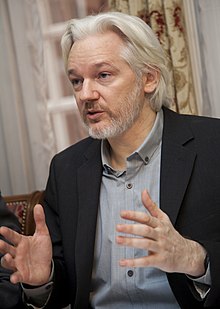
The decision will be issued at 10:30 am London time
by Dave DeCamp March 25, 2024, https://news.antiwar.com/2024/03/25/uk-court-to-decide-if-julian-assange-can-appeal-extradition/
London’s High Court will rule on Tuesday whether WikiLeaks founder Julian Assange can appeal his extradition to the United States, where he would face trial for exposing US war crimes.
According to WikiLeaks, the written ruling is due to be delivered by 10:30 am London time.
Last month, Assange’s legal team presented its case for the appeal. His lawyers also introduced new evidence, including a bombshell report from Yahoo News that revealed the CIA in 2017, under Mike Pompeo at the time, considered kidnapping and even discussed assassinating Assange over WikiLeaks publishing detailed the CIA’s hacking tools, known as Vault 7.
Assange did not attend the two-day hearing due to his poor health, and he remains in London’s Belmarsh Prison, where he’s been held since 2019. Assange’s family and legal team believe he will die if extradited to the US.
The news of the High Court’s impending decision comes after The Wall Street Journal reported that the US was considering offering a plea deal to Assange and that Justice Department officials had preliminary talks with his legal team. However, Assange’s lawyer, Barry Pollack, said in response to the report that the US has “given no indication” that the US will take a deal.
Assange faces 17 counts under the Espionage Act and one charge for conspiracy to commit a computer intrusion for obtaining and publishing documents from a source, a standard journalistic practice. If Assange is convicted, it would set a grave precedent for press freedom in the US and around the world. A plea deal that criminalizes the journalist-source relationship could also set a dangerous precedent.
WikiLeaks has been asking Americans to put pressure on the Biden administration to stop its pursuit of Assange by contacting their House representatives and telling them to support H.Res.934, a bill introduced by Rep. Paul Gosar (R-AZ) that calls for the US to drop the charges against Assange.
1 This month

of the week – Australians for War Powers Reform (AWPR)
To see nuclear-related stories in greater depth and intensity
 Antinuclear