Julian Assange and the Plea Nibble

Barry Pollack, one of Assange’s legal representatives, has not been given any indication that the department would, as such, accept the deal, a point he reiterated to Consortium News: “[W]e have been given no indication that the Department of Justice intends to resolve the case.”
March 23, 2024 by: Dr Binoy Kampmark https://theaimn.com/julian-assange-and-the-plea-nibble/
Be wary of what Washington offers in negotiations at the best of times. The empire gives and takes when it can; the hegemon proffers and in equal measure and withdraws offers it deems fit. This is all well known to the legal team of WikiLeaks’ founder Julian Assange, who, the Wall Street Journal “exclusively” reveals, is in ongoing negotiations with US Justice Department officials on a possible plea deal.
As things stand, the US Department of Justice is determined to get its mitts on Assange on the dubious strength of 18 charges, 17 confected from the brutal Espionage Act of 1917. Any conviction from these charges risks a 175-year jail term, effectively constituting a death sentence for the Australian publisher.
The war time statute, which was intended to curb free speech and muzzle the press for the duration of the First World War, was assailed by Wisconsin Republican Senator Robert La Follette as a rotten device that impaired “the right of the people to discuss the war in all its phases.” It was exactly in time of war that the citizen “be more alert to the preservation of his right to control his government. He must be most watchful of the encroachment of the military upon the civil power.” And that encroachment is all the more pressing, given the Act’s repurposing as a weapon against leakers and publishers of national security material. In its most obscene incarnation, it has become the US government’s political spear against a non-US national who published US classified documents outside the United States.
The plea deal idea is not new. In August last year, the Sydney Morning Herald pounced upon comments from US Ambassador to Australia Caroline Kennedy that a “resolution” to the Assange imbroglio might be on the table. “There is a way to resolve it,” the ambassador suggested at the time. Any such resolution could involve a reduction of any charges in favour of a guilty plea, subject to finalisation by the Department of Justice. Her remarks were heavily caveated: this was more a matter for the DOJ than the State Department or any other agency. “So it’s not really a diplomatic issue, but I think there absolutely could be a resolution.”
The WSJ now reports that officials from the DOJ and Assange’s legal team “have had preliminary discussions in recent months about what a plea deal could look like to end the lengthy legal drama.” These talks “remain in flux” and “could fizzle.” Redundantly, the Journal reports that any such agreement “would require approval at the highest levels of the Justice Department.”
Barry Pollack, one of Assange’s legal representatives, has not been given any indication that the department would, as such, accept the deal, a point he reiterated to Consortium News: “[W]e have been given no indication that the Department of Justice intends to resolve the case.”
One floated possibility would be a guilty plea on a charge of mishandling classified documents, which would be classed as a misdemeanour. Doing so would take some of the sting out of the indictment, which is currently thick with felonies and one conspiracy charge of computer intrusion. “Under the deal, Assange could potentially enter that plea remotely, without setting foot in the US.” Speculation from the paper follows. “The time he has spent behind bars in London would count toward any US sentence, and he would be likely to be free to leave prison shortly after any deal has concluded.”
With little basis for the claim, the report lightly declares that the failure of plea talks would not necessarily be a bad thing for Assange. He could still “be sent to the US for trial”, where “he may not stay for long, given the Australia pledge.” The pledge in question is part of a series of highly questionable assurances given to the UK government that Assange’s carceral conditions would not include detention in the supermax ADX Florence facility, the imposition of notorious Special Administrative Measures, and the provision of appropriate healthcare. Were he to receive a sentence, it would be open to him to apply and serve its balance in Australia. But all such undertakings have been given on condition that they can be broken, and transfer deals between the US and other countries have been plagued by delays, inconsistencies, and bad faith.
-ADVERTISEMENT-
The dangers and opportunities to Assange have been bundled together, a sniff of an idea rather than a formulation of a concrete deal. And deals can be broken. It is hard to imagine that Assange would not be expected to board a flight bound for the United States, even if he could make his plea remotely. Constitutional attorney Bruce Afran, in an interview with CN Live! last August, suggested that a plea, taken internationally, was “not barred by any laws. If all parties consent to it, then the court has jurisdiction.” Yes, but what then?
In any event, once on US soil, there is nothing stopping a grand volte face, that nasty legal practice of tagging on new charges that would carry even more onerous penalties. It should be never forgotten that Assange would be delivered up to a country whose authorities had contemplated, at points, abduction, illegal rendition, and assassination.
Either way, the current process is one of gradual judicial and penal assassination, conducted through prolonged proceedings that continue to assail the publisher’s health even as he stays confined to Belmarsh Prison. (Assange awaits the UK High Court’s decision on whether he will be granted leave to appeal the extradition order from the Home Office.) The concerns will be how to spare WikiLeaks founder further punishment while still forcing Washington to concede defeat in its quest to jail a publisher. That quest, unfortunately, remains an ongoing one.
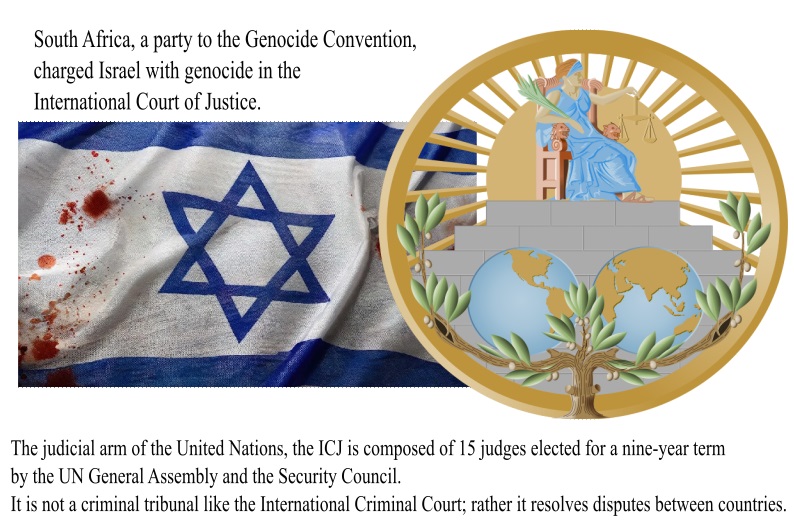
Shock as Australian Prime Minister learns that he is not above international law
the Prime Minister would be wise to seek independent advice from one of several influential Australians who have significant expertise in the field of international humanitarian law.
By Margaret ReynoldsMar 7, 2024, https://johnmenadue.com/shocked-australian-pm-learns-he-is-not-above-international-law/
Prime Ministers are too often monopolised by people telling them what they want to hear. Most political advisers can’t see beyond the latest opinion poll and the Australian bureaucracy has become equally reluctant to offer frank and fearless advice. It appears that the Attorney General, Defence and Foreign Affairs and Trade Departments have each failed to alert the Prime Minister and his government to the risks inherent in ignoring international law when responding to the Gaza crisis.
However, many members of Australian civil society have indeed urged the Federal Government to act strongly to uphold humanitarian standards and avoid crimes against humanity They have demanded the Federal Government restore funding to the United Nations Relief and Works Agency and ban arms sales to Israel. More than 100 non-government organisations have communicated their alarm that Australia could in any way be contributing to the ongoing atrocities being inflicted on the Palestinians. Since January 27th, many Australians have anticipated a public official response to the International Court of Justice interim ruling that a case of genocide against Israel is plausible Yet this weight of urgent correspondence and advocacy has failed to alert the Prime Minister’s staff to Australia’s responsibilities as a signatory of the Genocide Convention.
Today more than 100 Australian lawyers endorsed the referral of Anthony Albanese, together with other members of his government and the Opposition leader, Peter Dutton to the International Criminal Court as Accessory to Genocide in Gaza alleging political and material support to the Israel government and military over the past five months.
The 92-page document sets down specific ways in which this allegation can be upheld.
– Freezing of funding to the United Nations Relief and Works Agency amid a humanitarian crisis
– Providing military aid and approving defence exports to Israel
– Ambiguously deploying an Australian military contingent to the region where its location and exact role have not been disclosed
– Permitting Australians to travel to Israel to join the Israeli Defence Force and take part in its attacks on Gaza.
In response, the Prime Minister has dismissed the referral to the International Criminal Court as “lacking credibility” and it is unsurprising he would go into a defensive denial mode. However, it would be a brave leader who did not now demand detailed briefings on these allegations from those departments that have failed to respond to the International Court of Justice genocide warning. Furthermore, the Prime Minister would be wise to seek independent advice from one of several influential Australians who have significant expertise in the field of international humanitarian law.
Regardless of the long-term future of this and comparable allegations against other western leaders, the Australian Government has been given the chance to review its commitment to international law. It can continue to ignore calls for transparency and Australian independence in foreign policy, or it can start to seriously examine why the allegations of complicity have been made.
There is no doubt that many nations are much more actively concerned about the charge of genocide brought against Israel by the South African government. In February more than fifty countries including Indonesia, Malaysia, Fiji, Japan, Great Britain and Ireland sent official legal delegations to the Hague to present their nations opinions to the International Court of Justice., but Australia was not represented.
In contrast, the Australian Government has avoided any detailed public response to its responsibilities as a signatory to the Genocide Convention. Indeed, it has recently twice closed down parliamentary debate that could lead to a comprehensive House of Representatives discussion. There has been no debate about how Australia may assist in future medical rehabilitation of Palestinians nor how it will contribute to the rebuilding of Gaza. While the Foreign Minister may refer to a “two state solution “ there has been no official announcement that Australia finally recognises the State of Palestine.
Furthermore, the failure of the Australian public service to maintain or prioritise current independent information about the continuing assault in Gaza amounts to negligence. In a recent meeting, United Nations Relief and Works Agency in Gaza, Director Tom White was advised “the Australian Government wanted to be sure UNRWA Gaza aid funding will go to those who need it “! This bland indeed inhuman statement clearly reflects that there is something seriously wrong with how the government is currently managing its international responsibilities.
Of course, it is embarrassing for the current Australian Government to be named as an “accessory to genocide”, but all members of parliament should not be too quick to dismiss the allegation until they have reviewed why and how such a charge could be made. The parliament hears too many simplistic speeches giving loyalty to allies who blatantly ignore international law and it’s time our representatives faced this reality.
Australia has a proud record as a founding member of the United Nations, which is responsible for developing international law. So many well-known Australian names have contributed to a great variety of United Nations achievements, yet few parliamentarians speak up for the importance of the international body. International law is being undermined by governments choosing militarism ahead of the rule of law, so it is imperative that the Australian government and parliament commit to prioritising its international responsibilities. Many Australians will be watching closely, demanding that humanitarian leadership is restored.
Margaret Reynolds is a former councillor and Federal Minister for Local Government. She chaired the Advisory Board of the Australian Centre of Excellence in Local Government at the University of Technology, Sydney 2008-2012.
She has a long history in the peace movement starting during the Vietnam War. As a Labor senator she supported the Pine Gap Women’s Peace camp and visited Greenham Common to support anti-nuclear campaigners . She represented Parliamentarians for Global Action at several human rights and peace conferences in the 1990s. After leaving parliament she taught International Relations at the University of Queensland.
Margaret is the National President of the Women’s International League for Peace and Freedom
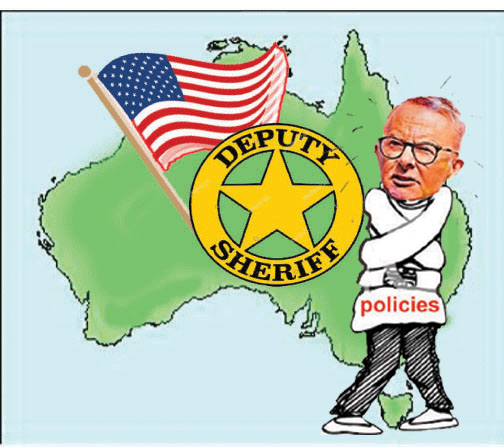
Prime Minister of Australia, and Henchmen, Referred to International Criminal Court for Support of Gaza Genocide
By Birchgrove Legal, March 5, 2024, https://worldbeyondwar.org/prime-minister-of-australia-and-henchmen-referred-to-international-criminal-court-for-support-of-gaza-genocide/
Australian Prime Minister Anthony Albanese has been referred to the International Criminal Court as an accessory to genocide in Gaza, making him the first leader of a Western [Western?] nation to be referred to the ICC under Article 15 of the Rome Statute.
A team of Australian lawyers from Birchgrove Legal, led by King’s Counsel Sheryn Omeri, have spent months documenting the alleged complicity and outlining the individual criminal responsibility of Mr Albanese in respect to the situation in Palestine.
The 92-page document, which has been endorsed by more than one hundred Australian lawyers and barristers, was yesterday submitted to the Office of ICC Prosecutor, Karim Khan KC.
The document sets out a number of actions taken by the PM and other ministers and members of parliament, including Foreign Minister Wong and the Leader of the Opposition, for the Prosecutor to consider and investigate. These include:
- Freezing $6 million in funding to the primary aid agency operating in Gaza – UNRWA – amid a humanitarian crisis based on unsubstantiated claims by Israel after the International Court of Justice had found it plausibly to be committing genocide in Gaza.
- Providing military aid and approving defence exports to Israel, which could be used by the IDF in the course of the prima facie commission of genocide and crimes against humanity.
- Ambiguously deploying an Australian military contingent to the region, where its location and exact role have not been disclosed.
- Permitting Australians, either explicitly or implicitly, to travel to Israel to join the IDF and take part in its attacks on Gaza.
- Providing unequivocal political support for Israel’s actions, as evidenced by the political statements of the PM and other members of Parliament, including the Leader of the Opposition.
Ms Omeri KC said the case was legally significant because it focused exclusively on two modes of accessorial liability.
“The Rome Statute provides four modes of individual criminal responsibility, two of which are accessorial,” Omeri said.
“In relation to accessorial liability, a person may be criminally responsible for a crime set out in the Rome Statute if, for the purpose of facilitating the commission of that crime, that person aids, abets or otherwise assists in the commission of the crime, or its attempted commission, including by providing the means for its commission.
“Secondly, if that person in any other way contributes to the commission of the crime or its attempted commission by a group, knowing that the group intends to commit the crime.”
Ms Omeri KC said the Article 15 communication had been carefully drafted by those instructing her and was now a matter for the Prosecutor to consider.
“The Office of the Prosecutor of the ICC is already pursuing an ongoing investigation into the situation in the State of Palestine, which it has been conducting since March 2021,” Omeri said.
“That includes investigating events which have occurred since 7 October 2023. This Article 15 communication will add to the evidence available to the Prosecutor in relation to that situation.
“The Article 15 communication is of a piece with recent domestic legal cases brought against Western leaders in a number of countries such as in the US, against President Biden, and most recently, in Germany, against, among other senior government ministers, Chancellor Scholz.
“These cases demonstrate a growing desire on the part of civil society and ordinary citizens of Western countries to ensure that their governments do not assist in the perpetration of international crimes, especially in circumstances where the ICJ has found a plausible case of genocide in Gaza.”
Principal solicitor at Birchgrove Legal, Moustafa Kheir, said his team had twice written to Mr Albanese, putting him on notice and seeking a response on behalf of the applicants who make up a large consortium of concerned Australian citizens, including those of Palestinian ethnicity.
Mr Kheir said communications were ignored on both occasions.
“Since October we have attempted communications with our Prime Minister as we reasonably believe that he and members of his cabinet are encouraging and supporting war crimes committed by Israel against Palestinian civilians through their political and military assistance,” Kheir said.
“The Prime Minister has ignored our concerns and given the limited avenues we have for recourse under national law, we have been left with little option but to pursue this Article 15 communication to the International Criminal Court.
“Our communication has been endorsed by King’s Counsel Greg James AM and well over 100 senior counsel and barristers, retired judges, law professors and academics from around Australia who wish to test the strength of international law to hold their own democratic leaders accountable given the barriers we face to do it nationally.
“As lawyers and barristers, it is impossible to sit back and watch sustained breaches of international law while Albanese continues to refer to the perpetrator as “a dear friend.”
A copy of the application can be viewed here: ICC-Referral-Australian-Government-Ministers-and-Opposition-Leader-04032024_BLG.pdf
Or here.
The Show Trial against Julian Assange

If the US authorities succeed in convicting a journalist for exposing war crimes, this would have another serious consequence. In the future, it would become even more difficult and dangerous to expose the sordid reality of wars,
How US and British authorities are bending the law and undermining press freedom
FABIAN SCHEIDLER, FEB 24, 2024 ore https://fabianscheidler.substack.com/p/the-show-trial-against-julian-assange
“Those who tell the truth need a fast horse,” says an Armenian proverb. Or they need a society that protects the truth and its messengers. But this protection, which our democracies claim to offer, is in danger. As a journalist, Julian Assange has published hundreds of thousands of files documenting war crimes committed by the USA and its allies in Afghanistan, Iraq, Guantanamo and elsewhere. The authenticity of the documents is beyond question. However, none of the perpetrators have been brought to justice or convicted. In contrast, the messenger has been incarcerated in a high-security prison in London for five years with life-threatening health problems, having previously spent seven years locked up in the Ecuadorian embassy. He has been charged with no crime in the UK, in any EU country or in his home country of Australia. The only reason for his grueling deprivation of liberty is that the US government has initiated extradition proceedings accusing the journalist Assange of espionage, invoking a law dating back more than a hundred years to the First World War: the Espionage Act.
Never before has a journalist been charged under this law. The extradition process therefore sets a dangerous precedent. If it is successful, every journalist on Earth who exposes US war crimes would have to fear suffering the same fate as Assange. That would be the end of freedom of the press as we know it. Because it is based on the capacity to bring to light the dark sides of power without fear of punishment. Where this freedom is extinguished, it is not only the freedom of journalists that dies, but the freedom of us all: the freedom from the arbitrariness of power.
For this reason alone, this extradition process should never have been accepted by the courts in a functioning legal system. Julian Assange did not act as a spy in any way, but as a journalist and as such is subject to special protection. Incidentally, the key witness for the espionage charge was the notorious fraudster and convicted paedophile Sigurdur Ingi Thordarson, who admitted in 2021 that he had lied on behalf of the FBI and had been granted immunity from prosecution.
Let us imagine the case with reversed roles: Suppose an Australian journalist had published war crimes committed by the Russian military and intelligence services and sought protection in a Western European country. Would the courts seriously consider extradition proceedings to Moscow for espionage, especially if the key witness is a convicted criminal?
Assange is facing the absurd sentence of 175 years in the USA. It is to be feared that he will not survive the extremely harsh conditions in the notorious US prison system. For this reason, the London Magistrates’ Court initially halted his extradition in 2021. The US government then published a paper stating that Assange would not face solitary confinement. However, according to Amnesty International, this declaration is “not worth the paper it is written on”, as the non-binding diplomatic note reserves the right for the US government to change its position at any time. The Court of Appeal, however, found this paper sufficient to clear the way for extradition – a travesty of justice, as Amnesty noted.
The hearings, which took place on February 20 and 21 at the High Court in London and whose verdict is expected in March, are the last opportunity for Assange to obtain an appeal against this extradition decision. However, there is a high risk that the law will once again be turned on its head. As the investigative platform Declassified UK reports, one of the two judges, Jeremy Johnson, previously worked for the British secret service MI6, which is closely intertwined with the CIA and whose illegal activities came to public attention through the work of Julian Assange.
For Julian Assange, the trial itself has already become a punishment. Nils Melzer, the UN Special Rapporteur on Torture, concluded after detailed investigations that Assange had been subjected to systematic psychological torture for years. The fact that the US was prepared to go even further came to light in September of the same year: according to reports in the Guardian, senior intelligence officials, including the then head of the CIA and later Secretary of State Mike Pompeo, planned to kidnap and murder Assange in 2017.[v]
The background:
Wikileaks had published documents that year that became known as “Vault 7”. They show the CIA’s massive activities in the field of cyber warfare and prove how the secret service systematically and comprehensively intervenes in web browsers, IT systems in cars, smart TVs and smartphones, even when they are switched off. This was one of the most sensational revelations by Wikileaks since the leaks by Edward Snowden, who uncovered the massive illegal surveillance by the NSA. The CIA was not to forgive Assange for this coup and subsequently classified Wikileaks as a “non-state hostile intelligence service” – a momentous neologism that allowed journalists to be declared enemies of the state. After Pompeo became Secretary of State in 2018, the US government initiated the extradition proceedings. This move replaced Pompeo’s original kidnapping and killing plan, with the goal remaining the same: the destruction of an inconvenient journalist.
The revelations of whistleblowers such as Edward Snowden and Chelsea Manning and journalists such as Julian Assange have shown that in the shadow of the so-called war on terror, a vast parallel universe has emerged in recent decades that is obsessed with the illegal spying on its own citizens and the arbitrary imprisonment, torture and killing of political opponents. This world is largely beyond democratic control, indeed it is undermining the democratic order from within.
However, this development is not entirely new. In 1971, leaks revealed a secret FBI program for spying on, infiltrating and disrupting civil rights and anti-war movements, which became known as COINTELPRO. In the same year, the New York Times published the Pentagon Papers leaked by whistleblower Daniel Ellsberg, which showed that four successive US administrations had systematically lied to their citizens about the extent and motives of the Vietnam War and the massive war crimes committed by the US military. In 1974, Seymour Hersh revealed the CIA’s secret programs to assassinate foreign heads of state and the covert operation to spy on hundreds of thousands of opponents of the war, which ran under the code name “Operation CHAOS”. Driven by these reports, the US Congress convened in 1975 the Church Committee, which carried out a comprehensive review of the secret operations and led to greater parliamentary control of the services.
Julian Assange is part of this venerable journalistic tradition and has made a decisive contribution to its renewed flourishing. However, there is one important difference to the 1970s: Today, the most important investigative journalist of his generation is openly persecuted, criminalized and deprived of his freedom. When states declare the investigation of crimes to be a crime itself, society enters a dangerous downward spiral, at the end of which new forms of totalitarian rule can emerge. As early as 2012, Assange remarked, at the time with regard to the increasingly comprehensive surveillance technologies: “We have all the ingredients for a turnkey totalitarian state”.
If the US authorities succeed in convicting a journalist for exposing war crimes, this would have another serious consequence. In the future, it would become even more difficult and dangerous to expose the sordid reality of wars, especially those wars that Western governments like to sell as civilizing missions with the help of embedded journalists. If we do not learn the truth about these wars, it becomes much easier to wage them. Truth is the most important instrument of peace.
Julian Assange has not yet been extradited and sentenced. Over the years, a remarkable international movement has formed for his release and the defense of press freedom. Many parliamentarians around the world are also raising their voices. The Australian parliament, for example, supported by Prime Minister Anthony Albanese, passed a resolution by a large majority calling for Assange’s release. A group of over 80 members of the German parliament have joined in. However, the German government is still refusing to exert any serious pressure on Joe Biden’s government, which continues to persecute Assange. German Foreign Minister Annalena Baerbock, who as the Green Party’s candidate for chancellor had spoken out in favor of freeing Assange, has persistently avoided questions on the subject since joining the government. Her ministry has left questions from MPs about the case unanswered for months, only to then make elusive rhetorical excuses. The leading politicians of the governing German coalition, who like to loudly present themselves as the guardians of democracy and the rule of law, must finally take action in this case of political justice and unequivocally demand the release of Julian Assange before it is too late. However, this would require overcoming the cowering attitude towards the godfather in Washington and actually standing up for the much-vaunted values of democracy.
Chris Hedges: Julian Assange’s Day in Court

The defense must convince the two judges that the District Judge made serious legal errors to see an appeal granted.
They argued that espionage is, as a matter of law, a political offense and that the extradition treaty with the U.S. prohibits extradition for political offenses. They focused on the extensive UK law, common law and international law that defines espionage as a “pure political offense” because e it is directed against a state apparatus. For this reason, those charged with espionage should be protected from extradition.
The hearing was, after those in 2020 that focused on Julian’s mental and psychological health, refreshing in that it discussed the crimes committed by the U.S. and the importance of making them public.
Julian Assange’s lawyers — in a final bid on Tuesday to stop his extradition — fought valiantly to poke holes in the case of the prosecution to obtain an appeal.
By Chris Hedges https://scheerpost.com/2024/02/21/chris-hedges-julian-assanges-day-in-court/
LONDON — By the afternoon the video link, which would have allowed Julian Assange to follow his final U.K. appeal to prevent his extradition, had been turned off. Julian, his attorneys said, was too ill to attend, too ill even to follow the court proceedings on a link, although it was possible he was no longer interested in sitting through another judicial lynching. The rectangular screen, tucked under the black wrought iron bars that enclosed the upper left hand corner balcony of the courtroom where Julian would have been caged as a defendant, was perhaps a metaphor for the emptiness of this long and convoluted judicial pantomime.
he arcane procedural rules — the lawyers in their curled blonde wigs and robes, the spectral figure of the two judges looking down on the court from their raised dais in their gray wigs and forked white collars, the burnished walnut paneled walls, the rows of lancet windows, the shelves on either side filled with law books in brown, green, red, crimson, blue and beige leather bindings, the defense lawyers, Edward Fitzgerald KC and Mark Summers KC, addressing the two judges, Dame Victoria Sharp and Justice Johnson, as “your lady” and “my lord” — were all dusty Victorian props employed in a modern Anglo-American show trial. It was a harbinger of a decrepit justice system that, subservient to state and corporate power, is designed to strip us of our rights by judicial fiat.
The physical and psychological disintegration of Julian, seven years trapped in the Ecuadorian Embassy in London and nearly five years held on remand in the high-security HM Prison Belmarsh, was always the point, what Nils Melzer the former U.N. Special Rapporteur on torture calls his “slow-motion execution.” Political leaders, and their echo chambers in the media, fall all over themselves to denounce the treatment of Alexei Navalny but say little when we do the same to Julian. The legal farce grinds forward like the interminable case of Jarndyce and Jarndyce in Charles Dickens’ novel Bleak House. It will probably grind on for a few more months — one can’t expect the Biden administration to add the extradition of Julian to all its other political woes. It may take months to issue a ruling, or grant one or two appeal requests, as Julian continues to waste away in HM Prison Belmarsh.
Julian’s nearly 15-year legal battle began in 2010 when WikiLeaks published classified military files from the wars in Iraq and Afghanistan — including footage showing a U.S. helicopter gunning down civilians, including two Reuters journalists in Baghdad. He took refuge in London’s Ecuadorian embassy, before being arrested by the Metropolitan Police in 2019 who were permitted by the Ecuadorian embassy to enter and seize him. He has been held for nearly five years in HM Prison Belmarsh.
Julian did not commit a crime. He is not a spy. He did not purloin classified documents. He did what we all do, although he did it in a far more important way. He published voluminous material, leaked to him by Chelsea Manning, which exposed U.S. war crimes, lies, corruption, torture and assassinations. He ripped back the veil to expose the murderous machinery of the U.S. empire.
The two-day hearing is Julian’s last chance to appeal the extradition decision made in 2022 by the then British home secretary, Priti Patel. On Wednesday the prosecution will make its arguments. If he is denied an appeal he can request the European Court of Human Rights (ECtHR) for a stay of execution under Rule 39, which is given in “exceptional circumstances” and “only where there is an imminent risk of irreparable harm.” But the British court may order Julian’s immediate extradition prior to a Rule 39 instruction or may decide to ignore a request from the ECtHR to allow Julian to have his case heard by the court.
District Judge Vanessa Baraitser in January 2021, at Westminster Magistrates’ Court, refused to authorize the extradition request. In her 132-page ruling, she found that there was a “substantial risk” Julian would commit suicide due to the severity of the conditions he would endure in the U.S. prison system. At the same time, she accepted all the charges leveled by the U.S. against Julian as being filed in good faith. She rejected the arguments that his case was politically motivated, that he would not get a fair trial in the U.S. and that his prosecution is an assault on the freedom of the press.
Baraitser’s decision was overturned after the U.S. government appealed to the High Court in London. Although the High Court accepted Baraitser’s conclusions about Julian’s “substantial risk” of suicide if he was subjected to certain conditions within a U.S. prison, it also accepted four assurances in U.S. Diplomatic Note no. 74, given to the court in February 2021, which promised Julian would be treated well. The “assurances” state that Julian will not be subject to Special Administrative Measure. They promise that Julian, an Australian citizen, can serve his sentence in Australia if the Australian government requests his extradition. They promise he will receive adequate clinical and psychological care. They promise that, pre-trial and post-trial, Julian will not be held in the Administrative Maximum Facility in Florence, Colorado.
Continue readingJulian Assange judge previously acted for MI6
The judge set to rule on the Assange extradition case was previously paid to represent the interests of MI6 and the Ministry of Defence – whose activities WikiLeaks has exposed.
MARK CURTIS AND JOHN MCEVOY, 19 FEBRUARY 2024
One of the two High Court judges who will rule on Julian Assange’s bid to stop his extradition to the US represented the UK’s Secret Intelligence Service (MI6) and the Ministry of Defence, Declassified has found.
Justice Jeremy Johnson has also been a specially vetted barrister, cleared by the UK authorities to access top secret information.
Johnson will sit with Dame Victoria Sharp, his senior judge, to decide the fate of the WikiLeaks co-founder. If extradited, Assange faces a maximum sentence of 175 years.
His persecution by the US authorities has been at the behest of Washington’s intelligence and security services, with whom the UK has deep relations.
His persecution by the US authorities has been at the behest of Washington’s intelligence and security services, with whom the UK has deep relations.
Assange’s journalistic career has been marked by exposing the dirty secrets of the US and UK national security establishments. He now faces a judge who has acted for, and received security clearance from, some of those same state agencies.
As with previous judges who have ruled on Assange’s case, this raises concerns about institutional conflicts of interest.
Exactly how much Johnson has been paid for his work for government departments is not clear. Records show he was paid twice by the Government Legal Department for his services in 2018. The sum was over £55,000.
Briefed by MI6
Justice Johnson became a deputy High Court judge in 2016 and a full judge in 2019. His biography states he has been “often acting in cases involving the police and government departments”.
As a barrister, in 2007 he represented MI6 as an observer during the inquests into the deaths of Princess Diana and Dodi Al Fayed.
Johnson worked alongside Robin Tam QC, previously described by legal directories as a barrister who “does an enormous amount of often sensitive work” for the UK government…………………………………………………….
Defending the ministry
Johnson has also represented the UK Ministry of Defence (MoD) on at least two occasions.
In 2013, he acted for the department during the high-profile Al-Sweady inquiry, which looked into allegations that “British soldiers torture and unlawfully killed Iraqi prisoners” in 2004.
The MoD’s lawyers said the Iraqi allegations were a “product of lies” and that those making the claims “were guilty of a criminal conspiracy”.
Johnson argued there was “compelling and extensive and independent forensic evidence” to refute the case. The five-year inquiry, which cost around £25m, exonerated the British troops.
Johnson also acted for the MoD in 2011, in an appeal case against Shaun Wood, a Royal Air Force (RAF) serviceman. ………………………….
‘Highest security clearance’
Johnson was appointed by the Attorney General to be a “special advocate” in around 2007, Declassified understands. These are specially vetted barristers who act for the purpose of hearing secret evidence in a closed court.
Special advocates “must undergo and obtain Developed Vetting (the highest level of HM Government security clearance) prior to their appointment”, government guidance states.
Developed Vetting is required for individuals having “frequent and uncontrolled access to TOP SECRET assets or require any access to TOP SECRET codeword material”. ………………………………………………………………………………………………………………………….. https://www.declassifieduk.org/julian-assange-judge-previously-acted-for-mi6/
After years of avoiding extradition, Julian Assange’s appeal is likely his last chance. Here’s how it might unfold (and how we got here)
On February 20 and 21, Julian Assange will ask the High Court of England and Wales to reverse a decision from June last year allowing the United Kingdom to extradite him to the United States.
There he faces multiple counts of computer misuse and espionage stemming from his work with WikiLeaks, publishing sensitive US government documents provided by Chelsea Manning. The US government has repeatedly claimed that Assange’s actions risked its national security.
This is the final avenue of appeal in the UK, although Stella Assange, Julian’s wife, has indicated he would seek an order from the European Court of Human Rights if he loses the application for appeal. The European Court, an international court that hears cases under the European Convention on Human Rights, can issue orders that are binding on convention member states. In 2022, an order from the court stopped the UK sending asylum seekers to Rwanda pending a full review of the relevant legislation.
The extradition process has been running for nearly five years. Over such a long time, it’s easy to lose track of the sequence of events that led to this. Here’s how we got here, and what might happen next.
Years-long extradition attempt
From 2012 until May 2019, Assange resided in the Ecuadorian embassy in London after breaching bail on unrelated charges. While he remained in the embassy, the police could not arrest him without the permission of the Ecuadorian government.
In 2019, Ecuador allowed Assange’s arrest. He was then convicted of breaching bail conditions, and imprisoned in Belmarsh Prison, where he’s remained during the extradition proceedings. Shortly after his arrest, the United States laid charges against Assange and requested his extradition from the United Kingdom.
Assange immediately challenged the extradition request. After delays due to COVID, in January 2021, the District Court decided the extradition could not proceed because it would be “oppressive” to Assange.
The ruling was based on the likely conditions that Assange would face in an American prison and the high risk that he would attempt suicide. The court rejected all other arguments against extradition.
The American government appealed the District Court decision. It provided assurances on prison conditions for Assange to overcome the finding that the extradition would be oppressive. Those assurances led to the High Court overturning the order stopping extradition. Then the Supreme Court (the UK’s top court) refused Assange’s request to appeal that ruling.
The extradition request then passed to the home secretary, who approved it. Assange appealed the home secretary’s decision, which a single judge of the High Court rejected in June 2023.
This appeal is against that most recent ruling and will be heard by a two-judge bench. These judges will only decide whether Assange has grounds for appeal. If they decide in his favour, the court will schedule a full hearing of the merits of the appeal. That hearing would come at the cost of further delay in the resolution of his case.
Growing political support
Parallel to the legal challenges, Assange’s supporters have led a political campaign to stop the prosecution and the extradition. One goal of the campaign has been to persuade the Australian government to argue Assange’s case with the American government.
Cross-party support from individual parliamentarians has steadily grown, led by independent MP Andrew Wilkie. Over the past two years, the government, including the foreign minister and the prime minister, have made stronger and clearer statements that the prosecution should end.
On February 14, Wilkie proposed a motion in support of Assange, seconded by Labor MP Josh Wilson. The house was asked to “underline the importance of the UK and USA bringing the matter to a close so that Mr Assange can return home to his family in Australia.” It was passed.
In addition, Attorney-General Mark Dreyfus confirmed he had recently raised the Assange prosecution with his American counterpart, who has the authority to end it.
What will Assange’s team argue?
For the High Court appeal, it is expected Assange’s legal team will once again argue the extradition would be oppressive and that the American assurances are inadequate. A recent statement by Alice Edwards, the United Nations Special Rapporteur on Torture, supports their argument that extradition could lead to treatment “amounting to torture or other forms of ill-treatment or punishment”. She rejected the adequacy of American assurances, saying:
They are not legally binding, are limited in their scope, and the person the assurances aim to protect may have no recourse if they are violated.
The argument that extradition would be oppressive remains the strongest ground for appeal. However, it is likely Assange’s lawyers will also repeat some of the arguments which were unsuccessful in the District Court proceedings.
One argument is that the charges against Assange, particularly the espionage charges, are political offences. The United States–United Kingdom extradition treaty does not allow either state to extradite for political offences.
Assange is also likely to re-run the argument that his leaks of classified documents were exercises of his right to freedom of expression under the European Convention on Human Rights. To date, the European Court of Human Rights has never found that an extradition request violates freedom of expression. For the High Court to do so would be an innovative ruling.
The High Court will hear two days of legal argument and might not give its judgement immediately, but it will probably be delivered soon after the hearing. Whatever the decision, Assange’s supporters will continue their political campaign, supported by the Australian government, to stop the prosecution.
Chris Hedges: Julian Assange’s Final Appeal

Julian Assange will make his final appeal this week to the British courts to avoid extradition. If he is extradited it is the death of investigations into the inner workings of power by the press.
By Chris Hedges / ScheerPost, 18 Feb 24
LONDON — If Julian Assange is denied permission to appeal his extradition to the United States before a panel of two judges at the High Court in London this week, he will have no recourse left within the British legal system. His lawyers can ask the European Court of Human Rights (ECtHR) for a stay of execution under Rule 39, which is given in “exceptional circumstances” and “only where there is an imminent risk of irreparable harm.” But it is far from certain that the British court will agree. It may order Julian’s immediate extradition prior to a Rule 39 instruction or may decide to ignore a request from the ECtHR to allow Julian to have his case heard by the court.
The nearly 15-year-long persecution of Julian, which has taken a heavy toll on his physical and psychological health, is done in the name of extradition to the U.S. where he would stand trial for allegedly violating 17 counts of the 1917 Espionage Act, with a potential sentence of 170 years.
Julian’s “crime” is that he published classified documents, internal messages, reports and videos from the U.S. government and U.S. military in 2010, which were provided by U.S. army whistleblower Chelsea Manning. This vast trove of material revealed massacres of civilians, torture, assassinations, the list of detainees held at Guantanamo Bay and the conditions they were subjected to, as well as the Rules of Engagement in Iraq. Those who perpetrated these crimes — including the U.S. helicopter pilots who gunned down two Reuters journalists and 10 other civilians and severely injured two children, all captured in the Collateral Murder video — have never been prosecuted.
Julian exposed what the U.S. empire seeks to airbrush out of history.
Julian’s persecution is an ominous message to the rest of us. Defy the U.S. imperium, expose its crimes, and no matter who you are, no matter what country you come from, no matter where you live, you will be hunted down and brought to the U.S. to spend the rest of your life in one of the harshest prison systems on earth. If Julian is found guilty it will mean the death of investigative journalism into the inner workings of state power. To possess, much less publish, classified material — as I did when I was a reporter for The New York Times — will be criminalized. And that is the point, one understood by The New York Times, Der Spiegel, Le Monde, El País and The Guardian, who issued a joint letter calling on the U.S. to drop the charges against him.
Australian Prime Minister Anthony Albanese and other federal lawmakers voted on Thursday for the United States and Britain to end Julian’s incarceration, noting that it stemmed from him “doing his job as a journalist” to reveal “evidence of misconduct by the U.S.”
The legal case against Julian, which I have covered from the beginning and will cover again in London this week, has a bizarre Alice-in-Wonderland quality, where judges and lawyers speak in solemn tones about law and justice while making a mockery of the most basic tenants of civil liberties and jurisprudence.
How can hearings go forward when the Spanish security firm at the Ecuadorian Embassy, UC Global, where Julian sought refuge for seven years, provided videotaped surveillance of meetings between Julian and his lawyers to the CIA, eviscerating attorney-client privilege? This alone should have seen the case thrown out of court.
How can the Ecuadorian government led by Lenin Moreno violate international law by rescinding Julian’s asylum status and permit London Metropolitan Police into the Ecuadorian Embassy — sovereign territory of Ecuador — to carry Julian to a waiting police van?
Why did the courts accept the prosecution’s charge that Julian is not a legitimate journalist?
Why did the United States and Britain ignore Article 4 of their Extradition Treaty that prohibits extradition for political offenses?
How is the case against Julian allowed to go ahead after the key witness for the United States, Sigurdur Thordarson – a convicted fraudster and pedophile – admitted to fabricating the accusations he made against Julian?
How can Julian, an Australian citizen, be charged under the U.S. Espionage Act when he did not engage in espionage and wasn’t based in the U.S when he received the leaked documents?
Why are the British courts permitting Julian to be extradited to the U.S. when the CIA — in addition to putting Julian under 24-hour video and digital surveillance while in the Ecuadorian Embassy — considered kidnapping and assassinating him, plans that included a potential shoot-out on the streets of London with involvement by the Metropolitan Police?
How can Julian be condemned as a publisher when he did not, as Daniel Ellsberg did, obtain and leak the classified documents he published?
Why is the U.S. government not charging the publisher of The New York Times or The Guardian with espionage for publishing the same leaked material in partnership with WikiLeaks?
Why is Julian being held in isolation in a high-security prison without trial for nearly five years when his only technical violation of the law is breaching bail conditions when he sought asylum in the Ecuadorian Embassy? Normally this would entail a fine. ………………………………………………………………………………………………………………………….
Julian’s lawyers will attempt to convince two High Court judges to grant him permission to appeal a number of the arguments against extradition which Judge Baraitser dismissed in January 2021. His lawyers, if the appeal is granted, will argue that prosecuting Julian for his journalistic activity represents a “grave violation” of his right to free speech; that Julian is being prosecuted for his political opinions, something which the U.K.-U.S. extradition treaty does not allow; that Julian is charged with “pure political offenses” and the U.K.-U.S. extradition treaty prohibits extradition under such circumstances; that Julian should not be extradited to face prosecution where the Espionage Act “is being extended in an unprecedented and unforeseeable way”; that the charges could be amended resulting in Julian facing the death penalty; and that Julian will not receive a fair trial in the U.S. They are also asking for the right to introduce new evidence about CIA plans to kidnap and assassinate Julian.
If the High Court grants Julian permission to appeal, a further hearing will be scheduled during which time he will argue his appeal grounds. If the High Court refuses to grant Julian permission to appeal, the only option left is to appeal to the ECtHR. If he is unable to take his case to the ECtHR he will be extradiated to the U.S.
…………………………………………………………………………………………………………………………….. No other contemporary journalist has come close to matching his revelations.
Julian is the first. We are next. https://scheerpost.com/2024/02/18/chris-hedges-julian-assanges-final-appealchris-hedges/—
Assange’s Very Life Is at Stake
Julian Assange will soon find out whether he will be granted a final appeal in the U.K. in his fight against extradition, or will soon face the cruel vengeance of the U.S.
By Mary Kostakidis, 4 Feb 24, https://consortiumnews.com/2024/02/04/mary-kostakidis-assanges-very-life-at-stake/
In Julian Assange’s extradition case, Magistrate Judge Venessa Baraitser determined he would not survive imprisonment in a U.S. Supermax facility – that he is very likely to commit suicide.
One of the final witnesses in the 4 week extradition trial in 2020 was an American lawyer whose client Abu Hamza was held in ADX Colorado where Julian is likely to be sent. Abu Hamza has no hands. He was extradited from the U.K. following assurances by the U.S. that the prison system was able to deal with the special requirements of such a prisoner.
His lawyer testified that despite assurances he would not be placed in total isolation, that is indeed where he was kept, under Special Administrative Measures, and the U.S. had also failed to delivered on other undertakings to protect his human rights – he did not have a toilet in his cell he could operate – he was stripped of all dignity, contrary to guarantees.
In the case of David Mendoza Herrera, the Spanish government successfully pursued the return of their citizen who was extradited to the U.S. following assurances the U.S. reneged on – a process that took many years while the prisoner attempted first to seek redress in the U.S. but ultimately only succeeded after suing the Spanish government for failing to protect his rights. It was forced to act after the Spanish Supreme Court virtually threatened to suspend the Spain-U.S. Extradition Treaty.
The assurances provided by the U.S. in their 2021 High Court Appeal of the District Court’s decision in Assange’s case were not tested in Court. They were automatically accepted, a judge expressing complete confidence in the reliability of a guarantee from the United States Government, and differentiating between the guarantee of a State and that provided by a Diplomat.
(Whilst a Diplomat’s assurance may involve a different signature at the bottom of the page, surely it appears there only after the boss’s approval, but evidently this makes a difference).
Significantly however, the assurances were also conditional — they could be revoked at any time, so not worth the paper they were written on, no matter who signed them.
Since that decision was handed down though, the U.K. Supreme Court has delivered a landmark ruling in a case where the U.K. government had accepted assurances provided by a foreign government (Rwanda). It determined that such assurances cannot be automatically accepted – that there is a requirement for ‘meaningful, independent, evidence- based judicial review focusing on the protection of human rights on the ground in that country’.
In Julian’s case, it is the human rights of national security prisoners in the U.S., their treatment and the conditions in which they are kept.
The U.N. considers solitary confinement beyond 2 weeks as torture – special rapporteurs have been arguing this for decades. In condemning the treatment of Chelsea Manning in a U.S. prison, then Special Rapporteur on Torture Juan Mendez said:
“Prolonged solitary confinement raises special concerns, because the risk of grave and irreparable harm to the detained person increases with the length of isolation and the uncertainty regarding its duration… I have defined prolonged solitary confinement as any period in excess of 15 days. This definition reflects the fact that most of the scientific literature shows that, after 15 days, certain changes in brain functions occur and the harmful psychological effects of isolation can become irreversible.” [Emphasis added.]
Abu Hamza has been in solitary confinement for nine years. His lawyer testified walking was too painful for him because his toe nails were so long, and his pleas for them to be cut were ignored.
Significant Recent Changes in Assange’s Health
The automatic acceptance and reliability of the assurances were not the only problem at that time.
A serious problem that arose during that hearing was its failure to note or take into account the change in Julian’s medical condition. It is a critical failure because the decision delivered was based on assurances the U.S. prison system could mitigate against his known risk factors – the risk he would commit suicide. But he had developed another serious physical risk factor.
After the four-week Extradition hearing in the lower court where Assange appeared boxed in a glass booth at the back of the court where he was prevented from communicating with his lawyers, he was permitted to appear via videolink from Belmarsh at subsequent substantive hearings.
At the start of the U.S. Appeal there was a brief pre-hearing chat between Assange’s lawyer and the judge to the effect that the defendant has elected not to appear due to an increase in medication.
It was extraordinary and inconceivable he would choose not to observe the hearing via videolink. Indeed I was later informed by his wife Stella he had wanted to appear but had not been permitted to by the prison.
Both his absence and the explanation flagged a problem.
Assange had not missed a single hearing. He had shown great determination in his struggle to engage with the drama unfolding in court despite enormous challenges such as not being able to attract his lawyers’ attention (after being denied the tools and time to prepare for his own defence), and in spite of medication and a dramatic deterioration in his health as was so throughly documented by former U.N. Rapporteur on Torture Nils Melzer in his book The Trial of Julian Assange: A Story of Persecution.
Why was he so heavily medicated so as not to be able to sit in the video-link room at Belmarsh? What had necessitated this increase in medication? This question was directly pertinent to the decision the court had to make, but I heard no question from the judge about it and the hearing proceeded.
Then, remarkably, some time into the hearing, Julian appeared.
We journalists observing via a link could see him in a window on our screens. He would have been able to see and hear the judge, and those in the courtroom would be able to see him on a monitor as we could.
He looked mighty unwell, not only drugged. He had to use his arm to prop up his head but one side of his face was noticeably drooping and one eye was shut.
During these hearings we were given very occasional, brief glimpses of the defendant – time enough to note he is still observing his own legal proceeding, be it in a depersoned way. I asked the video link host on the chat facility to show us more of the defendant – we needed a better and more frequent look at him as he looked unwell.
Journalists are warned when we join the video-link that using the chat facility for anything other than communicating about technical issues and only with the host (hearings were frequently hamstrung by audio problems) could result in access being withdrawn. But many of the other 30 or so journalists on the link were sending Me Too messages on the Chat. Remarkably and to my relief the host obliged & we were shown Julian more often and for longer than in any previous hearings.
So after the bizarre news Julian was not going to attend his own hearing, the second thing I could not understand is that given his condition when he did appear, there were no questions or adjournment. Those deciding his fate were not perturbed by his state, or had failed to notice what was immediately evident to us.
Julian persisted in his attempt to focus, but he was clearly severely hampered. He eventually gave up, stood up & moved away from the monitor camera. It was as if he could no longer abide the humiliation of being scrutinised by people unknown, witnesses to a feeble, failed attempt to command his body and mind, a mind that has been razor sharp and never before let him down.
The public learnt some nine weeks later, and days after the judgement came down clearing the way for Julian’s extradition, that he in fact had had a TIA – a Transient Ischemic Attack or minor stroke – often a precursor to a major, catastrophic one when prompt access to an MRI machine would be vital if his life was to be saved.
I don’t know whether it is known, exactly when Julian had the stroke. The monitoring of prisoners is not exactly tailored to pick up and quickly respond to such silent stealthy symptoms. Did the stroke occur before the hearing? Was that why he was so heavily medicated? Or did it occur at the time of the hearing?
One thing is clear – he has had a stroke, so his condition has changed, and the assurances accepted took no account of this, though the Court’s decision was handed down long after he had the stroke and a fewsdays before it was finally made public.
One of the two Justices presiding over the U.S. Appeal, Ian Duncan Burnett, was the Chief Justice of the High Court at the time. His decision in the case of U.K. citizen Lauri Love set a precedent where extradition to the U.S. was denied on the basis of a medical condition.
This engendered a little hope that he may not reverse the District Court’s decision in Julian’s case. But as Law Professor Nils Melzer remarked, you don’t need the Chief Justice on a case where he has already set a precedent that can be followed. However you do need him if his precedent is to be overturned.
Throughout the hearing, the Love decision loomed large in our minds and Love was present in Court, but we realised this potential pathway was a dead end when it was finally raised by Julian’s lawyers.
The Chief Justice responded swiftly, dismissively and categorically: ‘Oh but that was an entirely different case. He had eczema.’ (Verbatim to my memory)
So the difference between being extradited or not, was eczema, and there would be no joy for Julian in this court despite the marked deterioration in his physical and psychological health.
Julian sought leave to appeal the decision of the High Court, in the Supreme Court, but that Supreme Court’s determination was that there were no arguable points of law to form a basis for an Appeal.
The Upcoming Hearing
Over two days on Feb. 20-21, a panel of two High Court judges will rule on whether Julian can appeal both the Secretary of State’s decision to extradite him and Judge Baraitser’s decision on the basis of all the grounds he argued which she knocked back, such as the political nature of the prosecution and the impossibility of a fair trial for him in the U.S..
The reliability and adequacy of the U.S. assurances that he will not be held in a super max prison, nor under S.A.M.s, that his suicide can be prevented, that he would be returned to Australia to serve out a sentence at some point, have not been tested in court, and now the medical condition for which they were furnished has changed. And in the meantime there has been a landmark ruling by the [U.K.] Supreme Court in another case, regarding the necessity for judicial review of foreign govt assurances.
A letter very early this year to the U.K. home secretary from a cross party group of our Parliamentarians is an important and timely one, requesting he “undertake an urgent, thorough and independent assessment of the risks to Mr. Assange’s health and welfare in the event he is extradited to the United States.”
Assange has made an application to attend this month’s hearing in person so he can communicate with his legal team.
The judges may make an immediate decision at the conclusion of the two-day hearing or reserve their judgement.
If Assange wins this case, a date will be set for a full Appeal hearing.
If he is denied the right to appeal there are no further appeal avenues at the domestic level.
He can then apply to the European Court of Human Rights, which has the power to order a stay on his extradition – a Rule 39 Instruction, which is only given in “exceptional circumstances”. It may however be a race to lodge the Appeal before he is bundled off on a plane to the U.S.
If Julian Assange is extradited and the U.S. is successful in prosecuting him he will not receive a fair trial there and unlikely to receive the constitutional protection afforded to its own citizens, the U.S. will have redefined in law, investigative journalism as ‘espionage’.
It will demonstrate that U.S. domestic laws, but not protections, apply internationally to non-U.S. citizens.
It will have cost Assange his freedom & likely his life – an example to anyone who attempts to discredit the state sanctioned narrative. A narrative that has been shattered by independent and citizen journalists in Gaza – explosively, daily, globally, and irrevocably.
This is the text of a speech delivered by Mary Kostakidis to a conference on Julian Assange held in Sydney, Australia on Jan. 29.
Journalist Mary Kostakidis presented SBS World News for two decades as Australia’s first national primetime news anchorwoman. Previous articles include “Watching the Eyes” for Declassified Australia. She covers Julian Assanges’s extradition court proceedings live on Twitter.
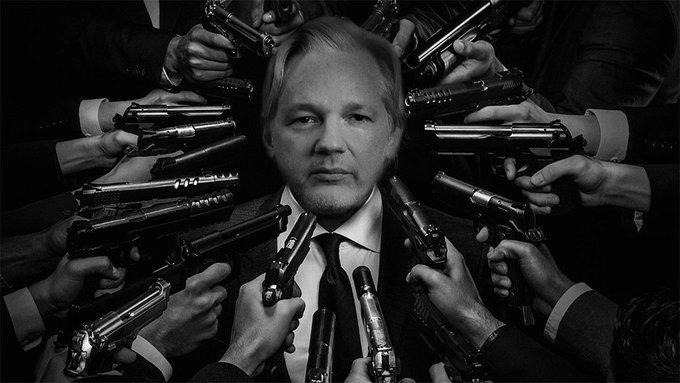
‘Do or die’: MPs launch urgent bid to spare Assange from US extradition.
By Matthew Knott, January 15, 2024 — https://www.theage.com.au/politics/federal/do-or-die-mps-launch-urgent-bid-to-spare-assange-from-us-extradition-20240114-p5ex2h.html
Australian politicians across the political divide have launched a last-ditch bid to prevent Julian Assange from being extradited to the United States to face espionage charges as the WikiLeaks founder faces a crucial final legal challenge in Britain next month.
The four co-convenors of the cross-party Bring Julian Assange Home Parliamentary Group wrote to British Home Secretary James Cleverly arguing for an urgent review of Assange’s case. This was in light of a judgment in the Supreme Court of the UK in November, striking down Prime Minister Rishi Sunak’s controversial plan to send asylum seekers to Rwanda.
On February 20 and 21, two British High Court judges will review an earlier ruling that refused Assange permission to appeal his extradition order. This is expected to be his final bid to prevent being sent to the US.
Assange faces decades in prison over his role in the publication of US classified files and diplomatic cables relating to the wars in Afghanistan and Iraq.
“If he loses in the UK courts next month he could be extradited to the USA within 24 hours,” Assange’s brother Gabriel Shipton said of the High Court review.
“This is literally a do-or-die scenario for Julian.”
Assange’s lawyer Jennifer Robinson has argued he was at high risk of suicide if the High Court rejects his final appeal, saying Assange was so mentally unwell that he would be unlikely to survive extradition.
Liberal MP Bridget Archer, Labor MP Josh Wilson, independent MP Andrew Wilkie and Greens Senator David Shoebridge wrote in their letter to Cleverly: “We are deeply concerned that the legal proceedings involving Mr Assange will now continue, first in the United Kingdom and then in the United States, if extradition is ordered and consented to by you.
“This would add yet more years to Mr Assange’s detention and further imperil his health.
“To this end, we are requesting that you undertake an urgent, thorough and independent assessment of the risks to Mr Assange’s health and welfare in the event he is extradited to the United States.”
As Home Secretary, Cleverly is one of the government’s most powerful ministers, presiding over law enforcement, national security and immigration and with oversight of the domestic counter-intelligence agency MI5.
The MPs argued in their letter that the judges’ reasoning in the Rwanda Supreme Court case – which found it was illegal for Britain to send asylum seekers to Rwanda – “clearly has direct relevance to the extradition proceedings involving Julian Assange”.
“The decision found that courts in the United Kingdom cannot just rely on third-party assurances by foreign governments but rather are required to make independent assessments of the risk of persecution to individuals before any order is made removing them from the UK,” they wrote.
The MPs said that the justices in Assange’s key extradition hearing had “expressly relied on the ‘assurances’ of the United States as to Mr Assange’s safety and welfare should he be extradited to the United States for imprisonment and trial.
“These assurances were not tested, nor was there any evidence of independent assessment as to the basis on which they could be given and relied upon.”
The MPs wrote that they were deeply worried about Assange being sent to a high-security American prison because he “has significant health issues, exacerbated to a dangerous degree by his prolonged incarceration, that are of very real concern to us as his elected representatives”.
In 2021, District Judge Vanessa Baraitser blocked the attempt to extradite Assange on the basis that the harsh conditions of US solitary confinement would create a substantial suicide risk. Her ruling was overturned on appeal.
Judge Rules Assange Visitors May Sue CIA For Allegedly Violating Privacy

Kevin Gosztola, Dec 19, 2023, The Dissenter
A federal judge ruled that four American attorneys and journalists, who visited WikiLeaks founder Julian Assange while he was in the Ecuador embassy in London, may sue the Central Intelligence Agency (CIA) for their role in the alleged copying of the contents of their electronic devices.
The Americans sufficiently alleged that the CIA and CIA Director Mike Pompeo—through the Spanish security company UC Global and its director David Morales—“violated their reasonable expectation of privacy” under the Fourth Amendment of the United States Constitution.
Richard Roth, attorney for the four Americans, reacted, “We are thrilled that the court rejected the CIA’s efforts to silence the plaintiffs, who merely seek to expose the CIA’s attempt to carry out Pompeo’s vendetta against WikiLeaks.”………………………………………………………………………………………………………………………………………
The U.S. government on behalf of the CIA will likely appeal the decision. Nevertheless, it is a remarkable development because there is a distinct possibility that there may be a civil trial, where CIA spying on Americans is challenged. And all while the U.S. government pushes forward with the unprecedented act of putting a publisher on trial for engaging in journalism. https://thedissenter.org/judge-assange-visitors-may-sue-cia-for-spying/?ref=the-dissenter-newsletter&fbclid=IwAR1S-KR9qxfueGXiIYf0quxldvaXEus_rLZsBUQbwIbPaTmZ_VjSft9KBzI
Day X Marks the Calendar: Julian Assange’s ‘Final’ Appeal

December 22, 2023, by: Dr Binoy Kampmark https://theaimn.com/day-x-marks-the-calendar-julian-assanges-final-appeal/—
Julian Assange’s wife, Stella, is rarely one to be cryptic. “Day X is here,” she posted on the platform formerly known as Twitter. For those who have followed her remarks, her speeches, and her activism, it was sharply clear what this meant. “It may be the final chance for the UK to stop Julian’s extradition. Gather outside the court at 8.30am on both days. It’s now or never.”
Between February 20 and 21 next year, the High Court will hear what WikiLeaks claims may be “the final chance for Julian Assange to prevent his extradition to the United States.” (This is qualified by the prospect of an appeal to the European Court of Human Rights.) Were that to take place, the organisation’s founder faces 18 charges, 17 of which are stealthily cobbled from the aged and oppressive US Espionage Act of 1917. Estimates of any subsequent sentence vary, the worst being 175 years
The WikiLeaks founder remains jailed at His Majesty’s pleasure at Belmarsh prison, only reserved for the most hardened of criminals. It’s a true statement of both British and US justice that Assange has yet to face trial, incarcerated, without bail, for four-and-a-half years. That trial, were it to ever be allowed to take place, would employ a scandalous legal theory that will spell doom to all those who dive and dabble in the world of publishing national security information.
Fundamentally, and irrefutably, the case against Assange remains political in its muscularity, with a gangster’s legality papered over it. As Stella herself makes clear, “With the myriad of evidence that has come to light since the original hearing in 2018, such as the violation of legal privilege and reports that senior US officials are involved in formulating assassination plots against my husband, there is no denying that a fair trial, let alone Julian’s safety on US soil, is an impossibility were he to be extradited.”
In mid-2022, Assange’s legal team attempted a two-pronged attempt to overturn the decision of Home Office Secretary Priti Patel to approve Assange’s extradition while also broadening the appeal against grounds made in the original January 4, 2021 reasons of District Judge Vanessa Baraitser.
The former, among other matters, took issue with the acceptance by the Home Office that the extradition was not for a political offence and therefore prohibited by Article 4 of the UK-US Extradition Treaty. The defence team stressed the importance of due process, enshrined in British law since the Magna Carta of 2015, and also took issue with Patel’s acceptance of “special arrangements” with the US government regarding the introduction of charges for the facts alleged which might carry the death penalty, criminal contempt proceedings, and such specialty arrangements that might protect Assange “against being dealt with for conduct outside the extradition request.” History shows that such “special arrangements” can be easily, and arbitrarily abrogated.
On June 30, 2022 came the appeal against Baraitser’s original reasons. While Baraitser blocked the extradition to the US, she only did so on grounds of oppression occasioned by mental health grounds and the risk posed to Assange were he to find himself in the US prison system. The US government got around this impediment by making breezy promises to the effect that Assange would not be subject to oppressive, suicide-inducing conditions, or face the death penalty. A feeble, meaningless undertaking was also made suggesting that he might serve the balance of his term in Australia – subject to approval, naturally.
What this left Assange’s legal team was a decision otherwise hostile to publishing, free speech and the activities that had been undertaken by WikiLeaks. The appeal accordingly sought to address this, claiming, among other things, that Baraitser had erred in assuming that the extradition was not “unjust and oppressive by reason of the lapse of time”; that it would not be in breach of Article 3 of the European Convention on Human Rights (inhuman and degrading treatment)”; that it did not breach Article 10 of ECHR, namely the right to freedom of expression; and that it did not breach Article 7 of the ECHR (novel and unforeseeable extension of the law).
-ADVERTISEMENT-
Other glaring defects in Baraitser’s judgment are also worth noting, namely her failure to acknowledge the misrepresentation of facts advanced by the US government and the “ulterior political motives” streaking the prosecution. The onerous and much thicker second superseding indictment was also thrown at Assange at short notice before the extradition hearing of September 2020, suggesting that those grounds be excised “for reasons of procedural fairness.”
An agonising wait of some twelve months followed, only to yield an outrageously brief decision on June 6 from High Court justice Jonathan Swift (satirists, reach for your pens and laptops). Swift, much favoured by the Defence and Home Secretaries when a practising barrister, told Counsel Magazine in a 2018 interview that his “favourite clients were the security and intelligence agencies.” Why? “They take preparation and evidence-gathering seriously: a real commitment to getting things right.” Good grief.
In such a cosmically unattached world, Swift only took three pages to reject the appeal’s arguments in a fit of premature adjudication. “An appeal under the Extradition Act 2003,” he wrote with icy finality, “is not an opportunity for general rehearsal of all matters canvassed at an extradition hearing.” The appeal’s length – some 100 pages – was “extraordinary” and came “to no more than an attempt to re-run the extensive arguments made and rejected by the District Judge.”
Thankfully, Swift’s finality proved stillborn. Some doubts existed whether the High Court appellate bench would even grant the hearing. They did, though requesting that Assange’s defence team trim the appeal to 20 pages.
How much of this is procedural theatre and circus judge antics remains to be seen. Anglo-American justice has done wonders in soiling itself in its treatment of Britain’s most notable political prisoner. Keeping Assange in the UK in hideous conditions of confinement without bail serves the goals of Washington, albeit vicariously. For Assange, time is the enemy, and each legal brief, appeal and hearing simply weighs the ledger further against his ailing existence.
Assange Appeal Hearing Set for February
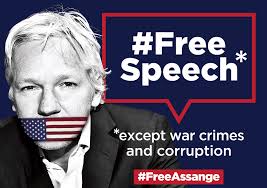
Julian Assange’s wife Stella Assange confirmed that the hearing will take place at the Royal Courts of Justice in the middle of February.
By Joe Lauria / Consortium News, https://scheerpost.com/2023/12/19/assange-appeal-hearing-set-for-february/
Imprisoned publisher Julian Assange will face two High Court judges over two days on Feb. 20-21, 2024 in London in what will likely be his last appeal against being extradited to the United States to face charges of violating the Espionage Act.
Assange’s wife Stella Assange confirmed that the hearing will take place at the Royal Courts of Justice. Assange had had an earlier request to appeal rejected by High Court Judge Jonathan Swift on June 6.
Assange then filed an application to appeal that decision and the dates have now been set. Assange is seeking to challenge both the home secretary’s decision to extradite him as well as to cross appeal the decision by the lower court judge, Vanessa Baraitser.
Baraitser had ruled in January 2021 to release Assange from Belmarsh Prison and deny the U.S. request for extradition based on Assange’s mental health, his propensity to commit suicide and conditions of U.S. prisons. On every point of law, however, Baraitser sided with the United States.
The U.S. appealed her decision, issuing “diplomatic assurances” that Assange would not be mistreated in prison. The High Court, after a two-day hearing in March 2022, accepted those “assurances” and rejected Assange’s appeal.
His application to the U.K. Supreme Court to hear the case was then denied. Assange then applied for a new appeal of Baraitser’s legal decisions and the home secretary’s extradition order.
Swift rejected Assange’s 150-page argument in a three-page rejection. The appeal of that decision will now take place two months from now.
If convicted under the World War I-era Espionage Act, the WikiLeaks publisher and journalist is facing up to 175 years in a U.S. dungeon for publishing classified material revealing crimes by the U.S. state, including war crimes.
Assange was also charged with conspiracy to commit computer intrusion, though the indictment agains him does not accuse him of stealing U.S. documents or even of helping his source, Army intelligence analyst Chelsea Manning, to do so.
A Duty to Obey: David McBride, Whistleblowing and Following Orders
Australian Independent Media November 19, 2023, Dr Binoy Kampmark
The unpardonable, outrageous trial of Australian whistleblower David McBride was a brief affair. On November 13, it did not take long for the brutal power of the Commonwealth to become evident. McBride, having disclosed material that formed the Australian public about alleged war crimes by special forces in Afghanistan, was going to be made an example of.
McBride served as a major in the British army before becoming a lawyer for the Australian Defence Force, serving two tours in Afghanistan over 2011 and 2013. During that time, he gathered material about the culture and operations of Australia’s special forces that would ultimately pique the interest of investigators and lead to the Brereton Inquiry which, in 2020, made 36 referrals to the Australian Federal Police related to alleged war crimes.
McBride was subsequently charged with five national security offences. He was also denied immunity from prosecution under the near-unworkable provisions of the Public Interest Disclosure Act 2013 (Cth).
A central contention of the Crown was that McBride had, first and foremost, a duty to follow orders as a military lawyer. Such a duty flows on from the oath sworn to the sovereign, and no public interest could trump that undertaking. “A soldier,” contended Trish McDonald in her astonishing submission, “does not serve the sovereign by promising to do whatever the soldier thinks is in the public interest, even if contrary to the laws made by parliament.”
Even a layperson’s reading of the oath would surely make a nonsense of this view, but Justice David Mossop was in little mood to suggest otherwise. “There is no aspect of duty that allows the accused to act in the public interest contrary to a lawful order.” It was a point he would be putting to the jury, effectively excluding any broader public interest considerations that might be at play in disobeying a military order.
For anybody vaguely familiar with military law since the Nuremberg trials of Nazi leaders in 1945, such orders are never absolute, nor to be obeyed without qualification. Following orders without question or demur in all cases went out – or so the 1945 trials suggested – with Nazi officialdom and the Third Reich. There are cases when a soldier is under a positive duty to disobey certain orders. But McDonald was trapped in a fusty pre-Nuremberg world, evidenced by her use of a 19th century authority on military justice that would have sat well with the German defence team: “There is nothing so dangerous to the civil establishment of the state as an undisciplined or reactionary army.”
Chief counsel representing McBride, Stephen Odgers, hoped to drag Australian military justice into the twenty-first century, reaffirming the wisdom of Nuremberg: there are times when a public duty supersedes and transcends the narrow demands of authority, notably when it comes to the commission or concealment of crimes. The oath McBride swore as a member of the ADF to serve the sovereign comprised an element to act in the public interest, even when opposed to a lawful order…………………………………………..
With the trial resuming on November 17, Mossop issued another stinging order: that the Attorney-General’s office remove classified documents in McBride’s possession that could be presented to the jury at trial. As one of the defence team, Mark Davis, told reporters, “We received the decision just this afternoon, which was in essence to remove evidence from the defence.” In doing so, “The Crown, the government, was given the authority to bundle up evidence and run out the backdoor with it.”
With such gloomy prospects, McBride requested a new indictment on lesser charges, to which he pleaded guilty. Facing sentencing in the new year, he may be eligible to serve time outside carceral conditions, though a decade long stint is also in the offing. “The result of today’s outcome,” wrote transparency advocate and former Senator Rex Patrick, “is one brave whistleblower likely behind bars and thousands of prospective whistleblowers lost from the community.”………………………………………………………………………………………………………………..more https://theaimn.com/a-duty-to-obey-david-mcbride-whistleblowing-and-following-orders/
$31m fines, 25 years jail for nuclear submarine safety breaches
“This robust and comprehensive approach to regulating Australia’s nuclear-powered submarine program recognises the Albanese government’s commitment to nuclear stewardship and upholding the highest standards for nuclear safety and security,” Mr Marles said.
Andrew Tillett https://www.afr.com/politics/federal/31m-fines-25-years-jail-for-nuclear-submarine-safety-breaches-20231115-p5ek9x
Organisations that breach nuclear safety regulations will be hit with fines of up to $31 million while individuals face up to 25 years jail under AUKUS-related laws to be introduced into parliament on Thursday.
The legislation establishes the regulatory framework overseeing the operations of Australia’s nuclear-powered submarines that will initially be acquired from the US then built in Adelaide.
The Australian Naval Nuclear Power Safety Regulator will also be responsible for facilities in Australia for submarines, including rotational visits of US and UK boats, and designated zones, including Adelaide’s shipyard and Perth’s HMAS Stirling navy base.
The regulator will sit within the Defence portfolio but will be an independent statutory agency, headed by a director-general independent of the Defence Force and not subject to the ADF chain of command or directions from Defence and the Australian Submarine Agency.
The new regulator will have monitoring and investigative powers, including the power to determine legal compliance; whether information is accurate; and the powers necessary to investigate offences.
A licensing regime will be created for nuclear activities and new offences introduced for breaches of nuclear safety duties. The most serious breaches will attract a fine for a body corporate of up to $31 million and 25 years in jail.
A limited power will also be created allowing the defence minister of the day to direct the regulator. The power will be narrow in scope and only be used when the minister was satisfied it was necessary in the interests of national security and to deal with an emergency.
The government argues the existing nuclear safety regime and regulators – the Australian Nuclear Science and Technology Organisation, the Australian Radiation Protection and Nuclear Safety Agency and Environment Department – are insufficient for the demands of overseeing nuclear-powered submarines.
“This robust and comprehensive approach to regulating Australia’s nuclear-powered submarine program recognises the Albanese government’s commitment to nuclear stewardship and upholding the highest standards for nuclear safety and security,” Mr Marles said.
“The new regulator will have access to relevant expertise and experience, allowing it to cooperate effectively with other Australian regulators and those of our international partners.
“Today is another important step towards ensuring we employ the highest standards of nuclear safety and protection across the lifecycle of this historic capability.”
1 This month
7 April – WEBINAR – Australia and the Doomsday Clock – Preventing nuclear war through NoFirstUse and other policies
Online | Tuesday April 7, 4:00-5:30pm, Australian Eastern Time / 8:00-9:30am Central Europe Time
– Access the registration link
15 April – Zoom –Nuclear Power is Not the Solution
Apr 15, 2026 01:00 AM in Canberra, Melbourne, Sydney

Join the International Physicians for the Prevention of Nuclear War (IPPNW) on Tuesday, April 14th for a timely webinar exploring the risks associated with nuclear power and challenging the myth that it offers a simple, safe, carbon-free solution to the climate crisis

of the week – Australians for War Powers Reform (AWPR)
To see nuclear-related stories in greater depth and intensity
 Antinuclear