Assange hearing outcome could set an “alarming precedent” for free speech
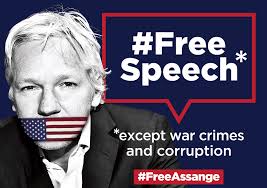 Assange hearing outcome could set an “alarming precedent” for free speech https://www.indexoncensorship.org/2020/12/assange-hearing-outcome-could-set-an-alarming-precedent-for-free-speech/ Benjamin Lynch Assange hearing outcome could set an “alarming precedent” for free speech https://www.indexoncensorship.org/2020/12/assange-hearing-outcome-could-set-an-alarming-precedent-for-free-speech/ Benjamin Lynch
People need to “forget what they think they know” about WikiLeaks founder Julian Assange and recognise that if he is extradited to the USA, it would set a worrying precedent for media freedom. We speak to his partner about the case. Assange’s partner, Stella Moris, is remaining resolute despite his extradition hearing decision being less than a month away and him being held in a prison that has recently had a Covid-19 outbreak.
Speaking over the phone to Index, Moris discusses the hearing’s details and what it could mean for the future of freedom of expression. And she talks about the deep implications it has had for her and her young family. “Obviously it is very difficult. I speak to Julian on a daily basis unless there is a problem. [But] he is in prison. Soon to be for two years. He has been there for longer than many violent prisoners who are serving sentences. All in all, he has been deprived of his liberty for ten years now,” she told Index. She adds: “The kids speak to their father every day; we try to normalise it as much as we can for them. But of course, this is not a normal situation and our lives are on hold. It is inhumane and shouldn’t be happening in the UK.” The current hearing – which will decide whether there are grounds for Assange to stand trial in the USA – should reach a conclusion on 4 January. A trial in the USA (should the decision go against Assange) will have major ramifications for free speech and whistleblower journalism. The WikiLeaks founder is charged with conspiring with US intelligence analyst Chelsea Manning and hackers from groups such as Anonymous and LulzSec to obtain and publish classified information. Each of the 18 charges laid by US authorities, if Assange is extradited and convicted, carry a maximum penalty of 10 years. The allegations brought forward under the 1917 Espionage Act, alongside one other under the Computer Fraud and Abuse Act, mean Assange could face up to 175 years in prison – effectively a life sentence. Manning was initially sentenced to 35 years, but under the Obama administration her sentence was commuted to less than seven years. It is easy to get sidetracked about the current extradition hearing and get into arguments about whether Assange is a journalist, whether he is guilty of other crimes or whether the publication of the documents brought harm to anyone involved. Instead people’s attentions should focus on the precedent that will be set should the case go to trial in the USA. As it stands the case is unprecedented. No publisher has ever been tried under the Espionage Act, which itself was essentially created for spies imparting official secrets either for profit or otherwise. This is perhaps a direct contradiction of rulings of the courts in the UK. In December 2017, the UK’s information tribunal recognised WikiLeaks as a media organisation, in direct contradiction to the view of the US State Department. Australia’s media union, the Media, Arts and Entertainment Alliance, also presented an honorary member card to Assange’s Melbourne-based lawyer. Amidst the noise of the separate matters around the case, Moris insists people need to “forget what they think they know” and assess the issues involved. “There are a lot of assumptions being made over what this case is really about. There are all these sideshows. It is not about people being harmed because the US has admitted it has no evidence to make this argument. It comes down to the fact that the material published was classified. People who care about free speech and press freedom need to forget what they think they know about this case and look at it afresh and understand Julian is in prison for publishing. This is not something that democracies do.” “Are they saying what he published was not in the public interest? They say that is irrelevant. They can’t deny [what he published] wasn’t in the public interest because he was publishing information and evidence of state crimes, of state abuse, torture, of rendition, blacksites and of illegal killings. What they are arguing is that Julian published information that was secret and therefore he can be prosecuted over it.” ournalists publishing secret information is not new (nor is pressure for them not to publish) and can often be key to upholding democracy and ensuring states act properly. The Watergate revelations relied heavily on news organisations pressing on with publication despite attempts by the USA to stop them, including the threat of jail time. It proved a significant victory for free speech. If Assange is extradited and tried the case will impact journalists and the media “for years to come”, says Rebecca Vincent, director of international campaigns at Reporters Without Borders (RSF). “It feels like many in the media do not see the implications of this case as something that will possibly affect them,” she told Index. “This case will have ramifications on the climates for journalism and press freedom internationally for years to come.” “This is the first time we have seen the US government prosecute anybody for publishing leaked information. If they are successful, they will not stop with Assange and WikiLeaks. This could be applied, in theory, to any media outlet.” It’s common for journalists and publishers to cite a public interest defence for disputed documents. It is a centrepiece of a defence case against libel, for instance. “The information published was certainly in the public interest; it served to inform extensive public interest reporting that exposed war crimes and other illegal actions by states,” said Vincent. “The Espionage Act lacks a public interest defence. He cannot use it if he is sent to the United States and tried.” Essentially, what this means is that Assange is being treated as a spy not a publisher. If Assange is extradited and loses his case against the US government, any time classified information is published by a journalist there will be a precedent set that they can be charged and tried as a spy in the same way. “These sorts of cases are really highlighting the need for more robust legislation that cannot be manipulated to be used against journalists, whistleblowers and other sources. Ultimately, it is the public’s right to access information that is being impacted,” Vincent added. “You can see this for what it is; this very much feels like a political prosecution by states that are not meant to engage in this behaviour. The reason our states can get away with this is because of a lack of public pressure. A lack of public sympathy has resulted in a lack of widespread public pressure to hold our governments to account.” |
|
Senator Rex Patrick contests Freedom of Information refusal about nuclear waste plan

Rex Patrick to ask SA Civil and Administrative Tribunal to reverse nuclear FoI refusal
An SA Senator will ask a court to decide whether his call for information on a nuclear waste facility should have been granted. Advertiser –Matt Smith, December 16, 2020 –
South Australian senator Rex Patrick will tackle State Government lawyers after a Freedom of Information request concerning a nuclear waste facility was refused.
He will fight to overturn the decision in the SA Civil and Administrative Tribunal over what he describes as “a lack of transparency”.
Senator Patrick, pictured, said his FOI request was met with a “highly unusual” reminder from the Crown Solicitor’s office that if he were to fight the decision and lose he would be liable for costs.
He had asked for correspondence between Energy and Mining Minister Dan van Holst Pellekaan and the Federal Government concerning the establishment of a National Radioactive Waste Management Facility in SA.
“FOI in SA is a farce. Late responses, cavalier exemption claims, delayed review processes and now threats if you push a request beyond the control of the very government department seeking to hide information,” he said.
A government spokesman said: “While it would not be appropriate to comment on matters currently before SACAT, it’s worth noting that the tribunal and only the tribunal makes a determination on whether costs are awarded, and can do so if satisfied that there are statutory grounds to do so.
No decision has been made in this matter and, as such, no application for costs has been, or can be, made at this time.”
It was revealed this week that reviews of FOI requests are taking more than six months to
complete. SA Senator Rex Patrick takes nuclear FOI ‘farce’ to court | The Advertiser (adelaidenow.com.au)
See Senator Rex Patrick’s Face Book page post:
https://www.facebook.com/193047494589008/posts/836162363610848/
MINISTER DAN van HOLST PELLEKAAN RESORTS TO THREATS WHEN ASKED TO BE TRANSPARENT
In response to a request for transparency, Minister Dan van Holst Pellekaan has outrageously instructed the Crown Solicitor to threaten me with costs.
Everything the SA Government does it does for public purpose and using SA taxpayer’s money. As such, South Australians are entitled to see all that the State Government does, admittedly with some exceptions.
I asked Minister van Holst Pellekaan’s office to provide me with correspondance between the State and Federal Government on the proposed National Radioactive Waste Management Facility at Kimba, using SA Freedom of information laws. At first he failed to respond to the request in the timeframe required by the law, then he made a decision that hid (presumably embarrassing) information from me.
I have asked SACAT, the State’s independent umpire, to review the Minister’s decision. Minister van Holst Pellekaan has now threatened me with “costs” if I proceed. That prompts two questions: 1) what’s he trying to hide and 2) if he’s prepared to threaten a senator seeking transparency, how would he treat a regular South Australian that reasonably requested information from him?
Law and Disorder: The case of Julian Assange
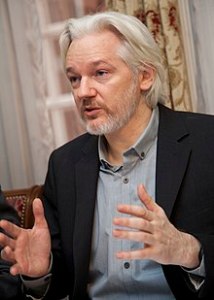 In the case of Julian Assange, what is on trial is nothing less than our right to know what is done by governments in our name, and our capacity to hold power to account.
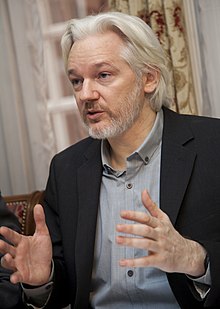
What kind of law allows pursuit of charges under the 1917 United States Espionage Act — for which there is no public interest defence — against a journalist who is a foreign national?
The closing argument of the defence in the extradition hearing of WikiLeaks founder and publisher Julian Assange has been filed. For this and other reasons it is apposite to consider the authority invested in the law before which, in democratic societies, we are ostensibly all equal.
In fact, notwithstanding the familiar claims of objectivity (and as `everybody knows’ in Leonard Cohen’s famous lyric) the reality is somewhat different. Jokes about the law attest to this:
‘One law for the rich…’
‘Everyone has the right to their day in court — if they can pay for it’
‘What’s the difference between a good lawyer and a great one? A good lawyer knows the law. A great lawyer knows the judge’
The term ‘legal fiction’ calls into question the relationship between law, objectivity, and truth. On the one hand, law is the essential pillar of a functioning society. On the other, it is replete with anomalies both in conception and execution. To what extent can these perspectives be reconciled? High stakes are attached to this question.
Questioning claims of objectivity in the context of law.
The Australian government”s intimidation of whistleblowers – the torture of Julian Assange
Torture of Julian Assange by Australian governments sends powerful message to whistleblowers, Michael West Media by Lissa Johnson | Nov 26, 2020
Australia has used a range of torture techniques against Julian Assange, writes Dr Lissa Johnson. Governments have isolated and demonised him; flatly rejected evidence of ill-treatment; refused to respond to specific allegations; and divested themselves of any responsibility. Leaders can’t, or won’t, accept the difference between psychological torture and ‘a legal matter’.
Julian Assange has set a number of firsts for Australia, including:
- The first Walkley award winner whose journalism has attracted a possible 175 years in US prison.
- The first journalist to be prosecuted as a spy by the US government, under its 1917 Espionage Act.
- The first citizen of an ostensibly democratic state (Australia) whom a UN official has found to be the target of a campaign of collective persecution and mobbing by other so-called democratic states.
As the UN Rapporteur on Torture, Nils Melzer, observed:
In 20 years of work with victims of war, violence and political persecution I have never seen a group of democratic states ganging up to deliberately isolate, demonise and abuse a single individual for such a long time and with so little regard for human dignity and the rule of law.
As part of this mobbing and collective persecution, Assange is the first Australian journalist to be tortured for journalism in the UK.
On 9 May 2019, Professor Melzer visited Assange in Belmarsh prison, accompanied by two medical experts specialising in the assessment and documentation of torture. On 31 May, Melzer reported that they had found Assange to be suffering all symptoms typical of prolonged exposure to psychological torture.
On 1 November 2019, Melzer warned that, unless the UK government urgently changed course, it may soon end up costing his life.
What torture?
Julian Assange is being held in ‘Britain’s Guantanamo’, Belmarsh prison, a high-security facility designed for those charged with terrorism, murder and other violent offences. He has been held in solitary confinement for 22 to 23 hours a day.
He knows that US-aligned security contractors have written in emails that he will make a nice bride in prison, and needs his head dunked in a full toilet bowl at Gitmo. He knows he is headed for life in US supermax prisons, where prisoners are held in perpetual solitary and chains.
‘If this man gets extradited to the United States, he will be tortured until the day he dies’, Profesor Melzer has cautioned.
To heighten the torment, Assange has been prevented from preparing his defence against extradition in violation of his human rights as a defendant.
He has been granted negligible access to his lawyers and is prevented from researching his own defence. The only purpose is to render him helpless, intensifying his trauma.
A Message from the Australian Government
Assange’s experience sets an example to anyone thinking of airing the dirty secrets of those in power: the genuinely dirty secrets, such as wantonly slaughtering and torturing innocent people and covering it up.
Like all public torture, it sends a message to onlookers: this could happen to you.
And the message from the Australian government to any Australian journalists looking on? You’re on your own.
The US government is seeking to retrospectively apply its own Espionage Act to non-US citizens in foreign lands, while simultaneously withholding the free speech protections of its Constitution. The upshot would be that non-US citizens, and non-US journalists, would be vulnerable to prosecution wherever they may be, whenever the United States saw fit.
Should a host country oblige, that journalist’s only hope would be the protection of their own government. And the message from the Australian government? Not a chance.
A climate of consent
But can the government do anything to stop the torture of Assange in the UK? Or are its hands tied?
Australia ratified the Convention Against Torture in 1989. It therefore has a positive duty to take ‘effective legislative, administrative, judicial and other measures to prevent acts of torture’ of its citizens. According to the Federal Attorney-General’s website, however, that duty applies to ‘territories within Australia’s jurisdiction’.
So who is responsible for protecting Australian citizens from torture overseas?
Australian officials can raise concerns with their overseas counterparts when they are concerned about gross violations of citizens’ rights as happened in the cases of Melinda Taylor, James Ricketson, David Hicks and Peter Greste.
They could also make a submission to the Committee against Torture that a state is ‘not fulfilling its obligations under this Convention’.
n Assange’s case, however, the government has opted for ‘consent and acquiescence’ under Article 1 of the convention. Consent and acquiescence is listed alongside inflicting and instigating torture as part of the very definition of torture.
‘Standard’ fare
DFAT representatives say repeatedly that Assange’s treatment In the UK is perfectly normal. ‘Standard’. ‘No different’ from the treatment of other UK prisoners. Routine, in other words. Nothing to see here.
When reminded that Assange had been handcuffed 11 times, stripped naked twice and moved between five holding cells after the first day of his extradition hearing, a DFAT representative described this as ‘standard prison to court and court to prison procedure’.
What the official failed to explain is that treatment is only ‘standard’ and normal for prisoners charged with terrorism or other violent offences.
It is not remotely normal for journalists with no criminal history, and no history or risk of violence, to be detained under the most punitive conditions that UK law enforcement has to offer.
As an exercise in “consent and acquiescence” DFAT representatives performed their duties well.
Sanitising, normalising language minimises and trivialises abuse………….
‘Not our responsibility’ has been the Australian government’s refrain. Australian government officials ‘don’t provide running commentaries on legal matters before the courts in other parts of the world’, asserted the Foreign Minister.
Australia is ‘not a party to the legal proceedings in the United Kingdom’, stressed a DFAT official when asked why Australia had not intervened in Assange’s case during Senate Estimates. ‘We have no standing in the legal matter that is currently before the courts.’
Perhaps the Australian government doesn’t understand the seriousness of the abuses taking place in the UK. Perhaps ministers and their advisors are unaware of the difference between psychological torture and a ‘legal matter’. Psychological torture is, after all, not commonly well understood.
It is possible that the Australian government merely fails to grasp the gravity of ignoring Professor Melzer’s warnings. However, when the group Doctors for Assange wrote to the Australian government in December 2019, they detailed the medical and psychological basis of their concerns for Assange’s life and health…………..
New normal in Australia?
Assange is not the first person in Australia to be subjected to torture and other cruel, inhuman or degrading treatment. Australia’s abuse of asylum seekers and refugees has been found to violate the Convention Against Torture. Aboriginal Australians, among the most incarcerated groups on earth, have been dying in custody, buried under acquiescent consent, for decades, and historically for hundreds of years.
The Human Rights Measurement Index 2019 has given Australia a 5.5 out of 10 rating for ‘freedom from torture’, noting, ‘Torture is a serious problem in Australia … a large range of people [are] at particular risk of torture or ill-treatment, with Aboriginal people and Torres Strait Islanders at the top of the list’…….
Through sending a message to journalists worldwide by torturing Assange, the abusive licence deployed against other persecuted groups is being expanded to take in journalism. The targeting of journalists around the world matters because journalists cut across the acquiescence and consent, remove the deadbolt on the torture chamber door, turn down the music, and expose what is going on inside. Every persecuted and abused group or person needs them, to break the cycle of violence by breaking the silence.
We do torture here. It is our problem. In Julian Assange’s case, the biggest problem appears to be that torturing journalists is becoming the new normal in Australia.
This edited extract is reproduced from A Secret Australia: Revealed by the WikiLeaks Exposés, edited by Felicity Ruby and Peter Cronau, Monash University Publishing, December 2020. https://www.michaelwest.com.au/torture-of-julian-assange-by-australian-governments-sends-powerful-message-to-whistleblowers/
Rest super fund commits to net-zero emission investments after Brisbane man sues
|
Rest super fund commits to net-zero emission investments after Brisbane man sues, ABC, By national science, technology and environment reporter Michael Slezak, 2 Nov 20,
A 25-year-old man from Brisbane has successfully sued one of Australia’s biggest super funds over its handling of climate change, forcing it to commit to net-zero emissions for its investments by 2050.Key points:
In 2018, Mark McVeigh sued Rest, his superannuation fund, in the Federal Court after it failed to provide him with information on how it was managing the risks of climate change. Mr McVeigh alleged Rest had breached the Superannuation Industry Act and the Corporations Act by failing to manage those risks — which could include fossil fuel companies plummeting in value or infrastructure being damaged by extreme weather. The law requires trustees of super funds to act with care, skill and diligence to act in the best interest of members — including managing material risks to its investment portfolio. In an 11th-hour settlement reached on Monday while the case was adjourned, Rest agreed its trustees have a duty to manage the financial risks of climate change. Because the case was settled out of court, the outcome doesn’t carry the same weight as a legal precedent decided in court. But Mr McVeigh’s lawyer, David Barnden, head of Equity Generation Lawyers, said the case still sets an important precedent globally. “This outcome should represent a significant shift in the market’s willingness to tackle climate risk — a shift which should set a clear precedent for the industry in Australia, and also pension funds around the world,” Mr Barnden said……….. https://www.abc.net.au/news/2020-11-02/rest-super-commits-to-net-zero-emmissions/12840204 |
|
New government Bill could target journalists, environmental and human rights groups
|
Tue 20 Oct 2020 Journalists and advocacy groups could face compulsory questioning by Asio as part of a proposed expansion of the spy agency’s powers, according to external legal advice prepared by leading barristers.With senior officials of Asio due to give evidence to Senate estimates hearings on Tuesday, the new advice seen by Guardian Australia argues a bill before parliament to extend the reach of questioning powers could have a “chilling effect” on the willingness of people to speak to journalists. It also argues some of the work of civil society organisations – especially those involved in environmental and human rights advocacy – may be caught by the broad definition of “acts of foreign interference” because it includes clandestine acts that “are otherwise detrimental to the interests of Australia”. Members of civil society groups could face potential questioning and the use of tracking devices, according to the advice commissioned by progressive group GetUp and prepared by Sydney-based barrister Dominic Villa SC – an expert in public and administrative law – and fellow barrister Diana Tang, both of New Chambers. The government’s bill – which is currently being scrutinised by parliament’s intelligence committee – would expand the range of matters that are subject to compulsory questioning powers beyond terrorism-related matters. The changes would allow the agency to question adults over espionage and foreign interference, amid warnings from Asio that there are now mores spies and proxies operating in Australia than at the height of the cold war……… “Despite well-recognised professional and ethical obligations of a journalist to maintain anonymity and confidentiality of a source, if so questioned under a warrant, a journalist would be required to disclose the identity of a confidential source.” The advice says there is no exception or exclusion provided for in the bill that would enable a journalist to refuse to answer a question on the basis it would reveal a confidential source. “There may therefore be a chilling effect on the willingness of people to speak to journalists about issues of political significance, including security matters and foreign relations.” Villa and Tang argue the proposed laws may also “undermine the important role played by civil society organisations in holding government to account”, partly because a “foreign power” is defined to include “a foreign political organisation”. The advice argues civil society organisations operating in Australia may “collaborate with or receive support from a foreign political organisation that shares a common interest or objective, in their advocacy campaigns”……… https://www.theguardian.com/media/2020/oct/20/chilling-attack-on-democracy-proposed-asio-powers-could-be-used-against-journalists |
|
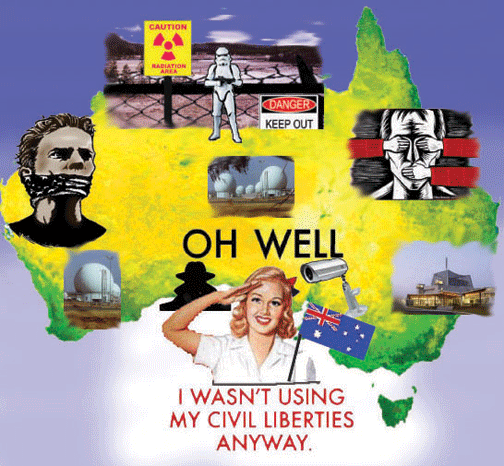
Persecuting Assange Is a Real Blow to Reporting and Human Rights Advocacy’
Persecuting Assange Is a Real Blow to Reporting and Human Rights Advocacy’
CounterSpin interview with Chip Gibbons on Assange extradition Fair, 15 Oct 20,
Assange’s case, the unprecedented use of the Espionage Act to go after a journalist, has dire implications for all reporters. But this country’s elite press corps have evidently decided they can simply whistle past it, perhaps hoping that if and when the state comes after them, they’ll make a more sympathetic victim.
Joining us now to discuss the case is Chip Gibbons. He’s policy director at Defending Rights & Dissent. He joins us now by phone from Washington, DC………..
CG: Sure. So the US has indicted Julian Assange with 17 counts under the Espionage Act, as well as a count under the Computer Fraud and Abuse Act.
Assange is not a US person; he’s an Australian national. He was inside the Ecuadorian embassy for a number of years, as Ecuador had granted him asylum, and the UK had refused to basically recognize that and let him leave the country, so he was de facto imprisoned inside the embassy. And after the indictment the US issued, the new government of Ecuador—which is much less sympathetic to Assange than the previous Correa government—let the US come in the embassy and seize him.
And the US is seeking Assange’s extradition to the US from the UK. I guess it’s, probably, technically a hearing, but Kevin’s point was that it’s more like what we would think of as a trial, in that there’s different witnesses, there’s expert testimony, there’s different legal arguments at stake.
The defense, the witness portion of it, has closed; it ended last week. And there’s going to be closing arguments submitted in writing, and then the judge will render a decision, and that decision will be appealable by either side. So regardless of the outcome, we can expect appeals. So it does very closely mirror what we would think of more like a trial than a hearing in the US court context.
It’s important to really understand what’s at stake with Assange’s extradition. He is the first person ever indicted by the US government under the Espionage Act for publishing truthful information.
The US government has considered indicting journalists before: They considered indicting Seymour Hersh, a very famous investigative reporter. They considered indicting James Bamford, because he had the audacity to try to write a book on the National Security Agency. But they’ve never done that.
And Obama’s administration looked at the idea of indicting Assange and said, “No, this would violate the First Amendment, and it would open the door to all kinds of other bad things.” But the Trump administration clearly doesn’t have those qualms……..
It is very interesting to see how this plays out in a US court in the current environment. If whoever—Trump or Biden, whoever is president, when this finally comes to the US—actually pursues this, and they actually are allowing the persecution of journalists, that’s going to be a really dark, dark assault on free expression rights.
And it’s worth remembering—and Julian Assange is clearly very reviled in the corporate media and the political establishment right now—but the information he leaked came from Chelsea Manning, it dealt with US war crimes; and he worked with the New York Times, the Guardian, Der Spiegel, Le Monde, Al Jazeera, to publish this information. So if he can go to jail for publishing this, why can’t the New York Times? And is that a door anyone wants to open? There is a big press freedom angle here.
I also want to talk about the facts, though: What did Julian Assange publish, and why did it matter? ………..
Julian Assange is accused of publishing information about war crimes, about human rights abuses and about abuses of power, that have been tremendously important, not just for the public’s right to know, but also have made a real difference in advocacy around those issues. People were able to go and get justice for victims of rendition, or able to go and get court rulings in other countries about US drone strikes, because of this information being in the public domain. So attacking Assange, persecuting Assange, disappearing him into a supermax prison, this is a real blow to reporting and human rights advocacy. ………
JJ: Right. And, finally, the journalists who are holding their nose right now on covering it aren’t offering to give back the awards that they won based on reporting relying on WikiLeaks revelations. And James Risen had an op-ed in the New York Times a while back, in which he was talking about Glenn Greenwald, but also about Julian Assange, and he said that he thought that governments—he was talking about Bolsonaro in Brazil, as well as Donald Trump—that they’re trying out these anti-press measures and, he said, they “seem to have decided to experiment with such draconian anti- press tactics by trying them out first on aggressive and disagreeable figures.”………. https://fair.org/home/persecuting-assange-is-a-real-blow-to-reporting-and-human-rights-advocacy/
Litigation: a promising new way to address Australia’s climate inaction
The pandemic lays bare a truth leaders consistently ignore: in the end, nature reigns supreme.
It ought to be worth noting that last month was Earth’s hottest September over the 140-year global temperature record, or that this year is in record territory even without an El Nino, or that warming over the past 12 months was just 0.2C below the internationally agreed “safe” limit……
The sad fact is that new temperature records have next to no impact in a world that has become hardened against climate shocks, a situation encouraged by an unholy coalition of political and corporate interests which over many decades have worked hard to obscure the true story.
As a nation, we ought to be up in arms about the Morrison government’s plans to ramp up methane extraction, based on the false claim that generating power by burning natural gas is somehow clean energy. But we’re not. It seems that in a pandemic you don’t question and don’t argue.
The pandemic is bad and generally getting worse getting worse as countries battle with competing health and economic demands. But at least, on the whole, governments recognise that COVID-19 constitutes an emergency and that urgent measures are needed to counter it.
What they don’t see is that the pandemic emergency sits within a bigger emergency. For all its devastation – and we should never downplay its impact on lives and livelihoods – in the long run we know it will end. That cannot be said about the all-enveloping catastrophe of climate change………
Litigation and divestment are two potent legal and financial levers that hold much promise. A case brought this year against the federal government promises to pull both of them.
Katta O’Donnell, a 23-year-old La Trobe University law student, grew up in Victoria’s central highlands. She experienced the impact of long-term drought on that landscape, and twice in 11 years saw it devastated by unstoppable wildfire. Last year, inspired by a lecture by Australian climate law specialist David Barnden, she decided it was time to act.
With Barnden’s help, O’Donnell filed a federal court claim alleging that the Australian government was breaching its legal duty and misleading sovereign bond investors by failing to disclose climate-driven financial risks, such as stranded fossil fuel assets and worsening environmental conditions.
In identifying a material risk to the market in government bonds everywhere, her action attracted attention globally, including in business circles in Europe and the United States alert to any sign of future financial loss.
Australia’s troubled environment, she told me last week, puts it on the front line of the climate crisis. Coral bleaching threatens Great Barrier Reef tourism, drought is lowering our capacity to grow food, and last summer’s bushfires will cost us upwards of $100 billion. Such tangible threats prompted Sweden to sell its Australian bonds last November.
The pandemic is telling us that fiscal and monetary controls, budgets and banks and all the rest of our economic constructs and artifices can’t hide the fact that it is nature, above all, that determines wealth, or its absence. We should all take that message to heart and welcome O’Donnell’s initiative as a long-overdue wakeup call. http://southwind.com.au/2020/10/13/on-trial-australias-dismal-climate-record/
Assange extradition case could esrablish a dangerous legal precedent
Crumbling Case Against Assange Shows Weakness of “Hacking” Charges Related to Whistleblowing
The charge against Assange is about establishing legal precedent to charge publishers with conspiring with their sources, something that so far the U.S. government has failed to do because of the First Amendment.
Five years later, in 2018, the Trump Administration indicted Assange anyway. But, rather than charging him with espionage for publishing classified information, they charged him with a computer crime, later adding 17 counts of espionage in a superseding May 2019 indictment.
The computer charges claimed that, in 2010, Assange conspired with his source, Chelsea Manning, to crack an account on a Windows computer in her military base, and that the “primary purpose of the conspiracy was to facilitate Manning’s acquisition and transmission of classified information.” The account enabled internet file transfers using a protocol known as FTP.
New testimony from the third week of Assange’s extradition trial makes it increasingly clear that this hacking charge is incredibly flimsy. The alleged hacking not only didn’t happen, according to expert testimony at Manning’s court martial hearing in 2013 and again at Assange’s extradition trial last week, but it also couldn’t have happened.
The new testimony, reported earlier this week by investigative news site Shadowproof, also shows that Manning already had authorized access to, and the ability to exfiltrate, all of the documents that she was accused of leaking — without receiving any technical help from WikiLeaks. …….
the charge is not actually about hacking — it’s about establishing legal precedent to charge publishers with conspiring with their sources, something that so far the U.S. government has failed to do because of the First Amendment………
Whether or not you believe Assange is a journalist is beside the point. The New York Times just published groundbreaking revelations from two decades of Donald Trump’s taxes showing obscene tax avoidance, massive fraud, and hundreds of millions of dollars of debt.
Trump would like nothing more than to charge the New York Times itself, and individual journalists that reported that story, with felonies for conspiring with their source. This is why the precedent in Assange’s case is so important: If Assange loses, the Justice Department will have established new legal tactics with which to go after publishers for conspiring with their sources. https://portside.org/2020-10-10/crumbling-case-against-assange-shows-weakness-hacking-charges-related-whistleblowing
Australia needs a permanent war crimes investigation unit
At the conclusion of Justice Paul Brereton’s Afghanistan inquiry we know there will be more referrals to the Australian Federal Police for criminal investigation of war crimes allegations.
We know so far that Brereton’s inquiry has investigated more than 55 incidents of alleged unlawful killings and cruel treatment of Afghan civilians and captured combatants. We know that the AFP is investigating at least three incidents, and it has been put on notice to prepare for more.
Our legal centre was established to push Australia to undertake more investigations and prosecutions into international crimes and to contribute to the global effort to end the impunity enjoyed by perpetrators of these crimes. It has been saying for some time that the AFP needs specialist training, skills, and resources to undertake such investigations. Experience shows that authorities often find the challenges involved in investigating and prosecuting crimes committed extraterritorially daunting, and consequently choose not to prioritise these cases………….
Rawan Arraf is principal lawyer and director of the Australian Centre for International Justice, a legal centre that has been working with survivor and victims’ communities on criminal complaints to the Australian Federal Police. https://www.theage.com.au/politics/federal/australia-needs-a-permanent-war-crimes-investigation-unit-20201005-p562a2.html
Julian Assange could face life in America’s most dreaded ‘Supermax’ prison
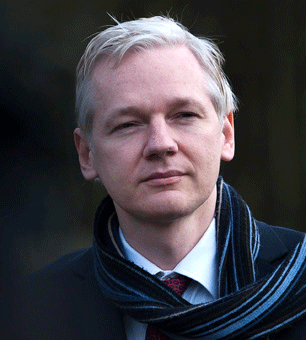  Julian Assange ‘faces fate worse than death’ in US: WikiLeaks founder could serve life in isolation at dreaded ‘Supermax’ prison that’s home to America’s most violent terrorists and drug lords if extradited, court hears Daily Mail, 30 Sept 20, Julian Assange ‘faces fate worse than death’ in US: WikiLeaks founder could serve life in isolation at dreaded ‘Supermax’ prison that’s home to America’s most violent terrorists and drug lords if extradited, court hears Daily Mail, 30 Sept 20,
Julian Assange ‘faces a fate worse than death’ in a lifetime of isolation at the ‘Supermax’ prison currently home to America’s most violent terrorists and drug lords if he is extradited, a court has heard. The Wikileaks founder, 49, could live out his years alone at maximum security ADX Colorado jail where he would spend 23 hours in a cell if he is convicted of espionage offences in the US. Assange is wanted in the US for allegedly conspiring with army intelligence analyst Chelsea Manning to expose military secrets between January and May 2010 Prison expert Joel Sickler said the US government had ‘raised the possibility of sending Mr Assange to ADX’. ……… I believe, based on my understanding of the case, that this is a not unlikely proposition.’ He said Supermax was the only prison criticised as inhumane by its own staff, adding: ‘Robert Hood, the Warden says, “this is not built for humanity. I think that being there day by day, it’s worse than death”.’…….. The WikiLeaks founder could be placed on a prison regime called Special Administrative Measures (SAMS). This means he could be deprived of meals, phone calls, visits or interaction with other inmates. Mr Sickler, who advises federal prison defence attorneys, said: ‘Based on decades of experience, over a dozen of my clients committed suicide, it can be done. ‘I think he is only going to go there if he is a SAMS inmate. There is an outside chance he will go there on other grounds. ‘SAMS will seal his fate. If he is given a life sentence he must start at a United State Penitentiary. ‘He is someone our government alleges has knowledge of certain highly qualified information.’……… ‘Officially known as Administrative Maximum-Security United States Penitentiary (“ADX”); it is most known by its shorthand name, “Supermax”,’ Mr Sickler added. ‘This is a facility is the most feared by inmates and is where the most violent offenders in the nation are sent. ‘And this is where the Government, according to its own affidavit, sees as a potential prison placement for Mr Assange. He said it was the solitary nature of the ADX that made it so difficult for its inmates to bear. ‘Should Mr Assange be sent to ADX he will almost certainly spend all his time in ADX in solitary,’ he added……….. https://www.dailymail.co.uk/news/article-8781275/Julian-Assange-faces-fate-worse-death-WikiLeaks-founder-serve-life-isolation.html?fbclid=IwAR21x4PeHIIn2pjMDgqjBSqfqA2pK5YPTZ9Q4q4SOG066tGN_aKkZj91ROE |
|
Medical experts testify to court on Julian Assange’s precarious mental health
Assange faces “very high risk of suicide,” medical expert tells court, WSWS, By Thomas Scripps and Laura Tiernan, 23 September 2020Medical evidence was produced in Julian Assange’s extradition hearing yesterday detailing the terrible harm done to the heroic journalist by a decade of state-orchestrated persecution.
The day was given over to the examination of Professor Michael Kopelman who testified to Assange’s mental health. Kopelman is a psychiatrist and Emeritus Professor of Neuropsychiatry at Kings College London. He has given expert evidence in multiple extradition cases on behalf of both the defence and the prosecution. In assessing Assange, he conducted seventeen visits in 2019 and additional visits in 2020, constructed a “full family history” and a “full personal psychiatric history,” and carried out “interviews with his family and lifelong friends.”
His findings constitute a clear bar to Assange’s extradition to the United States. Under Section 91 of the UK Extradition Act (2003), extradition is prohibited if “the physical or mental condition of the person is such that it would be unjust or oppressive to extradite him.”
Under Section 87, extradition is prohibited if it is incompatible with the European Convention on Human Rights (ECHR). Article 3 of the ECHR states, “No one shall be subjected to torture or to inhuman or degrading treatment or punishment.”
Medical evidence speaking to these bars has played a critical role in previous US-UK extradition hearings, for example in the case of Lauri Love. The risk of notoriously poor conditions in US prisons exacerbating mental illness is an important factor.
Assange’s case meets these criteria. The details in today’s WSWS coverage are being reported consistent with the “sensitivity” called for by defence lawyer Edward Fitzgerald QC, on behalf of his client. Nonetheless they make overwhelmingly clear the “unjust and oppressive” treatment to which Assange has already been subjected.
Assange, Kopelman told the court, has experienced periods of serious mental illness in his earlier life. Since being confined to the Ecuadorian Embassy and then Belmarsh maximum security prison, these issues have resurfaced and worsened. Assange has suffered symptoms of severe and recurrent depression. Those symptoms have included “loss of sleep, loss of weight, a sense of pre-occupation and helplessness” and auditory hallucinations which Kopelman summarised as “derogatory and persecutory.”
They have also included “suicidal preoccupations.” Kopelman told the court, “There are… an abundance of known risk factors in Mr Assange’s case” and that Assange has “made various plans and undergone various preparations.” He gave his opinion that there was a “very high risk of suicide.”
These symptoms and risks, Kopelman explained, are exacerbated by an anxiety disorder and Post Traumatic Stress Disorder (PTSD) and by a diagnosis of Asperger’s syndrome. Kopelman cited a paper by world-leading autism expert Dr Simon Baron-Cohen which found that the lifetime experience of suicidal thoughts in those with Asperger’s “was more than nine times higher than in the general population in England.”
Explaining the impact of the US government’s persecution, Kopelman said, “The risk of suicide arises out of the clinical factors of depression and the other diagnoses, but it is the imminence of extradition and/or an actual extradition that will trigger the attempt, in my opinion.”
If Assange were to be incarcerated in the US and segregated from other prisoners, Kopelman gave his opinion that the WikiLeaks founder would “deteriorate substantially” and see an “exacerbation” of his “suicidal ideas.” This would “amount to psychological harm and severe psychological suffering.”
Kopelman’s evidence confirms the warnings made since November 2019 by Doctors for Assange, representing hundreds of medical professionals from around the world, that Assange is suffering “psychological torture” and “could die in prison.” It underlines in distressing detail UN Special Rapporteur on Torture Nils Melzer’s comment regarding Assange’s treatment that “psychological torture is not torture-lite. Psychological torture aims to wreck and destroy the person’s personality and identity… to make them break.”
Assange’s year-and-a-half long incarceration at Belmarsh has been designed to achieve this objective. It has profoundly undermined, in numerous ways, his legal right to prepare his defence against extradition. Kopelman reported yesterday that Assange has repeatedly complained that the medication taken for his mental health has caused him “difficulty in thinking, in memorising [and] in concentration.”
During the morning’s cross examination, Kopelman forcefully rebuffed prosecution lawyer James Lewis QC’s challenge to his credentials. He said solicitors had called him several times in recent years saying that Lewis himself was “keen to have your services” in an extradition case.
In the afternoon, cross-examination continued, with Lewis challenging the veracity of Kopelman’s diagnosis, and claiming that Assange’s appearance was “wholly inconsistent with someone who is severely or moderately-severely depressed and with psychotic symptoms.”
Kopelman replied, “Could we go back a step?” Having seen Assange between May 30 and December [2019], “I thought he was severely depressed, suicidal and was experiencing hallucinations.”………….. https://www.wsws.org/en/articles/2020/09/23/assa-s23.html
Julian Assange dragged from embassy “on the orders of the president”
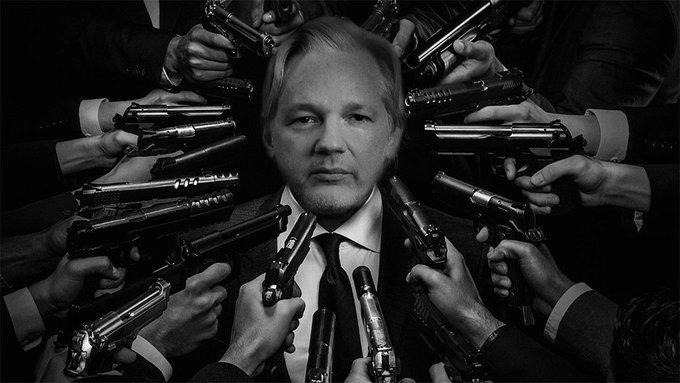 Explosive evidence from Trump insider,Assange dragged from embassy “on the orders of the president”, WSWS, By Laura Tiernan and Thomas Scripps, 22 September 2020
Alt-right media personality Cassandra Fairbanks’ witness testimony was read out in court yesterday, providing evidence that Julian Assange’s April 2019 arrest at the Ecuadorian Embassy in London was politically motivated and directed by United States President Donald Trump.
Fairbanks testified that Arthur Schwartz, a wealthy Republican Party donor and key Trump ally, had told her that Assange was taken from the Ecuadorian Embassy “on orders from the president.” The conversation between Schwartz and Fairbanks occurred in September 2019 and was recorded by Fairbanks.
Schwartz, a frequent visitor to the White House and “informal adviser” or “fixer” to Donald Trump Jr., told Fairbanks the president’s orders were conveyed via US Ambassador to Germany Richard Grenell, who brokered a deal with the Ecuadorian government for Assange’s removal. Grenell was appointed acting director of national intelligence by Trump in February this year, holding the position until May.
Assange’s lawyer, Edward Fitzgerald QC, spelled out the significance of Fairbanks’ disclosures, telling Judge Vanessa Baraitser they were, “evidence of the declared intentions of those at the top who planned the prosecution and the eviction from the embassy.”
Fairbanks, who writes for the pro-Trump Gateway Pundit, is a prominent Assange supporter who visited the WikiLeaks founder at the Embassy on two key occasions. Her evidence was read into proceedings yesterday afternoon unopposed, with Fitzgerald explaining, “My learned friend [James Lewis QC for the prosecution] reserves the right to say ‘because she’s a supporter of Julian Assange you must take that into account in weighing her evidence.’ But we say [her evidence] is true.”
Given her close connections to leading figures in the Trump administration’s fascistic entourage, Fairbanks is uniquely positioned to expose key aspects of the politically motivated vendetta against the WikiLeaks founder. Throughout the extradition hearing, lawyers for the US government have repeatedly claimed the charges against Assange under the Espionage Act are motivated by “criminal justice concerns” and are “not political.”
Fairbanks’ evidence shreds the official narrative of the Department of Justice (DoJ) that Assange was arrested on April 11, 2019 in relation to “hacking.” In a phone call with Schwartz on October 30, 2018, he made clear that Assange would be arrested as political payback for his role in “the Manning case,” i.e., the disclosure by US Army whistle-blower Chelsea Manning of US war crimes in Afghanistan and Iraq……………
Speaking outside the court, Assange’s father, John Shipton, said, “Today we had the prosecution trying to prove that water runs uphill and up is down. … The defence replied and conclusively demonstrated that it was David Leigh [who caused the unredacted cables to be released]. We can only conclude from the amount of time that the prosecution spent defending David Leigh that David Leigh is a state asset.”
At the end of the hearing’s morning session, an exchange between District Judge Vanessa Baraitser and the legal teams pointed to further restrictions being imposed on the defence’s ability to present its case.
Seizing on the delays caused by a potential COVID-19 outbreak in the first week of the hearing, Baraitser insisted that the defence prepare a timetable that allowed the hearing to “finish within two weeks.” When the defence replied that this would leave no time for closing submissions, she reacted enthusiastically to the suggestion of prosecution lawyer James Lewis QC that these could be submitted in written form and summarised in just half a day each for the prosecution and the defence. A final decision is forthcoming.
The hearing continues today……… https://www.wsws.org/en/articles/2020/09/22/assa-s22.html
Julian Assange case: Witnesses recall Collateral Murder attack: “Look at those dead bastards,” shooters said
|
Witnesses recall Collateral Murder attack: “Look at those dead bastards,” shooters said, WSWS, By Thomas Scripps and Laura Tiernan, 19 September 2020New Zealand investigative journalist Nicky Hager testified in Julian Assange’s extradition hearing yesterday morning. Hager has extensive experience in reporting imperialist violence and intrigue. In 2017, he released the book Hit and Run with co-author Jon Stephenson exposing the killing of civilians by New Zealand and United States forces in Afghanistan. He worked with WikiLeaks in the release of US diplomatic cables from November 2010 and made use of other releases in his writing.
Hager explained that serious journalists routinely make use of classified materials when reporting on conflicts and potential state crimes. This, he said, was “generally impossible … without access to sources that the authorities concerned regard as sensitive and out of bounds. Consequently, information marked as classified is essential to allow journalism to perform its role in informing people about war, enabling democratic decision making and deterring wrongdoing.” The Iraq and Afghanistan war logs and US embassy cables obtained by WikiLeaks, Hager said, were documents “of the highest public interest—some of the most important material I have ever used in my life.” Referring to the “Collateral Murder” video, which District Judge Vanessa Baraitser intervened to stop him describing in full, he said, “After the shooting, the pilot and the co-pilot were heard saying ‘Look at those dead bastards,’ with the other replying ‘Nice’ … My belief is … the publication of that video and those words was the equivalent of the death of George Floyd and his words ‘I can’t breathe.’ They had a profound effect on public opinion in the world.” The Iraq and Afghanistan war logs and US embassy cables obtained by WikiLeaks, Hager said, were documents “of the highest public interest—some of the most important material I have ever used in my life.” Referring to the “Collateral Murder” video, which District Judge Vanessa Baraitser intervened to stop him describing in full, he said, “After the shooting, the pilot and the co-pilot were heard saying ‘Look at those dead bastards,’ with the other replying ‘Nice’ … My belief is … the publication of that video and those words was the equivalent of the death of George Floyd and his words ‘I can’t breathe.’ They had a profound effect on public opinion in the world.”……………. Yesterday’s cross-examination centred on the scope of the Espionage Act, with US prosecutors making clear that journalists and media outlets are now a legitimate target—especially those which are deemed “non-conventional.” …….. Throughout the hearing, US prosecutors have claimed the “Collateral Murder” video is not part of their case against Assange. But as Fitzgerald argued, after taking instruction from his client, the “Collateral Murder” video is connected “indivisibly” from the Iraq Rules of Engagement published by WikiLeaks and named in the US indictment. It was on the basis of these Rules of Engagement that Apache’s crew member “Crazy Horse 1-8” fired on civilians, leaving 18 dead and horrifically injuring two children. The hearing continues on Monday. https://www.wsws.org/en/articles/2020/09/19/assa-s19.html |
|
Julian Assange was offered a pardon, if he would name a source
Trump ‘associates’ offered Assange pardon in return for emails source, court hears
WikiLeaks founder was asked to reveal source of leak damaging to Hillary Clinton, hearing told, Guardian, Peter Beaumont in London, Sat 19 Sep 2020 Two political figures claiming to represent Donald Trump offered Julian Assange a “win-win” deal to avoid extradition to the US and indictment, a London court has heard.
Under the proposed deal, outlined by Assange’s barrister Jennifer Robinson, the WikiLeaks founder would be offered a pardon if he disclosed who leaked Democratic party emails to his site, in order to help clear up allegations they had been supplied by Russian hackers to help Trump’s election in 2016.
According to a statement from Robinson read out to the court, the offer was made by the then Republican congressman Dana Rohrabacher and Trump associate Charles Johnson at a meeting on 15 August 2017 at the Ecuadorian embassy in London where Assange was then sheltering. At the time he was under secret investigation by a US grand jury.
Robinson added: “The proposal put forward by Congressman Rohrabacher was that Mr Assange identify the source for the 2016 election publications in return for some kind of pardon, assurance or agreement which would both benefit President Trump politically and prevent US indictment and extradition.”
……….. The barrister added that Assange did not name the source of the emails.While Assange’s legal team first made the claim in February detailing a deal for a pardon in exchange for denying the source of the emails was Russia, Robinson’s statement – admitted as evidence by the court – provides substantial details of the meeting………
Robinson’s description of the offer suggests Trump was prepared to consider a pardon for Assange in exchange for information almost a year before a federal grand jury issued a sealed indictment against the WikiLeaks founder.
If it is confirmed that the approach did indeed have the approval of Trump, it would mark the latest in a number of interventions by the US president in relation to the investigation into Russian election interference.
In her statement, Robinson said Rohrabacher and Johnson “wanted us to believe they were acting on behalf of the president”.
“They stated that President Trump was aware of and had approved of them coming to meet with Mr Assange to discuss a proposal – and that they would have an audience with the president to discuss the matter on their return to Washington DC,” she said……
Appearing to confirm that the approach had been made, James Lewis QC, for the US government, said: “The position of the government is we don’t contest these things were said,” adding: We obviously do not accept the truth of what was said by others.” ……. https://www.theguardian.com/media/2020/sep/18/trump-offered-julian-assange-pardon-in-return-for-democrat-hacking-source-court-told
1 This month

of the week – Australians for War Powers Reform (AWPR)
To see nuclear-related stories in greater depth and intensity
 Antinuclear