Senator Rex Patrick challenges Scott Morrison’s special arrangement to protect his government from public scrutiny
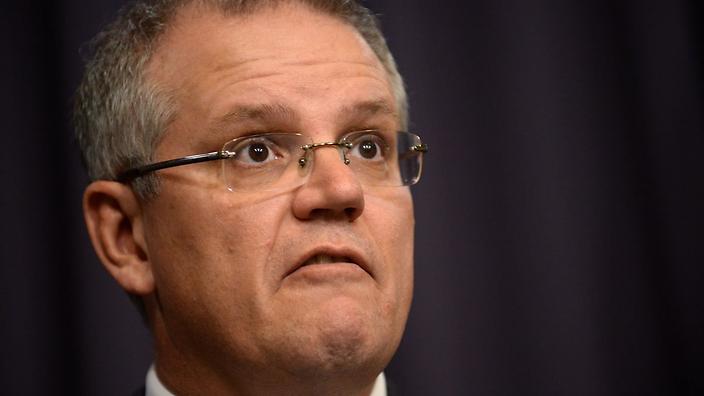
Senator challenges cabinet secrecy, The Saturday Paper 33 May 21, Scott Morrison is using a special arrangement to keep the workings of his government secret, but independent senator Rex Patrick has launched a challenge to its legality. By Karen Middleton. Karen Middleton is The Saturday Paper’s chief political correspondent.
A special policy committee the prime minister uses to keep the workings of his government secret is being called into legal question as part of a challenge to the confidential status of national cabinet.
Independent senator Rex Patrick launched the challenge after the Department of the Prime Minister and Cabinet refused two freedom of information requests for access to national cabinet documents.
Appearing before the Administrative Appeals Tribunal (AAT) this week, the Commonwealth argued that national cabinet’s workings must be secret because it is an offshoot of federal cabinet, which is governed by a confidentiality convention.
It argued that deciding how cabinet committees are formed and who joins them is in the prime minister’s “gift” alone.
The national cabinet arrangement relies on the controversial cabinet office policy committee that Morrison created upon becoming prime minister. He is its only permanent member. The one-man construct allows the prime minister to declare almost any gathering he attends to be a cabinet committee meeting, protecting it from public scrutiny.
When the tribunal’s Justice Richard White queried the mechanism purporting to give national cabinet confidential status, the government could provide no information.
“Is there anything else that tells me anything about the cabinet office policy committee?” Justice White asked counsel for the Commonwealth, Andrew Berger, QC, on Wednesday. “I’m not sure there is, Your Honour,” Berger replied.
Last year, Labor’s senate leader, Penny Wong, condemned the one-man committee as “an abuse” of process used to “cover up blatant political decision-making”.
Senator Patrick’s AAT challenge could also have implications for accessing information from other designated cabinet subcommittees and groups advising them.
The one-man construct allows the prime minister to declare almost any gathering he attends to be a cabinet committee meeting, protecting it from public scrutiny…………..
…………………………. After the hearing, Rex Patrick described national cabinet as “a last-minute idea dealt with at short notice, without its implementation or consequences being properly considered”.
“That’s apparent when looking back at the various media statements, the cobbling together of a new cabinet handbook and the evidence before the AAT,” he told The Saturday Paper.
Patrick said the legislated right to access information on intergovernmental communication had existed in Australia for almost 40 years, “subject only to a test of public harm”.
“Last year, Prime Minister Morrison took that right away,” he said. “He did not ask the parliament to change the law.”
Patrick said he was in a fight for transparency and responsible government. “And I’m in a fight to stop a prime minister unilaterally taking away a right that was given to me and all Australians, by the parliament.”
Whether Justice White agrees will be clear soon. He reserved his judgement and promised a quick decision.
This article was first published in the print edition of The Saturday Paper on May 22, 2021 as “Cabinet of one”. https://www.thesaturdaypaper.com.au/news/politics/2021/05/22/senator-challenges-cabinet-secrecy/162160560011709
South Australian Supreme Court rules that information on the Kimba nuclear waste dump can be made public.
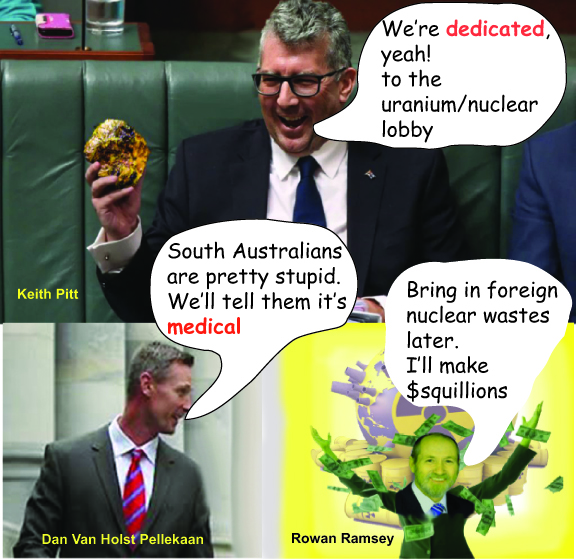
Senator Rex Patrick · SA GOVERNMENT TRANSPARENCY FAILURE, 18 May 21,
Yesterday the South Australian Civil and Administrative Tribunal overturned a decision by SA Energy and Mining Minister Dan van Holst Pellekann to keep information on the National Radioactive Waste Management Facility (NRWMF) from the public. In August last year I made a Freedom of Information request to the Minister asking for access to correspondance between the SA and Federal Government relating to the establishment of a NRWMF facility at Kimba. In November he released four documents to me, with significant redaction on one of them.
When I challenged the redaction the Minister threatened me with legal costs. Yesterday Justice Hughes rejected the Minister’s arguments and found that the document he wished to keep secret was not exempt under FOI.People have a right to know what their Government is saying and doing so that they can properly participate in democracy. This is especially the case when there is a major issue being played out. Minister van Holst Pellekaan needs to rethink who he really owes a duty to. Ministers should serve the people, not their own narrow political interests. https://www.facebook.com/senator.rex.patrick/posts/924739811419769
Biden administration presses for Julian Assange to be extradited to USA
Biden administration files appeal pressing for Assange extradition, Yahoo News, Sat, 13 February 2021 The administration of US President Joe Biden has appealed a British judge’s ruling against the extradition of WikiLeaks founder Julian Assange, a Justice Department official said Friday.
A brief filed late Thursday declared Washington’s desire to have Assange stand trial on espionage and hacking-related charges over WikiLeaks’ publication of hundreds of thousands of US military and diplomatic documents beginning in 2009.
The Justice Department had until Friday to register its stance on Judge Vanessa Baraitser’s January 4 ruling that Assange suffered mental health problems that would raise the risk of suicide if he were sent to the United States for trial.
“Yes, we filed an appeal and we are continuing to pursue extradition,” Justice Department spokesman Marc Raimondi told AFP.
After Baraitser’s decision, which did not question the legal grounds for the US extradition request, Donald Trump’s administration moved to appeal.
But Biden’s stance was not clear, and he was pressured by rights groups to drop the case, which raises sensitive transparency and media freedom issues.
After WikiLeaks began publishing US secrets in 2009, then-president Barack Obama, whose vice president was Biden, declined to pursue the case.
Assange said WikiLeaks was no different than other media constitutionally protected to publish such materials.
Prosecuting him, too, could mean also prosecuting powerful US news organizations for publishing similar material — legal fights the government would likely lose.
But under Trump, whose 2016 election was helped by WikiLeaks publishing Russian-stolen materials damaging to his rival Hillary Clinton — the Justice Department built a national security case against Assange.
In 2019 the native Australian was charged under the US Espionage Act and computer crimes laws with multiple counts of conspiring with and directing others, from 2009 to 2019, to illegally obtain and release US secrets……….
Assange has remained under detention by British authorities pending the appeal.
Earlier this week 24 organizations, including Human Rights Watch, Amnesty International USA and Reporters Without Borders, urged Biden to drop the case.
“Journalists at major news publications regularly speak with sources, ask for clarification or more documentation, and receive and publish documents the government considers secret,” they said in an open letter.
“In our view, such a precedent in this case could effectively criminalize these common journalistic practices.”
Assange’s fiancée Stella Moris said in a statement that Baraitser’s January decision that Assange was a high risk for suicide and that US prison facilities were not safe remained a strong reason to deny extradition.
Baraitser “was given clear advice by medical experts that ordering him to stand trial in the US would put his life at risk,” she said.
“Any assurances given by the Department of Justice about trial procedures or the prison regime that Julian might face in the US are not only irrelevant but meaningless because the US has a long history of breaking commitments to extraditing countries,” she said https://au.news.yahoo.com/biden-administration-files-appeal-assange-171637702.html
In its rush for Kimba nuclear dump, Australian government tries to remove rights to legal recourse
|
Jodie van Deventer’s recent comment clearly identifies “our obligation as a society to dispose of our waste responsibly”. Sadly this much needed responsibility is missing from the federal governments stalled push to advance a national radioactive waste site near Kimba on the Eyre Peninsula. Right now, the federal government is seeking to change the rules and remove fundamental democratic rights and protections by denying concerned and affected citizens a day in court. The right to independent legal recourse is a fundamental principle of our democracy. It should not be lightly jettisoned, especially on an issue with such significant implications and impacts as radioactive waste. Despite multiple requests, Barngarla Native Title holders were explicitly excluded from the consultations and remain actively opposed to the planned waste facility. To further remove their rights – and the rights of others – is unfair, unnecessary and unjustified. This is not simply a low-level waste facility. Many state and national civil society groups, Aboriginal and professional groups, the SA Upper House, state Labor and unions share concerns and oppose the government’s approach. A key concern is that it will not result in credible long term management, especially of intermediate level waste. The right to independent legal recourse is a fundamental principle of our democracy. It should not be lightly jettisoned, especially on an issue with such significant implications and impacts as radioactive waste. Despite multiple requests, Barngarla Native Title holders were explicitly excluded from the consultations and remain actively opposed to the planned waste facility. To further remove their rights – and the rights of others – is unfair, unnecessary and unjustified. This is not simply a low-level waste facility. Many state and national civil society groups, Aboriginal and professional groups, the SA Upper House, state Labor and unions share concerns and oppose the government’s approach. A key concern is that it will not result in credible long term management, especially of intermediate level waste. The right to independent legal recourse is a fundamental principle of our democracy. It should not be lightly jettisoned, especially on an issue with such significant implications and impacts as radioactive waste. |
|

Australian uranium mining company threatens Spanish government with legal action
Miner threatens Spain over uranium ban, Cosmo Sanderson, 01 February 2021
How will Entry Into Force of the Nuclear Weapons Ban Treaty impact non weapons states parties, including Australia?
 How will EIF impact non states parties, including Australia? https://icanw.org.au/wp-content/uploads/Australia-EIF-of-the-TPNW.pdf How will EIF impact non states parties, including Australia? https://icanw.org.au/wp-content/uploads/Australia-EIF-of-the-TPNW.pdf16 Jan 21, While non states parties are not legally bound to the terms of the treaty, the norms set out and strengthened by the treaty can shape their behaviour and build pressure for them to join. The entry into force of the treaty puts Australia out of step with international law. While Australia has joined every other treaty that prohibits indiscriminate or inhumane weapons, the Nuclear Non-Proliferation Treaty and the South Pacific Nuclear Free Zone Treaty, it has not yet signed or ratified the ban on nuclear weapons. This position is contested by a growing nationwide movement and at all levels of government. The treaty reveals Australia’s complicity in the problem by including nuclear weapons in its defence posture.
****
As a country with a devastating history of nuclear testing, Australia will be obliged to take action as a state party to assist survivors of nuclear testing and take steps towards remediating contaminated environments. These obligations should be informed by and developed in collaboration with impacted First Nations people, nuclear test veterans, civil society, public health and other experts.
****
Entry into force of previous ban treaties has led to a substantial decrease in the production and deployment of prohibited weapons such as cluster munitions and landmines, both by states parties and non states parties. EIF will also impact the flow of funds to nuclear arms producing companies. Financial institutions often choose not to invest in “controversial weapons,” which are typically weapons prohibited by international law. The entry into force of the TPNW clearly puts nuclear weapons in this category and will likely trigger additional divestment, including by Australian banks and superannuation funds.
****
EIF of the treaty will further stigmatise nuclear weapons, including in Australia, by: Prompting further debate: more than 250 federal, state and territory parliamentarians have declared their support for the treaty and the federal Opposition, the Australian Labor Party, has committed to sign and ratify the treaty in government. Decision-makers will continue to be asked to engage with this new piece of international law.
****
Institutionalisation: entry into force will entrench the treaty’s place in the international legal architecture for nuclear weapons. It is already referenced in international fora as signatories and states parties proudly declare their commitment to nuclear disarmament.
****
Impacting alliances: all states parties in alliances with nuclear-armed states will be required to renounce the use of nuclear weapons on their behalf, and ensure they are not assisting with the use or threat of use of the weapons. Once a state party, Australia will need to cease any policy that countenances and supports the use of nuclear weapons. Other US allies, including New Zealand and Thailand, have already joined the treaty.
****
It will take years to build the necessary political will for some states to join the nuclear weapon ban treaty. Shifting nuclear weapons from a symbol of status to a liability of shame is slow, yet crucial, work. As the signatures and ratifications of the treaty continue beyond entry into force, non states parties will face increasing criticism from their citizens, international organisations and other states. Almost all of Australia’s neighbours in the Pacific and Southeast Asia support the treaty. It is only a matter of time before Australia joins the treaty and thereby becomes part of the solution to these abhorrent weapons.
|
|
Judge’s refusal to extradite Julian Assange is still part of cowardly process to deny freedom of information
The personal conveniently distracts from the political in the Assange story, https://www.theage.com.au/national/the-personal-conveniently-distracts-from-the-political-in-the-assange-story-20210107-p56siu.html
Elizabeth Farrelly Judge Vanessa Baraitser’s refusal to extradite Julian Assange for “mental health” reasons may look humanitarian but is in fact a deft political move. In reducing what should be an argument of law and principle to a test of personality, Baraitser managed at a blow to impugn Assange’s stability, repudiate any suggestion of innocence and open the door for America to prove the comforts of its solitary confinement and thereby win his extradition.
It’s a story of many twists and turns but underlying it throughout is a profound and widespread moral cowardice.
Baraitser’s 132-page ruling found that although the UK-US Extradition Treaty of 2003 specifically prohibits extradition for “political offence”, this provision never became law in the UK and therefore has no effect. In essence, the treaty is worthless.
The court also supported all 18 of the espionage charges against Assange, arguing that WikiLeaks’ hacking and publication “would amount to” offences in English law. Baraitser identified eight charges under the UK Official Secrets Act that would be, she said, equivalent.
Interestingly, this “would have” construction does not apply to the treaty question. Had Assange engaged in the same conduct in America, targeting British government information, he could not have been extradited because America’s “monist” system regards any treaty as law once signed. So it’s ironic that undermining this particular protection is a key US argument.
Anyone who saw the 2019 docudrama Official Secrets, chronicling the leakage by GCHQ analyst-turned-whistleblower Katharine Gun of information on US-UK dirty dealing in drumming up UN support for the Iraq war, will understand just how murky and terrifying such prosecutions can become.
This fear, and the persistent cowardice of yielding to it, is the theme of Assange’s story. I’ve written about Assange several times. I visited him in Ecuador’s embassy. Yet each time, I’ve found myself reluctant.
Seven years ago, when I met him, Assange was ebullient and hopeful, even funny. Now, as Baraitser says, he is “a depressed and sometimes despairing man who is genuinely fearful about his future”. Assange, she said, was at “high risk of serious depression leading to suicide if he were to be extradited and placed in solitary confinement for a long period”.
Baraitser noted the “bleak” conditions of Assange’s likely US confinement would include “severely restrictive detention conditions designed to remove physical contact and reduce social interaction and contact with the outside world to a bare minimum”, with family limited to one supervised 15-minute phone call a month. Detailing Assange’s mental state, she opined that his risk of suicide, in such conditions, was “very high”. This is the loophole she offers the appellant US prosecutor.
Those fears – his of 175 years in solitary (honestly, who wouldn’t top themselves?) and hers of his suicide – underpin her judgment. But there are other, more insidious fears at play here.
Such fears, I see now, feed my reluctance to revisit the Assange story: fear, in particular, of confronting the terrifying truth about our imperial system. Regardless of Assange’s innocence or guilt, the simple facts of what our controlling powers can do to you if you step out of line are terrifying.
But this small, individual fear also operates, very effectively, at nation level.
From the start, the case against Assange has contrived to turn issues of principle into questions of personality. The initial Swedish rape charges, since dropped for lack of evidence as the witness’s recollections after so long were clouded, were extremely personal, spinning off the cancellation of his credit cards upon his arrival in Stockholm, forcing him to accept hospitality; the seductions, the sex – which everyone agrees was consensual – his failure to wear a condom although asked and reluctance to take an STD test. Then the left turned against him because of the Clinton leaks – which one suspects would have been fine, had they been directed at the other side – and perceptions about Assange’s ego. He was vain, it was said, and narcissistic. As if that itself were a crime, reason enough to let him rot in solitary.
The personal and emotive nature of all this – the Swedish prosecutor’s refusal to interview him in London, Britain’s willingness to imprison him for a year on bail charges, America’s determination to prosecute him for exposing their war crimes (in the Iraq War Logs of October 2010 and the film Collateral Murder showing air crew shooting unarmed civilians from a helicopter) and the description of WikiLeaks by US Secretary of State Mike Pompeo as “a hostile non-state intelligence service” – all suggest a bigger picture, and smaller values, than mere truth or justice.
It’s often said that Assange endangered the lives of US informers but, as Baraitser notes, no causality has been shown. Even the Senate Committee on Armed Service said, “the review to date has not revealed any sensitive sources and methods compromised by disclosure”. It is said that Assange, by dumping hacked emails from Hillary Clinton’s campaign, gave us Trump. But if she was engaged in skulduggery as alleged, wasn’t it better for the world to make its own judgment?
When you look coldly at the facts it’s hard not to suspect that Sweden was coerced into the original charges and that Britain and Ecuador have been similarly pressured. Certainly Australia’s persistent refusal to intervene for Assange, an Australian citizen who has broken no Australian law, suggests a similar abject timidity in the face of US might.
That’s the fear that guys like Assange and Edward Snowden make us confront. And it’s why they deserve, at the very least, a fair and open trial.
Assange denied bail after extradition blocked, will appeal to UK High Court
 Assange denied bail after extradition blocked, will appeal to UK High Court, WSW Assange denied bail after extradition blocked, will appeal to UK High Court, WSW
Thomas Scripps, 6 January 2021 WikiLeaks founder Julian Assange has been denied bail and continues to be held on remand in Belmarsh maximum-security prison.
District Judge Vanessa Baraitser handed down the decision Wednesday in Westminster Magistrates Court, after ruling on Monday against Assange’s extradition to the United States on mental health grounds. Assange will remain in custody until the prosecution’s appeal of that ruling is heard. WikiLeaks editor-in-chief Kristinn Hrafnsson announced afterwards that Assange’s legal team would be taking the bail decision to the High Court. Baraitser’s refusal to grant bail confirms that her decision not to extradite was motivated by political considerations and not any genuine concern for Assange’s health. Assange will be kept in conditions which have had a grave impact on his mental health, during a massive escalation of the UK’s COVID-19 epidemic. Speaking to the Sydney Morning Herald Tuesday, Nick Vamos, former head of special crime and head of extradition at the Crown Prosecution Service, indicated that the appeal process would likely take two to three months. In her decision, Baraitser accepted the prosecution’s insistence that Assange’s flight into the Ecuadorian embassy in 2012—after a UK court had granted him bail in connection with Sweden’s trumped-up sexual assault investigation and extradition request—was proof of his willingness to abscond in the future. This is an absurd and vindictive position…….. Assange now has a court ruling in his favour. He is, regardless, prepared to submit to stringent bail conditions amounting to effective house arrest with a GPS tag—conditions which have allowed terror suspects to receive bail. His experience of claiming asylum in an embassy has proved it “unpleasant”, in Fitzgerald’s words, and led “to him being effectively confined for some seven years” before having his asylum revoked. “That is not something that he is ever likely to repeat.” Assange also now has a family, a partner and two children, in the UK. Besides being a reason for Assange not to abscond, Fitzgerald argued, his family provides significant human rights grounds for his release on bail. On account of COVID-19 restrictions in the prison, Assange “hasn’t seen his family in person since March 2020”. He has never been able to live with them, having spent 15 months held on remand pending his extradition hearing. Assange’s family, Fitzgerald noted, is highly relevant to the question of his mental and physical wellbeing. “The grant of bail”, he said, “would allow actual physical contact with his family, that would… alleviate mental distress”. Baraitser had acknowledged the benefit of his family’s support to Assange in her ruling on extradition, which described him as a “depressed and sometimes despairing man, who is genuinely fearful about his future.” Bail would also “considerably reduce” the risk of Assange’s exposure to COVID-19. Fitzgerald pointed to the “severe outbreak” of the virus suffered by Belmarsh Prison recently and said there had been 59 positive cases prior to Christmas. He added, “on any view, the position [the state of the UK’s epidemic] is worse now and, on any view, he would be safer isolating with his family than if he was in Belmarsh.” Baraitser dismissed these concerns, declaring “this prison is managing prisoners’ health during this pandemic in an appropriate and responsible manner.”………. https://www.wsws.org/en/articles/2021/01/07/assa-j01.html?pk_campaign=assange-newsletter&pk_kwd=wsws |
|
|
Assange hearing outcome could set an “alarming precedent” for free speech
|
Assange hearing outcome could set an “alarming precedent” for free speech https://www.indexoncensorship.org/2020/12/assange-hearing-outcome-could-set-an-alarming-precedent-for-free-speech/ Benjamin Lynch
People need to “forget what they think they know” about WikiLeaks founder Julian Assange and recognise that if he is extradited to the USA, it would set a worrying precedent for media freedom. We speak to his partner about the case. Assange’s partner, Stella Moris, is remaining resolute despite his extradition hearing decision being less than a month away and him being held in a prison that has recently had a Covid-19 outbreak.
Speaking over the phone to Index, Moris discusses the hearing’s details and what it could mean for the future of freedom of expression. And she talks about the deep implications it has had for her and her young family. “Obviously it is very difficult. I speak to Julian on a daily basis unless there is a problem. [But] he is in prison. Soon to be for two years. He has been there for longer than many violent prisoners who are serving sentences. All in all, he has been deprived of his liberty for ten years now,” she told Index. She adds: “The kids speak to their father every day; we try to normalise it as much as we can for them. But of course, this is not a normal situation and our lives are on hold. It is inhumane and shouldn’t be happening in the UK.” The current hearing – which will decide whether there are grounds for Assange to stand trial in the USA – should reach a conclusion on 4 January. A trial in the USA (should the decision go against Assange) will have major ramifications for free speech and whistleblower journalism. The WikiLeaks founder is charged with conspiring with US intelligence analyst Chelsea Manning and hackers from groups such as Anonymous and LulzSec to obtain and publish classified information. Each of the 18 charges laid by US authorities, if Assange is extradited and convicted, carry a maximum penalty of 10 years. The allegations brought forward under the 1917 Espionage Act, alongside one other under the Computer Fraud and Abuse Act, mean Assange could face up to 175 years in prison – effectively a life sentence. Manning was initially sentenced to 35 years, but under the Obama administration her sentence was commuted to less than seven years. It is easy to get sidetracked about the current extradition hearing and get into arguments about whether Assange is a journalist, whether he is guilty of other crimes or whether the publication of the documents brought harm to anyone involved. Instead people’s attentions should focus on the precedent that will be set should the case go to trial in the USA. As it stands the case is unprecedented. No publisher has ever been tried under the Espionage Act, which itself was essentially created for spies imparting official secrets either for profit or otherwise. This is perhaps a direct contradiction of rulings of the courts in the UK. In December 2017, the UK’s information tribunal recognised WikiLeaks as a media organisation, in direct contradiction to the view of the US State Department. Australia’s media union, the Media, Arts and Entertainment Alliance, also presented an honorary member card to Assange’s Melbourne-based lawyer. Amidst the noise of the separate matters around the case, Moris insists people need to “forget what they think they know” and assess the issues involved. “There are a lot of assumptions being made over what this case is really about. There are all these sideshows. It is not about people being harmed because the US has admitted it has no evidence to make this argument. It comes down to the fact that the material published was classified. People who care about free speech and press freedom need to forget what they think they know about this case and look at it afresh and understand Julian is in prison for publishing. This is not something that democracies do.” “Are they saying what he published was not in the public interest? They say that is irrelevant. They can’t deny [what he published] wasn’t in the public interest because he was publishing information and evidence of state crimes, of state abuse, torture, of rendition, blacksites and of illegal killings. What they are arguing is that Julian published information that was secret and therefore he can be prosecuted over it.” ournalists publishing secret information is not new (nor is pressure for them not to publish) and can often be key to upholding democracy and ensuring states act properly. The Watergate revelations relied heavily on news organisations pressing on with publication despite attempts by the USA to stop them, including the threat of jail time. It proved a significant victory for free speech. If Assange is extradited and tried the case will impact journalists and the media “for years to come”, says Rebecca Vincent, director of international campaigns at Reporters Without Borders (RSF). “It feels like many in the media do not see the implications of this case as something that will possibly affect them,” she told Index. “This case will have ramifications on the climates for journalism and press freedom internationally for years to come.” “This is the first time we have seen the US government prosecute anybody for publishing leaked information. If they are successful, they will not stop with Assange and WikiLeaks. This could be applied, in theory, to any media outlet.” It’s common for journalists and publishers to cite a public interest defence for disputed documents. It is a centrepiece of a defence case against libel, for instance. “The information published was certainly in the public interest; it served to inform extensive public interest reporting that exposed war crimes and other illegal actions by states,” said Vincent. “The Espionage Act lacks a public interest defence. He cannot use it if he is sent to the United States and tried.” Essentially, what this means is that Assange is being treated as a spy not a publisher. If Assange is extradited and loses his case against the US government, any time classified information is published by a journalist there will be a precedent set that they can be charged and tried as a spy in the same way. “These sorts of cases are really highlighting the need for more robust legislation that cannot be manipulated to be used against journalists, whistleblowers and other sources. Ultimately, it is the public’s right to access information that is being impacted,” Vincent added. “You can see this for what it is; this very much feels like a political prosecution by states that are not meant to engage in this behaviour. The reason our states can get away with this is because of a lack of public pressure. A lack of public sympathy has resulted in a lack of widespread public pressure to hold our governments to account.” |
|
Senator Rex Patrick contests Freedom of Information refusal about nuclear waste plan

Rex Patrick to ask SA Civil and Administrative Tribunal to reverse nuclear FoI refusal
An SA Senator will ask a court to decide whether his call for information on a nuclear waste facility should have been granted. Advertiser –Matt Smith, December 16, 2020 –
South Australian senator Rex Patrick will tackle State Government lawyers after a Freedom of Information request concerning a nuclear waste facility was refused.
He will fight to overturn the decision in the SA Civil and Administrative Tribunal over what he describes as “a lack of transparency”.
Senator Patrick, pictured, said his FOI request was met with a “highly unusual” reminder from the Crown Solicitor’s office that if he were to fight the decision and lose he would be liable for costs.
He had asked for correspondence between Energy and Mining Minister Dan van Holst Pellekaan and the Federal Government concerning the establishment of a National Radioactive Waste Management Facility in SA.
“FOI in SA is a farce. Late responses, cavalier exemption claims, delayed review processes and now threats if you push a request beyond the control of the very government department seeking to hide information,” he said.
A government spokesman said: “While it would not be appropriate to comment on matters currently before SACAT, it’s worth noting that the tribunal and only the tribunal makes a determination on whether costs are awarded, and can do so if satisfied that there are statutory grounds to do so.
No decision has been made in this matter and, as such, no application for costs has been, or can be, made at this time.”
It was revealed this week that reviews of FOI requests are taking more than six months to
complete. SA Senator Rex Patrick takes nuclear FOI ‘farce’ to court | The Advertiser (adelaidenow.com.au)
See Senator Rex Patrick’s Face Book page post:
https://www.facebook.com/193047494589008/posts/836162363610848/
MINISTER DAN van HOLST PELLEKAAN RESORTS TO THREATS WHEN ASKED TO BE TRANSPARENT
In response to a request for transparency, Minister Dan van Holst Pellekaan has outrageously instructed the Crown Solicitor to threaten me with costs.
Everything the SA Government does it does for public purpose and using SA taxpayer’s money. As such, South Australians are entitled to see all that the State Government does, admittedly with some exceptions.
I asked Minister van Holst Pellekaan’s office to provide me with correspondance between the State and Federal Government on the proposed National Radioactive Waste Management Facility at Kimba, using SA Freedom of information laws. At first he failed to respond to the request in the timeframe required by the law, then he made a decision that hid (presumably embarrassing) information from me.
I have asked SACAT, the State’s independent umpire, to review the Minister’s decision. Minister van Holst Pellekaan has now threatened me with “costs” if I proceed. That prompts two questions: 1) what’s he trying to hide and 2) if he’s prepared to threaten a senator seeking transparency, how would he treat a regular South Australian that reasonably requested information from him?
Law and Disorder: The case of Julian Assange
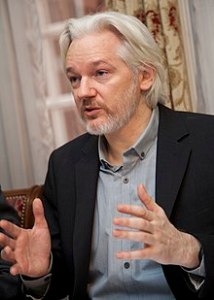 In the case of Julian Assange, what is on trial is nothing less than our right to know what is done by governments in our name, and our capacity to hold power to account.
What kind of law allows pursuit of charges under the 1917 United States Espionage Act — for which there is no public interest defence — against a journalist who is a foreign national?
The closing argument of the defence in the extradition hearing of WikiLeaks founder and publisher Julian Assange has been filed. For this and other reasons it is apposite to consider the authority invested in the law before which, in democratic societies, we are ostensibly all equal.
In fact, notwithstanding the familiar claims of objectivity (and as `everybody knows’ in Leonard Cohen’s famous lyric) the reality is somewhat different. Jokes about the law attest to this:
‘One law for the rich…’
‘Everyone has the right to their day in court — if they can pay for it’
‘What’s the difference between a good lawyer and a great one? A good lawyer knows the law. A great lawyer knows the judge’
The term ‘legal fiction’ calls into question the relationship between law, objectivity, and truth. On the one hand, law is the essential pillar of a functioning society. On the other, it is replete with anomalies both in conception and execution. To what extent can these perspectives be reconciled? High stakes are attached to this question.
Questioning claims of objectivity in the context of law.
The Australian government”s intimidation of whistleblowers – the torture of Julian Assange
Torture of Julian Assange by Australian governments sends powerful message to whistleblowers, Michael West Media by Lissa Johnson | Nov 26, 2020
Australia has used a range of torture techniques against Julian Assange, writes Dr Lissa Johnson. Governments have isolated and demonised him; flatly rejected evidence of ill-treatment; refused to respond to specific allegations; and divested themselves of any responsibility. Leaders can’t, or won’t, accept the difference between psychological torture and ‘a legal matter’.
Julian Assange has set a number of firsts for Australia, including:
- The first Walkley award winner whose journalism has attracted a possible 175 years in US prison.
- The first journalist to be prosecuted as a spy by the US government, under its 1917 Espionage Act.
- The first citizen of an ostensibly democratic state (Australia) whom a UN official has found to be the target of a campaign of collective persecution and mobbing by other so-called democratic states.
As the UN Rapporteur on Torture, Nils Melzer, observed:
In 20 years of work with victims of war, violence and political persecution I have never seen a group of democratic states ganging up to deliberately isolate, demonise and abuse a single individual for such a long time and with so little regard for human dignity and the rule of law.
As part of this mobbing and collective persecution, Assange is the first Australian journalist to be tortured for journalism in the UK.
On 9 May 2019, Professor Melzer visited Assange in Belmarsh prison, accompanied by two medical experts specialising in the assessment and documentation of torture. On 31 May, Melzer reported that they had found Assange to be suffering all symptoms typical of prolonged exposure to psychological torture.
On 1 November 2019, Melzer warned that, unless the UK government urgently changed course, it may soon end up costing his life.
What torture?
Julian Assange is being held in ‘Britain’s Guantanamo’, Belmarsh prison, a high-security facility designed for those charged with terrorism, murder and other violent offences. He has been held in solitary confinement for 22 to 23 hours a day.
He knows that US-aligned security contractors have written in emails that he will make a nice bride in prison, and needs his head dunked in a full toilet bowl at Gitmo. He knows he is headed for life in US supermax prisons, where prisoners are held in perpetual solitary and chains.
‘If this man gets extradited to the United States, he will be tortured until the day he dies’, Profesor Melzer has cautioned.
To heighten the torment, Assange has been prevented from preparing his defence against extradition in violation of his human rights as a defendant.
He has been granted negligible access to his lawyers and is prevented from researching his own defence. The only purpose is to render him helpless, intensifying his trauma.
A Message from the Australian Government
Assange’s experience sets an example to anyone thinking of airing the dirty secrets of those in power: the genuinely dirty secrets, such as wantonly slaughtering and torturing innocent people and covering it up.
Like all public torture, it sends a message to onlookers: this could happen to you.
And the message from the Australian government to any Australian journalists looking on? You’re on your own.
The US government is seeking to retrospectively apply its own Espionage Act to non-US citizens in foreign lands, while simultaneously withholding the free speech protections of its Constitution. The upshot would be that non-US citizens, and non-US journalists, would be vulnerable to prosecution wherever they may be, whenever the United States saw fit.
Should a host country oblige, that journalist’s only hope would be the protection of their own government. And the message from the Australian government? Not a chance.
A climate of consent
But can the government do anything to stop the torture of Assange in the UK? Or are its hands tied?
Australia ratified the Convention Against Torture in 1989. It therefore has a positive duty to take ‘effective legislative, administrative, judicial and other measures to prevent acts of torture’ of its citizens. According to the Federal Attorney-General’s website, however, that duty applies to ‘territories within Australia’s jurisdiction’.
So who is responsible for protecting Australian citizens from torture overseas?
Australian officials can raise concerns with their overseas counterparts when they are concerned about gross violations of citizens’ rights as happened in the cases of Melinda Taylor, James Ricketson, David Hicks and Peter Greste.
They could also make a submission to the Committee against Torture that a state is ‘not fulfilling its obligations under this Convention’.
n Assange’s case, however, the government has opted for ‘consent and acquiescence’ under Article 1 of the convention. Consent and acquiescence is listed alongside inflicting and instigating torture as part of the very definition of torture.
‘Standard’ fare
DFAT representatives say repeatedly that Assange’s treatment In the UK is perfectly normal. ‘Standard’. ‘No different’ from the treatment of other UK prisoners. Routine, in other words. Nothing to see here.
When reminded that Assange had been handcuffed 11 times, stripped naked twice and moved between five holding cells after the first day of his extradition hearing, a DFAT representative described this as ‘standard prison to court and court to prison procedure’.
What the official failed to explain is that treatment is only ‘standard’ and normal for prisoners charged with terrorism or other violent offences.
It is not remotely normal for journalists with no criminal history, and no history or risk of violence, to be detained under the most punitive conditions that UK law enforcement has to offer.
As an exercise in “consent and acquiescence” DFAT representatives performed their duties well.
Sanitising, normalising language minimises and trivialises abuse………….
‘Not our responsibility’ has been the Australian government’s refrain. Australian government officials ‘don’t provide running commentaries on legal matters before the courts in other parts of the world’, asserted the Foreign Minister.
Australia is ‘not a party to the legal proceedings in the United Kingdom’, stressed a DFAT official when asked why Australia had not intervened in Assange’s case during Senate Estimates. ‘We have no standing in the legal matter that is currently before the courts.’
Perhaps the Australian government doesn’t understand the seriousness of the abuses taking place in the UK. Perhaps ministers and their advisors are unaware of the difference between psychological torture and a ‘legal matter’. Psychological torture is, after all, not commonly well understood.
It is possible that the Australian government merely fails to grasp the gravity of ignoring Professor Melzer’s warnings. However, when the group Doctors for Assange wrote to the Australian government in December 2019, they detailed the medical and psychological basis of their concerns for Assange’s life and health…………..
New normal in Australia?
Assange is not the first person in Australia to be subjected to torture and other cruel, inhuman or degrading treatment. Australia’s abuse of asylum seekers and refugees has been found to violate the Convention Against Torture. Aboriginal Australians, among the most incarcerated groups on earth, have been dying in custody, buried under acquiescent consent, for decades, and historically for hundreds of years.
The Human Rights Measurement Index 2019 has given Australia a 5.5 out of 10 rating for ‘freedom from torture’, noting, ‘Torture is a serious problem in Australia … a large range of people [are] at particular risk of torture or ill-treatment, with Aboriginal people and Torres Strait Islanders at the top of the list’…….
Through sending a message to journalists worldwide by torturing Assange, the abusive licence deployed against other persecuted groups is being expanded to take in journalism. The targeting of journalists around the world matters because journalists cut across the acquiescence and consent, remove the deadbolt on the torture chamber door, turn down the music, and expose what is going on inside. Every persecuted and abused group or person needs them, to break the cycle of violence by breaking the silence.
We do torture here. It is our problem. In Julian Assange’s case, the biggest problem appears to be that torturing journalists is becoming the new normal in Australia.
This edited extract is reproduced from A Secret Australia: Revealed by the WikiLeaks Exposés, edited by Felicity Ruby and Peter Cronau, Monash University Publishing, December 2020. https://www.michaelwest.com.au/torture-of-julian-assange-by-australian-governments-sends-powerful-message-to-whistleblowers/
Rest super fund commits to net-zero emission investments after Brisbane man sues
|
Rest super fund commits to net-zero emission investments after Brisbane man sues, ABC, By national science, technology and environment reporter Michael Slezak, 2 Nov 20,
A 25-year-old man from Brisbane has successfully sued one of Australia’s biggest super funds over its handling of climate change, forcing it to commit to net-zero emissions for its investments by 2050.Key points:
In 2018, Mark McVeigh sued Rest, his superannuation fund, in the Federal Court after it failed to provide him with information on how it was managing the risks of climate change. Mr McVeigh alleged Rest had breached the Superannuation Industry Act and the Corporations Act by failing to manage those risks — which could include fossil fuel companies plummeting in value or infrastructure being damaged by extreme weather. The law requires trustees of super funds to act with care, skill and diligence to act in the best interest of members — including managing material risks to its investment portfolio. In an 11th-hour settlement reached on Monday while the case was adjourned, Rest agreed its trustees have a duty to manage the financial risks of climate change. Because the case was settled out of court, the outcome doesn’t carry the same weight as a legal precedent decided in court. But Mr McVeigh’s lawyer, David Barnden, head of Equity Generation Lawyers, said the case still sets an important precedent globally. “This outcome should represent a significant shift in the market’s willingness to tackle climate risk — a shift which should set a clear precedent for the industry in Australia, and also pension funds around the world,” Mr Barnden said……….. https://www.abc.net.au/news/2020-11-02/rest-super-commits-to-net-zero-emmissions/12840204 |
|
New government Bill could target journalists, environmental and human rights groups
|
Tue 20 Oct 2020 Journalists and advocacy groups could face compulsory questioning by Asio as part of a proposed expansion of the spy agency’s powers, according to external legal advice prepared by leading barristers.With senior officials of Asio due to give evidence to Senate estimates hearings on Tuesday, the new advice seen by Guardian Australia argues a bill before parliament to extend the reach of questioning powers could have a “chilling effect” on the willingness of people to speak to journalists. It also argues some of the work of civil society organisations – especially those involved in environmental and human rights advocacy – may be caught by the broad definition of “acts of foreign interference” because it includes clandestine acts that “are otherwise detrimental to the interests of Australia”. Members of civil society groups could face potential questioning and the use of tracking devices, according to the advice commissioned by progressive group GetUp and prepared by Sydney-based barrister Dominic Villa SC – an expert in public and administrative law – and fellow barrister Diana Tang, both of New Chambers. The government’s bill – which is currently being scrutinised by parliament’s intelligence committee – would expand the range of matters that are subject to compulsory questioning powers beyond terrorism-related matters. The changes would allow the agency to question adults over espionage and foreign interference, amid warnings from Asio that there are now mores spies and proxies operating in Australia than at the height of the cold war……… “Despite well-recognised professional and ethical obligations of a journalist to maintain anonymity and confidentiality of a source, if so questioned under a warrant, a journalist would be required to disclose the identity of a confidential source.” The advice says there is no exception or exclusion provided for in the bill that would enable a journalist to refuse to answer a question on the basis it would reveal a confidential source. “There may therefore be a chilling effect on the willingness of people to speak to journalists about issues of political significance, including security matters and foreign relations.” Villa and Tang argue the proposed laws may also “undermine the important role played by civil society organisations in holding government to account”, partly because a “foreign power” is defined to include “a foreign political organisation”. The advice argues civil society organisations operating in Australia may “collaborate with or receive support from a foreign political organisation that shares a common interest or objective, in their advocacy campaigns”……… https://www.theguardian.com/media/2020/oct/20/chilling-attack-on-democracy-proposed-asio-powers-could-be-used-against-journalists |
|
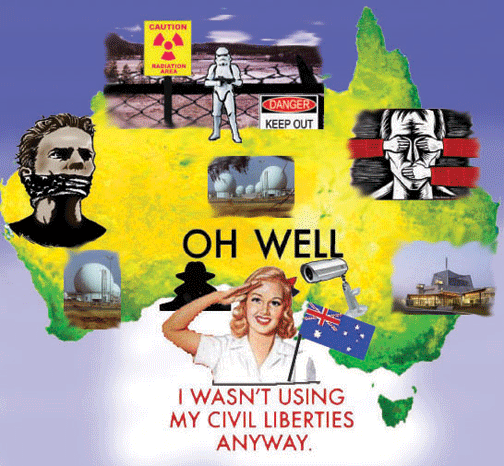
Persecuting Assange Is a Real Blow to Reporting and Human Rights Advocacy’
Persecuting Assange Is a Real Blow to Reporting and Human Rights Advocacy’
CounterSpin interview with Chip Gibbons on Assange extradition Fair, 15 Oct 20,
Assange’s case, the unprecedented use of the Espionage Act to go after a journalist, has dire implications for all reporters. But this country’s elite press corps have evidently decided they can simply whistle past it, perhaps hoping that if and when the state comes after them, they’ll make a more sympathetic victim.
Joining us now to discuss the case is Chip Gibbons. He’s policy director at Defending Rights & Dissent. He joins us now by phone from Washington, DC………..
CG: Sure. So the US has indicted Julian Assange with 17 counts under the Espionage Act, as well as a count under the Computer Fraud and Abuse Act.
Assange is not a US person; he’s an Australian national. He was inside the Ecuadorian embassy for a number of years, as Ecuador had granted him asylum, and the UK had refused to basically recognize that and let him leave the country, so he was de facto imprisoned inside the embassy. And after the indictment the US issued, the new government of Ecuador—which is much less sympathetic to Assange than the previous Correa government—let the US come in the embassy and seize him.
And the US is seeking Assange’s extradition to the US from the UK. I guess it’s, probably, technically a hearing, but Kevin’s point was that it’s more like what we would think of as a trial, in that there’s different witnesses, there’s expert testimony, there’s different legal arguments at stake.
The defense, the witness portion of it, has closed; it ended last week. And there’s going to be closing arguments submitted in writing, and then the judge will render a decision, and that decision will be appealable by either side. So regardless of the outcome, we can expect appeals. So it does very closely mirror what we would think of more like a trial than a hearing in the US court context.
It’s important to really understand what’s at stake with Assange’s extradition. He is the first person ever indicted by the US government under the Espionage Act for publishing truthful information.
The US government has considered indicting journalists before: They considered indicting Seymour Hersh, a very famous investigative reporter. They considered indicting James Bamford, because he had the audacity to try to write a book on the National Security Agency. But they’ve never done that.
And Obama’s administration looked at the idea of indicting Assange and said, “No, this would violate the First Amendment, and it would open the door to all kinds of other bad things.” But the Trump administration clearly doesn’t have those qualms……..
It is very interesting to see how this plays out in a US court in the current environment. If whoever—Trump or Biden, whoever is president, when this finally comes to the US—actually pursues this, and they actually are allowing the persecution of journalists, that’s going to be a really dark, dark assault on free expression rights.
And it’s worth remembering—and Julian Assange is clearly very reviled in the corporate media and the political establishment right now—but the information he leaked came from Chelsea Manning, it dealt with US war crimes; and he worked with the New York Times, the Guardian, Der Spiegel, Le Monde, Al Jazeera, to publish this information. So if he can go to jail for publishing this, why can’t the New York Times? And is that a door anyone wants to open? There is a big press freedom angle here.
I also want to talk about the facts, though: What did Julian Assange publish, and why did it matter? ………..
Julian Assange is accused of publishing information about war crimes, about human rights abuses and about abuses of power, that have been tremendously important, not just for the public’s right to know, but also have made a real difference in advocacy around those issues. People were able to go and get justice for victims of rendition, or able to go and get court rulings in other countries about US drone strikes, because of this information being in the public domain. So attacking Assange, persecuting Assange, disappearing him into a supermax prison, this is a real blow to reporting and human rights advocacy. ………
JJ: Right. And, finally, the journalists who are holding their nose right now on covering it aren’t offering to give back the awards that they won based on reporting relying on WikiLeaks revelations. And James Risen had an op-ed in the New York Times a while back, in which he was talking about Glenn Greenwald, but also about Julian Assange, and he said that he thought that governments—he was talking about Bolsonaro in Brazil, as well as Donald Trump—that they’re trying out these anti-press measures and, he said, they “seem to have decided to experiment with such draconian anti- press tactics by trying them out first on aggressive and disagreeable figures.”………. https://fair.org/home/persecuting-assange-is-a-real-blow-to-reporting-and-human-rights-advocacy/
1 This month.
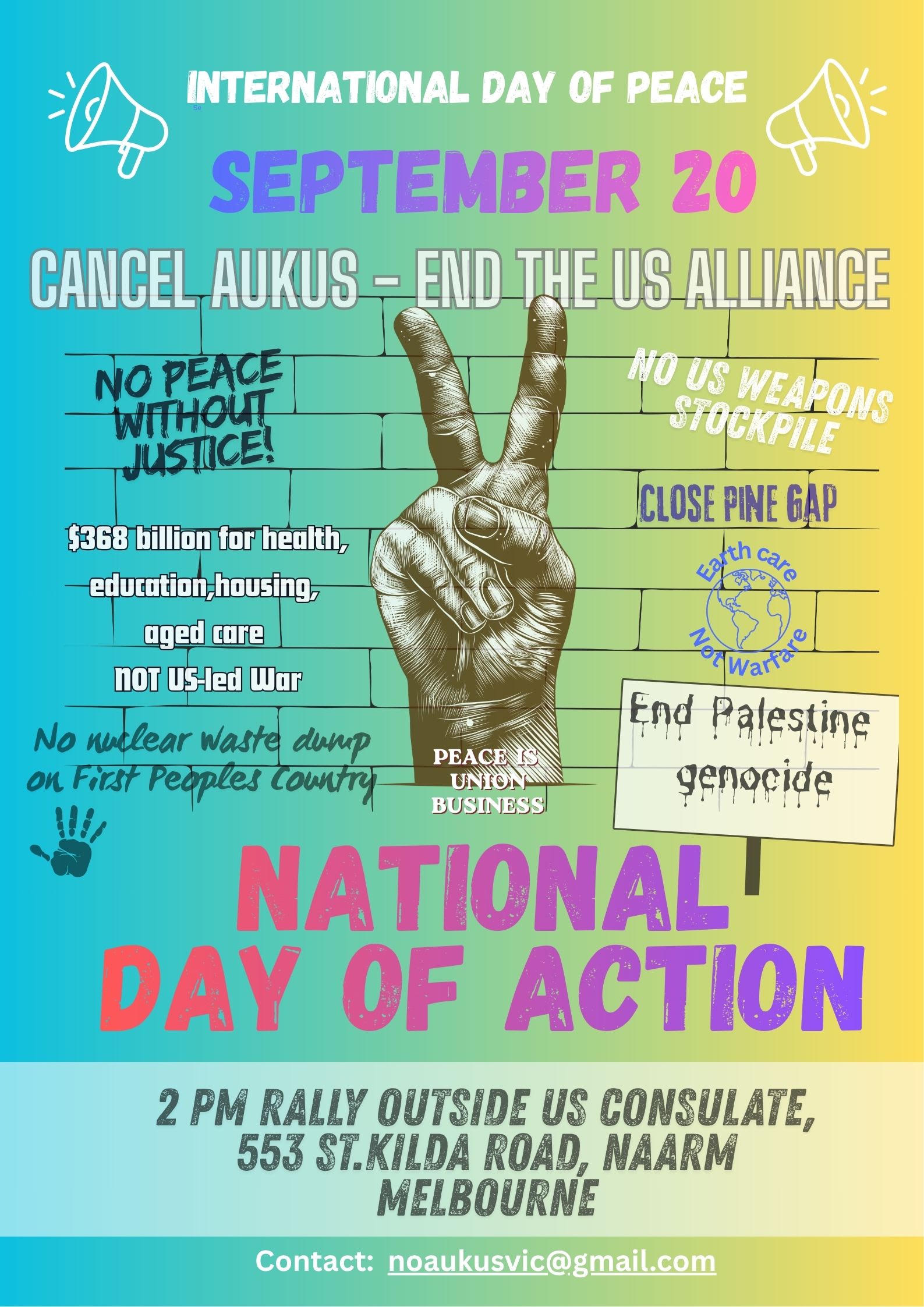
20 September –National Day of Action in Melbourne on the International Day of Peace

Help Aunty Sue Protect Her Land and Sacred Sites From Destructive Rocket Testing.
.

Australians deserve the truth
about
AUKUS – https://aukuspublicinquiry.com/
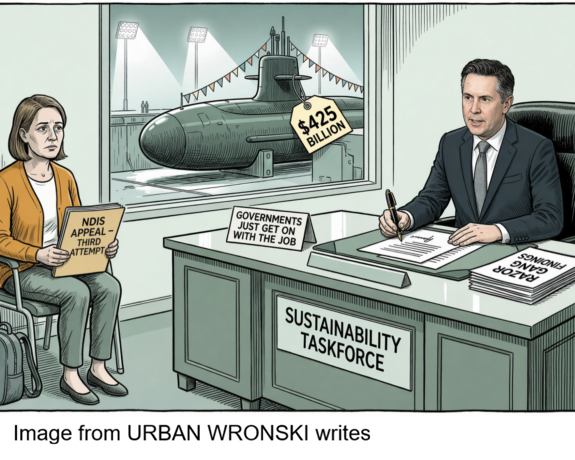

PETITION – To: Prime Minister Anthony Albanese and the Australian Labor Government

of the week – Australians for War Powers Reform (AWPR)
To see nuclear-related stories in greater depth and intensity
 Antinuclear