Andrew Fowler’s book Nuked: The submarine fiasco that sank Australia’s sovereignty critically examines the decision by the Australian government – under the leadership of Liberal prime minister Scott Morrison – to enter into the most expensive military acquisition agreement in Australia’s history.
On September 15, 2021, Australia signed a trilateral security agreement with the US and the United Kingdom, known as AUKUS.
The selling point was that Australia would acquire nuclear-powered submarines to replace its ageing Collins-class conventionally-powered fleet. The cost? $368 billion – and possibly, the sovereignty of the nation.
Amid a deep web of lies, deception and media spin, Fowler painstakingly unpacks the extensive efforts Morrison took to deceive the French government as he concocted a highly secretive plan to acquire nuclear submarines.
A mission that, Fowler suggests, has led not only to a massive financial commitment but has ultimately “sunk” Australian sovereignty.
Fowler is well-placed to offer such a deeply penetrating account into Australia’s decision to enter AUKUS. He is an award-winning investigative journalist having previously worked for the ABC’s Four Corners and Foreign Correspondent programs.
Through interviewing many of the main people involved and talking to sources in Paris, London, Washington, and Canberra, Fowler pieces together a devastating account of Australia’s latest military acquisition agreement.
Key themes
Throughout the book, Fowler addresses key themes from the Liberal Party’s long-term desire for closer ties to Washington, to the incremental loss of Australia’s sovereignty in the alliance, and the secrecy around the chain of events that led to the scuttling of the French submarine deal and negotiations for AUKUS.
Liberal Party and US alliance
Central to the story is the long-running narrative within the Liberal Party of Australia’s deep desire to become increasingly tied with the US, despite the lack of guaranteed reciprocity.
From the activation of ANZUS after 9/11, to Australia’s unquestioned following of the US into Iraq, to John Howard’s “captain’s call” on the F35 Joint Strike fighter, Fowler argues that successive Australian governments – particularly conservative Liberal governments – have often made questionable foreign policy decisions to bolster the relationship with the US.
To this end, he shows how even in the lead-up to signing the French submarine deal, there was a push among conservative elements of the Liberal Party to instead go for the inferior Japanese option because that would enable closer cooperation in US-led naval missions.
One of the other interesting issues pointed out was the degree to which the Labor Party felt hamstrung by the agreement. According to Fowler, this was largely due to Labor’s fear of being accused of being weak on matters of national security.
So, pushing back on the agreement was a political minefield ahead of the 2022 election.
Loss of sovereignty
Key to the book is an analysis of the impact of the AUKUS deal on Australia’s sovereignty.
Fowler begins by unpacking the somewhat lopsided history of the alliance as military cooperation grew closer – noting that the Australian government has not always been fully aware of the functions of major military installations like Pine Gap, whose operations, up until the 1970s, had been kept from the government.
Similarly, he touches on the use of other military infrastructure across Australia that is used to relay battlefield commands – and possibly in the future, a nuclear strike.
Fowler makes the case that while there are numerous instances in Australia’s history in which sovereignty has been challenged by alliance partners, AUKUS takes this problem to another level.
Citing a lack of expertise in nuclear-trained operatives, the lack of a domestic nuclear industry, and an acquisition contract in which Australia essentially ceded all negotiating rights, Fowler argues that Australia’s future defence will essentially be at the mercy of the US – a situation that Australia would not have found itself in under the French agreement.
Secrecy and issues in foreign policy
Perhaps one of the most significant issues has to do with the level of secrecy and lack of oversight that is evidently possible in making Australian foreign policy.
Fowler shows how Morrison went about sowing seeds of doubt in the agreement with the French, and used the media to create a sense of urgency by inflating the possibility of conflict with China so that the AUKUS announcement would be received with irreverence.
In doing so, it evaded public debate – and even debate within his own government by keeping the prospective deal secret even from Barnaby Joyce, then leader of the Nationals – on an issue that would ultimately come to undermine Australia’s sovereign capabilities for decades to come.
Conclusion
Nuked is essential reading for researchers and the broader public alike.
Fowler challenges the unquestioning faith in the US alliance held by many on the political right and advances a compelling narrative of Australia’s loss of sovereignty as it edges closer and closer to the US.
The book comes during a critical period in the Australia-US alliance. When written, Joe Biden was in the White House.
While many of the book’s criticisms speak to issues around the decimation of Australian sovereignty resulting from AUKUS, the re-election of President Donald Trump certainly amplifies the need for a critical re-evaluation of AUKUS as the US seems set on departing from its democratic ideals.
Significantly, Fowler raises important questions not just about the future viability of AUKUS, but of the processes of future military acquisition and the significant gaps in checks and balances when it comes to foreign policy decision-making.
The broader implications of AUKUS are immense. Given the political climate and the growing concerns around the viability of AUKUS, the importance of this book has grown.
Overall, Fowler provides the reader – whether an academic or lay person – with a well-written, comprehensively researched account of the events that resulted in the sinking of the French submarine deal through stealth-like manoeuvring to establish AUKUS.
The era of British nuclear testing in Australia was exrraordinary, and its secrets are still being uncovered. Because of ongoing British secrecy, we may not discover them all. In her talk Professor Tynan will examine the complex circumstances taht led the British first to Monte Bello Islands off the coast of Western Australia, then Emu Field and Maralinga in South Australia, to test their atomic weapons. The decision to do so followed the United States’ exclusion of Britain from nuclear weapons and energy R&D after World War II, ostensibly because of the detection of Manhattan Project spies. Australia acquiesced to the atomic tests without asking hard questions, and as a result considerable damage and suffering was inflicted, particularly on Indigenous people and service personnel.
Those hard questions only came decades later, and there are still many to be asked. The British conducted their testing with a greater emphasis on speed than safety. The recklessness of some of the tests carried out in Australia is stunning. Tynan will share specific stories of these dangerous tests and their deadly ramifications for Australians. She will also cover what happened after the British terminated the test series and deliberately misinformed the Australian government about the extent of contamination they left behind. All three test sites were abandoned without proper remediation. The aftermath led to a judicial enquiry, known in Australia as a Royal Commission, in the mid-1980s. This enquiry makred a major shift in Australian attitudes to the tests, and was an important mileestone in an era of uncovering and truth-telling that continues.
Professor Elizabeth Tynan is Head of the Professional Development Program at James Cook University’s Graduate Research School, where she teaches academic writing, editing, and critical thinking skills to postgraduate researchers. She is a former science journalist in both print and broadcast media. Her PhD from the Australian National University examined aspects of the British nuclear tests in Australia in the 1950s and 1960s.
It’s hard not to feel despair at the state of the world and those forces pushing us towards greater division and violence.
After the horrific anti-Semitic terror attack at Bondi Beach in December, Australia witnessed within hours a highly distasteful and co-ordinated attempt to politicise the massacre by many in the mainstream media and pro-Israel lobby.
Apparently it was the fault of the pro-Palestine marches since 7 October 2023 and criticism of the Jewish state’s actions in Gaza and beyond. There was no evidence for this, more a pre-determined vibe that joined dots that didn’t exist.
It was all deeply cynical and must be rejected by sane people everywhere. Anti-Semitism is an ancient disease and will be fought vigorously. Talking about Israeli war crimes and genocide in Palestine is NOT anti-semitic (as much as many want to claim that it is).
(For a reasoned and compelling examination of anti-Semitism, what it is and what it certainly is not, I recently read this fantastic book on the subject, On Anti-Semitism: A Word in History by historian Mark Mazower).
Now is the time for sober and reasoned conversations about Palestine, free speech and the egregious attempts to shrink the public space for honest debate.
What needs to be repeated ad nauseam: Israeli criminality, live-streamed to our phones for 2+ years, plus the Zionist lobby’s insistence on curtailing free speech is leading to way more anti-Semitism in the wider community. That’s the conversation that’s rarely had.
It’s a period where most in the mainstream media have shown themselves to be utterly unwilling, unable or ignorant of the threat of the far-right, the growing collusionbetween Israel and global fascism and Big Tech oligarchy.
Corporate media won’t save us.
Independent media and voices have never been more important………………………..
Since the Bondi terror attack, I’ve spoken out extensively about the weaponisation of Jewish trauma in the service of draconian and racist policies + ideas.
I recently launched The Antony Loewenstein Podcast, a weekly show with comments and interviews on issues of the day. It’s available on YouTube, Spotify and Apple. I’m also now on TikTok.
Amongst the many types of new independent journalism, my favourite is Raw, Rude and Angry, a type that would never have got into conventional “mainstream” media, which keeps up the facade of respectability (even while often condoning immoral lies and pretensions). Now there are lots and lots of raw, rude, and angry articles, and “social media” messages. I certainly don’t like them all, even when I sometimes empathise with the feelings expressed.
Where I do like raw, rude and angry, is where I can see that there is a genuine, valid, feeling of outrage, and especially where there are facts discussed, and information and sources given, too. Where it is clear that the writer has done their homework. Now these types of articles are few and far between, but their authors become popular, as their message resonates with readers, who are fed up with mainstream media’s often bland and uncaring coverage of the atrocities going on in the world. And because they are an accurate commentary on what is happening.
Enter Caitlin Johnstone, who is the absolute star of this genre, if it is now a genre. Caitlin is an Australian, who describes herself as a “bogan socialist.” I won’t go here into just what “bogan” means – it is a sort of derogatory term, implying unsophistication – and yet – there’s a hint of natural wisdom, unspoilt by the mask of etiquette. In Caitlin’s work, where profanities pop up, there’s an uncanny atmosphere of a background of thorough research having been done, by a highly educated person.
I think that is why Caitlin has become a controversial figure, much criticised, and seen as very “left-wing.” I don’t know about you, but to me, the accusation of “left-wing” has very little meaning nowadays – and seems to be applied to anyone who has a compassionate, humanitarian outlook.
So, Caitlin Johnstone’s work is having an impact, one way or the other. Her up-to-date commentary on international politics, Gaza, Venezuela, Zionism, Iran – includes information on international law, history, and current events, and is sprinkled with her powerful and compassionate opinions. Her January 12th article, The Imperial Crosshairs Move To Cuba, outlines Trump’s policies for Latin America, and Other Notes:
“Now he’s advancing every CIA/neocon agenda known to man in the middle east and Latin America with the goal of global domination as life in the US gets worse and worse.”
Other Notes discuss Palestine, Iran, and our right to dissent:
“Fuck Israel, free Palestine. Say it loud and say it often, because you won’t have the right to say it much longer.”
Of course, people are offended at her language. But I suspect that they are more offended by the difficult truths that she is explaining in a complicated subject like the protest movement in Iran.
“Yelling “Muslims bad!” does not magically erase Israel’s abuses or address the grievances of its critics”
I haven’t found many journalists who can manage this conjuring trick of being across current affairs while writing in an incisive, outrageous, style. Rare in alternative media, they’re of course rare in mainstream media. Meghan Mangrum of the Chattanooga Times Free Press showed the emotional views about the killing of George Flloyd – “Mistreated. Unappreciated. Hated. Scared.” I can’t, at present, find any writer who compares with Caitlin Johnstone.
It has usually been a general principle that journalists, especially reporters, should aim for just reporting facts, and avoid giving their opinions. In reality, that’s never been easy – the mere inclusion or exclusion of certain facts, or statements, can imply opinion. And there has been scholarly discussion on the merits or otherwise of emotion, in journalism, and even a case for how anger can help you produce better journalism.
Well, that was then, and this is now. I think that we have entered a new era of international politics with changes happening at disturbing speed. People are confused about what is going on and what to think about it, what judgment to make. The current upheaval in Iran is the most obvious example at the moment.
Writers like Caitlin Johnstone, whether one agrees with them or not, do clarify a point of view, and one that is different from the conformity imposed by the corporate media. They hold power to account in a way that is easier to understand, compared with the scholarly approach of some longform critics of Western governments. So, I think that raw, rude, angry writings have a valuable role in today’s journalism.
This matters because Australia is rehearsing for bigger targets. The propaganda model deployed against Venezuela, demonisation, economic warfare disguised as humanitarian concern, manufactured democratic pretexts for intervention, is being retrofitted for China. The patterns are identical; only the scale differs.
Venezuela is the laboratory. The techniques perfected there, demonisation, selective omission, ideological framing, strategic amnesia, are being scaled up for larger targets: China, Russia, Iran, any country that challenges United States dominance.
THE INVISIBLE BLOCKADE: How Media Made Economic Warfare Disappear
The Vanishing Act
In February 2019, millions watched in horror as Venezuelan security forces appeared to torch trucks carrying humanitarian aid on the Colombian border. CNN’s cameras were on hand to capture the flames. For The New York Times, it was proof of Maduro’s “cruelty.” Politicians from Marco Rubio to Nancy Pelosi cited the incident as proof that intervention was needed. Video analysis later contradicted that narrative.
The story just was not true. But the lie was given a long run. Weeks later, the New York Times quietly admitted the fire was started by an opposition protester’s Molotov cocktail; a single paragraph buried deep in a longer piece. The original story, complete with inflammatory images, had already done its work: manufacturing consent for economic strangulation that would kill tens of thousands.
Mainstream reporting of Venezuela is the story of how consent gets manufactured in 2025. Forget naff Soviet style propaganda. Instead, train your eyes on a bee dance of selective coverage, ideological framing and strategic amnesia.
Venezuela wins a golden globe for best propaganda show of the 21st century: convincing most of us that United States economic warfare does not exist.
The Crime That Dare Not Speak Its Name
Ask any Aussie what is happening in Venezuela. Chances are you will get a rehearsed answer: socialist dictatorship, economic collapse, humanitarian crisis. Raise the role of United States sanctions and you will often get silence.
In Caracas, you could not miss it. From 2017 to 2020, Washington imposed more than 350 unilateral coercive measures against Venezuela. The Trump administration bragged about a “maximum pressure” campaign, as if it were running a fracking operation and not ruining the lives of millions of innocent bystanders. Treasury Secretary Steven Mnuchin said the United States was targeting Venezuela’s oil sector “to prevent further diverting of Venezuela’s assets by Maduro.”
The message to Caracas was clear: “We are going to starve your people until they revolt and overthrow the government.” Trump’s crew echoes a Latin dictatorship with its junta of elite billionaires, corporate and military figures such as John Kelly and James Mattis. Trumpism is populist braggadocio and bluff.
The same men must know that they have blood on their hands. A 2019 study by economists Mark Weisbrot and Jeffrey Sachs at the Center for Economic and Policy Research estimated that United States sanctions caused around 40,000 deaths between 2017 and 2018 alone. The authors described the measures as collective punishment. Former United Nations Special Rapporteur Idriss Jazairy called such sanctions “crimes against humanity.”
United Nations expert Alfred de Zayas, who visited Venezuela, called the sanctions “economic warfare” and recommended that the International Criminal Court investigate United States officials for possible crimes against humanity. He likened modern sanctions to medieval sieges.
You did not read much of that in the Sydney Morning Herald, did you?
The Propaganda Model in Action
Noam Chomsky and Edward Herman’s Manufacturing Consent outlines filters through which media coverage passes: ownership, advertising, sourcing, flak and ideology. Venezuela’s coverage demonstrates every single one.
Ownership filter: corporate media outlets have material interests in maintaining the neoliberal economic order Venezuela challenged. When Hugo Chávez increased royalties, nationalised key assets and used oil revenues for social programs rather than shareholder profits, he made powerful enemies. Coverage shifted from sceptical to openly hostile.
Sourcing filter: a 2018 FAIR study of United States media coverage found that stories on Venezuela mostly quoted United States officials and opposition figures. Government representatives were largely invisible. International observers who validated aspects of Venezuelan elections rarely appeared. Economists like Weisbrot who questioned the sanctions narrative were pushed to marginal outlets.
Instead, audiences were fed Marco Rubio, Elliott Abrams of Iran Contra fame and Juan Guaidó, a hack who declared himself Venezuela’s president with United States backing.
The flak machine: journalists who deviated from the script faced immediate pushback. When Abby Martin or Max Blumenthal reported from Venezuela and challenged mainstream narratives, they were smeared as “Maduro apologists” or “useful idiots.” The example kept most other reporters in line.
Ideological filter: the anti socialist smear was mandatory. Every story about Venezuelan food shortages led with “socialist mismanagement.” There was little mention that Saudi Arabia, a United States ally, was simultaneously creating mass starvation in Yemen through a blockade that killed hundreds of thousands.
The framing is not about humanitarian concern. It is about ideology.
The Guaidó Gambit
Nothing demonstrates consent manufacturing quite like the Juan Guaidó affair.
On 23 January 2019, this political unknown swore himself in as “interim president” on a Caracas street. Within minutes, the United States, Canada and major Latin American governments recognised him. Corporate media followed at breakneck speed, describing him as Venezuela’s interim president, without quotation marks.
Unfortunately for the narrative, the facts were less convenient. Guaidó’s party had boycotted the previous presidential election. His constitutional claim was dubious. His “interim presidency” had no control of government, no command of the armed forces, no democratic mandate. He was a US-backed figure on standby for regime change.
For two years, Guaidó staged photo opportunities while much of the media treated his fantasy regime as real. He appointed “ambassadors” to empty buildings. He fronted a “humanitarian aid” push that former senior United States officials later admitted was a regime change ploy. He even backed a failed mercenary invasion, a Bay of Pigs style debacle, that landed with a resounding thud in May 2020.
Then something amazing. Guaidó disappears off-stage. No post mortems examined how spectacularly the media was gulled. No accountability for presenting a ludicrously inept United States puppet as a democratic leader. Just sudden, collective amnesia.
By 2023, even much of the opposition had jilted Guaidó. The sanctions stayed, nevertheless, grinding millions into poverty. And seven million into exile.
The Australian Complicity
Australia has been a keen player in US myth. The Morrison government, which itself blurred fact and fiction, recognised Guaidó and joined the Lima Group, a United States orchestrated coalition promoting regime change. At the United Nations, Australia reliably lined up with Washington against Caracas.
And our media? Lockstep, lickspittle compliance.
The ABC, our “independent” public broadcaster, mostly echoed US narratives. SBS, with its multicultural mission, rarely interviewed Venezuelans who support their government, although millions do, despite everything. Murdoch outlets adored a military tattoo and beat the skins off their intervention drum kit.
When Venezuela held presidential elections in July 2024, The Australian and its claque called them fraudulent, even before votes were counted. Opposition claims of victory were reported as fact. Government claims were “disputed.” The opposition refused to present precinct level evidence to Venezuela’s electoral council, but that got scant coverage.
The ABC, our “independent” public broadcaster, mostly echoed US narratives. SBS, with its multicultural mission, rarely interviewed Venezuelans who support their government, although millions do, despite everything. Murdoch outlets adored a military tattoo and beat the skins off their intervention drum kit.
When Venezuela held presidential elections in July 2024, The Australian and its claque called them fraudulent, even before votes were counted. Opposition claims of victory were reported as fact. Government claims were “disputed.” The opposition refused to present precinct level evidence to Venezuela’s electoral council, but that got scant coverage.
International observers, including the Carter Center, raised concerns about pre-election conditions but did not declare the vote fraudulent. Nuance vanishes in translation.
This matters because Australia is rehearsing for bigger targets. The propaganda model deployed against Venezuela, demonisation, economic warfare disguised as humanitarian concern, manufactured democratic pretexts for intervention, is being retrofitted for China. The patterns are identical; only the scale differs.
The Invisible Blockade
The most extraordinary achievement of this propaganda campaign is rendering economic warfare invisible.
United States sanctions do not just prohibit American companies from trading with Venezuela. They impose secondary sanctions on any company worldwide that does business with Venezuela’s oil sector, central bank or state enterprises. This blocks Venezuela from:
Importing medicine and medical equipment
Accessing international financial systems for humanitarian purchases
Selling oil to finance imports
Receiving spare parts for refineries and infrastructure
Engaging in normal international commerce
When a Venezuelan child dies because hospitals cannot get dialysis equipment, that is not “socialist failure.” That is economic strangulation by the world’s dominant power. US officials admit that sanctions should cause enough suffering to trigger political change.
Yet media coverage presents Venezuela’s crisis as self inflicted, the inevitable result of Chavista economic policies and corruption. Sanctions are mentioned, if at all, as afterthoughts; minor irritants rather than a central driver of collapse.
This inversion of cause and effect is propaganda at its most sophisticated. It does not require outright lying, just selective emphasis. Mention sanctions late. Lead with empty supermarket shelves. Quote opposition politicians blaming socialism. Ignore United Nations experts describing collective punishment. Repeat.
The result is that we support sanctions without understanding that we are supporting collective punishment of civilians for political ends.
The Double Standard
Ideological filtering is highlighted by comparing coverage of Venezuela and Saudi Arabia.
Saudi Arabia is an absolute monarchy. There are no competitive national elections. Women gained the right to drive only in 2017. Political dissidents are imprisoned, tortured or murdered. Journalist Jamal Khashoggi was dismembered with a bone saw. The Saudi led coalition has inflicted a catastrophic war on Yemen that has killed hundreds of thousands through violence and starvation.
Yet Saudi Arabia remains a close United States ally. Australian media do not call for sanctions. The ABC does not run rolling segments on Saudi humanitarian disasters. Crown Prince Mohammed bin Salman is often treated as a moderniser, not a dictator.
Venezuela, by contrast, holds regular elections; flawed and contested, certainly, but elections nonetheless. International observers have repeatedly validated Venezuelan electoral processes as technically sound, even while questioning campaign conditions. Venezuela has not invaded neighbours or created famines abroad.
But Venezuela challenged neoliberal orthodoxy and United States dominance over its oil. That is the unforgivable heresy.
Or take Honduras, where a United States backed government emerged from a coup, presides over extreme violence and corruption, and fuels migration through poverty. United States aid continues. Media attention is minimal. No sanctions. No serious calls for intervention.
Humanitarian concern is theatre. The metric that matters is compliance with United States interests.
What Gets Memory Holed
Propaganda does not just create false narratives. It makes inconvenient facts disappear. A short list of what Australian coverage of Venezuela tends to omit:
The achievements: between 1999 and 2012, poverty fell from 50 per cent to 25 per cent. Extreme poverty dropped from 20 per cent to 7 per cent. Infant mortality declined markedly. Malnutrition fell sharply. University enrolment went up. Literacy programs reached millions. Venezuela had one of Latin America’s lower levels of income inequality.
Those gains are now being reversed; primarily due to sanctions, oil price collapse and economic warfare, not the social programs that created them.
The coup attempts: Venezuela has endured repeated United States linked coup efforts. A 2002 coup briefly overthrew Chávez before mass mobilisation restored him. Opposition violence in 2014 and 2017 killed dozens. The 2020 mercenary incursion involved former United States special forces personnel. These are not conspiracy theories; United States officials have openly discussed regime change plans.
The oil price context: Venezuela’s economy relies on oil. When prices collapsed from more than 100 United States dollars a barrel in 2014 to under 30 dollars in 2016, the economy tanked, as any petrostate would. Norway, with stronger institutions, would struggle with that volatility. Yet media present Venezuela’s crisis as purely ideological.
The sanctions timeline: the economic crisis accelerated dramatically after comprehensive sanctions in 2017. Obama era sanctions were limited. Trump era sanctions moved into full economic warfare. The timing is hard to ignore unless you are corporate media.
The alternative: Venezuela has offered to negotiate, to hold elections with international supervision, to accept mediation. The United States repeatedly insists on Maduro’s resignation as a precondition. When Mexico and Uruguay proposed dialogue in 2019, the US and the Lima Group rejected it. The goal was never democracy; it was regime change.
The Propaganda Ecosystem
Modern consent manufacturing is more sophisticated than George Orwell imagined. It does not require central coordination or formal censorship. It emerges from institutional incentives, ideological assumptions and career pressures.
Journalists covering Venezuela face structural pressures:
Editors favour stories that fit existing narratives
Contradicting United States government claims invites flak from powerful sources
Career advancement comes from staying in institutional good graces
Departing from mainstream consensus risks being labelled “biased”
Stories that challenge dominant frames are buried or spiked
The result is self censorship that does not require overt control. Journalists internalise the pressures and avoid stories that might cause trouble. Editors spike pieces that challenge core assumptions. The spectrum of acceptable opinion narrows to a sliver.
Social media accelerates this dynamic. Nuanced analysis of sanctions demands sustained attention and complex thinking. “Dictator starves his people” fits neatly into a post. The dopamine driven attention economy marginalises the kind of deep reading needed to understand economic warfare.
Add “fact checkers” funded by the same foundations prosecuting the information war, and dissent becomes “misinformation” in a self-reinforcing knowledge ecosystem.
Why This Matters for Australia
You might think Venezuela is distant and irrelevant to Australian concerns. You would be wrong on both counts.
First, Australia is practising. The propaganda model deployed against Venezuela, demonising leadership, emphasising enemy crimes while ignoring allied atrocities, masking economic warfare as humanitarian concern, is being prepared for larger targets.
Coverage of China already shows the same patterns. Replace “Maduro” with “Xi” and “socialism” with “authoritarianism” and you have the same playbook. The difference is that Venezuela cannot fight back. China can. The stakes are far higher.
Second, Australia is complicit. Our government joined the regime change coalition. Our media helped manufacture consent for economic warfare against civilians. Our citizens were persuaded to support policies that have killed thousands of Venezuelans, often without realising those policies exist.
That moral corrosion matters. If we can be convinced to support collective punishment in Venezuela, what will we not support? Where does it end?
Third, this reveals our media’s subordination to United States interests. The speed with which Australian outlets adopted Washington’s framing, the uniformity of coverage, the lack of critical distance, all suggest a serious sovereignty problem. Not sovereignty over resources or territory, but over the information ecosystem that shapes public understanding.
When Australian media cannot or will not challenge United States propaganda, we are not really independent. We are a province of empire, feeding our citizens pre digested narratives manufactured offshore.
The Resistance to Knowing
Perhaps the most depressing aspect of propaganda is how resistant people become to counter evidence. Present Australians with facts about sanctions causing Venezuelan deaths and watch the mental gymnastics.
“Maduro could end the sanctions by stepping down.” So collective punishment of civilians is acceptable if the goal is regime change?
“The economy was already failing.” True, and then sanctions made it catastrophically worse. That is the point.
“Venezuelans are fleeing.” Largely due to economic collapse driven in part by sanctions. Also, why is there no matching call for regime change in Honduras, which generates far more refugees per capita?
“It is about democracy.” Then why do we support Saudi Arabia, Egypt and dozens of other autocracies?
The resistance is not about evidence; it is about identity. Accepting that United States and Australian policy deliberately starves civilians requires confronting uncomfortable truths about our democracies, our media and ourselves. It is easier to cling to stories about dictators and failed socialism.
This is how propaganda succeeds. Not mainly by convincing people of lies, but by making the truth psychologically unbearable.
The Path Forward
So what is to be done?
For journalists: break the pack. The Guaidó debacle showed that challenging official narratives does not just serve truth; it protects professional credibility. Reporters who questioned the regime change fantasy now look prescient. Those who amplified it look like stenographers.
Demand evidence for government claims. Apply consistent standards across countries. Interview diverse sources, including people who challenge Western narratives. Remember that the job is to afflict the comfortable, not manufacture consent for economic warfare.
For media consumers: develop propaganda literacy. When every outlet says the same thing using the same framing, that is not validation; it is synchronisation. Seek alternative sources. Read United Nations reports. Follow independent journalists who have actually visited Venezuela, not desk bound opinion writers recycling State Department talking points.
Ask the questions media outlets avoid. Who benefits from this narrative? What is being omitted? Are we applying consistent standards? What would coverage look like if ideological positions were reversed?
For citizens: demand accountability. Australia joined a regime change coalition that killed thousands through economic warfare. That happened in our name. Our government recognised a “president” who never won the presidency. Our media cheered it on. None of this has been reckoned with.
Write to politicians. Challenge media outlets. Support independent journalism. Refuse the memory hole. Because Venezuela is practice. The same model will be deployed against larger targets, with potentially catastrophic consequences.
Conclusion: The Test We Are Failing
Venezuela represents a test of democratic societies’ capacity for independent thought in the face of sophisticated propaganda. We are failing spectacularly.
A superpower has spent years waging economic warfare against a smaller country that dared to challenge neoliberal orthodoxy. That warfare has killed tens of thousands of civilians, displaced millions more and caused immense suffering. It violates international law and basic morality.
Financial software
Yet most Australians do not even know it is happening. They have been told that Venezuela’s crisis is self inflicted, the inevitable result of socialist economics. They have been trained to support collective punishment without recognising it as such.
That is the triumph of manufactured consent. Not crude lies, but sophisticated narrative construction that makes economic warfare invisible, transforms victims into villains and converts citizens into unwitting accomplices.
Herman and Chomsky wrote Manufacturing Consent in 1988, documenting how media serve power. Decades later, the model is more sophisticated, more effective and more dangerous. The digital information ecosystem has not liberated us. It has created new mechanisms for propaganda.
Venezuela is the laboratory. The techniques perfected there, demonisation, selective omission, ideological framing, strategic amnesia, are being scaled up for larger targets: China, Russia, Iran, any country that challenges United States dominance.
The question is whether we will recognise the pattern before it is too late. Will we demand independent journalism and honest accounting of our governments’ actions? Or will we continue sleepwalking into support for economic warfare, regime change and potentially catastrophic conflicts, never quite realising we have been played?
The invisible blockade around Venezuela is not just physical. It is cognitive. And the most dangerous walls are the ones we cannot see.
they’re using a tragic mass shooting as a political cudgel against people who believe Palestinians are human beings. This is just one more cynical manipulation aimed at protecting Israel from criticism so that it can inflict more violence and suffering upon the world.
Looks like some kind of memo went out or something, because pro-Israel outlets and individuals are all loudly amplifying one specific talking point about the Bondi Beach shooting.
“I have a simple question for leftists after the antisemitic shooting in Australia. What do you think ‘globalize the intifada’ means?” ~ US Senator Ted Cruz
“That attack in Sydney is exactly what it means to ‘globalize intifada.’ We saw the actual application of the globalization of intifada in Sydney.” ~ New York City Mayor Eric Adams
“These are the results of the anti-Semitic rampage in the streets of Australia over the past two years, with the anti-Semitic and inciting calls of ‘Globalise the Intifada’ that were realized today.” ~ Gideon Sa’ar, Foreign Minister of Israel
“When you refuse to condemn and only ‘discourage’ use of the term ‘Globalize the Intifada,’ you help facilitate (not cause) the thinking that leads to Bondi Beach.” ~ Former US antisemitism envoy Deborah Lipstadt (addressing New York City Mayor Elect Zohran Mamdani)
“What on earth do you think globalise the intifada means? And can’t people see the link between that kind of rhetoric and attacks on Jewish people as Jewish people? Because that’s what really struck at the heart of Jewish people in our country today — an attack on Jewish people organising around Hannukah, coming together as Jewish people.” ~ UK Health Secretary Wes Streeting
“Why is it still allowed? What is the meaning of globalise the intifada? I’ll tell you the meaning… it’s what happened on Bondi Beach yesterday.” ~ Ephraim Mirvis, Chief Rabbi of the United Kingdom
“Calls to ‘globalise the intifada’ and chants of ‘from the river to the sea’ are not abstract or rhetorical slogans. They are explicit calls for violence, and they carry deadly consequences. What we are witnessing is the inevitable outcome of sustained radicalisation that has been allowed to fester under the guise of protest.” ~ Israeli embassy in the UK
“This is what happens when you ‘globalize the intifada.’” ~ Newsweek editors
“This was not an isolated act of violence — it was the culmination of ‘globalise the intifada’ rhetoric that has been building around the world since October 7.” ~ Yoni Bashan, The Times
“For those who’ve been marching these past few years demanding to ‘globalise the intifada’ this is a barbarous anti-Semitic consequence of their pro-Islamist stupidity.” ~ Former BBC anchor Andrew Neil
“When people call to ‘globalise the intifada’, this is what they are calling for: dead Jews, terrorism and families shattered forever.” ~ Campaign Against Antisemitism spokesperson
“Taking a stand against antisemitism after Bondi Beach should begin with an unequivocal recognition that ‘intifada’ rhetoric is hate speech.” ~ The Bulwark’s Cathy Young
“It would be great if those who have been shouting ‘Global Intifada’ would revisit that phrase right now. It is not a ‘harmless left wing slogan.’ It is a call to blame — and kill — Jews who have nothing, absolutely nothing to do with the actions of the Israeli government.” ~ Spiritual guru and former US presidential candidate Marianne Williamson
Of course, these outlets and individuals do not actually care about the phrase “globalize the intifada”. If pro-Palestine activists had never chanted that slogan, pro-Israel spinmeisters would be focusing on a different line today. They are not trying to stop chants which they perceive as dangerous, they are trying to stomp out criticism of Israel’s genocidal atrocities.
As The Intercept’s Natasha Lennard wrote regarding the aforementioned Bret Stephens piece, “It’s all done in the name of fighting antisemitism by conflating the worst kinds of violent anti-Jewish bigotry, like what we saw in Bondi Beach, with any criticisms of Israel and its actions. To so much as say Palestinians ought to have basic human rights, in this view, becomes a deadly attack on Jewish safety.”
The term “intifada” means to “shake off” and “rise up”, and as Middle East Eye’s Craig Birckhead-Morton and Yasmin Zainab Bergemann explained last year, intifadas have historically included nonviolent resistance. Saying “globalize the intifada” isn’t calling for people to massacre Jewish civilians around the world, it’s advocating resistance to the power structure which incinerated Gaza and continues to inflict abuse upon Palestinians and any other population which doesn’t bow to the interests of the empire.
And the people scaremongering about this phrase know this. They’re fully aware that they’re using a tragic mass shooting as a political cudgel against people who believe Palestinians are human beings. This is just one more cynical manipulation aimed at protecting Israel from criticism so that it can inflict more violence and suffering upon the world.
As Em Hilton wrote for the Israeli outlet +972, “It is obscene how quickly the right has seized on this horror to advance an Islamophobic, anti-Palestinian agenda. And it is disgusting to see Israel’s politicians almost gleeful at the opportunity to distract from their genocidal onslaught in Gaza by using our pain and grief as a political weapon.”
Israeli Prime Minister Benjamin Netanyahu rarely passes an opportunity to comment upon the way Jews in other countries are treated. While the manic hatred directed against Jews remains one of history’s grotesque legacies, opportunism in the Netanyahu government is a ready instinct. With a customary sense of perversion, Netanyahu has managed to mangle Israeli policy, his own political destiny and the interests of Jews in a terrible, terrifying mix. The broad stroke charge of antisemitism is the front name of this venture, and it conveniently presents itself whenever Israeli policy requires an alibi when pursuing particularly unsavoury policies: massacre, starvation and dispossession of Gazans; the continued destruction and intended eradication of a functional Palestinian entity; efforts to prevent criticism of its settler policies in other countries.The slaughter of 15 people enjoying the festivities of Hanukkah on Sydney’s famed Bondi Beach by the father-son duo of Sajid and Naveed Akram, presented a political opportunity. Having already accused Australian Prime Minister Anthony Albanese of being a “weak politician who betrayed Israel and abandoned Australia’s Jews” earlier in the year, Netanyahu readied another verbal lashing. In prickly remarks made at a government meeting in Dimona, the Israeli PM accused his Australian counterpart of being a leader who had “replaced weakness and appeasement with more appeasement.” His “call for a Palestinian state pours fuel on the antisemitic fire.” It had rewarded “Hamas terrorists” and emboldened “those who menace Australian Jews and encourages the Jew hatred now stalking your streets.”
Other Israeli politicians also decided that an unmeasured though monstrous antisemitism stalked the island continent, spawning the Bondi killings. “We felt and experienced the intense antisemitism directed against the Jewish community in Australia,” claimed Aliyah and Integration Minister Ofir Sofer. Diaspora Affairs Minister Amichai Chikli thought it appropriate to send “a delegation of experts in emergency response” to Australia, promising to “stand with the Jewish community in this difficult time and to ensure that we, as the State of Israel, are giving them everything within our ability.”
Israeli Foreign Minister Gideon Sa’ar had a list of lecturing points for his Australian counterpart, Penny Wong. There had to be, he stated with a teacherly certitude, “a real change in the public atmosphere.” This required culling phrases and expressions that had been expressed on behalf of the Palestinian cause in public debate and protest. “Call such as ‘Globalize the Intifada,’ ‘From the River to the Sea Palestine Will be Free,’ and ‘Death to the IDF’ are not legitimate, are not part of the freedom of speech, inevitably lead to what we witnessed today.”
In Australia, the acceptance of such positions, and the watering down of the Palestinian cause, was rapidly normalised. A procession line of commentators proceeded to state begrudgingly that Israeli government policy could be criticised only to demonstrate how slim such latitude was. This firm, excruciating delineation was offered by Jeremy Leibler of the Zionist Federation of Australia: “Australians can criticise Israeli government policy, Israelis do it loudly and fiercely themselves. But delegitimising Israel’s right to exist, or slipping into a moral equivalence between a liberal democracy defending its citizens and a terrorist organisation that targets civilians, is something else entirely.”
Leibler’s semantic technique is important here, forcibly linking those who claim Israel has no right to exist to critics of Israel’s policy of self-defence after October 7, 2023 that has left 68,000 Palestinians dead, Gaza pulverised and an enclave on life support. At the instigation of South Africa, it is a policy that is being scrutinised by the International Court of Justice as being potentially genocidal. It is a policy that has been deemed genocidal by the UN Independent International Commission of Inquiry on the Occupied Palestinian Territory along with a clutch of notable human rights organisations, including the Israeli outfit B’Tselem. Arrest warrants have also been issued by the International Criminal Court for Netanyahu and his former Defence Minister Yoav Gallant, citing alleged war crimes and crimes against humanity.
Establishment voices from a long moribund press class are also of the view that not enough has been done by the Albanese government to combat a supposedly mad blight of antisemitism, seemingly unique from the other jostling hatreds. (Islamophobia, anyone?) The massacre, according to the unevidenced observation of veteran journalist Michelle Grattan, was “the horrific culmination of the antisemitism epidemic that has spread like wildfire in Australia.”
She noted, with grave disapproval, the failure to “formally” respond to the combative strategy proposed by the antisemitism envoy Jillian Segal, one that openly accepts the International Holocaust Remembrance Alliance’s stifling definition of antisemitism. Any official embrace of that definition – a point made by that definition’s originator, Kenneth Stern – would be a fashioned spear against free speech, censoring genuine criticism of Israeli policies. The Jerusalem Declaration, by way of contrast, notes that hostility to the Israeli state “could be an expression of an antisemitic animus, or it could be a reaction to a human rights violation, or it could be the emotion that a Palestinian feels on account of their experience at the hands of the state.”
Like most journalists wedded to the holy writ press brief and arid political interview, Grattan shows no sign of having been to a single protest condemning the murderous death toll in Gaza, or any gathering advancing the validity of Palestinian self-determination. Woolly-headed, she freely speculates. “Most of us did not recognise this fact, but this anti-Jewish sentiment must have been embedded in sections of the Australian community – the Hamas attack on Israel in October 2023 was the spark that lit the conflagration.” Her travesty of an effort to understand the attacks in Bondi becomes evident in cod assessments of various protest marches and demonstrations across Australian university campuses. Without even a suggestion of evidence, she claims that “university encampments” proved “intimidating for Jewish students and staff.” Those Jewish students and staff more than willing to engage in those encampments mysteriously warrant no mention. Efforts on the part of cloddish university managers to harass, suspend and censor students expressing pro-Palestinian causes don’t seem to interest Grattan either.
With laziness, she snacks on the propagandistic samples provided by Israel’s publicity relations buffet, referring to unspecified “others” who believed that the Albanese government’s recognition of a Palestinian state stoked local antisemitism. Foreign Minister Wong’s failure to “visit the sites of the 2023 atrocities when she went to Israel early last year was much criticised in the Jewish community.”
Thus far, Israeli propagandists have shamelessly badgered their opponents down under into accepting a streaky narrative that would fail to survive judicial, let alone historical scrutiny.The agenda is clear enough: the inoculation of Israel against international opprobrium. Much will now depend on Albanese’s fortitude, if he, and his ministers, can find it.
My roommate in rabbinical school Rabbi Yaakov Levitan signed his last Facebook message to me with the words “peace and love brother”. He lived that way as a Jewish community leader in Sydney. Terrorists on Bondi Beach murdered him as he was spreading light at a Chanukah gathering. In the chaos, Australian civilian Ahmed Al Ahmed ran toward one of the gunmen, tackled him and wrestled away his weapon, saving lives. He took two bullets and is in critical but stable condition. He is a hero.
But the media’s fixation on his Syrian and Muslim identity reveals an implicit bias that this kind of heroism — especially the kind that saves Jewish lives — is not to be expected from a Muslim.
Major outlets led with Ahmed’s religion before describing his courage. Headlines repeatedly framed him as a “Muslim man” who stopped a shooter, as if his faith explained the story rather than his actions. Some reports highlighted his Syrian background in the opening lines, treating that identity as the headline and his bravery as a footnote.
Such framing matters. The Islamophobia implicit here does not lie in the praise. It lies in the assumption. The coverage assumes that a Muslim risking his life to save Jews defies expectation. It treats decency as anomalous when it comes from a Muslim man. When goodness from Muslims becomes newsworthy because of who they are, not what they do, the media confesses how low its baseline expectations have fallen.
The reaction went further. Commentators and viral posts tried to erase Ahmed’s identity altogether. Some insisted he could not be Muslim. Others claimed he must be Christian. Several outlets reported on this reaction, amplifying the idea that Muslim heroism required explanation or denial. Still others highlighted online attacks branding Ahmed a “traitor” for saving Jews, again focussing on his faith as a problem rather than his courage as the point.
These narratives do real damage. They reinforce the idea that Muslim morality and Jewish safety stand in tension. They are wrong.
Recent history proves it. On 7 October 2023, Hamas carried out the deadliest massacre of Jews since the Holocaust. Amid the carnage, Arab and Bedouin Muslims risked their lives to save Jewish civilians under fire. Four Bedouin men from Rahat pulled 30 to 40 Jews out of danger near Kibbutz Be’eri while bullets flew. They asked no questions. They acted.
Surveys after the attack showed that large majorities of Arab Israelis, Muslim and Druze rejected the attacks and backed rescue and volunteer efforts. Much of the media coverage barely mentioned those findings because they disrupted the simple story line.
At the same time, honesty requires clarity. Antisemitism has surged worldwide, and Muslim leadership too often fails to condemn it clearly, publicly and consistently. Silence creates moral fog. When Jews hear hesitation instead of unequivocal rejection of Jew-hatred, trust is eroded and extremists gain ground. This is not a uniquely Muslim failure. Antisemitism infects many ideologies, religions, and political movements. Everyone must do more.
Ahmed did not issue a statement. He did not hedge. He acted. He showed what moral clarity looks like in real time. He affirmed, without words, that Jewish lives matter. He should not be the exception. He should be the rule.
Ahmed’s bravery does not erase antisemitism. It does not remove armed guards from synagogues. It does not bring my friend Yaakov back. But it does set a standard. If we want a world where such courage becomes ordinary, every community must raise its expectations. Muslim leaders must condemn antisemitism without caveat. Jewish communities must resist judging entire populations by their worst voices. And the media must stop treating Muslim decency as an anomaly and start treating it as normal.
Ahmed Al Ahmed did what any decent human being should hope to do. The tragedy is that his courage felt unexpected. It should not have. May Ahmed’s courage stand as the rule, not the exception.
Eli Federman has written for the Wall Street Journal, New York Times, USA Today, Reuters and other media outlets on society, religion and media bias.
When journalists internalise the state, the state no longer needs to silence them.
Australia has discovered the most polite form of censorship ever devised. No jackboots, no warrants, no midnight raids; just a quiet conversation, a “national security” reminder, and journalists voluntarily silencing themselves. Why pass laws when you can persuade the press to behave as though they already exist?
This is not satire. It is policy. And its blueprint comes straight from Whitehall.
The Quiet Request
Three weeks after Labor took office in June 2022, officials in Attorney‑General Mark Dreyfus‘s department reached across hemispheres to Britain’s Ministry of Defence. Their purpose was not military cooperation, intelligence sharing, or treaty work. It was media control; specifically, how to make censorship unnecessary by convincing journalists to do it to themselves.
Freedom of Information documents show this was not curiosity. It was a virtual IKEA flat‑pack – imported, piece by bureaucratic piece, from the mother country to its former colony. The assembly instructions came straight from London. A spare Allen key always comes in handy.
2021–2022: Bureaucrats refined plans for a “similar role” in Australia.
May 2022: Secret roundtables with major editors were held. No minutes. No attendee lists. No sunlight.
June 2022: Dreyfus’s department formally requested London’s assistance.
The continuity is chilling. Liberal ministers started the project. Labor ministers continued it. Bureaucratic inertia was the constant.
This isn’t a partisan conspiracy. It’s worse: a bipartisan agreement that journalists must learn to censor themselves politely.
How Britain Silences Without Silencing
DSMA is a masterpiece of bureaucratic subtlety. It issues “advisories,” not bans. Journalists “consult” before publishing, rather than submit for approval. A discreet military officer suggests what to omit “for national security,” while the state never dirties its hands with formal censorship laws.
The committee’s proceedings are confidential. Its members are hidden. Its advice is non‑binding. Yet it boasts a 90% success rate persuading journalists not to publish.
Dissent hasn’t been criminalised; it has been professionalised. To ignore DSMA advice invites prosecution under the Official Secrets Act – or, more immediately, career suicide. The threat is legal, but the engine is cultural.
This is what Canberra admires: not censorship, but managed consent. The state doesn’t punish critics. The critics simply internalise the state. Intuit the boss’ wishes, a bit like a Murdoch editor.
And now? His department has chased a censorship model whose brilliance lies in never admitting it exists.
This isn’t hypocrisy. It’s absorption. Dreyfus didn’t renounce principle; he was subsumed by machinery. You don’t have to betray your beliefs if the institution performs the betrayal for you.
He thought he was protecting national security. What he safeguarded was secrecy itself.
The Machinery
This project did not dissolve when ministers changed. It doesn’t depend on elections. The relationships with UK Defence persist. Editors who attended closed‑door sessions still hold their seats. Bureaucrats continue to discuss frameworks for “voluntary advisory mechanisms.”
And the scaffolding grows stronger through parallel controls:
Harsher secrecy offences that criminalise public‑interest reporting.
Discussion papers on journalist registration systems.
Individually, each seems modest. Together, they form something like a velvet‑lined cage.
The Respectable Mask
Systems like DSMA need legitimacy. Enter Peter Greste: a journalist jailed in Egypt, a symbol of press freedom, a moral compass. Conference transcripts show him engaging with advocates of reviving the Australian D‑Notice system, DSMA’s predecessor.
The argument attributed to him is seductive: pre‑publication consultation protects journalists from prosecution. Ask permission; avoid jail.
And in the process, a core civic principle collapses quietly under manners and moral suasion.
The Question
Australia must stop asking whether a DSMA system will be adopted. It already has been – culturally.
The question is whether Australians still believe freedom of political communication is a public right or whether it has become a regulated professional privilege.
Is a journalist free if they must first seek permission to tell the truth?
That’s the moment democracy becomes polite enough to disappear; and the risk now confronting every newsroom in the country.
* * * * *
CLARKE & DAWE: HOW TO SILENCE A COUNTRY WITHOUT LAWS
SETTING: Parliament House lawn.
BRYAN DAWE holding freshly printed FOI documents.
JOHN CLARKE appears as a senior official from the “Department of National Information Harmony,” calm, courteous, and utterly terrifying.
BRYAN DAWE: John, your department has been in discussions with the UK about its Defence and Security Media Advisory system.
JOHN CLARKE: Yes, Bryan. Very sensible. A voluntary censorship system.
BRYAN DAWE: Voluntary censorship?
JOHN CLARKE: Correct, Bryan. It’s censorship that journalists choose.
BRYAN DAWE: Why would journalists choose to censor themselves?
JOHN CLARKE: National security, Bryan. Also career security. Also avoiding prosecution. And staying in the good books.
BRYAN DAWE: So the government isn’t forcing them?
JOHN CLARKE: No, Bryan. That would look terrible. We simply provide advice about what not to publish.
BRYAN DAWE: And the journalists follow it?
JOHN CLARKE: Over 90% of the time, Bryan. Very cooperative species.
BRYAN DAWE: Doesn’t this undermine press freedom?
JOHN CLARKE: Not at all, Bryan. The press is free to comply.
BRYAN DAWE: FOI documents show your department approached the UK three weeks after Labor was elected.
JOHN CLARKE: Correct. But the previous government started it. It’s bipartisan secrecy, Bryan. The safest kind.
BRYAN DAWE: So both sides agree on this system?
JOHN CLARKE: Absolutely. It avoids embarrassment across the aisle. Truly unifying.
BRYAN DAWE: What is the advantage of a voluntary censorship system?
JOHN CLARKE: You never need to admit you’re censoring anything. The media does it for you. It’s very efficient.
BRYAN DAWE: And what if journalists refuse?
JOHN CLARKE: They are still free to refuse, Bryan. Then they can be prosecuted. Freely.
BRYAN DAWE: John, isn’t democracy supposed to rely on an independent press?
JOHN CLARKE: Yes, Bryan. Which is why the press must work closely with the government.
BRYAN DAWE: That sounds like dependency, not independence.
JOHN CLARKE: Independence is most reliable when it is professionally supervised, Bryan.
BRYAN DAWE: So transparency is preserved?
JOHN CLARKE: Entirely, Bryan. We always encourage transparency; provided it has been cleared with us first.
BRYAN DAWE: John, is this censorship?
JOHN CLARKE: No, Bryan. It’s voluntary. Only the consequences are compulsory.
Recent programs have confirmed ABC News is increasingly under the control of pro-Coalition activists, as Alan Austin reports.
IN A SHAMEFUL display of partisan politicking for Australia’s discredited Coalition parties, ABC News devoted almost the entire Insiders program on 9 November to the Liberals and the Nationals.
This had no relevance whatsoever for viewers. Over the next ten years, the Federal Coalition will have less impact on citizens’ lives than the Australian Jugger League, the Yowie Research group and Ferret Owners Australia Inc.
Irrelevance of the Federal Liberal Party
After the May Election, the Coalition held 43 seats in the 150-member Lower House. Should the next election see a 3.9% swing back to the Coalition – same as the recent swing against them – they would gain only 14 seats and end up with 57 MPs, still a dismal minority.
So Labor will get a third term in 2028, or earlier, with a majority strong enough to propel it into a fourth in 2031 and probably a fifth in 2034
This is not fanciful. With polls showing Labor leading the Coalition 56% to 44% in its fourth year in office, it is virtually certain Prime Minister Anthony Albanese will serve as Prime Minister longer than Bob Hawke’s nine years, and likely exceed John Howard’s 11 years and nine months.
While it is improbable Albo will beat Bob Menzies’ 16 years in the top job, it is conceivable Labor could break the Coalition’s record 23-year reign. Records are made to be broken.
Insiders copies the Sky News obsession with the Coalition
A bizarre Insiders program on Sunday 9 November devoted all but nine of its 59 minutes to the Coalition parties and their brawling over climate, abortion and leadership.
“Andrew Hastie sees himself as a future leader. He has many good attributes, to be honest. He has lots of strengths.”
Karvelas also boosted Roshena Campbell:
“…who was on my show on Friday and contributed really interestingly, I think, to this debate and still has an appetite to go into politics at the federal level.”
The program allotted three minutes to Labor’s housing policy, with a 13-second clip from Housing Minister Clare O’Neil and three minutes on the economy. Mentions were made of a transferring ABC colleague and Graeme Richardson’s death.
Contributions from Labor MPs were seven seconds from Albo in Parliament, four seconds from Energy Minister Chris Bowen, ten seconds from Treasurer Jim Chalmers and two short comments from Clare O’Neil.
No time was allocated to anyone who, besides Labor, will actually influence parliamentary decisions in the foreseeable future — the Greens, who hold 11 Senate seats, One Nation with four senators and the six individual minor party or Independent senators.
This Insiders episode is not an isolated aberration. Other programs obsessing over the loser Liberals include 7.30, Radio National Breakfast, ABC AM and others.
Embracing the malice of Murdoch’s malevolent network
Kim Williams’ appointment as ABC Chair in March 2024 – after many years serving Rupert Murdoch – has disappointed those who hoped he would arrest the shift towards the Murdoch model of falsifying information and boosting right-wing political causes.
The 9 November Insiders actually played a clip direct from Sky News – with a free plug – of Shadow Energy Minister Dan Tehan extolling the gas extraction industry, one of the Liberal Party’s big donors.
There is no excuse for this. There is abundant evidence from court cases, Press Council adjudications, parliamentary inquiries, academic research, admissions from former employees and defamation settlements that distorting the news and fabricating “stories” is News Corp’s core business model.
Other ABC departments complicit
An email sent to the ABC’s mailing list last Tuesday from a unit called ‘ABC Yours’ asked for donations based on false claims.
It read:
‘Across Australia, the demand for food relief is surging, with 77% of charities reporting more people are seeking support than ever before.’
Yes, some citizens still need free food, particularly those with chronic drug dependency, severe mental health issues or who have decided to disassociate from government services. The numbers, however, are now at the lowest as a percentage of the population than ever, as shown by the Productivity Commission, the Bureau of Statistics and other agencies.
Do the food banks report strong demand? Of course. Everyone loves free meals, regardless of wealth or income.
IA asked the ABC’s media department which charities were surveyed and on what analysis the poverty claims were made, but received no substantial response.
Unfortunately, falsifying hardship in Australia to discredit Labor is a persistent ABC failing, as exposed here, here and here.
Let’s hope the national broadcaster shifts its focus henceforward to more relevant issues than the Coalition — like ferrets, yowies and the nation’s magnificent pompfen champions.
The National Press Club of Australia lists 81 corporate sponsors on its website.
Twenty-one of them (listed below) are either part of the global arms industry or actively working on its behalf.
Ten are multinational weapons manufacturers or military services corporations. They include the world’s two biggest weapons makers, Lockheed Martin and Raytheon (RTX); British giant BAE Systems; France’s largest weapons-maker, Thales; and US weapons corporation Leidos – all five are in the global top 20. BAE Systems, which is the largest contractor to the Department of Defence, received $2 billion from Australian taxpayers last year.
In 2023, these five corporations alone were responsible for almost a quarter – 23.8 per cent (US$150.4 billion (A$231.5 billion)) – of total weapons sales (US$632 billion (A$973 billion)) made by the world’s top 100 weapons companies that year.
Last year, UN experts named Lockheed Martin, BAE Systems, RTX (Raytheon) and eight other multinationals in a statement, warning them that they risked being found in violation of international law for their continued supply of weapons, parts, components and ammunition to Israeli forces. The experts called on the corporations to immediately end weapons transfers to Israel. None has done so.
Another of the Club’s sponsors – Thales – is being investigated by four countries for widespread criminal activity in three separate corruption probes. In a fourth, long-running corruption case in South Africa, the country’s former president, Jacob Zuma, is now in court, alongside Thales, being tried on 16 charges of racketeering, fraud, corruption and money laundering in connection with arms deals his government did with Thales.
Global expert Andrew Feinstein has documented his extensive research into the arms industry. He told Undue Influence that wherever the arms trade operates, it “increases corruption and undermines democracy, good governance, transparency, and the rule of law, while, ironically, making us less safe”.
Undue Influence asked the Press Club’s CEO, Maurice Reilly, what written policies or guidelines were in place that addressed the suitability and selection of corporations proposing to become Press Club sponsors.
Mr Reilly responded: “The board are informed monthly about…proposals and have the right to refuse any application.”
Wherever the arms trade operates it “increases corruption and undermines democracy, good governance, transparency, and the rule of law, while, ironically, making us less safe”. – Andrew Feinstein, author of Shadow World: Inside the Global Arms Trade
National Press Club board
The National Press Club, established by journalists in 1963, is an iconic Australian institution. It is best known for its weekly luncheon addresses, televised on the ABC, covering issues of national importance, after which the speaker is questioned by journalists.
The Club’s board has 10 directors led by Tom Connell, political host and reporter at Sky News, who was elected president in February following the resignation of the ABC’s Laura Tingle.
The other board members are: vice president Misha Schubert (CEO, Super Members Council of Australia; formerly with The Age and The Australian); treasurer Greg Jennett (ABC); Steve Lewis (senior adviser, SEC Newgate; formerly with NewsCorp and the Financial Review); Jane Norman (ABC); Anna Henderson (SBS); Julie Hare (Financial Review); Andrew Probyn (Nine Network); Gemma Daley (Media & Government Affairs, Ai Group); and Corrie McLeod, the sole representative from an independent media outlet – InnovationAus.
At least two board members have jobs that involve lobbying.
Long-term board member Steve Lewis works as a senior adviser for lobbying firm SEC Newgate, which itself is a Press Club sponsor and also has as clients the Press Club’s two largest sponsors: Westpac and Telstra. SEC Newgate has previously acted for several Press Club sponsors, including Serco (one of the arms industry multinationals listed below), BHP, Macquarie Bank, Tattarang, and Spirits & Cocktails Australia Inc.
Gemma Daley joined the board a year ago, having started with Ai Group as its head of media and government affairs four months earlier. Ms Daley had worked for Nationals’ leader David Littleproud, former prime minister Malcolm Turnbull and former treasurer Joe Hockey and, before that, for media outlets the Financial Review and Bloomberg. Ai Group has a significant defence focus and promotes itself as “the peak national representative body for the Australian defence industry”. The group has established a Defence Council and in 2017 appointed a former assistant secretary of the Defence Department, Kate Louis, to lead it. The co-chairs of its Defence Council are senior arms industry executives. One of them, Paul Chase, is CEO of Leidos Australia, a Press Club sponsor.
Undue Influence asked Ms Daley for comment on several aspects related to her position on the board, including whether she has had to declare any conflicts of interest to date. She responded: “Thanks for the inquiry. I have forwarded this through to Maurice Reilly. Have a good day.”
Given the potential for conflicts of interest to arise, as happens on any board, Undue Influence had already asked the Press Club CEO what written policies or guidelines existed to ensure the appropriate management of conflicts of interest by board members and staff.
Mr Reilly responded:
The Club has a directors’ conflict register which is updated when required. Each meeting, board members and management are asked if they have conflicts of interest with the meeting agenda. We have a standard corporate practice that where a director has a conflict on an agenda item they excuse themselves from the meeting and take no [part] in any discussion or any decision.
Undue Influence is neither alleging nor implying inappropriate or illegal behaviour by anyone named in this article. Our objective, as always, is to shine a light on, and scrutinise, the weapons industry’s opaque engagement in public life in Australia.
While Mr Reilly declined to disclose the Club’s sponsorship arrangements with Westpac and Telstra, citing “commercial in confidence” reasons, The Sydney Morning Herald reported earlier this year that Westpac paid $3 million in 2015 to replace NAB as the Press Club’s principal sponsor.
The SMH article, “Westpac centre stage at post-budget bash”, on Treasurer Jim Chalmers’ National Press Club address in the Great Hall of Parliament House in late March, added:
[Westpac] … gets more than its money’s worth in terms of access. New-ish chief executive Anthony Miller got the most coveted seat in the house, between Chalmers and Prime Minister Anthony Albanese… Finance Minister Katy Gallagher and Deputy Prime Minister Richard Marles were also on the front tables.
Westpac occupied prime real estate in the Great Hall, with guests on its tables including Treasury Secretary Steven Kennedy, Department of Prime Minister and Cabinet boss Glyn Davis, Attorney-General Mark Dreyfus, Housing Minister Clare O’Neil and Labor national secretary and campaign mastermind Paul Erickson…
Communications Minister Michelle Rowland was on the Telstra table.
Mr Reilly told Undue Influence that all the other corporate sponsors pay $25,000 per year, with a few paying extra as partners in the Club’s journalism awards.
The 21 arms industry and related sponsors therefore contribute an annual $525,000 to the Press Club’s coffers. This is 23% of the $2.26 million revenue it earns from “membership, sponsorship and broadcasting”, the Club’s largest revenue line, as shown in its 2024 financial statement.
“The National Press Club of Australia proudly partners with organisations that share our commitment to quality, independent journalism,” says the Club’s website.
“Aligning your brand with the National Press Club is an opportunity for unparalleled engagement in the Australian political debate and announces that your organisation is part of the business culture in Canberra.”
In response to Undue Influence’s questions about the Club’s cancellation of a planned address by the internationally acclaimed journalist Chris Hedges (covered below), Mr Reilly stated that: “For the avoidance of doubt [sponsors] do not receive any rights to speak at the club [nor are they] able to influence decisions on speakers.”
Sponsors may not be granted a right to speak, but they are sometimes invited to speak, with their status as sponsors not always disclosed to audiences.
When the Club’s second largest sponsor, Telstra, spoke on 10 September, both Club president Tom Connell and Telstra CEO Vicki Brady noted the corporation’s longstanding sponsorship.
Sponsors may not be granted a right to speak, but they are sometimes invited to speak, with their status as sponsors not always disclosed to audiences.
When the Club’s second largest sponsor, Telstra, spoke on 10 September, both Club president Tom Connell and Telstra CEO Vicki Brady noted the corporation’s longstanding sponsorship.
Compare this with two addresses given by $25,000 corporate sponsors – Kurt Campbell (former US deputy secretary of state, now co-founder and chair of The Asia Group) who gave an address on 7 September; and Mike Johnson, CEO of Australian Industry and Defence Network (AIDN), who gave an address on 15 October. Neither the Press Club nor the speakers disclosed the companies’ sponsorship of the Press Club.
While both speakers are considered experts in their field, the sponsorships should have been disclosed as a matter of public accountability.
“Priority seating and brand positioning”
On its website, the Club also promotes additional benefits of corporate sponsorship, including, “Brand association with inclusion on our prestigious ‘Corporate Partners’ board and recognition on the National Press Club of Australia website”.
The Club also promises corporate sponsors that they will receive “priority seating and brand positioning” at its weekly luncheon addresses, as the following examples show. (As principal sponsor, the logo of Westpac appears on every table and on the podium.)
The local subsidiary of British giant BAE Systems has benefited handsomely from its modest $25,000 annual sponsorship. It had the best table – behind the microphone from which journalists asked questions – at then defence minister Peter Dutton’s address in November 2021. The BAE logo appeared on the national public broadcaster – which has strict rules against advertising – eight times during the half-hour question period following Mr Dutton’s address, giving BAE Systems extended ‘brand positioning’ with its target market: senior politicians, defence public servants and military officers.
On 28 November 2023, Minister for Defence Industry Pat Conroy spoke about AUKUS. The logos of Press Club sponsors DXC Technology and Deloitte were also well-situated for the camera during question time. Both companies are significant contractors to the Defence Department. Deloitte also works for the weapons industry, including BAE Systems.
Cancelling Chris Hedges
The Press Club recently drew significant attention to itself after it cancelled a planned address by the Pulitzer-prize-winning American journalist, and former long-term war correspondent, Chris Hedges. Mr Hedges reported for The New York Times for 15 years, from 1990-2005, including long stints as its bureau chief in the Middle East and in the Balkans. He was to have appeared at the Press Club on 20 October.
However, in late September, Press Club CEO Maurice Reilly cancelled Mr Hedges’ appearance. This occurred two weeks after the Club was sent details of what Mr Hedges proposed to cover, including a link to an article he had entitled The Betrayal of Palestinian Journalists. In that article, Mr Hedges wrote:
Israel has murdered 245 journalists in Gaza by one count and more than 273 by another… No war I covered comes close to these numbers of dead. Since Oct 7 [2023], Israel has killed more journalists “than the US Civil War, World Wars I and II, the Korean War, the Vietnam War (including the conflicts in Cambodia and Laos), the wars in Yugoslavia in the 1990s and 2000s, and the post-9/11 war in Afghanistan, combined”.
Mr Hedges also intended to cover what he has described as the “barrage of Israeli lies amplified and given credibility by the Western press”, examples of which he provides in the above article.
Following a scathing post from Mr Hedges about the Press Club’s cancellation of his address, and significant public disquiet, the Press Club issued a statement denying it had come under external pressure to cancel his address. Inexplicably, the Press Club also denied it had confirmed the Hedges address. This claim was easily checked and soon reported to be false. Undue Influence has seen the emails showing that the Press Club had confirmed the address.
National Press Club funded by companies profiting from genocide
In July, Francesca Albanese, UN Special Rapporteur on the situation of human rights in the Palestinian territories, issued a report explaining how the corporate sector had become complicit with the State of Israel in conducting the genocide.
Her report also noted that arms-making multinationals depend on legal, auditing and consulting firms to facilitate export and import transactions to supply Israel with weapons.
Numerous members of the public posted their concerns on the Press Club’s Facebook page. Here are three examples: [on original]
Four of the world’s largest accounting, audit and consulting firms – all of which have arms industry corporations as clients – are sponsors of the Press Club: KPMG, Accenture, Deloitte and EY. Until recently, PwC counted among them.
EY (Ernst & Young) has been Lockheed Martin’s auditor since 1994. EY is also one of two auditors used by Thales, and has been for 22 years. Deloitte has been BAE Systems’ auditor since 2018. PricewaterhouseCoopers (PwC) – a Press Club sponsor until 2024 – has been Raytheon’s auditor since 1947.
Lockheed Martin’s supply to Israel of F-16 and F-35 fighter jets and C-130 Hercules transport planes, and their parts and components, along with Hellfire missiles and other munitions, has directly facilitated Israel’s genocide.
Raytheon’s (RTX) supply of guided missiles, bombs, and other advanced weaponry and defence systems, like the Iron Dome interceptors, also directly supports Israel military capability.
In England, BAE Systems builds the rear fuselage of every F-35, with the horizontal and vertical tails and other crucial components manufactured in its UK and Australian facilities. It also supplies the Israeli military with munitions, missile launching kits and armoured vehicles, while BAE technologies are integrated into Israel’s drones and warships.
Thales supplies Israel’s military with vital components, including drone transponders. Australian Zomi Frankcom and her World Central Kitchen colleagues were murdered by an Israeli Hermes drone, which contain Thales’ transponders. Yet, echoing Australia, France claims its military exports to Israel are non-lethal.
National Press Club sponsors from military-industrial complex
# Rankings compiled by SIPRI at December 2023 (published December 2024)
^ NOTE ON US COMPANIES: The Defence Department procures weapons/military goods directly from Lockheed Martin, RTX (Raytheon) and other US corporations via the US Government’s Foreign Military Sales program. The value of FMS contracts is not included in the table.
Note on the use of the word ‘genocide’
Three independent experts appointed by the UN’s Human Rights Commission – the Commission of Inquiry on the Occupied Palestinian Territory and Israel – issued a report in September that concluded Israel is committing genocide in Gaza. One of the Commissioners – Chris Sidoti – speaking at the Press Club recently, said the Commission’s report will remain the most authoritative statement on this issue until the world’s highest authority, the International Court of Justice, makes its ruling.
In an attempt to seize a share of a market currently dominated by China, Albanese has willingly placed Australia’s rare earths and critical minerals at the disposal of US strategic interests. The framework document focusing on mining and processing of such minerals is drafted with the hollow language of counterfeit equality.
the next annexation of Australian control over its own affairs by the US
The October 20 performance saw few transgressions and many feats of compliance. As a guest in the White House, Australian Prime Minister Anthony Albanese was in no mood to be combative, and US President Donald Trump was accommodating. There was, however, an odd nervous glanceshot at the host at various points.
The latest turn of events from the perspective of those believing in Australian sovereignty, pitifully withered as it is, remains dark. In an attempt to seize a share of a market currently dominated by China, Albanese has willingly placed Australia’s rare earths and critical minerals at the disposal of US strategic interests. The framework document focusing on mining and processing of such minerals is drafted with the hollow language of counterfeit equality. The objective “is to assist both countries in achieving resilience and security of minerals and rare earths supply chains, including mining, separation and processing.” The necessity of securing such supply is explicitly noted for reasons of war or, as the document notes, “necessary to support manufacturing of defense and advanced technologies” for both countries.
The US and Australia will draw on the money bags of the private sector to supplement government initiatives (guarantees, loans, equity and so forth), an incentive that will cause much salivating joy in the mining industry. Within 6 months “measures to provide at least $1 billion in financing to projects located in each of the United States and Australia expected to generate end product for delivery to buyers in the United States and Australia.”
The inequality of the agreement does not bother such analysts as Bryce Wakefield, Chief Executive Officer of the Australian Institute of International Affairs. He mysteriously thinks that Albanese did not “succumb to the routine sycophancy we’ve come to expect from other leaders”, something of a “win”. With the skill of a cabalist, he identified the benefits in the critical minerals framework which he thinks will be “the backbone for joint investment in at least six Australian projects.” The agreement would “counter China’s dominance over rare earths and supply chains.”
Much of what was agreed between Trump and Albanese was barely covered by the sleepwalking press corps, despite the details of a White House factsheet. There were more extorting deals extracted from Canberra, with agreements to purchase US$1.2 billion in Anduril unmanned underwater vehicles and US$2.6 billion worth of Apache helicopters. Of particular significance was the agreement to push Australia’s superannuation funds to increase investments in the US to US$1.44 trillion by 2035, which would increase the pool by US$1 trillion. “This unprecedented investment will create tens of thousands of new, high paying jobs for America.
Back in Australia, attention was focused on other things. The mock affair known as the opposition party tried to make something of the personal ribbing given by Trump to Australia’s ambassador to the United States, Kevin Rudd. Small minds are distracted by small matters, and instead of taking issue with the appalling cost of AUKUS with its chimerical submarines, or the voluntary relinquishment of various sectors of the Australian economy to US control, Sussan Ley of the Liberal Party was adamant that Rudd be sacked. This was occasioned by an encounter where Trump had turned to the Australian PM to ask if “an ambassador” had said anything “bad about me”. Trump’s follow up remarks: “Don’t tell me, I don’t want to know.” The finger was duly pointed at Rudd by Albanese. “You said bad?” inquired Trump. Rudd, never one to manage the brief response, spoke of being critical of the president in his pre-ambassadorial phase but that was all in the past. “I don’t like you either,” shot Trump in reply. “And I probably never will.”
This was enough to exercise Ley, who claimed to be “surprised that the president didn’t know who the Australian ambassador was.” This showed her thin sheet grasp of White House realities. Freedom Land’s previous presidents have struggled with names, geography and memory, the list starting with such luminaries as Ronald Reagan and George W. Bush. Not knowing the name of an ambassador from an imperial outpost is hardly a shock.
The Australian papers and broadcasters, however, drooled and saw seismic history in the presence of casual utterance. Sky News host Sharri Markson was reliably idiotic: “The big news of course is President Trump’s meeting with Albanese today and the major news story to come out of it is Trump putting Rudd firmly in his place.” Often sensible in her assessments, the political columnist Annabel Crabb showed she had lost her mind, imbibing the Trump jungle juice and relaying it to her unfortunate readers. “From his humble early days as a child reading Hansard in the regional Sunshine State pocket of Eumundi, Kevin Rudd has been preparing for this martyrdom.”
Having been politically martyred by the Labor Party at the hands of his own deputy Julia Gillard in June 2010, who challenged him for being a mentally unstable, micromanaging misfit driving down poll ratings, this was amateurish. But a wretchedly bad story should not be meddled with. At the very least, Crabb blandly offered a smidgen of humour, suggesting that Albanese, having gone into the meeting “with the perennially open chequebook for American submarines, plus an option over our continent’s considerable rare-earths reserves” was bound to come with some human sacrifice hovering “in the ether.”
In this grand abdication of responsibility by the press and bought think tankers, little in terms of detail was discussed about the next annexation of Australian control over its own affairs by the US. It was all babble about the views of Trump and whether, in the words of Australian Foreign Minister Penny Wong, Rudd “did an extremely good job, not only in getting the meeting, but doing the work on the critical minerals deal and AUKUS.” For the experts moored in antipodean isolation, Rudd had either been bad by being disliked for past remarks on the US chief magistrate, or good in being a representative of servile facilitation. To give him his due, Wakefield was correct to note how commentators in Australia “continue to personalise the alliance” equating it to “an episode of The Apprentice.”
The decision to cancel Chris Hedges’ address on Gaza has raised fresh questions about the Press Club’s commitment to free speech, writes Dr Rosemary Sorensen.
FROM AN OFFICE in the heart of Canberra – where the only danger to journalists is that they have to watch their feet lest they fall over a politician passed out on the footpath – the chief executive of the National Press Club cancelled an event called ‘The Betrayal of Palestinian Journalists’, as Dr Lee Duffield wrote in IA last week.
American journalist Chris Hedges, who was expecting to deliver this speech as part of a speaking tour this month, wrote in response to the shock cancellation that NPC’s Maurice Reilly had ‘perhaps inadvertently’ underlined his point. On his Substack, ‘The Chris Hedges Report’, he quoted Reilly’s explanation, “that in the interest of balancing out our program, we will withdraw our offer”.
Hedges’ response to the claim that the cancellation was ‘in the interest of’ balance is devastating:
‘It is true that I know only one side of the picture from the seven years I spent covering Gaza. I was on the receiving end of Israeli attacks, including being bombed by its air force and fired upon by its snipers, one of whom killed a young man a few feet away from me at the Netzarim Junction. We lifted him up, each person taking hold of an arm or a leg and lumbered up the road as his body swayed like a heavy sack.’
Speaking about the more than 278 journalists killed in Gaza by Israel as well as on behalf of all those who have ‘reported a reality in Gaza that bears no resemblance to how it is portrayed by Israeli politicians, its military and many media outlets that serve as Israel’s echo chamber’, Hedges calls out Reilly’s use of the term “balance” as ‘an abandonment of the fundamental mission of journalists — to hold power accountable’.
His suggestion that ‘the corporate sponsors and wealthy donors of the Press Club’ will be pleased that the cancellation averts ‘the attacks that would come from allowing me to speak’, stirred the National Press Club’s CEO not only to refute the idea that there had been pressure ‘outside of the board, either directly or indirectly’ but also to call out Chris Hedges’ claim as ‘false’ that the ‘proposed address’ was published on the NPC website.
That refutation notwithstanding and even if, as Reilly claims, the date for Hedges’ ‘The Betrayal of Palestinian Journalists’ address was only ‘tentatively agreed’, such a backflip at such a time from an organisation that puts out its media statements under the rubric “Freedom of the Press” is ugly.
Antoinette Lattouf, talking with Jan Fran on their We Used To Be Journos podcast through Ette Media, said that while outside pressure to cancel what is considered pro-Palestinian commentary has been called out over and over during the past two years, if this was an internal decision, it was “somehow worse”:
“I would argue pre-empting criticism and attacks from said lobby groups [is] self-censoring.”
Mary Kostakidis, who saw the page announcing the Hedges event on the NPC website before it was removed, wrote to Reilly to ask if, as Hedges had written, the event was reportedly to be replaced by an address by Israeli Ambassador retired Lt. Colonel Amir Maimon. The statement in response said that ‘inference… is also false and without basis’.
Like many an organisation before them, from libraries to orchestras, writers’ festivals to hospitals, what appears to be a hasty decision by the National Press Club is, at the very least, disrespectful to the proposed speaker.
The devil is, once again, in the detail: Reilly stated the club ‘is constantly reviewing its address schedule, and when more details of the address were made available we decided to pursue other speakers on the matter’.
Does Reilly mean the matter of the betrayal of Palestinian journalists? And while the statement on their website mentions Global Spokesperson UNICEF James Elder, who will speak at the NPC on ‘Children under siege’, and Judge Navi Pillay, who will speak about ‘Women, Peace and Justice’, which other speakers are they pursuing to talk about the murdered journalists?
To say the ‘proposed address was never published on our website’, to say that Hedges’ claim it was removed is false, is casuistry. According to Kostakidis, it appeared on the website, briefly, without a booking link, which suggests publication was prepared and imminent.
Late last month the National Media Section of the Media Entertainment and Arts Alliance put out a statement about the ‘rise in threats, harassment and intimidation of journalists who report and comment on Gaza’, citing Antoinette Lattouf, Peter Lalor and Mary Kostakidis as examples of those who have been the target of ‘powerful lobby groups’.
The statement read:
‘We stand with our colleagues in their workplaces, in the courtrooms and in their deaths to raise our voices against the silence.’
To fob off Chris Hedges, who has seen Israeli troops shoot Palestinian children, who was in Gaza when attack jets bombed Gaza City, who has ‘stood in the gutted remains of schools as well as medical clinics and mosques and counted the bodies’, with such a statement as the one published by Maurice Reilly on the National Press Club of Australia website is unfathomable.
‘We wish Chris Hedges well on his tour of Australia’ is the final sentence of that statement.
The final sentence of Hedges’ piece is:
‘Please, have the decency to remove the word press from your club.’
Today, at the Chatham House Restaurant in the National Press Club of Australia, members may choose to dine on barramundi, duck breast or lamb shank.
In Gaza, the hungry ghosts are served dust.
For those journalists and others who find the removal of an address by Pulitzer Prize-winning reporter Chris Hedges from the National Press Club program distressingly disappointing, you can hear him speak in person or livestreamed at the Allan Scott Auditorium, UniSA, Adelaide, 5:30 PM – 7 PM, Saturday 18 October, delivering the Edward Said Memorial Lecture. Tickets are available via the Australian Friends of Palestine Association website.
On Tuesday 21 October, 6:30 PM – 8:30 PM, at Pitt St Uniting Church in Sydney, Chris Hedges will be joined by Randa Abdel-Fattah and Antoinette Lattouf for a public meeting titled ‘All eyes on Gaza’, tickets via Humanitix.
Independent media has profoundly reshaped modern communication, much to the chagrin of traditional print media. The MSM often dismisses us as falling below their standards, but I disagree. Today’s news stories are frequently little more than opinion pieces, unchallenged and unaccountable. Citizen journalists, however, hold the MSM to account – a role that sits uneasily with the media establishment.
The MSM [Main Stream Media] claimed, “The great thing about newspapers is that, love us or hate us, we’re the voice of the people. We represent the community, their views, their aspirations, and their hopes.” Represent the community? Don’t they mean control the community?
Over a decade ago, I wrote about a subject that remains as relevant today as ever. For nearly twenty years, I’ve been hammering away at the keyboard – a space where I could speak freely, defy control, and fight for democracy and truth. It was a place to be heard. But it wasn’t always this way. Before the rise of bloggers and independent media, we were limited to listening to those who controlled the narrative.
Let’s revisit the days when we found our voice, thanks to the emergence of bloggers, citizen journalists and independent media.
Plato (428–348 BC) opposed the written word, arguing it would erode memory. He believed people would stop memorising facts or stories, and that spreading words indiscriminately was wasteful and untrustworthy. How prophetic. Spoken over two millennia ago, his words feel strikingly contemporary. Consider today’s mainstream media (MSM), which claims its journalists are reliable, truthful, and objective. Who do you believe – them or Plato?
In recent decades, the MSM has leaned toward stories that are trivial, narrow, shallow, and sensationalist – often at the expense of truth. As Plato might have lamented, the MSM spreads words indiscriminately, wastefully, and with questionable trustworthiness. Truth, it seems, doesn’t sell newspapers.
Some bloggers echoed Plato’s concerns, prompting a fierce backlash from the MSM. I recall reading articles from the Murdoch press that unleashed a near-xenophobic hatred toward the blogosphere, attacking it with more zeal than they ever directed at incompetent politicians. One such critique described the blogosphere as:
A small, incestuous clique of self-identified lefties, with readerships composed mostly of themselves… Naivety and self-righteousness define the vast majority of the Australian blogosphere, along with whining conspiracy theories. Those who hide under the veil of anonymity, taking cheap shots to satisfy their trendy social agenda.
The MSM claimed, “The great thing about newspapers is that, love us or hate us, we’re the voice of the people. We represent the community, their views, their aspirations, and their hopes.” Represent the community? Don’t they mean control the community?
Independent media has profoundly reshaped modern communication, much to the chagrin of traditional print media. The MSM often dismisses us as falling below their standards, but I disagree. Today’s news stories are frequently little more than opinion pieces, unchallenged and unaccountable. Citizen journalists, however, hold the MSM to account – a role that sits uneasily with the media establishment.
Many citizen journalists possess a natural gift for taking the day’s main story, transforming it into something worth reading, and fostering a range of opinions that the MSM often ignores. In just a few years, blogging – in particular- became a global phenomenon, reshaping journalism and unlocking publishing opportunities previously unimaginable. To me, blogging is journalism. While individual blogs may have limited readership, sites with aligned agendas often link together to amplify their impact. In contrast, MSM blog platforms typically filter out contributions that don’t fit their narrative, rendering them inaccessible to dissenting voices.
So, what impact have independent sites had? Their influence has been most profound in the political sphere.
A computer-mediated environment makes it easier for citizens to express their feelings about political candidates and speak more candidly than in face-to-face settings. The internet’s diversity provides access to a wide range of opinions and information, potentially shaping or changing individuals’ political views. By disregarding blog sites with corporate or agenda-driven motives, political bloggers can foster peer-to-peer discussions of personal viewpoints.
This perspective was heartening for a then-blogger like me, who had lost faith in the MSM. It affirmed that independent voices could have an impact, however small at the time. If Australia followed the U.S. trend, a thriving blogging industry might one day emerge.
ShariVari concluded:
All research shows that increased opportunities for participation encourage democracy… Citizens are increasingly turning to and trusting the internet for accurate information, using it as a platform for participatory democracy, and becoming more knowledgeable about politics in the process. A Spiral of Silence – where people self-censor due to perceived minority views – is less likely in an online environment where citizens evaluate each other’s opinions without status cues like gender, race, or socioeconomic status. Blog sites are undeniably expanding the ways citizens participate in democracy.
Fifteen years ago, those in democratic societies seeking to share their ideas faced editorial gatekeepers whose policies often reflected their own ideologies or market-driven priorities. Today, this control is crumbling in the face of participatory media. Audiences no longer want to be passive consumers – they want to comment on and even create the news.
Citizen journalists believe they are better equipped to provide the diversity that modern democracies need, a diversity often ignored by traditional media. Independent platforms allow them to expose doctored or omitted facts, highlight biases, and give voice to alternate perspectives. These sites encourage readers to think critically, ask probing questions, and challenge the MSM’s hidden agendas. Independent media is awash with objective, fact-based analysis that counters the narratives of established outlets.
The explosion of independent sites isn’t merely an echo of dissenting voices – it’s a response to the MSM’s failure to provide objective, impartial reporting. If the MSM were truly committed to quality journalism, there might be no need for the millions of blogs and independent platforms that exist today to fill the gaps they’ve left.
In essence, it’s the People versus Murdoch… then and now.
I was scheduled to give a talk at the National Press Club of Australia on October 20 called “The Betrayal of Palestinian Journalists.” It was to focus on the amplification of Israeli lies in the press, which most reporters know are lies, betraying Palestinian colleagues who are slandered, targeted and killed by Israel. But, perhaps inadvertently proving my point, the chief executive of the press club, Maurice Reilly, cancelled the event. The announcement of my talk disappeared from the web site. Reilly said “that in the interest of balancing out our program we will withdraw our offer.”
The Israeli Ambassador, retired Lt. Colonel Amir Maimon, who spent 14 years in the Israeli military, is reportedly being considered to speak.
It is true that I know only one side of the picture from the seven years I spent covering Gaza. I was on the receiving end of Israeli attacks, including being bombed by its air force and fired upon by its snipers, one of whom killed a young man a few feet away from me at the Netzarim Junction. We lifted him up, each person taking hold of an arm or a leg, and lumbered up the road as his body swayed like a heavy sack. I saw small boys baited and shot by Israeli soldiers in the Gaza refugee camp of Khan Younis. The soldiers swore at the boys in Arabic over the loudspeakers of their armored jeep. The boys, about 10 years old, then threw stones at an Israeli vehicle and the soldiers opened fire, killing some, wounding others.
I was present more than once as Israeli troops shot Palestinian children. Such incidents, in the Israeli lexicon, become children caught in crossfire. I was in Gaza when F-16 attack jets bombed overcrowded hovels in Gaza City. I saw the corpses of the victims, including children. This became a surgical strike on a bomb-making factory. I have watched Israel demolish homes and entire apartment blocks to create wide buffer zones between the Palestinians and the Israeli troops that ring Gaza. I have interviewed the destitute and homeless families, some camped out in crude shelters erected in the rubble. The destruction becomes the demolition of the homes of terrorists. I have stood in the gutted remains of schools as well as medical clinics and mosques and counted the bodies. I have heard Israel claim that errant rockets or mortar fire from the Palestinians caused these and other deaths, or that the buildings were being used as arms depots or launching sites.
I, along with every other reporter I know who has worked in Gaza, including the over 278 Palestinians journalists and media workers who have been killed by Israel since the start of the genocide, many in targeted assassinations, have reported a reality in Gaza that bears no resemblance to how it is portrayed by Israeli politicians, its military and many media outlets that serve as Israel’s echo chamber.
Lt. Colonel Maimon can obviously, if he chooses, enlighten us about the artificial intelligence-based program known as “Lavender” and how it selects people, along with their families, in Gaza for assassination.
He can explain how Israel determines the quotas of civilian dead, how soldiers are permitted to kill as many as 20 civilians in order to target a Palestinian fighter and hundreds for a Hamas commander. He can let us know why Israel continues the mass slaughter when an internal Israeli intelligence database indicates that at least 83 percent of Palestinians killed are civilians. He can tell us how Palestinian civilians are abducted, dressed in Israeli army uniforms, have their hands tied, and are then forced to walk as human shields in front of Israeli troops into buildings and underground tunnels that are potentially booby-trapped. He can explain how the special unit called the “Legitimization Cell” carries out propaganda campaigns to portray Palestinian journalists as Hamas operatives to justify their assassinations. He can detail the targeting, bombing and controlled demolitions that have damaged or destroyed 97 percent of Gaza’s educational system, including every university and nearly all its hospitals. He can explain how, after Israel blocked all humanitarian aid on March 2 to starve the Palestinians in Gaza, Israeli officials set up the so-called Gaza Humanitarian Foundation to lure emaciated and malnourished Palestinians to four aid hubs in the south — aid hubs with little food and which Human Rights Watch calls “death traps” and Doctors Without Borders calls “orchestrated killing.” These hubs, open only an hour, usually at 2:00 am, ensure a chaotic scramble for scraps of food. Israeli soldiers, along with U.S. mercenaries, who include members of the Infidels Motorcycle Club, a self-professed anti-“radical jihadist” biker group that counts members with Crusader tattoos among its ranks, fire live rounds into the crowds killing over 1,400 Palestinians and injuring thousands more in and around the hubs since May. He can lay out the plans for the concentration camps in southern Gaza and the efforts to ultimately expel the Palestinians from Gaza and repopulate it with Jewish colonists. He can explain why Israel abandoned its own hostages, why it fired on vehicles headed into the Gaza strip on October 7 carrying Israeli captives and why it used Hellfire missiles to obliterate the Erez Crossing installation when it was seized by Palestinian fighters knowing that dozens of Israeli soldiers were inside.
If Lt. Colonel Maimon spoke with this honesty and candor we could call this balance. It would fill in a side of the equation I glimpse from the outside. It would complete the circle. It would match truth with truth.
But Lt. Colonel Maimon, I see from his past statements, will spew out the mendacious narratives used by Israel to justify genocide — Hamas uses Palestinians as human shields, it operates command centers in hospitals, it sexually assaulted Israeli women on October 7 and beheaded babies. He will make the spurious claim that Israel “has the right to defend itself,” ignoring the fact that Hamas and other Palestinian resistance groups, which lack an air force, mechanized units, artillery, a navy, fleets of militarized drones and missiles, pose no existential threat to Israel. More important, he will not address Israel’s flagrant violation of international law by occupying and settling colonists on Palestinian land and carrying out a livestreamed genocide.
This is not balance, unless we accept a world where truth is balanced by lies. It is an abandonment of the fundamental mission of journalists — to hold power accountable. But most egregiously, it is a terrible betrayal of our colleagues in Gaza who have been killed for chronicling the daily savagery in Gaza, for doing their job.
No doubt, the corporate sponsors and wealthy donors of the press club are pleased. No doubt, the club is able to slither away from its journalistic integrity. No doubt, it is spared the attacks that would come from allowing me to speak.
But please, have the decency to remove the word press from your club.
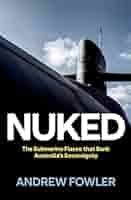




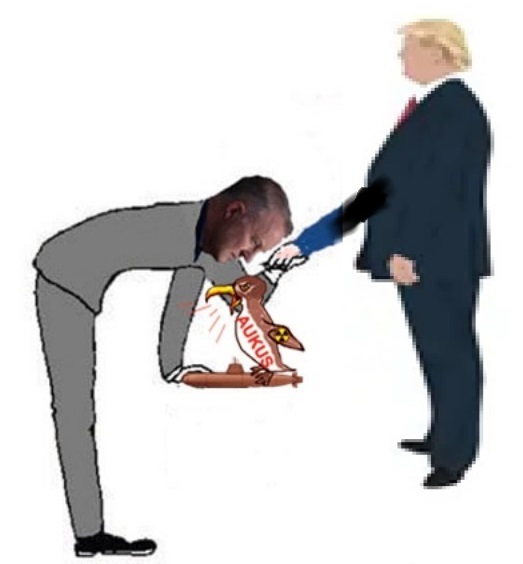

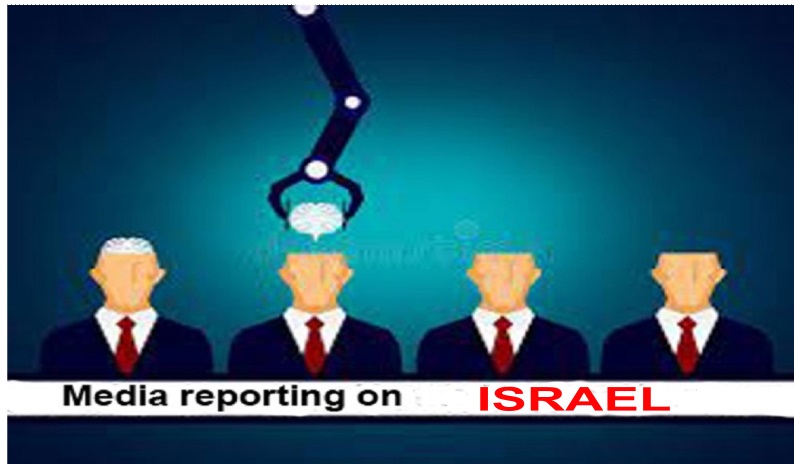

 Antinuclear